Graphic novel quiz
 Call Kai
 Learn
Learn Practice Test
 Spaced Repetition
 Match
Match Flashcards
 Knowt Play
 Podcast
1/19

There's no tags or description
Looks like no tags are added yet.
Name | Mastery | Learn | Test | Matching | Spaced | Call with Kai |
|---|
No analytics yet
Send a link to your students to track their progress
20 Terms
Panels
-individual frames consisting of a single image for a moment (+ text)
-most pages contain multiple panels (of different shapes and sizes)
-left to right, top to bottom
frames
-borders that go around a panel
-rectangle, different shapes, lines, and sizes for various effects
-can be used to convey mood (jagged or wavy lines), signify a dream (cloud shapes lines) or to signify change in time (an abnormal shaped panel)
gutters
-space in between the framed panels
-mentally, we join the moments on our own
shot types
close up shot
-subjects head takes up most of the panel
-used to reveal emotion through facial expression
mid shot
-waist and up
-emotion through expression and body language
long shot
-entire body + scene
-emotion through posture and gesture
narration box
-usually rectangular, box at the top or bottom of a panel
-includes the narrator’s dialogue so they can speak to the readers
speech bubble
direct speech from charcters
types of speech bubble
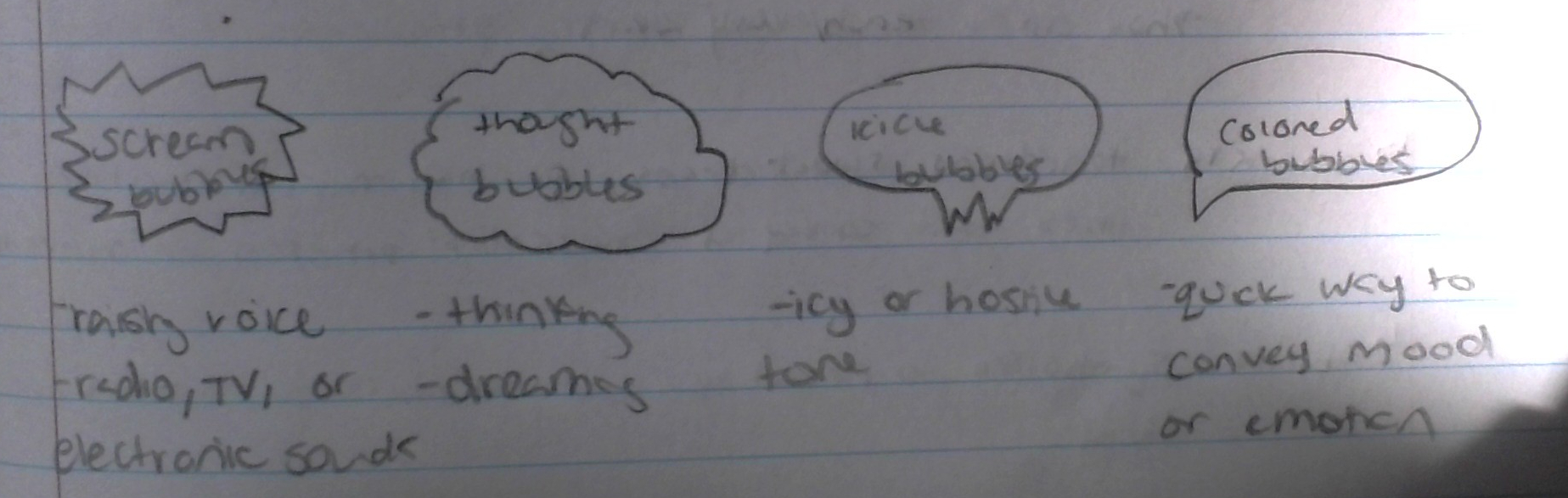
transitions
in between panel
moment in time - small changes in time, same moment
taking action - character or object progresses through an action
switching subjects - same scene, different element/stopic
switching focus - same scene, different focus/perspective
scene change - change in time/and or location
other - any other shift not listed
TYPES OF PANELS
splash- stretches whole width of the page with frame
bleed - image turns outside of frame to edge of page
lighting and color
for mood and may have specific associations
onomatopoeia
a word to imitate the natural sound of something
setting
time/location for info on mood/atmosphere (how does each/every setting showcase their own mood?)
emanata
teardrops, sweat drops, question marks, motion lines that convey a characters’ emotion or movement
objects
symbolism to reveal info about a character, setting or theme
facial expressions
nonverbal form of communications
facial language (BODY LANGUAGE)
nonverbal form of communications
gesture (BODY LANGUAGE)
movement/positions of hands/arms to communicate
posture (BODY LANGUAGE)
how someone holds their body
gaze (BODY LANGUAGE)
where a person is looking/what at/can draw our attention towards something