BIOCH 200 Unit 3 - Protein Structure (Terms)
 Call Kai
 Learn
Learn Practice Test
 Spaced Repetition
 Match
Match Flashcards
 Knowt Play
1/42

There's no tags or description
Looks like no tags are added yet.
Name | Mastery | Learn | Test | Matching | Spaced | Call with Kai |
|---|
No analytics yet
Send a link to your students to track their progress
43 Terms
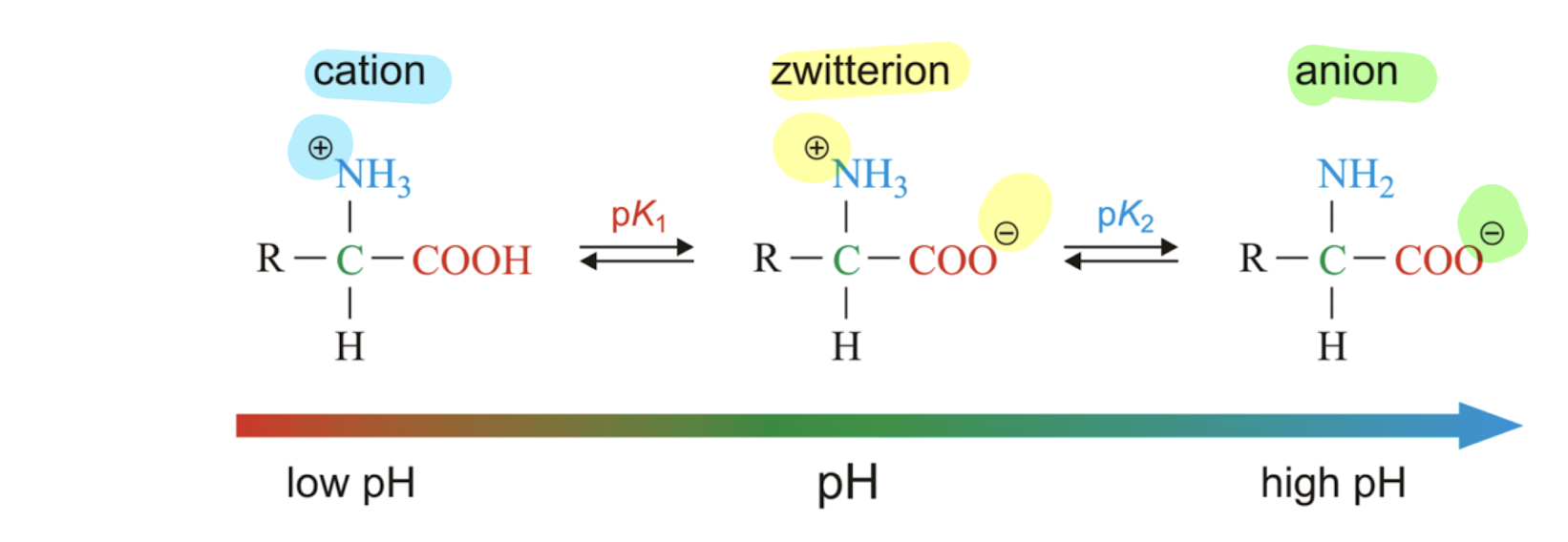
Zwitterion
A molecule that contains an equal number of positively and negatively charged functional groups, thus having a net neutral charge despite being charged
Chiral Molecule
A molecule that cannot be superimposed on its mirror image
Amino Acid Side Chain
A distinct R group attached to an amino acid that determines the amino acid’s overall chemical properties
Hydrophobic/Nonpolar Side Chain
An amino acid side chain classification that describes uncharged, nonpolar side chains which lack reactive functional groups and have mainly hydrocarbon side chains
Polar Side Chain
An amino acid side chain classification that describes uncharged, polar side chains at pH 7 which are reactive due to the presence of functional groups and an electronegative atom
Charged Side Chain
An amino acid side chain classification that describes charged, polar side chains at pH 7 that are reactive due to the presence of ions
Ionizable
A property in which a group or molecule can pick up and give up protons at a reasonable pH range, giving them a pKa between 1 and 14
Cystine
A hydrophobic molecule made of 2 cysteine residues joined via a disulphide bond/bridge
Aspartic Acid
The fully protonated form of the amino acid aspartate, found at pH 1
Glutamic Acid
The fully protonated form of the amino acid glutamate, found at pH 1
Peptide Bond
A covalent, neutral amide bond formed through dehydration that joins amino acids together from the carboxyl group of one to the amino group of the other
Dipeptide
Two amino acids joined together by one peptide bond, consisting of 2 amino acid residues
Oligopeptides/Peptides
General term for a larger than countable number of amino acids (<40) or synthetic peptides
Polypeptide
A long chain of amino acids (>40) usually produced naturally
Protein
A polypeptide or more than 1 polypeptide with a biological function
C (Carboxyl) Terminus
The right end of polypeptide which contains the carboxyl group of the amino acid residue
N (Amino) Terminus
The left end of polypeptide which contains the amino group of the amino acid residue
Primary Polypeptide Structure
The sequence of amino acids in a polypeptide which determines its unique backbone, joined by peptide bonds
Polypeptide Backbone
The rigid structure in a polypeptide including the alpha carbons on the amino acid residues and all atoms involved in the peptide bond
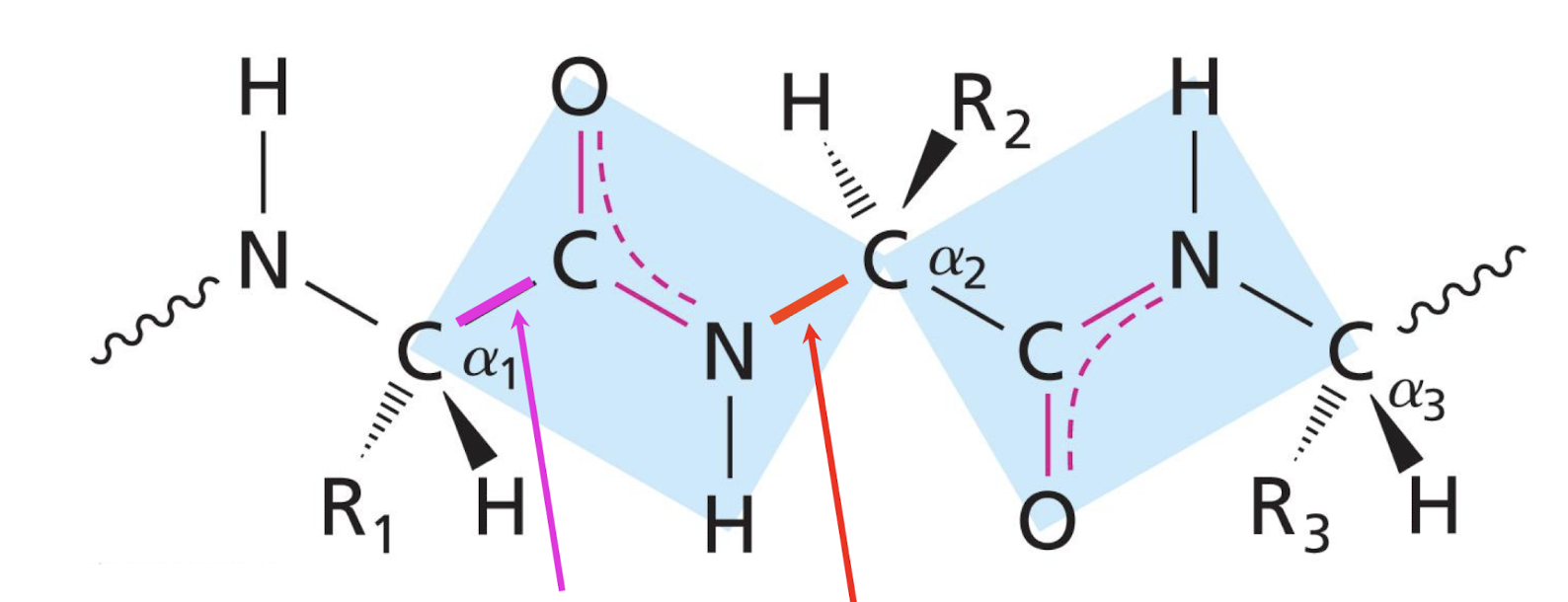
Secondary Polypeptide Structure
Local irregular and regular substructures of the polypeptide backbone created from folding of the polypeptide
Regular Secondary Structure
A type of secondary structure with a fixed backbone conformation regardless of amino acid composition that forms the specific shape even with varying amino acid sequences
Irregular Secondary Structure
A type of secondary structure with its own unique backbone conformation dependent on its sequence that differs between each specific case it is needed
Alpha Helix
A regular secondary polypeptide structure that is a right handed twist made by an average of 12-13 residues
Beta Sheet
A regular secondary polypeptide structure that is a sheet formed from 5 beta strands 3-10 amino acids long in an extended conformation arranged side by side, joined by loops
Loop
An irregular secondary polypeptide structure neither in extended or helix conformation that is variable in size and shape, with a unique structure depending on its amino sequence
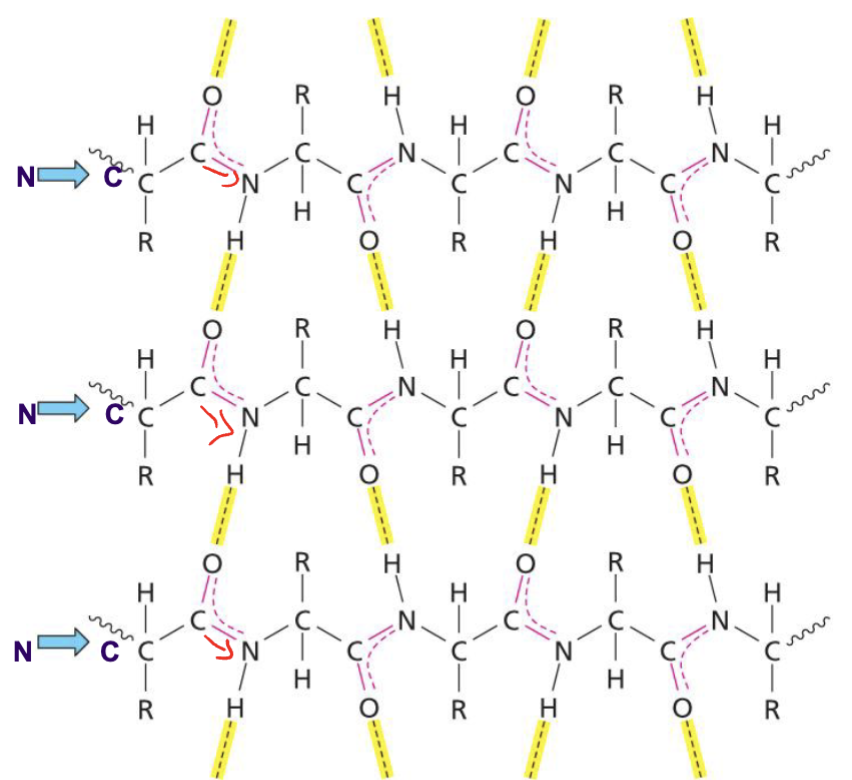
Parallel Beta Sheet
A beta sheet in which all beta strands run parallel to one another, forming slightly bent H-bonds between strands
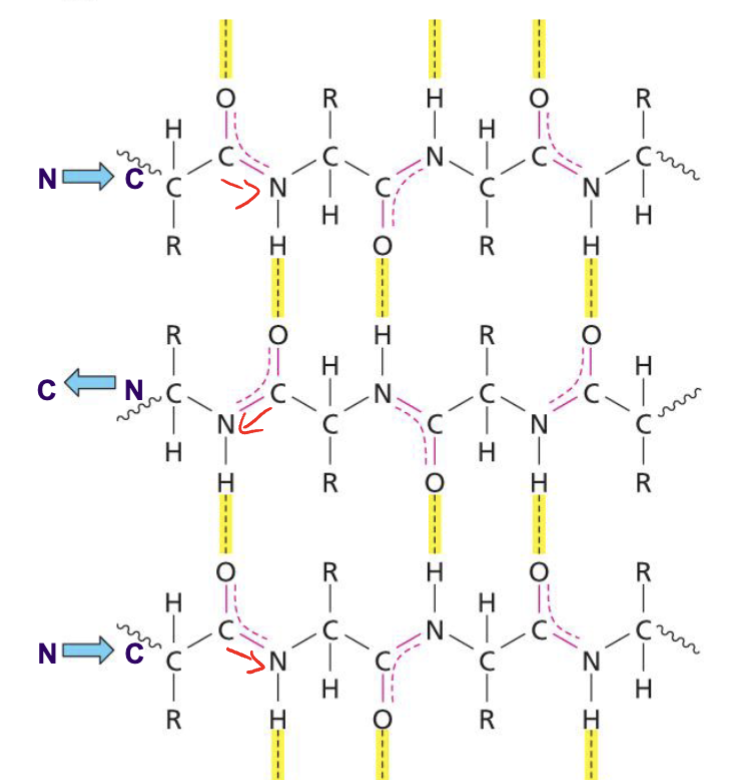
Antiparallel Beta Sheet
A beta sheet in which all beta strands run antiparallel alternating to one another, forming straight H-bonds between strands in a slightly more stable conformation
Mixed Beta Sheet
A beta sheet in which there are a mix of parallel and antiparallel strands
Tertiary Structure
Arrangement of all atoms in a single polypeptide in 3D space, including the position of secondary structures in relation to one another, the positions of amino acid sidechains, and prosthetic groups
Prosthetic Groups
A nonprotein component of a protein that is permanently tightly bound to a protein, providing structure and reactive groups that amino acids are incapable of fulfilling due to their lack of reactivity
Fibrous Proteins
A tertiary structure class of protein that forms a long protein filament insoluble in aqueous solutions
Globular Proteins
A tertiary structure class of protein that folds into compact structures soluble in aqueous solutions
Ion Pairs/Salt Bridges
Electrostatic interactions between closely charged formal charged groups in proteins
Domain
A polypeptide segment that has folded into a single structural unit with a hydrophobic core with its own function to perform
Motif
A short region of a polypeptide comprised of a common grouping of secondary structural elements with a recognizable, pattern 3D shape
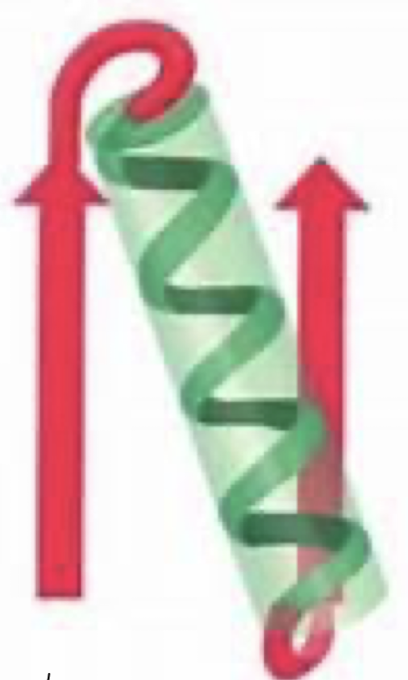
Beta-Alpha-Beta Motif
A motif found in proteins that is comprised of an alpha helix sandwiched between two beta sheets
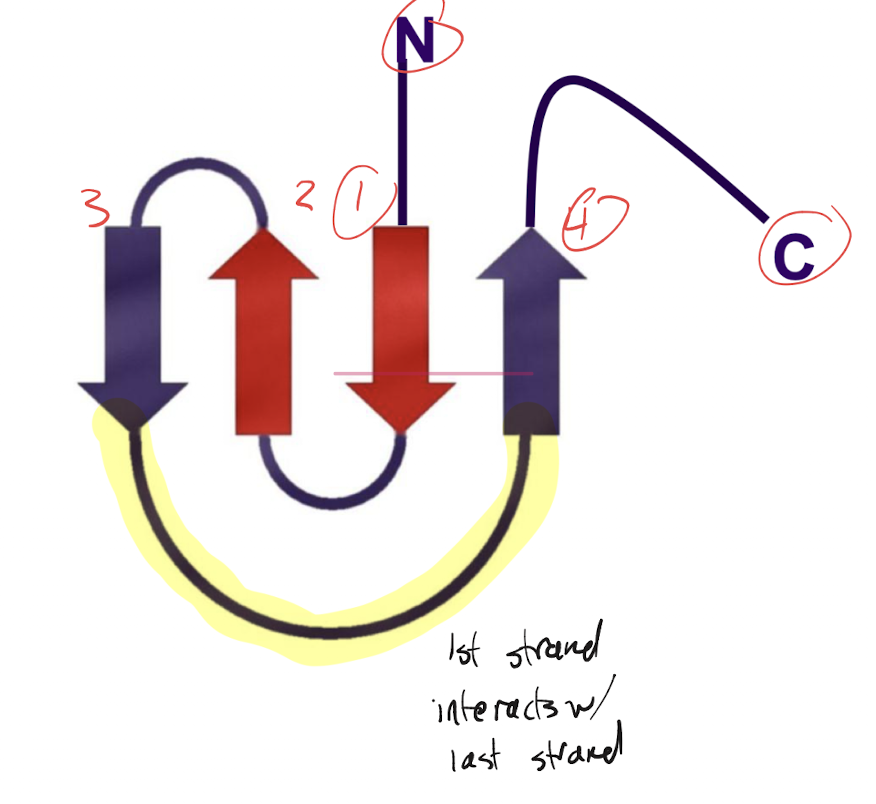
Greek Key
A motif found in proteins that is comprised of an antiparallel beta sheet that is oriented such that the “first” strand to the left is connected to the “last” strand on the right
Coordination Bond
A covalent bond in which 1 atom donates both electrons of the bond
Zinc Fingers
A prosthetic group comprised of a single Zn2+ ion coordinated by 2 Cys and 2 His residues
Quaternary Structure
The overall structure of proteins with more than one polypeptide chain based on its number and type of subunits
Protein Subunit
A singular polypeptide chain that is a part of a protein comprised of multiple polypeptide chains
Oligomer
A protein with more than one polypeptide chain, which has quaternary structure
Monomer
A protein with only one polypeptide chain, which does not have quarternary structure