DTE - Physical and working properties 2
 Call Kai
 Learn
Learn Practice Test
 Spaced Repetition
 Match
Match Flashcards
 Knowt Play
1/94

There's no tags or description
Looks like no tags are added yet.
Name | Mastery | Learn | Test | Matching | Spaced | Call with Kai |
|---|
No analytics yet
Send a link to your students to track their progress
95 Terms
What are the 2 categories of polymers?
Thermoforming and thermosetting
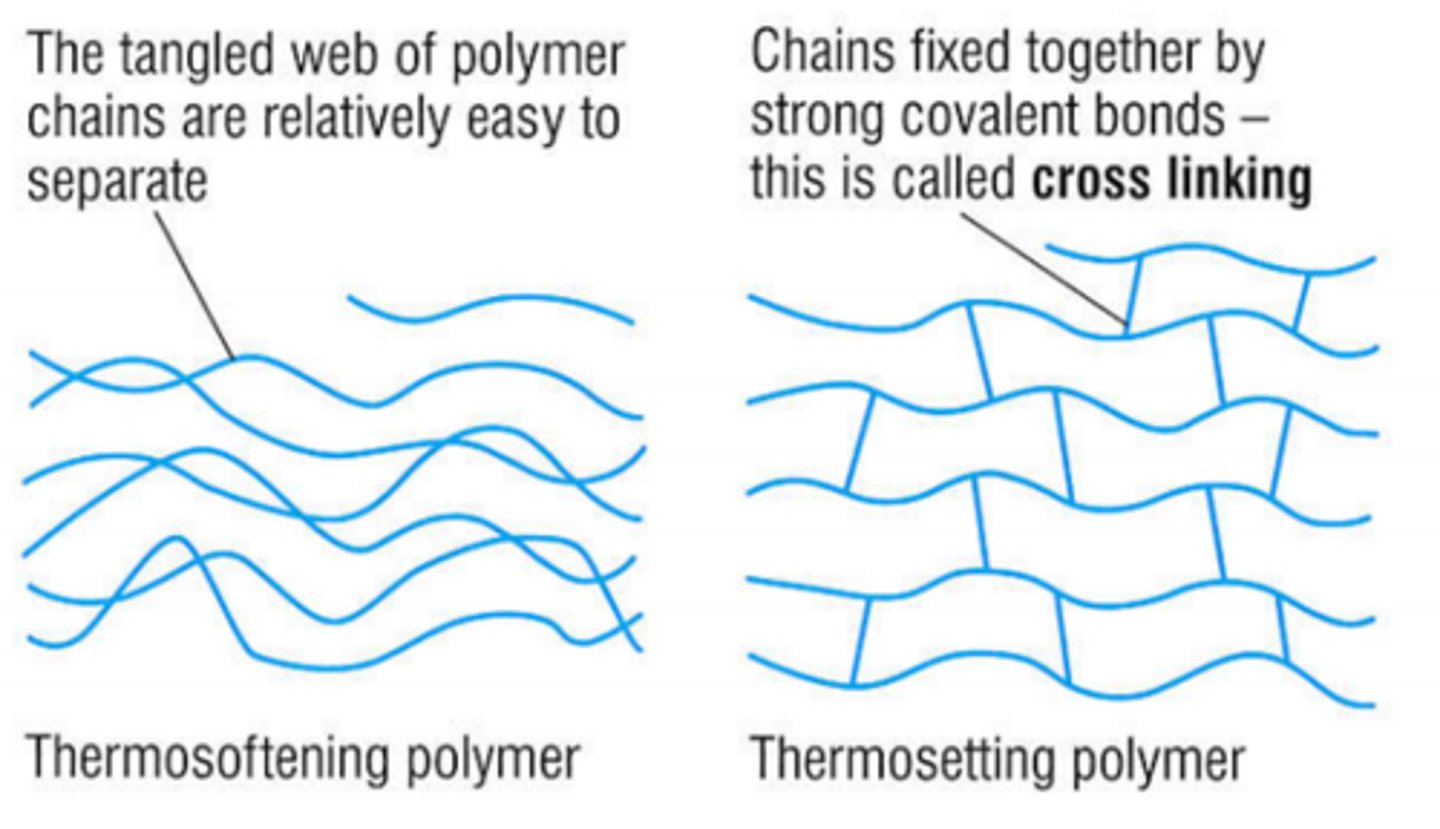
What are thermoforming polymers?
polymers which can soften when they are heated and can be shaped when hot
What are the properties of thermoforming polymers?
-They become soft and flexible when heated
-They are easy to recycle
-they can be remoulded without affecting the materials physical properties
What is the structure of thermoforming polymers?
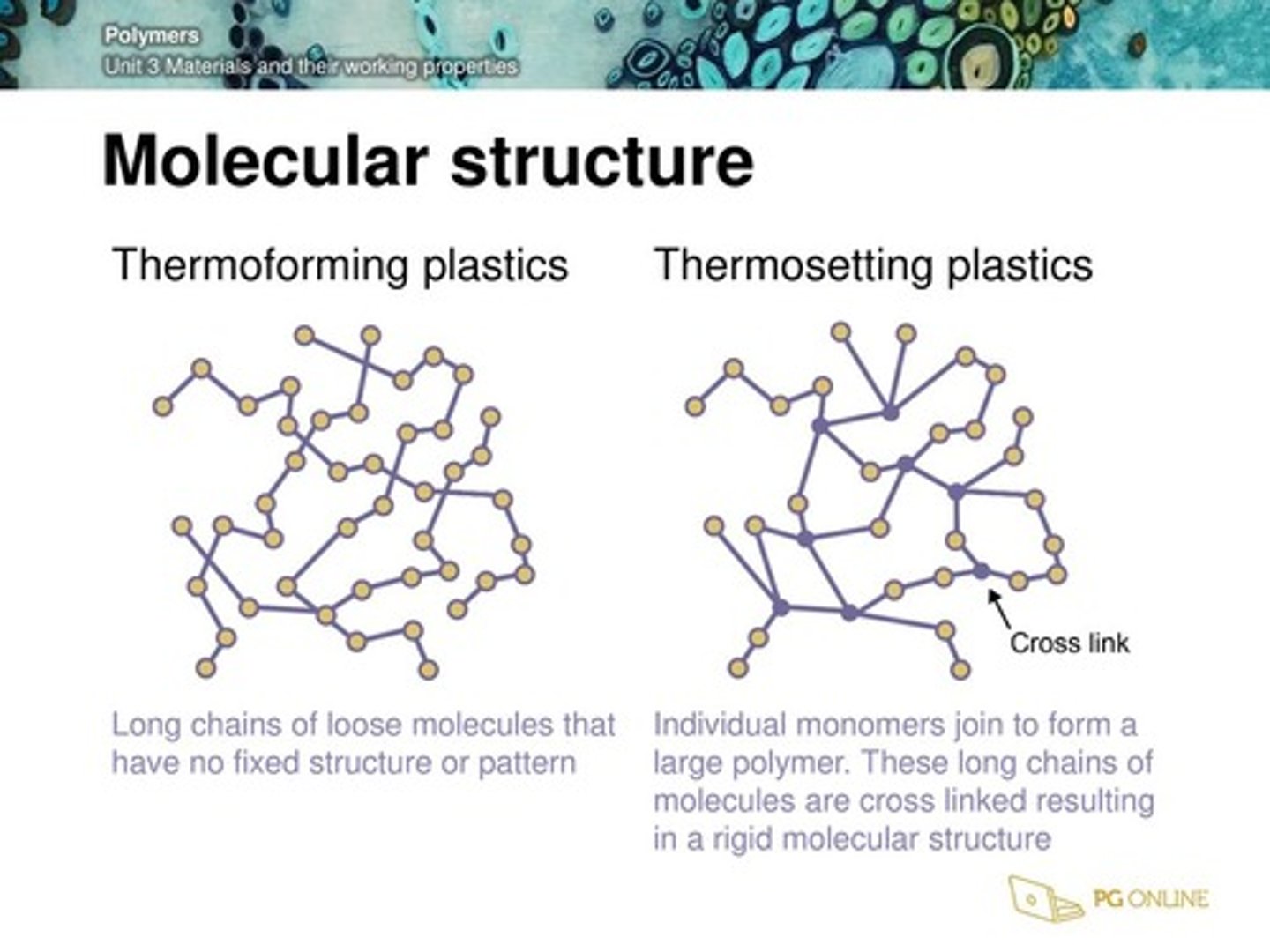
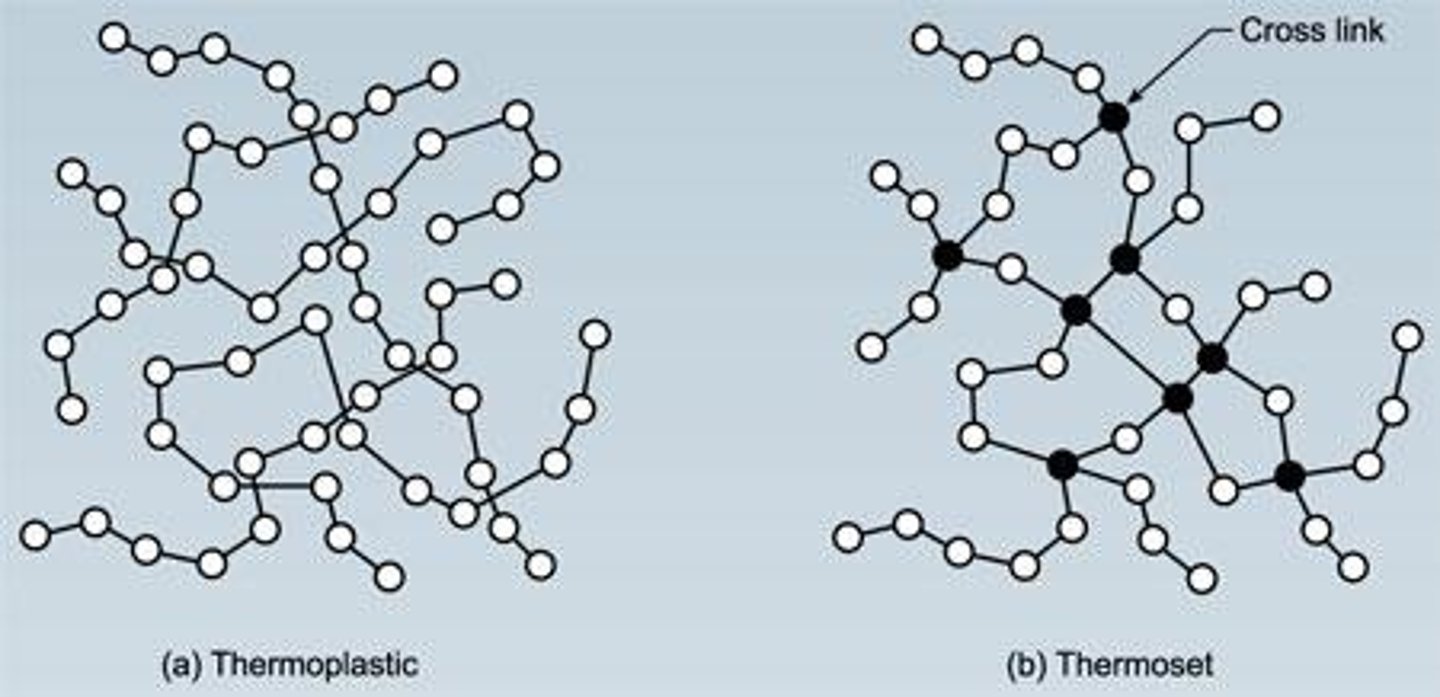
they are built up of long chains of loose molecules that have no fixed structure or pattern
What are thermoforming polymers used for?
vacuum forming, injection mould, blow moulding
What are thermosetting polymers?
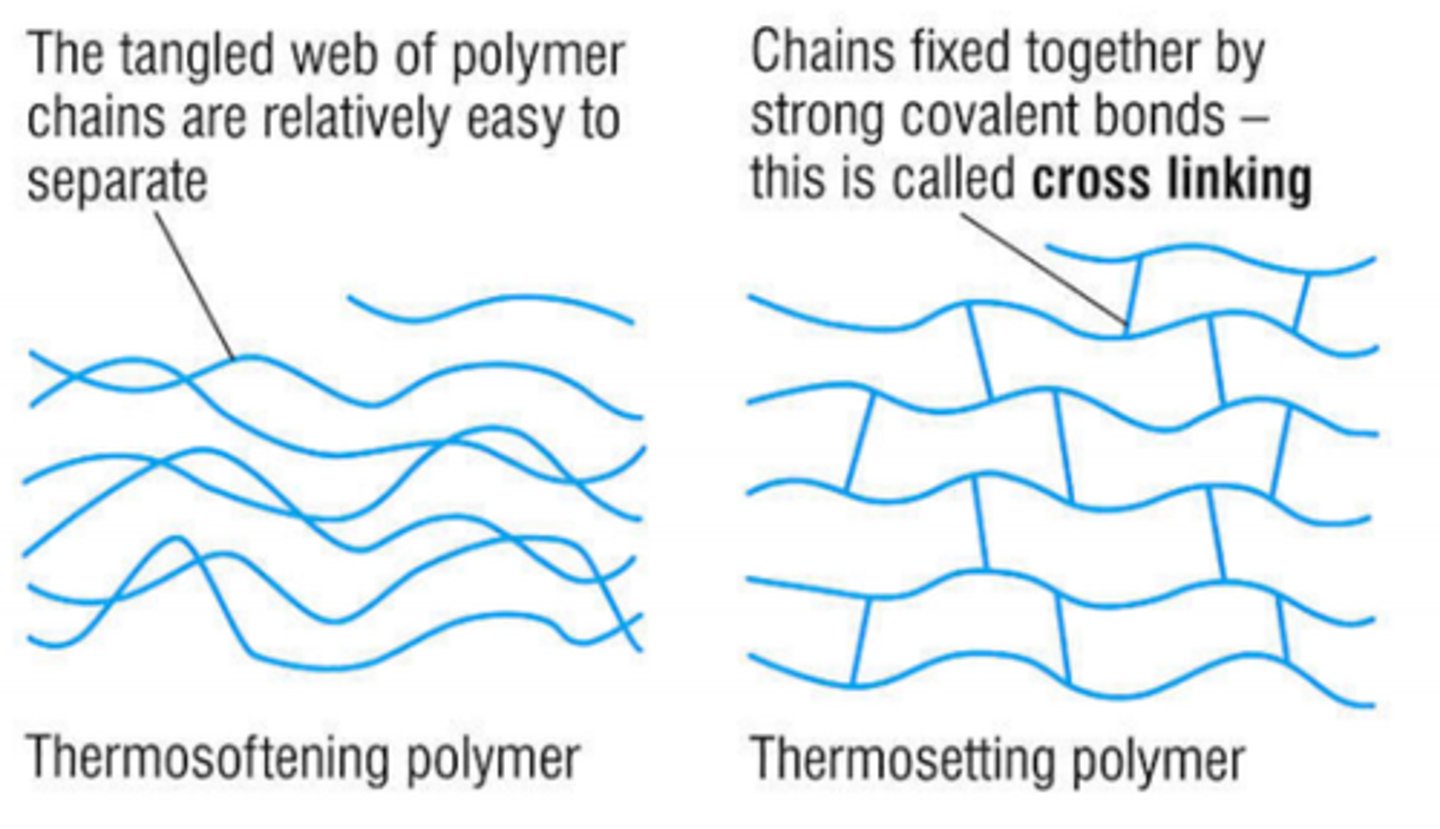
polymer chains with cross-links between them which are difficult to break apart so will not soften but will eventually char if heated very strongly
What are the properties of thermosetting polymers?
-The plastic cannot be reformed once it is set
-harder, brittle and rigid
-It is harder to recycle
-good resistance to heat and chemicals
What is the structure of thermosetting polymers?
They have strong chemical bond which don't separate when heated
They are built up with many cross links between them which stops the molecular chains in the plastic from moving
Is PET a thermoforming or thermosetting polymer
thermoforming
What is PET
polyethylene terephthalate
What are the properties of PET
-clear or coloured with a smooth finish
-easily blow moulded
-chemically resistant
-fully recyclable
What is PET used for?
-Food wraps
-bottles
-Food packaging
-yarn
Is PVC a thermoforming or thermosetting polymer?
thermoforming
What is PVC
Polyvinyl chloride
What are the properties of PVC
-chemically resistant
-flexible
-tough
-easily extruded
What is PVC used for?
pipes, packaging, insulating tape, air mattresses, rain coats and children's toys
Is PP a thermoforming or thermosetting polymer?
Thermoforming
What is PP
Polypropylene
What are the properties of PP
Lightweight
rigid
food safe
easily cleaned
excellent chemical resistance
versatile
low moisture absorption
good impact resistance
What is PP used for?
takeout meals, deli foods, fibre rope, medical and kitchen products
Is HIPS a thermoforming or thermosetting polymer?
thermoforming
What is HIPS?
High Impact Polystyrene
What are the properties of HIPS?
impact resistant
flexible
lightweigt
Good strength
Good toughness
shatterproof
good insulator
used for vacuum forming
What is HIPS used for?
children's toys, food containers, yoghurt pots and egg boxes
Is PMMA a thermoforming or thermosetting polymer?
thermoforming
What is PMMA?
Acrylic
What are the properties of PMMA?
They are lightweight, durable, tough and coloured
What is PMMA used for?
car lights, hats, gloves, modern bathtubs, display stands, clothing and alternatives to glass
Is LDPE a thermoforming or thermosetting polymer?
Thermoforming
What is LDPE
low density polyethylene
What are the properties of LDPE
-Good electrical insulator
-Chemical resistant
-Flexible
-can be made into films
What is LDPE used for?
plastic films, bags, and shrink wrap, as well as squeeze bottles and some containers
Is HDPE a thermoforming or thermosetting polymer?
Thermoforming
What is HDPE
high density polyethylene
What are the properties of HDPE
-Lightweight
-rip and chemical resistant
-stiff and resists cracking
What is HDPE used for?
Milk bottles, pipes, crates, wheelie bins
Is PR a thermoforming or thermosetting polymer?
Thermosettting
What is PR?
Polyester resin
What are the properties of PR
-good electrical insulator
-hard
What is PR used for?
encapsulation, boat hulls and Glass Reinforced plastic
Is ER a thermoforming or thermosetting polymer?
Thermosetting
What is ER?
Epoxy resin
What are the properties of epoxy resin
-Good strength to wieght ratio
-hard
-brittle
-durable
-heat resistant
-good electrical insulator
-rigid
-clear
-tough
chemical and corrosion resistant
What is epoxy resin used for?
-bonding waterproof coatings
-electronic circcuit boards
Is PF a thermoforming or thermosetting polymer?
thermosetting
What is PF
Phenol formaldehyde
What are the properties of PF
-heat-resistant
-good electrical insulator
What is PF used for?
Heat-resistant handles, electrical components, snooker balls
Is MF a thermoforming or thermosetting polymer?
Thermosetting
What is MF?
Melamine formaldehyde
What are the properties of MF?
-lightweight
hard but brittle
-good resistance to heat, chemicals and moisture
What is MF used for?
worktops, surfaces, flat packed furniture, kitchenware
Is UF a thermoforming or thermosetting polymer?
Thermosetting
What is UF
Urea formaldehyde
What are the properties of UF
-Hard
-heat-resistant
-electrical insulator
-brittle
-tough
-chemical resistant
What is UF used for?
electrical fittings, toilet seats, adhesives for bonding, particle boards, decorative laminates
What is Glass Reinforced Plastic (GRP)?
-a composite of glass fibres and polymer resin
-Lower cost and more accessible manufacturing methods than carbon fibre reinforced plastic.
Resin makes it tough and lightweight, glass fibres provide rigidity
What are the categories of textiles?
-natural fibres
-synthetic fibres
-blended fibres
What are natural fibres?
Fibres that come from animals or plant sources and are renewable
Examples of natural fibres
cotton, silk, wool
What is cotton?
a fibre sourced from cotton plants
What are the properties of cotton?
soft
strong
absorbent
breathable
Durable
easy to care for but can shrink
has poor elasticity.
It washes and takes dye well
What are the uses of cotton?
range of clothing, towels, bed sheets
What are the properties of silk?
Soft
Fine
Lightweight
Smooth
Drapes well
Delicate
Expensive
Natural shine due to its triangular structure
What are the uses of silk?
luxury clothing
wall hangings
night clothes
underwear
dresses
shirts
ties
What is silk?
a fabric sourced from silkworm cocoons
What is wool?
A fibre sourced from sheep, goats, rabbits and camelids
What are the properties of wool?
good insulation
absorbent
warm
good elasticity
crease resistant
water resistant
flame resistant
resists soiling
durable
What are the uses of wool?
jumpers, coats, suits, blankets and carpets
What are synthetic fibres?
fibres made from chemically produced polymers
Examples of synthetic fibres?
polyester, acrylic, nylon, lycra
What are the properties of nylon?
strong and hardwearing, resists creasing
What are the uses of nylon?
rope, webbing, parachutes, sportswear, umbrellas
What are the properties of elastane (Lycra)?
strong, smooth, and elastic or stretchy. retains its shape and quick drying
What are the uses of Lycra?
sportswear, swimwear, surgical supports
What are the properties of polyester?
tough, strong, hard-wearing, non-absorbent
What are the uses of polyester?
fleece, baackpacks, threads, sportswear
What are blended fibres?
when two or more types of fibre are conbined to produce a fabric with useful properties
Example of blended fibres
polycotton
What are the properties of polycotton?
Durable and stronger than pure cotton. reduces creaasing
What are the uses of polycotton?
clothing and bed sheets
What is woven cloth?
cloth made up of yarns which are threaded 90 degrees to each other
What is plain weave?
the simplest weave structure in which two sets of yarns at right angles to each other pass alternately over and under each other to form the maximum number of interlacings
What are the properties of plain weave?
strong, hard-wearing, retains shape. even surface on both sides
What are the uses of plain weave?
tablecloths, upholstery, clothing
What are non-woven fabrics?
fabrics made directly from fibres without being spun into yarns
Examples of non-woven fabrics?
Bonded fabric and felted fabric
What are the properties of bonded fabric?
they lack strength, they have no grain so they can be cut in any direction and do not fray
What are the uses of bonded fabric?
disposable hygienic clothing, cloths, teabags
What are the properties of felted fabric?
It can be formed with moisture and heat. Once dry, it has no elasticity and can be pulled apart
What are the uses of felted fabric?
hats, handicrafts, protective pads
What is knitting?
A technique of interlocking yarn loops together to produce a fabric. used form jumpers, socks, tights and soft toys
What is weft knitting?
made by hand or machine using a single yarn that forms interlocking loops across the width of the fabric. stretchy and can lose its shape
What is warp knitting?
made by a machine which forms interlocking vertical loops. it is less stretchy, so it holds shape better
Still learning (1)
You've begun learning these terms. Keep up the good work!