Unit III: Maintaining Homeostasis- chapter 9: Human Nervous system and homeostasis
 Call Kai
 Learn
Learn Practice Test
 Spaced Repetition
 Match
Match Flashcards
 Knowt Play
1/98

There's no tags or description
Looks like no tags are added yet.
Name | Mastery | Learn | Test | Matching | Spaced | Call with Kai |
|---|
No analytics yet
Send a link to your students to track their progress
99 Terms
Nervous system main purpose
to maintain and regulate a constant internal environment
sensory receptors
gather information from the external environment (skin, eyes, ear)
conducters
carry information (impulse transmission) from receptors to effectors or vice versa (neurons, nerves)
integrator
interpret and analyze sensory information and send information to effectors
effectors
part of the body that responds from an integrator (muscles, glands)
Central Nervous system
the brain and the spinal cord
Peripheral nervous system
the nerves that enter and leave the brain and spinal cord and service the various muscles, glands, and organs of the body
sensory neurons
take information from a receptor (such as pain or light) to CNS via interneurons
interneurons
connect sensory neurons to the CNS and the CNS to the motor neuron
motor neurons
receive information form the CNS (via interneurons) and carries it to an effector (muscles or gland)
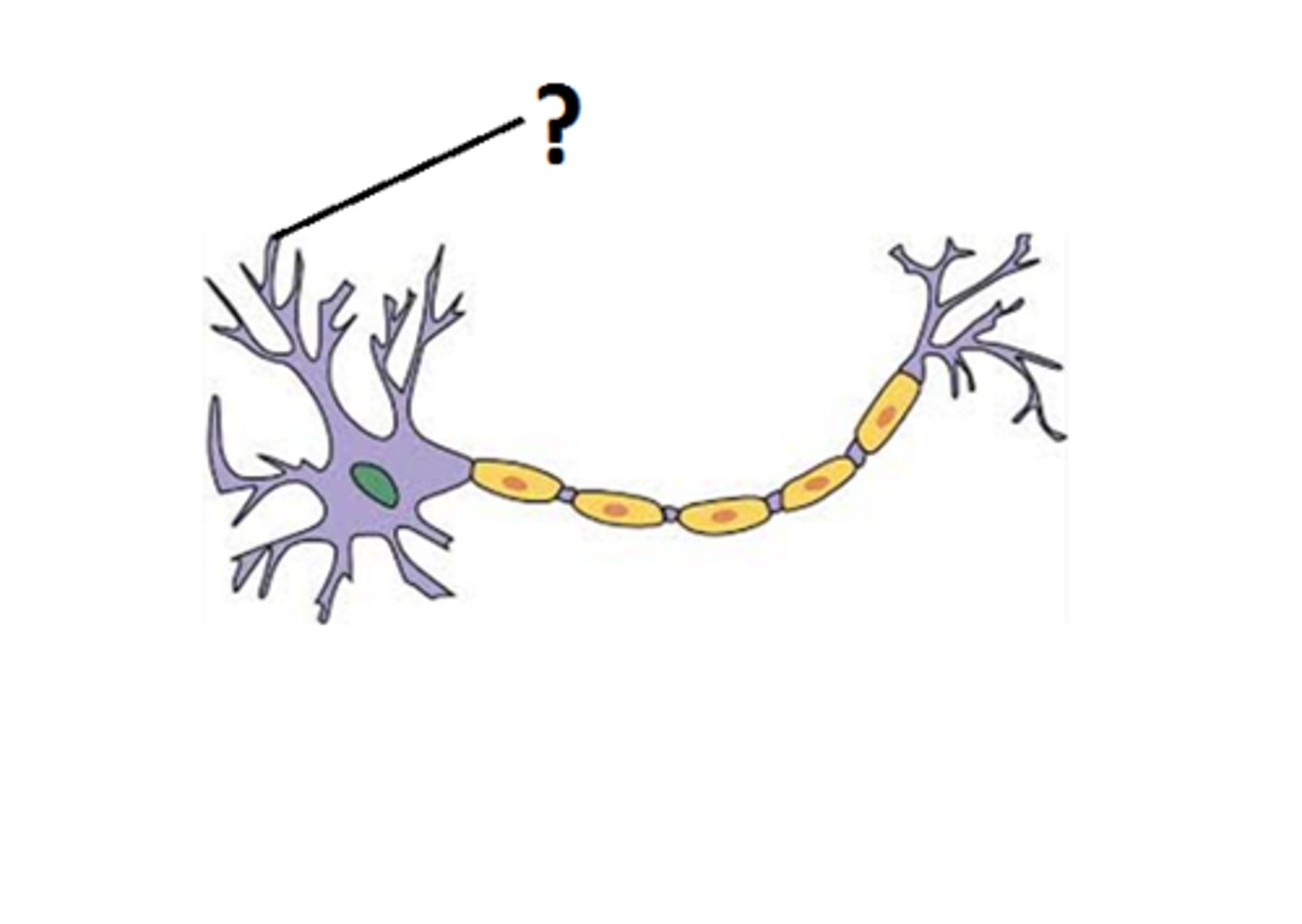
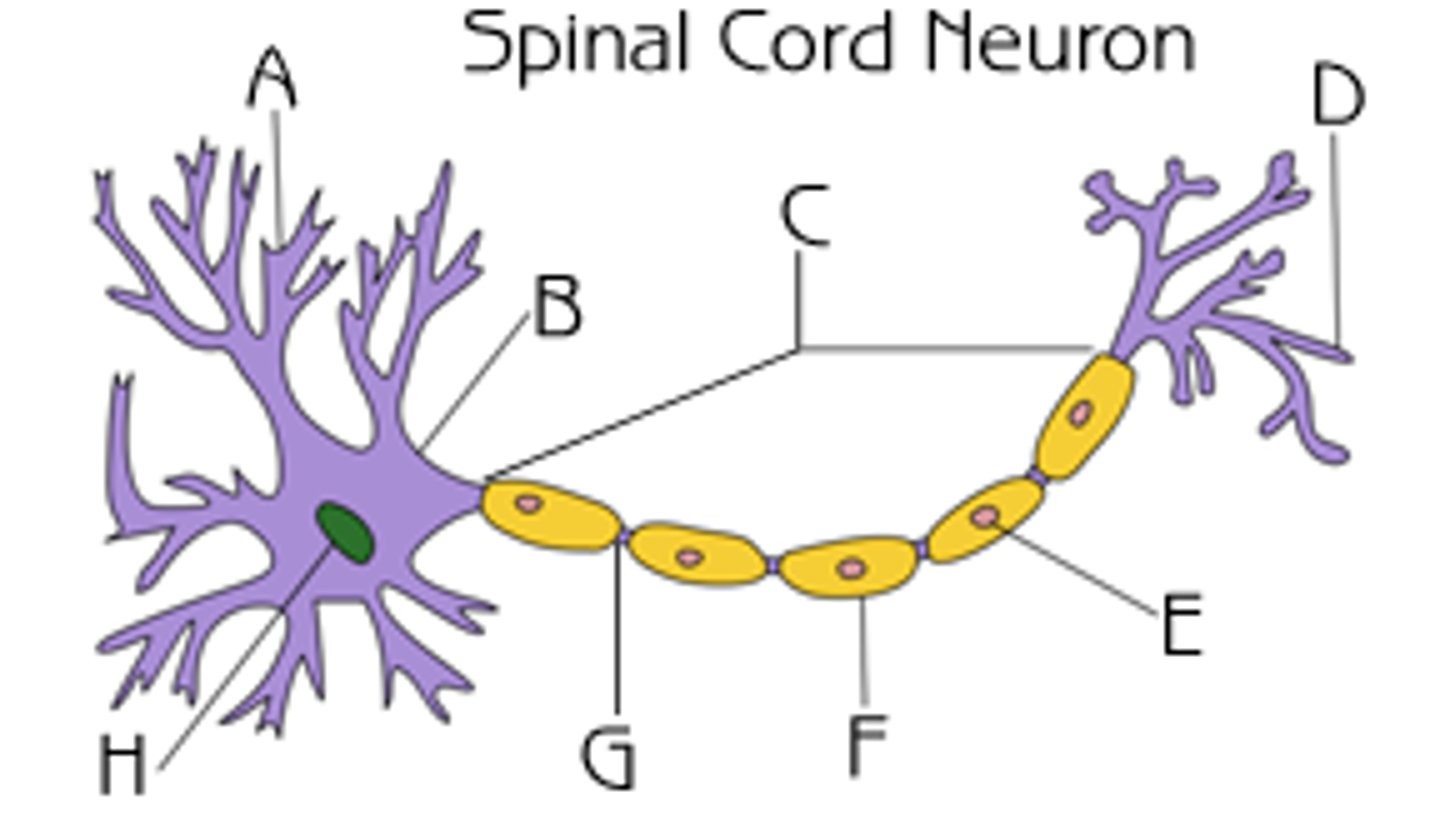
Dendrite
branch like extensions that project out from the cell body and receives signals from other neurons
cell body
the main part if a neuron, filled with cytoplasm and containing the nucleus and other organelles. The control centre of the neuron
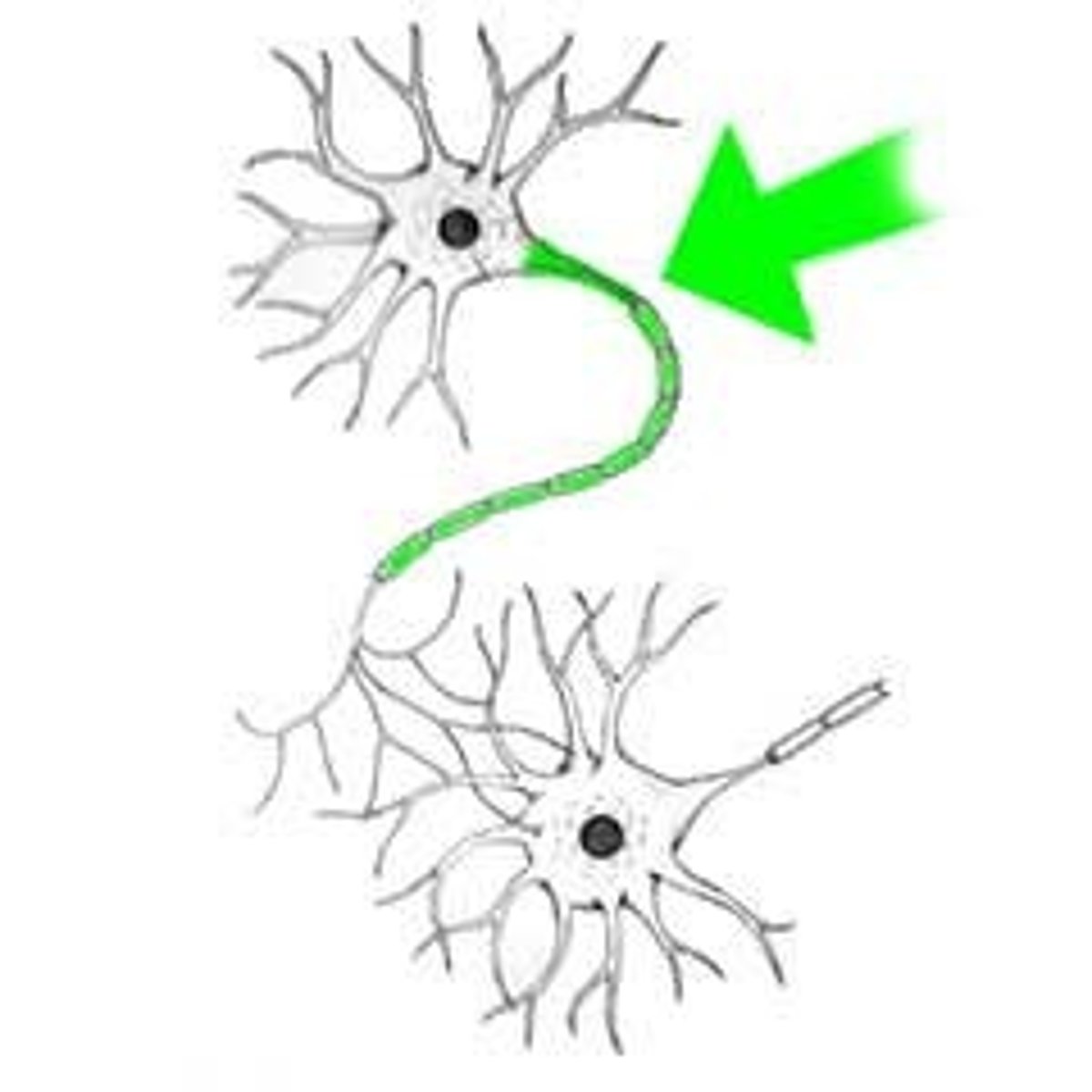
axon
long clindrical extension of a neuron's cell body that can range from 1mm to 1m in length. It transmists impulses along its length towards the next neuron
Schwann cells (including the myelin sheath)
special insulating cells around the axons of some nerve cells in the PNS
Schwann cells
make up of an outer layer called the myelin sheath (fatty layer around an axon). Myelin insulates the axon and speeds up nervous system
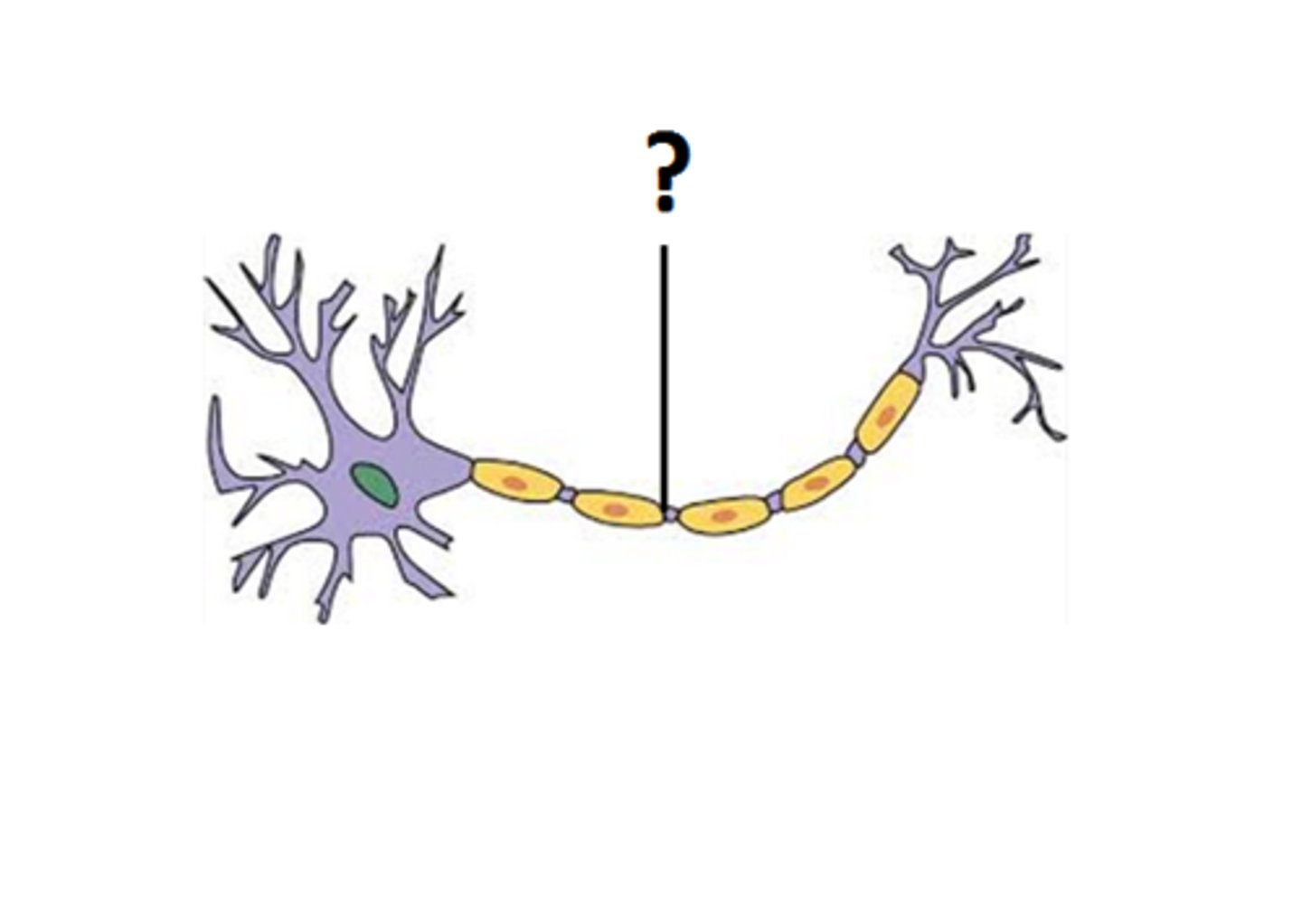
Node of Ranvier
the gap between Schwann cells around the axon of a nerve cell
Node of Ranvier
the membrane of the axon is exposed and nerve impulses jump from one node of Ranvier to the next for quick transmission
Axon terminal
the end of the axon that branches off and comes in close contact with the dendrites of neighboring neurons (does not touch them).
Dendrite
Axon
Node of ranvier
Axon terminal
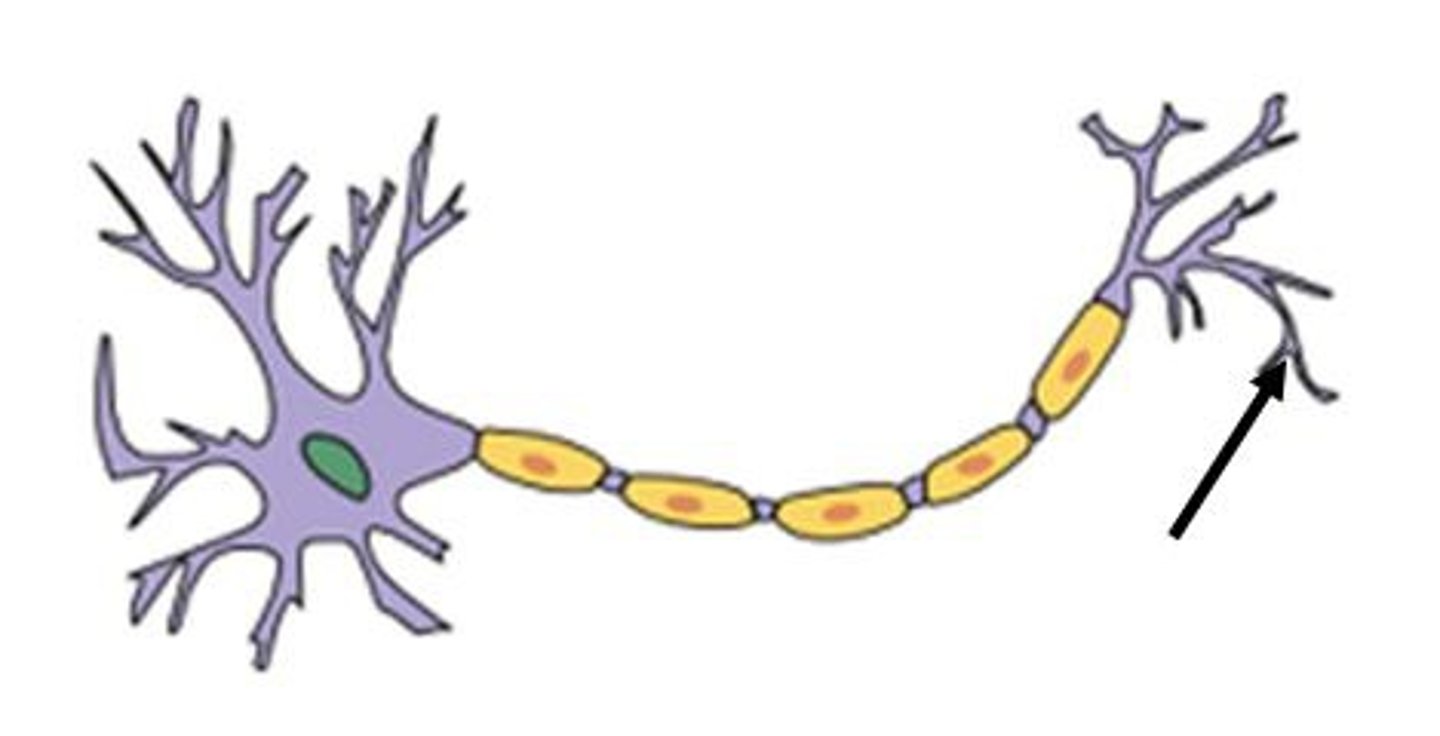
Schwann cells (including myelin sheath)
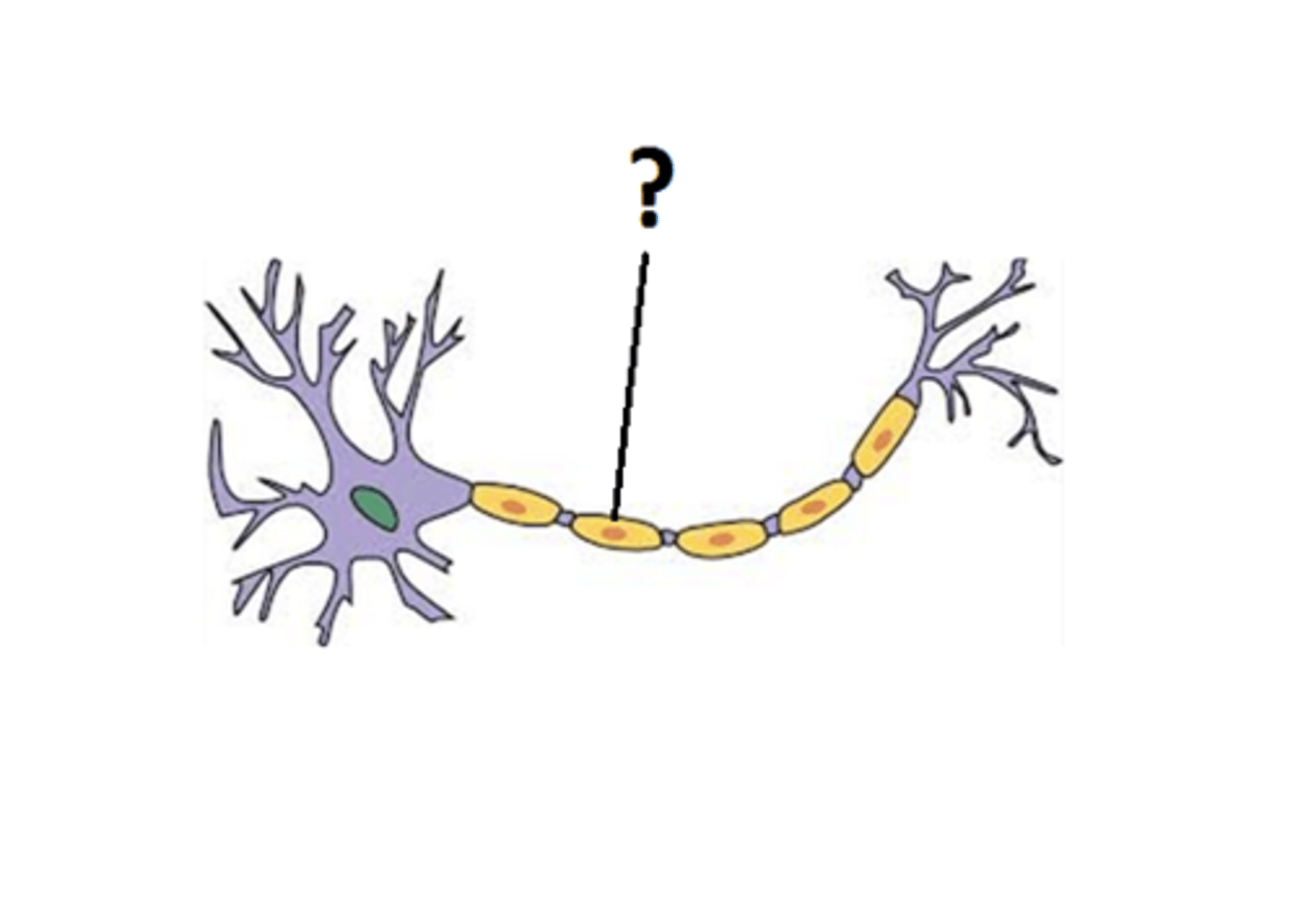
Cell body
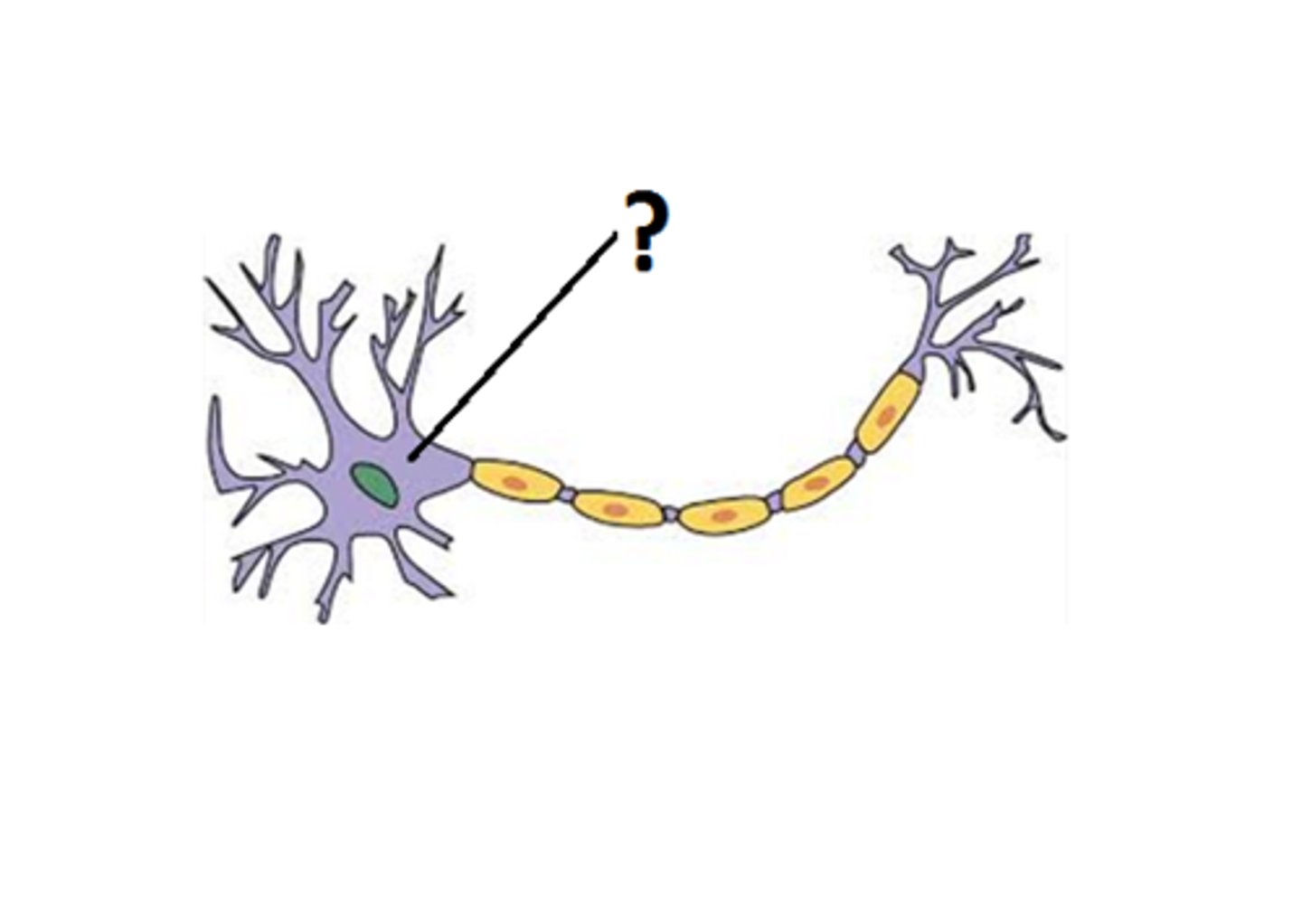
Nucleus
H
CNS and PNS where speed is needed
Where are myelinated neurons found?
The reflex arc
When a part of your body is stimuated, a nerve impluse is carried to your brain. Your brain sends an impulse to the stimulated area telling it what to do. This nerve pathway, from stimulus to reflex action is called the ______ ___ and involves three classes of neurons (nerve cells).
Reflex responses
involve all three types of neurons, but no brain involvement. They go through the spinal cord.
- chemicals
- light
- heat
- neurotransmitters
- pain
- smell
-taste
Neurons can be stimulated by:
mild stimulus, the threshold is not reached
if a neuron is given a _________________, there is a brief and small change in the charge of the cell membrne in the area of the stimulus but this does not continue down the length of the neuron ________________
the threshold of stimulus is reached or surpassed
however, a larger stimulus will cause the impulse to travel the length of the axon
All or none principle
if an axon is stimulated suffciently (above the threshold of stimulus), the axon will trigger an impulse down the length of the axon. if not, the impulse is not triggered.
1. uniform along the length of the axon
2. independent of the strength of the stimulus
once triggered the nervous response is:
-the number of neurons activated
- the typre of neurons activated (some neurons have higher thresholds than others)
strong environmental stimuli are determined by:
at rest
the outside of a neuron is positively charged compared to the inside.
at rest
sodium is pumped out of the cell by Na+/K+ pump
Resting potential
the difference in charge from the inside to the outside of a cell at rest
resting potential
approx -70 mV
Active transort
the sodium potassium pump is an example of:
Depolarization
Na+ gates open and Na+ rushes inside the axon
Depolarization
inside is now positively charged
Na+ gates and K+ gates are examples of:
passive transport
Repolarization
Na+ gates close
Repolarization
K+ gates open and K+ rushes out, making the inside more negative again.
Refractory period
the breif time between the triggering of an impulse along n axon and the axon readiness for the next impulse
0.001s
for many neurons the refractory period is about...
Synapase
junction (gap) between a neuron and another neuron or muscle cells
Neurotransmitters
chemicals that are secreted by neurons to stimulate motor neurons and CNS neurons
synaptic vesicles
specialzed vacuole in the bulb-like end of the axons of a nerve cell conatianing neurotransmitters that are released into the synapse when a nerve impulse is received
Excitory response
causes a wave of depolarization to occur in the next neuron
Inhibitory response
prevents depolarization (preventing nerve impluses) from occuring in the next neuron
Acetylcholine
Primary neurotransmitter of BOTH somatic NS and the parasympathetic NS
Acetylcholine
inhibits cardiac muscle (slows heart rate)
Cholinesterase
a neurotransmitter that breaks down Acetylcholine
Cholinesterase
causes skeletcal muscles to relax (inhibitory) and excites the cardiac muscle (excitatory - speeds up the heart rate)
Noradrenaline (norepinephrine)
readies the body to respond to danger or other stressful events
Noradrenaline (norepinephrine)
primary neurotransmitter of the sympathetic NS- exctitatory
Noradrenaline (norepinephrine)
over production linked to high blood pressure, anxiety, and insomia; deficiency linked to hunger cravings and exhaustion
Endorphins
act as natural pain killers in the brain; also affects emotional areas of the brain
Dopamine
neurotransmitter that elevates mood and controls skeletal muscle- excitatory
Seratonin
regulate temperature and sensory perception (alertness, sleepiness); is involved in mood
Dopamine
inadequate amounts in the brain synapses linked to depression
Brain is protected by
Meninges
bone
cerebral spinal fluid
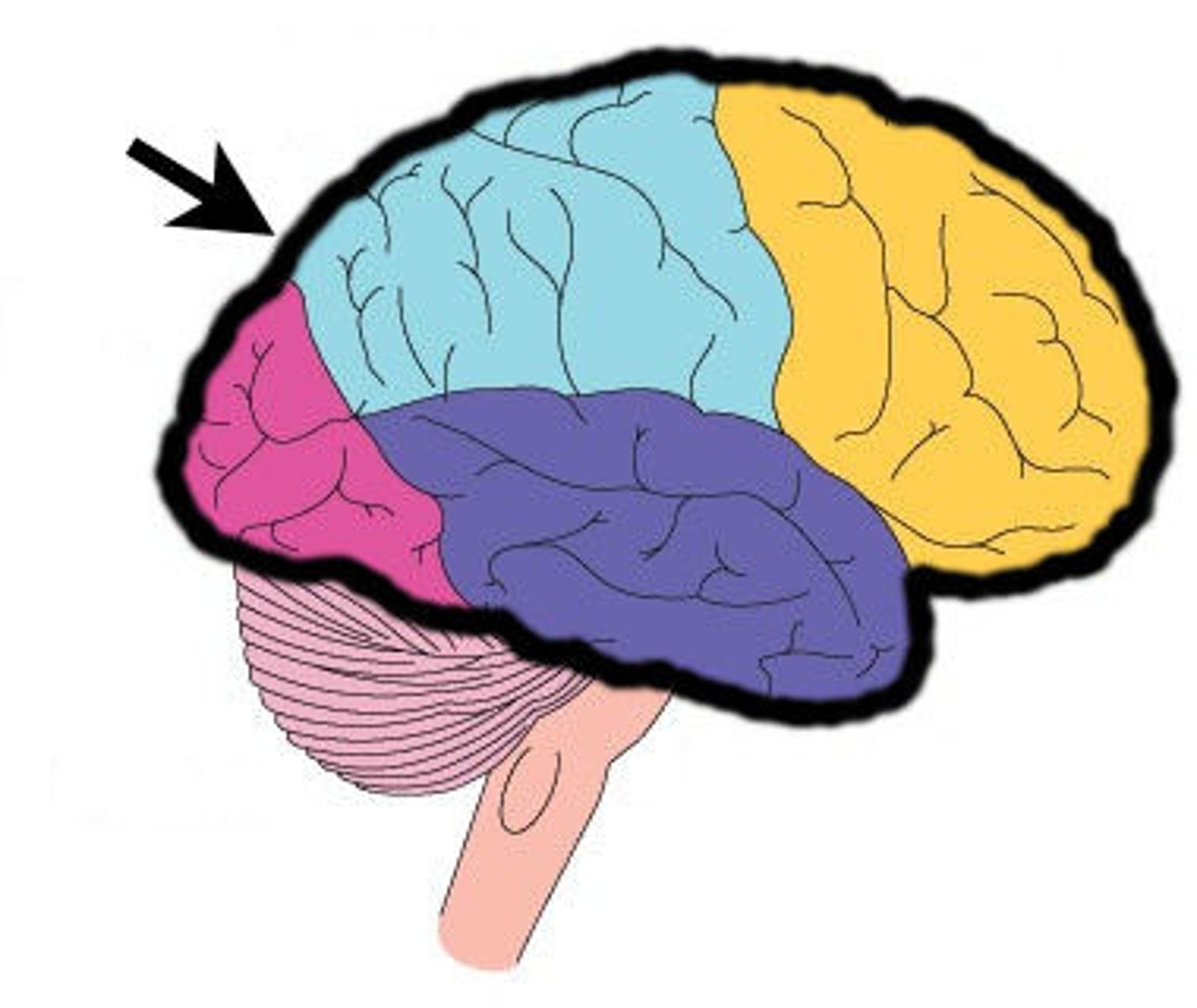
Cerebrum
complex behaviours and intelligence; interpreting sensory inputs and initiating motor responses, speech, memory, and decision making, conscience and moral and ethical reassuring
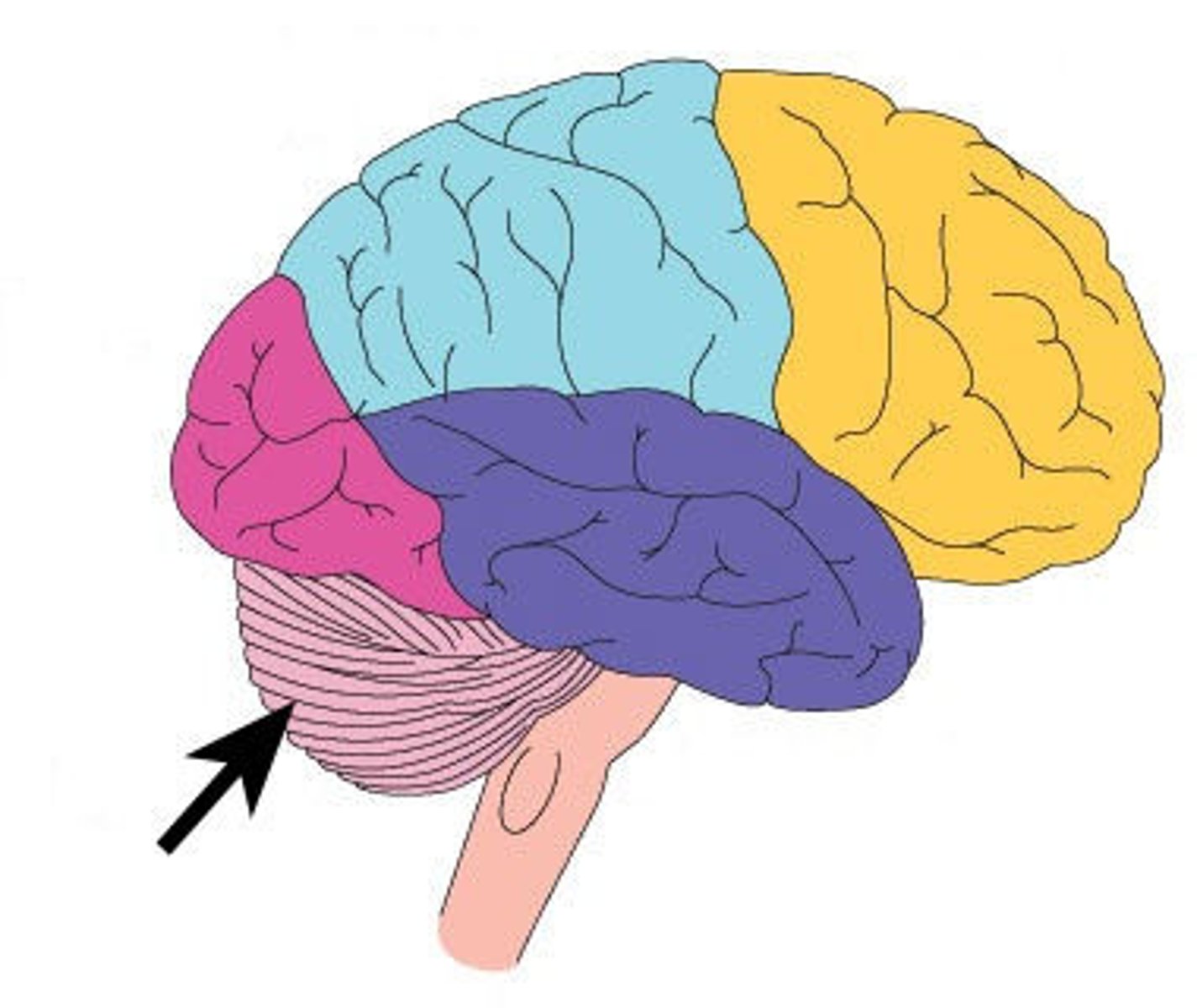
Cerebellum
Responsible for muscle coordination and fine motor skills (ex. walking)
Cerebellum
allows you to "learn a skill over time" (get better with practice)
medulla oblongata
controls heart rates
medulla oblongata
adjusts blood pressure
medulla oblongata
controls breathing
medulla oblongata
controls vomiting
medulla oblongata
controls hiccupping
medulla oblongata
controls swallowing
medulla oblongata
damage to this region is FATAL
Midbrain
a short segment of the brainstem above the pons; particularly involved in sight and hearing
Pons
contains bundles of axons traveling between the cerebellum and the rest of the CNS
Pons
fucntions w/ the medulla oblongata to regulate breathing rate and reflex centers involved in head movement
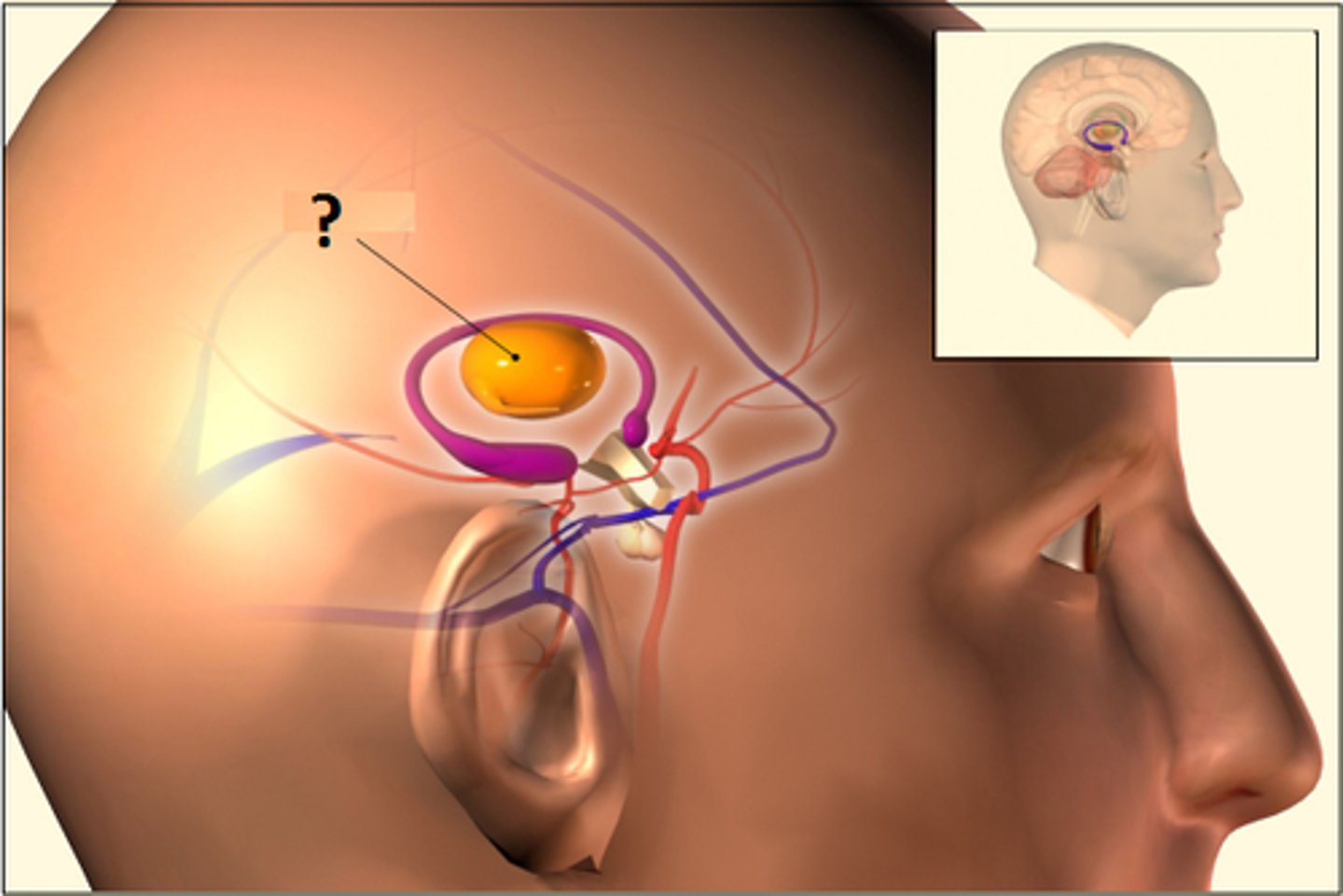
Thalamus
sensory relay center of the brain
Thalamus
recieves mild sensations of touch, pain, hot, and cold
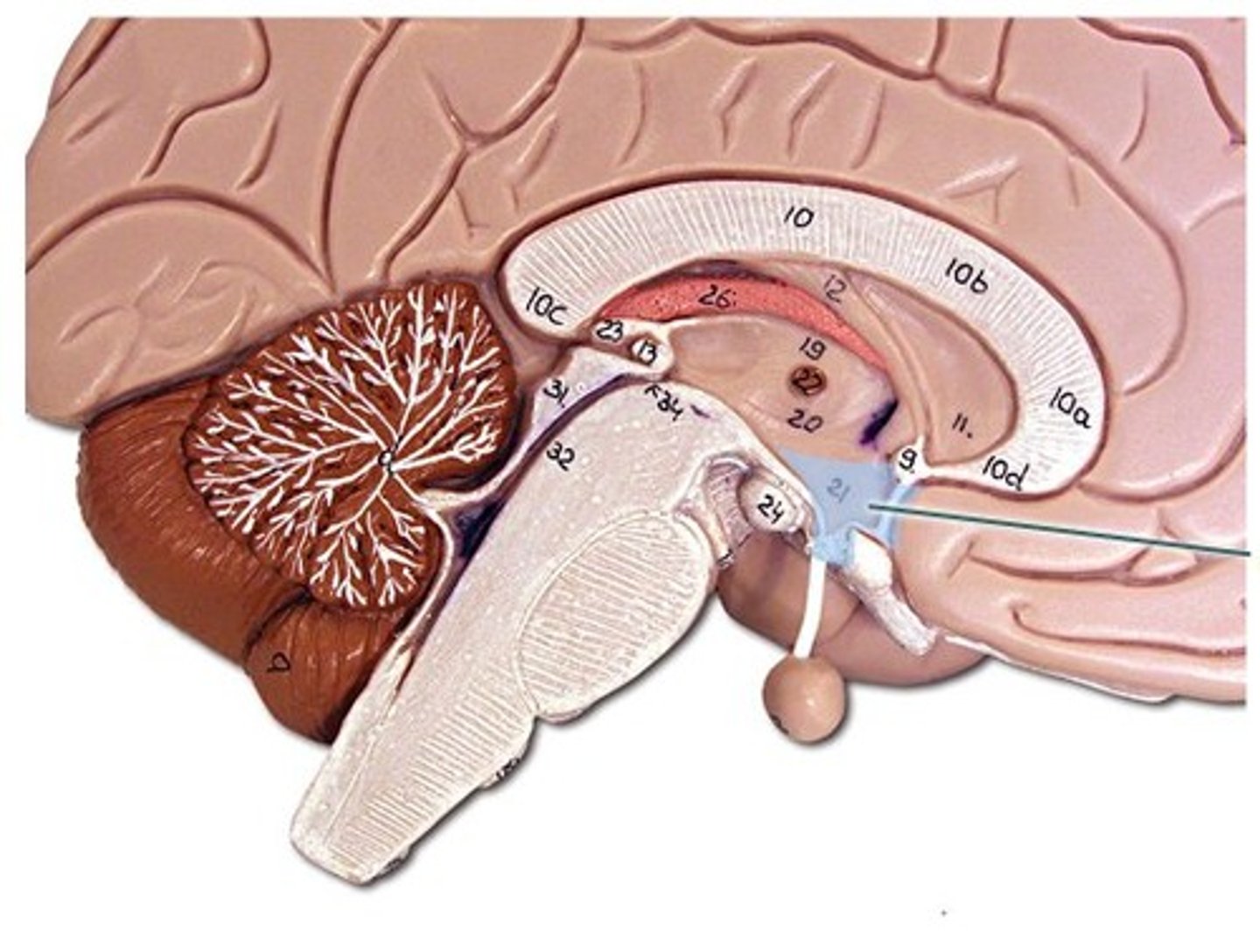
Hypothalamus
controls hunger, thirst, body temperature, anger, and aggression
Hypothalamus
Initiates immediate responses when the body is threatened (fight or flight)
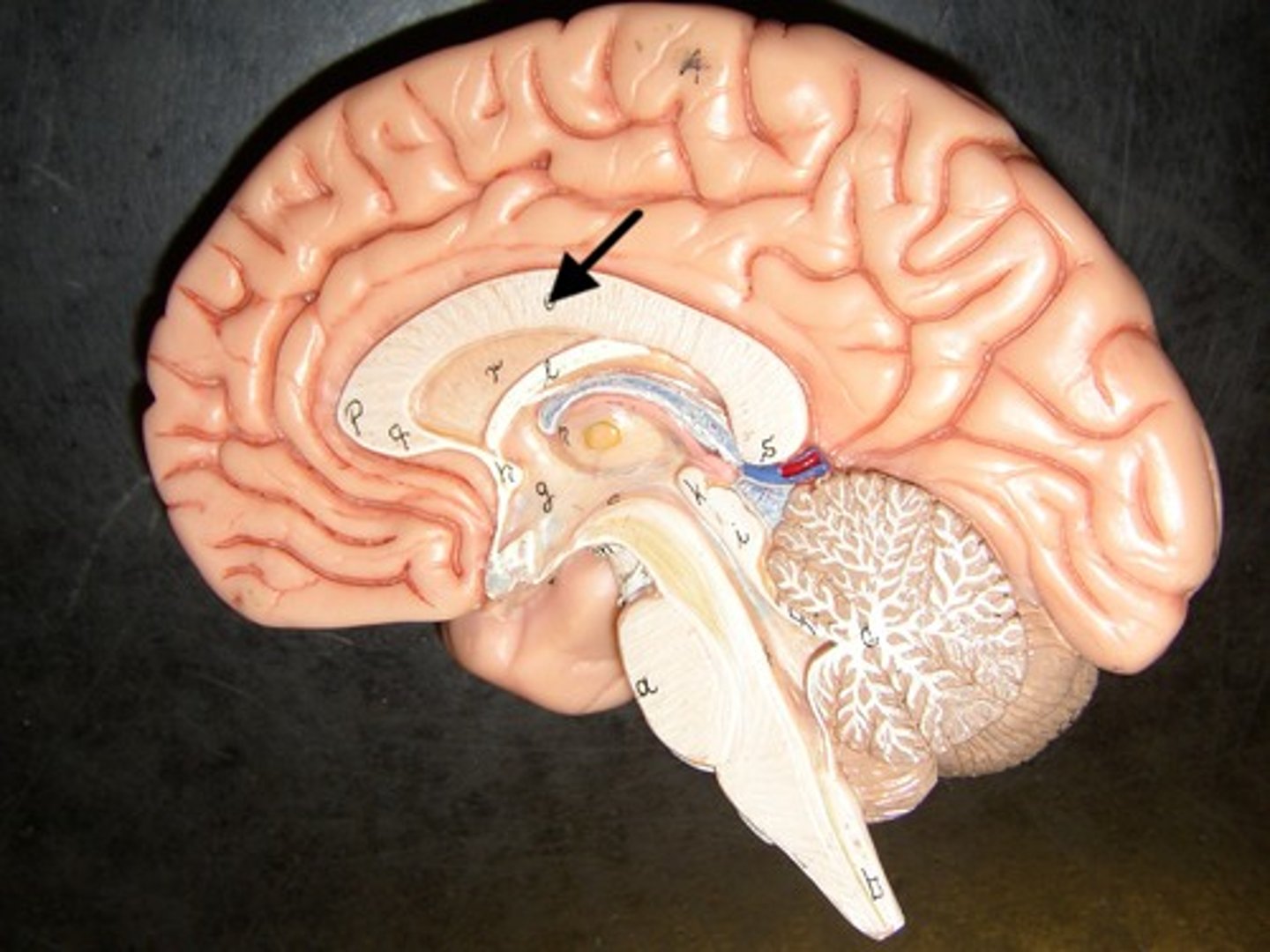
Corpus callosum
connects left and right hemispheres of the brain
Corpus callosum
helps you concentrate and pay attention
Autonomic NS
relays information to the internal organs that are not under the conscious control of the individual
Autonomic NS
made up of the sympathetic and parasympathetic NS
Sympathetic NS
speeds up the muscle activity and activates in times of stress; "fight or flight response"
Parasympathetic NS
to slow down heart rate and relax muscles. Returns body to the "normal" state after a threat has passed
Parasympathetic NS
"rest and digest"
Somatic NS
relays info to and from skin and skeletal muscles that are mostly under the concious control of the individual
somatic NS, motor neurons, sensory neurons
in the ____________, ____________ connect muscles to the brain and _________ cary impulses to the brain from the snese organs
Somatic NS
some reflex movements can occur without a decision
Cerebrum
Thalamus
corpus callosum
Hypothalamus
pituitary gland
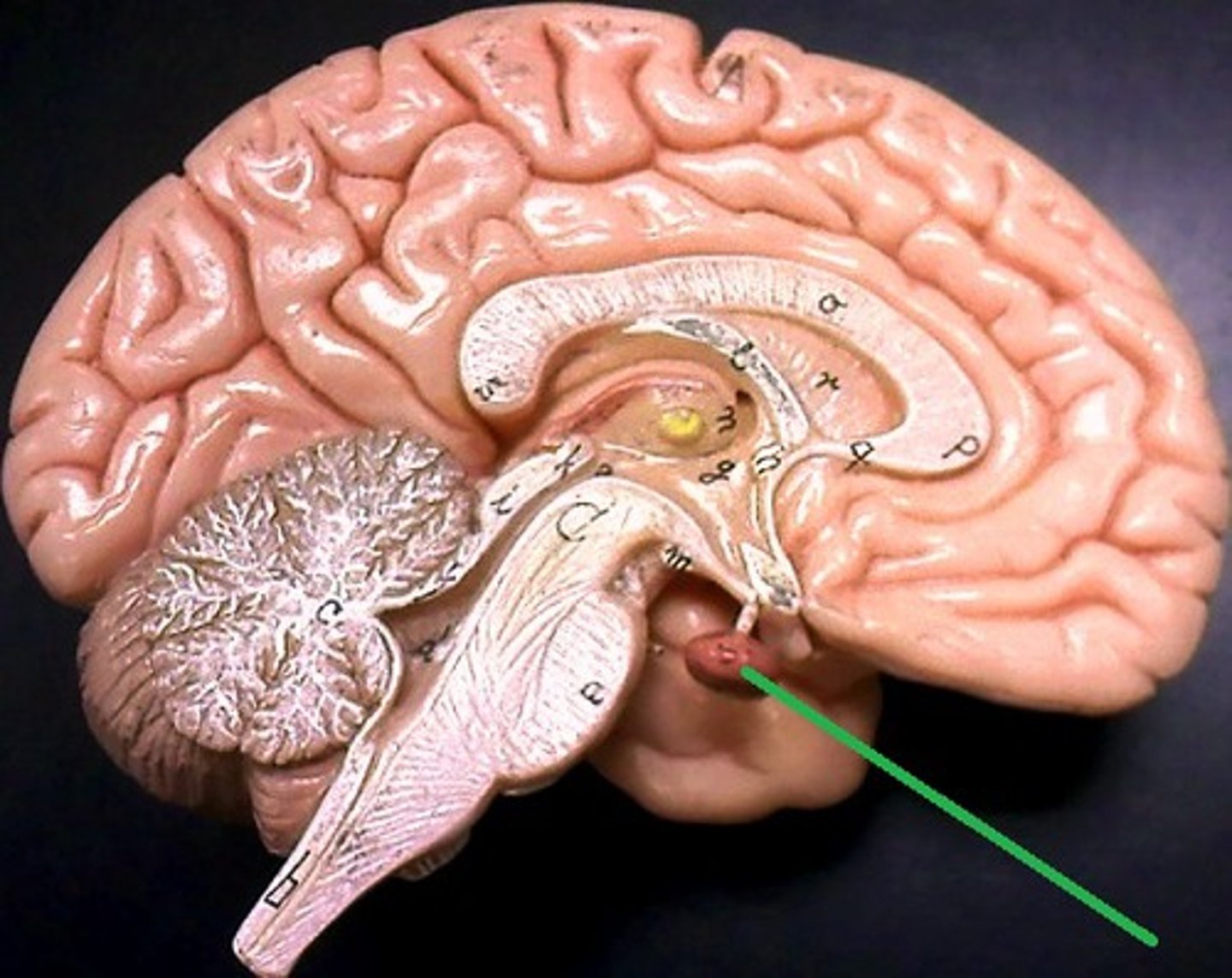
Midbrain
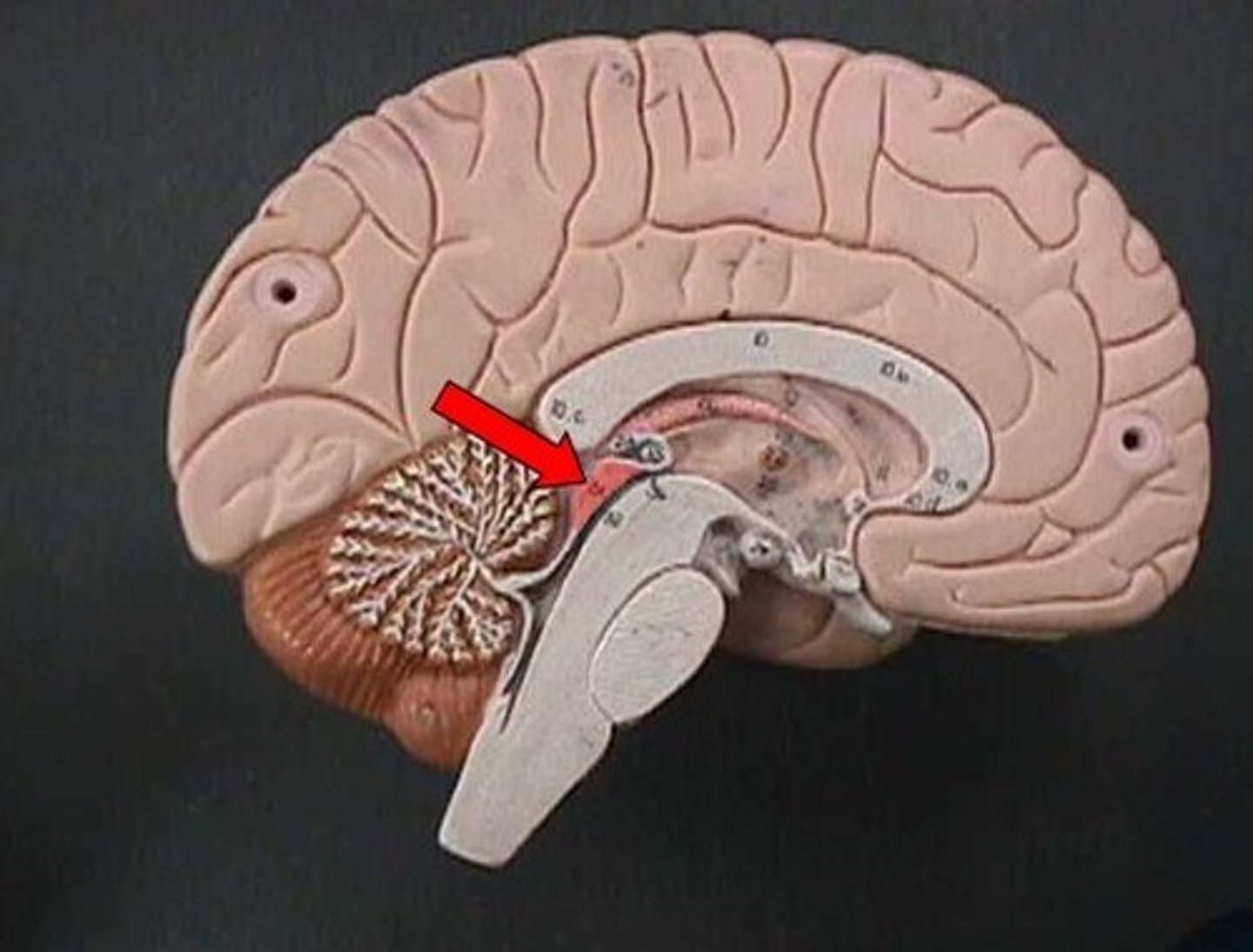
Pons
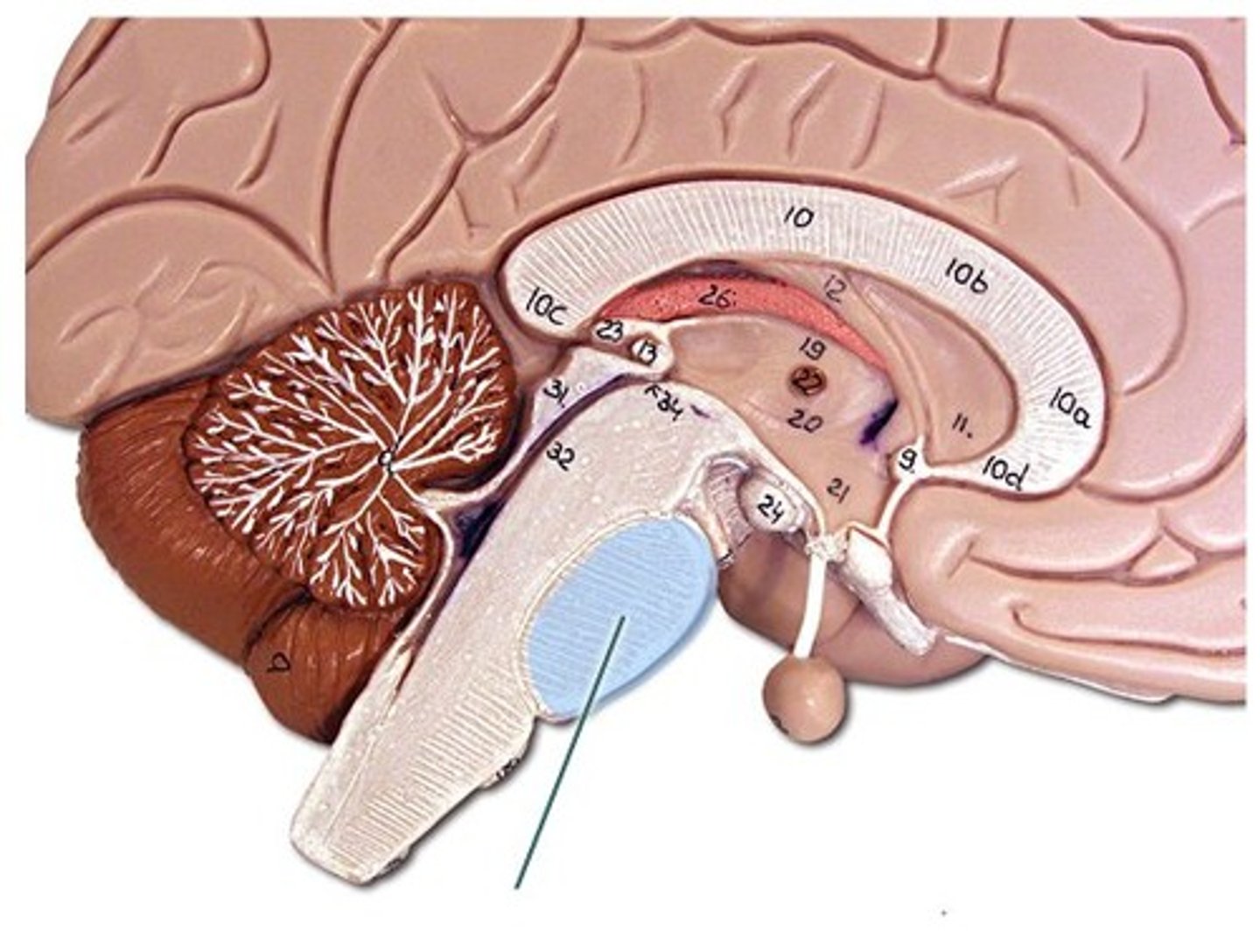
medulla oblongata
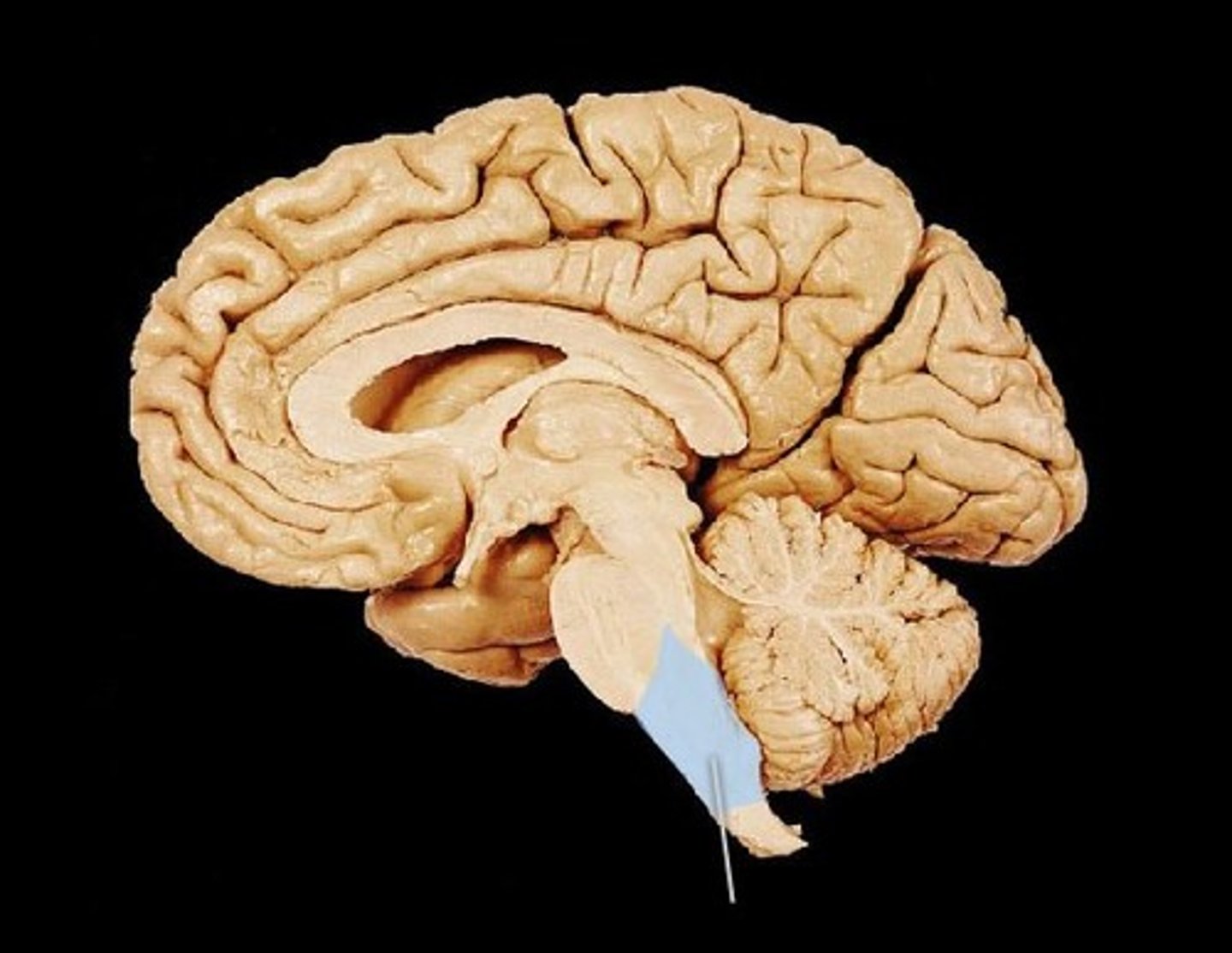
Cerebellum