Identifying AGRRA Corals: Part 1
 Call Kai
 Learn
Learn Practice Test
 Spaced Repetition
 Match
Match Flashcards
 Knowt Play
1/3

Earn XP
Description and Tags
Mound and Boulder Corals
Name | Mastery | Learn | Test | Matching | Spaced | Call with Kai | Chat |
|---|
No analytics yet
Send a link to your students to track their progress
4 Terms
Stony Corals
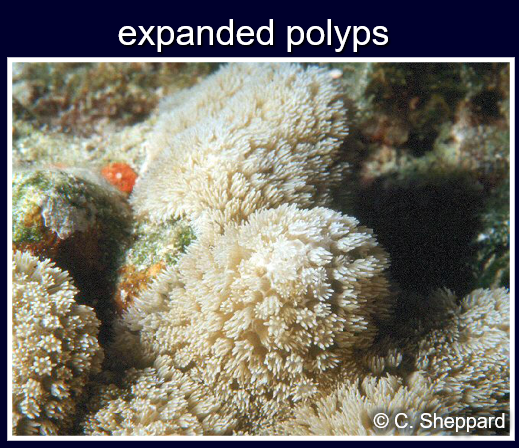
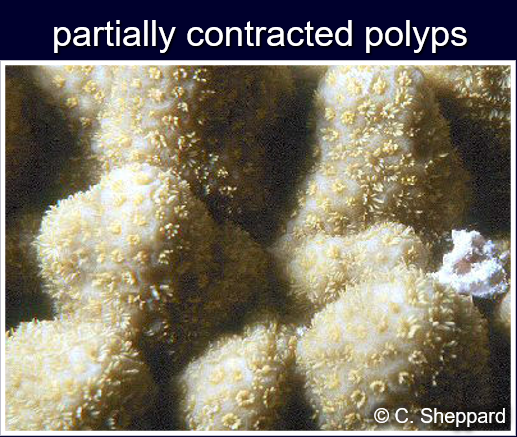
Stony corals have soft polyps above a stony (calcareous) skeleton. Most reef-building corals form colonies of interconnected polyps.
The shapes, sizes and colour of the polyps and colonies are used to help identify corals.
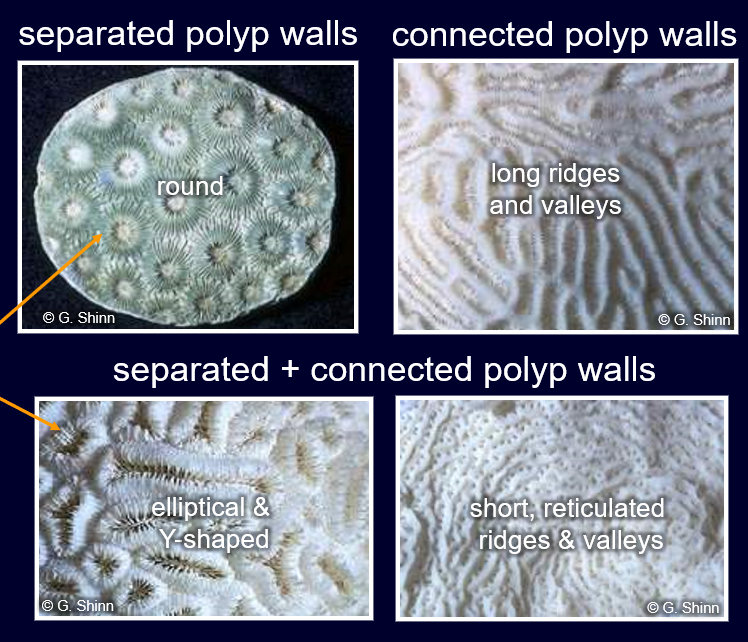
Coral Skeletons
The shapes
and sizes of polyps are also visible in their underlying skeletons.
Septa are conspicuous vertical partitions in the polyp wall.
What to Look for Underwater
Colony shape – massive (= mound, columnar, heavy plates), crust, plate, branching
Colony size range – small to big
Colony surface – bumpy, smooth, ridged
Polyp size – small to big
Polyp shape – round, elliptical, irregular, Y-shaped
Polyp colour – brown, tan, yellow, olive, green, red
Septal shape – fat, thin; smooth, toothed
Coding Corals in AGRRA Surveys
Use the CARICOMP-based coral codes.
The coral code for a genus (or occasionally a species complex) is the first 4 letters of its genus name and should be used whenever you are unsure of a coral’s species identity: ORBI = Orbicella
The coral code for a species is the first letter of the genus name followed by the first 3 letters of its species name: OFAV = Orbicella faveolata
Codes are shown before names appear on the introductory slide for species that are commonly recorded in AGRRA surveys.