Forensic botany and pollen master set
 Call Kai
 Learn
Learn Practice Test
 Spaced Repetition
 Match
Match Flashcards
 Knowt Play
1/78

There's no tags or description
Looks like no tags are added yet.
Name | Mastery | Learn | Test | Matching | Spaced | Call with Kai |
|---|
No analytics yet
Send a link to your students to track their progress
79 Terms
How are plants and fungi used in criminal investigations?
Plants and fungi can be used in forensic investigations in several key ways:
1. As physical evidence (trace evidence):
Whole plants, fragments, pollen, spores, and algae can link a suspect, object, or victim to a specific location.
2. As indicators of time and place:
Their distribution, seasonality, and growth patterns can help determine:
Time since death (PMI/PBI)
Location of crime or body deposition
3. As reconstructive evidence:
Can provide information about:
Movement of a body (e.g. reburial)
Environmental conditions
Circumstances surrounding death
4. As agents of crime (cause of death):
Certain plants and fungi contain toxins/poisons (e.g. hemlock, poisonous mushrooms) that can be used deliberately or accidentally.
Types of botanical evidence include:
Whole plants and fungi
Plant fragments (leaves, seeds, wood, roots)
Pollen and spores (palynology)
Algae
Forensic significance:
They provide valuable circumstantial evidence to link people, places, and events, and to help reconstruct crimes
What areas of plant science are used in forensic investigations?
Several specialist areas of plant science are used to analyse botanical evidence:
1. Plant anatomy
Study of cells and tissues
Used for analysing stomach contents, plant fragments, and trace evidence
2. Plant physiology
Study of plant function and growth
Helps interpret growth rates and environmental responses
3. Plant ecology
Study of relationships between plants and their environment
Used to identify habitat, soil conditions, and clandestine graves
4. Plant taxonomy
Identification and classification of plants to species level
Essential for linking evidence to specific locations
5. Plant geography (biogeography)
Study of plant distribution across regions
Helps determine where a plant originated
Forensic significance:
These disciplines allow scientists to identify, interpret, and link botanical evidence to a location, time, and events in a criminal investigation.
Why are plants and fungi useful as forensic indicators?
Plants and fungi are valuable in forensic investigations due to several key characteristics:
1. Abundance
There are >400,000 plant species
Widely available as potential evidence
2. Diversity
Occur in many different habitats and environments
Increases the likelihood of location-specific identification
3. Environmental distribution
Species are linked to specific soils, climates, and habitats
Can help pinpoint where an event occurred
4. Species-specific characteristics
Unique morphological features allow identification to species level
Enables comparison between crime scene and evidence
5. Dispersal adaptations
Pollen, spores, seeds, and leaves disperse in predictable patterns
Often seasonal, helping estimate time of year
Forensic significance:
These properties allow plants and fungi to be used to link individuals or objects to a location, and to estimate the timing and environment of an event.
How do the structure and biology of plants and fungi make them useful as forensic indicators?
Plants and fungi are eukaryotic and mostly multicellular organisms with distinct structural and biological features that make them valuable in forensic investigations.
1. Cellular structure and DNA
Contain abundant DNA (nuclear, chloroplast, mitochondrial)
DNA can be used for species identification and comparison
Cell walls (cellulose in plants, chitin in fungi) help preserve cells and DNA better than animal tissues
2. Growth patterns (roots and tissues)
Roots grow through soil and around objects
Can indicate burial timing (post-burial interval) and disturbance of soil
Growth rates and structures can help estimate time since deposition
3. Seasonal development
Plants produce leaves, flowers, fruits, and seeds at specific times of year
Fungi may produce fruiting bodies under certain seasonal and environmental conditions
These features can help estimate time of year (months/weeks)
4. Environmental specificity
Species grow in specific habitats and soil types
Presence of certain plants/fungi can indicate location of a crime or body
Forensic significance:
The structure, growth, and ecology of plants and fungi allow investigators to estimate time, determine location, and link individuals or objects to a specific environment.
How has forensic botany been used historically in criminal investigations?
Early modern forensic botany (1930s):
One of the first major cases involved the Lindbergh kidnapping (1932, USA)
A 20-month-old child was kidnapped and murdered
A wooden ladder used at the crime scene was analysed
Botanical analysis showed the wood matched material from the suspect’s attic
Helped link the suspect to the crime scene
Earlier historical use (Trial by ordeal):
Plants were used as “truth tests” in the Middle Ages
Example:
Cerbera tanghin (poison affecting the heart)
Calabar bean (Physostigma venenosum)
Outcomes (e.g. vomiting or survival) were used to determine guilt or innocence
Key point:
Early uses were often unscientific or ritualistic, whereas modern forensic botany is evidence-based and analytical
Forensic significance:
Demonstrates the evolution of plant use from ritual practices to scientific tools for linking suspects, objects, and crime scenes.
Why are plants useful as forensic indicators, and what areas of plant science are applied?
Why plants are useful:
Plants are ubiquitous in the environment
They are highly sensitive to environmental changes (e.g. altitude, season, climate)
Their presence and condition can help pinpoint the time and location of an event
Key forensic disciplines:
1. Plant anatomy
Study of cells and tissues
Used in analysis of stomach contents and plant fragments
2. Plant taxonomy
Identification of species
Essential for trace evidence comparison and linking to specific locations
3. Plant ecology
Study of plant–environment relationships
Used to identify habitats, soil conditions, and clandestine graves
Forensic significance:
Plants can provide circumstantial evidence to help reconstruct events by linking people, places, and time.
How do plant life cycles and reproductive structures act as forensic indicators?
Seasonality of plant growth:
Plant life cycles are seasonal
Structures such as leaves, flowers, fruits, and seeds appear at specific times of year
Can help estimate time of year (months or seasons) of an event
Variation between years (e.g. fruiting patterns) can provide additional temporal clues
Reproductive structures as evidence:
Seeds and fruits are:
Designed for dispersal (wind, animals, humans)
Easily transferred to clothing, shoes, and objects
Often dehydrated (~5% water content) → highly resistant and persistent
Spores (bryophytes and ferns):
Produced in large numbers
Very small and inconspicuous → easily transferred without detection
Can provide location-specific information, but may be difficult to detect and collect
Forensic significance:
Plant life cycles and reproductive structures help investigators determine when and where an event occurred, and can act as trace evidence linking individuals to environments.
How are fungi used as forensic indicators?
Fungi are valuable forensic indicators due to their ecological specificity, role in decomposition, and temporal patterns.
1. Spatial (location) indicators
Fungi grow in specific habitats (e.g. woodland, soil, buildings)
Certain species are location-specific, helping identify where a crime occurred or a body was deposited
2. Temporal (time) indicators
Fungal growth is often seasonal
Can help estimate time of year
As decomposers, fungi break down organic material at predictable stages, aiding post-mortem interval (PMI) estimation
3. Role in decomposition
Part of the necrobiome (post-mortem community)
Decompose tissues and alter soil chemistry
Can indicate burial sites and changes in soil nutrients
4. Trace and reconstructive evidence
Fungal spores can transfer to clothing, objects, and environments
Help link individuals to specific locations
5. Cause of death and toxicology
Some fungi are poisonous (e.g. death cap mushroom)
Can be used as murder weapons or identified in stomach contents
Forensic significance:
Fungi provide circumstantial evidence to help determine location, time since death, environmental conditions, and possible cause of death.
How does the fungal life cycle contribute to its use as a forensic indicator?
General lifecycle:
Fungi have a relatively simple life cycle compared to plants
Involve spore production → germination → mycelial growth → fruiting bodies (in some species)
1. Temporal (time) indicators
Fungal growth and fruiting are often seasonal
Different stages of fungal development can help estimate time since death (PMI) or time of year
2. Spatial (location) indicators
Many fungi are habitat-specific
Presence of certain species can indicate environmental conditions and location
3. Spore evidence (trace evidence)
Fungal spores are:
Extremely small and numerous
Easily transferred to clothing, objects, and environments
Difficult to completely remove, making them valuable trace evidence
Can help link individuals to specific locations
4. Ecological relationships
Many plants (~80%) form symbiotic relationships (mycorrhizae) with fungi
This links fungal presence to specific plant communities and environments
Forensic significance:
The fungal life cycle and spore production allow fungi to provide both temporal and spatial information, helping to link people, places, and events in forensic investigations.
What is the role of fungi in the environment, and how is this useful in forensics?
Ecological role:
Fungi are heterotrophs and major decomposers
They break down organic material, recycling nutrients back into the ecosystem
Necrobiome:
Fungi are part of the necrobiome
(post-mortem community including bacteria, fungi, arthropods, and other organisms)Play a key role in the decomposition of bodies
Forensic applications:
1. Time since death (PMI):
Fungi colonise and decompose tissues in predictable succession patterns
Different species appear at different stages of decomposition
Can help estimate PMI (with caution)
2. Location of body:
Fungal species are often environment-specific
Can indicate where a body has been located or buried
3. Soil and environmental changes:
Decomposition alters soil chemistry and nutrients
Fungal communities respond to these changes
Can help identify clandestine graves
Important limitation:
Decomposition rates vary depending on environmental conditions, so fungi provide supporting (circumstantial) evidence, not exact timing.
Forensic significance:
Fungi contribute to understanding when and where decomposition occurred, helping reconstruct events in forensic investigations.
Which parts of plants and fungi can be used as forensic evidence?
A wide range of plant and fungal materials can be used as forensic evidence, including both natural structures and derived products:
1. Whole plants and fungi
Entire plants or fungal bodies at a scene
Can indicate location, habitat, or disturbance
2. Plant fragments
Leaves, stems, roots, bark, wood
Useful as trace evidence linking individuals or objects to a location
3. Reproductive structures
Seeds, fruits, pollen, and spores
Often abundant, transferable, and persistent
Useful for linking and timing (seasonality)
4. Wood and plant-derived materials
Timber, paper, plant fibres, and other products
Can link objects (e.g. weapons, tools, documents) to a source or location
5. Fungal material
Fruiting bodies, spores, and mycelium
Can indicate environment, decomposition stage, and location
Forensic significance:
These materials can act as trace or reconstructive evidence, helping to link suspects, victims, and objects to specific environments and events.
What are the legal applications and evidence considerations in forensic botany?
Legal applications:
Used in a range of cases, including:
Homicide and suspicious death
Sexual assault
Burglary and drug offences
Wildlife and agricultural crime
Typically provides circumstantial evidence, rarely the sole evidence in a case
Evidence collection considerations:
Plants are ubiquitous → high risk of contamination
Must maintain a strict chain of custody
Evidence should be collected as soon as possible to prevent:
Decomposition
Transfer or loss of material
Sampling strategy:
Collect from:
Crime scene (soil, water, vegetation)
Body and clothing
Multiple depths and locations
Always collect control/background samples
Scene documentation:
Record:
Vegetation present
Soil type
Environmental conditions (e.g. colour, smell, plant condition such as wilting)
Use photographs and detailed notes
Preservation:
Package samples carefully to prevent:
Degradation
Cross-contamination
Forensic significance:
Careful collection and documentation allow botanical evidence to be used to reconstruct events and link individuals, objects, and locations.
How can whole plants (presence) be used as forensic evidence?
Illegal plant trade (wildlife crime):
Many plants are subject to illegal trafficking, including:
Cycads, succulents, orchids
Timber (e.g. hardwood, teak)
Of ~37,000 species protected under CITES, ~30,000 are plants
Trade is often high-value and linked to organised crime
Difficult to detect due to limited public awareness of rare species
Illegal cultivation and contraband:
Presence of certain plants can indicate criminal activity, e.g.:
Cannabis farms
Use of plants in drug production or transport
Forensic significance:
Whole plants can indicate:
Presence of illegal activity
Type of crime (e.g. trafficking, drug production)
Links to organised crime networks
Key point:
The presence of specific plant species can act as evidence of criminal activity, particularly in wildlife and drug-related offences.
How can damage to whole plants be used as forensic evidence?
Damage to plants can provide valuable reconstructive evidence at a crime scene.
1. Evidence of disturbance or struggle
Broken branches, crushed vegetation, or disturbed plants may indicate:
Site of a struggle
Violent activity
Can help reconstruct events leading to death or injury
2. Entry and exit routes
Patterns of plant damage can reveal:
Movement through a scene
Direction of travel
Useful for identifying access routes used by suspects
3. Criminal damage and activity
Deliberate or accidental damage (e.g. vehicles driving through fields) can indicate:
Escape routes
Intentional destruction (vandalism or agricultural crime)
Damage to valuable crops or seed stocks may suggest targeted criminal activity
Forensic significance:
Plant damage provides visual and physical evidence of movement, activity, and disturbance, helping reconstruct the sequence of events at a crime scene.
How can plant evidence be used to reconstruct events at a crime scene? (Case example)
Case summary:
Elderly man found dead at the foot of a steep hillside
Autopsy showed:
Death not caused by trauma from the fall
Evidence of heart disease and hypothermia
Botanical evidence:
Broken vegetation consistent with a downhill fall
Victim was clutching leaves, and leaves were found on clothing
These matched the surrounding vegetation at the scene
Scene reconstruction:
Three zones identified:
Point of loss of balance
Point of fall
Point of impact
Conclusion:
Man likely suffered a cardiac event, causing him to fall
Survived initially but later died from hypothermia
Coroner ruled accidental death
Forensic significance:
Plant evidence can be used to reconstruct movement and events, helping distinguish between accidental death and foul play.
How can plant growth and changes in vegetation be used as forensic evidence?
Changes in plant growth over time:
Vegetation shows changes in:
Colour
Density
Phenology (seasonal growth patterns)
These changes can indicate disturbance and time since an event
Clandestine graves:
Burial disturbs soil and plant roots, causing:
Altered growth patterns
Changes in species composition (assemblage)
Differences in plant orientation and density
Decomposition releases nutrients (e.g. carbon, nitrogen), creating a cadaver decomposition island (CDI)
This leads to distinct vegetation changes above the grave
Role of fungi in decomposition:
Fungal succession contributes to nutrient cycling:
Early colonisers (e.g. deuteromycetes)
Ascomycetes break down softer tissues
Basidiomycetes degrade more resistant material (e.g. lignin, bone-associated material)
These processes influence soil chemistry and plant growth
Forensic significance:
Vegetation changes can help:
Identify burial sites
Estimate time since burial (PBI/PMI)
Most useful over months to years, less reliable over very long timescales
Key limitation:
Plant growth is influenced by environmental factors, so evidence is circumstantial and must be interpreted carefully.
How can light reflectance from plants be used to detect clandestine graves?
Plant reflectance and physiology:
Plants reflect light differently depending on their photosynthetic activity
This is influenced by nutrient availability, especially nitrogen
Effect of decomposition:
A buried body releases nutrients (e.g. nitrogen, phosphorus) into the soil
Creates a cadaver decomposition island (CDI)
Plants growing above the grave show:
Increased growth and biomass
Darker green coloration
Light reflectance patterns:
Changes in plant health alter reflectance in:
Red light
Near/far-red wavelengths
These differences can be detected using:
Remote sensing
Hyperspectral imaging
Forensic application:
Abnormal vegetation reflectance can help:
Locate clandestine graves
Identify areas of soil disturbance
Forensic significance:
Plant reflectance provides a non-invasive method for detecting burial sites based on changes in vegetation health and soil nutrients.
How can plant growth above buried remains indicate a clandestine grave? (Case example)
Case concept:
Experimental studies used plants (e.g. Begonia species) grown above buried pig remains (human analogues)
Observations:
Areas above buried remains showed:
Increased plant growth
Greater density and biomass
Due to decomposition releasing nutrients (e.g. nitrogen, phosphorus) into the soil
→ effectively fertilising the plants
Environmental influence:
The extent of growth changes depends on:
Soil pH
Moisture/humidity
Oxygen availability
Forensic interpretation:
Enhanced or abnormal vegetation growth can indicate:
Possible burial site
Soil disturbance and nutrient enrichment
Limitation:
Most useful in the short to medium term (months–years)
Effects become less distinct over long time periods
Forensic significance:
Plant growth patterns can help locate clandestine graves and provide evidence of prior burial activity.
How can forest canopy analysis be used to detect clandestine graves?
Problem:
Clandestine graves in forests are difficult to locate due to large, dense areas
Method: Remote sensing (drones + hyperspectral imaging)
Drones equipped with hyperspectral sensors can detect:
Light reflectance patterns
Fluorescence spectra from vegetation
Underlying mechanism:
Decomposition releases nutrients (e.g. nitrogen) into the soil
This alters tree physiology and growth
Results in foliar anomalies (changes in leaf colour, health, and reflectance)
Forensic application:
Detect abnormal vegetation signatures from above
Identify potential burial sites without disturbing soil
Allows large-scale, non-invasive searches
Forensic significance:
Hyperspectral imaging enables efficient detection of clandestine graves in large forested areas by identifying vegetation changes caused by decomposition.
How can plant growth patterns be used to identify a primary crime scene and estimate time since deposition? (Case example)
Case summary:
February 2011: partially skeletonised remains of a girl found in a field in northern Italy
Victim had been missing since November
Botanical observations:
Vegetation was mapped in the surrounding area
No plant growth directly beneath the body, while vegetation was present nearby
Indicates the body had been lying in that location, preventing plant growth
Forensic interpretation:
Absence of vegetation confirmed the site as the primary crime scene (not a secondary deposition site)
Knowledge of local crop species and growth cycles allowed estimation of time since deposition
Time estimation:
Plant growth patterns suggested deposition occurred between November and February
Outcome:
Helped narrow missing persons search
Contributed to identification of the victim
Forensic significance:
Plant distribution and growth patterns can be used to determine whether a body was moved, identify the primary crime scene, and estimate time since deposition.
How are bryophytes (mosses, liverworts, hornworts) used as forensic evidence?
What are bryophytes:
Include mosses, liverworts, and hornworts
Reproduce via spores
Small, simple plants often found in moist environments
Key forensic properties:
1. Environmental specificity (location):
Grow in specific habitats (e.g. damp soil, rocks, woodland)
Can help indicate where a person or object has been
2. Temporal indicators (time):
Show seasonal changes (e.g. greener in moist/winter conditions, drier/brown in summer)
Can provide clues about time of year
3. Persistence and resilience:
Highly dehydration tolerant
Can survive harsh conditions and remain as trace evidence
4. Transfer potential:
Small and often unnoticed, easily transferred to:
Clothing
Footwear
Useful for linking individuals to environments
Forensic significance:
Bryophytes act as trace evidence that can help determine location and environmental conditions, supporting reconstruction of events.
How can bryophytes (moss) be used to reconstruct events at a crime scene? (Case example)
Case summary:
Young woman found dead at the base of a shopping centre in Italy
Fall from height (≈3 storeys)
Area not accessible to the public → unclear if suicide or pushed
Botanical evidence:
Moss samples collected from:
Victim’s shoes
Access route (carpet → walkway → railings → rooftop area)
Analysis:
Moss on shoes matched moss found along a specific path
Moss also found on the railings
Reconstruction:
Evidence showed the victim had:
Walked the route herself
Reached the railings directly
If pushed, expected different distribution/pattern of transfer
Conclusion:
Pathway reconstruction indicated self-directed movement
Death ruled as suicide, not homicide
Forensic significance:
Small plant materials like moss can act as trace evidence to reconstruct movement and sequence of events, helping distinguish between suicide and foul play
How can plant roots be used as forensic evidence?
Key biological features:
~80% of plants form symbiotic relationships (mycorrhizae) with fungi
Roots enable bidirectional movement of water and nutrients
Root systems include:
Fine root hairs (rapid growth, sensitive to environment)
Larger structural roots (can show growth patterns over time)
Forensic applications:
1. Estimating time since burial (PBI):
Roots can grow through and around buried remains
Extent of root growth can indicate time since deposition
2. Reconstruction of burial events:
Root patterns can show:
Soil disturbance
Whether a body was moved or buried in situ
3. Environmental and location information:
Root structure and condition reflect:
Soil type
Moisture and climate conditions
Can help determine where a body has been located
4. DNA analysis:
Root material contains plant DNA
Can be used to identify species and link evidence to a specific environment
Forensic significance:
Plant roots provide evidence for time since burial, location, and disturbance, helping reconstruct events at a crime scene.
Key limitation:
Root growth is influenced by environmental conditions, so estimates are approximate and contextual.
How can plant roots and moss growth be used to estimate PMI? (Case example)
Case summary:
Fully clothed skeletal remains discovered
Evidence of:
Roots growing through remains
Moss growing on bones
Botanical evidence:
1. Root growth:
Roots had penetrated and grown around the remains
Indicates the body had been present for a significant period (post-burial interval)
2. Moss growth:
Moss colonised the bones
Moss shows predictable growth patterns, including:
Initial vertical growth (e.g. “tree-like” structure)
Later lateral expansion
Growth stage can help estimate minimum time since exposure
Forensic interpretation:
Combining:
Root penetration (longer-term indicator)
Moss growth stage (surface colonisation timing)
Allowed estimation of PMI within a defined timeframe
Outcome:
Time since death estimated using botanical evidence
DNA analysis used to confirm identity of the victim
Forensic significance:
Plant succession and growth patterns provide minimum time estimates and help reconstruct duration of exposure and burial.
Key limitation:
Growth rates depend on environmental conditions, so estimates are approximate.
How are fungal spores used as forensic indicators?
Key properties:
1. Ecological specificity (location):
Many fungal species occupy restricted ecological niches
Distribution can be geographically limited
Presence of specific spores can indicate particular environments or locations
2. Temporal information (time):
Fungal spores are released during specific periods
Can provide clues about time of year or season
3. Persistence:
Spores are highly resistant and can remain in the environment for extended periods
Useful as long-lasting trace evidence
4. Environmental reconstruction:
Spores can indicate:
Current vegetation
Previous plant communities
Helps reconstruct past and present environments
Forensic significance:
Fungal spores act as trace evidence that can help determine location, environment, and timing, supporting reconstruction of events in forensic investigations.
Key limitation:
Spores can be widely dispersed, so interpretation must consider potential background contamination.
How were fungal spores used as forensic evidence in a wildlife crime case?
Case summary:
Illegal disturbance of a badger sett (protected under law)
Suspect found with a shovel containing soil
Forensic analysis:
Soil from:
Badger sett
Suspect’s shovel
Both contained spores of Choiromyces melandriformis (white-veined truffle fungus)
Key features of the fungus:
Produces distinctive ascospores with peg-like ornamentation
Rare in the UK
Forms mutualistic relationships with tree roots (e.g. oak, beech)
Interpretation:
Badgers forage for truffles and bring them back to their sett
Presence of the same rare fungal spores in both samples strongly linked:
Shovel → badger sett
Outcome:
Provided strong trace evidence
Led to first RSPCA conviction for badger sett disturbance
Forensic significance:
Rare and distinctive fungal spores can provide powerful associative evidence, linking suspects, tools, and specific locations.
How can tree bark fragments be used as forensic evidence? (Case example)
Key properties of bark:
Contains lignin → highly resistant and persistent
Forms a tough outer layer
Bark structure is often species-specific
Case summary:
20-year-old man found dead in woodland (shot in head and chest)
Eyewitness claimed victim had been handcuffed to a tree
Reliability of witness was uncertain
Forensic evidence:
Bark splinters found on the victim’s body
Matched the same tree species at the scene
Interpretation:
Physical transfer of bark confirmed contact with the tree
Supported the eyewitness account
Conclusion:
Botanical evidence helped verify events prior to death
Strengthened the reconstruction of the crime
Forensic significance:
Bark fragments can act as trace evidence, linking victims or suspects to a specific location or object.
Key limitation:
Must consider background transfer and ensure proper comparison.
How are seeds and fruits used as forensic evidence?
1. Abundance and distribution:
Widely present in the environment (ubiquitous)
Dispersed by wind, animals, water, and humans
Can be found near or far from the parent plant
2. Seasonal variation (time):
Produced at specific times of year
Can help estimate season or time of an event
3. Size and visibility:
Larger than pollen and spores
More likely to be noticed and potentially removed
However, still transferable via clothing, footwear, or objects
4. Persistence and durability:
Often resistant to decay
Can remain in the environment for long periods
5. DNA analysis:
Contain plant DNA
Can be used for species identification and linking evidence to a specific location
Forensic significance:
Seeds and fruits act as trace evidence that can help determine location, movement, and timing, and link individuals or objects to specific environments.
Key limitation:
Not present year-round, so availability depends on season.
How are seeds transferred and used as forensic evidence?
Transfer mechanisms:
Seeds can be transferred via:
Clothing and footwear
Hair and personal items
Vehicles and tools
Movement can occur through:
Direct contact (walking through vegetation)
Secondary transfer (via another surface or person)
Dispersal and retention:
Many seeds have adaptations (e.g. hooks, barbs, sticky surfaces)
→ enhance attachment to surfacesCan remain attached for extended periods, increasing evidential value
Forensic applications:
Link a suspect or object to a specific location
Reconstruct movement pathways
Support or refute alibis
Strength of evidence:
Seeds are often more location-specific than pollen
Their presence can provide strong associative (circumstantial) evidence
Limitations:
Seeds may be:
Deliberately removed due to visibility
Subject to secondary transfer
Interpretation must consider background presence
Forensic significance:
Seed transfer provides valuable trace evidence to link individuals, objects, and environments, aiding reconstruction of events.
How were seeds used as forensic evidence in a criminal case? (Case example)
Case summary:
1995, Texas: toddler abducted and sexually assaulted
Investigation included:
DNA evidence
Fingerprint evidence
Plant material
Botanical evidence:
Seeds from a specific plant species found:
On the suspect’s shoes
In the child’s bedroom
Analysis:
A taxonomist identified the plant species
Matching seeds provided a link between suspect and crime scene
Forensic interpretation:
Demonstrated transfer of plant material from scene to suspect
Supported other evidence (DNA, fingerprints)
Outcome:
Strengthened the case by providing associative evidence
Forensic significance:
Seeds can act as trace evidence linking individuals to specific locations, especially when combined with other forensic methods.
Key limitation:
Requires specialist identification (taxonomy expertise)
Availability of experts may be limited
How can seeds and plant material in the digestive system be used as forensic evidence?
Digestive processes:
Food is processed through:
Stomach → enzymatic digestion and mechanical churning
Small intestine → further digestion and absorption
Gastric transit time varies depending on:
Diet, health, lifestyle
Meal size and eating patterns
Plant material and digestion:
Humans cannot digest cellulose
Plant fragments (e.g. seeds, fibres) often pass through the digestive system relatively intact
Forensic applications:
1. Last meal analysis:
Identification of plant material can indicate:
What was eaten
Approximate time of last meal
2. Location and environment:
Certain plants are region-specific
Can provide clues about where the individual was prior to death
3. Reconstruction of events:
Helps establish a timeline before death
Can support or challenge witness statements or alibis
Forensic significance:
Seeds and plant fragments in the digestive system can provide valuable evidence about an individual’s final movements, diet, and timing of events prior to death.
Key limitation:
Gastric emptying is highly variable, so timing estimates are approximate.
How can stomach contents analysis be used to estimate time since last meal?
General timeline:
0–2 hours:
Undigested food present in the stomach
→ Death occurred shortly after eating
4–6 hours:
Stomach empty, food present in small intestine
→ Indicates further digestion has occurred
≥12 hours:
Small intestine empty, waste in large intestine
→ Suggests a longer time since last meal
Physiological factors:
After death, the pyloric sphincter closes, slowing further movement of food
Degree of digestion and position of food provides a rough estimate
Forensic applications:
Estimate time of last meal
Help place an individual at a specific location (e.g. restaurant)
Narrow down timeline before death
Key limitation:
High individual variability due to:
Diet and meal composition
Health and metabolism
Lifestyle (e.g. grazing vs large meals)
Forensic significance:
Stomach content analysis provides a useful but approximate timeline, helping guide investigations and support other evidence.
How can stomach contents and plant material be used to challenge an alibi? (Case example)
Man found dead at home the day after eating hash browns, eggs, and toast
Had ongoing financial dispute with his wife (motive established)
Cause of death: blunt force trauma, gunshot wounds, and stun gun injuries
Forensic evidence:
Analysis of stomach contents confirmed last meal = breakfast
Food contained traces of onion, despite:
Hash browns eaten by the victim not containing onions
Indicates food was cooked on a shared griddle with onions
Interpretation:
Linked the victim’s last meal to a specific location/source of food
Contradicted the alibi of the wife and her new husband
Outcome:
Botanical/dietary evidence supported timeline
Helped secure conviction
Forensic significance:
Plant material in stomach contents can provide evidence of last meal, location, and timing, and can be used to support or refute alibis when combined with other forensic evidence.
Key limitation:
Timing is approximate due to variability in digestion
How are plants and fungi identified and analysed in forensic investigations?
Specialist expertise:
Identification requires trained forensic botanists/mycologists
Expertise needed due to:
High species diversity
Degraded or fragmentary samples
Analytical methods:
Morphological analysis (anatomy and structure)
Microscopy (including light and electron microscopy)
DNA analysis for species identification
Resources and tools:
Identification keys and reference collections
Databases for comparison of species and distributions
Access to specialist institutions (e.g. Royal Botanic Gardens, Kew)
Challenges:
Samples may be:
Damaged or decomposed
Difficult to distinguish between similar species
Forensic significance:
Accurate identification of plant and fungal material is essential for linking evidence to specific locations, environments, or events.
Key limitation:
Requires specialist knowledge and resources, which may not always be readily available
How can fungal analysis be used to determine cause of death? (Case example)
Case summary:
Toddler died from a severe respiratory condition
Home environment suspected as a contributing factor
Forensic investigation:
Samples of black mould collected from:
Bathrooms
Living areas of the house
Fungal material also recovered from the child’s lungs
Analysis:
Mould from the lungs matched mould present in the house
Indicated prolonged exposure to the same fungal species
Interpretation:
Chronic inhalation of mould spores led to respiratory illness
Established a clear environmental cause of death
Outcome:
Coroner ruled death as respiratory arrest due to long-term exposure to black mould
Forensic significance:
Fungal identification can link environmental exposure to physiological effects, helping determine cause of death.
Key limitation:
Requires careful differentiation between:
Contamination
True infection or exposure
How is stable isotope analysis used in forensic investigations?
Principle:
Compares ratios of stable isotopes (e.g. C, H, O, N) in a sample
These isotopes are absorbed and incorporated into tissues and materials
Key feature:
Isotope ratios vary spatially and temporally due to:
Climate
Geography
Diet and environment
Forensic applications:
Determine geographical origin of:
Humans (diet, migration)
Plants and food products
Used in analysis of:
Explosives
Drugs
Wildlife trafficking
Food authenticity
Forensic significance:
Stable isotope analysis provides a chemical “signature” that can link samples to a specific environment or origin.
Key limitation:
Interpretation requires reference databases and may provide regional rather than exact locations
How is forensic botany used to investigate illegal logging and timber trade?
Context:
Illegal logging is a multi-billion-dollar global industry
Often linked to organised crime
Some tree species (e.g. protected hardwoods like mahogany) are illegally harvested
Types of evidence:
Wood and timber products (e.g. furniture, logs, paper)
Can be analysed even after processing
Analytical methods:
Wood anatomy → identify species
DNA analysis → confirm species and origin
Stable isotope analysis → determine geographical source
Forensic applications:
Determine whether timber:
Comes from a protected species
Was sourced from a specific region or forest
Verify claims of legal vs illegal origin
Forensic significance:
Botanical analysis can link wood products to illegal logging activities, helping enforce environmental laws and wildlife protection.
Key limitation:
Requires reference databases and expertise for accurate identification
How are plant and fungal toxins (phytochemistry) relevant in forensic investigations?
Key concept:
Plants and fungi produce secondary metabolites
→ chemicals used for defence against herbivores and pathogens
Types of compounds:
Include toxins, poisons, and psychoactive substances
Can affect the human body due to interaction with biological receptors
Forensic relevance:
1. Cause of death:
Some compounds are highly toxic
Can be used in:
Homicide
Suicide
Accidental poisoning
2. Drug use and toxicology:
Many plant-derived compounds are used as:
Illicit drugs
Medicinal substances
3. Detection and analysis:
Identified through toxicological and chemical analysis
Can help determine:
Substance involved
Source of exposure
Forensic significance:
Phytochemical compounds can provide evidence for cause of death, poisoning, or drug use, and help reconstruct events leading to death.
Key limitation:
Requires careful interpretation due to:
Natural presence of some compounds
Potential post-mortem changes
What is phytochemical analysis and how is it used in forensics?
Definition:
Phytochemical analysis involves the identification and quantification of chemical compounds (e.g. toxins, drugs) produced by plants and fungi
Analytical techniques:
Chromatography (e.g. GC, HPLC) → separates compounds
Mass spectrometry (MS) → identifies molecular structure
Spectroscopy (e.g. UV, IR, NMR) → characterises chemical properties
Immunoassays → detect specific substances
Forensic applications:
Detect and identify:
Poisons and toxins
Plant-derived drugs
Determine:
Cause of death (toxicology)
Exposure to substances
Source of compounds
Forensic significance:
Phytochemical analysis provides chemical evidence to support investigations involving poisoning, drug use, and environmental exposure.
Key limitation:
Requires specialist equipment and expertise
Interpretation may be affected by post-mortem changes and metabolism
How are medicinal plants and narcotics relevant in forensic investigations?
Key principle:
Many plant-derived compounds are dose-dependent
→ Low doses may be therapeutic
→ High doses can be toxic or fatal
Examples:
Medicinal plants used for treatment (e.g. analgesics, sedatives)
The same compounds can act as poisons if misused
Forensic relevance:
1. Cause of death:
Overdose or deliberate poisoning can lead to:
Toxic effects
Fatal outcomes
2. Drug misuse:
Plant-derived substances may be used as:
Narcotics
Recreational drugs
3. Toxicological analysis:
Detection of compounds helps determine:
Dose and exposure
Whether death was accidental, suicidal, or homicidal
Forensic significance:
Understanding dose-dependent effects of plant compounds is essential for interpreting toxicity, poisoning, and drug-related deaths.
Key concept:
“The dose makes the poison” (Paracelsus)
How can plant misidentification lead to fatal poisoning? (Case example)
Case summary:
41-year-old man died after drinking homemade liquor
Initial analysis did not reveal cause of death
Forensic investigation:
Specialist toxicological analysis of blood conducted
Detected high levels of Gelsemium elegans (highly toxic plant)
Context:
Lonicera japonica (honeysuckle), an edible plant, was also present in the environment
The two plants have similar appearance
Interpretation:
Victim likely mistook toxic plant for edible species
Consumed it during preparation of homemade liquor
Outcome:
Death attributed to plant poisoning due to misidentification
Forensic significance:
Accurate identification of plant species is crucial, as visually similar plants can have vastly different toxic properties, leading to accidental poisoning.
Key concept:
Importance of phytochemical analysis in determining cause of death
How was forensic botany/mycology used in the Erin Patterson mushroom poisoning case?
Case summary:
Erin Patterson charged with multiple counts of murder and attempted murder
Victims became ill after consuming a meal containing mushrooms
Claim:
Patterson stated the mushrooms were dried and purchased months earlier from a grocery store
Forensic investigation:
A food dehydrator was recovered from a local tip
Analysis revealed:
Mushroom material and spores present on the device
Interpretation:
Presence of spores suggested recent handling and processing of mushrooms
Contradicted the claim that mushrooms were store-bought and long-stored
Forensic significance:
Mycological evidence (spores and residues) can:
Link suspects to handling or preparation of toxic fungi
Challenge or support statements and alibis
Contribute to establishing intent and source of poisoning
Key point:
Fungal spores are persistent trace evidence that can remain on objects and provide crucial investigative leads.
DNA analysis for plant and fungal identification
Plants:
→ Chloroplast DNA (cpDNA) commonly usedHighly useful for species identification
Conserved but with enough variation for comparison
Fungi:
→ Ribosomal DNA (rDNA) (especially ITS regions)Widely used for fungal identification
Highly variable between species
Forensic significance:
DNA analysis allows accurate identification of plant and fungal species, even from small or degraded samples, helping link evidence to specific environments or sources.
What is metabarcoding and how is it used in forensic plant and fungal analysis?
Definition:
Metabarcoding analyses DNA from entire communities (mixed/environmental samples)
In contrast, barcoding identifies a single species
Key features:
Used for complex samples (e.g. soil, water, gut contents)
Allows identification of multiple species simultaneously
Requires reference DNA databases for comparison
Genetic markers:
Animals: mitochondrial CO1 gene commonly used
Plants: mitochondrial DNA evolves slowly → use:
Chloroplast genes (e.g. rbcL) → high recoverability
matK gene → higher resolution
Standard plant barcode (since ~2009): rbcL + matK combination
Forensic applications:
Analyse mixed environmental samples
Identify plant/fungal communities
Link evidence to specific locations or environments
Forensic significance:
Metabarcoding enables rapid identification of multiple species from trace or degraded samples, improving reconstruction of environmental context and associations.
Key limitation:
Accuracy depends on quality and completeness of reference databases
What is the metabarcoding pipeline in forensic analysis?
1. Sample collection
Environmental or mixed sample collected (e.g. soil, water, tissue)
2. DNA extraction
Total DNA isolated from all organisms in the sample
3. PCR amplification
Target barcode regions amplified (e.g. rbcL, matK for plants)
4. Library preparation
DNA fragments prepared for sequencing (adapters added)
5. DNA sequencing
High-throughput sequencing generates large numbers of DNA reads
6. Data processing and analysis
Sequences filtered, cleaned, and grouped
7. Comparison with reference databases
DNA sequences matched to known barcode libraries (e.g. GenBank)
8. Species identification
Assign taxa based on sequence similarity
9. (Optional) Phylogenetic analysis
Construct phylogenetic trees to confirm relationships
Forensic significance:
This pipeline allows identification of multiple species from complex samples, helping link evidence to specific environments or locations.
Key limitation:
Accuracy depends on quality of reference databases and contamination control
How is DNA/metabarcoding used in plant poisoning investigations?
Context:
Many plant species contain toxic compounds
Poisoning may be:
Accidental (misidentification)
Intentional (homicide or suicide)
Some cases require specific antidotes
Challenge:
Plant material in:
Vomitus
Faeces
Stomach contents
Often degraded and unrecognisable, making visual identification difficult
Solution: DNA-based methods
Barcoding/metabarcoding can:
Identify plant (or fungal/animal) species from trace DNA
Work on mixed and degraded samples
Applications:
Determine source of poisoning
Support toxicological findings
Help guide medical treatment (antidotes)
Forensic significance:
DNA analysis allows accurate identification of toxic species when morphological methods fail, improving investigation of poisoning cases.
Key limitation:
Not yet routine practice
Requires reference databases and specialist analysis
Future potential:
Increasing use as methods become faster, cheaper, and more reliable
How can metabarcoding of fungal communities be used to estimate PMI? (Case example)
Case concept:
Study used pig carcasses (human analogues)
Soil and samples collected at different post-mortem intervals (PMI)
Method:
Metabarcoding targeting fungal DNA (e.g. ITS regions)
Identified fungal communities present at different times and locations around the carcass
Findings:
1. Temporal changes:
Fungal communities changed in a predictable succession over time
Different species dominate at different stages of decomposition
2. Spatial variation:
Distinct fungal populations found:
On the carcass
In surrounding soil
Created a spatial map of the necrobiome
Forensic interpretation:
Specific fungi may act as indicator species for certain PMI stages
Patterns could be used to estimate time since death
Forensic significance:
Metabarcoding allows analysis of entire microbial/fungal communities, providing a potential tool for PMI estimation based on necrobiome succession.
Key limitation:
Requires:
Extensive reference datasets
Consideration of environmental variability
Currently experimental, not routine
Future potential:
With more data, fungal succession patterns could become a reliable PMI tool
What is forensic botany?
The use of plants and plant material as evidence in criminal investigations.
What is forensic palynology?
The study of pollen and spores in forensic science.
Why is pollen useful in forensic science?
It is microscopic, resistant to decay and species-specific.
What information can pollen provide in investigations?
Location, environment and season of a crime.
Where can pollen evidence be found?
Clothing, hair, shoes and vehicles.
What does finding a single pollen type in cannabis suggest?
An indoor environment.
What does finding multiple pollen types within cannabis suggest?
An outdoor environment.
How can stomach contents help forensic investigations?
Plant material can reveal the victim’s last meal and location before death.
Roughly how many known plant species are there on Earth?
320,000
How can plant ecology – the relationship between plants and their environment – help us in forensic investigations?
Locating clandestine graves
How can plant roots assist in understanding time since burial (PBI)?
Annual growth rings indicate damage
Why are fruits, seeds, and leaves useful in forensics?
Tenacious, Resistant, Size
If the stomach is empty but food is found in the small intestine, roughly how many hours after the last meal did death occur?
4 - 6h
Which plant naturally contains the poison ricin?
Castor Bean
How should plant evidence be approached at the crime scene?
Environmental controls should be collected, Photography, Documentation in crime scene report, Vegetation surveys completed
Various molecular markers have been tested for plant DNA identification. Which two markers did Ferri et al (2015) identify as most optimal?
rbcL, trnH-psbA
Which techniques would you use to identify the origin of illegal timber?
Stable isotope analysis, DNA analysis
What is forensic palynology?
The application of pollen and spores in solving criminal and legal issues.
What size range do pollen and spores typically fall within?
5-500 micrometres.
What do pollen grains produce?
Gametophytes that produce male gametes.
Where are pollen grains produced in angiosperms?
In the stamen.
Where are pollen grains produced in gymnosperms?
In cones.
What types of plants produce spores?
Vascular plants (ferns) and bryophytes (mosses).
How many plant species produce pollen?
Over 320,000 species.
What are the three main types of pollination?
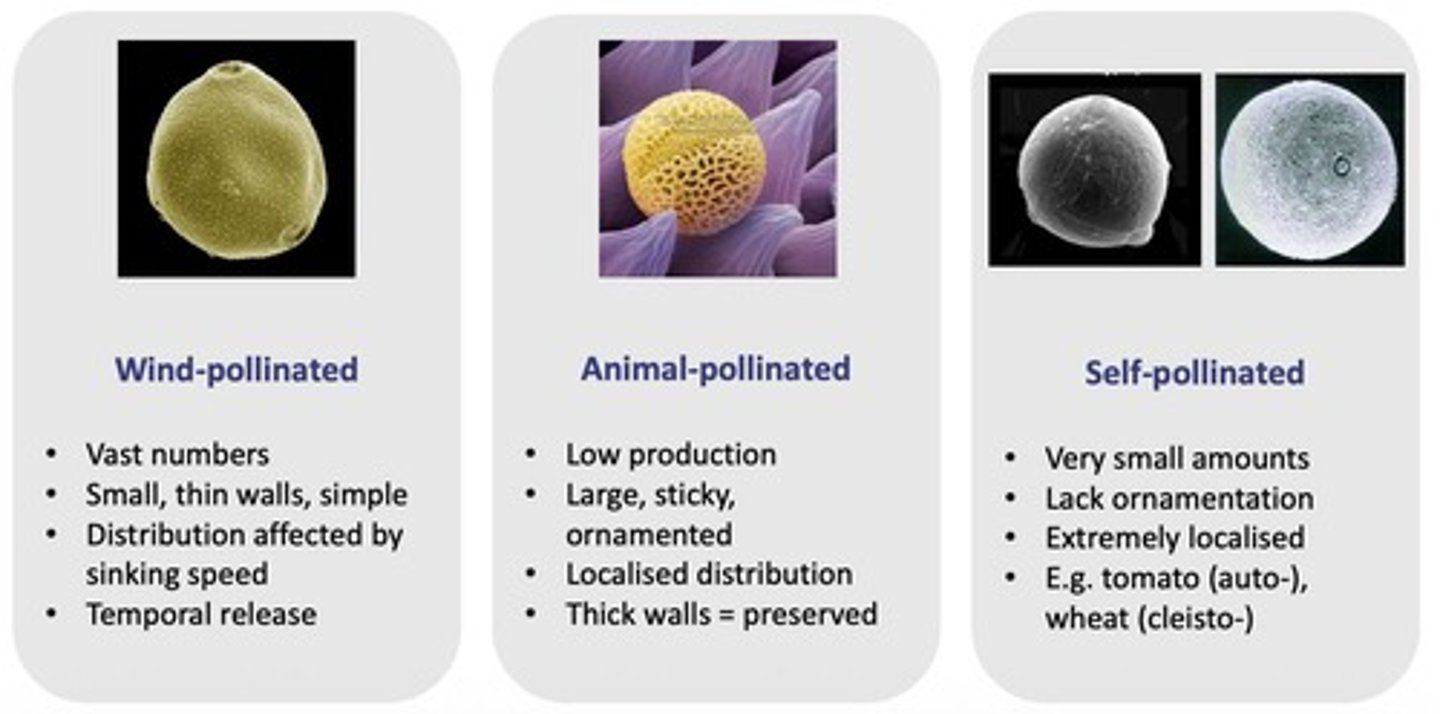
Wind-pollinated (anemophilous), animal-pollinated (zoogamous), and self-pollinated (autogamous).
What is the outer layer of a pollen grain called?
Exine.
What features of pollen are useful for identification?
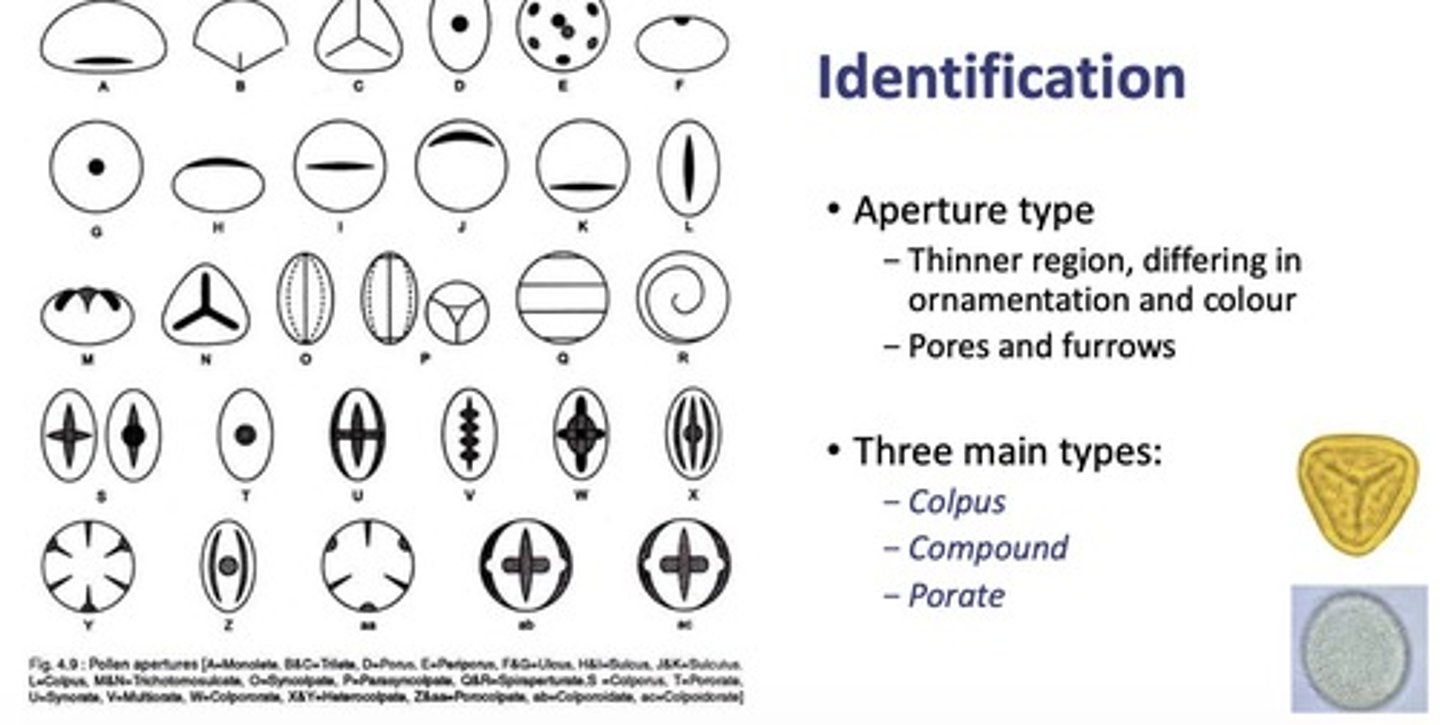
Size, shape, aperture number and type, general pattern/texture, symmetry, and polarity.
What are the limitations of pollen analysis in forensic investigations?
Potential contamination, low taxonomic resolution, and often not being an investigative priority.
What are the advantages of using pollen in forensic investigations?
Its small size, diversity, abundance, resistance to decay, and established techniques.
What challenges are associated with pollen analysis?
Time-consuming analysis and the need for expert knowledge.
What is pollen tenacity?
The ability of pollen to transfer and persist in the environment.
How can pollen analysis assist in product authenticity investigations?
It can determine if products are genuine or falsified, such as in counterfeit medicines, honey. - from the origin they claim to be from.