Fatty Acid Oxidation
 Call Kai
 Learn
Learn Practice Test
 Spaced Repetition
 Match
Match Flashcards
 Knowt Play
1/20

There's no tags or description
Looks like no tags are added yet.
Name | Mastery | Learn | Test | Matching | Spaced | Call with Kai |
|---|
No analytics yet
Send a link to your students to track their progress
21 Terms
Describe the 3 stages of fasting.
glycogenolysis -- breakdown of glycogen to maintain blood sugar levels (~24 hrs)
gluconeogenesis -- synthesizing glucose from non-carbohydrate precursors
ketone utilization -- byproduct of fatty acid breakdown to supply energy to the brain
Describe a fatty acid molecule.
carboxylic acid group
chain of carbons linked together
trans -- functional groups on the opposite side
cis -- functional groups on the same side
Where does fatty acid beta-oxidation occur?
occurs primarily in the mitochondria of liver, skeletal muscle, and heart cells
Describe the carnitine shuttle.
the mitochondrial membrane is not permeable to long-chain fatty acids
fatty acids need to be shuttled into mitochondrial matrix via carnitine
What is the first step in beta-oxidation?
acyl-CoA dehydrogenase -- fatty acyl-CoA is metabolized
short-chain acyl-CoA dehydrogenase
medium-chain acyl-CoA dehydrogenase
very long-chain acyl-CoA dehydrogenase
What are the general clinical presentations of fatty acid oxidation disorders?
newborns:
cardiomyopathy, hypoketotic hypoglycemia, liver dysfunction
infantile-onset:
lethargy and vomiting
late childhood/adult onset:
muscle weakness, renal damage
What are the general dietary guidelines of FAOD?
avoid periods of fasting
complex carbohydrate intake
low fat meals
MCT oil & carnitine supplementation
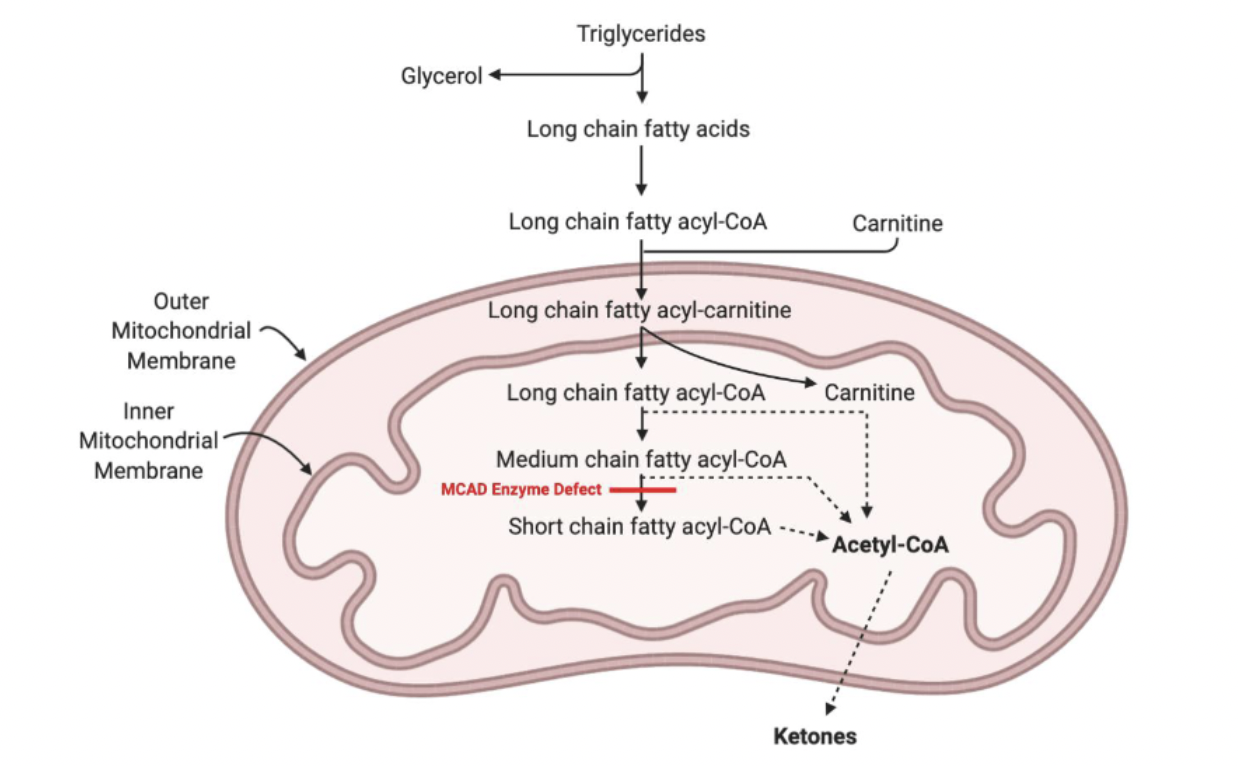
Describe the dysfunctional pathway of medium-chain acyl-CoA dehydrogenase deficiency.
mutation in the ACADM gene (single nucleotide chain -- lysine to glutamate)
medium-chain acyl-CoA dehydrogenase is unable to break down the medium-chain acyl-CoA into acetyl-CoA
What are the symptoms of MCADD?
newborns/infants: altered mental status, emesis, dehydration, drowsiness, and poor feeding
adolescents/adults:
metabolic crisis -- metabolic acidosis, hyperammonemia, hyperlactacidemia, hypoglycemia
multi-organ involvement -- neurological, muscular, hepatic, or cardiac symptoms
What are the biochemical values of MCADD?
increased hexanoylglycine and dicarboxylic acids in the urine
elevated acylcarnitines
Describe the dysfunctional pathway of very long-chain acyl-CoA dehydrogenase deficiency.
mutation in the ACADVL gene
very long-chain acyl-CoA dehydrogenase is unable to break down the very long-chain acyl-CoA into acetyl-CoA
results in toxic derivatives that accumulate and cause damage to the cardiac, hepatic, and muscular tissues
What are the symptoms of VLCADD?
acute cardiomyopathy
hypotonia
hepatomegaly
intermittent hypoglycemia
myopathy
How is VLCADD diagnosed?
positive newborn screening test
increase in long-chain acylcarnitines
other testing: genetic testing, enzymatic assays
What is the tri-functional protein?
enzyme complex that catalyzes the last 3 steps in beta-oxidation
bound to inner-mitochondrial membrane
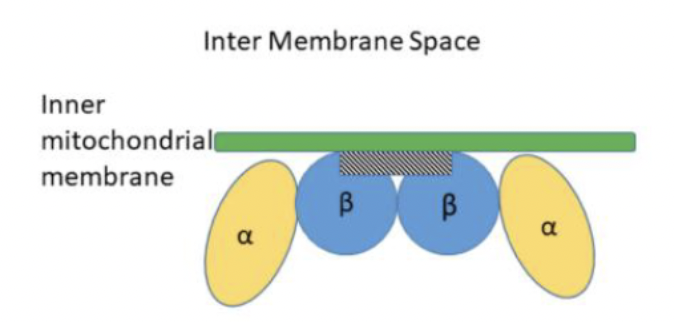
Describe the dysfunctional pathway of tri-functional protein defect (TFPD).
mutations in HADHA or HADHB cause TFPD to lose enzymatic functions
What are the clinical presentations of TFPD?
neonatal onset -- severe form
infantile onset -- intermediate form
late adolescent onset -- mild form
How is TFDP diagnosed?
elevated levels of 3-hydroxy palmitoyl carnitine
other testing: enzymatic assays, identify bi-allelic mutations in HADHA/HADHB
Describe the dysfunctional pathway of carnitine uptake defect (CUD).
mutations in SLC22A5 gene that encodes for the organic carnitine transporter novel type 2
OCTN2 is highly expressed in the heart, muscle, kidneys, and other tissues
defective fatty acid oxidation pathway
What are the biochemical values of dysfunctional OCTN2?
urinary carnitine wasting
low serum and intracellular carnitine levels
What is the clinical presentation of CUD?
defective fatty acid oxidation results in:
hypoglycemia due to excessive glucose consumption
ectopic fat accumulation in the liver, skeletal muscles, and heart
causes … steatosis, myopathy, and cardiomyopathy
How is CUD diagnosed?
reduced free and total carnitine
genetic testing