7-2: Nuclear Weapons & Deterrence in International Relations
 Call Kai
 Learn
Learn Practice Test
 Spaced Repetition
 Match
Match Flashcards
 Knowt Play
1/26

There's no tags or description
Looks like no tags are added yet.
Name | Mastery | Learn | Test | Matching | Spaced | Call with Kai |
|---|
No analytics yet
Send a link to your students to track their progress
27 Terms
What is the definition of war in the context of international relations?
An event involving the organized use of military force by at least two parties that reaches a minimum threshold of severity.
What are the main reasons states engage in costly wars according to (neo)realism?
Anarchy, security dilemma, seeking balance of power, power maximization, misperceptions or mistakes of decision makers, and domestic actors' interests.
What is nuclear deterrence?
A strategy of preventing or discouraging another actor from taking action by instilling fear of the consequences.
What is the concept of Mutually Assured Destruction (MAD)?
A condition where both sides possess survivable nuclear arsenals, ensuring that even if one side is hit first, they can retaliate with enough force to annihilate the attacker.
What are the prerequisites for Mutually Assured Destruction?
Second-strike capability, rational leadership, and accurate attribution.
What does second-strike capability refer to?
The ability of a state to respond to a nuclear attack with its own nuclear retaliation, even after suffering a first strike.
What is the 'Use It or Lose It' dilemma?
The pressure on a weaker state to launch their nuclear weapons early in a crisis to avoid losing them to a stronger adversary.
What role does rational leadership play in nuclear deterrence?
Leaders must act logically and care about their own survival to maintain effective deterrence.
Why is accurate attribution important in nuclear deterrence?
States must reliably verify who launched an attack to effectively respond and deter future aggression.
What is the definition of Weapons of Mass Destruction (WMD)?
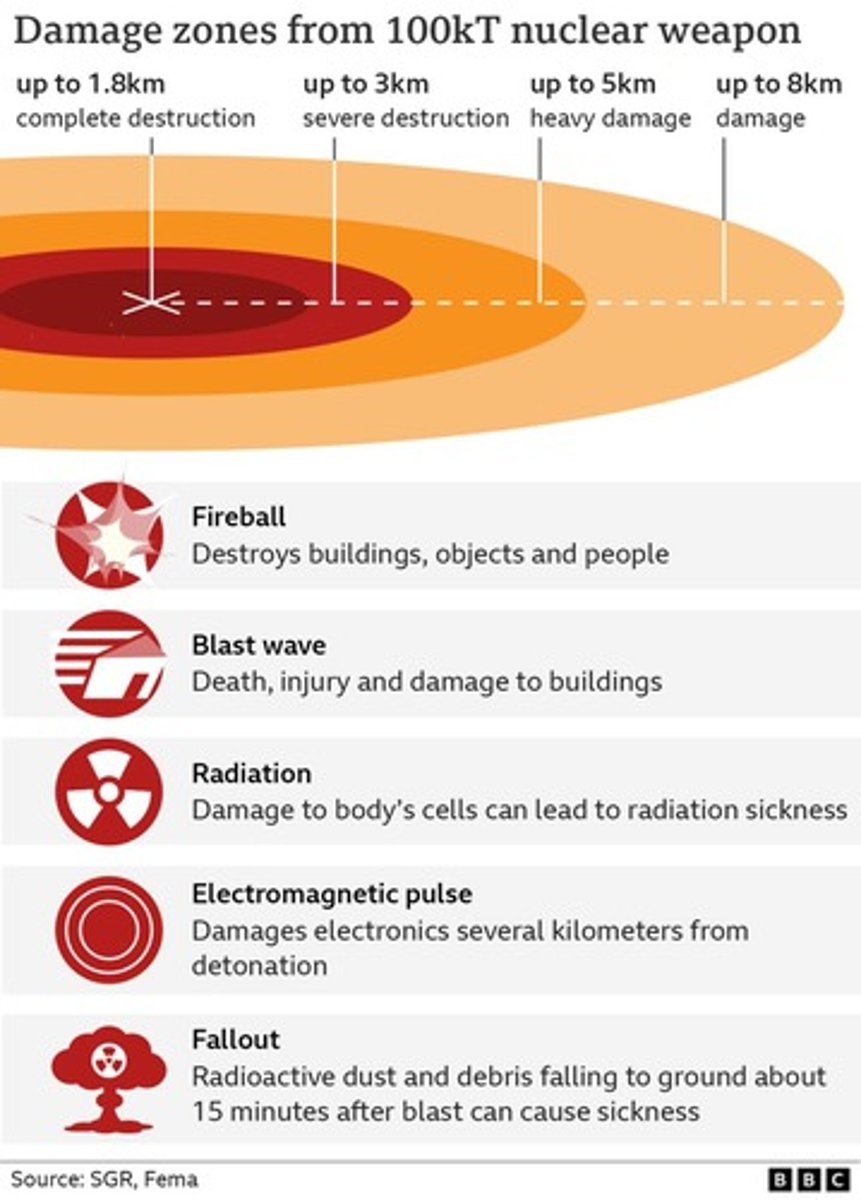
Biological, chemical, radiological, nuclear, or any weapon that can kill or significantly harm many people or cause great damage.
What is nuclear nonproliferation?
Efforts to prevent the spread of nuclear weapons and weapon technology.
What is the Nuclear Non-Proliferation Treaty (NPT)?
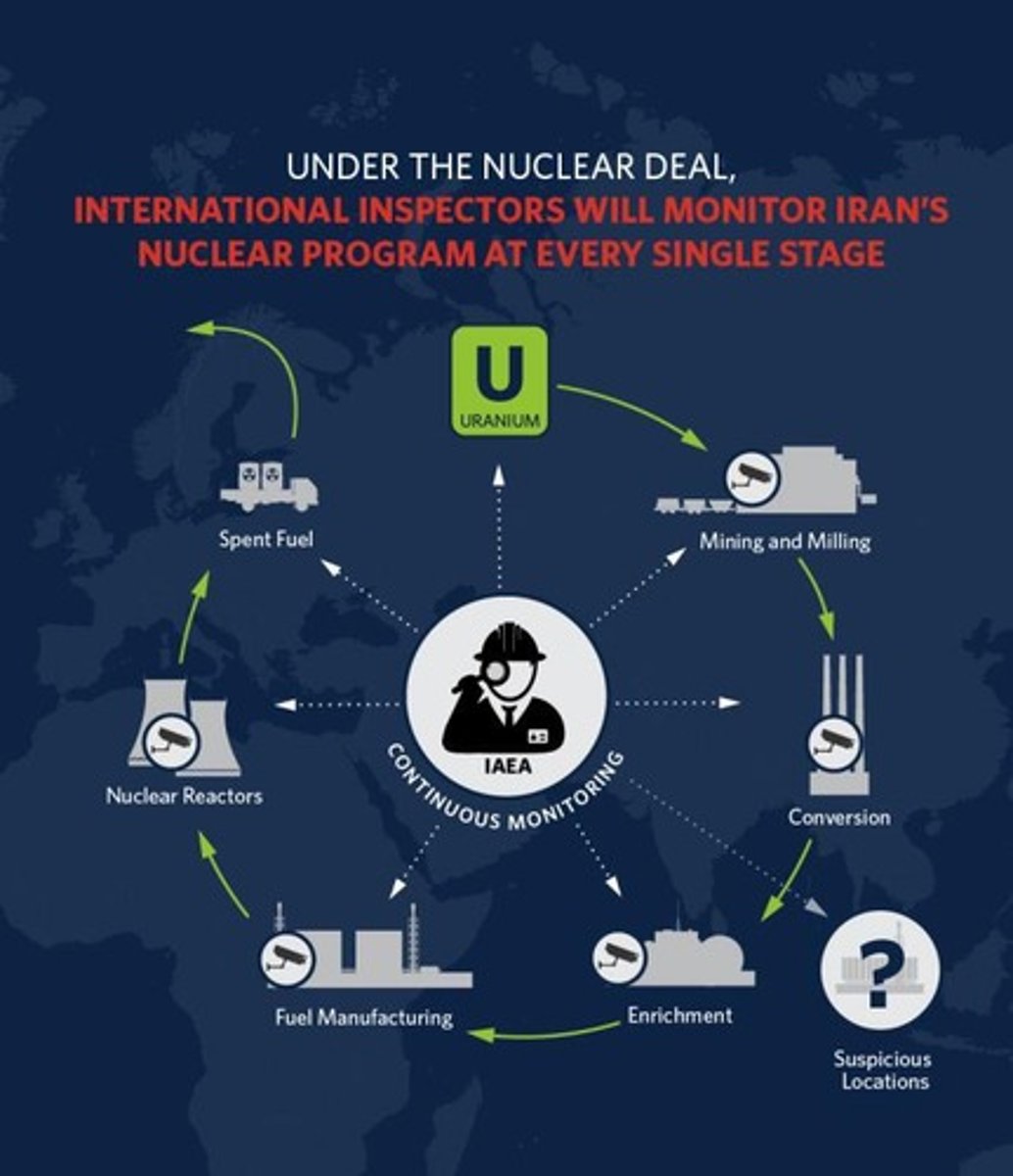
An international treaty aimed at preventing the spread of nuclear weapons, promoting disarmament, and facilitating peaceful use of nuclear energy.
What is a nuclear umbrella?
A security arrangement where a nuclear-armed state promises to use its nuclear arsenal to defend a non-nuclear armed state in case of an attack.

What are some methods to prevent nuclear proliferation?
Security guarantees, bargaining, international institutions like the NPT, and coercive disarmament.
Why might states seek to acquire nuclear weapons?
Fear of attack by another nuclear-armed state and the desire to ensure their own security.
What is the significance of the case of Ukraine regarding nuclear weapons?
Ukraine transferred its nuclear warheads to Russia after acceding to the NPT in 1994, which some realists argue left it vulnerable to aggression.
What is the rally effect in the context of war?
The phenomenon where domestic actors' interests align in support of military action, often in response to external threats.
What is preventive war?
A military action taken to prevent a perceived future threat from materializing.
What is preemptive war?
A military action taken to counter an imminent threat before it can materialize.
What is the impact of nuclear weapons on the distribution of power among states?
Nuclear weapons can shift the balance of power and potentially lead to conflicts among states.
What is coercive disarmament?
Using threats or military force to compel a state to disarm its nuclear capabilities.
What are the potential dangers of nuclear weapons falling into unstable states?
They may lack the prerequisites for MAD, increasing the risk of nuclear conflict or terrorism.
What is the role of international institutions in nuclear nonproliferation?
They facilitate agreements and treaties aimed at preventing the spread of nuclear weapons.
What is the significance of the historical record of nuclear deterrence?
It suggests that nuclear weapons may have contributed to preventing large-scale wars between nuclear-armed states.
What is the difference between preventive and preemptive war?
Preventive war is aimed at stopping a future threat, while preemptive war is a response to an imminent threat.
What is the 'rally-round-the-flag' effect?
The phenomenon where public support for a leader increases during times of international crisis.
What are the implications of uneven nuclear proliferation?
It creates disparities in power and increases the risk of conflict between nuclear and non-nuclear states.