Emergency First Aid + CPR Level C + AED Training
 Call Kai
 Learn
Learn Practice Test
 Spaced Repetition
 Match
Match Flashcards
 Knowt Play
1/70

There's no tags or description
Looks like no tags are added yet.
Name | Mastery | Learn | Test | Matching | Spaced | Call with Kai |
|---|
No analytics yet
Send a link to your students to track their progress
71 Terms
Check if person is responsive
do they respond when you talk to them or tap them on the shoulder?
Check ABCs
airway, breathing (5-10s), circulation (look for life threatening bleeding. Pulse or observation of color and temperature of hands/fingers)
continual care
Have the person rest.
Help the person maintain a normal body temperature.
Monitor the person's condition and ABCs.
Move the person into the recovery position, if necessary.
Give comfort and reassurance to the person
when to put person in recovery position
when a person is unresponsive or has an altered level of responsiveness
Secondary Assessment (**may not always happen)
after immediate life- or limb-threatening injuries/illnesses have been identified and cared for, this more thorough evaluation is performed to identify more subtle, yet still important, injuries
-ask SAMPLE q's (signs, allergies, meds, past med history, last oral intake, events before emergency)
focused examination (responsive+ able to answer q's)
ask for areas of pain/discomfort, examine area(s), ask how person feels, do first aid and call 911 if you feel it's needed
hands-on check (unresponsive/unable to communicate)
go downward and check for injury, starting w/ the head to the legs, then check arms
how to care for shock
1. call 911/EMS
2. care for the suspected cause of the shock
3. provide continual care
how to care for complete choking
1. help FIRST, then call 911/EMS, get an AED
2. alternate b/w 2/3 options: back blows, abdominal thrusts, chest thrusts
3. start CPR if the choking person becomes unresponsive
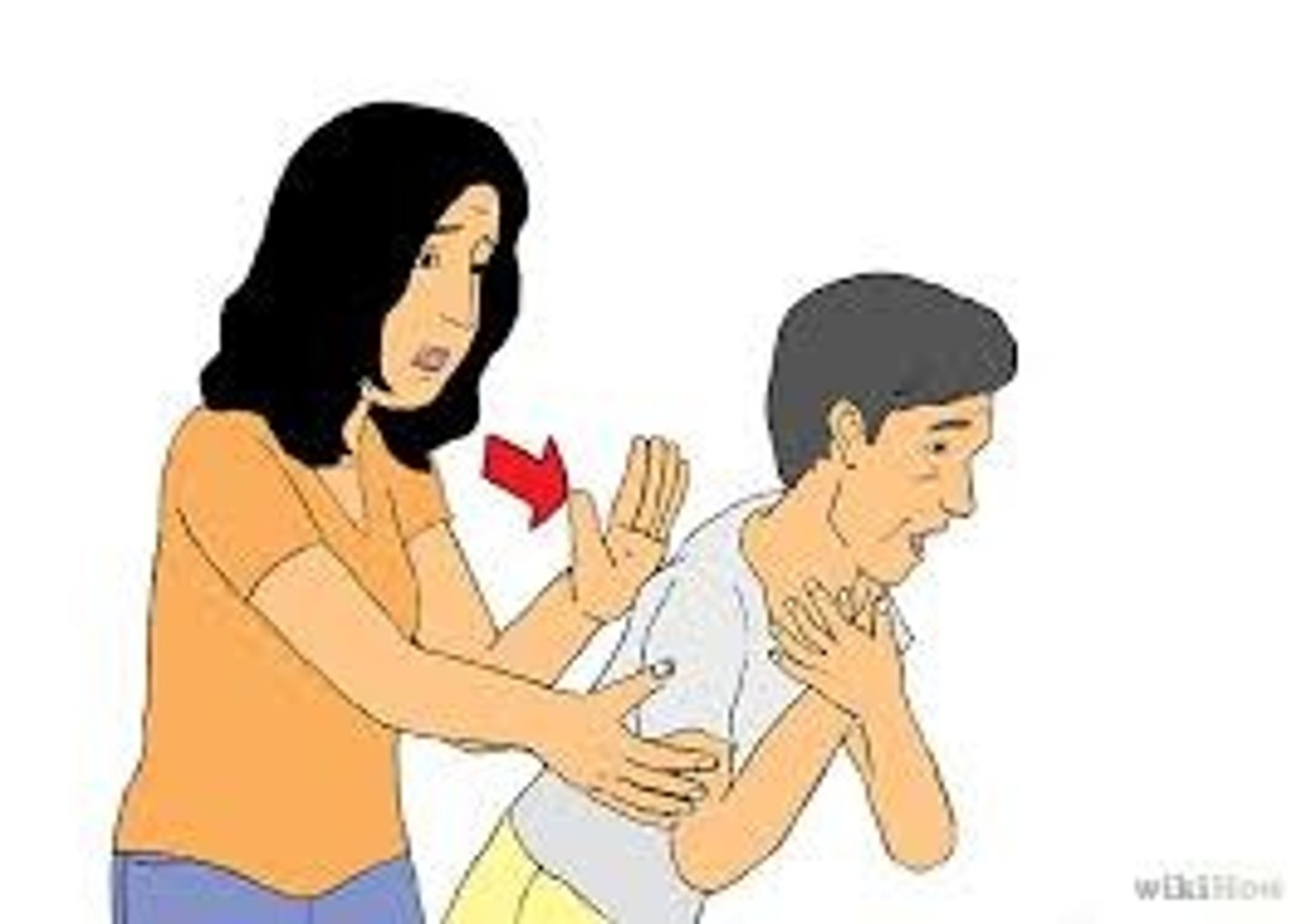
back blows
1. stand or kneel beside or behind the person and place your arm across the person's chest
2. bend the person forward and use the heel of your hand to deliver up to 5 back blows b/w the person's shoulder blades
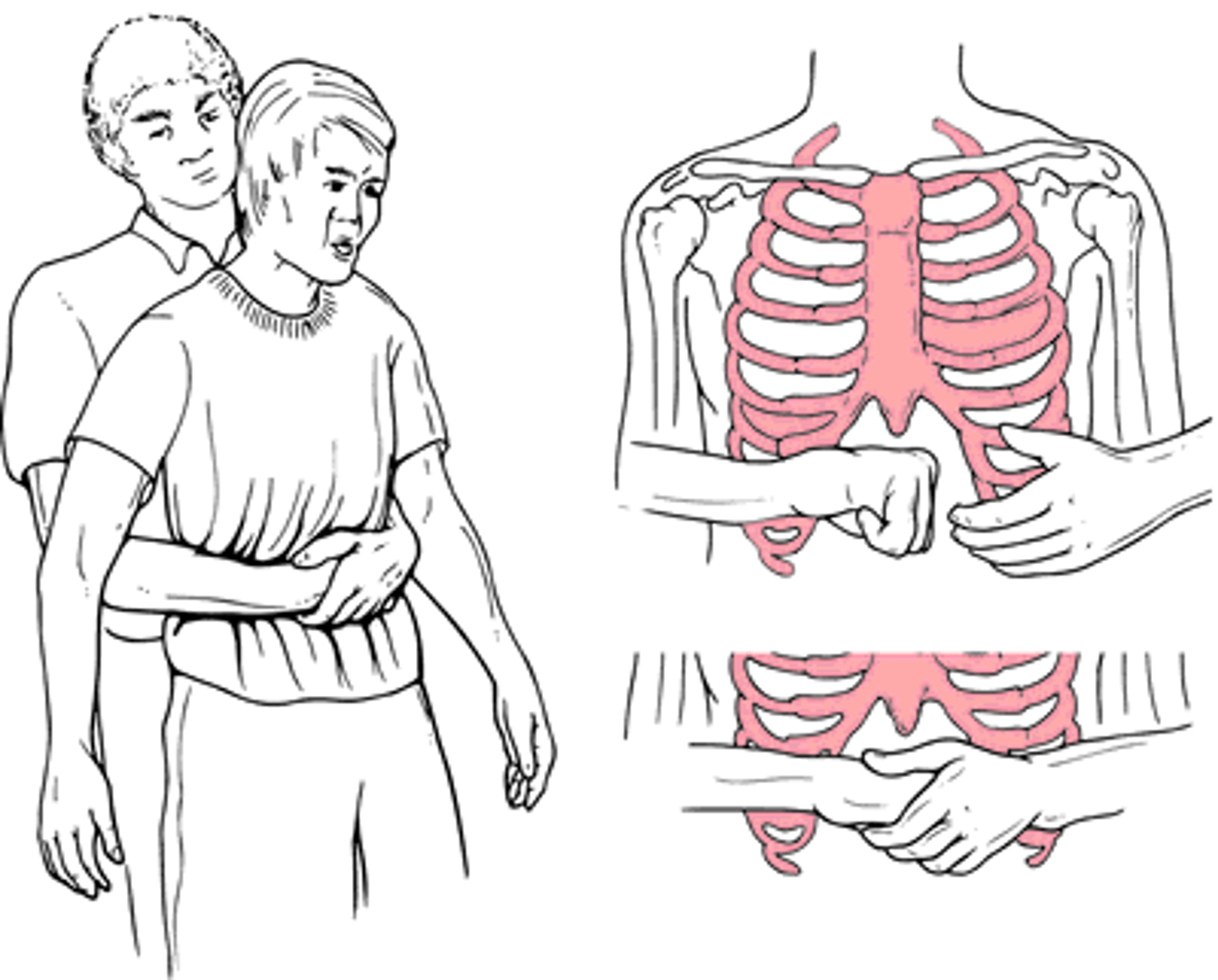
abdominal thrusts
1. stand or kneel behind the person.
2. wrap your arms around the person's waist and place your fist just above the belly button
3. cover your fist w/ your other hand and give up to 5 quick, inward and upward thrusts.
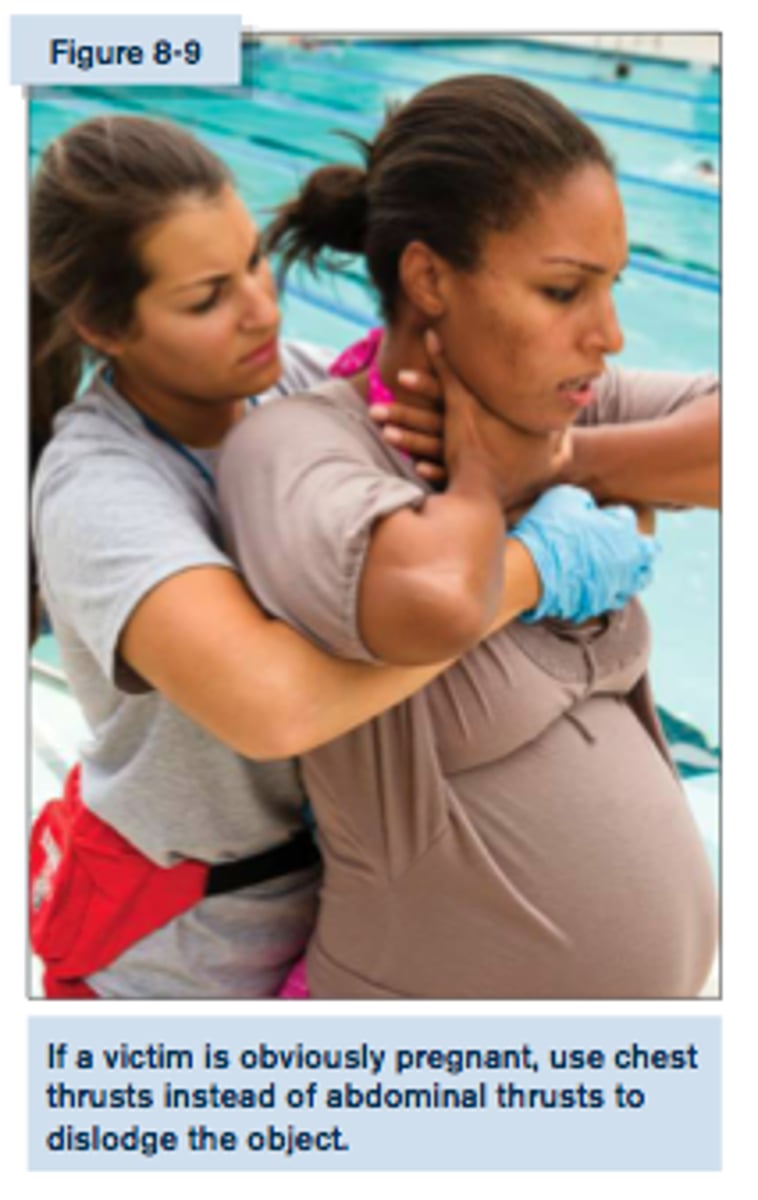
chest thrusts
1. stand or kneel behind the person and wrap both of your arms around the person's chest
2. place your fist in the middle of the person's chest w/ your thumb facing inward, and place your other hand over your fist
3. give up to 5 chest thrusts by pulling straight back toward you
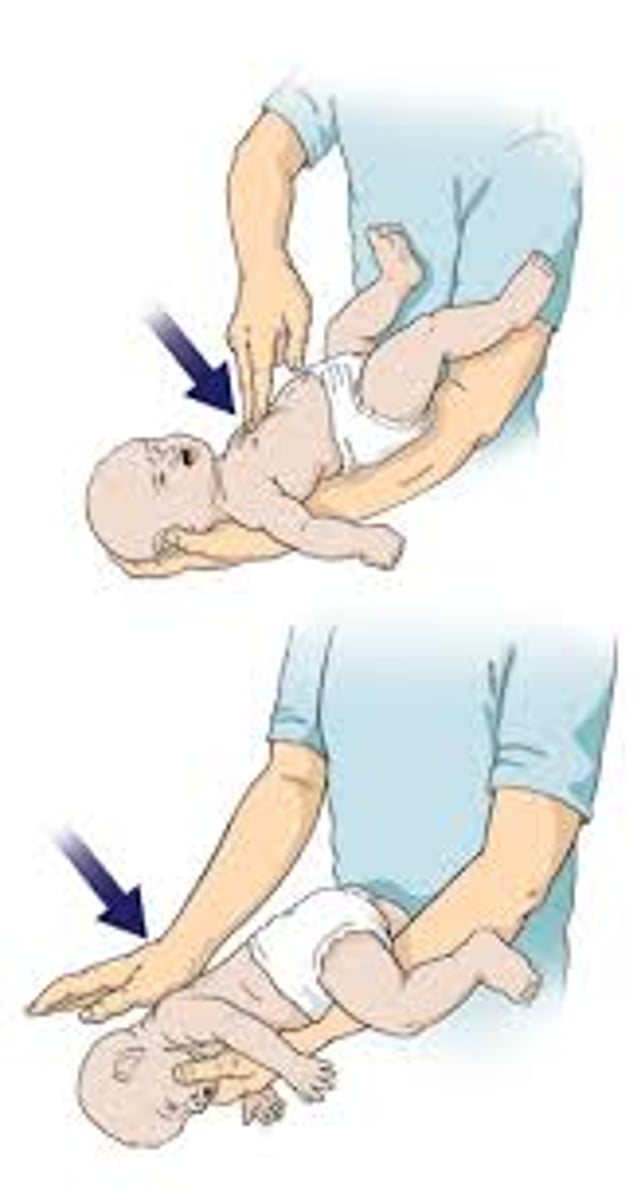
back blows and chest compressions for a baby
1. sit or kneel w/ the baby face-down along your forearm, holding the baby in your hand.
2. deliver 5 back blows b/w shoulder blades
3. if object doesn't exit body, flip baby face-up and support its head
4. place 2 fingers in the middle of the chest and do 5 chest compressions. repeat 5 bb and 5cc until object comes out
How to care for a heart attack
1. call EMS/911, get an AED
2. have the person rest quietly
3. Have the person chew either 1 adult-dose or 2 low-dose acetylsalicylic acid (ASA) tablets (e.g. Aspirin®). Do not repeat the dose.
how to care for a stroke OR TIA
call EMS, get an AED
1. Have the person rest in a comfortable position.
2. Note when the signs and symptoms first started (or the last time the person was known to be well).
how to care for life-threatening external bleeding
1. have the person rest quietly. Apply firm, direct pressure to the wound
2. while maintaining direct pressure, apply a dressing and bandage it in place.
3. apply another dressing on top of bandage if blood soaks through
4. direct pressure not working? try a torniquet if wound is on a limb
How to apply a tourniquet on a limb
- 2-4 inches above wound
- Pad/dressing over area to be torqued
-Apply tourniquet / tighten enough to control bleeding
-document time and date of tightening
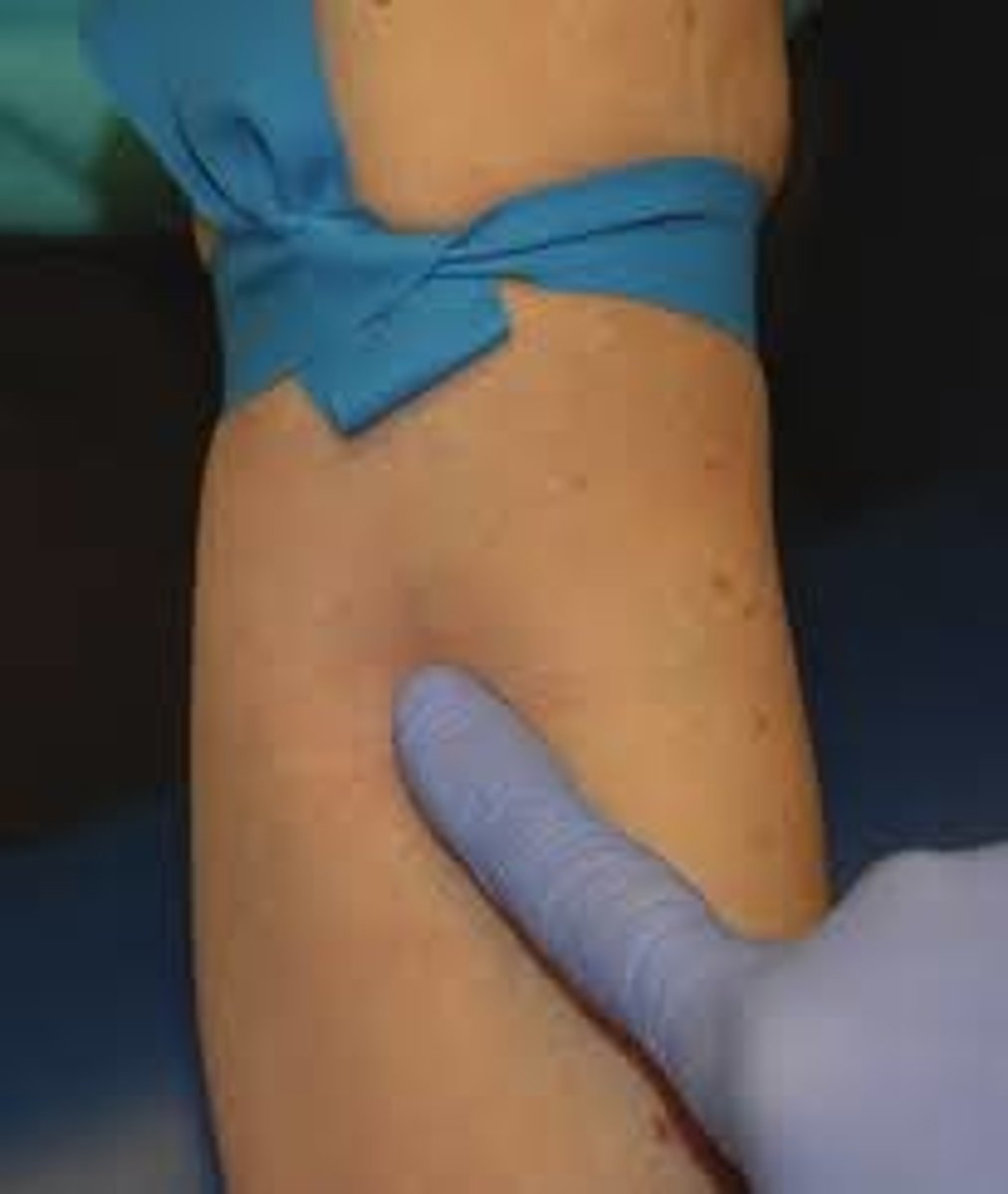
When to use a tourniquet
-significant extremity bleeding
The bleeding is not controlled by direct pressure alone.
You are unable to apply direct pressure (e.g., if you cannot access the wound).
You must move the person, and can't apply direct pressure while you do so.
how to care for internal bleeding
call 911/EMS and get AED
1.Have the person rest quietly until EMS personnel arrive.
how to do cpr (adult or child)
**baby/child w/no phone: do 2 mins of CPR b4 calling EMS/911
**call EMS/911
1. do 30 cc's
2. give 2 breaths: open the airway, place barrier device over person's mouth and nose, and pinch nostrils. give enough air to make chest rise
3. repeat
how to do cpr (baby < 1yr old.)
1. do 30 cc's: put 2 fingers in chest's centre
2. give 2 breaths: open the airway, place barrier device over person's mouth and nose, and pinch nostrils. give enough air to make chest rise
3. repeat cycle
Continue CPR until
you see obvious sign of life
AED is available and ready to use
another trained rescuer takes over
EMS takes over
too tired
scene becomes unsafe
what to do if rescue breaths don't go in
- reposition head w/ head-tilt/chin-lift
-sweep object out w/fingers
-monitor person's mouth after each set of compressions until airway is clear
how to use an aed
1. Turn on AED
2. Place pads on dry, bare chest; must have space between pads that equals the size of fist
3. follow AED's prompts
4. Yell CLEAR if shock is advised (and deliver shock)
5. cont cpr, starting w/compressions
how to care for respiratory distress
Call EMS/9-1-1
1. If the person carries medication for respiratory distress, offer to help the person take his or her medication.
2.Encourage the person to sit down in a comfortable position (leaning forward may help make breathing easier).
3.Provide reassurance, as this can help reduce anxiety and help the person control his or her breathing.
4.Monitor the person's condition and provide continual care until EMS personnel arrive.
how to care for hyperventilation
call EMS/9-1-1 and get an AED if: the hyperventilation does not stop after a few minutes, the person becomes unresponsive, or you suspect that the person is hyperventilating because of an underlying injury or illness.
1.Encourage the person to take controlled breaths by breathing in slowly, holding his or her breath for a few seconds, and then gradually exhaling.
how to care for asthma
call 911/EMS if: person is struggling to breathe or the person's breathing doesn't improve post- medicine consumption
1. eliminate triggers
2. help get person in comfortable position, provide reassurance
3. help person take their prescribed quick-relief asthma medication
how to use an inhaler
1. shake inhaler 3-4 times, remove cap
2. breathe out and bring inhaler to the mouth
3. press the top of the inhaler taking one slow, full breath
4. hold the breath for as long is comfortable, and then breathe out.
How to use an inhaler with a spacer
1. shake the inhaler, then remove the cap
2. put the inhaler into the spacer
3. bring the spacer to the mouth and then press the top of the inhaler
4. take slow, deep breaths, holding each breath for several secs
how to care for allergic reactions
Call EMS/9-1-1 and get an AED if the reaction is severe, or the person is struggling to breathe
1. Calm and reassure the person.
2.Try to identify the allergen and have the person avoid further contact with it.
3.If the person uses a medication to control allergic reactions (such as antihistamines), help him or her to take it.
how to care for anaphylaxis
call 911 and get an AED
help them to an epinephrine auto-injector if they have one!
1. remove the safety cap
2. firmly push the tip of the epinephrine auto-injector against the outer thigh. You should hear a click
3. hold in place as directed, usually for 5-10 sec
4. rub the injection site for 30s
5. repeat the dose in other leg if condition doesn't improve w/in 5mins
6. have person rest until ems arrives
how to care for cuts and scrapes (DRAW)
call 911/ems if you suspect more serious injuries
1. apply direct pressure to wound if it is bleeding significantly, until bleeding stops
2. rinse the wound for 5mins w/clean, running tap water
3. apply an antibiotic ointment/cream and bandage the wound
4. ensure that the person knows to watch for signs of infection over the next few days
how to care for impaled objects
call ems/911
1. leave the object in place
2. stabilize the object using bulky dressings w/out putting direct pressure on it
3. secure the dressings in place and check circulation below site of injury
how to care for amputations
1. apply direct pressure to the wound
2. protect it- wrap it in gauze or a clean cloth
3. bag it- place it in a plastic bag
4. cool it- keep the bag on ice. wrap the bag before cooling it
5. tag it- label w/person's name, date, and time
how to care for chemical burns
1.Put on protective equipment.
Remove any clothes that might have the chemical on them, and brush any dry chemical powder off the person's skin.
2. Flush with large amounts of cool running water for at least 15 minutes.
3. Refer to the appropriate Material Safety Data Sheet (MSDS), if it is available, for additional first aid measures.
how to care for electrical burns
1.Ensure that the electrical current has been turned off.
2.Keep the person still.
3.Look for two burns (the entry and exit points) and treat them as thermal burns.
how to care for bruises
call ems/911 and get an aed if person is in severe pain, or there is suspected internal pain, life threatening bleeding
1. apply a cold pack wrapped in a towel for up to 20mins, remove it for 20-30mins. cont to do this until pain is reduced
how to care for eye injuries: there is a chemical in the eye
gently flush the eye w/ running water for min.15mins before ems arrive
how to care for eye injuries: if eyes were flash burned
1. cover the eyes w/ a cool, wet cloth
2. make sure the person gets medical attention
how to care for ear injuries
call ems/911 if there is blood/fluid draining out ear or it is an explosion or pressure injury
if it's an external wound: treat w/ routine wound first aid (DRAW)
if there's a foreign object: 1. tilt head to affected side, gently tap ear to loosen object.
2. grab object and pull it out
how to care for scalp injuries
Call EMS/9-1-1 and get an AED if you are not sure how serious the scalp injury is or if you feel a dip, a soft area, or pieces of bone.
1.If you feel a dip, a soft area, or pieces of bone: Treat the injury as a head injury. Apply direct pressure only if there is life-threatening bleeding; otherwise, try to control the bleeding by putting pressure on the area around the wound.
signs of stroke (FAST)
Face drooping, Arm weakness, Speech difficulty, time to call 9-1-1
how to care for burns
1. cool affected area w/ a cool, clean compress for min. 10 mins
2. remove jewellery and clothing from burn site, if they are NOT sticking to skin
3. cover the burn w/ a dry, sterile dressing.
Counselor
madrich madricha
Head staff
hanhalla
Unit
edah/edot
Unit head
rosh edah
Evening Program
tochnit erev
Laundry day
yom kvisah
Swimming
schiyah
Israel day
yom yisrael
Prayer(s)
tefillah/tefillot
Infirmary
mirpa'a
Office
misrad
Rec Hall
ulam
Program Office
misrad tochniyot
Staff lounge
moadon tzevet
Sports field
migrash
Tent
ohel
'' Flagpool '' area
mifkad
Breakfast
aruchat boker
Lunch
aruchat tzohorayim
Dinner
aruchat erev
doar
mail day
yom doar
letter
michtav
announcement
hoda'ah/hodaot
rest period
menucha
good evening
erev tov
free time
chofesh
blessing after a meal
birkat hamazon