Lipids
 Call Kai
 Learn
Learn Practice Test
 Spaced Repetition
 Match
Match Flashcards
 Knowt Play
1/40

There's no tags or description
Looks like no tags are added yet.
Name | Mastery | Learn | Test | Matching | Spaced | Call with Kai |
|---|
No analytics yet
Send a link to your students to track their progress
41 Terms
What are lipids and their functions?
structural - membranes
Energy - source/storage
signaling ex. steroid hormones
structurally diverse
not soluble/sparingly soluble in H20
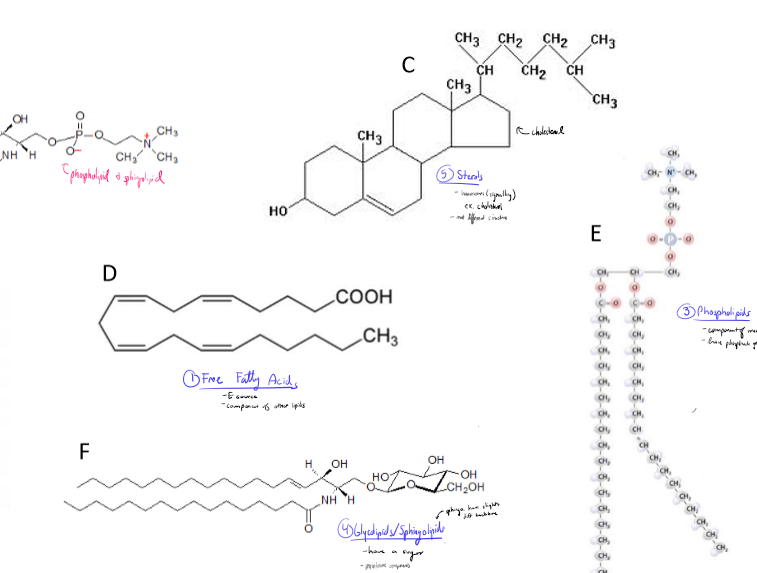
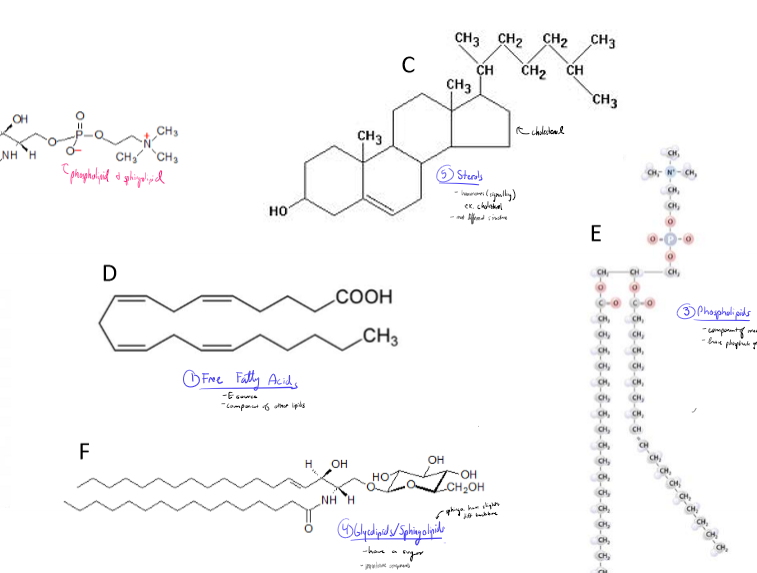
What are the 5 types of lipids?
free fatty acids - Energy source, component of other lipds
Tryiglycerols (triglycerides/fats) - store energy, insulation
phospholipids - component of membranes, have a phosphate group
glyclolipids/sphingolipids - have a sugar, membrane components
sterols - hormones (signalling), most different structure
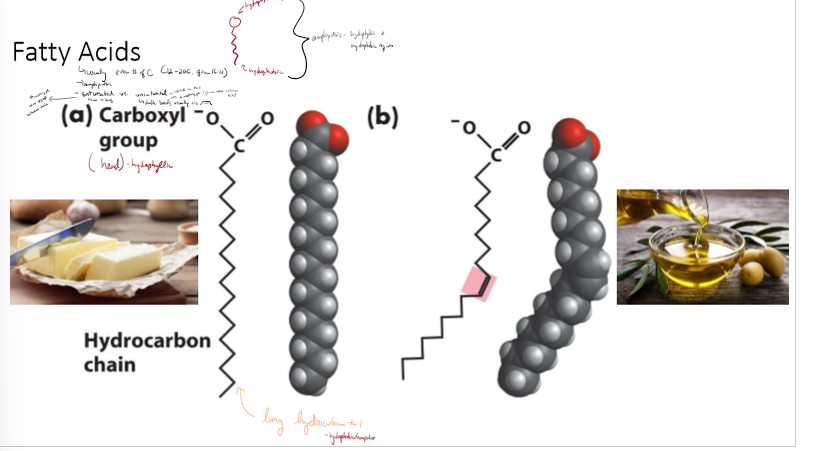
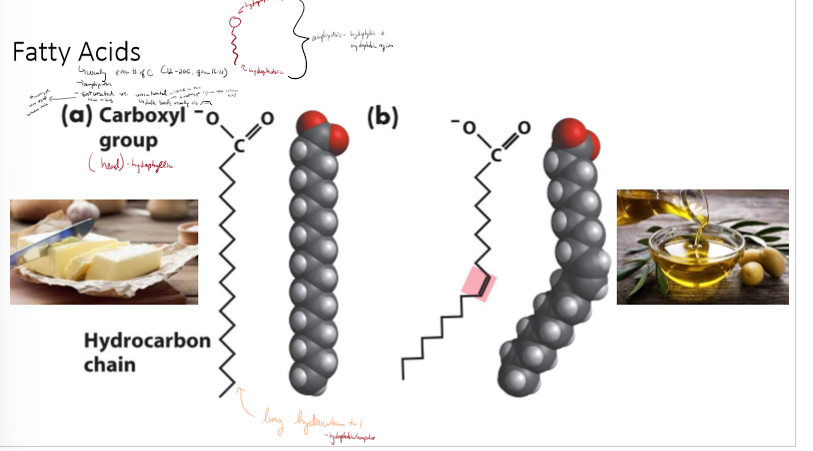
What are fatty acids? What are the difference between saturated and unsaturated fats?
E source lipids
amphipathic (hydrophilic, polar head and hydrophobic nonpolar tail)
usually even number of carbons, 12 to 20 long
carboxyl group at head, hydrocarbon tail
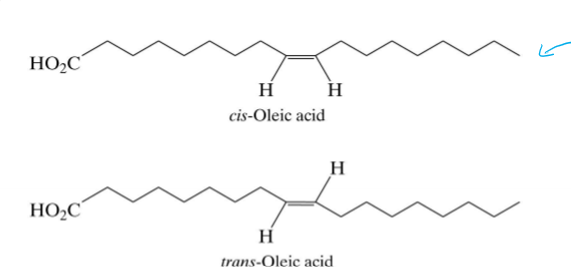
saturated - alkane tail, more VDW interactions, higher meltin gpoint
unsaturated - tail has an alkene in it, usually cis, causing a kink. lower melting point
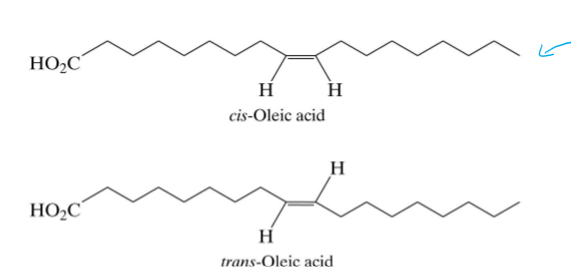
What makes a trans fat different from a normal saturated fat?
has a trans double bond instead of a cis double bond
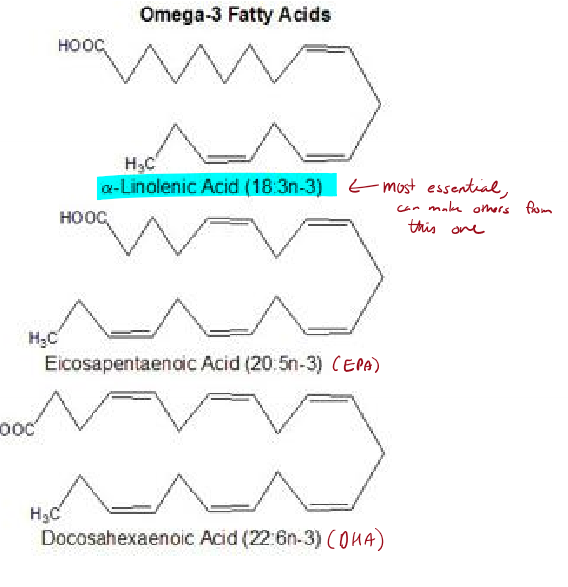
What end of the fatty acid does the omega naming system start from?
the end of the tail
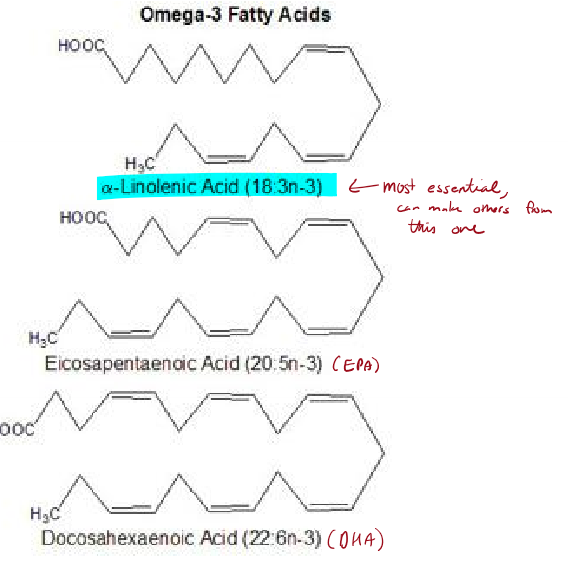
What is the essential Omega-3/6 fatty acid that we can sparingly make other fatty acids from?
linolenic acid
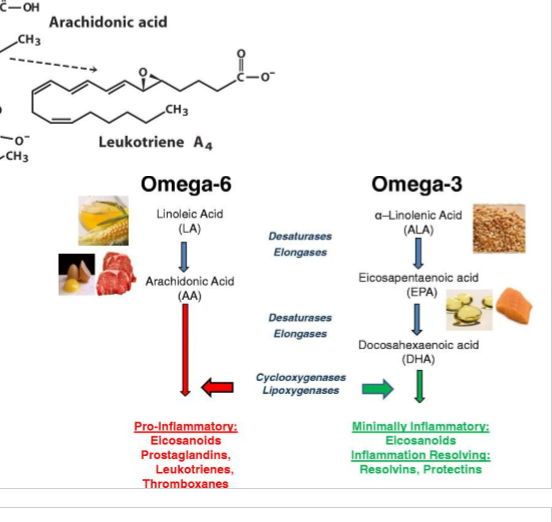
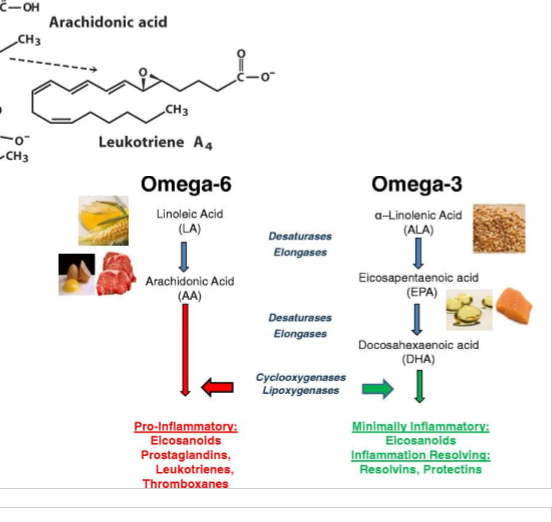
What are eicosanoids? What effects do they have?
hormones derived from free fatty acids
omega-6 produces eicosanoids with pro-inflammatory effects
omega-3 produces eicosanoids with anti-inflammatory effects
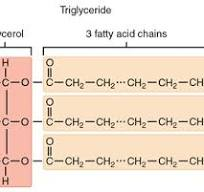
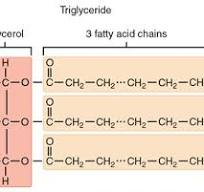
What are triacylglycerols? How are they structured?
fats; long term E storage and insulation; not in membrane
glycerol backbone with 3 fatty acid chains attached to an ester bond
often mixture of saturated/unsaturated fats
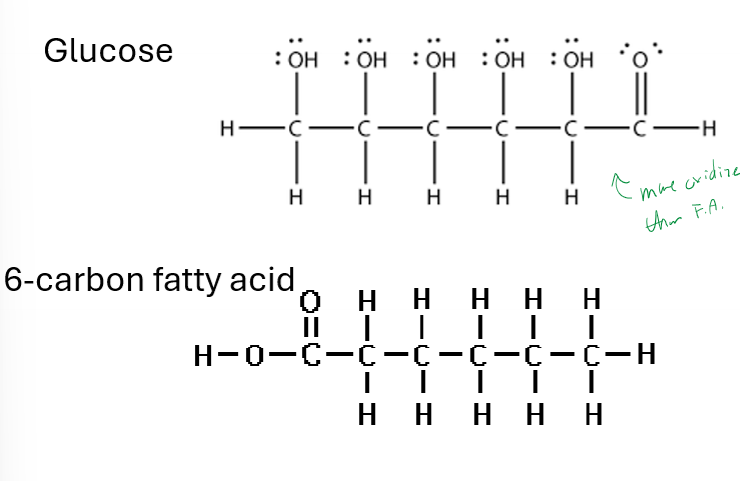
Why store Energy as fat (triacylglycerols) rather than sugars?
fats store more energy per gram that carbohydrates do - less oxidezed that glucose, so it can be oxidizes more and release more energy
store fat anhydrously - don’t require water to surrond it, ligher to storev
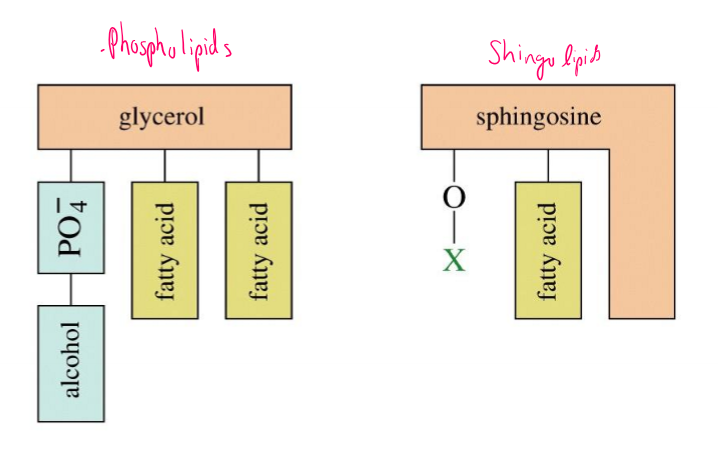
What are the types of membrane lipids? What makes them different
phospholipids - glycerol backbone, 2 fatty acid chains, phosphate group and maybe head
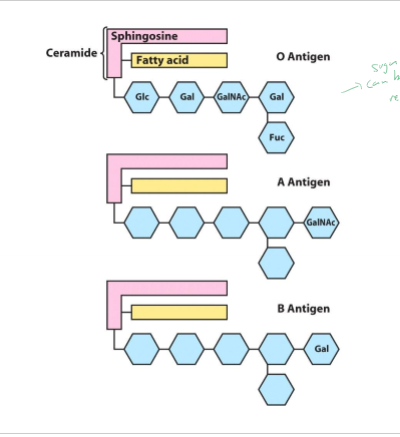
sphingolipids - sphingosine backbone with amine, 1 fatty acid chain, and head group with a sugar
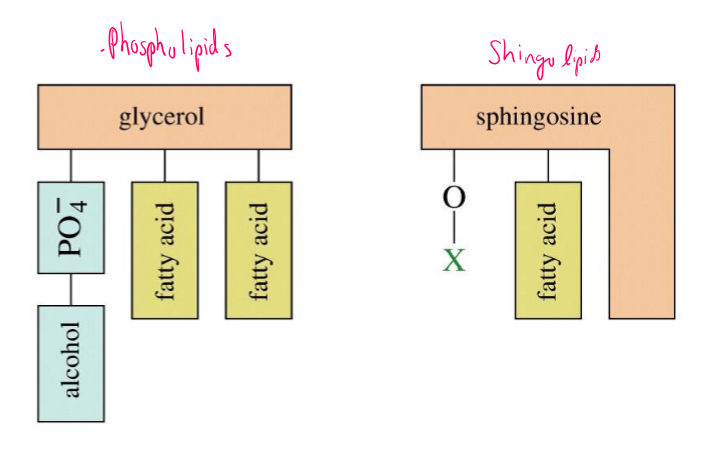
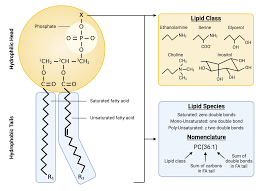
Describe the structure of phospholipids
glycerol backbone, 2 fatty acids, and a polar phosphate, potentially a head group
fatty acid chains added via condensation reactions, forming esters
Describe the structure of sphingo/glycolipids
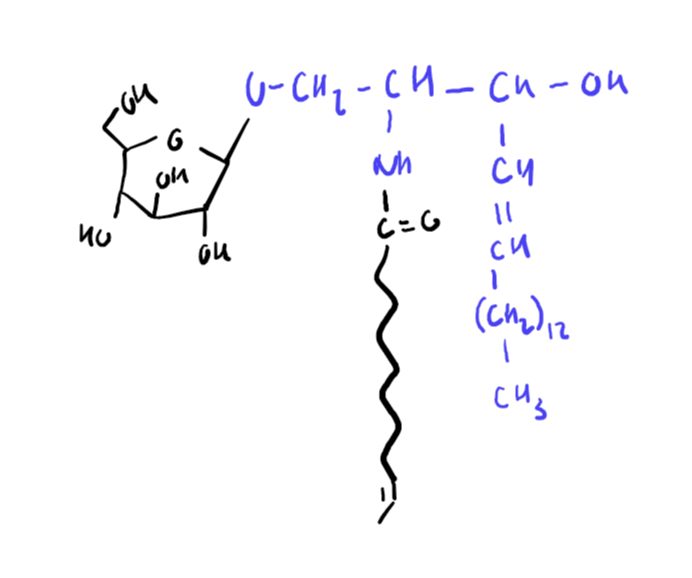
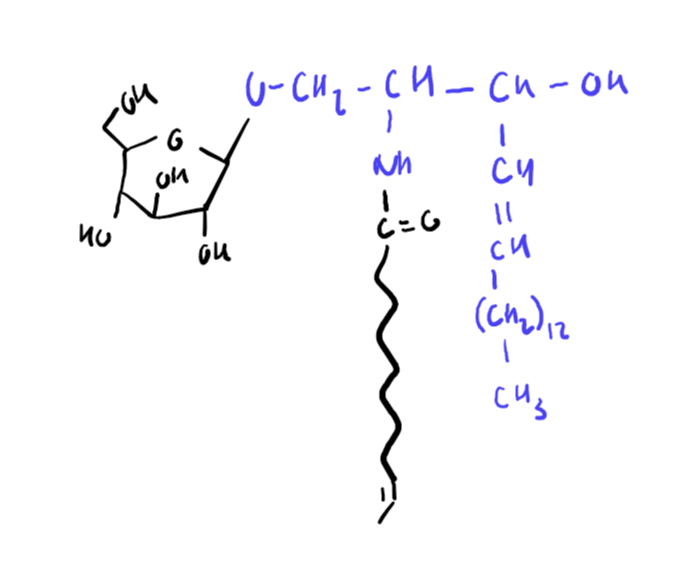
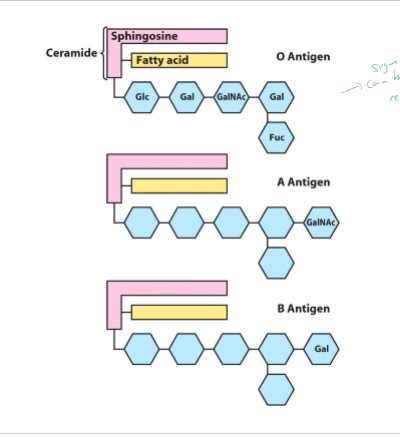
long sphingosine backbone with amine
sphingosine, 1 fatty acid chain, and a head group with a sugar
How are sphingolipids often used in cells?
as signaling molecules, sugars on head group change to signal
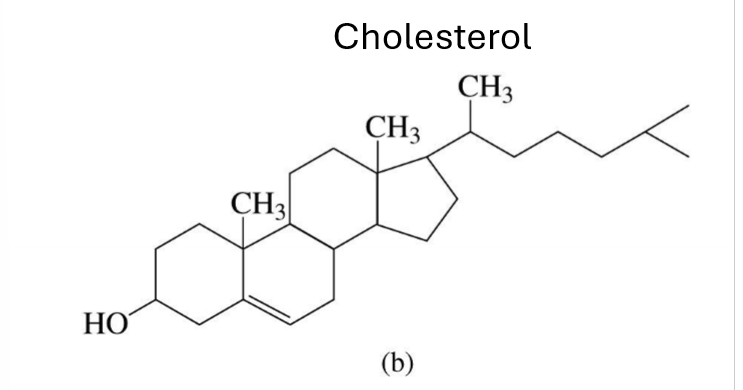
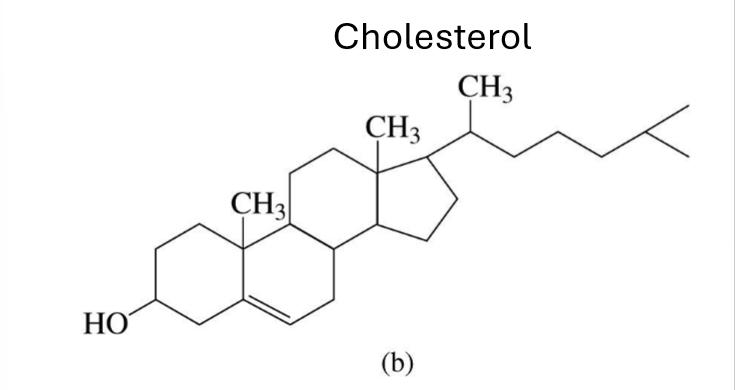
Describe the structure of sterol lipids and the types
4 fused rings, 3 6C and 1 5C, with different groups on it
cholesterol - membrane component
bile acids/salts - amphipathic, solubilize fat by forming a polar coat around them
steroid hormones
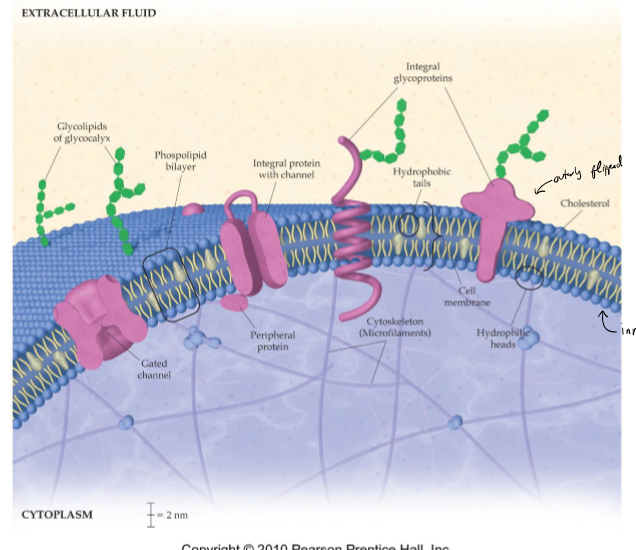
How are lipid bilayers fluid in the fluid mosaic model?
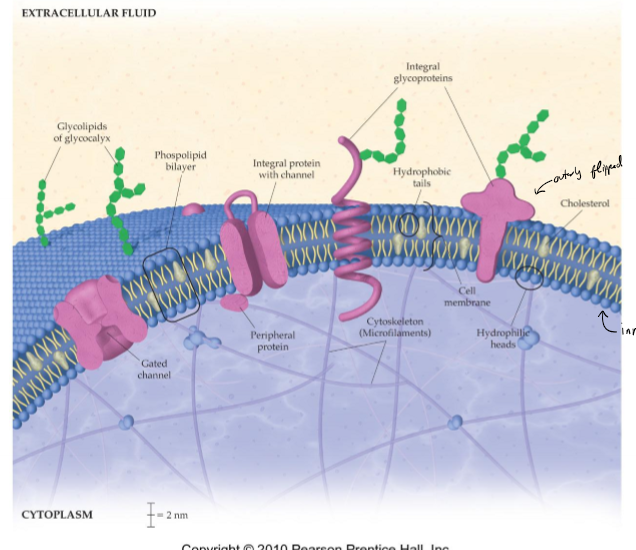
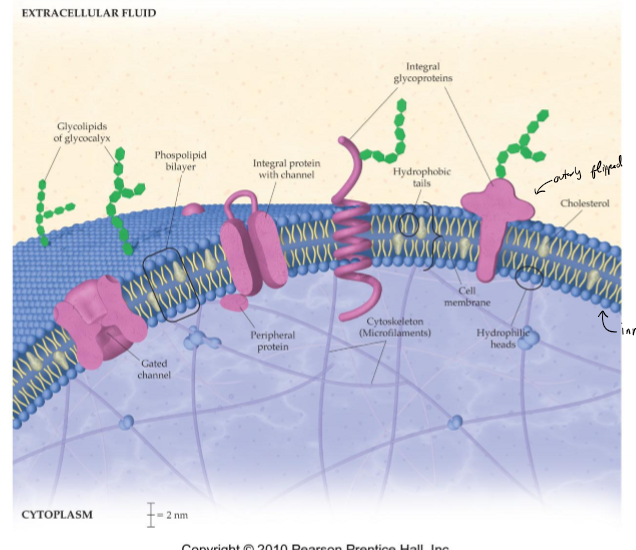
lateral diffusion - proteins and lipids on the same side of the bilayer can switch positions quickly
flipflop diffusion - lipids move from outer to inner side of bilayer via an enzyme
How are lipid bilayers a mosaic in the fluid mosaic model?
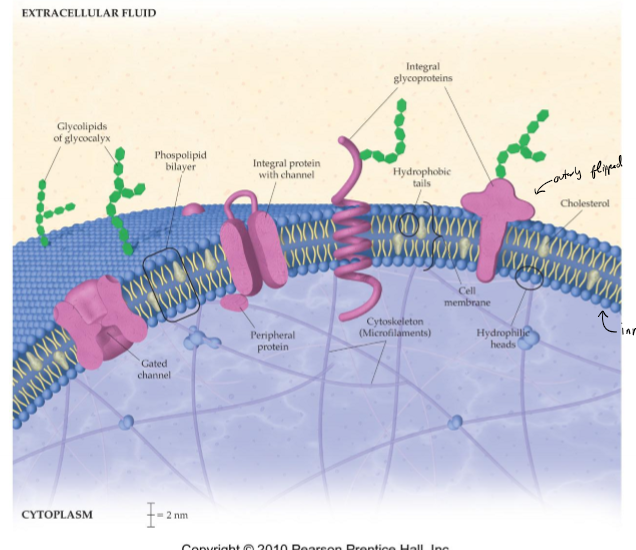
made of different kinds of lipids
have different proteins embedded in membrane
proteins have specific orientations
inner/outer side are asymmetric/different
sugars on lipids/proteins stick off outer leaflet of membrane for signalling/recognition
composition/amount (esp. of proteins) varies between types of membranes ex. plasma vs nuclear
cholesterol for support
What are the types of proteins associated with lipid membranes?
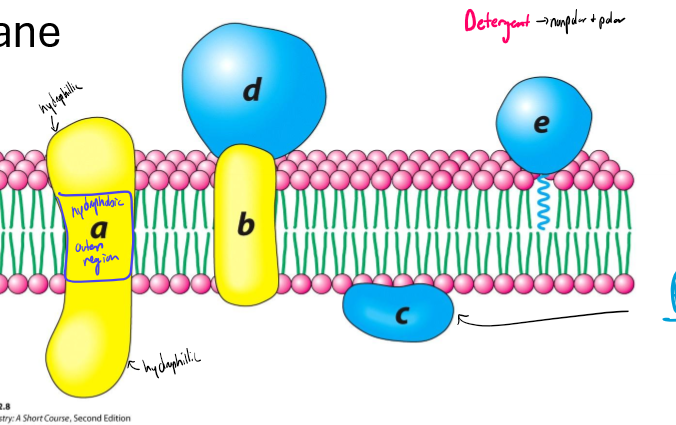
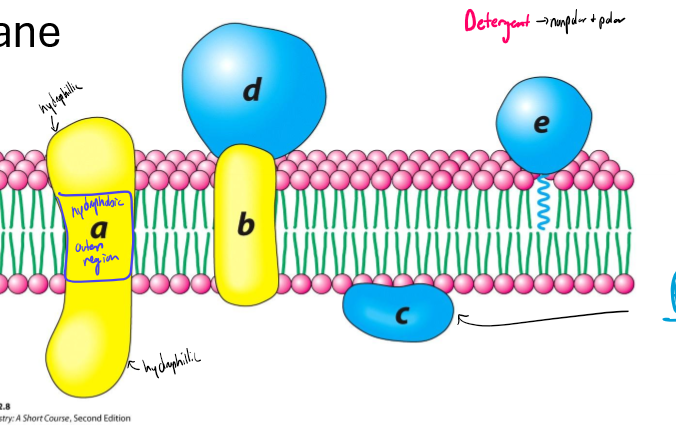
integral: tightly associated with membrane
peripheral: loosely associated with membrane
What are integral proteins?
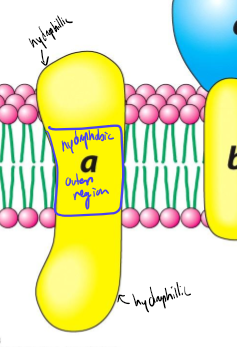
proteins tightly associated with membrane, usually transmembrane proteins
have nonpolar exterior for region that travels through nonpolar section of membrane
requires a detergent, both polar and nonpolar, to remove/dissociate from membrane
What are transmembrane proteins?
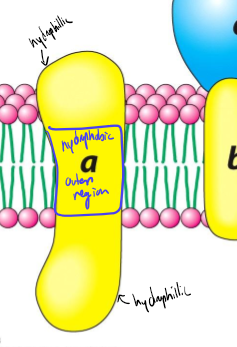
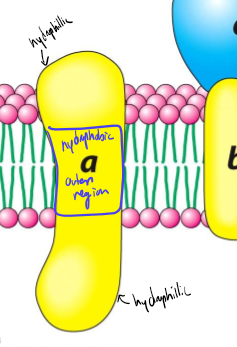
type of integral protein, tightly associated with membrane
have nonpolar exterior for region that touches nonpolar inside of membrane
at least 1 part of the protein spans the entire membrane
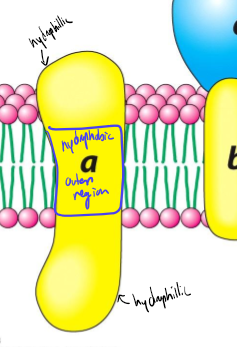
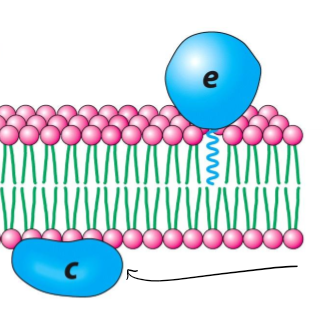
What are peripheral proteins?
proteins loosely associated with plasma membrane via hydrogen or ionic bonds
attach via charged heads of lipid or w/ proteins embedded in the membrane
may have a nonpolar fatty acid “anchor” into the membrane
don’t require detergent to remove
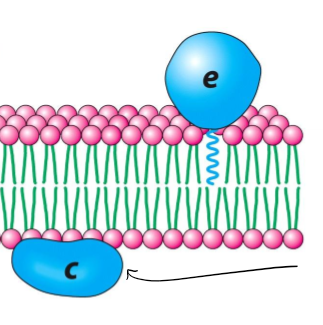
Why do cells need to adjust membrane fluidity? How do cells adjust membrane fluidity?
control in response to temperature changes in environment, lipids get more solid in cold and more fluid in heat
change chain length, degree of unsaturation, and amount of cholesterol
How does changing the chain length of membrane lipids affect membrane fluidity?
increase length: more solid (more VDW interactions increase MP)
decrease length: more fluid (fewer VDW interactions, lower MP)
How does changing the degree of unsatuation of membrane lipids affect membrane fluidity?
increase saturation (fewer double bonds): more liquid (more VDW, higher MP)
decrease saturation (more double bonds): less liquid (fewer VDW, lower MP)
How does changing the amount of cholesterol in a membrane affect membrane fluidity?
increase cholesterol = more rigid
decrease cholesterol = less rigid
Is a fatty acid chain with double bonds saturated or unsaturated?
unsaturated
A cell moves to colder temperatures. What does the cell need to do to membrane fluidity and how will it do so?
increase fluidity
decrease length of fatty acids
decrease amount of saturation (more double bonds and more unsaturated fats)
A cell moves to warmer temperatures. What does the cell need to do to membrane fluidity and how will it do so?
decrease fluidity
increase fatty acid chain length
increase saturation (fewer double bonds and more saturated fats)
What are transport proteins?
translocase enzyme
more hydophilic molecules into cell by providing a hydrophobic path through the membrane
can be passive or active transport
Describe passive transport
no Energy required (spontaneous)
molecules move from high to low concentration
driven by entropy
can be simple or facilitated diffusion
move cells both in/out of cell, no directionality (even with facilitated diffusion proteins)
Compare simple and facilitated diffusion
simple: passive diffusion, no transport protein, mols move from high conc to low conc, molecules pass straight through membrane (ex. sterols)
facilitated: passive diffusion, requires transmembrane protein, for polar molecules (ex. ions)
Describe active diffusion
requires E, either through ATP hydrolysis (1’) or movement of another ion down its conc gradient (2’)
moves from low to high conc
requires transmembrane protein
Compare 1’ active transport and 2’ active transport
both require transmembrane proteins
require Energy
1’ - ATP hydrolysis occurs, causing a conformational change in the molecule that moves molecule
2’ - pay for transport of molecule with movement of another molecule down concentation gradient, increaseing overall entropy of system
What is symport and antiport transport?
symport - moves 2 molecules in the same direction
antiport - moves 2 molecules in opposite directions
can be active or passive transport
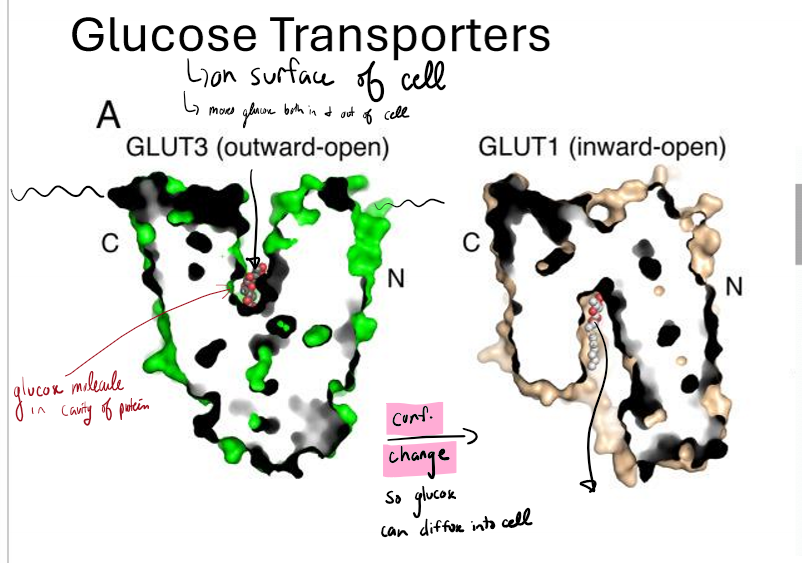
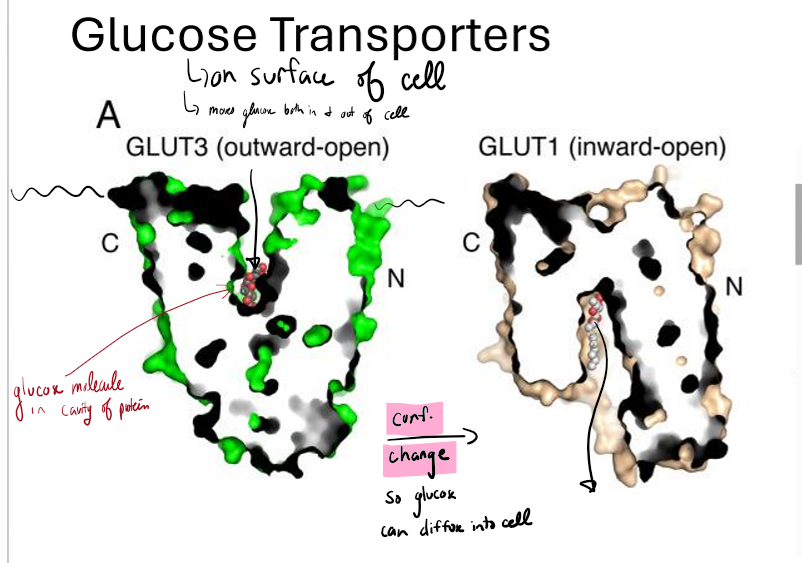
Describe facilitated diffusion of glucose
uses glucose transporters
glucose moves down concentration gradient into cell
glucose molecules bind protein, causing a conformational change in the protein to shuttle glucose across
protein now inwardly open, glucose enters cell
new glucose can now exit cell using same transporter
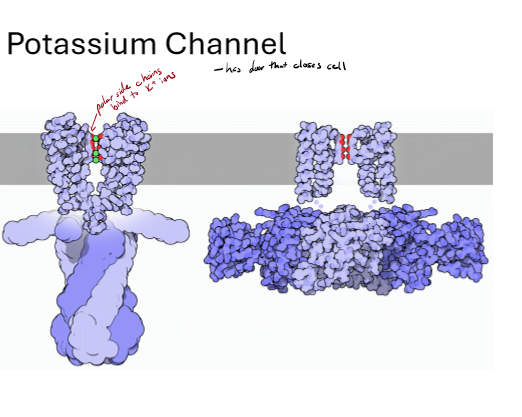
Describe facilitated diffusion of potassium
uses channels
K+ enters hydrophobic pore and passes through membrane protein down concentration gradient
gated protein
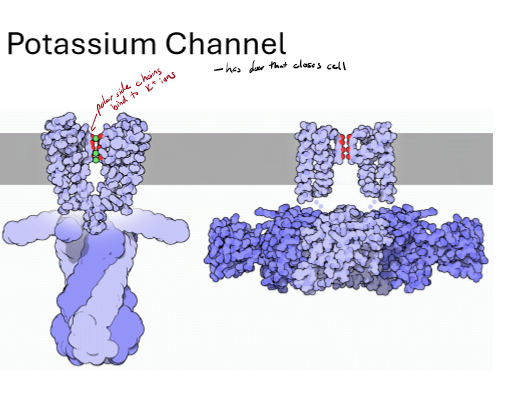
What are two methods of facilitated diffusion in cells?
transporters
channels
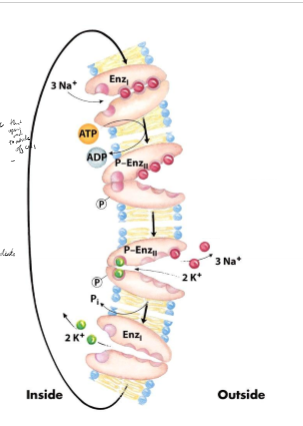
Describe Na/K ATPase
primary active transport
moves Na out of cell and K into cell, both against concentration gradeitn to maintain high K conc. and low Na conc in cell
type of antiport
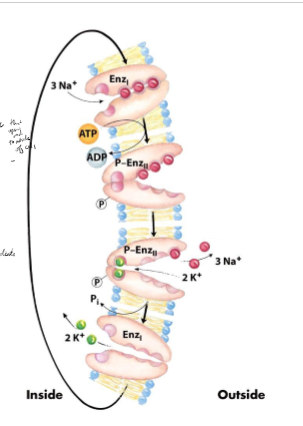
Describe the Na/K ATPase model of ion movement
1. sodium inside cell binds to ATPase
2. ATP phosphorylates enzyme (aspartate binding phosphate group of ATP), causing conformation change that opens up the protein to the outside of the cell
3. Na leaves cell
4. K outside of cell bind to protein
5. ATP hydrolysis of phosphorylated group (removal of phosphate group for aspartate) causes conformational change and protein reverts to inward-facing shape
5. K released into cell
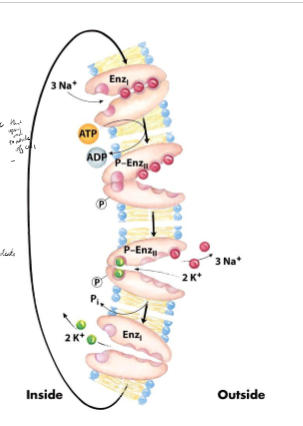
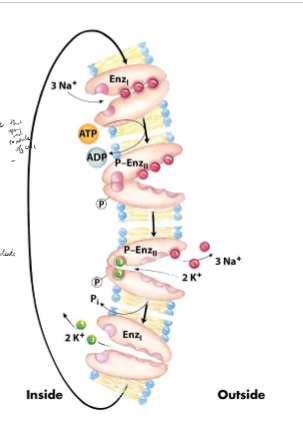
What state is the Na/K ATPase pump in when its phosphorylated? When its not phosphorylated?
phosphorylated - open to outside, ready to bind K
not phosphorylated - open to inside, ready to bind Na
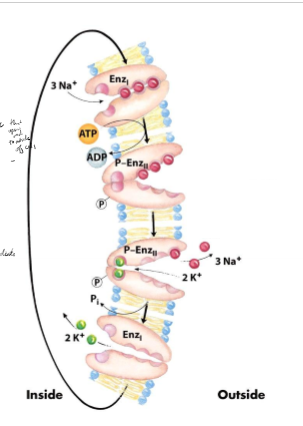
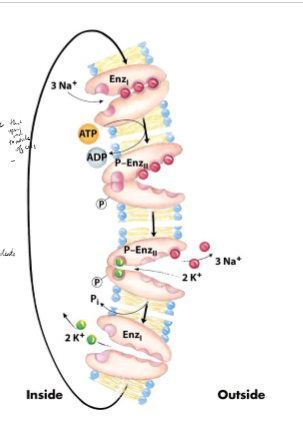
Describe generally how enzymes use ATP to move molecules in and out of cell
converts energy of ATP phosphorylation/dephosphorylation to cause a conformational change to move things (like a turbine)
How does the sodium linked glucose transporter work?
secondary active transport
uses Na+ leaving cell down concentration gradient to move glucose up concentration gradient
transporter has directionality