Adv Phys Lab
 Call Kai
 Learn
Learn Practice Test
 Spaced Repetition
 Match
Match Flashcards
 Knowt Play
1/17

There's no tags or description
Looks like no tags are added yet.
Name | Mastery | Learn | Test | Matching | Spaced | Call with Kai |
|---|
No analytics yet
Send a link to your students to track their progress
18 Terms
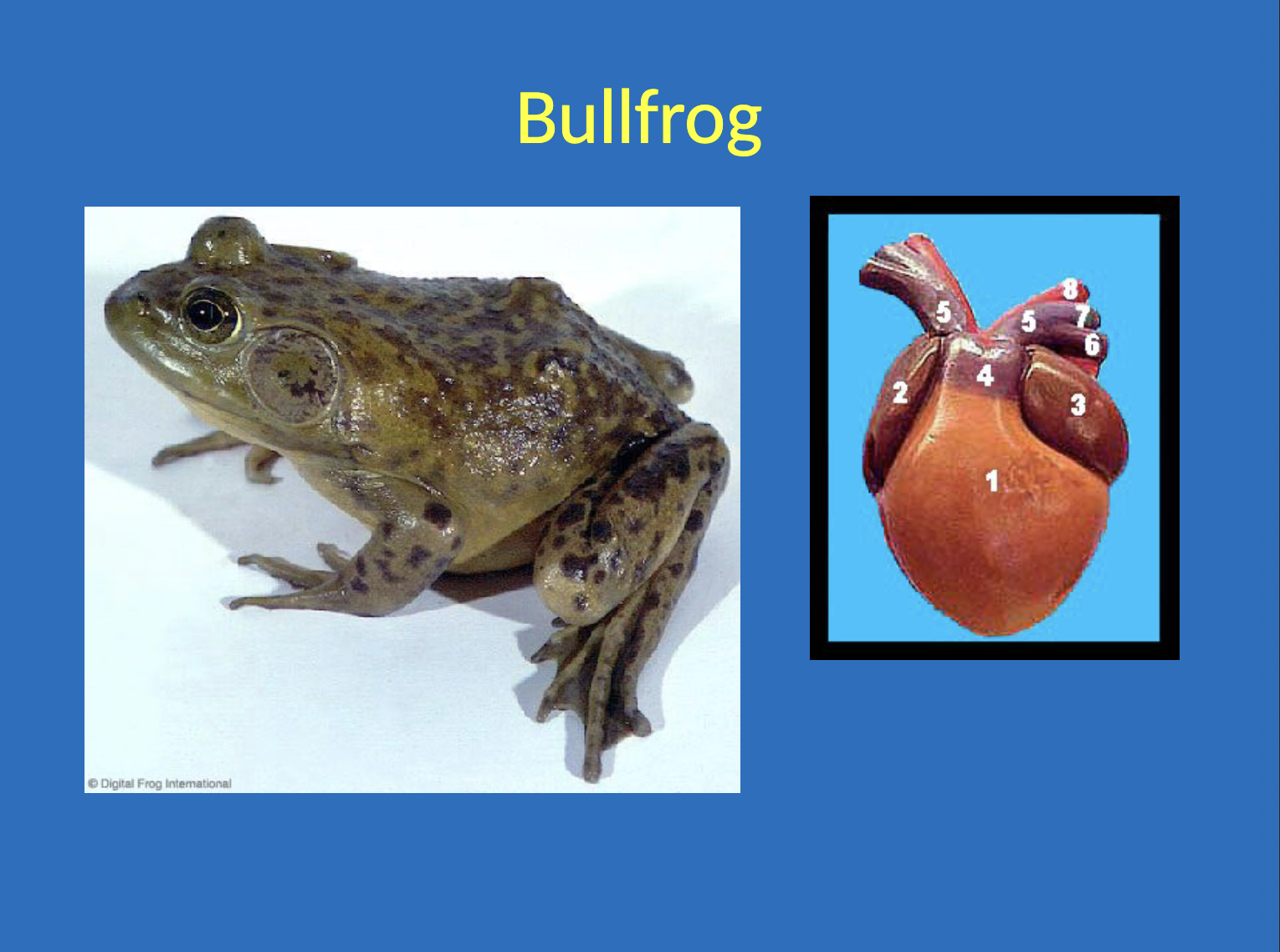
bullfrog heart
the atrial hump is smaller and has thinner walls because it only pumps to the ventricles and does not need high force. the ventricular hump is larger because it pumps to the body and needs thicker walls to provide force
silver wires used to stimulate the muscles were not needed in this experiment because the heart is autorhythmic and needs to input
dissection steps
remove ventral surface
expose the heart, cut the ligament and the tissue around the heart
hook the apex of the heart, lift to set up the apparatus
[remember: keep heart moist, fill in data sheet]
![<ul><li><p>remove ventral surface</p></li><li><p>expose the heart, cut the ligament and the tissue around the heart</p></li><li><p>hook the apex of the heart, lift to set up the apparatus</p></li></ul><p>[remember: keep heart moist, fill in data sheet]</p>](https://assets.knowt.com/user-attachments/35176333-60fd-4510-a3d3-73862888e0ab.png)
experiment - normal heart rate without stimulation
baseline heart rate: 48.19 beats/minute
experiment - acetylcholine
acetylcholine stimulation
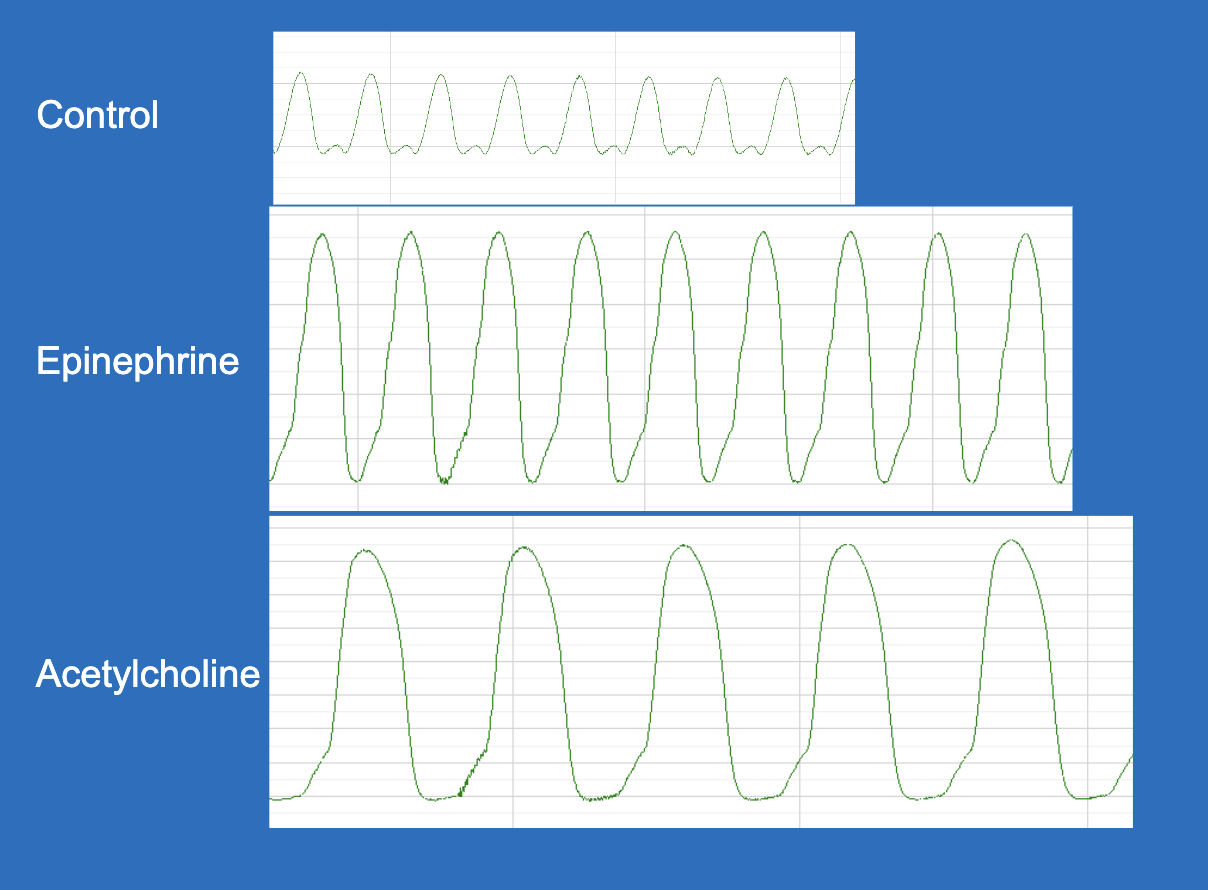
decreases heart rate, slows down firing of SA node
released by parasympathetic nervous system (rest/digest) and increases membrane permeability to potassium. the concentration is higher inside the cell, so more potassium will leave and hyperpolarize the cell to generate action potential (slowing down the heart)
in skeletal muscle, Ach causes contractions, but does not the same in the heart. This is because the skeletal muscle has different receptors. Both receptors can receive Ach, but they do no elicit the same response.
experiment - atropine effect
atropine effect
increases heart rate, blocks parasympathetic nervous system
acts on SA and AV nodes to speed up conduction
experiment - epinephrine stimulation
epinephrine stimulation
increases heart rate, stimulates heart to beat faster
enhances contractility
alters the permeability of the membrane to calcium ions (higher permeability, more calcium inside cell, more crossbridges, stronger contraction)
experiment - temp change (cold vs hot)
temp change
cold: slows heart rate
dive reflex (parasympathetic activating rest/digest)
metabolic reactions are slowed, SA node slows down pacemaker cells
heat: increases heart rate
blood vessels dilate and blood flow increases while the body tries to cool down
metabolism increases, proteins may denature
experiment - refractory period
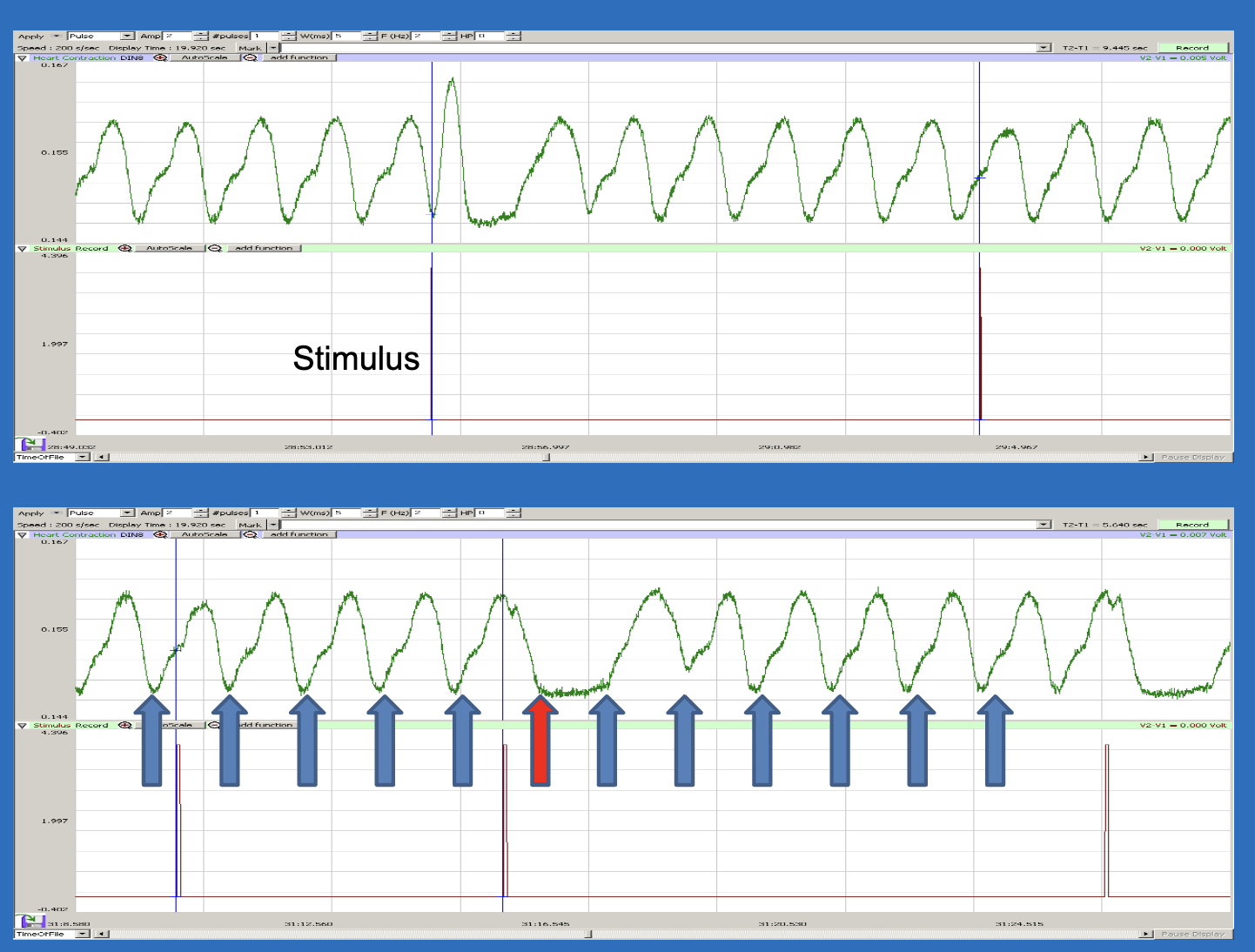
the refractory period of the heart allows for a compensatory pause (pause in the beat of the heart with external stimulation)
acts like a reset mechanism to get the heart back on track
ventricle contracts early after being stimulated, in refractory period so the SA node cannot stimulate them again (heart pauses), heart beats normally when the SA node fires again
refractory period is determined by open calcium channels that maintain depolarization and keep sodium channels from opening until potassium hyperpolarizes the cell
experiment - heart to tetanus?
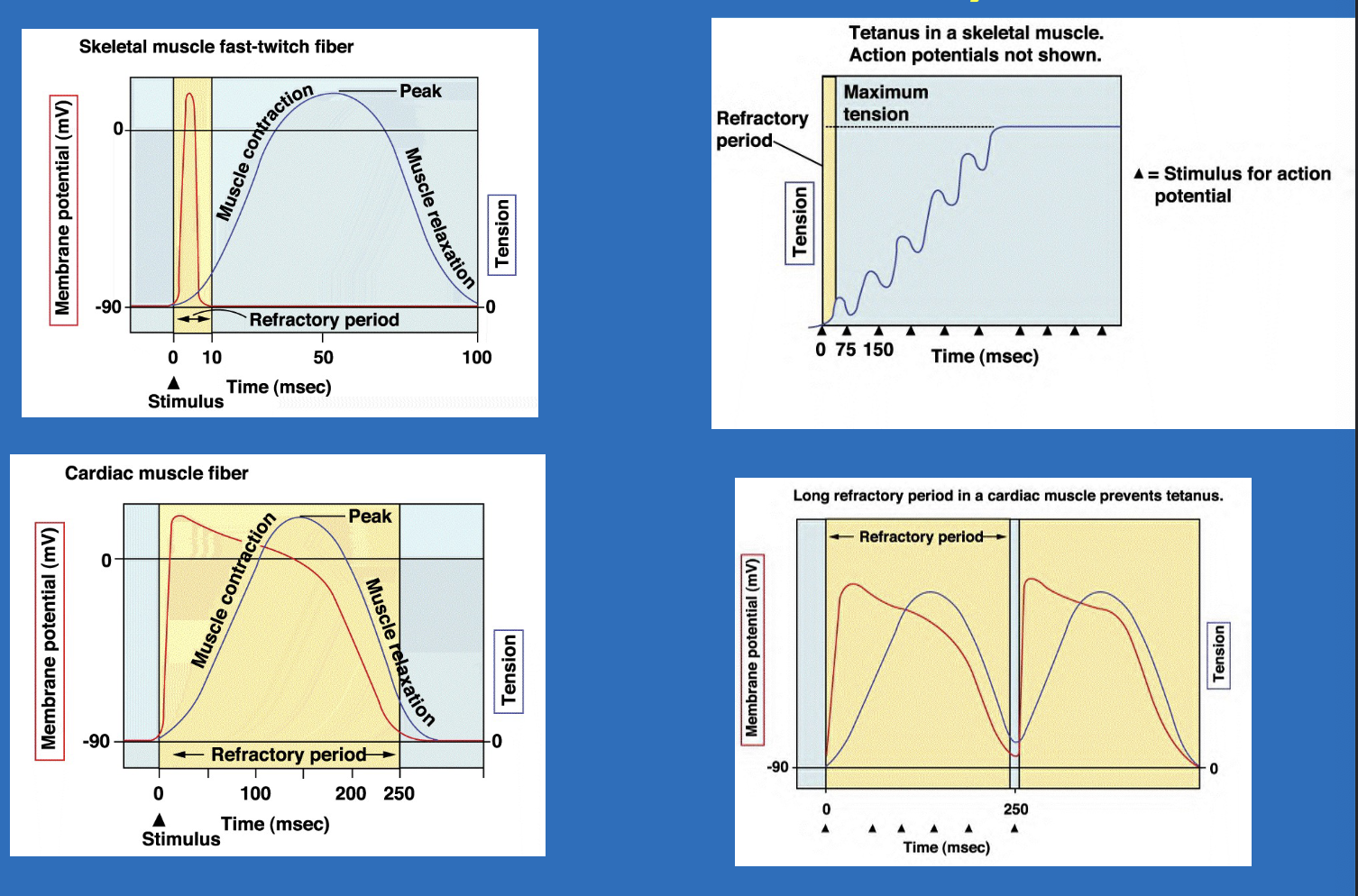
cardiac muscle has a long refractory period, meaning that a high frequency of stimuli cannot cause mechanical summation or tetanus (which is important because the heart needs to be able to contract and relax to pump blood)
heart rate and muscle tension will still increase, but no tetanus
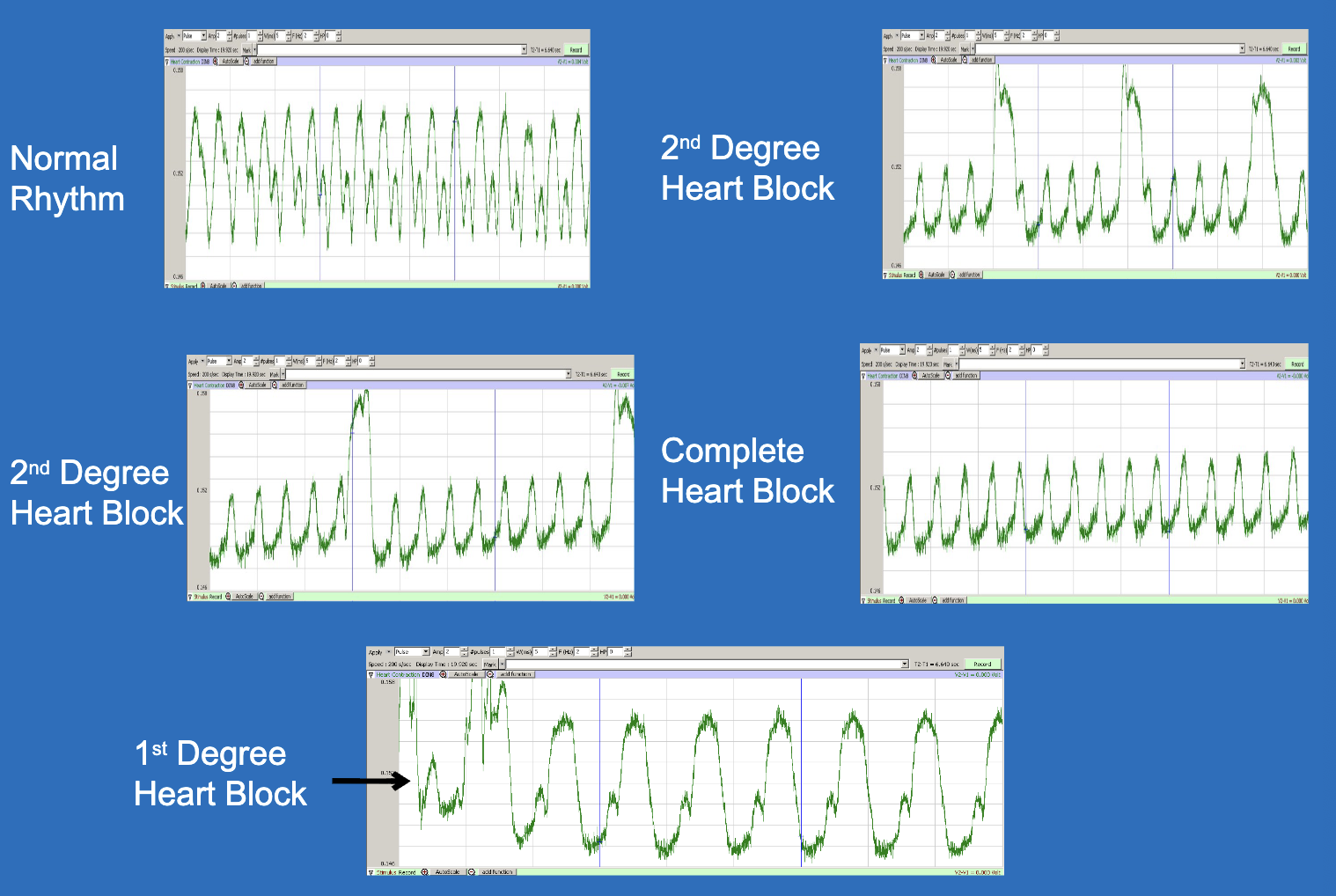
experiment - heart block, degree stages
the AV node becomes damaged when pressure is applied to the ventricle, so the signal is altered between the atria and ventricles
mechanical activity of the frog heart
control, epinephrine, and acetylcholine
mechanical activity of the frog heart - refractory period
refractory period - skeletal vs cardiac
heart stimulus, tetanus attempt
autonomic nervous system's control over the heart. The heart rate "reset" or slowing after the stimulus suggests a parasympathetic (vagal) response, where the body briefly slows the heart in response to a sudden input before returning to homeostasis
cannot go into tetanus because the refractory period is long, but can “skip” a beat if a stimulus is sent right at the end of the period
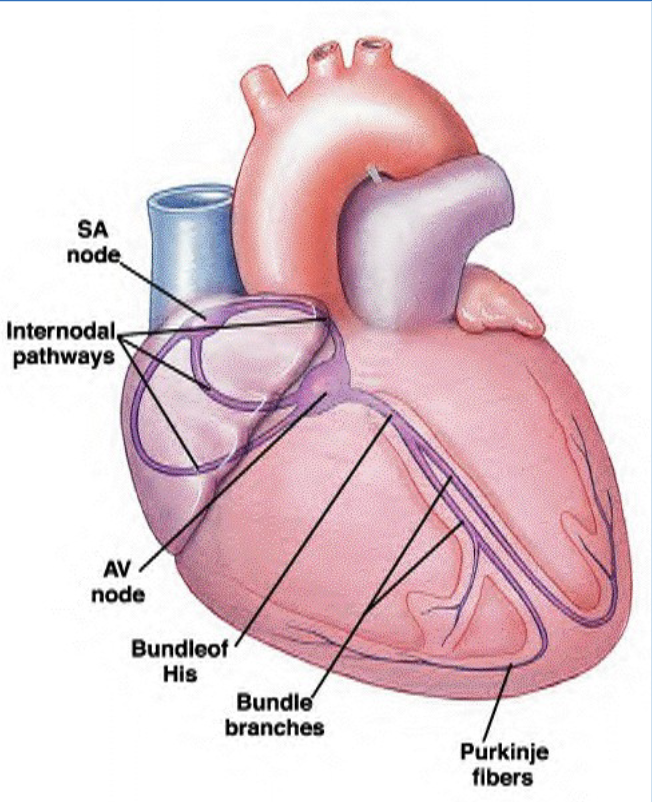
electrical stimulation of the heart
AP spreads through heart via gap junctions
SA node
AV node
Bundle of His
left and right bundles
Purkinje fibers
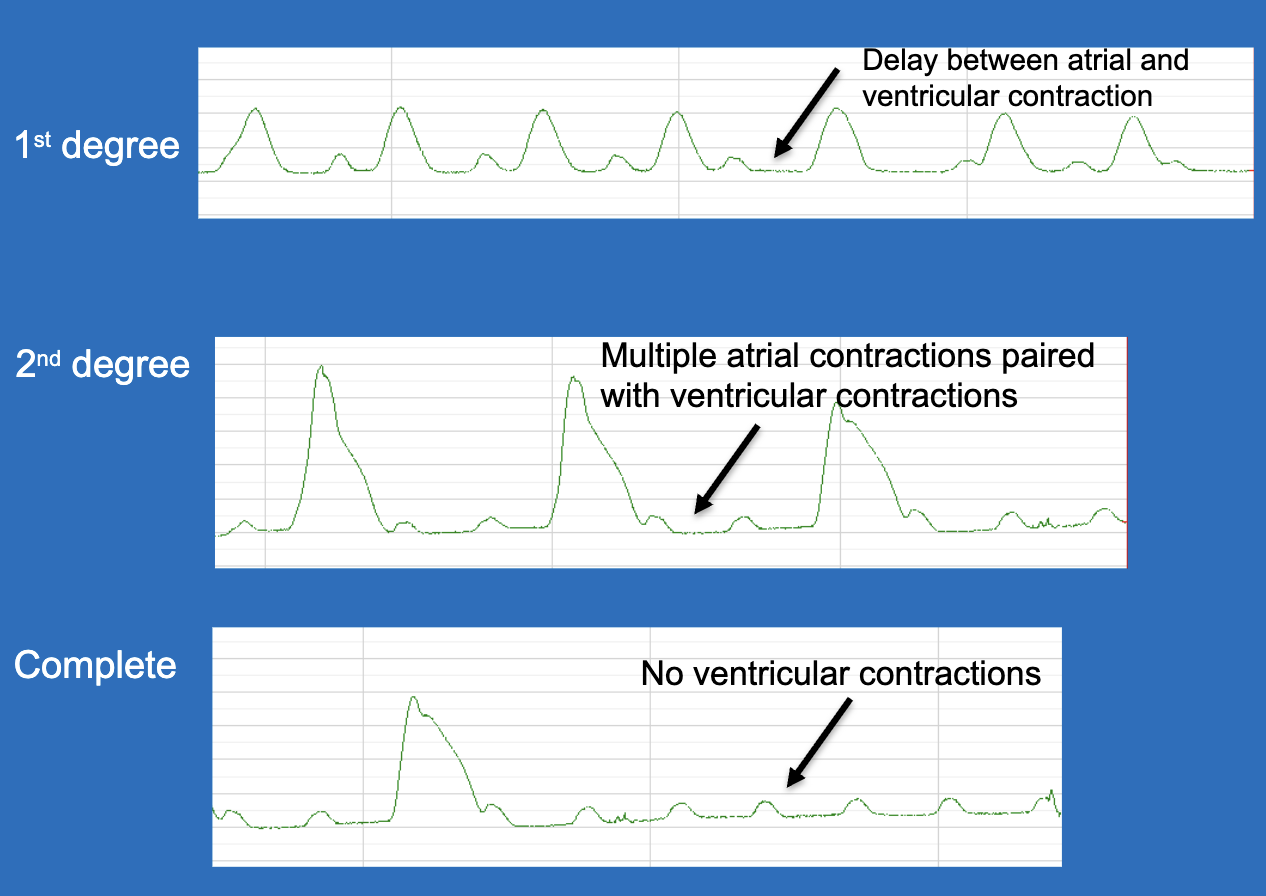
heart block degrees
1st degree: delay between atrial and ventricular contractions
2nd degree: multiple atrial contractions paired with ventricular contractions
3rd/complete: no ventricular contractions
heart block comparison
key points of frog heart lab
mechanical activity recorded, not electrical
substances modulate heart activity, but the activity of the heart is auto-rhythmic
heart block is due to disruption in the electrical transmission of the heart
refractory period of the action potential in the heart is very long, thus the heart cannot fatigue
euthanasia produced by KCl
disrupts the electrical balance by introducing more potassium outside the cell (destroying/balancing the gradient)
when the muscles depolarize, the high potassium outside the cell stops it from repolarizing/hyperpolarizing, resulting in cardiac arrest
heart stops pumping, blood flow stops, tissues lose oxygen (hypoxia)
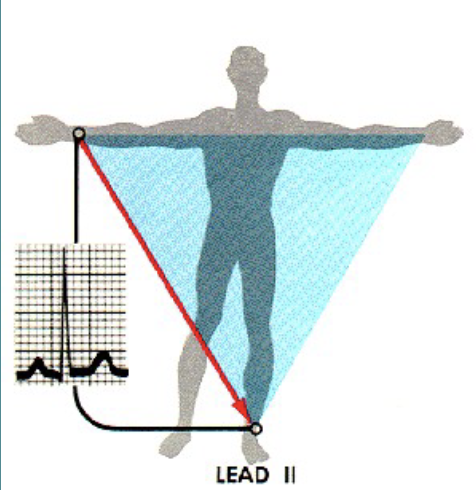
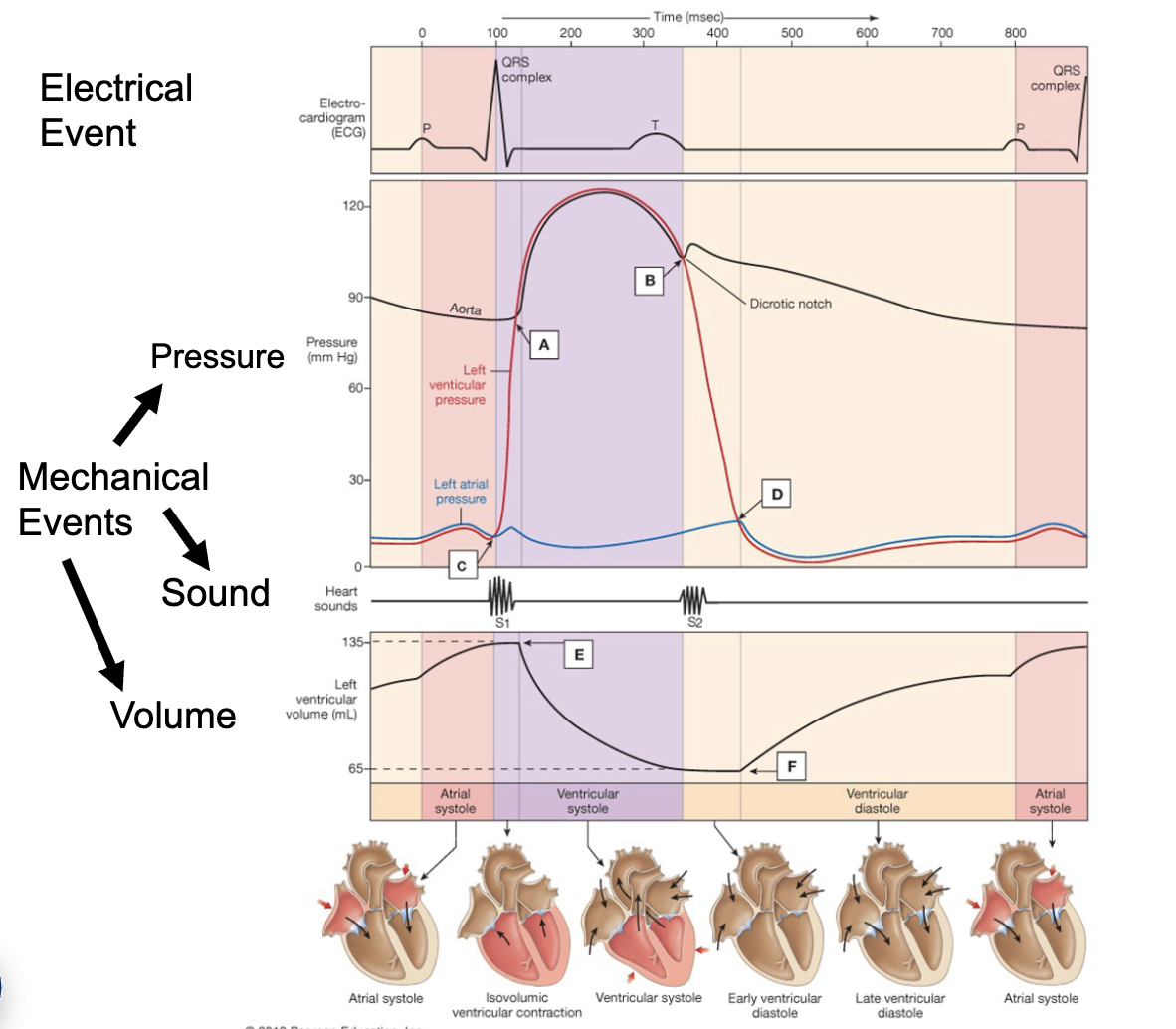
Human Heart Function and Cardiovascular Physiology
electrical events
P wave, QRS complex, T wave
mechanical events
pressure: EDV, ESV
sound
volume: DP, SP