Portfolio Theories Math
 Call Kai
 Learn
Learn Practice Test
 Spaced Repetition
 Match
Match Flashcards
 Knowt Play
1/8

There's no tags or description
Looks like no tags are added yet.
Name | Mastery | Learn | Test | Matching | Spaced | Call with Kai |
|---|
No analytics yet
Send a link to your students to track their progress
9 Terms
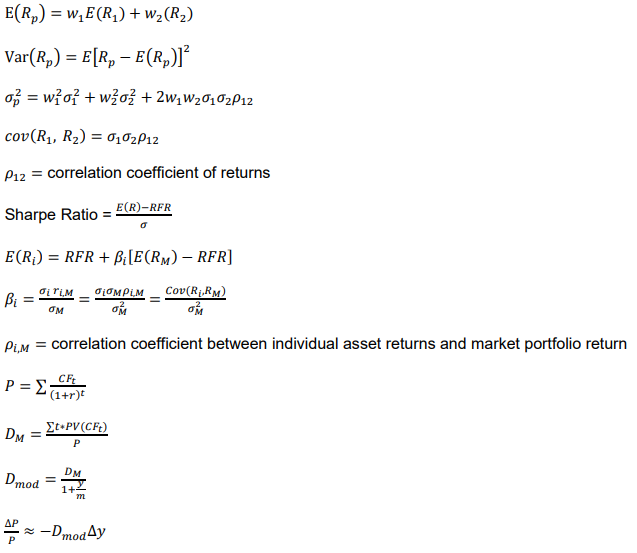
Which formula do you use for the expected rate of return?
Multiply the possible returns by the probability, then add them all up.

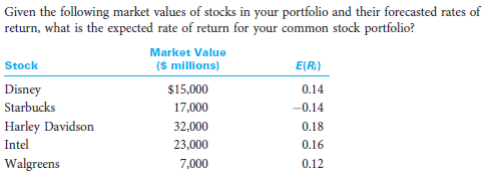
What should you do if a question with the £ values are given to calculate the expected rate of return?
Get the different weights by using asset market value/total market value. Then use the formula.
What is standard deviation?
Sqaure root of the variance
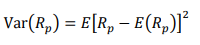
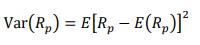
What does each part stand for in this formula?
Rp = the return
E(Rp) = the expeceted return or is dealing with histrical data the average return.
Add each time period up and divide by how many time periods - 1 (n-1), that is called the sample variance.
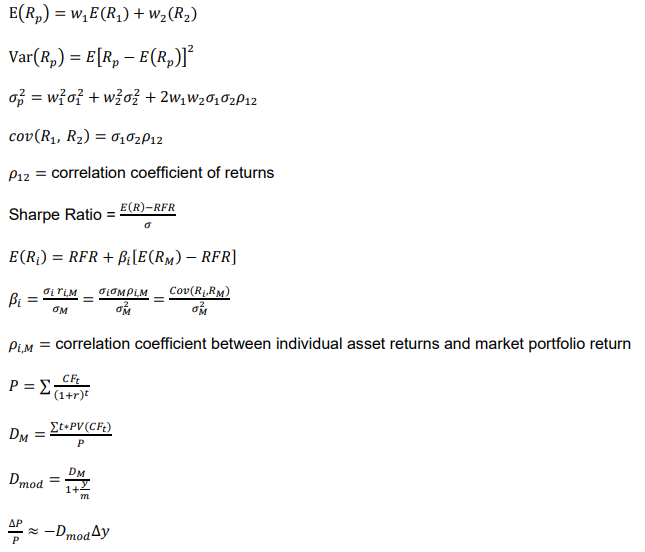
Which formula do you use to find the covariance between rates of return?
Mutiply each return - expected return for each period and then divide by (n-1)

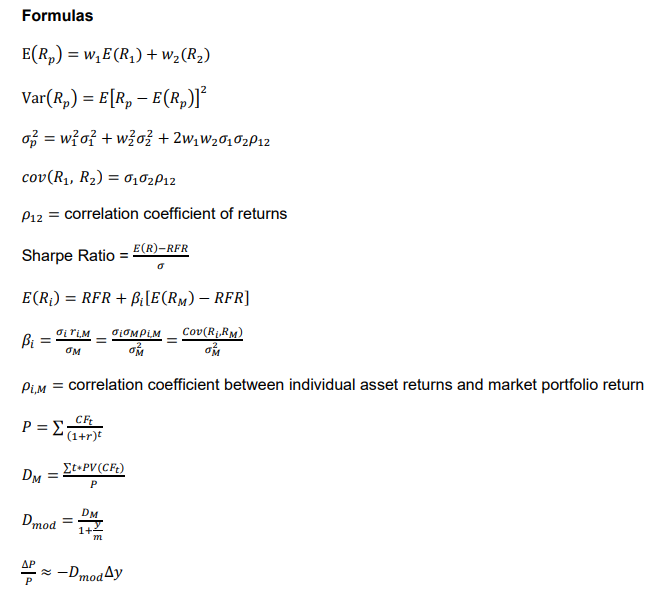
How to calculate the correlation coefficient adn what do you use it for?
Rearrange the formula to get:
Coveriance/standard deviations mutiplied together.
Look to see whether the stocks will be good for diversification and if they will move in the same direction. 1 = high 0 = low.

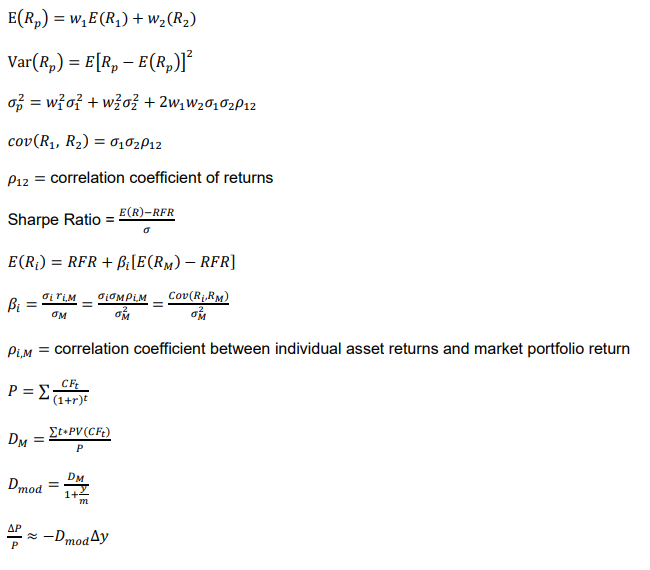
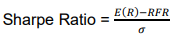
How to calculate the risk premium per unit of risk you expect to receive (Sharpe Ratio)
Expected Return
Risk Free Rate (this will be given)
Standard Deviation
This needs to be put as a percentage.
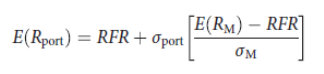
Formula for Capital Market Line
In the brackets is the portfolio with the highest sharpe ratio.
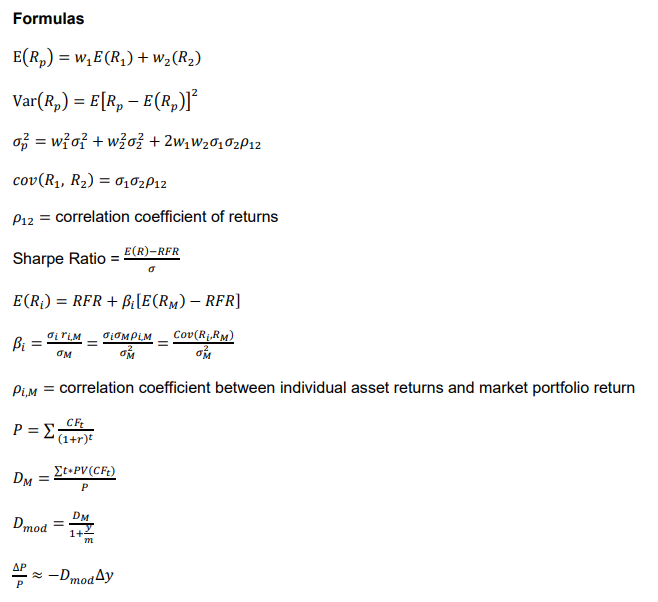
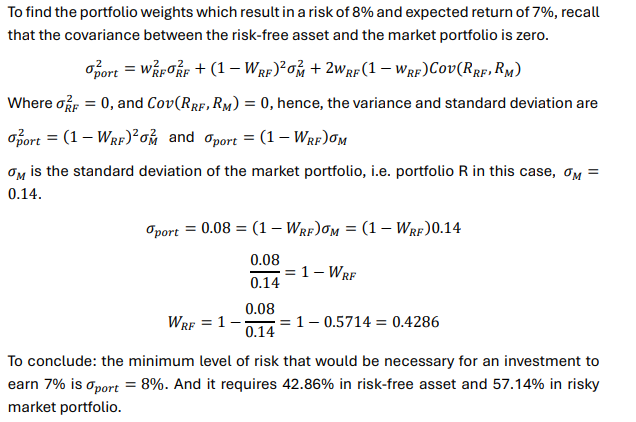
How to find the weights of the risk free rate and the market portfolio?
Subsitute in the risk free rate and then (1-Wrf) for others. Then take away the parts of the equation that are 0.