tobacco soc cultural + political economic perspective
 Call Kai
 Learn
Learn Practice Test
 Spaced Repetition
 Match
Match Flashcards
 Knowt Play
1/33

Earn XP
Description and Tags
public health
Name | Mastery | Learn | Test | Matching | Spaced | Call with Kai |
|---|
No analytics yet
Send a link to your students to track their progress
34 Terms
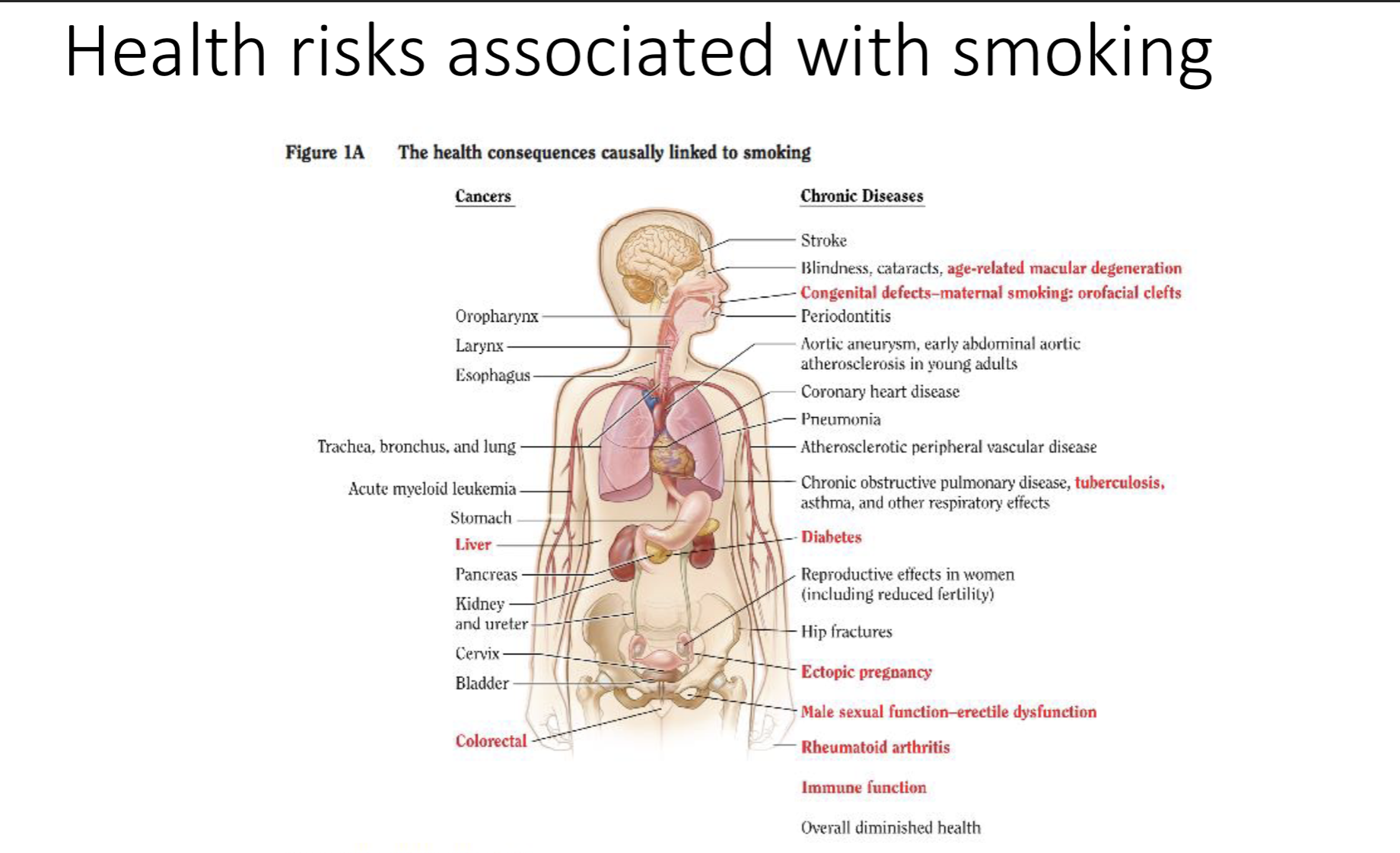
health risks associated with smoking
4 paths by which tobacco creates cellular and biochemical damage
path 1 = Carcinogenic Compounds in Tobacco Smoke
path 2= increased reactive oxygen species
path 3= inflammation and immune supression
path 4= nicotine
path 1: Carcinogenic Compounds in Tobacco Smoke
over 4,000 chemicals
no “risk free” level of second hand smoke
approx 70 known carcinogens in smoke, many of which the amounts are unknown
ex: e.g. acetylaldehyde, benzene, lead, arsenic, nitrosamines
path 2= increased reactive oxygen species
Tobacco smoke also introduces high levels of reactive oxygen species (ROS), highly reactive molecules that can damage cellular structures, including lipids, proteins, and DNA
The accumulation of ROS leads to oxidative stress, a condition that promotes DNA damage and mutations, which increases the likelihood of cancerous changes in lung cells
path 3= inflammation and immune supression
Chronic tobacco use triggers inflammation in lung tissue, leading to the
release of cytokines and other inflammatory mediatorsThis creates a tumor-promoting environment by suppressing immune surveillance and encouraging the growth of malignant cells.
path 4= nicotine
Cigarette smoke contains over 7,000 chemicals, including about 70 that cause cancer
Nearly all tobacco products, including e-cigarettes, contain nicotine
Youth nicotine use can lead to addiction and can harm the developing brain, impacting learning, memory, and attention
Menthol increases additive nature of nicotine
Bio chemical effects of smoking
nicotine activates multiple biological pathways through which smoking increases risk for disease
Nicotine exposure during fetal development, critical window for brain development, has lasting adverse consequences for brain development
Causes many birth complications, pre-term and still birth
Increased risk of adenocarcinoma of the lung in smokers results from changes in the design and composition of cigarettes since the 1950s.
1991 study: tobacco marketing
analysis of marketing to female smokers
the value of a female smoker
Values: Money, material acquisitions, a good job (pays well, more so than gratifies)
Fears: Risks with commitment to relationships, marriage, children
Social activism
Political statements: None
smoking and youth
nearly all tobacco use begins during youth and progresses during young adulthood
More than 3,200 children age 18 or younger smoke their first cigarette every day
9/10 smokers start before the age of 18, almost all start by age 26
Every adult who dies early because of smoking is replaced by two new young smokers
81X more tobacco marketing in poor countries
Marlboros' “Be Marlboro” campaign and efforts to “stop Marlbor
tobacco and teens
in 2019, 4 of very 100 middle school students (4.0%) and nearly 11 of every
100 high school students (10.8%) reported current use of two or more tobacco products in the past 30 daysin 2019, 11.5% of middle school and (29.9% of HS students said they had ever
tried two or more tobacco products.
tobacco use by teens and children
1885-1902, cigarettes grow in popularity
By 1900, average male consumes 7 pounds/year, half as chewing tobacco
1912, trading cards included, “complete sets” to collect
“Loosies” 8-9 year olds
1920s cities versus rural
american cancer society begins to survey tobacco use
1920s, ~ 15% males, ~1.5% women
more common in white than black amerians
Parents, public concern begin to prompt anti-tobacco campaigns
teen tobacco use today
1.5 M more current youth e-cigarette users in 2018 than 2017. (38%
increase in one year)4.9 M youth current tobacco users in 2018
nearly all tobacco use begins in adolescence
how to market to teens
3 strategies used by tobacco marketers to reach teens
sell sex
throw a party
make it risky
examples from public figures
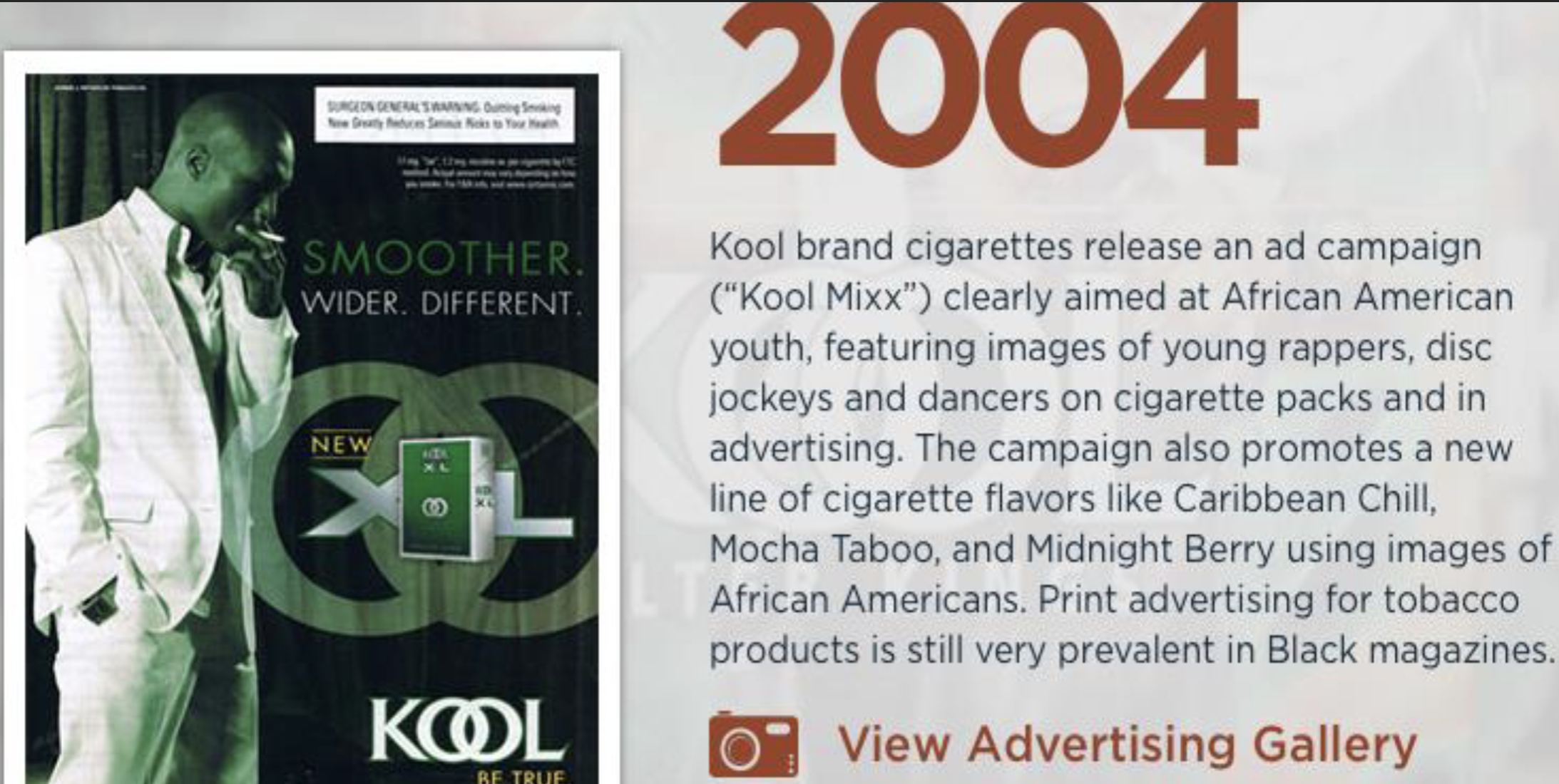
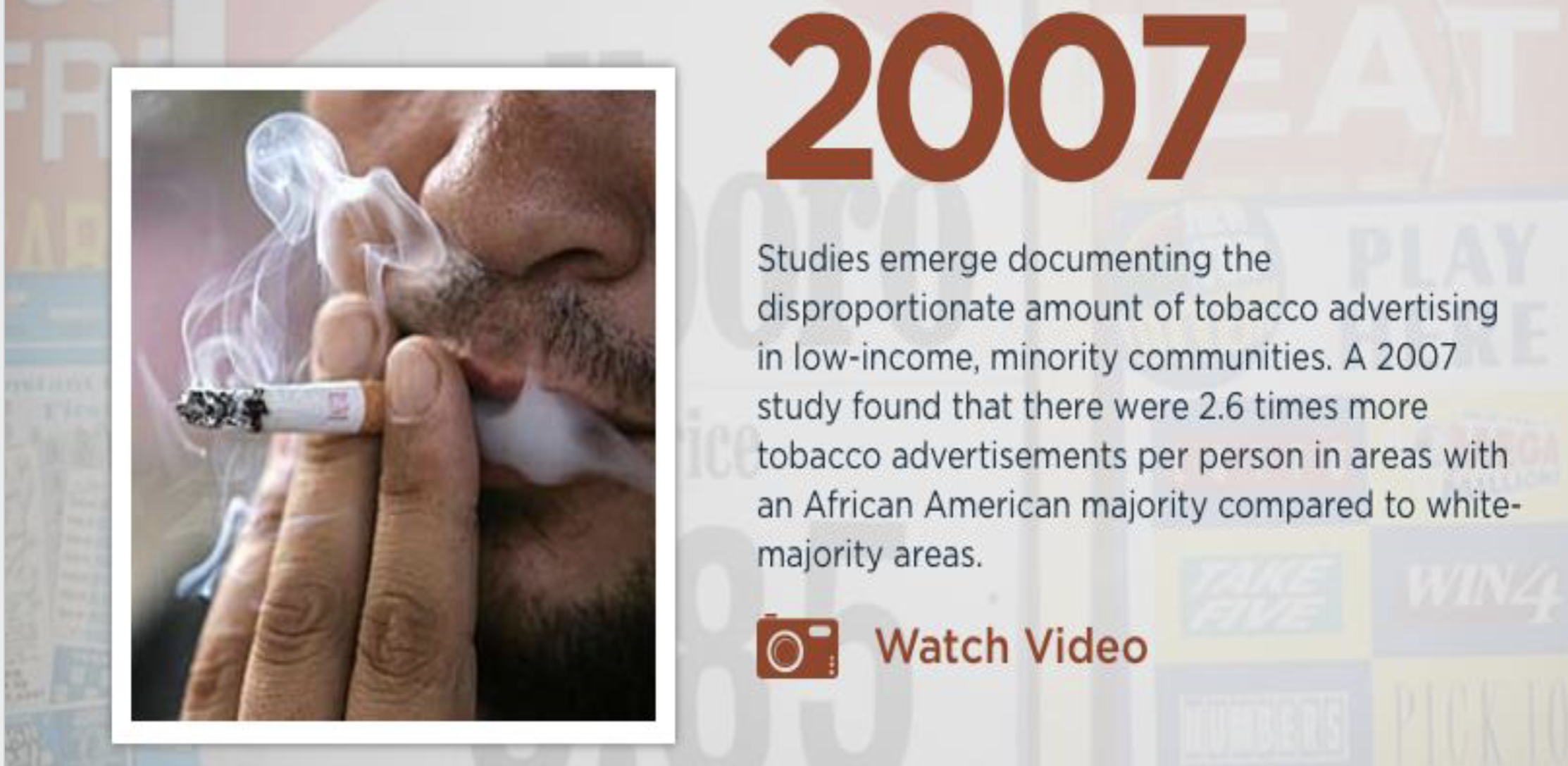
There is a disproportionate marketing to racial and ethnic minorities and groups of
lower socio economic status
contemporary marketing
The disproportionate marketing to racial minorities and disproportionate groups makes
tobacco marketing a social justice issue
tobacco legislation
1890s, 26/45 states prohibited tobacco sale to minors (14-21 years)
• 1893, Washington State makes it illegal to “make, buy, sell, give or
furnish cigarettes…”
• 3 months later, federal court in Seattle declares this unconstitutional
because it prevents interstate trade
• 1893, NY Times, “Smoking of cigarettes may be objectionable, as are
many other foolish practices…but it is an evil which cannot be
remedied by law”
early anti-tobacco movements
1899 - Chicago, Lucy Page Gaston, Women’s Christian
Temperance Union, founds Anti-cigarette League “combat and
discourage”, enact legislation
• 1908 – 1917 Illinois considered 12 bills to ban
• 1927 Anticigarette League, education demonstrations and
pledges
• Health Education Campaigns – based on idea that information
will prevent tobacco useAmerican’s Non-smokers Rights Foundation advocates against second hand smoke
social learning theory (one theorey to help explain why adolescents initiate smoking and / or tobacco)
social learning theorey (Albert Bandura)
learning is a cognitive process that takes place in a social context
can occur purely through observation or instruction
Goes beyond traditional behavioral theories by placing emphasis on the important roles of internal processes in the learning individual
social learning theorey
Learning is not purely behavioral; rather, it is a cognitive process that takes place in a social context
Learning can occur by observing a behavior and by observing the consequences of the behavior (vicarious reinforcement)
Learning involves observation, extraction of information from observations, and making decisions about the performance of the behavior (modeling)
Reinforcement plays a role in learning but is not entirely responsible for learning
The learner is not a passive recipient of information. Cognition, environment, and behavior all mutually influence each other (reciprocal determinism)
theories of addiction
medical model
psychdynamic model
social model
moral model (criminal justice)
bio-psycho-social model
medical model
addiction is a “disease of the brain”
due to genetic differences, neurotransmitter imbalances
Disease model: Agent is drug, host is addicted person, vector is dealers/advertisers
psychodynamic model
drug abusers are “Self-medicating”
Abuse/addiction is a reflection of underlying problems, a maladaptive coping strategy
Need to resolve internal conflict. Once done, use of substance will become unnecessary
social model
substance use is a learned behavior
people use substances because they are modeled by other people
peer pressure can play a role in initiating behavior
Environmental cues lead to behavior (e.g. advertising)
Can be viewed as a maladaptive relationship negotiation strategy
moral model (criminal justice)
Addicted persons are weak, but can overcome compulsion to use through willpower
Use of addicted substances is by choice
Anti-social view of users
Addictive substance is evil
bio- psycho - social model
combines previous models
Takes a holistic view of psychological, social, and physical reasons for
use/addiction and treats these as necessary for recoveryEmphasizes Maslov’s hierarchy of needs
cultural acceptance and norms different in each countries
intervention and political economic perspectives
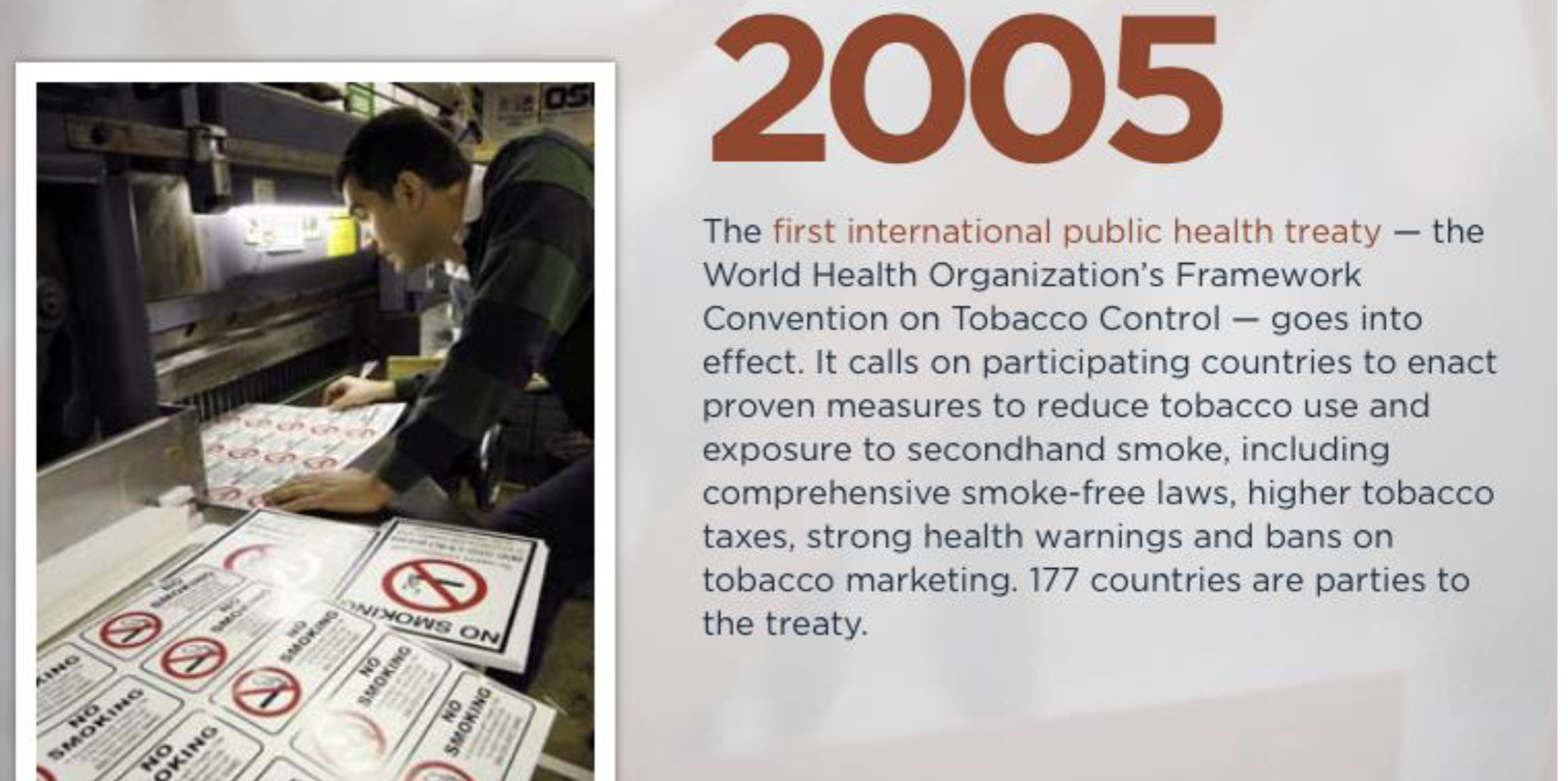
WHO action on tobacco: the tobacco free initiative
tobacco use is disproportionate in LMICs
tobacco kills up to half of its users
Tobacco kills more than 7 million people each year. More than 6 million of those deaths are the result of direct tobacco use
~ 1M are the result of non-smokers being exposed to second-hand
smokeAround 80% of the world's 1.1 billion smokers live in low- and middle- income countries
There is no safe level of exposure to second hand tobacco smoke
In adults, second-hand smoke causes serious cardiovascular and
respiratory diseases, including CHD and lung cancer. In infants, it
causes sudden death. In pregnant women, it causes low birth weightAlmost half of children regularly breathe air polluted by tobacco smoke in public places
side stream and main stream smoke
impact = participation rate x efficacy of the program
Whereby, participation rate = % who get involved in the program
and Efficacy is the proportion of participants who stop using tobacco
Program 1’s Impact with a 20% participation rate and 40% efficacy
= 0.20 * 0.40 = 0.08 (8%)
Program 2’s Impact with a 80% participation rate and 10% efficacy =
0.80 * 0.10 = 0.08 (8%)
the 6 MPOWER measures are:
monitor tobacco use and prevention policies
Protect people from tobacco use
Offer help to quit tobacco use
Warn about the dangers of tobacco
Enforce bans on tobacco advertising, promotion and sponsorship
Raise taxes on tobacco