Northern Renaissance Final
 Call Kai
 Learn
Learn Practice Test
 Spaced Repetition
 Match
Match Flashcards
 Knowt Play
1/137

There's no tags or description
Looks like no tags are added yet.
Name | Mastery | Learn | Test | Matching | Spaced | Call with Kai |
|---|
No analytics yet
Send a link to your students to track their progress
138 Terms
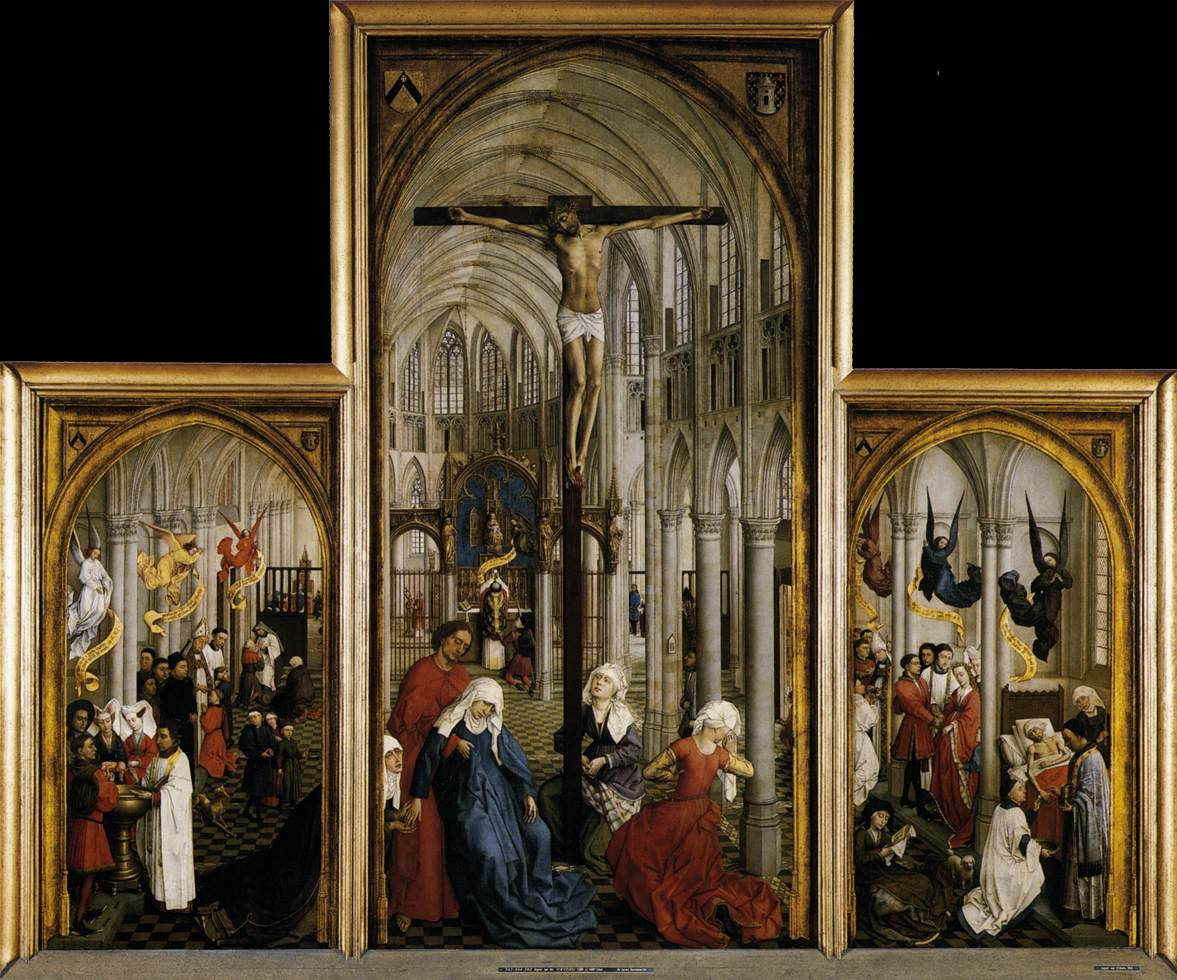
The Triptych of the Seven Sacraments
Rogier van der Weyden
1440
oil on panel
3 panel altarpiece
The seven sacraments Christians experience through life seen
baptism - includes those shoes from Arnofini portrait
confirmation or Chrismation - old tradition of white cloth tied around face
confession
communion (Eucharist) - visual continuity between painted and irl religious space, body of Christ held to the painted body of Christ, form of perpetual prayer
holy orders - for those becoming clergy
matrimony - hands tied together
last rites (funeral)
this is set in a church, evoking Cathedral of St. Michael in Brussels (Weyden is the state painter of Brussels)
can see numerous perspectives to see different directions of the church
turn the characters’ backs to the audience → allows for audience to break through the fourth wall
two panels are shortened = resembles the church architecture of the nave
we see the communion screen (the gate) to seperate clergy from people
an altarpiece that was left opened (?)
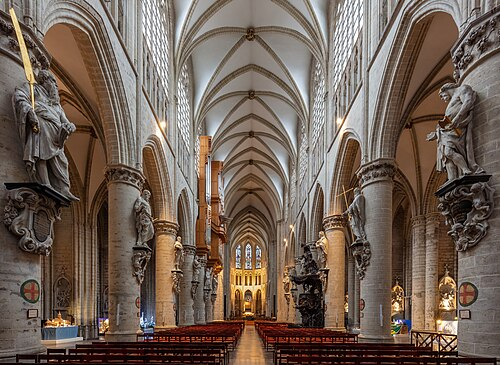
Cathedral of St. Michael (St. Gudula)
begun 1226
Brussels
looks like the interior of The Triptych of the Seven Sacraments
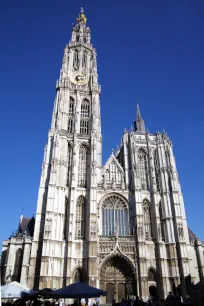
Onze-Lieve-Vrouwe (Church of Our Lady)
Jan and Pieter Appelmans
1352-1521
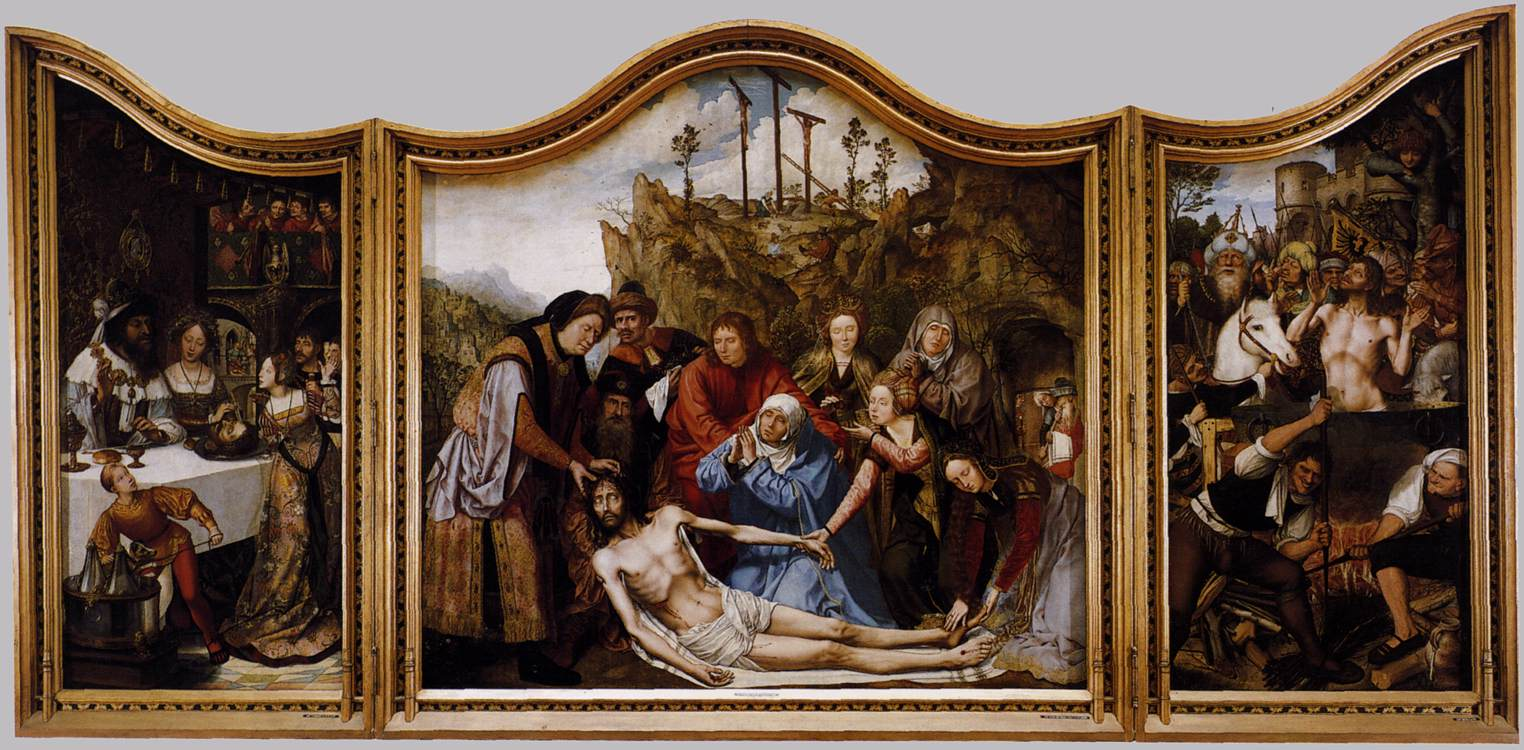
Lamentation Triptych (St. John Altarpiece)
Quentin Massys
1507-08
oil on panel
folower of Durer — follows Netherlandish art
made for leading Antwerp guild — cabinent maker guilt
a reinvention of van der Weyden’s cross bow deposition scene
Inspired by John the Baptist and John the evangelist Durer wood cuts → but more muted colors, from spending a year in Italy
attributed to bringing italian styles to N Europe through low countries
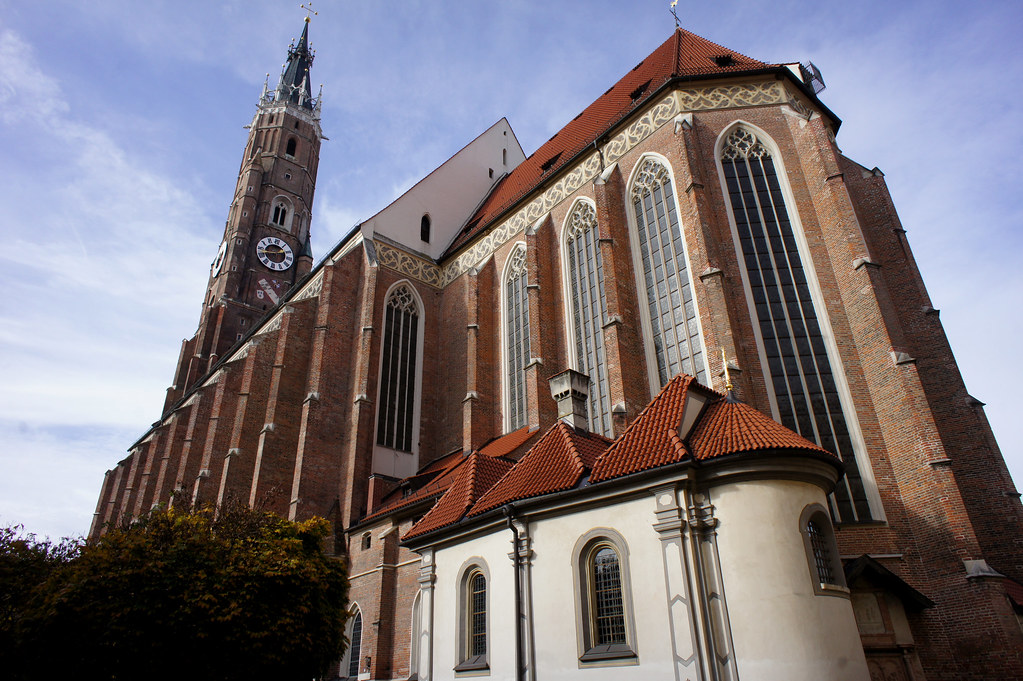
St. Martin’s
Hans von Burghausen,
1385-1505
lack of transept arms → more economical more faster to construct due to rectangular shapes
compared to layered space of Gothic, one unified heightened space → without buttresses, has taller windows = more light
Latin/Gothic churches took >100 years to build, Hall churches takes <100 years to build
The layout is based on a geometric unit → God gives order, number and weight, measurement and math are the universalizing language = Churches follow rations in the Bible
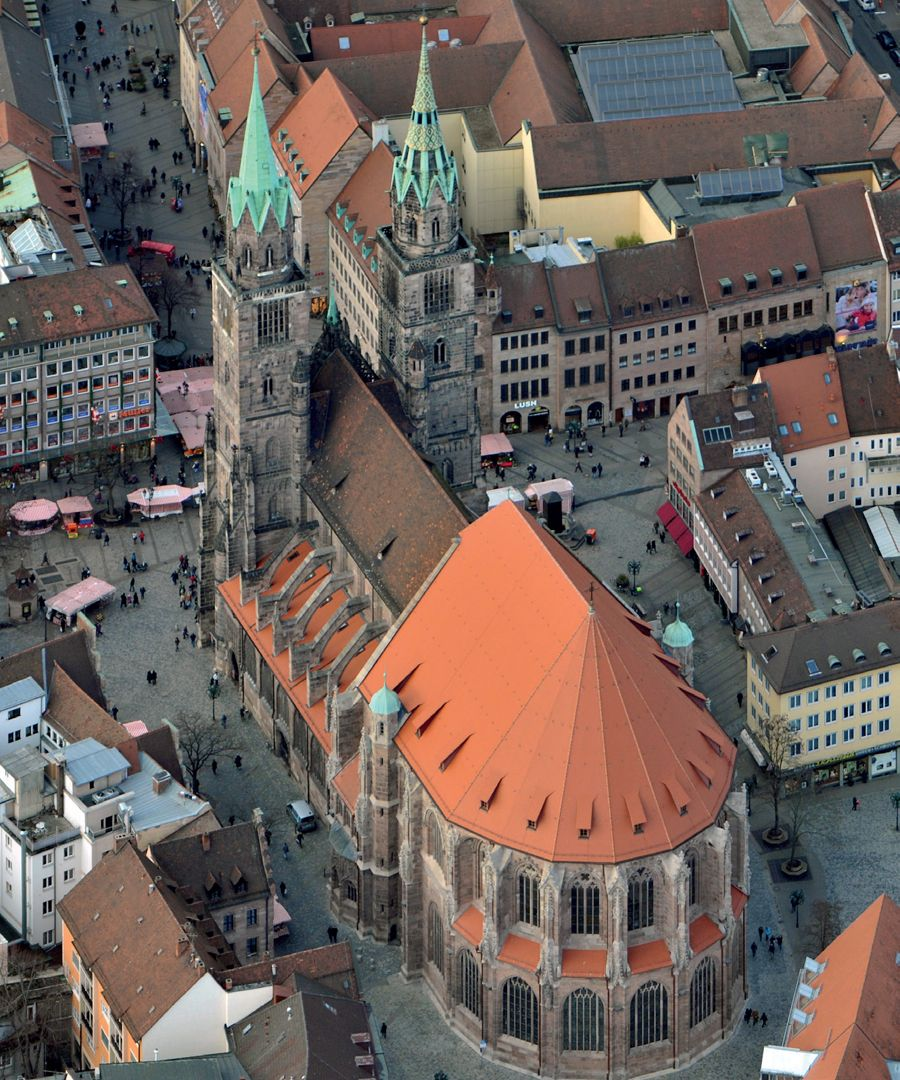
St. Lorenz’s
Konrad Heinzelmann
1439-77
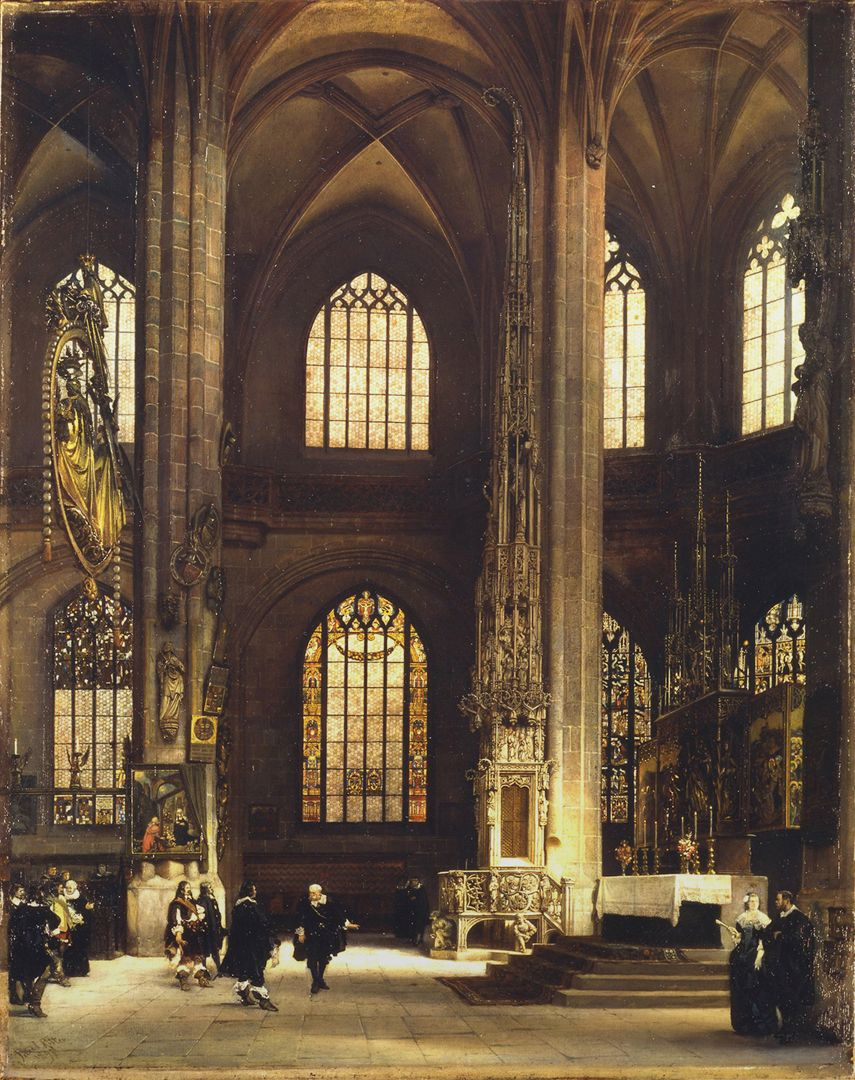
Sacrament House
Adam Kraft
1493-96
Sandstone with partial painting
elaborate tower in the church called Tabernacle House
artist places himself into the space itself → seen holding a chisel and hammer, the tools to make the tabernacle → shows to be able to transform stone into something ornate
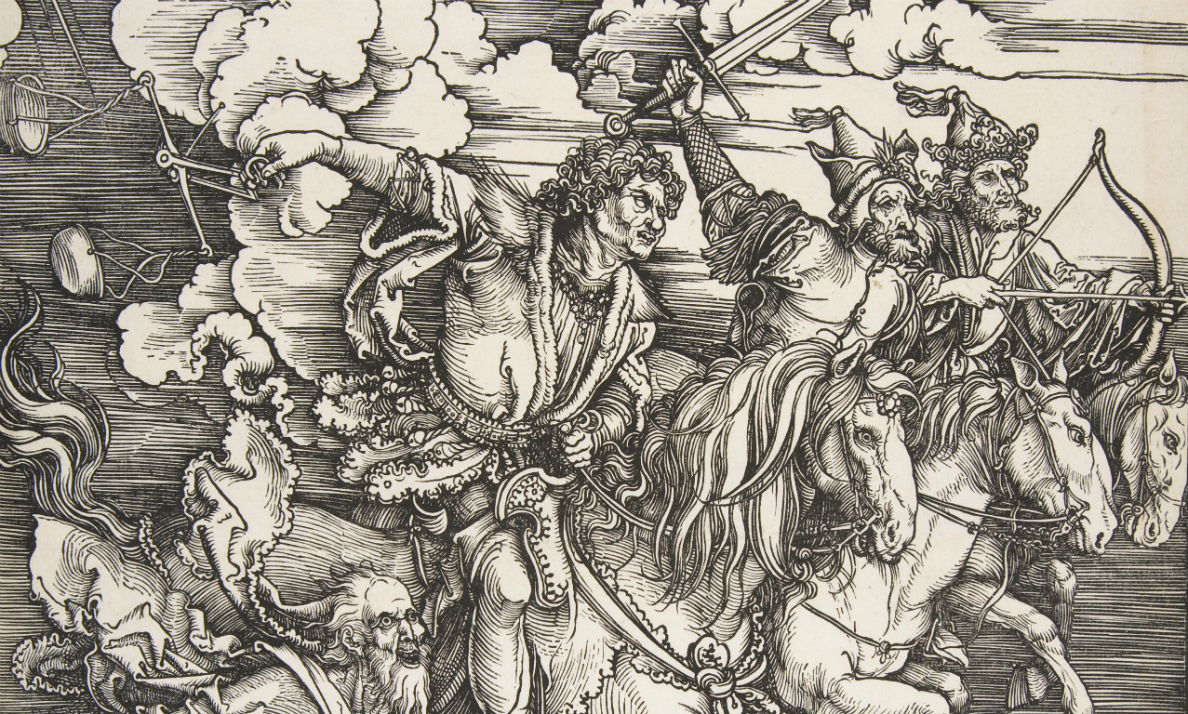
Four Horsemen from the Apocalypse Series
Albrecht Dürer
1496-98
woodcut
horizontal lines broken up by motion of the subjects
“dynamism” with the slight angle of the horses
the shadow of death passing over — the left side are dead, the right are set to die
made right before year 1500, believed to be the apocolypse
people are seeking images to ready themselves for the apocolypse
nobody is spared — even a bishop is being eaten
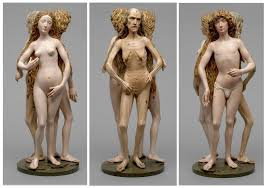
Allegory of Vanity
Attributed to Gregor Erhart
polychromed limewood
“the joy of youth” we want youth to avoid death
reflects the reality of bodies — seen with a youthful girl, a boy, and an elderly woman
no matter how youtful you try to be, time will always win
old woman even has flies on her figure
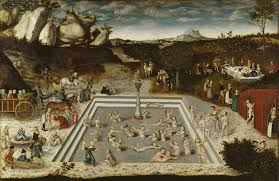
The Fountain of Youth
Lucas Cranach the Elder
1546
oil on panel
mythologized spring to have eternal life
only women are brought to the spring — women are expected to remain young
the men stay old and aged
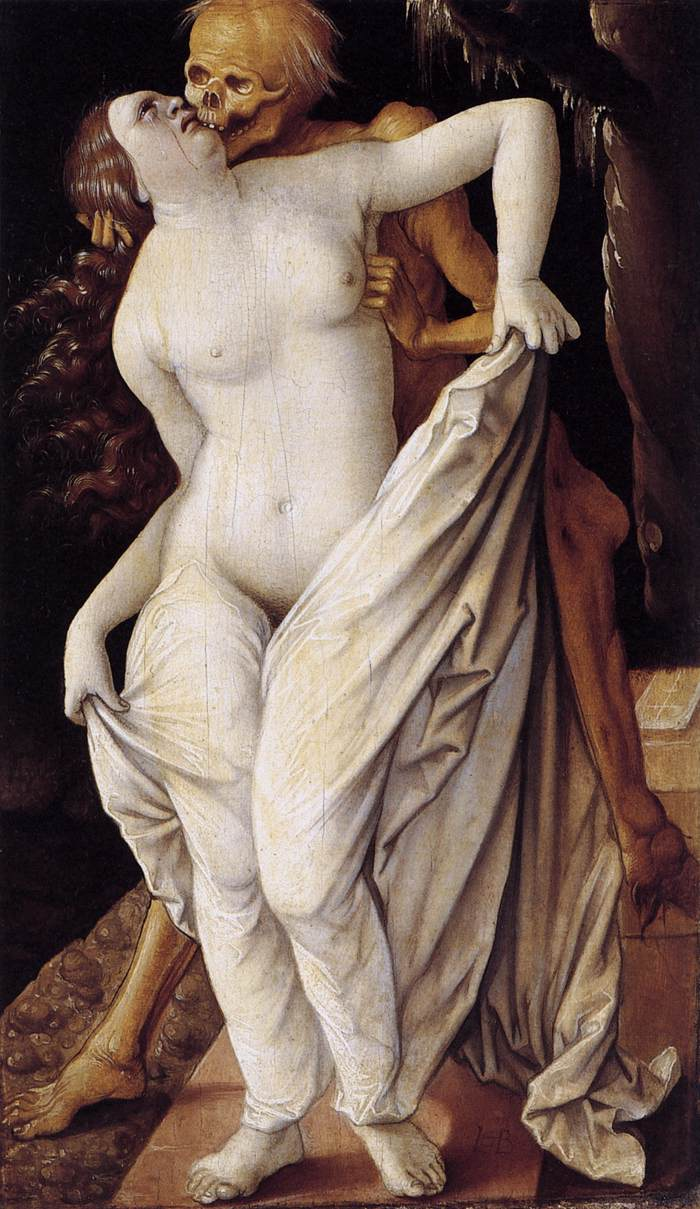
Death and the Maiden
Hans Baldung Grein
1518-20
oil on panel
the artist made a series of work to depict ways death finds us
similar to loving embrace from behind, but is instead a kiss from Death
in a graveyard, standing on the gravestone
the reality that death is unepexected, you should prepare
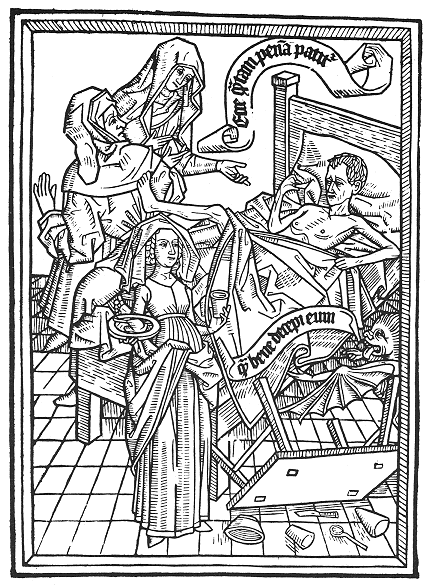
Triumph over Impatience from the Ars moriendi
Master ES
1450
engraving
from a book on how to die, subjects on their death beds
how to rectify vices — here shows a moral critique of a man acting impatient when pushing people away
in image of Pride, a man still holds onto his secular crowns held by devils while Christian figures looking on in judgement
very popular book, translated in many languages
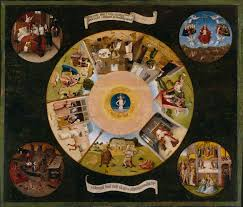
Seven Deadly Sins
Hieronymus Bosch
1480
oil on panel
the center circle resembles an eye — the inscription states this as the Eye of God “the Lord sees all”
the center circle/eye has depictions of the vices: anger, vain, gluttony, avarice (greed), envy, luxury, and to be athiest
4 circles around the eye: serving of last rites on death bed → a candle = his life, devil + angel, hell, and the last judgement
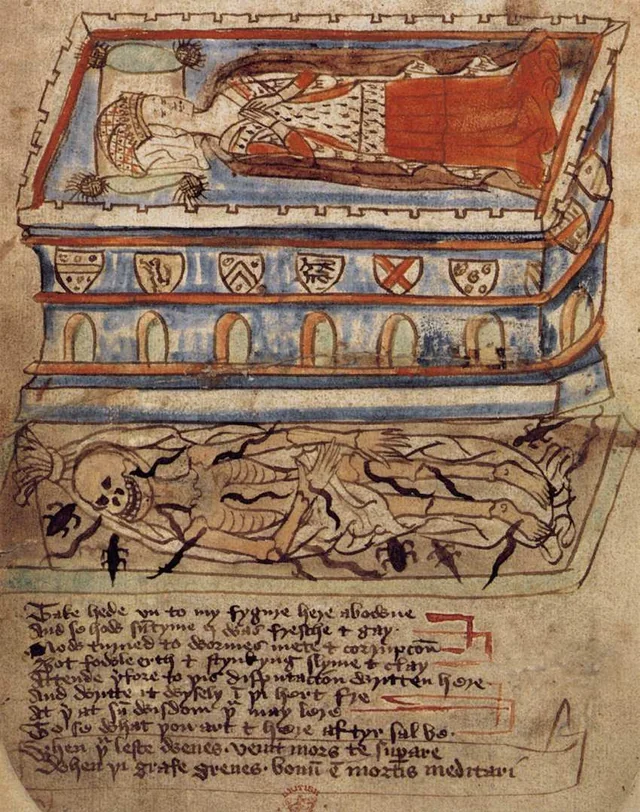
Disputacioun Betwyx the Body and Wormes
Anonymous
1435-40
manuscript
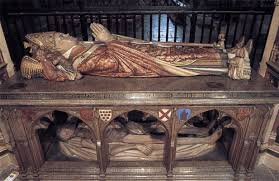
Tomb of Henry Chichele, Archbishop of Canterbury
Anonymous
1424-26
polychromed stone
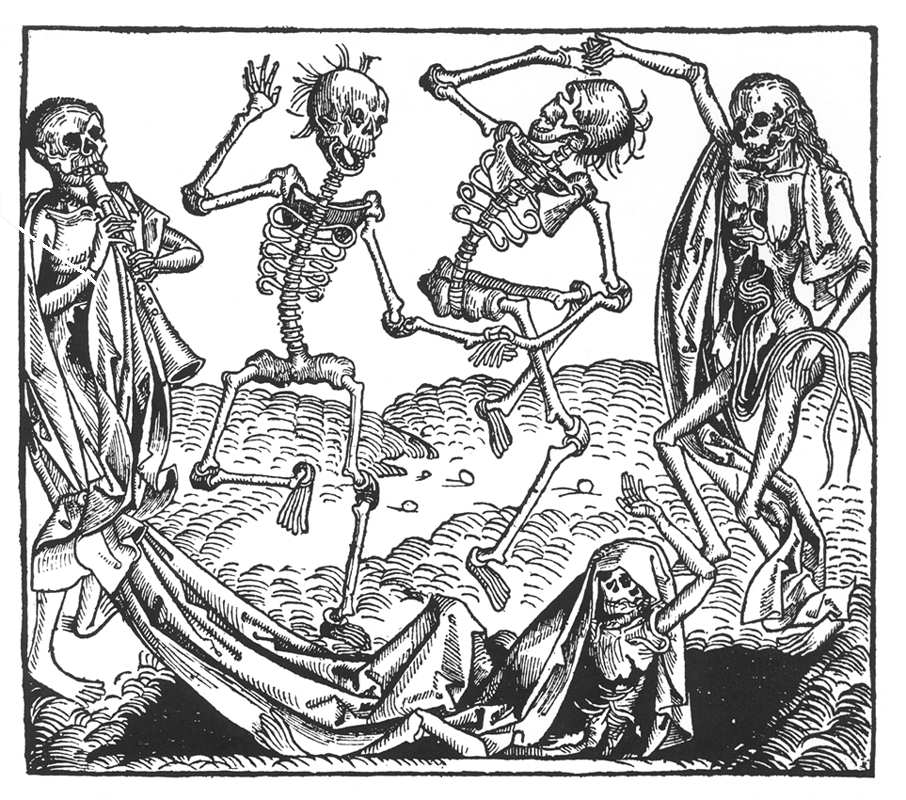
Dance of Death
Michael Wolgemut
1493
woodcut from Nuremburg Chronicle
popular scene during the time, from the Nuremburg Chronicle, the most illustrated book for its time
a full history of the world from Genesisi
Communal, frivolity, macabre
with death, there is release from the mortal body
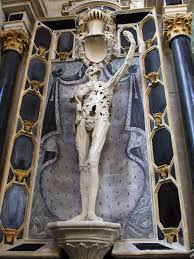
upper section of the Transi de René de Chalon
Liger Richier
1545–47
marble
the image depicts reality of what happens when you die — momento mori
example of Écorché — to expose each layer of the body from medical tradition
the body is holding a heart raised to heaven, it continues to beat
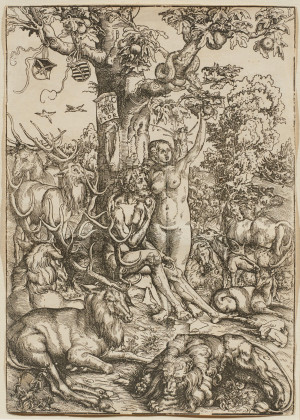
Adam and Eve
Lucas Cranach the Elder
1509
woodcut
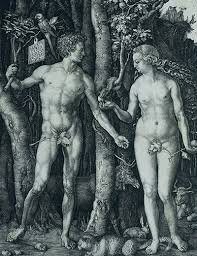
Adam and Eve
Albrecht Dürer
1504
engraving
youthful male figure (Italian ideal) and “volumptious” female figure (Medieval ideal) → first examples of studying from a female figure
classical, Italian figures = idealized, young, beautiful
sign: “Albrect Durer: From Nuremburg, in progress of making this” → this Italianate concept originates from ancient art: shows the artist is in continual creation and always time to grow
shift to engraving from woodblock: text with image done easier with woodblock compared to pressure engraving
animals around subjects = icongraphic details = maybe animals are the 4 tempers of the body
rather than Garden of Eden, set in the forest → tree of knowledge = fig tree
an advertisment to show off skills, a commodity to spread around quickly his name as an artist
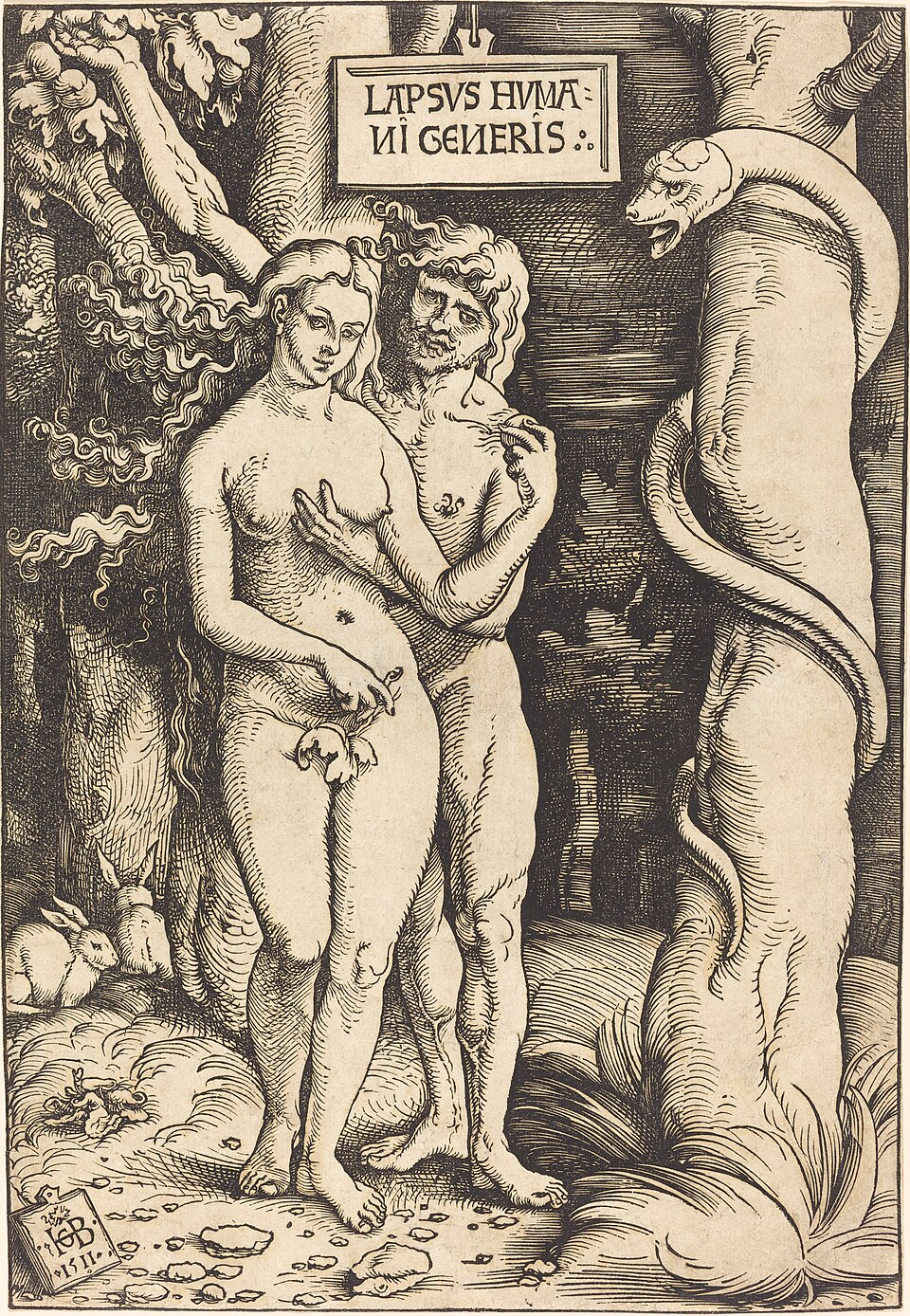
Adam and Eve
Hans Baldung Grein,
1511
chiaroscuro woodcut
chiascuro woodcut = multi colored woodcuts
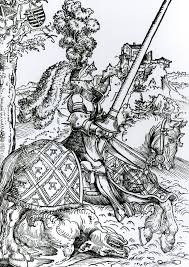
St. George
Lucas Cranach
1507
chiaroscuro woodcut
similar to Durer, but shows increase in visual vocabulary
The role of copying is to show artist is as good as Durer
wood cut
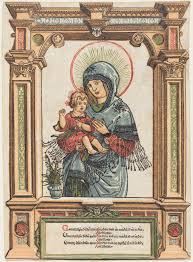
The Beautiful Madonna of Regensburg
Albrect Altdorfer
1519-21
color woodcut from six blocks
compared to painters, has mass produced colored prints quickly
achieved through six different wood blocks layered on top to achieve colored appearances
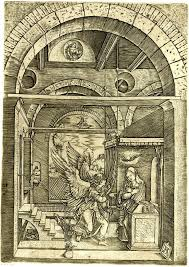
Annunciation from The Life of the Virgin series
Marcantonio Raimondi
1505-15
woodcut
is caught by Durer for copying his work and Durer sends agents and involves the state
court decides Raimondi CAN continue copying → just get rid of signature
start of copyright law
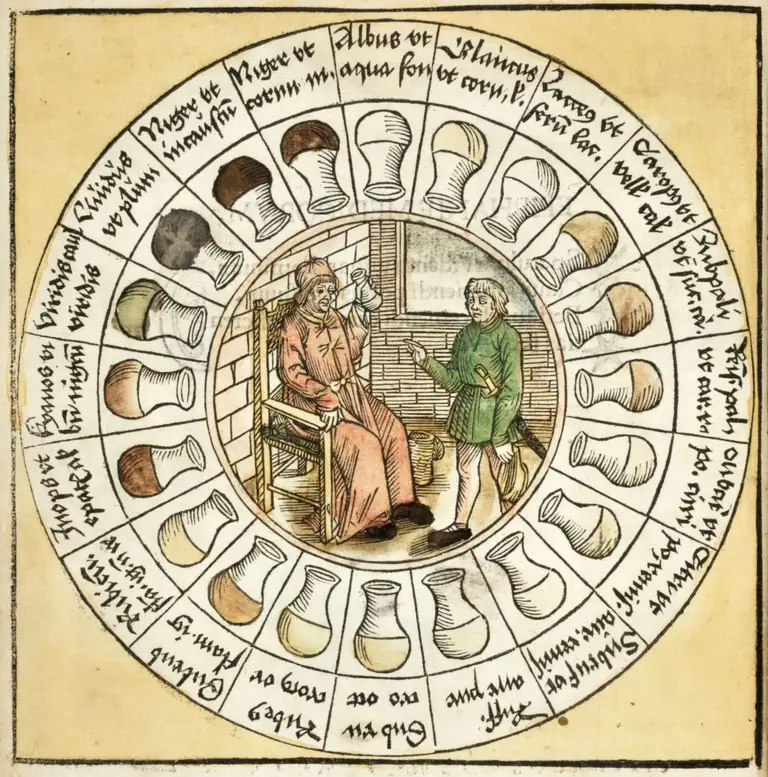
Urine Analysis Chart from Epiphanie medicorum (Doctors’ revelations)
Ulrich Pinder
1506
woodcut with hand-coloring
early diagonist image — no diagnostic tests available outside of the urine analysis
standarziation of information thanks to print technology
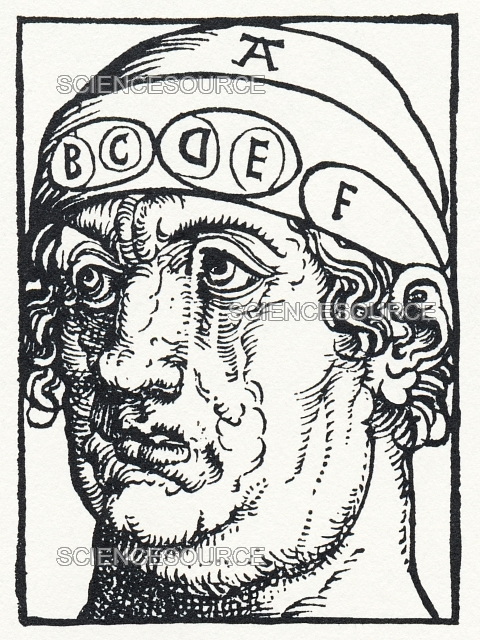
Portrait of Willibald Pirckheimer as Caput Physicum
from Pruthenus, Trilogium anime (Three parts of the soul)
Albrecht Dürer
1498
Woodcut
shows medieval understanding of psychology, as sections of the head
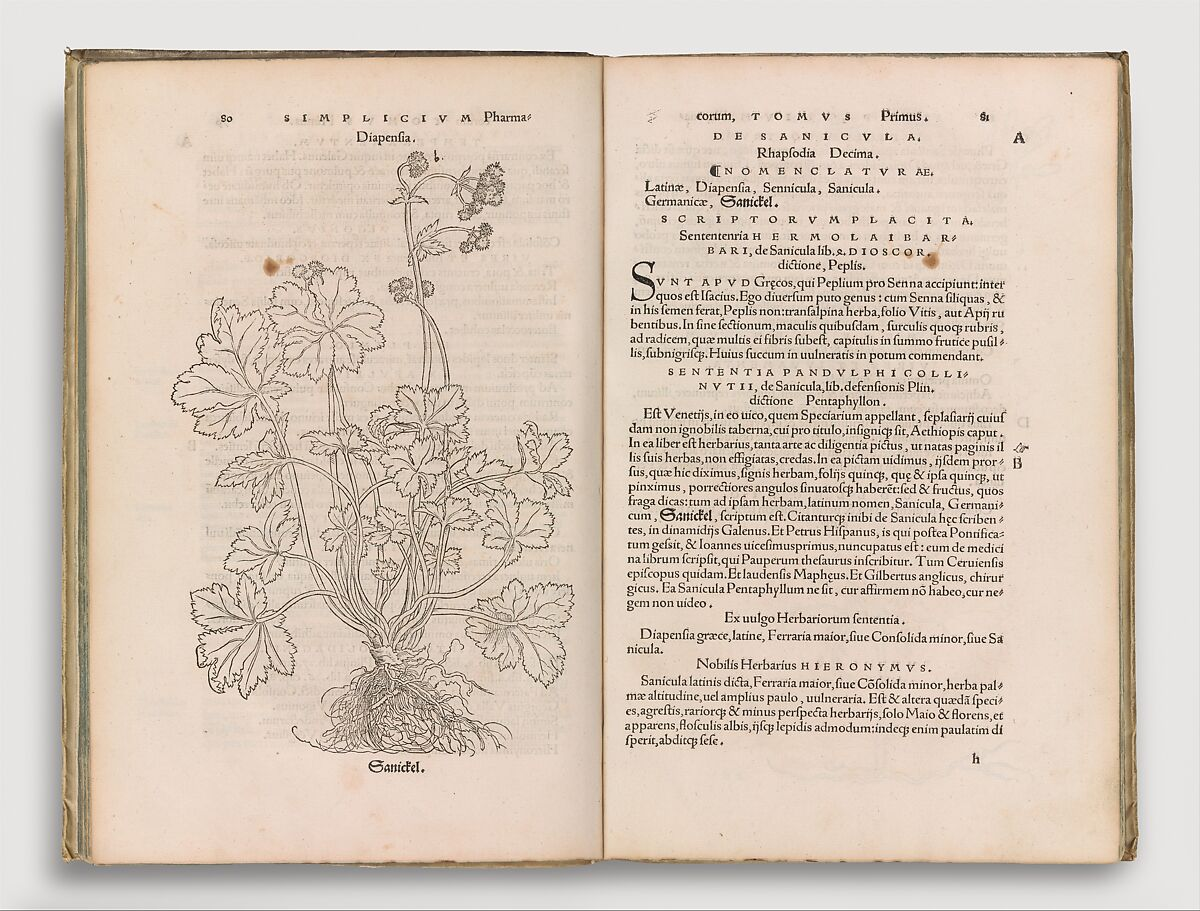
Herbarium vivae eicones
Otto Bunfels
1530
woodcut printed book
studies of medieval botony
example of a medicinal plant
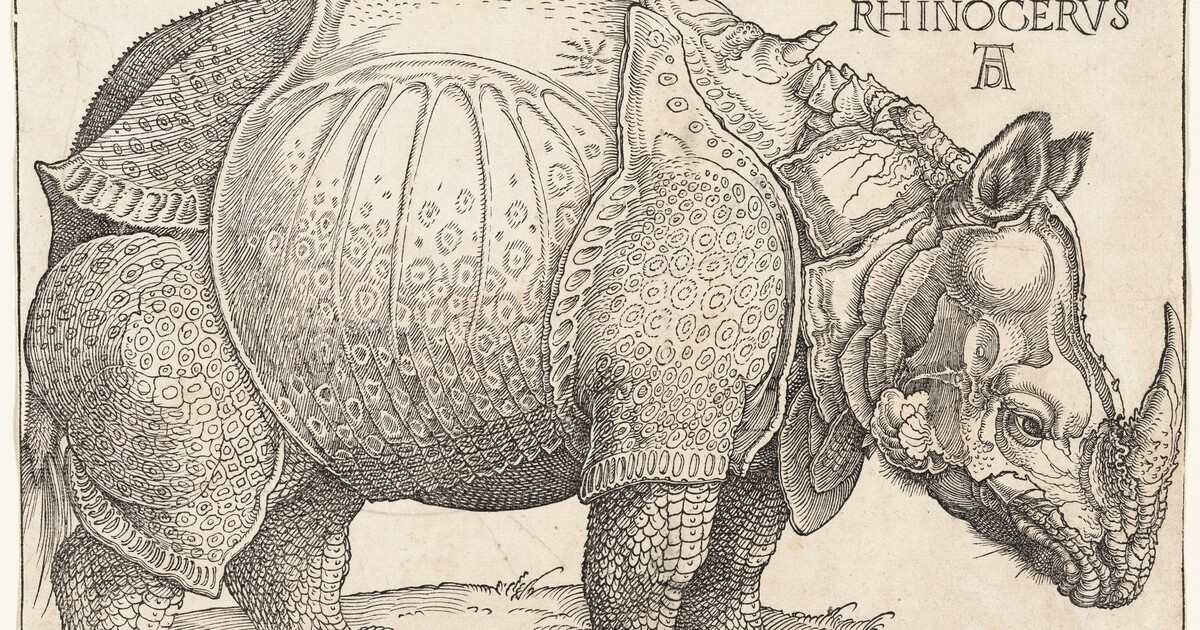
Rhinoceros
Albrecht Dürer
1515
woodcut
Durer’s attempt to catalogue foreign animals not previously seen
shows a text with image: a description of the rhino’s appearance, beheavior, and personality
innacurately portrays a rhino like a plated animal → Durer never saw a rhino, only read a description and based on seeing other animals
is trying to come off as scientific
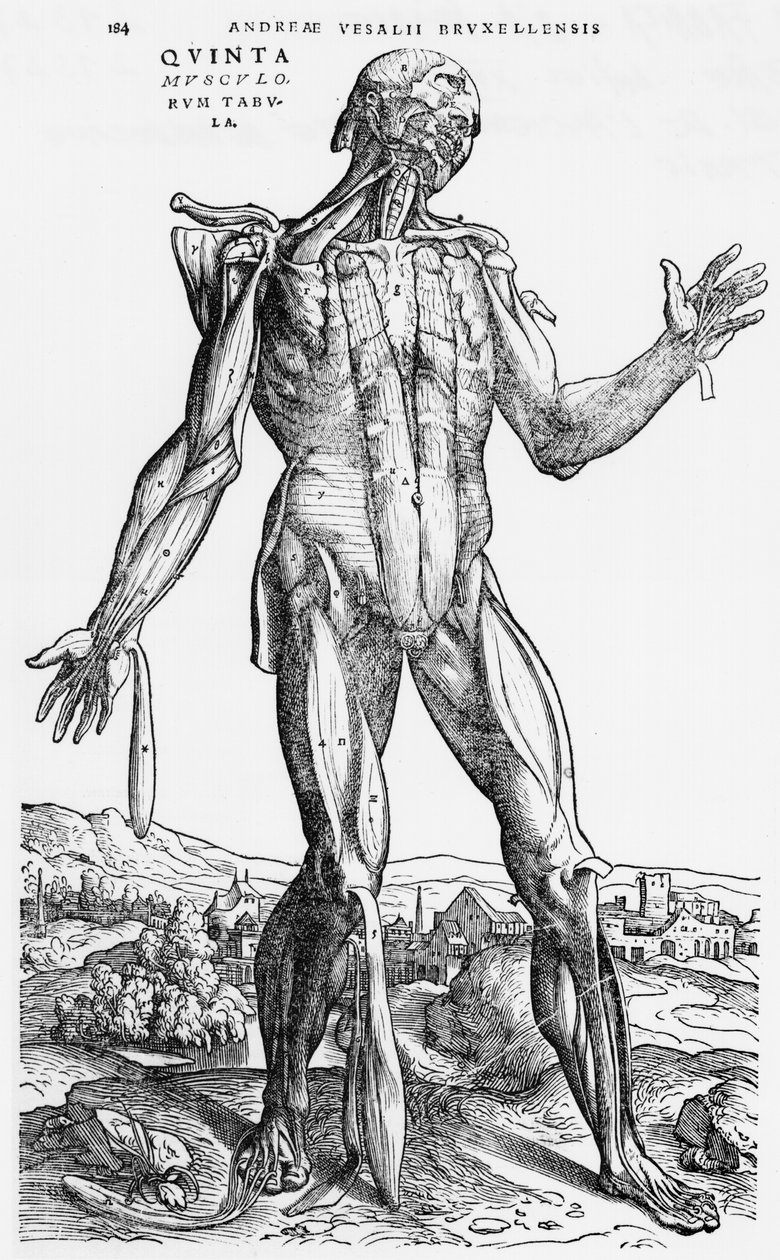
De humani corporis fabrica libri septem
Andreas Vesalius
1543
woodcut and letterpress
showing each layer of the muscle
pose showing animations and flexing movment of the muscles
detailed background shows lack of distinction between art and science
to present information is to also create art
dual audience: doctors and artists are interested in anatomy
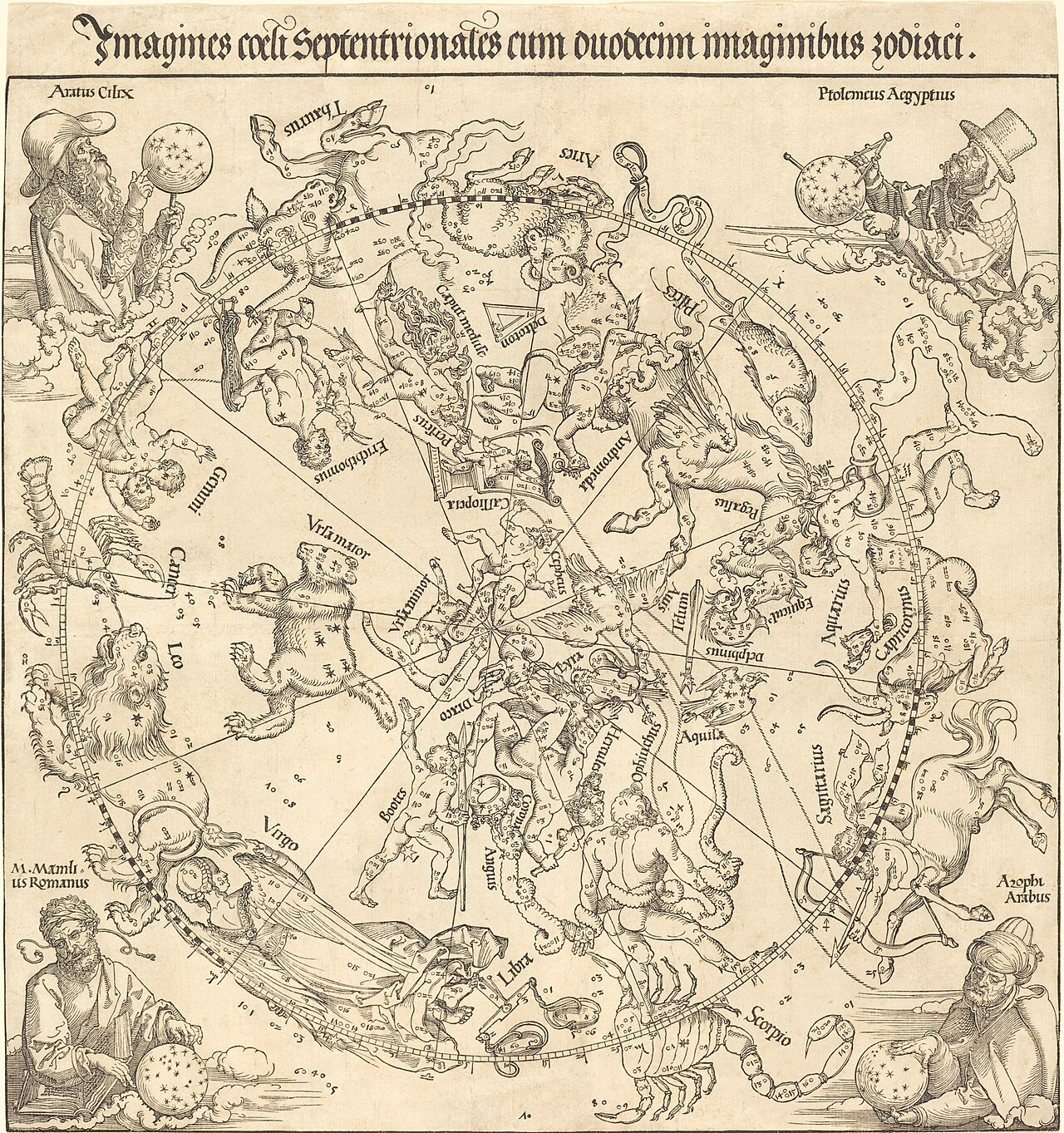
Map of the Northern Celestial Hemisphere
Albrecht Durer and Johannes Stabius
1515
woodcut and hand-coloring
for navigation purposes: fuels the age of Exploration
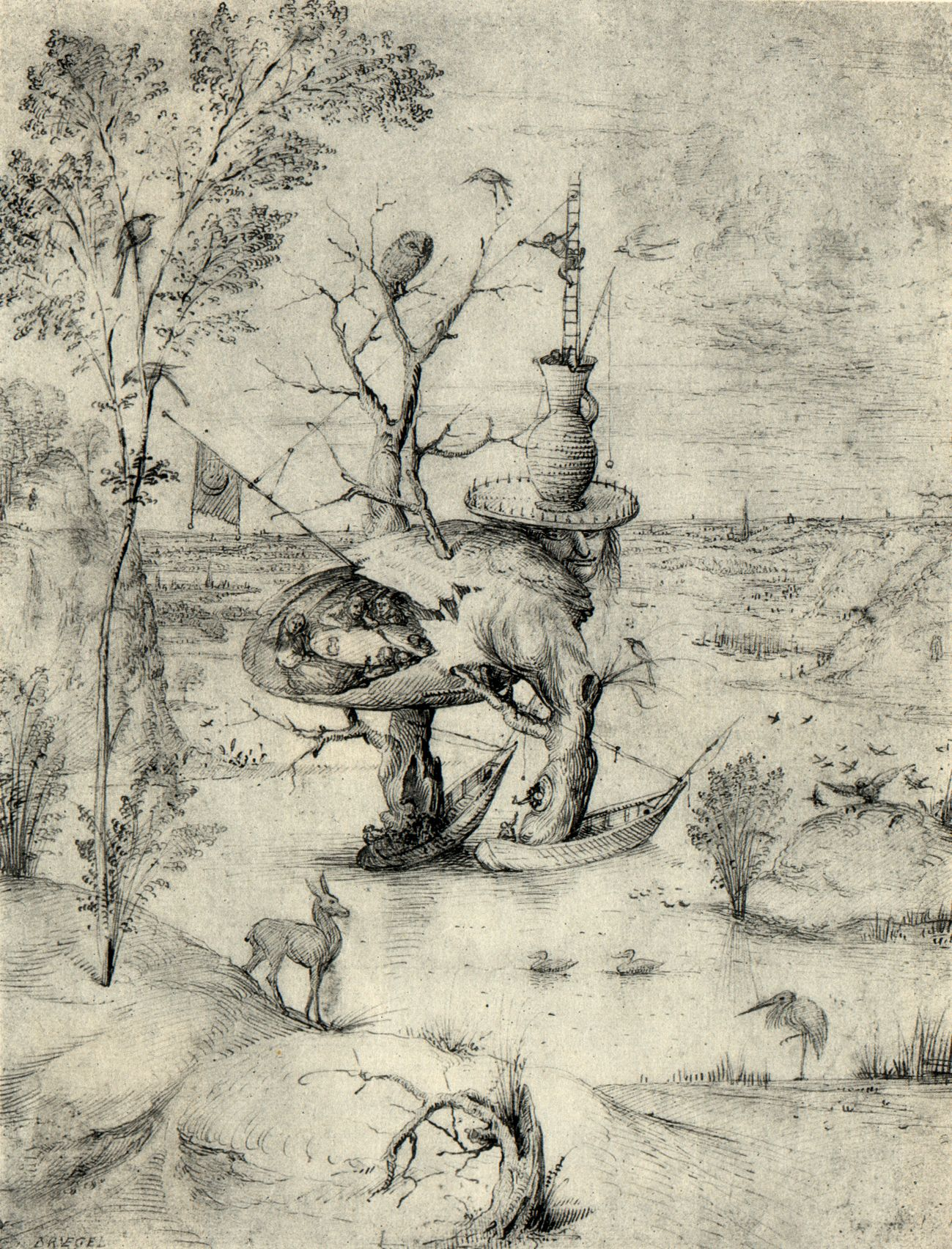
The Tree-Man
Hieronymus Bosch
1505
pen and brown ink
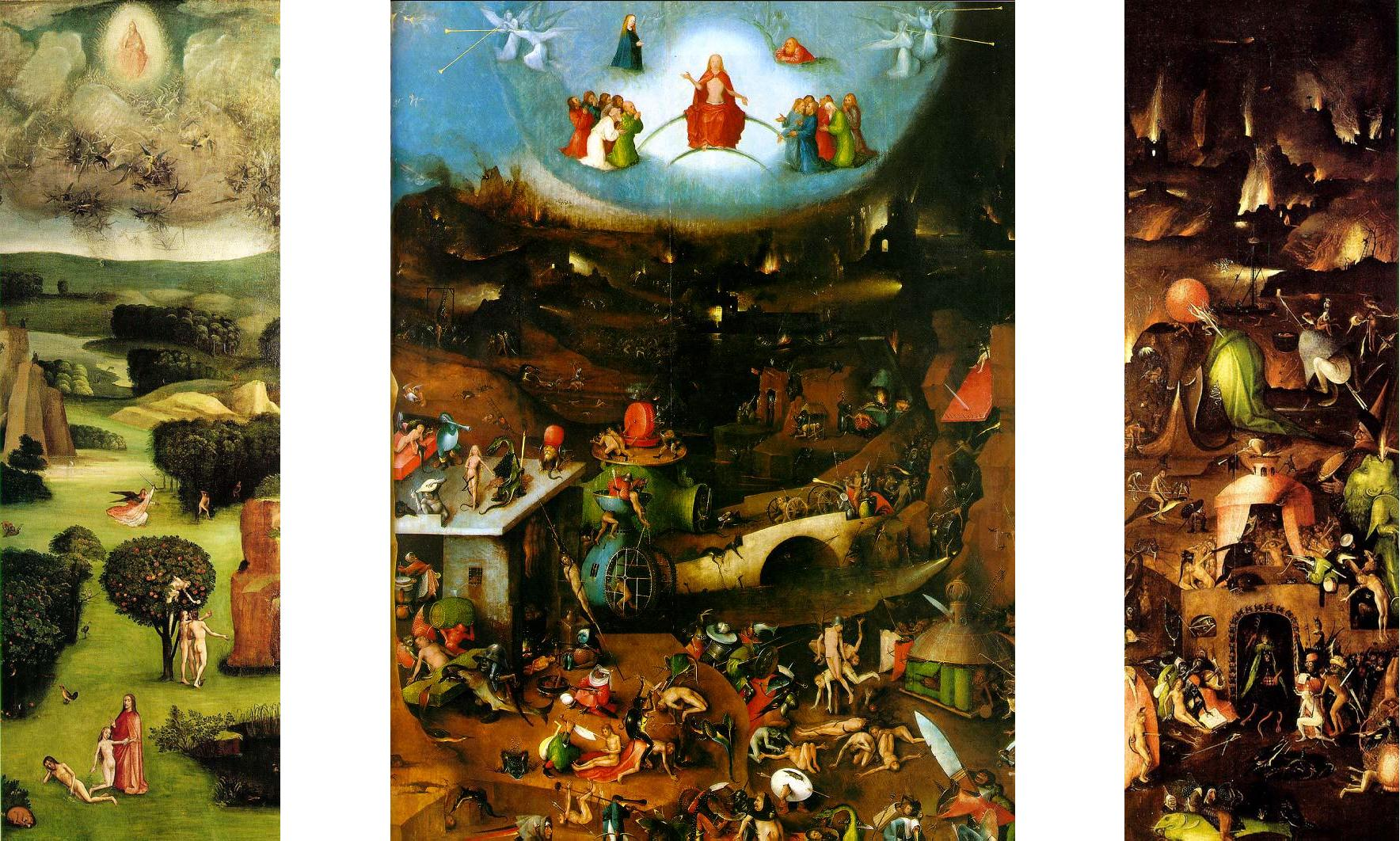
The Last Judgment
Hieronymus Bosch
1482-1505
oil on panel
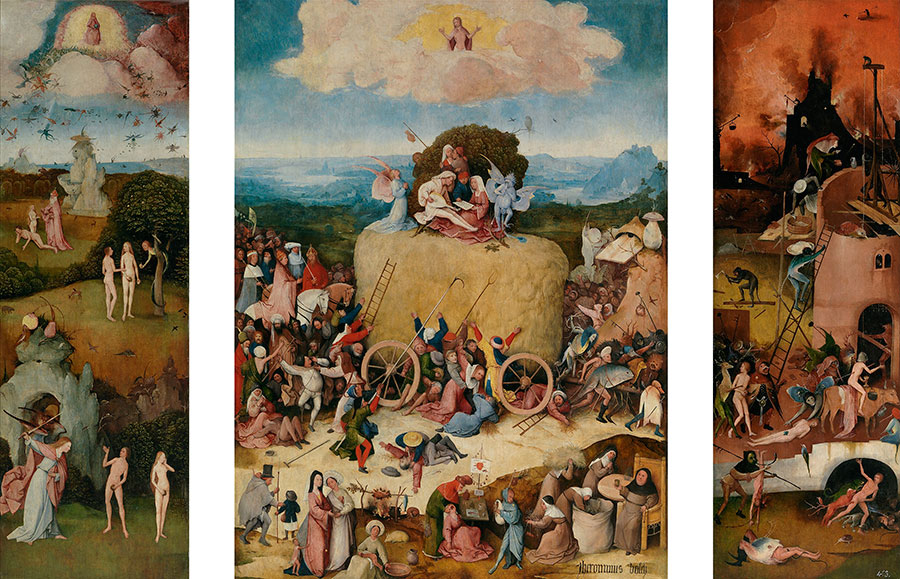
The Haywain
Hieronymus Bosch
1512-1515
oil on panel
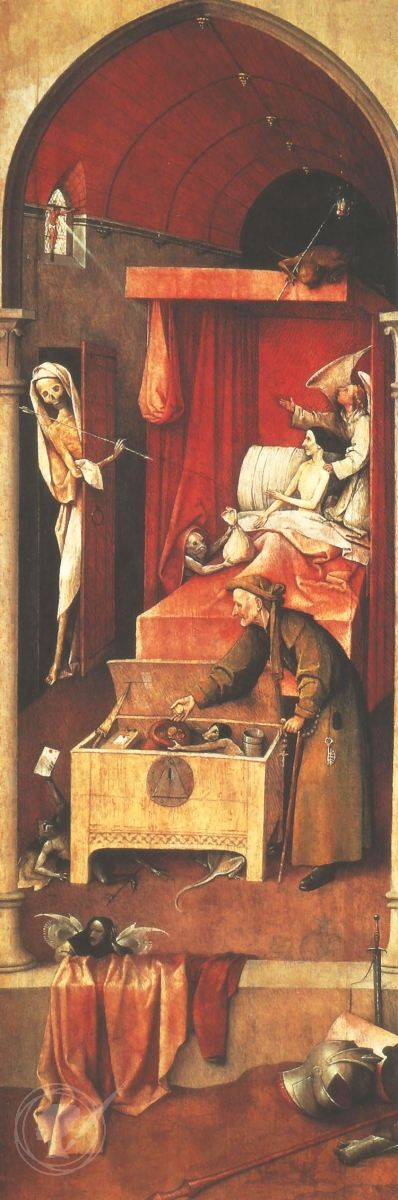
Death of the Miser
Hieronymus Bosch
1490-1516
oil on panel
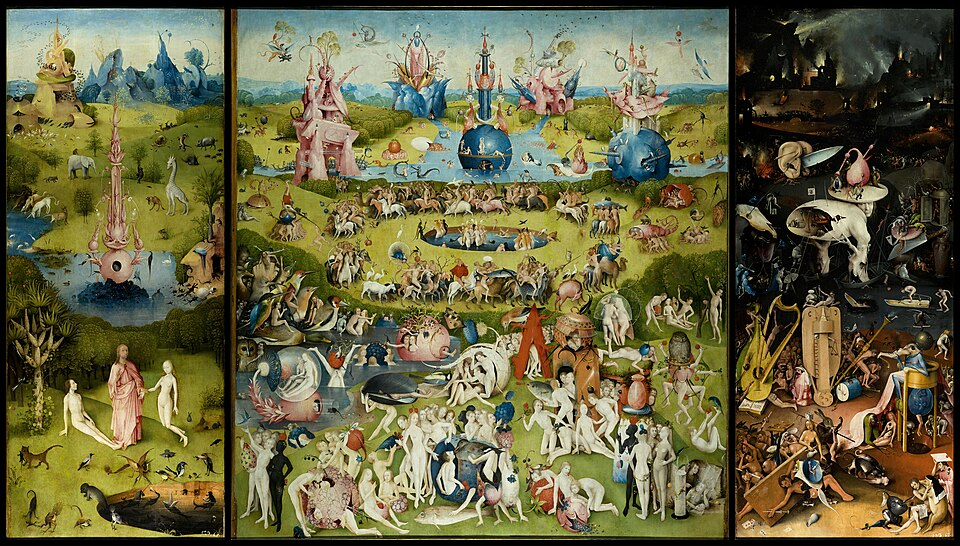
Garden of Earthly Delights
Hieronymus Bosch
1505-1510
close:
monochromatic “surrogate” of Earth, outside showing the world still in the process of being made, God seen at Genesis in top left
alchemical structures/flasks, seen on Earth
From map traditions
God is first creating structure, color comes later
inscription says God is creating in the image → God = Dues Architect, early depictions of God holding a compass the creation + defintion of geography, artists similarly is God, fomring space from nothingness
open:
to reveal world of intense saturation
unknown context of the piece
deeply religious painting: middle panel shows alchemicial objects in bg to differentiate this world from ours, subjects enjoying themselves and highlighting pleasures of life, 2 owls present = owls used by Bosch represent the watchers of hedonism
when you give yourself to pleasure you forget life is temporary and judgement will wait for you in eterna life
left panel:
garden of eden, be we see animals killing each other = the rise of sin
right panel:
the effects of poor decisions send you to hell
depicts ways bodies can be tortured
music, gambling, church indulgences in ofreground
bosch as the egg man = life’s fragility
deeply moralizing
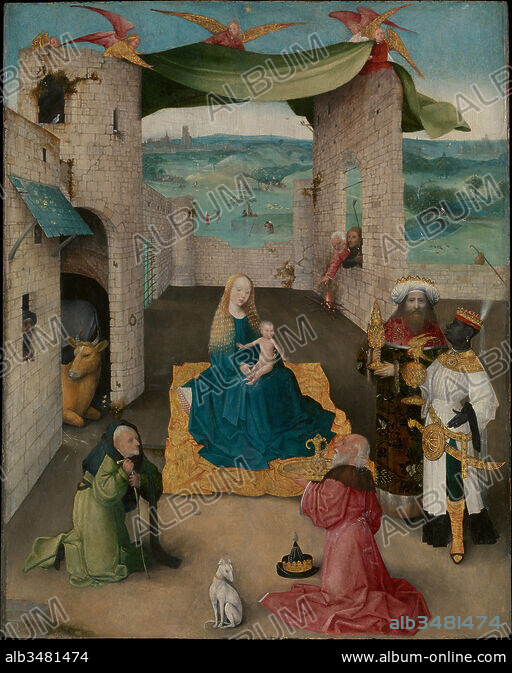
Adoration of the Magi
Hieronymus Bosch
1475
oil on panel
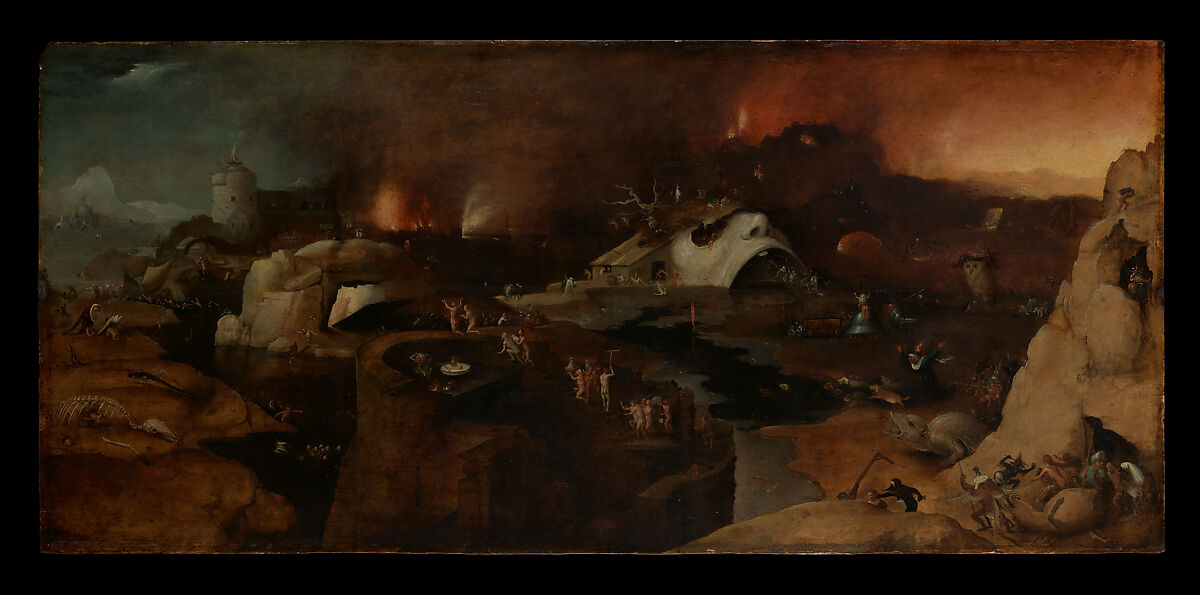
Christ Descent into Hell
Follower of Hieronymus Bosch
first half of 16th cent
oil on panel
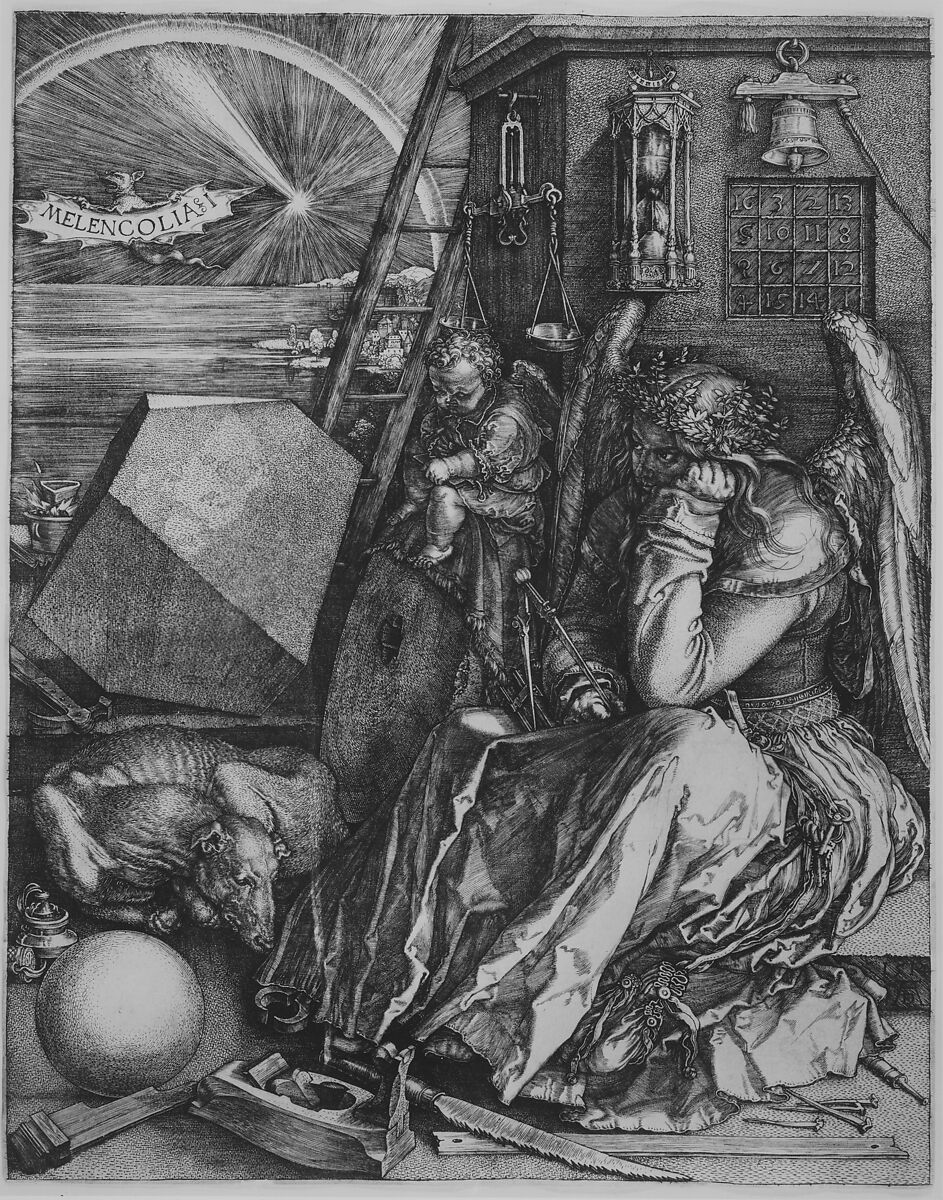
Melancholia I
Albrecht Dürer
1514
engraving
running out of time = hourglass
creation seen throughout — both in actions and items are related
melancholia — one of the four humors
a self portrait of the tortured artist/genius — started around this time where artists go against the image of the humble artist, showing the artist can struggle
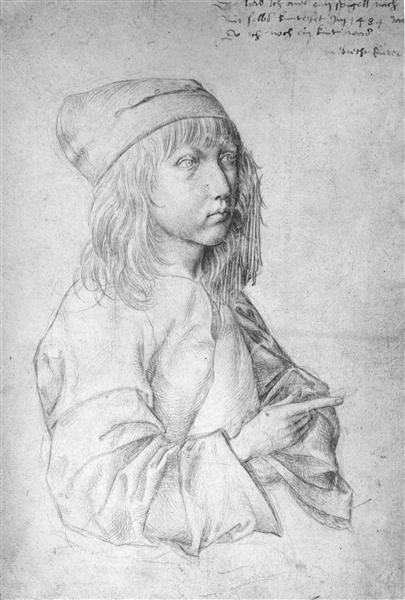
Self-Portrait at 13
Albrecht Dürer
1484
silverpoint
inscription about who he is
document where Durer begins, shortly becomes an apprentice after this piece
difficult medium: silver point, a piece of sharpened silver, unable to erase, no blending, no mistake
done with a miror
pointing gesture
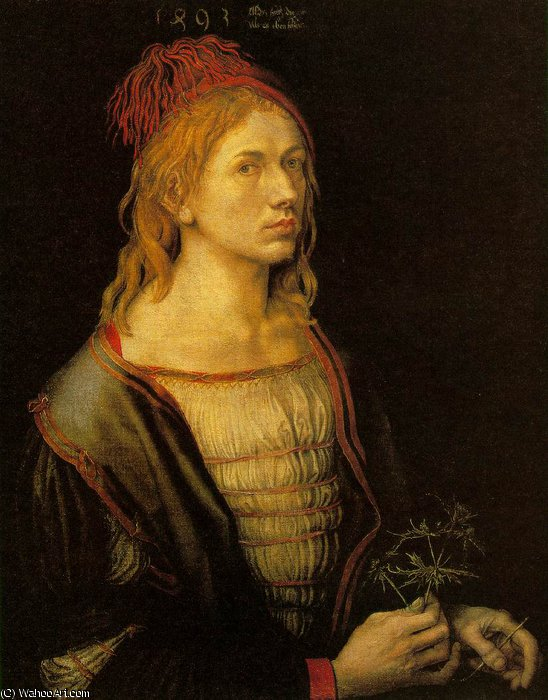
Self-Portrait at 22
Albrecht Dürer
1493
oil on panel
travelled to Holland at 18
gets married, makes portrait for wife
dressed in contemporary German clothing → shortly goes to Italy after
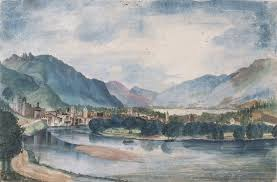
View from Trent
Albrecht Dürer
1495
watercolor drawing
shows the changes in climate between Alps+Germany to Italy
desire to capture his travels
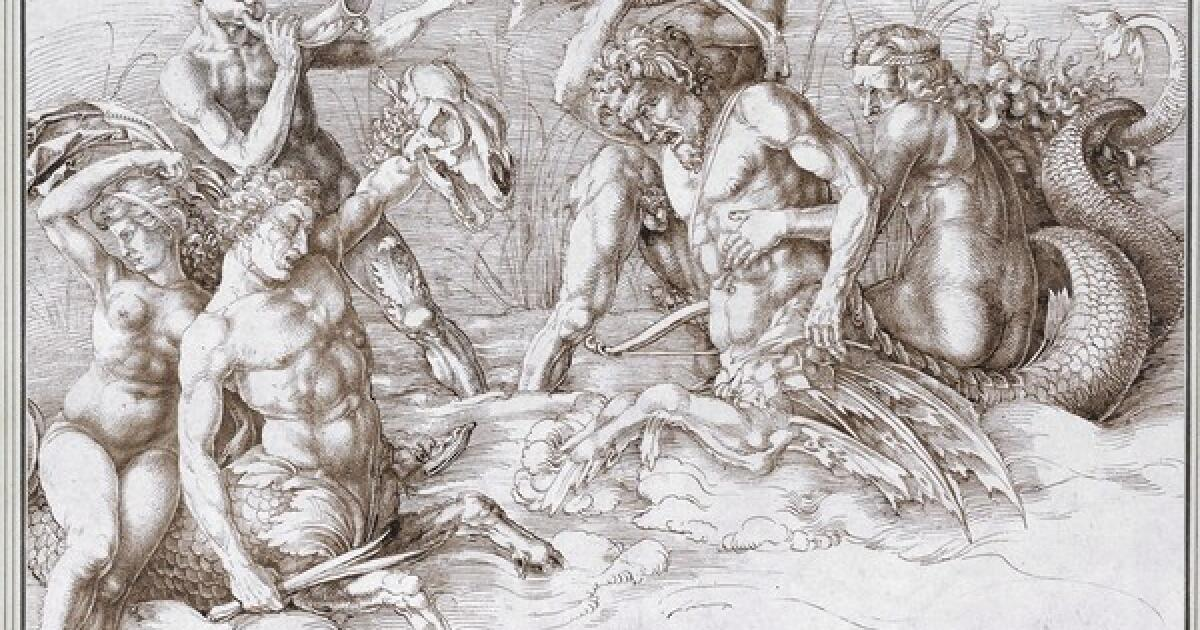
Battle of the Sea Gods
Albrecht Dürer
1494
pen drawing
meets/encounters work of Mantegna → inspired by classical antquity
pagan subject matter
idealized bodies
Durer is doing a study of Mantegna’s work
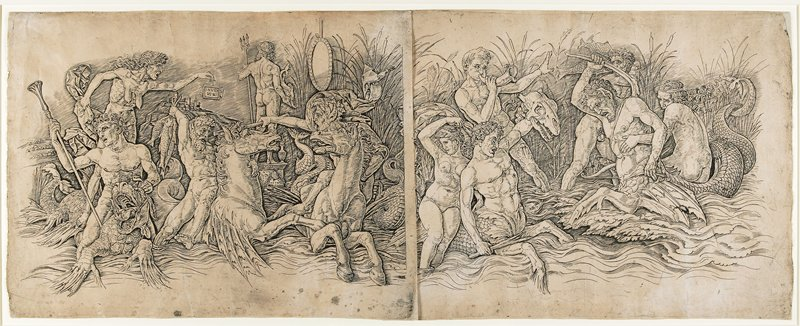
Battle of the Sea Gods
Andrea Mantegna
1481
engraving
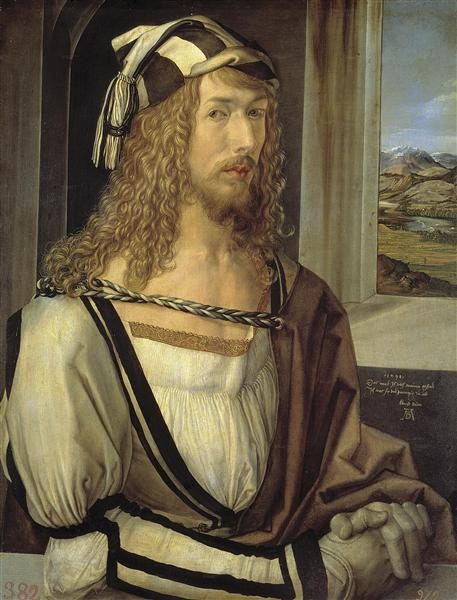
Self-Portrait
Albrecht Dürer
1498
oil on panel
shows him in Italian clothing
interested by how Italian artists are treated compared to N. Europe = not humble craftsmen but intellectual elites and Durer wants that treatment back home
similar bg of Madonna and Child to show his status
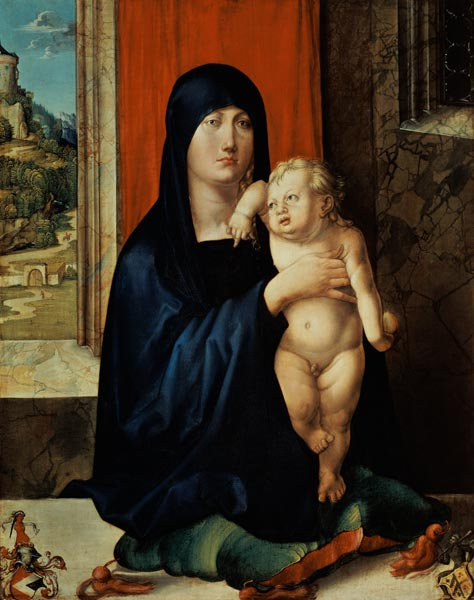
Madonna and Child
Albrecht Dürer
1496/99
oil on panel
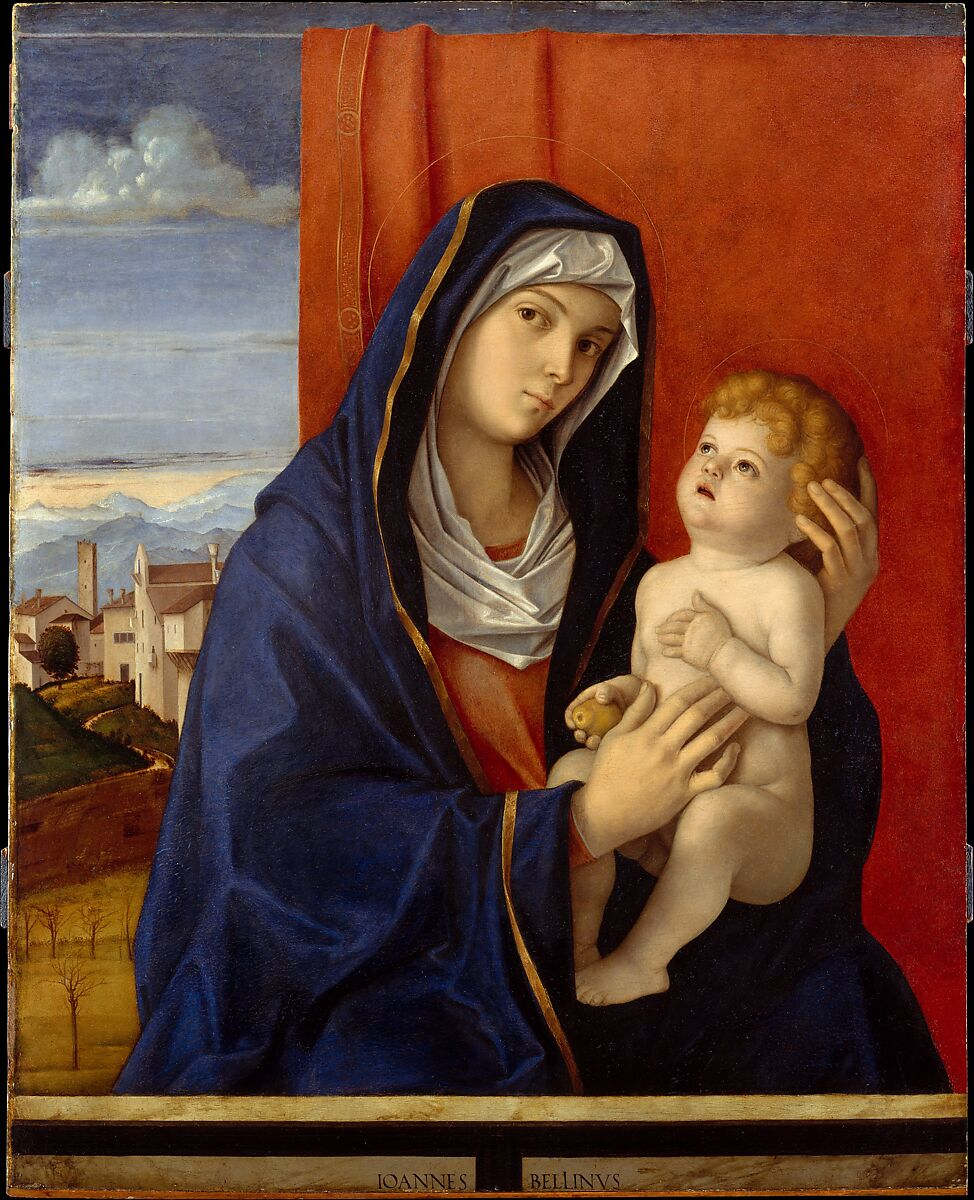
Madonna and Child
Giovanni Bellini
1480s
oil on panel
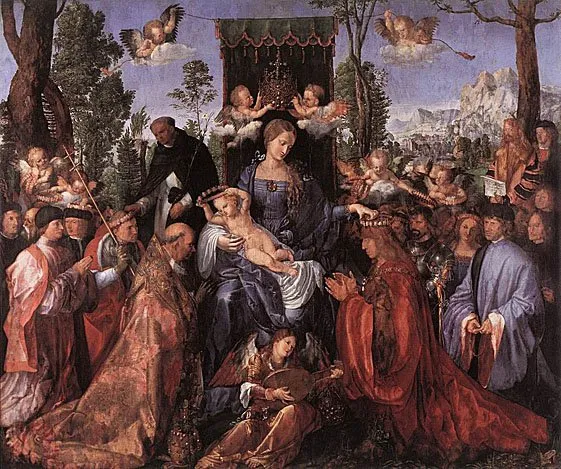
Feast of the Rose Garlands
Albrecht Dürer
1506
oil on panel
Durer recieved commission from Venice for a confraternity dedicated to rosaries
Vencie had control of the Mediterrean sea, major trade post between Europe, Africa, and Asia = very cosmpolitan, had the first ghettos to keep Jews in enclosed neighborhoods aka anti-Semitism was prominant in Venice
practice of the rosary becomes more systemizied
roses = rosaries
texture seen in the iridescence on clothes
durer includes himself in the work itself — leaving himself in the town painting
“putti” angels present with wings: silly characters and an Italian concept → comes from hierarchy of angels
copying an Italian subject: “sacred conversation” where several subjects from different time frames coming together in one space
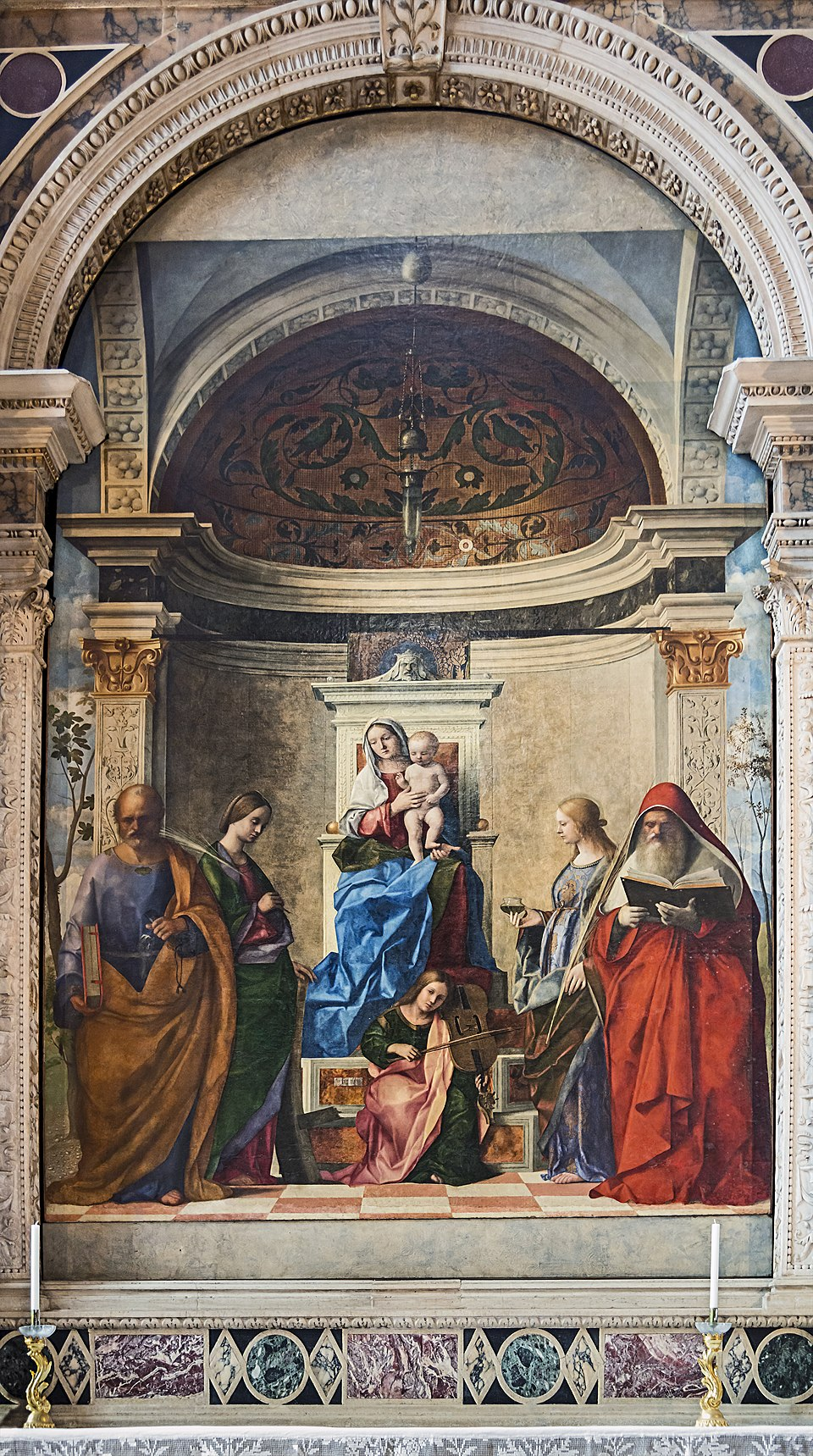
San Zaccaria Altarpiece
Giovanni Bellini
1505
oil on panel

Large Turf of Grass
Albrecht Dürer
1503
watercolor
in watercolor = flexibility in the medium
level of precision = to be a surrogate of the world, intense observation
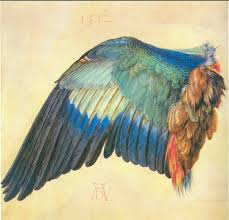
Albrecht Dürer
Bird Wing and Bird Study (Blue Roller)
1512
watercolor drawing
the attention to the unnoticed
empiricial observation/naturalism in post-Protestant Reformation = God is in nature, faith in observation
Attention to detail
Durer travels extensively, esteemed man of the court and a part of different upper/middle social circles

Young Hare
Albrecht Dürer
1502
watercolor
see diversity of the colors and texture
(same context as bird wing)
empiricial observation/naturalism in post-Protestant Reformation = God is in nature, faith in observation
Attention to detail
Durer travels extensively, esteemed man of the court and a part of different upper/middle social circles
shown to greatly respect other artists
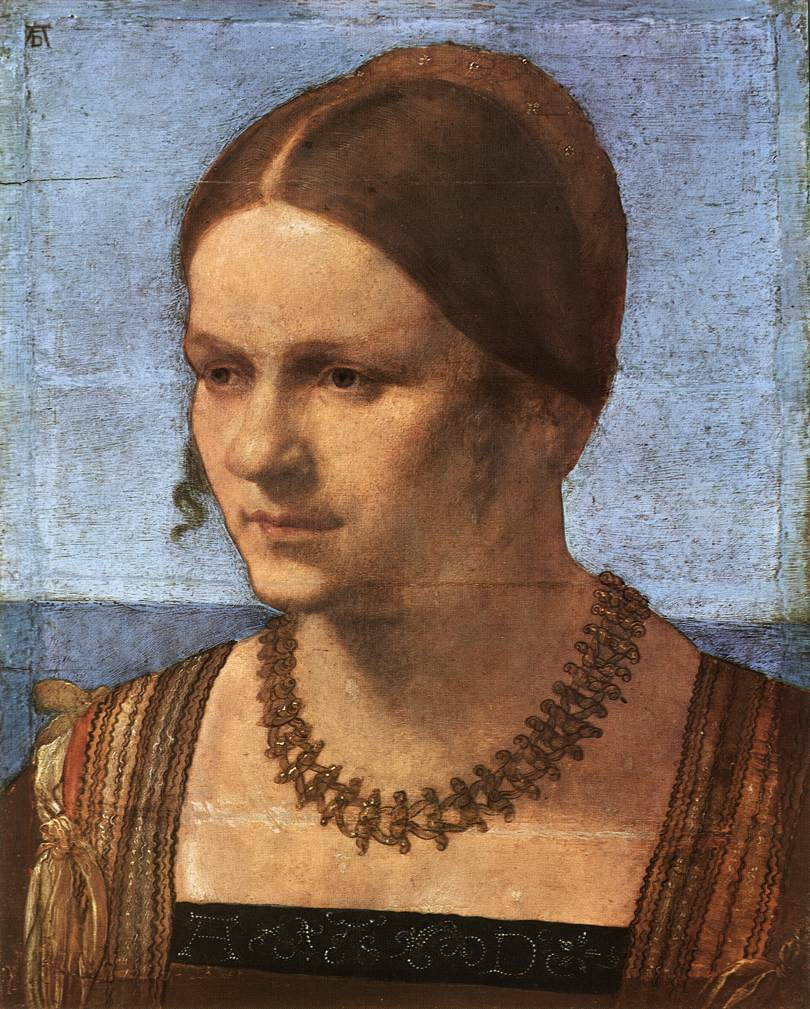
Study of Venetian Woman
Albrecht Dürer
1507
oil on panel
annonymous subject
akin to other Italian figures
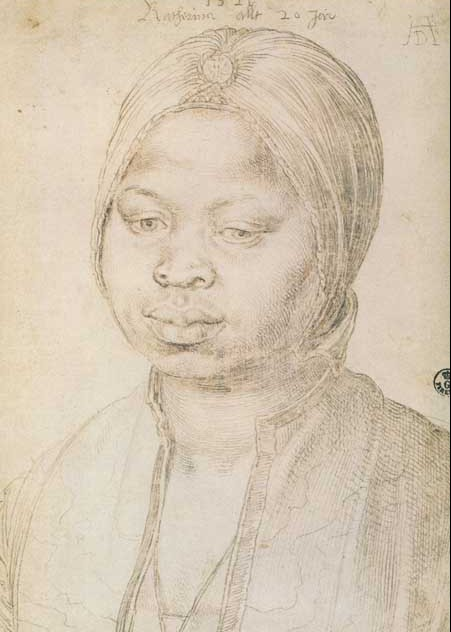
Portrait of Katharina
Albrecht Dürer
1521
silverpoint
servant in Durer’s household
Likely from the Portuguese slave trade with/from West Africa
Attention of “physiognomy” — focus on individual features
using portrait to personify — bigraphical purposes
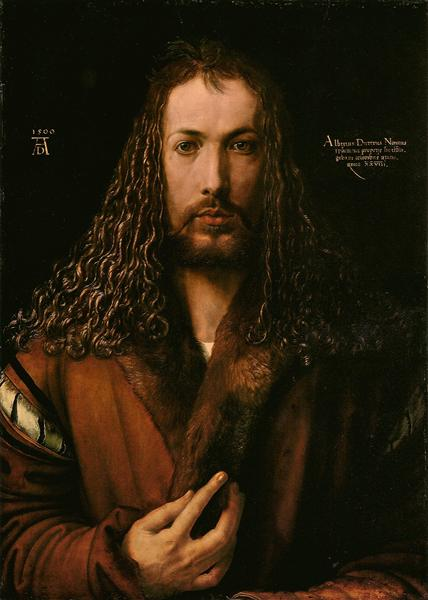
Self-Portrait
Albrecht Dürer
1500
oil on panel
speaks to celebrity status of Durer — his self confidence
intentionally inflates his image to be like Jesus → the artist = creator = God
frontal gaze, hand gesture is not like Jesus (external hand gesture) but instead is internal
Human sized portrait - in elaborate clothing to show his status
not showing himself as a painter — like he’s God or like a wealthy painter
Durer’s hair was maintained after his death — like a religious relic, saint status of the arts
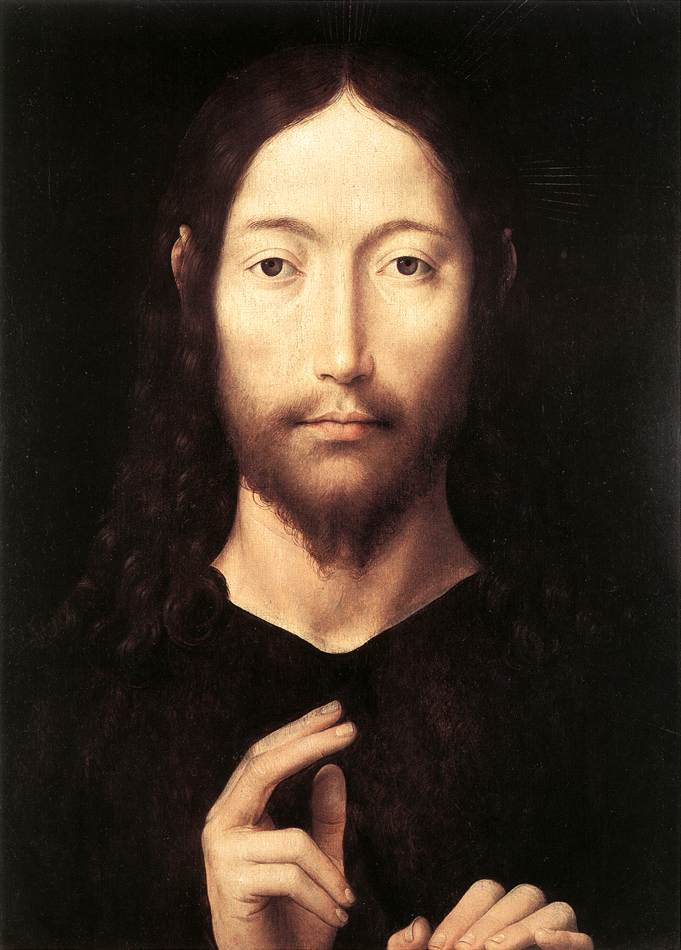
Christ Blessing
Hans Memling
1478
oil on panel
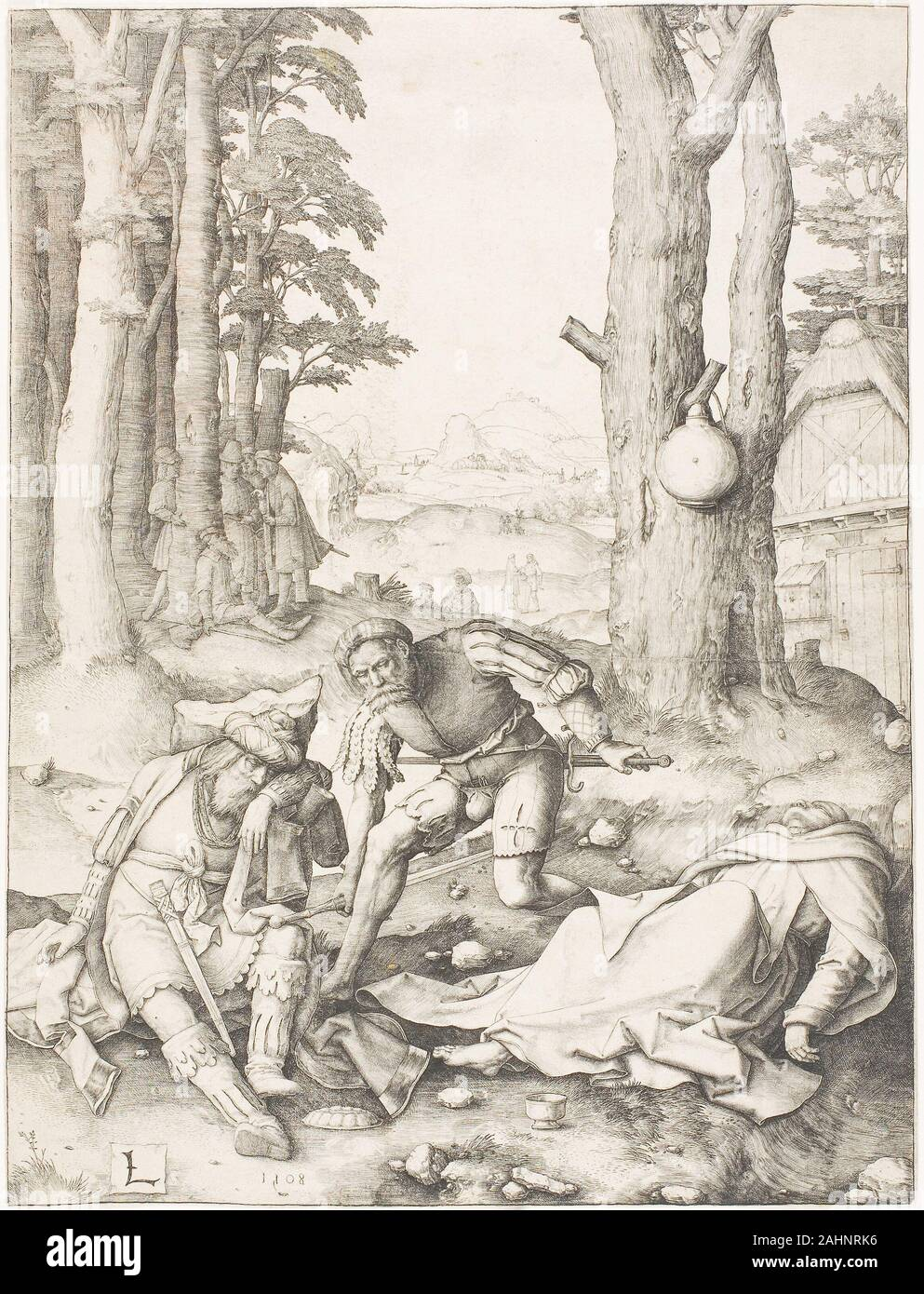
Mohammed and the Monk Sergius
Lucas van Leyden
1508
engraving
differs from contemporaries (Durer) - able to create atmospheric effects (with lighter values in the bg)
engraving lines are so dense and thin, it creates subtle gradation
increasingly secular subject matter + interest in landscape = genre word
still have religious characters, depicting prophet mohammend (reflecting contemporary anxieties of the growing Ottoman/Islamic world) for a christian audience
story of Mohammend being famed for the murder of a monk
unclear why this was represented — not a common story, typically a moralizing story in Islamic world (not in this example however)
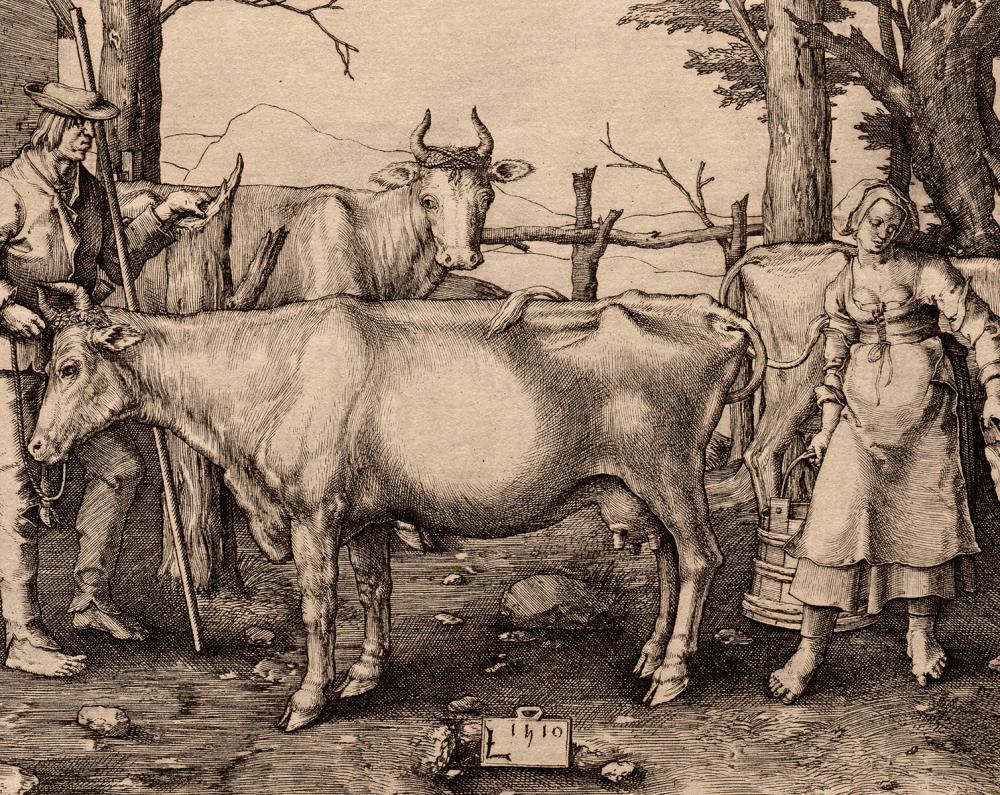
The Milkmaid
Lucas van Leyden
1510
engraving
composition drawn to milkmaid and she is empasized
new status of the regular figure — breaking down traditions
shows expectations of your role in society
“malken” to milk, but in slang, it also meant “to attract”
sxual innuendo — humerous subject
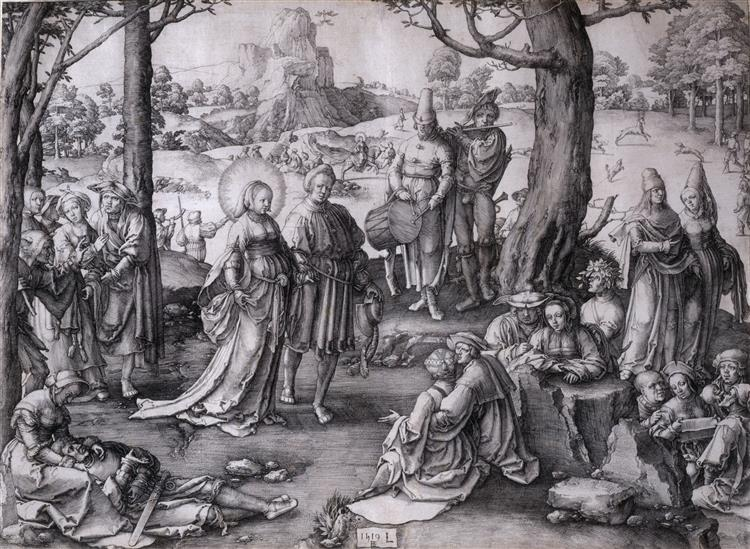
The Dance of the Magdalene
Lucas van Leyden
1519
engraving
combining engraving for the foreground and etching (lighter) in the bg
religious figures starting to look/are in secular/secular scenes
1514: Proestant Reformation, Martin Luther, questioning one’s relationship w/ God, Martin Luther thought too many were reliant on the church and there should be a direct connection with God
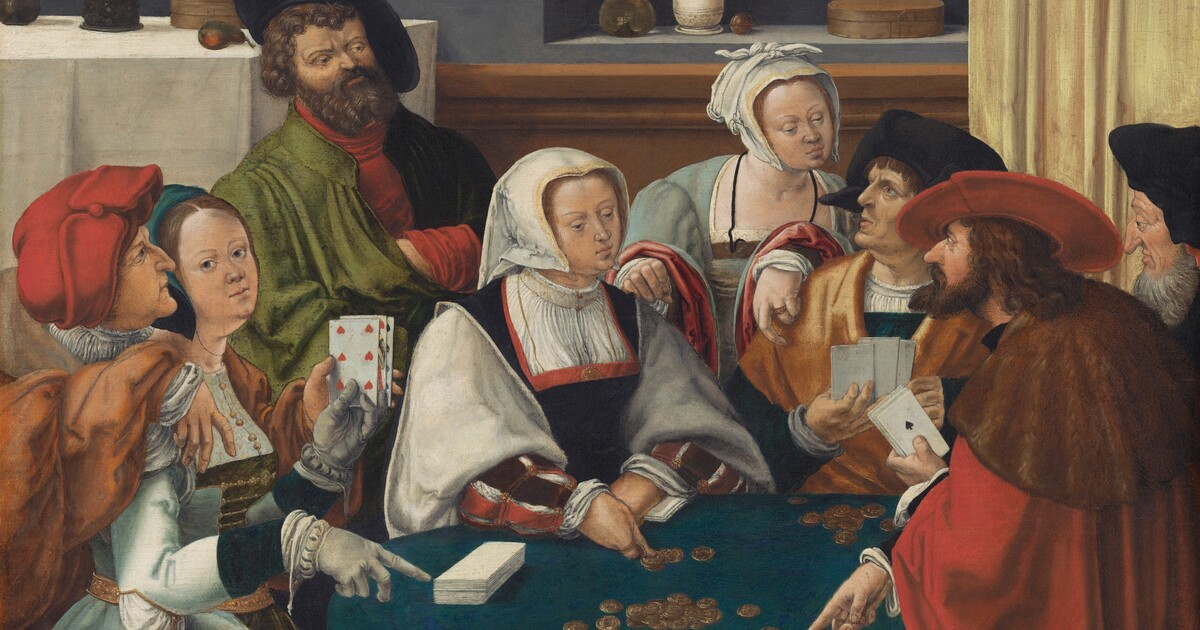
Card-players
After Lucas van Leyden
1550
oil on panel
inspired by a piece of Leyden
working in the lower countries, Antwerp, are becoming really wealthy through mercantile trade
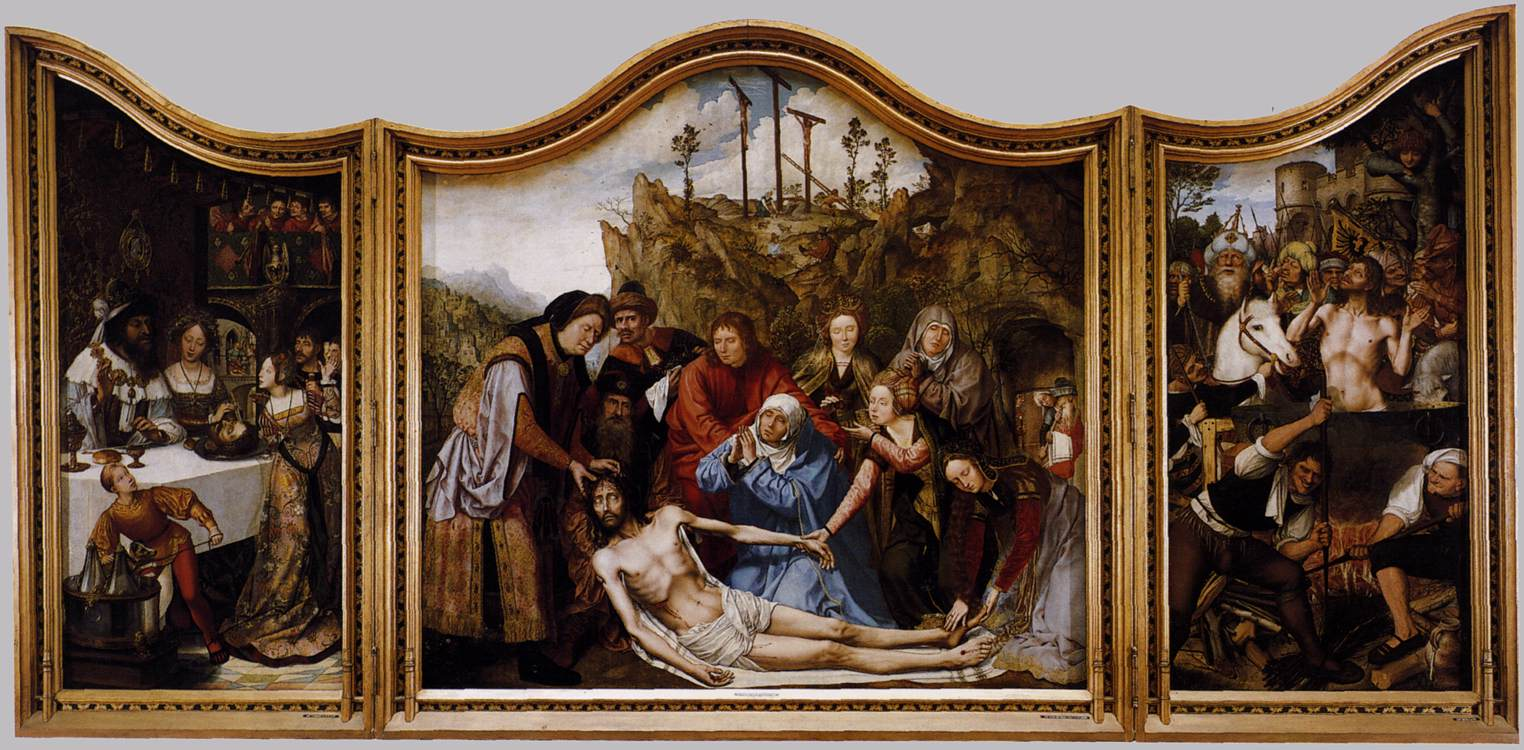
Lamentation Triptych (St. John Altarpiece)
Quentin Massys
1507-08
oil on panel
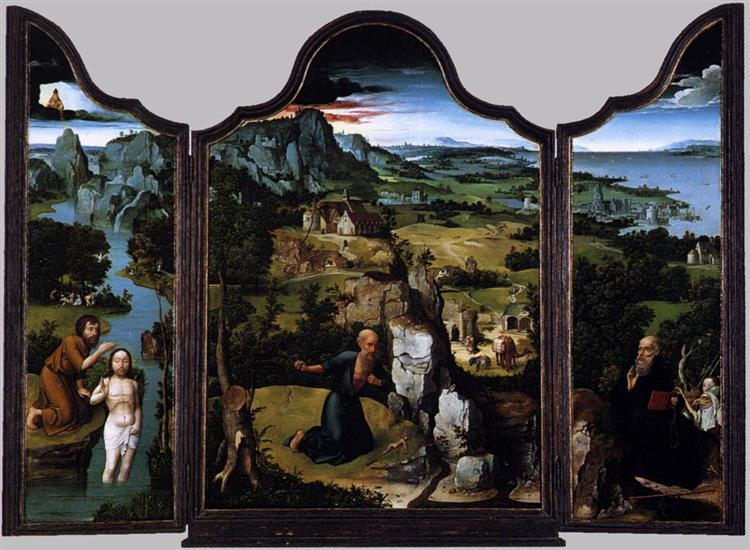
The Penitence of St. Jerome
Joachim Patinir
1512-15
oil on panel
closed: grissaile external panels
open: vibrant colors, atmopshereic qualities over the land
radical shift in scale — where religious figures given the bottom third of the painting while the focus is on the landscape
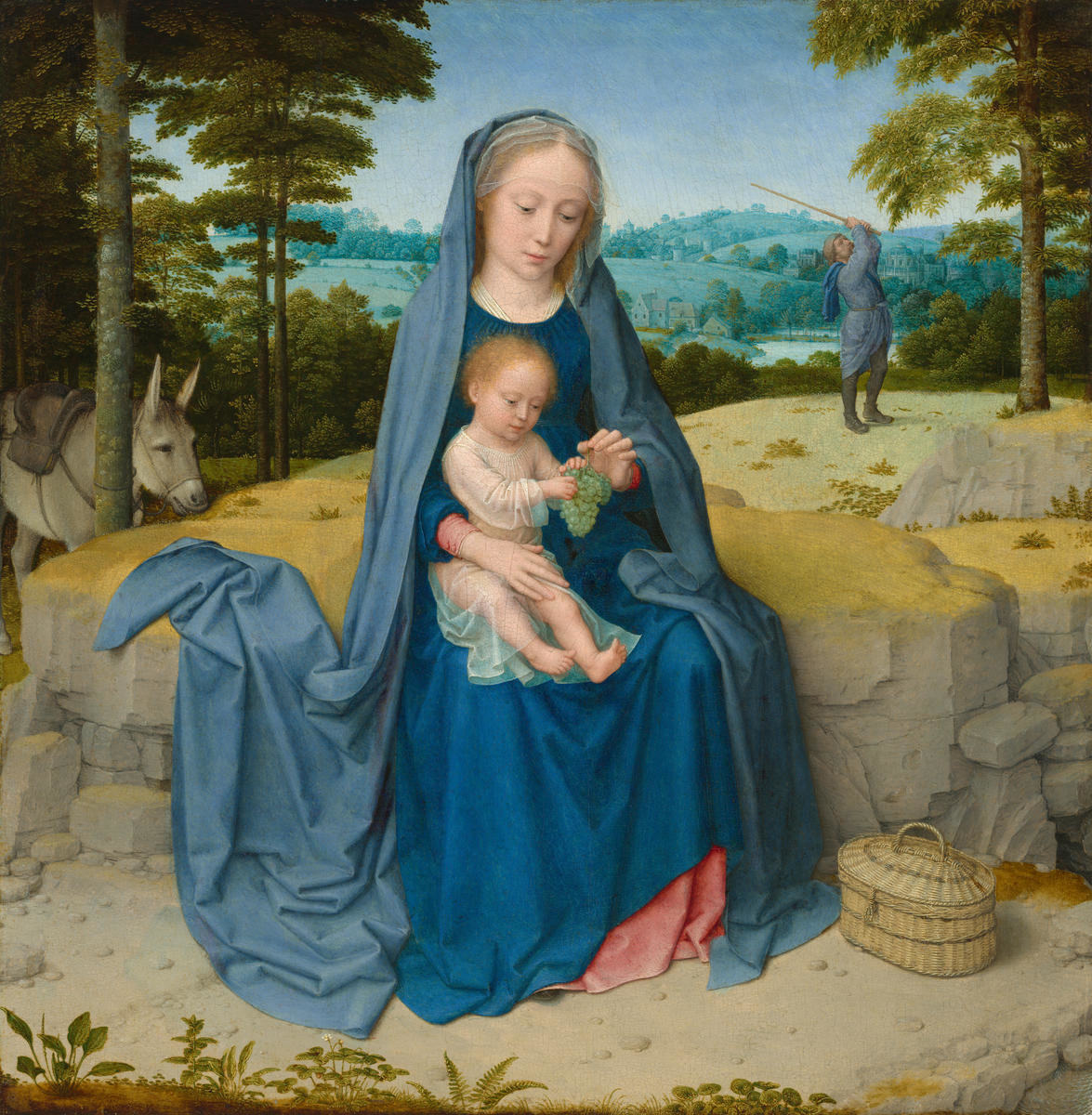
Rest on the Flight into Egypt,
Gerhard David
1510
oil on panel
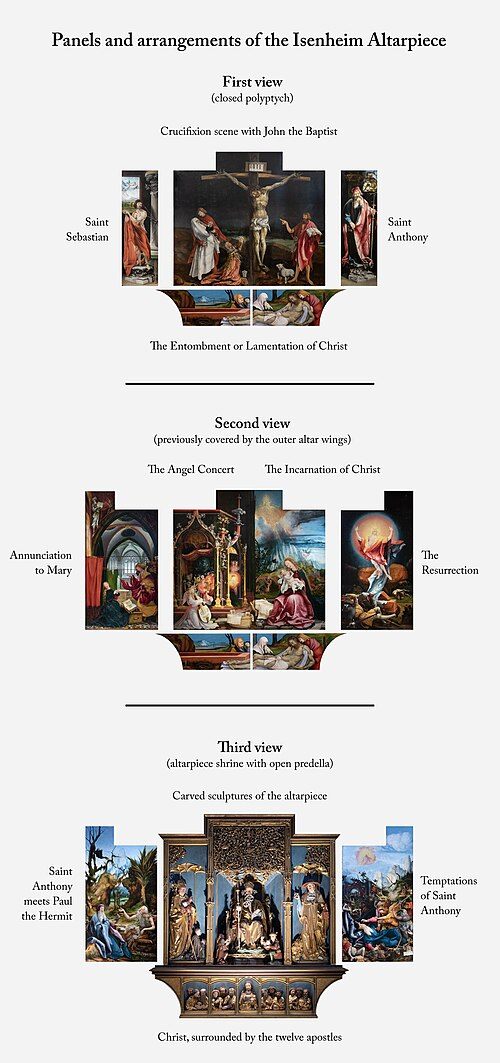
Isenheim Altarpiece
Matthias Grünewald,
1509-1515
oil on panel
was put up and made for a church with a hospital
at a time with ergotism, a disease which is reflected in the state of Jesus
shows Jesus tortured on the cross
on the inside, complete change with the inside hopeful and bright compared to dark and solemn outside
angel choir on inside shows treatment to ergotism, to have hope
Lamentation splits Jesus into two at the legs of the division, like amputation
common practice for statues on the inside and paintngs on the inside = the paintings become real
closed: reminder of the temporality of life, the bodily torture of Christ — to think about the pain of the body
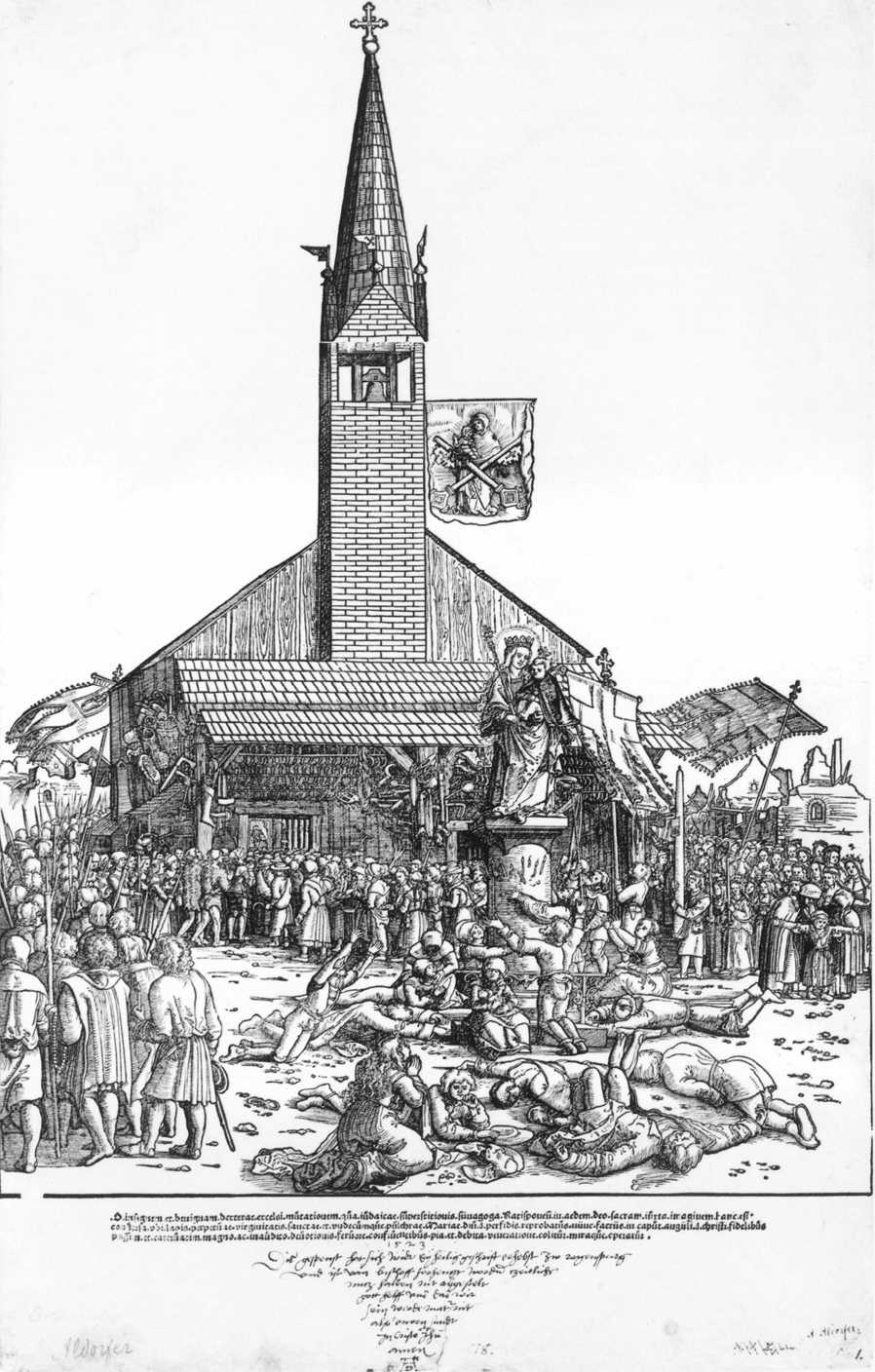
The Pilgrimage to the Beautiful Madonna of Regensburg
Michael Ostendorfer
1520
woodcut
context: Holy Roman Emperor Maximilion was a patron of the arts and protected the Jewish community. Following his death, the empire fell into chaos and the anxiety in Regensburg towards the protected Jewish group caused Christian iconoclasts to tear down the town’s synagogue
During this process, one was injured but prayed to the image of Madonna and was healed → became a site of pilgrimage where the church was building over the synagogue
pope told people to go to Regensburg as a special indulgence → hated by Martin Luther
verges on idolotry: praying to the image as if the spirit is within it → frowned on by Chrisitans because it is a pagan tradition
growing axiety of idoltry around this time - waves of iconoclasim
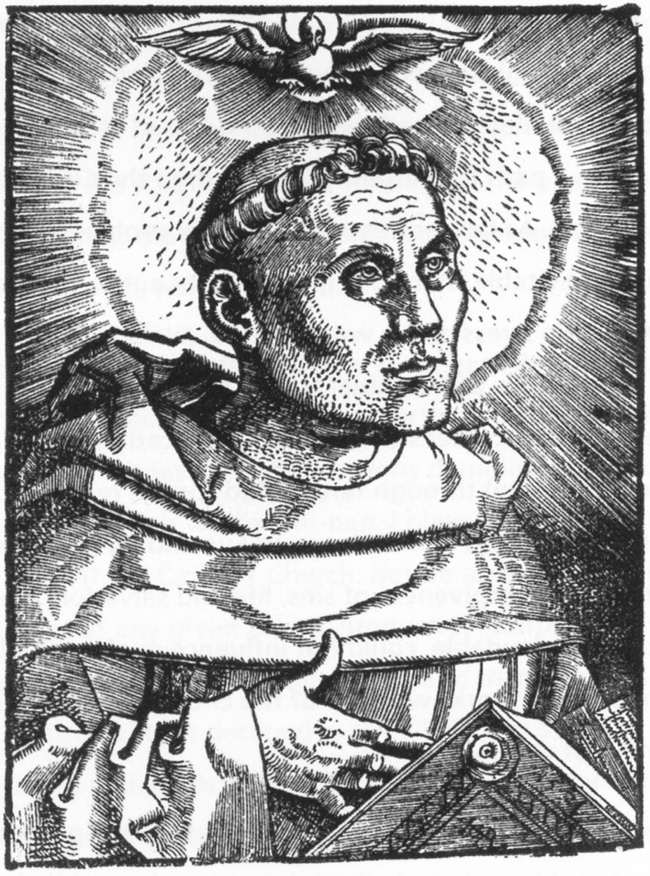
Martin Luther
Hans Baldung Grien
1521
woodcut
Cranch circulated Luther’s image → protection by being a celebrity
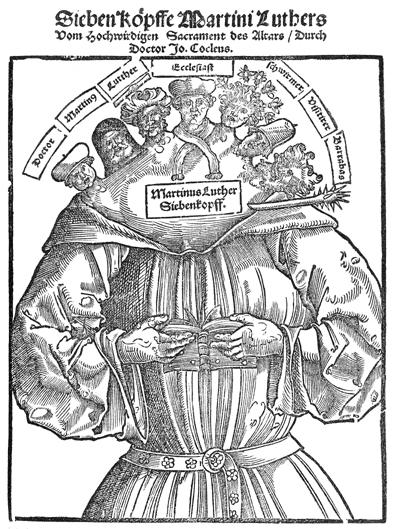
The Seven Heads of Martin Luther
Hans Brosamer
1529
woodcut
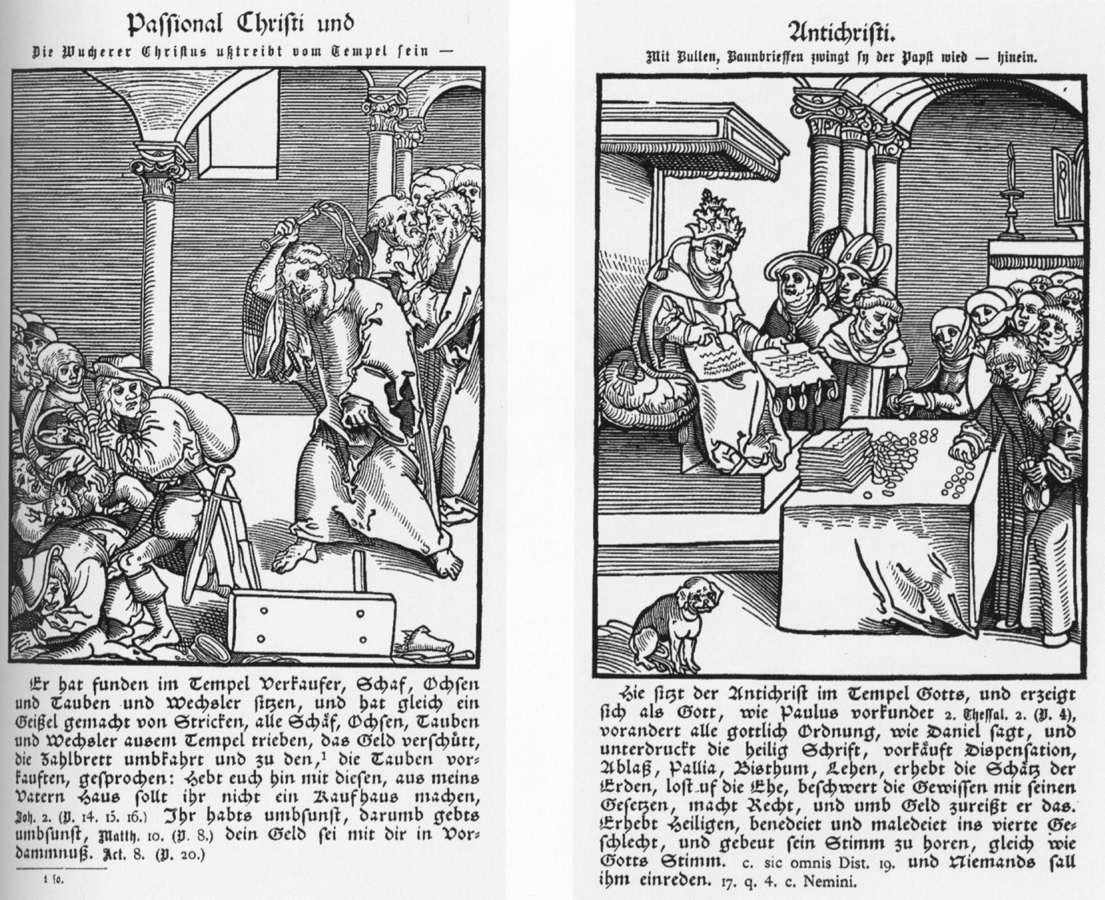
Passion of Christ and the Antichrist
Lucas Cranach, Martin Luther, Philipp Melanchthon
1521
woodcut and letterpress
comparing Christ with the pope = the Anti-Christ
Left: Church space; christ casting out taxpayers out of the temple
right: Pope writing indulgences as people give away with their money
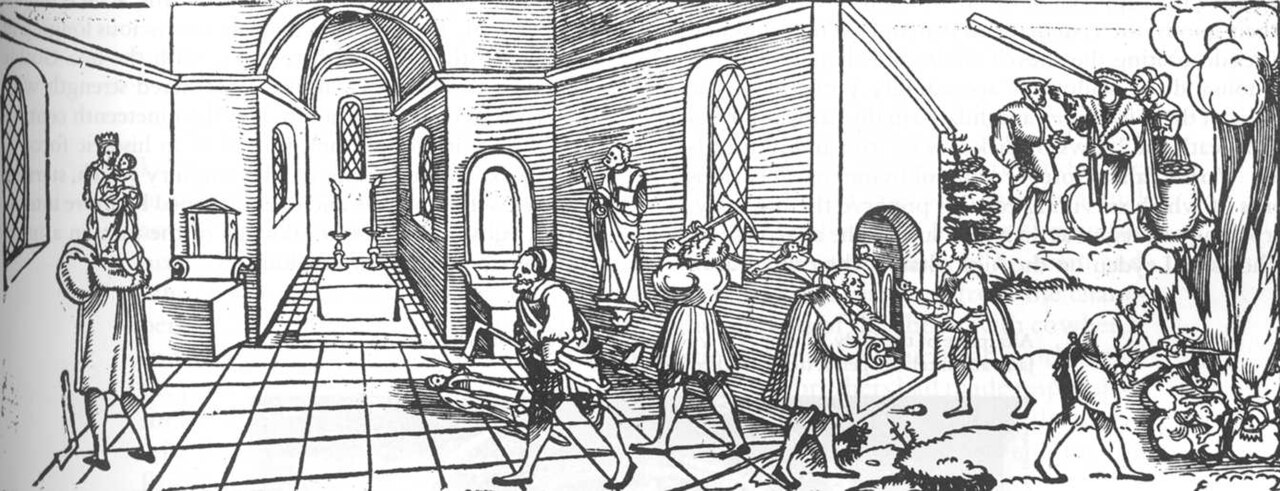
Compliant of the Poor Persecuted Idols and Temple Icons
Erhard Schön
1535
woodcut
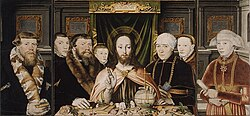
Christ Blessing, Surrounded by a Donor Family
German Painter (Ludger tom Ring the Younger?)
1573-82
oil and gold on panel
different from other works: a family in same space as Christ directly = protestant
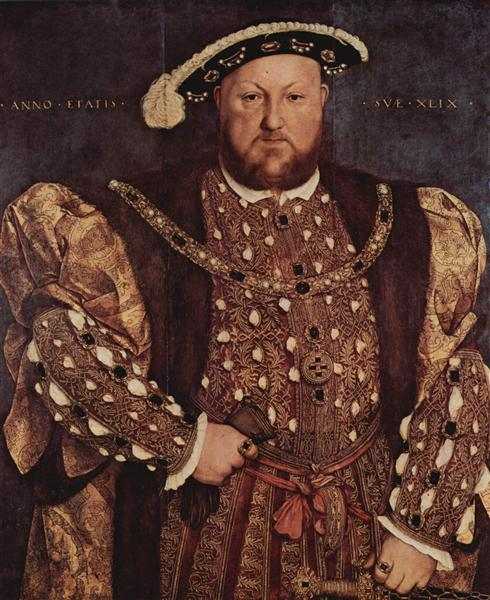
Portrait of Henry VIII
Hans Holbein the Younger
1540
oil on panel
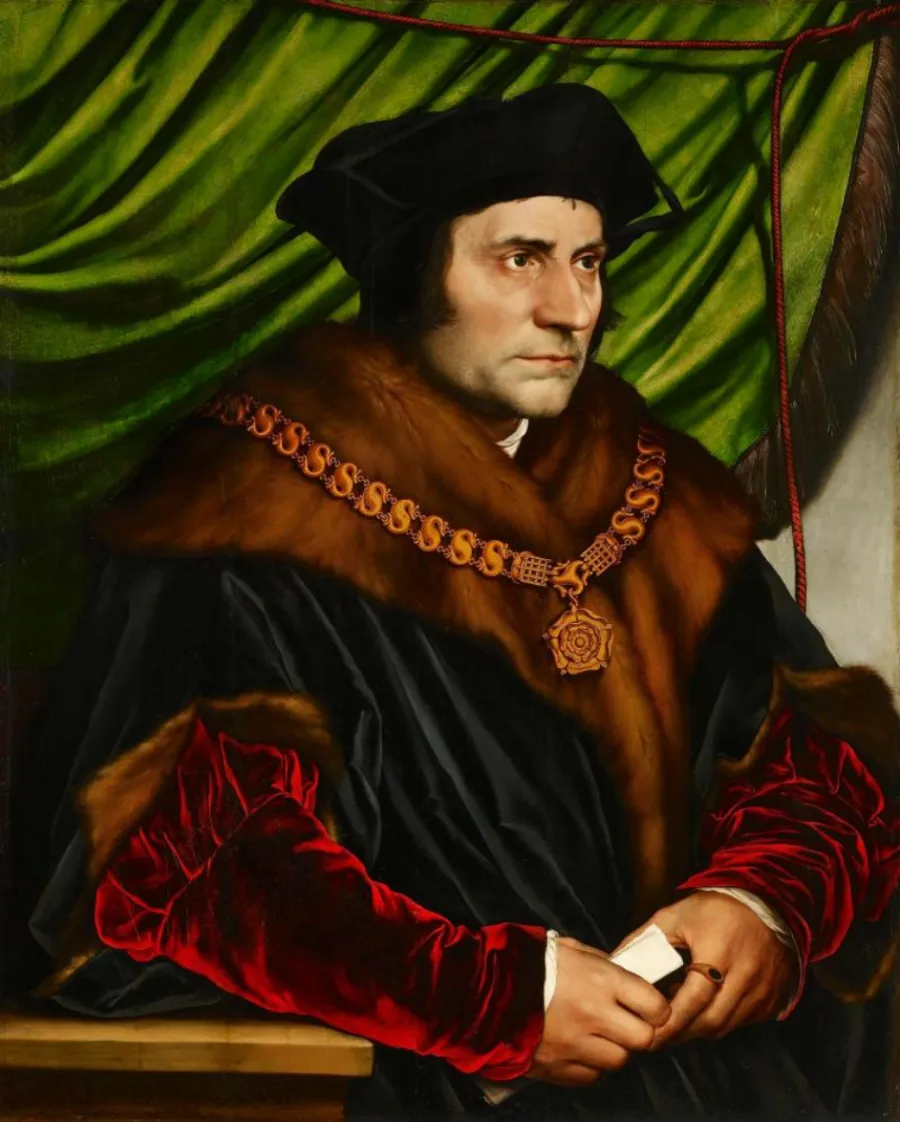
Sir Thomas More
Hans Holbein the Younger
1527
oil on panel
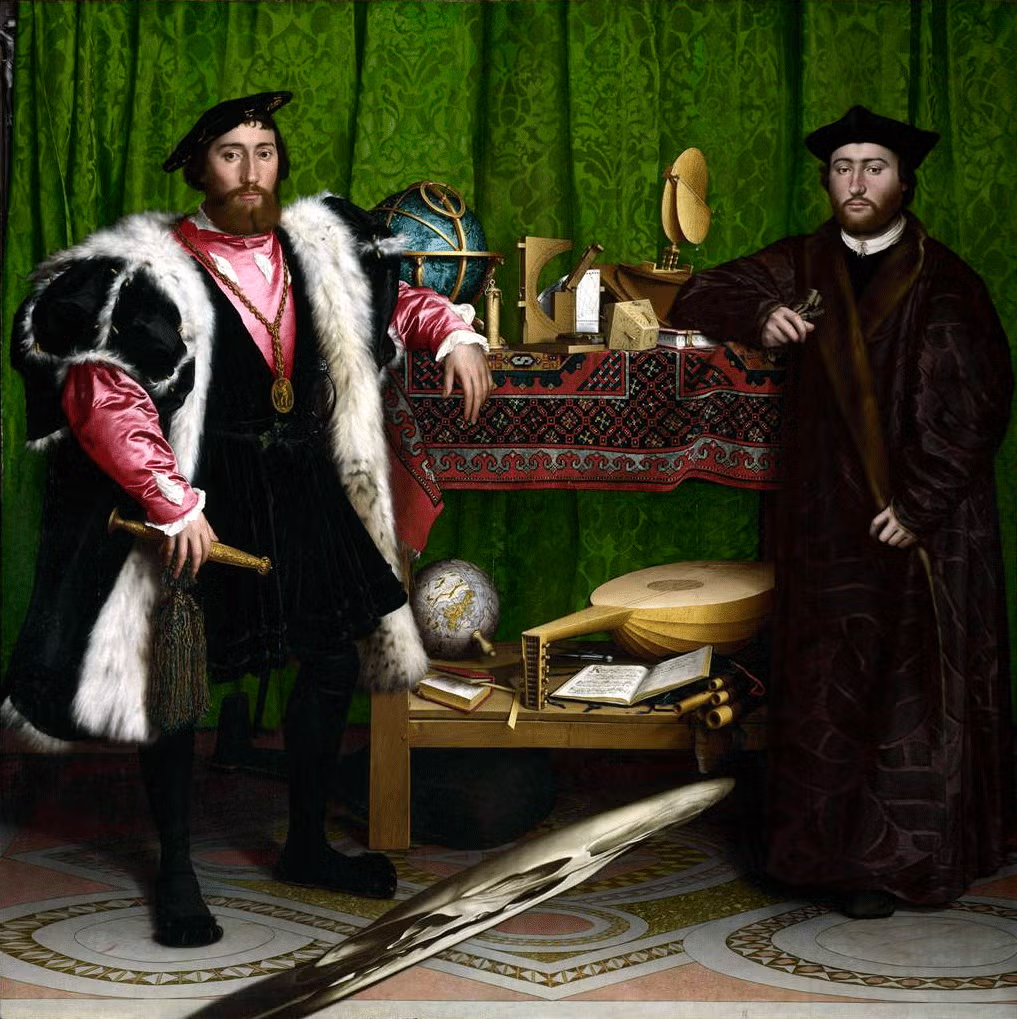
The Ambassadors
Hans Holbein the Younger
1533
oil on panel
both men came to King Henry to rectify the relationship the Church
the many objects of measure, but signs of chaos (lute with broken string)
French diplomat, Jean de Dinteville on the left, representing active life, seen with his dagger, and Georges de Selve on the right, representing contemplative life (seen with the book)
four axis of the painting: active vs. contemplative life, celestial vs. terrestial
floor design is based on the the Cosmati pavement, based from a byzantine tile design taking from gemstones which symbolizes the cosmos/universe
the skull is a reminder of momento mori
crucifix statue in top left in the corner
distortions: distortions seen both in the lute because of perspective to create a distortion which supports reality, while the distortion of the skull makes you question reality
looks secular but is deep down religious: a critique of protestantism: allusion of discord (instruments and Lutheran hymn book) but uses other symbols to contexualize and downplay the man made institutions
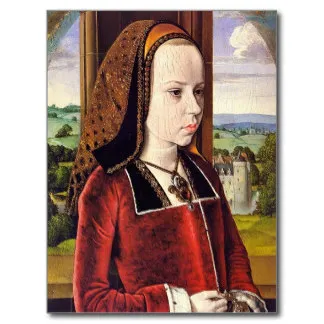
Portrait of Margaret of Austria (age 10)
Jean Hay
1490
oil on panel
daughter of Holy Roman Emperor Maxmilion
cabinent of curiousities: for elite to display what they have, to have power
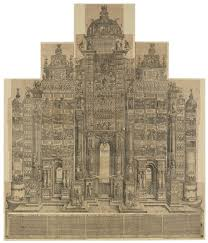
Triumphal Arch for Maxmillian I
Albrecht Dürer
1515
modular print woodcut
commissioned by Emperor Maximillion for Durer
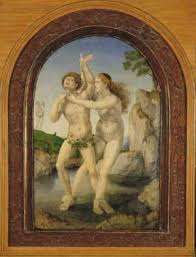
The Metamorphosis of Hermaphroditus and Salmacis
Jan Gossart
1517
oil on panel
From the Ovid, Metamorphosis → used to explain natural phenomeonon and changes
a classical text → revival of classical antiquity
now (1500s) European courts are starting to take inspration from classical styles to empire build → now inspired by Rome
Margret picks this story — the creation of the hermaphrodite — Salmacis a water nymph falls in love with son of Venus, before becoming one figure of both genitalia
the intellectualization of art — expression of patron’s intellect
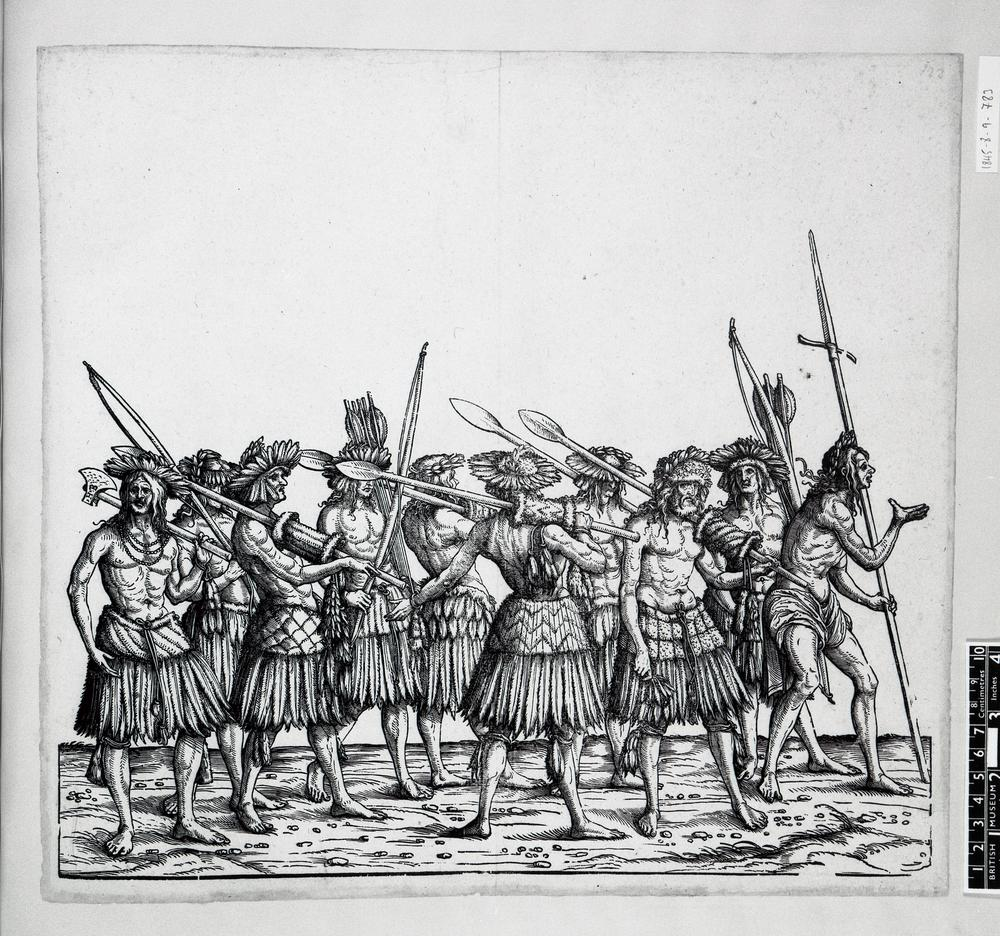
People from Calicut, from The Triumphal Procession of Emperor Maximilian
Hans Burgkmair
For Emperor Maxmillian
why do we collect — to feel the world in one small area for only you
imperialism: portuguese collected from aztect works
attention to categorize all people — show he is collecting = an expression of power, to have a picture of someone is to possess them
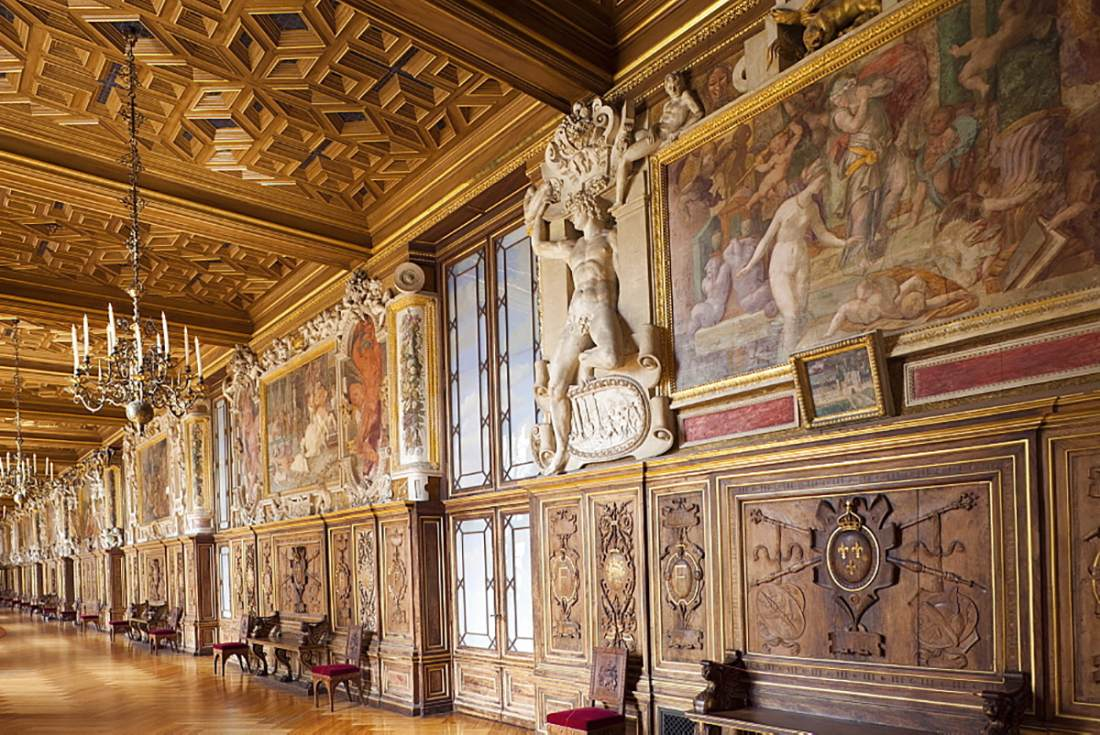
Gallery of Francis I at Château de Fontainebleau
Workshop of Rosso Fiorentino
1528–1540
patron is Francis I of France, like a vacation home for him
proliferation/replication of Italian villa architecture by Francis → this villa architecture is an example of classical ideals — retiring to the country side after working as a stateman
Italian artists working on pieces within this building
compared to N Ren, there’s overelaboration of details added on
Italianate forms — volumpoius, subjects are classical
depcits the Aenied — Francis I fashioning himself like Aenies, will have something great like the Roman Empire
clear shift to highlight Italy as center of culture — start to becoming the dominant narrative of Rome as center of Western world, introduction of the fresco to N Europe
→ Were poorer quality because of the wetter climate of France
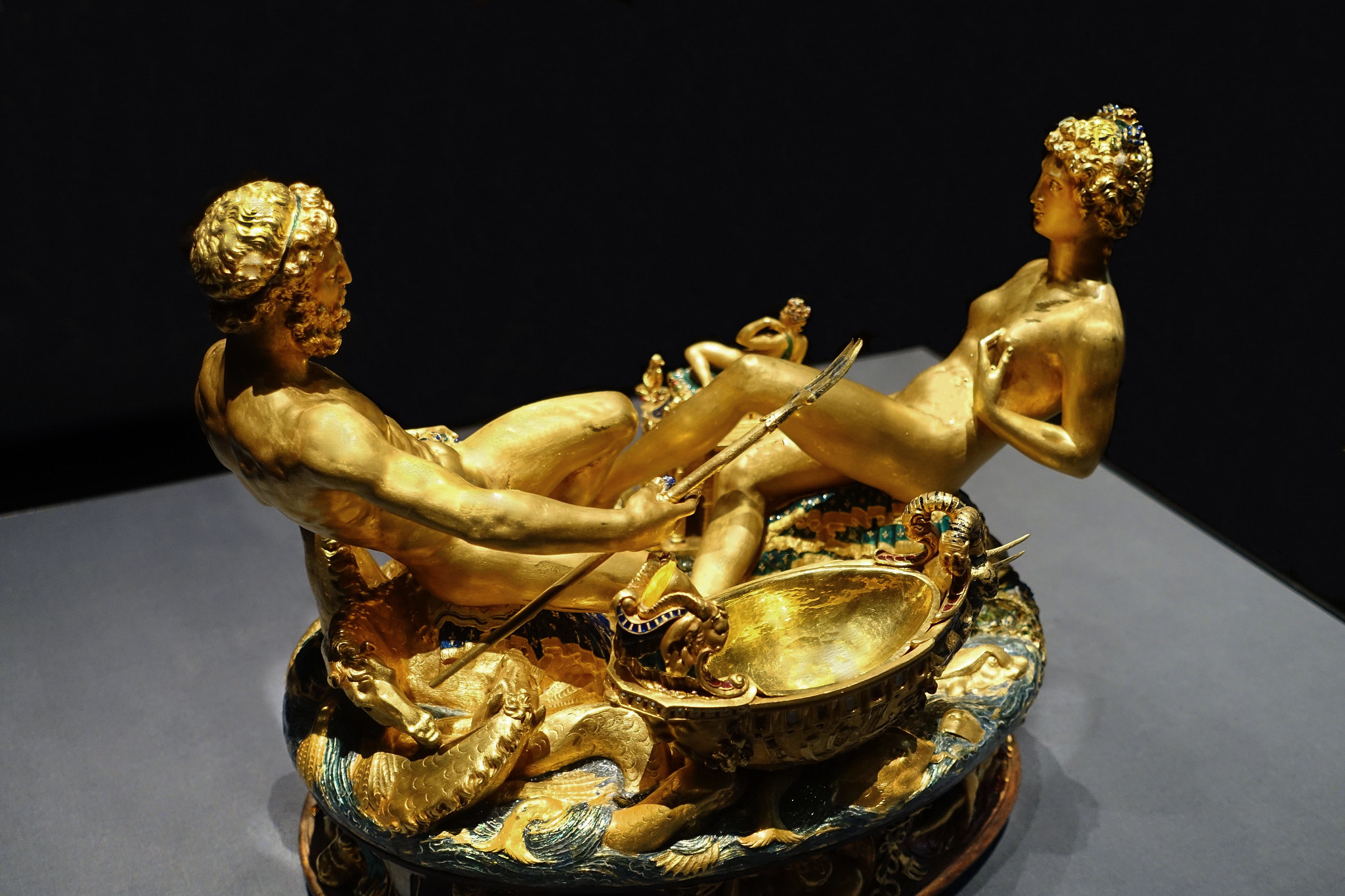
Salt cellar
Benvenuto Cellini
1540-43
gold, enamel, ebony, and ivory
salt was very expesnive at the time and was seen as a luxury
also carries pepper, which comes from India → shows the status and taste of its owner
Ceres, goddess of the Earth and Poseidion, god of the sea → representing antiquity
inspired by Michaelangelo
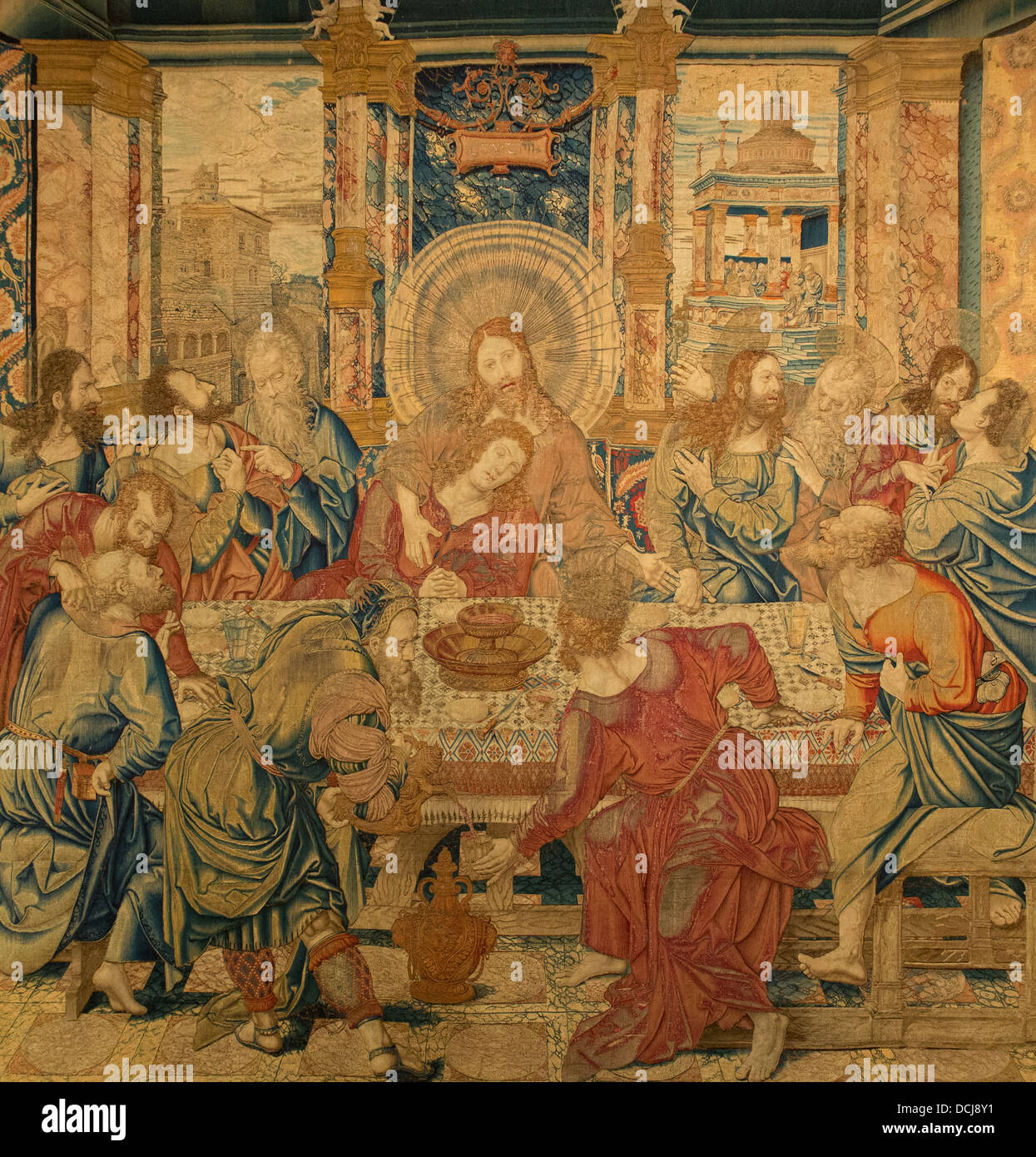
The Last Supper
Bernard van Orley
1525-28
tapestry with metallic thread
sent to Brussels, center for tapestry work
Raphael took Brussels workshop to court, one of the first copyright cases
Made of silk and wool, wrapped in gold
Copied from prints of Da Vinci’s Last Supper
shows level of skill to create the illusion of depth in the tapestries
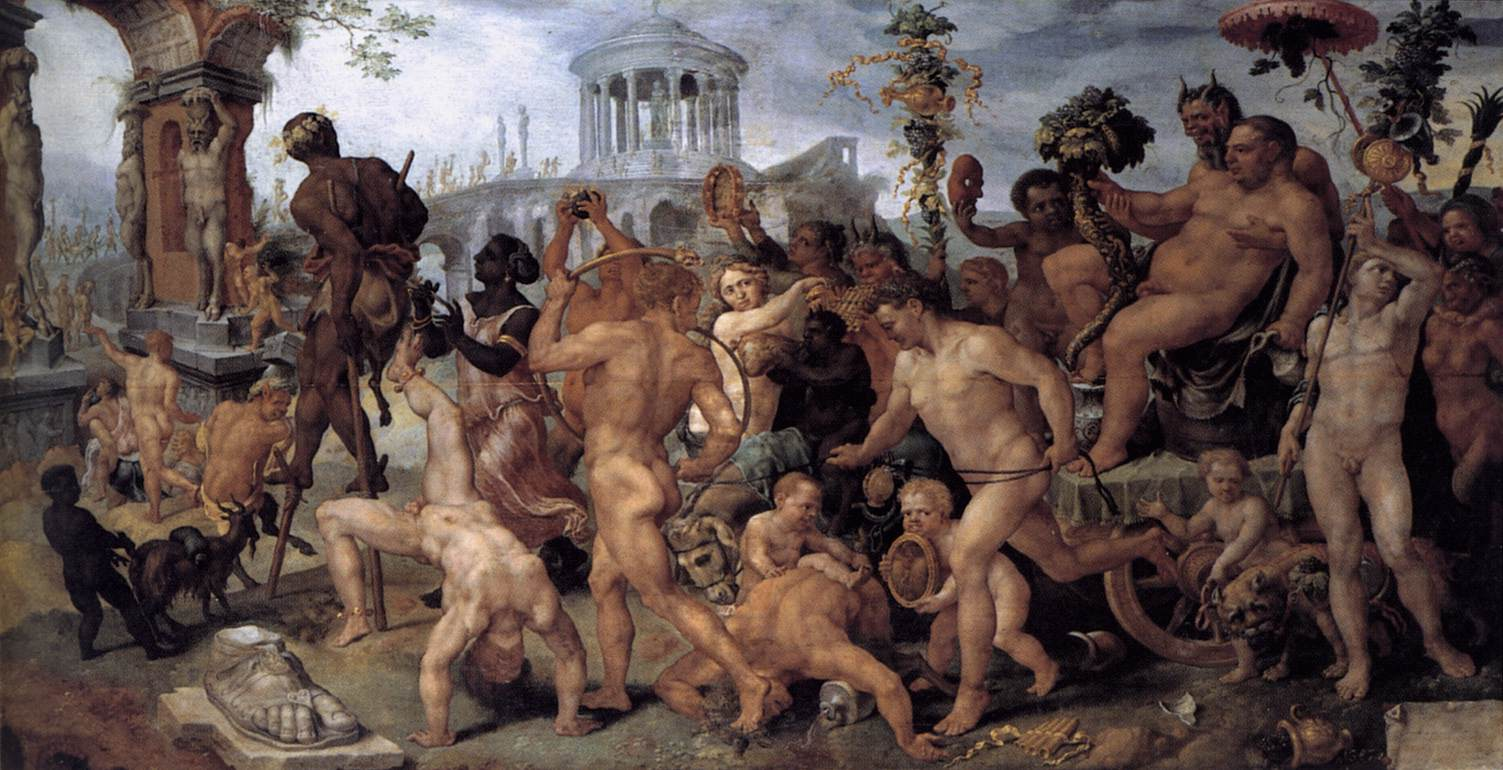
Triumph of Bacchus
Maarten van Heemskerck
1536-08
oil on panel
commissioned work for someon’s home
attention to anatomy and volume, like Michaelangelo Sistine Chapel
Bacchus — God of wine and Silenus — man who got drunk
a mythological scene from antiquity → showing decadance and debauchery = SECULAR
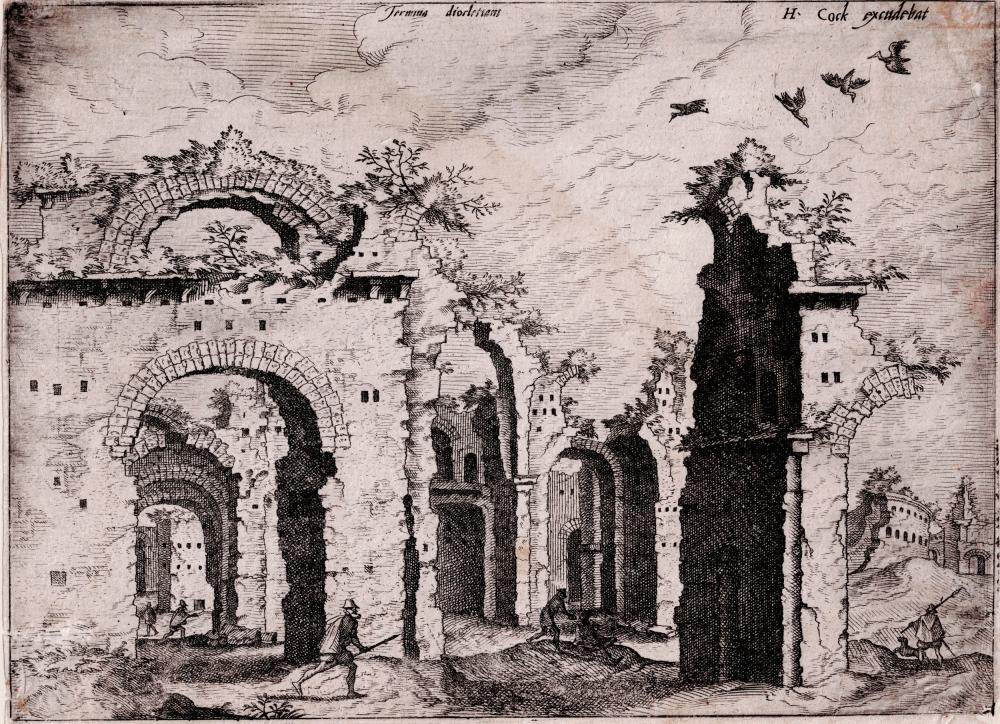
The Baths of Diocletian, from the series Roman Ruins and Buildings
Johannes van Doetecum
1562
studies done of Italian architecture through the eyes of Northern European visitors
ruins being documented
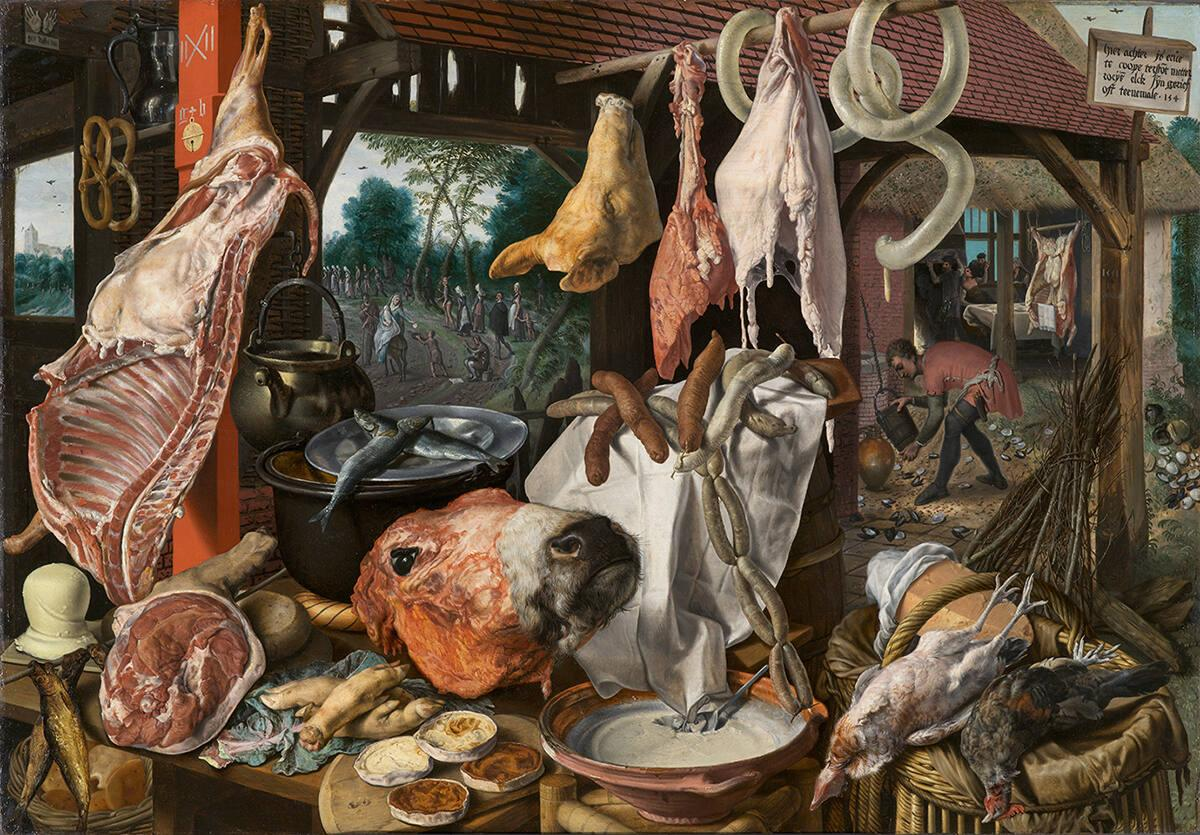
A Meat Stall with the Holy Family Giving Alms
Pieter Aertsen
1551
oil on panel
artist from Antwerp, not made for commision but for art markets
abundance in the foreground, people begging in the background
religious painting, showing a holy family giving alms in the bg
a meat stall selling the most expensive items of the day → a commentary of the economic state of the world, reflecting how well the market is doing
in Brussels, there was a Butcher’s Hall → shows the concentration of wealth in one area to have meat sold as commonly
painting reveals an anxiety about over abudnece — reminder no matter how you have now, not permanant, and you should be generous
turn to secularized type of painting during period of reformation, artists no longer can only be religious painters and had to adapt to change in the market for secular works
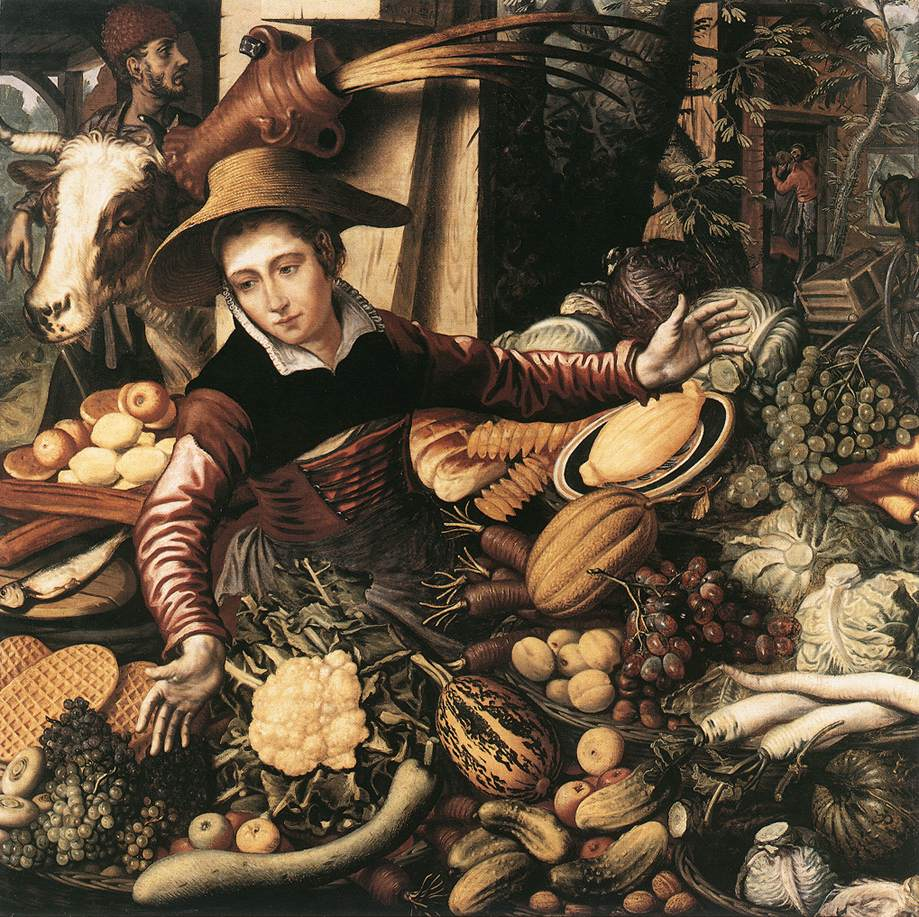
Market Woman with Vegetable Stall
Pieter Aertsen
1567
oil on wood
turn to secularized type of painting during period of reformation, artists no longer can only be religious painters and had to adapt to change in the market for secular works
shows abundance but in a positive way
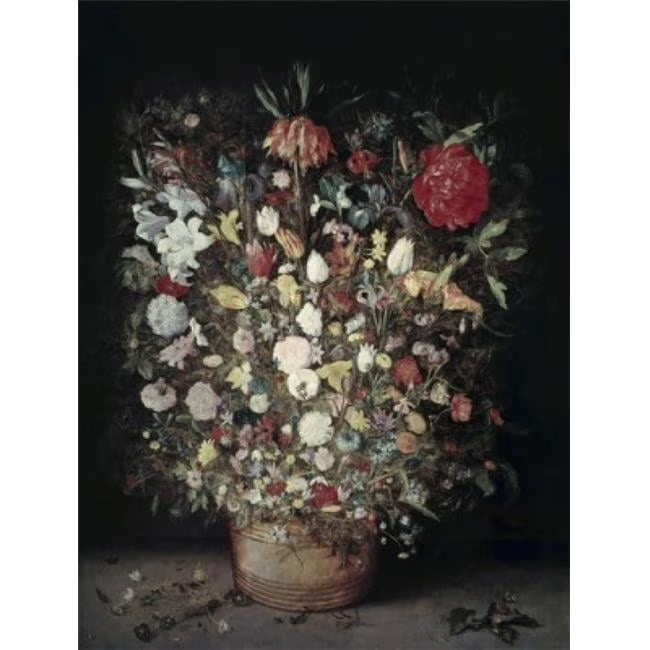
Flowers in a Wooden Vessel
Jan Brueghel the Elder
1568
oil on wood
genre paintings of still lives
emergance of the tulip market from a speculation bubble brought on by the Dutch East India Company
a lot of flowers but not all bloom at the same time — this arrangement is artificial and impossible
their impernance of flowers reminds us of moment mori
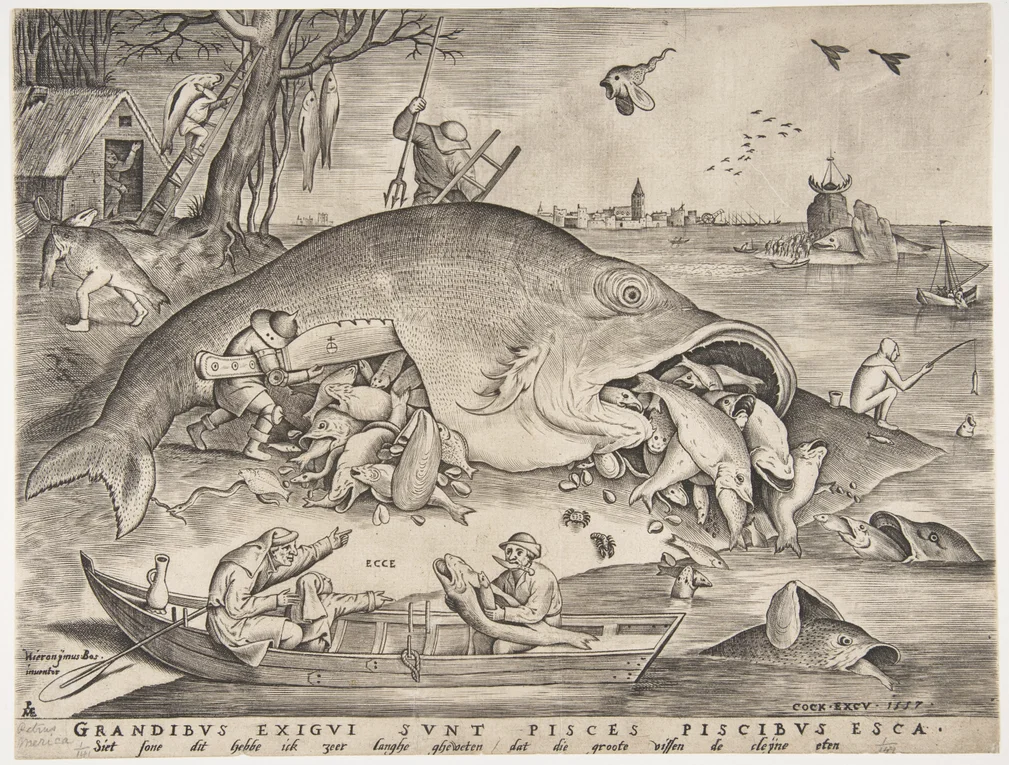
The Big Fish Eat the Little Fish
Pieter Bruegel the Elder
1556
was translated into an engraving
artistic autonomy around this time during print
title comes from Latin proverb — there’s always something bigger
Bruegal is an early fan of Bosch
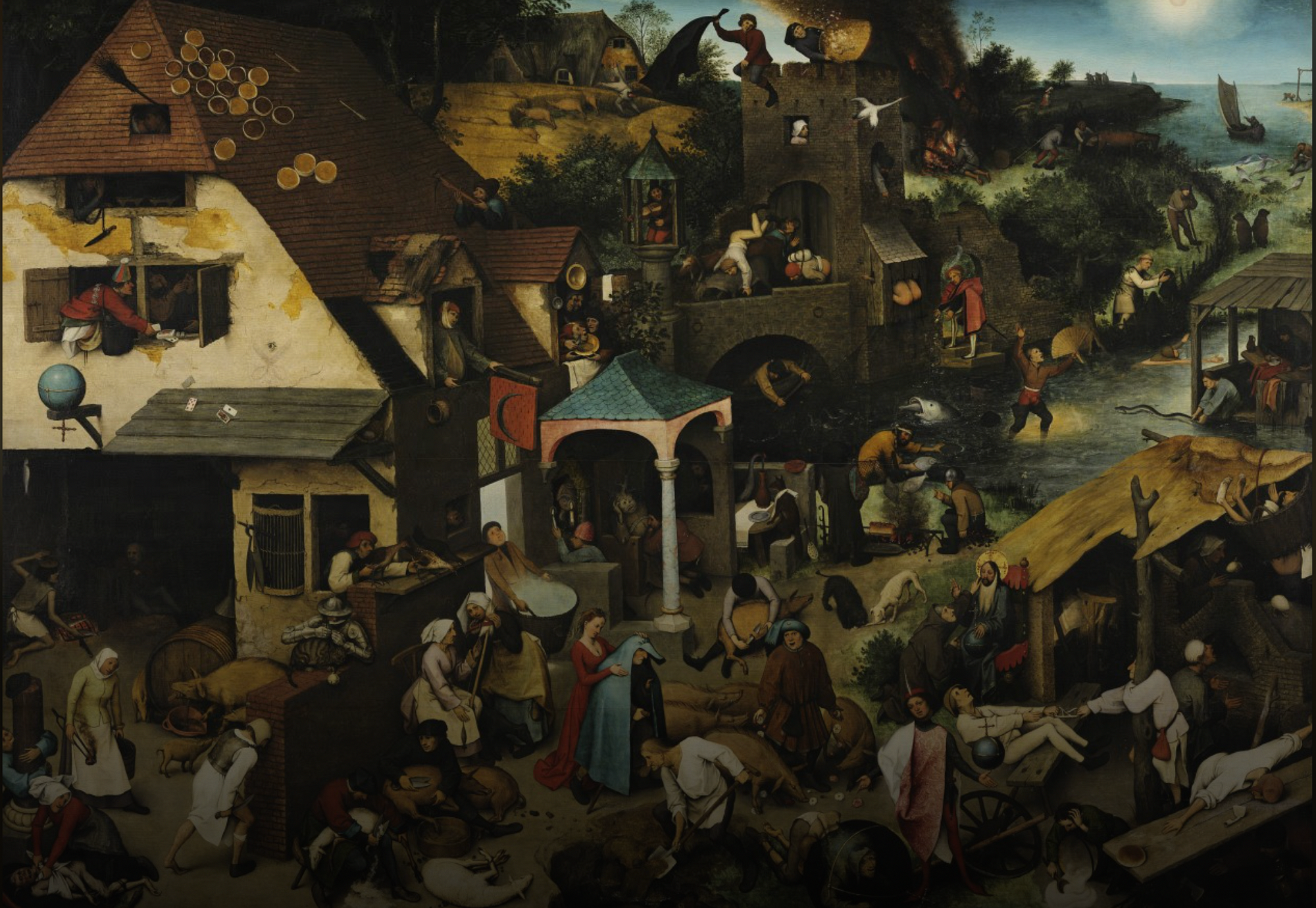
Netherlandish Proverbs
Pieter Bruegel the Elder
1559
oil on panel
Brugel worked for a erudite class — humanist and well read, exclusive
shifted away from bosch to human figures, each with actions based on the Adagia, a text you need to know beforehand to understand the references → a higher demand of the audience
shows all the foibles of humanity — moralizing to learn from proverb
Bruegel known to make fun of the working class
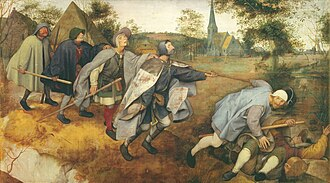
The Blind Leading the Blind
Pieter Bruegel the Elder
1568
oil on panel
subjects lack agency — blind faith without being critical
reminder of the chruch as omnipresnet as a focal point — a form of criticism against the Church from protestant thought
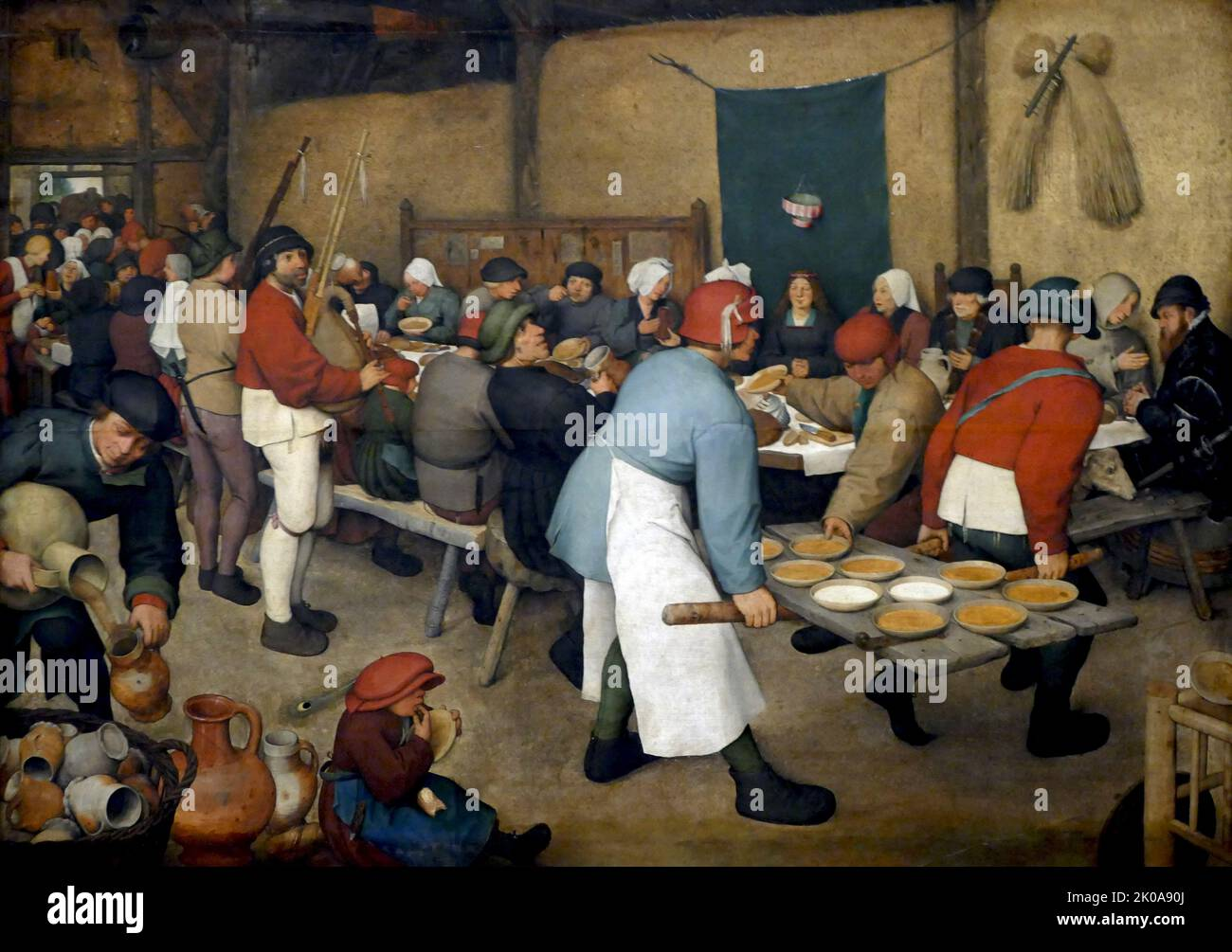
Peasant Wedding
Pieter Bruegel the Elder
1566-69
oil on panel
Bruegel captured moments of the peasant class — a day of celebration
treating this as a noble subject worthy of being painted
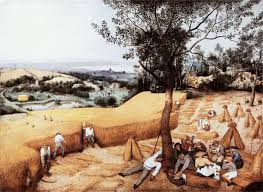
Harvesters
Pieter Bruegel the Elder
1565
oil on panel
forms relaxing, imitating the enviornemnt
man working with nature, interest in the landscapes, precursor to the landscape revolution
depicts order
human form reflected in environment
protestant belief of good deeds and hard work gets you to heaven
focus on mundane no named figures
makes innoble actions worthy of noble paintings
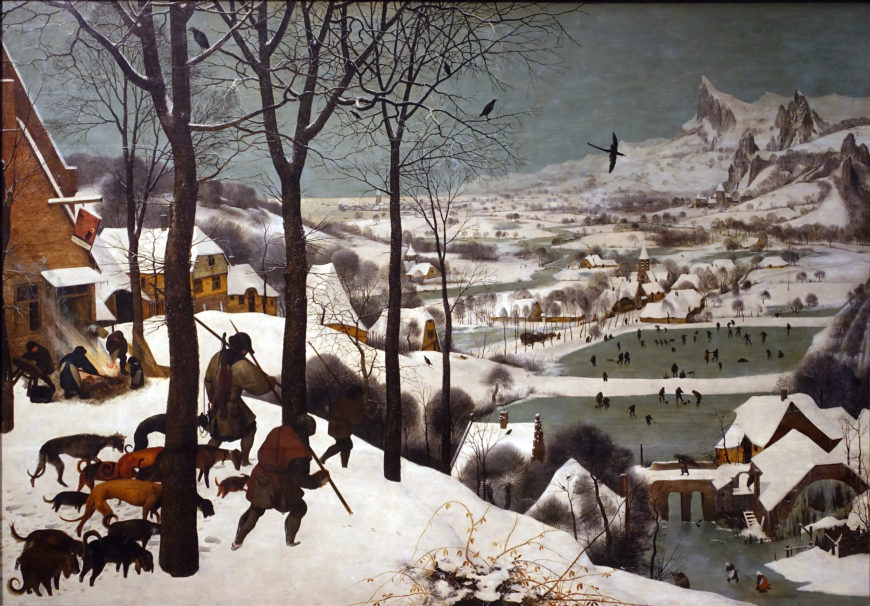
Hunters in the Snow
Pieter Bruegel the Elder
1565
oil on panel
wealthy Antwerp patron commissioned 6 pieces for each 2 months of the year
focus on the daily activites and the honor in labor
dominion of people over the world — how people care for the world
capture the atompshere of living and its challenges — failed hunt
Glaziers
a tradesperson responsible for cutting, installing, and removing glass (and materials used as substitutes for glass, such as some plastics) (Idk, maybe this actually referencing painting pazes)
Limewood sculpture
Intricate wood carvings depicting religious figures and scenes, displayed in churches across Europe
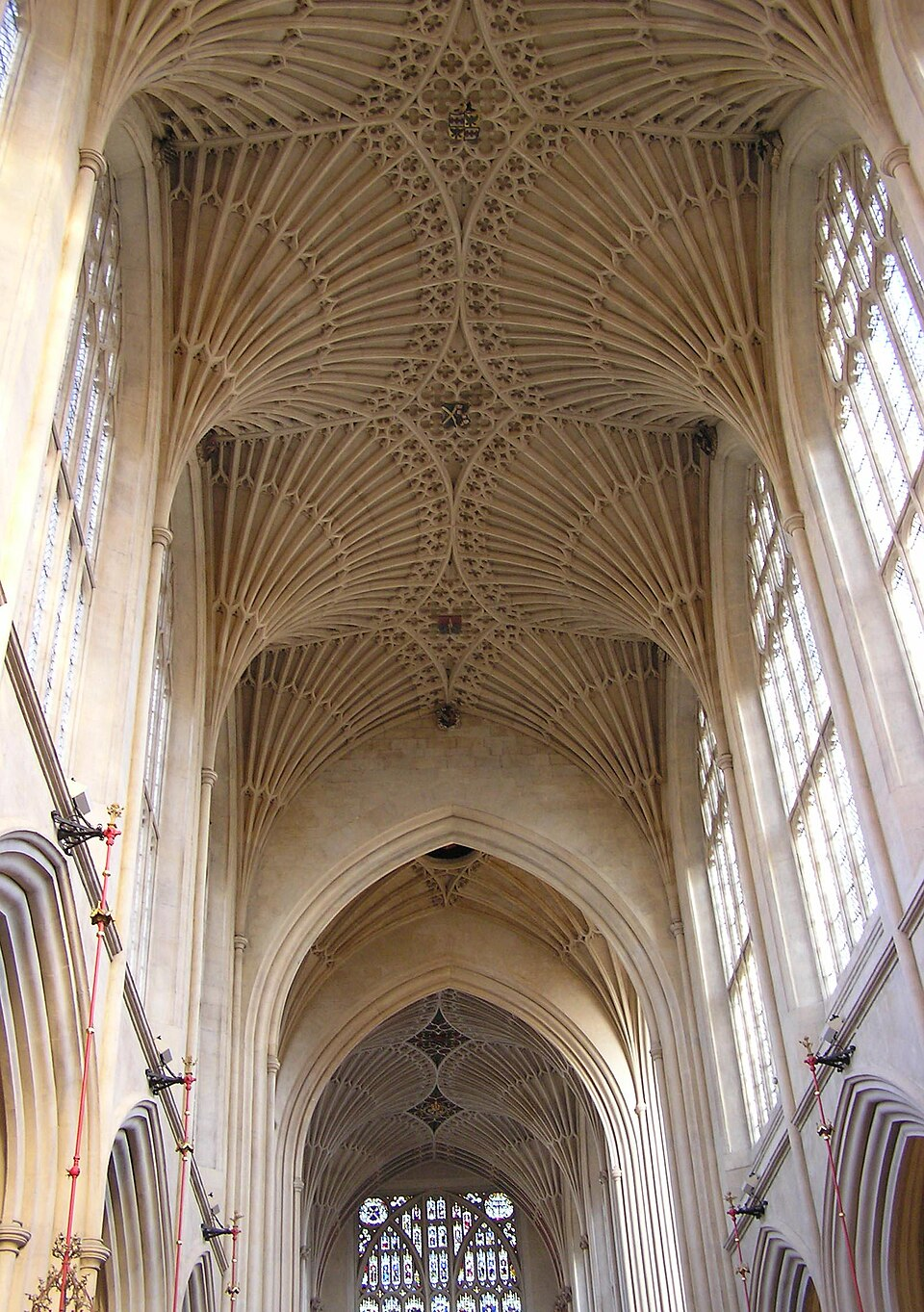
Fan vaulting
is a form of vault used in the Gothic style, in which the ribs are all of the same curve and spaced equidistantly, creating a conoid structure in a manner resembling a fan
The largest fan vault in the world can be found in King's College Chapel, Cambridge
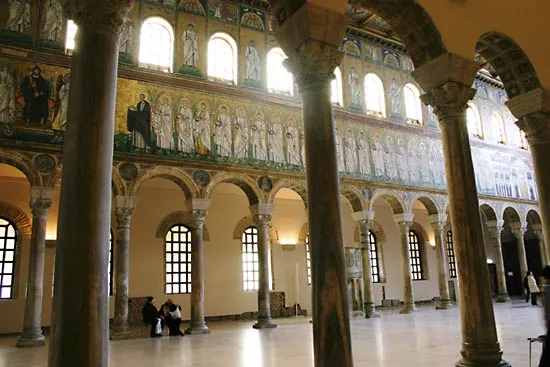
Hall church
a church with a nave and aisles of approximately equal height, in Germany there is often one single immense roof, a hall church is lit by the windows of the side walls typically spanning almost the full height of the interior.
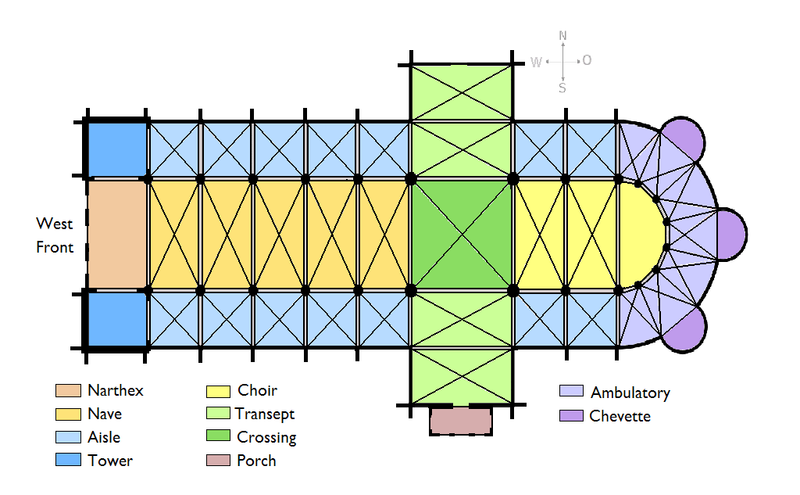
Basilica plan
A large public building, rectangular in plan, normally featuring a nave flanked by aisles, and an apse
Ars moriendi
The Ars moriendi ("The Art of Dying") are two related Latin texts dating from about 1415 and 1450 which offer advice on the protocols and procedures of a good death, explaining how to "die well" according to Christian precepts of the late Middle Ages
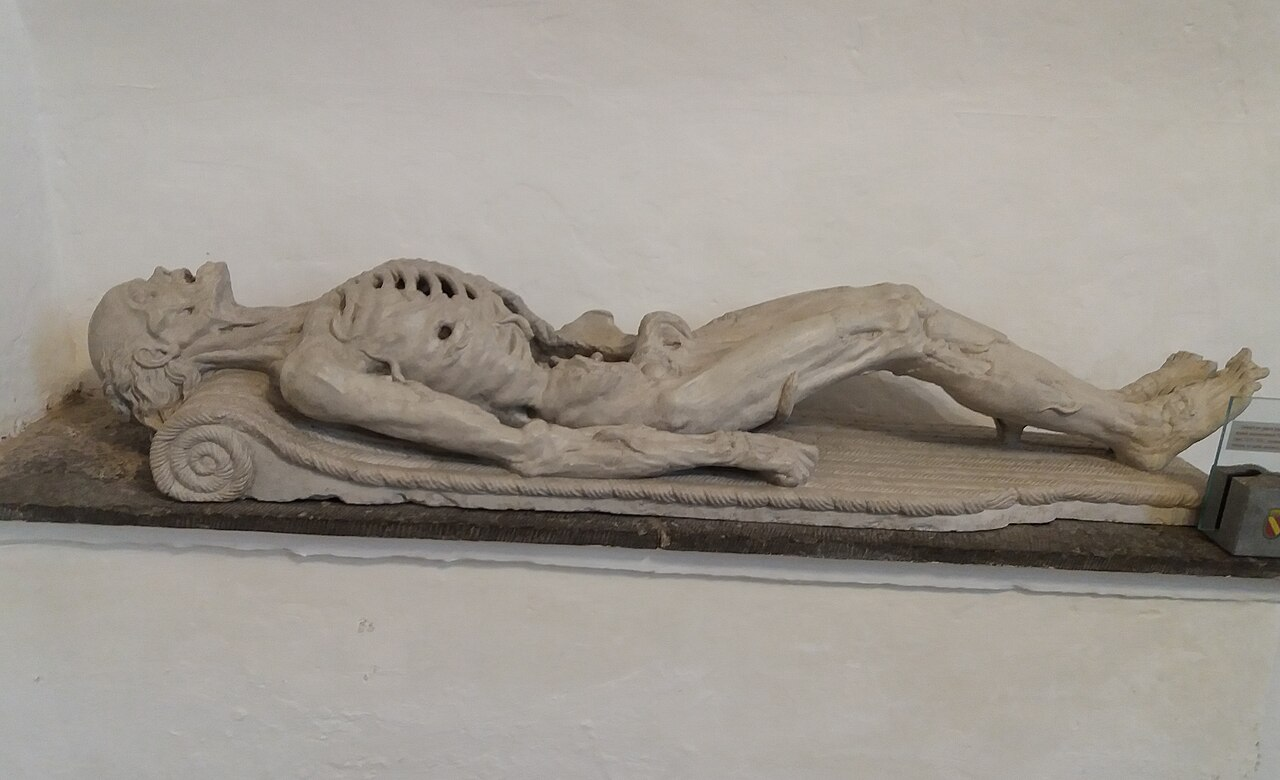
Transi/cadaver tombs
is a type of funerary monument to a deceased person, featuring a sculpted tomb effigy of a skeleton, or of an emaciated or decomposing dead body, with closed eyes. It was particularly characteristic of the Late Middle Ages when they were designed as a memento mori to remind viewers of the transience and vanity of mortal life compared to the eternity and desirability of the Christian after-life.
Dance of Death
is an artistic genre of allegory from the Late Middle Ages on the universality of death, to remind people of the fragility of their lives and the vanity of earthly glory
Millenarian
the belief held by a religious, social, or political group or movement in a coming fundamental transformation of society, after which "all things will be changed", in Christianity, that the Second Coming is very near and that there will be an establishment of a Kingdom of God on Earth
Chiaroscuro print
color prints made from the successive printing of multiple blocks—flourished in 16th-century Italy, interpreting designs by leading masters such as Raphael, Parmigianino, and Titian, while boasting extraordinary craft and their own, often striking palette
Écorché
is a figure drawn, painted, or sculpted showing the muscles of the body without skin, normally as a figure study for another work or as an exercise for a student artist, meaning "flayed”, some of the first well known studies of this kind were performed by Leonardo da Vinci, who dissected cadavers