Biology: Key Concepts in Matter, Molecules, and Cell Structures
 Call Kai
 Learn
Learn Practice Test
 Spaced Repetition
 Match
Match Flashcards
 Knowt Play
1/85

There's no tags or description
Looks like no tags are added yet.
Name | Mastery | Learn | Test | Matching | Spaced | Call with Kai |
|---|
No analytics yet
Send a link to your students to track their progress
86 Terms
Matter is...?
anything that takes up space
Three stages of matter?
solid, liquid, and gas
What are all living things made up of?
elements
How many naturally occuring elements make up the building blocks of all matter?
92
Elements that make up 95% of organisms.
Carbon, Nitrogen, Phosphorus, Hydrogen, Oxygen, Sulfur
Smallest part of an element?
atom
What are atoms made up of?
subatomic particles - protons, neutrons, electrons
What is the difference between molocules and compounds?
molocules are when same elements are bonded and compounds are made up of different elemens.
is H20 a molocule or a compound?
compound
what is a chemical bond?
formation of molocules
Our bodies are what % water?
70-90%
What is water on the ph scale?
7 (neutral)
0-6.9 on the pH scale is a...?
Acid
7.1-14 on the pH scale is a...?
Base
What is a chemical/combination of chemicals that keep pH within normal limits.
a buffer
Monomers v. Polymers
Mono - individual, Poly - combined monomers
Short term energy storage?
Carbohydrates
Glucose formula?
C6H12O6
Storage form of glucose in plants?
starch
Storage form of glucose in animals?
glycogen
What is found in the cell walls of plants?
Cellulose
Found in the exoskelton of crabs
Chitin
What are lipids?
Fats, oils, steroids
What disolves in water?
lipids
where do oils usually come from?
plants, animals
What looks like a bobby-pin?
a phospholipids
steroids have a backbone of what?
four fused carbon rings
Proteins are polymers made up of?
amino acids and monomers
structural proteins...?
keratin, collogen
Enzymes are proteins that?
speed up chemical reactions
Hormones are...?
chemical messengers
what proteins move cells and muscles?
actin and myosin
what proteins protect cells?
antibodies
Two types of Nucleic Acids?
DNA and RNA
Autotroph is a...?
an organism that makes its own food
Heterotroph is a...?
an organism that must get its food from an outside source
What makes an organism alive?
To be considered alive, an organism must have ALL of
these characteristics.
Cells
Reproduction
Homeostasis and Response to Environment
Grow
Energy
Evolution
Why is a virus not considered to be a living organism?
Eight properties of a living organism?
Order-organization and complexity
Sensitivity and response to stimuli
Reproduction
Adaptation- Consequences of evolution
Growth and Development- coded by DNA
Regulation- coordinates internal function
Homeostasis- "steady state."
Energy Processing- from food
Homeostasis is?
maintaining constant internal conditions - like the body temperature, blood sugar etc...
Inductive reasoning
Specific to general - coming to a conclusion based on basically nothing.
Deductive reasoning
General to specific - the process of applying a general statement to specific facts or situations
Organisms' structural hierarchy?
Atom, molecules, macromolecules, organelles, cells, tissues, organs, organ systems, organisms
Autotroph vs. Heterotroph
Autotrophs create their own energy through sunlight, Heterotrophs eat to obtain energy.
Prokaryote vs. Eukaryote
prokaryote lack nucleus, eukaryote contain a nucleus and complex organelles
Taxonomic Hierarchy
General- Domain → Kingdom → Phylum → Class → Order → Family → Genus → Species -Specific
Scientific Method Steps
Make an observation.
Ask a question.
Form a hypothesis, or testable explanation.
Make a prediction based on the hypothesis.
Test the prediction.
Iterate: use the results to make new hypotheses or predictions.
Variable vs. Control
A variable is any part that can change. Control is something that doesn't change
independent variable vs dependent variable
independent: manipulated or controlled
dependent: variable being tested or measured
Why do we study science?
to understand the world around us
How do we study science?
using the scientific method
What are Elements?
An element is a substance that cannot be broken down to other substances by chemical reactions.
A chemical bond share ______ between ______?
Electrons between atoms
hydrogen bond
weak attraction between a hydrogen atom and another atom
Why does water show surface tension?
The stronger the force between molecules in a liquid, the greater the surface tension.
Properties of Water?
high heat capacity, high heat of vaporization, frozen water is less dense than liquid water, universal solvent, cohesive and adhesive, and high surface tension,
polar vs nonpolar covalent bonds
Nonpolar is mostly equal... polar is unequal...
What is electronegativity?
a measure of the tendency of an atom to attract a bonding pair of electrons
What gives off H+?
Acids
What gives off OH-?
Bases
Two man buffers found in human blood?
Bicarbonate (HCO3-) and Carbonic Acid (H2CO3)
What is an organic compound? (organic molecules)
A compound that contains carbon (and hydrogen)
What is the function of carbohydrates, lipids, proteins, and nucleic acids in the body?
Carbs are a source of short-term energy
Lipids are energy storage
Proteins are (ALOT)
Nucleic acids are DNA and RNA
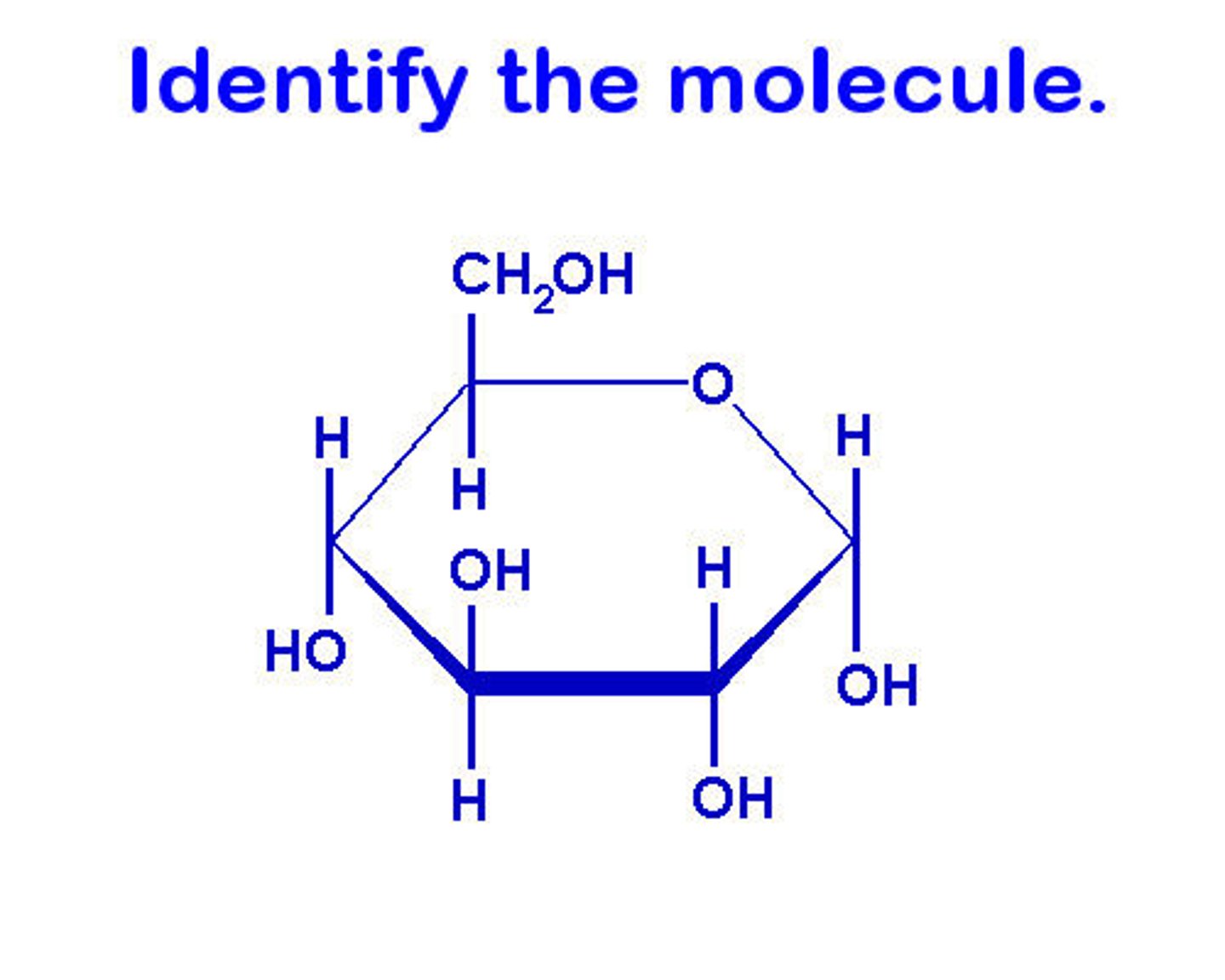
This is a picture of?
Carbohydrate structure
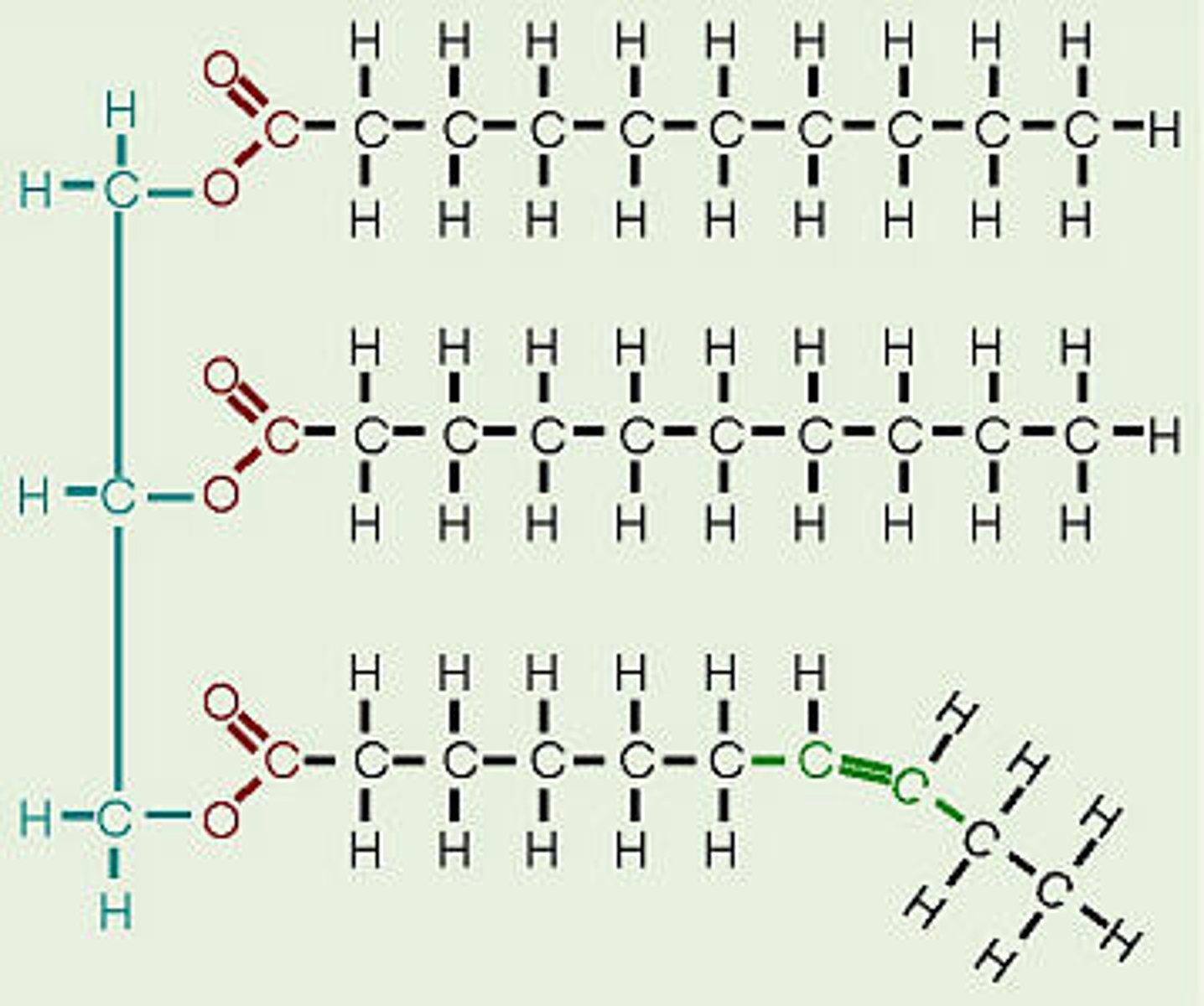
This is a picture of?
Lipids structure
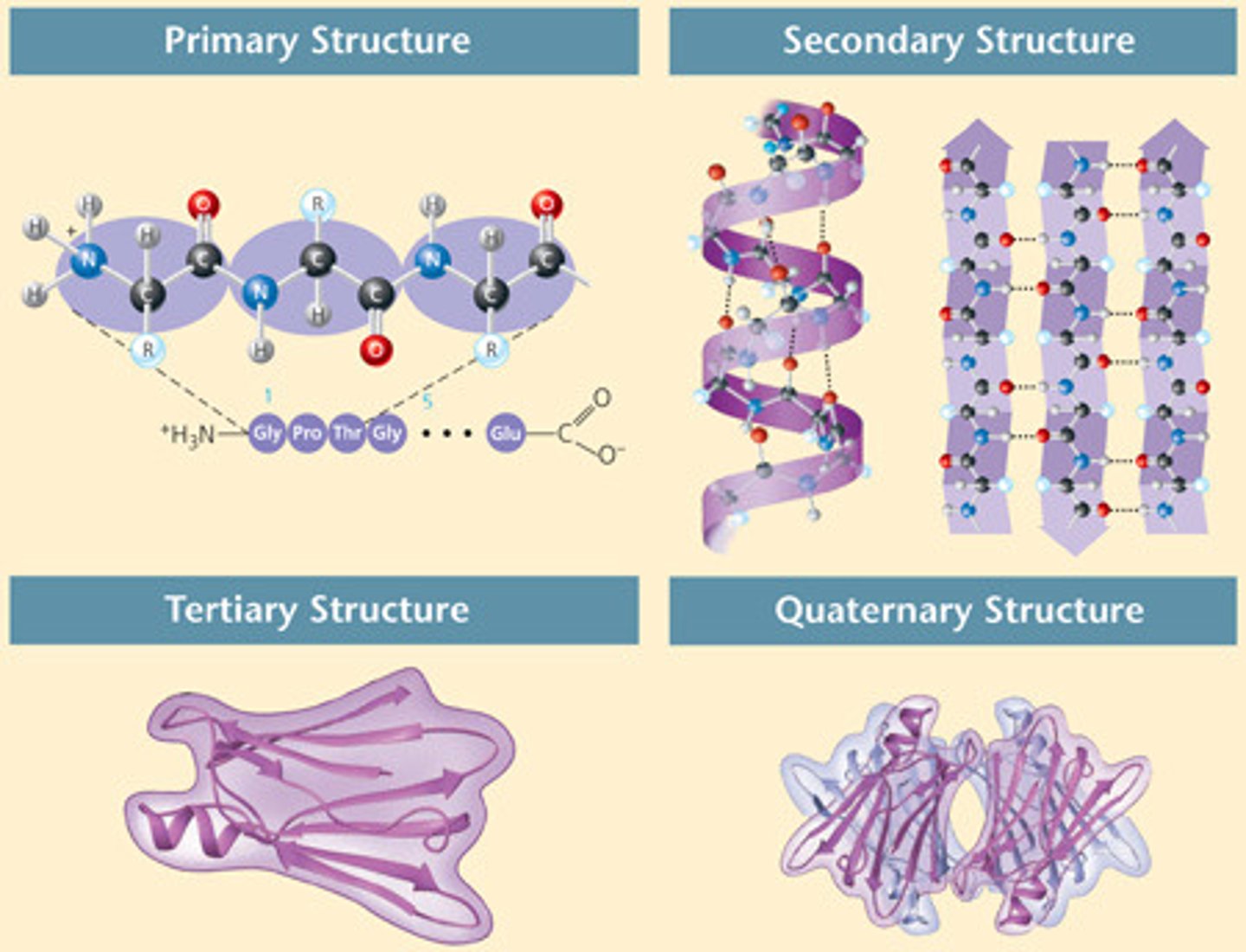
This is a picture of?
Protein structure
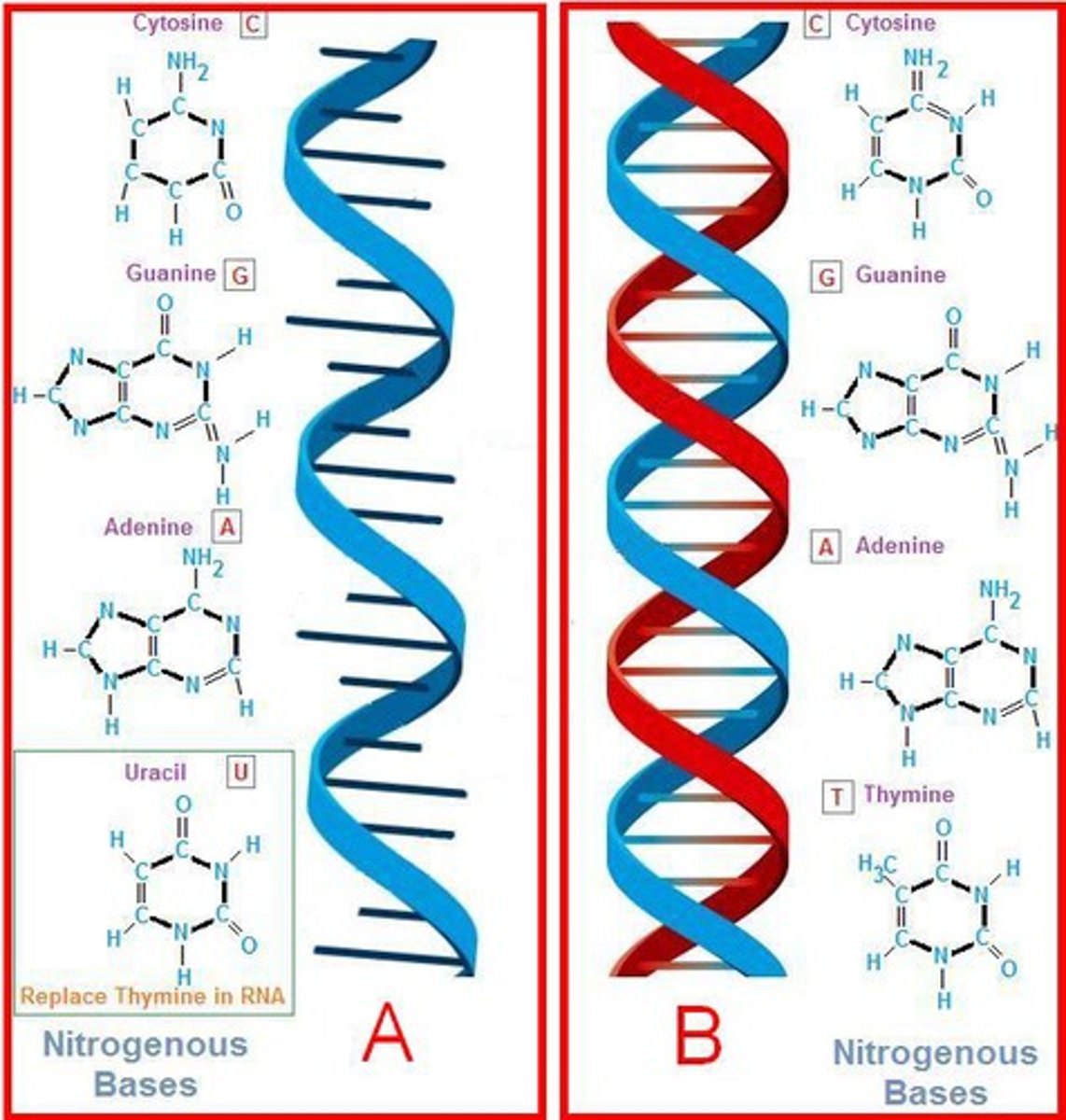
This is a picture of?
Nucleic Acid structure
Mono... Disa... Poly...?
Monosaccharide (3-6 carbon atoms)
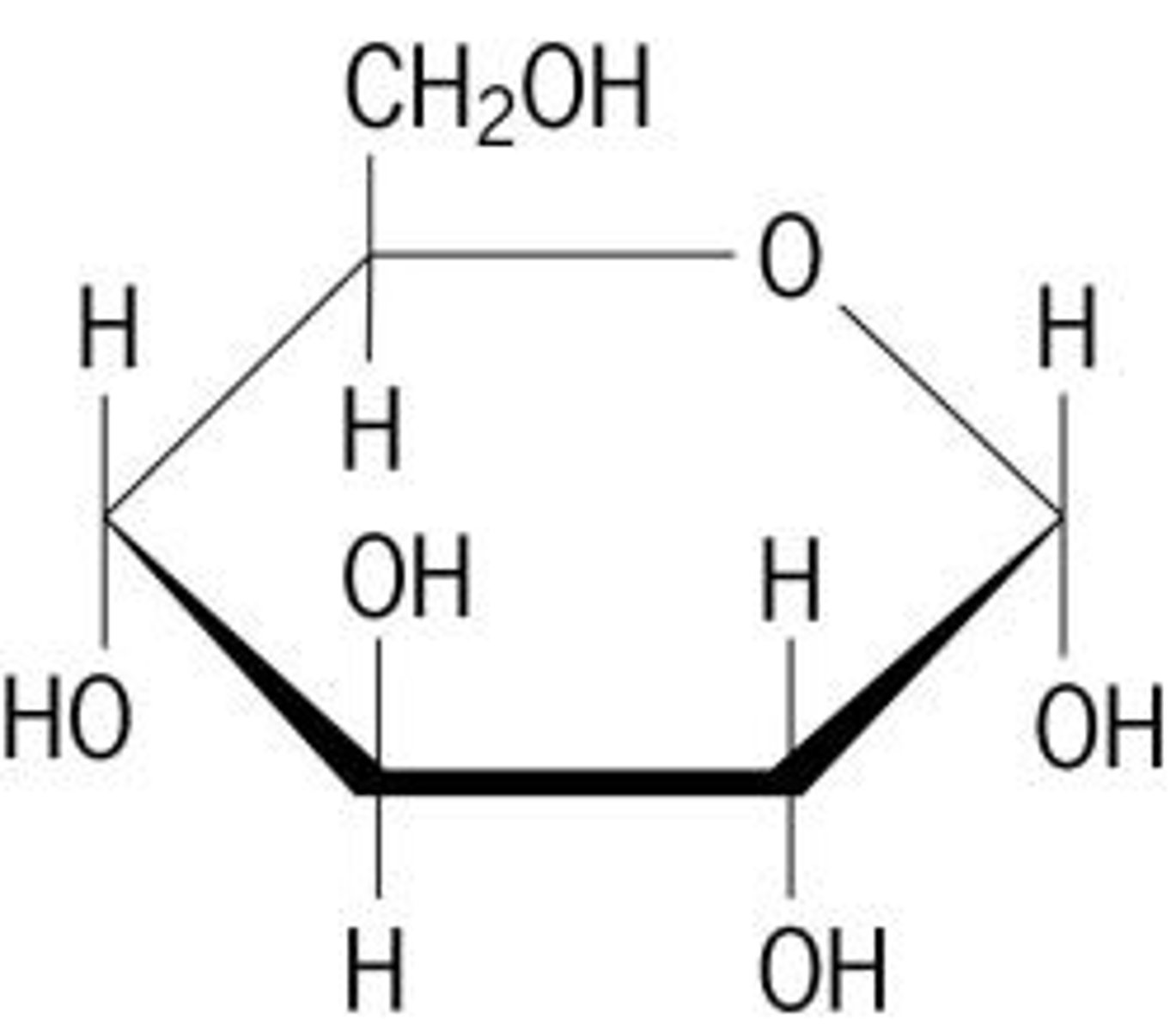
Mono... Disa... Poly...?
Disaccharide (2 Monosaccharides joined by dehydration reaction)
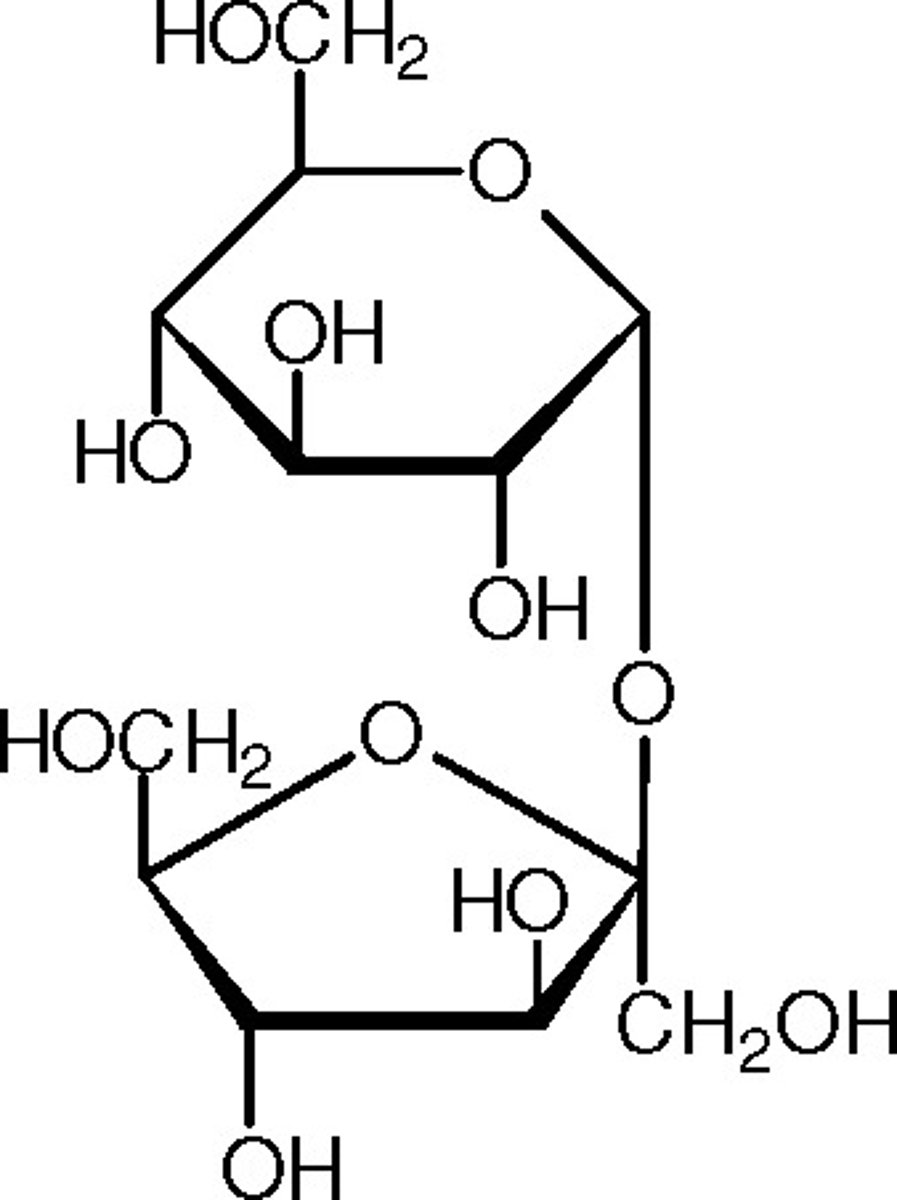
Mono... Disa... Poly...?
Polysaccharide (Many)
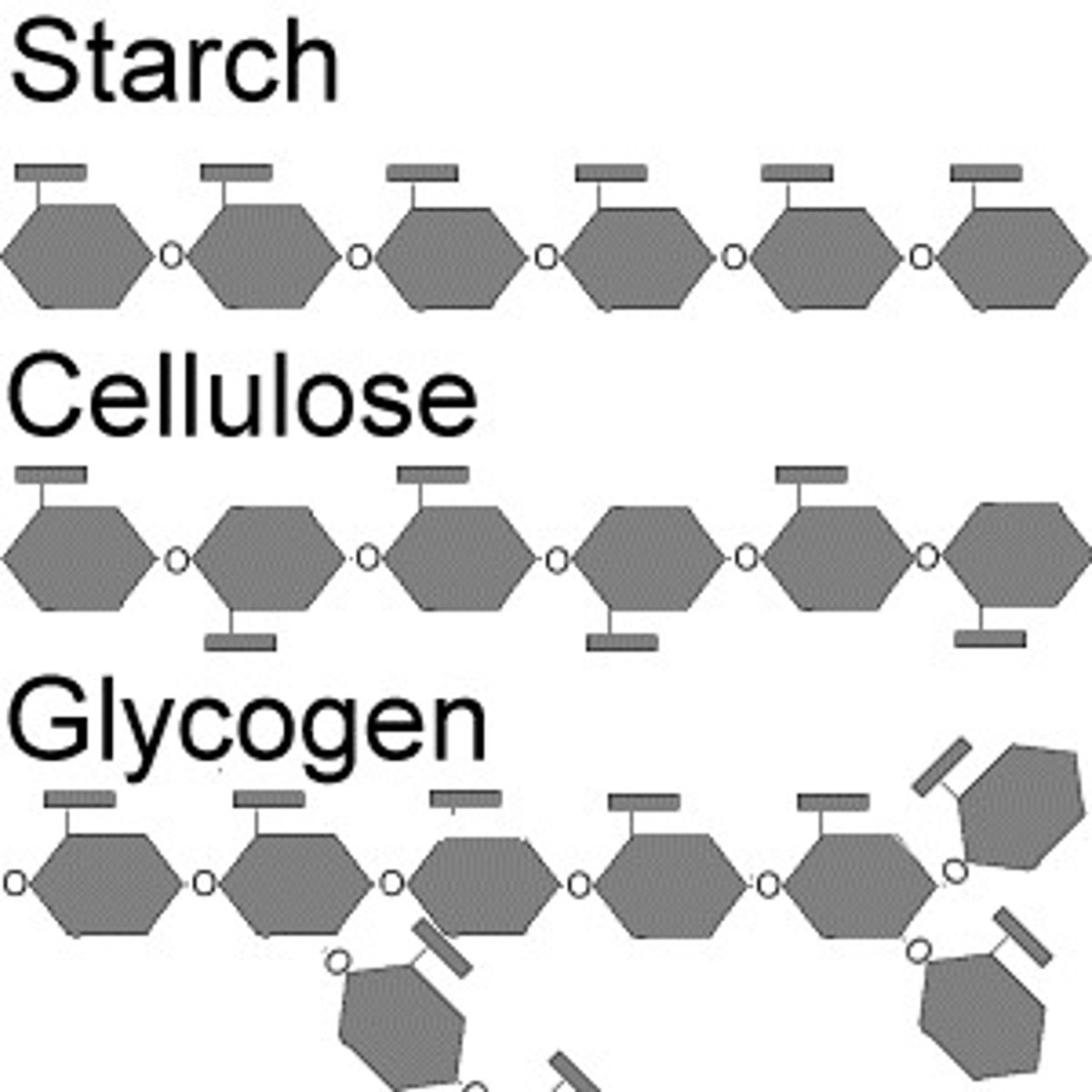
Why are we unable to digest cellulose?
We lack the enzyme that breaks it down, cellulase
This is a picture of?
Phospholipid
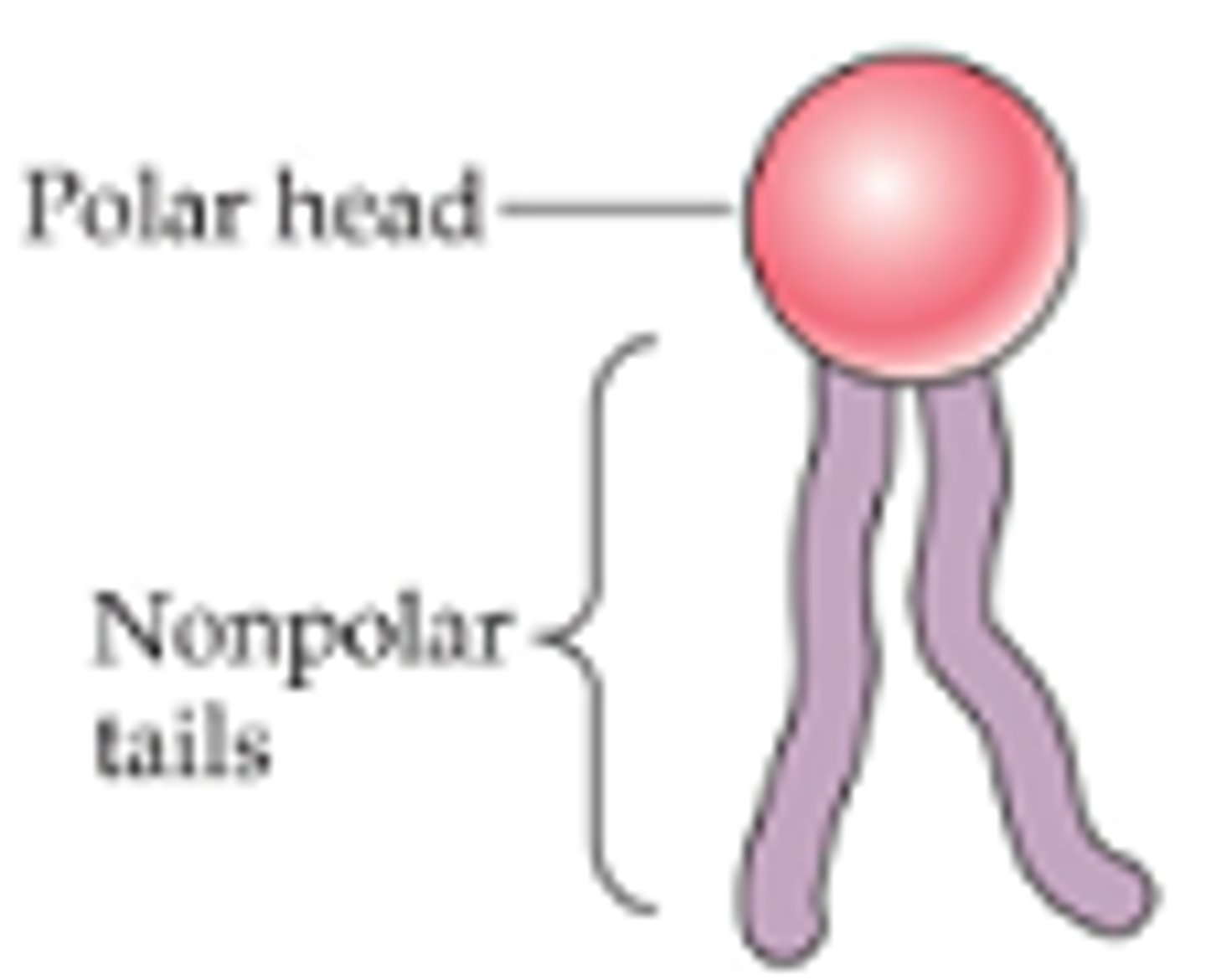
What is the function of a phospholipid?
form a boundary between the cell and the environment
Characteristics of a phospholipid?
charged hydrophilic head and two non-polar hydrophobic tails
Primary Proteins?
linear sequence of amino acids linked by peptide bonds (C-N) that formed by dehydration synthesis
Secondary Proteins?
alpha helix and beta pleated sheets
Tertiary Proteins?
3-D folding of chain
Quaternary Proteins?
made of two or more tertiary proteins joined together
What causes a protein to denature?
Extreme heat or pH
What happens to a protein's shape during denaturation?
It unfolds itself?
Why is trans-fat so harmful to our bodies?
More at risk for heart disease, artery clogging.
How are trans fats made?
Hydrogen is added to liquid vegetable oils to make them more solid.
Sucrose?
glucose + fructose
Polypeptides?
long chains of amino acids
Cholesterol?
A type of fat made by the body from saturated fat; a minor part of fat in foods.
Still learning (85)
You've started learning these terms. Keep it up!