Biolec Quiz #2
 Call Kai
 Learn
Learn Practice Test
 Spaced Repetition
 Match
Match Flashcards
 Knowt Play
1/31

There's no tags or description
Looks like no tags are added yet.
Name | Mastery | Learn | Test | Matching | Spaced | Call with Kai |
|---|
No analytics yet
Send a link to your students to track their progress
32 Terms
two examples of solutions
cytoplasm
extracelular enviro
Solute vs solvent
solute- dissolved particles
solvent- fluid/gas that dissolve (water for cells)
What are the 3 passive transport types
Simple Diffusion
Facilitated Diffusion
Osmosis
Solute high to low concentration
Simple Diffusion
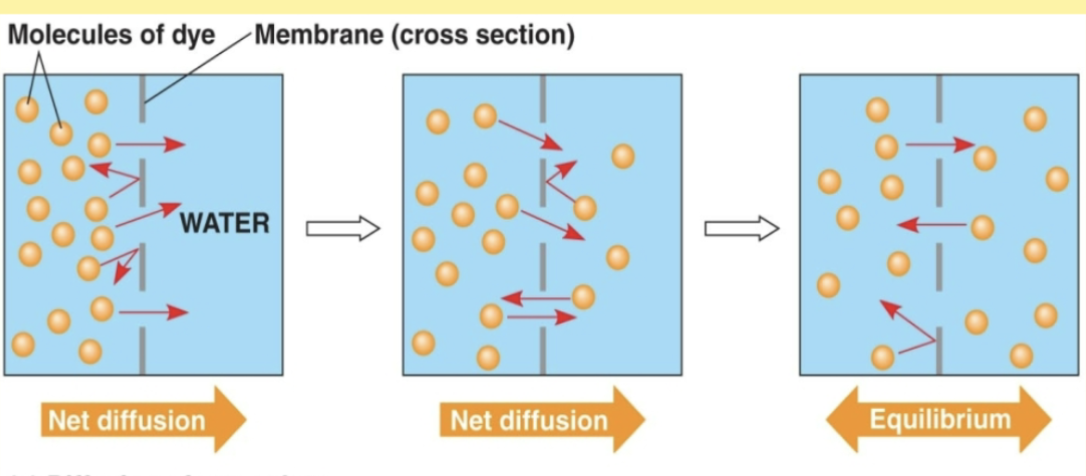
Salt/food coloring added to water and fragrance in air are what process?
Simple Diffusion
In simple diffusion and osmosis solutes are moving between what structure to achieve equilibrium?
Phospholipids
term that compares solute concentration between 2 solutions
Tonicity
higher solute conc than other
lower solute conc than other
equal solut conc
hypertonic
hypotonic
isotonic
Osmosis water vs solute movement
water high to low (solute opp, low to high)
In Hypotonic solutions, what happens to animal cell?
Lysis (burst/rupture bc excessive water intake)
Hypotonic example of an animal cell
Hemolysis (rbc’s)
In Hypotonic solutions, what happens to plant cells?
Turgor Pressure (plant cell swell bc excessive water intake)
In Hypertonic solutions, what happens to animal cells?
Crenation (shriveling due to excessive water loss/dehydration)
In Hypertonic solutions, what happens to plant cells?
Plasmolysis
(cell mem pulls in from cell wall &
plant wilts bc excessive water loss)
In Isotonic solutions, what happens to Animal Cells?
stays normal (no net movement)
In Isotonic solutions, what happens to Plant cells?
Become flaccid since they prefer to be turgid
High to low large solutes using integral protein
Facilitated Diffusion
What are the 3 active transport types
Active Transport
Endocytosis
Exocytosis
moves solutes from low to high using integral protein
Active Transport (uses ATP)
in nerve cells active transport, are Na+ and K+ pumped in/out?
Na+ out, K+ in
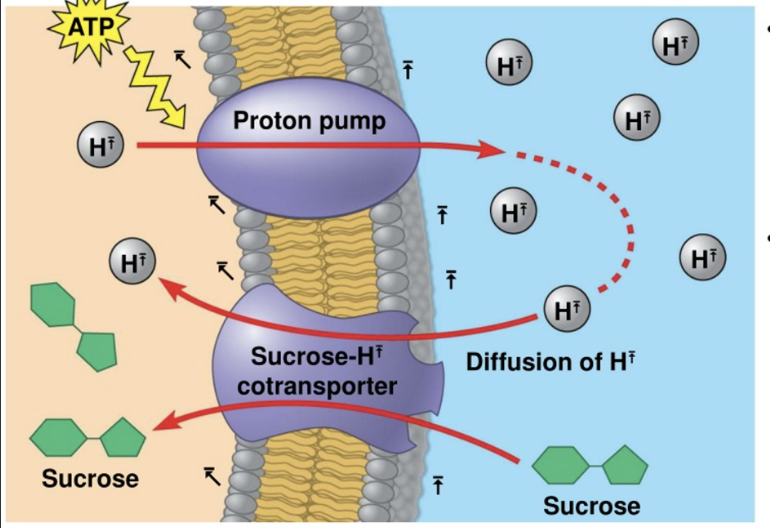
When substances only goes thru cell mem w another
& example?
Cotransport
Proton Pump: H+ out, sucrose in
What are the 3 Endocytosis processes?
phagocytosis
pinocytosis
receptor mediated endocytosis
Movement of solutes into cell through vesicle formation
Endocytosis
How are vesicles formed
folding of cell membrane using ATP
type of endocytosis where engulfment of large substances into cell thru vesicle formation aka “cellular eating”
Phagocytosis
What 2 examples use Phagocytosis
feeding Amoeba
WBCs engulfing foreign antigens
type of endocytosis where intake of small solutes & water thru formation of vesicles from invaginations forming along membrane aka cell drinking
Pinocytosis
What 2 examples use Pinocytosis
Colon &
Kidney water reabsorption
type of Endocytosis intake of specific solutes thru vesicle formation & trapping of solutes/receptor
Receptor Mediated Endocytosis (RCE)
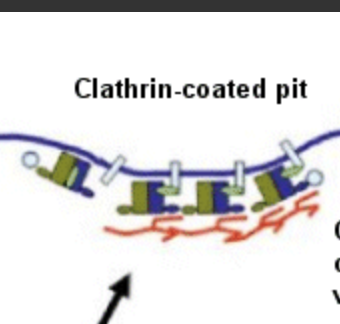
What term refers to the protein coat that covers vesicles in receptor mediated endocytosis
Chlatrin
Movement of Solutions out of cell thru vesicle formation that needs ATP
Exocytosis
Exocytosis Golgi vesicles used to release cellular waste/products out to another location
Secretory Vesicles