5 - forces + friction
 Call Kai
 Learn
Learn Practice Test
 Spaced Repetition
 Match
Match Flashcards
 Knowt Play
1/12

There's no tags or description
Looks like no tags are added yet.
Name | Mastery | Learn | Test | Matching | Spaced | Call with Kai |
|---|
No analytics yet
Send a link to your students to track their progress
13 Terms
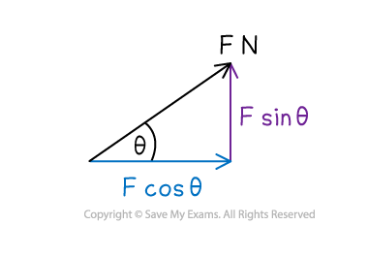
how do we simplify some mechanics problems
resolve diagonal forces into horizontal and vertical forces, using trigonometry
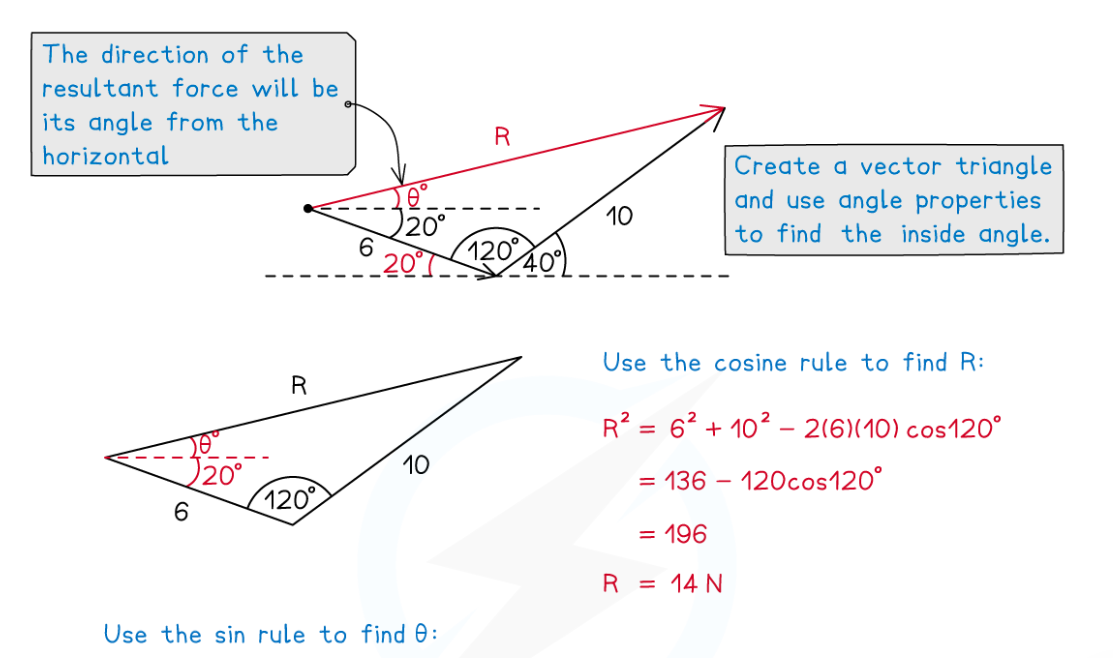
how might you find an unknown magnitude and direction of a resultant force, given two forces
make a triangle out of it all, using angle laws to label, then use trig rules to solve what u can!
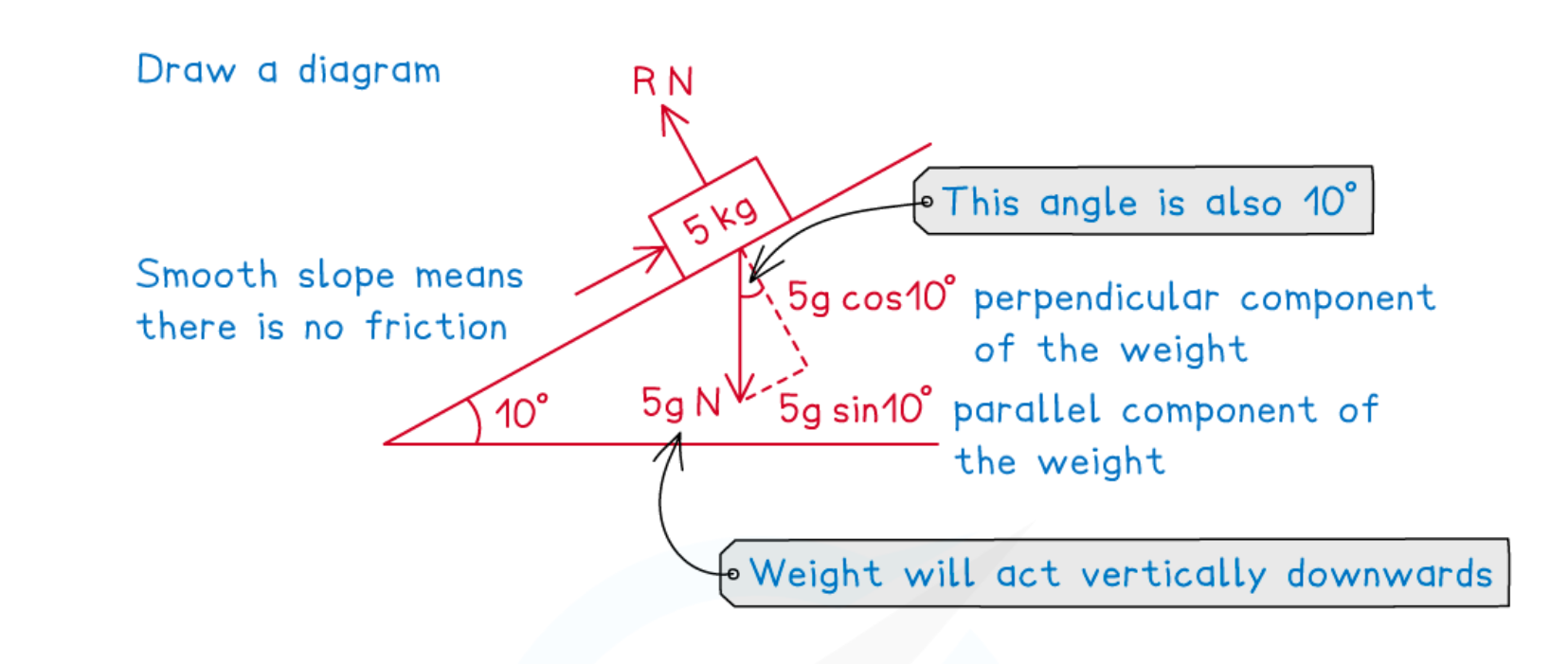
when a question involves an inclined plane, how do we want to resolve the forces?
resolve so they are parallel/perpendicular to the PLANE
main force affected is weight, as it acts vertically downwards, so needs to be resolved to fit the plane
all the others (acceleration, friction, normal reaction) happen either parallel or perpendicular so its fine :)
how does friction work
it prevents motion up to a certain limiting value
beyond that, its a force of constant magnitude in the opposite direction to an object’s motion
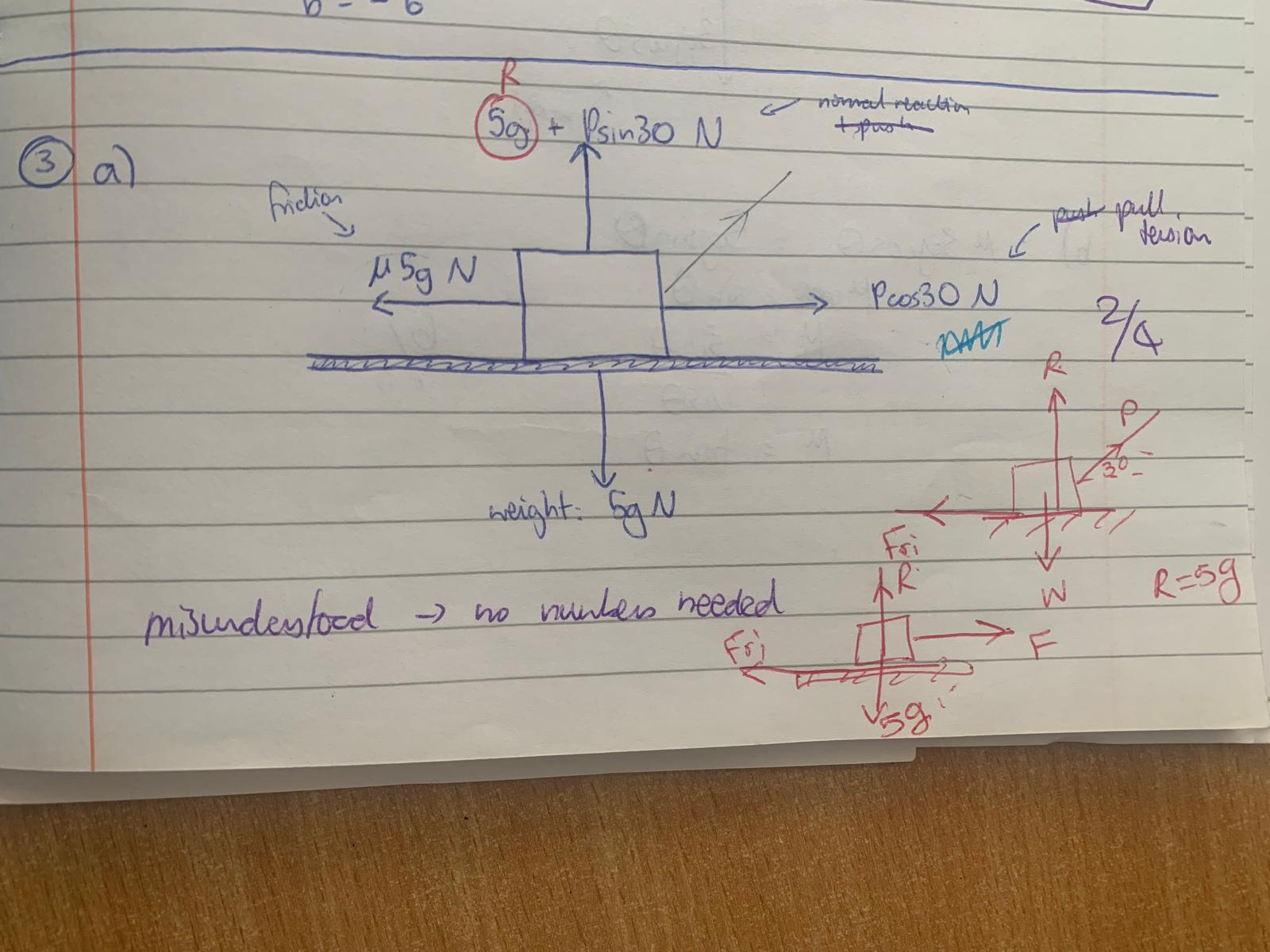
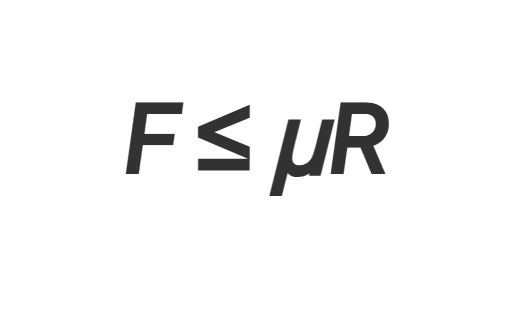
general formula for friction
F ≤ μR
f = force of friction
mu = coefficient of friction
r = normal reaction btw surface + object
if friction is 0, then the coefficient of friction would be 0
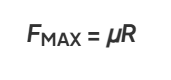
how to write out the maximum value for friction
FMAX = μR
what is happening with friction when an object is STILL
resultant of other forces parallel to the surface is less than/equal to FMAX
F remains equal and opposite to the resultant forces, so its also less than/equal to FMAX
when resultant forces are equal to FMAX, what do we say about the object
its in limiting equilibrium
whats happening with friction when an object is in MOTION
resultant of other forces parallel to the surface is greater than FMAX
f remains at FMAX in the opposite direction to motion (thats its max value)
situations when u should remember to use the CoF
when calculating any resultant forces on a rough surface
what should u remember about friction
it acts parallel to a plane (context = inclined planes), so it won’t need resolving!
what can’t we assume when working with friction
if an object is in equilibrium, we don’t know if F = μR, because it might not be in limiting equilibrium
but when an object is in motion, then F = μR
whats something u have to be careful of regarding normal reaction forces
when you’ve resolved, the up must equal the down (if the object is at REST), so don’t assume R’s value beforehand
rather, put the letter R as a placeholder, resolve any more vertical up forces then set it equal to the weight to find R!!!
(relevant for questions with forces in the vertical direction of any sort)