PSY 124 FINAL (Terms to Know)
 Call Kai
 Learn
Learn Practice Test
 Spaced Repetition
 Match
Match Flashcards
 Knowt Play
1/36

There's no tags or description
Looks like no tags are added yet.
Name | Mastery | Learn | Test | Matching | Spaced | Call with Kai |
|---|
No analytics yet
Send a link to your students to track their progress
37 Terms
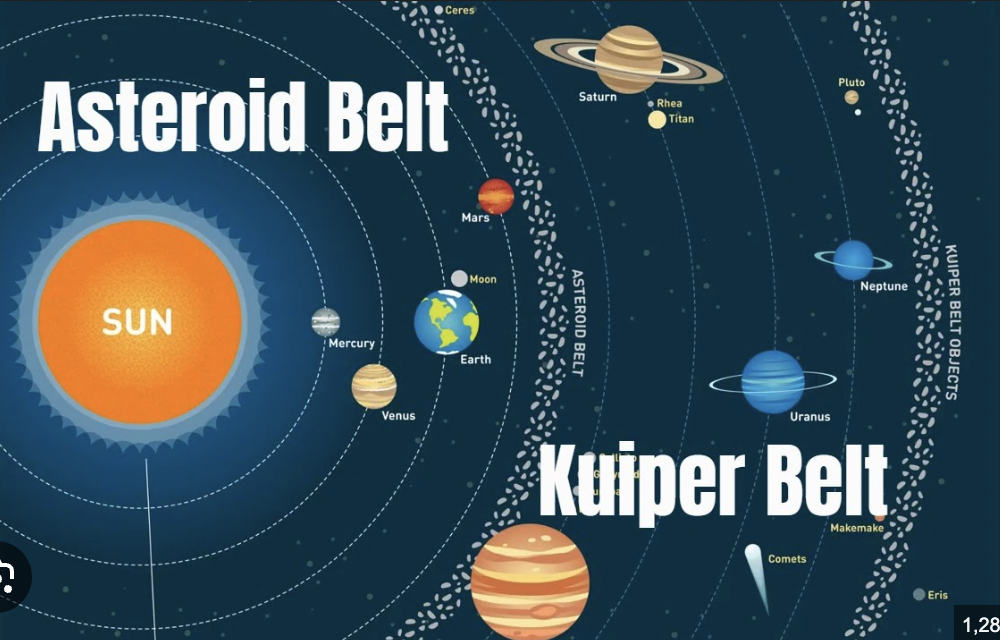
Asteroid belt
A region centered on the sun, and spanning the space between the orbits of Mars and Jupiter. It contains many asteroids.
Cambrian explosion
An event where the number and diversity of species exploded (500 million years ago).
Carbonaceous chondrites
Rare, primitive meteorites rich in carbon, water, and organic compounds. They are crucial for studying the early solar system.
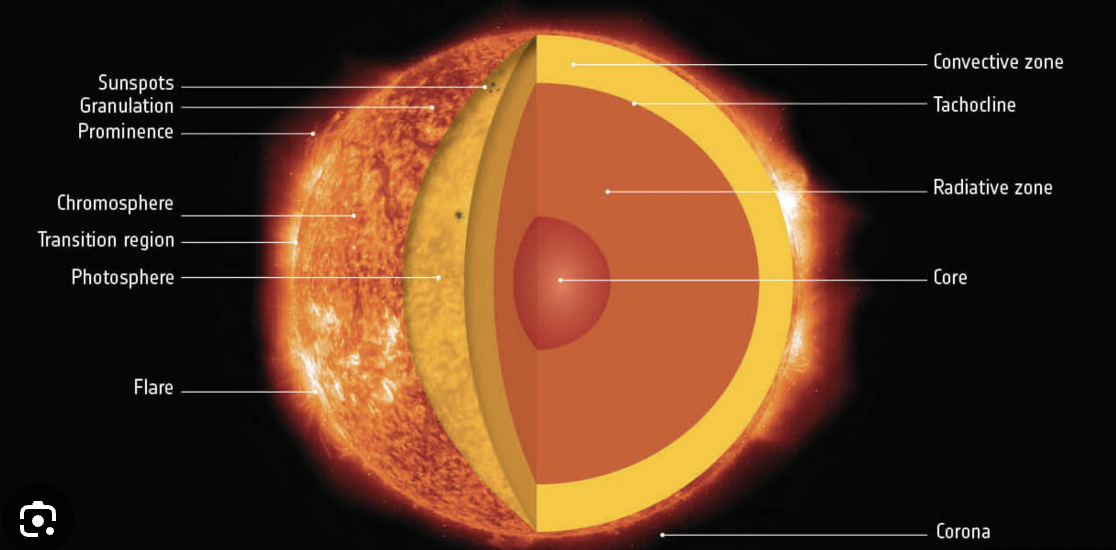
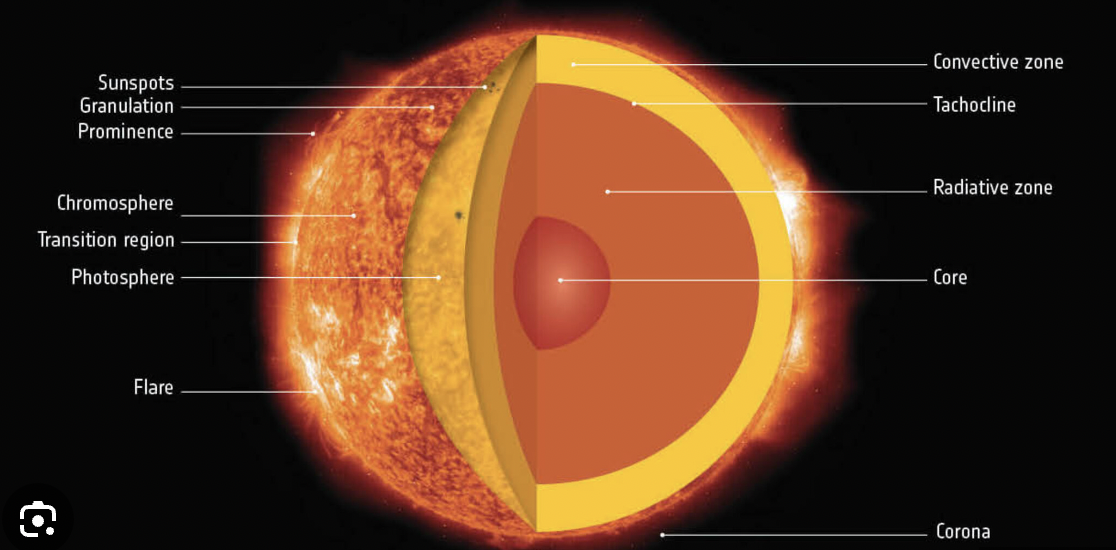
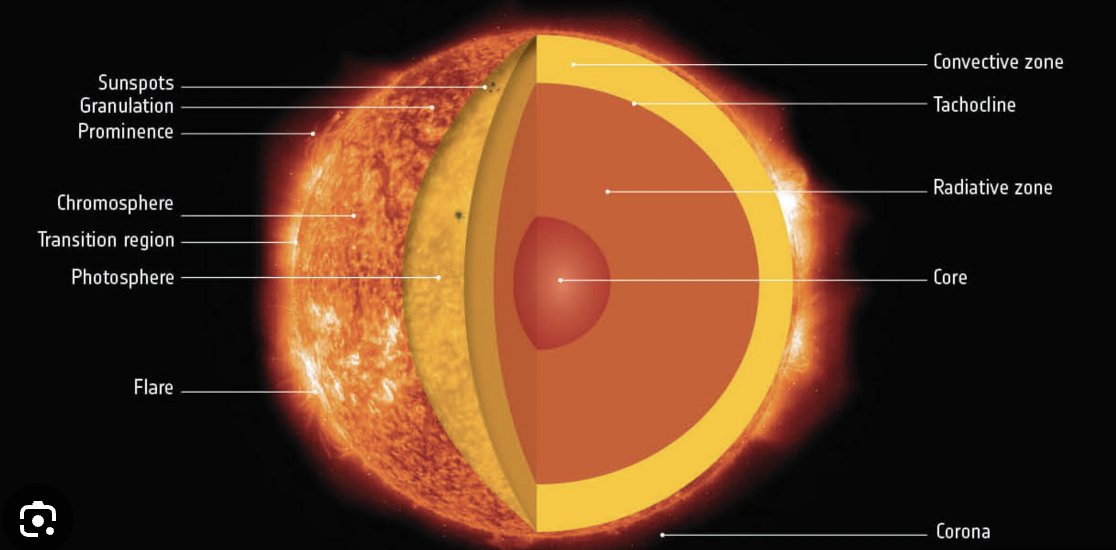
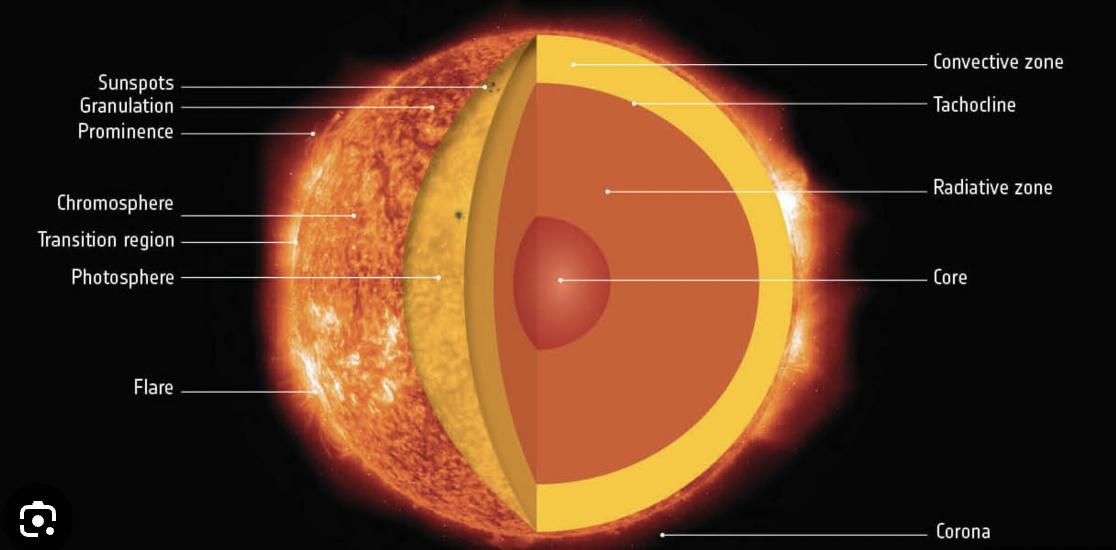
Chromosphere
Layer of the Sun’s atmosphere above the photosphere, visible during solar eclipses.
Convective zone
Interior layer located between the radiative zone and the photosphere, where energy is transported by rising hot gas and sinking cool gas.
Corona
The outermost layer of the Sun’s atmosphere. Extremely hot and visible during eclipses.
Coronal mass ejections
Massive bursts of plasma and magnetic fields from the Sun's corona
Cryovolcanism
A type of cold volcanic activity occurring on icy, outer solar system bodies where, instead of molten rock, volcanoes erupt "cryomagma"
Cyanobacteria
The first organisms known to have produced oxygen 2.5 billion years ago. Produced O2 and replaced greenhouse gases, the atmosphere cooled.
Dwarf planets
Round objects that orbit the Sun but have not cleared their orbits of smaller bodies
Eclipsing binary
Star systems where two stars orbit in a plane aligned with Earth, causing periodic dips in total brightness as they pass in front of one another
Extremophiles
An organism that is able to live in extreme environments
Helioseismology
The study of the Sun's interior structure, rotation, and dynamics by analyzing sound waves (p-modes) and surface oscillations
Heredity
Exploration of the origins of life and its distribution in the universe
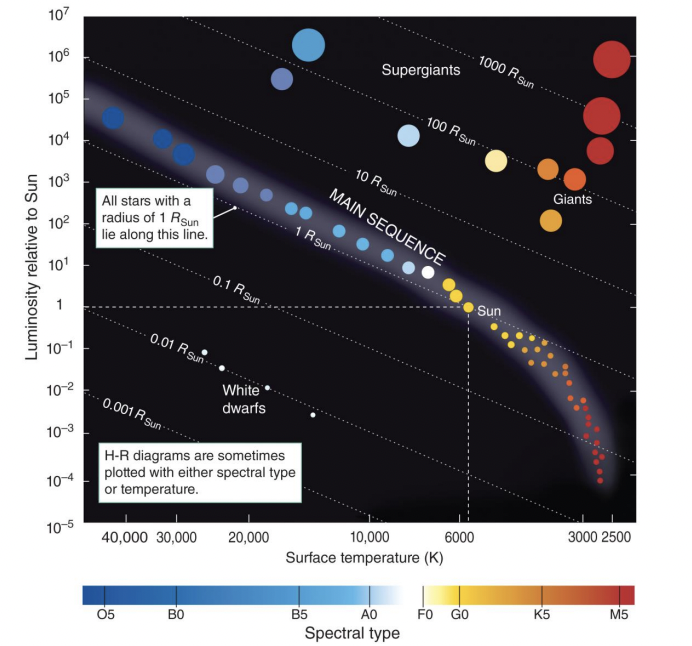
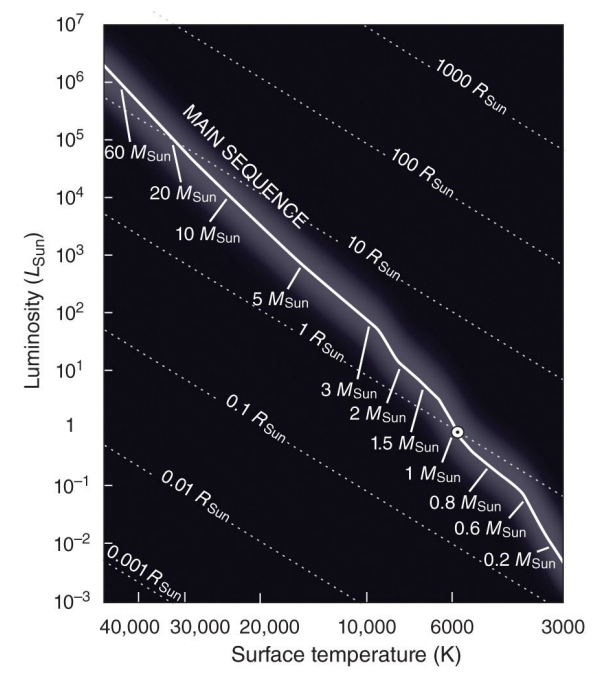
Hertzsprung-Russell Diagram
Graph comparing stellar luminosity vs. temperature.
Hot, luminous stars lie in the upper left.
Large, luminous stars lie in the upper right.
Small, faint, cool stars lie in the lower right.
Kuiper belt
A region of icy bodies and dwarf planets—including Pluto—in the outer solar system
Main Sequence
The longest, most stable phase in a star's life, where it fuses hydrogen into helium in its core
A star’s mass is what determines its position on the main sequence:
Less massive stars lie in the lower right.
More massive stars lie in the upper left.
Metal (M-type) asteroids
A rare, nickel-iron-rich celestial body, making up about 8%–10% of main-belt asteroids
Nutation
A small periodic "wobble" in the Earth’s axial precession, causing a slight
±0.025 degree variation in its tilt over an 18-year cycle.
Natural selection
The primary mechanism of evolution where organisms better adapted to their environment tend to survive and produce more offspring
Neutrino
The most abundant particles in the universe. They carry no charge, meaning they do not get absorbed or altered in transit.
Because they barely interact with matter, they are notoriously difficult to detect.
Oort cloud
A theoretical, vast spherical shell surrounding the Solar System, composed of trillions of icy, comet-like objects
Orbital resonance
An occurrence when orbiting bodies (planets, moons, or asteroids) exert periodic gravitational influences on each other.
Parallax
An apparent shift in a star’s position used to measure distance.
Photosphere
The visible surface of the Sun.
Phylogenetic tree
Branching diagrams representing hypotheses about the evolutionary relationships among species or groups.
Radiative zone
Solar layer where energy moves outward via radiation (photon diffusion).
Red Giant
A luminous, low-to-intermediate mass star in the late stage of stellar evolution. They are bloated, with an expanding outer atmosphere and a cool, reddish surface
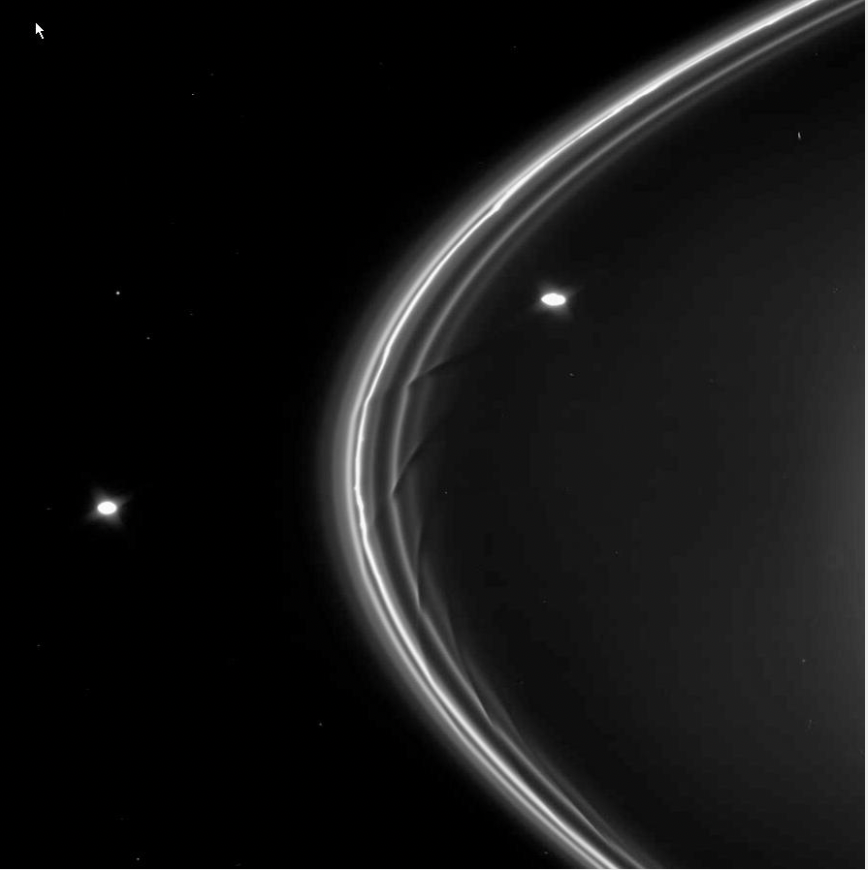
Shepherd moons
Small natural satellites that orbit near the edges of planetary rings. They prevent rings from spreading out and dissipating
Solar prominence
Large, stable structures of cool, dense plasma extending from the Sun’s surface.
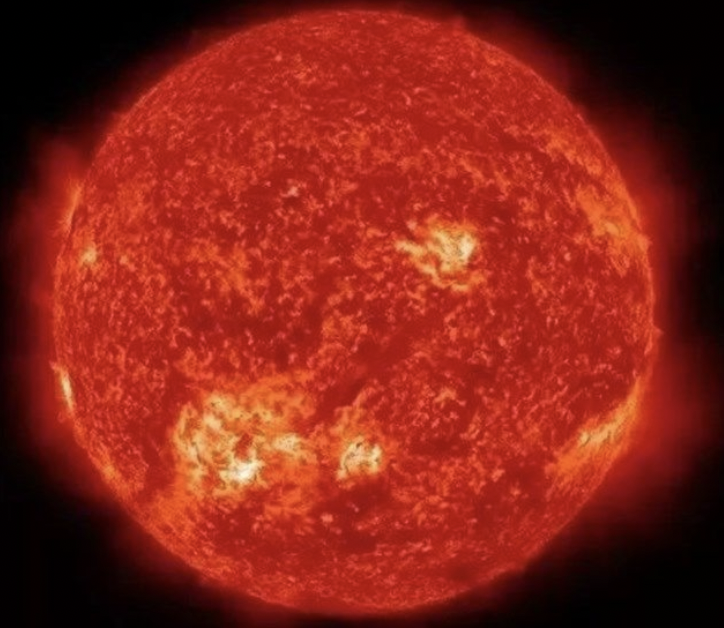
Solar maximum
Period of peak sunspot activity in the Sun’s cycle.
Solar wind
Stream of charged particles flowing from the Sun.
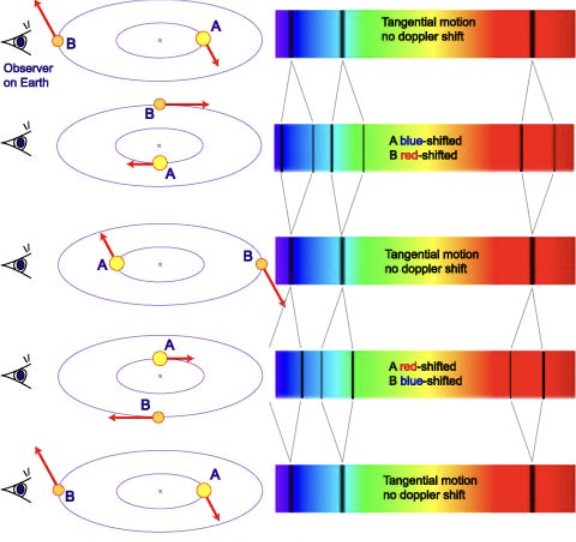
Spectroscopic binary
Binary star detected through Doppler shifts in spectral lines.
Stony (S-type) asteroids
The second most common type of asteroid. Primarily composed of silicate minerals (like olivine and pyroxene) and nickel-iron, they are found mostly in the inner asteroid belt.
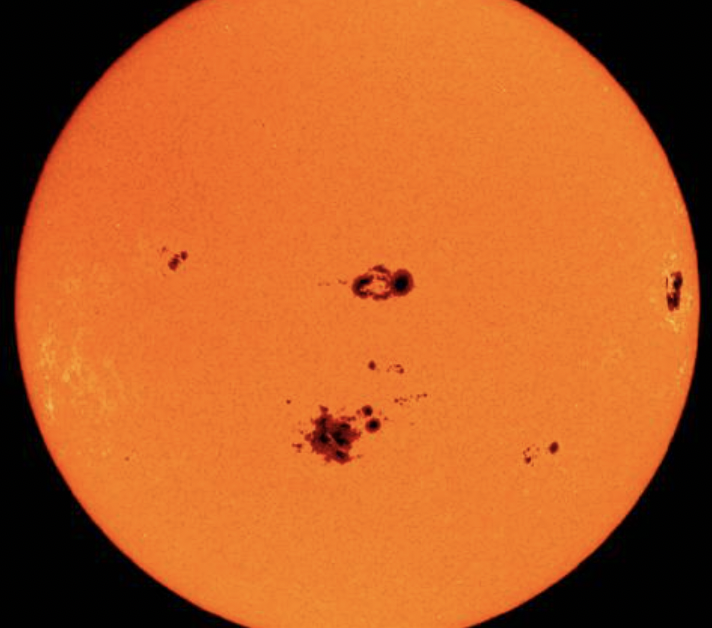
Sun spots
Cooler, darker areas on the Sun's surface (photosphere) caused by intense magnetic field activity that inhibits heat transfer
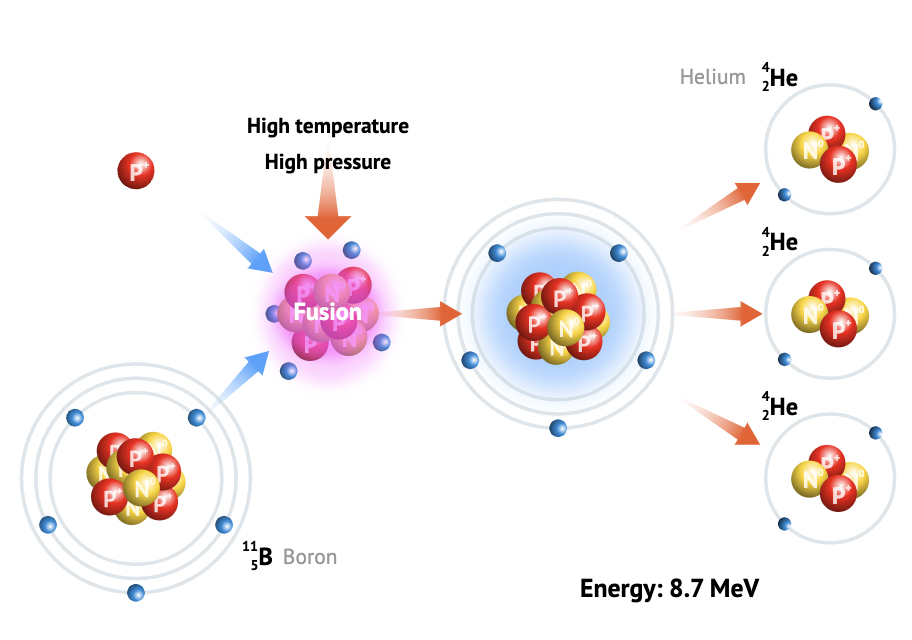
Thermonuclear Fusion
The process where light atomic nuclei (primarily hydrogen) combine to form heavier nuclei (like helium) under extreme temperature and pressure inside stars
White Dwarf
The extremely dense core left behind after a low-to-medium mass star (like our Sun) has exhausted its nuclear fuel and expelled its outer layers