Peloponnesian War: Causes, Major Battles, and Key Debates in Ancient Greece
 Call Kai
 Learn
Learn Practice Test
 Spaced Repetition
 Match
Match Flashcards
 Knowt Play
1/45

There's no tags or description
Looks like no tags are added yet.
Name | Mastery | Learn | Test | Matching | Spaced | Call with Kai |
|---|
No analytics yet
Send a link to your students to track their progress
46 Terms
What was the main cause of the Peloponnesian War according to Thucydides?
The struggle for power between Athens and Sparta, exacerbated by events like the Megarian Decree and conflicts over Potidaea and Corcyra.
What was the Archidamian War?
The first phase of the Peloponnesian War (431-421 BCE) characterized by Spartan invasions of Attica and Athenian naval raids.
What significant event occurred in Athens during the Archidamian War?
A devastating plague struck Athens in 430/29 BCE, leading to significant loss of life and social breakdown.
What was the Mytilenian Debate?
A debate in 428/27 BCE regarding the fate of Mytilene after its revolt against Athens, highlighting tensions between democracy and imperialism.
What was the significance of the Battle of Pylos and Sphakteria?
The Athenian victory in 425 BCE marked a turning point in the war, leading to the capture of Spartan soldiers and increased Athenian confidence.
What was the Sicilian Expedition?
A disastrous Athenian military campaign from 416-413 BCE aimed at conquering Sicily, which ultimately led to significant losses for Athens.
What was the Decelean War?
The final phase of the Peloponnesian War (413-404 BCE) characterized by Spartan support from Persia and the establishment of a permanent base at Decelea.
What was the outcome of the Battle of Aegospotami?
The decisive Spartan victory in 405 BCE that led to the fall of Athens and the end of the Peloponnesian War.
Who was Brasidas?
A Spartan general known for his military successes during the Peloponnesian War, particularly at the Battle of Amphipolis in 422 BCE.
What was the Melian Dialogue?
A philosophical debate in 416 BCE illustrating Athenian imperialism, where Athens argued for the dominance of power over morality.
What was the significance of the Peace of Nicias?
A temporary truce established in 421 BCE that ended the Archidamian War but failed to bring lasting peace.
What were the Long Walls of Athens?
Fortifications that connected Athens to its port, Piraeus, allowing for secure supply lines during sieges.
What role did Alcibiades play in the Sicilian Expedition?
An Athenian general whose controversial leadership and subsequent defection to Sparta significantly impacted the campaign.
What was the impact of the plague on Athenian society?
The plague caused widespread mortality, social unrest, and a breakdown of civic order in Athens.
What was the strategy of Sparta during the Archidamian War?
Sparta systematically invaded the Athenian countryside to destroy crops while avoiding direct confrontation with the Athenian navy.
What was the significance of the Battle of Arginousai?
A naval battle in 406 BCE where the Athenian fleet achieved a significant victory, but the aftermath led to political repercussions for Athenian commanders.
What was the political climate in Athens during the war?
Athens experienced internal strife, debates over democracy versus oligarchy, and the pressures of war on its political system.
What was the role of the Delian League?
An alliance led by Athens initially formed for mutual defense against Persia, which evolved into an Athenian empire during the war.
What was the significance of the Battle of Mantinea?
A battle in 418 BCE that showcased Sparta's military resurgence and the shifting power dynamics in the Peloponnese.
What was the outcome of the Peloponnesian War?
The war ended in 404 BCE with the defeat of Athens, leading to the establishment of Spartan hegemony in Greece.
What was the role of Thucydides in the study of the Peloponnesian War?
Thucydides was a historian who provided a detailed account of the war, emphasizing its political and moral lessons.
What was the reaction of the Peloponnesian League members to the peace made between Athens and Sparta?
They were unhappy with the peace agreement.
What independent peace did Athens make during the tensions in the North?
Athens made independent peace and defensive alliances with Argos, Mantinea, and Elis.
What were the Neodamodeis?
Manumitted helots who fought with Brasidas and were allowed to live freely.
In what year did the Battle of Mantinea occur?
418 BCE.
What was the outcome of the Battle of Mantinea?
Spartan victory, which squashed the anti-Spartan movement in northern Peloponnese.
What significant peace agreement followed the Battle of Mantinea?
Argos sued for peace, resulting in a 50-year peace concluded under Spartan terms.
What was the significance of the Lacedaemonian Phalanx in the Battle of Mantinea?
It was a classic example of the Lacedaemonian military formation.
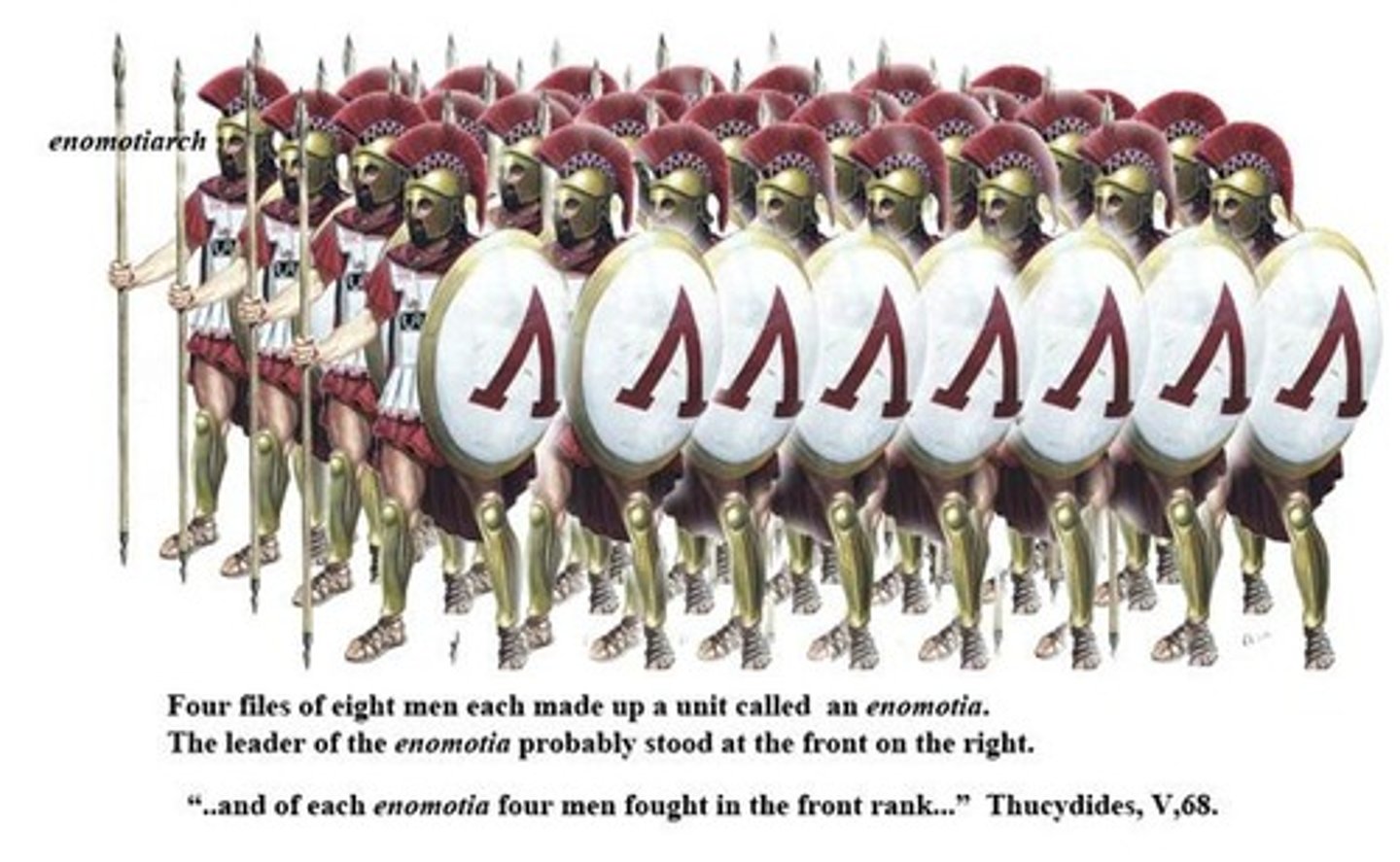
What was the main strategy of the Spartans during the Decelean War?
To fortify Decelea and maintain a permanent presence in Attica.
What major naval defeat did the Spartans face in 410 BCE?
The Battle of Kyzikus.
Who rose to prominence in the Spartan navy after the defeat at Cyzicus?
Lysander.
What was the outcome of the Battle of Aegospotami in 405 BCE?
A crippling defeat for Athens and her allies.
What conditions did the Lacedaemonians propose for peace with Athens?
Athens should destroy the long walls, surrender all ships except twelve, and allow exiles to return.
Who were the Brasideioi?
Helots who fought with Brasidas and achieved a status similar to the Neodamodeis.
What was the role of Alcibiades in the conflict between Athens and Persia?
He bartered a deal between Persia and Athens.
What was the significance of the fortification of Dekelea in 413 BCE?
It marked a shift in the main theatre of war to naval conflicts in the Aegean Sea.
What dilemma did the Athenians face after the Battle of Arginousai?
Whether to save Conon or to recover the dead.
What was the impact of the Neodamodeis on Spartan military composition?
There was a decrease in fighting Spartiates and an increase in Neodamodeis as hoplites.
What was the significance of the year 421 BCE in Thucydides' account?
It marks the first appearance of the Neodamodeis in historical records.
What was the immediate military formation of the Lacedaemonians at the Battle of Mantinea?
The left wing was composed of the Sciritae, followed by soldiers of Brasidas and the Neodamodes.
What was the outcome of the Athenian and Persian alliance at Cyzicus?
They defeated Sparta in 410 BCE.
What was the significance of the term 'Mothax' in Spartan military hierarchy?
It referred to a status similar to that of a citizen, often associated with Lysander.
What did the ephors decide regarding the treatment of Athens after the war?
They chose not to enslave Athens but offered terms for peace instead.
What was the role of Tissaphernes in the conflict?
He provided financial and naval assistance to the Spartans.
What was the significance of the term 'Sphakteria syndrome'?
It referred to the psychological impact of the Spartan defeat at Sphakteria.
What was the main consequence of the Spartan victory at Mantinea?
It established pro-Spartan oligarchies in key northern Peloponnesian regions.