4.1 water systems
 Call Kai
 Learn
Learn Practice Test
 Spaced Repetition
 Match
Match Flashcards
 Knowt Play
1/20

There's no tags or description
Looks like no tags are added yet.
Name | Mastery | Learn | Test | Matching | Spaced | Call with Kai |
|---|
No analytics yet
Send a link to your students to track their progress
21 Terms
What is the hyrdological cycle?
the continuous, solar-powered movement of water across the Earth, atmosphere, and land
what is the hyrdosphere?
includes all of Earths water, such as oceans, rivers, lakes and atmospheric moisture
how much of the earths water is ‘drinkable’?
Only about 2.5% of the Earth's total water is freshwater, and less than 1% of that is easily accessible for human consumption.
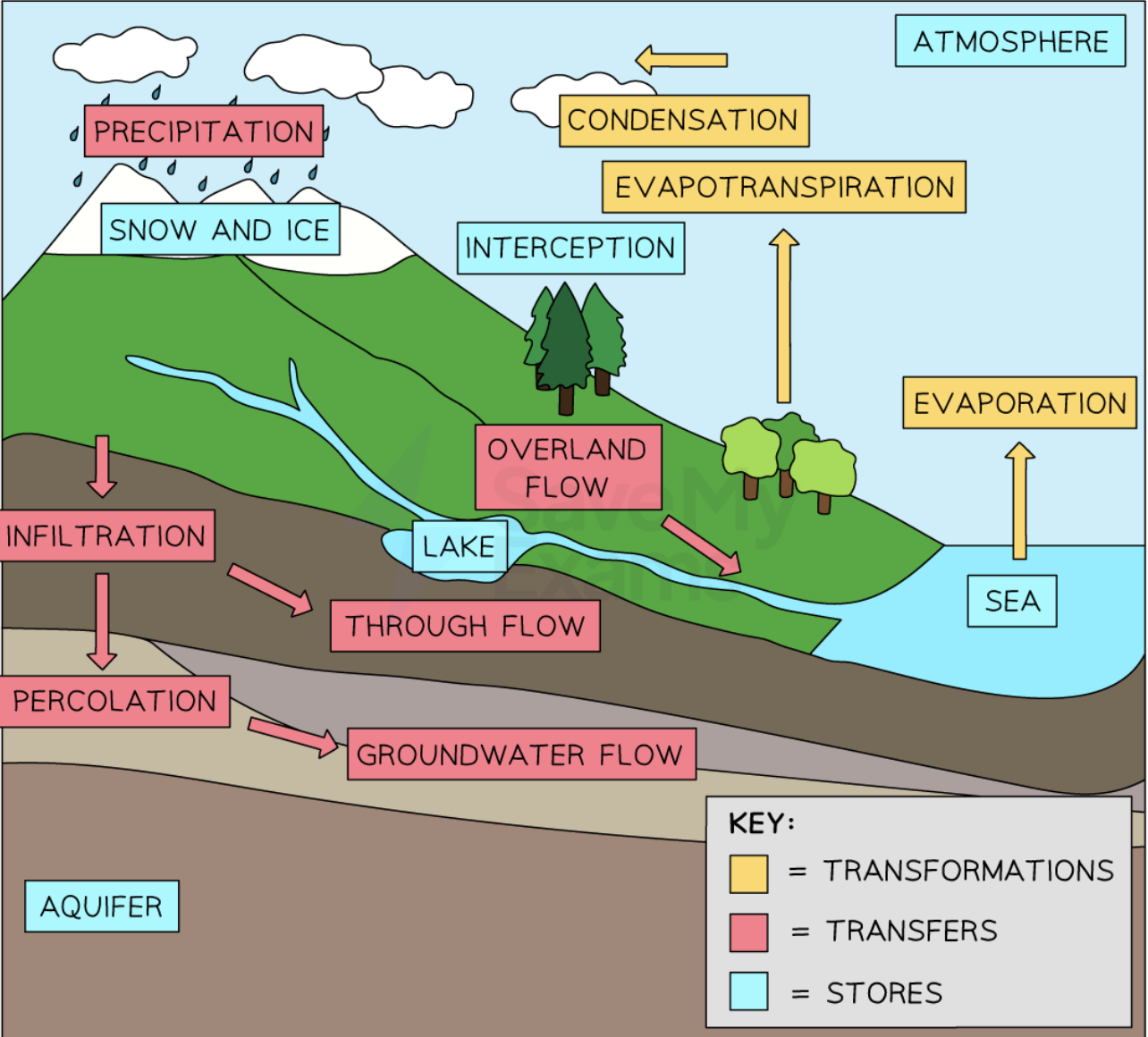
describe the hydrological cycle?
The Sun's heat causes waterto evaporate from oceans, lakes, and rivers
Water vapour cools and condenses into clouds, releasing heat
Gravity pulls condensed water back to Earth via the process of precipitation (rain,
snow, sleet, or hail).
Gravity causes waterto flow over land into rivers and streams (runoff) and drain
through soil
Rivers flow downhill due to gravity, moving waterfrom inland back to the oceans
What are features of the hydrological cycle?
closed system
there are stores and flows
processes in which water is constantly recycled through the system
what are the main stores in the hyrdological cycle?
oceans
glaciers and ice caps
groundwater and aquifers
surface freshwater (rivers and lakes)
atmosphere
what are the main flows in the hyrdological cycle?
Transformations: processes where the state orform of water changes
Transfers: movements of waterfrom one location to another without changing state
Name all transformations in the hydrological cycle (7)
evaporation
transpiration
evapotranspiration
sublimation
condensation
melting
freezing
Name all transfers in the hydrological cycle (7)
advection
percipitation
surface run off
infiltration
percolation
streamflow
groundwater flow
What impact do humans have on the hydrological cycle?
they alter the natural processes of surface run-off and infiltration
What are the main human activities? (3)
agriculture
deforestation
urbanisarion
what is agriculture and irrigation what do they do?
irrigation= process of artifically supplying water crops —>modifying the water distribution and availability in a region
what can irrigation lead to? (2)
Artificially high evapotranspiration rates this is because more water is supplied to plants than would occur naturally
This results in increased atmospheric moisture levels
This can lead to localised increases in precipitation downwind ofirrigated areas, altering rainfall patterns in the region
increased surface run-off
Water is applied fasterthan the soil can absorb it
This causes waterto flow overthe soil surface, carrying sediments,fertilisers, and pesticides
This leads to water pollution and nutrient imbalances
What is deforestation what does it do?
Deforestation refers to the clearing or removal offorests- this is primarily for agriculture, logging or urban development purposes (plants important = natural sponges and help recharge groundwater and maintain stream flows)
impacts of deforestation? (3)
surface run-off increases —> more water reaches ground surface due to no canopy and vegetation
reduces ecvapotranpiration
increased erosion, reduced groundwater recharge
what is urbanisation what does it do?
Urbanisation involves the transformation of natural landscapes into urban areas with buildings, roads and infrastructure. Replacing permeable surfaces (such as soil and vegetation) with impermeable surfaces (concrete, asphalt)
impacts of urbanisation?
prevent infiltration and reduced groundwater recharge—> increased flooding
drainage systems—> overload natural water bodies and cause downstream flooding
experinece higher temperatures —. increased evaporation rates and alter local percipitation patterns
what is steady state of water bodies?
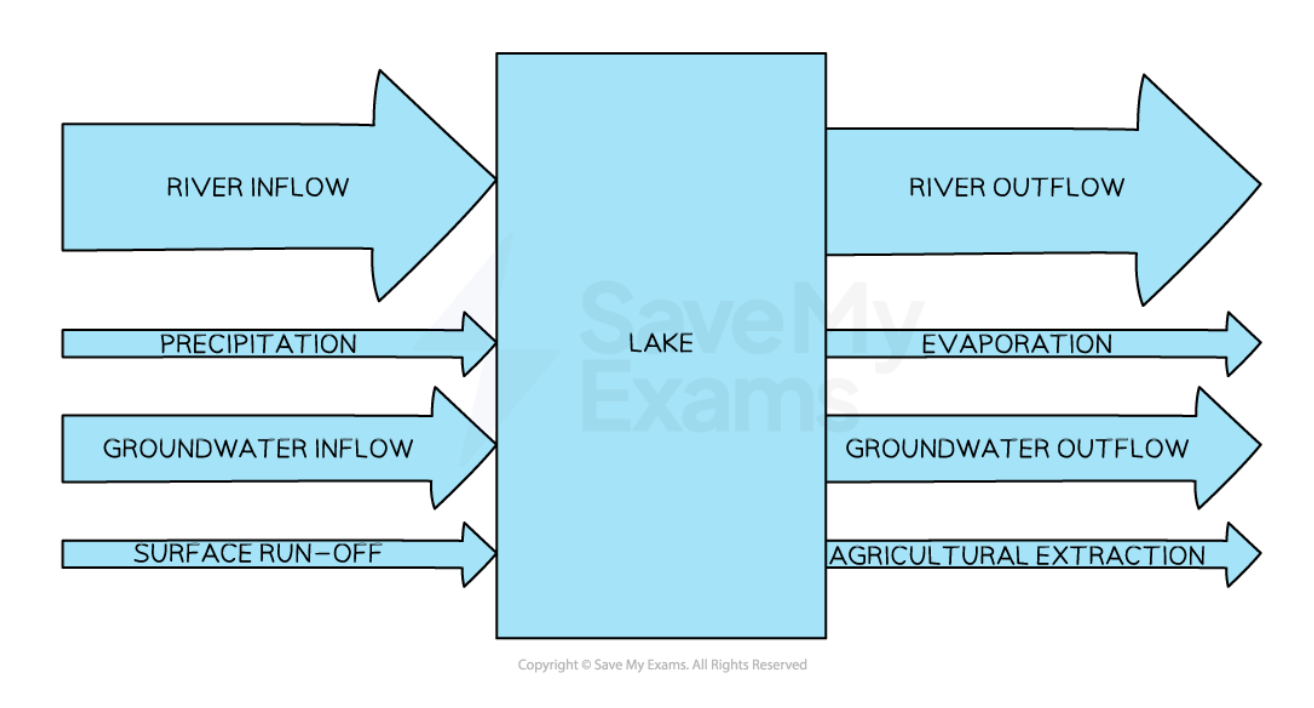
involves analysing the balance between inputs and outputs. This balance ensures thatthe water level remains constant over time
What are flow diagrams?
visually representthe water inputs and outputs for a water body
examples of inputs in flow diagram?
Precipitation: rain, snow, or otherforms of waterfalling directly into the water body
Surface run-off: water flowing overthe land into the water body
GroundwaterInflow: water moving into the water body from underground sources
examples of outputs?
Evaporation: waterturning into vapour and leaving the water body
River outflow: water leaving the water body through rivers or streams
Groundwater outflow: water moving out ofthe water body into underground aquifers
Agricultural extraction: waterthatis extracted for irrigation