Other Systems 2
 Call Kai
 Learn
Learn Practice Test
 Spaced Repetition
 Match
Match Flashcards
 Knowt Play
1/37

There's no tags or description
Looks like no tags are added yet.
Name | Mastery | Learn | Test | Matching | Spaced | Call with Kai |
|---|
No analytics yet
Send a link to your students to track their progress
38 Terms
weight gain with pregnancy
25-35 lbs
essential for baby nourishment
MSK changes with pregnancy
postural changes: forward head, kyphosis, increased lordosis, anterior pelvic tilt
MSK changes pregnancy treatment
postural education
stretching of tight muscles, strengthening of weaker ones
pelvic stabilization exercises
pelvic tilts
CVS changes pregnancy
blood pressure low in 1st and 2nd trimester
increase 3rd trimester
supine lying causes compression of inferior vena cava, declines cardiac output, supine hypotensive syndrome
resting HR pregnancy change
increase 10-20 bpm
R or L sidelying during pregnancy
left
decreases compression of inferior vena cava, maximizes cardiac output, decreases GERD as internal organs relazed and improves maternal and fetal circulation
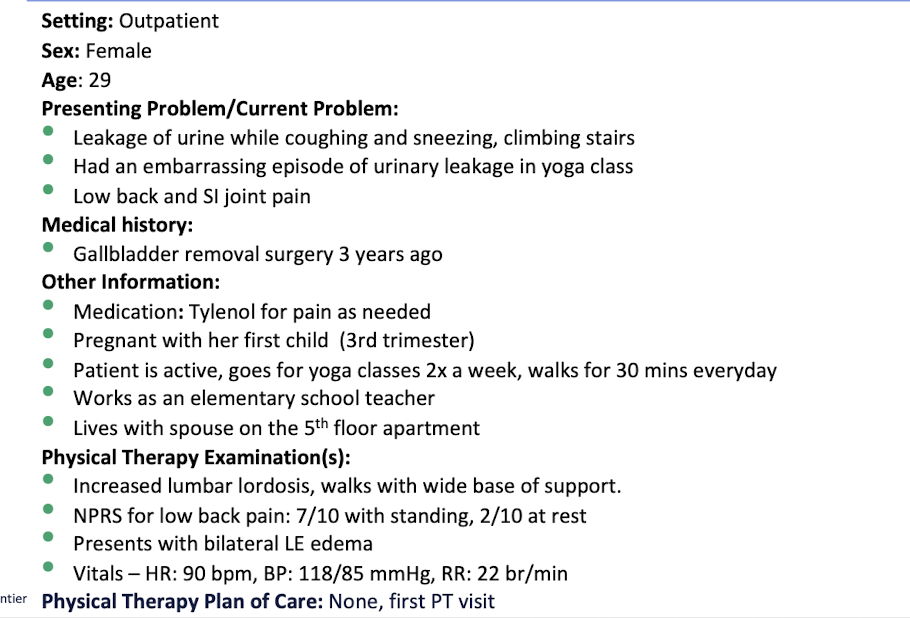
Which of the following is MOST APPROPRIATE regarding physiological changes related to pregnancy?
a. blood pressure increases second trimester, decreases third trimester
b. cardiac output is decreased in pregnancy
c. resting heart rate decreased in pregnancy
d. metabolic rate and heat production increases during pregnancy
d. metabolic rate and heat production increases during pregnancy
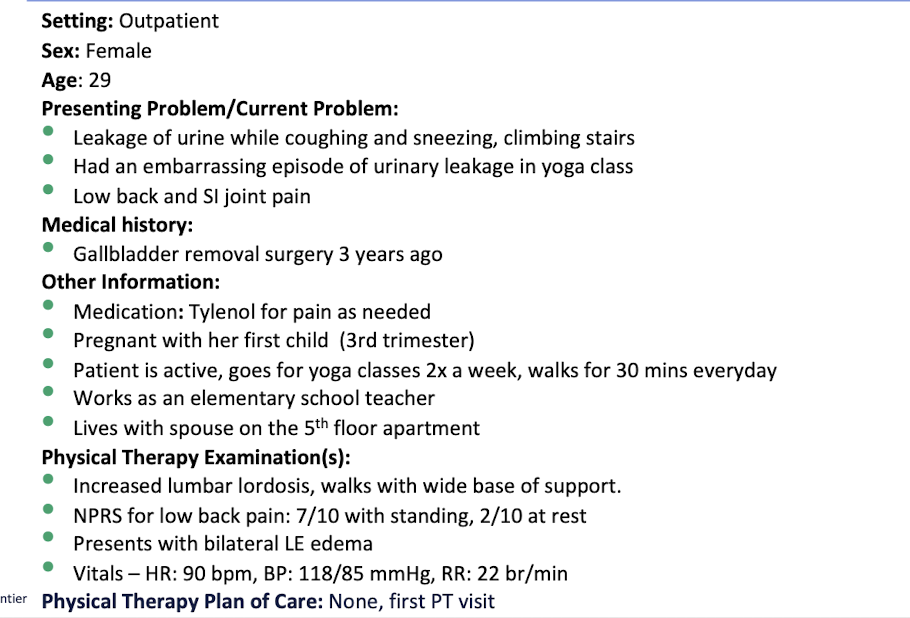
after an uncomplicated, vaginal delivery of child, patient is seen again for PT. During treatment, patient begins to report headache with visual disturbance, then suddenly develops a seizure, Which condition is MOST LIKELY seen in this patient?
a. preeclampsia
b. gestational diabetes
c. eclampsia
d. ectopic pregnancy
c. eclampsia
Preeclampsia
pregnancy induced acute hypertension after 20th week of gestation
increase in protein in urine, hyperreflexia, edema, headache, sudden weight gain seen
blood pressure: 140/90 mmHg second abnormal BP reading 4 hours after first confirms diagnosis
medical emergency
contraindication to exercise in pregnancy
hemodynamically significant heart disease
restrictive lung disease
incompetent cervix: early dilation
vaginal bleeding
placenta previa after 26 weeks: placenta is locaetd on the uterus position in which it may detach the babt is delivered
preeclampsia or pregnancy induced hypertension
rupture of membranes
premature labor
maternal type 1 diabetes
severe anemia
a patient after an uncomplicated delivery, has a 3 cm diastasis recti and weak abdominal muscles. Which of the following exercises is MOST APPROPRIATE for inital phase of rehab?
a. modified plank on forearms and knees
b. head lifts with arms bracing the abdomen
c. curl ups with hands behind the head
d. deep breathing exercises in bridging position
b. head lifts with arms bracing the abdomen
treatment for diastasis recti
head lift
head lift with pelvic tilt
Gastroesophageal Reflux Disease (GERD)
reflux of gastric content of the gastroduodenal contents into the esophagus
GERD symptoms
heart burn 30 minutes after eating and at night lying down
dysphagia
sour taste - from regurgitation of acids
hoarseness of voice
atypical pain of the head and neck
GERD complications
aspiration pneumonia, asthma
esophagitis
Which of the following guidelines is MOST APPROPRIATE in treating patients with gastroesophageal reflux disease?
a. exercises should be performed in supine position
b. encourage the patient to sleep on right side to prevent nocturnal reflex
c. instruct patient to perform valsalva maneuvers during exercise
d. encourage the patient to elevate the head of the bed while lying down
d. encourage the patient to elevate the head of the bed while lying down
GERD Treatment
maintain upright positions
eat meals at least 3-4 hours before sleep
avoid supine - tends to straighten the esophagus
sleep on left side prevent nocturnal reflex
exercise must be completed 2-3 hours after eating or before meals
avoid spicy, chocolate, fatty food, peppermint
drugs: antacids, H2 receptor blockers, proton pump inhibitors
a patient is referred to the PT clinic for right side shoulder pain. patient reports having dark colored urine and exhibits palmar erythema. Which of the following structures is the MOST LIKELY source of the referred pain?
a. prostate
b. appendix
c. liver
d. kidney
c. liver
mid back scapula pain referral
esophagus, gallbladder, stomach, pancreas, kidney
mid back scapula pain referral mnemonic
PEGS
left shoulder pain referral
heart
diaphragm
spleen
tail of pancreas
right shoulder pain referral
gallbaldder
liver
head of pancreas
pelvis/low back/sacrum pain referral
colon
appendix
pelvic viscera
pancoast tumor
upper lung tumor
pain referred in C8-T2 nerve distribution
mimics TOS
pain referral pattern pancoast tumor
pain top of shoulder
ipsilateral shoulder
RUQ pain pattern
peptic ulcers
gallbladder pathology
head of pancrease
RUQ pain mnemonic
good luck harry potter kid
RLQ pain pattern
appendix
crohns
RLQ pain mnemonic
AC
LLQ pain pattern
diverticulitis
ulcerative colitis
IBS
LLQ pain mnemonic
please dont get a DUI
LUQ pain pattern
body + tail of pancreas
spleen pathology
diaphragm
heart
kidney
LUQ pain mnemonic
dont be a silly kid harry
a patient presents to the clinic with severe pain in their L shoulder after a recent motor vehicle accident. During the physical examination, the patient reports increased pain in their L shoulder when their leg is elevated. Which of the following conditions is MOST LIKELY associated with these symptoms?
a. liver laceration
b. myocardial infarction
c. spleen rupture
d. kidney contusion
c. spleen rupture
Hiatial Hernia pain referral
shoulder
femoral hernia pain referral
lateral pelvic wall
groin pain
inguinal hernia pain referral
groin pain
umbilical hernia pain referral
mid to lower abdomen