2.1.2 Inflation
 Call Kai
 Learn
Learn Practice Test
 Spaced Repetition
 Match
Match Flashcards
 Knowt Play
1/12

There's no tags or description
Looks like no tags are added yet.
Name | Mastery | Learn | Test | Matching | Spaced | Call with Kai |
|---|
No analytics yet
Send a link to your students to track their progress
13 Terms
Inflation
The increase in prices in the economy which erodes the purchasing power of money. Therefore, low inflation tends to be better than high.
Deflation
The fall in prices, which usually indicates a slowdown in the rate of growth of output in the economy
Disinflation
A reduction in the rate of inflation (i.e. prices are still rising but at a slower rate)
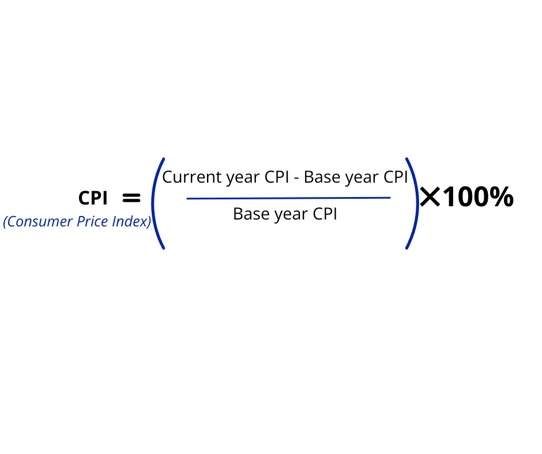
How is consumer price index calculated? Include weighting
Numerically:
a base year is selected and given an index number of 100 and all the figures after that are compared to that figure
Qualitatively:
A basket of goods/services are selected (ONS collects prices on 710 goods and services, which changes every year)
Each item is weighted according to how much is spent on each item (e.g. we spend more on petrol than stamps, so an increase in petrol prices will have a bigger impact on overall inflation rate)
Over a time period, the change in price is calculated and the percentage change is the rate of inflation (usually a month)
Limitations of CPI
Impossible to take into account every single good/service sold, so CPI not totally representative of inflation
Also different households spend different amounts on each good, so weighting not totally representative
Does not include price of HOUSING, which tends to rise more than other goods, underestimating inflation
Over time, goods and services have improved in quality, so are obviously more expensive - therefore, comparing it to a base year from, like 50 years ago, is not an accurate estimation of inflation
What is retail price index (RPI)?
RPI is similar to CPI, however it includes housing costs too, such as mortgages, interest payments, and council tax
RPI excludes the top 4% of income earners and low income pensioners, as they are not considered as ‘average’ households
RPI is no longer considered the best method of calculating inflation.
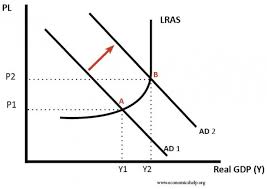
Demand-pull inflation
When inflation is caused by an increase in aggregate demand (shift right of AD)
Increase in components C+I+G+(X-M)
On Keynesian curve, inflation most prominent at vertical part, near maximum productive potential capacity
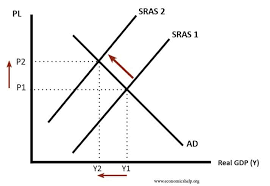
Cost-push inflation
When inflation is caused by a decrease in aggregate supply (e.g. changes in cost of raw materials, exchange rates, tax rates, etc.)
Cost of production increases, so businesses put up prices to maintain their profit margins
Therefore, workers demand their wages to rise to match inflation, so firms push prices up even higher to cover higher costs - this creates a ‘wage-price’ spiral inflation effect
Growth of money supply causing inflation
If there is too much money circulating in the economy, and the increase in amount of goods and services cannot keep up with increasing demand, then prices will have to rise to lower demand / consumer surplus
Effects of inflation on consumers
If people’s incomes do not rise with inflation, then they will have less to spend (real incomes fall) - less purchasing power
If inflation rates exceed interest rates on savings (assets do not keep up with inflation) - real value of savings falls
Those in debt can pay it off at a cheaper value, as the real value of money falls relative to the value borrowed at
Spending habits may change, as consumers may feel less well-off, despite incomes rising with inflation (e.g. postponing non-essential purchases, seeking discounts, etc.)
Effects of inflation on firms
When inflation rises relative to other countries, British goods become more expensive and less competitive, hence exports fall - negatively affecting the balance of payments
Cost of production increases (e.g. higher costs of raw materials, higher wages to match inflation), which lowers profit margins if firms cannot increase prices and have to absorb costs
Inflation is difficult to predict, so makes it harder to plan for the future - like budgeting and long-term investments
However,
Deflation encourages people to hold-off on purchases as they wait for prices to fall further and more people save as the value of their money will rise in the future - so fall in demand for goods, leads to a fall in profits
Effects of inflation the government
If government fails to increase excise taxes in line with inflation - real government revenue will fall
Government revenue increases as inflation causes nominal wages and profits to rise to match it - leading to higher tax receipts (e.g. income tax, indirect tax, and VAT)
Central banks raise interest rates to combat inflation, making government’s cost of borrowing higher - so more expensive to service new debt
Effects of inflation on workers
If workers do not receive pay rises in line with the rate of inflation, they will be worse-off and living standards will fall - those in weaker unions tend to be most affected as they have less bargaining power for wage rises
Increased job hopping, as workers seek salary increases to keep up with inflation
However,
Deflation can lead to increased unemployment, as people postpone purchases waiting for prices to fall further (deflationary spiral), leading to less demand for goods and less profits for firms, causing wage cuts and more layoffs