Asphyxia - Foresnisc
 Call Kai
 Learn
Learn Practice Test
 Spaced Repetition
 Match
Match Flashcards
 Knowt Play
1/138

There's no tags or description
Looks like no tags are added yet.
139 Terms
Asphyxia is lack of oxygen →
But , literally asphyxia is a Greek ward means no pulse which is a misnomer, other terms such as 'hypoxia' or 'anoxia' are more accurate, and should be preferred.
Asphyxia is a medical emergency caused by severe oxygen deprivation and carbon dioxide retention, leading to rapid, irreversible brain cell death within minutes.
correct
Classification of asphyxia
1- 1- Anoxic Anoxia
2- Anemic Anoxia
3- stagnant anoxia
4- Histotoxic [tissue or cellular] Anoxia
what is anoxic anoxia and calssifification?
Anoxic anoxia is a severe condition defined by a complete lack of oxygen reaching the body's tissues, often resulting from environmental causes like choking, drowning, or high altitude.
O2 does not enter the body
classifcation :
- central → due to depression of respiratory center) e.g. central depressants as barbiturates)
- peripheral → (due to paralysis or spasm of respiratory muscles) eg. Overdose of succinyl choline, Botulism
- mechanical → (violent asphyxia)
central depressants as barbiturates) lead to what type of asphyxia?
- central → due to depression of respiratory center) e.g. central depressants as barbiturates)
- central asphyxia is due to ??
- central → due to depression of respiratory center) e.g. central depressants as barbiturates)
peripheral asphyxia is due to?
→ (due to paralysis or spasm of respiratory muscles) eg. Overdose of succinyl choline, Botulism
Overdose of succinyl choline, Botulism lead to what type of asphyxia?
lead to peripheral anoxia
what are categories of the anoxic anoxia?
central
peripheral
mechanical violent
Anoxic anoxia is a severe condition defined by a complete lack of oxygen reaching the body's tissues, often resulting from environmental causes like choking, drowning, or high altitude.
O2 does not enter the body
classifcation :
Anoxic anoxia is a severe condition defined by a complete lack of oxygen reaching the body's tissues, often resulting from environmental causes like choking, drowning, or high altitude.
O2 does not enter the body
classifcation :
- central → due to depression of respiratory center) e.g. central depressants as barbiturates)
- peripheral → (due to paralysis or spasm of respiratory muscles) eg. Overdose of succinyl choline, Botulism
- mechanical → (violent asphyxia)
- Anemic Anoxia
Abnormal hemoglobin (COHb in CO poisoning ).
Hemolysis (e.g. Incompatible blood transfusion, Naphthalene or Arsine intoxication).
correct
. Incompatible blood transfusion, Naphthalene or Arsine intoxication).
what type of anoxia?
- Anemic Anoxia
Abnormal hemoglobin (COHb in CO poisoning ).
Hemolysis (e.g. Incompatible blood transfusion, Naphthalene or Arsine intoxication)
n (COHb in CO poisoning )what type of anoxia?
- Anemic Anoxia
Abnormal hemoglobin (COHb in CO poisoning ).
Hemolysis (e.g. Incompatible blood transfusion, Naphthalene or Arsine intoxication)
Stagnant Anoxia : (stagnant hypoxia) Interference with the flow of blood to the tissues as in advanced heart failure
correct
Stagnant Anoxia what is it?
Stagnant Anoxia : (stagnant hypoxia) Interference with the flow of blood to the tissues as in advanced heart failure
Interference with the flow of blood to the tissues as in advanced heart failure
Stagnant Anoxia : (stagnant hypoxia) Interference with the flow of blood to the tissues as in advanced heart failure
Histotoxic [tissue or cellular] Anoxia
(Histotoxic hypoxia) It is diminished ability of cells to utilize oxygen as in cyanide poisoning.
correct
cyanide poisoning.
Histotoxic [tissue or cellular] Anoxia
(Histotoxic hypoxia) It is diminished ability of cells to utilize oxygen as in cyanide poisoning.
Histotoxic [tissue or cellular] Anoxia
Histotoxic [tissue or cellular] Anoxia
(Histotoxic hypoxia) It is diminished ability of cells to utilize oxygen as in cyanide poisoning.
Stages of asphyxia : The asphyxiated person passes into 3 stages :
I- Stage of dyspnea :
II- Stage of convulsions:
III- Stage of irregular breathing
- Stage of dyspnea
It is a physiologic response to hypoxia → stimulation of respiratory center → increased rate and depth of the respiration accompanied with cyanosis of the skin and mucous membrane.
It is a physiologic response to hypoxia → stimulation of respiratory center → increased rate and depth of the respiration accompanied with cyanosis of the skin and mucous membrane.
- Stage of dyspnea
- Stage of dyspnea
stimulation of?
lead to?
It is a physiologic response to hypoxia → stimulation of respiratory center → increased rate and depth of the respiration accompanied with cyanosis of the skin and mucous membrane.
Stages of asphyxia : The asphyxiated person passes into 3 stages :
I- Stage of dyspnea :
II- Stage of convulsions:
III- Stage of irregular breathing
II- Stage of convulsions (2nd stage) :
Cerebral irritation occurs due to anoxia and CO2 accumulation with generalized convulsions →
1- increase in blood pressure and rupture of sub mucous and sub serous capillaries & small venules and appearance of peticheal hemorrhages. ‘Tardieu Spots’ and
2- increase the intra-alveolar pressure with resulting rupture of the superficial unsupported alveoli of the lungs that appear under the pleura as shinny grey spots on examination by a hand lens in the postmortem bodies and they are called ‘Silvery Spots’.
correct
what happens in Stage of convulsions (2nd stage) :?
II- Stage of convulsions (2nd stage) :
Cerebral irritation occurs due to anoxia and CO2 accumulation with generalized convulsions →
1- increase in blood pressure and rupture of sub mucous and sub serous capillaries & small venules and appearance of peticheal hemorrhages. ‘Tardieu Spots’ and
2- increase the intra-alveolar pressure with resulting rupture of the superficial unsupported alveoli of the lungs that appear under the pleura as shinny grey spots on examination by a hand lens in the postmortem bodies and they are called ‘Silvery Spots’.
II- Stage of convulsions (2nd stage) :
Cerebral irritation occurs due to anoxia and CO2 accumulation with generalized convulsions →
1- __________in blood pressure and rupture of sub mucous and sub serous capillaries & small venules and appearance of ________hemorrhages. ‘_____________ spots
- increase the intra-alveolar pressure with resulting rupture of the superficial unsupported alveoli of the lungs that appear under the pleaura as shinny grey spots on examination by a hand lens in the postmortem bodies and they are called ‘________Spots’.
II- Stage of convulsions (2nd stage) :
Cerebral irritation occurs due to anoxia and CO2 accumulation with generalized convulsions →
1- increase in blood pressure and rupture of sub mucous and sub serous capillaries & small venules and appearance of peticheal hemorrhages. ‘Tardieu Spots’ and
2- increase the intra-alveolar pressure with resulting rupture of the superficial unsupported alveoli of the lungs that appear under the pleura as shinny grey spots on examination by a hand lens in the postmortem bodies and they are called ‘Silvery Spots’.
II- Stage of convulsions (2nd stage) :
Cerebral irritation occurs due to anoxia and CO2 accumulation with generalized convulsions →
increase in what pressure?
1- increase in blood pressure and rupture of sub mucous and sub serous capillaries & small venules and appearance of peticheal hemorrhages. ‘Tardieu Spots’ and
2- increase the intra-alveolar pressure with resulting rupture of the superficial unsupported alveoli of the lungs that appear under the pleura as shinny grey spots on examination by a hand lens in the postmortem bodies and they are called ‘Silvery Spots’.
what kind of spots found in convulsion state?
increase in blood pressure and rupture of sub mucous and sub serous capillaries & small venules and appearance of peticheal hemorrhages. ‘Tardieu Spots’ and
2- increase the intra-alveolar pressure with resulting rupture of the superficial unsupported alveoli of the lungs that appear under the pleura as shinny grey spots on examination by a hand lens in the postmortem bodies and they are called ‘Silvery Spots’.
what is tradieu spots?
what stage?
increase in blood pressure and rupture of sub mucous and sub serous capillaries & small venules and appearance of peticheal hemorrhages. ‘Tardieu Spots’ and
what is salivary spots?
what stage?
2- increase the intra-alveolar pressure with resulting rupture of the superficial unsupported alveoli of the lungs that appear under the pleura as shinny grey spots on examination by a hand lens in the postmortem bodies and they are called ‘Silvery Spots’.
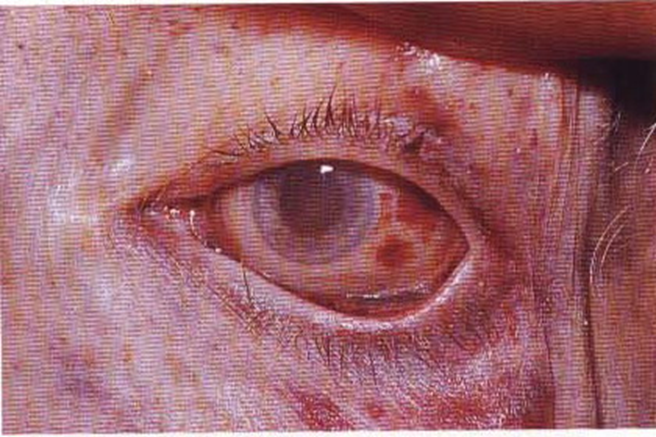
tradieu spots
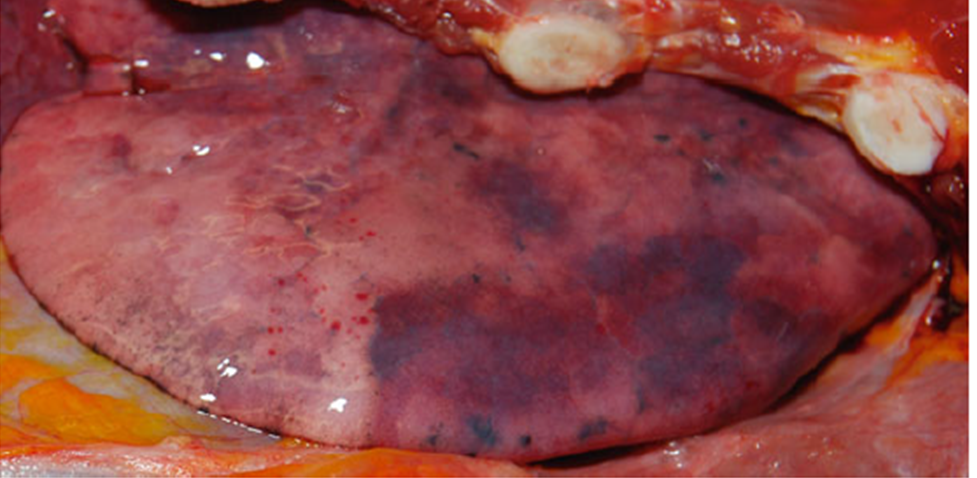
salivary spots
•BP↑ lead to what spot?
•Rupture of venules →Tardieu spots
•Rupture of venules → what spot?
•Rupture of venules →Tardieu spots
•↑ALVEOLAR PRESSURE → what spot?
•Rupture of superficial alveoli → silvery spots
III- Stage of irregular breathing:
nIrreversible brain damage →irregular (Chyne-Stocks) breathing.
correct
III- Stage of irregular breathing:
→ Irreversible brain damage →irregular (Chyne-Stocks) breathing.
correct
III- Stage of irregular breathing:
III- Stage of irregular breathing:
→ Irreversible brain damage →irregular (Chyne-Stocks) breathing.
III- Stage of irregular breathing:
nIrreversible brain damage →irregular (Chyne-Stocks) breathing.
* The Classical Signs of Asphyxia: [Post-mortem signs of asphyxia]
1. External :
–Dark blue hypostasis,
–Cyanosis of the face, lips, nails and mucous membranes due to accumulation of reduced Hb
( ≥ 5gm/100 ml in capillary blood).
–bulging eyes with subconjunctival haemorrhage &
–protruded tongue with bloody froth around the respiratory orifices.
correct
* The Classical Signs of Asphyxia: [Post-mortem signs of asphyxia]
* The Classical Signs of Asphyxia: [Post-mortem signs of asphyxia]
external
hypostasis color?
how much reduced Hb?
eyes?
tongue?
1. External :
–Dark blue hypostasis,
–Cyanosis of the face, lips, nails and mucous membranes due to accumulation of reduced Hb
( ≥ 5gm/100 ml in capillary blood).
–bulging eyes with subconjunctival haemorrhage &
–protruded tongue with bloody froth around the respiratory orifices.
* The Classical Signs of Asphyxia: [Post-mortem signs of asphyxia]
external?
–Dark blue hypostasis,
–Cyanosis of the face, lips, nails and mucous membranes due to accumulation of reduced Hb
( ≥ 5gm/100 ml in capillary blood).
–bulging eyes with subconjunctival haemorrhage &
–protruded tongue with bloody froth around the respiratory orifices.
internal signs of asphyxia?
2. Internal :
–Congestion of mucosa of air passages, with bloody froth
–Blood is dark.
–"Tardieu spots" ; and
"silvery spots".
Internal signs of asphyxia???
–Congestion of mucosa of air passages, with bloody froth
–Blood is dark.
–"Tardieu spots" ; and
"silvery spots".
I→ SMOTHERING → mouth asphyxia
*Definition : It is a type of violent asphyxia due to obstruction of the external respiratory orifices by hands or other objects, e.g. a pillow, cushion or plaster
correct
I→ SMOTHERING → mouth asphyxia
*Definition :
it is a type of violent asphyxia due to obstruction of the external respiratory orifices by hands or other objects, e.g. a pillow, cushion or plaster
what is somthering?
Definition : It is a type of violent asphyxia due to obstruction of the external respiratory orifices by hands or other objects, e.g. a pillow, cushion or plaster
*Conditions:
–Homicidal ( common): Most commonly applied to old persons or in infants who cannot resist.
–Accidental (overlaying):
§A breast-fed infant is smothered by pressure of a heavy breast occluding mouth and nostrils.
§An infant is suffocated when lie in prone position
*Mechanism of death: asphyxia
correct
*Conditions:
–Homicidal ( common):
–Accidental (overlaying):
*Mechanism of death:
*Conditions:
–Homicidal ( common): Most commonly applied to old persons or in infants who cannot resist.
–Accidental (overlaying):
§A breast-fed infant is smothered by pressure of a heavy breast occluding mouth and nostrils.
§An infant is suffocated when lie in prone position
*Mechanism of death: asphyxia
–Homicidal ( common) smothring?
–Homicidal ( common): Most commonly applied to old persons or in infants who cannot resist.
–Accidental (overlaying) smothering
§An infant is suffocated when lie in prone position
§A breast-fed infant is smothered by pressure of a heavy breast occluding mouth and nostrils.
Gagging: Fabric or adhesive tape occludes the mouth to prevent speaking or shouting as sometimes happens in robbery with violence. While the nasal passages remain patent, air can enter, but later blockage by mucus or edema may lead to death.
correct
Gagging:
Gagging: Fabric or adhesive tape occludes the mouth to prevent speaking or shouting as sometimes happens in robbery with violence. While the nasal passages remain patent, air can enter, but later blockage by mucus or edema may lead to death.
sleeping in prone position risk factor for?
death
smothering signs?
internal
external
Signs of struggle & resistance e.g., abrasions and bruises on the body and torn clothes
* Post-mortem Picture of Smothering :
1.General external and internal signs of asphyxia.
2. Semilunar nail abrasions and bruises around the respiratory orifices
( If a pillow or a soft pad is used, there will be minimal local signs).
3. Bruises and contused wounds in the inner surface of lips, cheeks and gums ; and may be also broken teeth.
4. Signs of resistance or struggle (as it is homicidal), but may be absent.
correct
* Post-mortem Picture of Smothering :
* Post-mortem Picture of Smothering :
1.General external and internal signs of asphyxia.
2. Semilunar nail abrasions and bruises around the respiratory orifices
( If a pillow or a soft pad is used, there will be minimal local signs).
3. Bruises and contused wounds in the inner surface of lips, cheeks and gums ; and may be also broken teeth.
4. Signs of resistance or struggle (as it is homicidal), but may be absent.
The most common form of suicidal smothering is ??
The most common form of suicidal smothering is plastic bag suffocation.
which Brain center is most sensitive to hypoxia ??
The higher centers of the brain (responsible for consciousness) are more sensitive to hypoxia than the lower centers (those responsible for vital functions)
THROTTLING ( manual strangulation)
→ Definition : It is a type of violent asphyxia due to pressure on the neck by the hands (performd by one or both hands from front or back).
*Conditions:
1) Homicidal specially in weak persons.
2) Accidental, may occur in wrestling sports.
correct
Mugging :
application of pressure to the neck by means of an arm crooked around from the rear. It may be used as means of restraint by law enforcement officers, sometimes with fatal results.
gagging in what type?
smothering
THROTTLING ( manual strangulation)
→ Definition :
THROTTLING ( manual strangulation)
→ Definition : It is a type of violent asphyxia due to pressure on the neck by the hands (performd by one or both hands from front or back).
*Conditions:
1) Homicidal specially in weak persons.
2) Accidental, may occur in wrestling sports.
Causes of death in throtteing?
•Asphyxia: due to occlusion of the air passages
•Brain anemia due to pressure on carotid arteries or
Carotid sinus compression with reflex vagal inhibition
correct
Causes of death in throtteing?
Causes of death in throtteing?
•Asphyxia: due to occlusion of the air passages
•Brain anemia due to pressure on carotid arteries or
Carotid sinus compression with reflex vagal inhibition
THROTTLING ( manual strangulation) →
* P.M. Picture :
1)General external & internal signs of asphyxia.
2) Local signs: *Semilunar and linear nail abrasions and bruises on the anterior aspect of the neck;
a) Their distribution may tell whether the assailant was Rt./Lt. handed & used one/both hands.
b) May be absent if wearing gloves or the assailant used forearm.
correct
THROTTLING ( manual strangulation) →
THROTTLING ( manual strangulation) →
* P.M. Picture :
1)General external & internal signs of asphyxia.
2) Local signs: *Semilunar and linear nail abrasions and bruises on the anterior aspect of the neck;
a) Their distribution may tell whether the assailant was Rt./Lt. handed & used one/both hands.
b) May be absent if wearing gloves or the assailant used forearm.
In case of death from vagal inhibition, hypostasis is pale (faint).
Reflex vagal inhibition may occur also due to sudden good or bad news or blow to trigger areas rich in parasympathetic nerve endings (the larynx, precordium, external ear, epigastrium and testes)
correct
In case of death from vagal inhibition, hypostasis is ???
In case of death from vagal inhibition, hypostasis is pale (faint).
Reflex vagal inhibition may occur also due to sudden good or bad news or blow to trigger areas rich in parasympathetic nerve endings (the larynx, precordium, external ear, epigastrium and testes)
Reflex vagal inhibition may occur also due to?????
Reflex vagal inhibition may occur also due to sudden good or bad news or blow to trigger areas rich in parasympathetic nerve endings (the larynx, precordium, external ear, epigastrium and testes)
throtteling signs →
2) Local signs: *Semilunar and linear nail abrasions and bruises on the anterior aspect……
*Contusions of subcutaneous tissues and front muscle of the neck.
* Inward Fracture or dislocation of hyoid bone , laryngeal and cricoid cartilages.
3) signs of resistance & struggle as it is mostly homicidal.
correct
throtteling signs →
what is most commoly fractures or dislocated in throtteling?
throtteling signs →
2) Local signs: *Semilunar and linear nail abrasions and bruises on the anterior aspect……
*Contusions of subcutaneous tissues and front muscle of the neck.
* Inward Fracture or dislocation of hyoid bone , laryngeal and cricoid cartilages.
3) signs of resistance & struggle as it is mostly homicidal.
strangulation →
* Definition : It is a type of violent asphyxia due to pressure applied to the neck using a ligature. The ligature being a rope, tie, wire, a belt
correct
strangulation →
strangulation →
* Definition : It is a type of violent asphyxia due to pressure applied to the neck using a ligature. The ligature being a rope, tie, wire, a belt
•Conditions strangulation
1) Homicidal; the most common.
2) Accidental, may occur in:
a) During delivery of infants by the umbilical card.
b) Children playing with ropes.
c) “Long-scarf” syndrome.
3) Suicidal, is rare but recorded in multiple turns of the rope or using tourniquet mechanism (a solid object is applied between the rope turns and the neck, then twisted continuously and become impacted between chin and clavicle when fainting occurs) .
* Cause of death: as in throttling.
correct
•Conditions strangulation
the most common causes of strangulation?
•Conditions strangulation
1) Homicidal; the most common.
2) Accidental, may occur in:
a) During delivery of infants by the umbilical card.
b) Children playing with ropes.
c) “Long-scarf” syndrome.
3) Suicidal, is rare but recorded in multiple turns of the rope or using tourniquet mechanism (a solid object is applied between the rope turns and the neck, then twisted continuously and become impacted between chin and clavicle when fainting occurs) .
P.M. Picture of strangulation:
1) General external & internal signs of asphyxia.
2) Ligature mark "abrasions & bruises around the neck with the pattern of used rope imprinted on the skin [Vital reaction in the form of congestion, petechiae and hyperemia around the margins of the mark] :
–It is transverse,
–symmetrical "equal force around neck",
–complete &
–usually below the larynx.
correct
P.M. Picture of strangulation:
P.M. Picture of strangulation:
1) General external & internal signs of asphyxia.
2) Ligature mark "abrasions & bruises around the neck with the pattern of used rope imprinted on the skin [Vital reaction in the form of congestion, petechiae and hyperemia around the margins of the mark] :
–It is transverse,
–symmetrical "equal force around neck",
–complete &
–usually below the larynx.
local sign of strangulation?
* P.M. Picture of strangulation:
3) Local "neck" structures:
a) Contusions of subcutaneous tissues, anterior muscles of the neck.
b) Fracture "inward" of the hyoid bone & laryngeal cartilages.
4) Signs of resistance & struggles as it is mostly homicidal.
right
local sign of strangulation?
local sign of strangulation?
* P.M. Picture of strangulation:
3) Local "neck" structures:
a) Contusions of subcutaneous tissues, anterior muscles of the neck.
b) Fracture "inward" of the hyoid bone & laryngeal cartilages.
4) Signs of resistance & struggles as it is mostly homicidal.
Hanging →
•Definition : It is a type of violent asphyxia due to suspension of the body from the neck by a ligature,
the constricting force is applied to the ligature through the body weight.
correct
Hanging →
Hanging →
•Definition : It is a type of violent asphyxia due to suspension of the body from the neck by a ligature,
the constricting force is applied to the ligature through the body weight.
the most common cause of hanging is?
* Causes:
Suicidal hanging : commonest form
causes of hanging?
* Causes:
Suicidal hanging : commonest form
Accidental hanging : Is rare and may occur in cases of children playing with ropes or swings.
Homicidal hanging : very rare, except when the murder suspend the victim after narcotizing him or post mortem suspension is done to simulate suicide.
•Causes of death in hanging:
1. Brain anaemia (commonest cause): due to stretch and narrowing of carotid arteries leading to rapid loss of consciousness [The brain can withstand anemia for 5 seconds only].
2. Asphyxia :obstruction of the air passages, due to
upward displacement of the base of the tongue against the posterior pharyngeal wall .
3. Carotid sinus compression → Reflex cardiac inhibition (Vagal reflex).
4. Fracture dislocation of upper cervical vertebrae which occurs in "judicial hanging" as there is free fall for 2 meters leading to tearing of the medulla oblongata
correct
the most common of cause in hanging is?
•Causes of death in hanging:
1. Brain anaemia (commonest cause): due to stretch and narrowing of carotid arteries leading to rapid loss of consciousness [The brain can withstand anemia for 5 seconds only].
•Causes of death in hanging:
•Causes of death in hanging:
1. Brain anaemia (commonest cause): due to stretch and narrowing of carotid arteries leading to rapid loss of consciousness [The brain can withstand anemia for 5 seconds only].
2. Asphyxia :obstruction of the air passages, due to
upward displacement of the base of the tongue against the posterior pharyngeal wall .
3. Carotid sinus compression → Reflex cardiac inhibition (Vagal reflex).
4. Fracture dislocation of upper cervical vertebrae which occurs in "judicial hanging" as there is free fall for 2 meters leading to tearing of the medulla oblongata
"judicial hanging" is what?
lead to?
. Fracture dislocation of upper cervical vertebrae which occurs in "judicial hanging" as there is free fall for 2 meters leading to tearing of the medulla oblongata
PMP of hanging→
1) General external and internal signs of asphyxia.
2) Ligature mark:
a)Oblique
b)Incomplete.
N.B. it may be complete [if running noose].
c) Assymetrical.
d) High (above the larynx).
correct
ligature mark strangulation→ transverse
ligature mark of hanging → oblique
oblique |
oblique | transverse |
incomplete |
incomplete | complete |
ligature mark strangulation→ transverse
ligature mark of hanging →
ligature mark strangulation→ transverse
ligature mark of hanging → oblique
ligature mark strangulation→ transverse
ligature mark of hanging →
ligature mark strangulation→ transverse
ligature mark of hanging → oblique
ligature mark strangulation→ complete
ligature mark of hanging →
ligature mark strangulation→ complete
ligature mark of hanging → incomplete
ligature mark strangulation→ symmetrical
ligature mark of hanging →
ligature mark strangulation→ symetrical
ligature mark of hanging → asymmetrical
ligature mark strangulation→ Low(below the larynx).
ligature mark of hanging →
ligature mark strangulation→ Low(below the larynx).
ligature mark of hanging → High (above the larynx).
→ Low(below the larynx).
→ High (above the larynx).
ligature mark strangulation→ Low(below the larynx).
ligature mark of hanging → High (above the larynx).
P.M. Picture of death from Hanging:
3) Contusions of subcutaneous tissues and muscles of the neck.
4) Fracture [outward] of the hyoid bone or posterior horn of the thyroid cartilage.
5) Dark blue Hypostasis : in the lower limbs, lower abdomen and forearms.
6) Dripping of saliva from angle of mouth due to pressure on submandibular salivary glands.
7) Amussat’s sign: Carotid arteries show transverse intimal rupture (due to their elongation).
correct
P.M. Picture of death from Hanging:
3) Contusions of subcutaneous tissues and muscles of the neck.
4) Fracture [__________] of the ________bone or __________horn of the __________cartilage.
5) Dark blue Hypostasis : in the lower limbs, lower abdomen and forearms.
6) Dripping of saliva from angle of mouth due to pressure on submandibular salivary glands.
7) Amussat’s sign: Carotid arteries show transverse intimal rupture (due to their elongation)
P.M. Picture of death from Hanging:
3) Contusions of subcutaneous tissues and muscles of the neck.
4) Fracture [outward] of the hyoid bone or posterior horn of the thyroid cartilage.
5) Dark blue Hypostasis : in the lower limbs, lower abdomen and forearms.
6) Dripping of saliva from angle of mouth due to pressure on submandibular salivary glands.
7) Amussat’s sign: Carotid arteries show transverse intimal rupture (due to their elongation)