Econ Exam 1 - ch. 5
 Call Kai
 Learn
Learn Practice Test
 Spaced Repetition
 Match
Match Flashcards
 Knowt Play
1/24

There's no tags or description
Looks like no tags are added yet.
Name | Mastery | Learn | Test | Matching | Spaced | Call with Kai |
|---|
No analytics yet
Send a link to your students to track their progress
25 Terms
What does the term free riding refer to?
a. a situation in which one person’s consumption of a good means that no one else can consume it
b. the fact that anyone who does not pay for a good cannot consume it
c. the idea that someone can benefit from a good without paying for it
d. the possibility that public goods may become private goods
c. the idea that someone can benefit from a good without paying for it
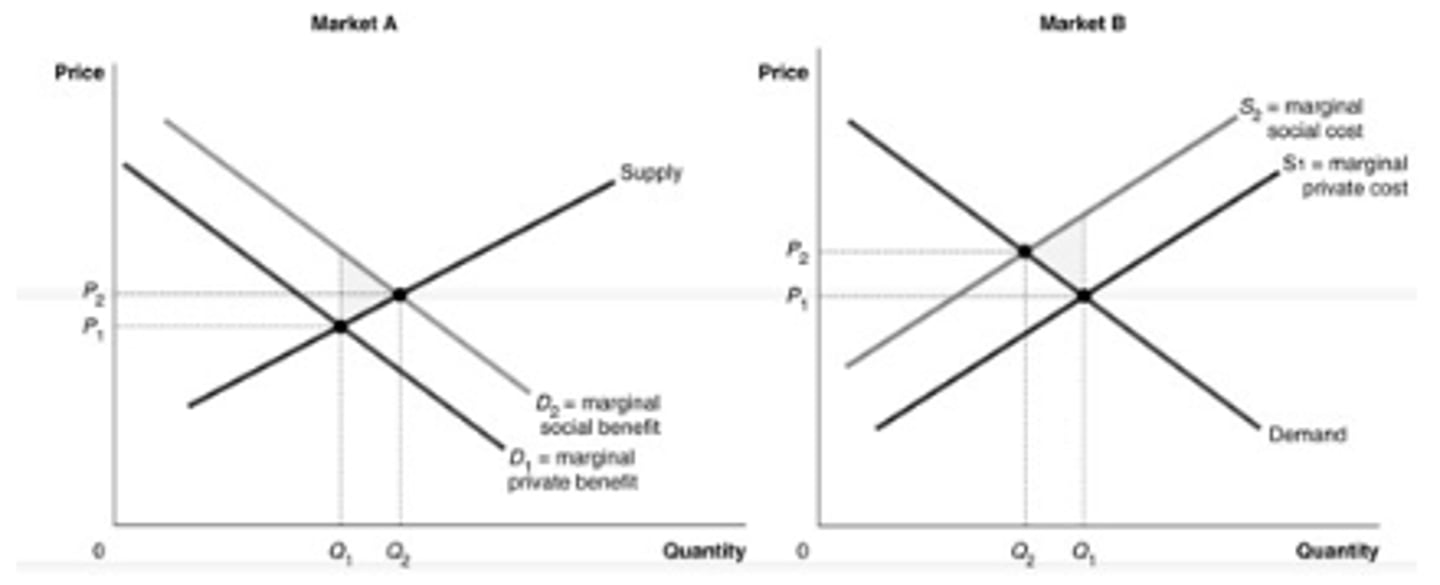
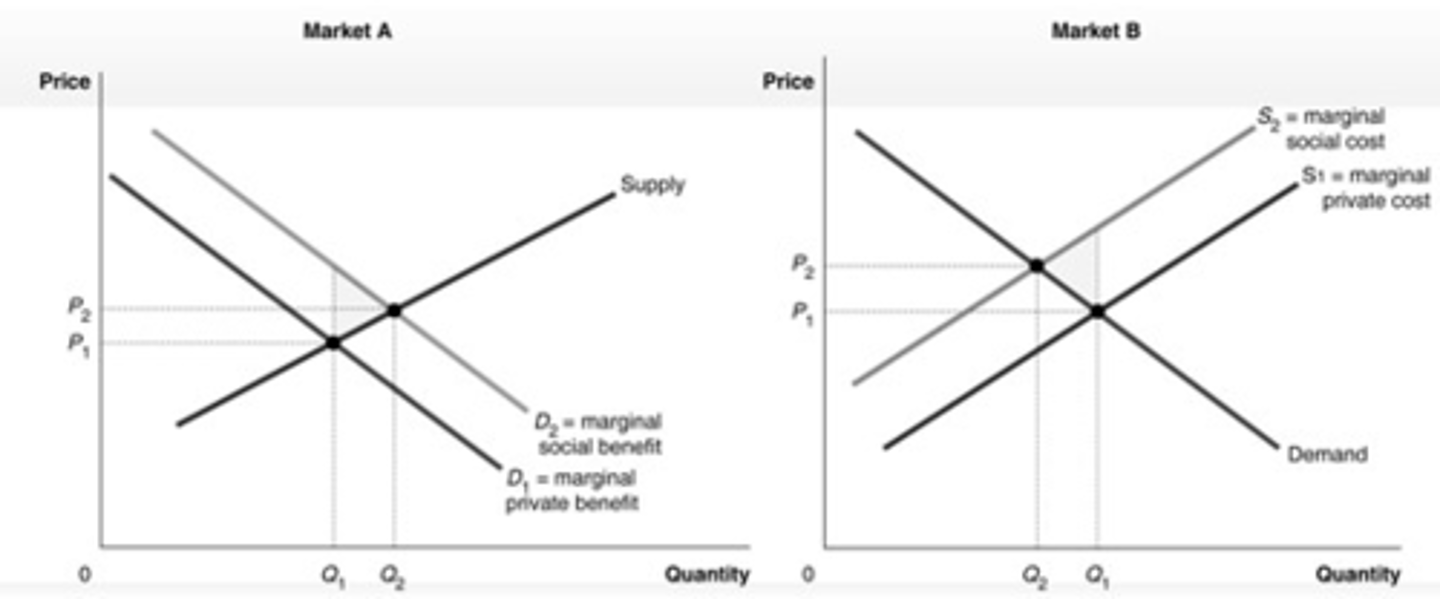
Refer to the graphs below. In which of the markets is the quantity Q1 less than the economically efficient quantity?
a. in Market A
b. in Market B
c. in both markets
d. in neither of the two markets
a. in Market A
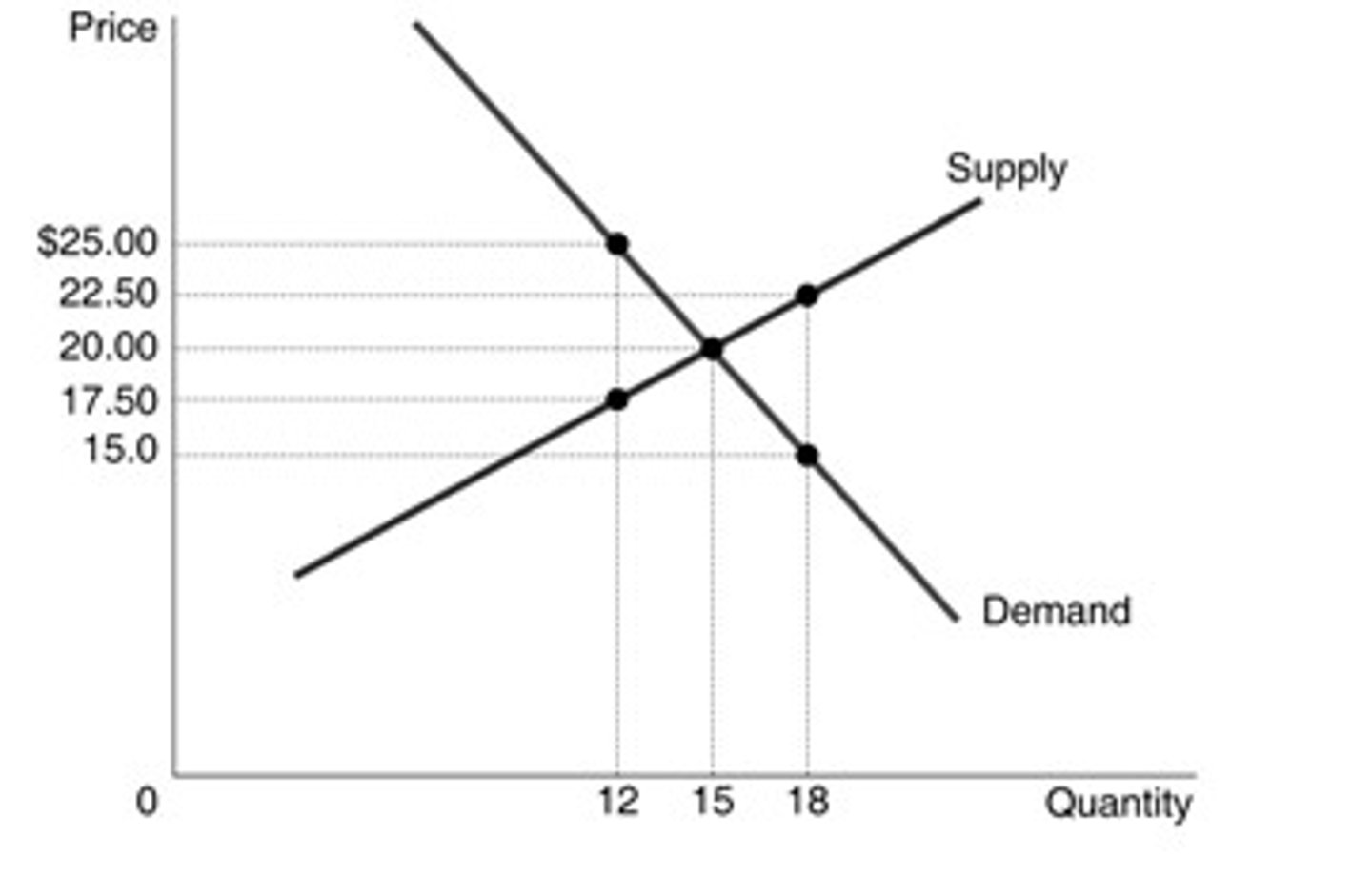
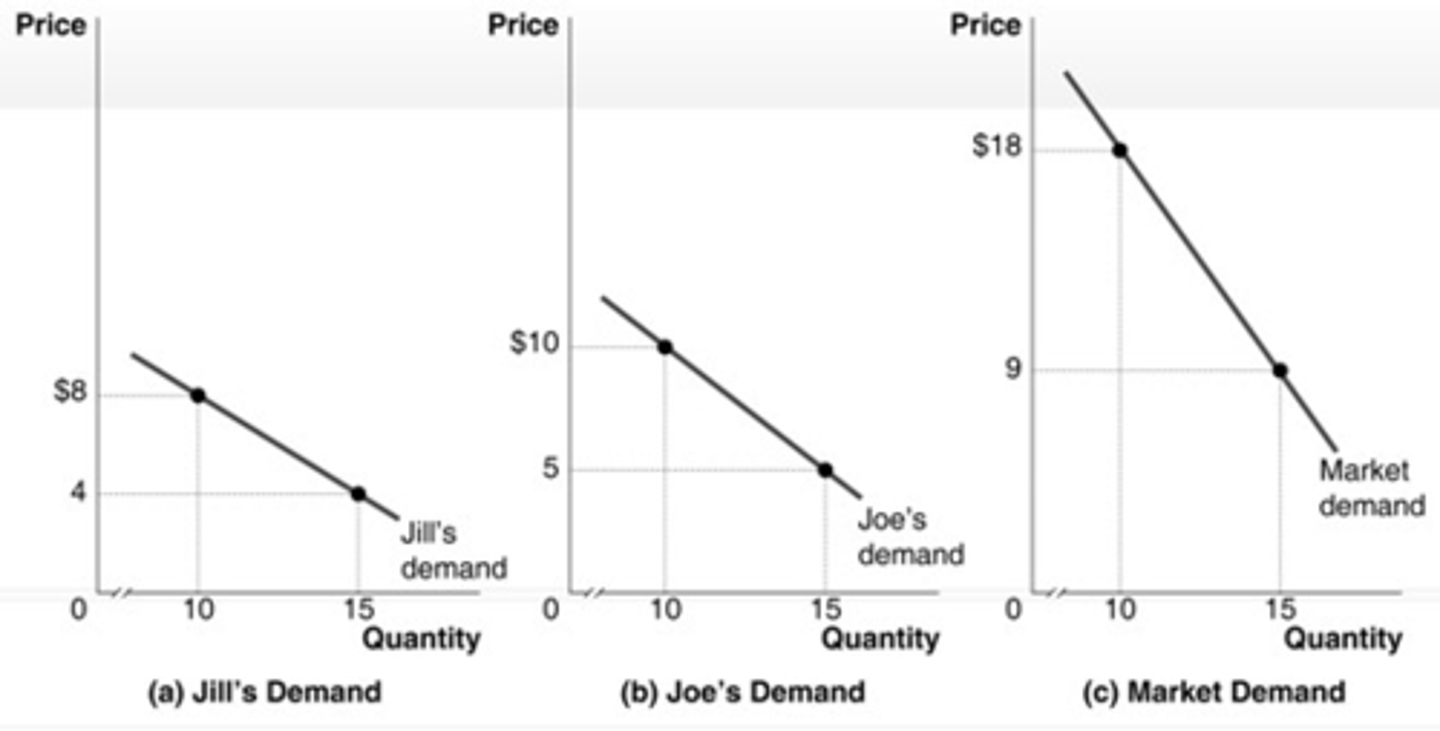
Refer to the graph below. What is the optimal quantity of this public good?
a. 12 units
b. 15 units
c. 18 units
d. none of the above
b. 15 units
What is the cost that affects someone who is not directly involved in the production or consumption of a good called?
a. private cost
b. indirect cost
c. an externality
d. all of the above
c. an externality
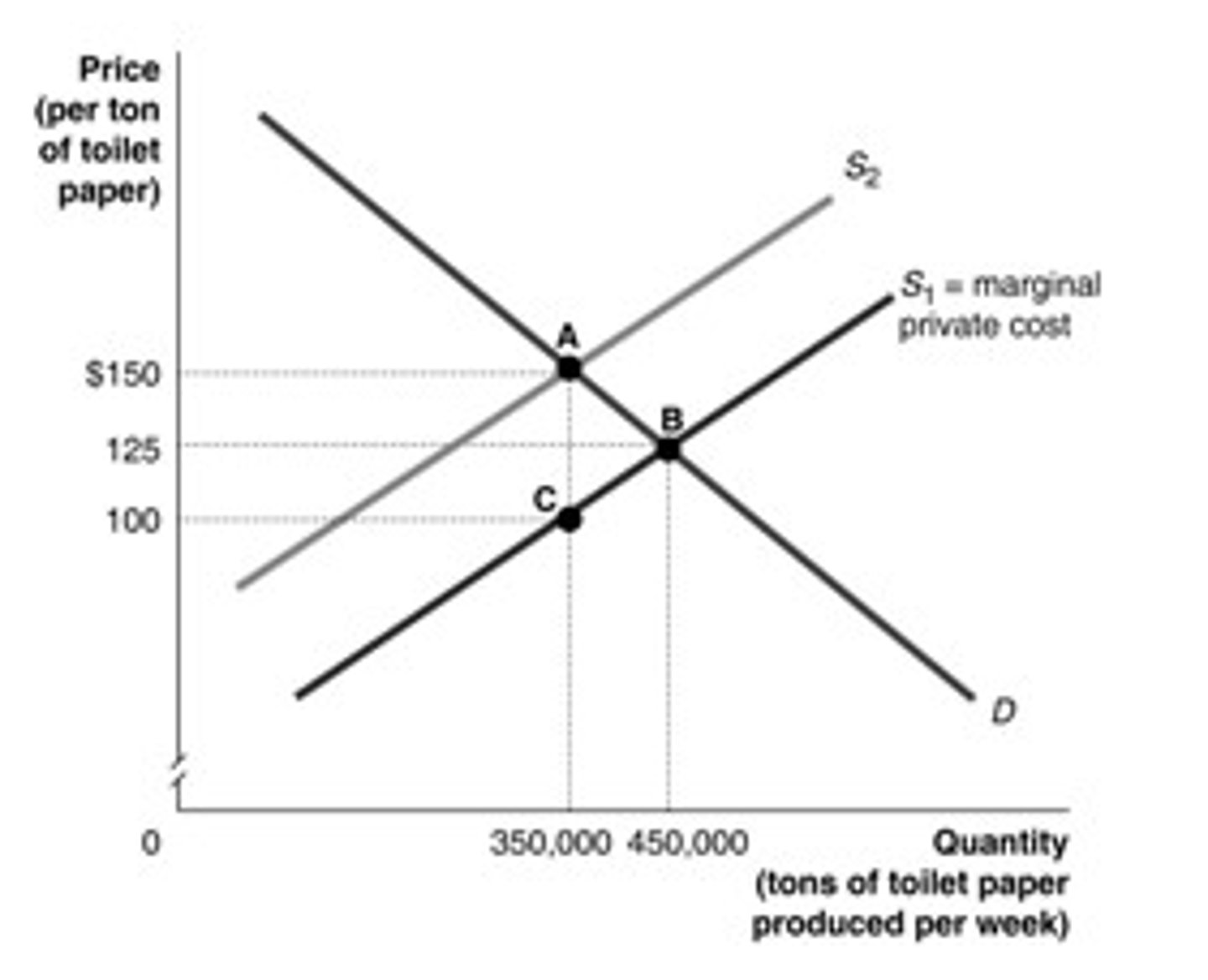
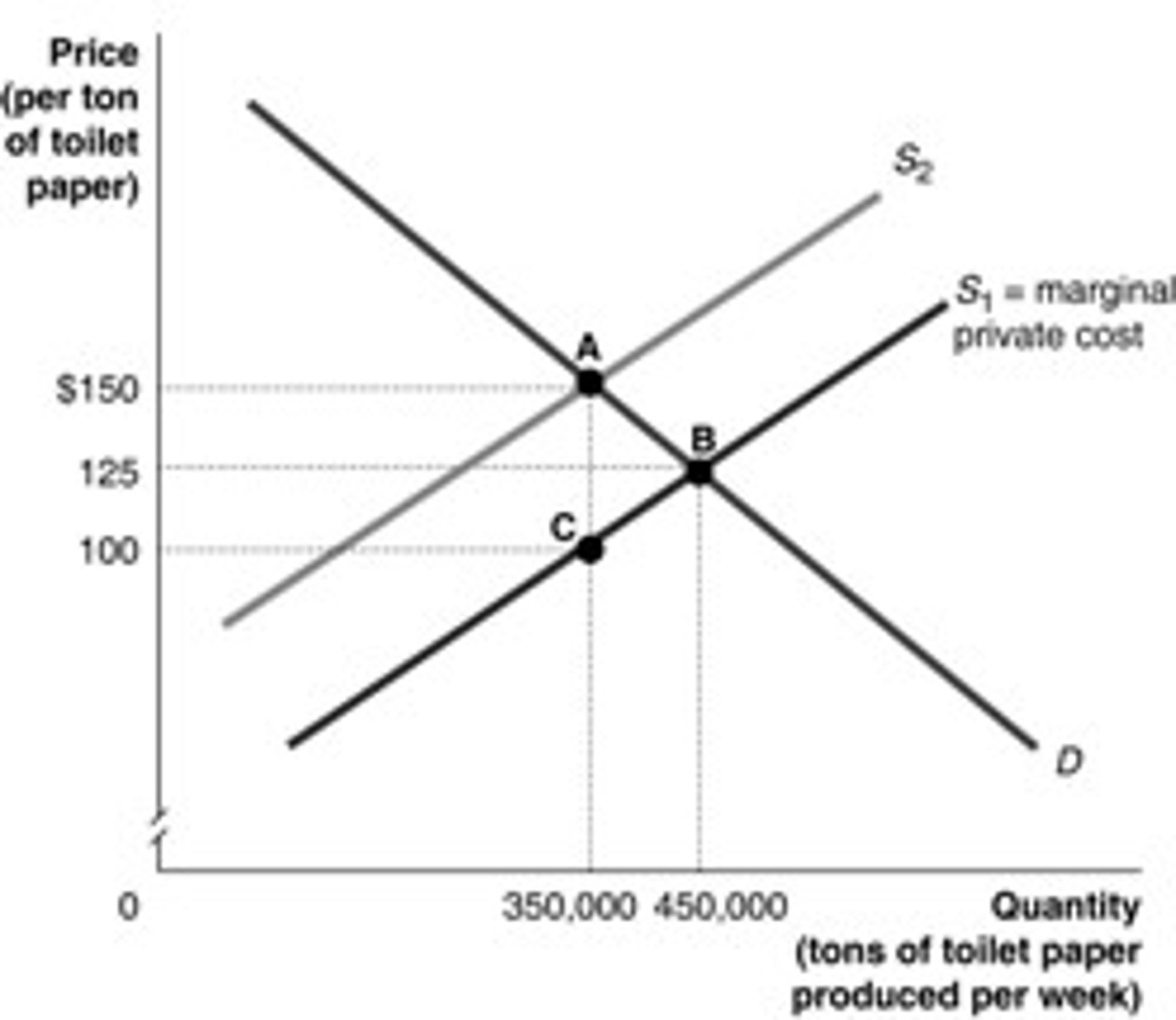
Refer to the graph below. What Pigovian tax would push the market to efficiency?
a. $25
b. $50
c. $100
d. $125
b. $50
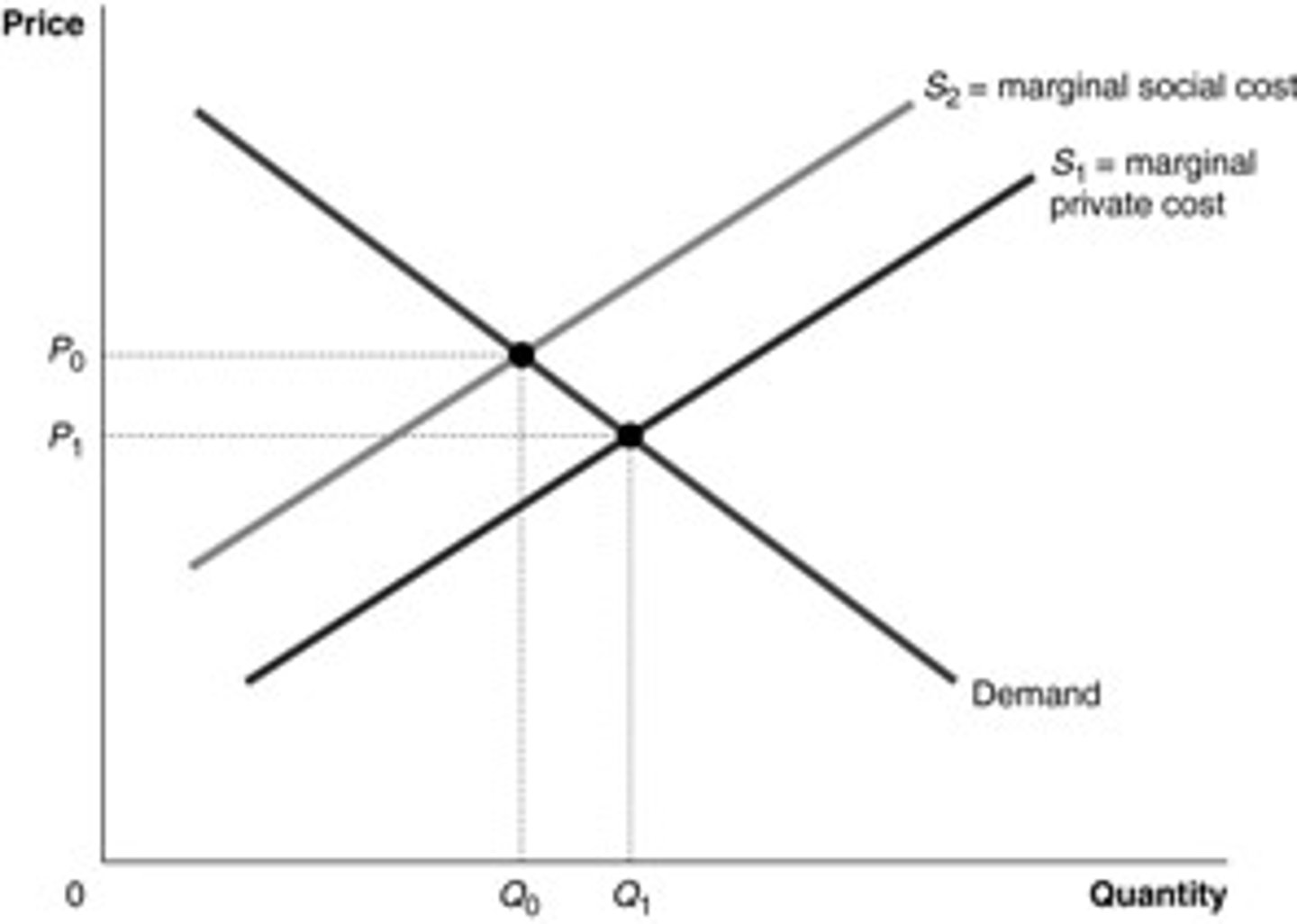
Refer to the graph below. When an externality is present, which combination of price and quantity does the market yield without government intervention?
a. P0, Q0
b. P1, Q1
c. P0, Q1
d. P1, Q0
b. P1, Q1
Which of the following statements is correct according to Ronald Coase’s argument for dealing with externalities and market failure?
a. In some situations, a private solution to the problem of externalities can be found.
b. Only public solutions exist for solving externalities.
c. Completely eliminating an externality is almost always the most efficient solution.
d. The only cure to externalities is taxation.
a. In some situations, a private solution to the problem of externalities can be found.
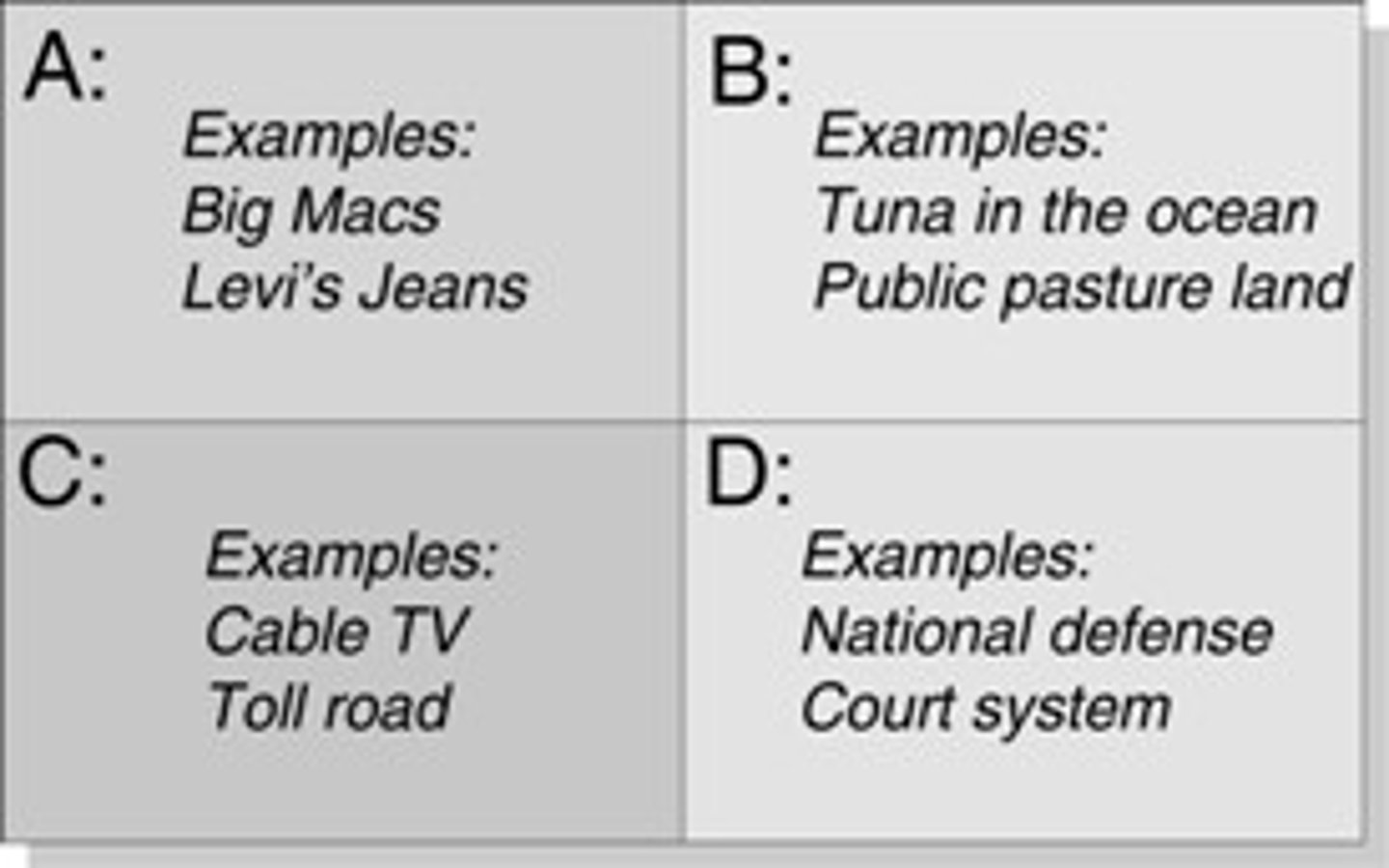
Refer to the table below. Which of the boxes applies to goods that are excludable and nonrivalrous?
a. A
b. B
c. C
d. D
c. C
Fill in the blanks. When there are many people involved, the transactions costs are often___ than the net benefits from reducing an externality. In such cases, a private solution to an externality problem ___feasible.
a. higher; is
b. higher; is not
c. lower; is
d. lower; is not
b. higher; is not
What is the tragedy of the commons?
a. The tragedy of the commons refers to the fact that some people benefit from a good without paying for it.
b. The tragedy of the commons is the tendency for some goods to be excluded from public consumption.
c. The tragedy of the commons refers to the fact that a good can be rival and excludable.
d. The tragedy of the commons refers to the tendency for a common resource to be overused.
d. The tragedy of the commons refers to the tendency for a common resource to be overused.
What is the situation called in which the market fails to produce the efficient level of output?
a. an externality
b. market failure
c. external disequilibrium
d. the Coase theorem
b. market failure
What does the term rivalry refer to?
a. a situation in which one person’s consumption of a good means that no one else can consume it
b. the fact that anyone who does not pay for a good cannot consume it
c. the idea that someone can benefit from a good without paying for it
d. the possibility that public goods may become private goods
a. a situation in which one person's consumption of a good means that no one else can consume it
When we talk about property rights in the discussion of externalities, which rights do we refer to?
a. the rights of individuals to pollute
b. the rights of individuals to have exclusive use of their property
c. the rights of individuals to buy but not sell their property
d. all of the above
b. the rights of individuals to have exclusive use of their property
Fill in the blank. When a negative externality is present in producing a good or service, ______ of the good or service will be produced at market equilibrium.
a. too much
b. too little
c. the optimal quantity
d. none
a. too much
What does the term excludability refer to?
a. a situation in which one person’s consumption of a good means that no one else can consume it
b. the fact that anyone who does not pay for a good cannot consume it
c. the idea that someone can benefit from a good without paying for it
d. the possibility that public goods may become private goods
b. the fact that anyone who does not pay for a good cannot consume it
What type of solution to externalities is the Coase theorem?
a. a private solution to externalities
b. a public solution to externalities
c. the only solution to externalities
d. the least preferred solution
a. a private solution to externalities
What is the difference between private benefit and social benefit?
a. an external benefit
b. private cost
c. social cost
d. a negative externality
a. an external benefit
What is the focus of a command-and-control approach to reducing pollution?
a. imposing taxes intended to bring about an efficient level of output in the presence of externalities
b. offering subsidies intended to bring about an efficient level of output in the presence of externalities
c. imposing quantitative limits on the amount of pollution firms are allowed to generate
d. trading emissions allowances to pollute for cash payments
c. imposing quantitative limits on the amount of pollution firms are allowed to generate
What is the benefit received by the consumer of a good or service called?
a. private benefit
b. social benefit
c. private cost
d. a positive externality
a. private benefit
Refer to the graphs below. In which of these markets is an externality present?
a. in Market A
b. in Market B
c. in both Market A and Market B
d. Neither market exhibits an externality.
c. in both Market A and Market B
Fill in the blanks. According to the Coase theorem, if transactions costs are__, private bargaining will result in an __solution to the problem of externalities.
a. low; efficient
b. low; inefficient
c. high; efficient
d. high; optimal
a. low; efficient
What is the term used to describe the total cost of producing a good which includes both private and external costs?
a. private cost
b. social cost
c. externality
d. all of the above
b. social cost
Refer to the graphs below. What procedure does this series of graphs show?
a. the construction of market demand for a private good
b. the construction of market demand for a public good
c. the construction of market demand for a rival good
d. the construction of market demand for an excludable good
b. the construction of market demand for a public good
Refer to the graph below. After the negative externality has been internalized, which point would best represent the efficient equilibrium?
a. Point A
b. Point B
c. Point C
d. none of the above
a. Point A
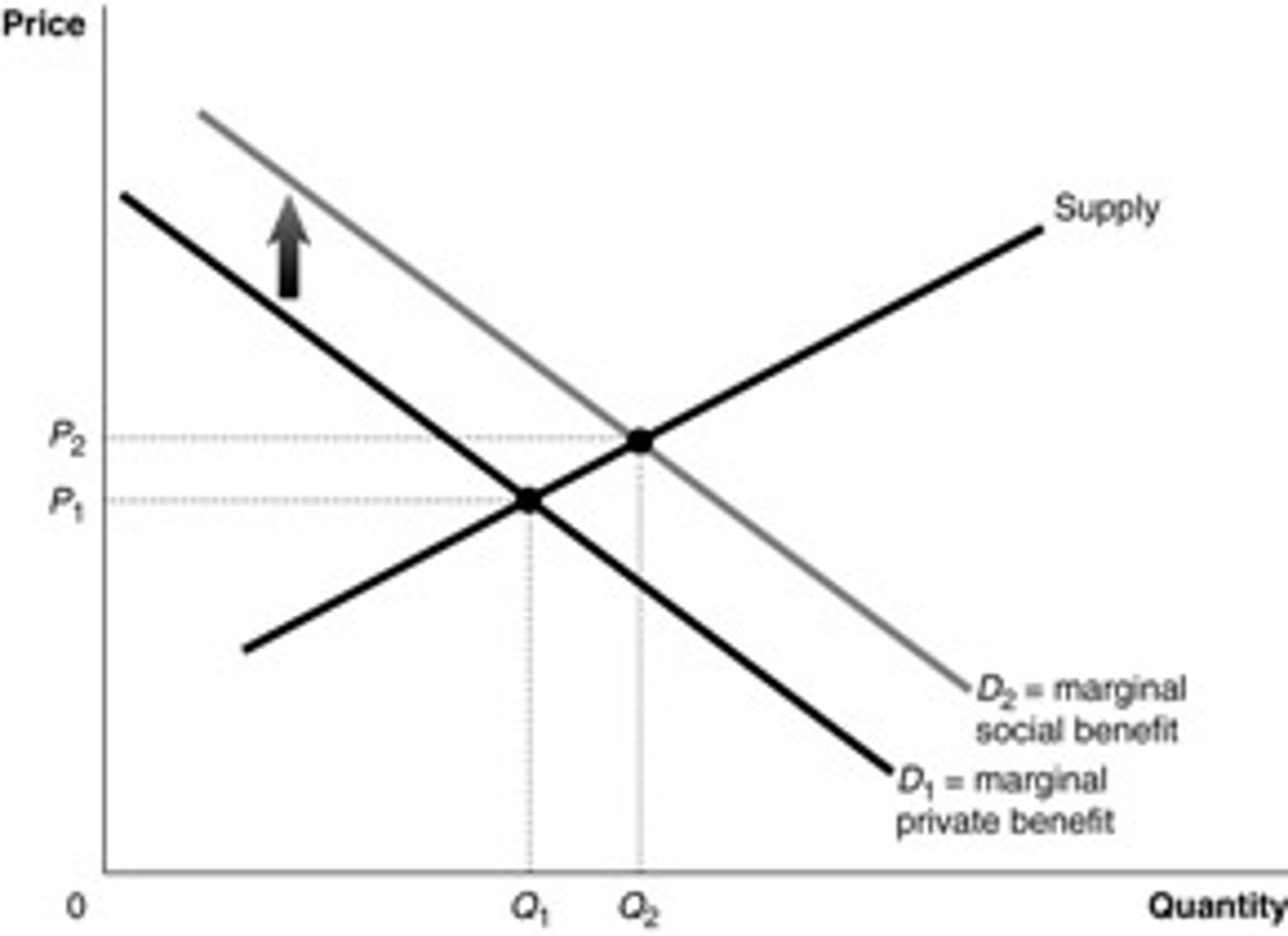
Refer to the graph below. The arrow in the graph refers to the difference between D1 and D2. What does this difference represent?
a. an external benefit
b. an external cost
c. private cost
d. social cost
a. an external benefit