Safety in the Clinical Microbiology Lab
 Call Kai
 Learn
Learn Practice Test
 Spaced Repetition
 Match
Match Flashcards
 Knowt Play
1/21

There's no tags or description
Looks like no tags are added yet.
Name | Mastery | Learn | Test | Matching | Spaced | Call with Kai |
|---|
No analytics yet
Send a link to your students to track their progress
22 Terms
List 5 routes of infection in the lab and give examples of each
airborne
removing stoppers from specimen or culture tubes
centrifugation of unstoppered tubes
leakage from specimen containers
ingestion
failure to wash hands
eating or drinking in the lab
direct inoculation
needlesticks, broken glass, or open cuts
mucous membrane contact
substance enters through the eyes or nose
arthropod vectors
ticks or mosquitoes can be sources of infection
Which 4 agencies have created regulations for safety in the microbiology laboratory?
OSHA, CDC, CAP, and TJC
Exposure control plans (plans required by OSHA) must include procedures and documentation regarding:
training and safety education
universal and standard precautions
engineering controls
hazardous materials/waste disposal
post-exposure procedures
guidelines to maintain a clean workplace
Training and safety education for lab employees should include:
new employee orientations
documented professional development for current employees
safety manuals
universal precautions
first introduced by the CDC in 1987
a set of preventative measures for handling blood and body fluids with visible blood
meant to reduce the risk of transferring HIV, HBV, and other bloodborne pathogens
standard precautions
expanded version of universal precautions
preventative measures applied to all patients to reduce the risk of infection
all blood, body fluids, secretions, and excretions are considered infectious
Eyewash stations should be in accessible locations no more than __ seconds (or __ feet) away from where hazardous materials are being used.
10, 100
What are engineering controls?
physical changes to a work area or process that protects workers from hazards by removing or blocking them
The CDC has classified microorganisms into various biosafety categories. What are these categories based on? What biosafety level should all clinical labs adhere to?
based on:
number of occupational infections, infectious dose, and route of infection
all labs should adhere to Biosafety Level 2 guidelines
Describe Biosafety Level 1 and Level 2 for working with infectious agents
BSL-1
organisms not known to cause disease in healthy individuals
controlled access to lab, sinks, sharps hazards, PPE, lab bench, and autoclave
common microorganisms: B. subtilis and Enterobacter aerogenes
BSL-2
microorganisms have a moderate potential to cause disease
requires BSL-1 practices PLUS specific training and a biosafety cabinet
common organisms: HBV, HIV, Salmonella, and Shigella
Describe Biosafety Level 3 and Level 4 for working with infectious agents
BSL-3
microbes have potential to cause serious disease
requires BSL-2 practices PLUS double-door access, a negative-pressure ventilation system
common microorganisms: M. tuberculosis, Brucella, and Rickettsia
BSL-4
level is primarily used in research facilities
requires BSL-3 practices PLUS class II biological safety cabinet and decontamination of all personnel and materials before leaving the area
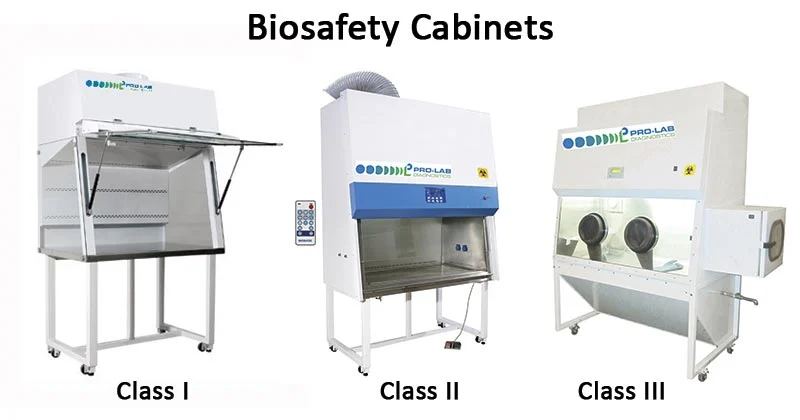
Describe the 3 types of biological safety cabinets
Class I cabinet
ventilated cabinet for personal and environmental protection
similar airflow pattern to a fume hood and has a HEPA filter
Class II cabinet
open front with inward flow
some air is exhausted and some is filtered and pushed back into the cabinet
Class III cabinet
totally enclosed and ventilated, also negative pressure
leak tight with attached rubber gloves
materials are sterilized before leaving the cabinet
How is microbiologic waste disposed of in the lab?
waste must be placed in leak-proof bags (and double-bagged)
contaminated needles, scalpels, and other related supplies should be placed in puncture-resistant boxes
What is the temperature, pressure, and time required for sterilizing contaminated microbiologic materials and infectious medical waste?
contaminated microbiologic materials: 121 degrees and 15 psi for one hour
infectious medical waste: 132 degrees for 30 minutes to an hour
What is the difference between sterilization, disinfection, biocides, and liquid decontaminants?
sterilization
kills all microorganisms, including endospores, via heat, radiation, filtration, or chemically (with ethylene oxide or hydrogen peroxide)
disinfection
destroys most pathogenic microorganisms, but does not eliminate spores
biocides
chemical agents that inactivate microbes
bacteriostatic agents inhibit microbial growth and bactericidal agents destroy target organisms
liquid decontaminants
10% bleach and 70% isopropyl alcohol used for decontaminating lab work benches
What 7 factors impact the effectiveness of disinfectants?
the surface to be disinfected
the presence of organic material
dirt, blood, mucus, or pus can inactivate the disinfectant
the amount of time the disinfectant is in contact with the surface
the type of microbe
the amount of the microorganisms present on the surface
the concentration of the disinfectant
temperature and pH
Fire Safety: What are some sources of ignition in the lab? Where should flammables and combustables be stored?
sources of ignition
open flame, heating elements, spark gaps (can result from static electricity), electrical instrumentation, and flammable liquids
storage
in safety cabinets or other approved containers
or in separate rooms away from ignition sources
What are the 5 types of fire extinguishers?
Type A (water fire extinguisher)
used for paper, wood, rubber, cloth, and certain plastics fires
Type B (CO2 extinguisher)
used on extremely flammable liquids or electrical fires
Type C (dry chemical extinguisher)
used for electrical fires (chemicals do not conduct electricity)
Type D (combustible metal extinguisher)
for fires involving combustible metals (sodium or potassium for example)
Class K
used in kitchen fires involving oil or fat
What information can be found in material safety data sheets (MSDS) for chemicals?
manufacturer information
physical and chemical characteristics
hazard data
precautions for handling
control measures
transport and disposal methods
What are the five categories of hazardous chemicals?
corrosives
causes irreversible damage to human skin on contact
toxic
serious biological effects after inhalation, ingestion, or skin contact
carcinogenic
ability of a chemical to induce malignant tumors
ignitable
any chemical that can burn
explosive
reactive and unstable substances that can undergo violent chemical change
permissible exposure limit (PEL)
the legal limit for employee exposure to a chemical or physical agent, expressed in parts per million (ppm)
short-term exposure limit (STEL)
the maximum limits that a worker can be exposed to for up to 15 minutes without danger to health, should be limited to 4 STELs per day