East Asian Art
 Call Kai
 Learn
Learn Practice Test
 Spaced Repetition
 Match
Match Flashcards
 Knowt Play
1/36

There's no tags or description
Looks like no tags are added yet.
Name | Mastery | Learn | Test | Matching | Spaced | Call with Kai |
|---|
No analytics yet
Send a link to your students to track their progress
37 Terms
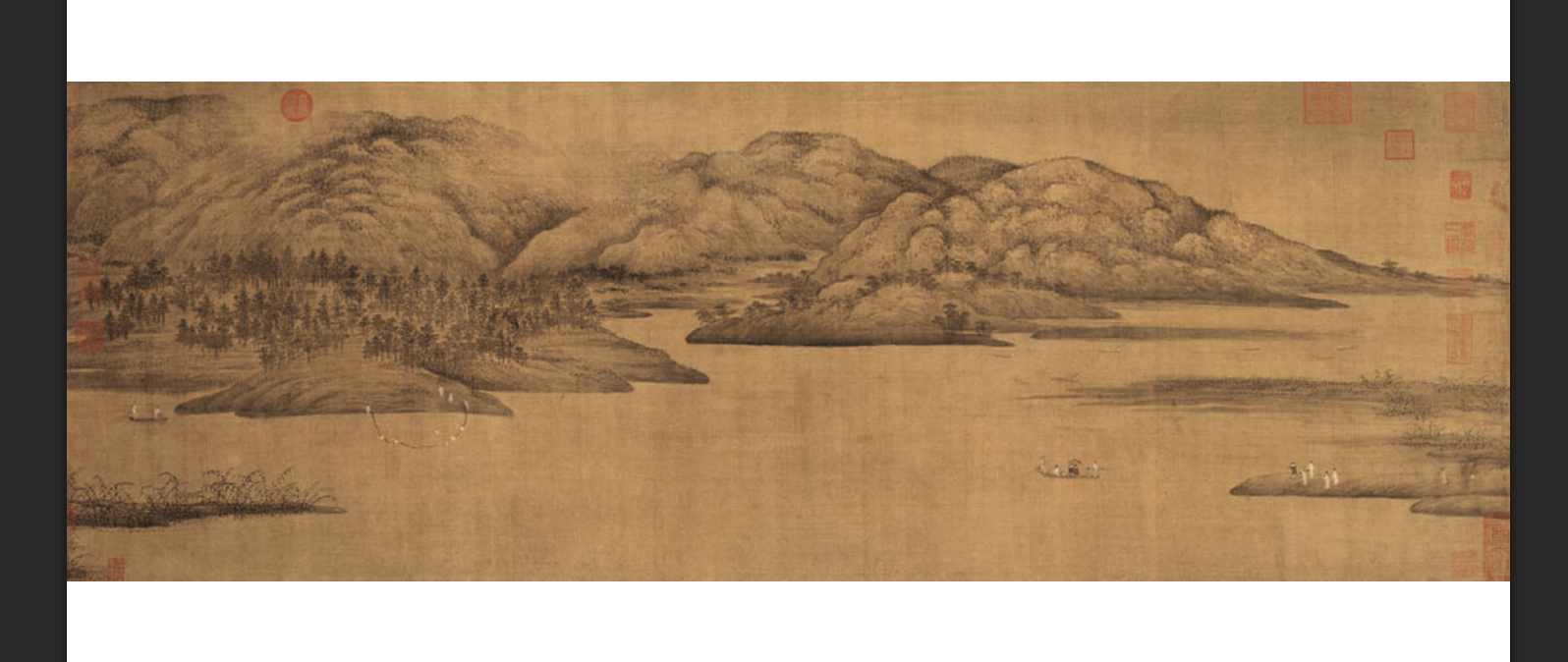
Scenes along the Xiao and Xiang Rivers, Dong Yuan, 10th century, 5 dynasties and ten kingdoms period, ink and color on silk,
southern school of landscape painting where shifts from vertical landscape painting of moutains from the north to horizontal handscroll
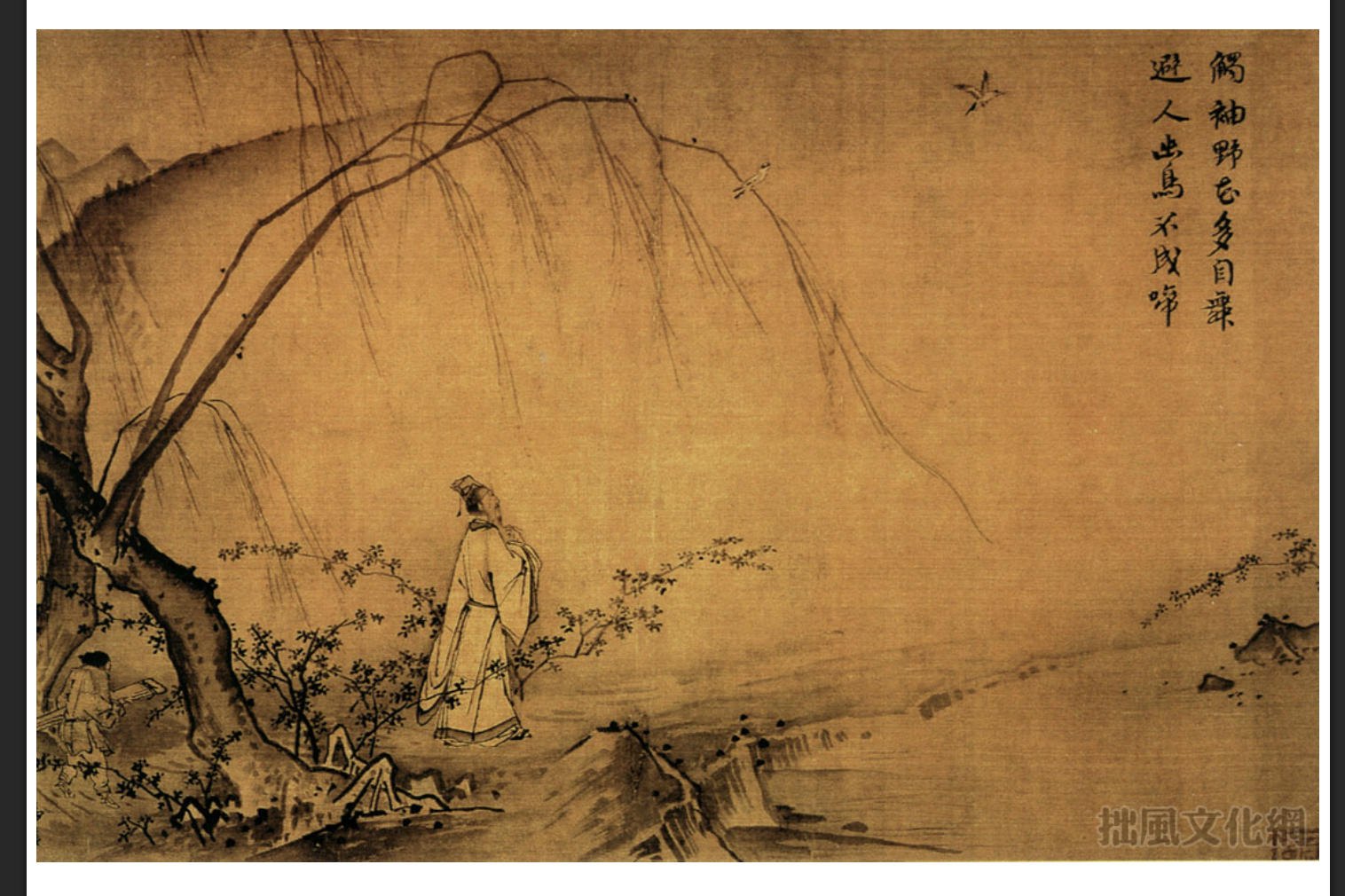
Walking on a Mountain Path in Spring, Ma Yuan, 13th century, Southern Song Dynasty, ink on silk
Ma style one corner composition where visual weight is focused on one corner leaving vast empty space that creates a tranquil sense rather than dense panoramic detail, creating intimate landscapes
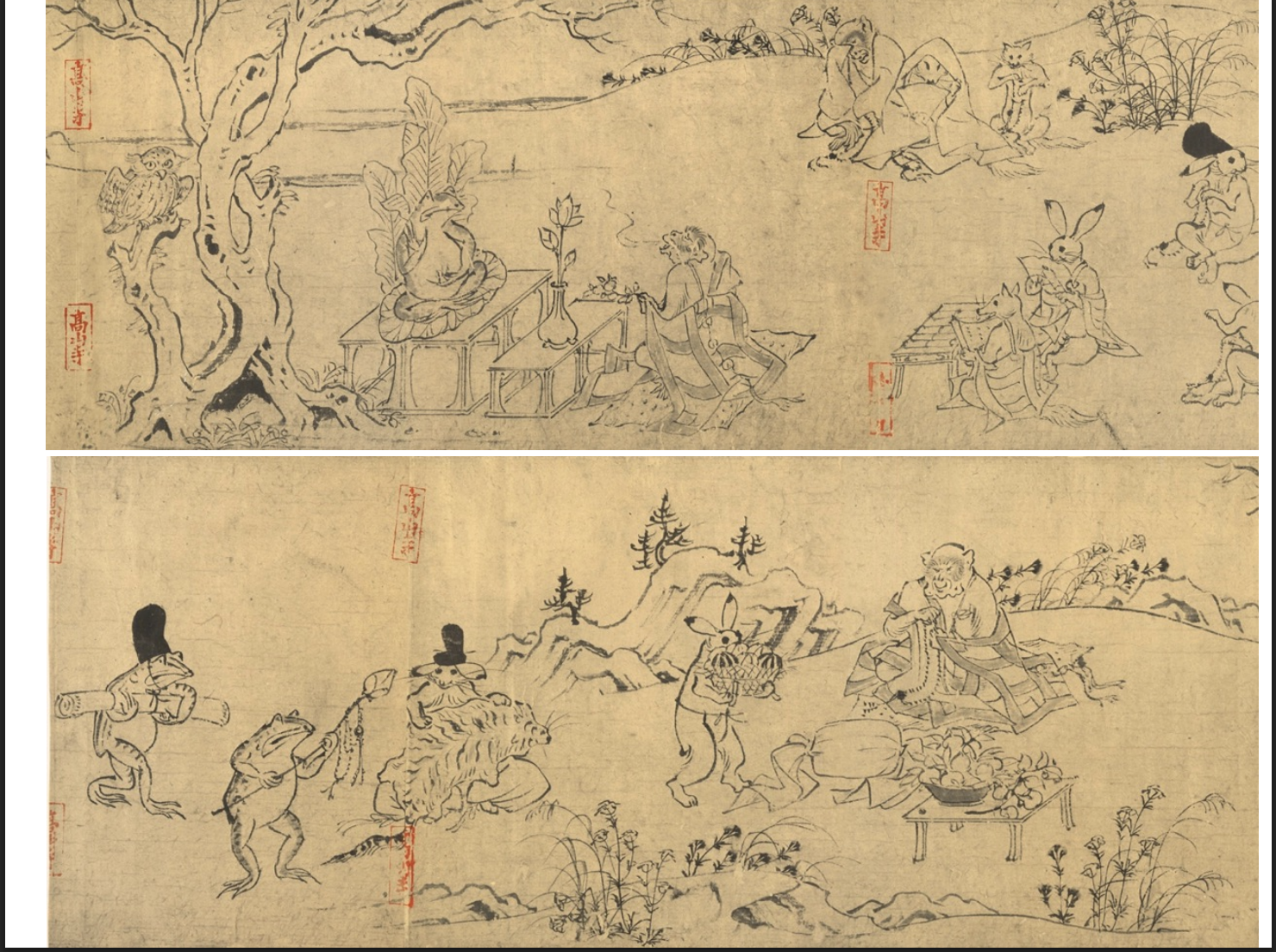
Chōjū-giga, Toba Sōjō, 12th–13th century early Kamakura period, Japanese, black ink on paper, handscroll
in china 12th century we see the rise and development of landscape painting and this is an japanese example showing that japanese artists clearly have an idea of painting texture, shadow and shape of the rocks
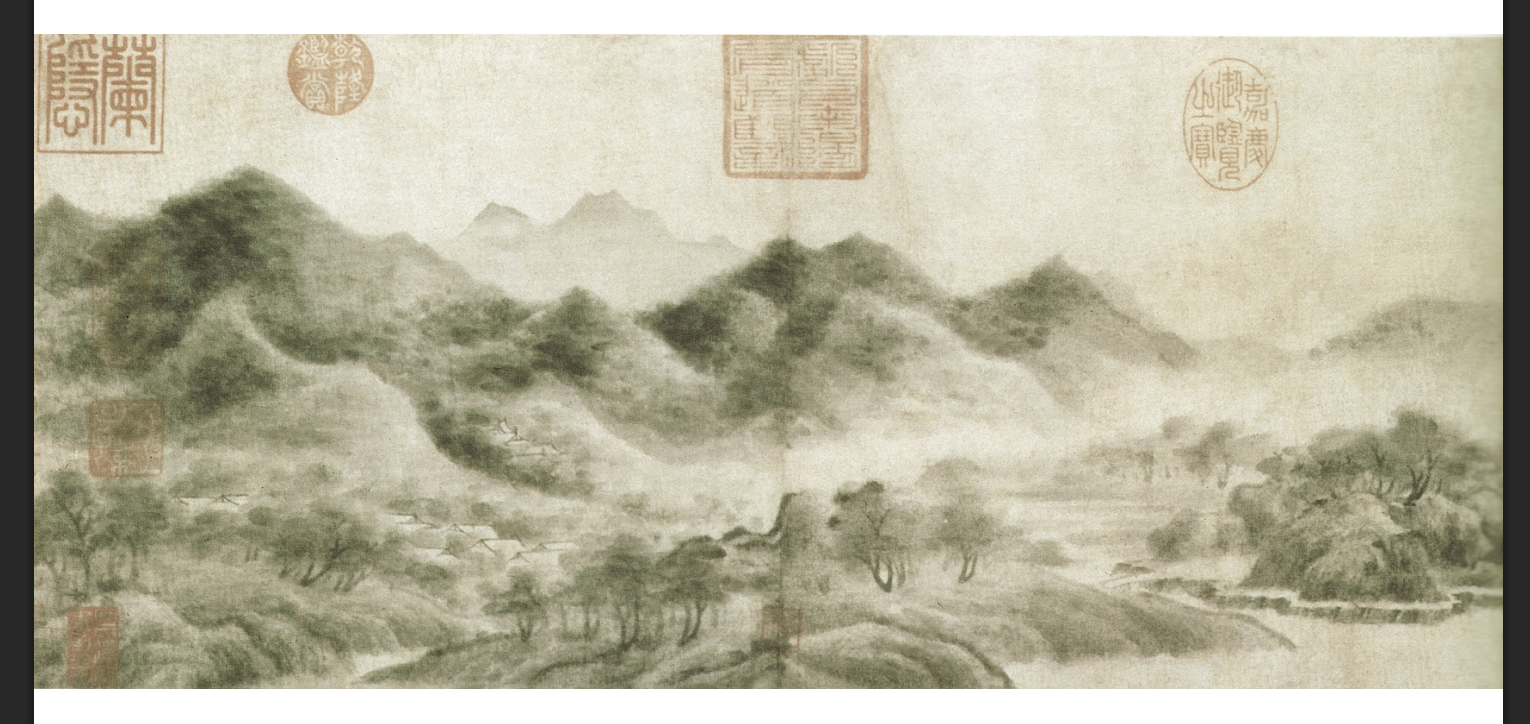
Cloudy Mountains, Mi Youren, 12th and 13th century Southern Song Dynasty, Chinese, ink on paper
his father Mi fu invented the Mi dot-style which can be seen in this painting (cloudy misty hazy created by little dots)
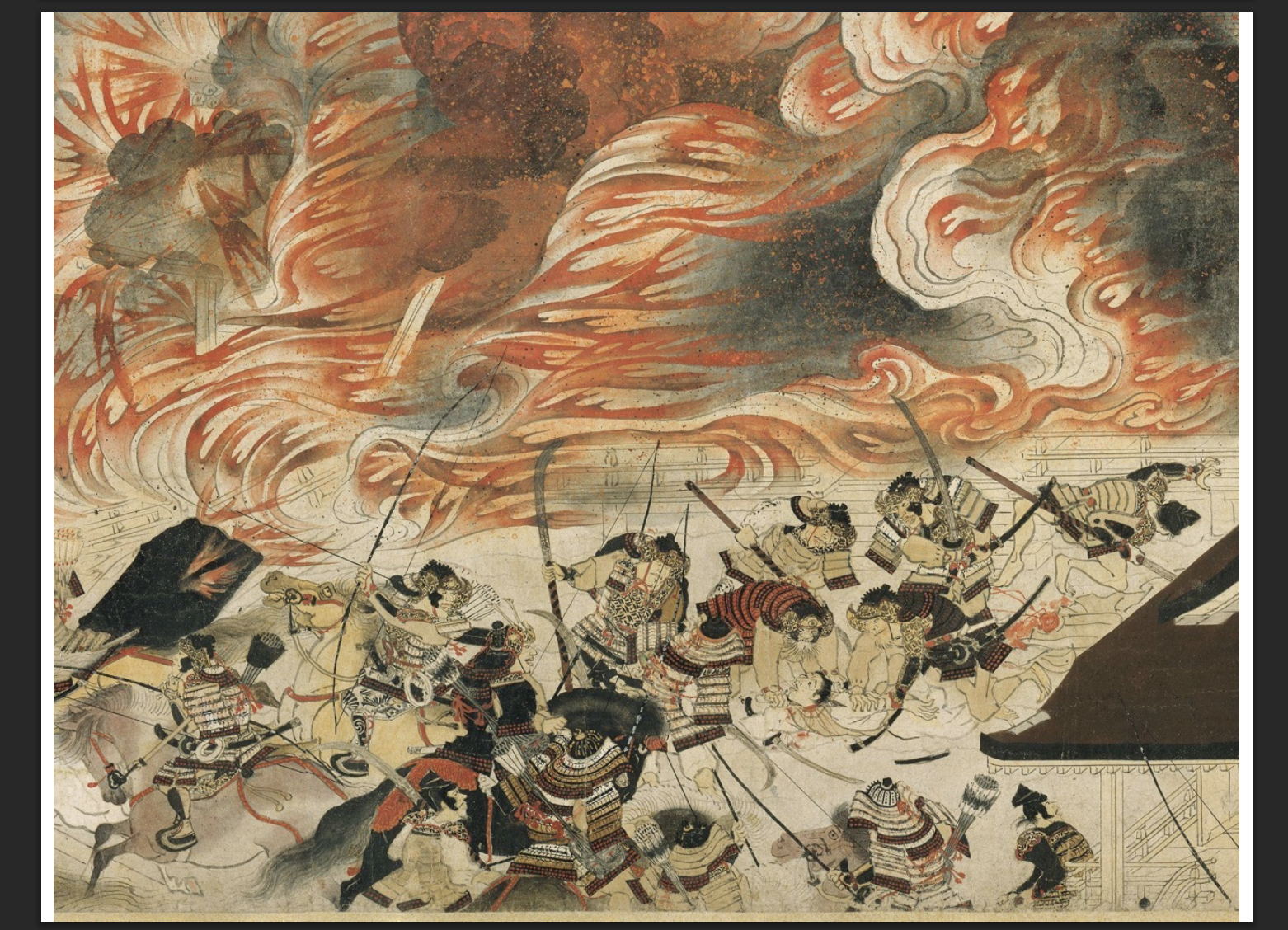
Night Attack on the Sanjo Palace, ARTIST???13th century, kamakura period, Japanese, Detail on handscroll,
very gory and violent and appears to show a return to the warring states aesthetic where the focus of painting was on battle
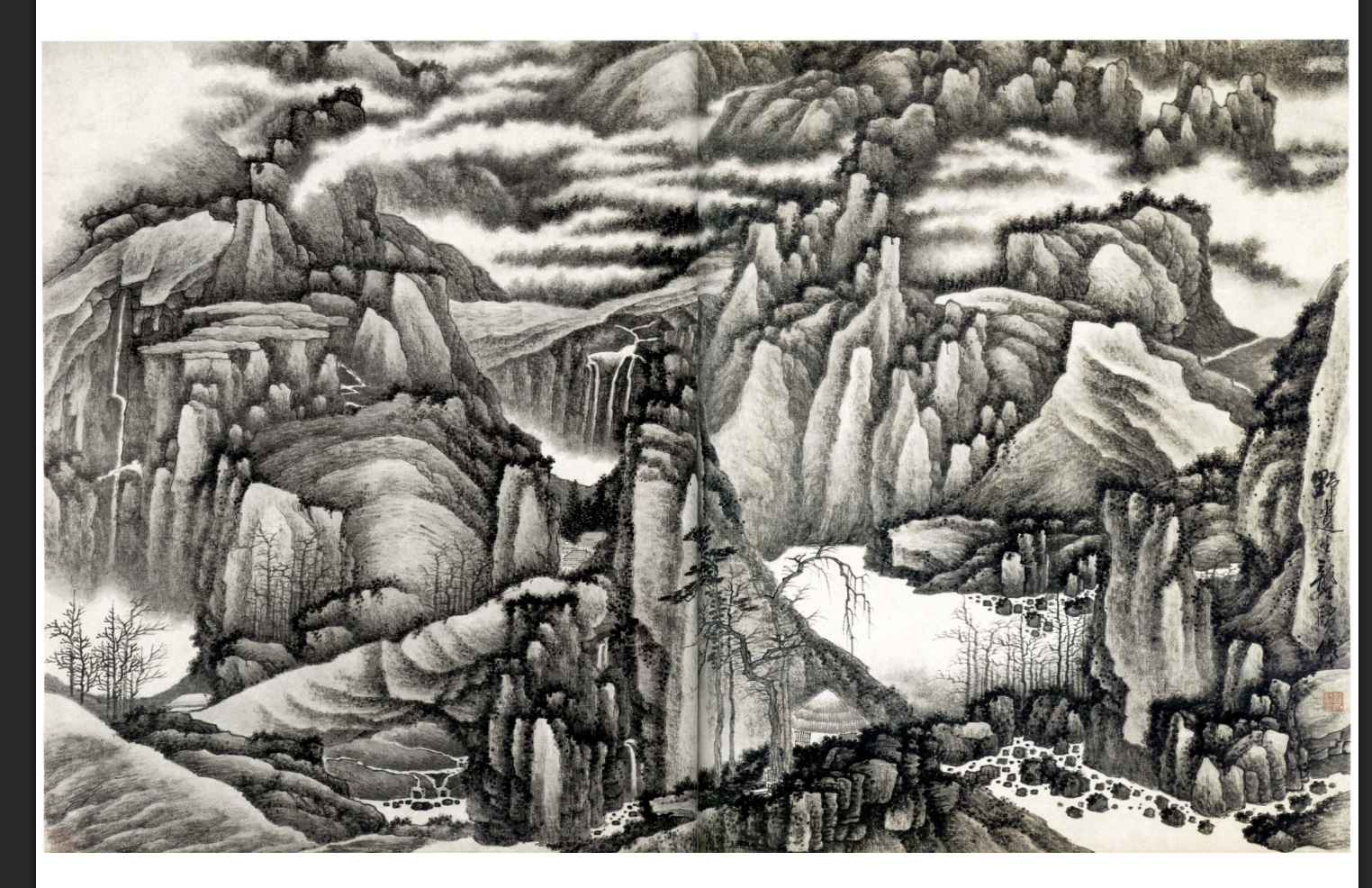
A Thousand Peaks and Myriad Ravines, Gong Xian, mid 17th century, Qing Dynasty, Chinese, hanging scroll ink on paper
artist was on the run from the qing and his perspective is very desolate which is reflected in this painting where no life , alot of emphasis on the rocks rather than a luscious landscape, small hut with oppressive dark painted peaks,vegetation is dead or dying, very dark ink
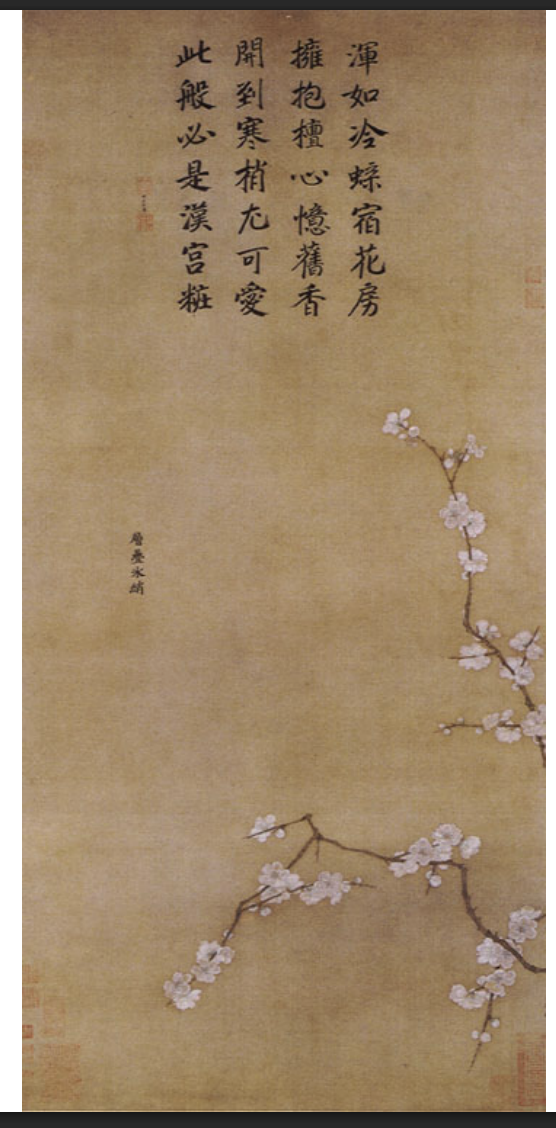
Layered Icy Silk, Ma Lin, 12th and 13th century, Southern Song Dynasty, Chinese, ink and color on silk
technique of one side composition created by his father Ma Yuan of things jutting into the scene creates the impression of depth, space, and emptiness
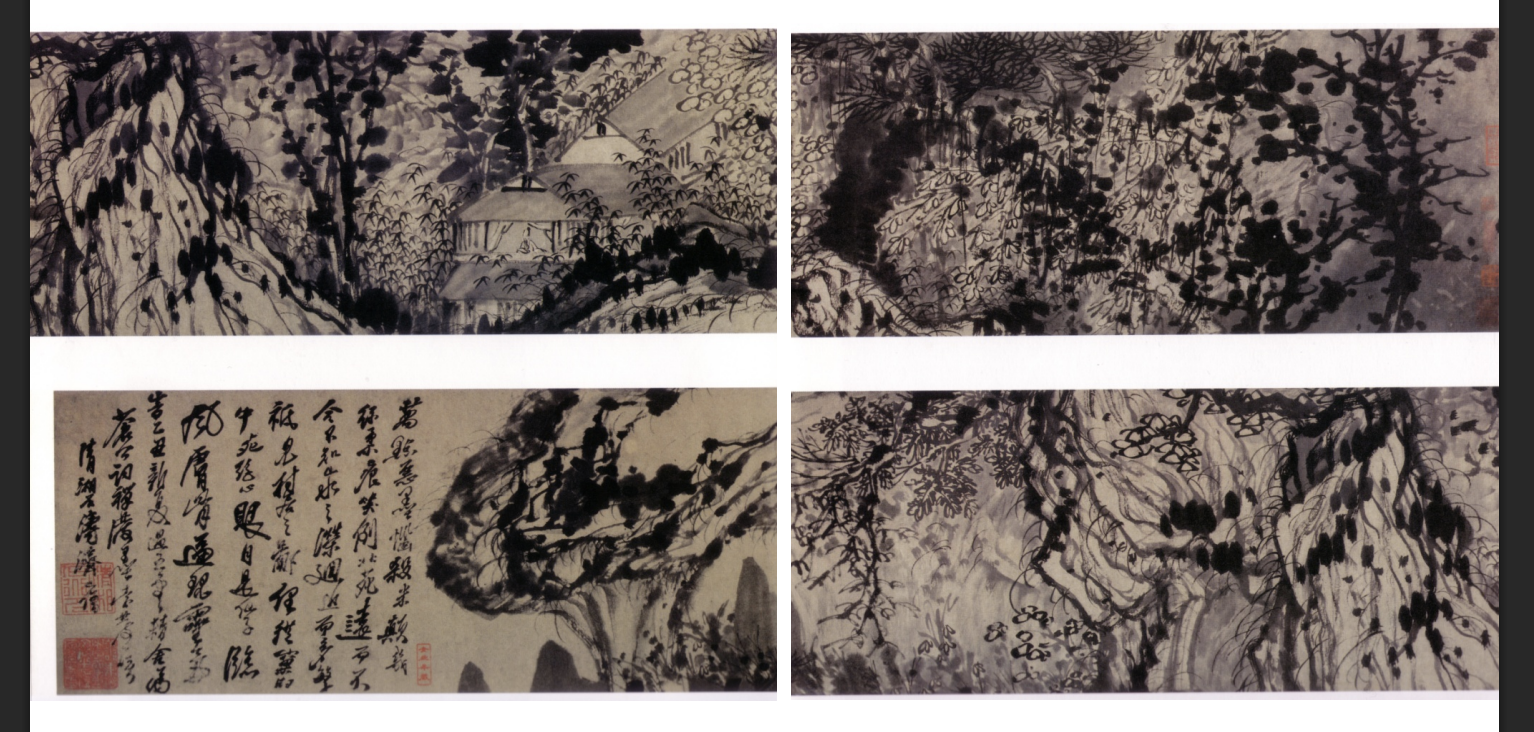
Ten Thousand Ugly Ink Dots, Shitao,17th Century, Qing Dynasty, Chinese, handscroll ink on paper,
Technique use of wet and dry brush work to depict landscape in a very expressive manner that is more stylized than representative of the landscape
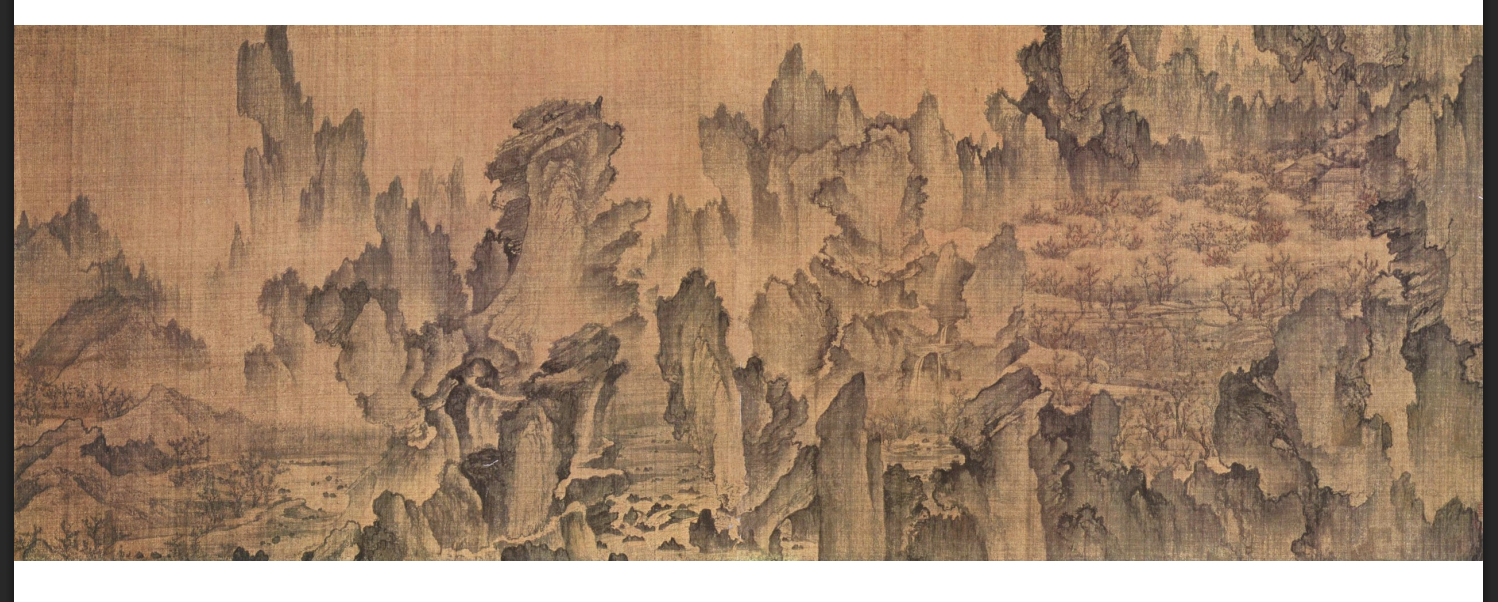
Dream Journey to the Peach Blossom Land, Ahn Gyeon, 15th century, Joseon Dynasty, Korean, ink and light color on silk
Based off a chinese story of an ideal paradise escape and people across east asia begin to depict the story in their artwork.
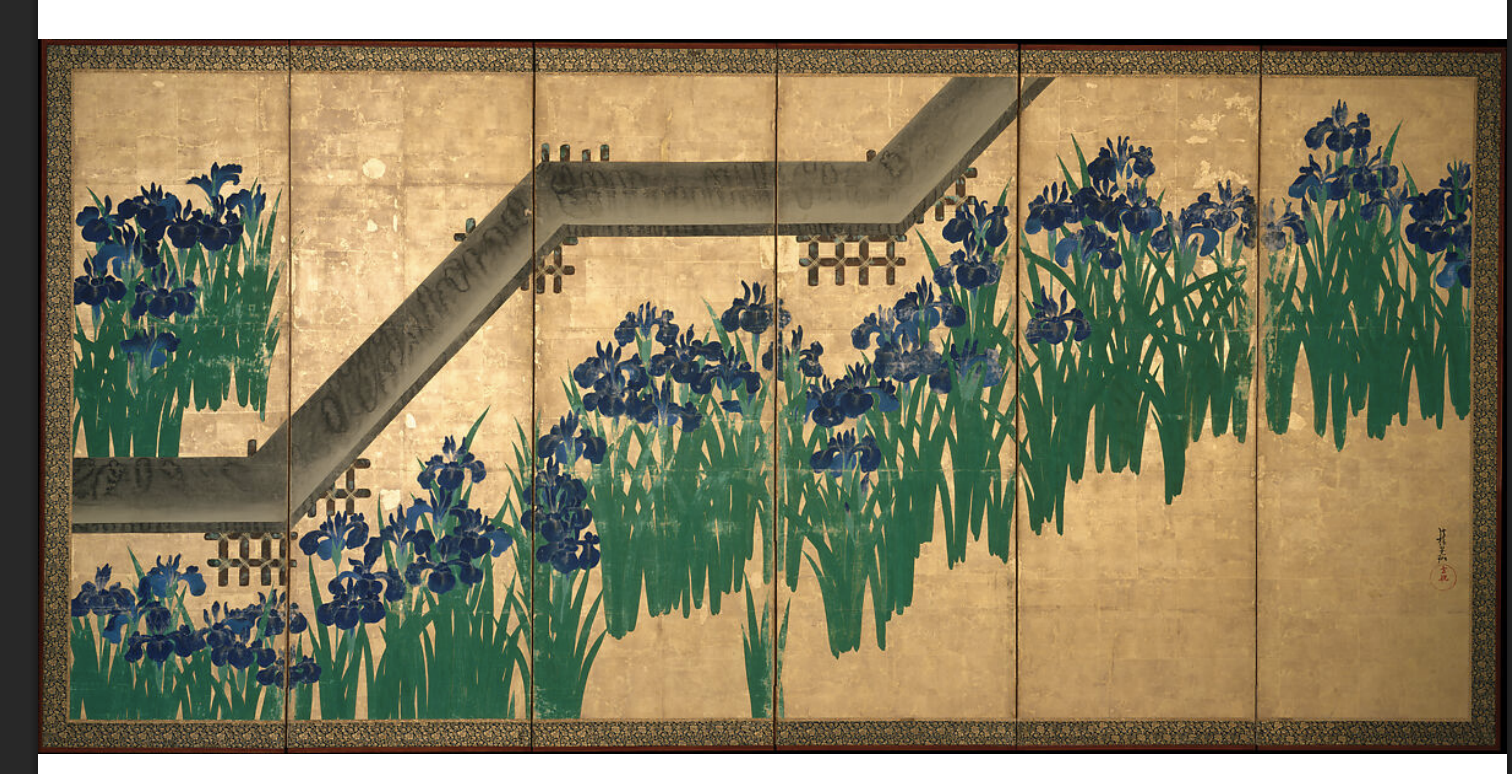
Irises, Ogata Kōrin, 18th century, Edo period, Japanese, ½ of a pair of six-panel gold foiled paper screens,
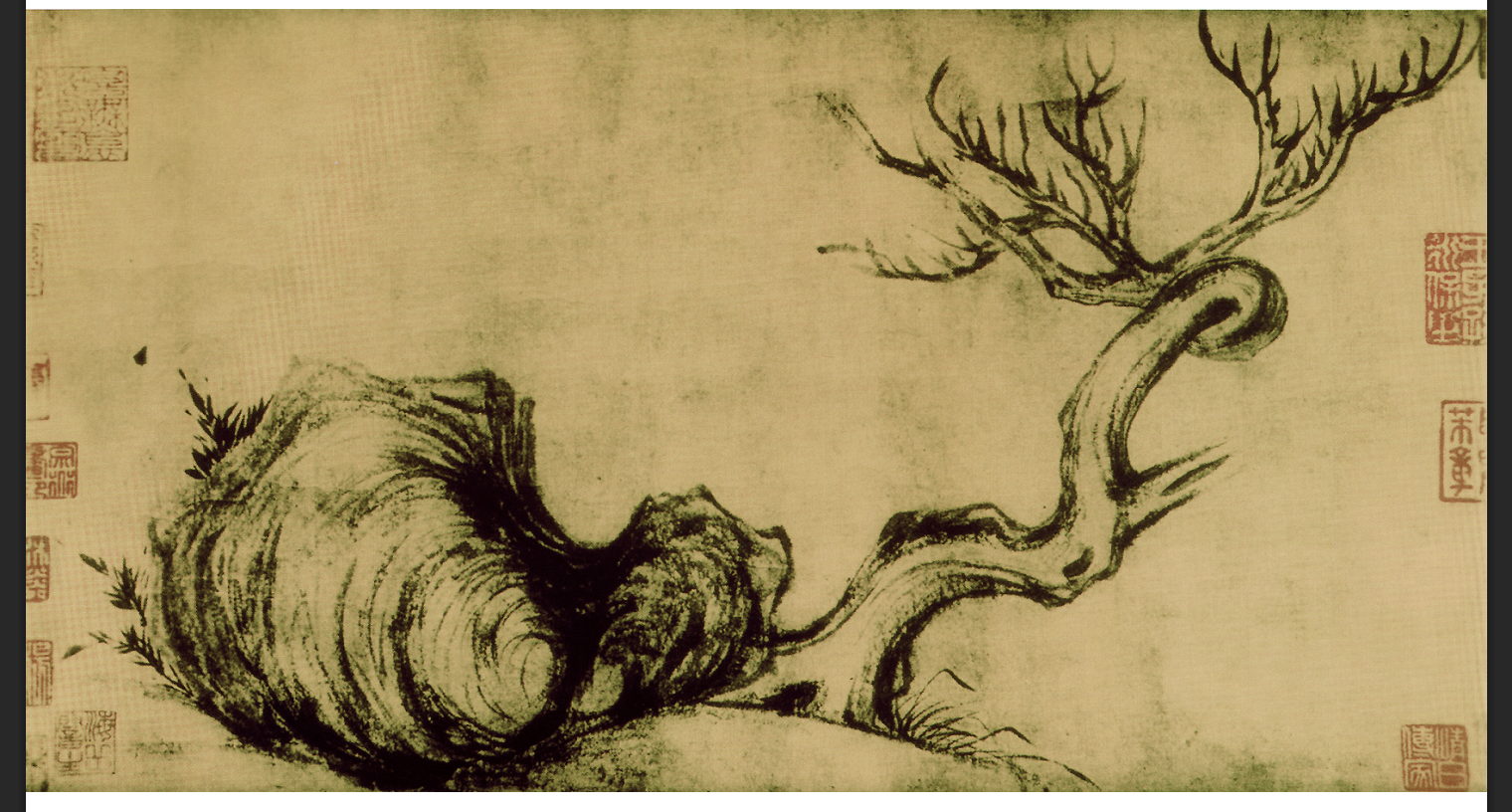
Wood and Rock, Su Shi, 11th to 12th century, Northern Song Dynasty, Chinese, ink on paper scroll,
The birth of literati painting, as a result of his exile he begins to explore new ways of expressing himself while avoiding governmental censorship through depicting a coiled snail like rock, resiliance
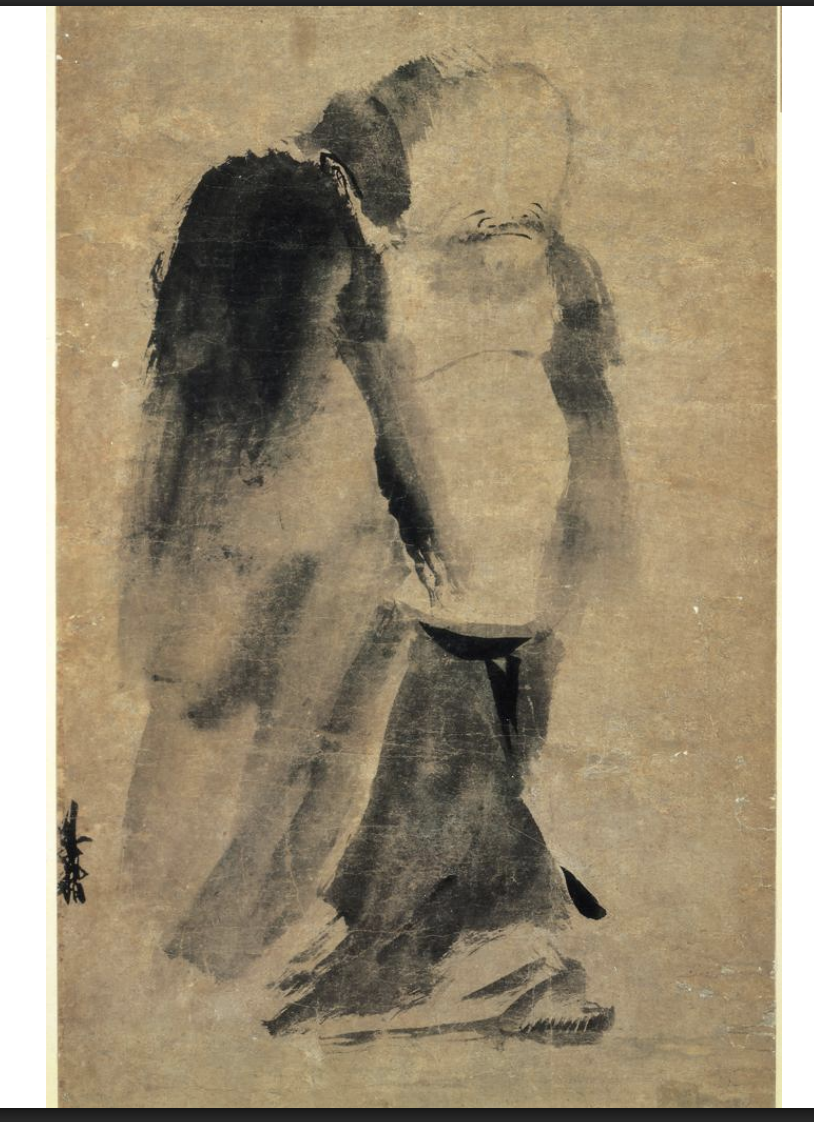
Immortal in Splashed Ink, Liang Kai, Early 13th century, Southern Song Dynasty, Chinese ink on paper,
pioneered splashed ink style is apparent in the robe, creating zen painting without depicting common buddhist or daoist iconography
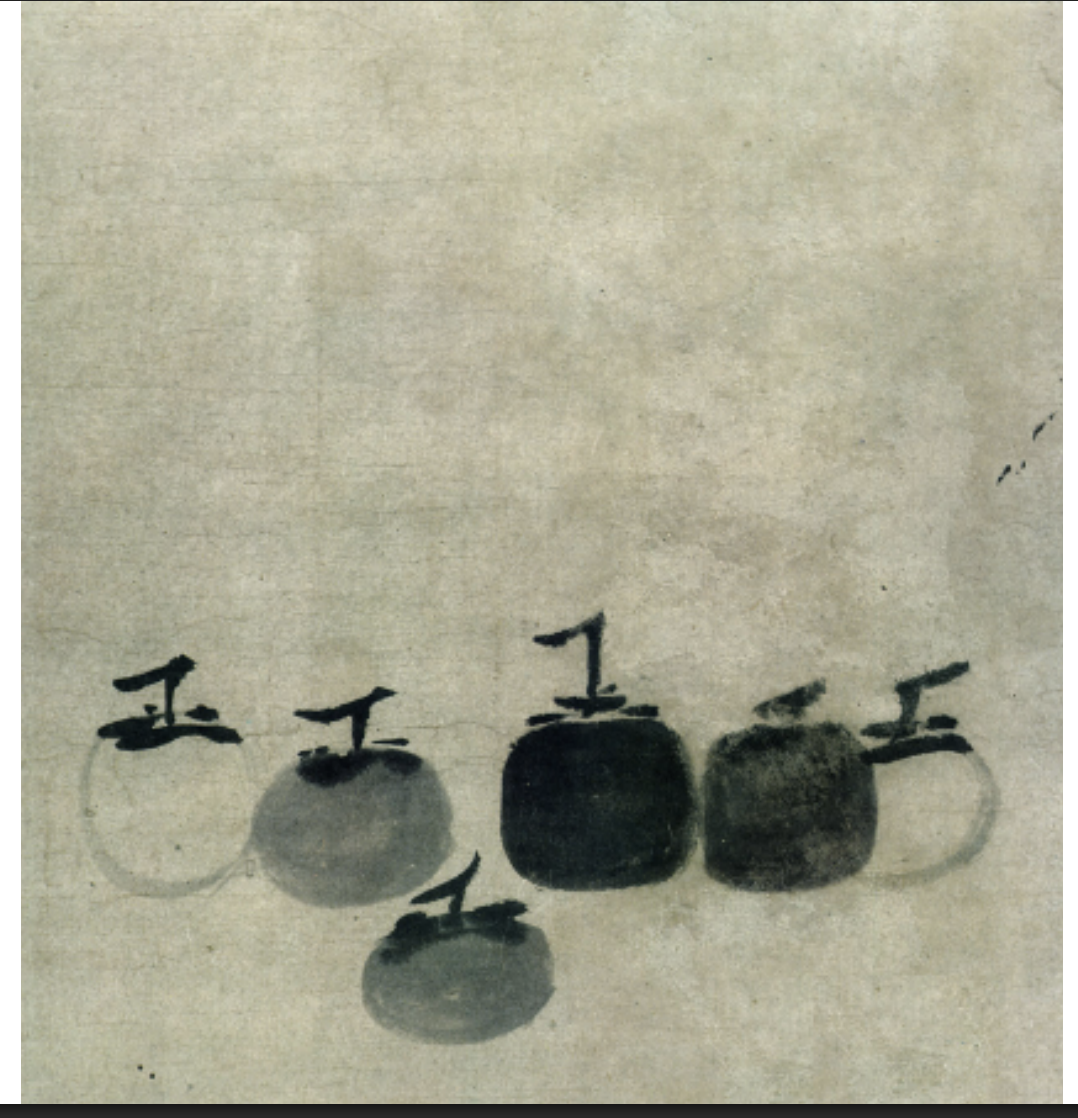
Six Persimmons, Muqi Fachang, 13th century, Southern Song Dynasty, Chinese, ink on paper,
Persimmons appear to be floating, aligning with the zen concept and ideal of being groundless. Originated in China but is now kept in a Kyoto temple, is much more appreciated in Japan than it was in China.
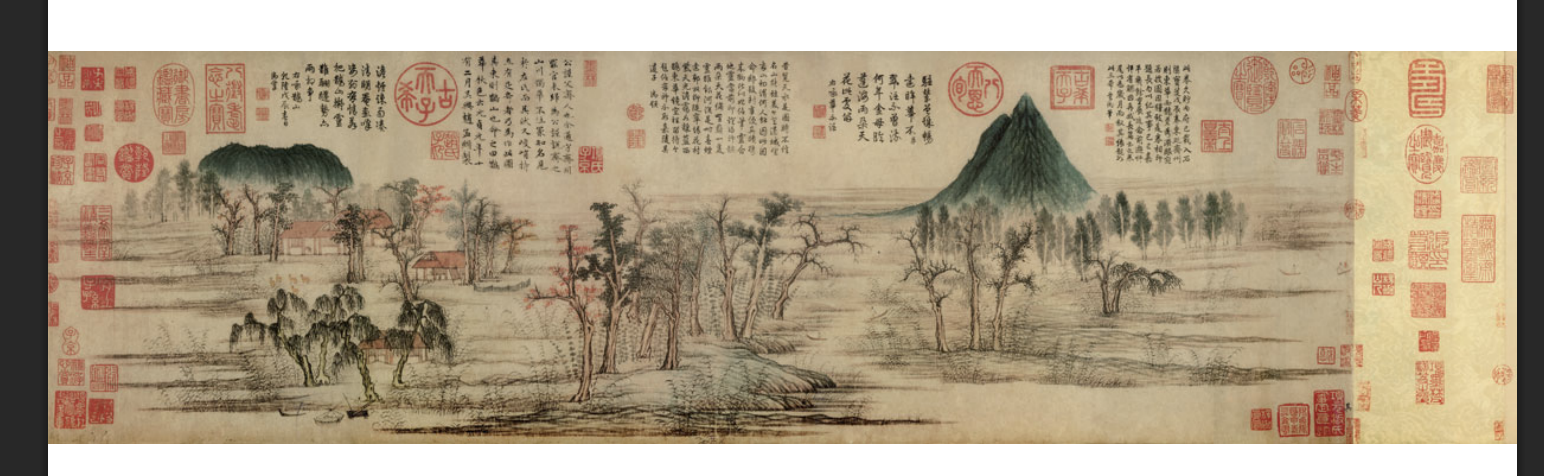
Autumn Colors on the Qiao and Hua Mountains, Zhao Menfu, 1296, Yuan Dynasty, Chinese, silk painting
rejected the more academic decorative style of the century before (Southern Song), in favor of earlier Tang and Northern Song styles (monumental detailed landscape rather than intimate) intiating a revival of antiquity movement
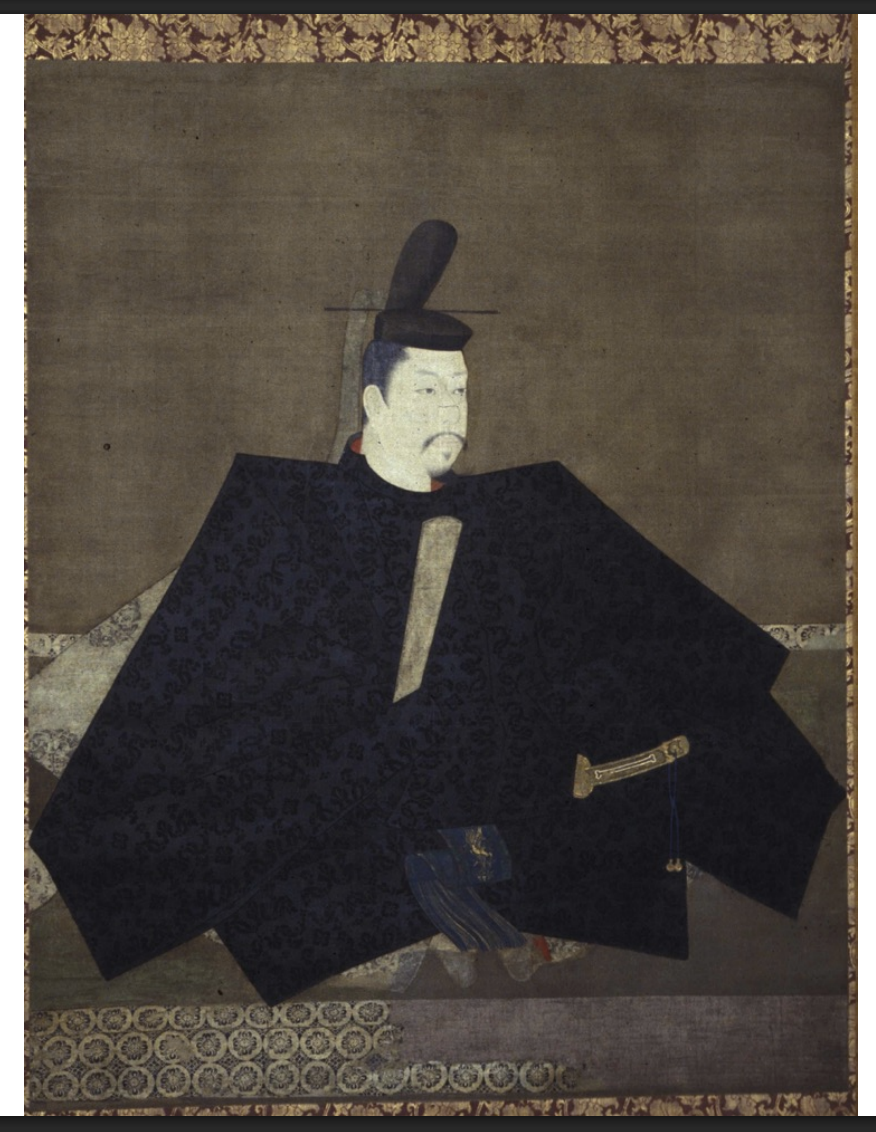
Portrait of the Jingoji, Attributed to Fujiwara Takanobu,13th century, Kamakura period, Japanese, color on silk
Artist was an expert in likeness painting, marks a shift in japaneseart from abstraction towards realistic depiction.
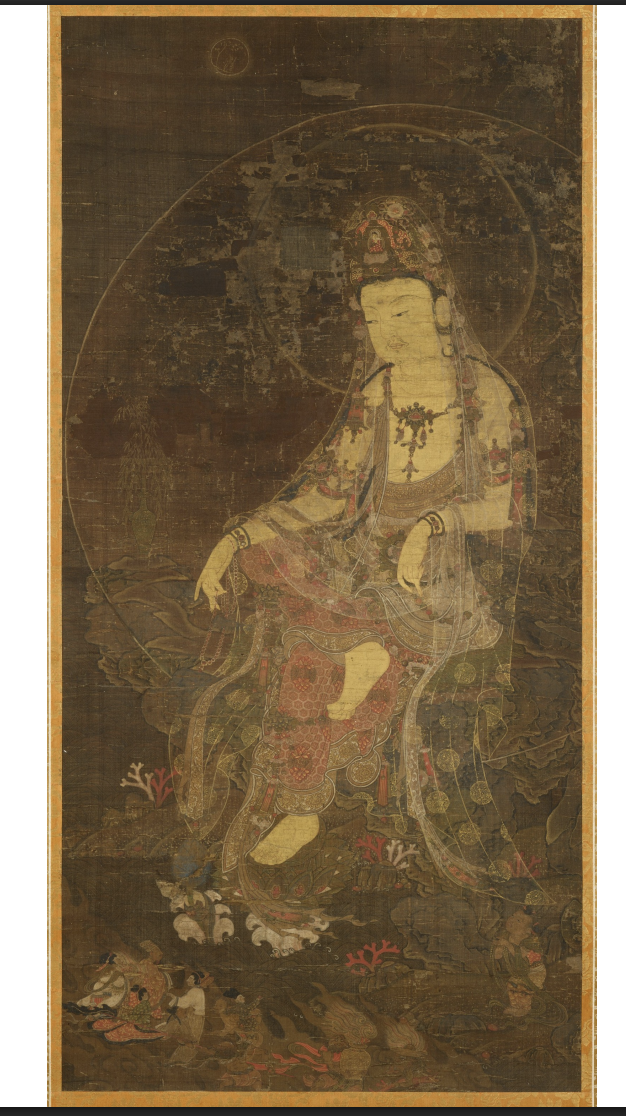
Water-Moon Guanyin, Unknown painter, 14th century, Goryeo Dynasty, Korean, pigment and gold on silk
delicate and splended gold-painted design on the robes of the deities is a noteworthy trademark of Goryeo Buddhist painting
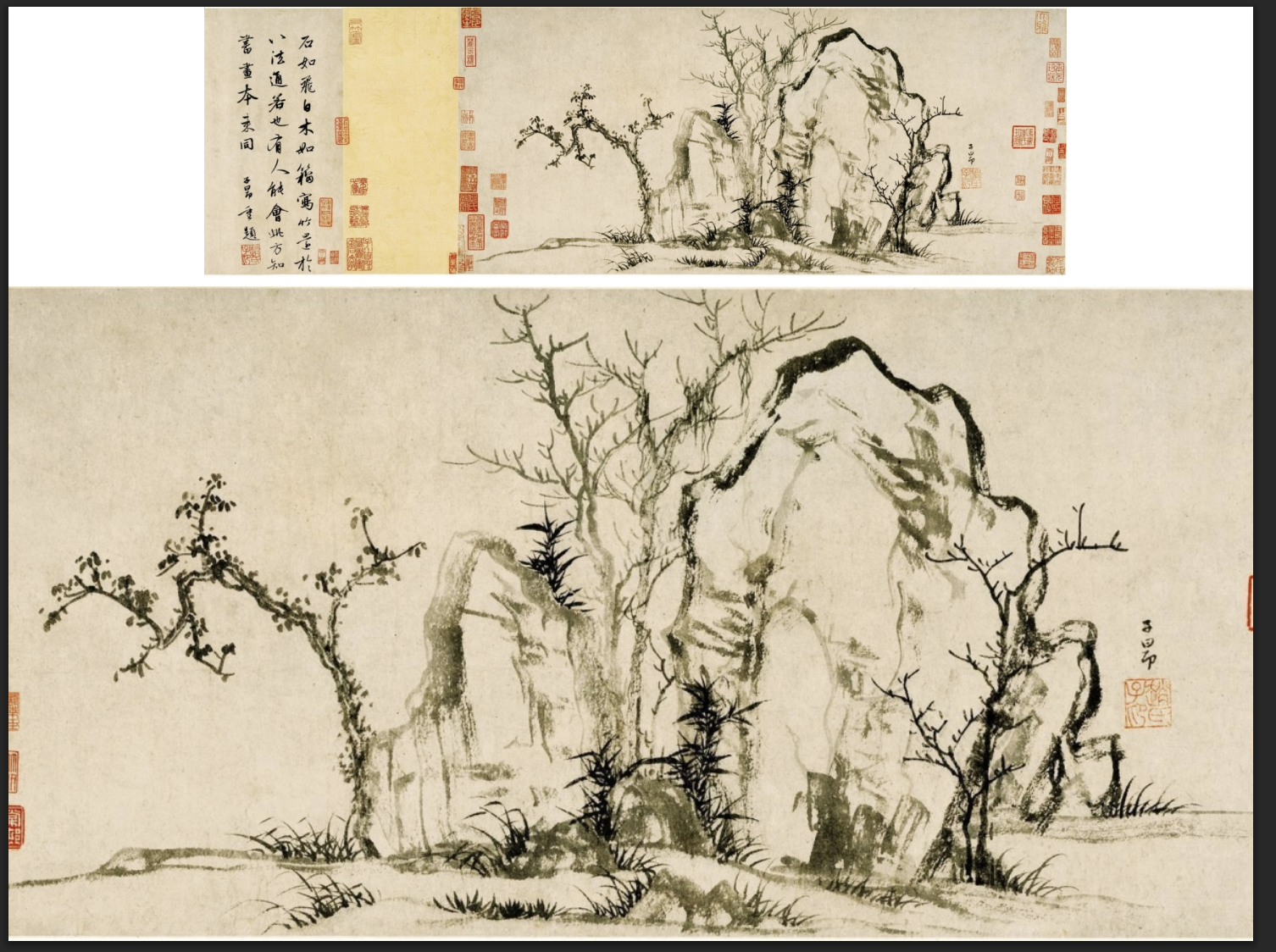
Elegant Rocks and Sparse Trees, Zhao Mengfu, 14th century, Yuan dynasty, ink on paper
literati painting, skillfull work that appears simple, however the artist switches between different tonalities, light and dark ink) using calligraphic brush techniques, merges painting and calligraphy
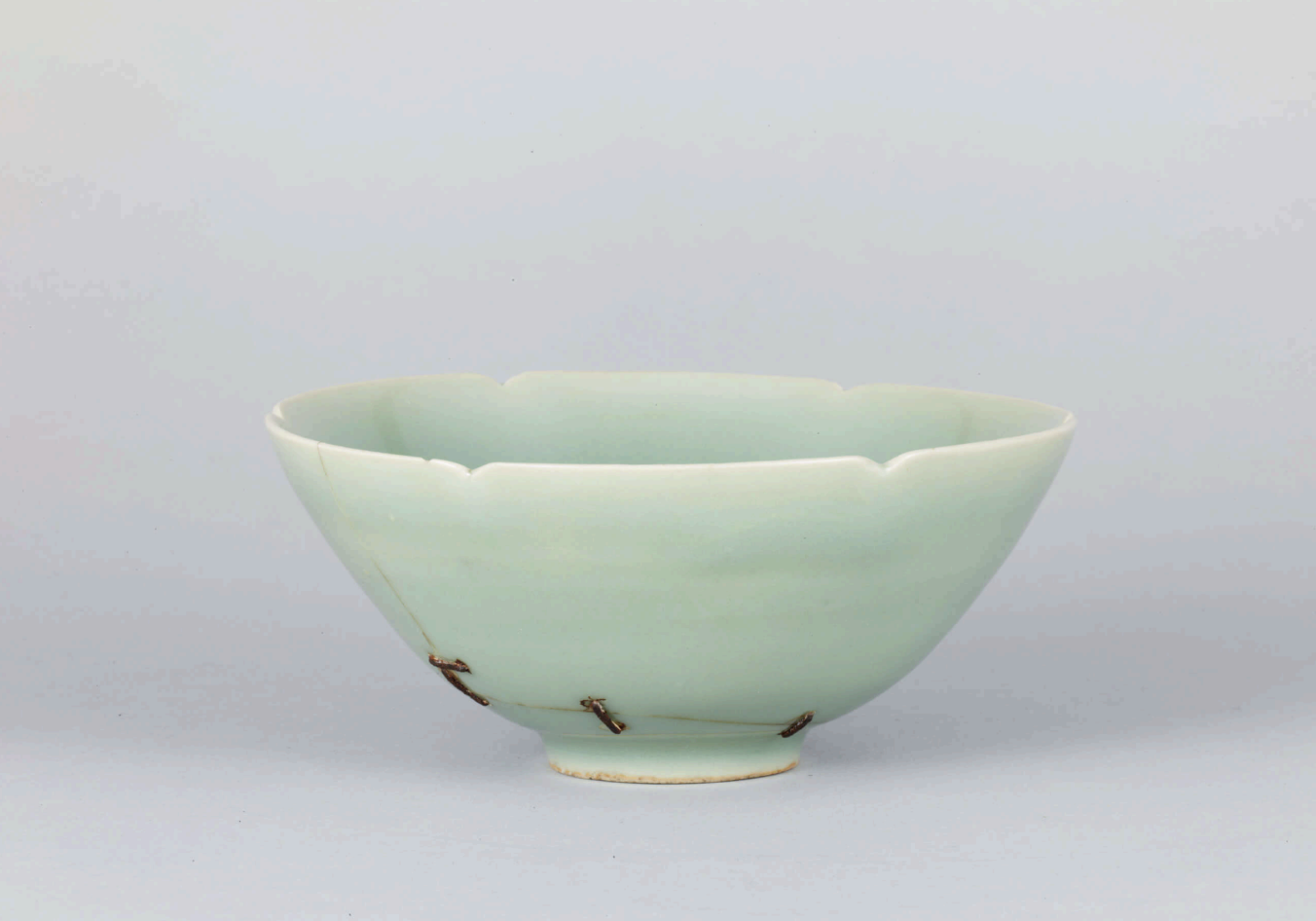
Bakohan celadon bowl, 13th century, Southern Song Dynasty, seiji glaze and celadon
When a japanese shogun broke the bowl he sent it back to China for replacement at that time celadon had fallen out of fashion in china, the chinese emperor ordered an artisan to fasten the bowl, the imperfection
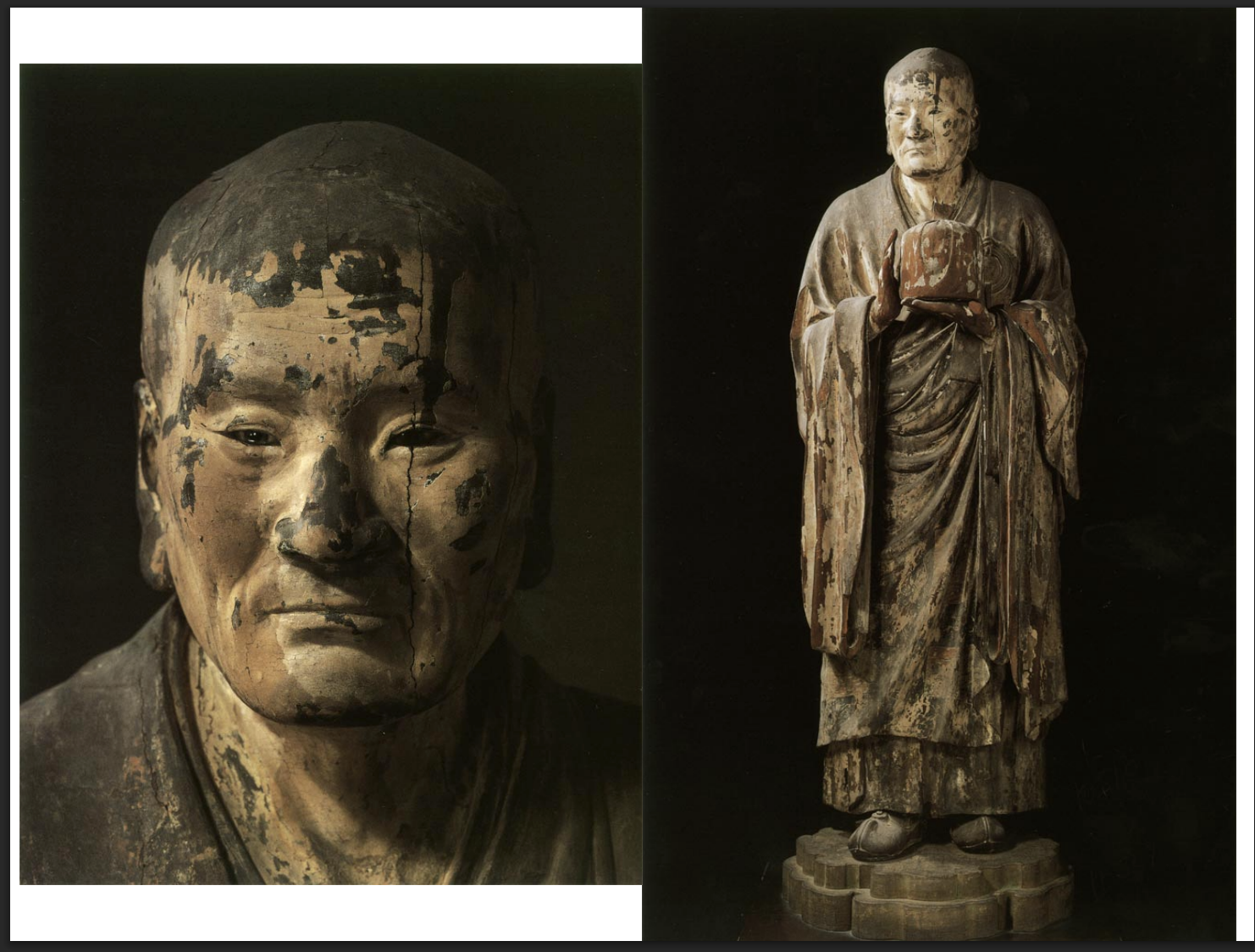
Standing Mujaku Bosatsu, Unkei, 13th century, Kamakura period, Japanese, wood with polychromy and realistic rock crystal eyes,
Buddhist sculptor led a new era in sculptural expression creating realistic works that appear before the viewer as though they were alive
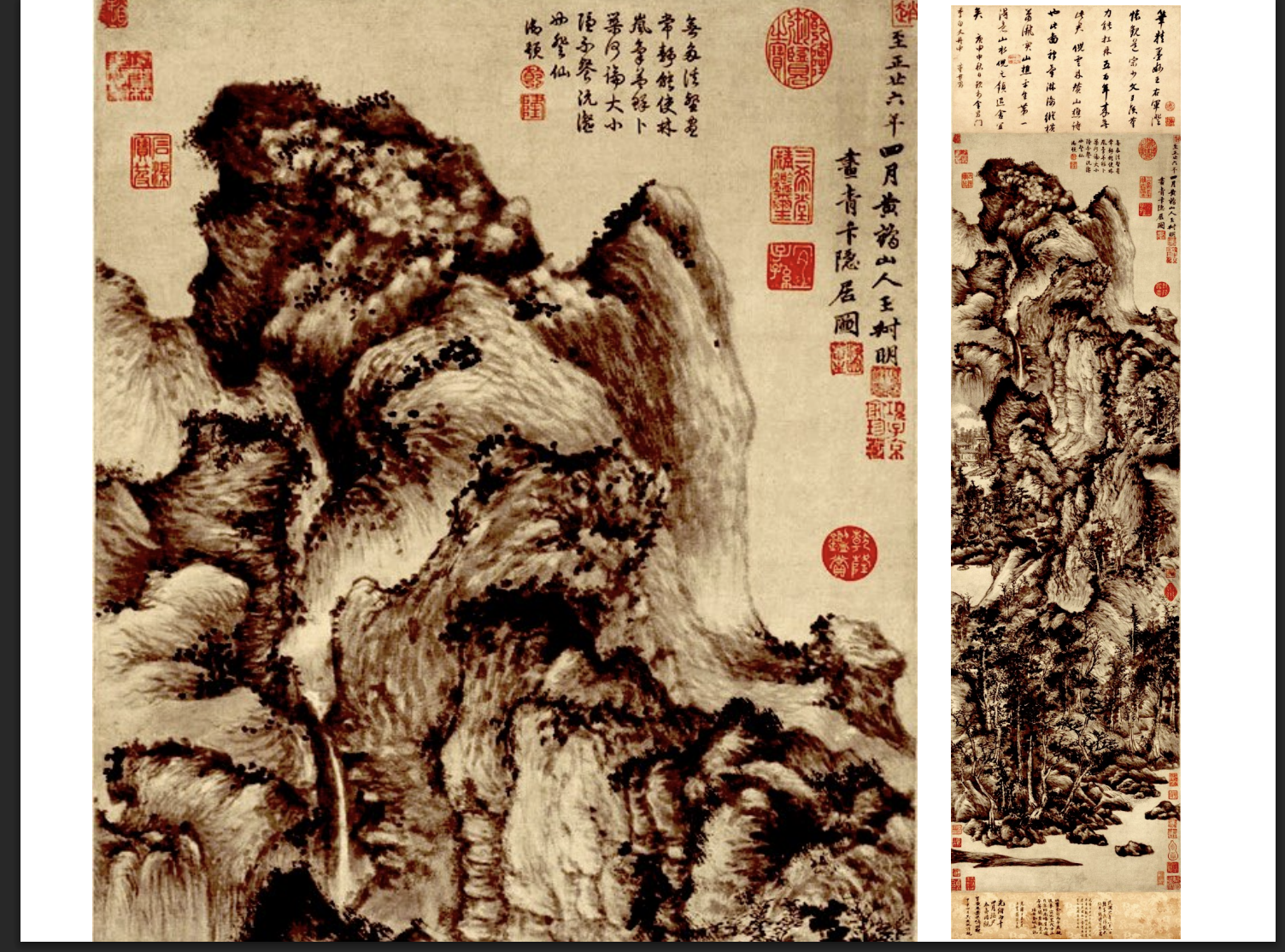
Mt. Qingbian, Dong Qichang, 17th century, Ming Dynasty, hanging scroll ink painting on paper
crowded composition, breaking away from serene gentle styles of his time, using dense layers of ink to create dark, claustrophic texture
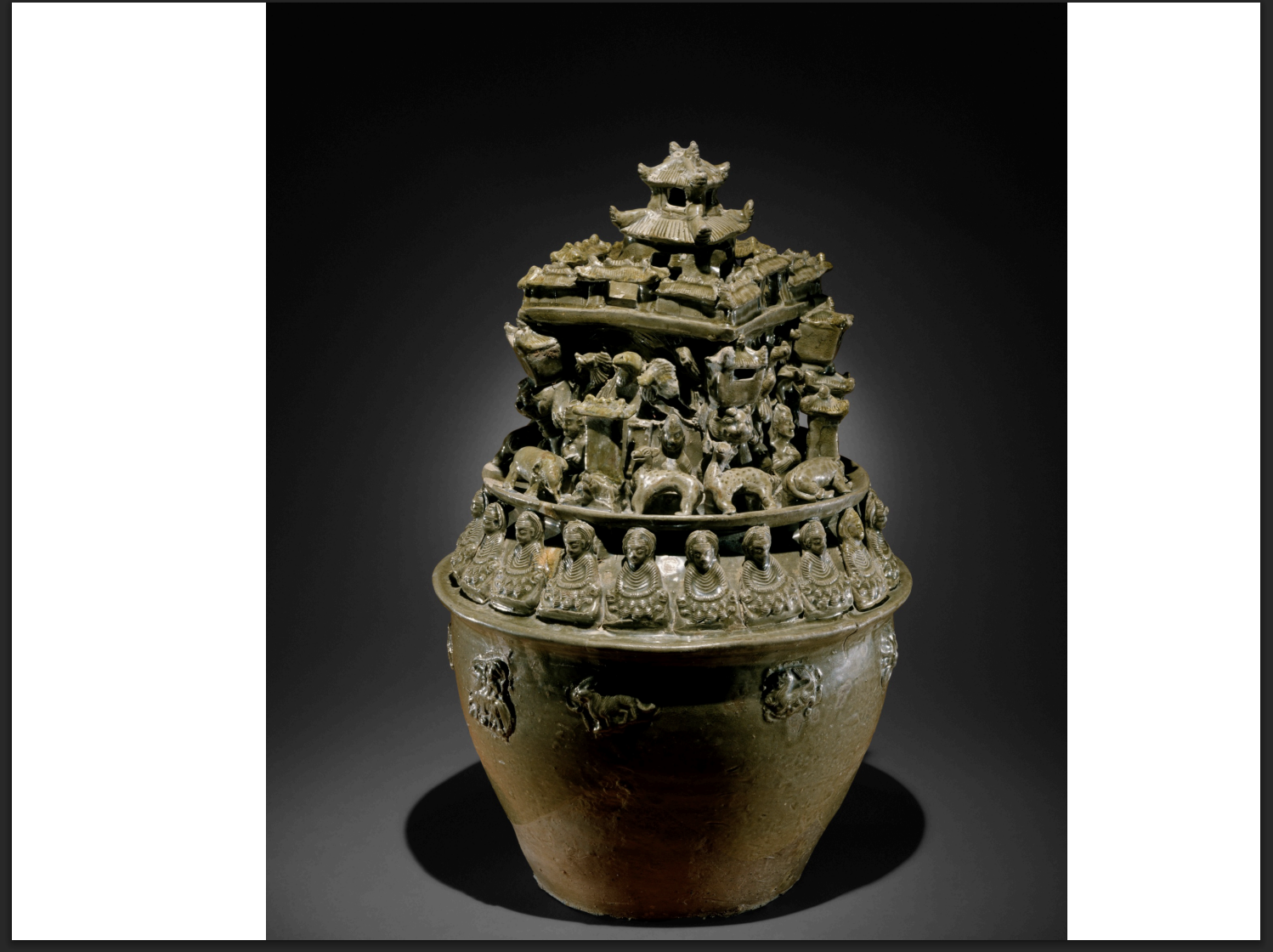
Chinese Funerary Urn, late 3d century, Western Jin Dynasty, green-glazed stoneware vessel,
Daoist vision of paradise + ring of buddhas; among the earliest Buddhist images known in China, and their presence on this vessel indicates how Buddhism was gradually integrated into indigenous belief systems.
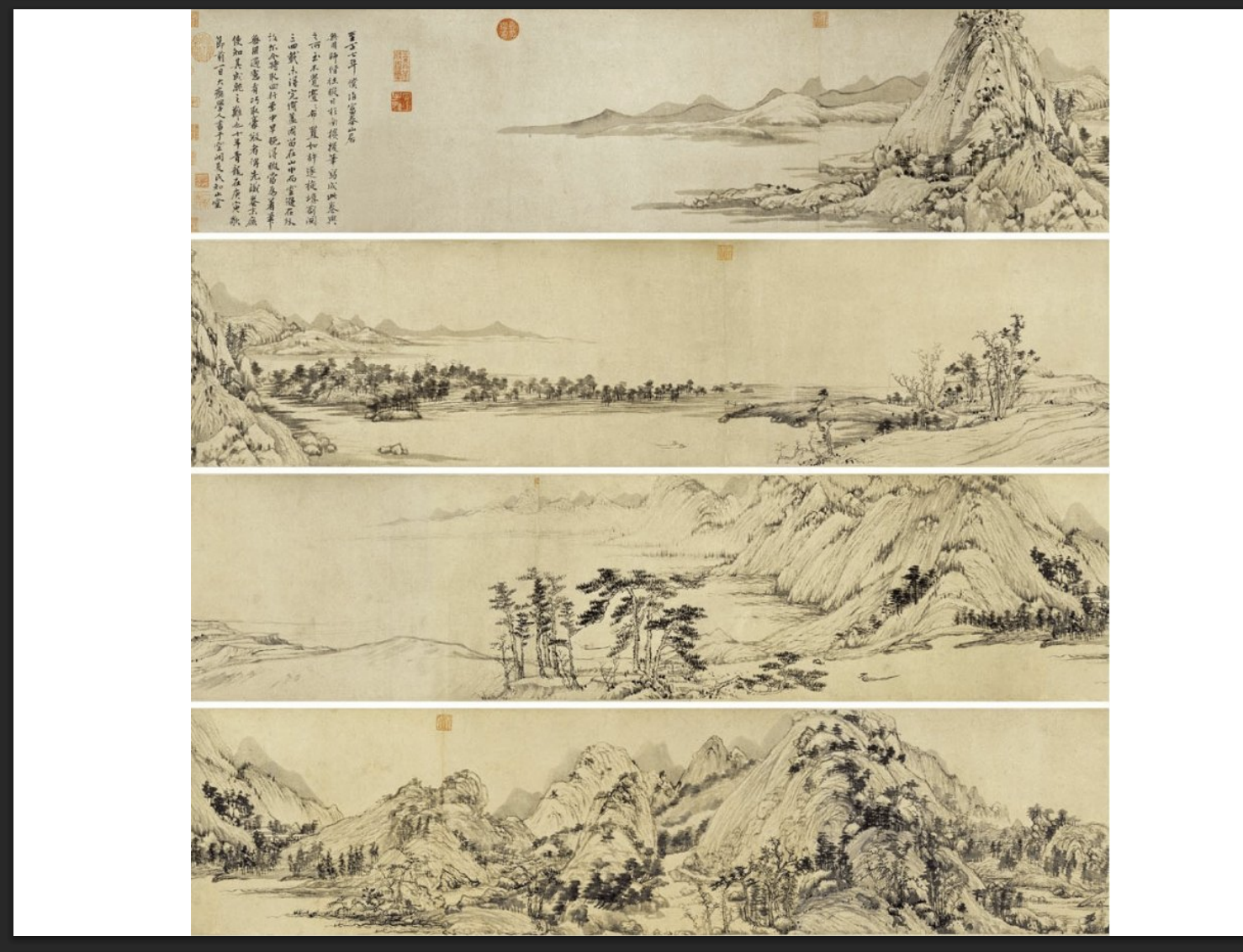
Dwelling in the Fuchun Mountains, Huang Gongwang, 14th century, Yuan dynasty, ink on paper handscroll
This is the original version.
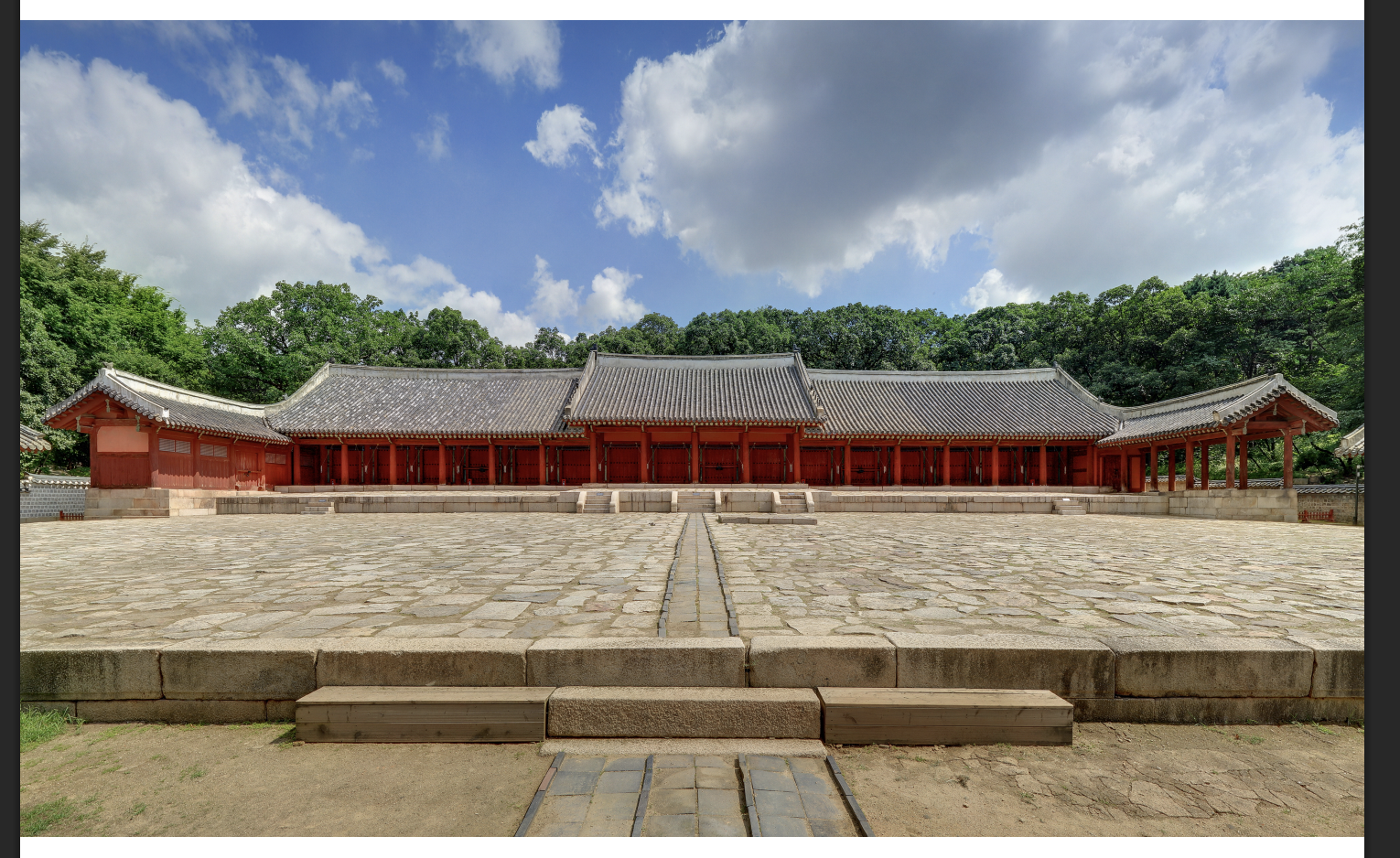
Hall of Eternal Peace at Jongmyo Shrine, 15th century, Joseon Dynasty, Korean, wooden
modular expansion, reflects the Cofucian piety beliefs
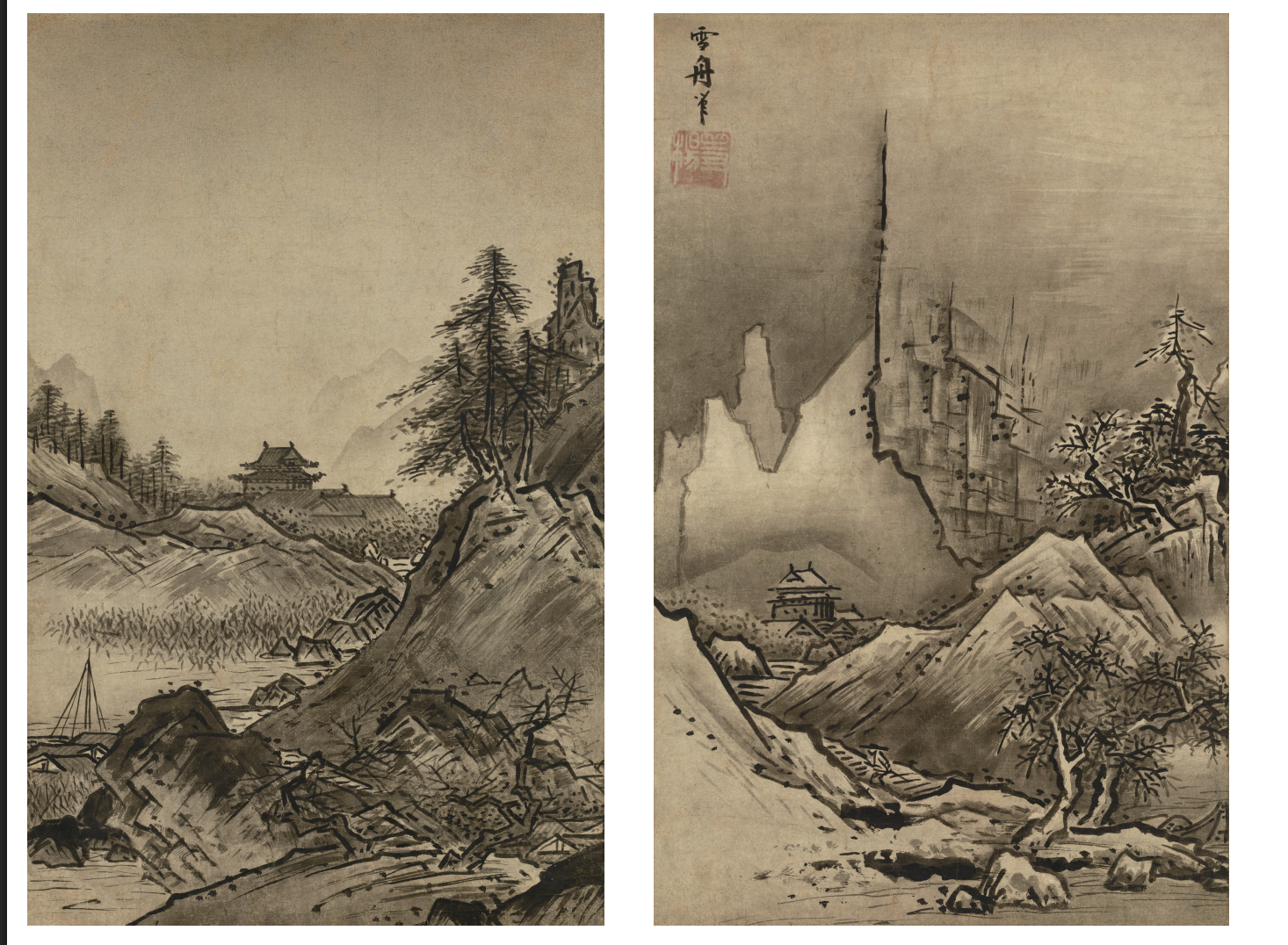
Autumn and Winter Landscapes, Sesshu Toyo, 15th Century, Muromachi period, ink painting
Used splashed ink painting style of china, shows chinese influence on japanese art
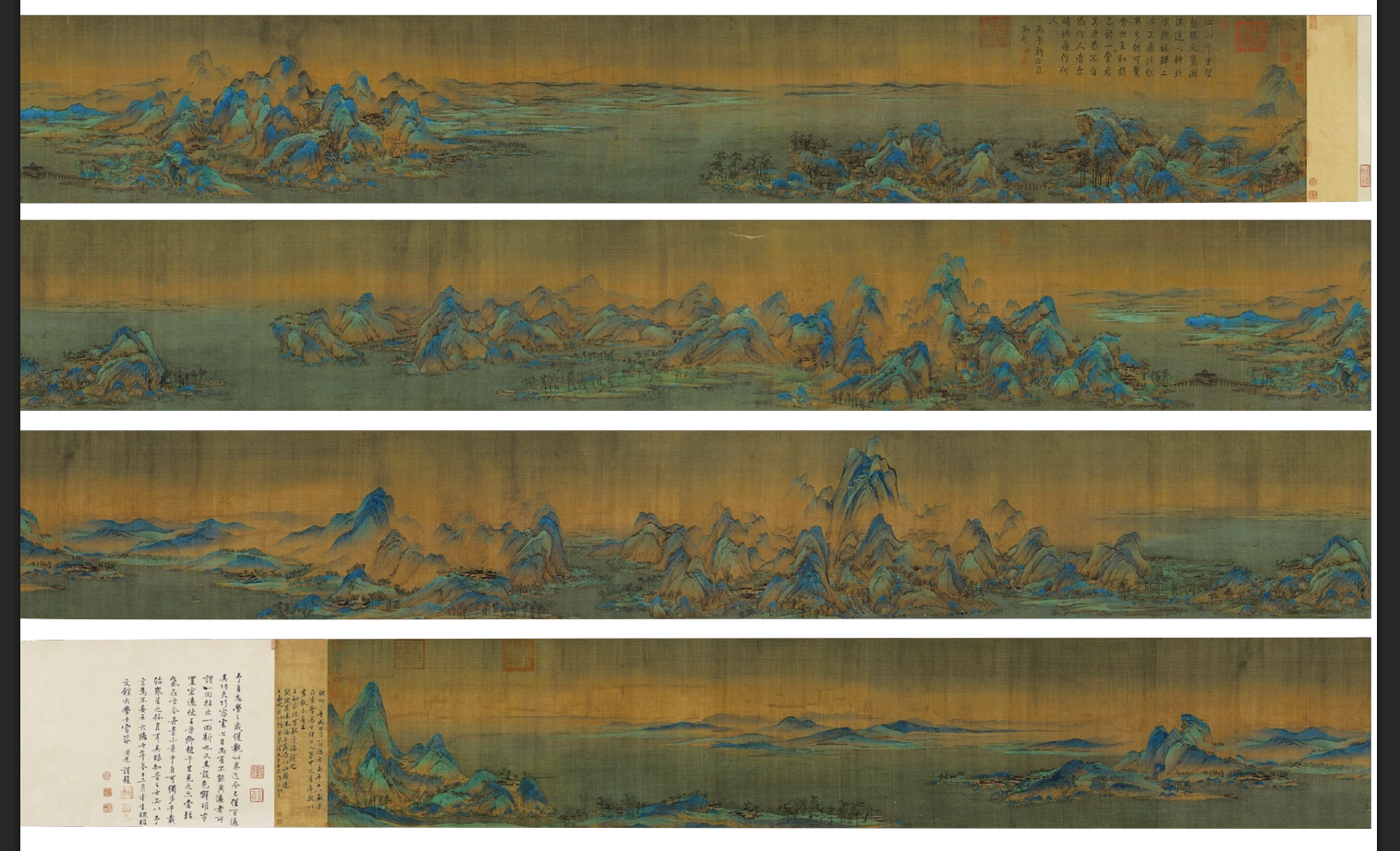
A thousand Li of Rivers and Mountains, Wang Ximeng, 12th century, Northern Song Dynasty, Handscroll mineral pigments on silk
Uses the blue green landscape technique of Sui and Tang dynasties, he uses painting tecniques o f earlier dynasties
paints a Southern Chinese landscape, because of surrounding pressure by Mongals and Nanchao at the time, outward exploration and expansions proved difficult so Song society turned inward and reflected more on their homeland
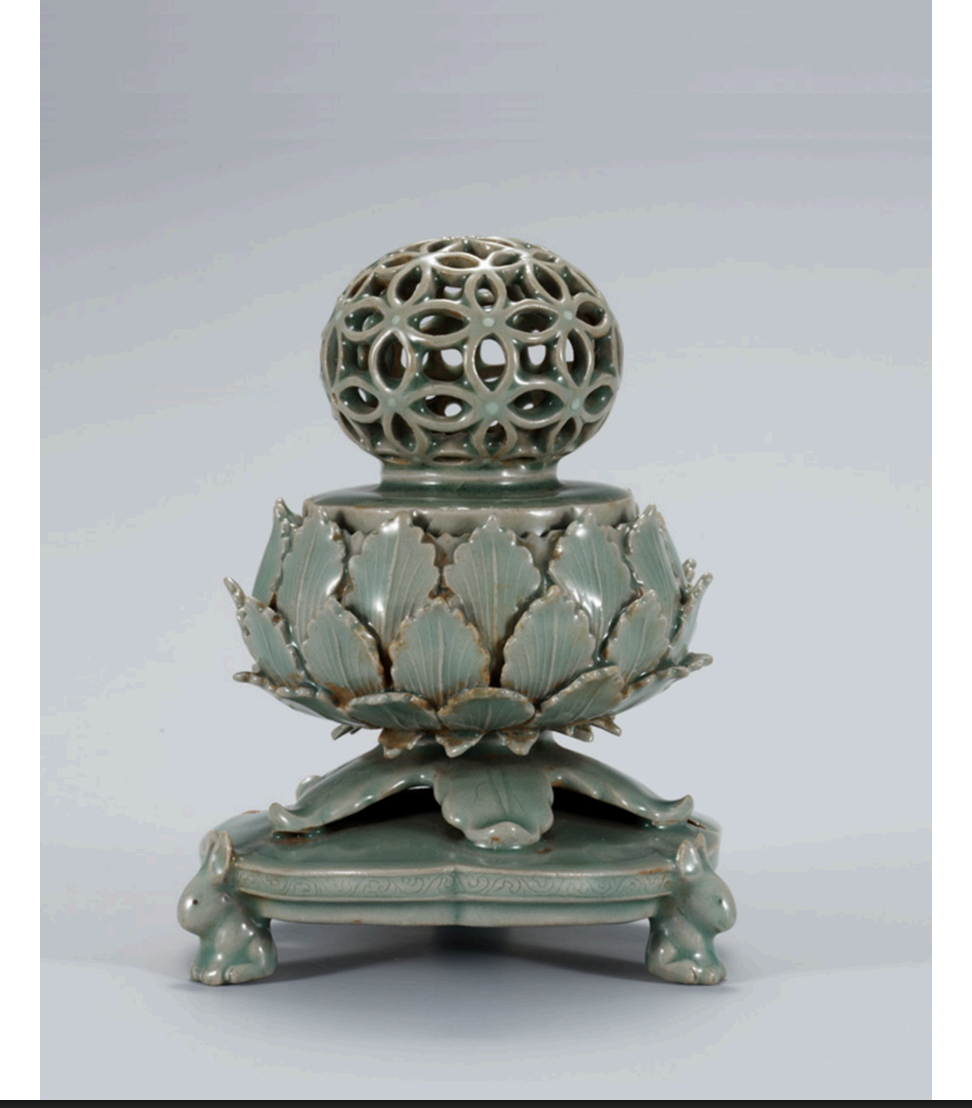
Celadon Incense Burner with Openwork Design, 12th century, Goryeo Dynasty, stoneware with celadon glaze
elaborate luxury incense burners employed many celadon decorative techniques including relief carving, attaching, inlaying
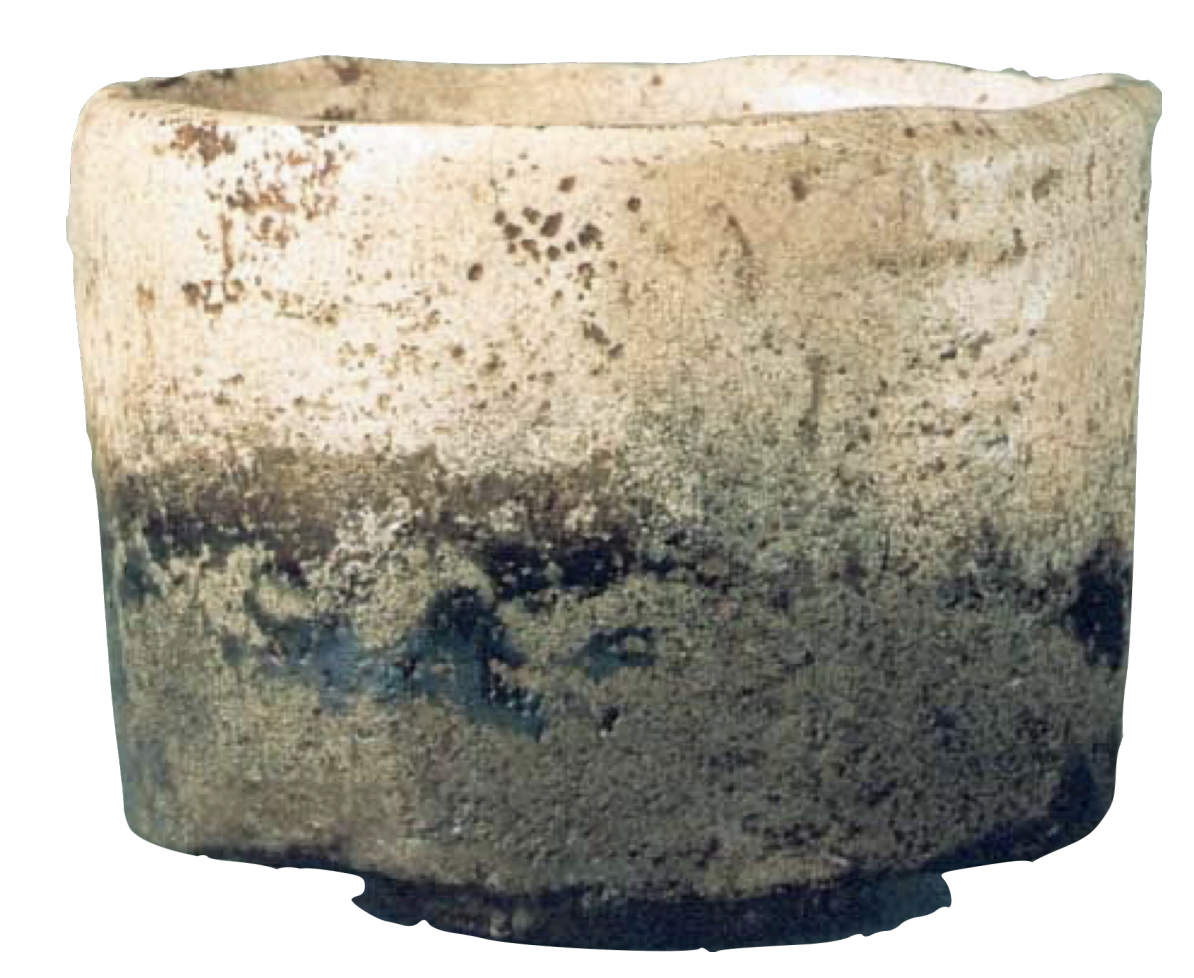
Japanese tea bowl “Fujisan”, hon’ami Koetsu, 17th century, Edo period, raku ware
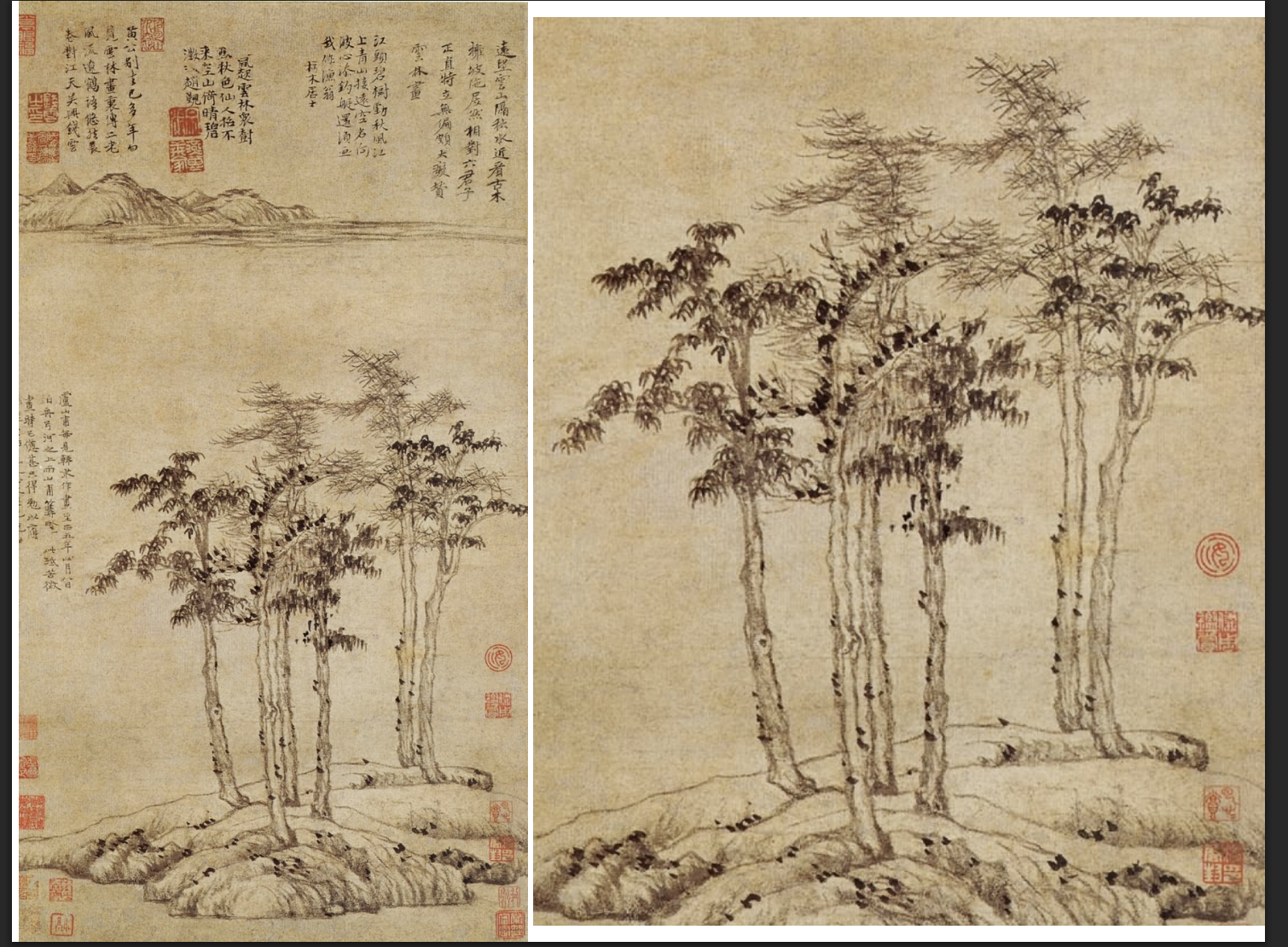
Six Gentlemen, Ni Zan, 14th century, Yuan Dynasty, China, ink on paper
example of literati ideology of spirit over formal likeness, 6 different kinds of trees serving as a metaphor for upright moral character of Confucian gentleman enduring hardship.
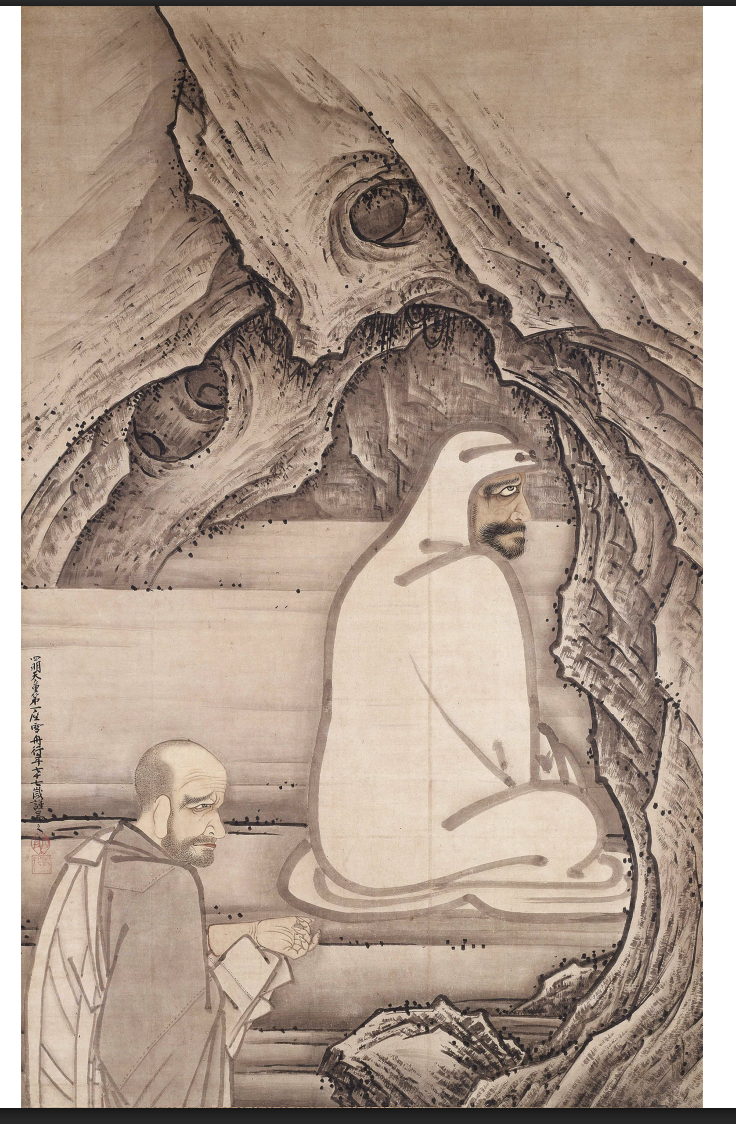
Huike Offering His Arm to the Bodhidharma, Sesshu Toyo, 15th century, Muromachi period, ink on paper
the figure and landscape are painted very differently, the landscape is very textured and has alot of shading whereas the figures are outlined and the rest of the figure is very sparse with the white robe, he contrasts naturalistic looking lastscape with abbreviated line use for the figures, creates visual play using different painting techniques
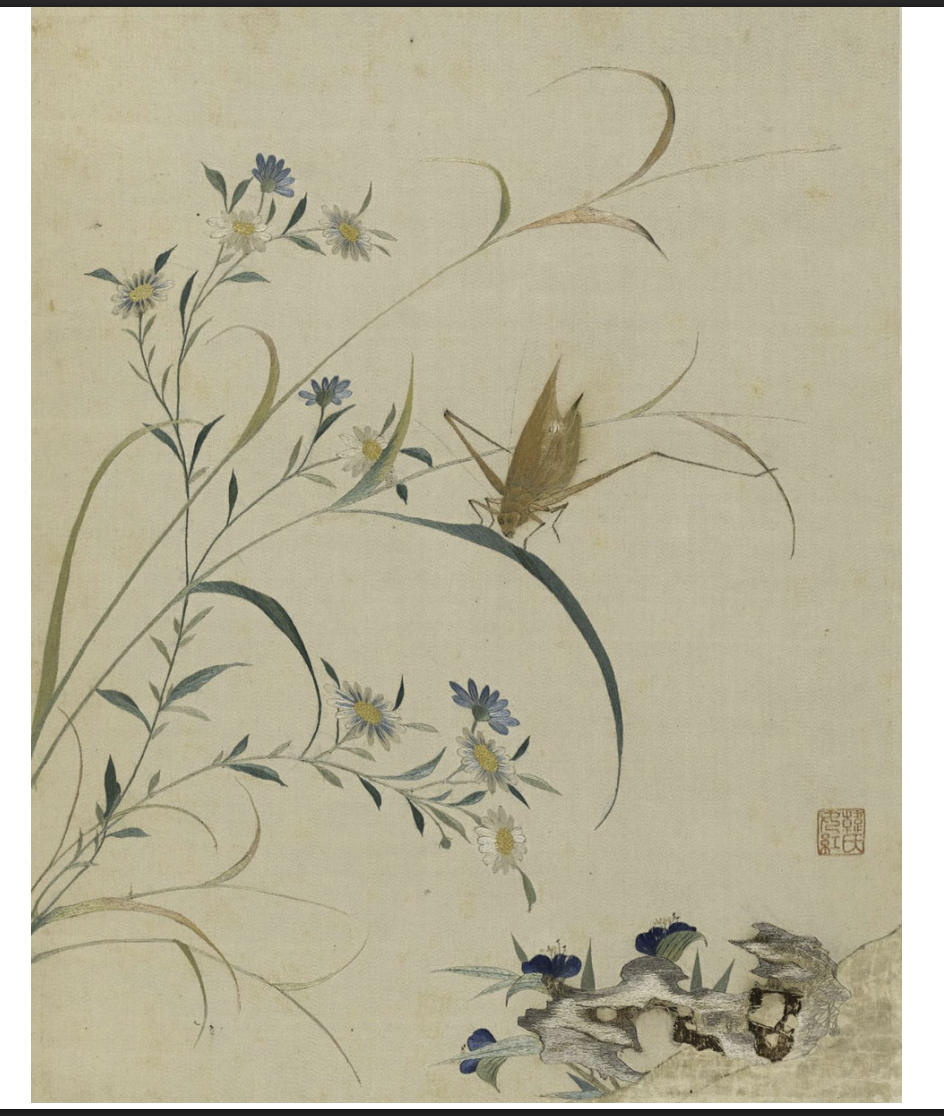
Han Ximeng, Ming Dynasty, Gu embroidery needlework
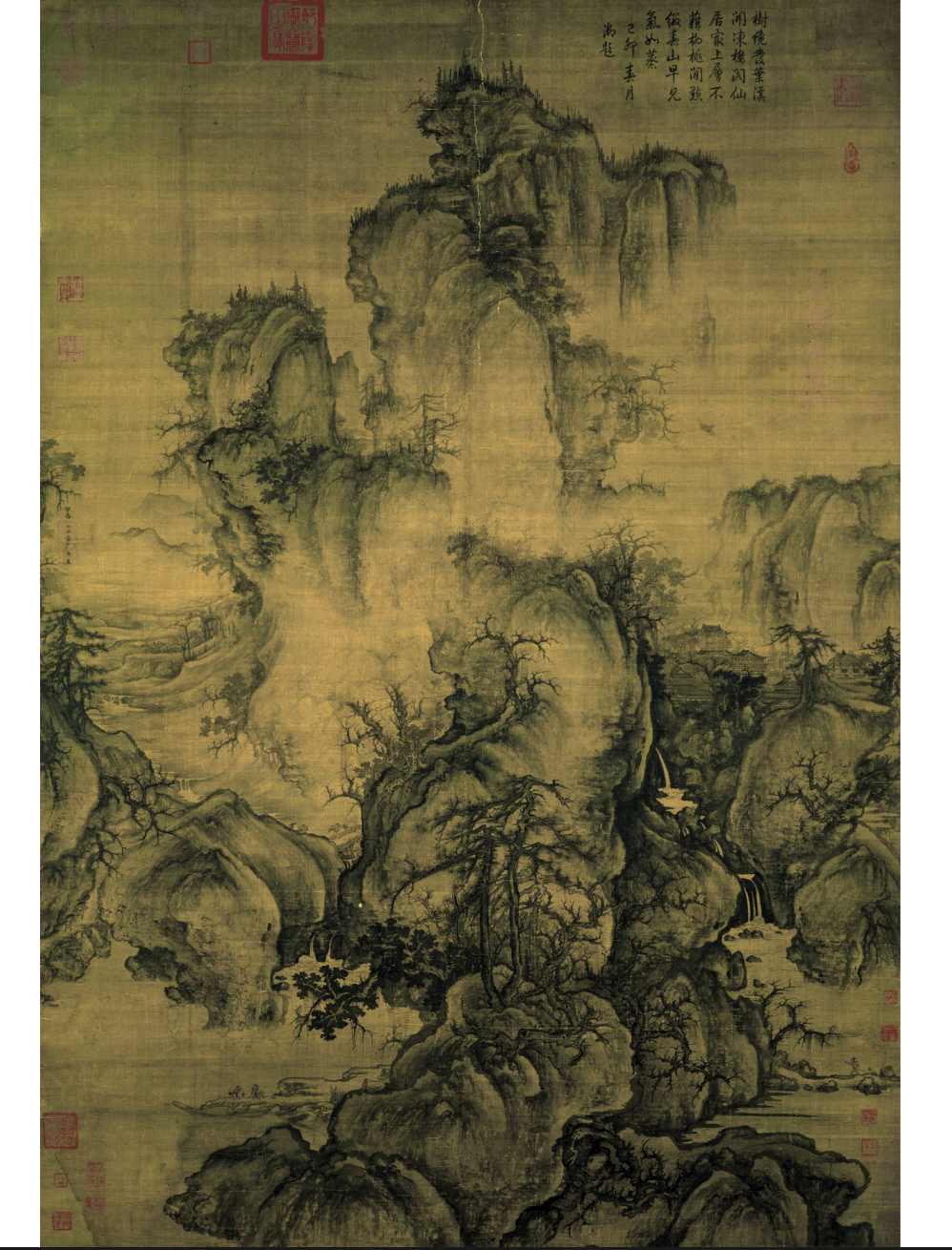
Early Xpring, Guo xi, 11th century, Northern Song Dynasty, hanging scroll ink on silk
aranged the scene to draw the viewer’s eyes up the mountain, workers and people populate the lower regions of the scene a temple is situated in the heights, in china mountains are considered a jumping off point to the heavens
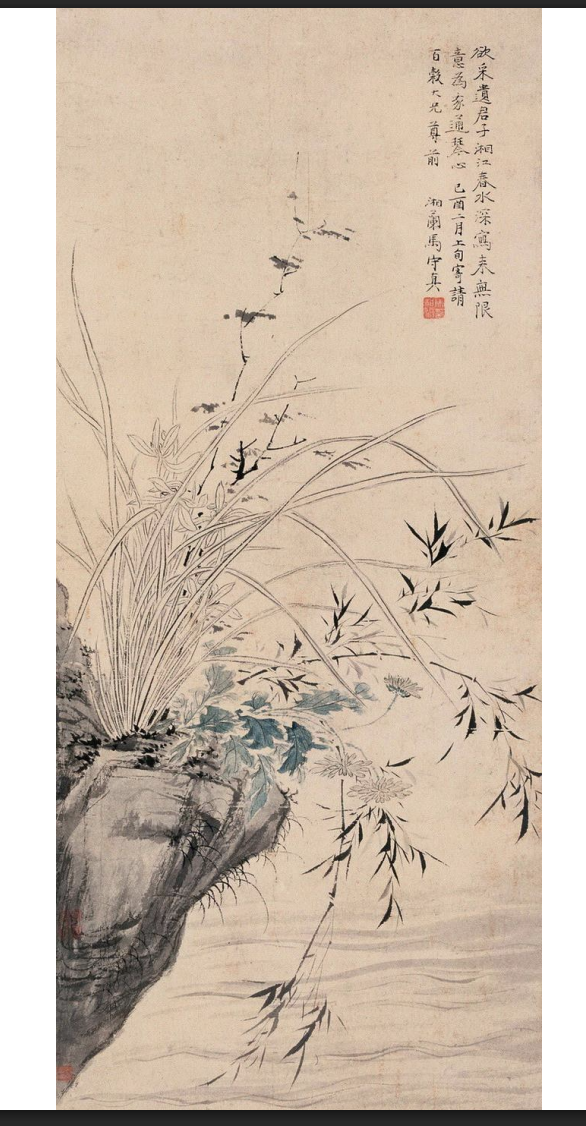
Orchid and Rock, Ma Shouzhen, 16th century, Ming Dynasty, ink on paper
female artist literati painting where subject is easier to find,
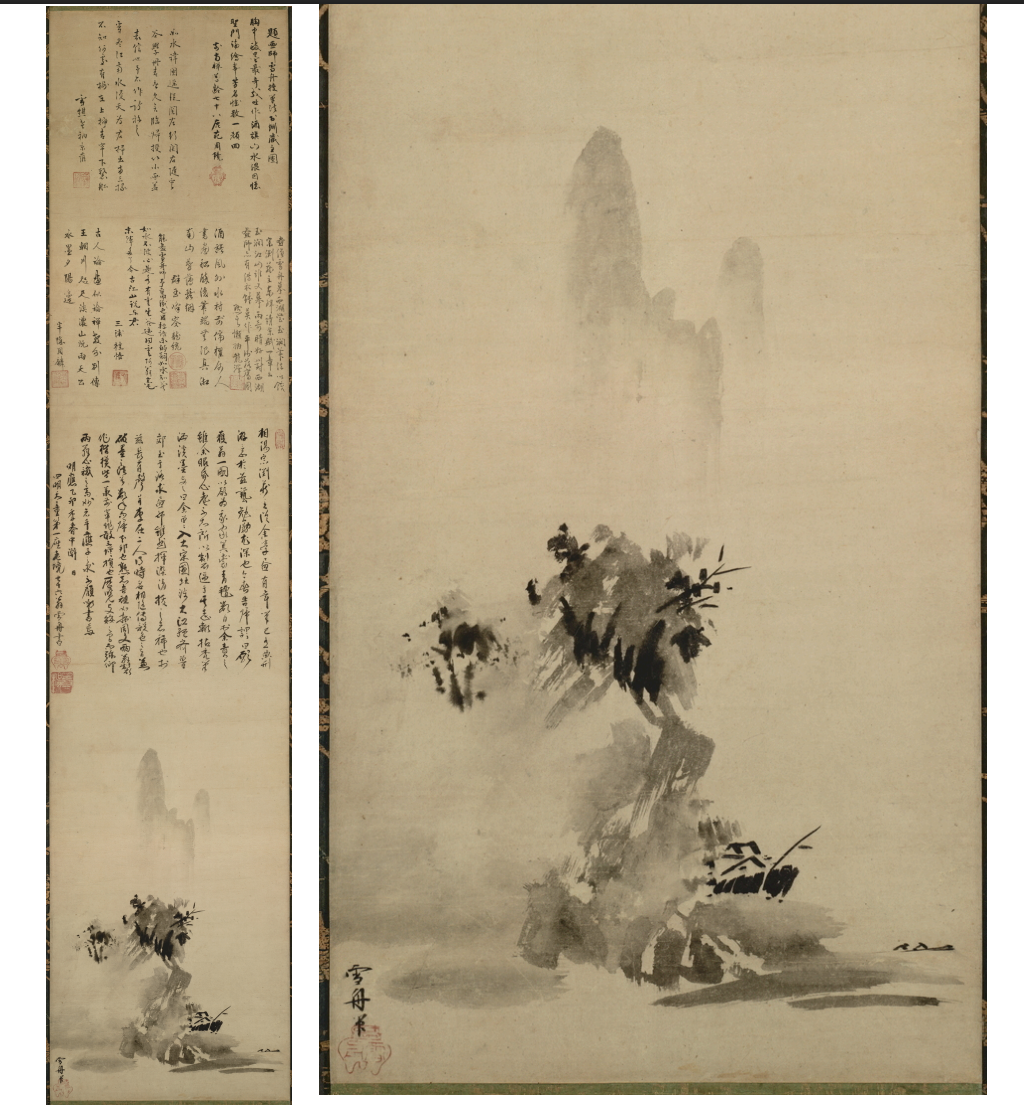
Haboku Sansui, Sesshu Toyo, 15th century, Muromachi period, hanging scroll ink on paper,
Wet brushstrokes to create blurred forms, dramatic high contrast abstract style,
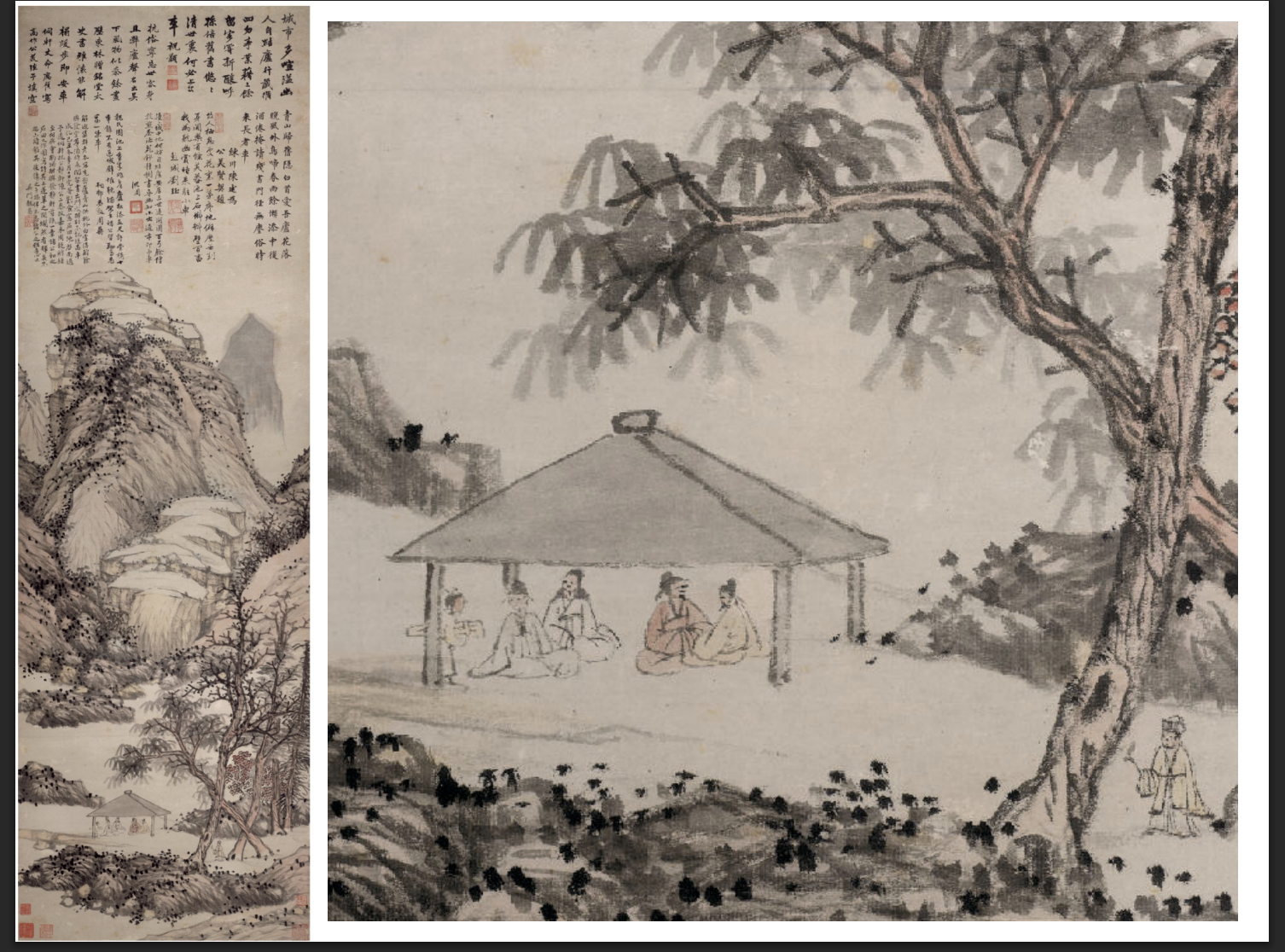
A Graceful Gathering at Wei’s Garden, Shen Zhou, 15th century, Ming Dynasty, ink on paper
reflects Ming dynasty ideal life emphasizing friendship discourse and harmony with nature.
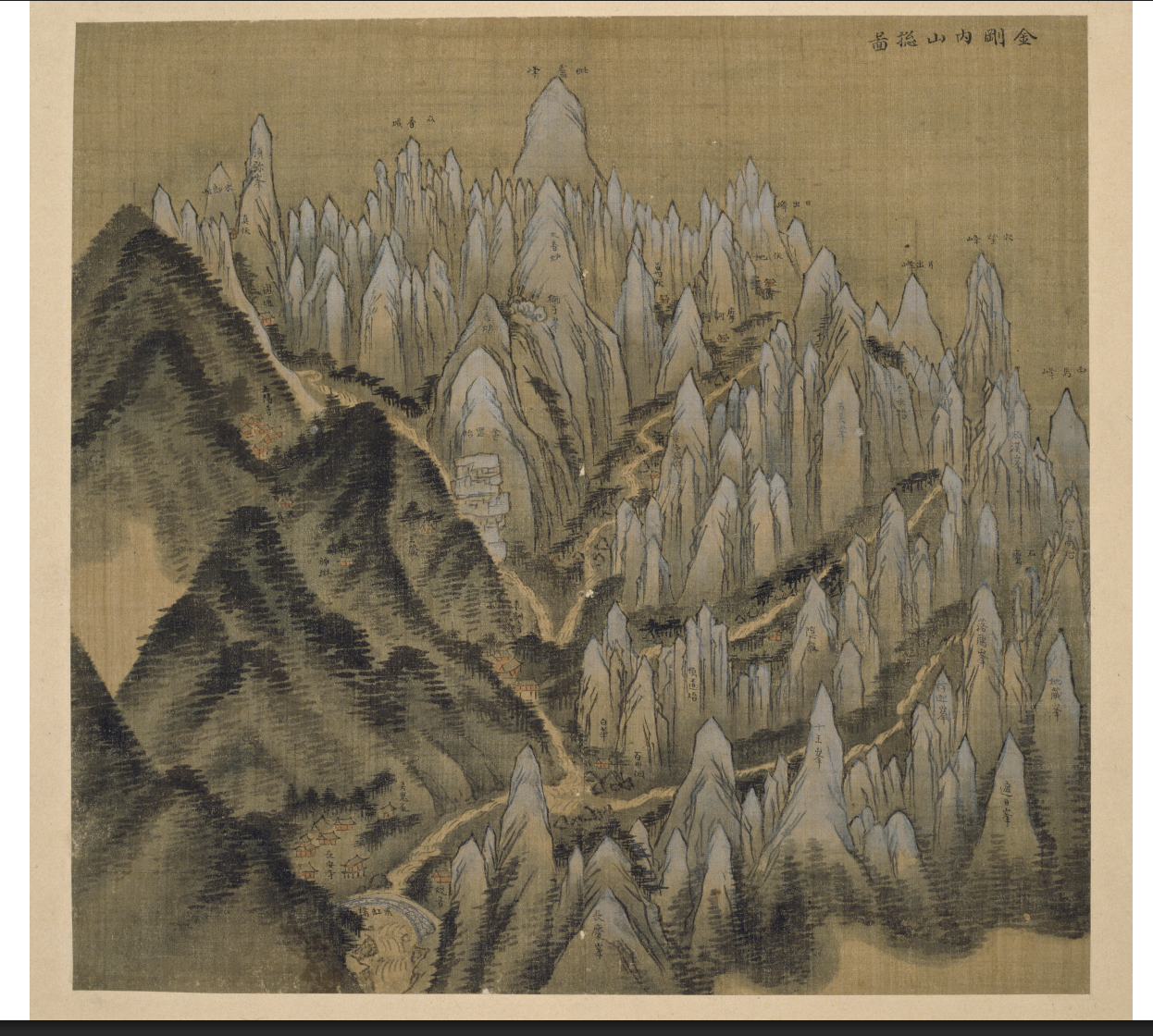
General View of Inner Geumgang, Jeong Seon, 18th century, late Joseon dynasty, ink on paper
true view painting, koreans sought to establish their own distinct cultural identity and painters begin to depict recognizable korean locations rather than imaginary landscapes or chinese scenes
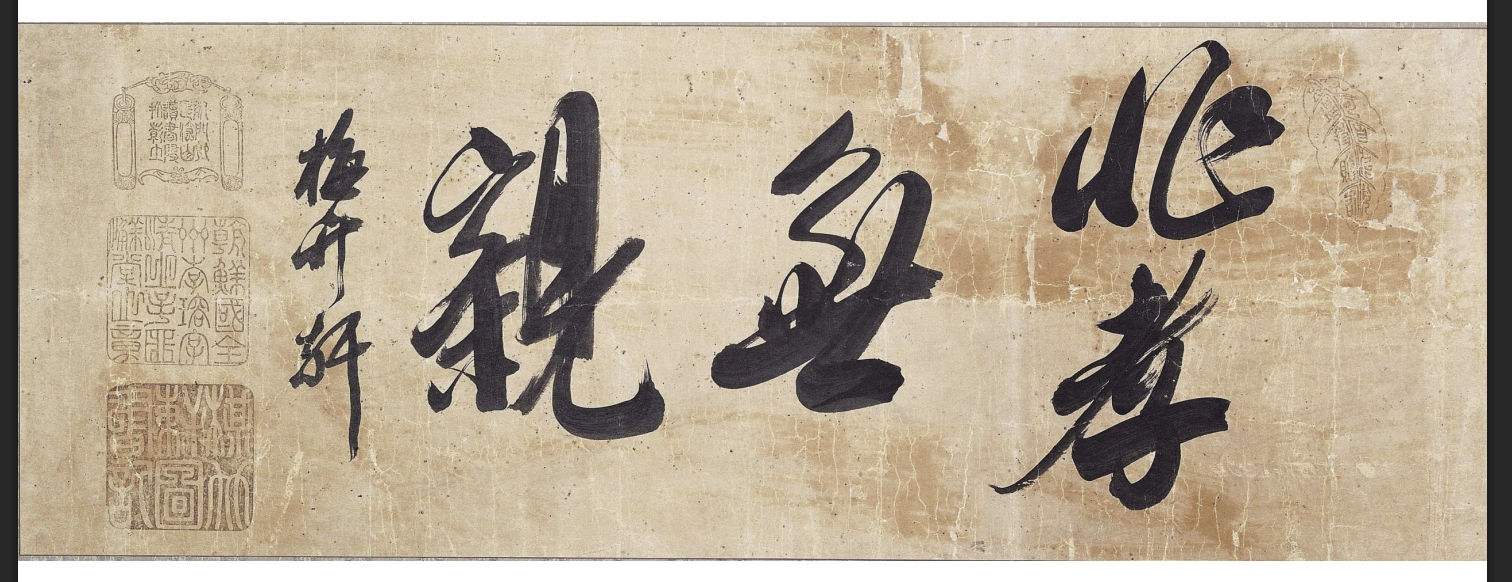
Calligraphy of , Prince Anpyeong15th century, Joseon Dynasty,
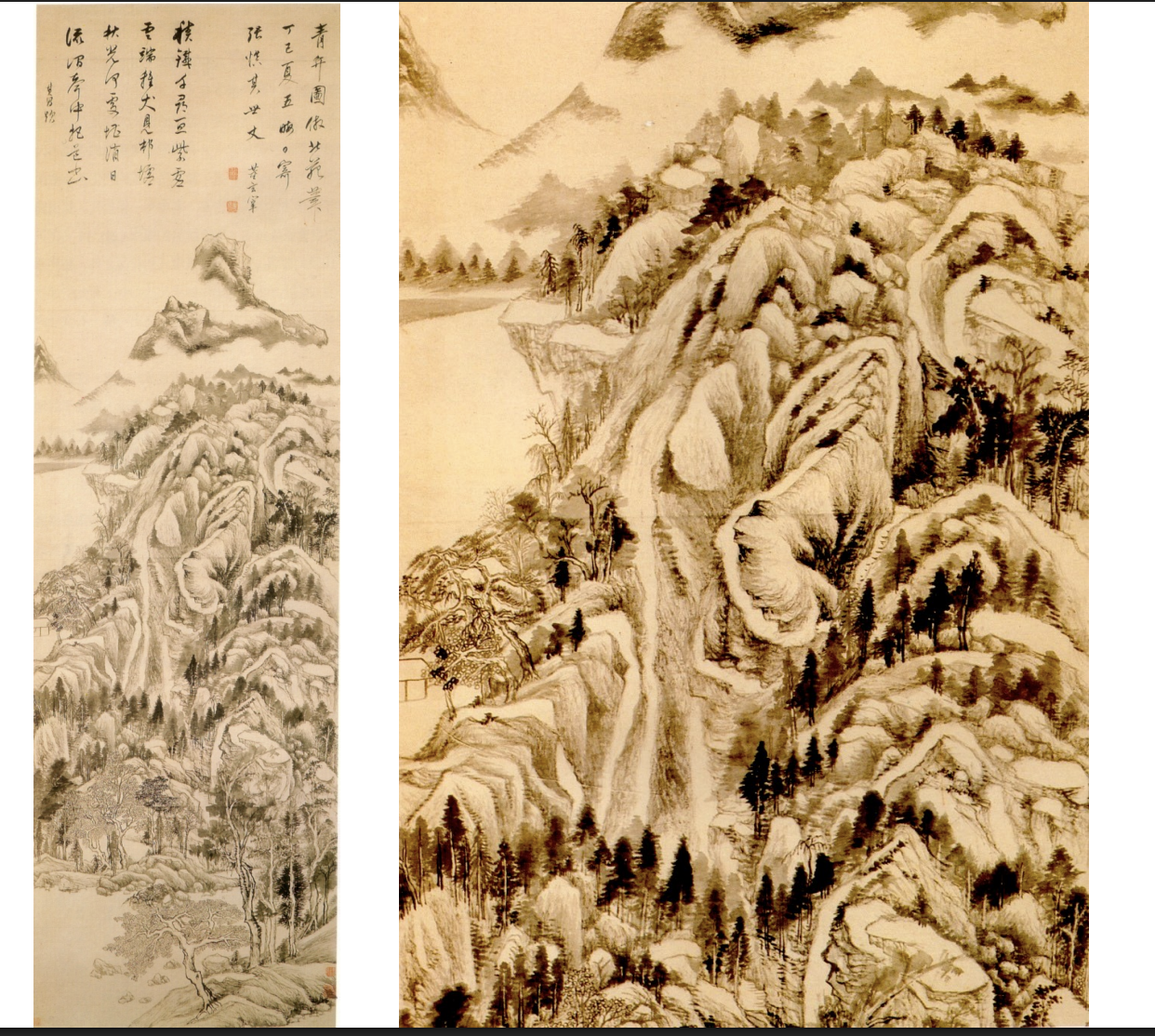
Mt. Qingbian, Dong Qichang, 17th century, Ming Dynasty, hanging scroll ink on paper