NAIA exam 1
 Call Kai
 Learn
Learn Practice Test
 Spaced Repetition
 Match
Match Flashcards
 Knowt Play
1/65

There's no tags or description
Looks like no tags are added yet.
Name | Mastery | Learn | Test | Matching | Spaced | Call with Kai |
|---|
No analytics yet
Send a link to your students to track their progress
66 Terms
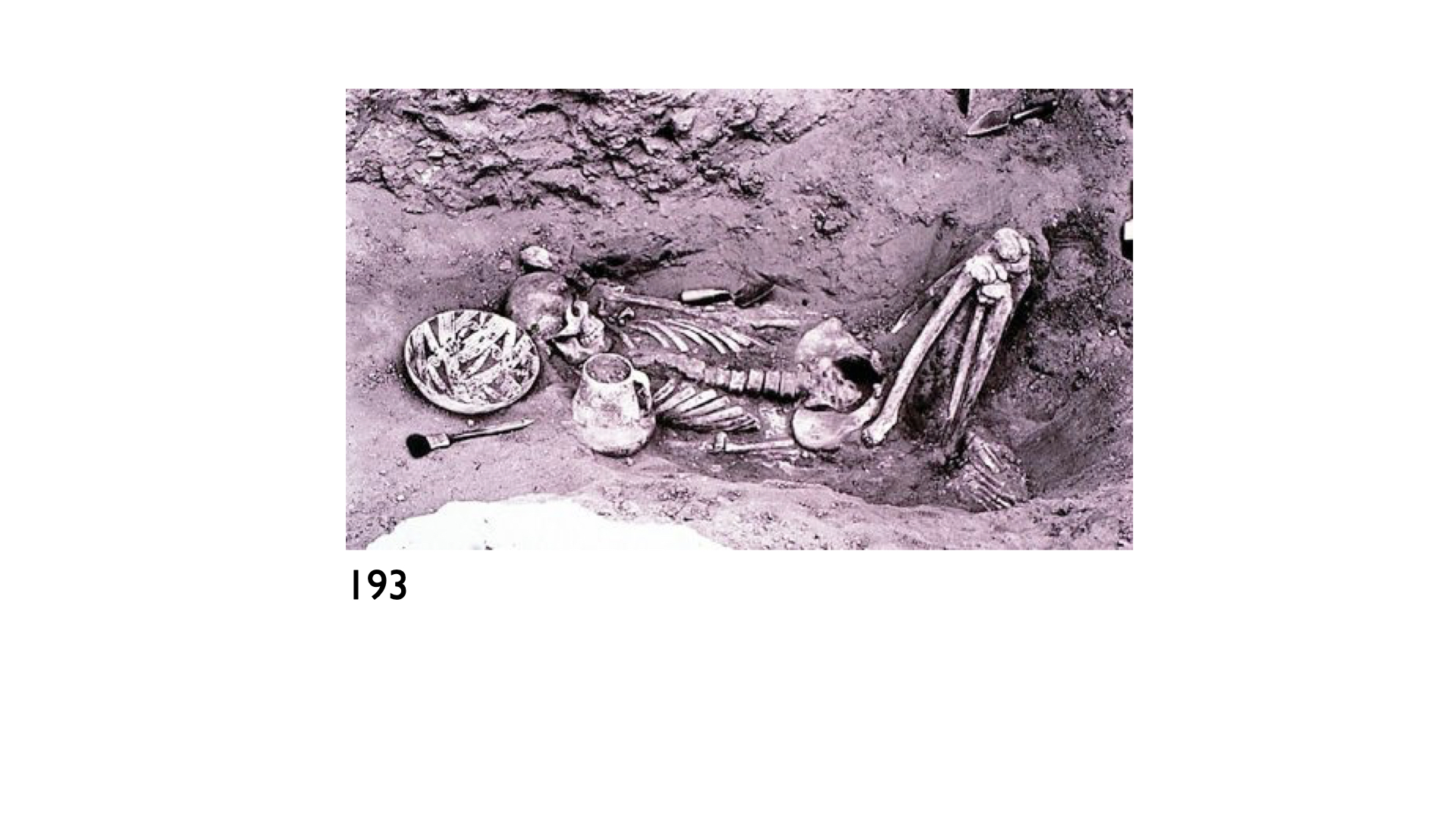
Southwest, Prehistoric, Anasazi (Chaco Canyone)
What is it? — Anasazi painted pottery (bowl and pitcher) with skeleton (a burial site)
Functional and cultural significance — Bowls buried with deceased Anasazi, showcasing highly abstract and geometric designs
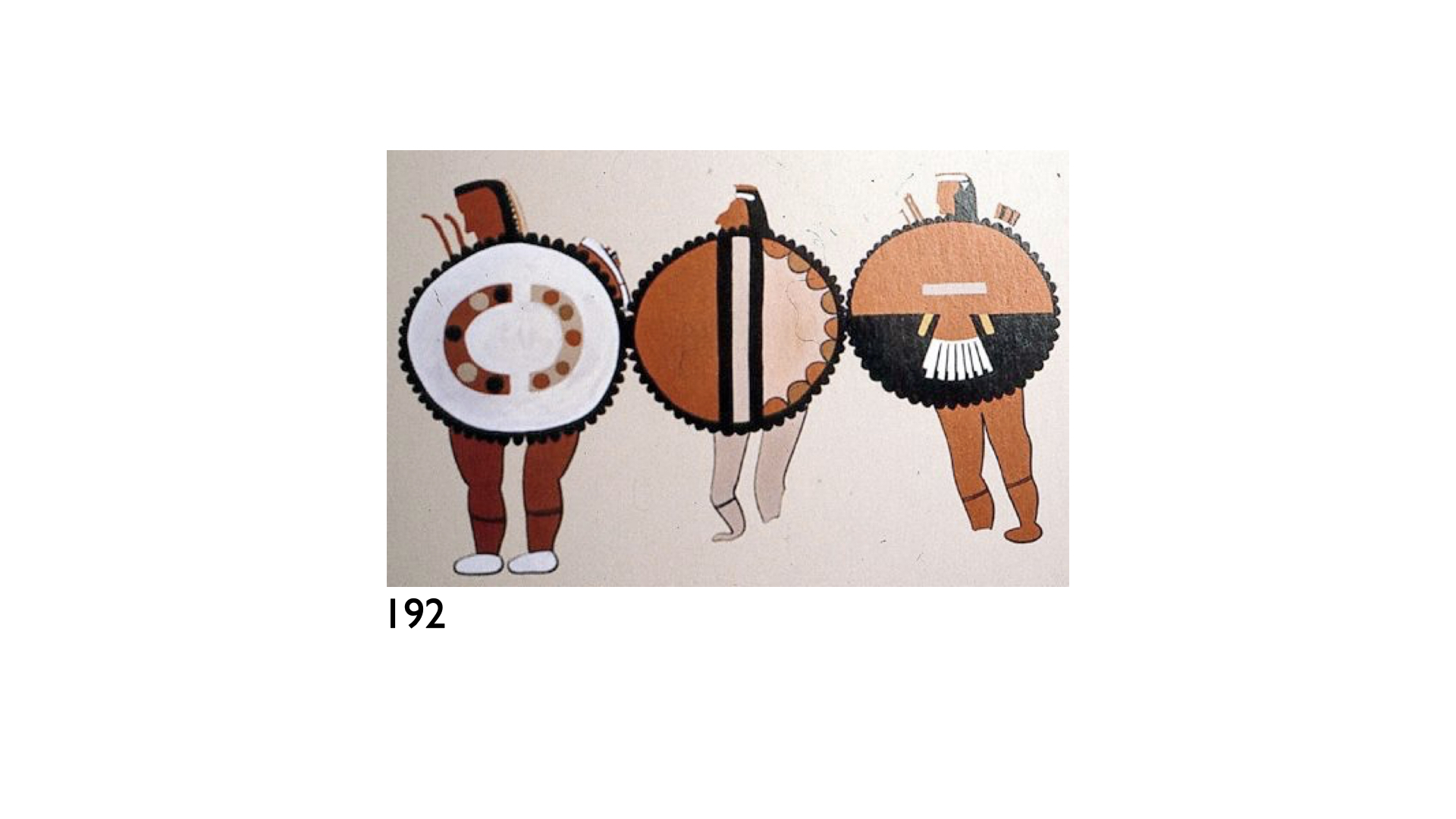
Southwest, Prehistoric, Anasazi (Pottery Mound, New Mexico)
What is it? — Anasazi painted kiva images of a group of three warriors with patterned shields
Functional and cultural significance — Represented warriors of their culture, who were important in protecting against invading groups
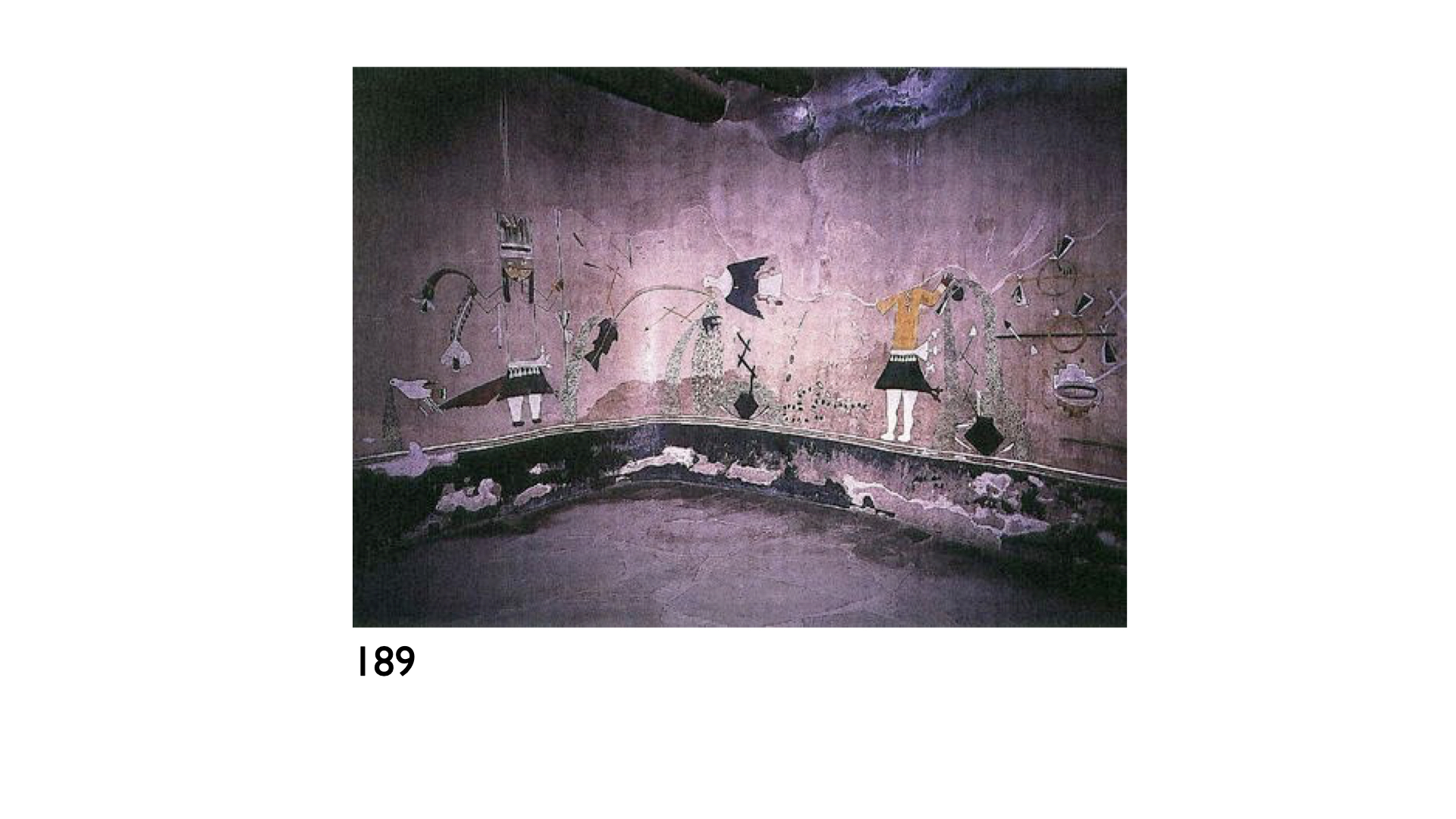
Southwest, Prehistoric, Anasazi
What is it? — Anasazi painted kiva images of rain-making rites from Kuaua, New Mexico, illustrating a kachina deity on the left, animals like an eagle and fish, rain, lightning, and rainbows
Functional and cultural significance — These images allude to themes of fertility of the land, the germination of seeds, and a bountiful harvest, which was important for an agricultural society like the Anasazi
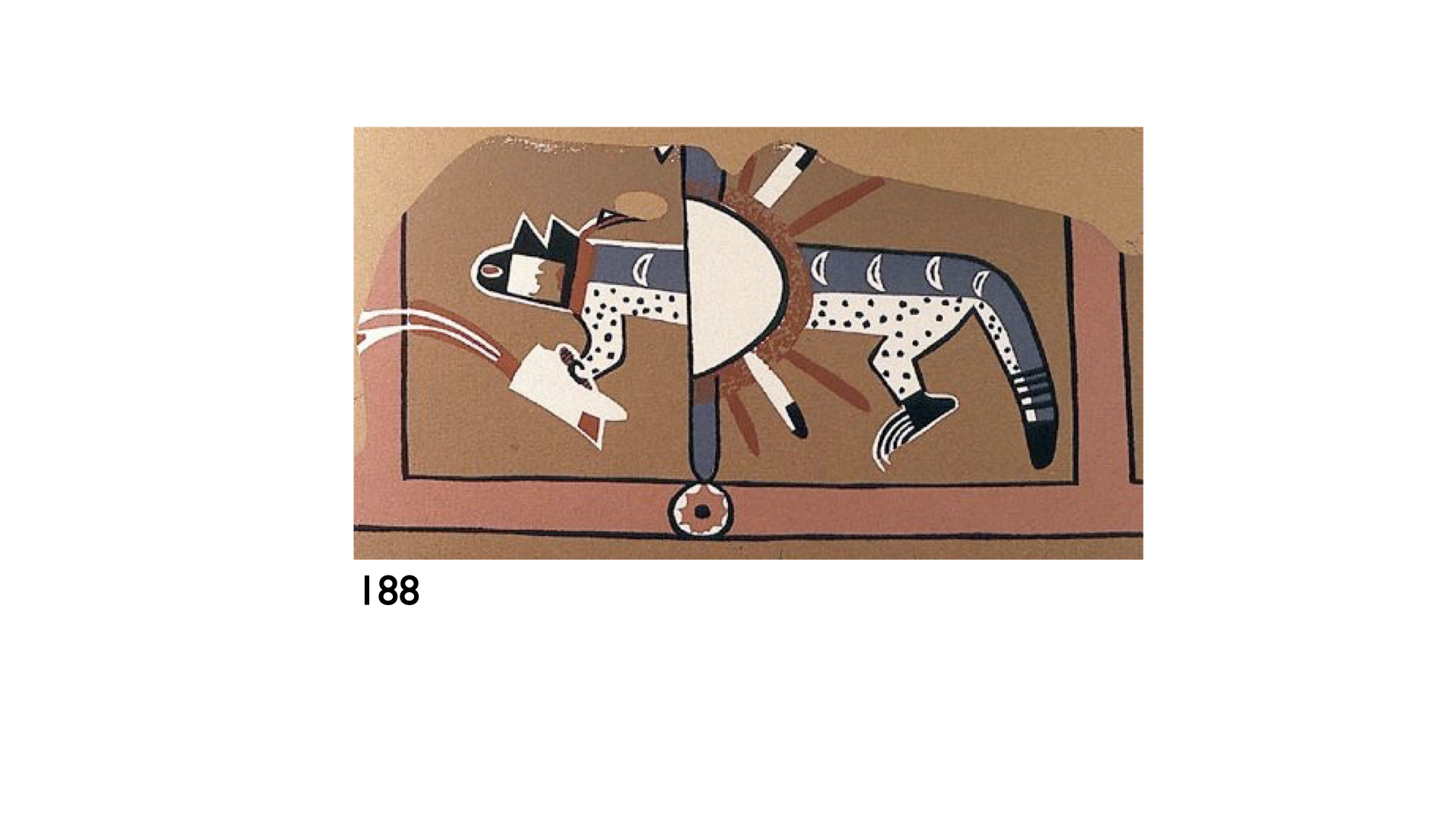
Anasazi, SW, prehistoric
Anasazi painted kiva image. rain-making rites from Kuaua, New Mexico. Puma who is jumping through an emblem and he is holding something in his hand that is spilling
Southwest, Prehistoric, Anasazi
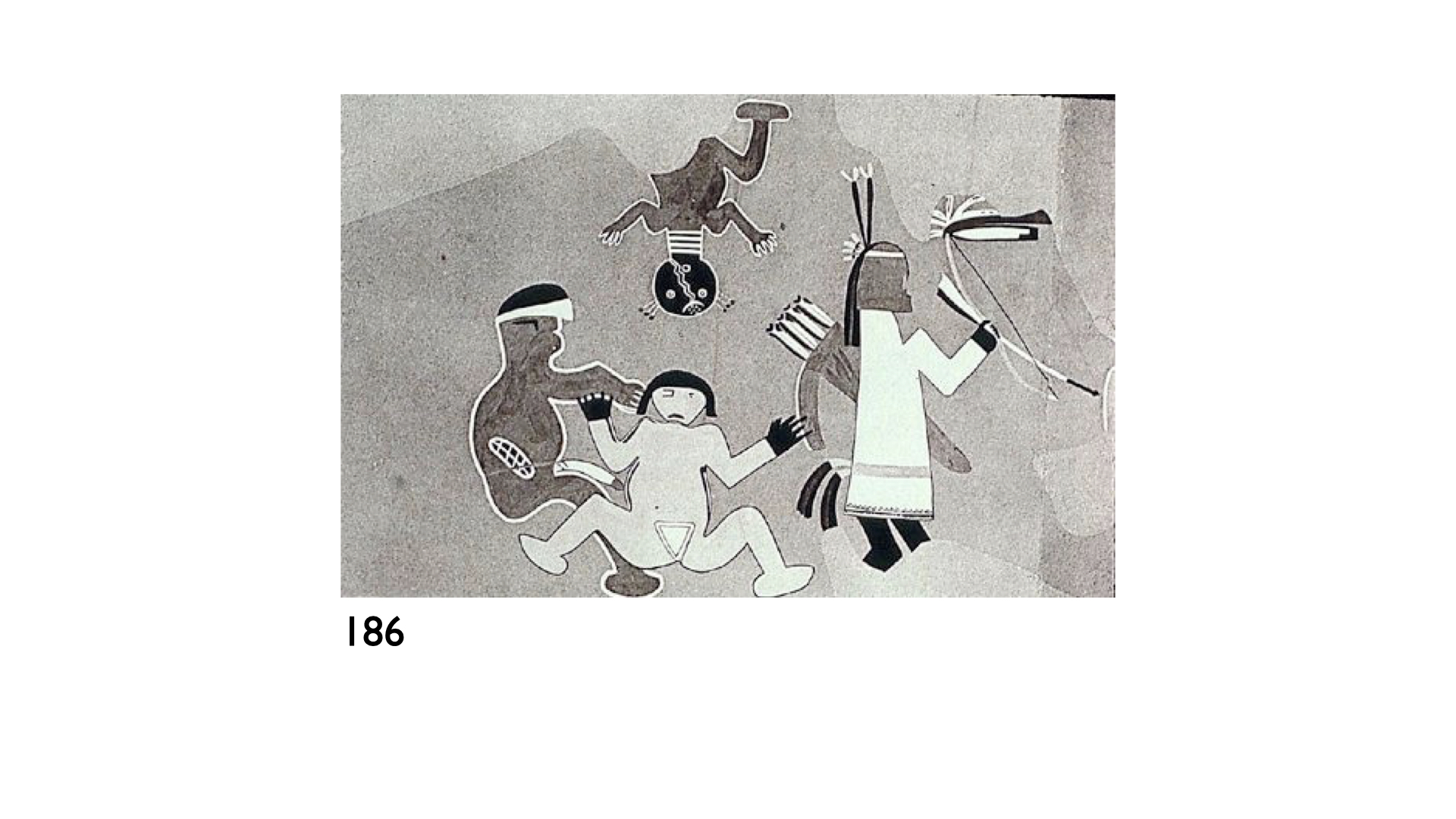
What is it? — Anasazi painted kiva images of a sexual nature (Awatovi, Arizona), showcasing a celestial deity, marked with moon, star, and lightning motifs, coming down from above, a man and a woman whose private areas are exposed, and a warrior figure on the right with a bow and quivers
Functional and cultural significance — Represents major facets in their culture and everyday life — human fertility, religious beliefs, and warriors who protected against invasion
Southwest, Prehistoric, Anasazi
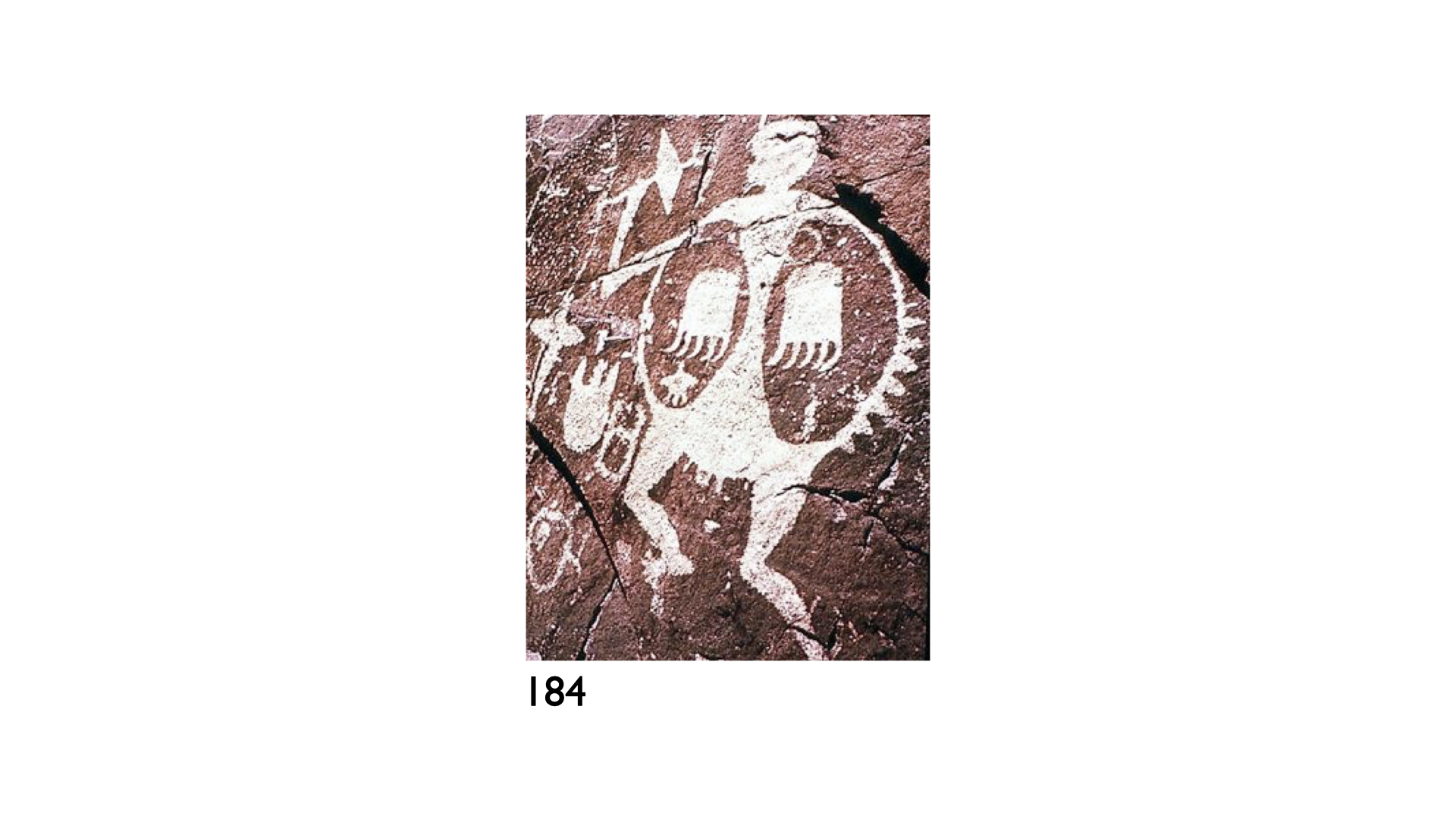
What is it? — Anasazi rock painting of a warrior with a shield, marked by two bear claws, who holds some sort of double-headed axe
Functional and cultural significance — represents an aspect of Anasazi life, which was conflict with other tribes, and the warriors in their culture who protected against invading groups
Southwest, Prehistoric, Anasazi (Chaco Canyon)
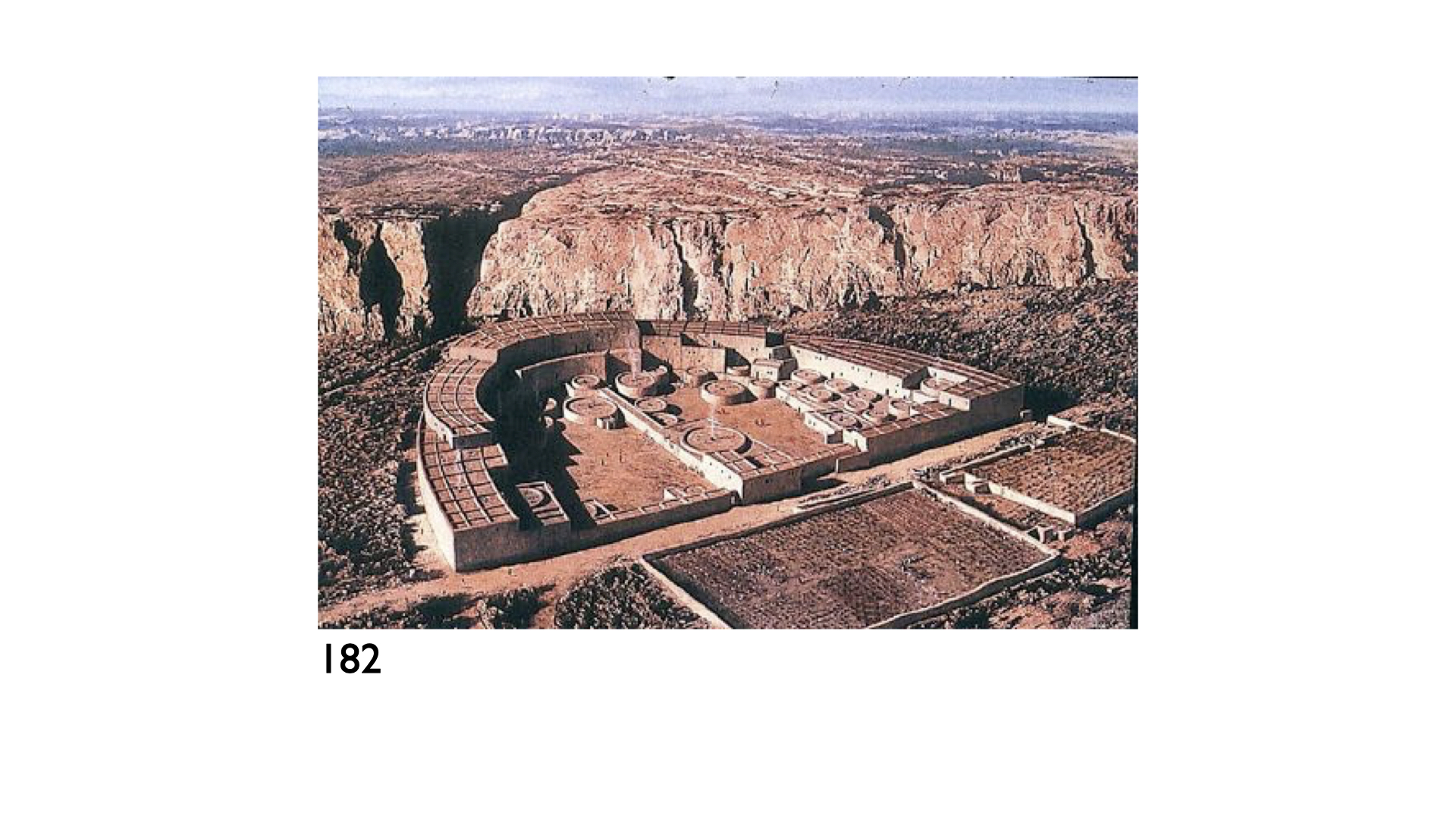
What is it? — Reconstructed site showing large fortified complex with dwellings and kivas at Chaco Canyon
Functional and cultural significance — Illustrates how the Anasazi of Chaco Canyon opted for building high walls, gates, and vantage points for protection + created kivas as religious spaces, with painted walls
Southwest, Prehistoric, Anasazi (Mesa Verde)
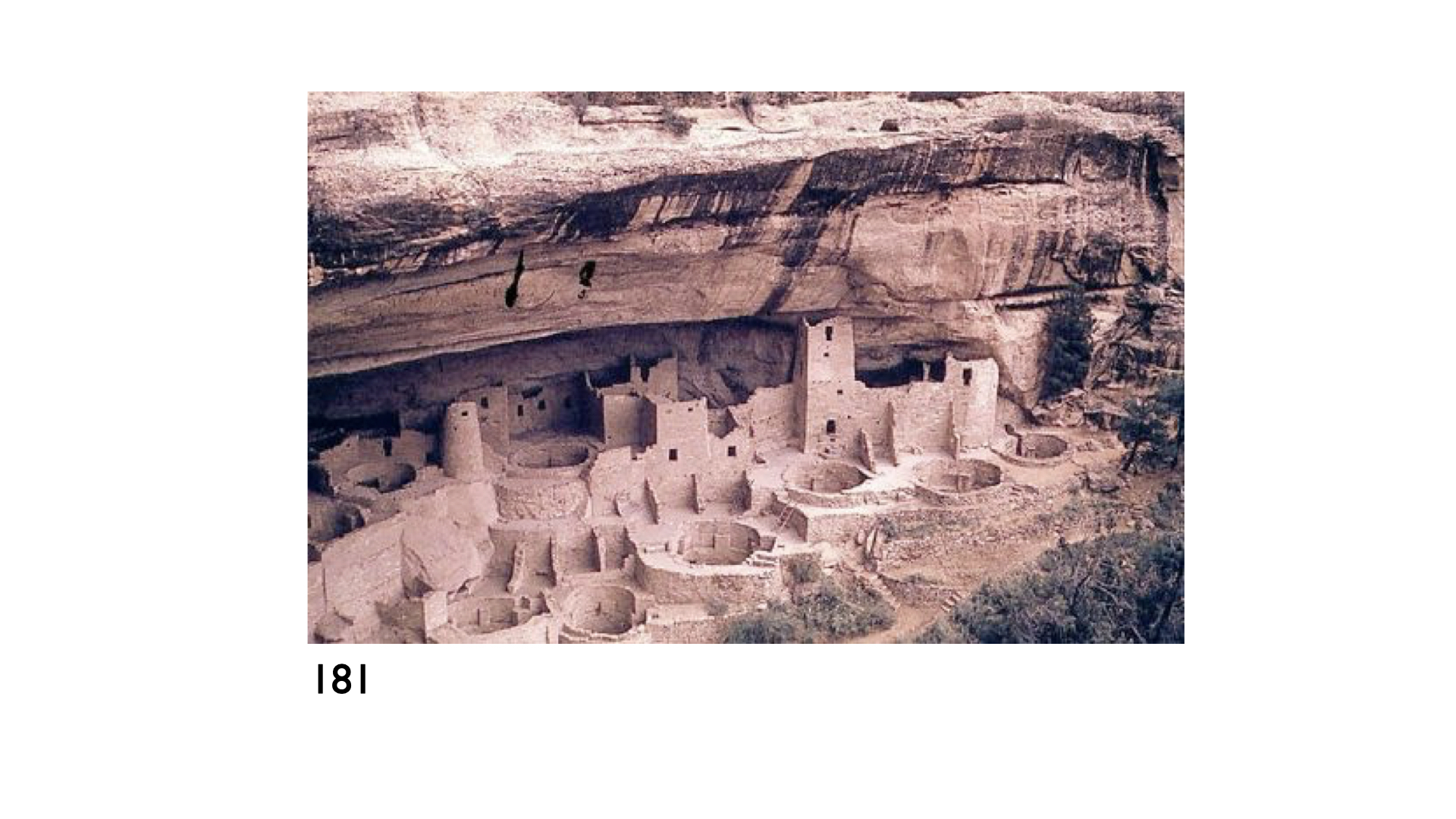
What is it? — Anasazi cliff dwellings and underground kivas at Mesa Verde
Functional and cultural significance — The Anasazi in the Mesa Verde opted to build their settlements in cliff overhangs to guard against other tribes and the weather, and the underground kivas represented throughout served as spiritual spaces
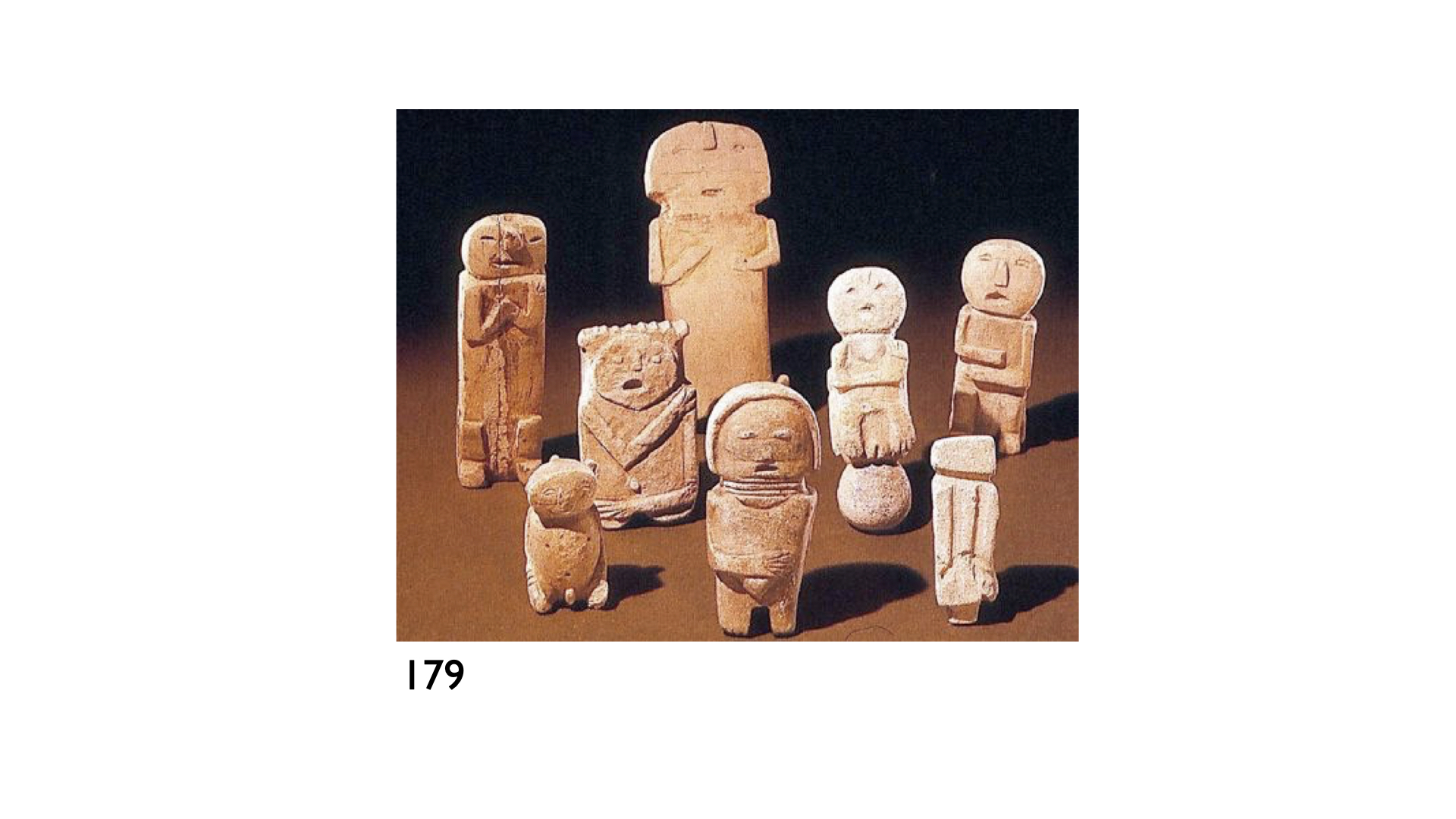
Southwest, Prehistoric, Mogollon
What is it? — Mogollon stone anthropomorphic figures, very simplified and abstracted with hands folded at the front of their body
Functional and cultural significance — Could be precursors to kachina dolls, which worked to represent and educate members on the deities of their culture
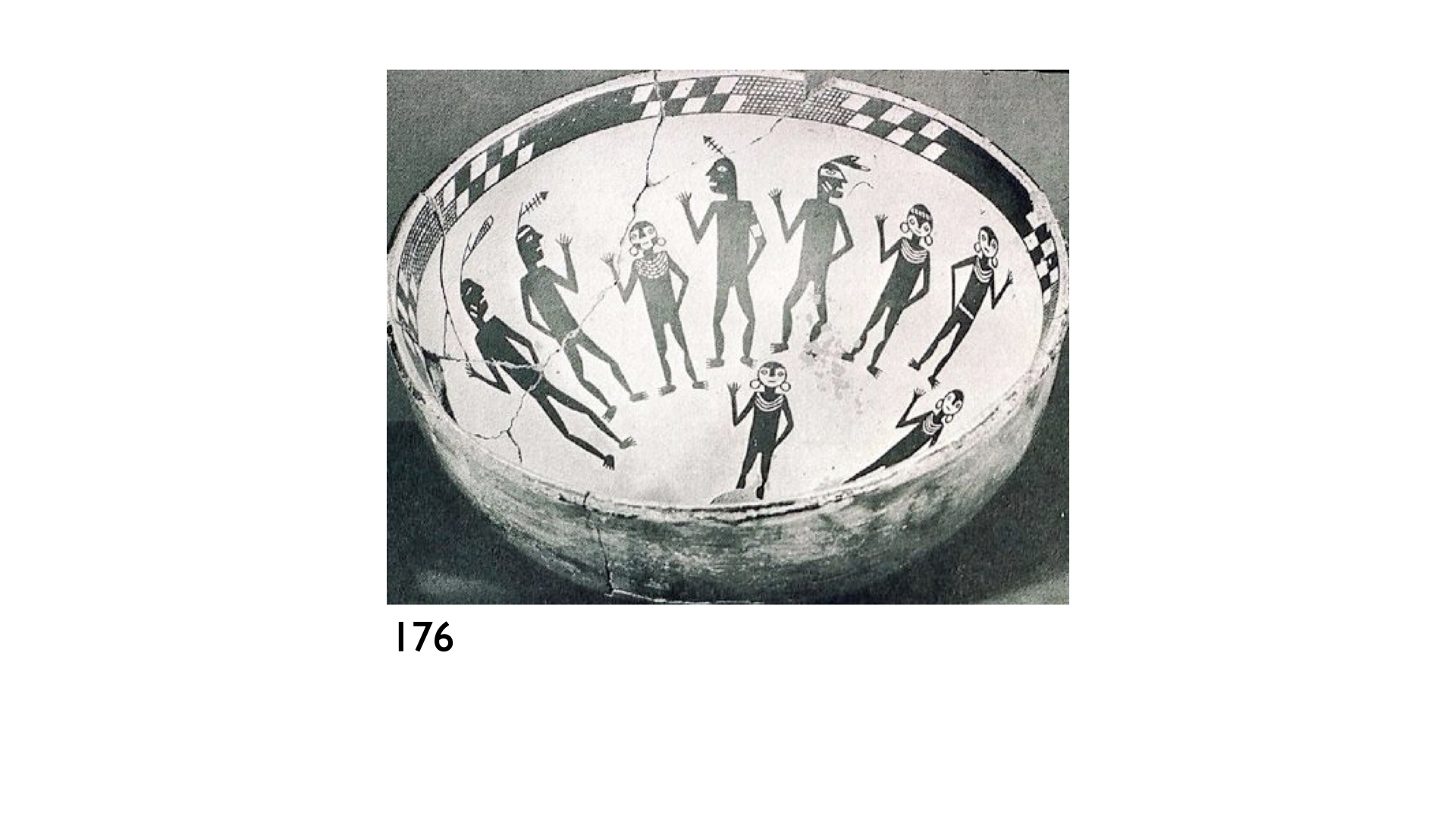
Southwest, Prehistoric, Mogollon
What is it? — Mogollon painted bowl of men and women in some ritual scene
Functional and cultural significance — The bowl represents a ceremony with a collection of both men and women, although the exact meaning of the ceremony is unclear
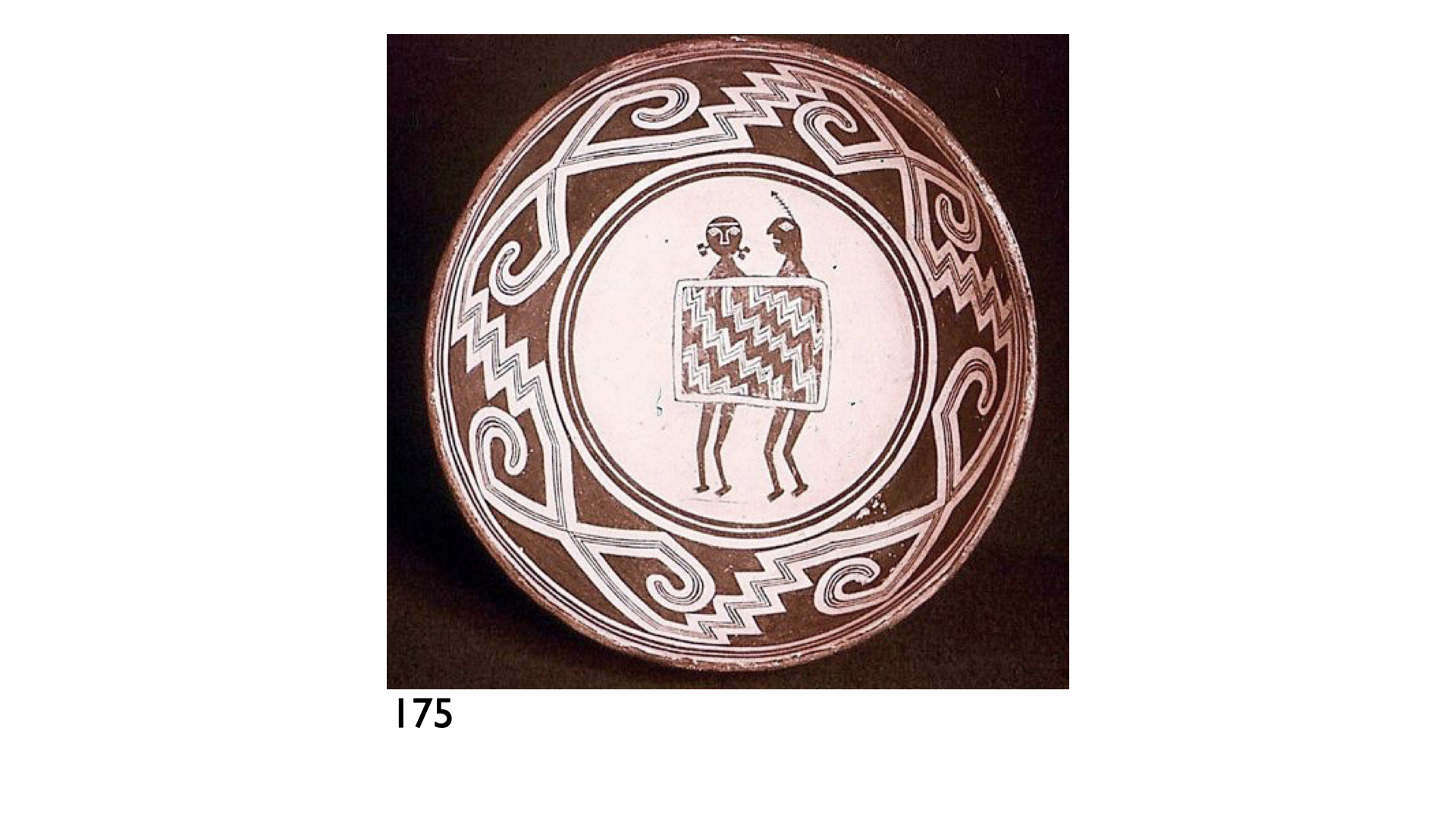
Southwest, Prehistoric, Mogollon
What is it? — Mogollon painted bowl with a couple behind a blanket with a red and white zigzag pattern
Functional and cultural significance — With the man and woman behind a blanket (gender indicated by the swirly hairstyle of the woman and the single feather sticking out of the man’s head), this bowl was likely a means of celebrating marriage
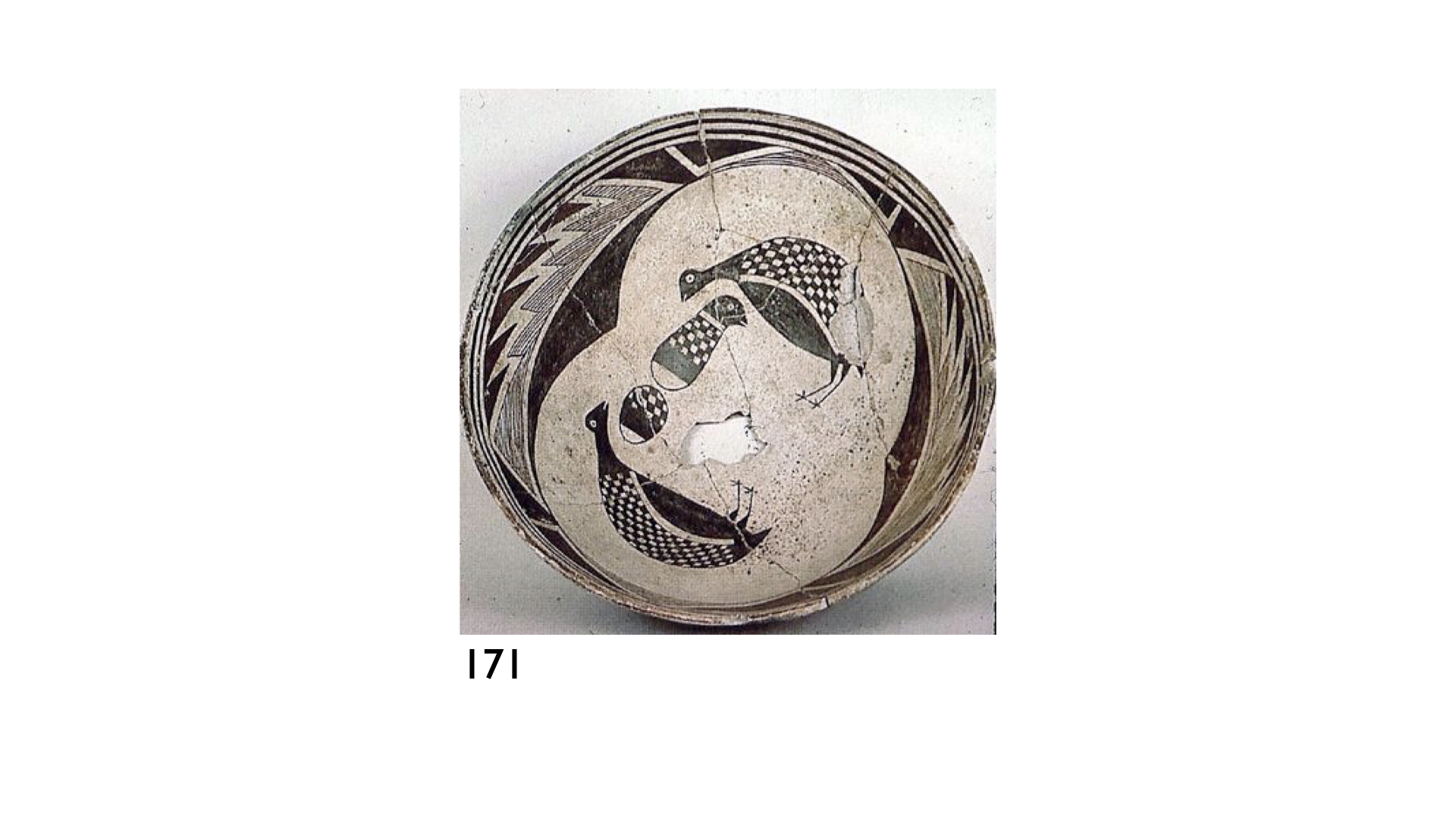
Southwest, Prehistoric, Mogollon
What is it? — Mogollon painted bowl with two birds and two hatching eggs images, marked by a checkered pattern
Functional and cultural significance — Functioned as a burial bowl but also elucidates how the Mogollon drew connections between themselves and the animals they encountered, specifically in taking care of the young as represented by the two birds looking voer the eggs
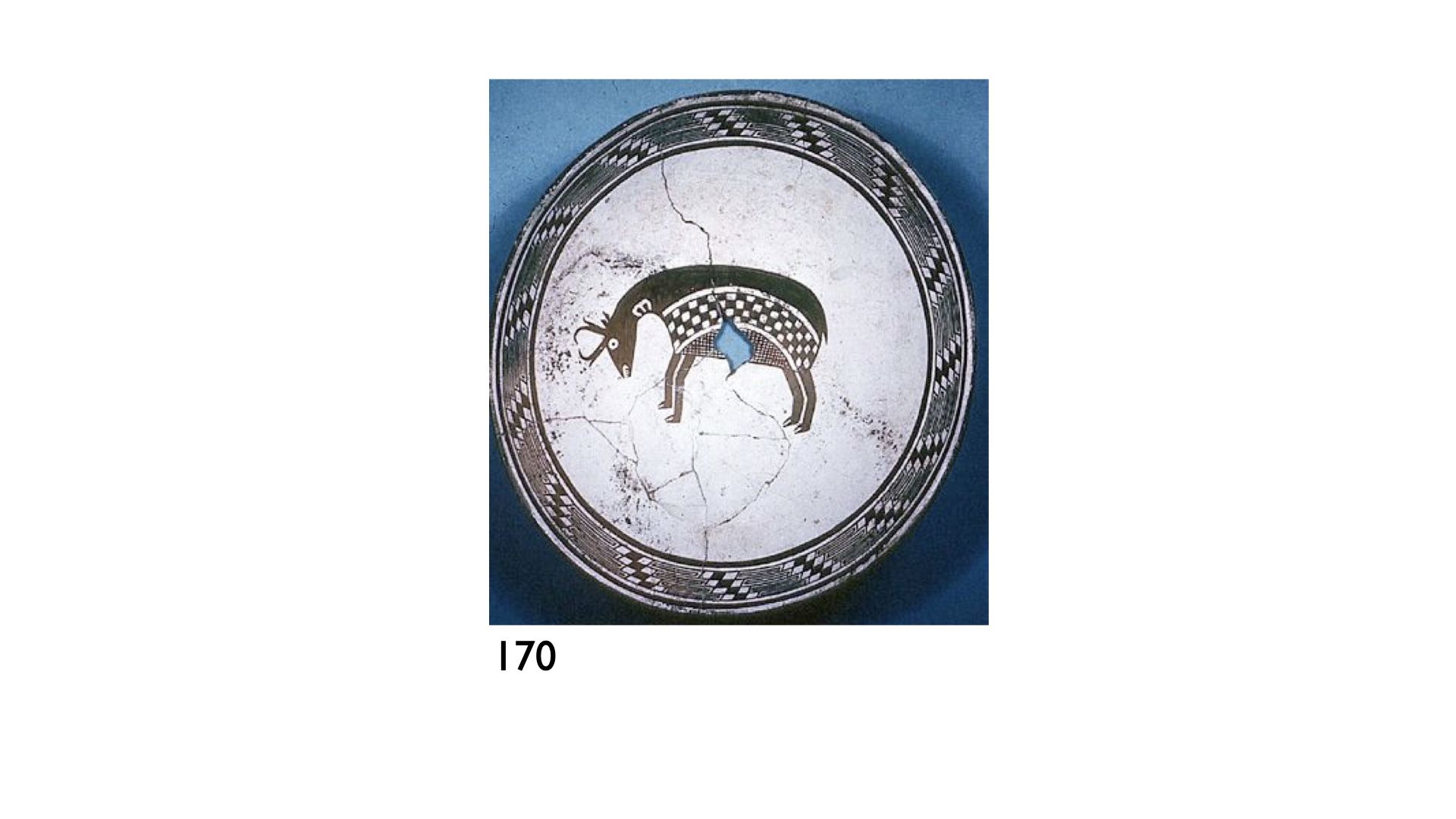
Southwest, Prehistoric, Mogollon
What is it? — Mimbres painted bowl with a deer image, marked by highly geometric black-and-white patterns on the actual deer itself in the center and lining the border
Functional and cultural significance — The hole in the middle indicated that this bowl had a burial use, where libations would be poured through the hole
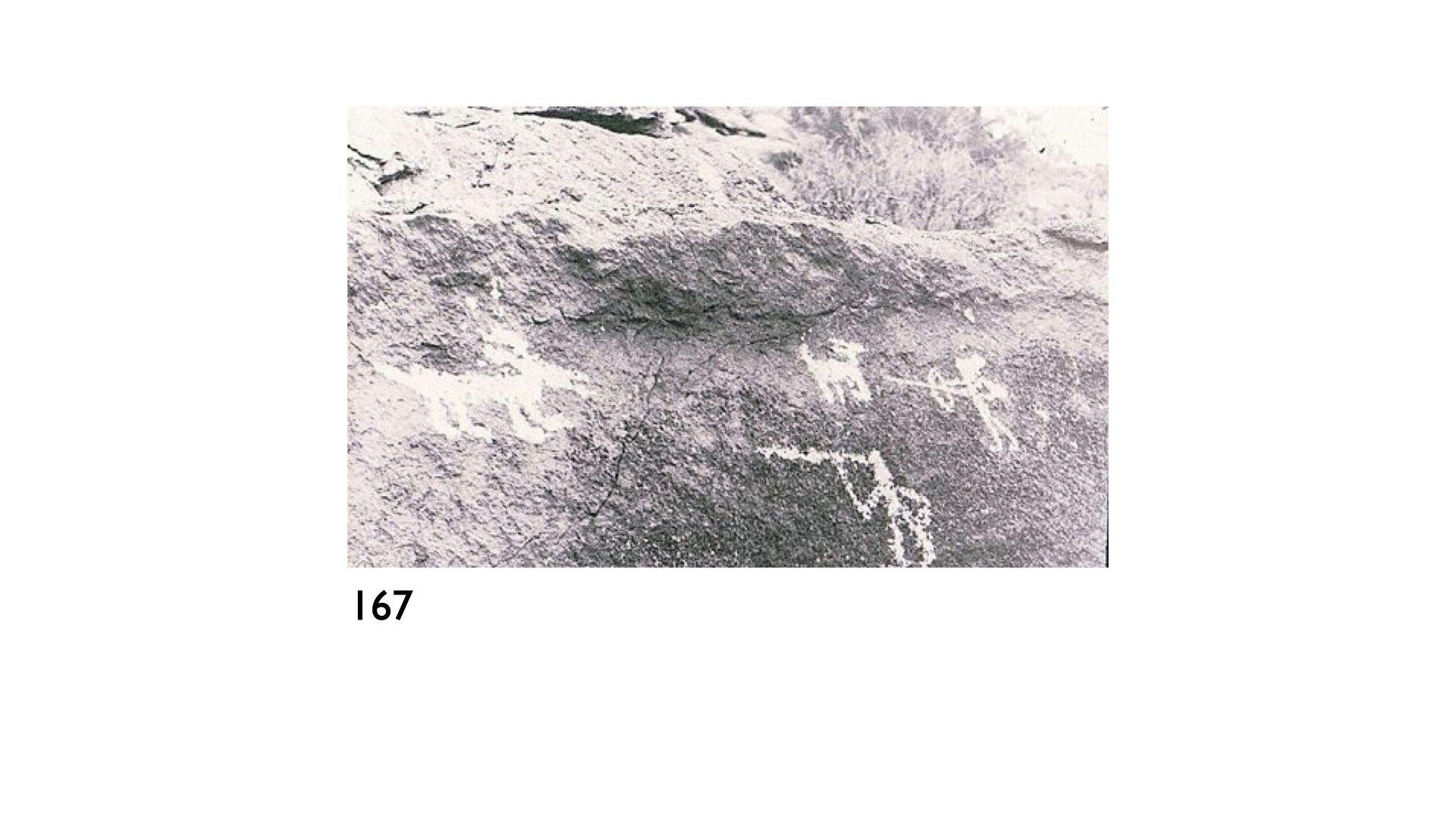
Southwest, Prehistoric, Hohokam
What is it? — Hohokam petroglyph with hunting imagery, done by hitting the surface with hard stone
Functional and cultural significance — The simple representation of two human stick figures, one with a spear and the other with a bow and arrow, raising their weapons towards two mammals sheds light on Hohokam people hunting and how they go about obtaining their food
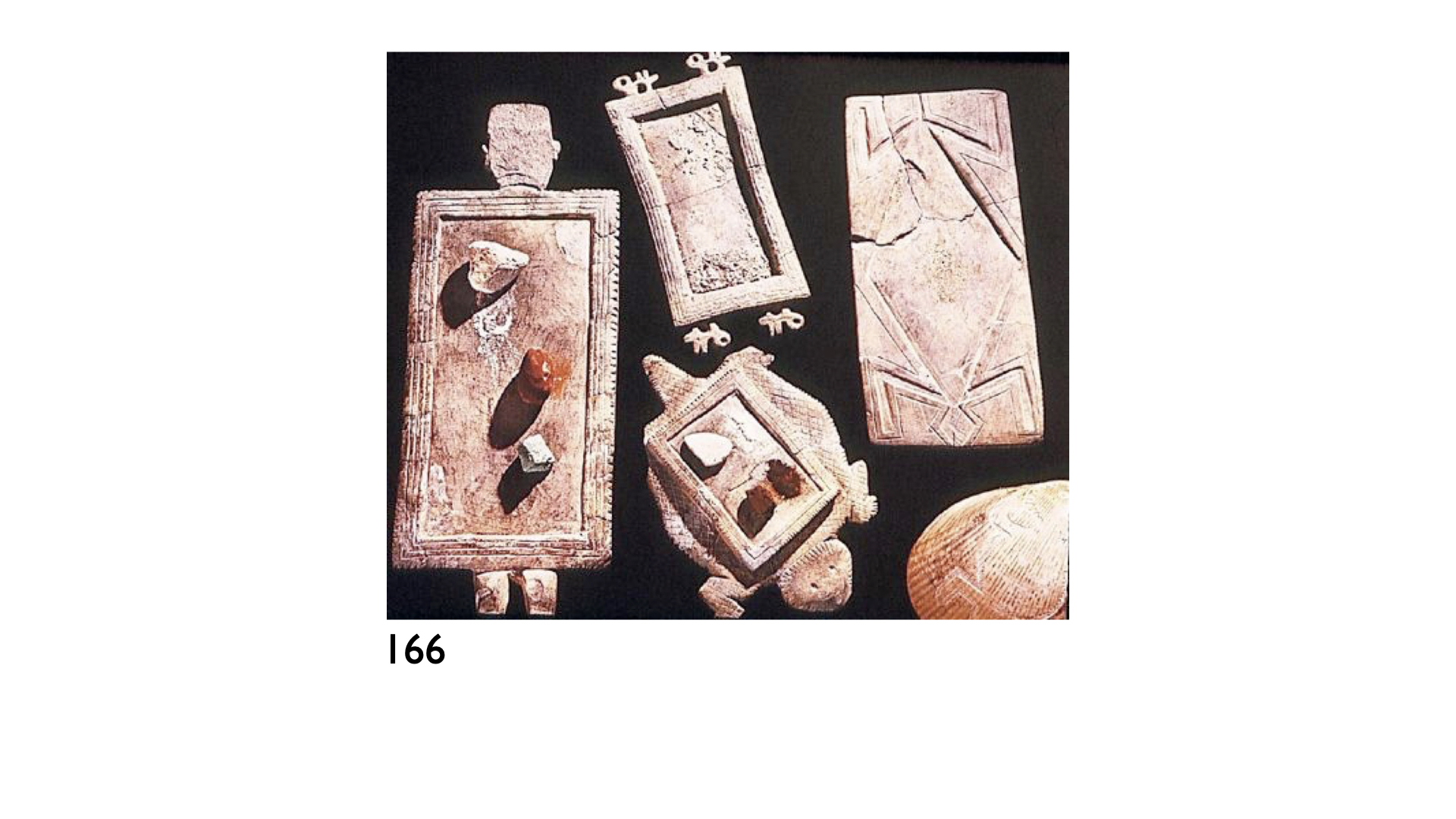
Southwest, Prehistoric, Hohokam (Sacaton and Santa Cruz)
What is it? —Hohokam stone palettes carved into human and animal-like figures
Functional and cultural significance — used to heat up substances for shamanistic/ceremonial purposes
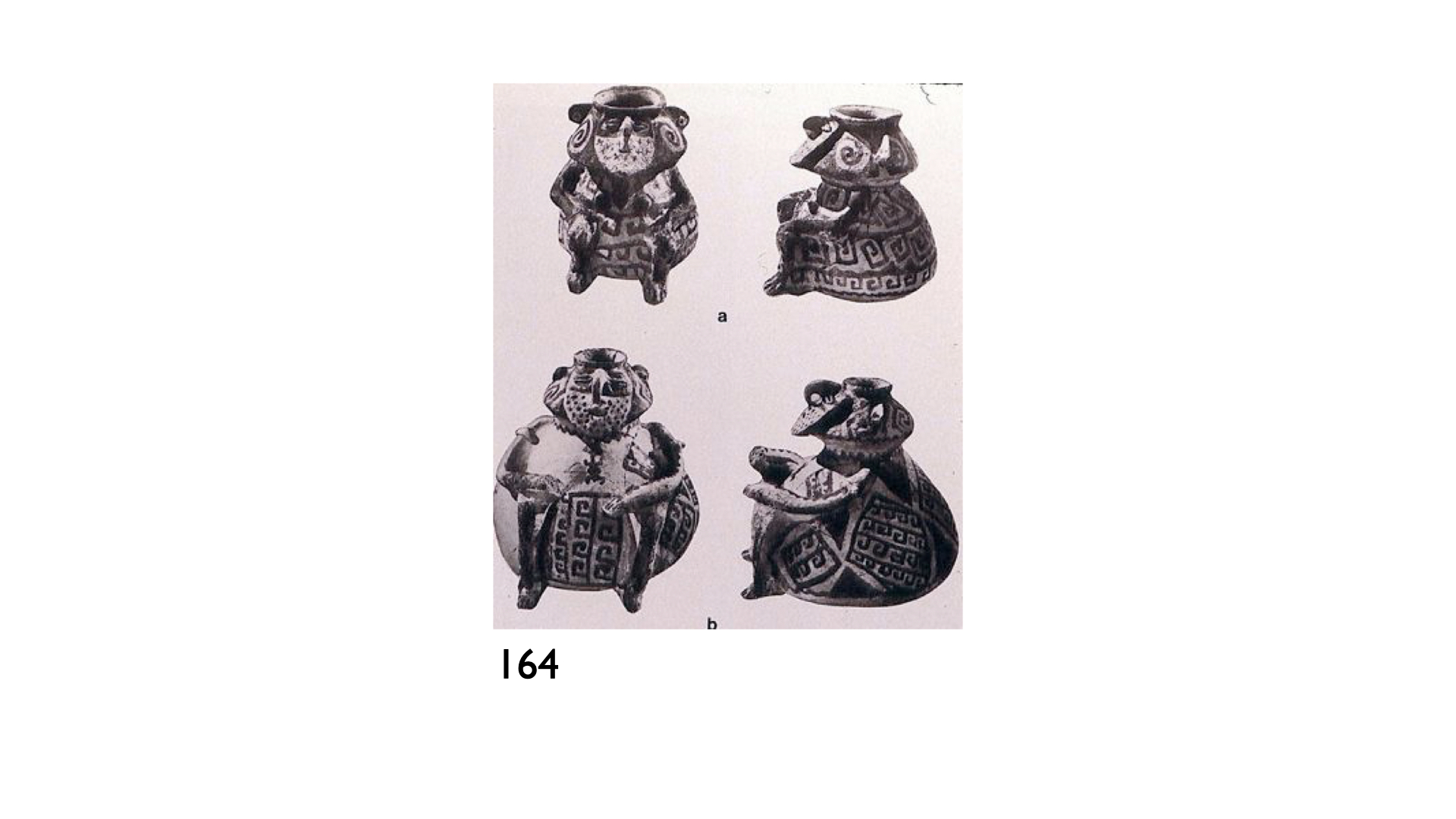
Southwest, Prehistoric, Hohokam (Sacaton period)
What is it? — Hohokam painted effigy pot in anthropomorphic shapes
Functional and cultural significance — The simplified pot has body parts, such as arms and legs, added upon to form a human body, with painted details of patterned clothing and a frog amulet *likely an ancestral effigy, as it was found in grave sites
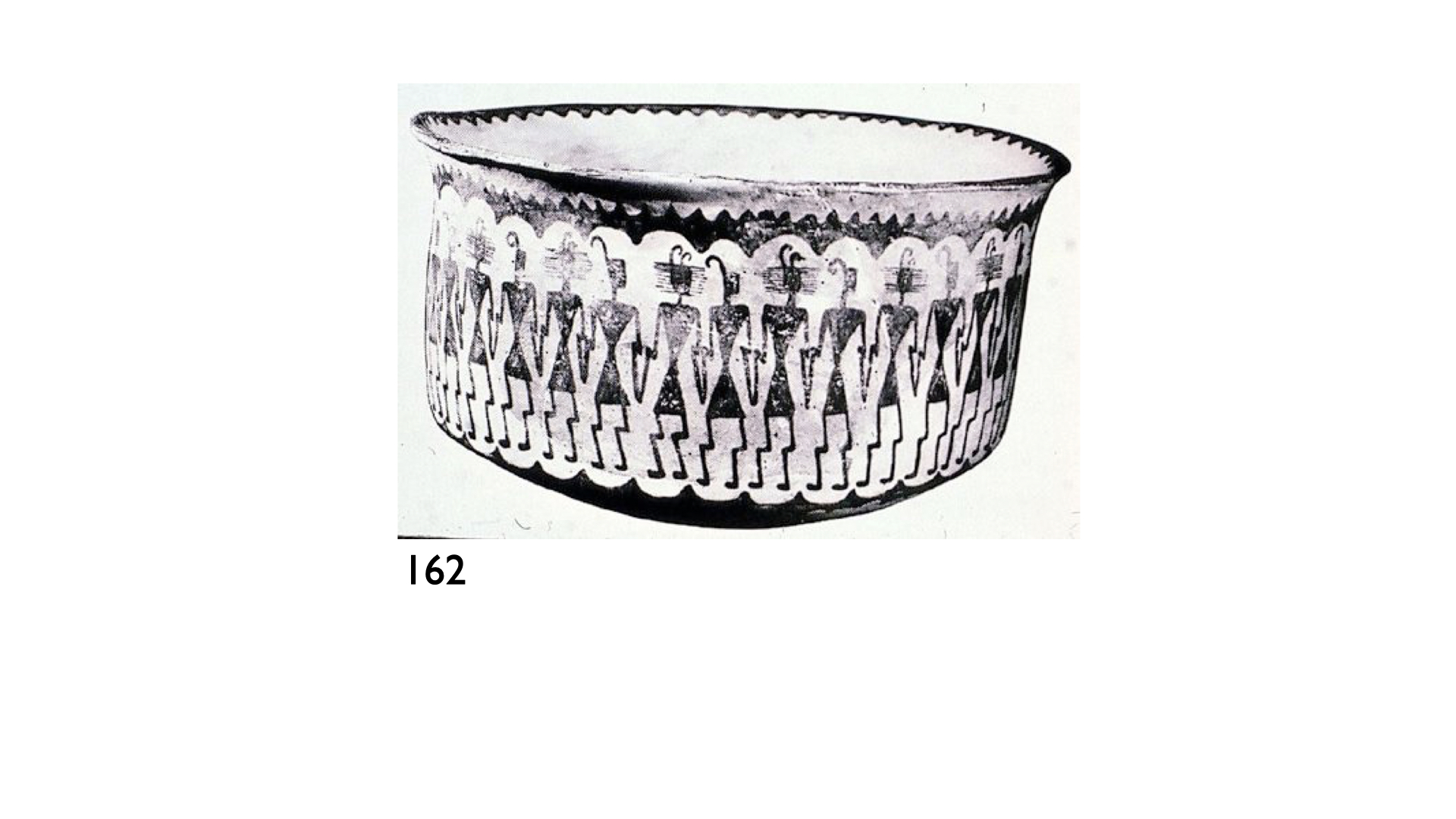
Southwest, Prehistoric, Hohokam (Sacaton)
What is it? — Hohokam painted bowl with alternating male and female images, as indicated by the either one or two feathers sticking out from the stick figures’ heads
Functional and cultural significance — The stick figures, which are linked by their hands and lined up in procession, are seemingly performing some communal ceremony
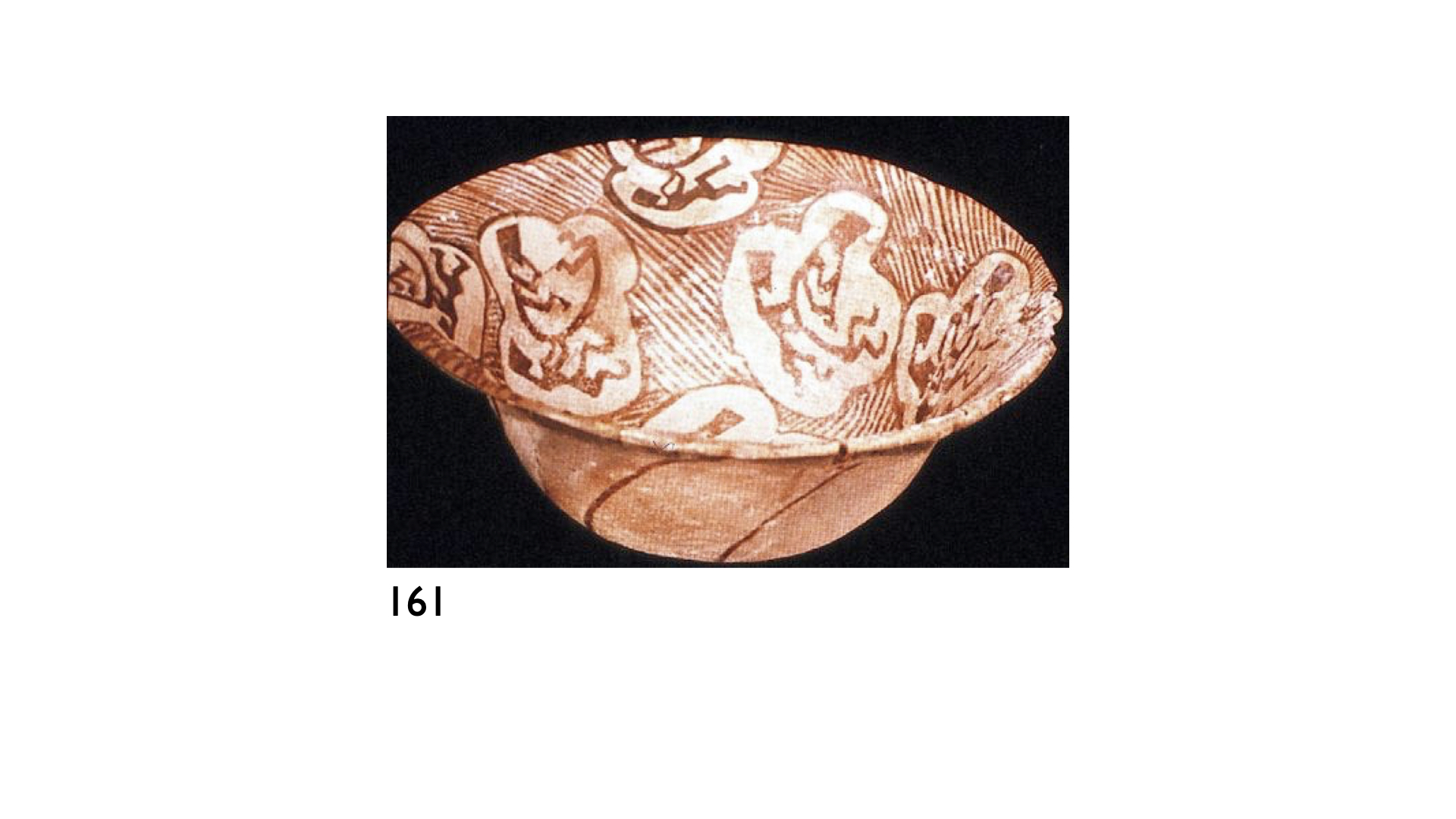
Southwest, Prehistoric, Hohokam (Sacaton period)
What is it? — Hohokam painted bowl with repeating images of a stick figure holding a flute-player stick figure from their back
Functional and cultural significance — The flute player is likely an important personage in their religion that they are working to pay homage to through this bowl
How do we know it is Hohokam? Pottery indicates Southwest Coast, and the simplified stick figures are Hohokam
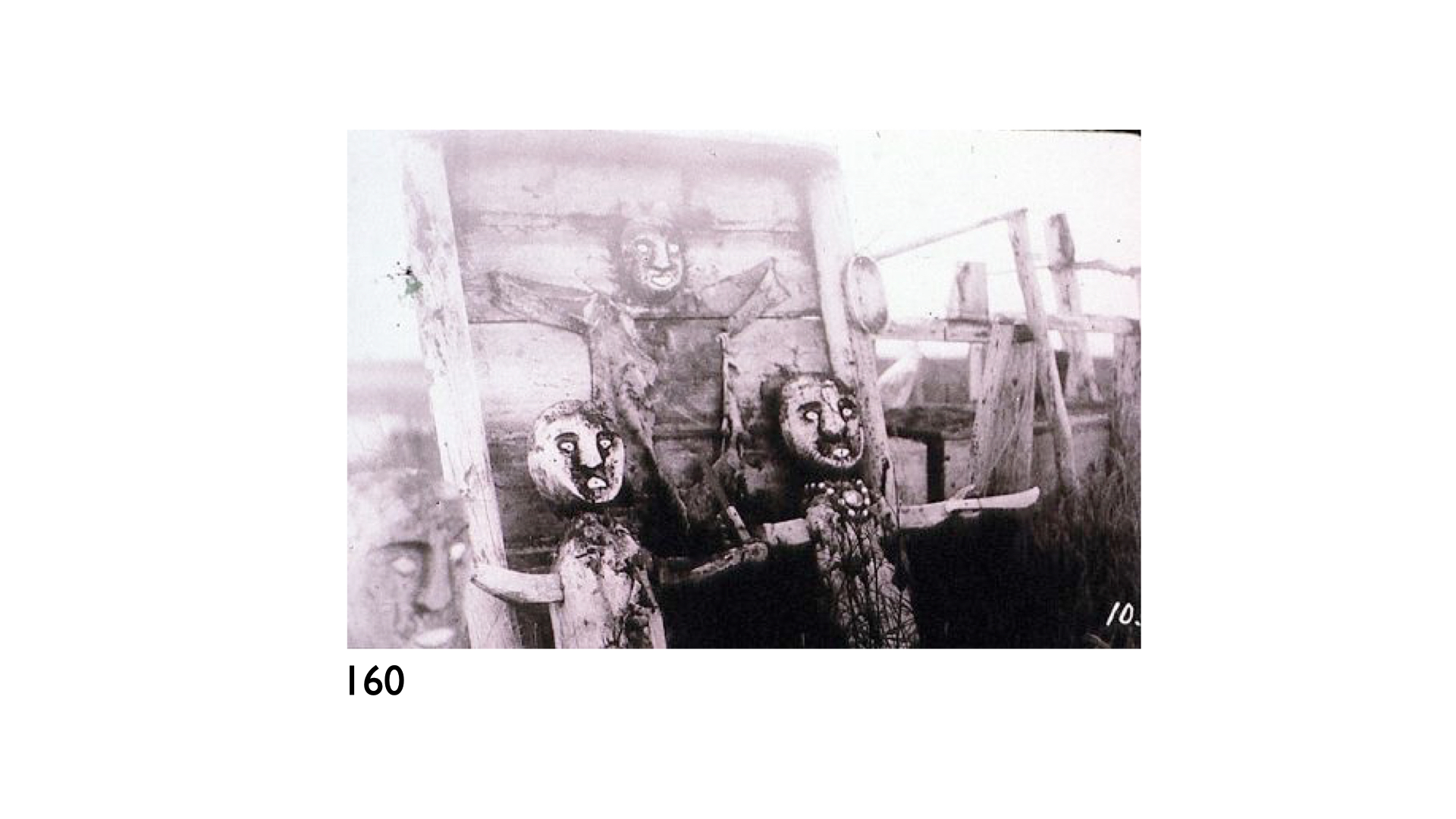
Southwest Alaska, Historic, Yupik Eskimo
What is it? — A Yupik Eskimo grave site with anthropomorphic grave figures
Functional and cultural significance — This follows contact with Christianity, replicating the idea of a tombstone by decorating these anthropomorphic figures with jewelry, clothing, and tools
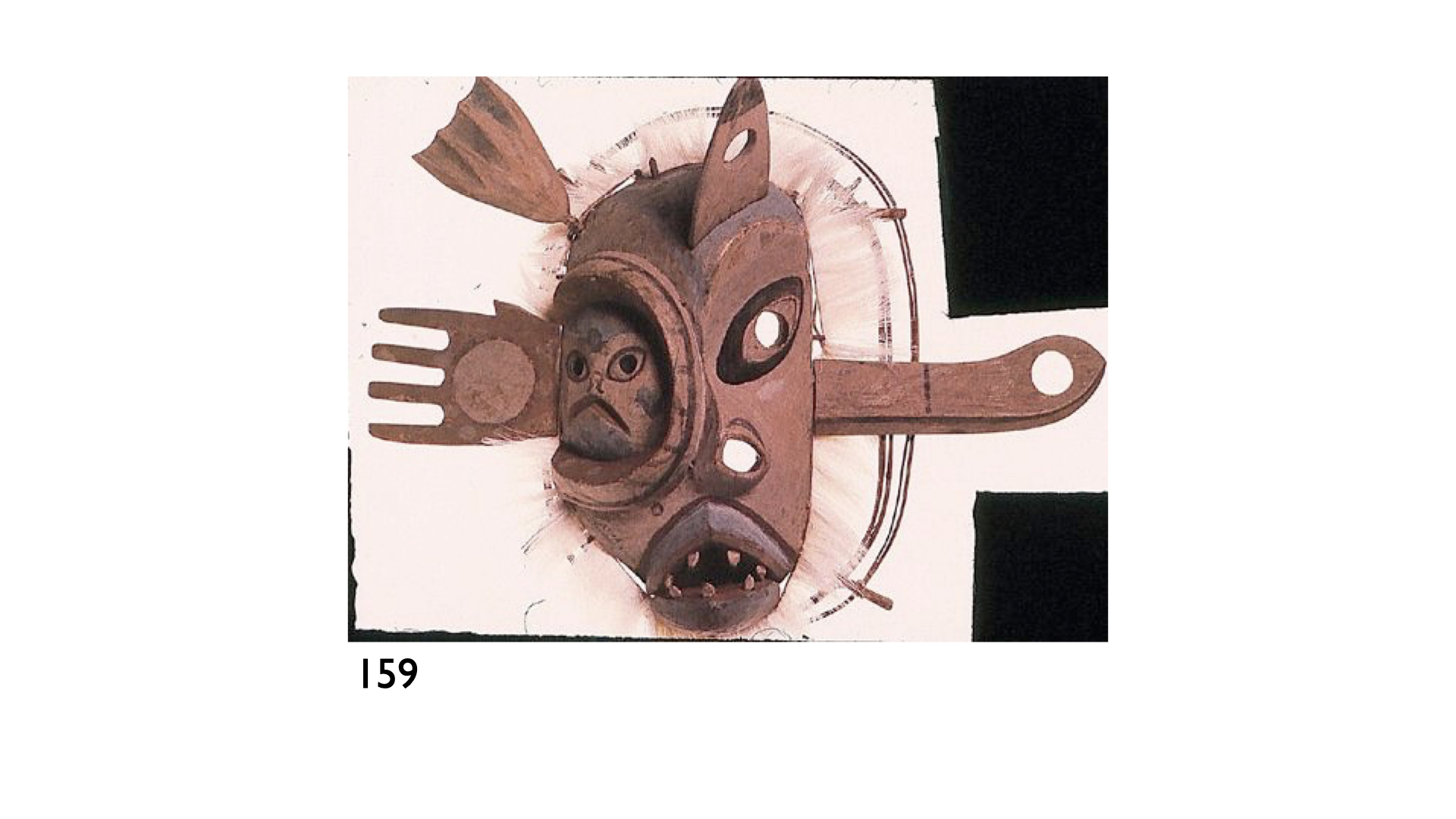
Southwest Alaska, Historic, Yupik Eskimo
What is it? — A Yupik mask of a shaman’s helping spirit
Functional and cultural significance — The simplified, abstracted, and dysfunctional mask associated with shamanism in the Yupik
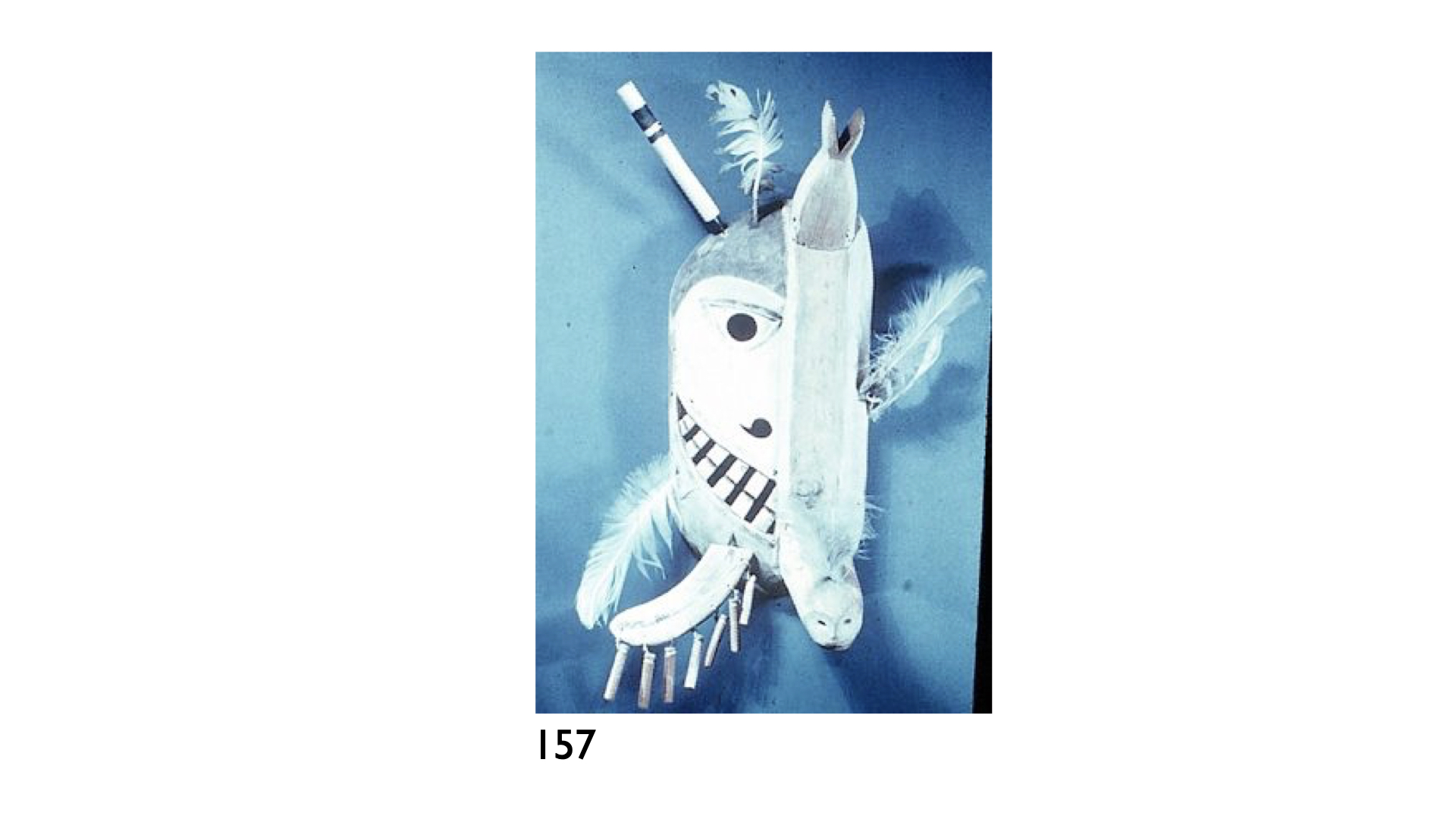
Southwest Alaska, Historic, Yupik Eskimo
What is it? — Mask of a seal spirit revealing its inua (human interior)
Functional and cultural significance — Reveals their mythology, which believed animals to have a human interior + represents an animal that they hunt, which they may be paying homage to in ceremony
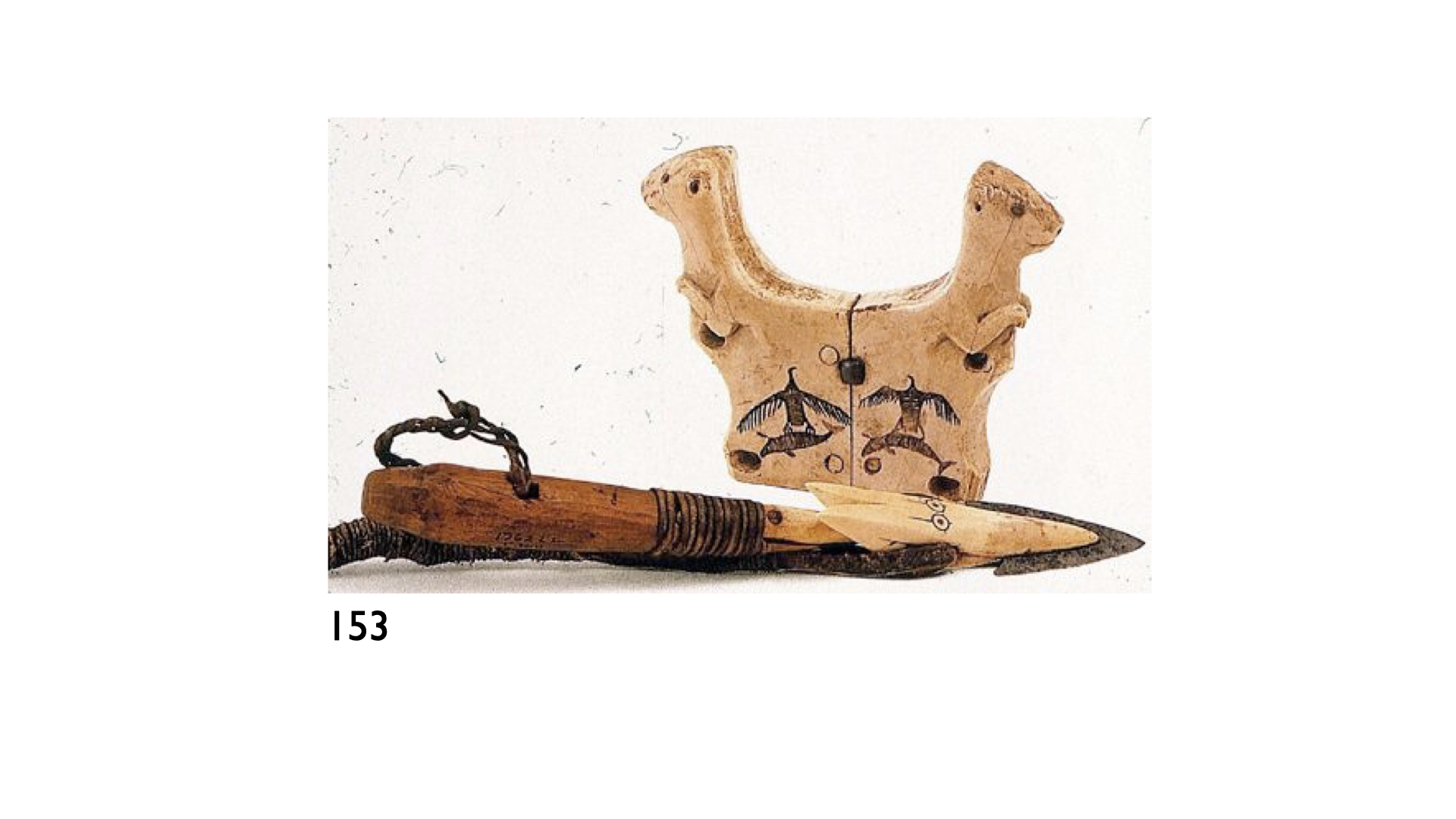
Southwest Alaska, Historic, Yupik Eskimo
What is it? — Harpoon head and rest, carved in the shape of two polar bears and painted with the image of two thunderbirds picking up whales
Functional and cultural significance — Functional purpose was for hunting but the images of the thunderbirds are likely a means of placating (feared the thunderbird, which could cause thunder, lightning, and storms)
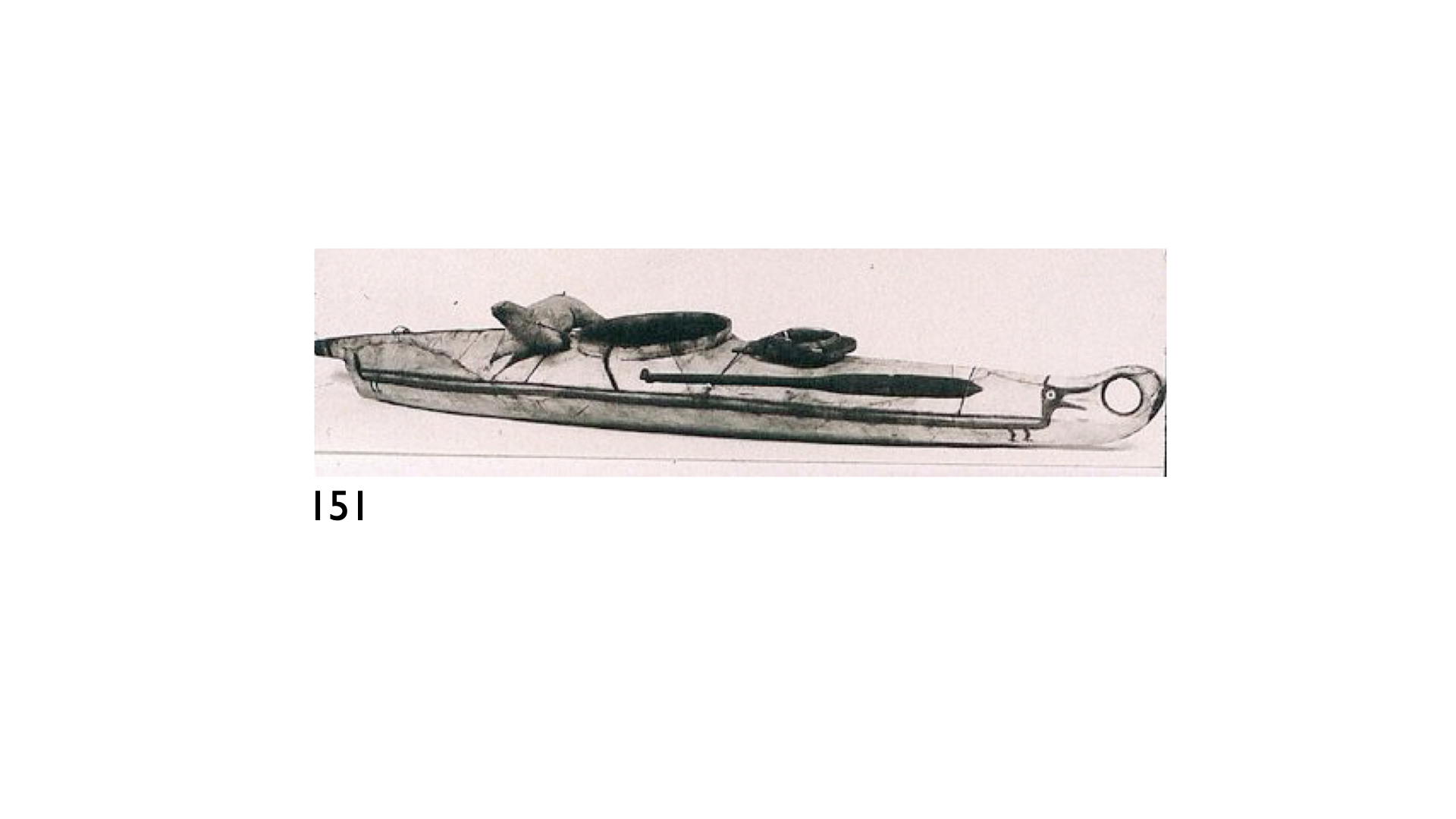
Southwest Alaska, Historic, Yupik Eskimo
What is it? — An animal skin kayak painted with a mythical monster image, alongside a blown-up seal, paddle, and rope
Functional and cultural significance — Kayak used for hunting but painted image of an extremely long four-legged creature likely a means of placating this dangerous creature who they believed caused tsunamis
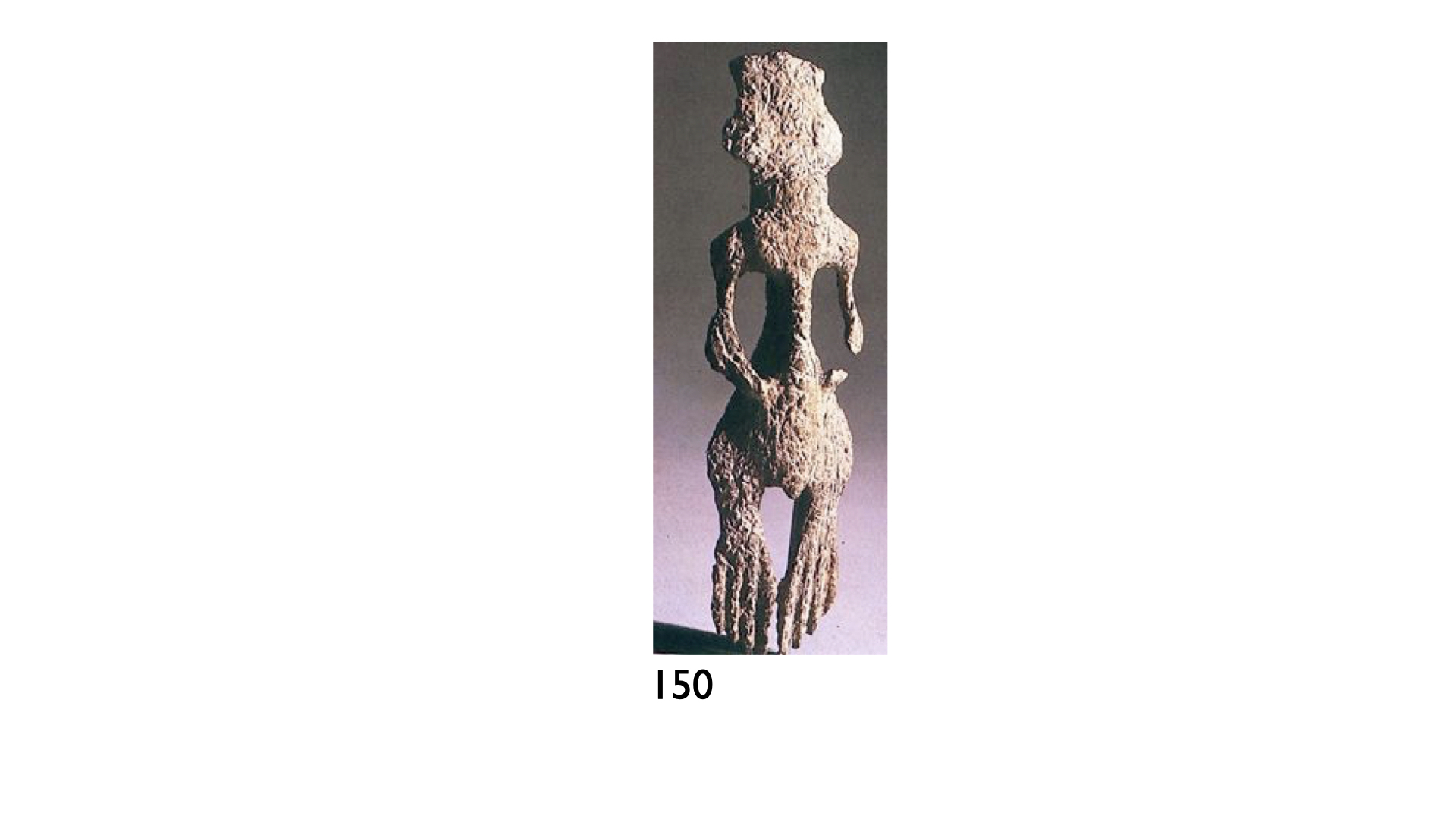
Alaska, Prehistoric, Ipiutak
What is it? — Ivory human-like sea otter carving
Functional and cultural significance — An ivory carving of a swimming otter as seen through the water’s distortion (major food source of the Ipiutak)
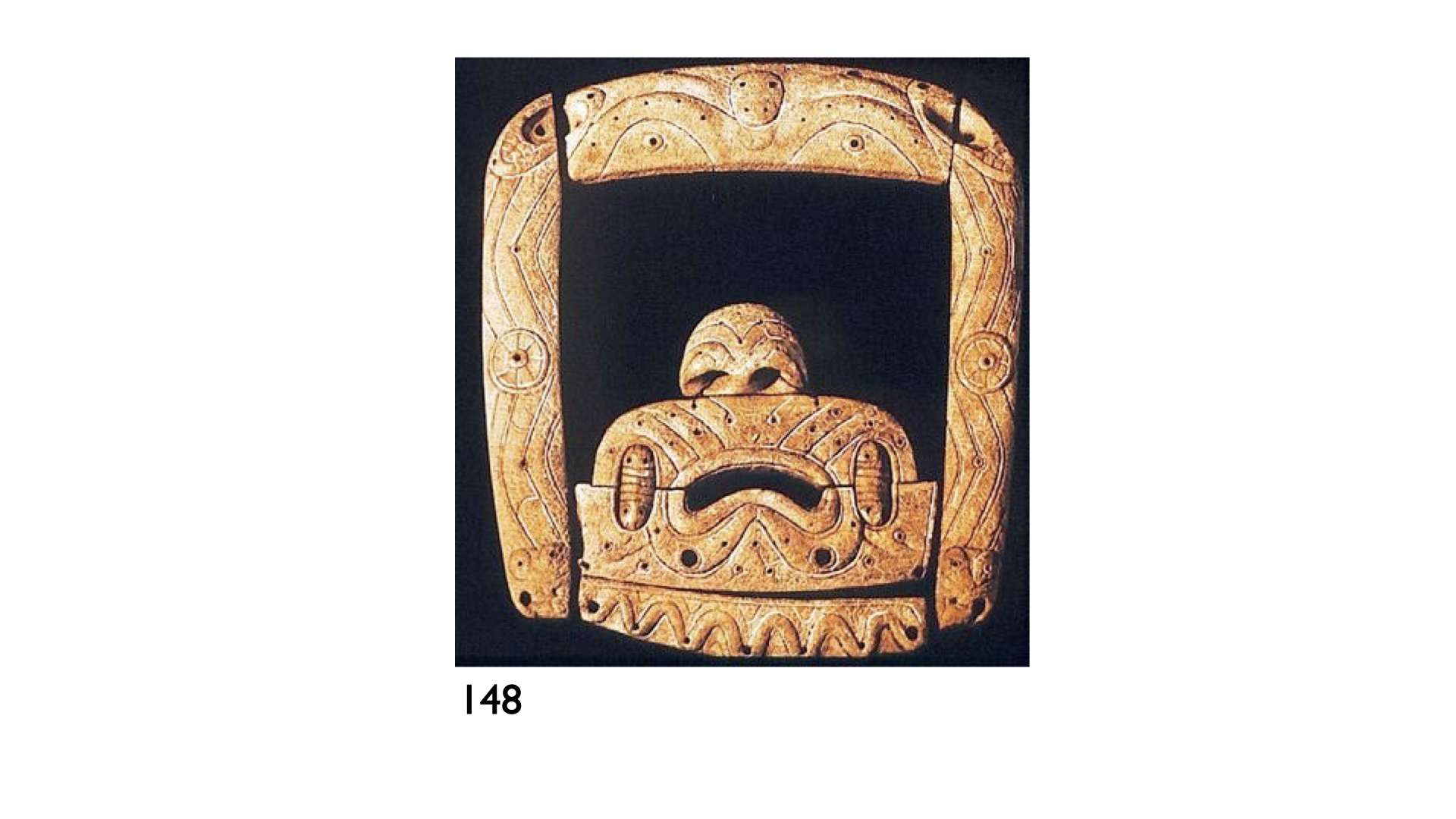
Alaska, Prehistoric, Ipiutak
What is it? — ivory burial/death ceremony mask
Functional and cultural significance — representation of the person who died for the purpose of a burial/death ceremony, a composite of pieces featuring details such as two grubs, a lip plug, linear patterns referencing tattoos, and a seal looking up
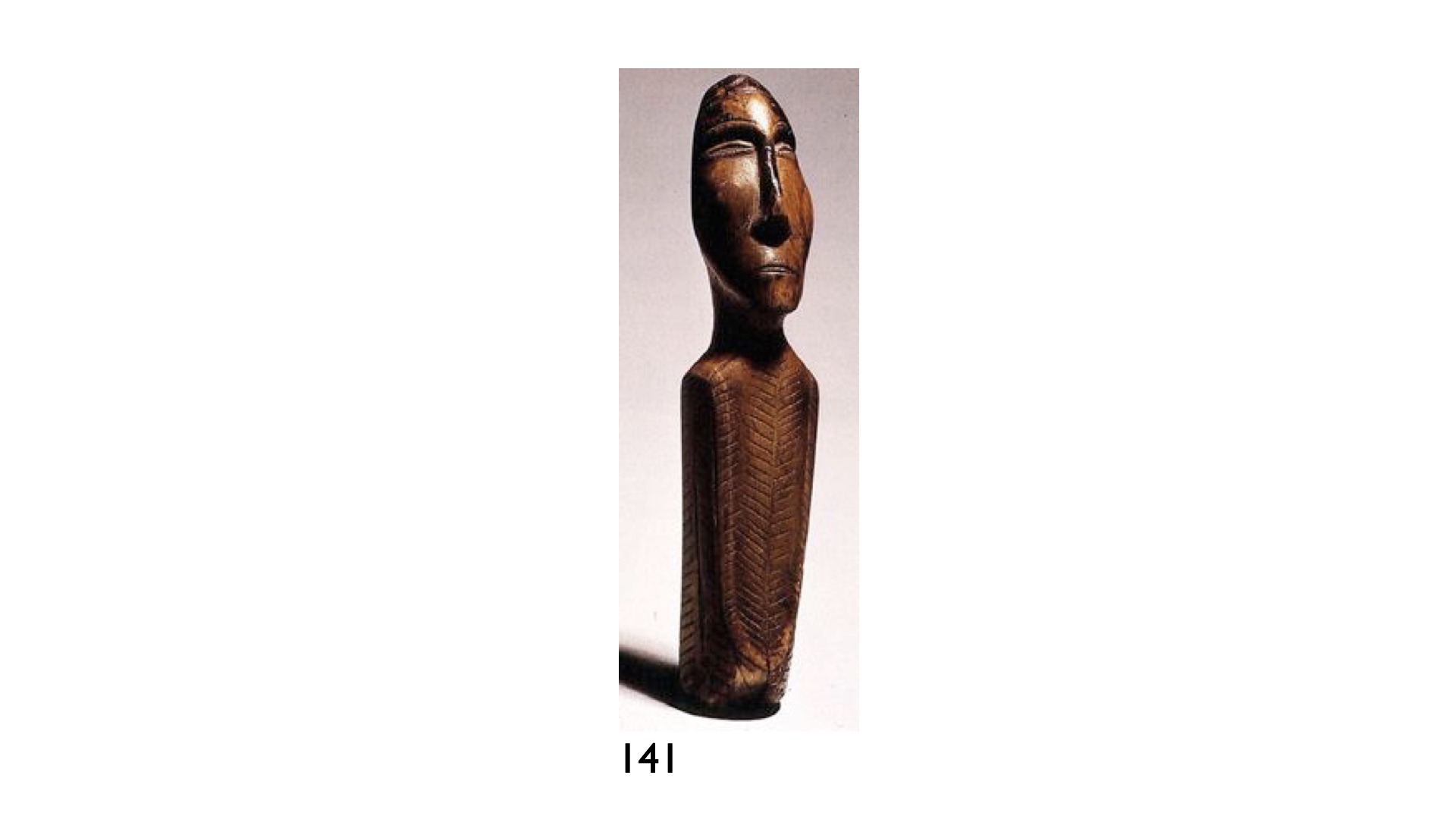
Old Bering Sea, Prehistoric, Okvik
What is it? — A human figure with skeletalized features, made out of animal bone and featuring thin incised lens representing ribs
Rudimentary body, simplified yet regal face
Functional and cultural significance — These sculptures may have been associated with fertility images of women
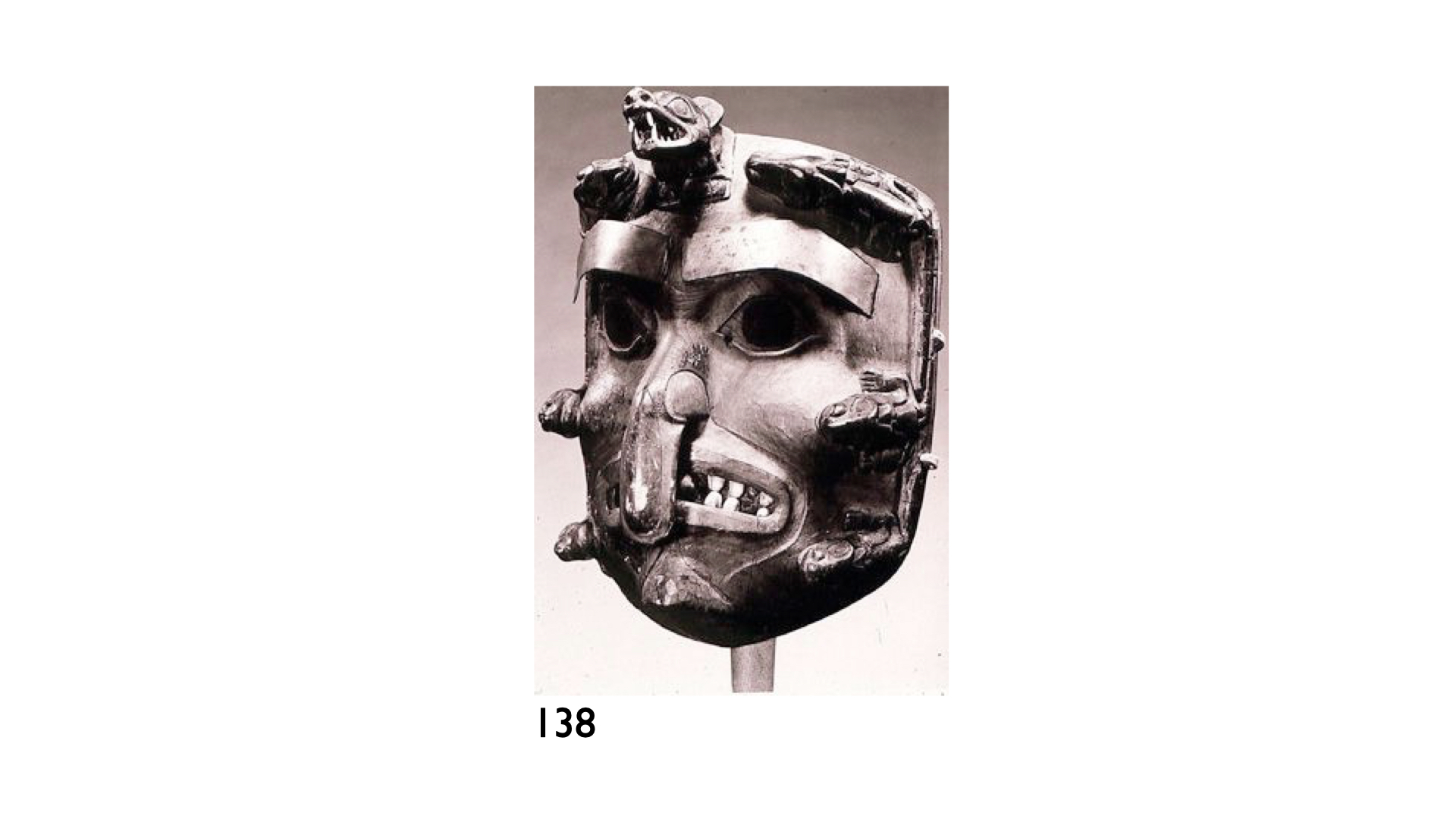
NWC historic, Tlingit
Contains human, wolf, salmon, and land otter motifs
Some shamans had various masks to help with different things
138: masks. Human pasted on eyebrows out of copper long nose like a salmon otters crawling around on the head and wolf at the top
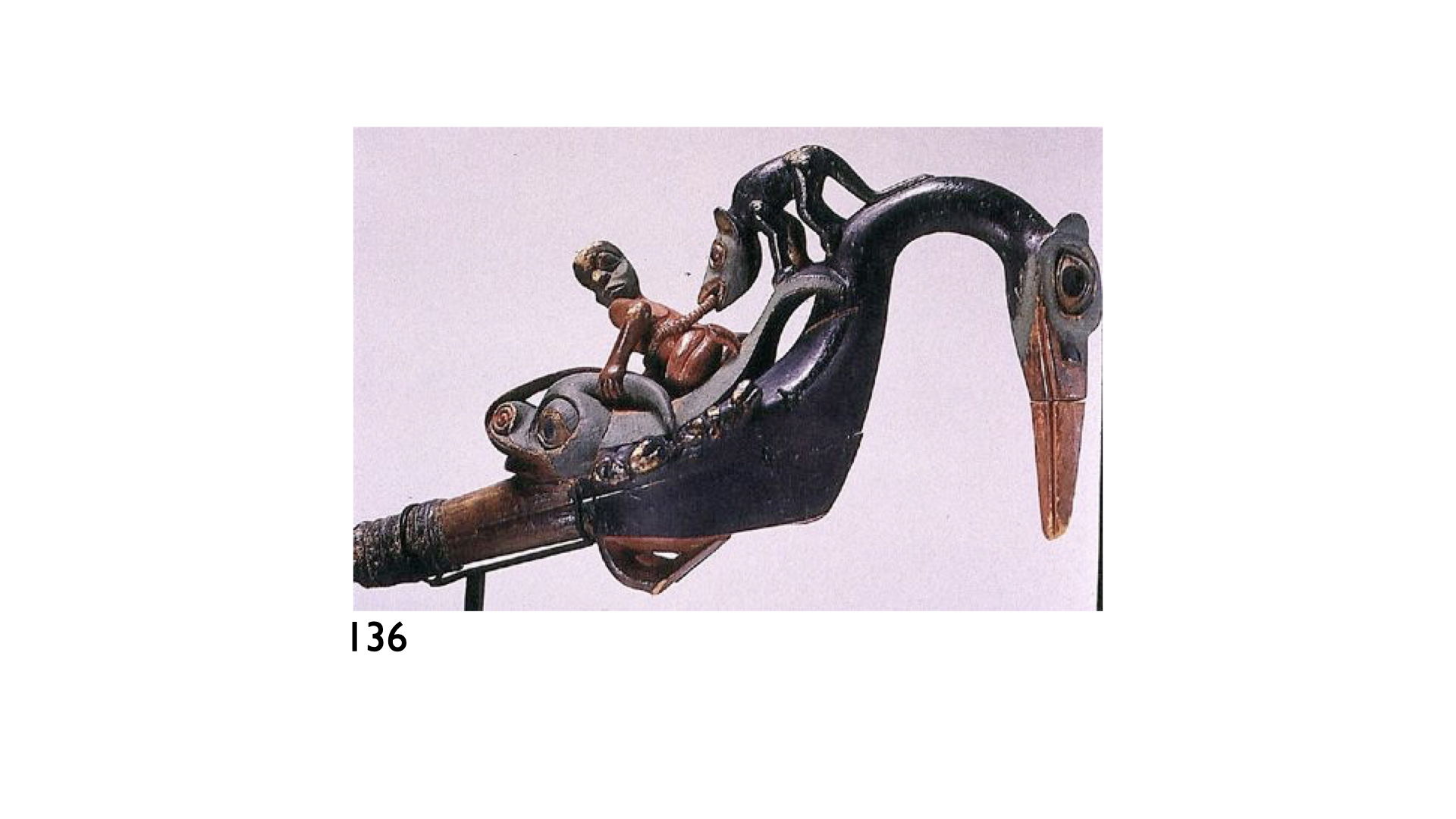
Northwest Coast, Historic, Tlingit
What is it? — A Tlingit shaman’s oyster-catcher rattle with helping spirits on back
Functional and cultural significance — Shamans were equipped with rattles in the shape of the oyster-catcher (common in the Northwest Coast) and that represented their helping spirits, with this particular rattle showing a mountain goat holding a witch or another helper with a rope
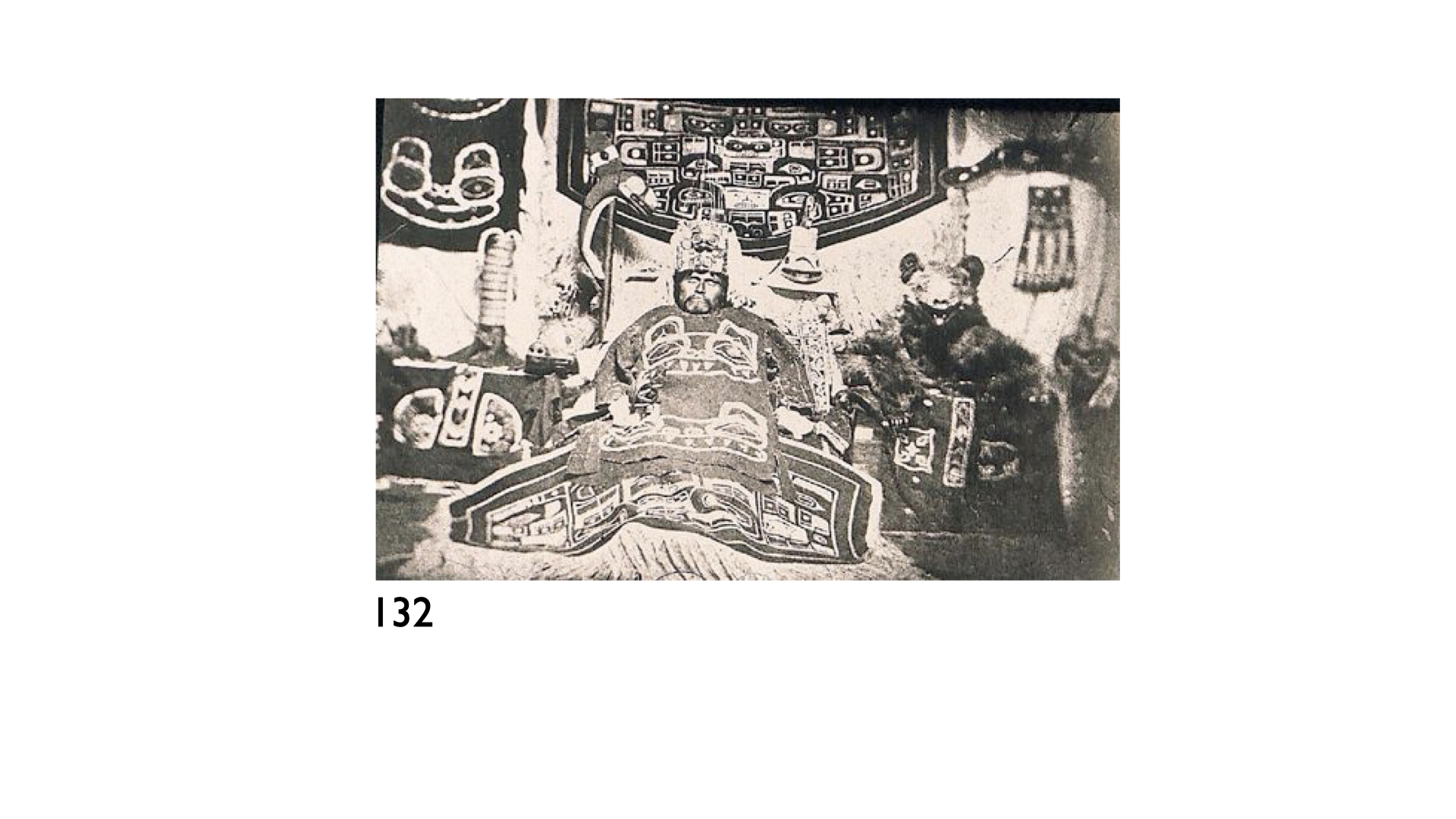
Northwest Coast, Historic, Tlingit
What is it? — Chief Shakes the 5th lying in his home
Functional and cultural significance — loaded with cultural significance
Tlingit Chilkat blankets, potlatch rings, bear clan crest emblems
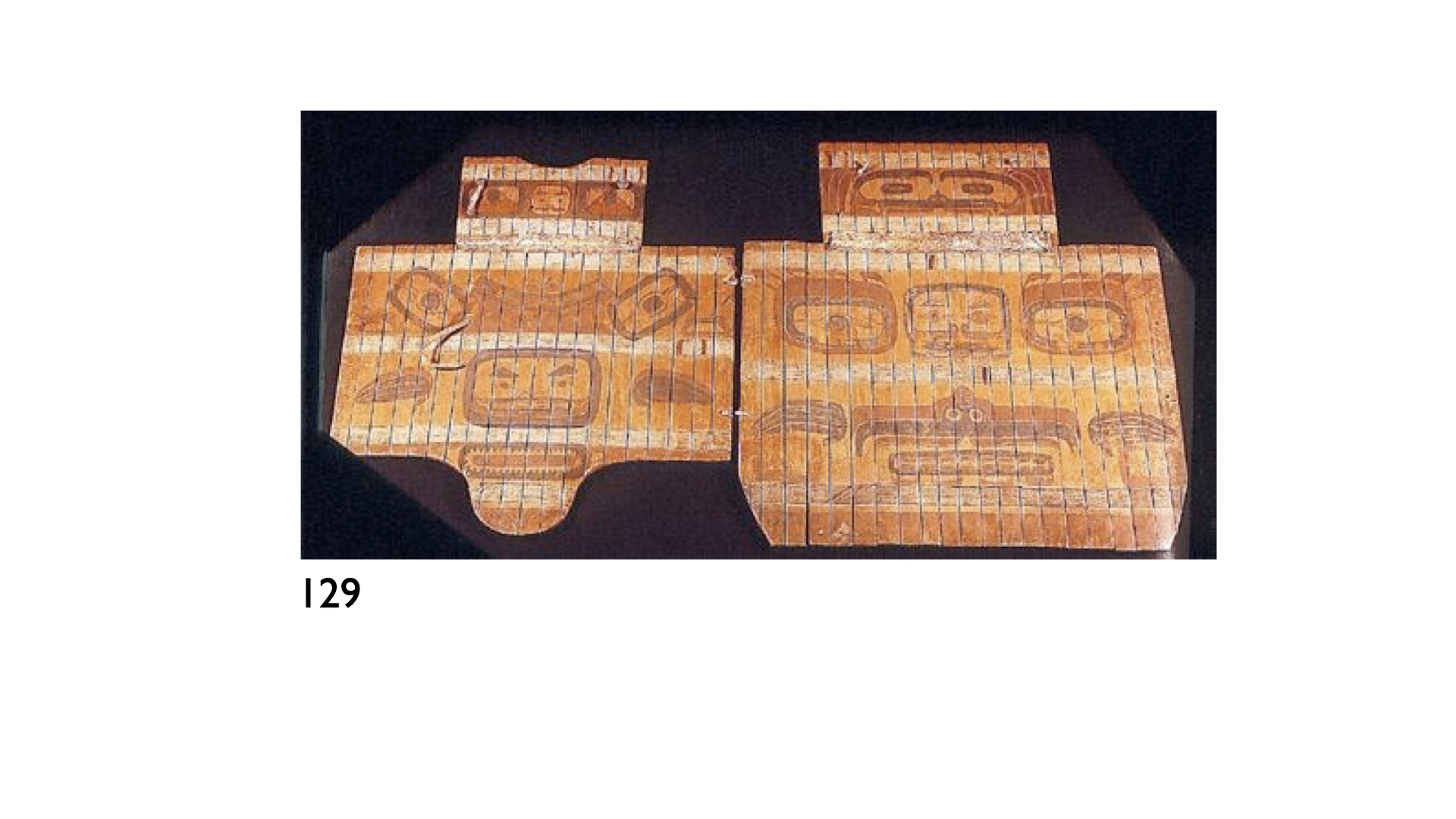
Northwest Coast, Historic, Tlingit
What is it? — Tlingit wooden slat armor, used for protection but stylized with totemic animals and supernaturals
Functional and cultural significance — Functionally was used for armor but was stylized with their traditional art style (totemic animals, flat and symmetrical composition)
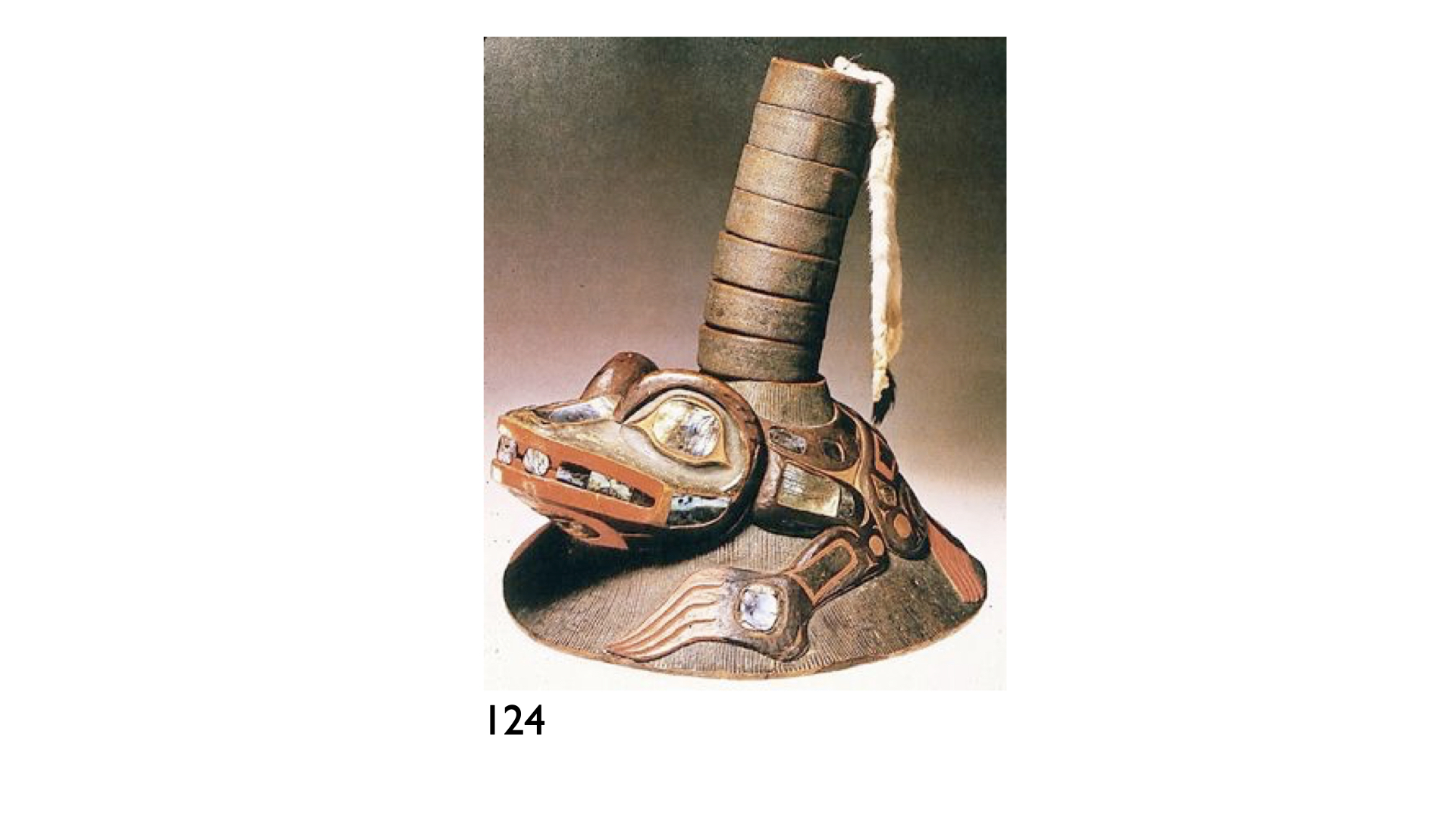
Northwest Coast, Historic, Tlingit
What is it? — Frog-clan crest hat with potlatch rings
Functional and cultural significance — Prestige item with cedar bark potlatch rings (a sign of status in Tlingit society), inlaid shell and copper, and fur and the frog represents a clan crest
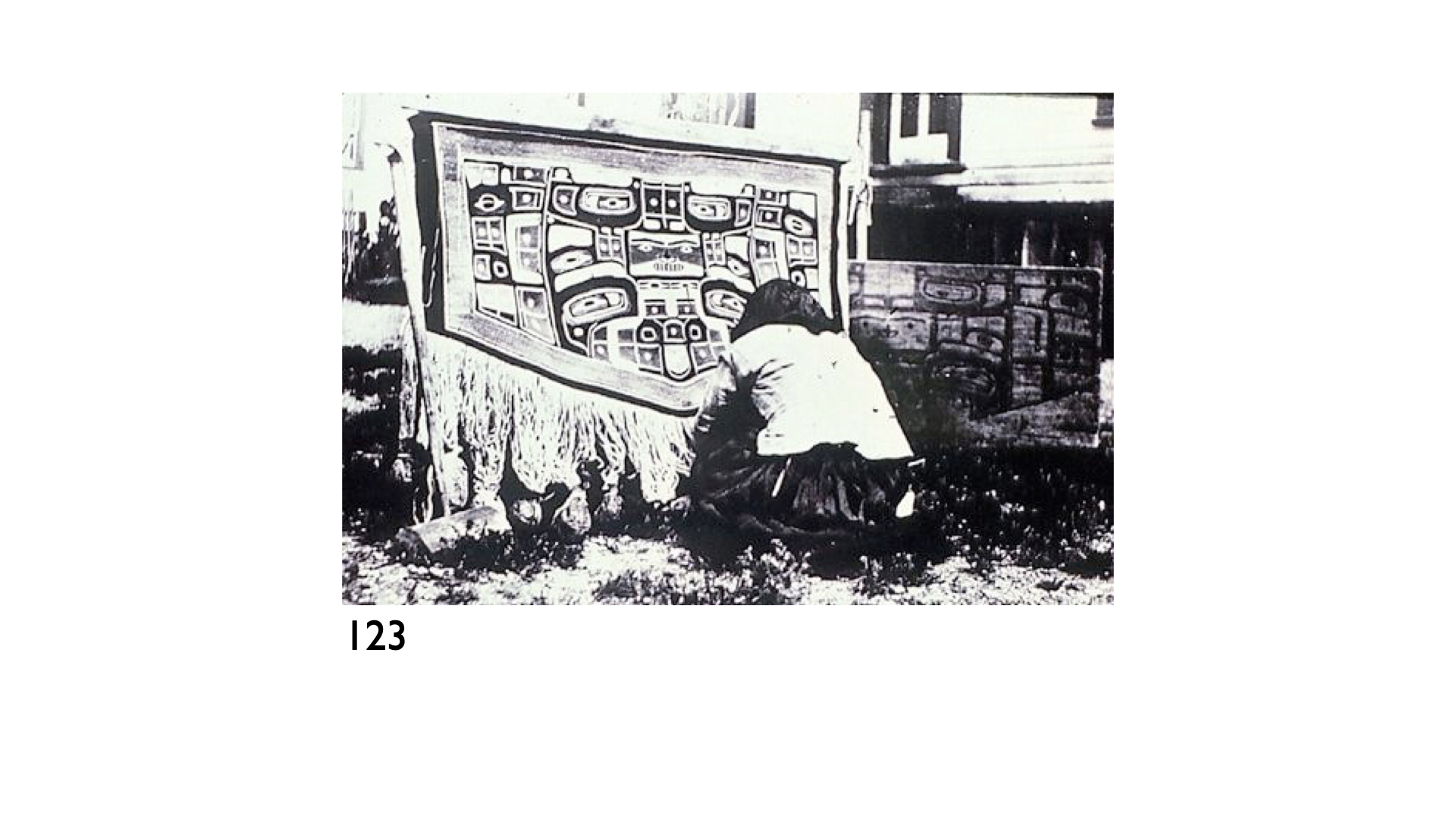
Northwest Coast, Historic, Tlingit
What is it? — Photo of a Tlingit women weaving a Chilkat blanket from a pattern board
Functional and cultural significance — Tlingit Chilkat blankets were a prestige item that was traded throughout the Northwest Coast, featuring a markedly flat composition and totemic animals
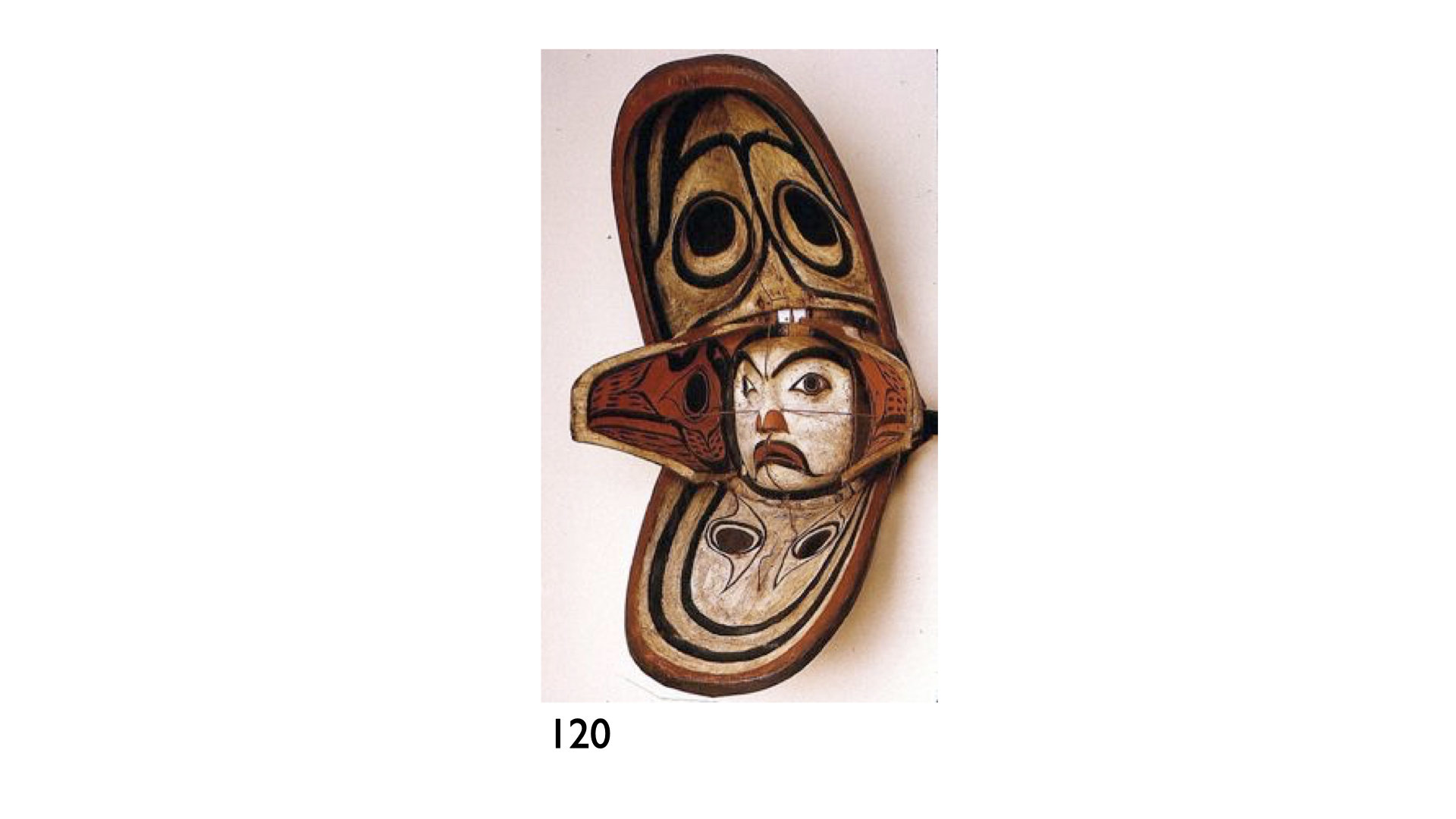
Northwest Coast, Historic, Kwakiutl
What is it? — Kwakiutl transformation mask opened showing human-like face
Three identities: Killerwhale, bird, and face
Functional and cultural significance — Transformation masks used for the purpose of theatrical performance, representing animals relevant to their mythology and everyday life
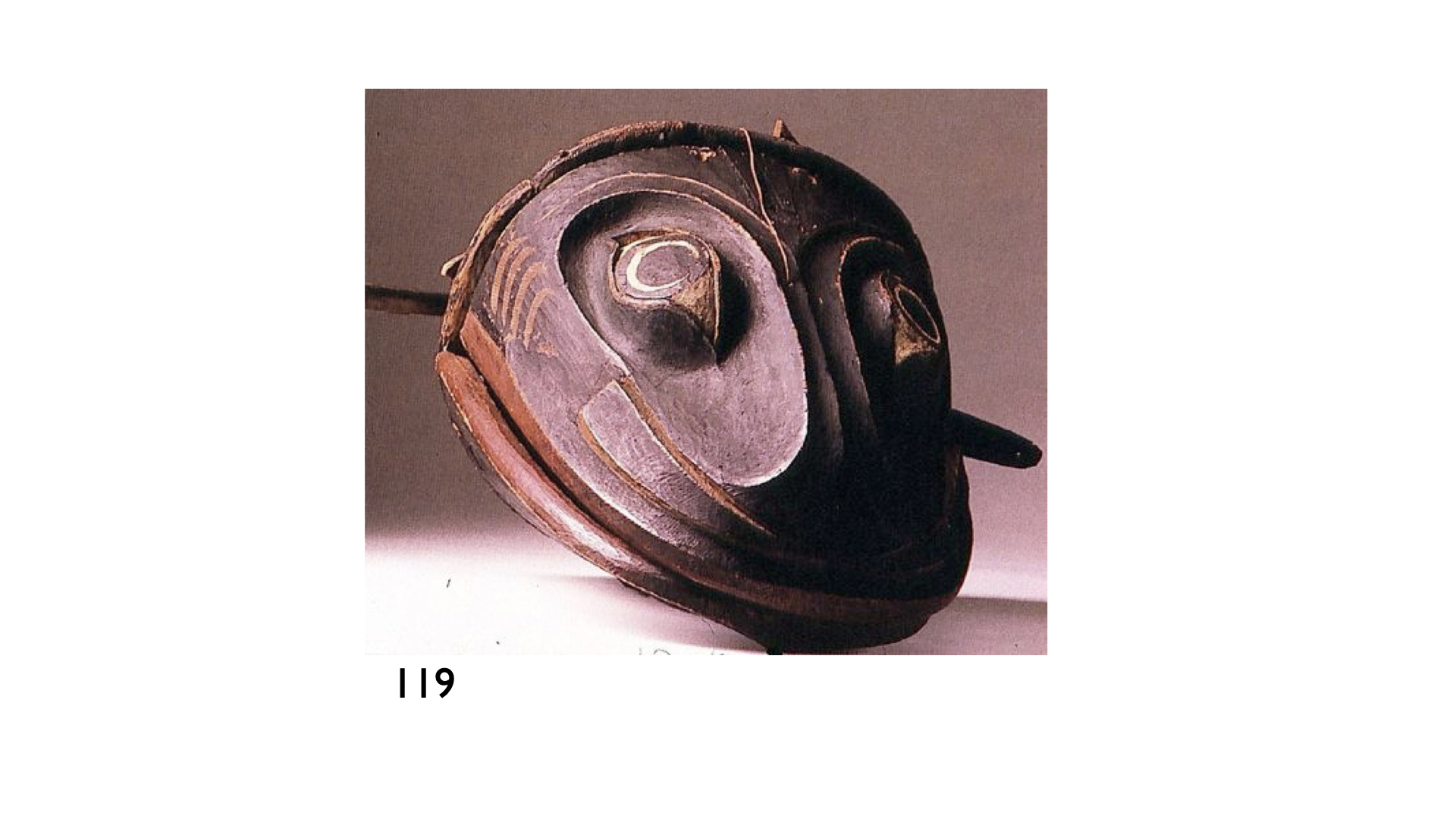
NWC Historic, Kwakiutl
First a sea animal, then a bird, then a human in the center
Multiple identities in a single mask
Transformation mask
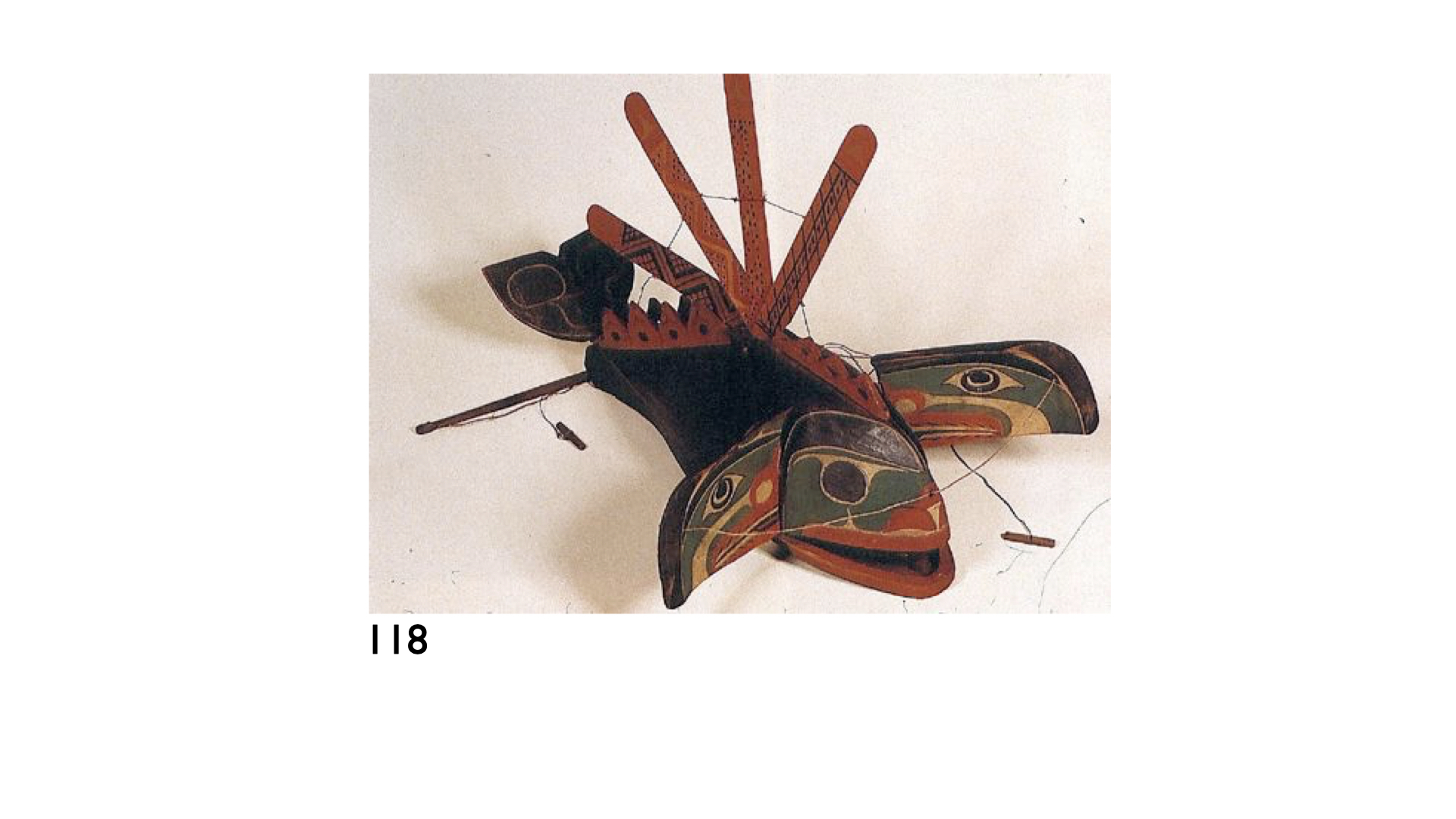
Northwest Coast, Historic, Kwakiutl
What is it? — Kwakiutl large wooden movable mask of a killerwhale spirit
Functional and cultural significance — Purpose was for entertainment, use in theatrical performance where multiple figures can be represented by pulling the string
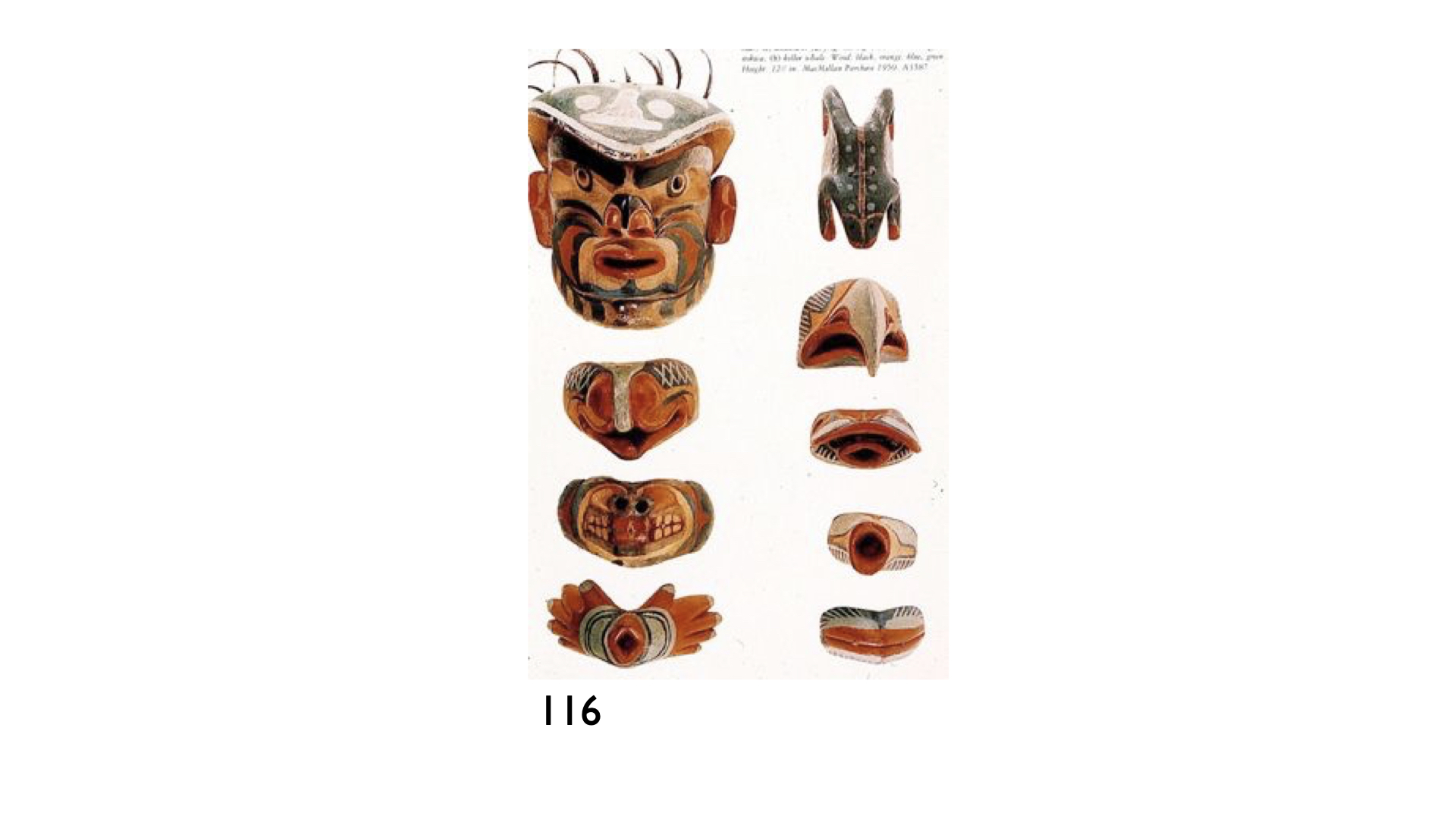
Northwest Coast, Historic, Kwakiutl
What is it? — Kwakiutl “echo” mask with replaceable mouths representing various creatures
Functional and cultural significance — Illustrates the Kwakiutl’s engagement in theatrical performance, where echo masks were used to represent different creatures depending on the part in the storyline
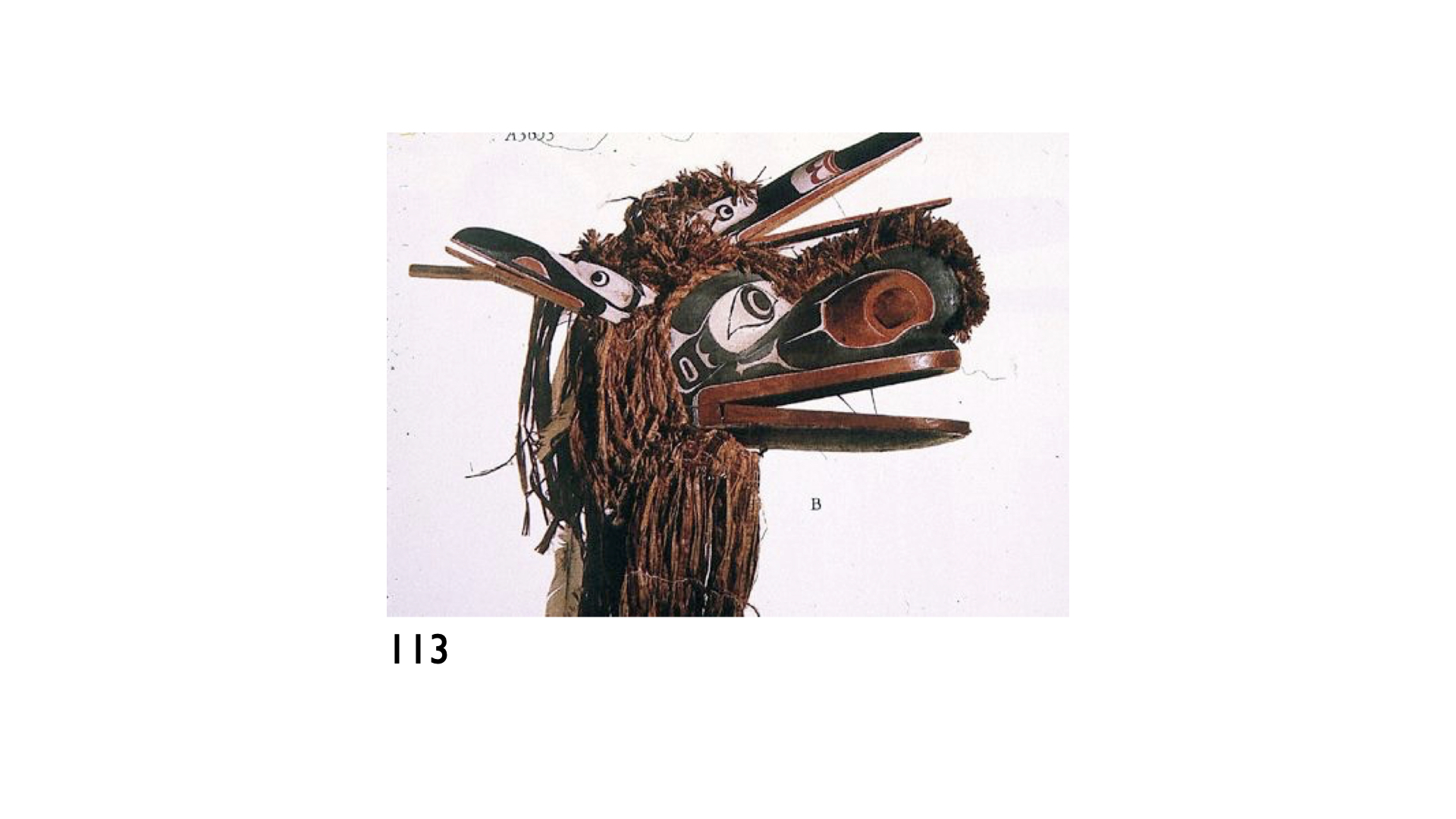
Northwest Coast, Historic, Kwakiutl
What is it? — Kwakiutl multiple-headed cannibal spirit
Functional and cultural significance — Illustrates a supernatural bird of the cannibal society of Kwakiutl culture, featuring multiple heads and jaws that can open and close, that can crush people’s skulls and eat their brains
Kwakiutl details: Use of bold red and black, representation multiple heads (complex), addition of rope
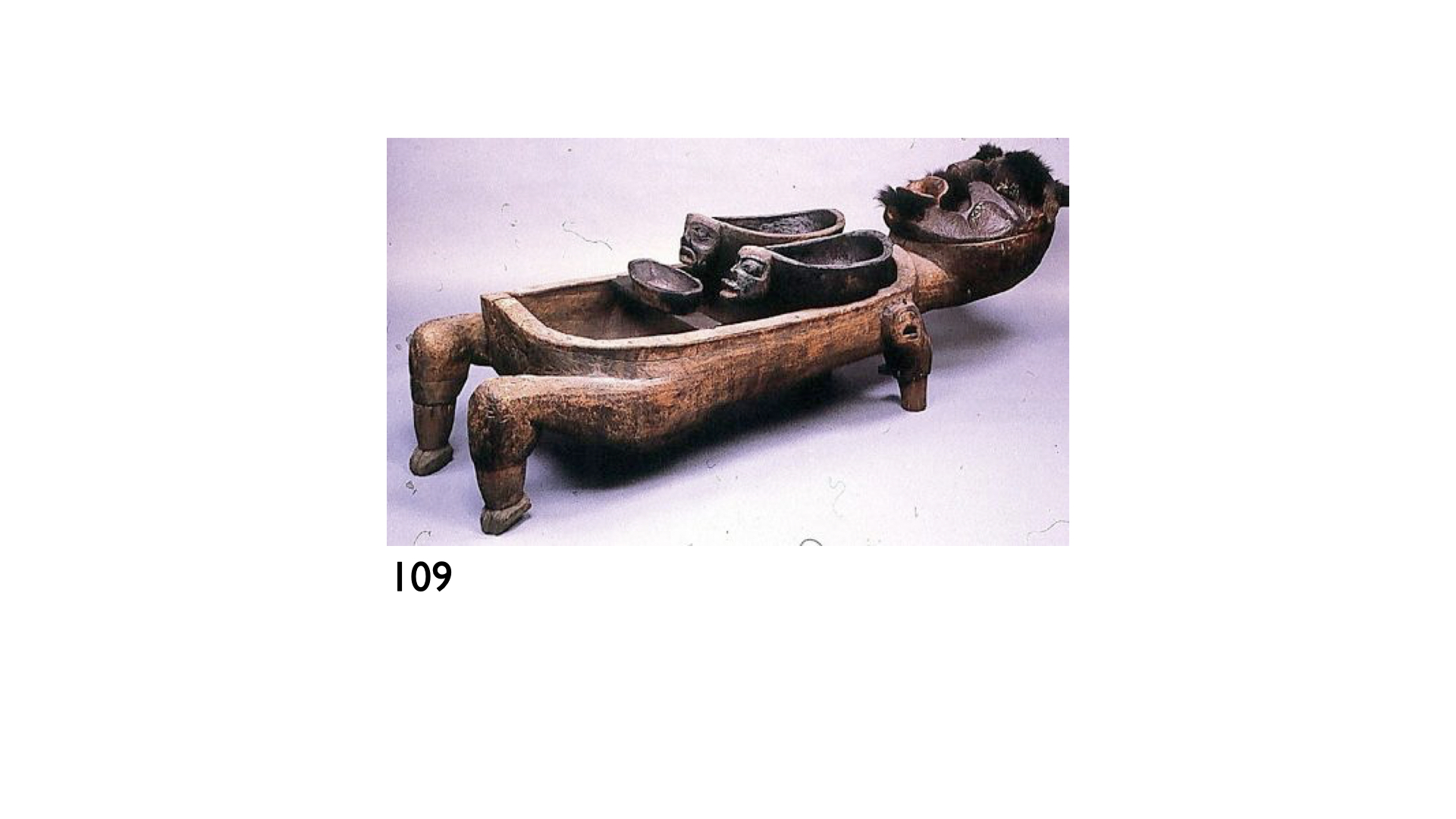
Northwest Coast, Historic, Kwakiutl
What is it? — Kwakiutl feast dish in the shape of the cannibal woman Tsonokwa, featuring multiple anthropomorphic dishes, bushy hair, etc,
Functional and cultural significance — Illustrates the cannibal society within Kwakiutl culture, which represents the wild, animalistic side of people, versus the gift-giving society (served the purpose of entertainment and learning social norms)
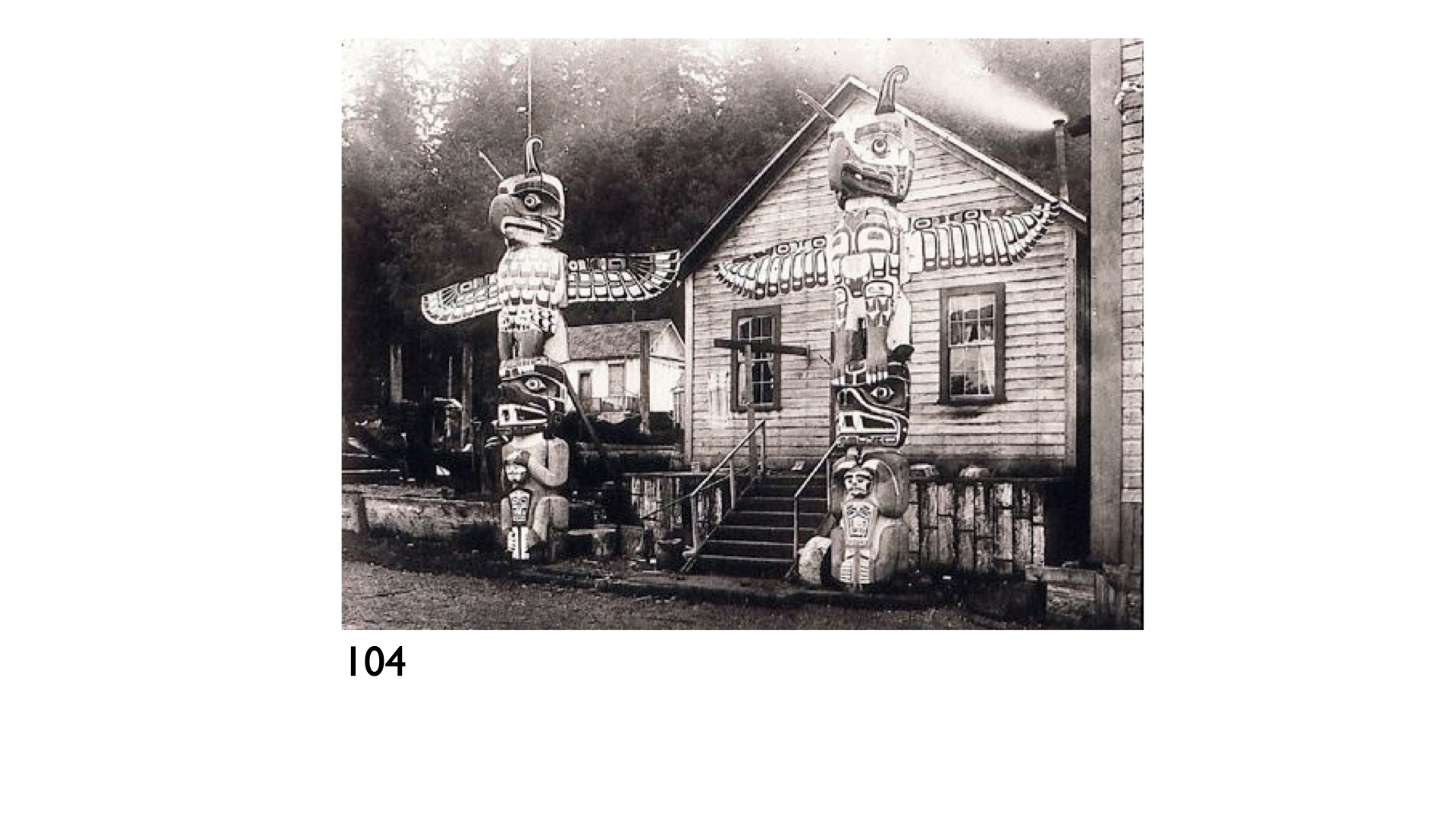
Northwest Coast, Historic, Kwakiutl
What is it? — Kwakiutl memorial poles with thunderbird and bear totemic emblems
Functional and cultural significance — Represents the Kwakiutl’s belief in and homage to supernaturals like the thunderbird, their use of memorial totem poles to illustrate clan affiliation and crest, and deep carving and added parts traditional to their art style
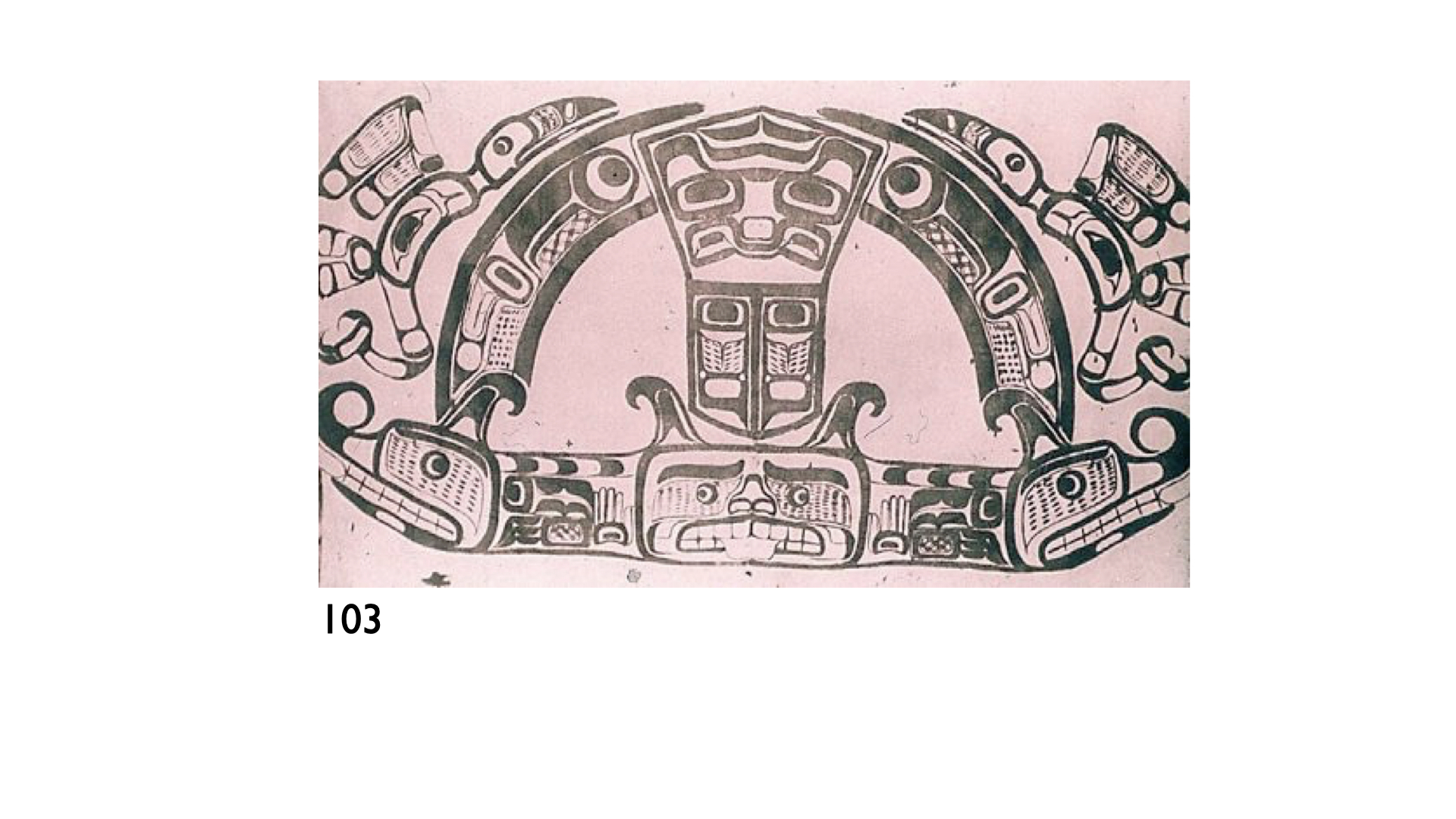
Northwest Coast, Historic, Kwakiutl
What is it? — Kwakiutl painted screen from the interior of a Kwakiutl chief’s house
Functional and cultural significance — Represents the Kwakiutl mythology in its motifs, which included belief in supernaturals like the sisiutl (the double-headed sea serpent) at the base + and their traditional art style, which used negative space, variation in line thickness, and secondary animals
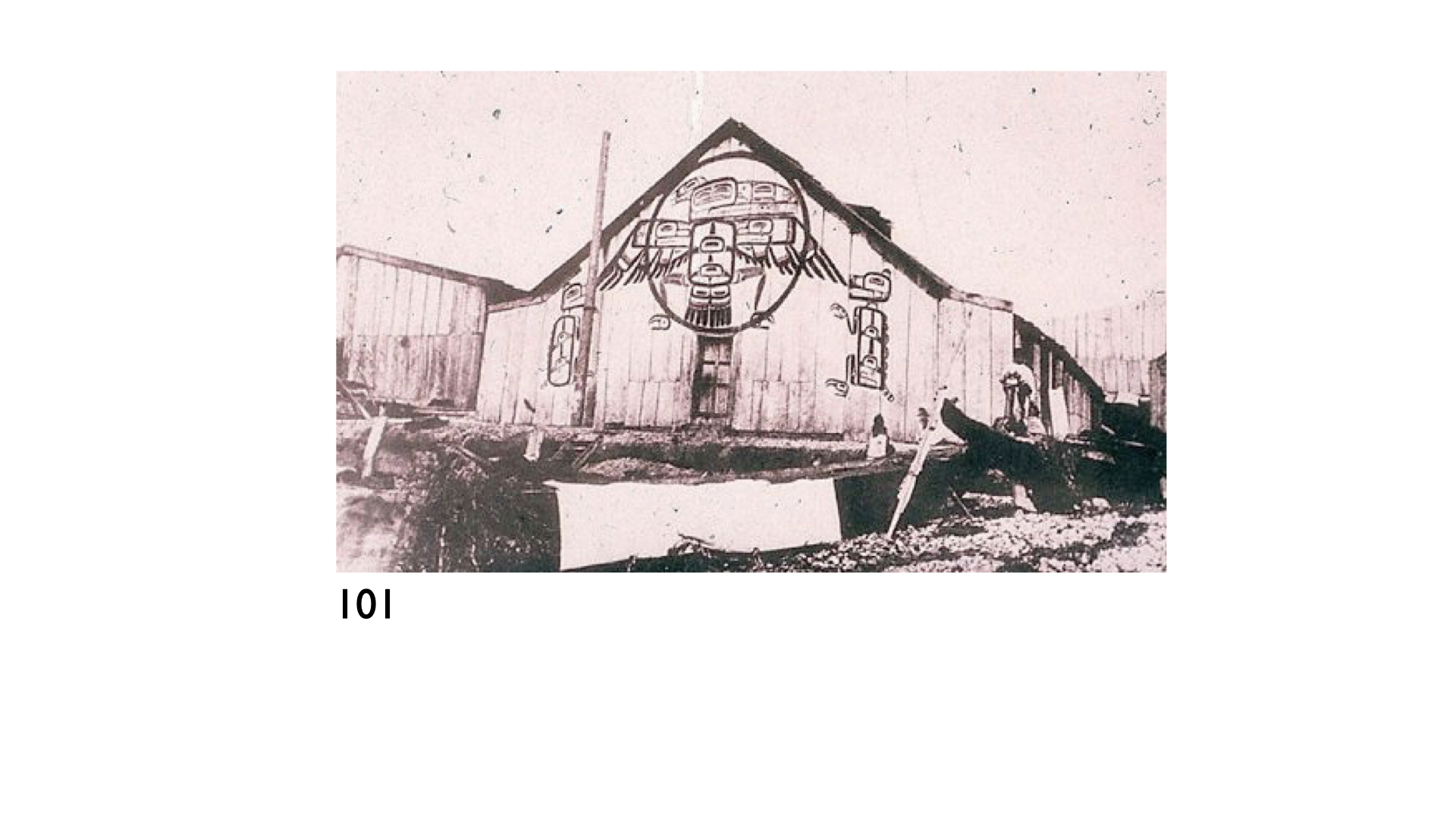
Chief’s House Facade (Kwakiutl) — NW Coast, Historic, Kwakiutl
→ Painted face of chief’s house with Europeanized doorway.
Function/Meaning: Displays clan symbols; hybrid of Native and colonial forms.
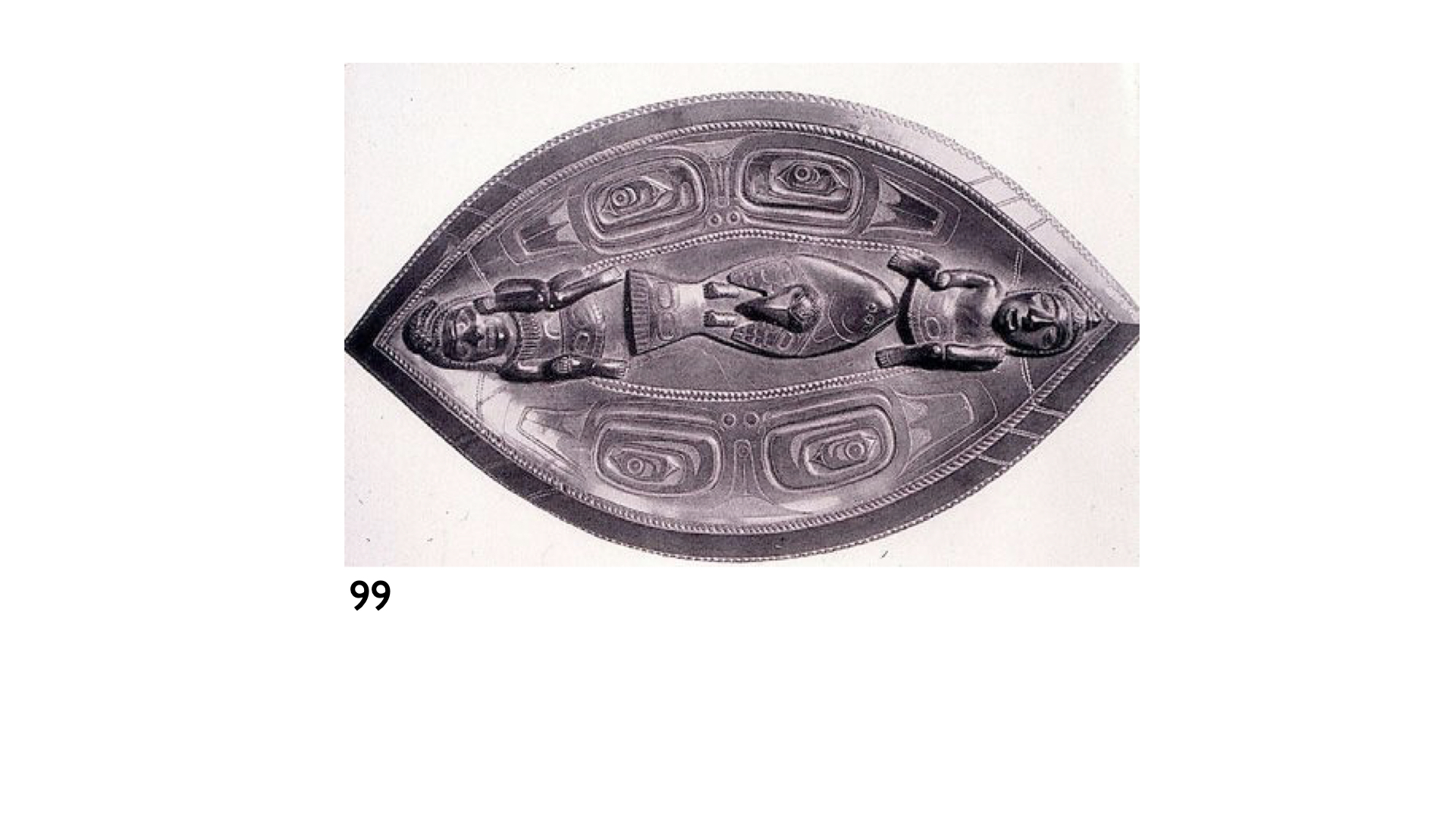
Northwest Coast, Historic, Haida
What is it? — Haida argillite sculpture of an oval-shaped dish with two shamen in a boat
Functional and cultural significance — Haida argillite sculptures were made solely for sale to Europeans, and this particular sculpture worked to represent traditional ideas to them (i.e. shamanism, use of secondary eyes and animals in art)
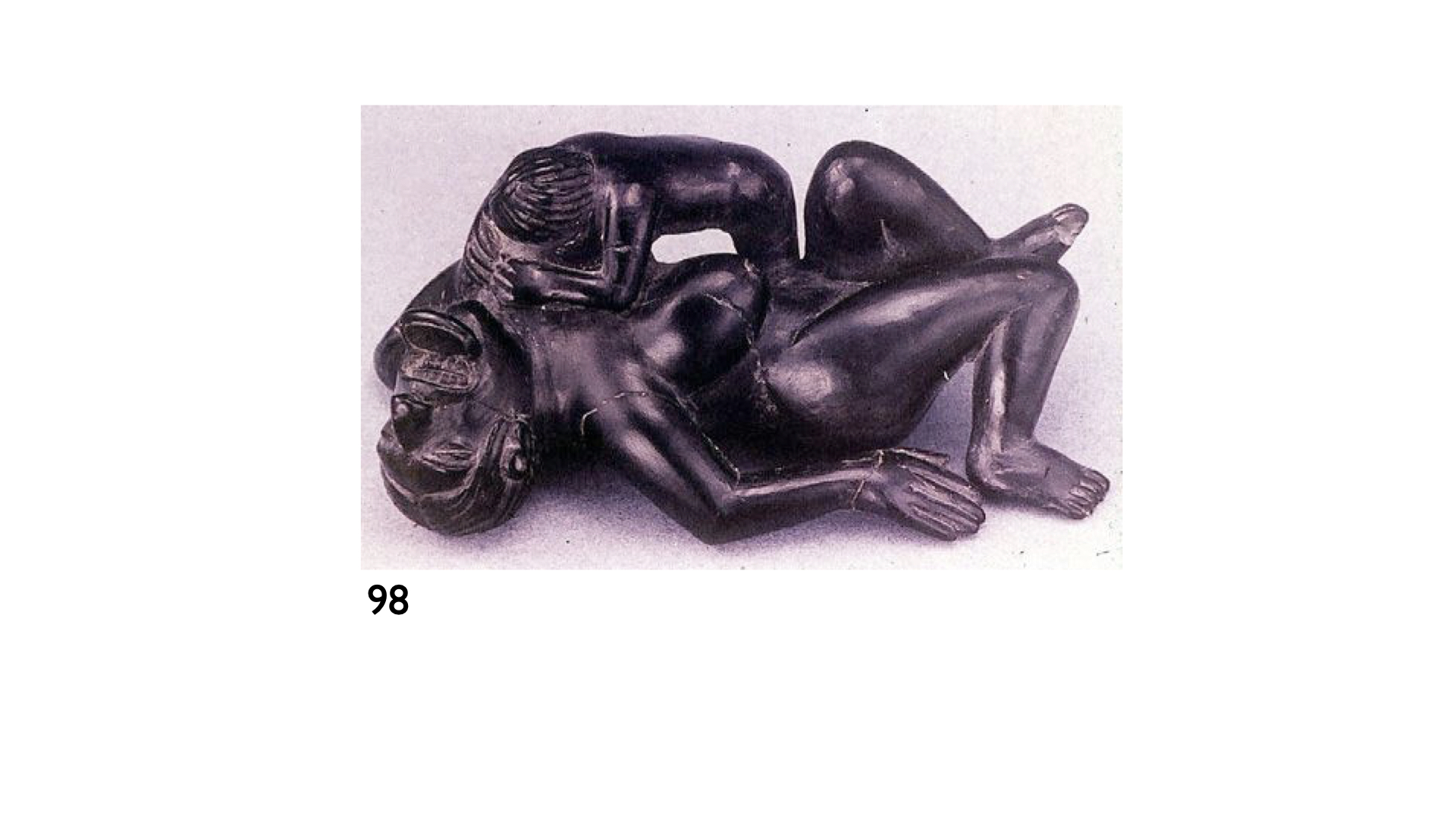
Northwest Coast, Historic, Haida
What is it? — Haida argillite sculpture of the bear mother myth
Functional and cultural significance — Haida argillite sculptures were made solely for sale to Europeans, which in this case, was likely sailors
Represents the bear mother myth, a story within Haida mythology, but presented in a way that is catered to Europeans, specifically in the bear mother’s nudity and the sexual positioning of this sculpture
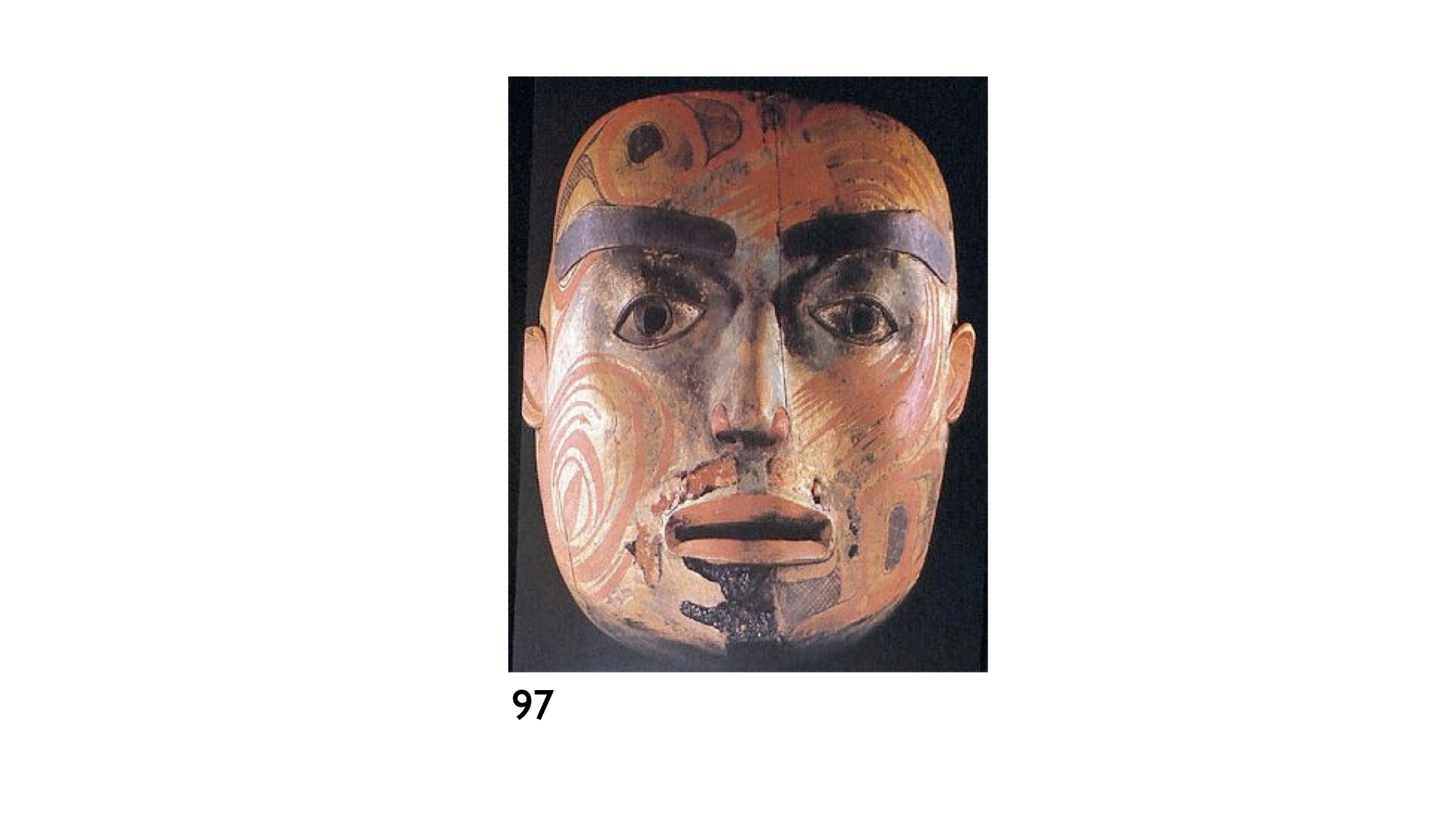
Northwest Coast, Historic, Haida
What is it? — Haida portrait mask of a man, carved from wood and featuring clan crest facial painting on his face
Functional and cultural significance — The orange asymmetrical facial painting on this mask represents the man’s clan affiliation + naturalistic portrait masks were more common in the Haida
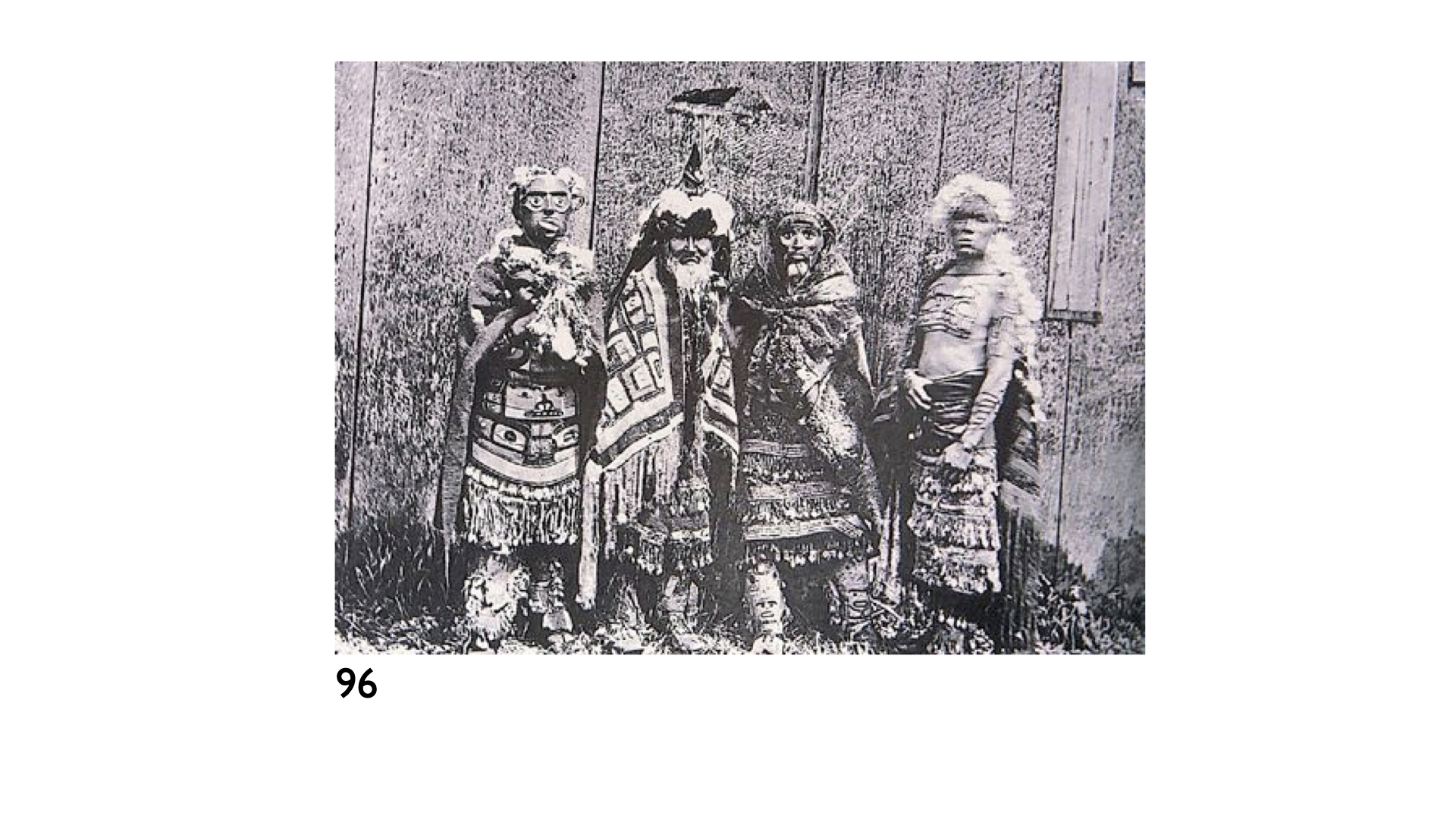
Northwest Coast, Historic, Haida
What is it? — Haida shaman and men wearing shaman’s masks — details in the Tlingit Chilkat robes (prestige item that was traded), puffin beak skirts, totemic tattoos, human ancestor mask (Haida was more naturalistic)
Functional and cultural significance — shamanism as an important part of Haida culture, interaction with other groups like the Tlingit, and use of masking and tattoos to convey meaning
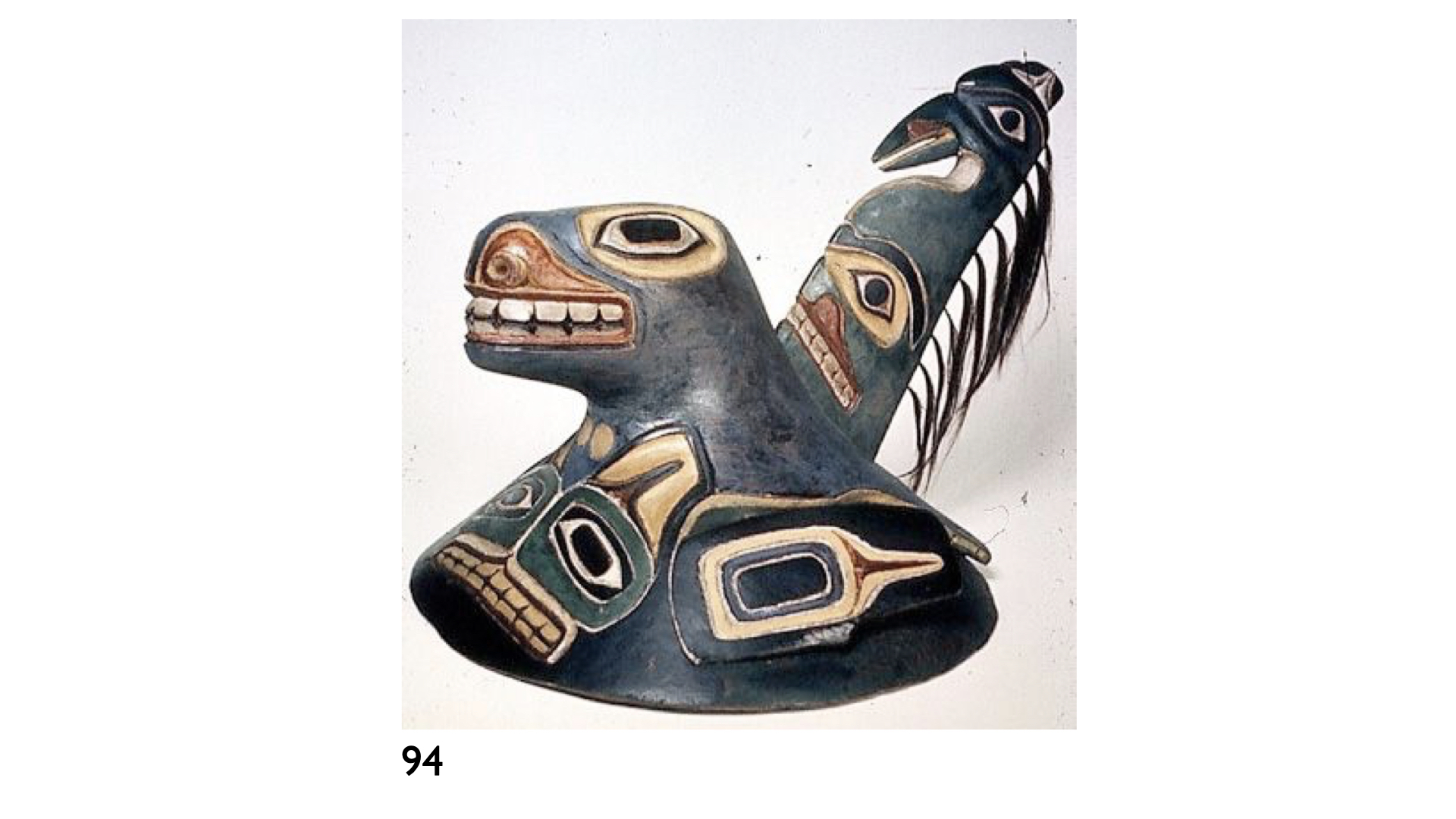
Northwest Coast, Historic, Haida
What is it? — Crest helmet with seal head and whale fin
Functional and cultural significance — A prestige item among the Haida, which represents totemic emblems (a major part of their belief system)
Northwest Coast details: The secondary eye on the whale fin, multiple animals represented in different profiles
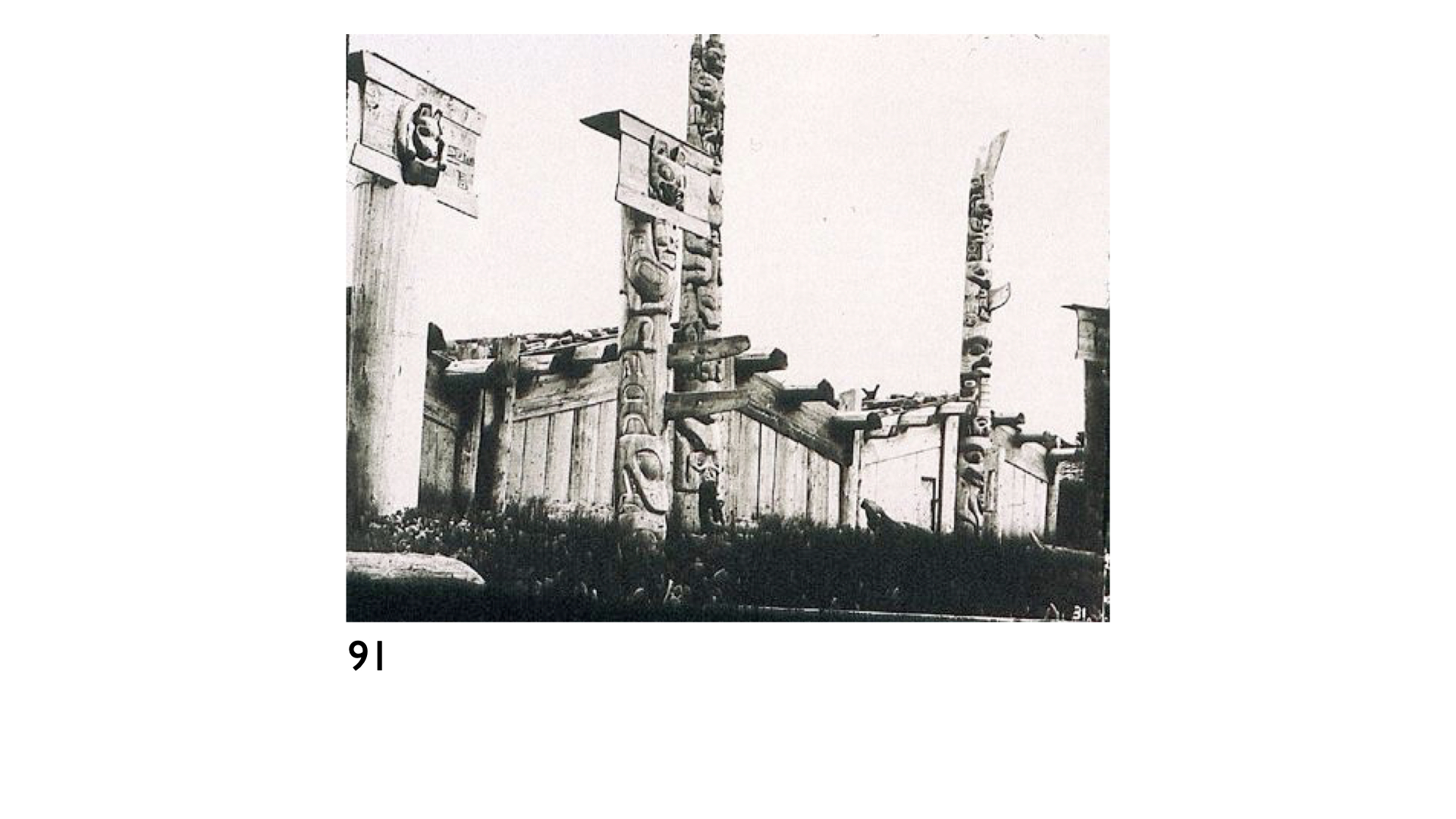
Northwest Coast, Historic, Haida
What is it? — A picture of two memorial poles and two house frontal poles in a Haida village
Functional and cultural significance — Illustrates the Haida’s totemic belief system and use of totem poles to pay homage to their clan ancestors
The memorial poles in particular featured the body of the ancestor in the rectangular box with a totemic animal’s face, with the leftmost pole representing a bear with a copper in his mouth, as a means of homage
The house frontal poles similarly illustrated their ancestors and their clan associations
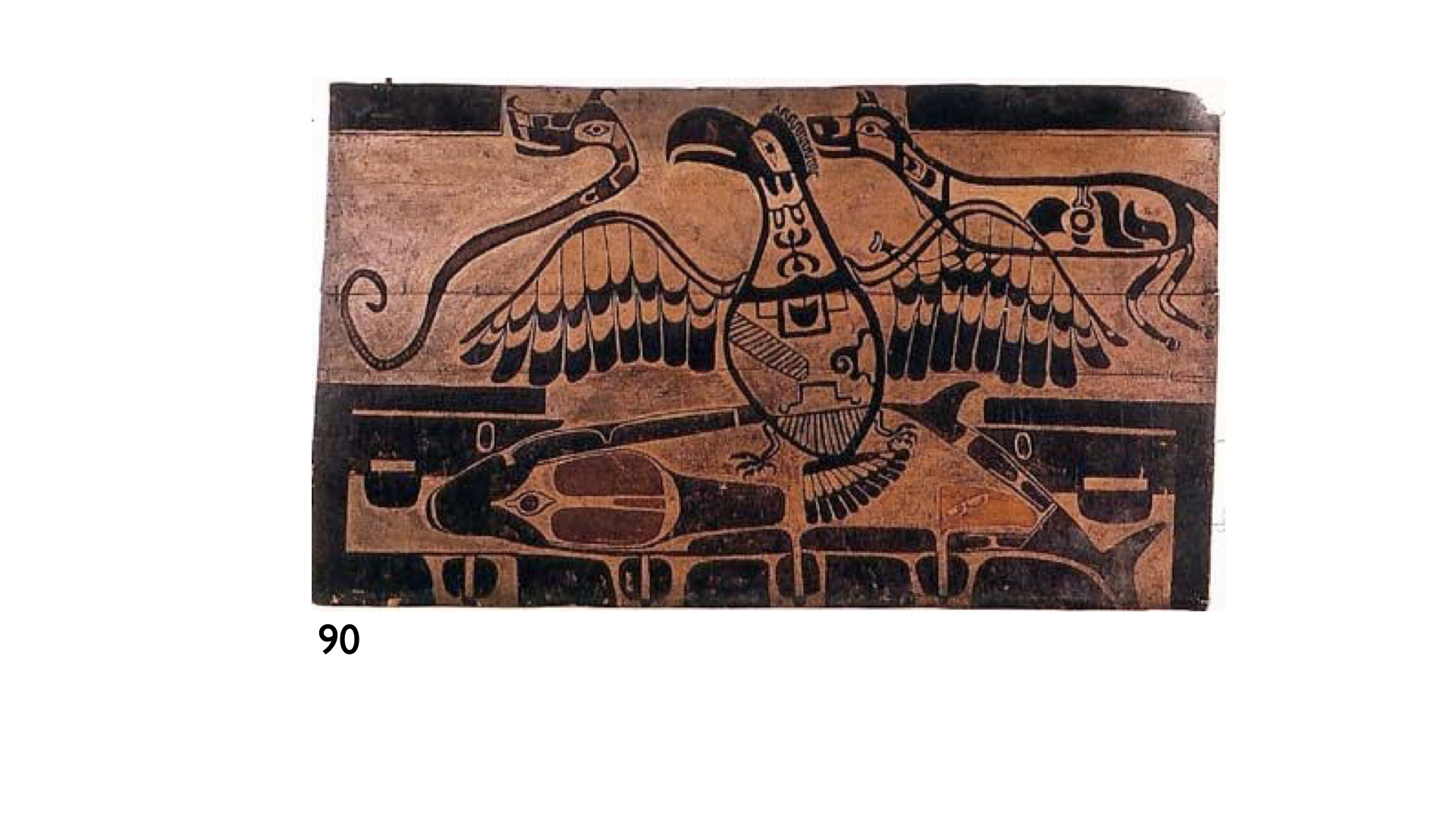
Northwest Coast, Historic, Nootka
What is it? — A painted house board representing supernatural spirits, such as the thunderbird and horned serpent, alongside other animals such as a wolf and whale
Functional and cultural significance — Represents the mythology of the Nootka in terms of their totemic belief system and belief in supernaturals like the horned serpent and the thunderbird, which they believed had the capability of picking up and consuming whales
Illustrates their art style, which often featured an x-ray depiction of animals, use of negative space, and sharp eyes
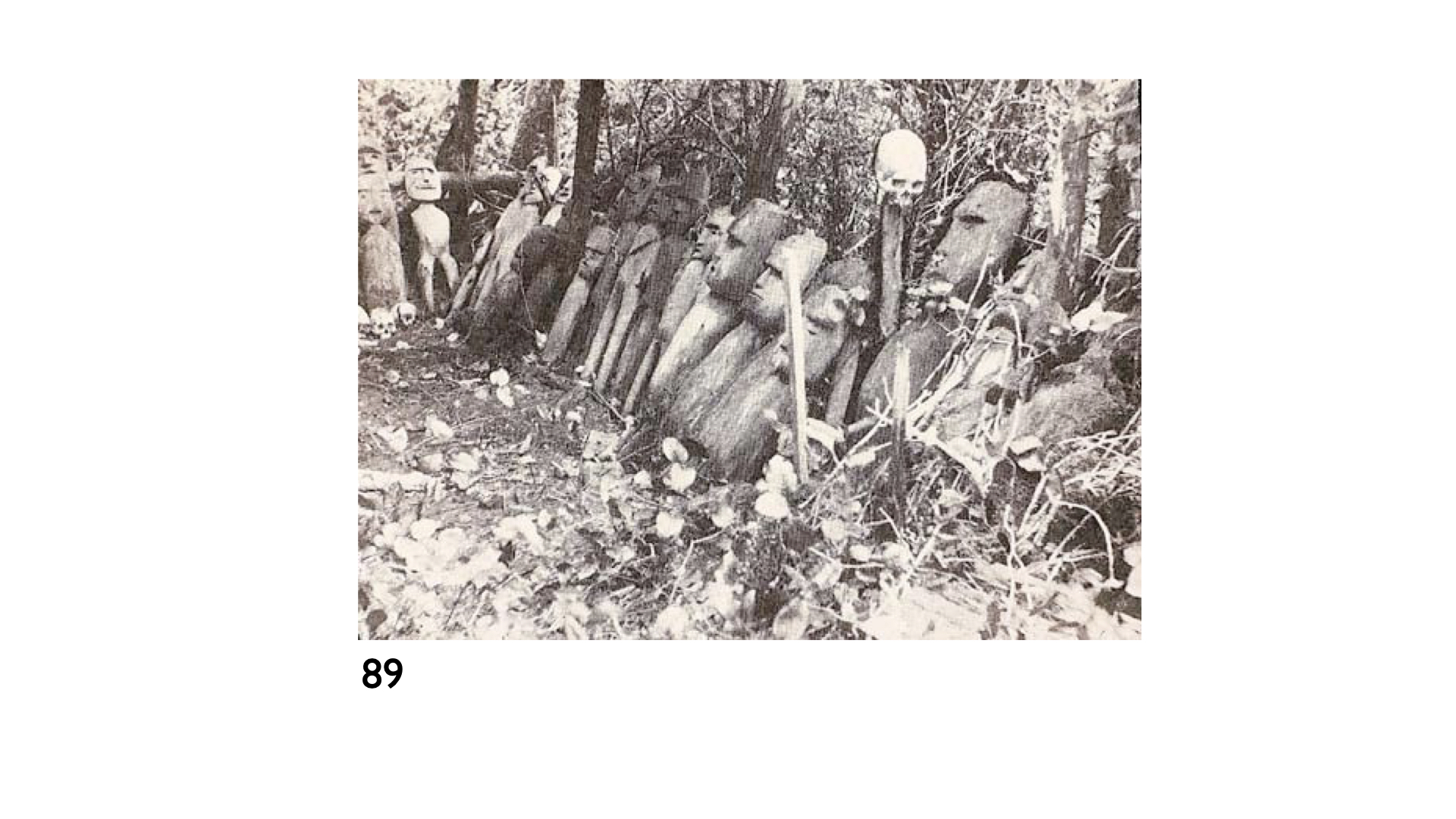
Northwest Coast, Historic, Nootka
What is it? — A Nootka whalers’ washing shrine with human skulls and carved anthropomorphic figures
Functional and cultural significance — A part of the ritual that Nootka whalers would perform before going hunting (such as human sacrifice, hence the skulls)
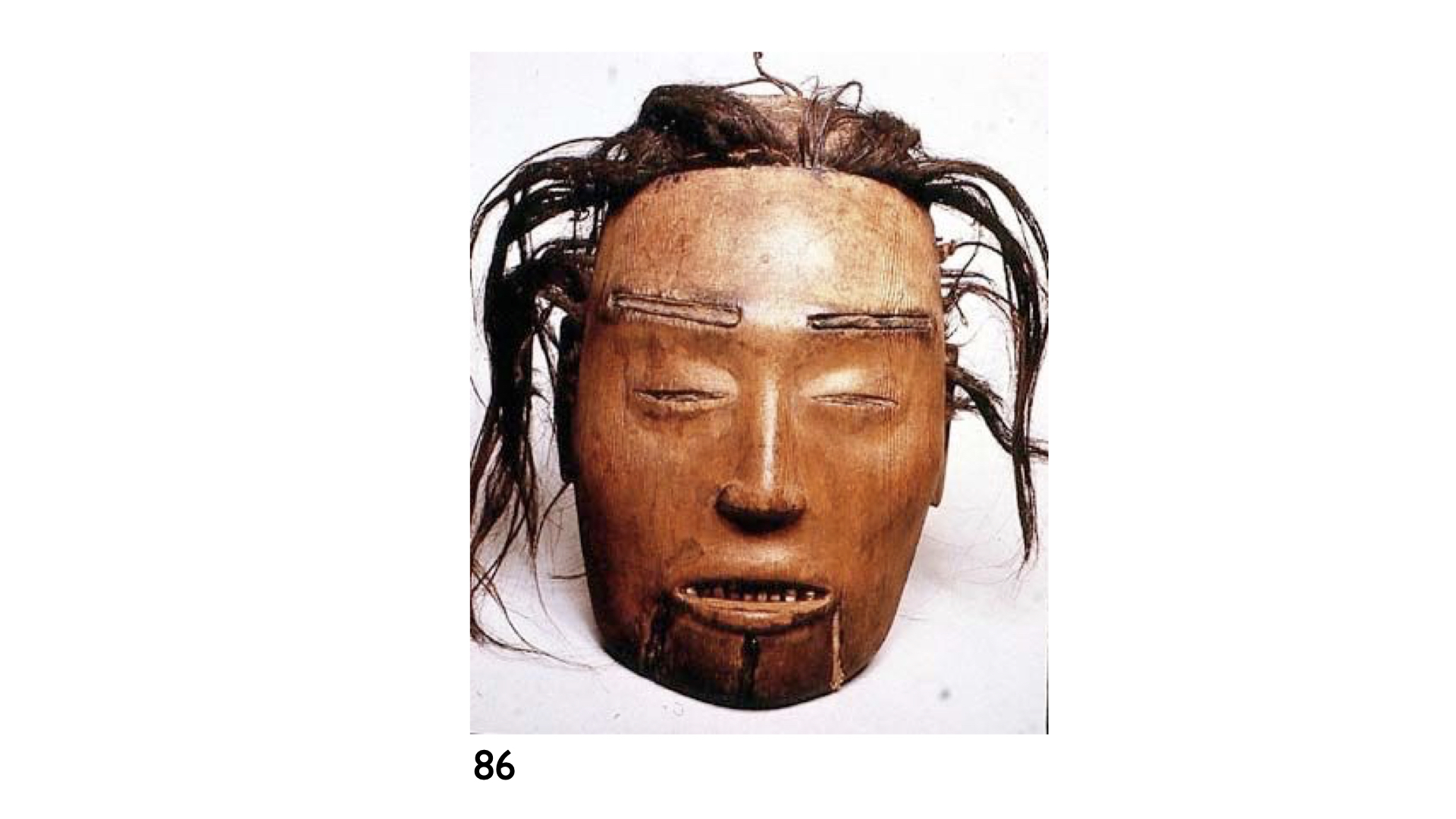
Northwest Coast, Historic, Nootka
What is it? — A naturalistic wooden mask, with slit-like eyes, defined eyebrows, individual teeth, and human hair attached
Functional and cultural significance — Was likely a human ancestor mask, paying homage to an ancestor
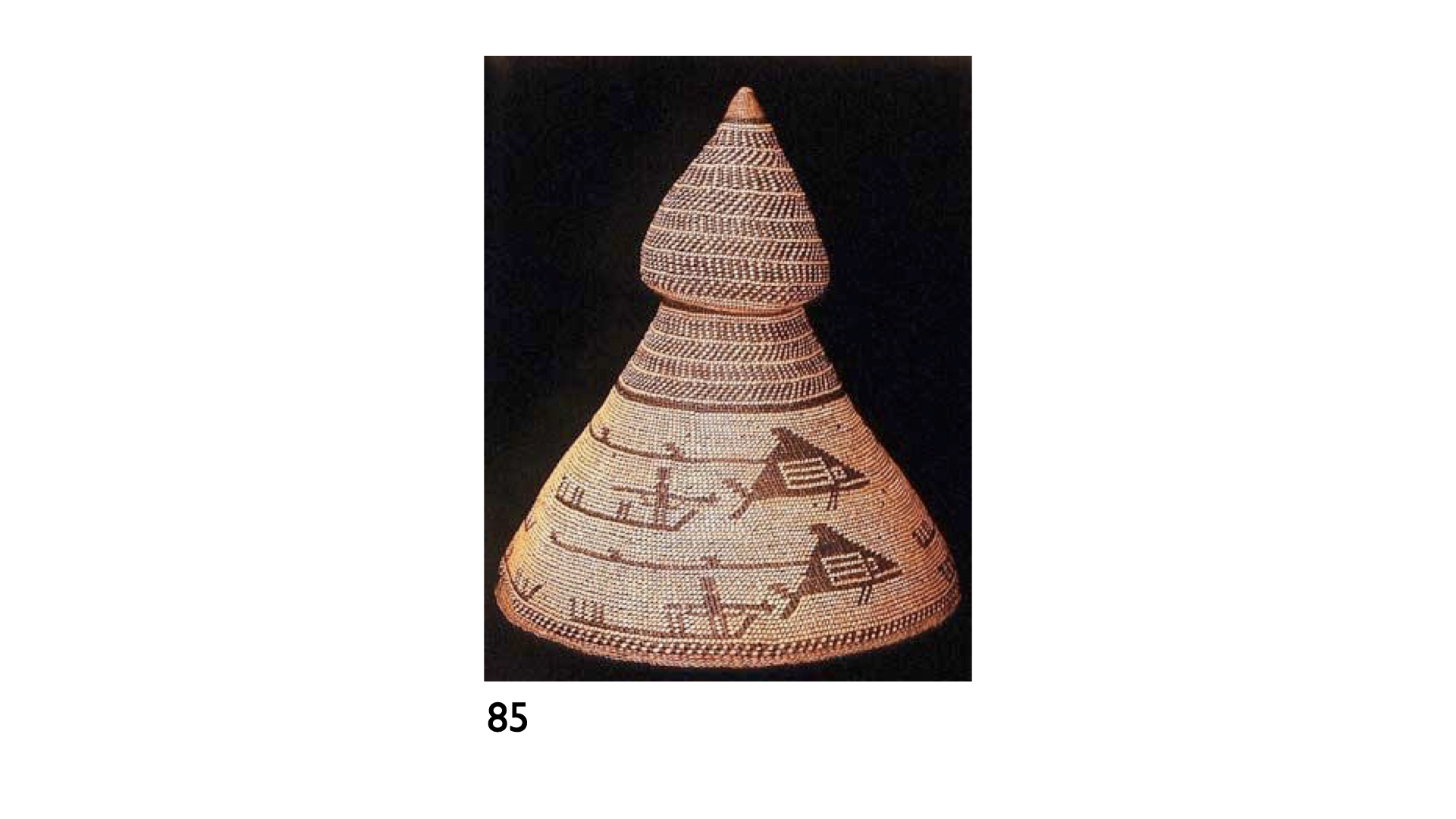
Northwest Coast, Historic, Nootka
What is it? — A Nootka chief’s basketry hat (a prestige item), weaved from a cedar root with a scene of Nootka hunters harpooning whales (a major food source)
Functional and cultural significance — Was a prestige item among the Nootka, illustrating a hunting scene relevant to their culture
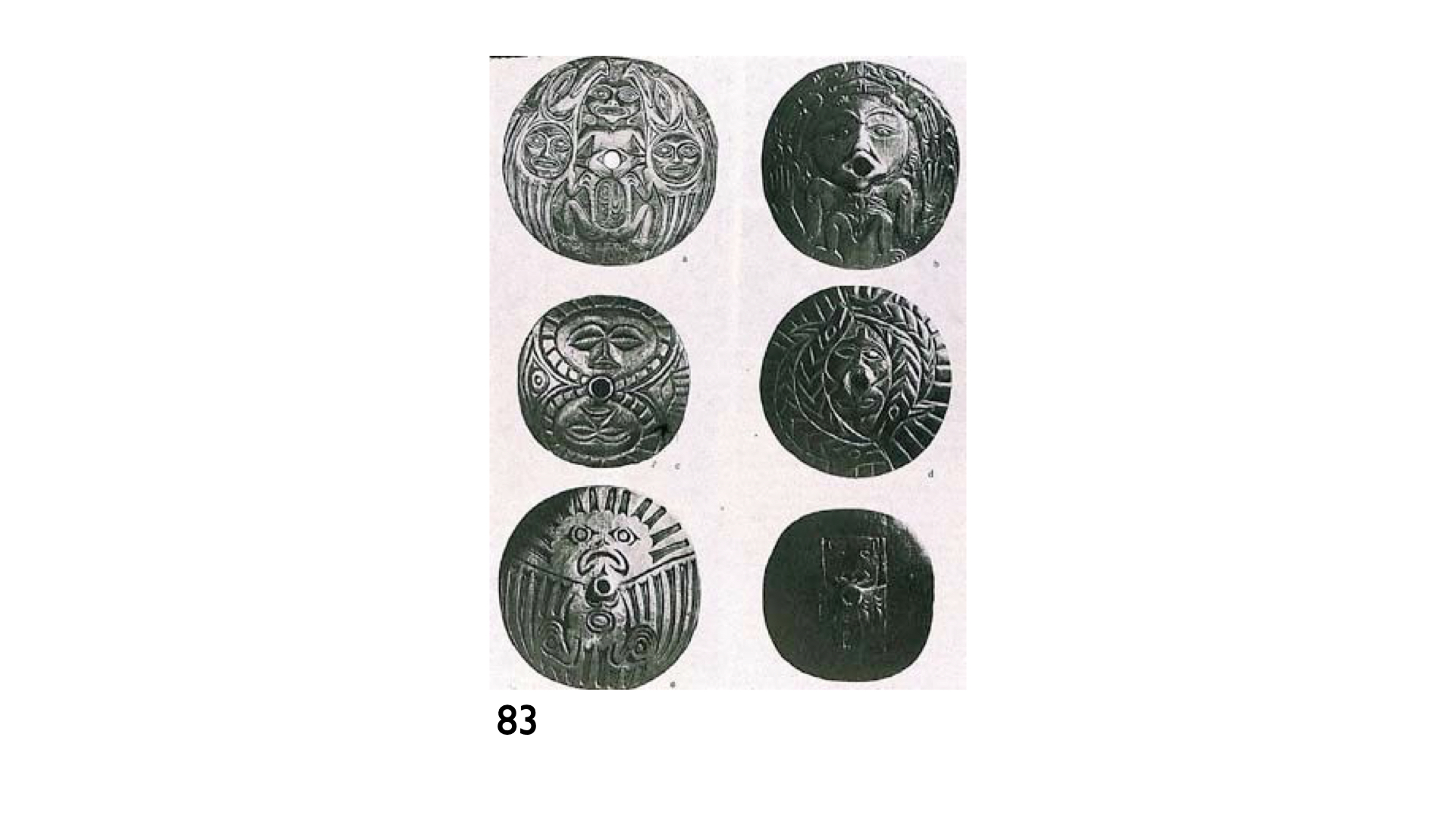
Northwest Coast, Historic, Salish
What is it? — Spindle whorls carved with various incised patterns, some representing humanoid forms while others represent animalistic ones (i.e. the serpents on the middle right whorl)
Functional and cultural significance — Functionally used in weaving but carved to likely represent powerful totemic animals
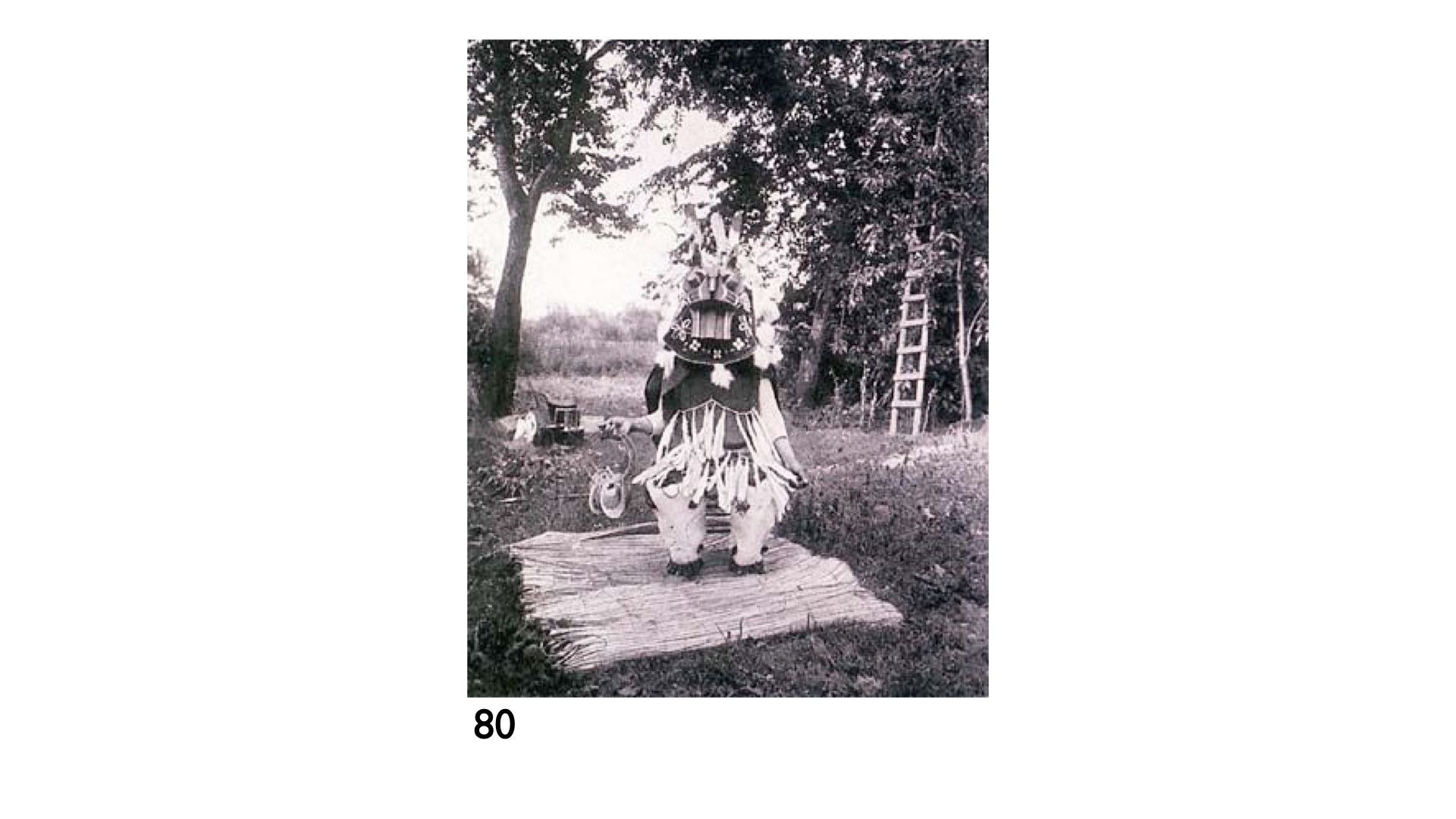
Northwest Coast, Historic, Salish
What is it? — A representation of one of the only masks found in Salish culture, the highly ornate and decorated “Sxwayxwey” or cleansing mask, and the outfit that was worn with it
Defined by protruding eyes, feathers sticking out from the sides, carved animal forms
Functional and cultural significance — originally served a shamanistic purpose, representing a powerful spirit, but has shifted into being an entertainment mask
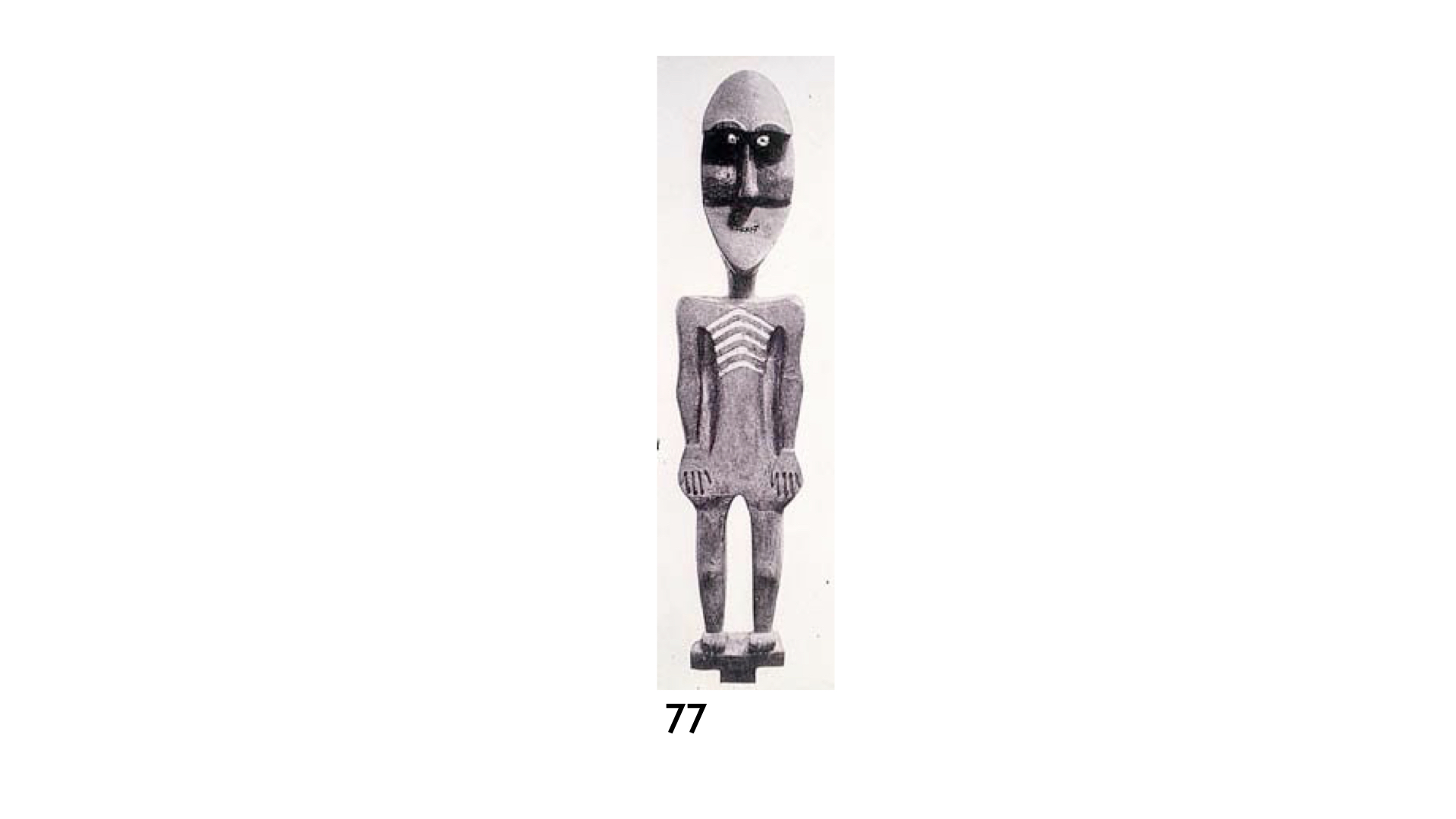
Northwest Coast, Historic, Salish
What is it? — A simplified, anthropomorphic figure standing on a stake, with a well-articulate face with prominent cheekbones and a less-defined body
Functional and cultural significance — represents a guardian figure or helping spirit for a shaman
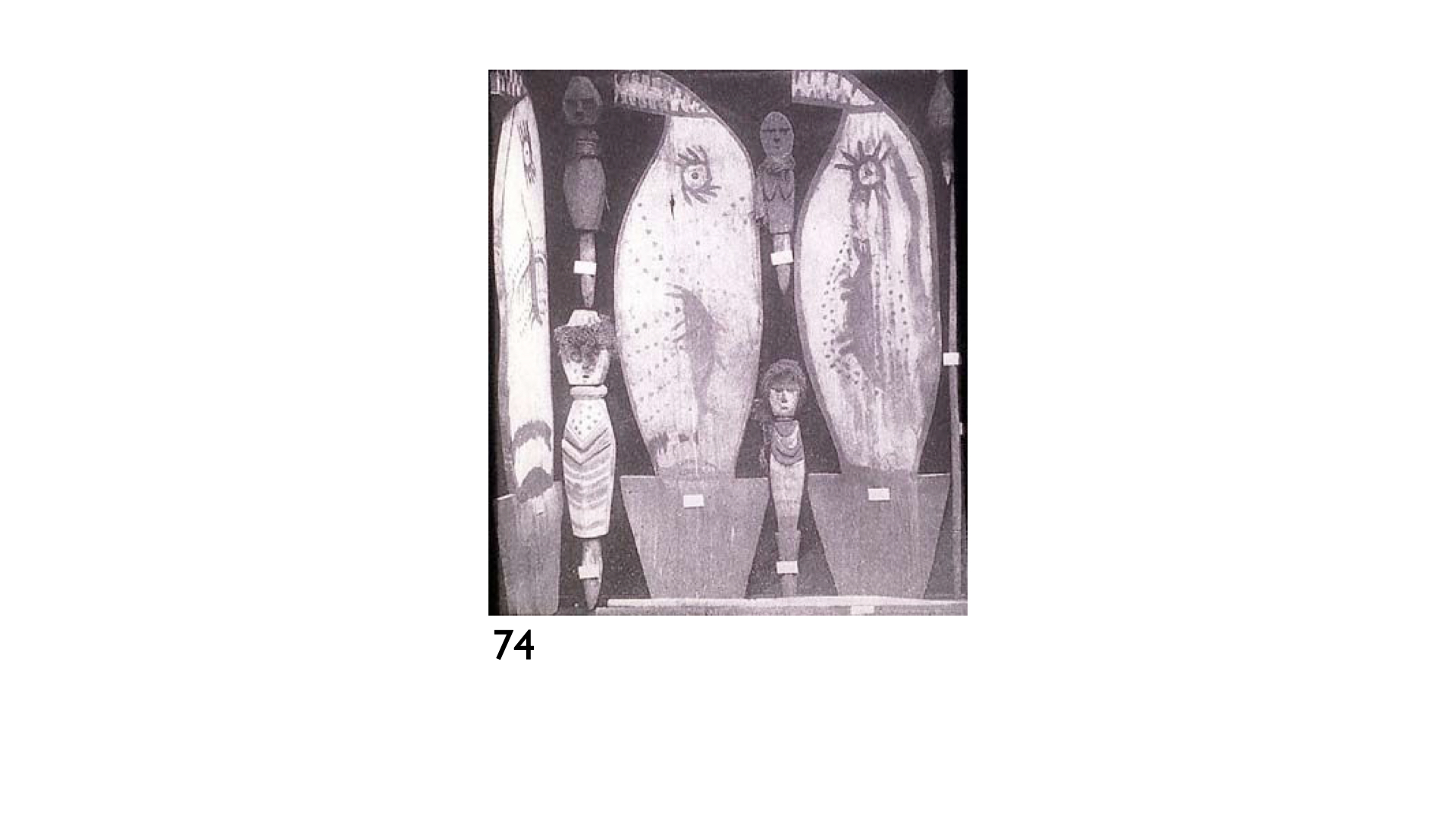
Northwest Coast, Historic, Salish
What is it? — Spirit canoe ceremony power boards made out of wood and staked into the ground *both small, geometric anthropomorphic figures and big, simplified teethy sea mammals with eyes
Functional and cultural significance — would be staked around a boat-shaped diagram to support a shaman as helpers as they make the journey to another world in order to find the cure for someone, having to overcome obstacles along the journey
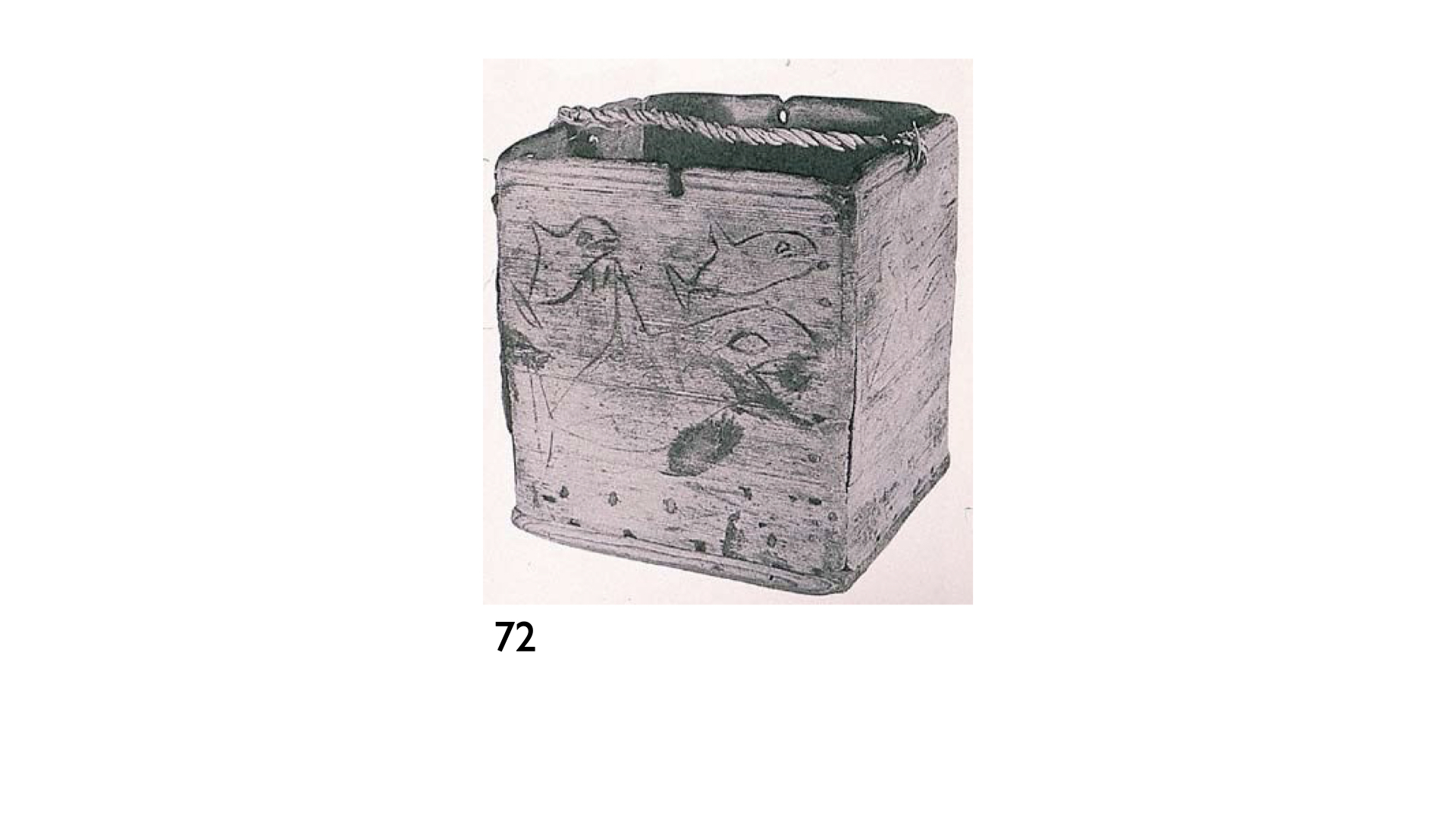
Northwest Coast, Prehistoric, Ozette
What is it? — a carved wooden kerf box with a simplified, stick-figure representation of a pod of whales on its sides
Functional and cultural significance— served a functional purpose for storage but also highlights a major food source of the ozette — whales
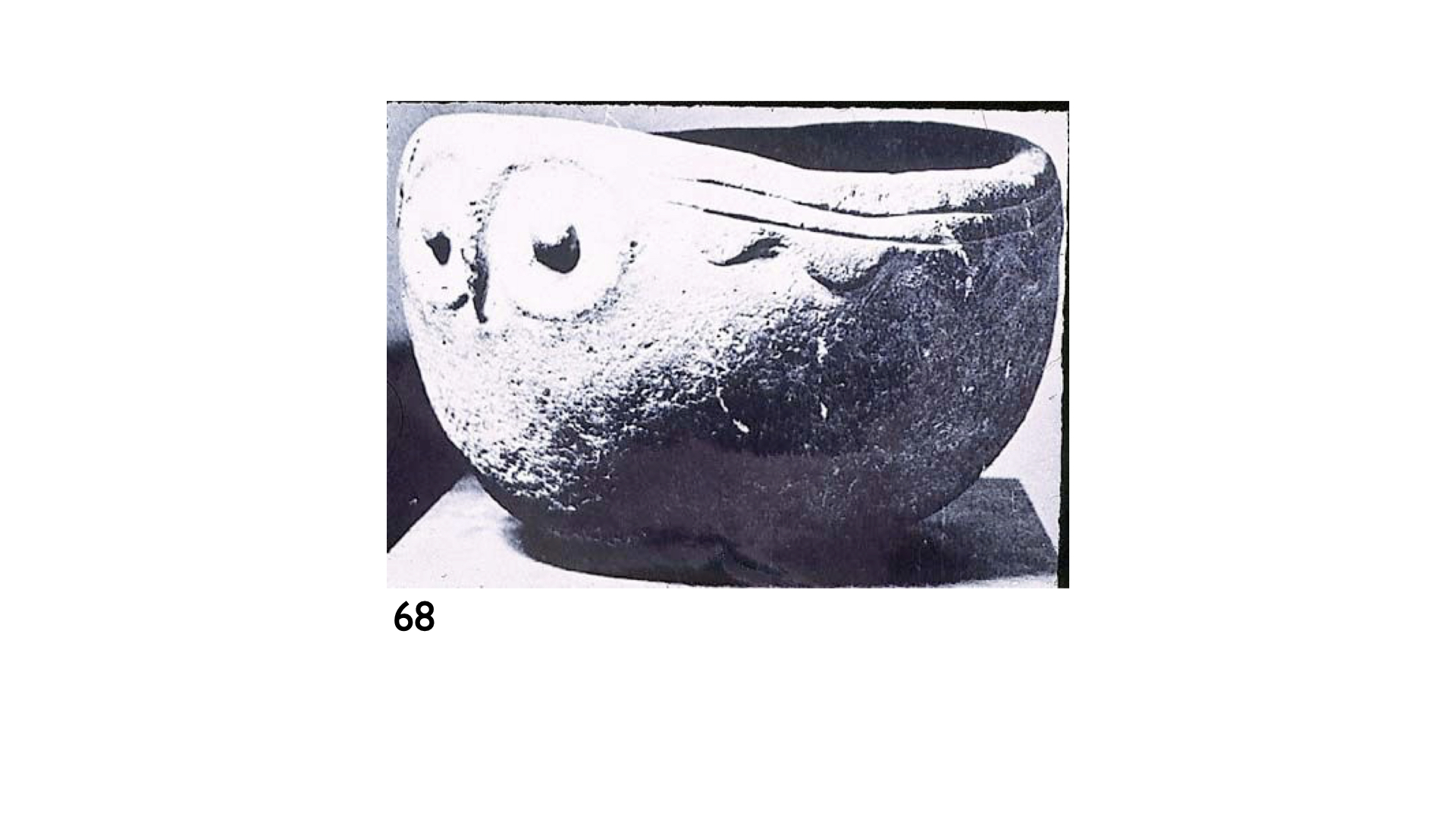
Northwest Coast, Prehistoric, Columbia River
What is it? — a lava mortar or bowl with an owl-like face at the front
Functional and cultural significance — Unlike the mortar by those of the Fraser River, this bowl is much more simplified and abstracted (more of a bowl than an owl), serving much more of a functional purpose
Northwest Coast tribes often depicted animals they encountered in their art
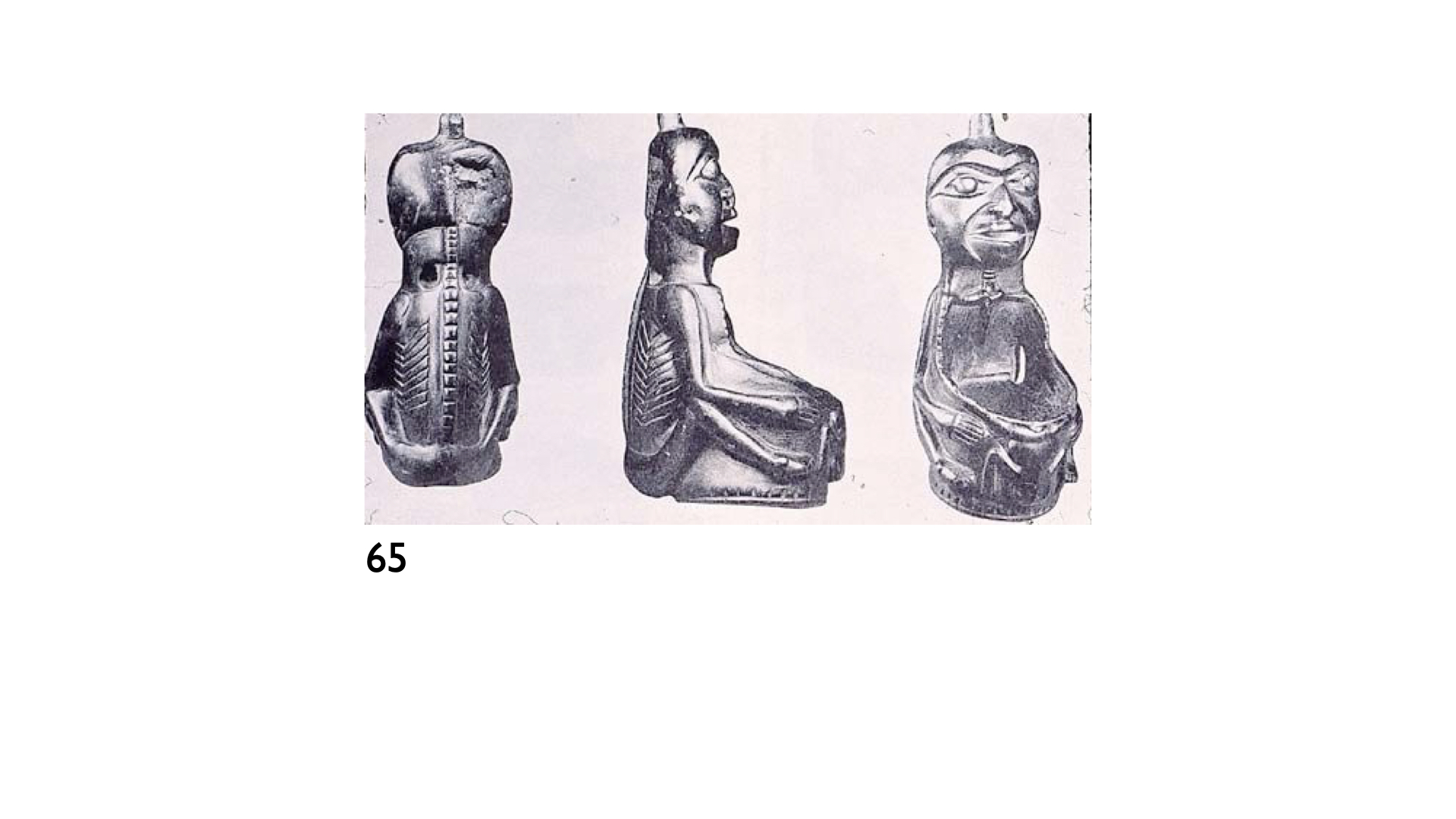
Northwest Coast, Prehistoric, Fraser River
What is it? — a composite mortar form carved in the shape of a seated human with a top knot and an upside-down frog, marked with incised skeletal lines of the spine, ribs, and clavicle and well-articulated face
Cultural and functional significance — used by a shaman to grind materials for magical purposes as part of their job as curers
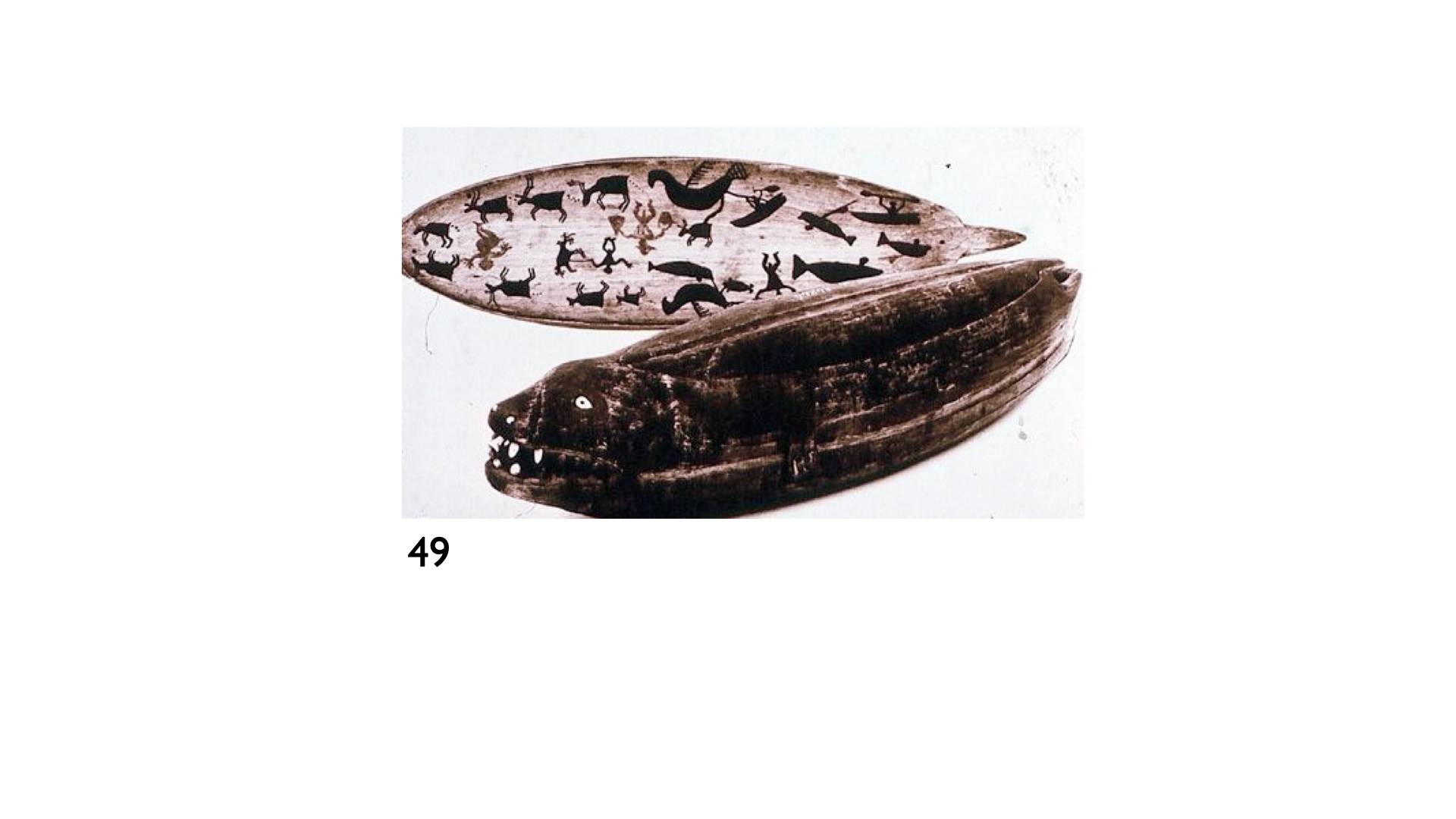
Southwest Alaska, Historic, Yupik Eskimo
What is it? — a wooden hunting-gear box carved into the shape of a seal, with a painted interior
Comment on the cultural significance — In addition to its shape, which refers to a major food source of the Yupik (the seal), the painted scene itself has significant meaning in regards to Yupik everyday life, reproduction, and mythology. The simplified representation of the supernatural thunderbird picking up caribou and whales, Yupik hunters harpooning whales for food, etc.
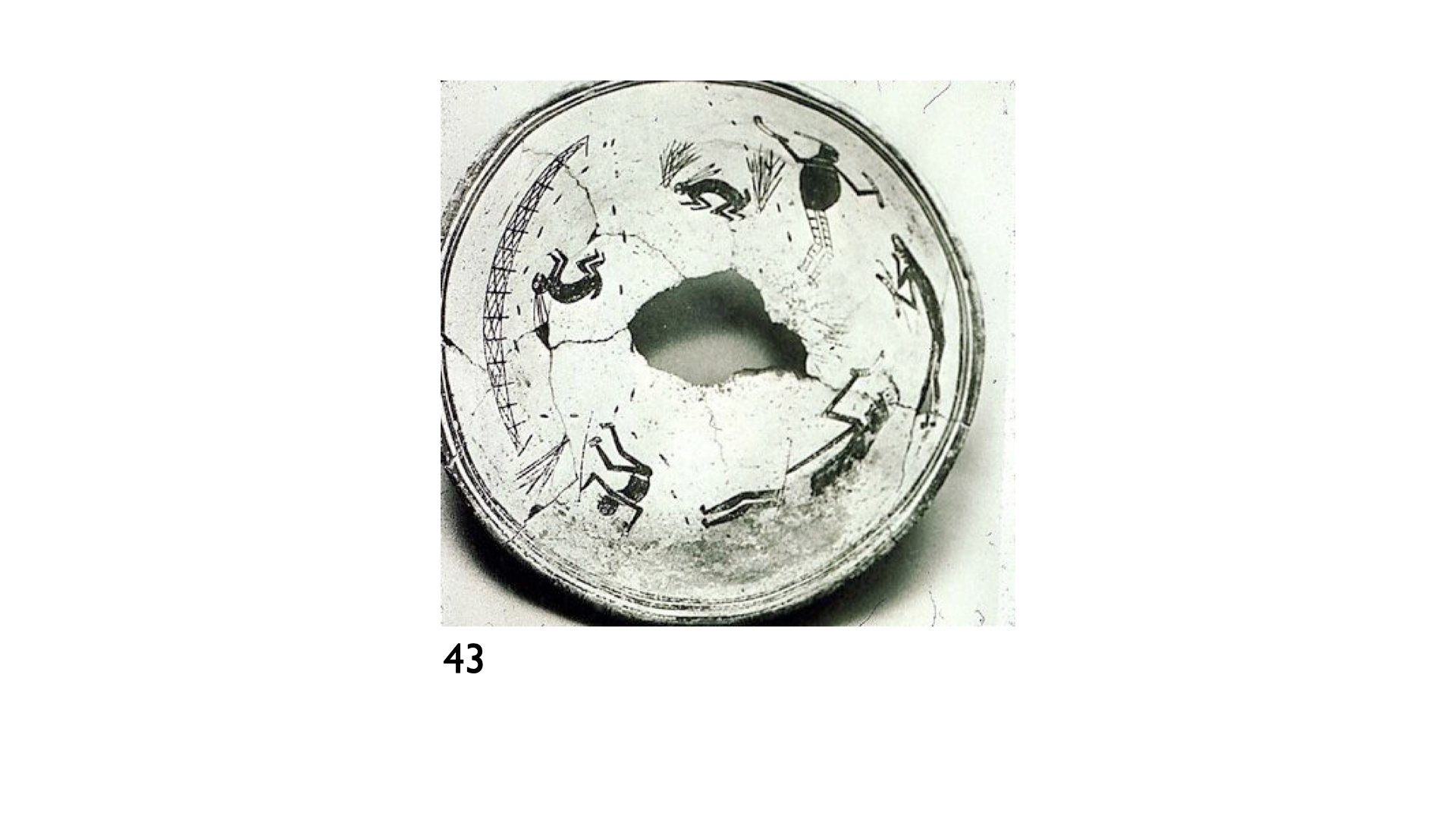
Southwest Coast, Prehistoric, Mimbres
What is it? — Ceramic burial bowl with painted rabbit hunt scene, with four human figures working to trap two rabbits into a net
Comment on its cultural significance — functioned as a burial bowl, where libations would be poured through the punctured hole in the middle + the Mimbres like to paint scenes relevant to their lives on these bowls, such as hunting rabbits for food
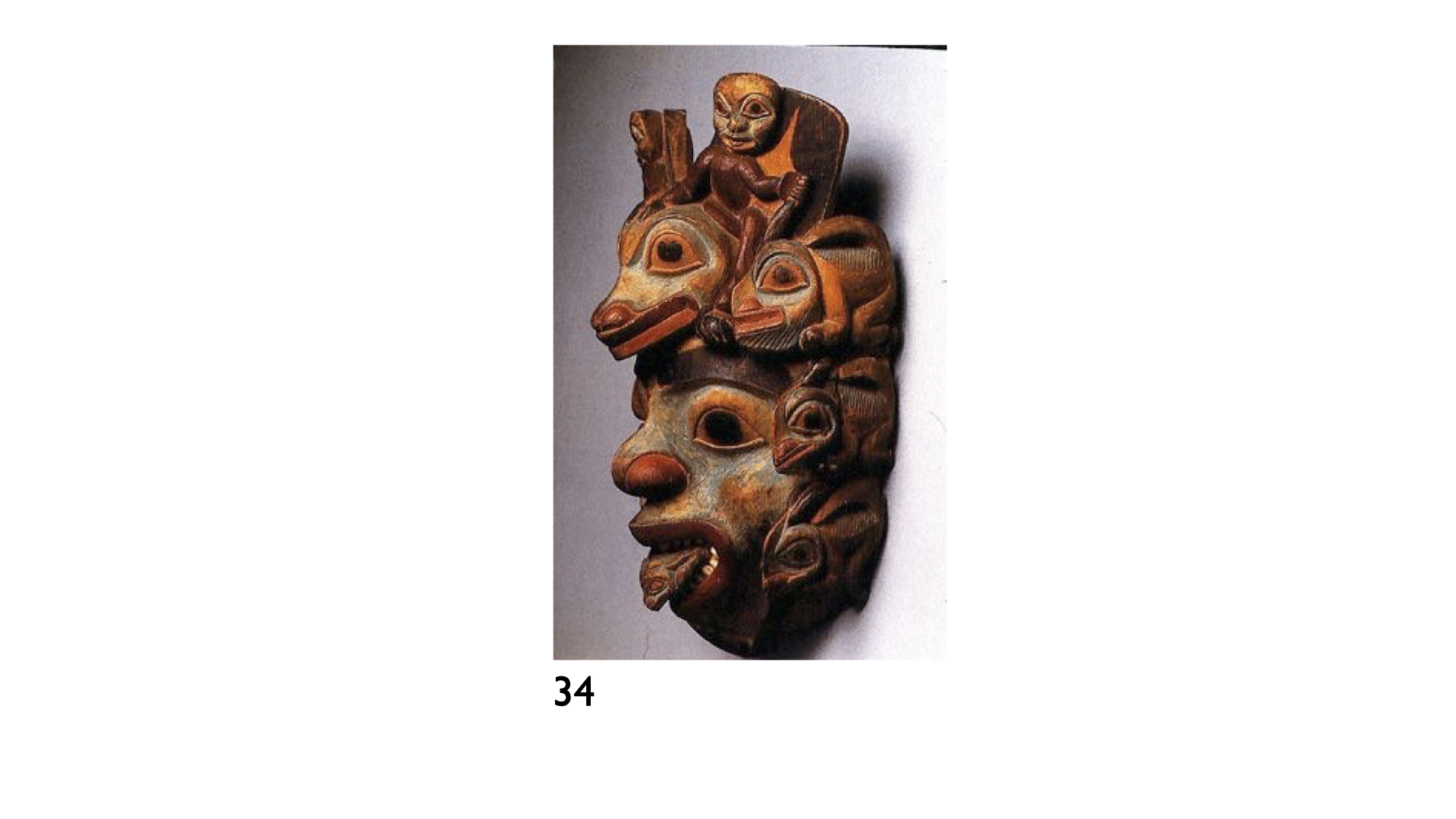
Northwest Coast, Historic, Tlingit
What is it? — Tlingit Shaman’s helping spirit mask
An extravagant wooden mask of an anthropomorphic face with helping spirits of different animals surrounding him, with a frog substituting his tongue and otters and humanoid figures lining the top and sides of their face
Shamanism was a critical aspect of Tlingit society, and helping spirits were a major part in the process of someone’s journey to becoming a shaman
Blue grayish tint common of the Tlingit
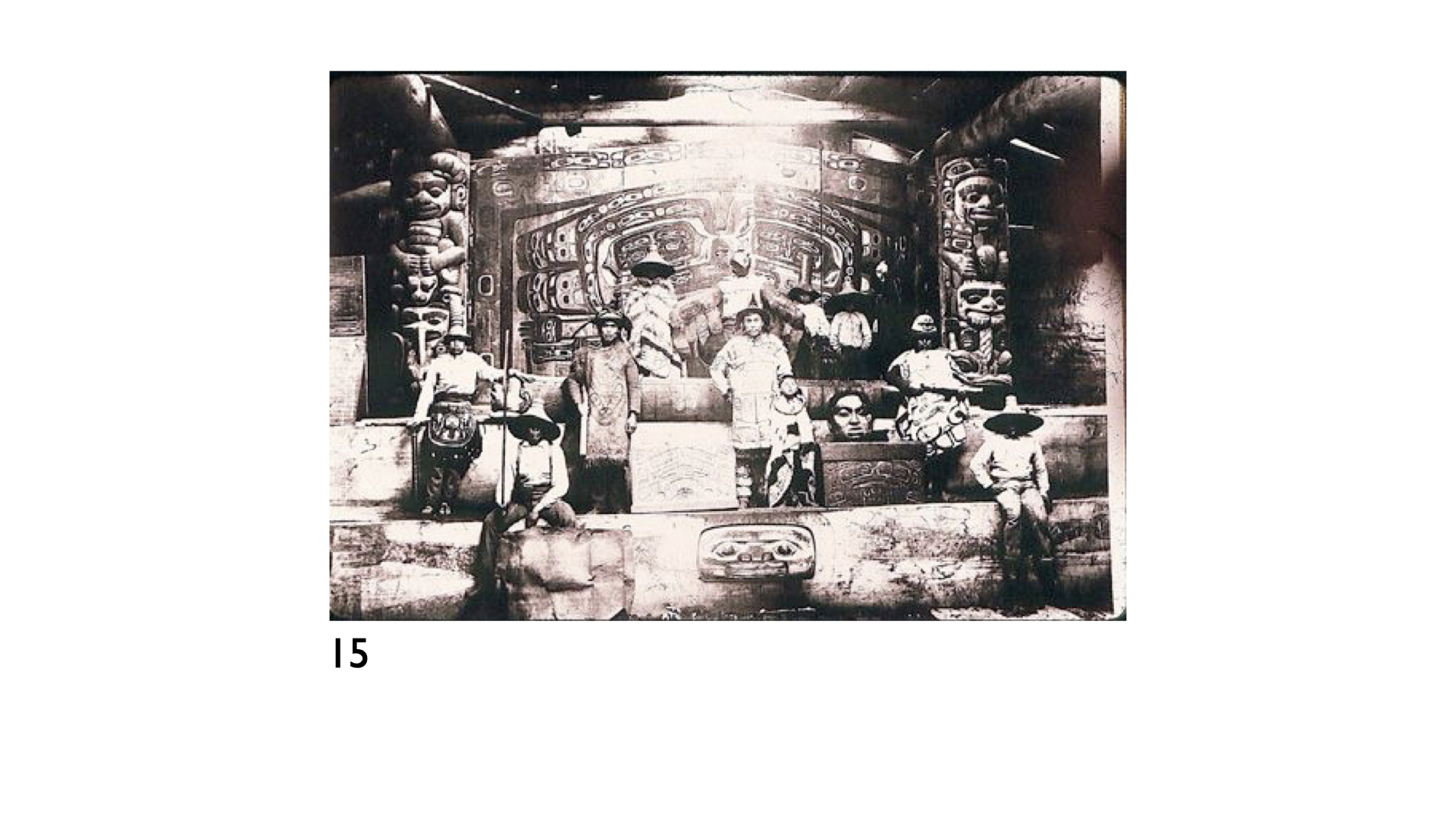
Northwest Coast, Historic, Tlingit
What is it? — Winter & Pond photo of the interior of a Tlingit chief’s house, “‘whale house’ interior”
Comment on its cultural significance — This photograph of the inside of a Tlingit chief’s house is loaded and extravagant with cultural motifs. Two totem-like poles stand as support beams in the back, deeply carved in the shape of anthropomorphic animals (hybrid figures). The back wall made up of planks is also carved and painted in the Tlingit’s signature 2D style, illustrating a complex composition of a totemic animal spirit made up of secondary eyes, hands with eyes, etc.
Carved kerf box, man with hat lined with potlatch rings
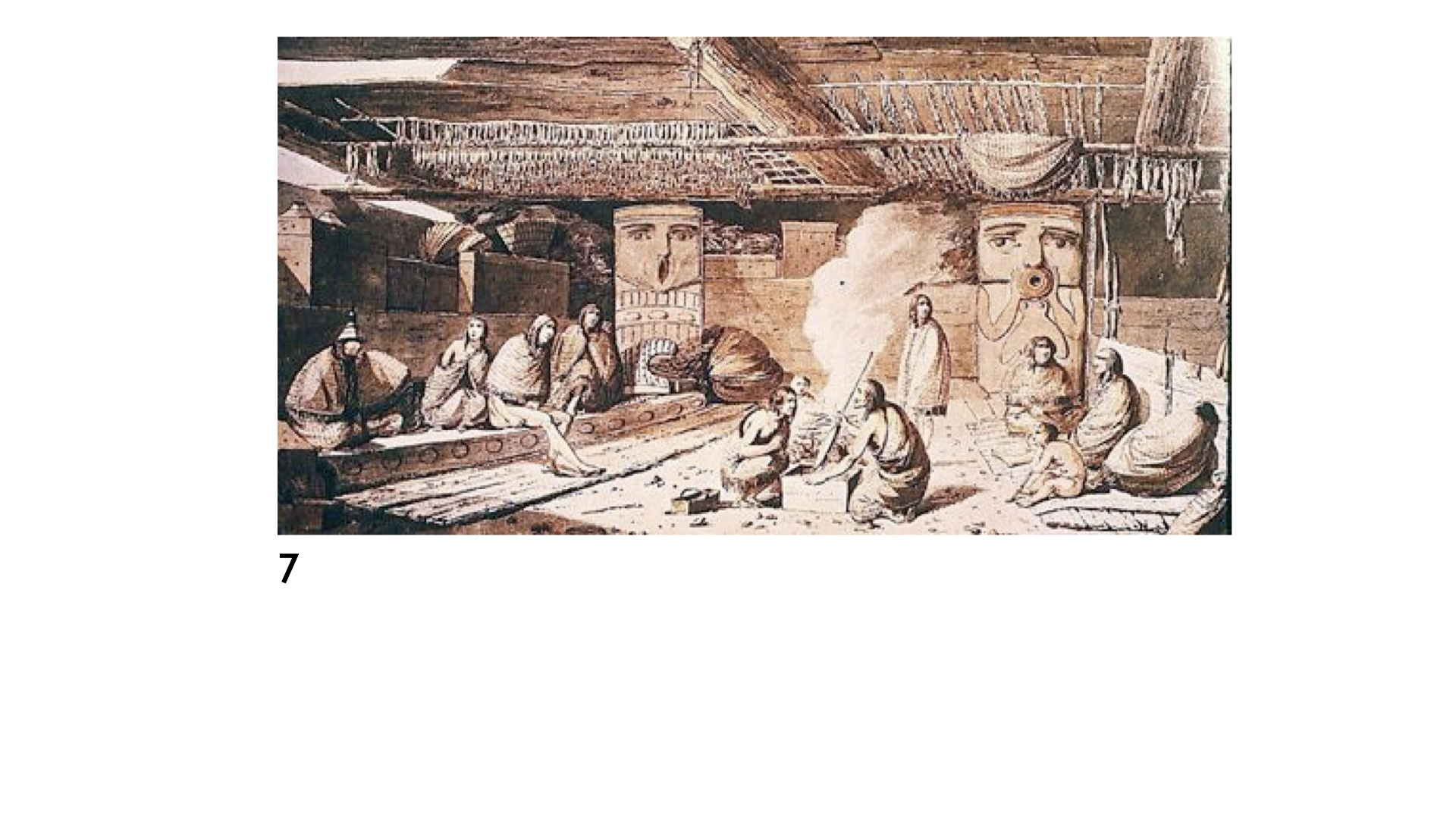
Northwest Coast, Historic, Nootka
What is it? — John Webber watercolor of the interior of a Nootka chief’s house
Comment on its cultural significance — This painting is potent with cultural meaning. Anthropomorphic figures stand as support beams in the back of the room, likely in reference to chiefly ancestors, and the room also contains carved kerf boxes, a killer whale effigy marked with animal teeth (food source), and a man on the very left wearing a traditional weaved cone-shaped hat
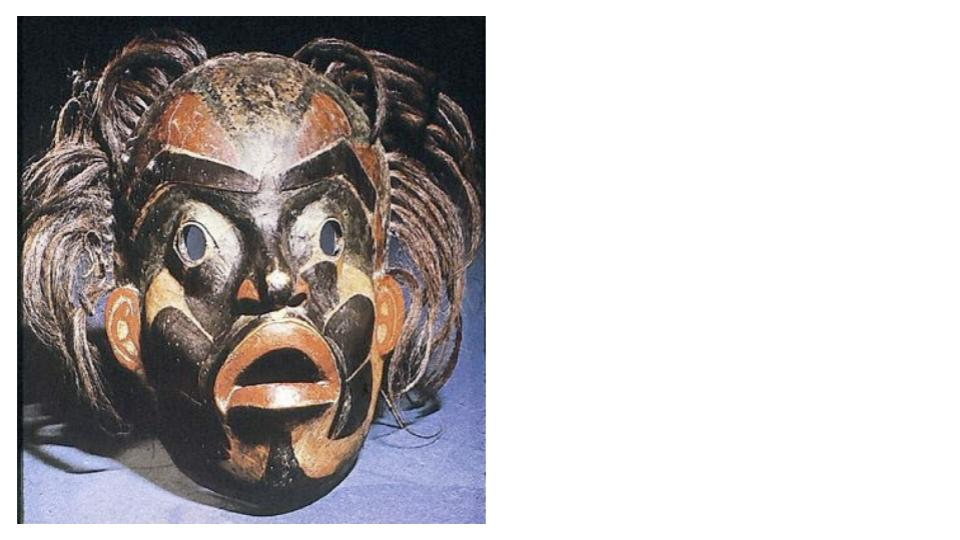
Northwest Coast, Historic,
KwakiutlWhat is it? - Wooden mask representing Bookwus (wild-man-in-the-woods)
Functional and cultural significance - illustrates a figure in Kwakiutl mythology, specifically one associated with the cannibal society and the wild, dangerous bush it is associated with
Kwakiutl details: Use of bold orange and black
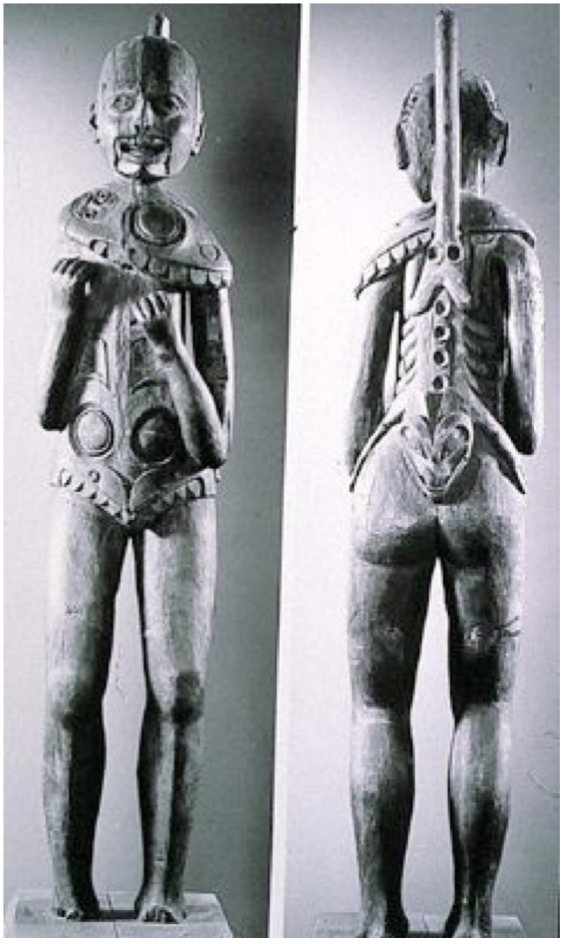
Northwest Coast, Historic, Tlingit
What is it? — Shaman’s guardian figure from grave site
Functional and cultural significance — Likely represents shaman’s helping spirits, with representation of a wolf and fish at the front and otter and octopus in the back, with suckers
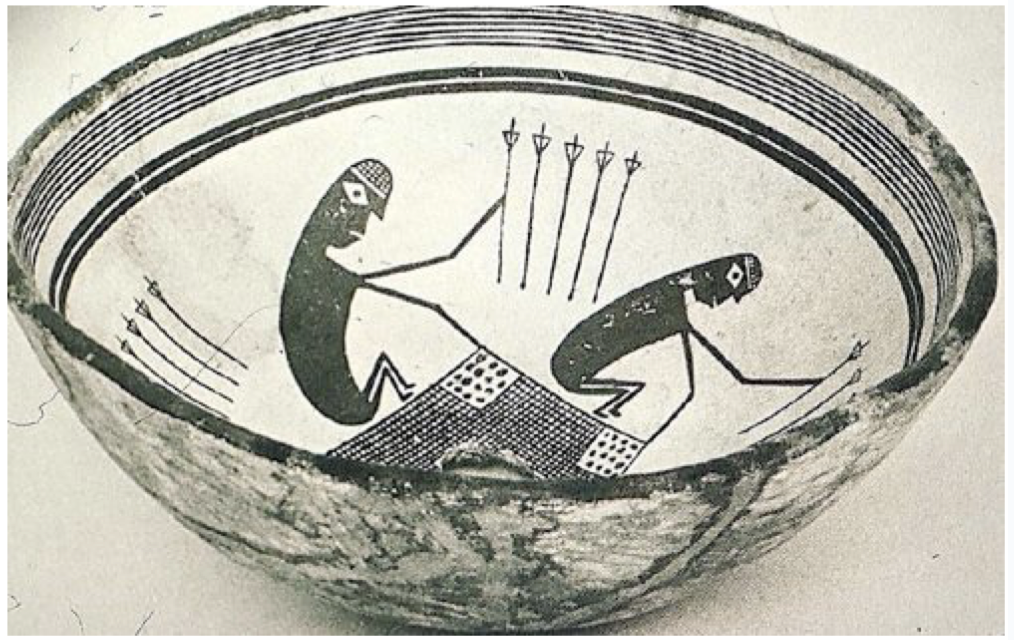
Southwest, Prehistoric, Mogollon
What is it? — Mogollon painted bowl with a scene of two men making arrows
Functional and cultural significance — The bowl references a relevant scene to Mogollon life, crafting arrows for hunting and war use, and in itself was likely used for burial purposes as indicated by the hole in the middle