Phospholipids and Plasma Membrane Structure & Dynamics
 Call Kai
 Learn
Learn Practice Test
 Spaced Repetition
 Match
Match Flashcards
 Knowt Play
1/22

There's no tags or description
Looks like no tags are added yet.
Name | Mastery | Learn | Test | Matching | Spaced | Call with Kai | Chat |
|---|
No analytics yet
Send a link to your students to track their progress
23 Terms
What is the structure of the plasma membrane?
The plasma membrane has a trilaminar structure, consisting of a lipid bilayer.
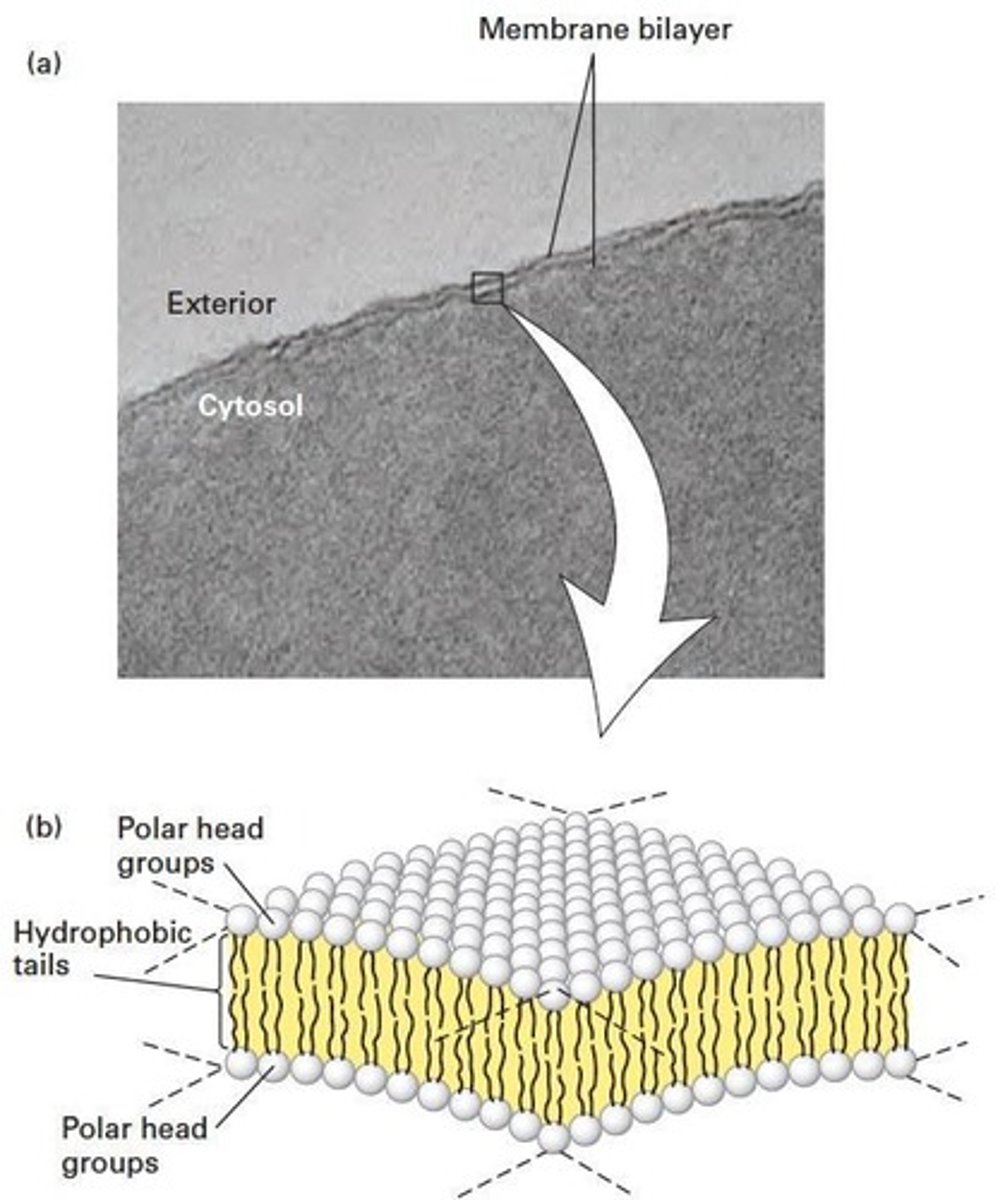
How thick is the plasma membrane?
The plasma membrane is about 6 nm thick, consistent across cell types.
What are the main components of the lipid bilayer?
The lipid bilayer is primarily made up of phospholipids.
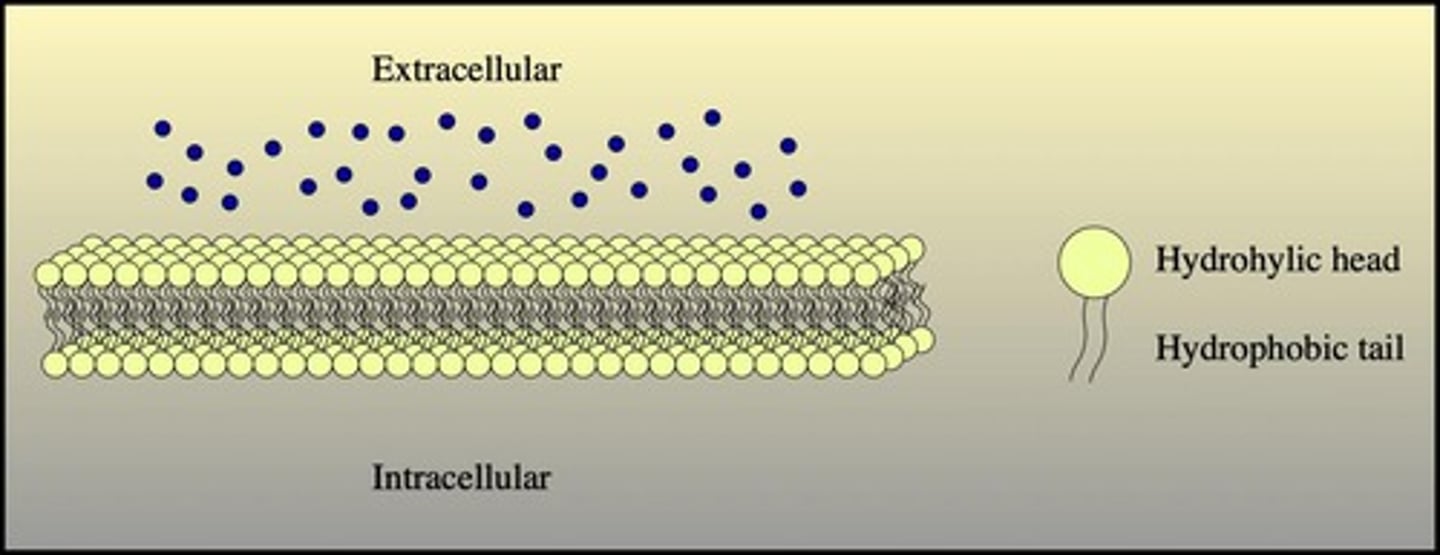
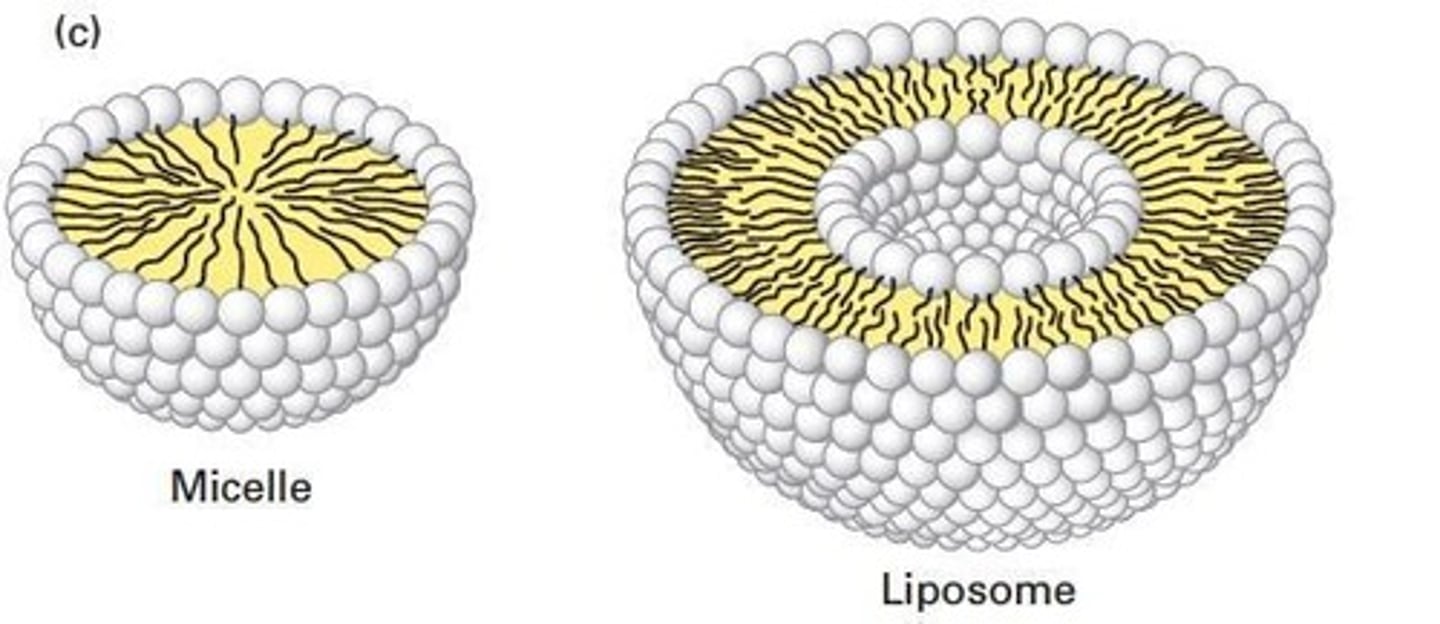
What is the behavior of phospholipids in water?
Phospholipids spontaneously aggregate to bury their hydrophobic tails and expose their hydrophilic heads to water.
What is a micelle?
A micelle is formed by fatty acids with one hydrophobic chain, where the hydrophobic tails are buried inside.
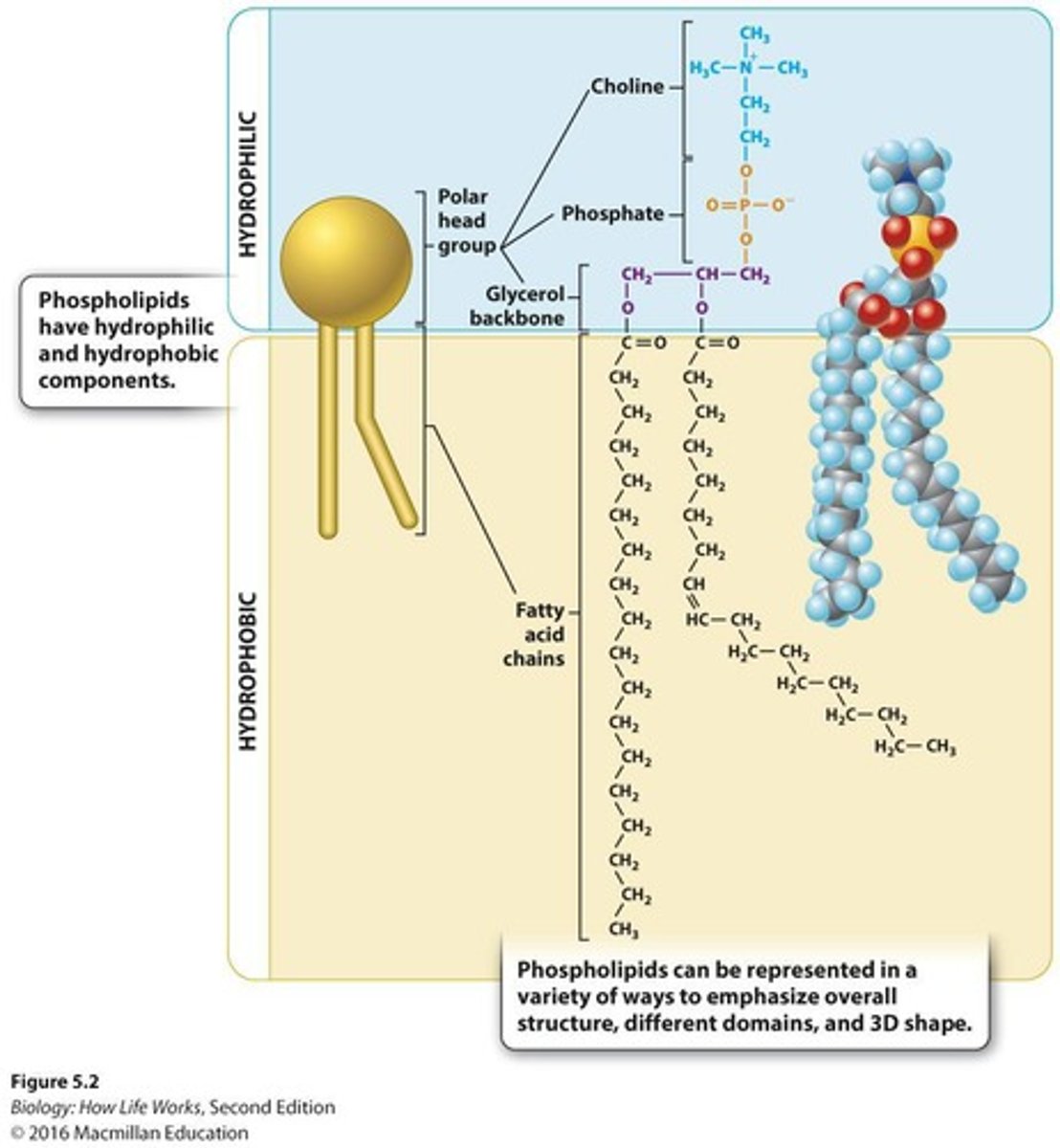
What does it mean for phospholipids to be amphipathic?
Amphipathic means that phospholipids have both hydrophobic (non-polar) and hydrophilic (polar) regions.
Define hydrophilic.
Hydrophilic refers to a molecule that is attracted to water and tends to dissolve in it.
Define hydrophobic.
Hydrophobic refers to a molecule that is not attracted to water and is repelled by it.
What are the components of phospholipids?
Phospholipids consist of two fatty acyl molecules esterified to glycerol, with a head group linked by a phosphate residue.
Where does phospholipid synthesis occur?
Phospholipid synthesis occurs at the interface of the cytosol and the outer endoplasmic reticulum membrane.
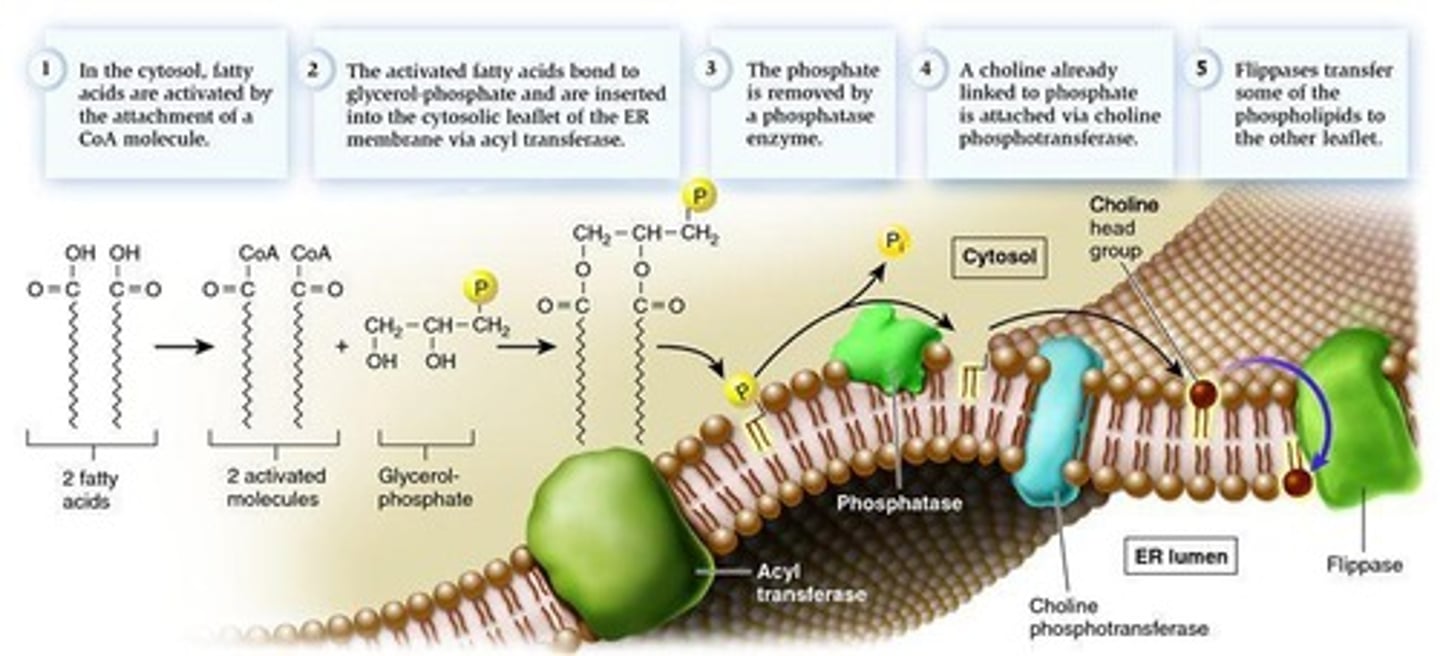
What is the role of floppase in phospholipid synthesis?
Floppase helps in the distribution of phospholipids between the inner and outer leaflets of the membrane.
What is the Fluid Mosaic Model?
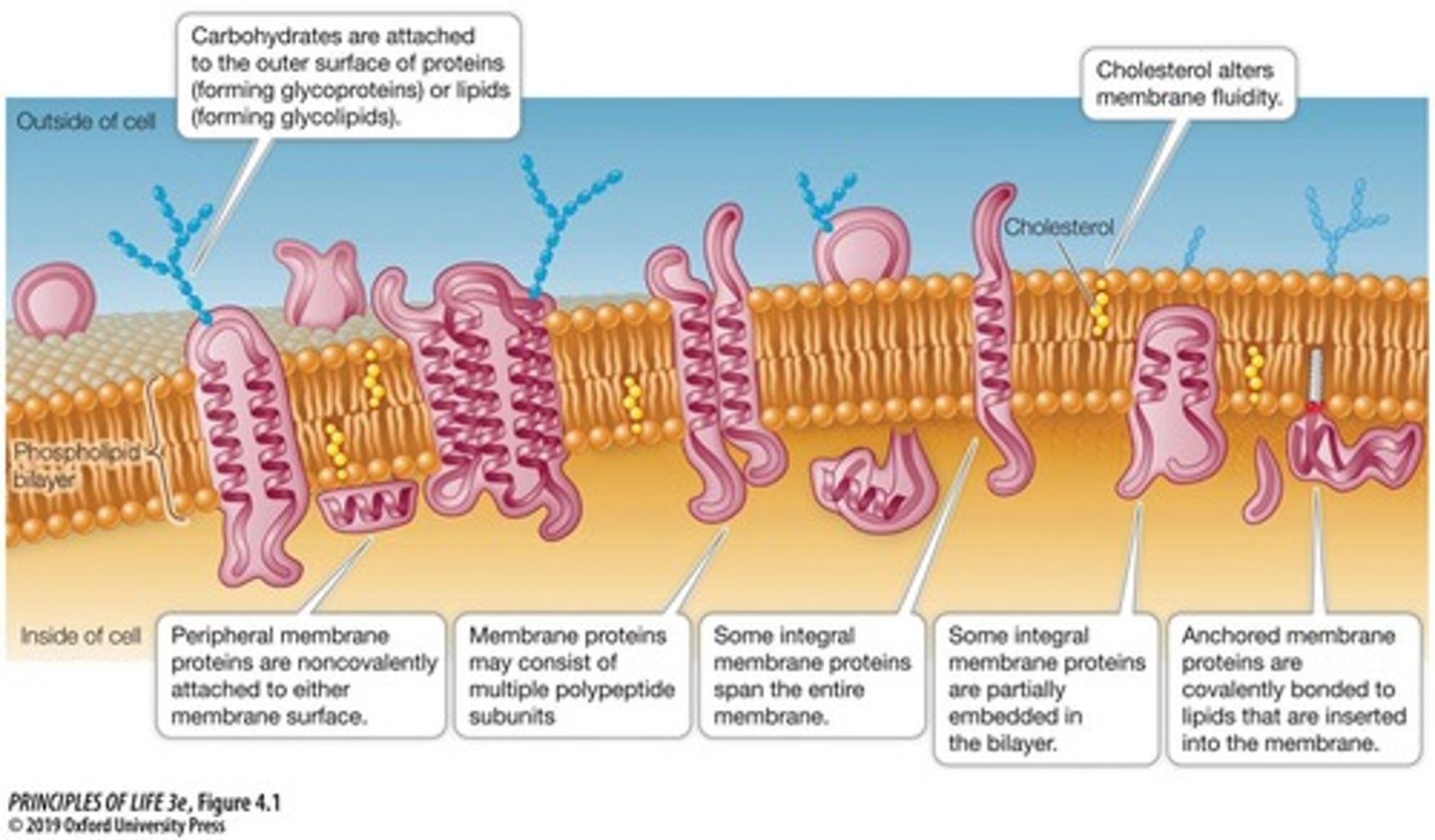
The Fluid Mosaic Model describes the plasma membrane as a fluid bilayer with diverse proteins, carbohydrates, and cholesterol embedded within it.
Who proposed the Fluid Mosaic Model?
The Fluid Mosaic Model was proposed by Seymour Jonathan Singer and Garth Nicolson in 1972.
What is the significance of membrane fluidity?
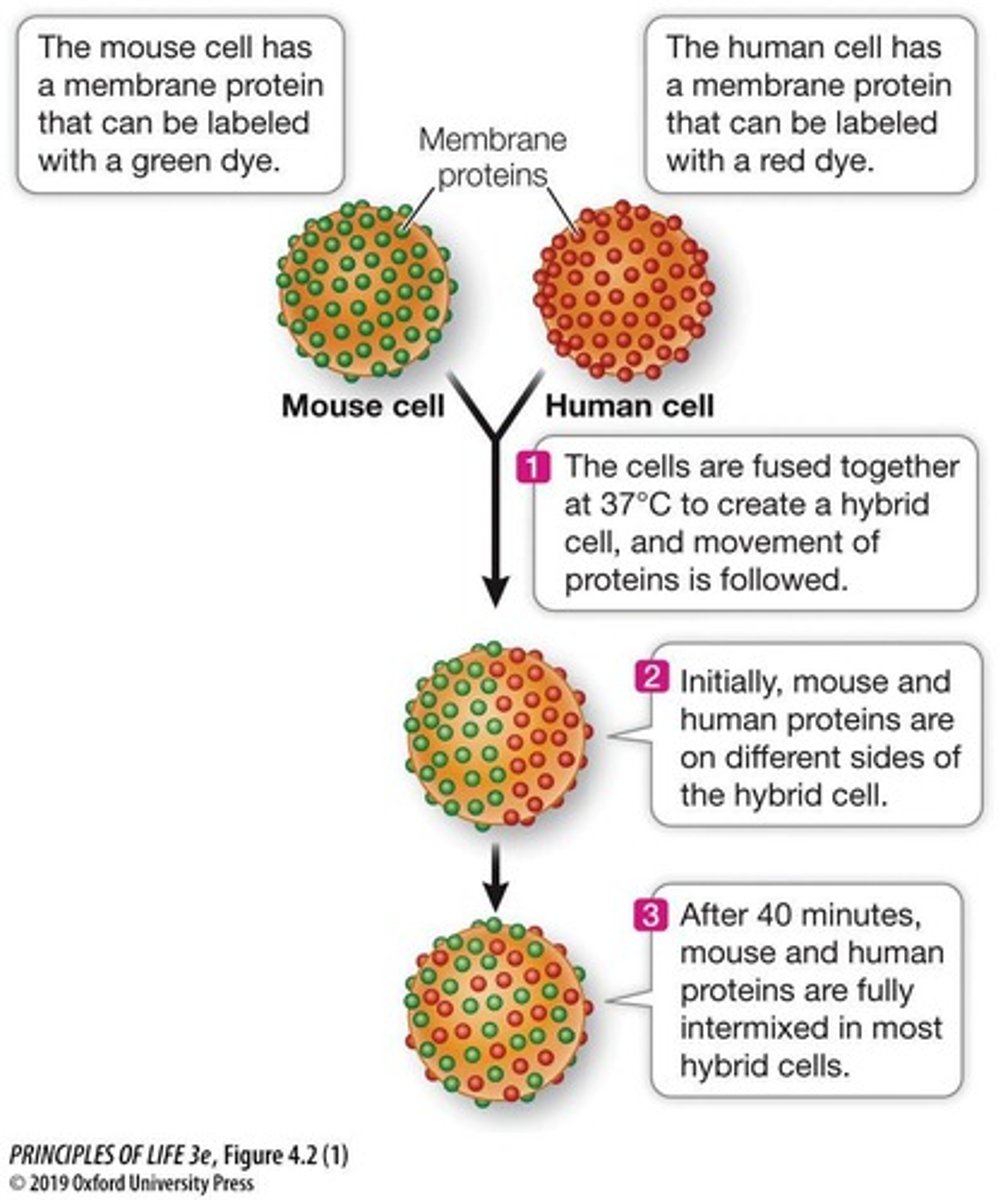
Membrane fluidity allows for the lateral movement of lipids and proteins, which is crucial for membrane function.
How does temperature affect membrane fluidity?
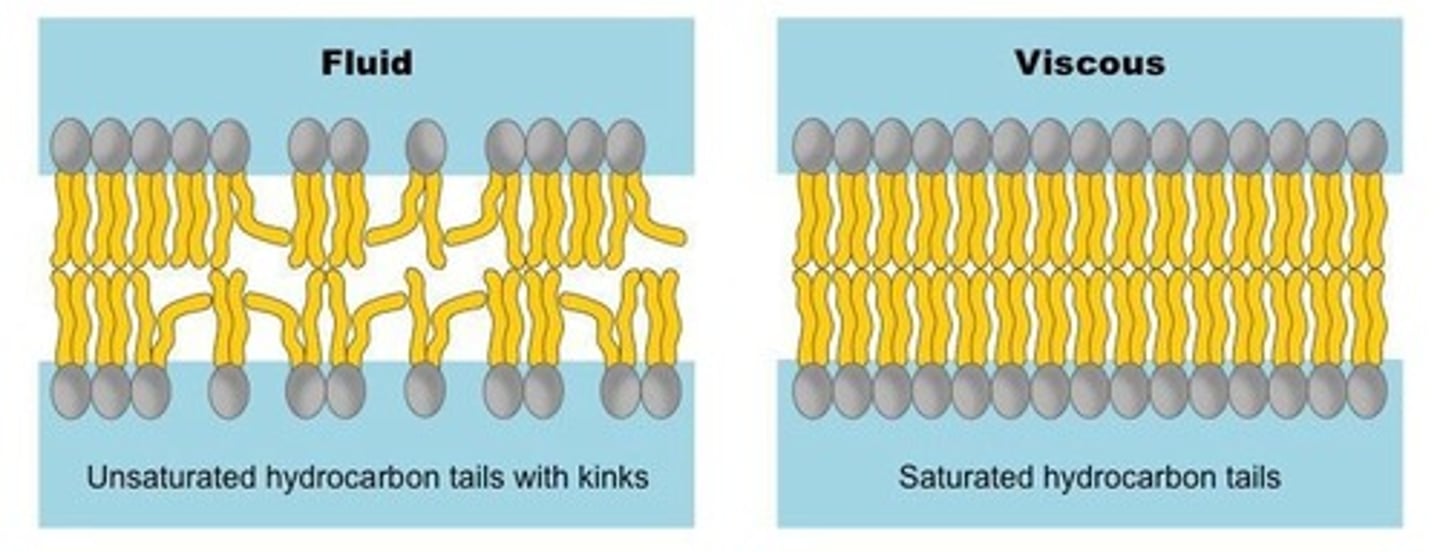
Membrane fluidity decreases in cold conditions; some organisms adjust lipid composition to maintain fluidity in cold environments.
What did the Frye-Edidin experiment demonstrate?
The Frye-Edidin experiment showed that surface proteins from fused cells intermingle, supporting the Fluid Mosaic Model.
What are lipid rafts?
Lipid rafts are microdomains within the membrane that contain a high concentration of specific lipids and proteins, influencing membrane dynamics.
What factors influence membrane fluidity?
Membrane fluidity is influenced by lipid composition (chain length, saturation) and temperature.
What is the role of carbohydrates in the plasma membrane?
Carbohydrates attached to lipids or proteins on the outer surface are important for cell-cell recognition and adhesion.
What is the typical thickness of biological membranes?
All biological membranes are approximately 6 nm thick.
What is the significance of membrane proteins?
Membrane proteins serve various functions, including acting as gates and pumps for substances and carrying out biochemical reactions.
What is the difference between the inner and outer leaflets of the plasma membrane?
Phospholipids in the outer leaflet are destined for the exoplasmic side, while those in the inner leaflet are for the cytoplasmic side.
What is the stability of biological membranes?
Biological membranes are stable, flexible, and capable of self-assembly.