CCMA program section 2 pgs 12-21
 Call Kai
 Learn
Learn Practice Test
 Spaced Repetition
 Match
Match Flashcards
 Knowt Play
1/82

There's no tags or description
Looks like no tags are added yet.
Name | Mastery | Learn | Test | Matching | Spaced | Call with Kai |
|---|
No analytics yet
Send a link to your students to track their progress
83 Terms
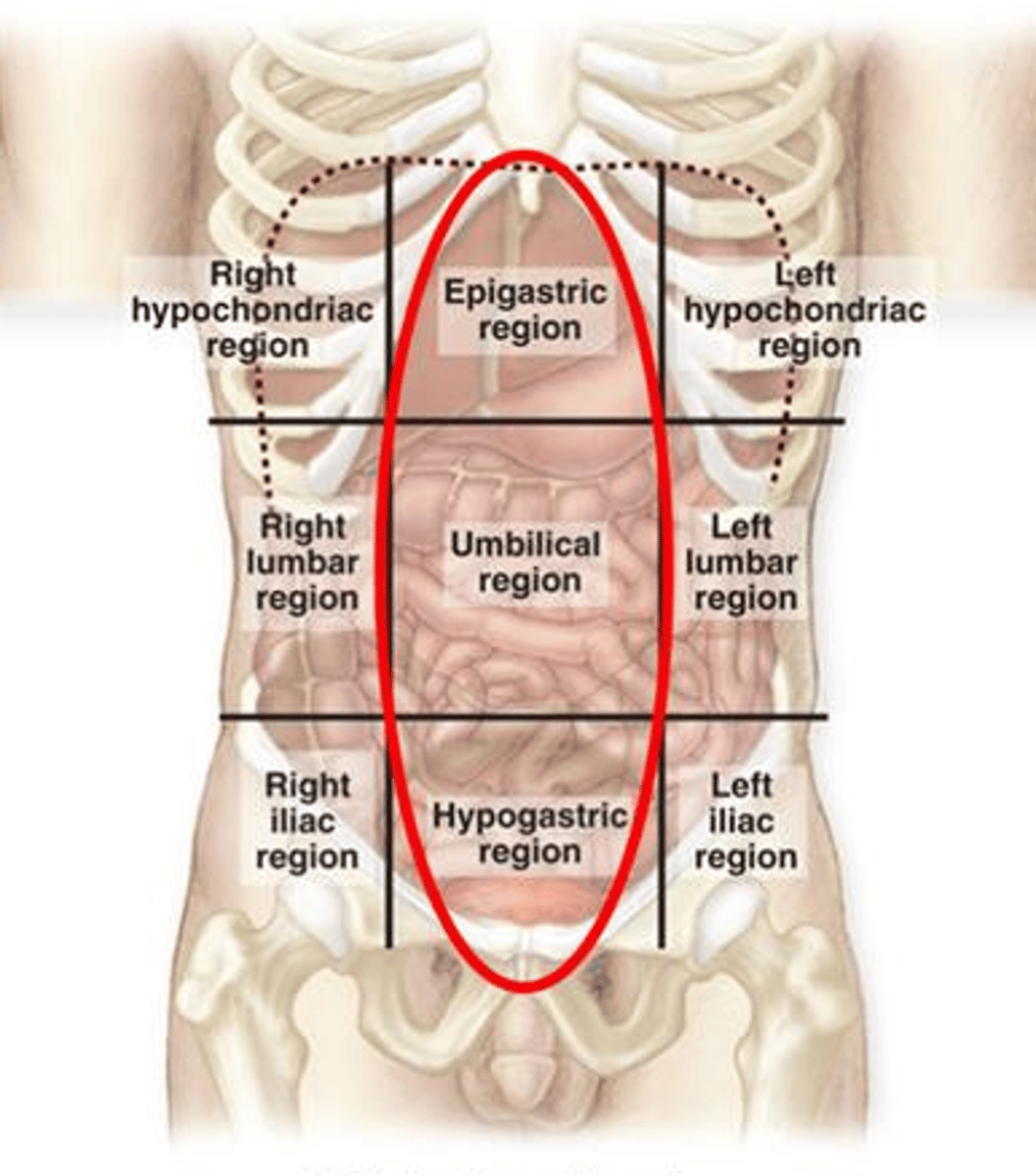
the 9 body regions
systemic circulation
-flow of blood from body tissue to the heart and then from the heart back to body tissues
-supplied blood to all organs except the lungs
-arteries, arterioles, capillaries, venules, veins
pulmonary circulation
flow of blood from the heart to the lungs and back to the heart
-arteries, arterioles, capillaries, venules, and veins going to, within, and coming from the lungs
electrocardiogram (EKG)
heart contains its own electrical conduction system in order to keep cardiac muscle contracting and blood flowing
-this electricity can be mapped & analyzed to detect heart issues using EKG
cardiac cycle
- electrical impulse is generated by the sinoatrial (SA) node (aka pacemaker of the heart)
- from the SA node, the impulse travels to the atriioventricular node (gatekeeper)
- from there, the impulse travels to the bundle of His & thru the bundle branches located in the ventricular septum
- finally, the electrical impulse reaches the purkinje fibers
- these fibers cause the ventricles to contract & pump blood into the pulmonary artery & aorta
homeostasis
A tendency to maintain a balanced or constant internal state; the regulation of any aspect of body chemistry, such as blood glucose, around a particular level
-achieved when the body's systems & biological processes maintain stability
-the body has built-in regulatory processes that react to external environmental changes in order to sustain balance
-primarily nervous + endocrine system
chain of infection
-infectious agent
-reservoir host
-portal of exit
-mode of transmission
-portal of entry
-susceptible host
conditions for bacterial growth
moisture, warmth, oxygen, food, time
newborn (0-1 month) HR
120-160/min
infant (1-12 months) HR
80-140/min
Toddler (1-3 years) HR
80-130/min
Preschooler (3-5 years) HR
80-120/min
School Aged (6-15 years) HR
70-100/min
adult (older than 15)
60-100/min
pulse oximetry (oxygen saturation)
-patients w symptoms associated w lung conditions such as pneumonia, asthma, bronchitis are candidates
-probe is attached to the finger that incorporates an infrared light to obtain the reading
-nail polish blocks lights & interferes
-probe can be clipped to earlobe instead
-reading of 95% or higher is normal
blood pressure
single most important vital sign in identifying the force of the blood circulating thru the arteries
-sphygmomanometer, bp cuffm stethoschope
systolic pressure
recorded when the first sharp tapping sound is heard, which is when the blood begins to surge into the artery that has been occluded by the inflation of the bp cuff
diastolic pressure
occurs when the ventricles are relaxed; the lowest pressure against the walls of an artery
-noted when the last sound disappears completely & the blood is flowing freely
systolic & diastolic pressure are what 2 phases of the Korotkoff sounds
phase 1 and 5
Korotkoff sounds
distinct sounds that are heard thruout the cardiac cycle
phase ii korotkoff sounds
there is a swishing sound as more blood flows thru the artery
phase 3 korotkoff
sharp tapping sounds are noted as even more blood is surging
phase 4
sound changes to a soft tapping sound which begins to muffle
bp readings vary based on
age, internal conditions, external influences
hypertension
abnormally high blood pressure
infants + children avg BP
60/30 to 100/80 mm Hg
adult avg BP
100/60 to 140/80 mm Hg
normal BP
120/80 so anything lower than 119/79 mm Hg
hypertension BP
140/90 mm Hg +
prehypertension
120-139/80-89 mm Hg
respiratory rhythym
breathing pattern and depth describes how much air is inhaled
nomral respiratory rate in newborns
30 to 50/min
normal rr in adults
12 to 20/min
auscultation
Listening with a stethoscope
abnormal respiratory sounds
wheezing
rales - crackling or popping sound
rhonci - snoring or gurgling sound
heart rate
reflection of pulse & is best palpated when an artery can be pushed against a bone
what fingers are used to palpate the pulse
2nd & 3rd (index & middle)
radial pulse
located on thumb side of wrist, is most common site for taking an adult pulse
brachial pulse
inside upper arm, most common for children
carotid
located in the meck just below the jaw bone, most common for use in emergency procedures
chief complaint/history
all patients; every visit
height
all patients; part of a complete physical exam or scoliosis exam or if growth concerns are present
weight
all patients; every visit
Head Circumference
children 3 years or younger; as part of a complete physical exam or if growth concerns are present
temp
all patients; every visit
heart rate skill
all patients; every visit
respirations
all patients; every visit
blood pressure skill
adults (children + infants vary); every visit
pulse oximetry skill
patients who have chronic lung disease or respiratory symptoms; as needed basedon symptoms or conditions
visual acuity (snellen chart)
Children (adults vary)
As part of a complete physical exam and some adult screening tests for work-related hire
EKG skill
adults (uncommon for children in ambulatory care); as part of complete physical in middle-aged adults or if experiencing chest pain
urinalysis
all patients; part of a maternitity visit, complete physical exam, or when abnormal urinary symptoms are present
HEIGHT / PHYSICAL ASSESSMENT
part of a routine phsysical to track normal development, monitor conditions such as scoliosis or osteoporosis, and assist in determining BMI
weight / physical assessment
medications are often determined based on weight
BMI, predisposition to medical conditions, montioring of eating disorders & weight management
growth chart
shows the average weight and height of girls and boys at various ages
provides tangible pieve of data to have convos regarding concerns such as obesity or malnutrition
fowlers position
sitting position back of the exam table raised to a 90 degree angle
exams involving the eyes, ears, nose, throat, chest
semi-fowler's position
seated leaning against the back of a table that has been raised to a 45 degree angle
exams involving the chest, exams that should be administered in a supine position but the patient is unable to lay flat, exams for patients experiencing shortness of breath
sim's (lateral) position
laying on left side w left led slightly flexed and right led flexed at a 90 degree angle, can involve a pillow placed between knees
exams involving the rectum, enemas
knee-chest position
Prone and bent at the waist resting on the knees with the arms above the head
gynecological or rectal exams + treatments of spinal adjustments
Jack-knife position
Lying over an exam table that is lifted in the middle
rectal exams or instrumentation (flexible sigmoidoscopy)
lithotomy position
lying flat on the table w buttocks at the end of the table and feet resting in stirrups
female pelvic exams
dorsal recumbent position
patient is lying on the back, face up, with the knees bent
catheterizations, gential examination of younger children, adolescents
prone position
lying flat on the abdomen w arms above head
exams involving the back of the body including bottoms of the feet
supine position
lying flat on the back w arms down to the side
exams involving front of the body, administration of cpr
Trendelenburg position
legs elevated above the head to force circulation to vital organs
shock (requires a specific table)
intradermal gauge/length
27-28 gauge, 3/8 inch
subcutaneous gauge and length
25 to 26 gauge 1/2 inch, 5/8 inch
intramuscular gauge/length
20-23 gauge 1-3 inches
parenteral intramuscular injection sites (IM)
deltoid muscle
ventrogluteal muscle
vastus lateralis muscle
do all these below
deltoid muscle
-1 to 2 inches below the acromion
-90 degree angle, do not aspirate vaccines, aspirate most other types of medications administered via this route
-many adult & older child vaccines are administered via this route
-dont use this site for infants or children younger than 3
-the dose given in the deltoid should NOT exceed 1 mL
-depending on protocol, 2-3 mL can be used on adults or larger children
-site is typically massaged after medication
ventrogluteal muscle
-located by placing the heel of the hand on the greater trochanter (right hand placed on left hip & left hand placed on right hip), the middle finger is placed on the iliac crestm & the fingers are spread
-give the injection where the V is made b/w the index & middle fingers
-90 degree angle, do not aspirate vaccines, aspirate most other types of medications administered via this route
-NOTE: the dorsogluteal injection is no longer used, but the ventrogluteal site is a good sub
-used when deep IM injections are prescribed or when larger quantities of meds are needed
-good for viscous medications
vastus lateralis muscle
administration location in the mid to upper outer thigh
-90 degree angle, do not aspirate vaccines, aspirate most other types of meds administered via this route
-this site is routinely used for vaccines & med administration for infants & children younger than 3
subcutaneous injection site (SC or SQ?)
multiple subcutaneous tissue (SC) sites are readily available
-45 degree angle
-do not aspirate for vaccinesm insulin, or heparin
-aspirate for most other types of meds administered via this route
-when administering heparin or insulin, the site should not be massaged
-when regularly used for health maintenance, the sites should be rotated
-common sites include the upper outer arm, abdomen, thigh
intradermal injection site (ID)
-when using the forearm, measure using one hand width from the wrist & one hand width from the elbow
-any area within the anterior forearm visible is acceptable for the injection
-the upper back may be used for testing as well
-10 to 15 degree angle, do not aspirate
-used for testing
-the presence of a wheal (skin bump/bubble) is expected
-do not massage or apply pressure to the site
-most common site for TB testing is the mid forearm
-allergy testing usually is done on the back
wtf is aspirating?
pulling back the syringe after you've already inserted it into the skin to check if blood enters it
oral medication route
in the mouth
-solids: multiple dose bottles in the lid first then the medicine cup
-liquids: read meniscus & prevent distortion
Buccal (medication route)
Between the cheek and gums resulting in rapid absorption
-this med bypasses the digestive system, resulting in smaller doses required for therapuetic effects
-the med is designed to melt while held in the cheek area
-patient should not chew or swallow the med
-eating,drinking,smoking can influence absorption rate
sublingual medication route
under the tongue
-nitroglycerin tablets & spray are common forms of med administered via this route
-bc the med bypasses the digestive system, smaller doses are required for therapeutic effects
-solids: med melts & abosrbs into bloodstream rapidly
-liquids: sprays are occasionally used to deliver sublingual meds
-eating, drinking, smoking can influence absorption rate
inhalation medication route
Typically used for targeted areas such as the bronchial passages
-can be delivered via a nebulizer
-for the med to be effectibe, the patient must hold the med in the lungs as long as possible
-when using inhalers or nebuizers, patients can tend to become shaky & have dizziness due to the med & hyperventilation
-coaching on proper breathing techniques is important
topical
designed to react locally & systematic absorption is minimal
-can serve as a barrier to prevent irritants from damaging the skin or can be used to treat a local condiiton (acne, atheletes foot)
-typically oil or water based products
-monitor for skin irritation or reaction
-instruct patients to apply as prescribed
mucosal
Designed to absorb into and through mucous membranes
-in addition to nasally, medications
can be administered in the vagina, rectum, eye, or ear
-can cause irritation to the mucosa
-ensure patients understand the ocrrect procedure for administering the med based on the med & route
Transdermal (medication route)
for continuous slow absorption of various medications
-used for smoking cessation (nicotine patches), pain med, hormone delivery
-avoid touching the med when applying the patch
-dispose of patch in a container that is not accessible to children
-onitor skin for irritation, rotate sites
eye, ear, & topical meds
ensure med is at room temp
-gloves
-tip should not come in direct contact w patient as could lead to contamination
-use applicator to apply topical meds