performance management and appraisal
 Call Kai
 Learn
Learn Practice Test
 Spaced Repetition
 Match
Match Flashcards
 Knowt Play
1/44

There's no tags or description
Looks like no tags are added yet.
Name | Mastery | Learn | Test | Matching | Spaced | Call with Kai |
|---|
No analytics yet
Send a link to your students to track their progress
45 Terms
Performance Appraisal
evaluating an employee’s current and/or past performance relative to his or her performance standards
Also known as a performance review or performance evaluation
Serves as a formal opportunity to provide feedback, set new goals, and inform decisions about raises, bonuses, promotions, or necessary training
Requires setting performance standards, and assumes that the employee receives the training, feedback, and incentives required to eliminate performance deficiencies
Characteristics of an Effective Appraisal System
● Job-related Criteria
● Performance Expectations
● Standardization
● Trained Appraisers
● Continuous Open Communication
● Conduct Performance Reviews
● Due Process
Purpose of an Appraisal System
Most employers base pay, promotion, and retention decisions
Play a central role in the employer’s performance management process
Lets the manager and subordinate develop plans for correcting deficiencies, and to reinforce strengths
Provides an opportunity to review the employee’s career plans in light of their strengths and weaknesses
Enable supervisors to identify if there is a training need, and the training required
performance management
in terms of termination, performance appraisal is used when what techniques are not successful
PERFORMANCE APPRAISAL PROCESS
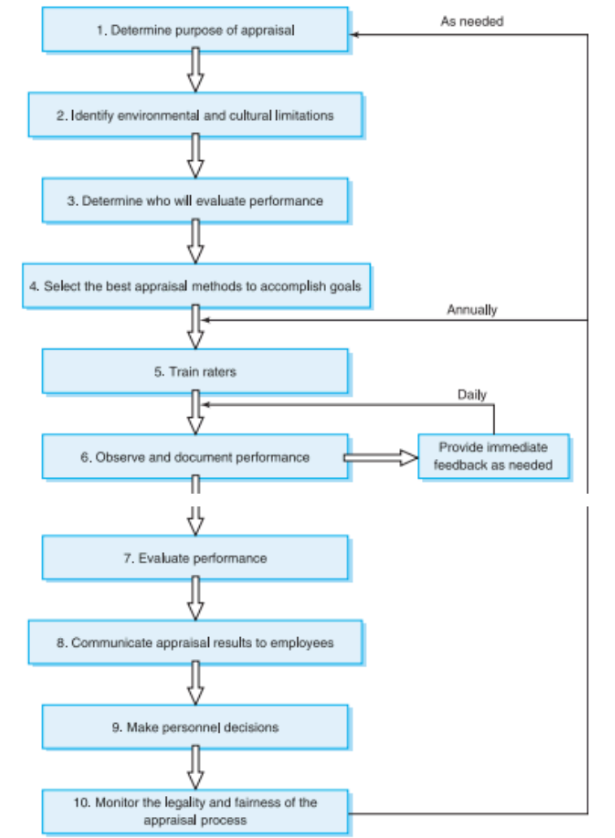
Defining Goals and Performance Standards
Set effective goals (SMART)
○ Specific
○ Measurable
○ Attainable
○ Relevant
○ Timely
Traits
commonly subjective and may be unrelated to job performance or difficult to define
Behaviors
when task outcome is difficult to determine, task-related behavior or competencies may be evaluated
Supervisors
most common type of performance appraisal
The heart of most appraisals
Usually in the best position to observe and evaluate the subordinate’s performance
HR Department
provide the advice on what appraisal tool to use, but leave final decisions on procedures to operating managers
Peers:
often see the actual behavior as they work directly with the employee
Reliable only when they are similar and well acquainted to the employees being rated
Employees tend to react worse to negative feedback
Subordinates
also called upward feedback
Difficult because of the fear of backlash if they unfavorable rate their supervisor
Correlate highly with upper-management ratings of supervisors’ performance
Customers
provide feedback on employee performance by filling complaints or complimenting the manager about one of her employees
Secret Shoppers:
current customers who have been enlisted by a company to periodically evaluate the service their receive
Self-Appraisal
allowing an employee to evaluate her own behavior and performance
Suffer from leniency and correlate moderately to actual performance
Most accurate when the self-appraisal will not be used for such administrative purposes as raises or promotions
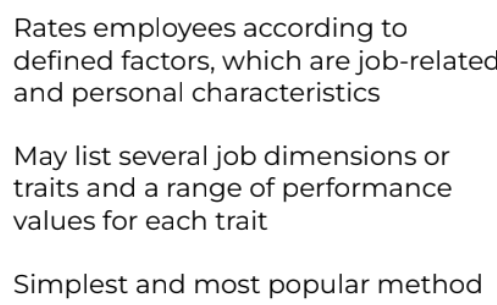
Graphic Rating Scale
an employee is rated on different job-related traits or performance factors using a numerical scale.
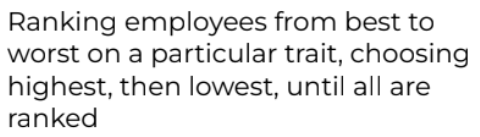
Alternation Ranking Method
Best employee and worst employee are identified first, then the next best and next worst, until all are ranked
Ranking Method
Employees are ranked from best to worst overall
Rater ranks all employees from a group in order of overall performance
Makes the ranking method more precise
Paired Comparison
performance of each employee is compared with that of every other employee in the group
Forced Distribution Method
Predetermined percentages of ratees are placed in various performance categories
Prevents supervisors from simply rating all or most employees satisfactory or high
May increase risk of discriminatory adverse impact
Critical Incident Method
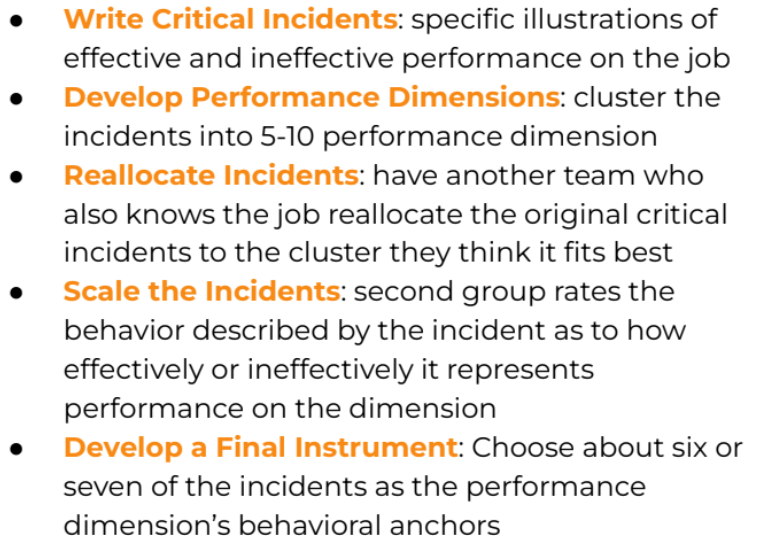
Keeping a record of uncommonly good or undesirable examples of an employee’s work-related behavior and reviewing it with the employee at predetermined times
Makes the supervisor think about the subordinate’s appraisal all during the year
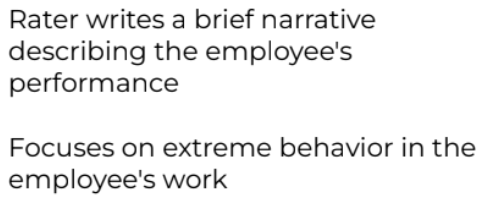
Narrative Forms
Behaviorally Anchored Rating Scale (BARS)
performance appraisal method that combines:
✅ Numerical ratings (like a Graphic Rating Scale)
✅ Specific behavioral examples (critical incidents)numerical rating scale with specific illustrative examples of good or poor performance
Combines the elements of the traditional rating scales and critical incidents methods
Results-Based System
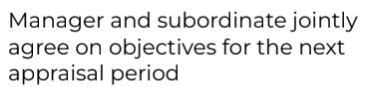
Management by Objectives (MBO)
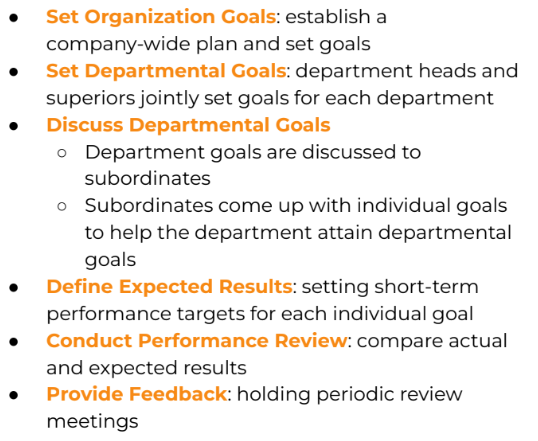
Multistep company-wide goal-setting and appraisal program
Behaviorally Anchored Rating Scale (BARS) Process
Management by Objectives (MBO) Process
Distribution Errors
involves distribution of ratings on a rating scale
Made when rater uses only one part of a rating scale
Low Reliability Across Raters
two people rating the same employee seldom agree with each other
Infrequent Observation
supervisors do not have the opportunity to observe a representative sample of employee behavior
legal requirements conditions required
Either the absence of adverse impact on members of protected classes or validation of the process
A system that prevents one manager from directing or controlling a subordinate's career
Appraisal should be reviewed and approved by someone or some group in the organization
The rater/s must have personal knowledge of the employee's job performance
Systems must use predetermined criteria that
limit the manager's discretion
negligent retention claim
if an employee who continually receives unsatisfactory ratings in safety practices is kept on the payroll and he/she causes injury to a third party
an employer keeps an employee despite knowing (or having reason to know) that the employee poses a risk to others, and that employee later causes harm
Appraisal Interviews
supervisor and subordinate review the appraisal and make plans to remedy deficiencies and reinforce strengths
Conducted periodically
Satisfactory-Promotable
easiest interview
objective is to develop specific development plans for promotion
Satisfactory-Not Promotable
for employees whose performance is satisfactory
objective is to find incentives that maintain performance
Unsatisfactory but Correctable
objective is to lay out an action / development plan for correcting the unsatisfactory performance
Unsatisfactory
situation is uncorrectable
dismissal is often the usual option
Preparation
in effective coaching this means understanding the problem and employee
Planning
in effective coaching this means reaching an agreement on the problem and laying out a change plan
Actual Coaching
in effective coaching this means, offers ideas in a way that subordinates hear and respond to them, and appreciate their value
Performance Management
continuous process of identifying, measuring, and developing the performance of individuals and teams
Also known as a performance review or performance evaluation
Goal-oriented process directed towards ensuring that organizational processes are in place to maximize productivity of employees, teams, and the organization
Aligning employee performance with the organization’s goals
a dynamic, ongoing, continuous process
Direction Sharing
Communicating the company’s goals to all employees
Translating company’s goals into departmental, team, and individual goals
Goal Alignment
enables managers and employees to see the link between the employees’ goals and those of the department and company
Ongoing Performance Monitoring
continuously measuring the team’s and/or employee’s progress towards meeting performance goals
Ongoing Feedback
continuous feedback regarding progress towards goals