4. The Mirror Neuron System
 Call Kai
 Learn
Learn Practice Test
 Spaced Repetition
 Match
Match Flashcards
 Knowt Play
1/40

There's no tags or description
Looks like no tags are added yet.
Name | Mastery | Learn | Test | Matching | Spaced | Call with Kai |
|---|
No analytics yet
Send a link to your students to track their progress
41 Terms
How is the motor cortex organised?
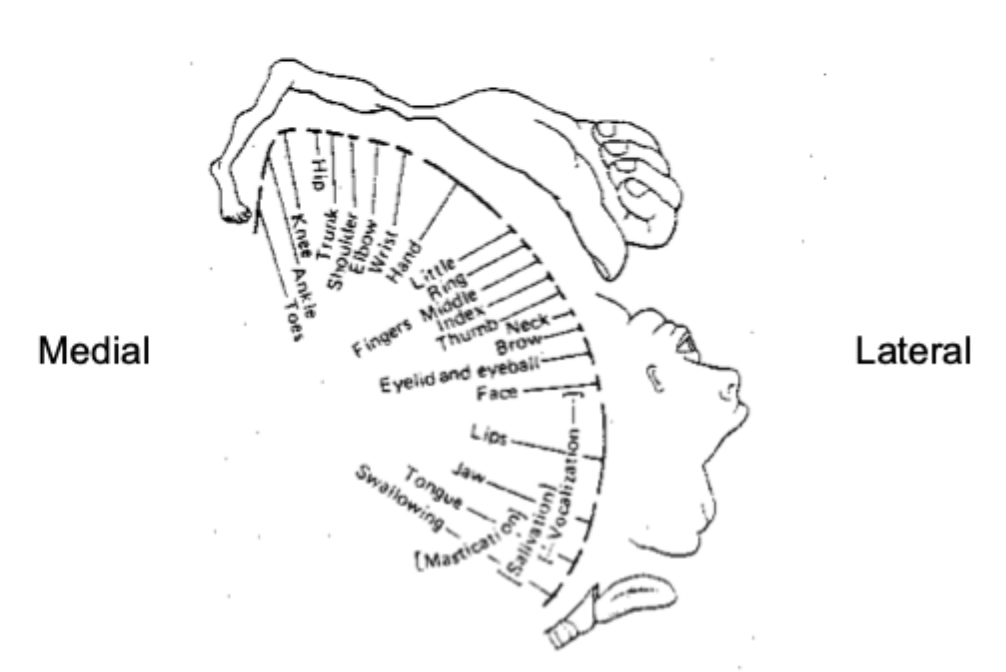
In the motor cortex, different regions control the movement of different body parts
How does the primary motor cortex (M1) control body movement in terms of side of the body, muscle control, and cortical organization?
Motor pathways are crossed, meaning the left hemisphere controls muscles on the right side of the body (and vice versa).
Neurons in the primary motor cortex (M1) generally control single muscles.
M1 is topographically arranged, so neurons located next to each other activate neighbouring muscles.
What are the properties of Premotor cortex neurons?
premotor cortex neurons provide input to several M1 cortical neurons
premotor cortex neuron activity causes movement in groups of muscles
activity in one neuron can generate coordinated action
what are mirror neurons?
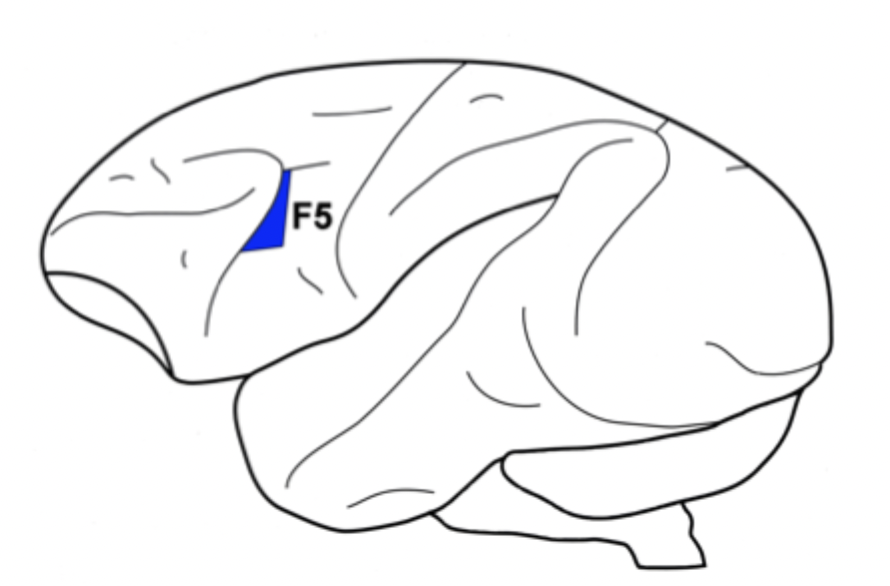
special type of premotor cortex (F5) neurons
A mirror neuron is a neuron that fires both when an individual performs an action and when they observe someone else performing the same action, helping support processes like action understanding, imitation, and social learning.
When do mirror neurons respond? with motor and vision
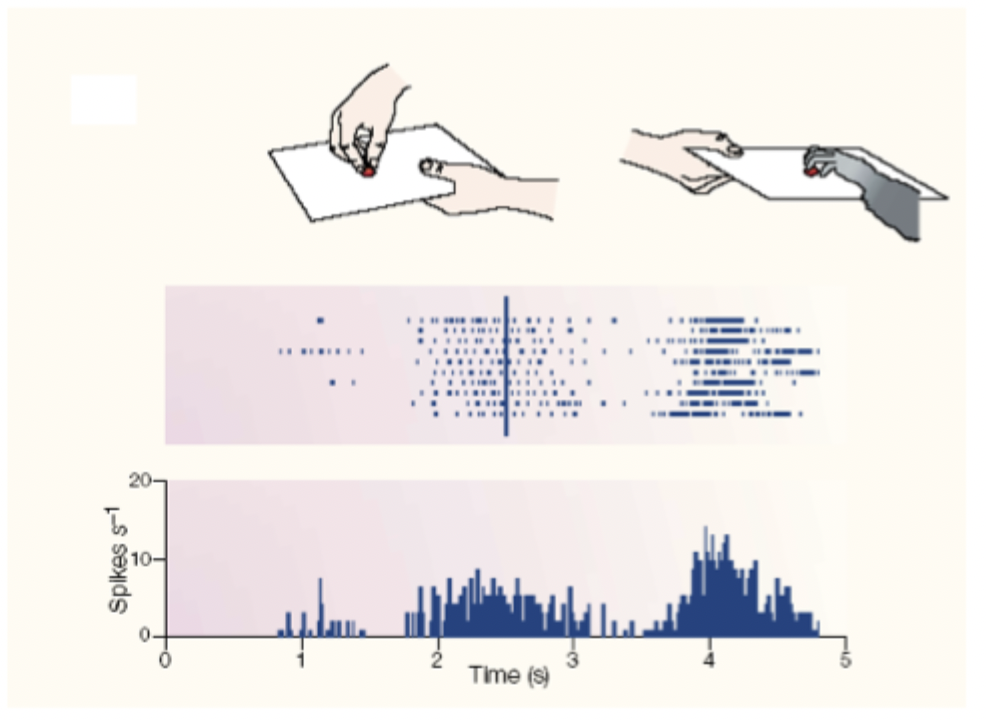
mirror neurons respond during execution of goal directed action
and mirror neurons respond to the sight of the action
Where are mirror neurons and what do they do? Action specificity
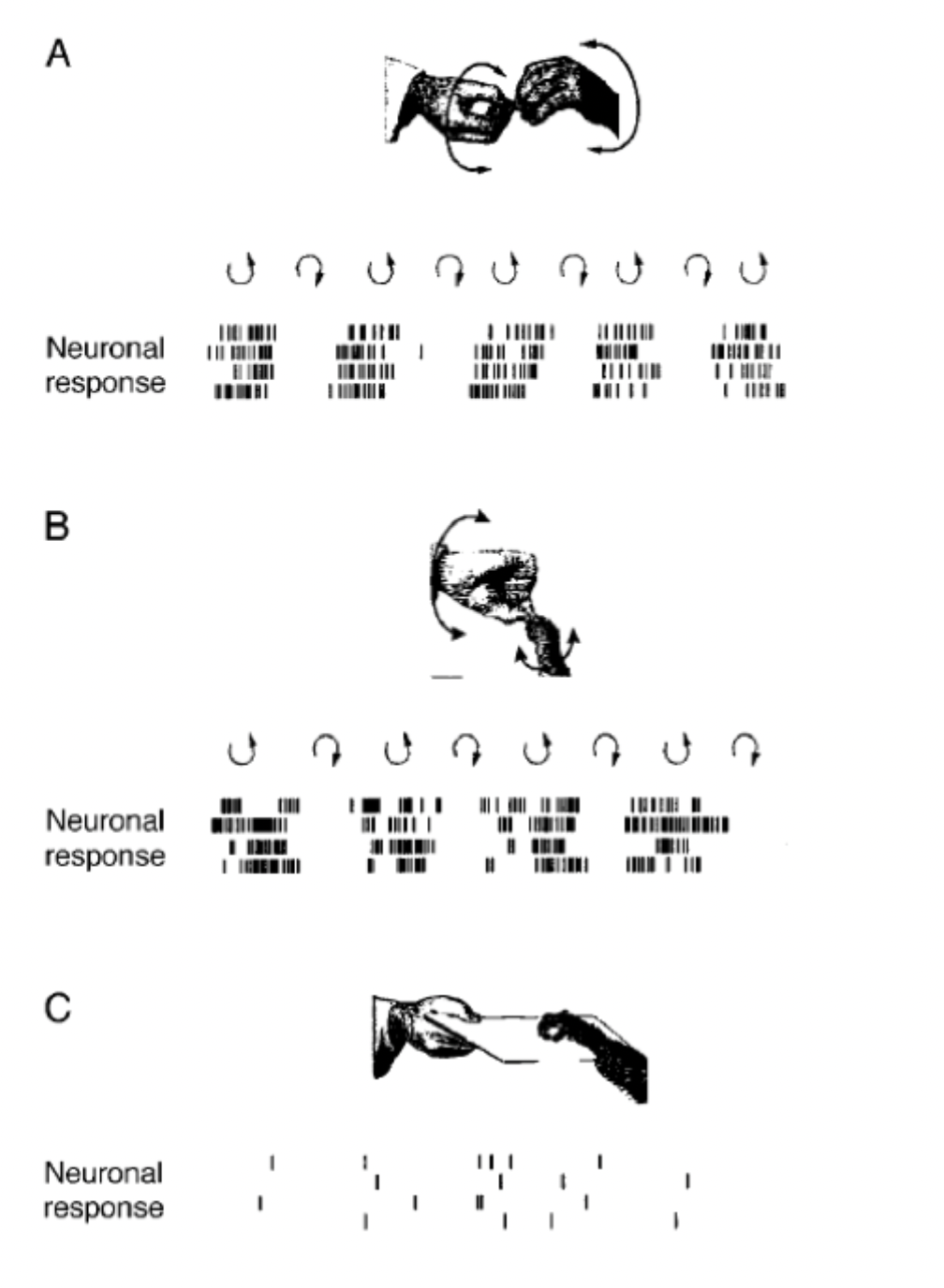
mirror neurons in premotor cortex
mirror neurons respond during specific actions and also to the sight of the specific action
(e.g. experimenter twisting a neuron, only firing with anticlockwise twist of the hand when viewing and competing the action)
When do mirror neurons respond? Face action
mirror neurons respond during movement of the face
mirror neurons respond to the sight of face movements
ingestive: gasping, sucking
communicative mouth actions: lipsmacking, teeth-chatter
How are mirror neurons seen to respond to 3 different modalities?
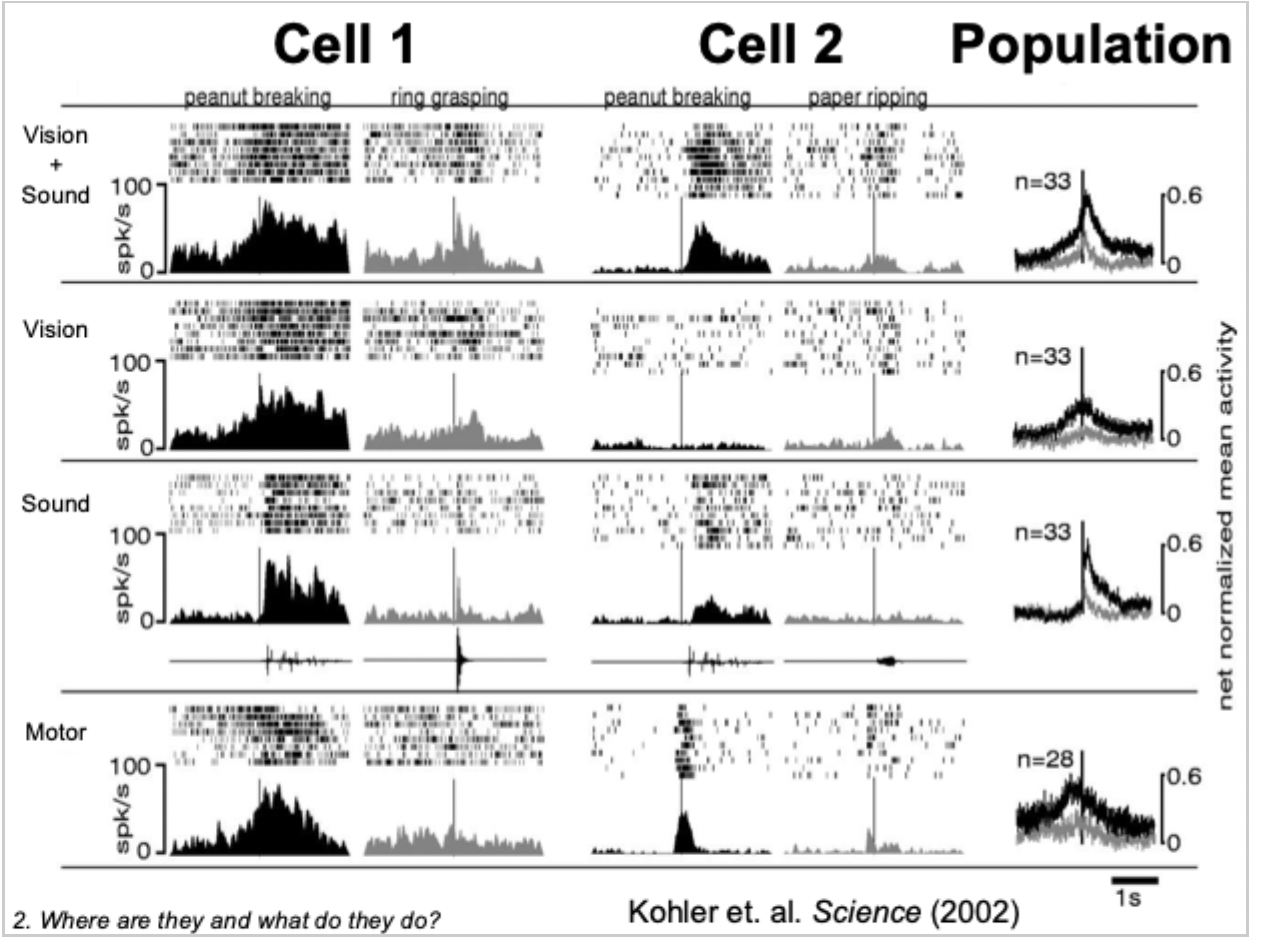
mirror neurons respond during specific actions
mirror neurons respond to the sight of the same action only
mirror neurons respond to the sound of the same action
mirror neurons responsiveness and hidden actions?
mirror neurons respond during execution and observation of specific actions
mirror neurons typically DO NOT respond to miming
Many mirror neurons respond when the LATE PART of the action is OUT OF SIGHT
What did Umilta find when the researcher reached for objects behind a screen?
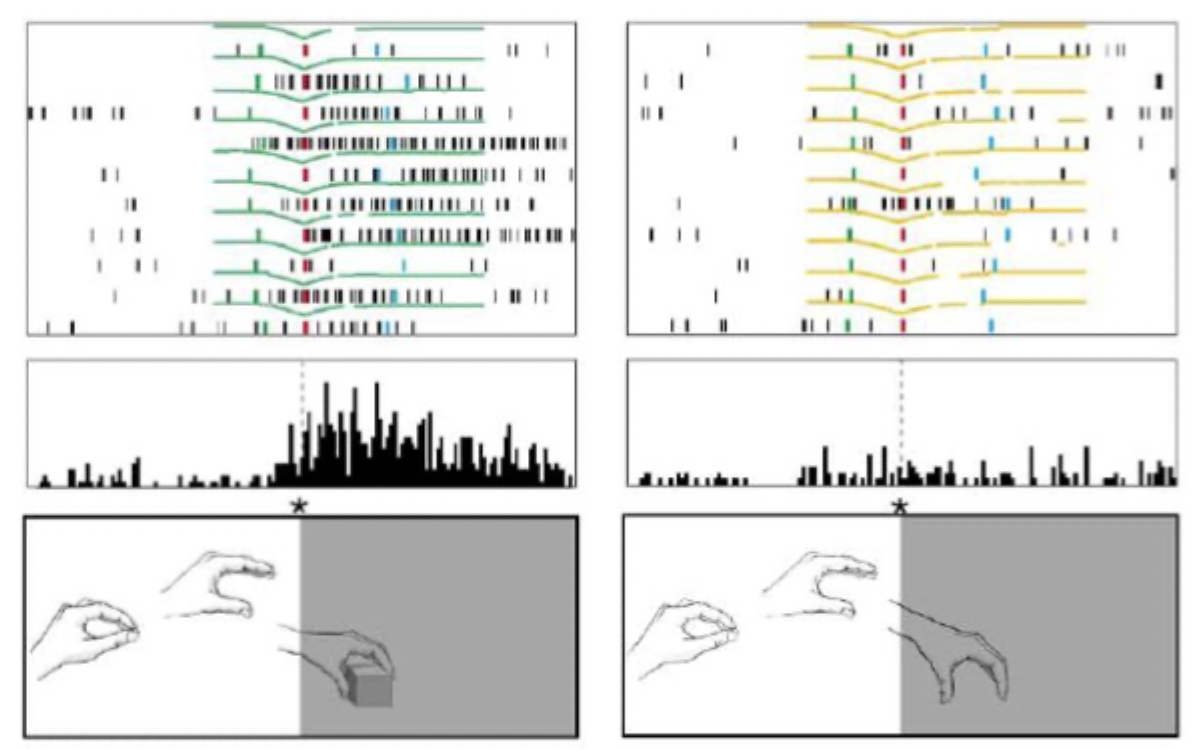
mirror neurons responds when the hand would be touching the object behind the screen
however when miming, the cell doesn’t fire
visual information is identical but mirror neurons is able to distinguish between conditions
What might be an explanation for Umilta’s results when mirror neurons fired when object was grasped behind the screen?
many mirror neurons respond when the action cannot be seen
the monkey must know that the object is behind the occluder
the monkey must see the hand disappearing behind the occluder
these mirror neurons respond when they know the outcome of a specific action
What did Umilta find testing whether mirror neurons code action goals?
test the response of Pre-motor and M1 neurons during tool use
primates can use tools; and be trained to use them, association between an initial action (grasp pliers) and subsequenct actions the tool offers (grasping a distant object). A distal goal coded on top of a proximal onve
Umilta trained monkeys to grasp objects with 2 types of pliers
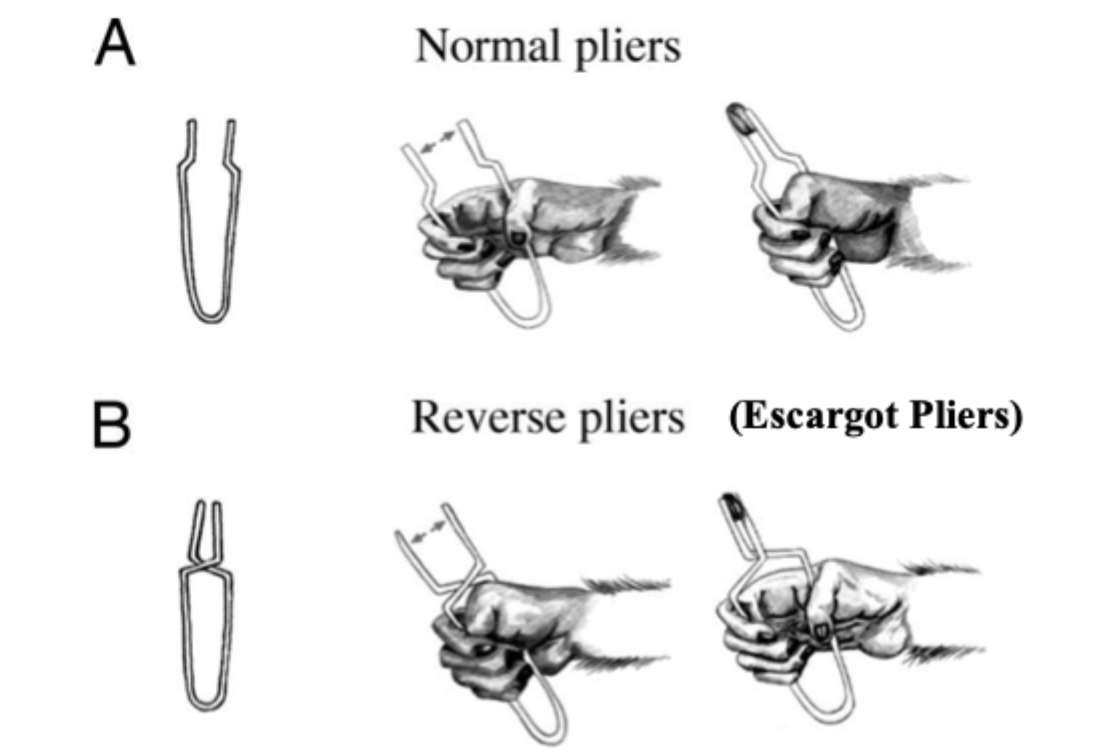
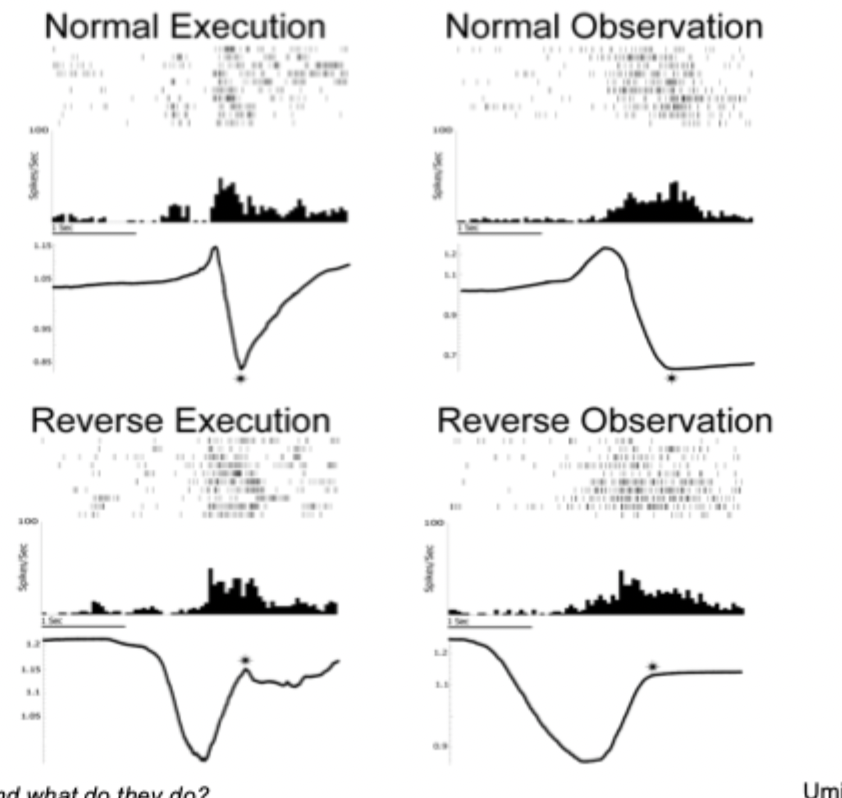
action executed with 2 types of pliers is different
M1 Neurons: half responded to hand closure, half responded to hand opening
Pre-motor neurons: all responded during grasping with either pliers
suggests M1 neurons coding the hand movements
whereas pre-motor neurons coding the goal of the action
What is the pattern of activity for premotor neurons when a tool is used
pre-motor neuron discharge pattern for grasping transferred to tool use
tool incorporated into the motor system as if it were an artificial hand
irrespective of the mechanics of the action
F5 mirror neurons coding the goals of the action
Where else are mirror neurons found?
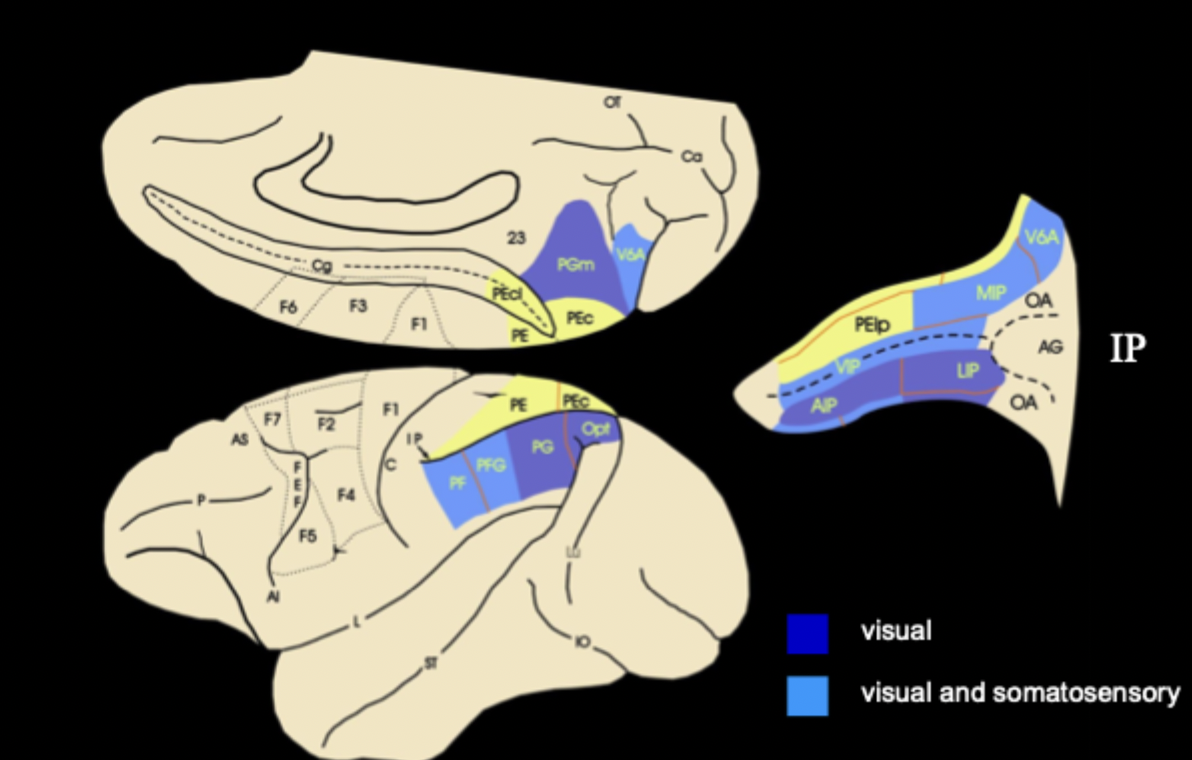
posterior parietal cortex
What did Fogassi et al find with responses to different goals?
trained monkeys to perform 2 different actions, reaching and grasping the same outcome of the action different
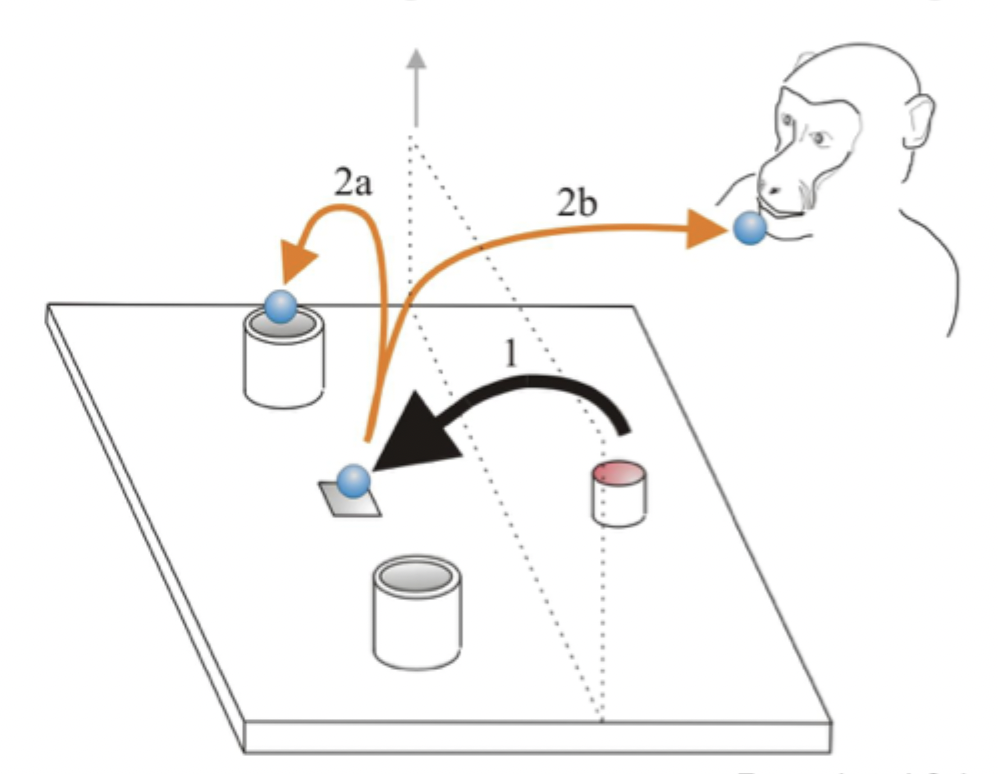
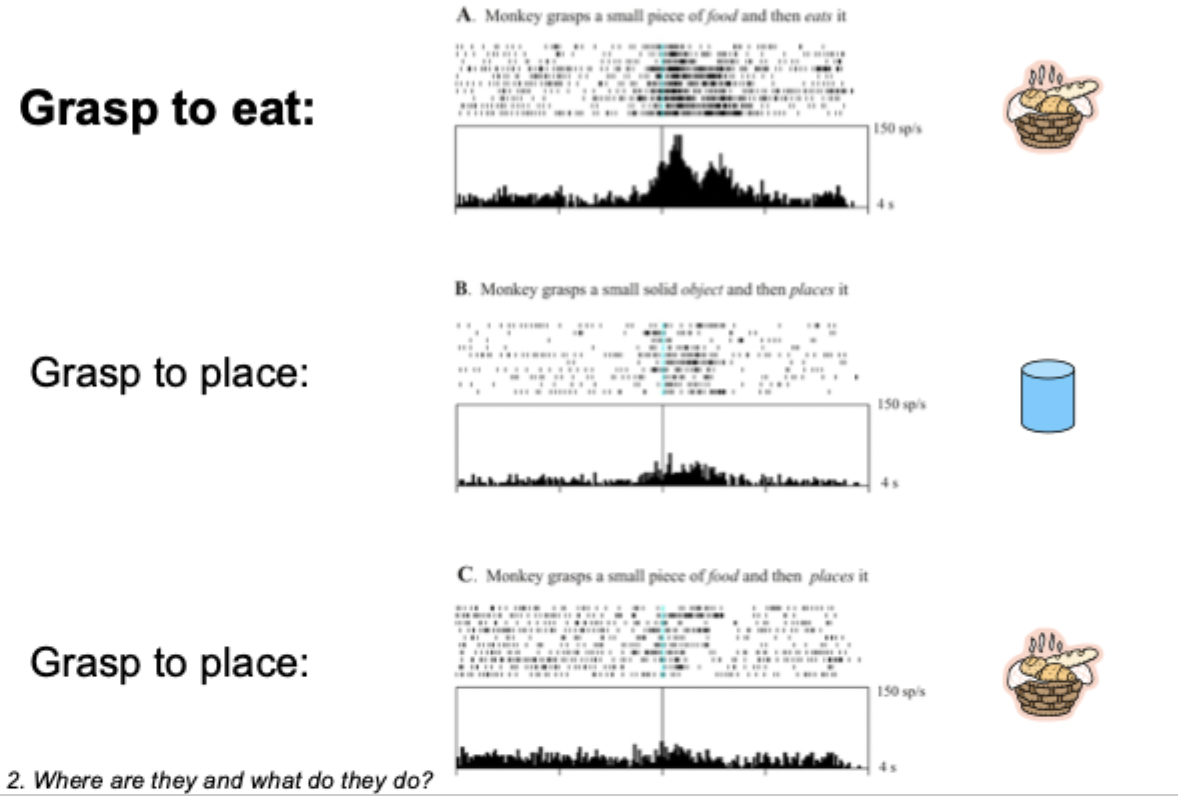
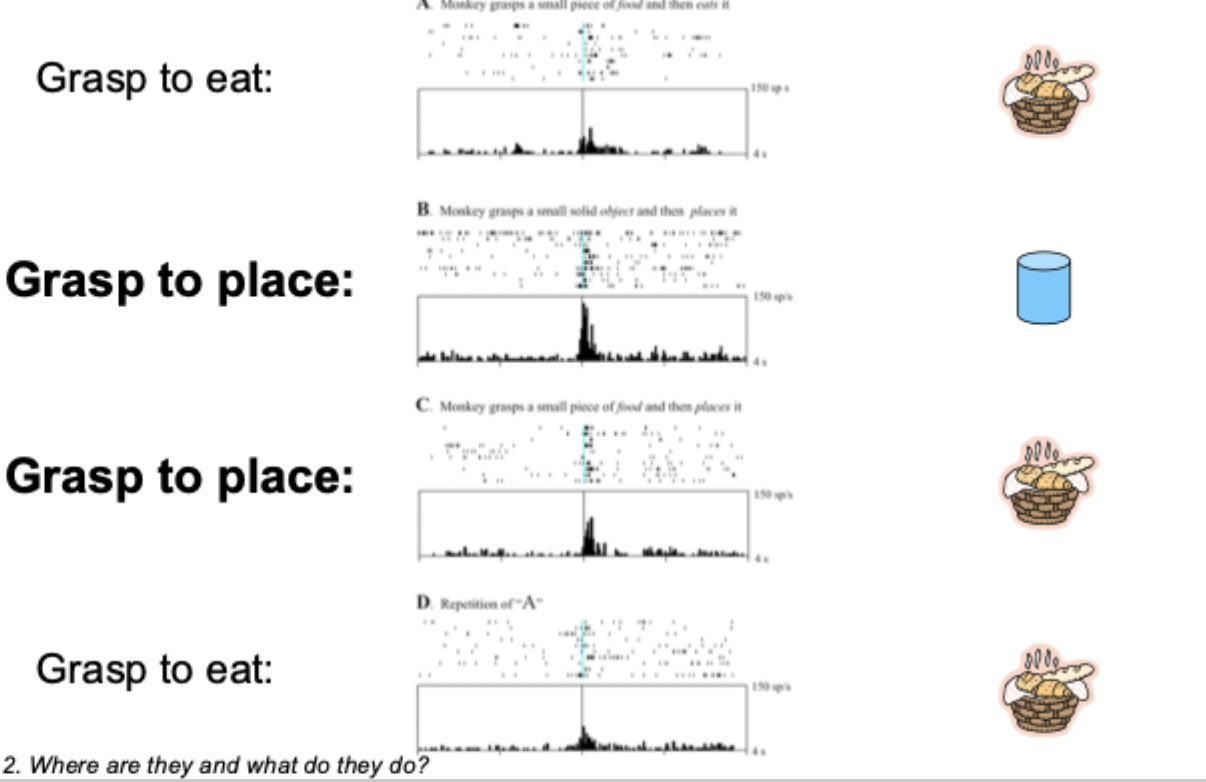
movement 1 is always the same, movement 2 is different based upon the goal
neurons respond during movement 1 but only when movement 2 is appropriate
the neuron responds selectively before the action happens (not clairvoyance). the cell belongs to the monkey and it knows the action its going to perform
Mirror neuron firing rate represents the intention of the monkey to perform a specific action
Summary of where are they and what do they do?
premotor cortex neurons respond during goal directed action
respond to the sight of that same action
mirror neurons code different specific hand actions: (grasp, pick, grip): mouth actions, (grip); and hand to mouth actions
mirror neurons can respond when the monkey knows the outcome of the actions
Are there mirror neurons in the STS?
Superior temporal sulcus neurons respond selectively to actions: moving faces, hands interacting with objects, walking
STS neurons integrate the sight and sound of actions
despite looking, no-one has found mirror neurons in the STS.
not yet..
The mirror neuron system SS
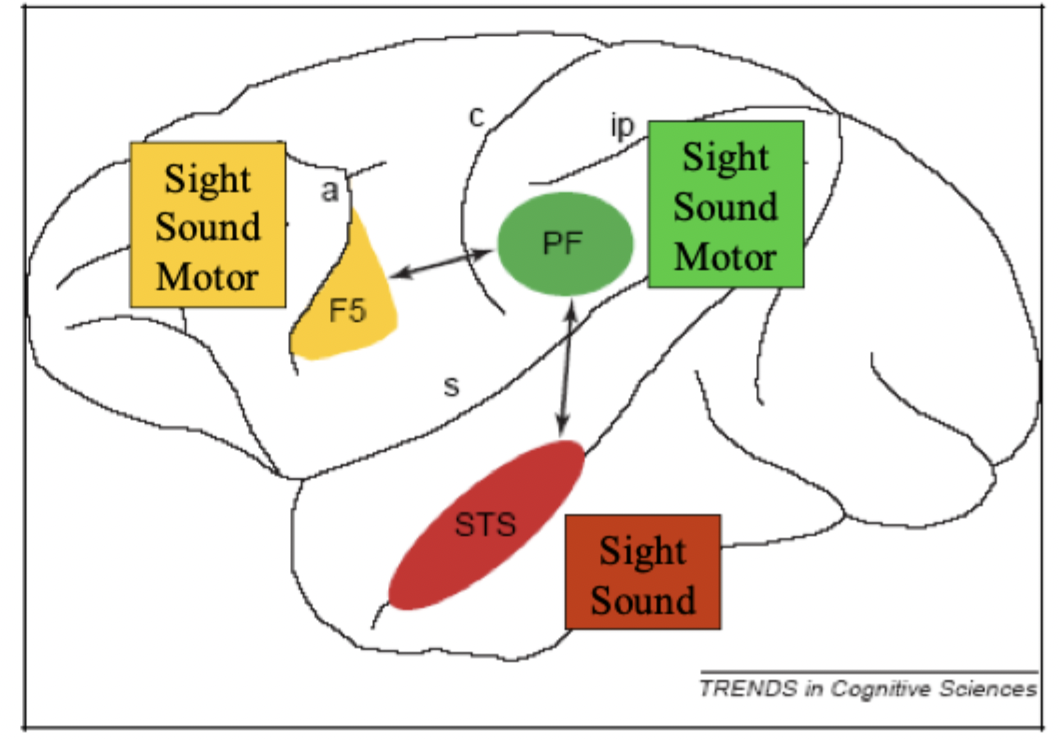
How have researchers investigated whether humans have mirror neurons?
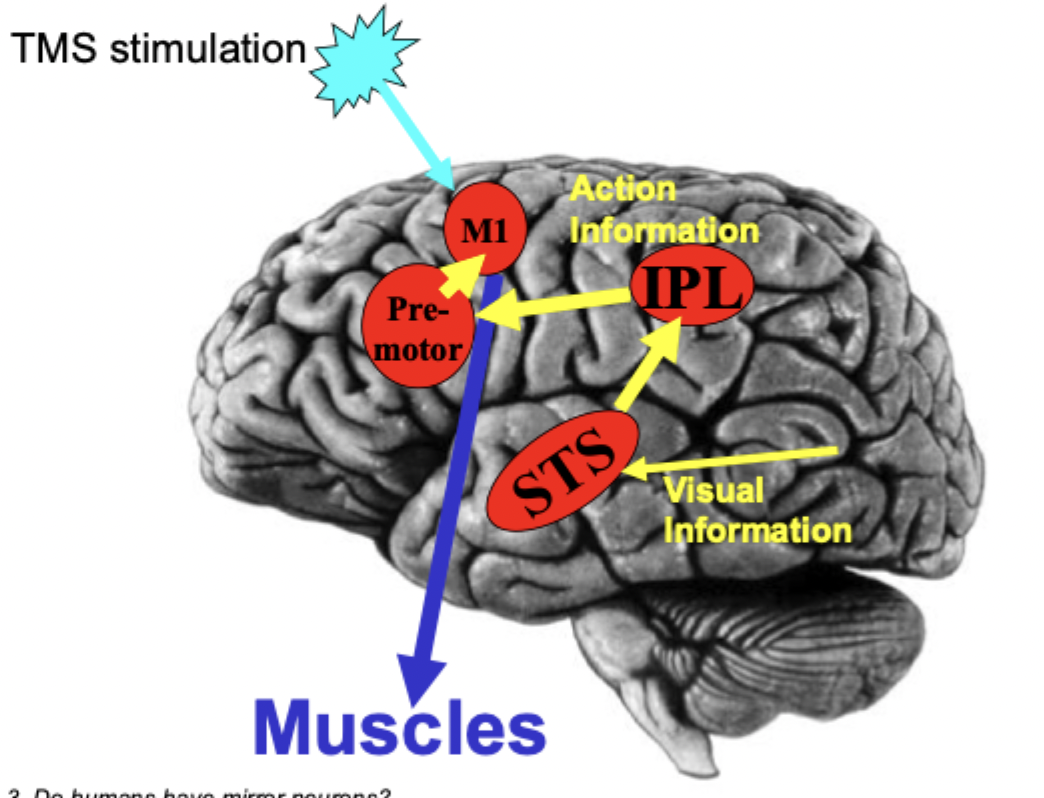
Mirror neurons in monkeys are found in the premotor cortex, so researchers looked for similar activity in the human premotor and motor cortex.
They used Transcranial Magnetic Stimulation (TMS) on the primary motor cortex (M1).
TMS causes Motor Evoked Potentials (MEPs) in muscles, which provide a measure of motor system activity.
When people observe an action, the MEPs become larger or more likely to occur during TMS.
This suggests that observing actions increases activity in the motor system (premotor cortex and M1), consistent with the presence of mirror neuron–like mechanisms in humans.
How are Motor Evoked Potentials enhanced with different action observations?
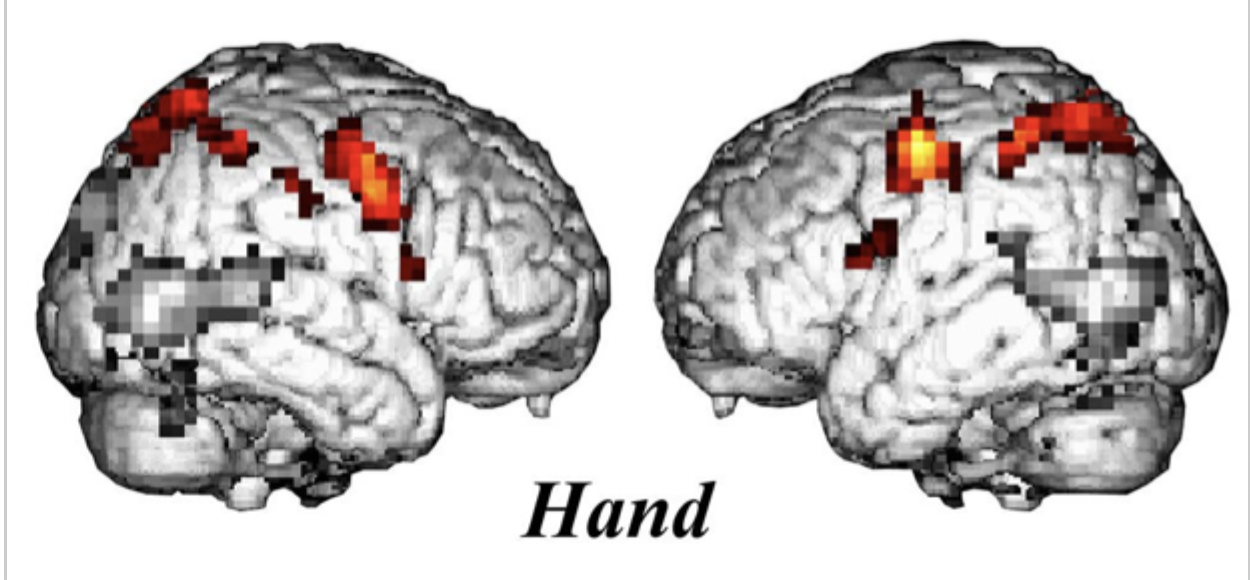
watching hand actions increases MEPs in hand (not leg) - action specificity
sounds also increase the likelihood of MEPs (match motor and sound)
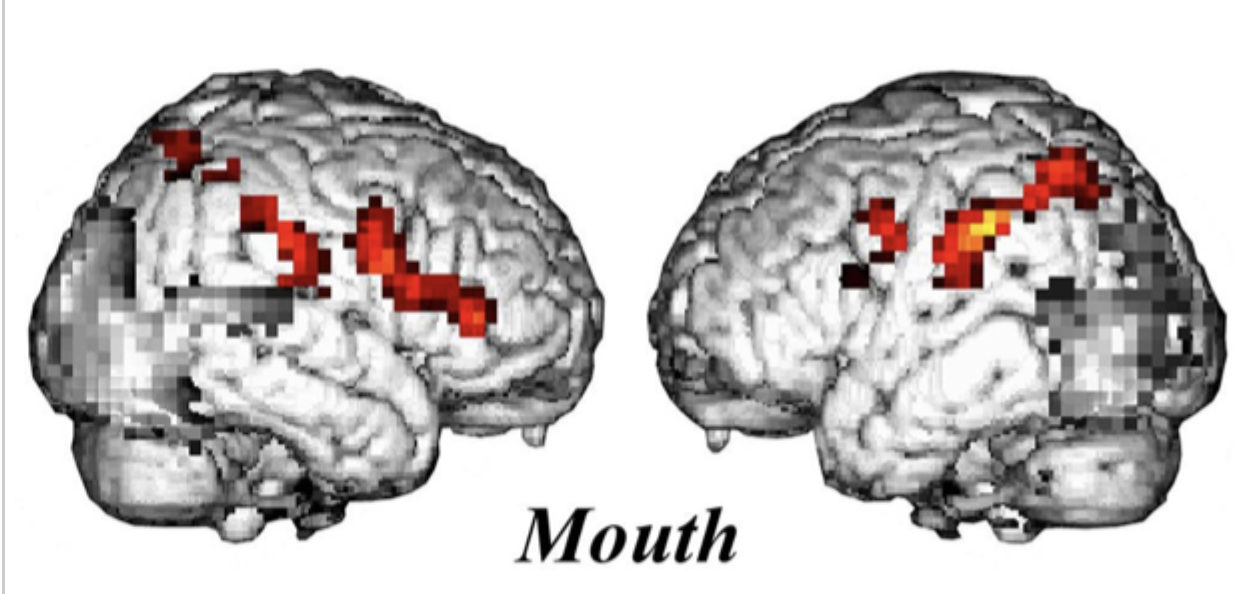
listening to words that use the tongue enhance MEPs in the subject’s tongue (mapping words onto circuits used to generate them)
Regions for different MEPs in humans SSs
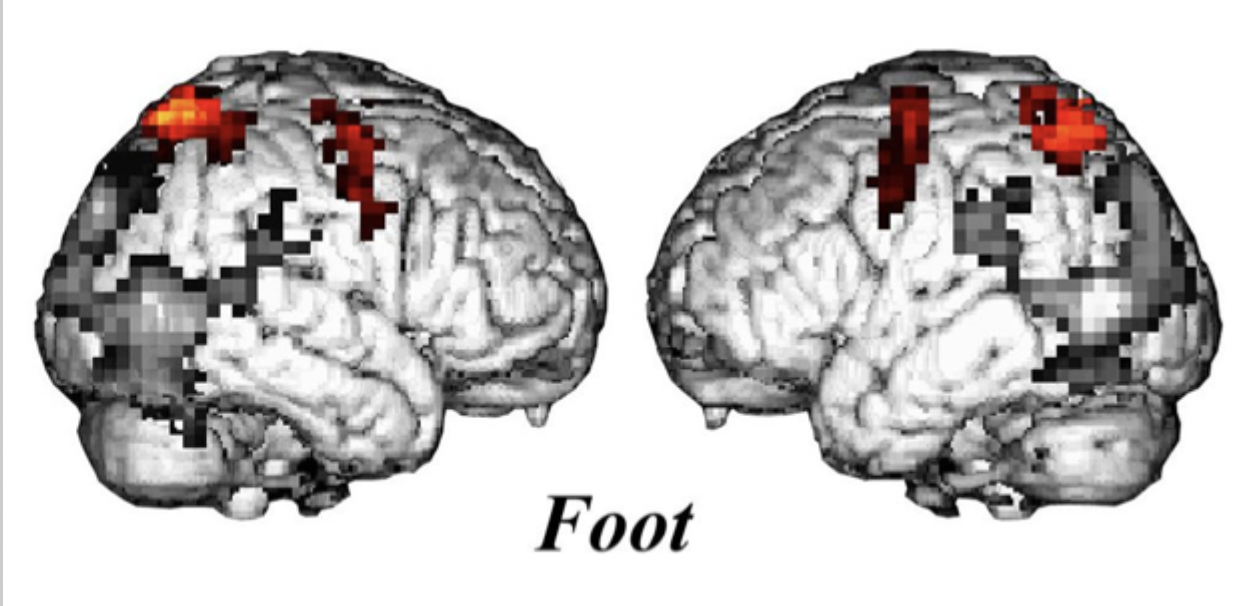
How have some have argued that humans do NOT have mirror neurons?
evidence is indirect
relies on correlations between visual and motor activity
neuroimaging is a measure of correlation
would need a single cell study of human mirror neurons
What did Mulamel et al find supporting humans having mirror neurons using single cell procedure?
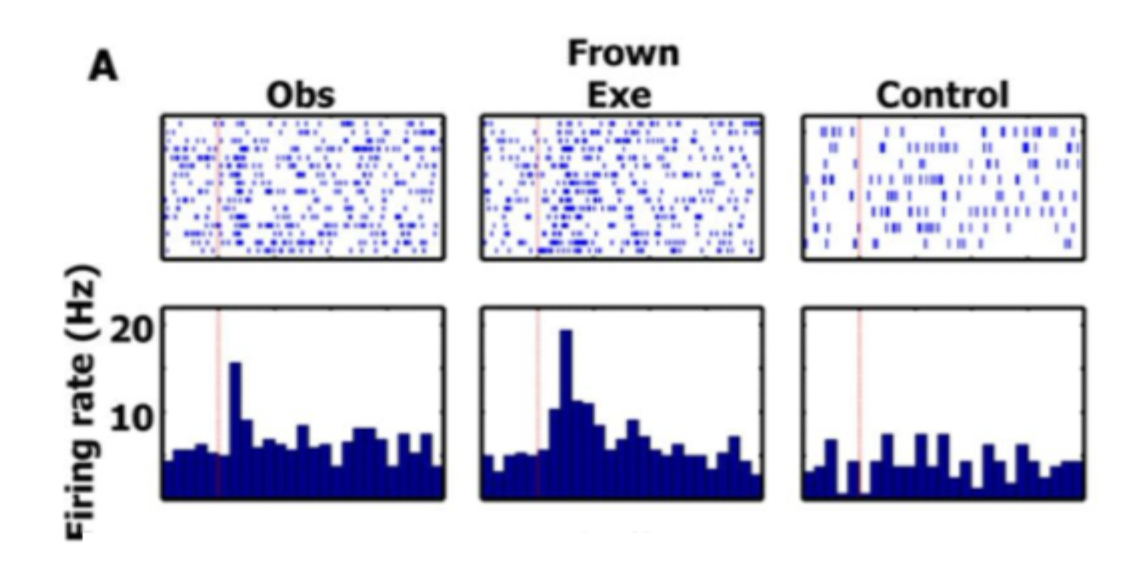
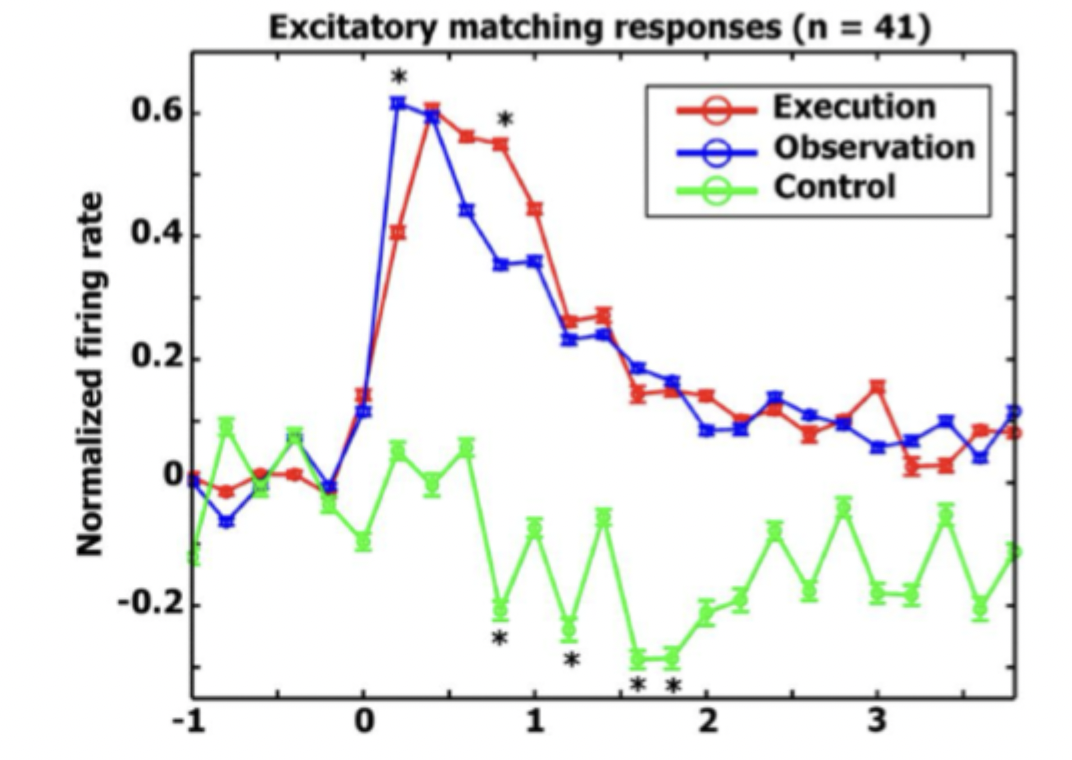
found evidence for Mirror neurons in: supplementary motor area and hippocampus
respond to both observation and execution of actions (hand grasping and facial expressions)
maybe we have mirror neurons all over the brain
How might mirror neurons be involved in the perception of action?
clearly play a role in some way
executing action changes perception
Hamilton (2004) tested perception of weight of lifted objects when lifting weights
lifting heavy objects → looks like light object, lifting light object → looking like heavy object
engaging motor system
What did Jacods and Shiffrar show regarding perception of actions?
observers walking on a treadmill
found it difficult to judge biological motion walker speed
observers cycling on an exercise bike did not….
certain motor patterns being engaged inhibits ability to make judgements
How might the mirror neuron system be used for understanding actions?
when we execute an action - our mirror neuron system is active
we understand the action that we are executing (goals, intent etc)
perception of other people’s actions → activity in mirror neuron system
therefore: understand the action
What is Gallese and Goldman’s 1998 simulation theory? how does it lead to theory theory
to understand other people’s actions we simulate their actions - using our motor systems
theory theory
we acquire and deploy a commonsense theory of mind - set of causal/explanatory laws
Simulation theory plot hole
if our motor system is active when we observe other peoples’ action…
why don’t we automatically move?? what stops us moving?
How do mirror neurons behave regarding touch?
somatosensory neurons that respond during touch and observing another person being touched
different neurons code touch in different places
you can empathise with the person being touched, but you don’t actually feel the touch
How do you know that you are not being touched when we see someone be touched?
mechanoreceptors, pain receptors in the skin feedback to the brain - you are not being touched
if you block the feedback - nerve block in brachial plexus. you literally feel the touch
skin provides the barrier between your and other people’s minds
What did Lacoboni et al find regarding understanding action intention?
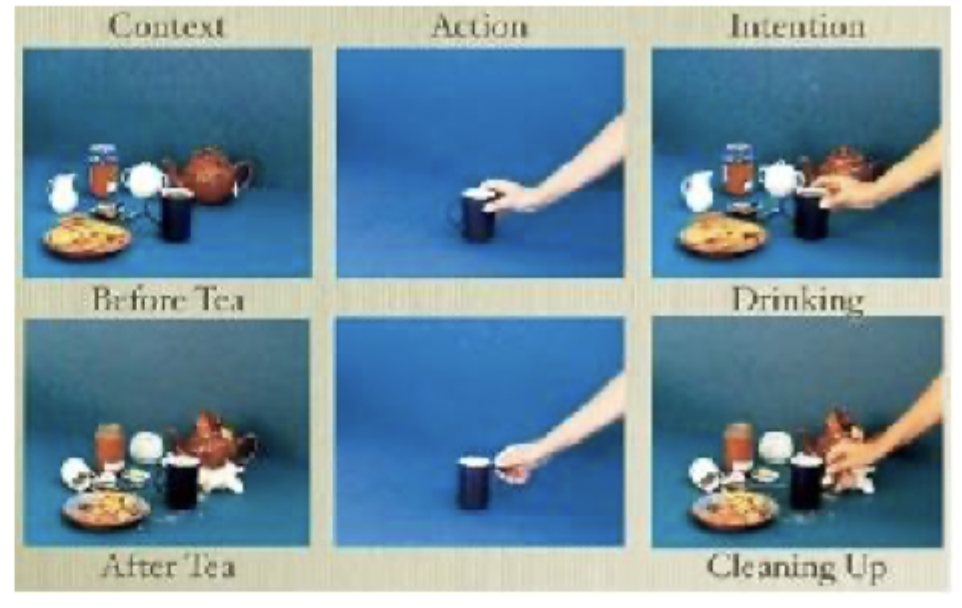
greater activity in premotor cortex to intention condition
mirror neurons responsible for understanding the intention of the observed actor e.g. drinking, cleaning
Buccino et al 2004 meaning behind actions
had participants look at videos of facial actions
3 species, each one with a different vocal call
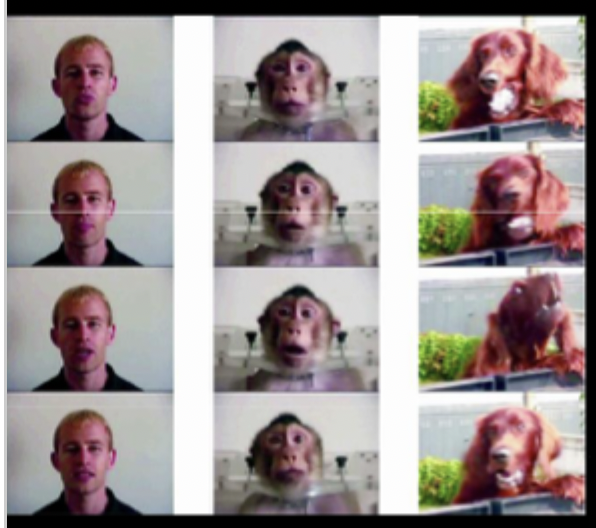
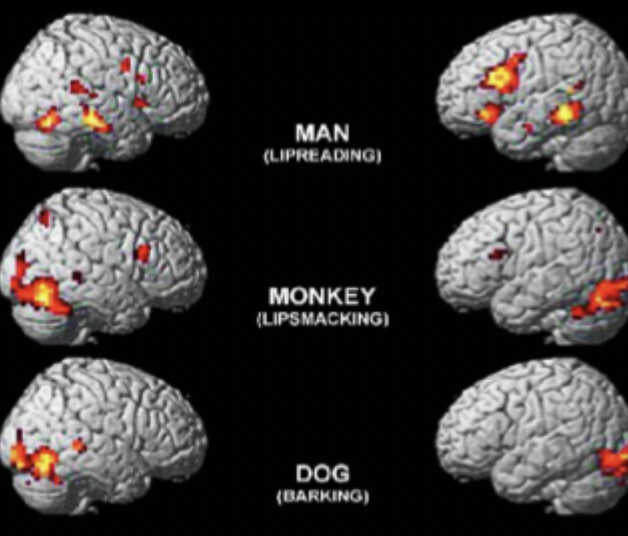
found a gradient depending on the meaning/similarity to human
no response in the mirror neuron area to the dog - least similar to humans
What might the mirror neuron system be used for in language?
mirror neurons represent actions: for imitation and understanding. As such they are a link between sender and receiver
Libermans (1993) motor theory of speech: states that this is a necessary pre-requisite for any form of communication
F5 in the monkey is responsible for hand and mouth movements: is the homologue of Human Broca’s area (speech area)
What did Arbib and Rizzolatti (2001) suggest about language and the mirror neuron system?
when an actor acts, the observer will recognise the action and the actor’s intention
the development of the observer’s ability to consciously control her/his mirror neurons system results in the ability to emit a voluntary signal
a primitive dialogue is formed between observer and actor
this primitive dialogue was a new use for the mirror neuron system. Initial intentional communication was based upon hand movements.
Also hand-mouth movements and oro-facial gestures
Questions regarding language and the mirror system
Did language evolve from the use of hand movements and the mirror system?
Does language still use the mirror neuron system?
How are human and non-human primate mirror neuron systems different?
What might deficits in the Mirror neurons system lead to?
given that the mirror neuron system is likely to play an important role in social cognition, deficits may result from dysfunction in MNS
Autism Spectrum Disorder (ASD) is a neurodevelopmental disorder, what is it associated with?
impaired social and emotional skills, lack of empathy and engagement with others, impaired perception of emotions (alexithymia)
What is the evidence that impaired mirror neurons system performance underlies ASD? (Anatomical)
Hadjikhani et a (2006) found local thinning in the cerebral cortex in areas belonging to the mirror neuron system (STS, IPL, IFG)
ASD severity correlated with cortical thinning
What is the evidence that impaired mirror neurons system performance underlies ASD? (physiological)
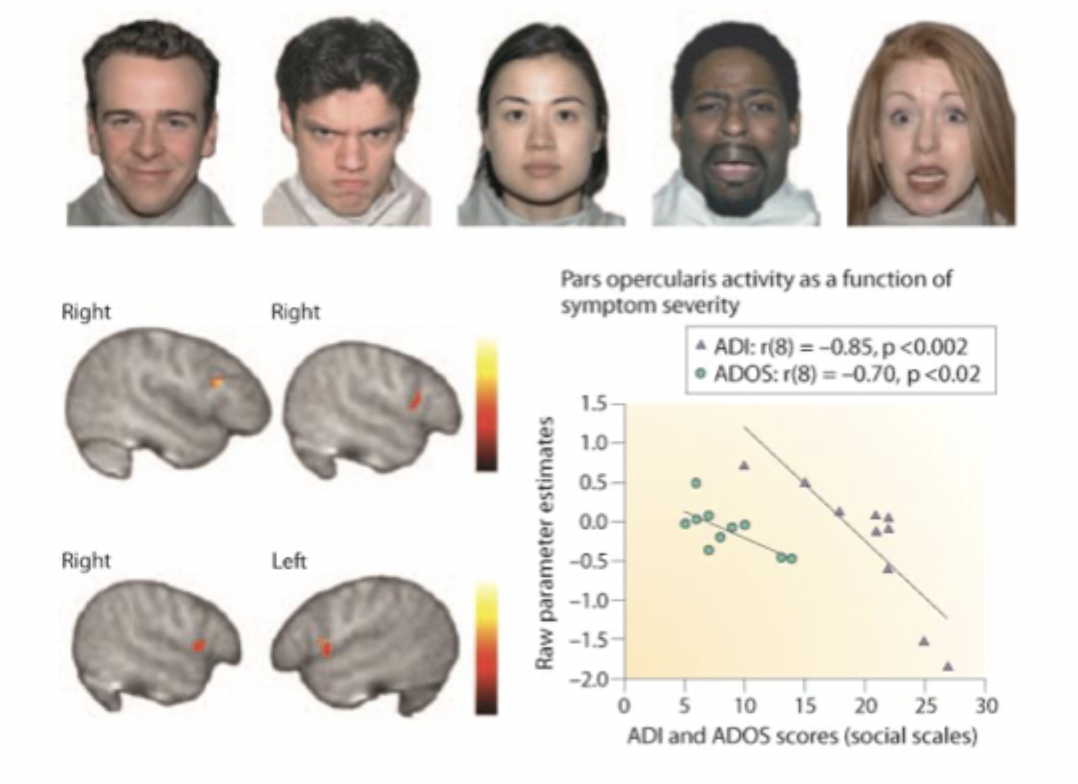
Mu rhythms suppression - index of motor activation. Occurs during observation of actions
Reduced Mu Rhythm suppression in ASD
reduced TMS induced corticospinal activation during action observation
in children - reduced MNS response to observation and execution of facial expressions in inferior frontal gyrus