MICROM 412: Exam Three Content
 Call Kai
 Learn
Learn Practice Test
 Spaced Repetition
 Match
Match Flashcards
 Knowt Play
1/152

There's no tags or description
Looks like no tags are added yet.
Name | Mastery | Learn | Test | Matching | Spaced | Call with Kai |
|---|
No analytics yet
Send a link to your students to track their progress
153 Terms
What do wastewater treatment plants attempt to remove?
> Debris, grit, etc
> Suspended solids
> Biochemical Oxygen Demand (BOD)
> Pathogens
> Nutrients: Sulfur and Phosphorus
Important reactions in wastewater treatment
> Nitrification: NH3 -> NO3-
> Denitrification: NO3- -> N2
Preliminary Treatment
> Purpose: protect equipment while removing little BOD
> Physical treatments: Bar Screening (interception), Grit Chamber (Settling), and Comminution (Grinding)
Bar Rack Screening
> Example: Riverside, California plant
> Part of preliminary treatment
> Removes solids that would otherwise jam machinery
> Uses trash racks that are mechanically cleaned
> Parallel bars allows screening of large solids
Grit Chambers
> Example: Riverside, California plant
> Part of preliminary treatment
> Water flows in and heavy solids sink to the bottom
> Solids collected are washed to remove organics
Primary Treatment
> Purpose: Remove objectionable solids by settling and skimming
> Process: Primary settling tank/clarifier and physical treatment
> Necessary for efficiency
> Treatment: Circular Sedimentation Conditions (removes solids and floating scum as water flow moves from the center to the outside to an overflow trough) and skimmer booms (skims floating waste)
Primary Sludge
> Sludge from the primary clarifier
> Collected by a rotating rake to carry sludge to the center hopper
> Sludge is transported to a thickener
Secondary Treatment
> Purpose: Remove soluble BOD and additional removal of suspended solids
> Process: Trickling filters (Biological) , Activated sludge (Biological) , and a second clarifier (Physical)
> Biological Treatment: Microbes convert organic waste into CO2 and water
Trickling Filter
> Part of secondary treatment
> Biological treatment
> A biofilm process where wastewater is distributed over media to allow biofilms to degrade organics
> Space between media allows air flow
> Does not include particle removal
> Rocks restrict depth
Activated Sludge
> Part of secondary treatment
> Biological treatment
> Uses an aeration tank (long) and clarifier (short) to recycle activated sludge
> Air is injected near the bottom of the aeration tanks
> Controlled by wasting some microbes and recycling the rest
Important Organisms in Activated Sludge
> Bacteria, EPS, filaments
> Microbes grown in "flocs" (suspended aggregates)
> Composition is critical (commonly includes a mix of rods and filaments)
Nocardia Spp
> A bacterial species involved in wastewater treatment
> Gram-positive Actinomycetes that form rods and filaments
> Strict anaerobes
> Have a wide temperature range, allowing them to be nutritionally versatile
> Can bulk (bad) when FOG (bacterial concentration) is high
Zoogloea Spp.
> A bacterial species involved in wastewater treatment
> Gram-negative rods
> Aerobic denitrifiers
> Make up to 10% of floc population
> Makes EPS which hold flocs together, traps toxins/nutrients, and can help or hurt settling
> EPS is good at concentrating nutrients and scrubbing organics to remove BOD
> Can make poly-hydroxybutyrate
Secondary Effluent
> White bubbles that appears during secondary treatment due to un-degraded/not removed detergents
> Suppressed using spray nozzles
> ABS = non-biodegradable detergent
> LAS = biodegradable detergent
Chlorination/Dechlorination
> Secondary effluent is disinfected with chlorine to remove pathogens
> Chlorine is toxic to aquatic life, so it's removed with sodium bisulfate
Sludge Treatment: Thickening
> Increase solids in sludge by removing water
> Accomplished through physical means
Sludge Treatment: Anaerobic Digestion
> Biological sludge processing
> Converts organics to CO2 and CH4 (a heat and electricity digester)
> Reduces sludge volume and pathogen load
> Prevent foul odor
Drying Beds
> Used for de-watering well-digested sludges
> Digested sludge can be used as agriculture amendment by improving soil organic content
How does treated wastewater become drinking water?
Treated wastewater gets injected into the ground and discharged to surface water, which is then used as drinking water
Wastewater Reuse
> Direct, potable reuse is rare
> Indirect, potable reuse is more common
> Colorado River Municipal District undergoes non-potable reuse for irrigation and fire protection
Wastewater pathogens: Protozoa
> Commonly form cysts, which are their dormant forms with thick walls and low metabolism
> Cysts aid in new host transport and protection
> Causes malaria, amoebic dysentery, giardiasis, and cryptosporidiosis
Wastewater pathogens: Giardia
> A protozoan
> Flagellated
> Forms cysts
> 1st proof of protozoan waterborne pathogens
Wastewater pathogens: Cryptosporidium
> A protozoan parasite
> Causes diarrhea, abdominal pain, and vomiting
> Infected hosts excrete billions of oocysts in feces
> Resistant to chlorine and chlorine oxygen disinfection
> Responsible for the Milwaukee, WI outbreak
The Nitrogen Cycle
> Nitrogen makes up to 78% of our atmosphere
> Involves nitrification and denitrification
> Key for wastewater treatment
Humans and the Nitrogen cycle
> Human impact has led to increased emissions, removal of soil nutrients, acidification of water and soil, a decrease in plant diversity, and aquatic harm
> Gulf of Mexico dead zone
FISH
> Determines the location of relevant bacteria
> Ammonia oxidizers tend to be at the top
> Nitrite oxidizers tend to be at the bottom
How to Hydrothermal vents work?
Waster goes into the earth's crust, becomes heated, and escapes
The Discovery of Hydrothermal Vents
> Geologists scanned ocean temperature spikes and identified the first hydrothermal vent near the Galapagos
> Through the invention of the Alvin, scientists found a whole ecosystem on the ocean's floor, which was previously thought to be devoid of life
What is the Foundation of Life on the Ocean Floor
> Chemosynthesis is the primary production mechanism
> Thermophilic chemolithoautotrophs
> Methane oxidizers
> Bacteria and archaea
What are Hydrothermal Vents?
1) Cold ocean water goes into the earth's crust
2) Water heats to 400C
3) Minerals from the rock go into the hot water
4) Dissolved metals and H2S go into vent fluid
5) Hot water comes out of the vents
6) Vent fluid is toxic to most life
Black Smokers
> Hottest of all vents
> Spews out Fe and Sulfide, which react and precipitate to give the smoke its black color
> Fast spreading ridges with increased temperature and volcanic activity
White Smokers
> Silica and CaSO4 are responsible for the white smoke
> Fluid rich in Ba, Ca, and Si
> Fast spreading ridges with increased temperature and volcanic activity
Vent Gradients
> Temperature: Determines who grows where
> Geochemistry: Influences composition and metabolism of communities
> Adaptations to dynamic conditions includes motility and metabolic versatility
> As temperatures increases, oxygenic respiration decreases and archaea take over
Vent Gradients: Ocean Water
> 2C
> Rich in O2 and NO3
Vent Gradients: Vent Fluid
> >300C
> Acidic
> Anaerobic
> Rich in dissolved metals
> H2S, CH3, CO2, and H2
Proteobacteria in Hydrothermal Vents
> Very important in vents
> Gammaproteobacteria
> Use H2S as an electron donor and O2 as an electron acceptor
What is the community like for the area where sea water and vent fluid mix?
Aerobic and chemolithotrophic
Beggiatoa Spp.
> A mat forming S oxidizer
> Has large cells
> Undergoes Sulfide/Sulfur oxidation (H2S -> S -> SO4)
> Filaments store S
Anaerobic Respiration in Hydrothermal Vents
> Methanogenesis
> S Reduction
> Sulfate reduction
> Fe reduction
Autotrophy in Hydrothermal Vents
> CO2 fixing pathways that are distributed along thermal gradients
> <20C = Calvin Cycle dominates; ATP costly and O2 tolerant
> 20-90C = Reductive TCA cycle; ATP efficient and O2 sensitive
> >90C = Hydrothermal archaea
Phototrophs
> Obligate phototrophic bacterium
> Use faint glow from black smokers
Hydrothermal Vent Symbioses: Tubeworms
> Riftia pachyptila
> Made of chitin
> Have no mouth nor stomach
> Gill-like red plumes absorb H2S from the hot water and O2 from the cold water -> H2S and O2 are delivered by a form of hemoglobin -> both gases are transported to the trophosome through the circulatory system -> capillary beds in the trophosome distribute H2S to symbiotic bacteria
Hydrothermal Vent Symbioses: Clams
> Calyptogena
> Utilize symbiotic bacteria in large, thick gills
> Use hemoglobin to deliver symbiotic nutrients
> Eaten by crabs and octipi
Hydrothermal Vent Symbioses: Shrimp
> Includes many species
> Live around clumps of tubeworms and mussels
> Eat mussels and microbes growing on chimneys and their bodies
> Eaten by crabs, anemones, and zoarcid fish
Old vs New views of sociomicrobiology
> Old: Microbe size and form indicate simplicity, and sociality is a consequence of both
> New: Bacterial society is very important
Ed Wilson
Father of sociomicrobiology
Quorum Sensing
> Low cell densities have low signal concentration
> High cell densities have high signal concentration, leading to multi-cell function
Quorum Sensing: Vibrio fisheri
> A known symbiont for the bob-tail squid that performs counterlumination
> As time and OD increase, luciferase suddenly spikes after a brief "lag" period
> Uses autoinducer Acyl Homoserine Lactone (AHL) signals
> LuxI gene family
The LuxI gene family
> Signal made: AHL using SAM and Acyl-ACP
> LuxI: Makes AHL
> LuxR: receptor for the AHL signal and triggers the expression of the lux operon
Milky sea phenomenon
Stretches of ocean glowing with a steady, ghostly white light from trillions of luminescent bacteria
Quorum Sensing: Peptide Signals
> Mostly seen in gram-negative bacteria
> Peptide signals vary widely depending on the organism
> Cell makes peptide signal
> As the peptide signal accumulates, a sensor kinase detects it and phosphorylates the response regulator to turn on target genes
Quorum Sensing: S. aureus and the agr system
> Signal: Auto-inducing peptide "AIP"
> Up-regulates extracellular virulence factors, while down-regulating cell surface virulence factors
> AgrA: response regulator
> AgrB: protease
> AgrC: Sensor kinase
> AgrD: pre-cleaved peptide
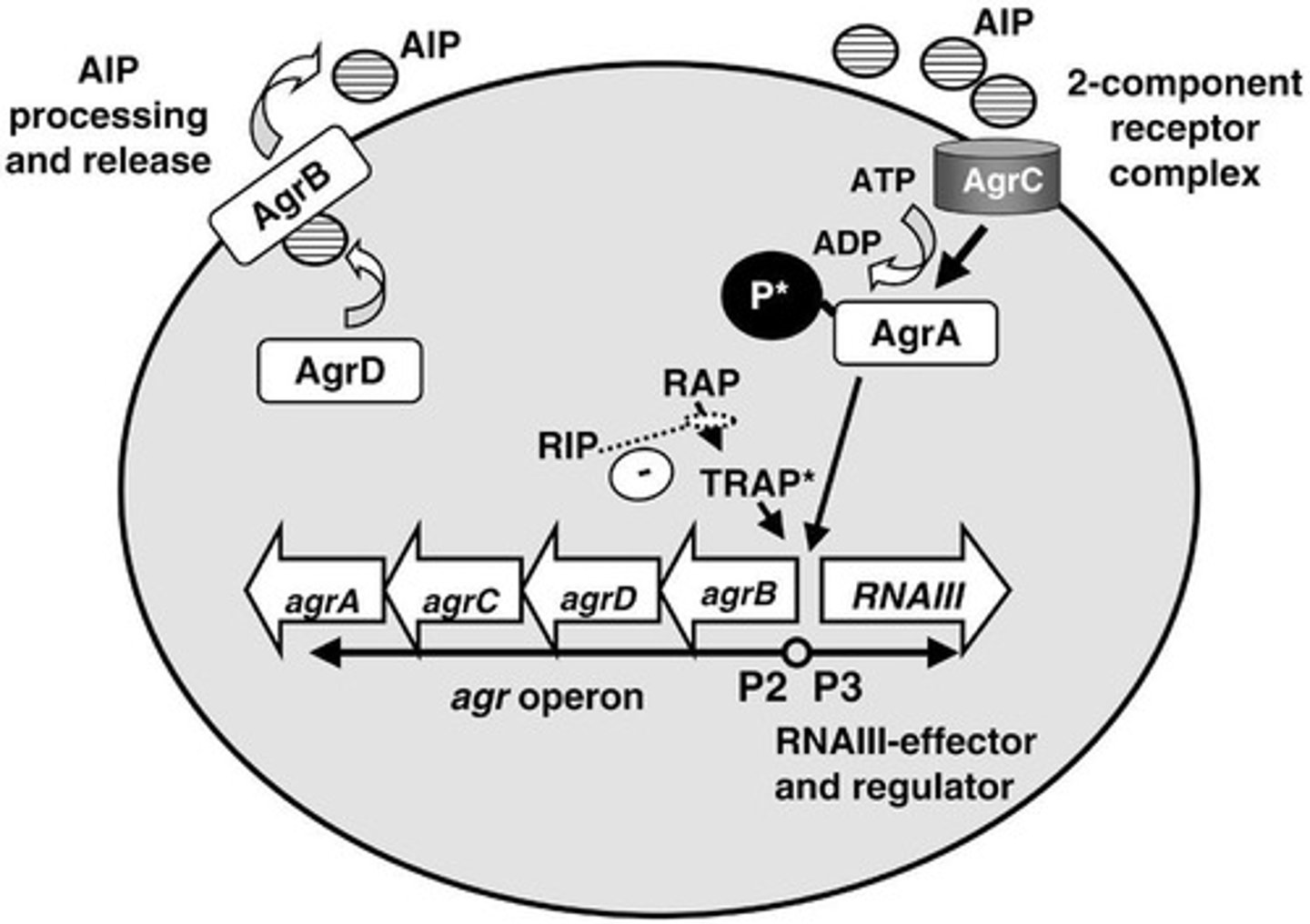
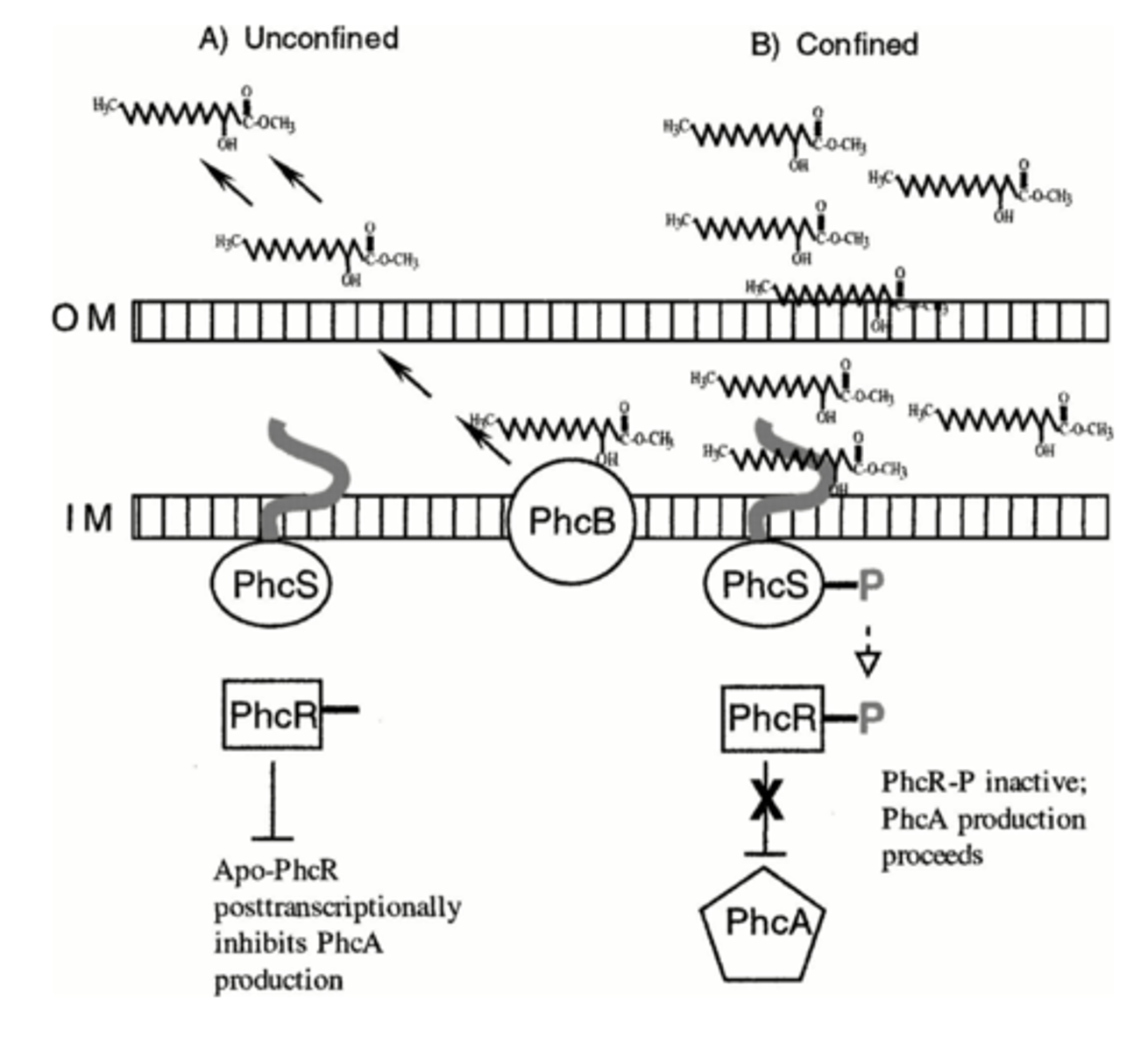
Quroum Sensing: Volatile Signaling
> Ralstonia solanaceraum
> Signal: 3-OH Palmitic Acid Methylester
> PhcA: turns on genes
> PhcB: prevents signal from binding at low concentrations
> PhcS: sensor kinase
> PhcR: response regulator
Myxobacteria
> Gram-negative rods without flagellum
> Lives in soil and works as a predator
> Can swarm, have intercellular communication, and form fruiting bodies
> Have large chromosomes
> Fruiting bodies are formed in starvation conditions and inner cells of them turn into spores
> Fruiting body formation depends on a solid surface, correct cell densities, and nutrient decline
> Intercellular communication depends on A and C signaling
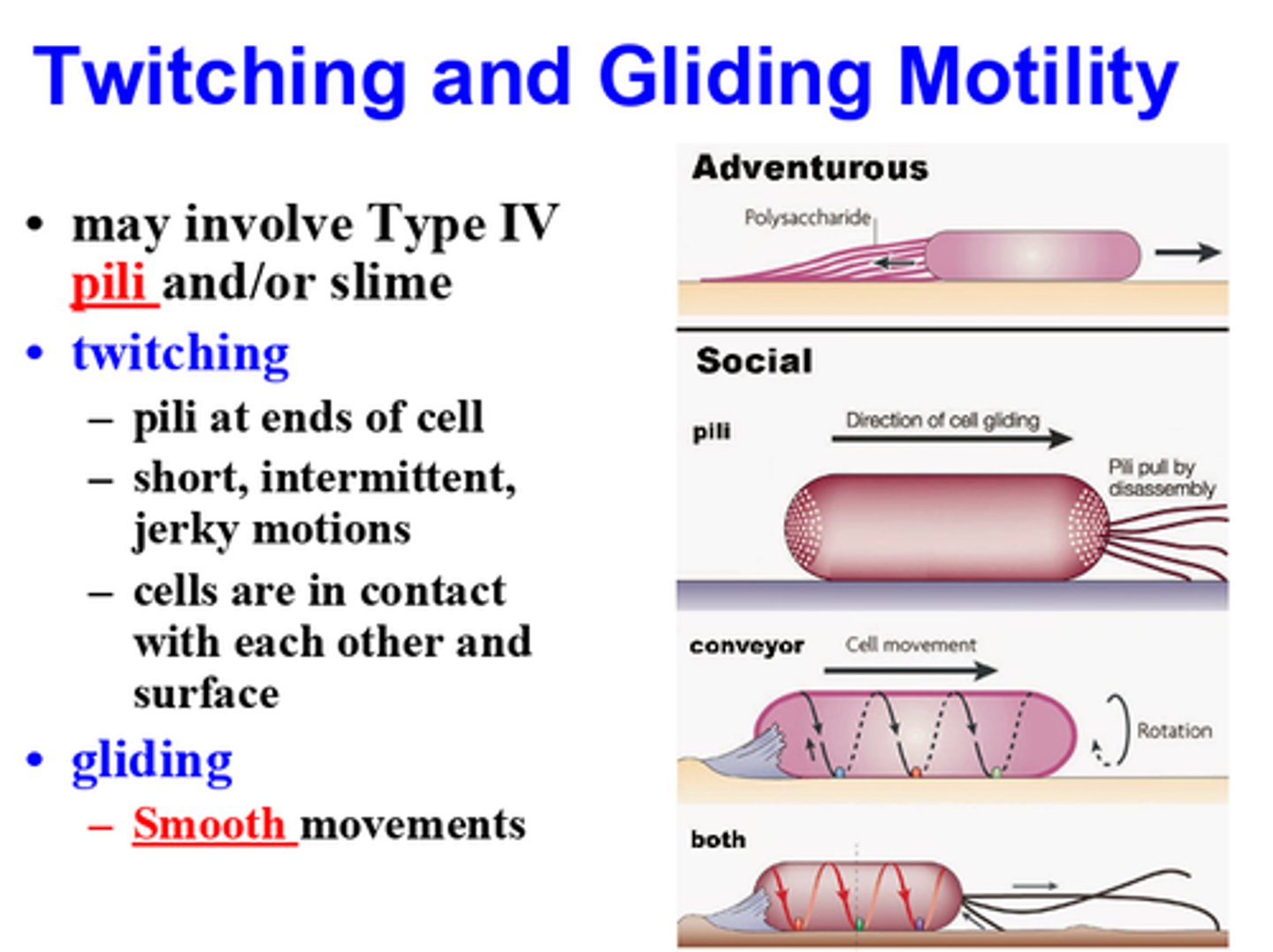
> Motility can be social (twitching via flagellum) or adventurous (gliding using focal adhesions), but both are needed for fruiting body development
> Only a small percentage of cells become spores
Quorum sensing: A signaling
1) Cell detects limited nutrients
2) ppGpp and the stringent response
3) A-signals are made
4) A-signals are detected by SagS HPK
5) SasR activation (?)
> Leads to cell aggregation
Quorum sensing: C signaling
> Cells must align for an exchange from cell-to-cell at the polar ends
> Motility dictates fruiting body size and shape
> Different levels of FruA-P dictate regulation of C-signals
1) cells align, and one cells gives C-signal to the other cell
2) More C-signal gets made and FruA (made from A-signaling) gets phosphorylated
4) Aggregation, sporulation, streaming motility
Twitching motility and the type 4 pili
> Type 4 pili are thin appendages
> PilB: extension
> PilT: pili polymerization
Twitching Motility in P. aerginosa
> Forms an EPS trail
> PilA mutants do not produce a trail
> Twitching bac follow their trails
> Increases likelihood of bacterial interactions
Swarming Motility
> Flagella-driven
> Surface motility
> Done by proteobacteria and firmicutes
Surfactant Structures
> Not made by all swarming bacteria
> Amphipathic
> Decreases surface tension between the cell and the surface
> Commonly regulated by quorum sensing
Traits of Swarming Motility
> Swimming lag: it can take hours before swarming occurs
> Exiting swarming lag requires high cell density, hyper flagellum, and nucleation/raft formation
> Cell elongation and hyper flagellum
> Colony patterns (Dean's Lines)
Vibrio parahaemolyticus
> Pof Flagellum: polar, Na+ driven, high viscosity
> Laf Flagellum: lateral, H+ driven, low viscosity
> Phenamiln decreases swimming motility
> Lateral flagellum is expressed when polar flagellum is interfered with and aids in surface sensing + biofilm formation
Motility in Spirochetes
Have endoflagellum, which have a flexible outer sheather and a protoplasmic cylinder (rigid and helical)
Magentotaxis
> Gram-negative bacteria
> Have a microoxic lifestyle
> Move parallel with magnetic fields and faster as the magnetic fields gets stronger
> Integrated with aerotaxis
> Has a flagellum and a lipid bilayer
> Magnetosome: Has FeO4 and FeS4 and is though to help find oxic-znoxic interface
> Position is dictated by oxygen and magnetic field
Gas Vacuolated Bacteria
> Gas vesicles are gas-filled structures that confer buoyancy
> Small and typically eubacteria or archaea
> Photosynthetic bacteria use gas vesicles to move up and down water columns
> GvpA: important; rigid and hydrophobic
> GvpC: cross-linker
Bacterial Endocarditis
> A complex biofilm of bacteria and host microbes on the cardiac valve
> Biofilm is made up of a range of species (including streptococcus and staphylococcus)
> Bacteria colonizes injured heart valves
> Increased/stronger antibiotics fail
Why are biofilms so resistant?
> EPS works as a diffusion barrier
> Slow-growing subpopulations
> Biofilm phenotype
Biofilms: Slow-Growing Subpopulations
> The Setup: agar surface -> filter -> biofilm colony -> filter -> disk
> When measuring Oxygen levels in the biofilm, O2 drops off going into the biofilm
> Antibiotics also start to fail within the biofilm
Chronic Cystic Fibrosis
> An airway infection
> Pseudomonas aerguinosa is the primary cause of morbidity and mortality in people with CF
> Colonization occurs in early life
> An autosomal recessive disease
> AB therapy manages infections but at the cost of antibiotic resistance
> Sterile lungs -> intermittent infection -> permanent infection
The CFTR gene
> Gene associated with cystic fibrosis
> Encodes epithelial chloride transporter
> Normal function allows the release of Cl from cells
What problems does Cystic Fibrosis cause within the body?
> The Liver - plugs bile ducts
> The Pancreas - causes duct obstruction
> The Intestine - meconium ileus
> The Reproductive Tract - infertility
> The Sweat Gland - salty sweat
> The Airways - infection and inflammation (most important)
Pseudomonas aerguinosa
> Gram-negative rods
> Ubiquitous in nature
> Opportunistic human pathogen, normal pathogen of plants, insects, and nematodes
> Model organisms for biofilm and quorum sensing
Acute Infections
> Disseminates and invades
> More susceptible to treatment
Chronic Infections
> Localized and persists
> Less susceptible to treatment
Planktonic Bacteria
free floating bacteria
Cystic Fibrosis Biofilm Formation
1) Dehydration from the mutated CFTR gene leads to impaired mucociliary clearance
2) Persistent mucus hypersecretion by goblet cells
3) P. aeruginosa colonizes the environment to initiate biofilm formation
P. aeruginosa Adaptations
> Adapts to the lung environment
> Longitudinal isolates are clonal
> Common examples: Motility loss, Loss of LPS O-antigen, Alginate overproduction (mucus phenotype), and amino acid auxotrophy
MucA
> Anti-sigma factor
> When mutated, it frees AlgU to promote alginate production
CF-derived RSCV colony morphology variants
> Causes: enchanced biofilm formation and antibiotic resistance, decreased motility, and increased cyclic di-GMP
> Colonies are wrinkled and small; when grown in liquid media, aggregation occurs
> Comes from cyclic di-GMP overproduction
Cyclic Di-GMP
> An intracellular signaling molecule that affects surface attachment
> Cyclase makes it, phosphodiesterases breaks it
> Increased cyclic di-GMP production leads to hyper adherence
PeI and PSI loci
> Mutating one leads to partial aggregation
> Mutating both leads to a complete loss of aggregation and no orange/round colonies
How are biofilms studied?
1) Liquid culture growth
2) Monitor community by CSLM
3) Measure biofilm features
Rhamnolipids
> Thought to act as a surfactant to prevent void spaces/channels from closing
> Contribute to mature P. aeruginosa biofilms
Dispersion
> Leaving biofilms and resume planktonic life
> A regulated process induced by environmental cues
> Inducing dispersal could help antibiotic resistance
> Dispersal pattern: aggregate hollowing
> Z series: biofilm gradient...
Organelles
> A spatially restricted structure inside a cell
> Proteinaceous or membranous barriers keep them separated
> Has a special function at subcellular locations
> Sometimes factors must be partitioned from the rest of the cell to protect their function
> Must be synthesized or expanded and segregated to daughter cells
The Bacterial Nucleoid
> A highly compacted region in the cell center with DNA
> Not surrounded by a membrane nor proteins, but is accessible to medium-sized proteins
> Not permeable to large components
> Essential in all bacteria: organizes DNA and segregates it into daughter cells
Bacterial Chromosomes and Replication
> Most bacteria have a single circular chromosome
> Are haploid: have 1 instance of each gene (1n)
> Humans have 23 chromosomes with 2 non-identical instances of each gene (2n)
> Before replication, chromosome is 1c; after replication, chromosome is 2c
> Chromosome replication examples: sporulating in B. subtillis and single polar origins in C. cerscentus
> DNA replication starts at the origin and continues bidirectionally until the terminus is reached
E. coli Chromosome Replication
> Slow-growing: origin is in the middle
> Fast-growing: origin is at the poles, and there are two
> Fast-growing E.coli can undergo multifork replication where replication can start again before it has finished
> Fast-growing E. coli will have more gene copies at the origin than the terminus
How is DNA loci visualized?
> Uses FROS (Fluorescent Reporter Operator System)
> Site-specific DNA binding protein is fused to a fluorescent protein
> Array is placed near investigated locus where fluorescence coalesces into a focus at that site
> Different sites are labeled with different colors to probe multiple sites
Why is DNA compact
> Transcription and translation are coupled in prokaryotes
> Transertion
> The circular chromosome is highly supercoiled
Transertion
Genes encoding membrane proteins are transcribed, translated, and the polypeptide is inserted into the membrane at the same time
How does transcription and translation impact DNA compaction?
> DNA is available for transcription by RNA polymerase and mRNA is translated by ribosomes
> Transcription causes DNA to condense through the formation of supercoils or multiple RNAPs interacting with each other
> Translation causes DNA to expand due to ribosomes outside the nucleoid and DNA traveling to the membrane for transertion
Translation and Transcription Inhibition
> Translation: chloramphenicol
> Transcription: Rfampicin
How is the bacterial chromosome compacted?
> Associated proteins bind to DNA and help compact it
> Some regions are more organized than others
ParABS
> System that moves origins to opposite poles during DNA replication
> ParB is a DNA binding protein that binds to origin proximal sites called ParS
> Once bound, ParB spreads out along DNA near ParS sites to condense it and recruit SMC
SMC
> A ring shaped protein complex that is though to encircle the DNA double helix
> Analogous proteins found in all domains of life
How are Replicated Chromosomes Kept Separated?
1) SMC ring is loaded at ParS and travels down the chromosome to traverse DNA loops, DNA binding proteins, and transcription/translation complexes, making it slow
2) ParA binds to ParB and pulls/pushes replicated chromosomes apart
3) Topoisomerases cut and twist DNA to remove links
4) Homologous recombination between replicated chromosomes occurs
5) Linked chromosomes are resolved at the closing septum located in the terminus
Topoisomerases
> Cut and twist DNA to relax it
> Removes links during replication
> Not always good at its job and leaves chromosomes linked
FtsK
> Pumps DNA outward
> Activates topoisomerases to resolve concatenated DNA
> Activates recombinases XerC and XerD to resolve dimers
Storage Granules
> Stores nutrients
> Decreases osmotic pressure to concentrate into one large molecule
> Are membrane bound