Parts of the Ear (Anatomy)
 Call Kai
 Learn
Learn Practice Test
 Spaced Repetition
 Match
Match Flashcards
 Knowt Play
1/33

There's no tags or description
Looks like no tags are added yet.
Name | Mastery | Learn | Test | Matching | Spaced | Call with Kai |
|---|
No analytics yet
Send a link to your students to track their progress
34 Terms
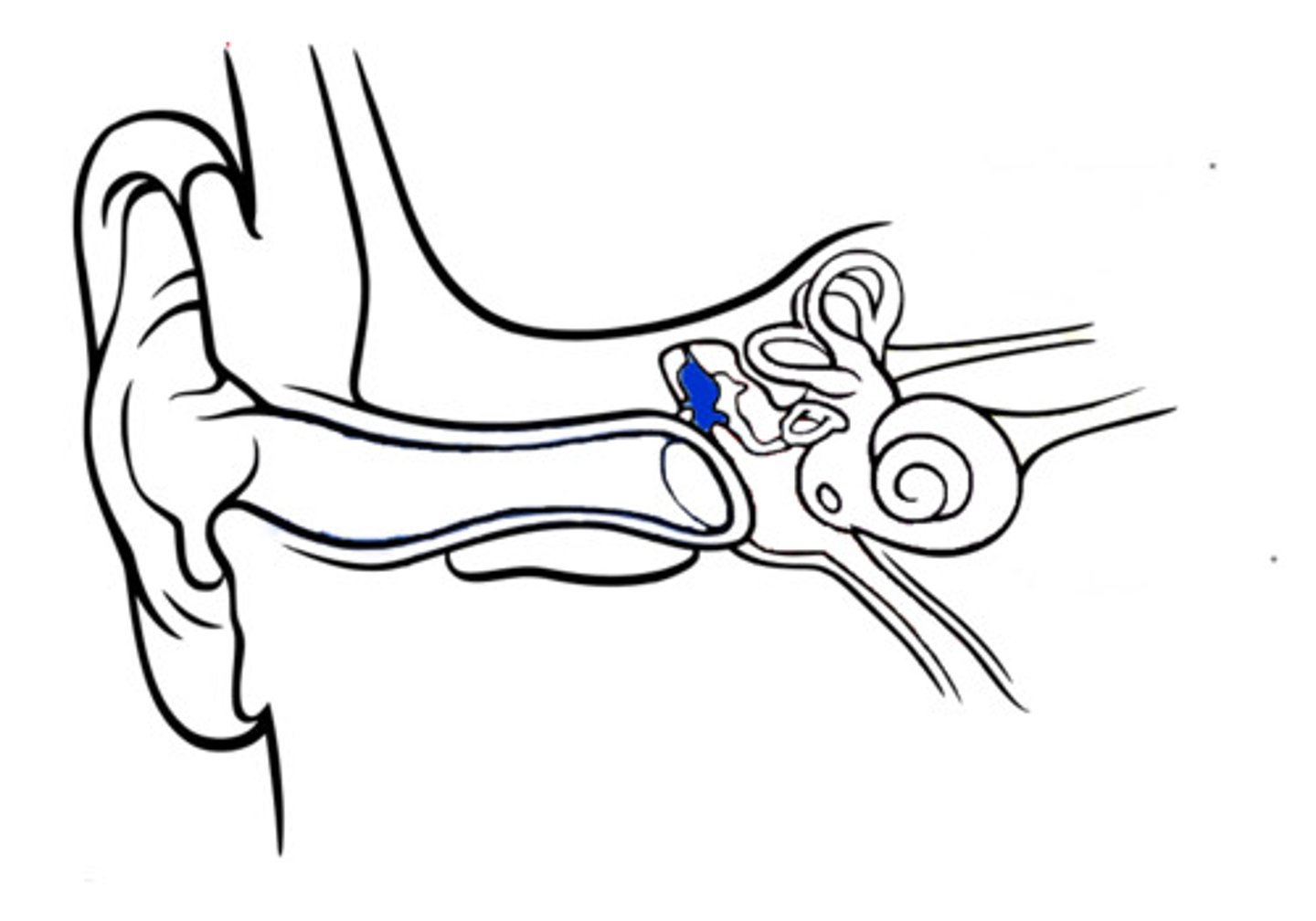
Malleus (Hammer)
one of the 3 small bones in the middle ear which increase or decrease vibrations from the ear drum
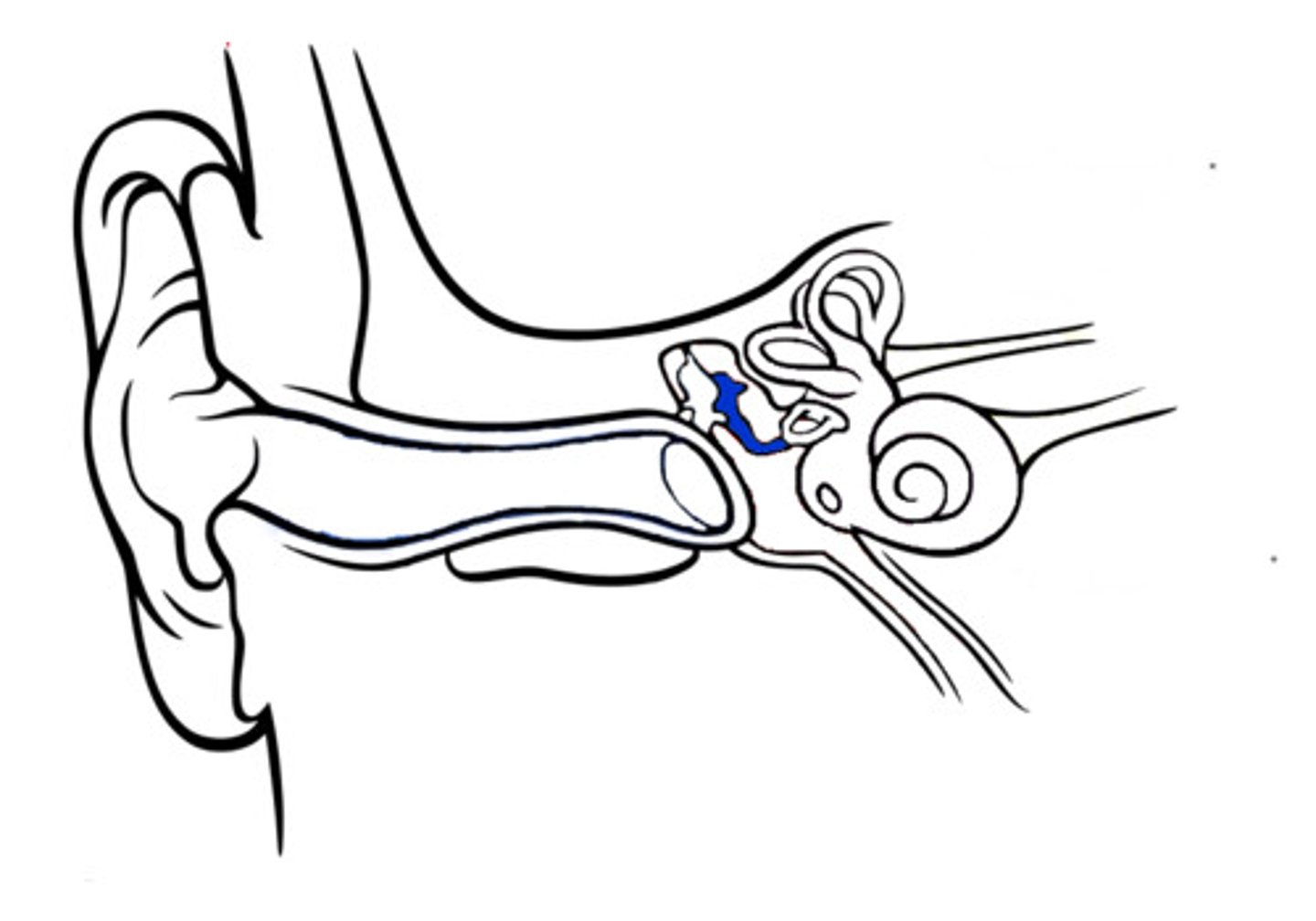
Incus (anvil)
one of the 3 small bones in the middle ear which increase or decrease vibrations from the ear drum
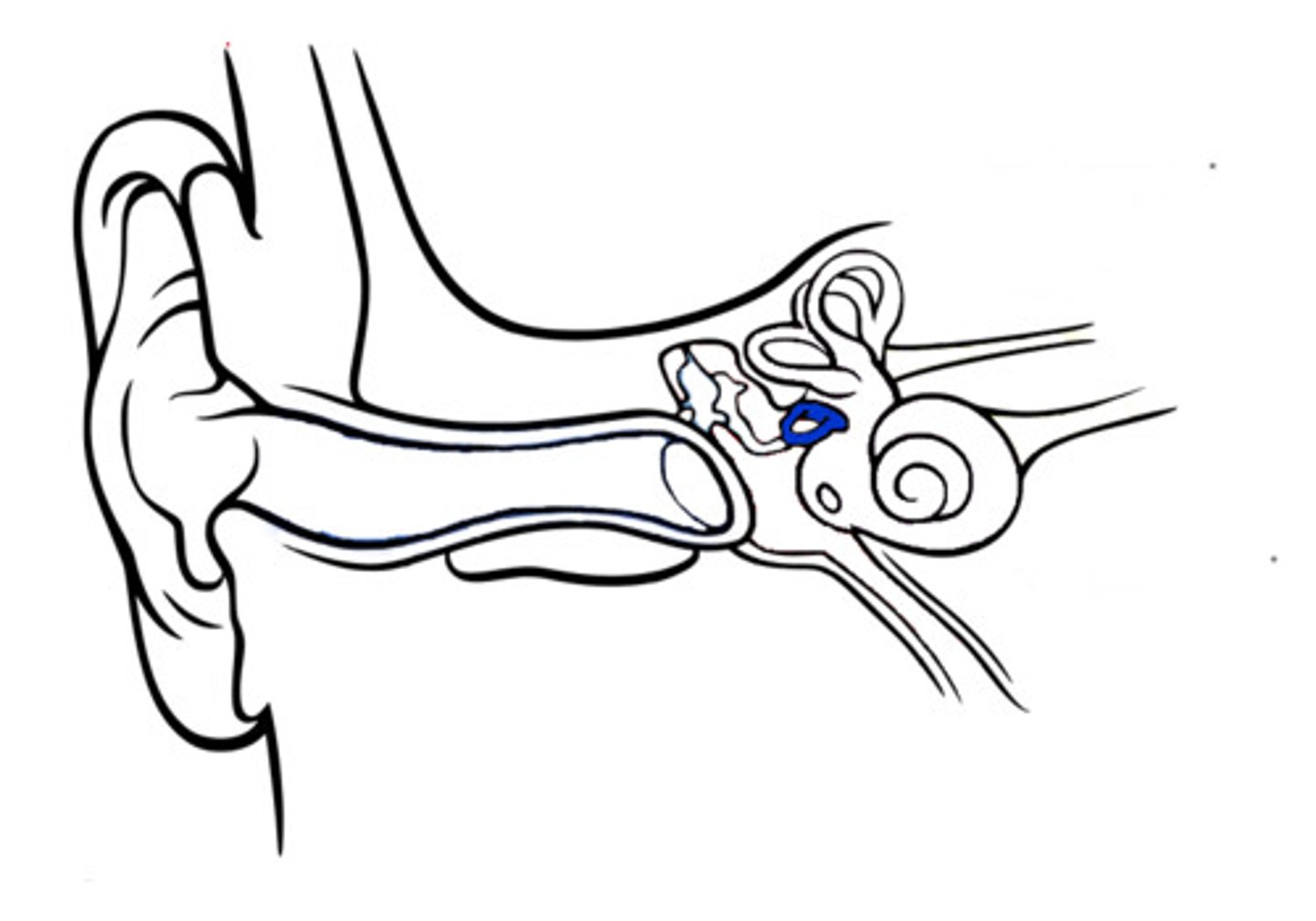
Stapes (Stirrup)
one of the 3 small bones in the middle ear which increase or decrease vibrations from the ear drum
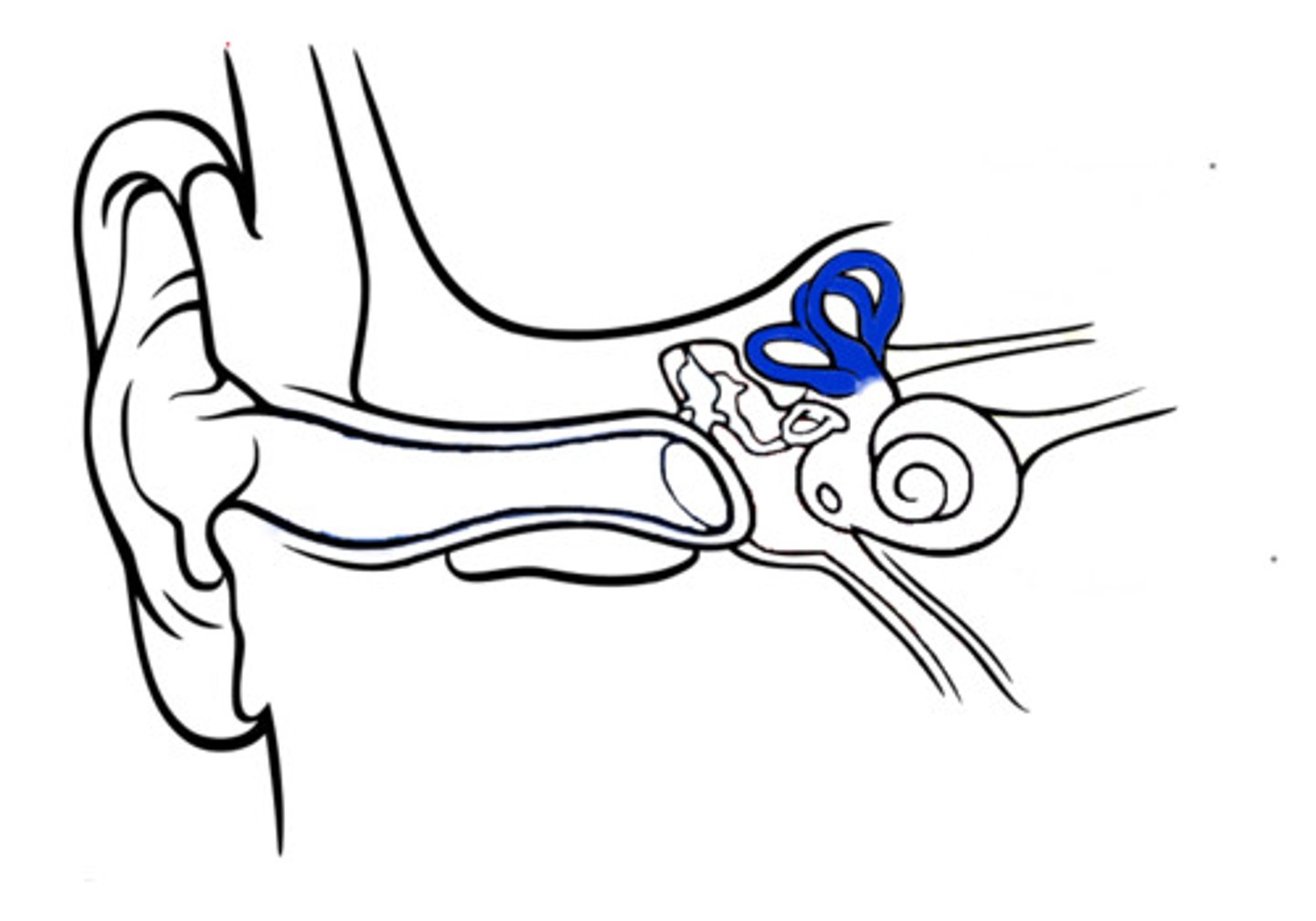
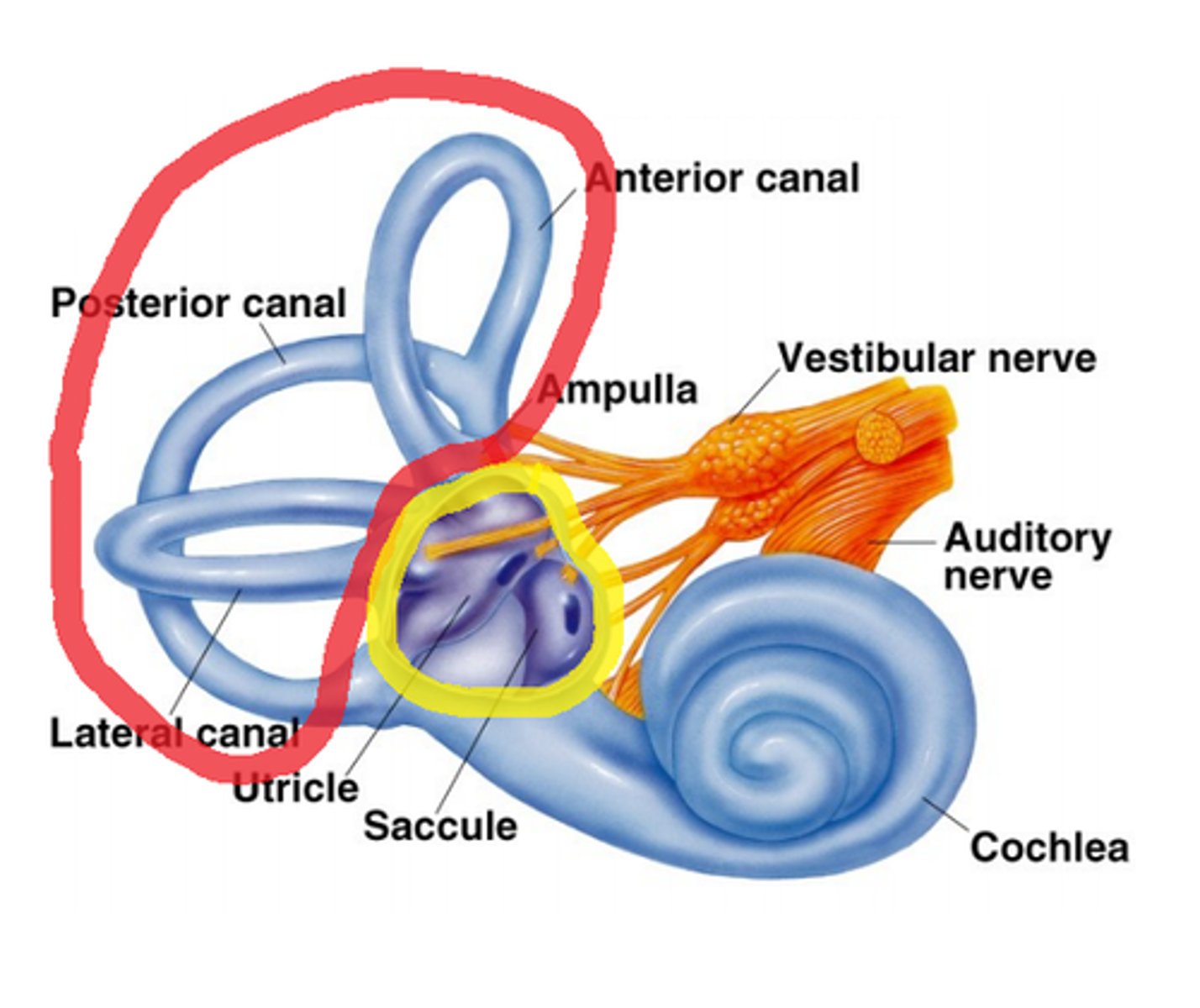
Semicircular Canals
This is reponsible for keeping you upright, maintaining balance
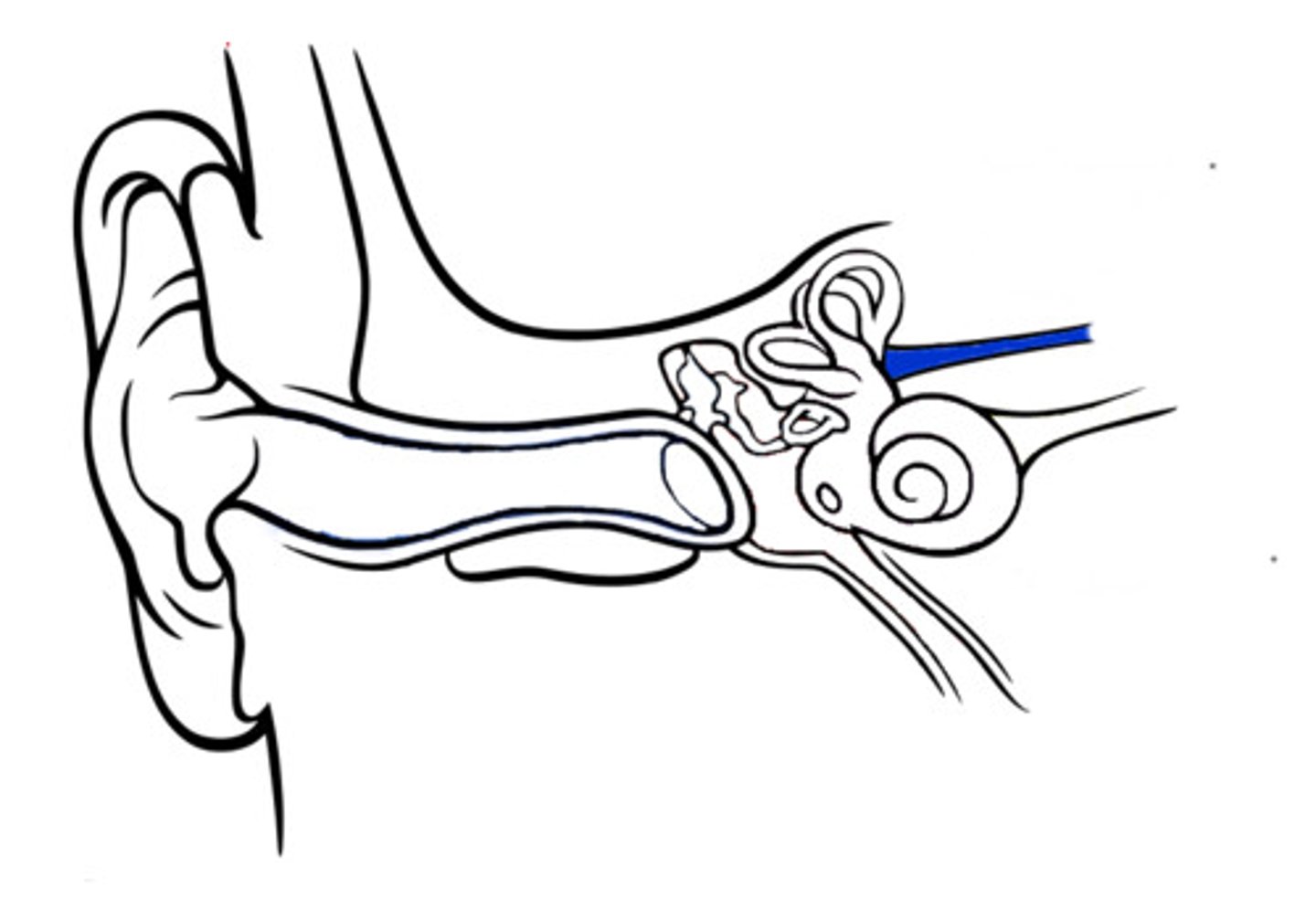
Vestibulocochlear Nerve
This is how the brain gets electrical messages from the the inner ear to the brain
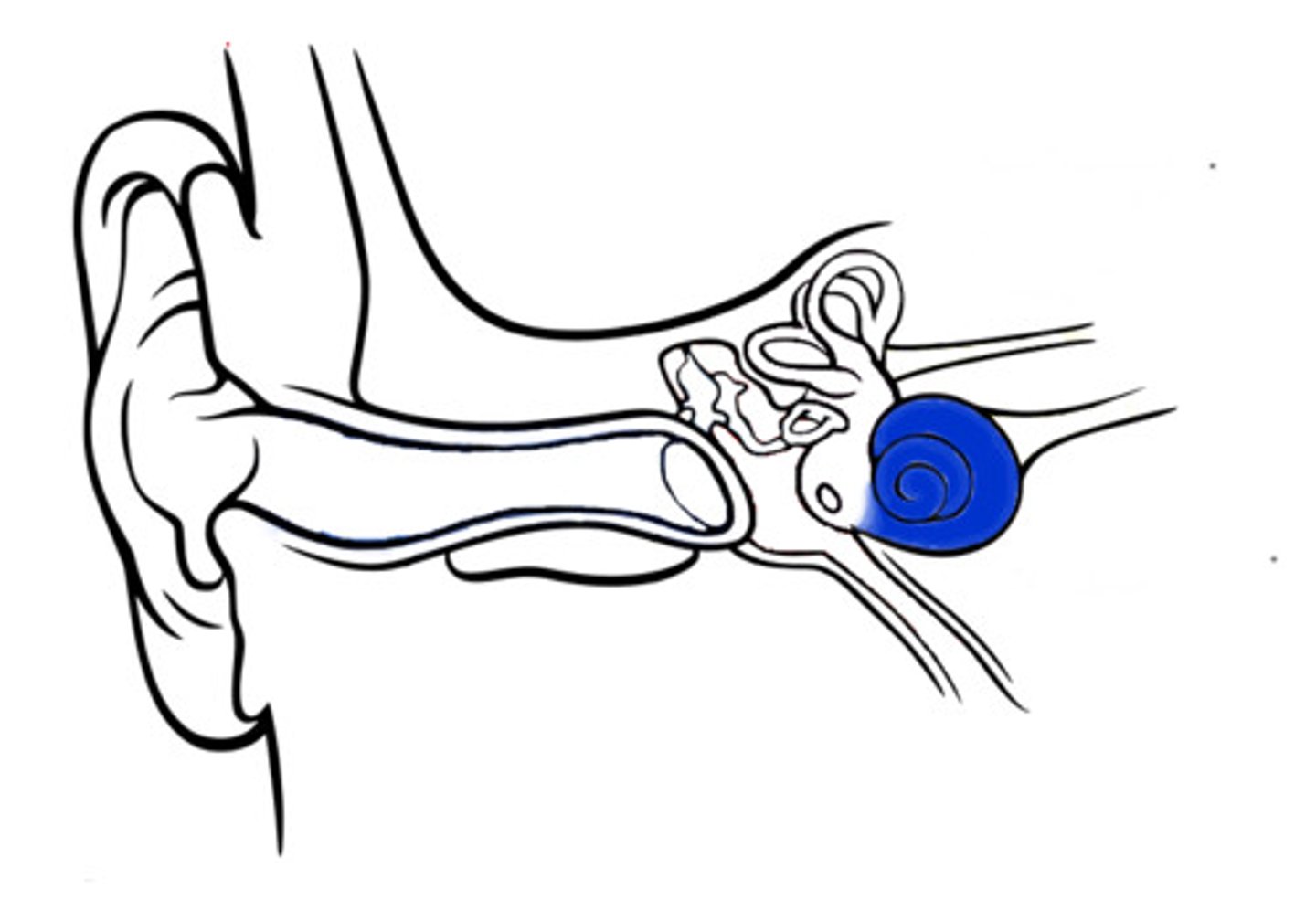
Cochlea
snail-shaped chamber within the inner ear, changes the vibrations from the bones into electrical signals
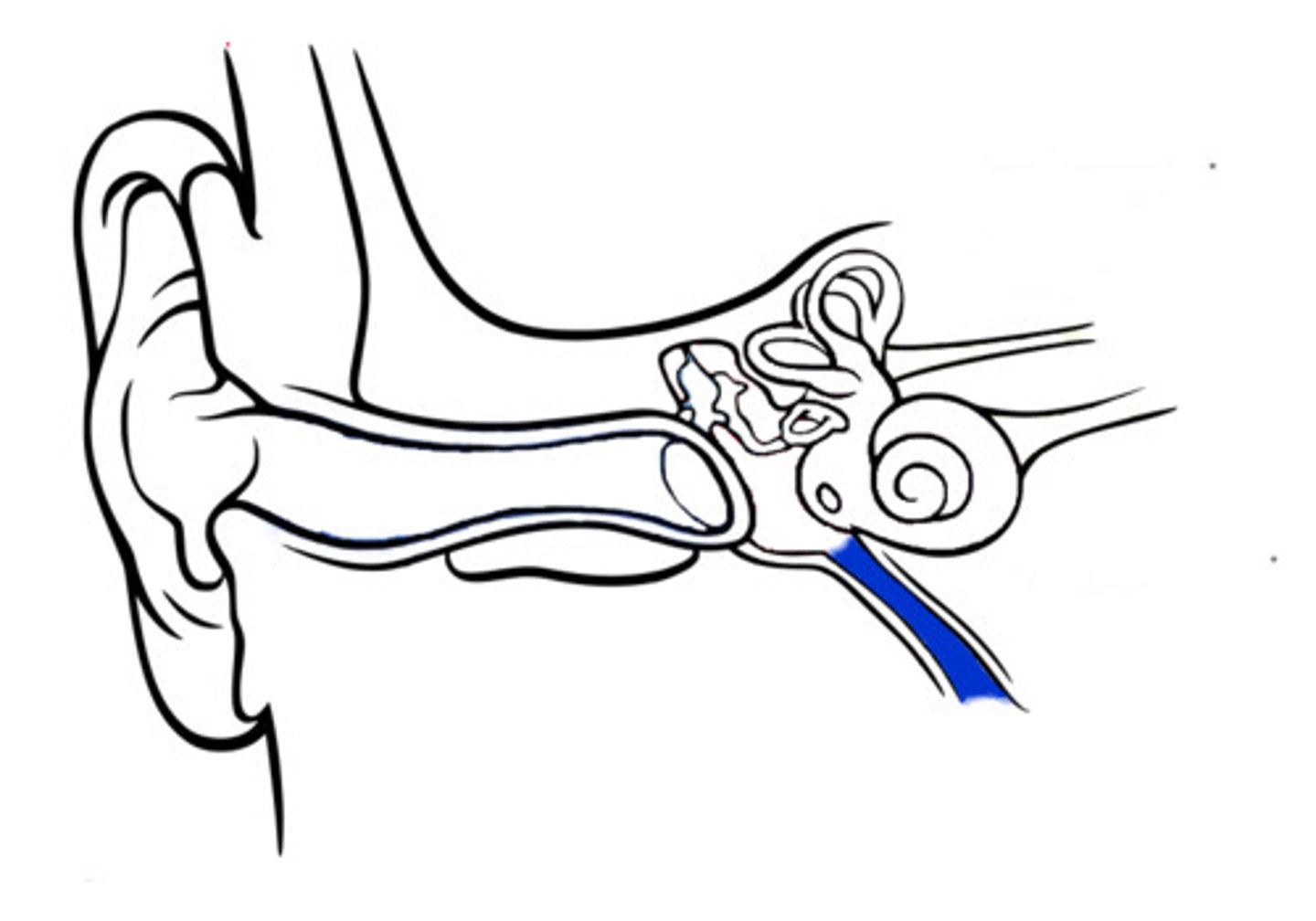
Pharyngotympanic Tube
A narrow tube between the middle ear and the nose that serves to equalize pressure on both sides of the eardrum
Tympanic Membrane (ear drum)
a small, thin membrane that vibrates when sound waves hit it
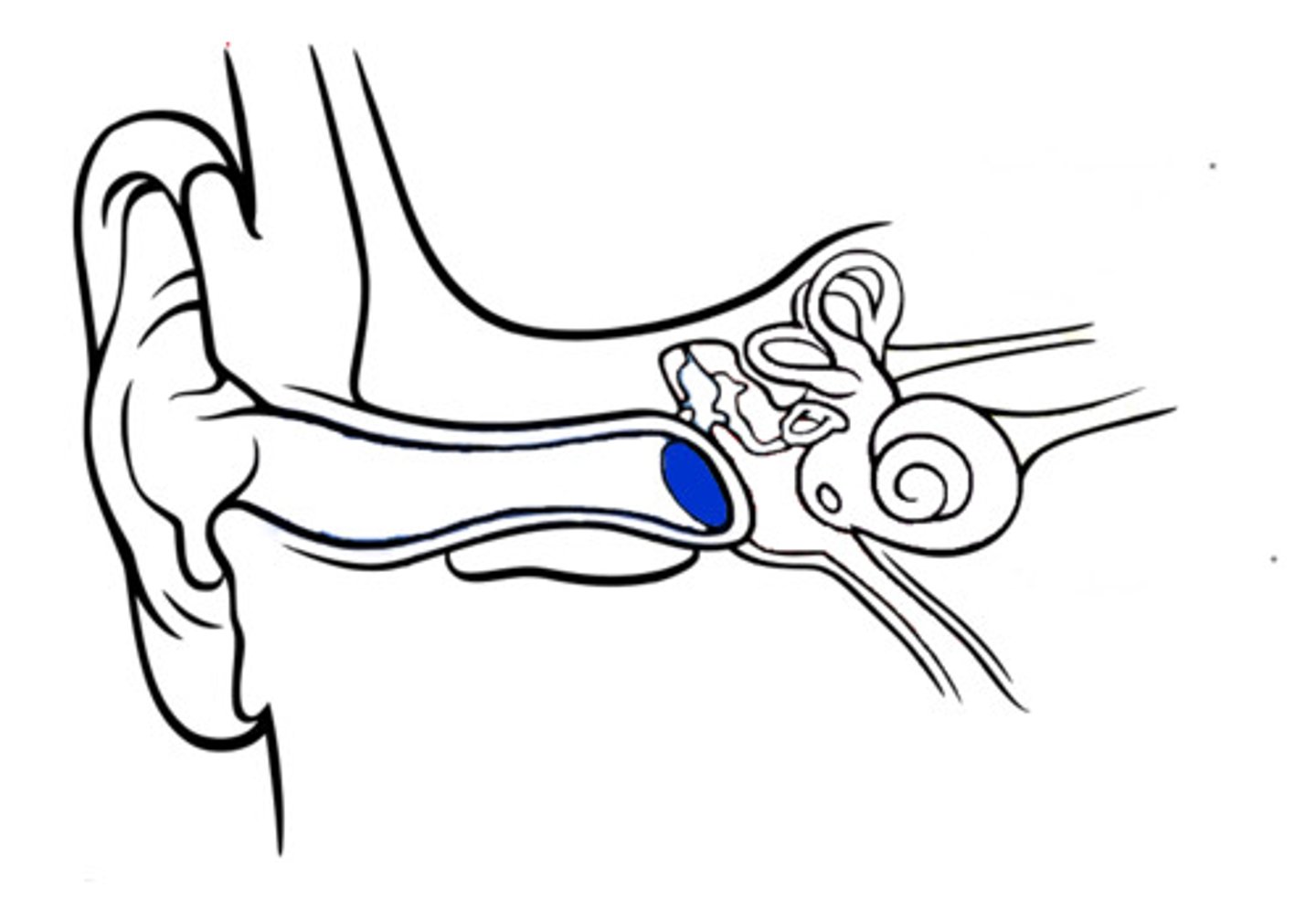
Pinna
this directs outside sounds to the ear canal
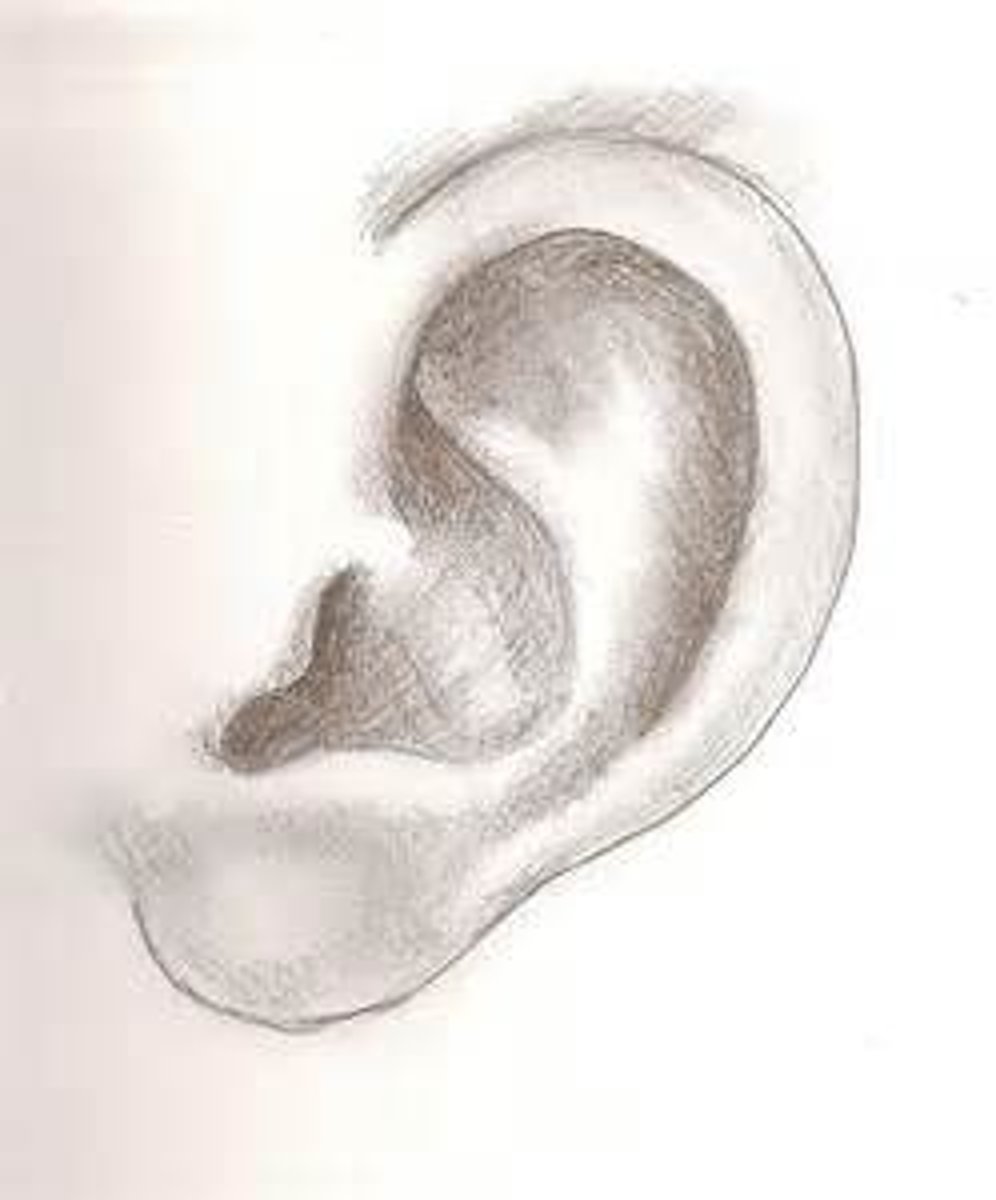
External acoustic meatus
a pathway that takes vibrations to the ear drum
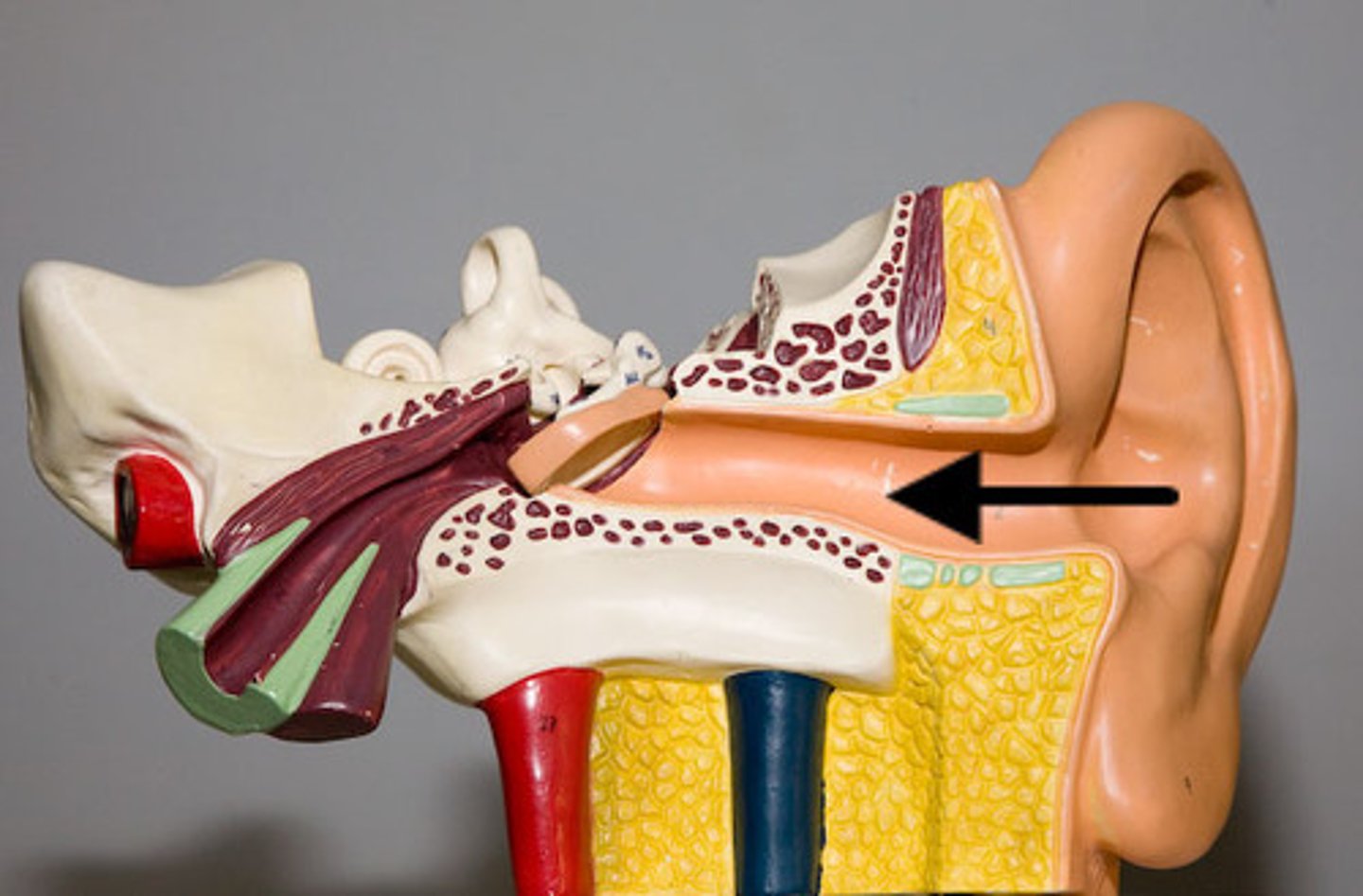
Oval window
Opening into the inner ear, stapes articulates with it
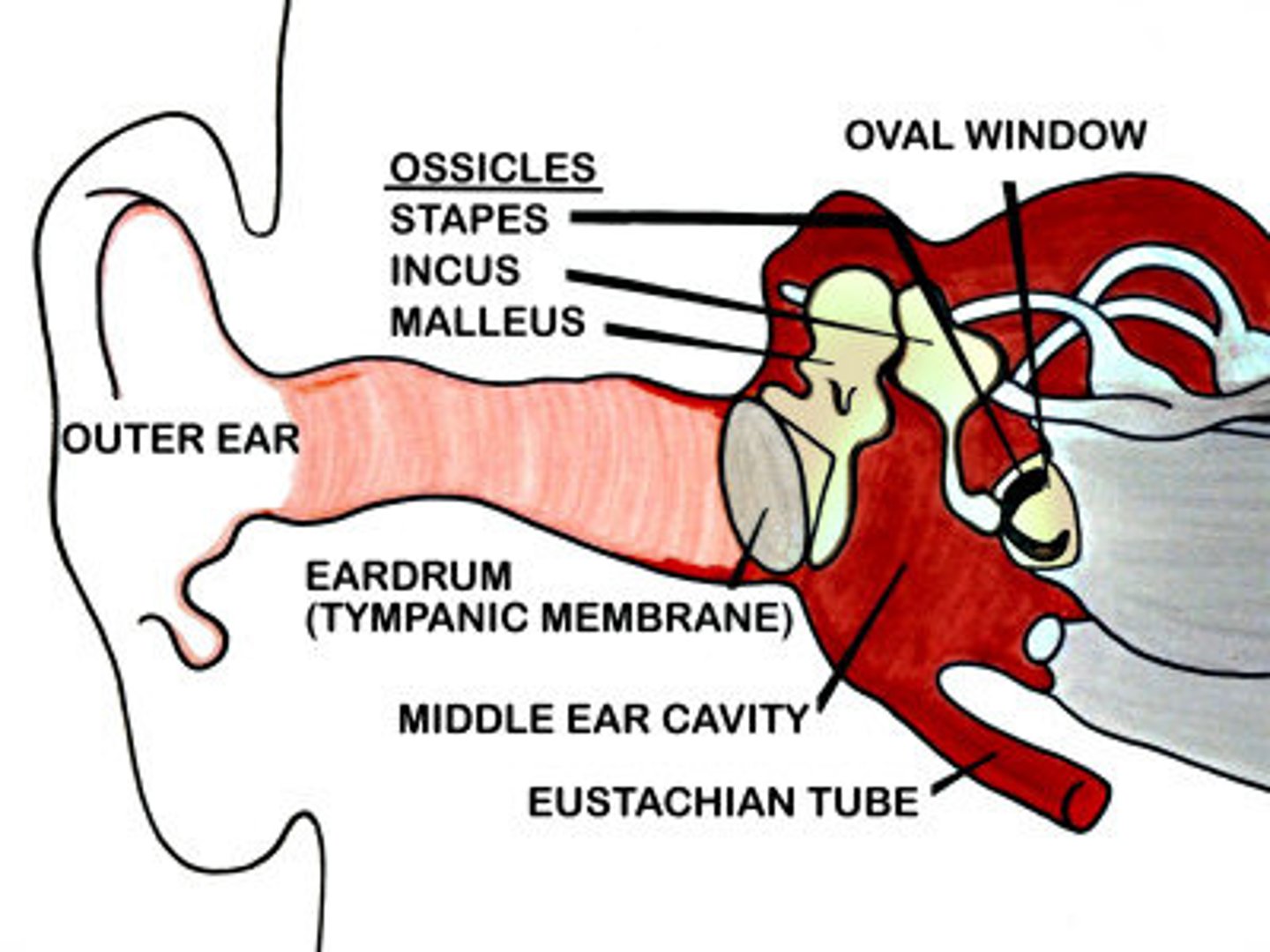
Round Window
- flexible membrane that allows fluid within cochlea to vibrate
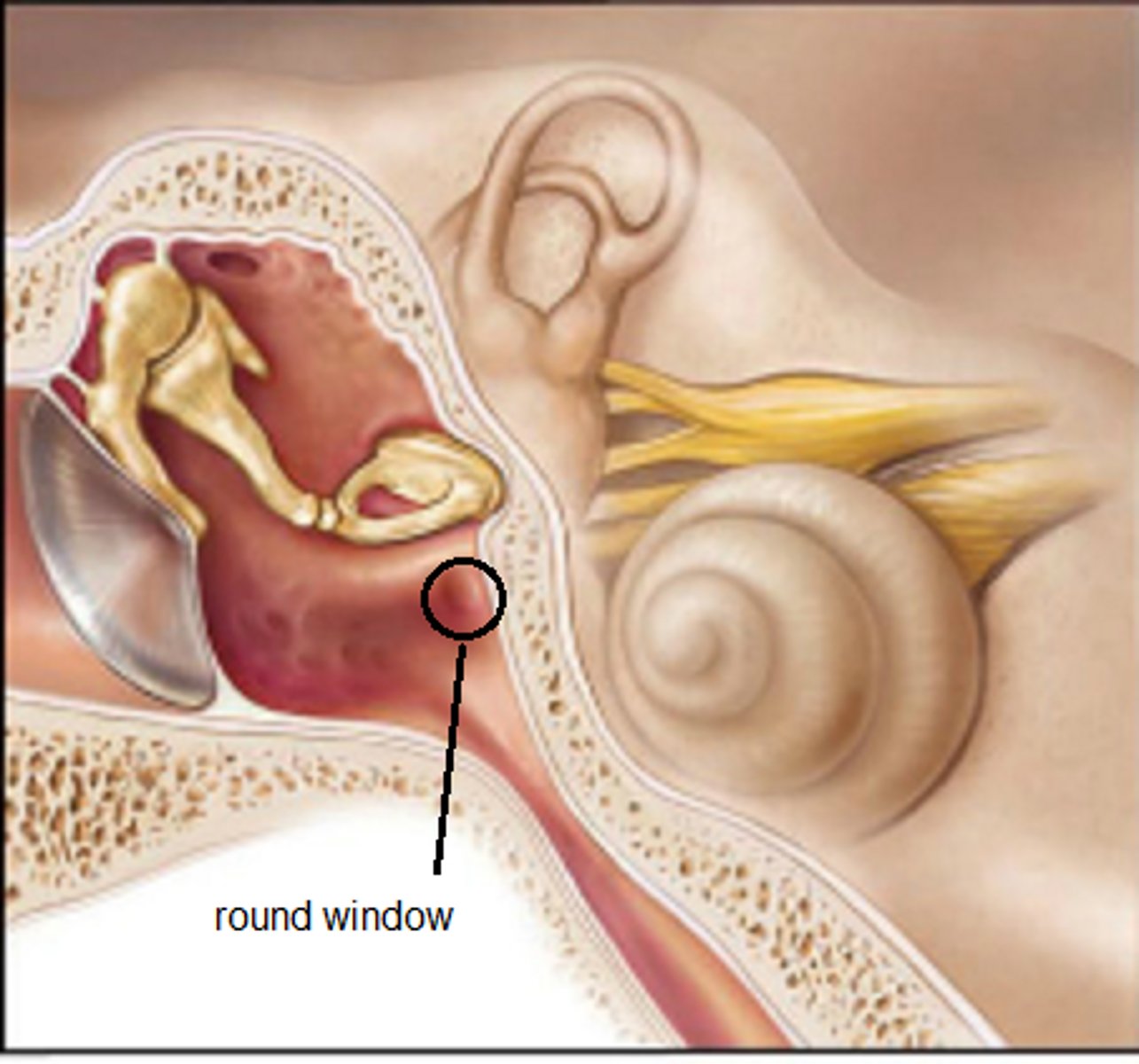
Tympanic Cavity
Narrow air-filled chamber hanging out in petrous portion of temporal bone (really hard section of temporal bone)
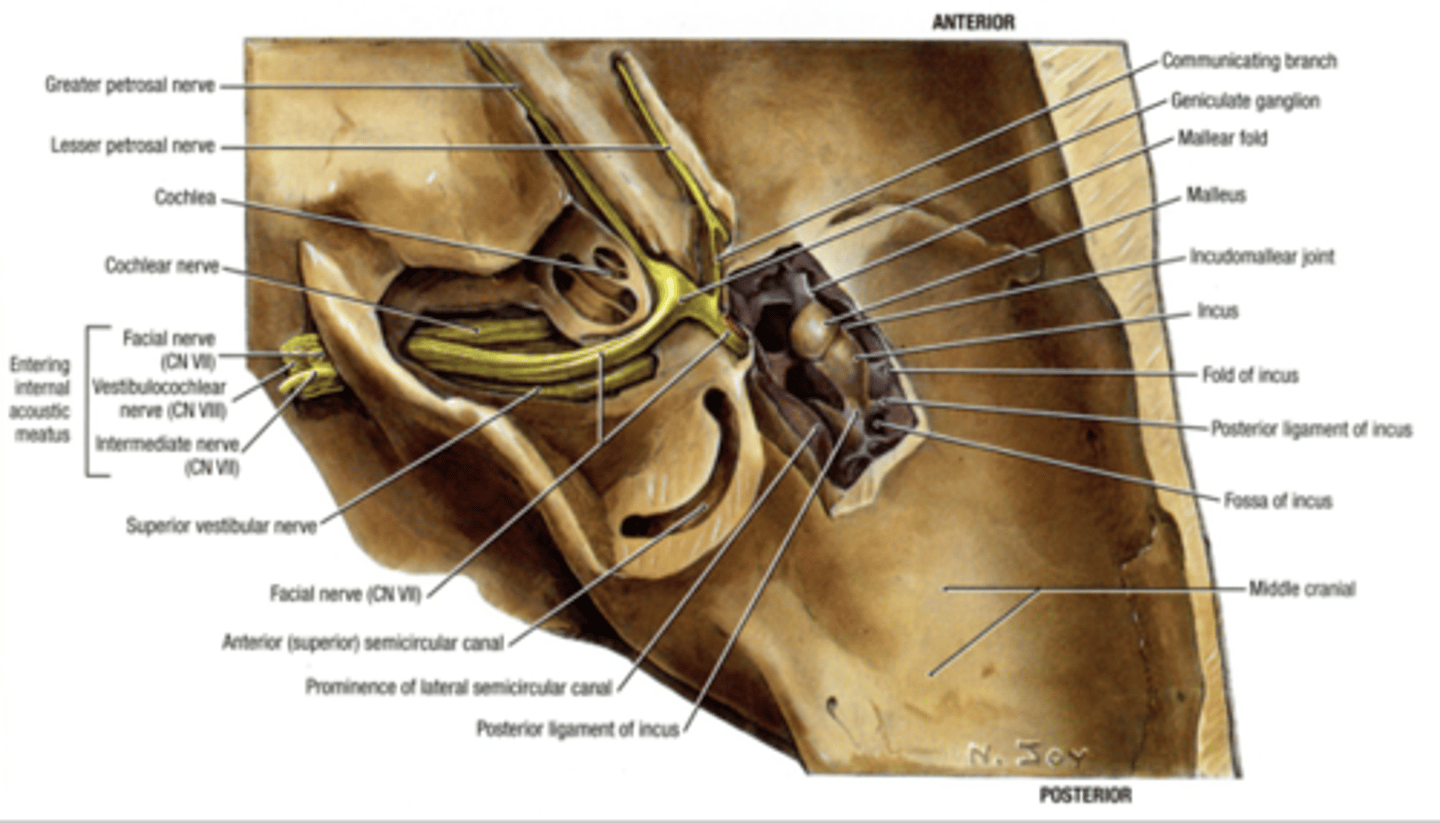
Ossicles
3 small bones located in the middle ear
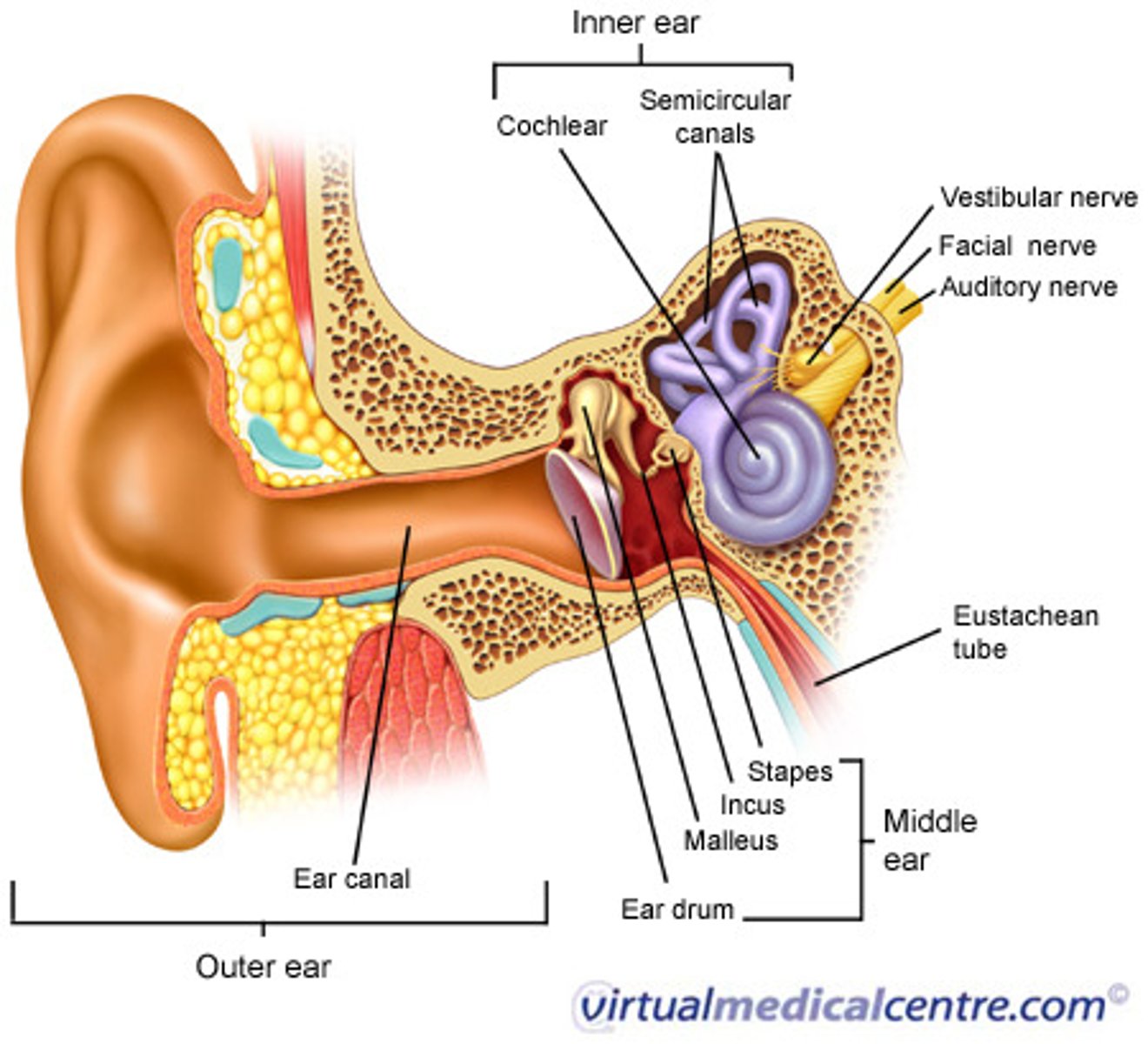
Ceruminous Glands
glands that create cerumen (Ear wax)
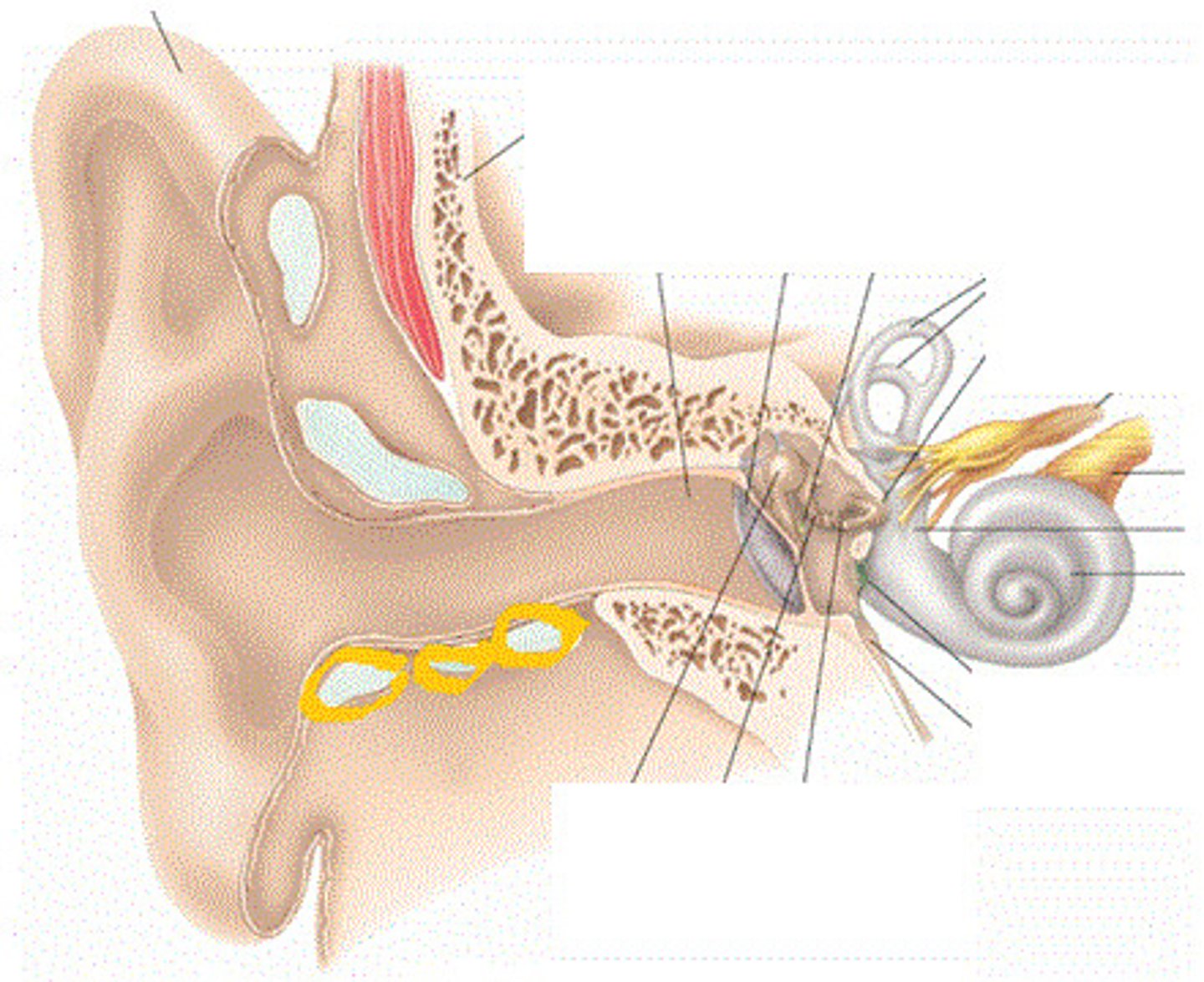
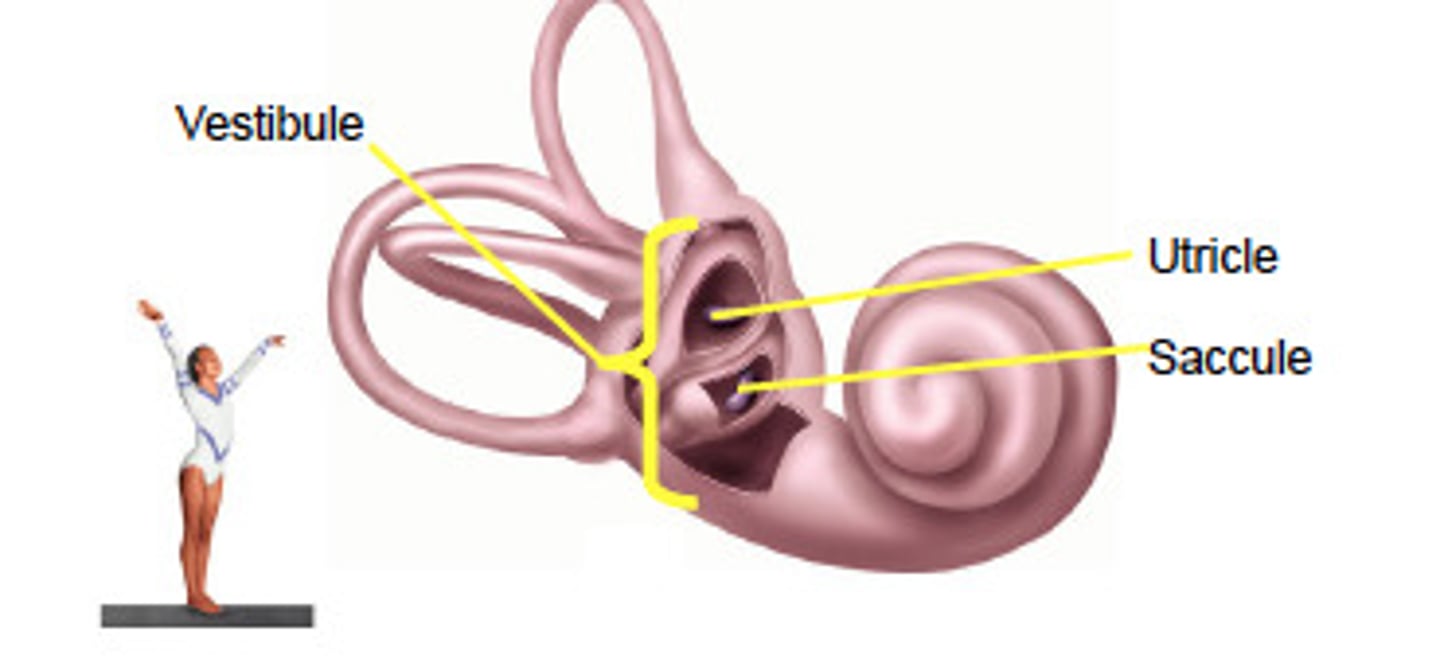
Vestibule
The central part of the osseous labyrinth, and is situated medial to the tympanic cavity, behind the cochlea, and in front of the semicircular canals.
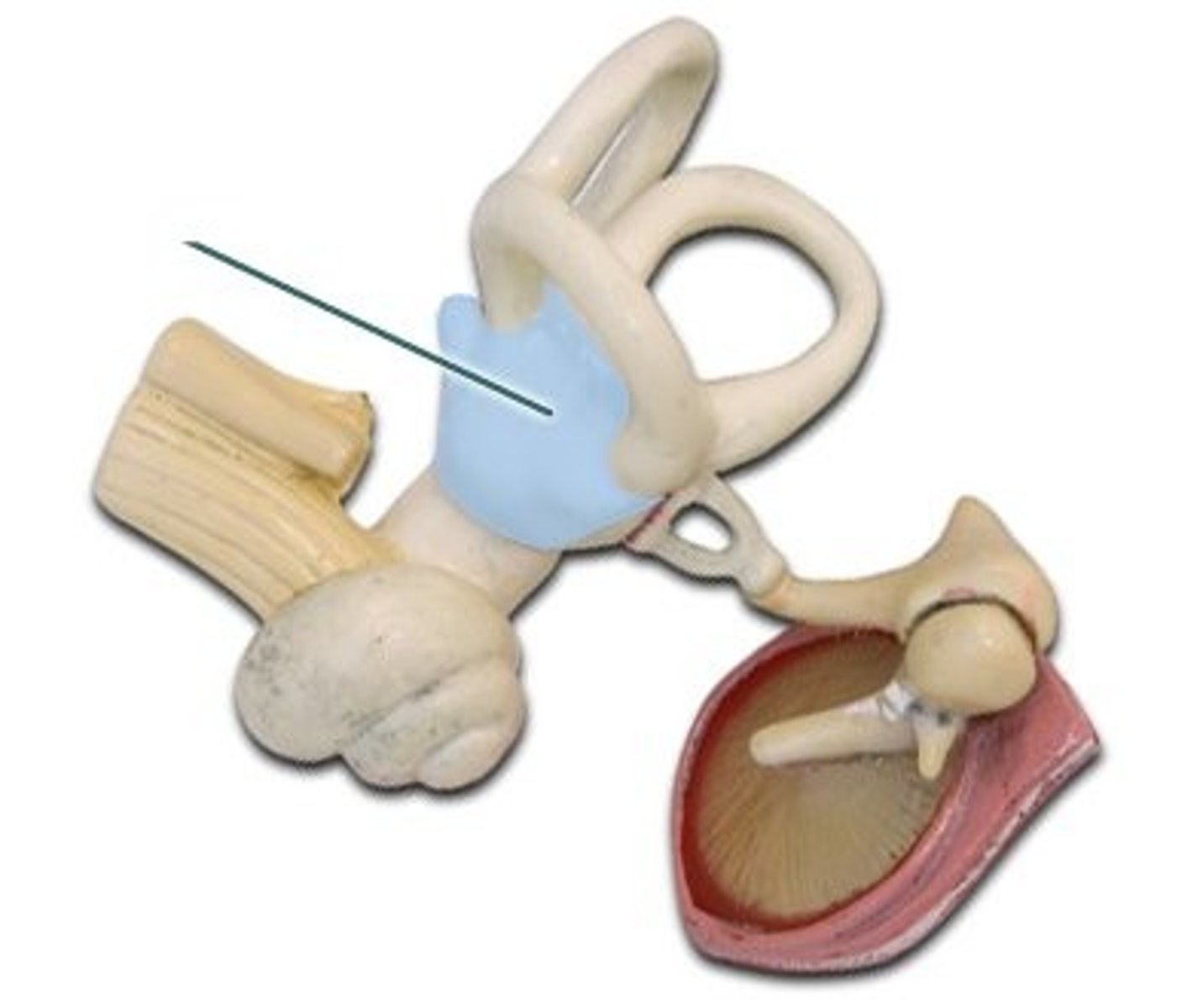
Osseous Labyrinth
Set of 3 parts in the ear (Cochlea,Vestibule, Semicircular Canals)
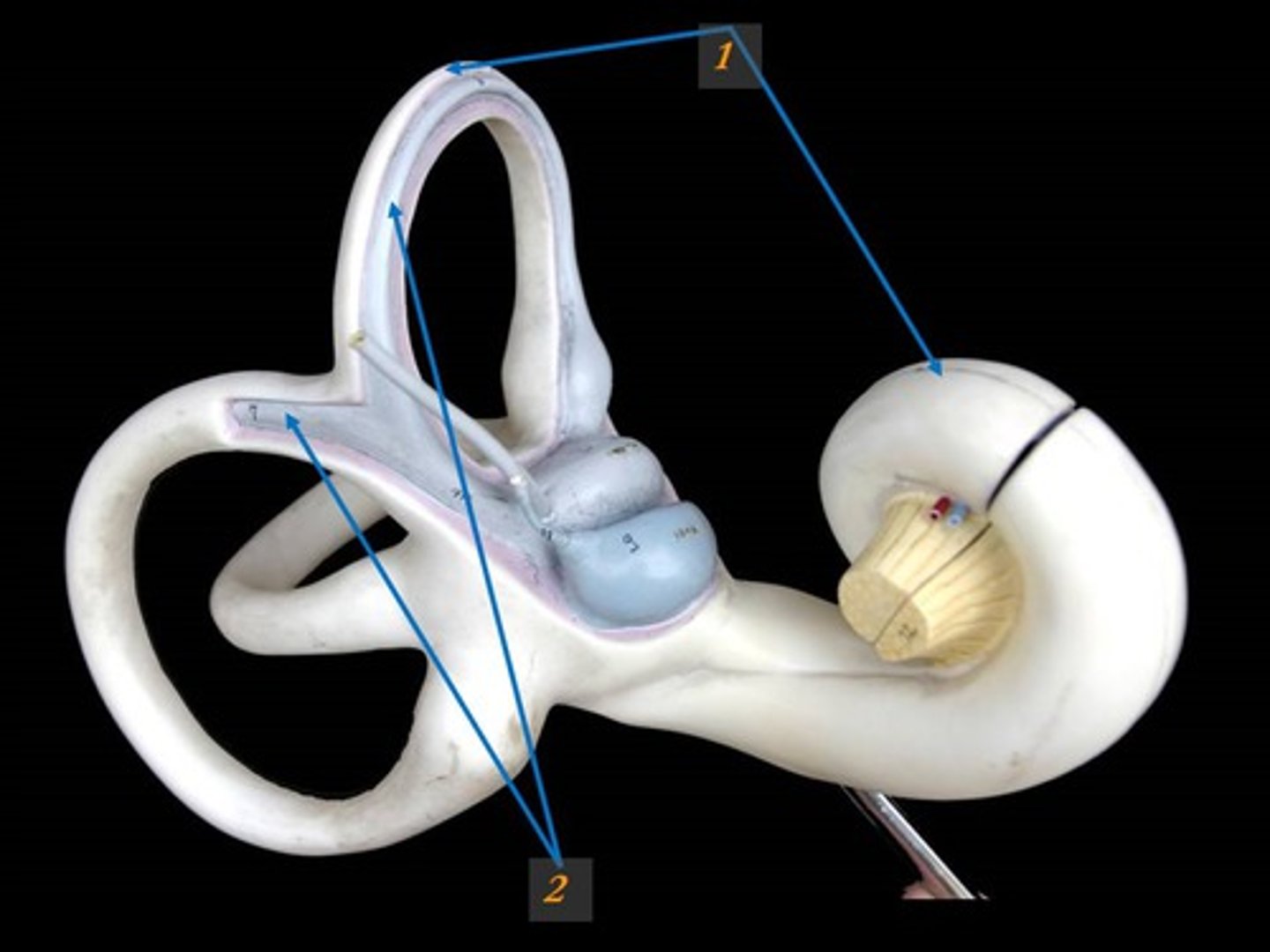
Perilymph
the bodily fluid that fills the space between the bony labyrinth of the inner ear
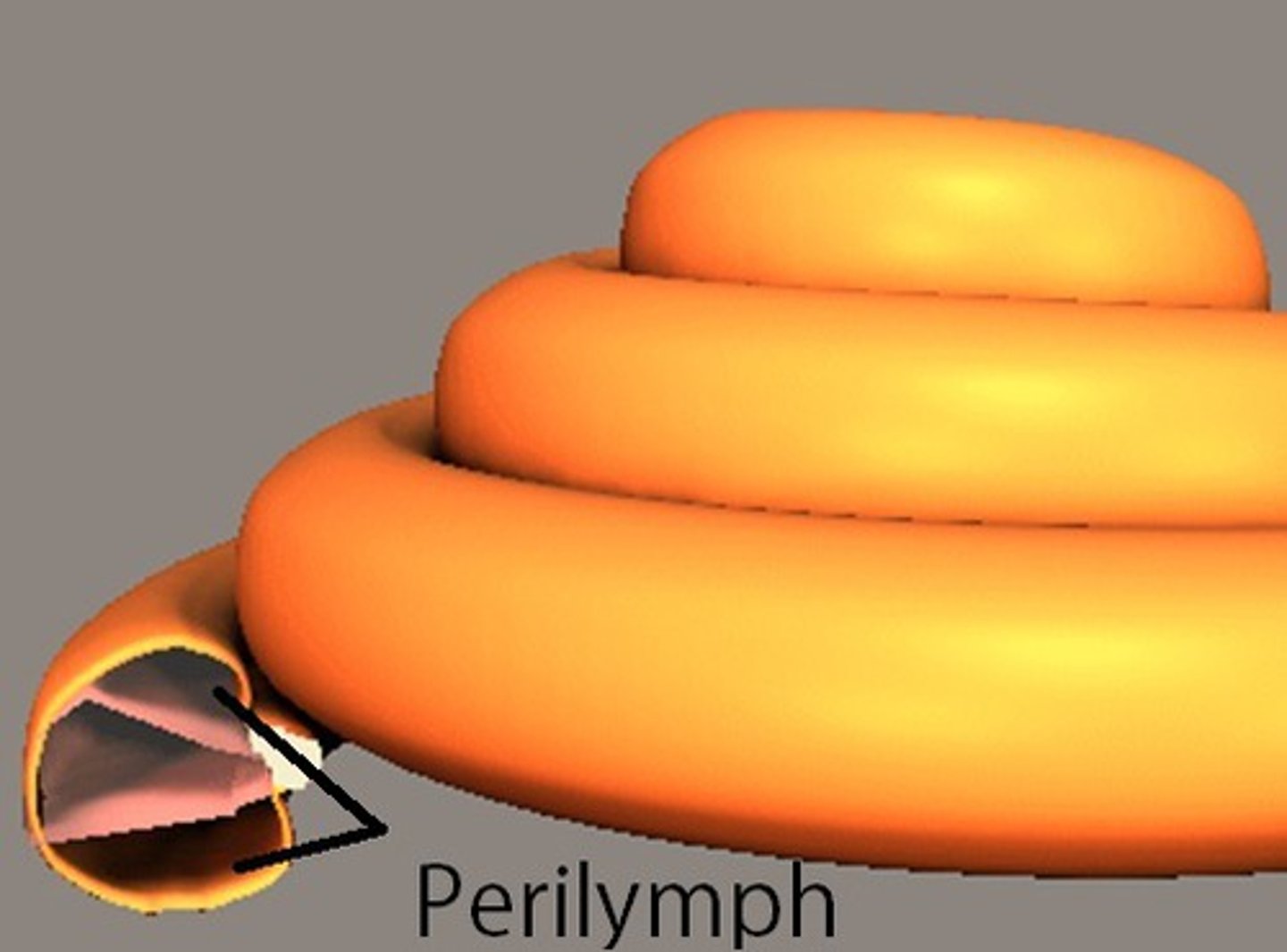
Endolymph
Thick gel like fluid found inside of the membranous labyrinth
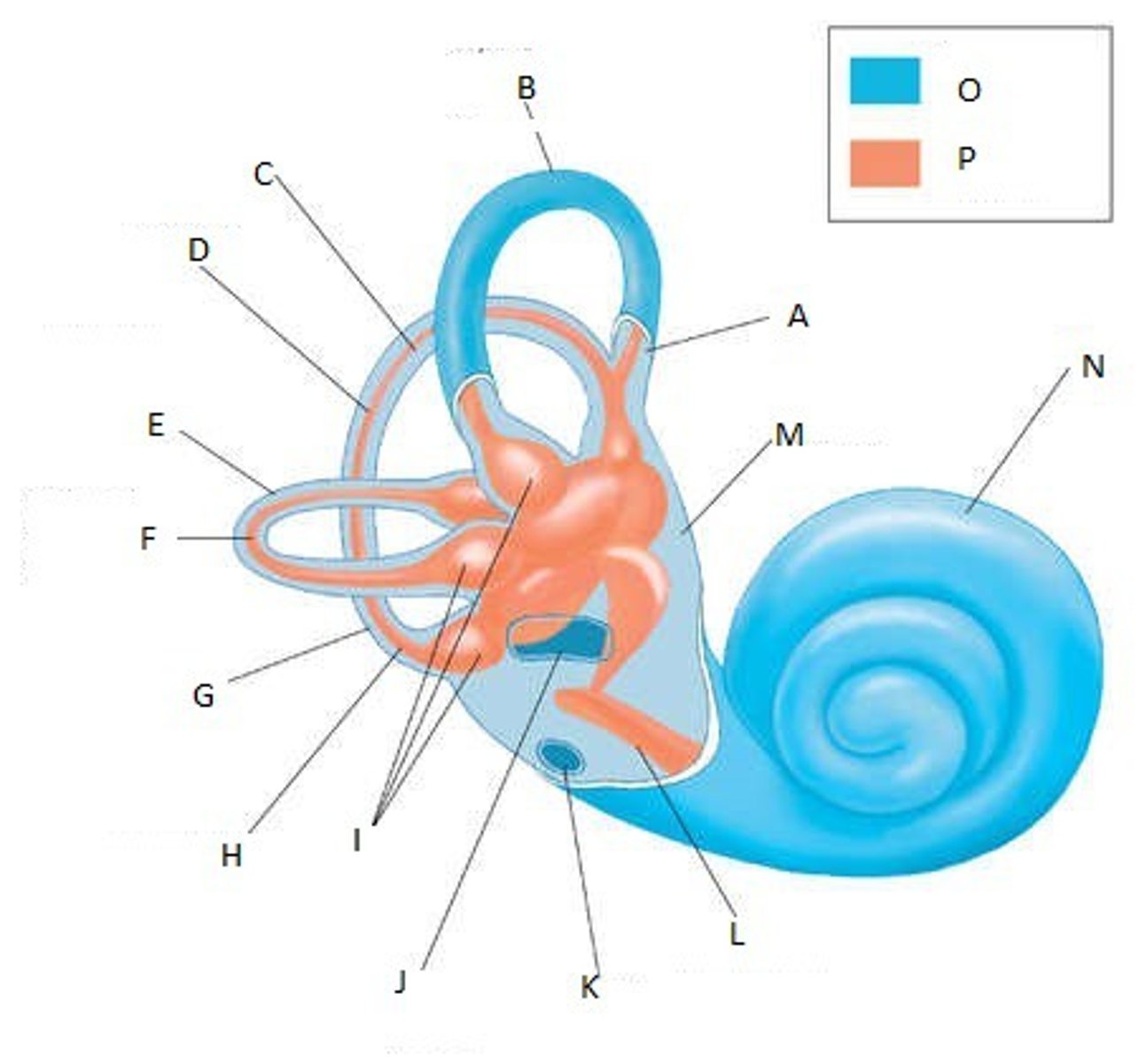
Membranous Labyrinth
Located within the bony labyrinth, also divided into three parts: semicircular ducts and two saclike structures - the saccule and the utricle.
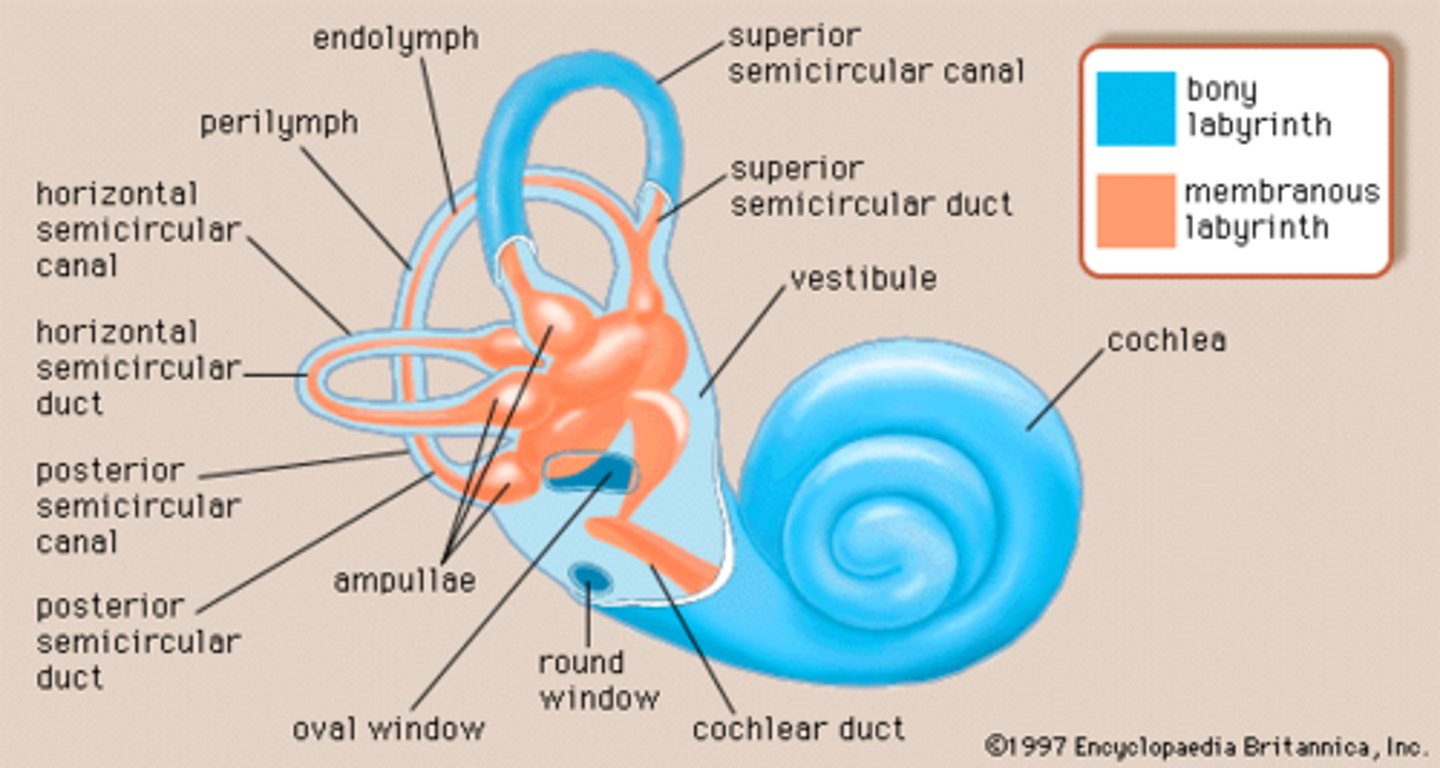
Vestibular Apparatus
This is what the semicircular canals and the vestibule are called together
Static Equilibrium
Position of the head based upon gravity when there is no movement(Vestibule)
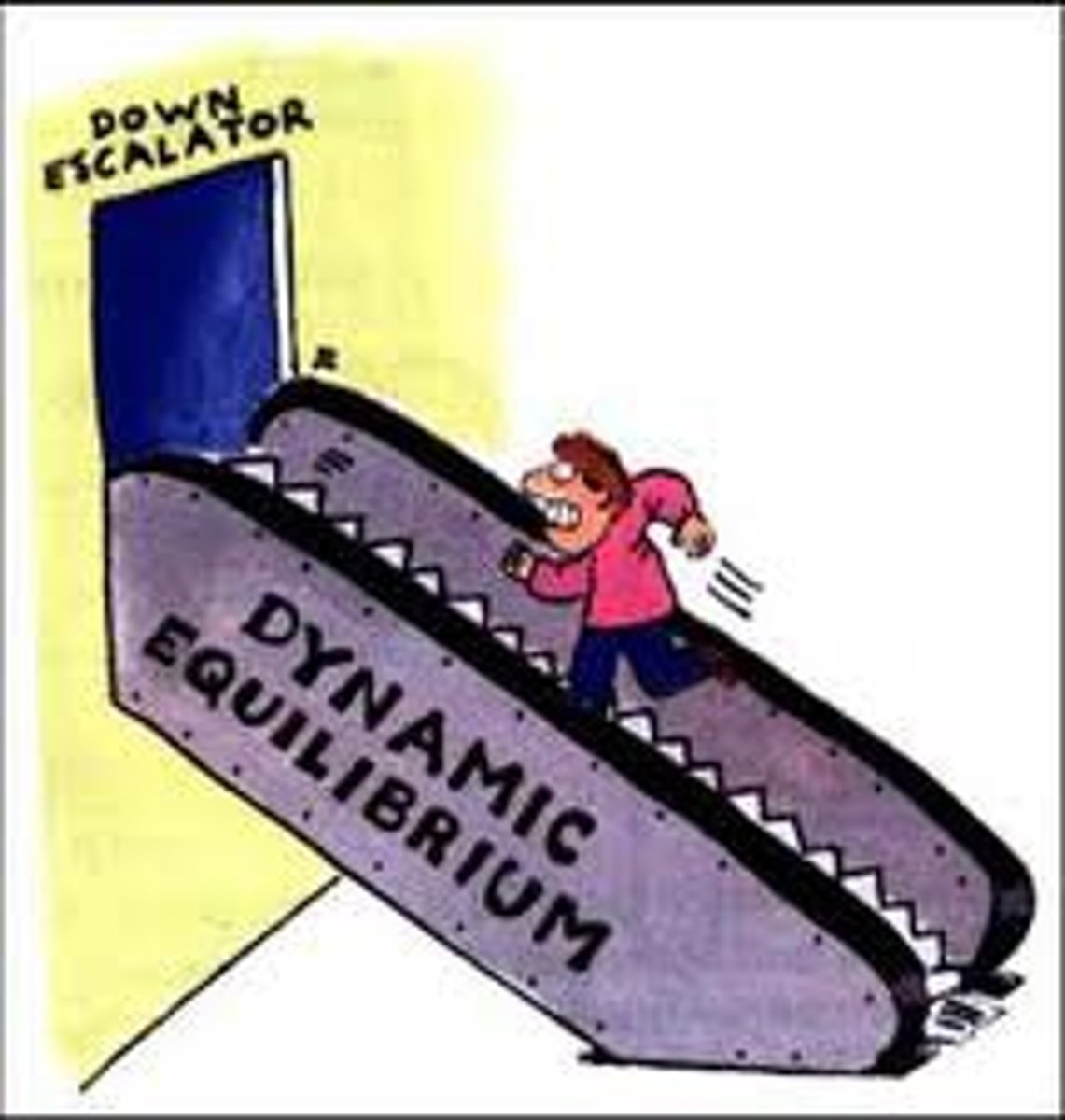
Dynamic equilibrium
The ability of the individual to adjust to displacements of the center of gravity of the body. Maintaining balance while moving (Semicircular Canals)
Saccule
smaller of two sacs within the membranous labyrinth of the vestibule in the inner ear ( small bag)
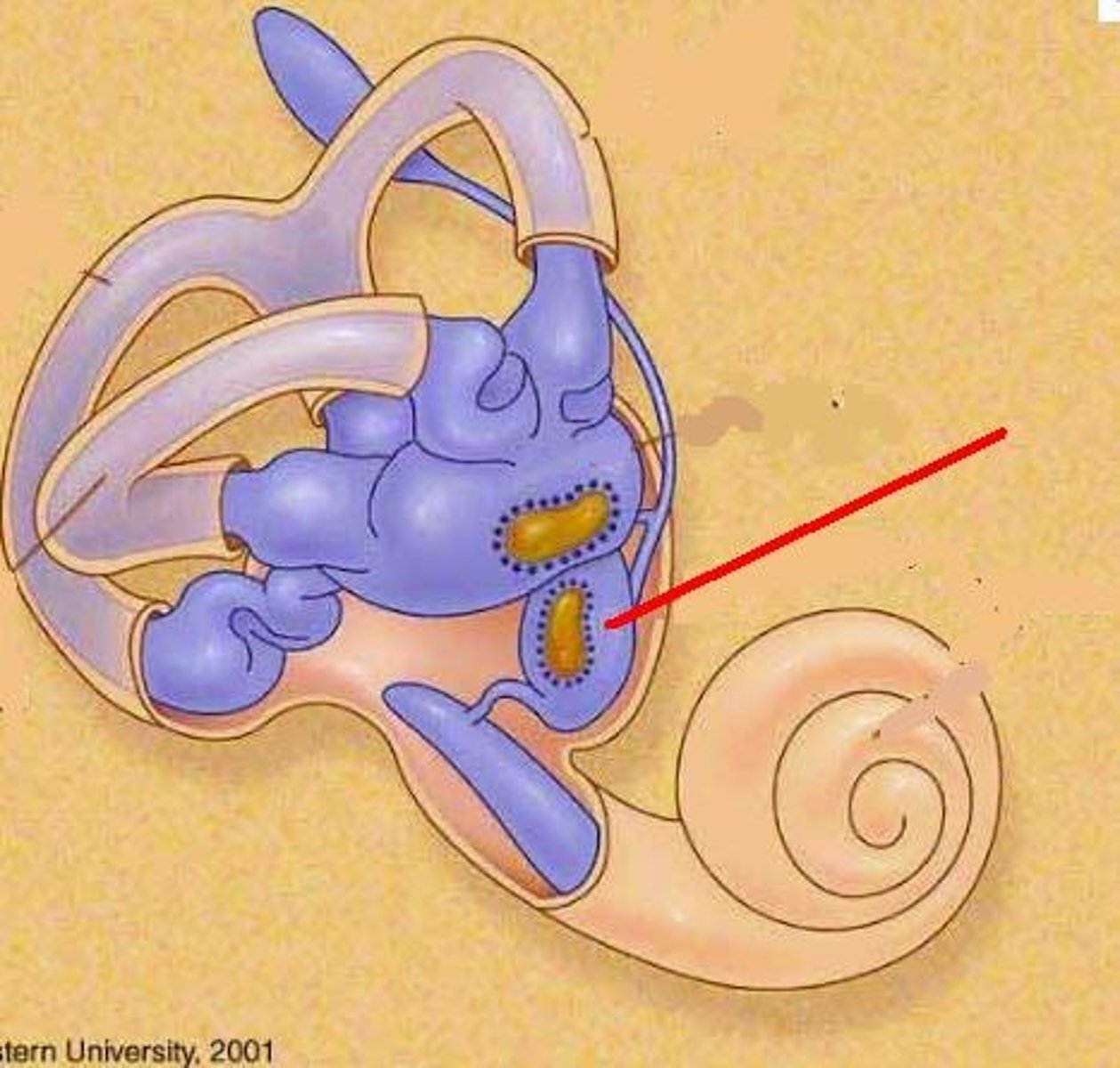
Utricle
larger of two sacs within the membranous labyrinth of the vestibule in the inner ear
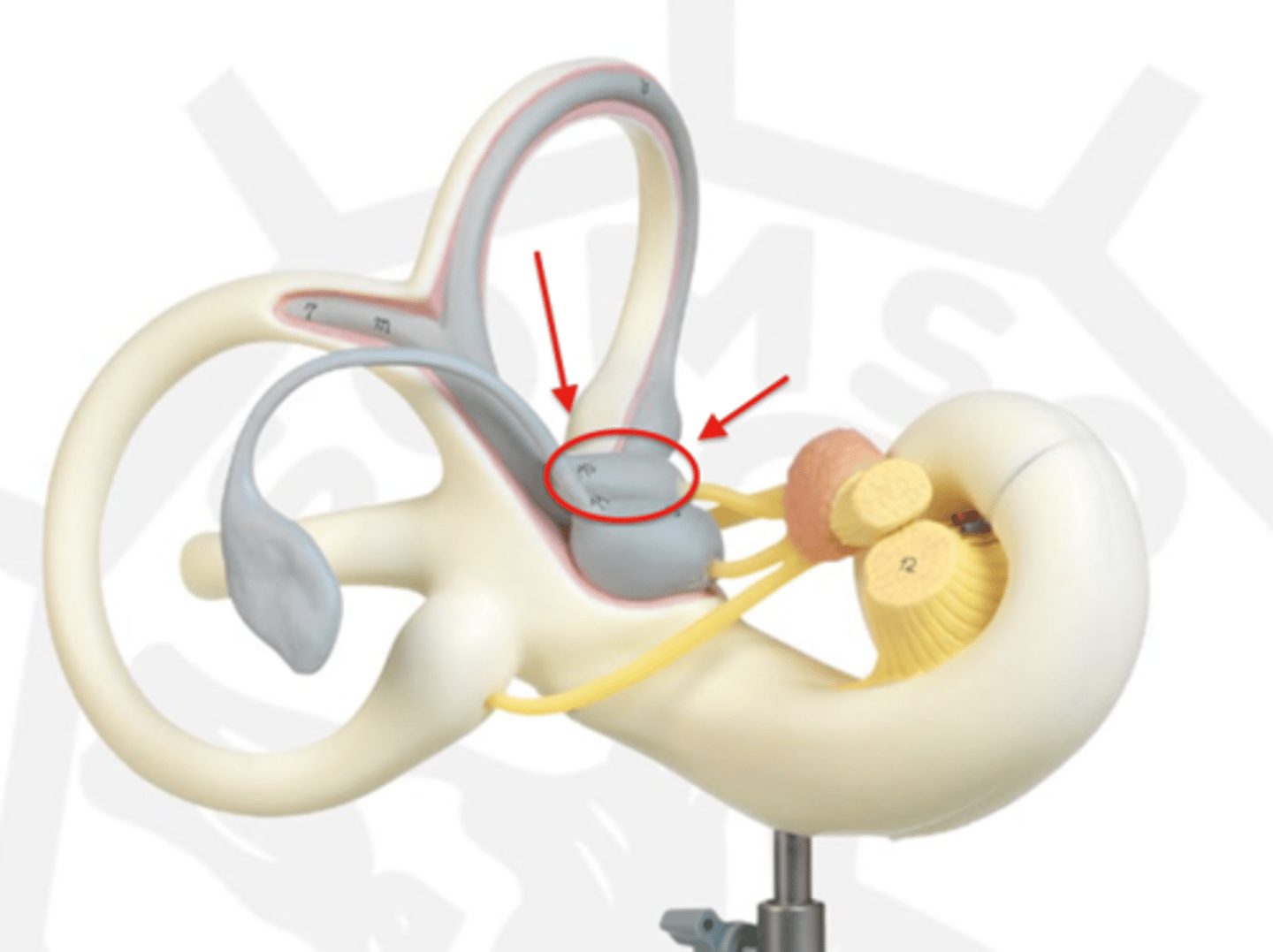
Macula
Houses the receptors for static equilibrium
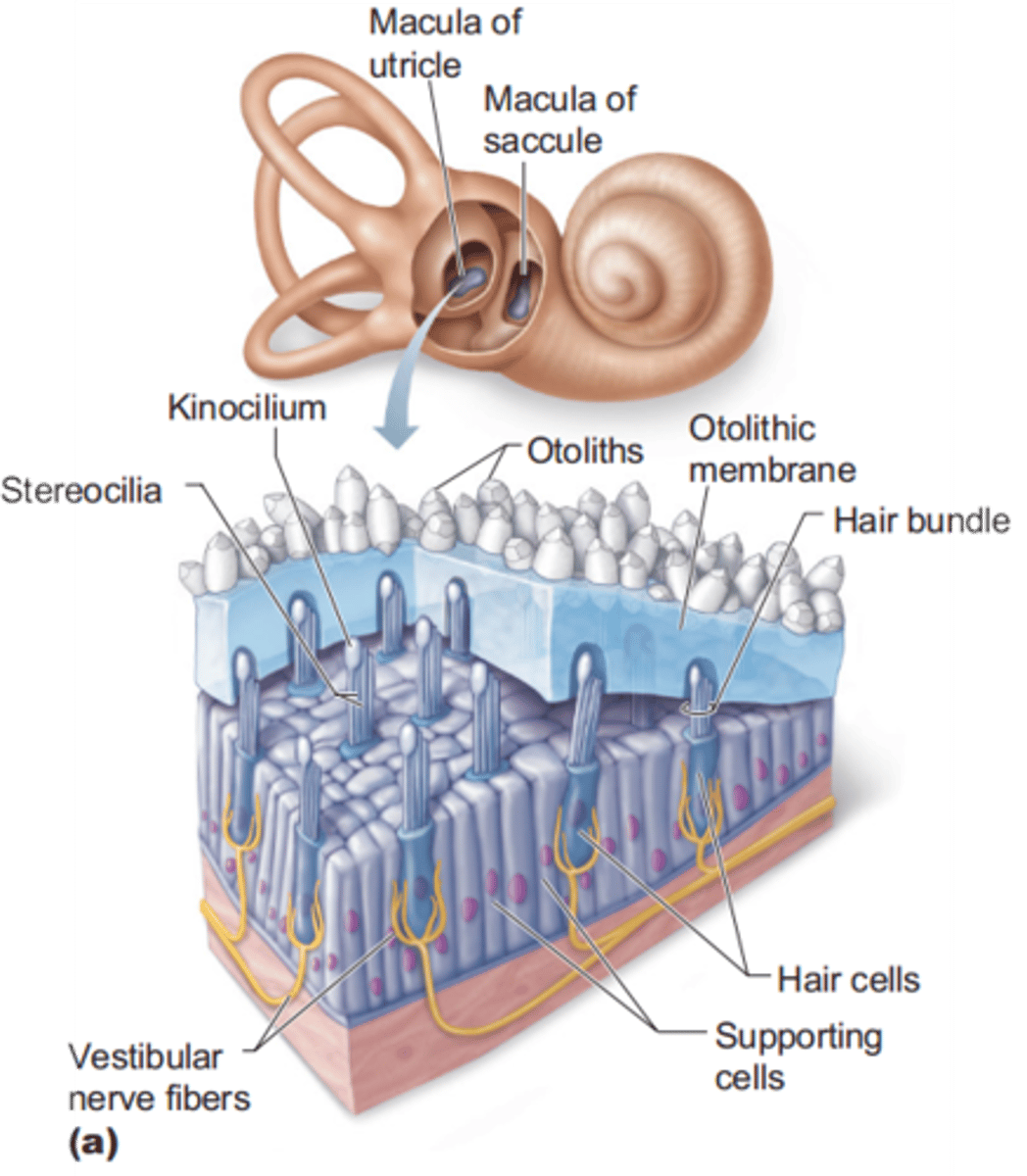
Otoliths
these "stones" are crystals in the ear which move around when you nod your head or when twisting it side to side
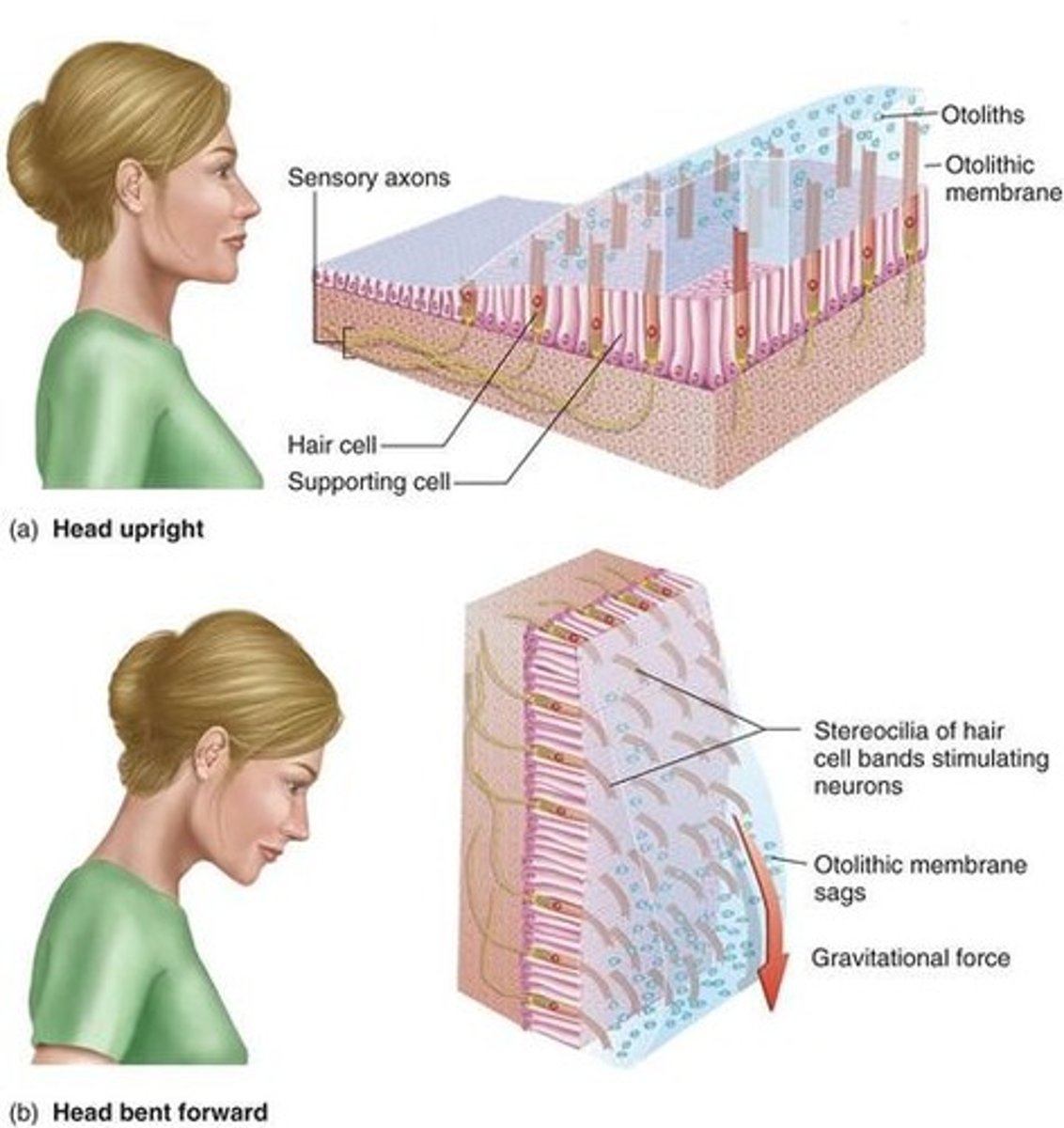
Otolithic Membrane
Endolymph like fluid that is beneath the otoliths
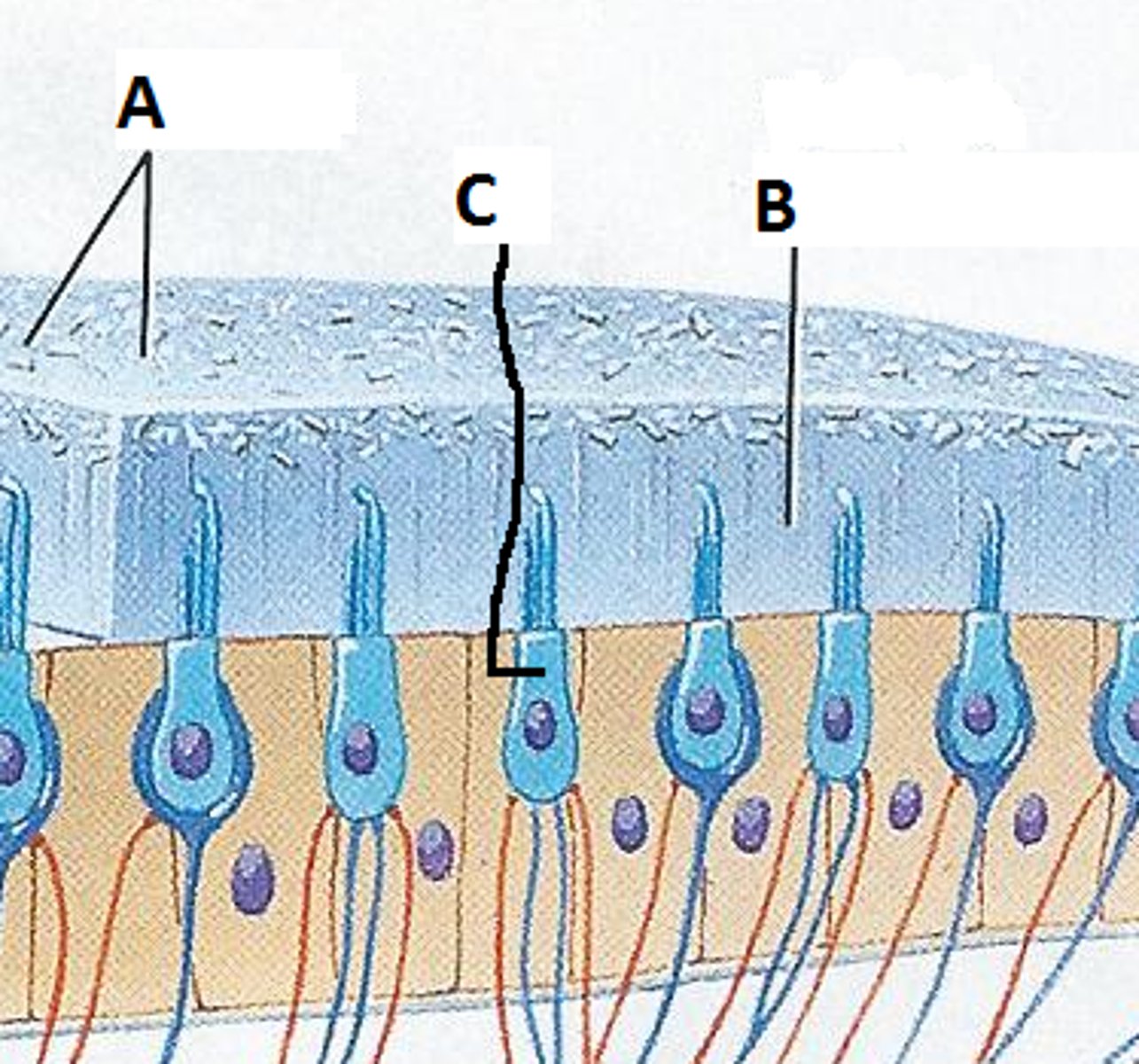
Hair Tufts
Hairs that help determine balance
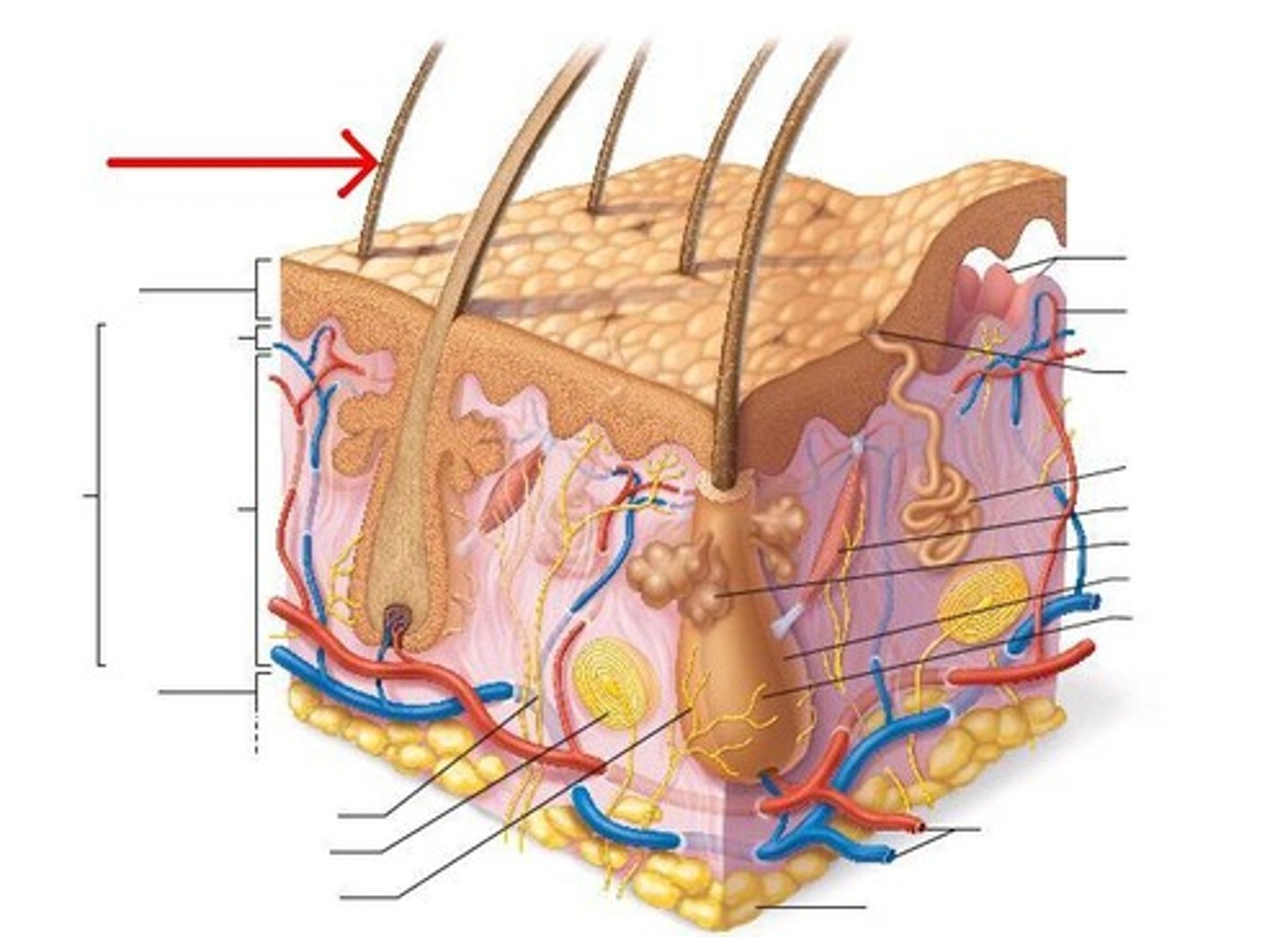
Hair cell
Send signals to the cerebellum via the vestibular nerve
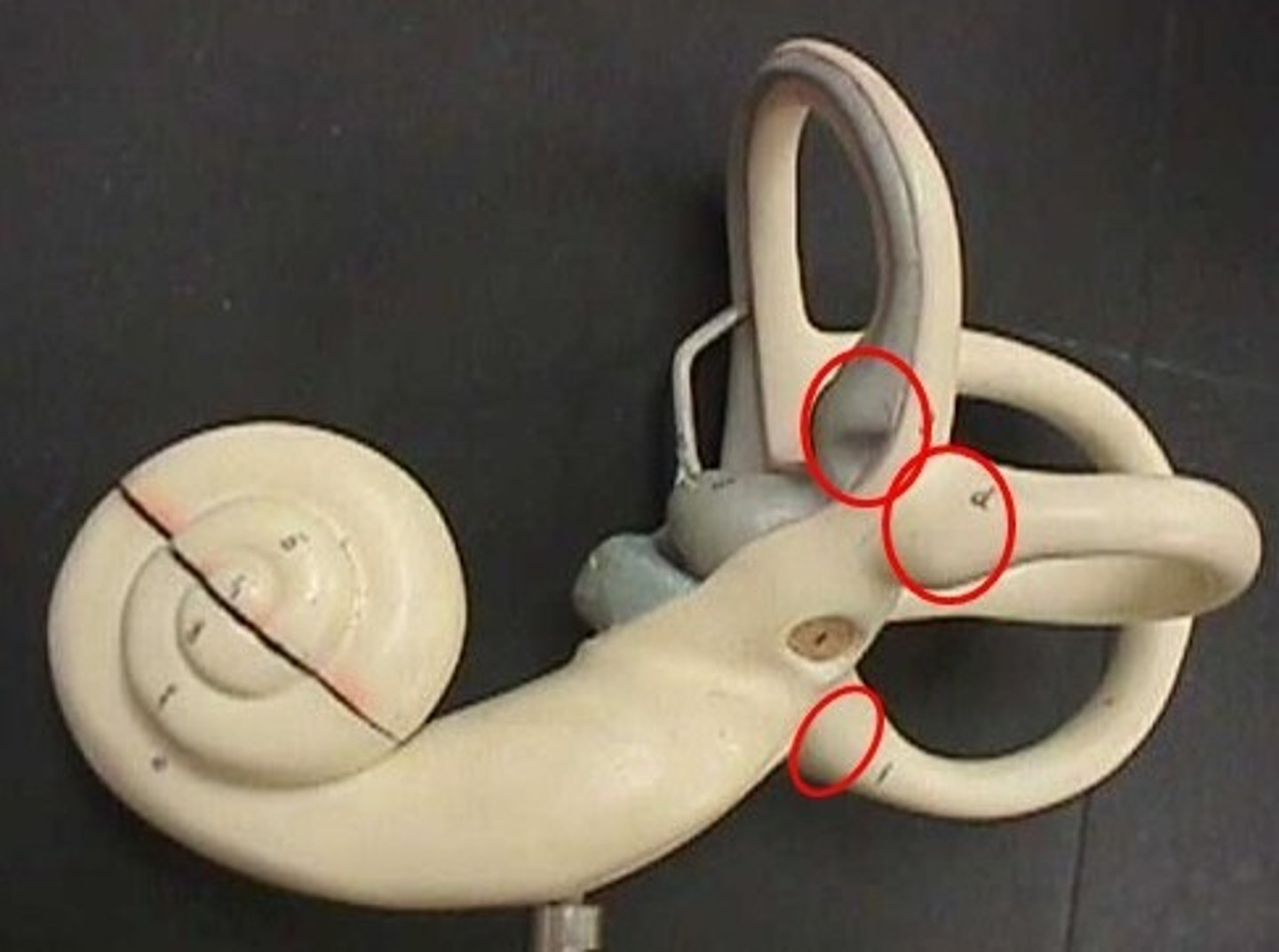
Ampulla
enlargement at the base of each semicircular canals. at the base is where the receptors are found
Crista Ampullaris
The part inside the Ampullar that helps tell balance when moving
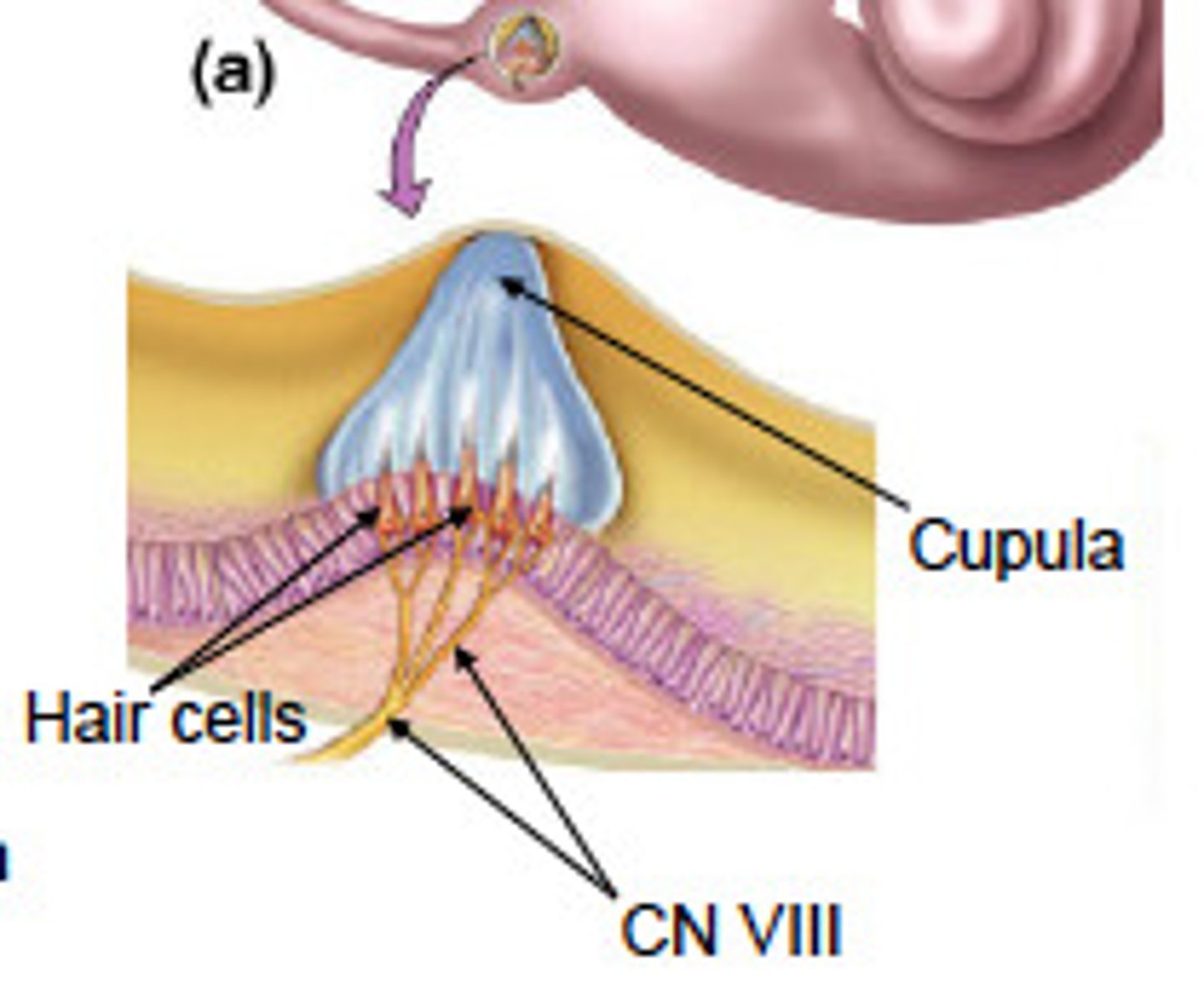
Cupula
The membrane that surrounds the hair in side the crista ampullaris
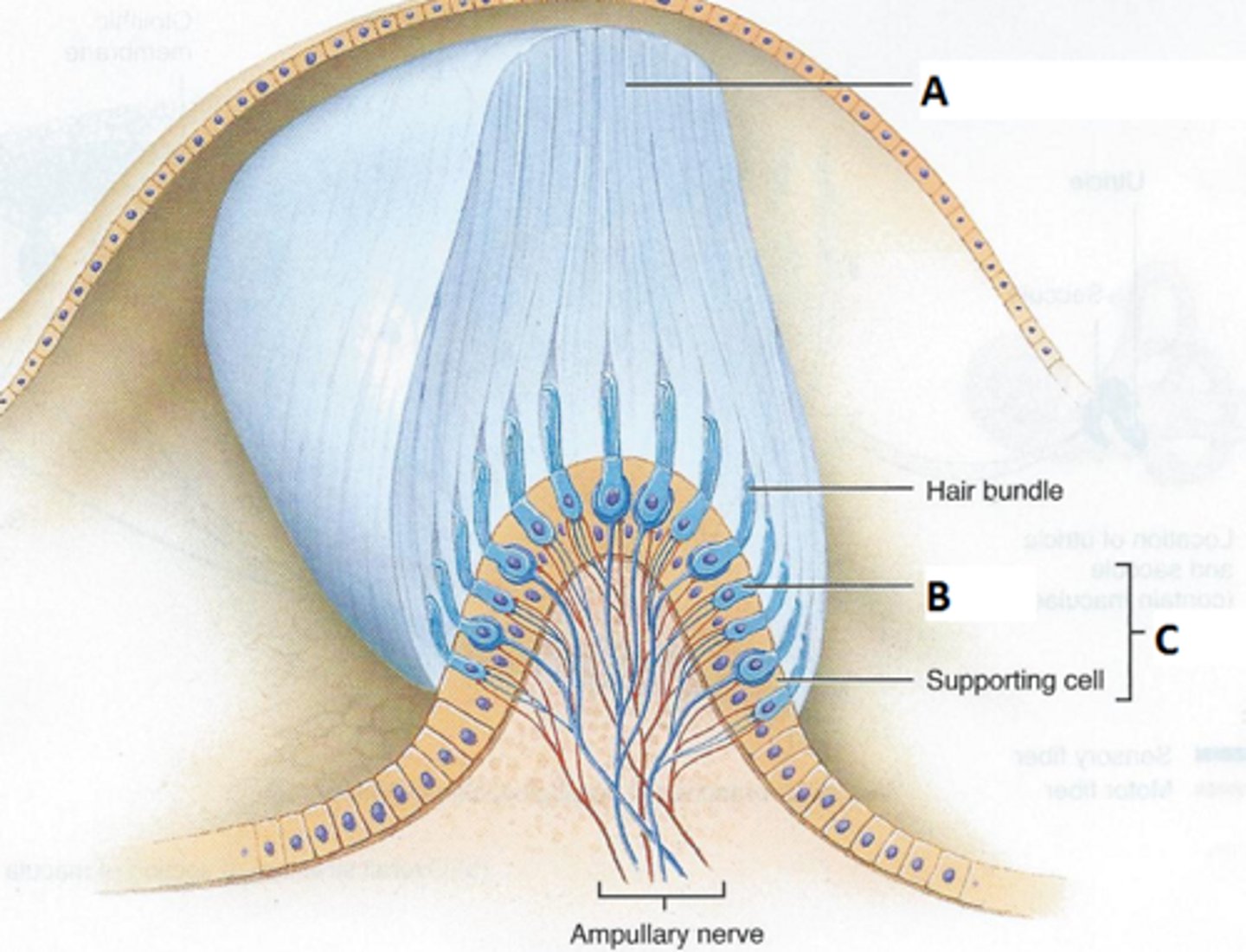
Vestibular Nerve Fibers
Sends signals to the cerebellum to report the position of your head