Current Electricity: Voltage, Resistance, and Circuit Types
 Call Kai
 Learn
Learn Practice Test
 Spaced Repetition
 Match
Match Flashcards
 Knowt Play
1/45

There's no tags or description
Looks like no tags are added yet.
Name | Mastery | Learn | Test | Matching | Spaced | Call with Kai |
|---|
No analytics yet
Send a link to your students to track their progress
46 Terms
What is the significance of the kilowatt-hour (kWh)?
A kilowatt-hour is the amount of energy consumed in one hour at a rate of one kilowatt.
What is the definition of potential difference?
Potential difference is also known as voltage or electromotive force (EMF), representing the amount of energy per charge.
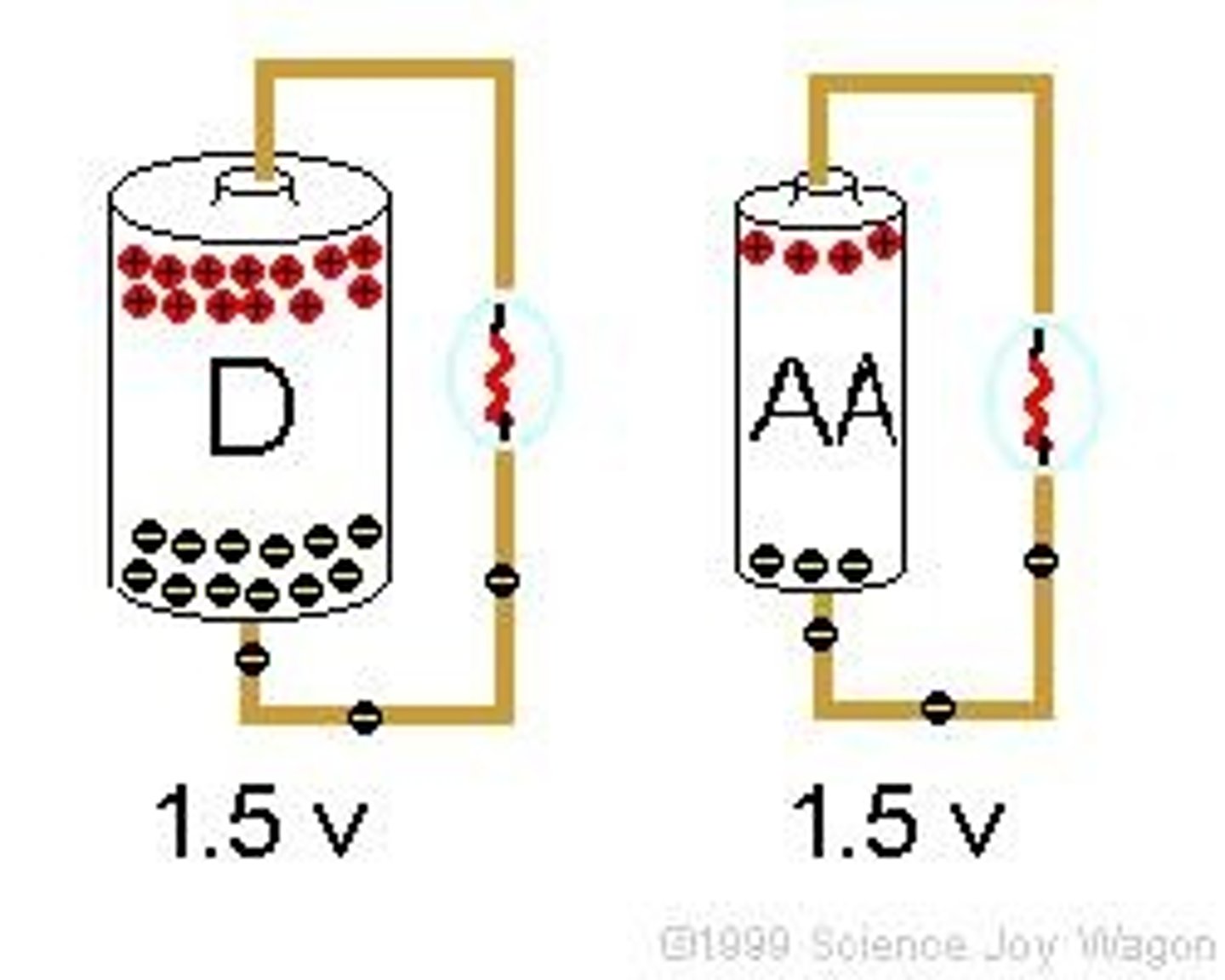
What happens in a battery to create potential difference?
A series of chemical reactions occur, transferring electrons from one terminal to another, creating a potential difference.
How is voltage described in terms of electrical pressure?
Voltage is like electrical pressure that pushes and pulls charges through a conductor.
What are the three main parts of a basic electric circuit?
A source of energy, a closed path, and a device that uses the energy.
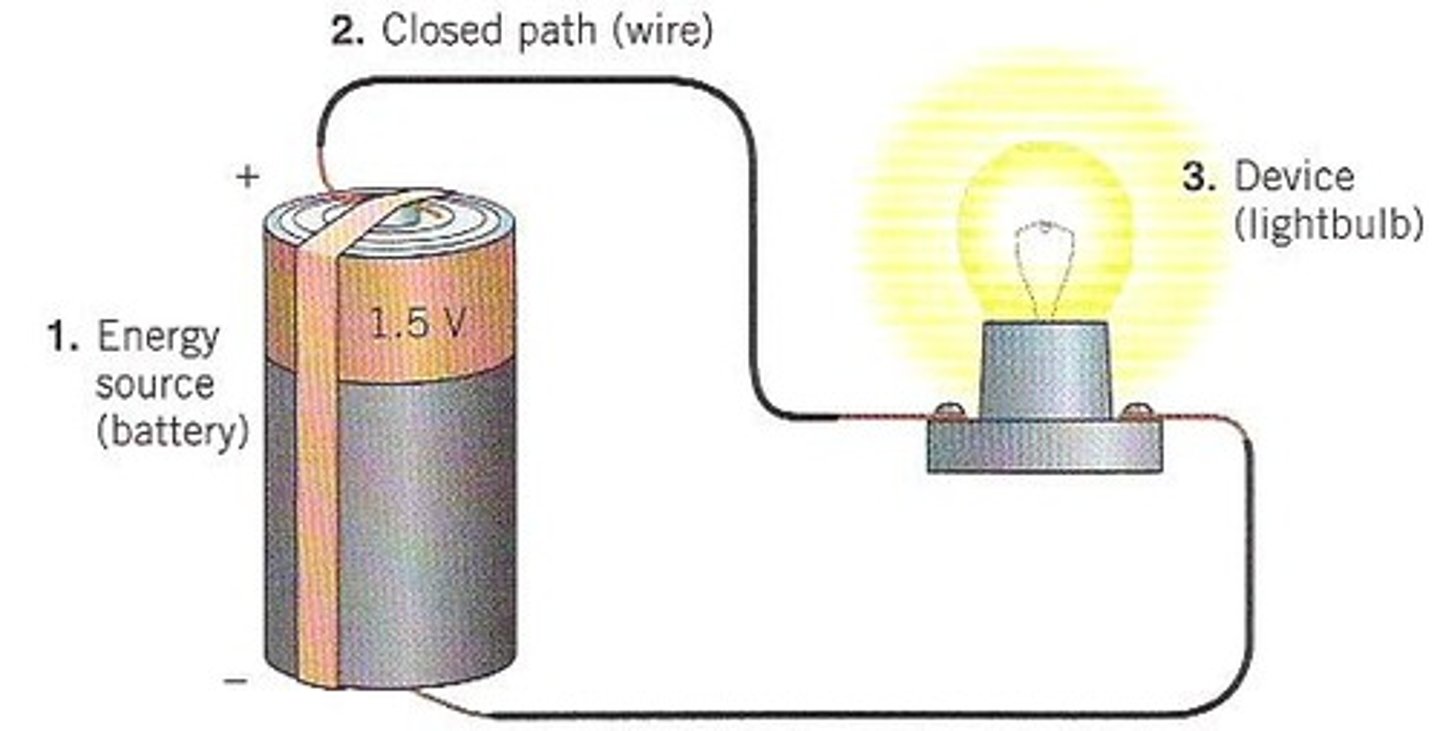
What occurs if any part of an electric circuit is open?
If any part of the circuit is open, the device will not work.
How can electricity be symbolically compared to fluids?
Circuits are similar to water flowing through a pipe, with pressure differences driving the flow.
What is current defined as?
Current is the rate at which charge flows through a surface.
What does the symbol 'I' represent in electrical terms?
'I' stands for intensity, representing current.
What is conventional current?
Conventional current is the flow of positive charges, moving from high to low potential.
What is the difference between conventional current and electric current?
Conventional current refers to the flow of positive charges, while electric current refers to the flow of negative charges (electrons).
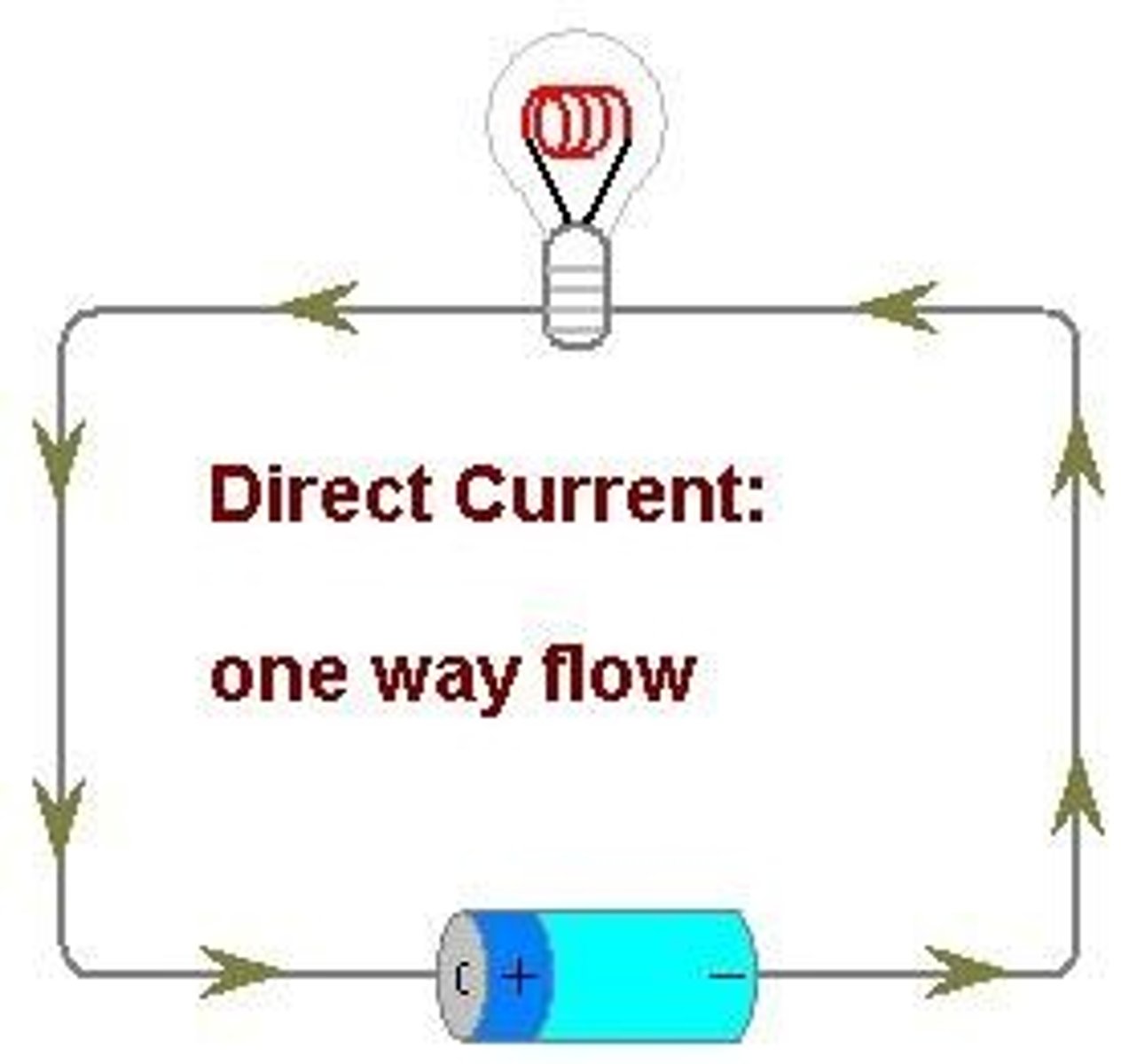
What are the two types of current?
DC (Direct Current) flows in one direction, while AC (Alternating Current) reverses direction many times per second.
What does Ohm's Law state?
Ohm's Law states that voltage is directly related to current when resistance is constant.
What factors affect the current flowing through the human body?
The current depends on the voltage applied to the body and the resistance of the body.
What is electrical resistance?
Electrical resistance is the ability of a material to resist the flow of charge, measured in Ohms (Ω).
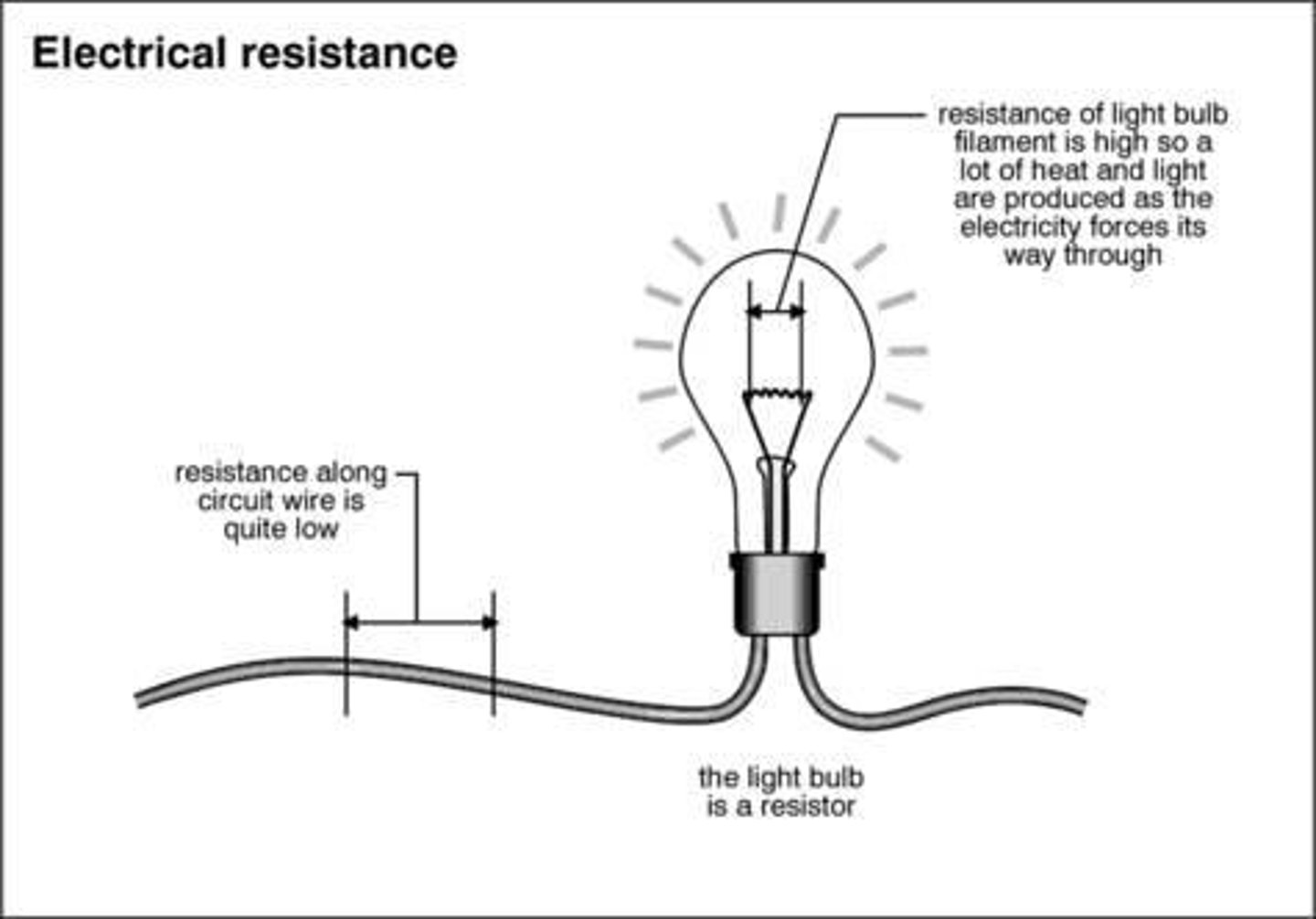
What is a resistor?
A resistor is a circuit device designed specifically to limit current flow.
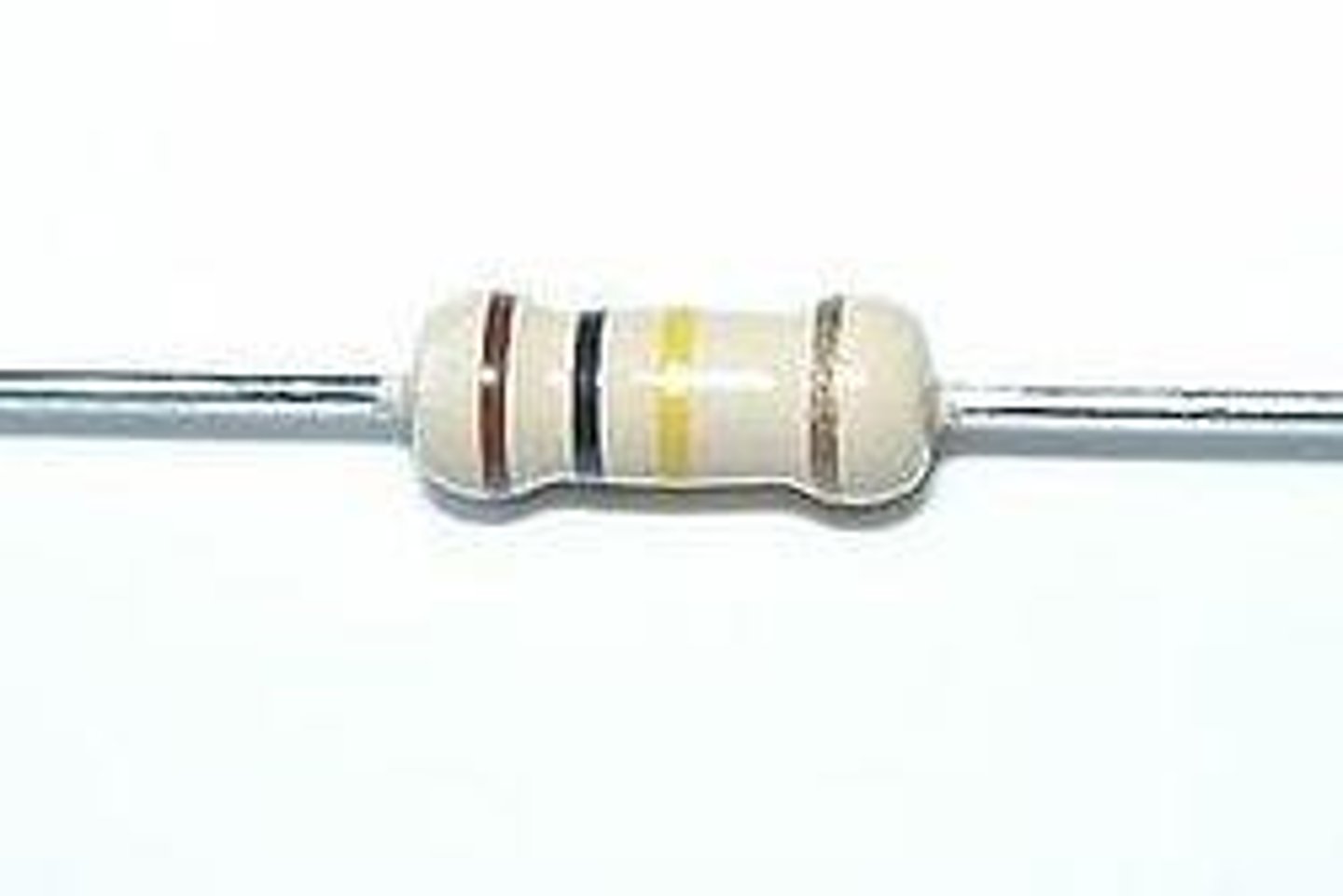
How does resistance affect current flow?
The larger the resistance, the smaller the current that flows through the circuit.
What is the unit of measurement for electrical resistance?
The unit for resistance is Ohms (Ω).
What is the relationship between voltage, current, and resistance?
The amount of charge that flows through a circuit depends on the voltage provided by the source and the electric resistance of the conductor.
What is electric power?
Electric power is the rate at which work (energy) is done, often measured in kilowatt-hours (kWh).
How can voltage and current be used to calculate power?
Power can be calculated using the formula P = V × I, where P is power, V is voltage, and I is current.
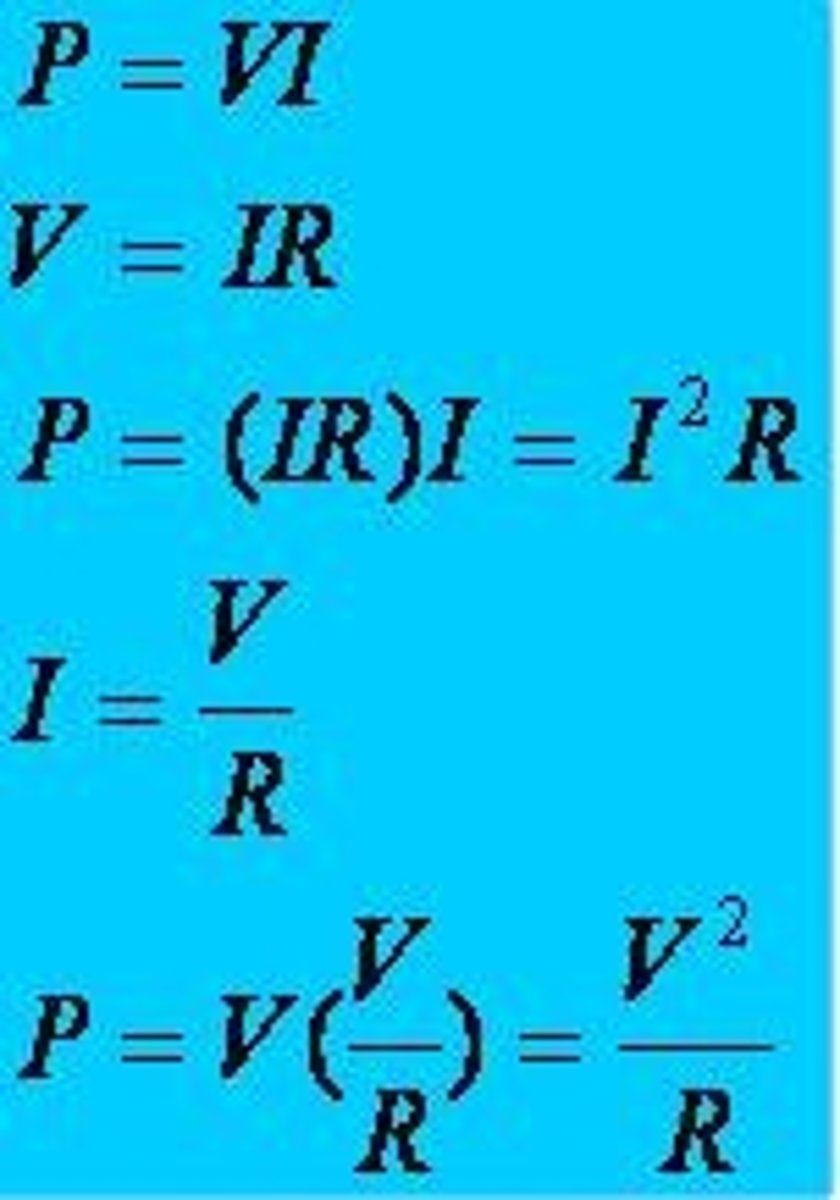
What happens to voltage across a resistor?
Voltage (potential difference) is lost through resistors.
What does the slope of a DV vs. I graph represent?
The slope represents resistance (R) in Ohm's Law.
What is the effect of low resistance on electric shock?
The lower the resistance, the greater the electric shock experienced.
What is the relationship between flow rate and current?
Current is analogous to the flow rate of water in a pipe, measured in Amperes.
What is a series circuit?
A circuit where resistors are wired one after another, experiencing the same amount of current.
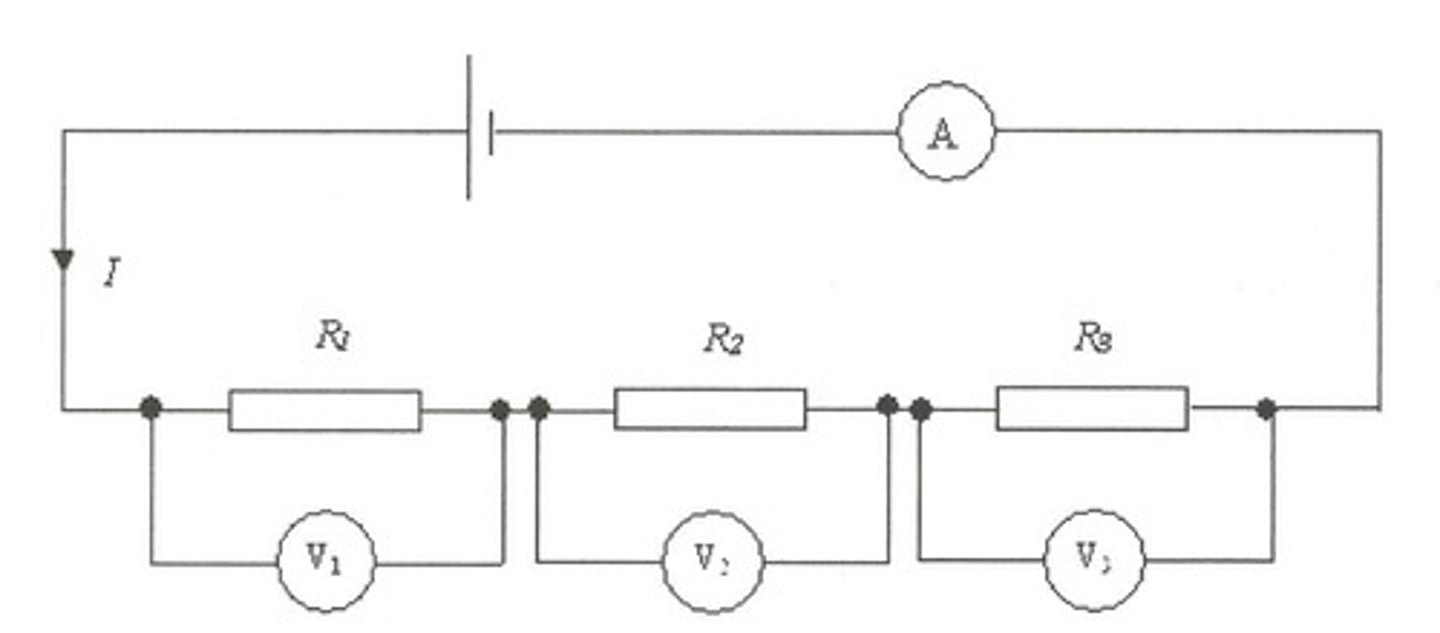
What happens to current when another resistor is added in series?
The total resistance increases, which decreases the current.
What is the effect of decreased current in a series circuit?
It results in dimmer light.
What is a voltage drop in a series circuit?
The potential voltage that each individual resistor uses as current passes through.
How do you calculate total resistance in a series circuit?
By summing the resistance values of each resistor (RT = R1 + R2 + R3 + ...).
What is the formula for current in a series circuit?
I = V/R, where V is the voltage and R is the total resistance.
What is a parallel circuit?
A circuit with multiple loops where current splits among the loops.
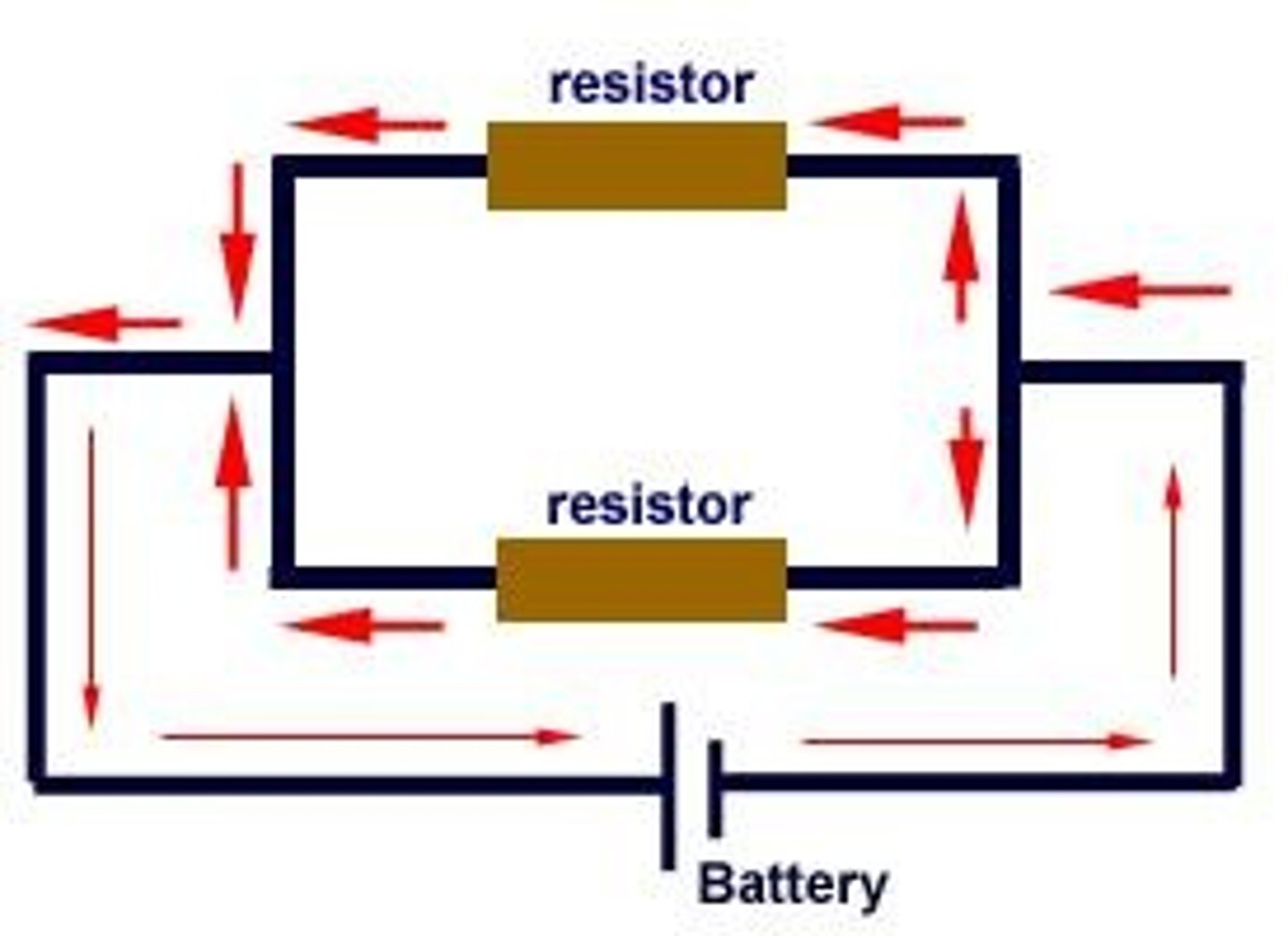
What is the relationship between current entering and exiting a junction in a parallel circuit?
The current going into a junction equals the current going out.
What is the voltage across each resistor in a parallel circuit?
It is the same as the source voltage.
How does adding more resistors in parallel affect equivalent resistance?
It decreases the equivalent resistance of the circuit.
What happens to total current when more resistors are added in parallel?
The total circuit current increases.
What is the main difference between series and parallel circuits regarding current paths?
Series circuits have one path for current, while parallel circuits have multiple paths.
What is the effect of a break in the circuit for series vs parallel circuits?
A break in a series circuit stops all current; in a parallel circuit, it does not affect other branches.
What safety devices are used in household circuits to prevent overheating?
Fuses or circuit breakers.
What is a compound (complex) circuit?
A circuit that contains both series and parallel components.
How do you solve for total resistance in a compound circuit?
By solving from the inside out, addressing series and parallel sections separately.
What is the total current if the potential difference in a compound circuit is 120V and total resistance is 113.2Ω?
1.06 A.
What is the voltage drop across an 80Ω resistor in a compound circuit with a total current of 1.06 A?
84.8 V.
What is the current across a 100Ω and 50Ω resistor in a compound circuit?
0.352 A for each.
What is the voltage drop across the 100Ω and 50Ω resistor?
35.2 V each.
Still learning (26)
You've started learning these terms. Keep it up!