Vertebral column (Anatomy単語カード | Quizlet
 Call Kai
 Learn
Learn Practice Test
 Spaced Repetition
 Match
Match Flashcards
 Knowt Play
1/99

There's no tags or description
Looks like no tags are added yet.
Name | Mastery | Learn | Test | Matching | Spaced | Call with Kai |
|---|
No analytics yet
Send a link to your students to track their progress
100 Terms
Cervical vertebrae
What vertebrea are A?
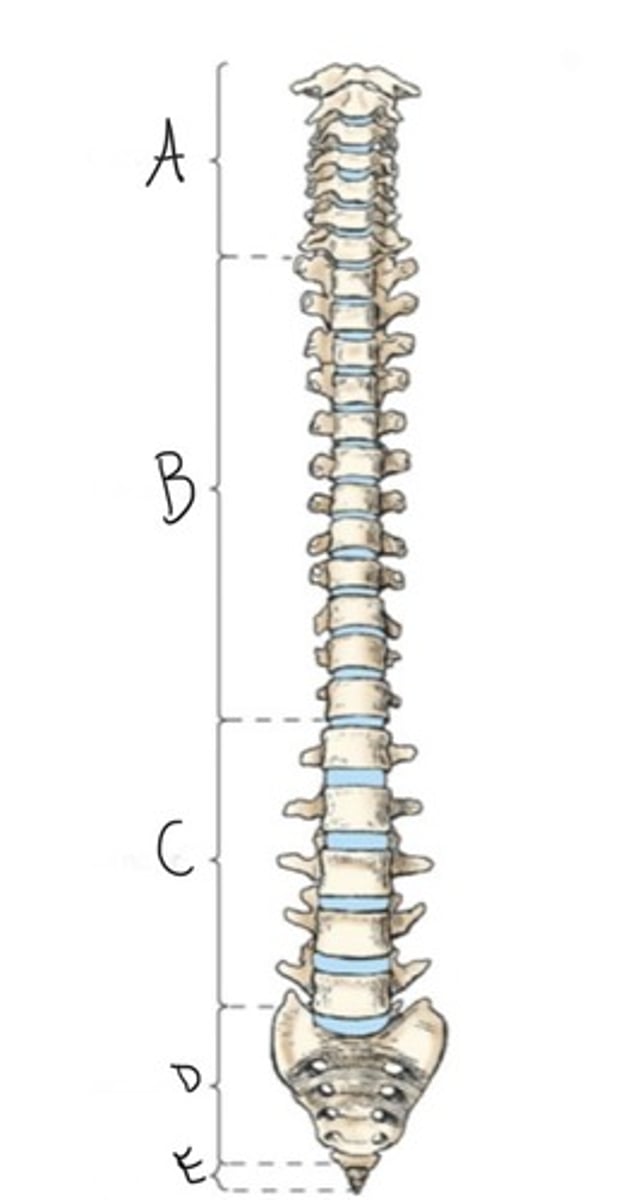
Thoracic vertebrae
What vertebrae are B?
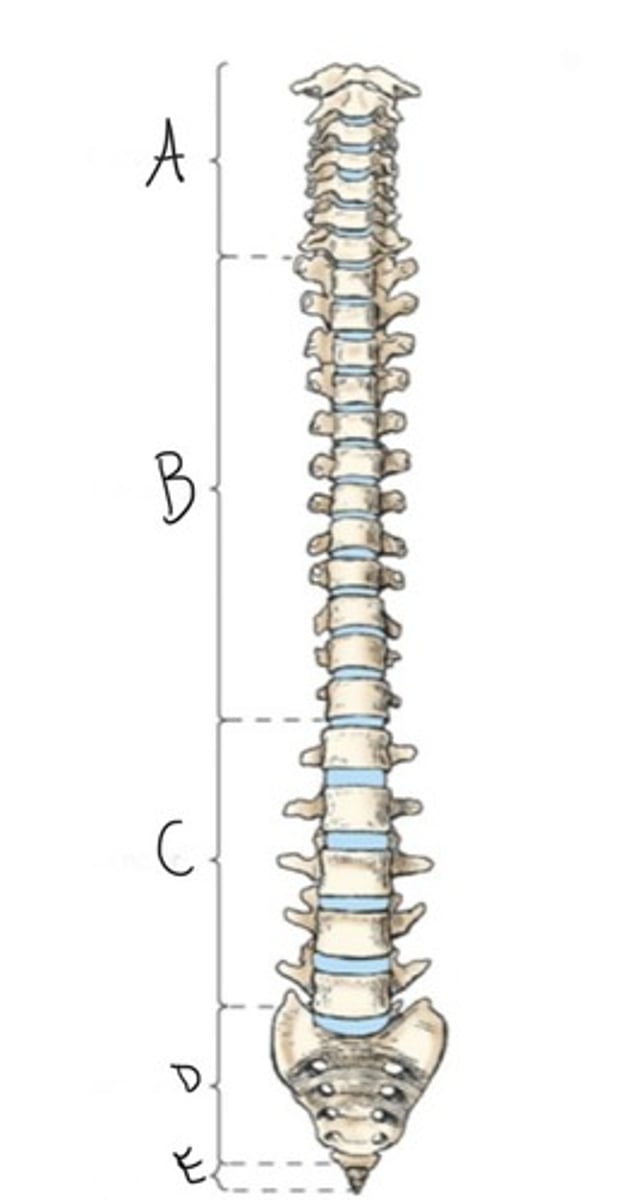
Lumbar vertebrae
What vertebrae are C?
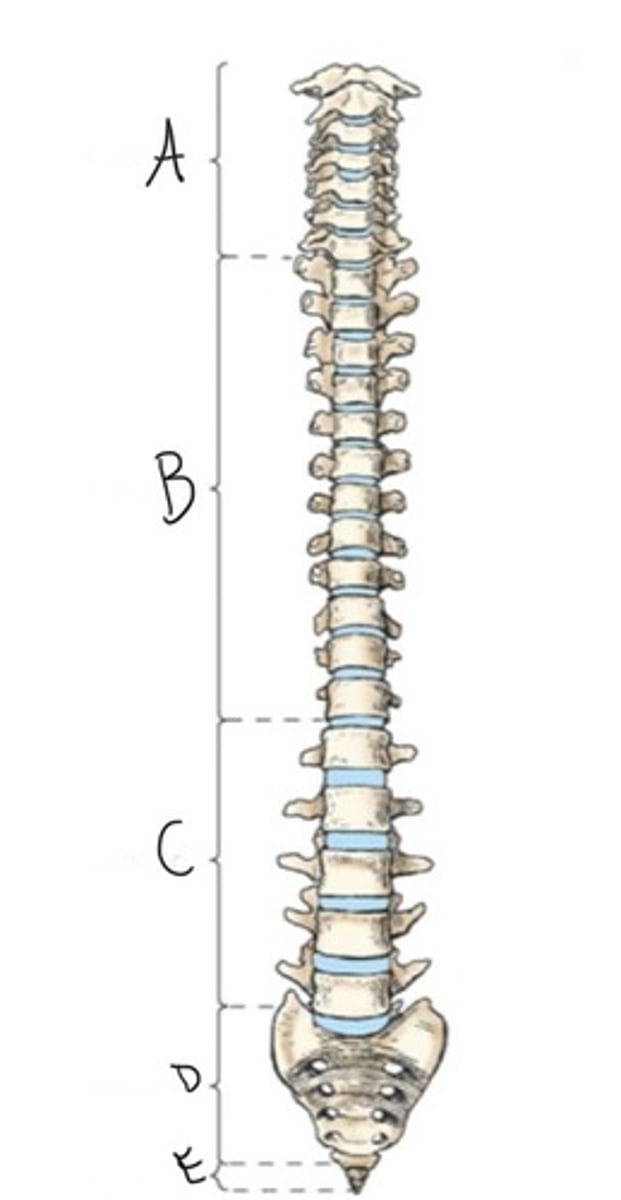
Sacrum
What is D?
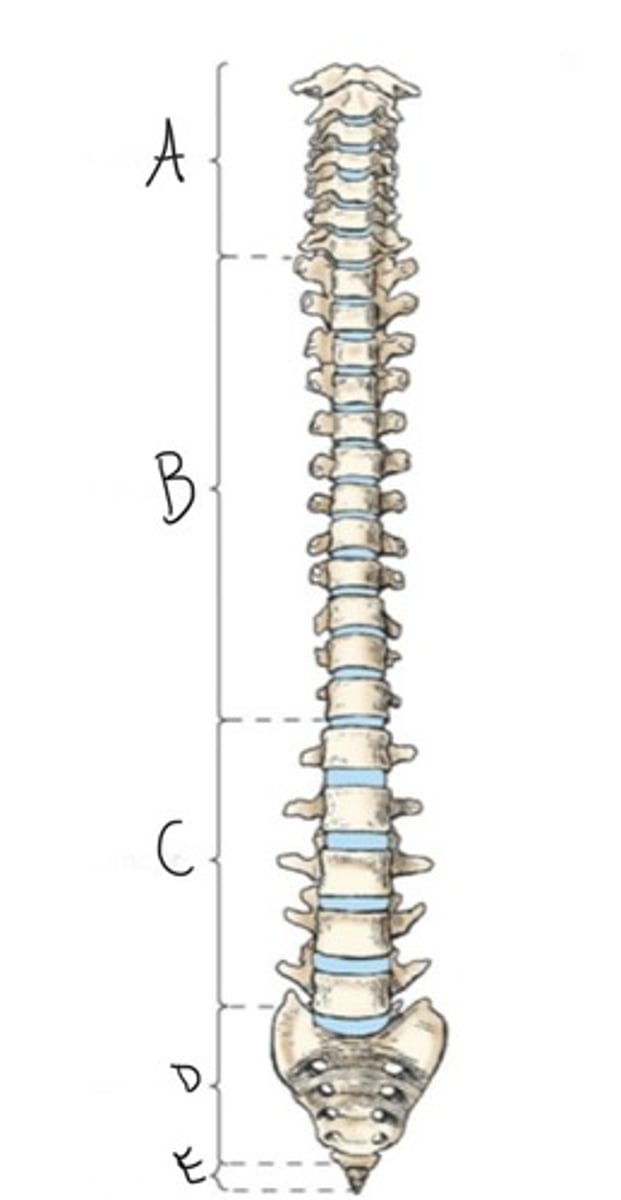
Coccyx
What is E?
Lordotic curves
What kind of curvatures are A?
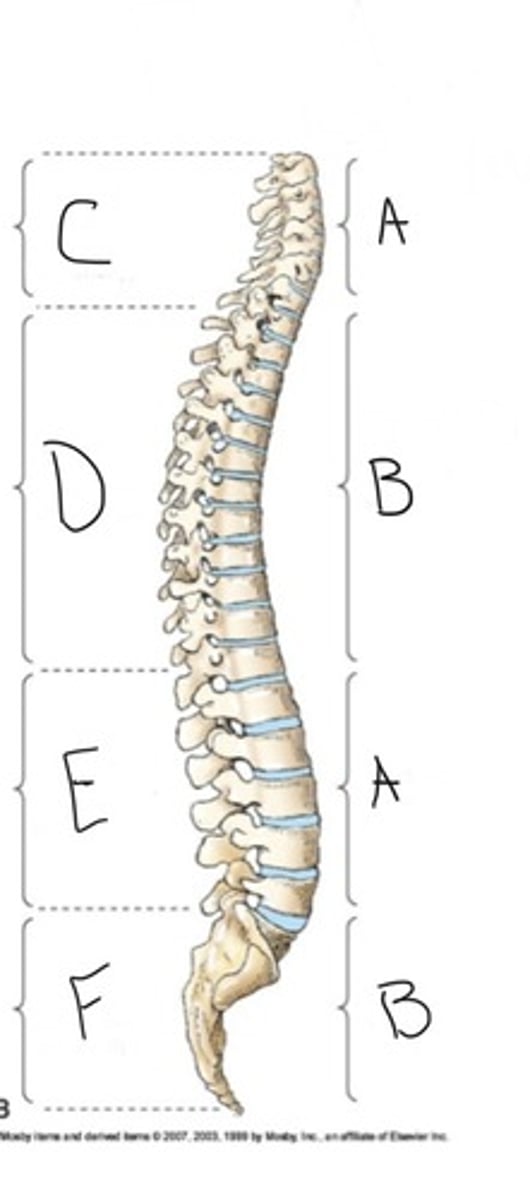
Kyphotic curves
What kind of curvatures are B?
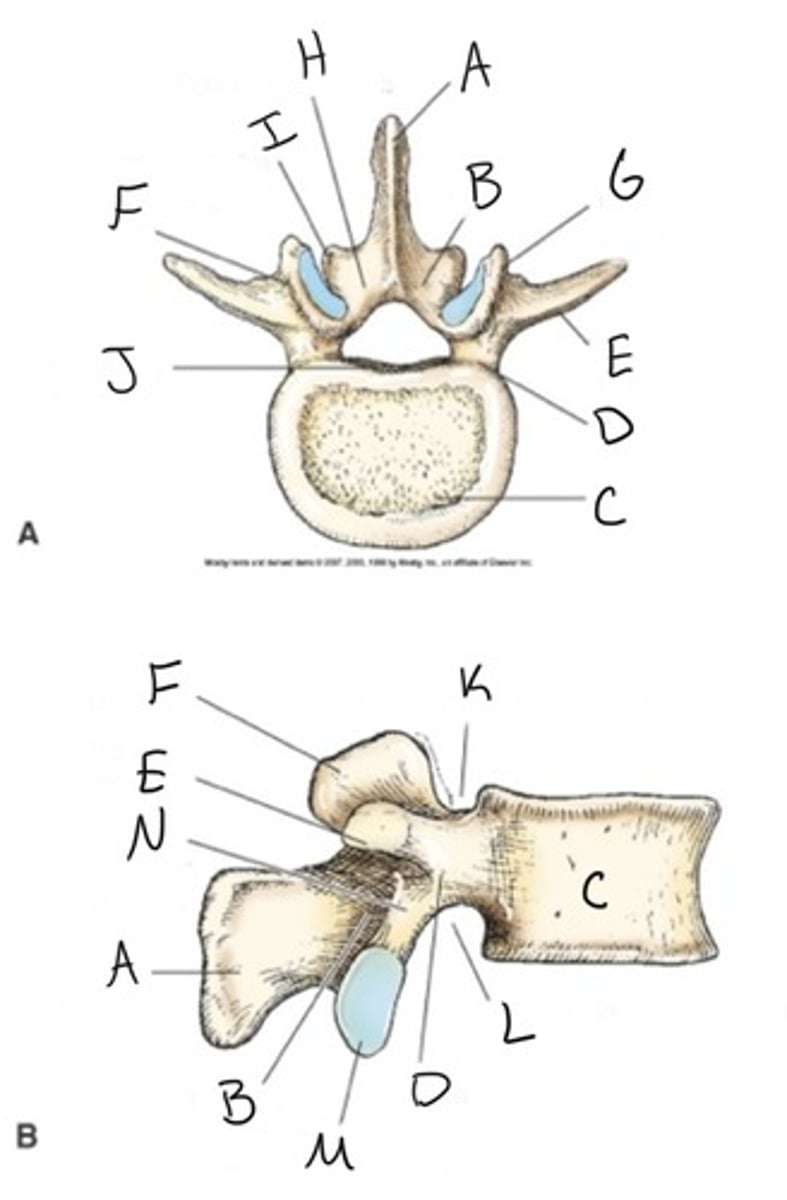
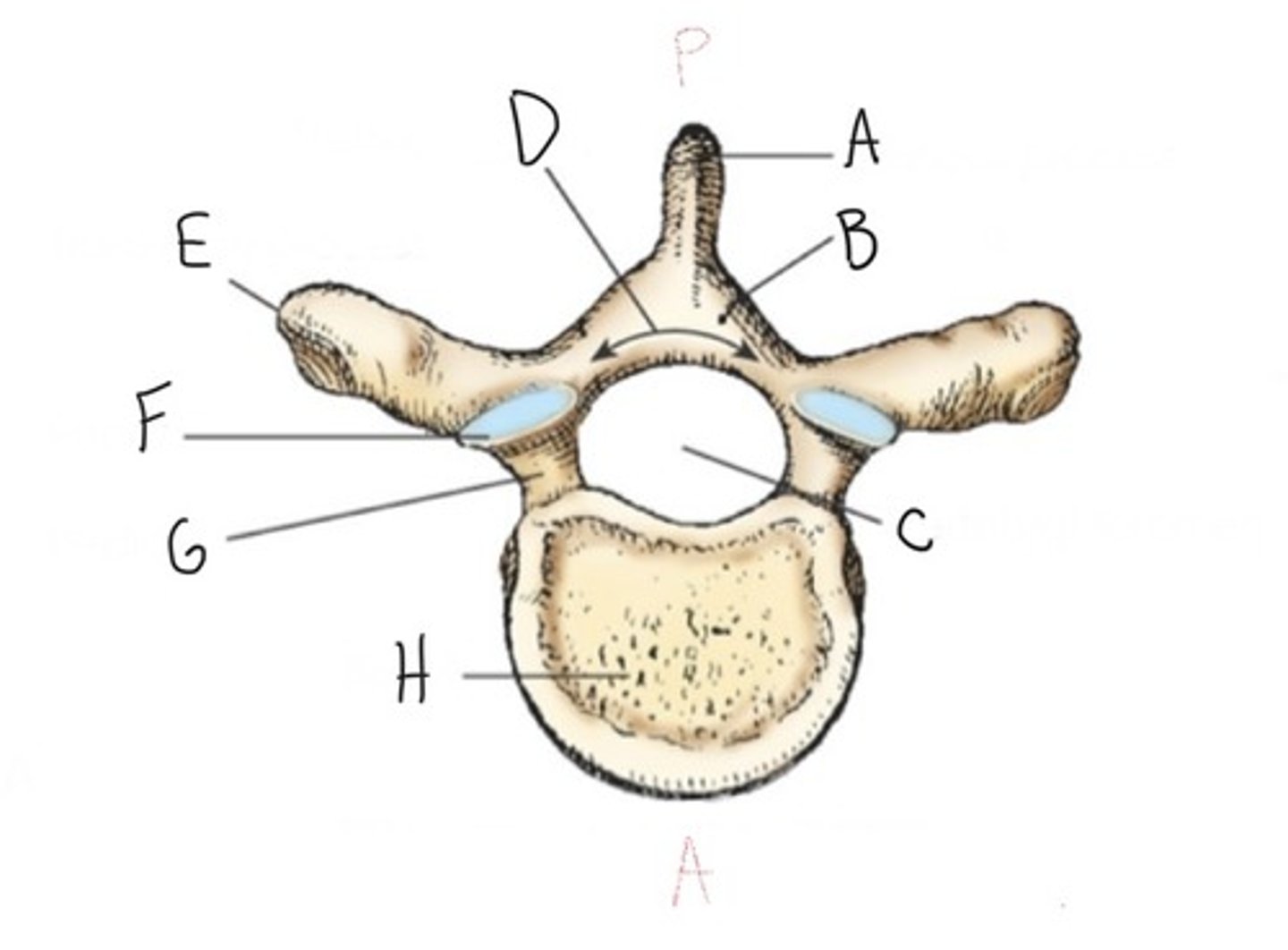
Typical vertebrae
What kind of vertebrea is this?
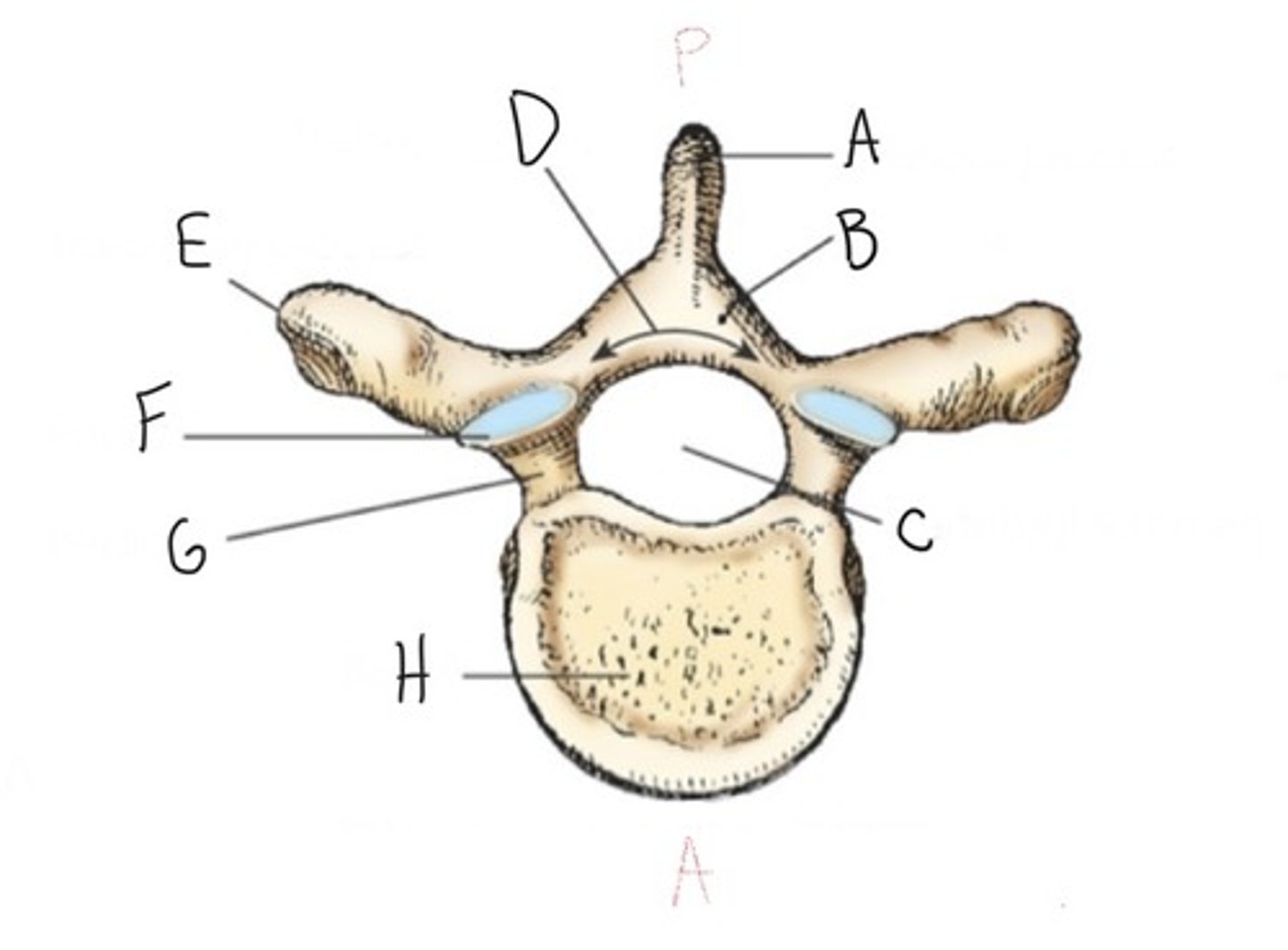
Spinous process
What is A?
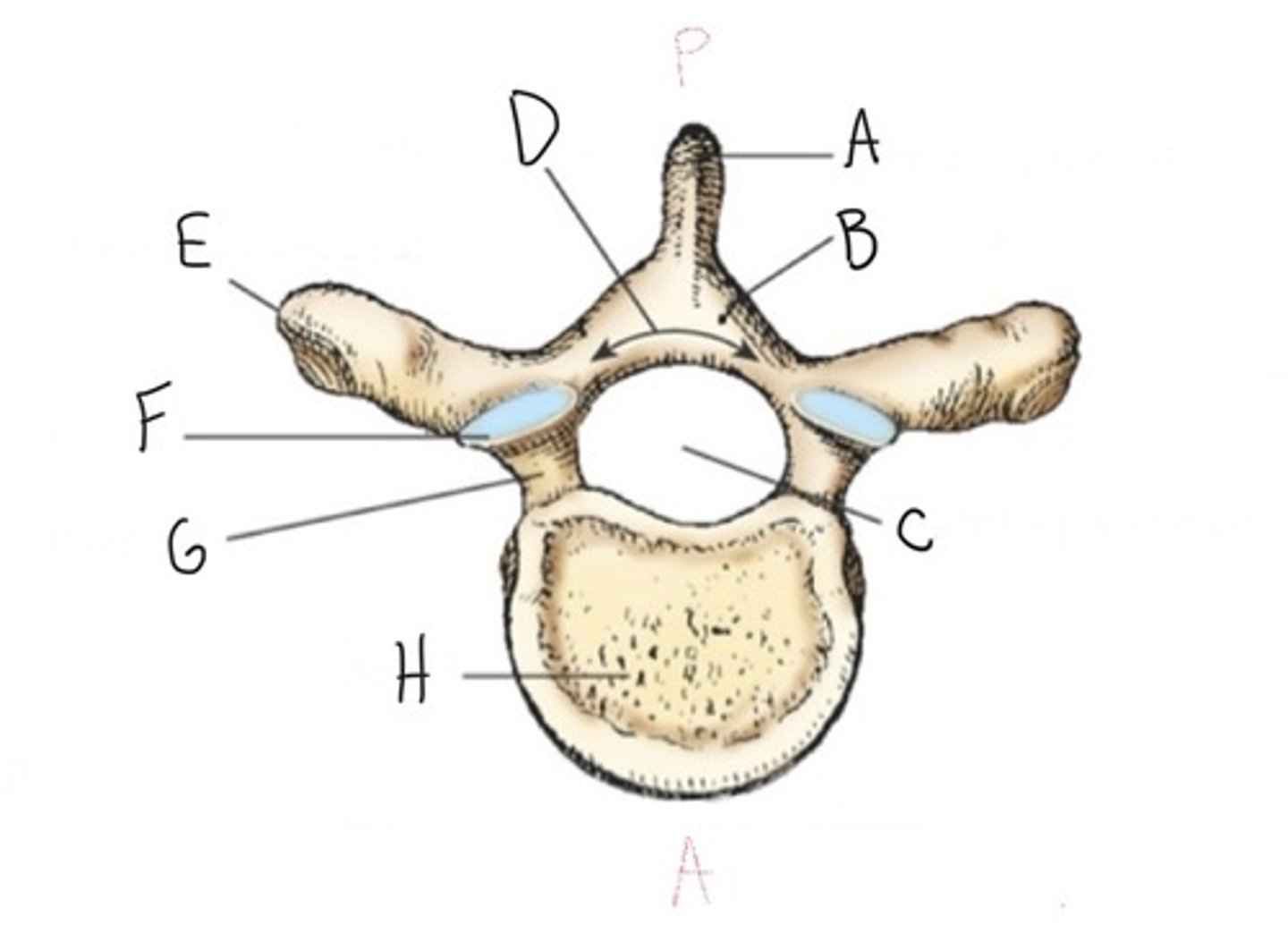
Lamina
What is B?
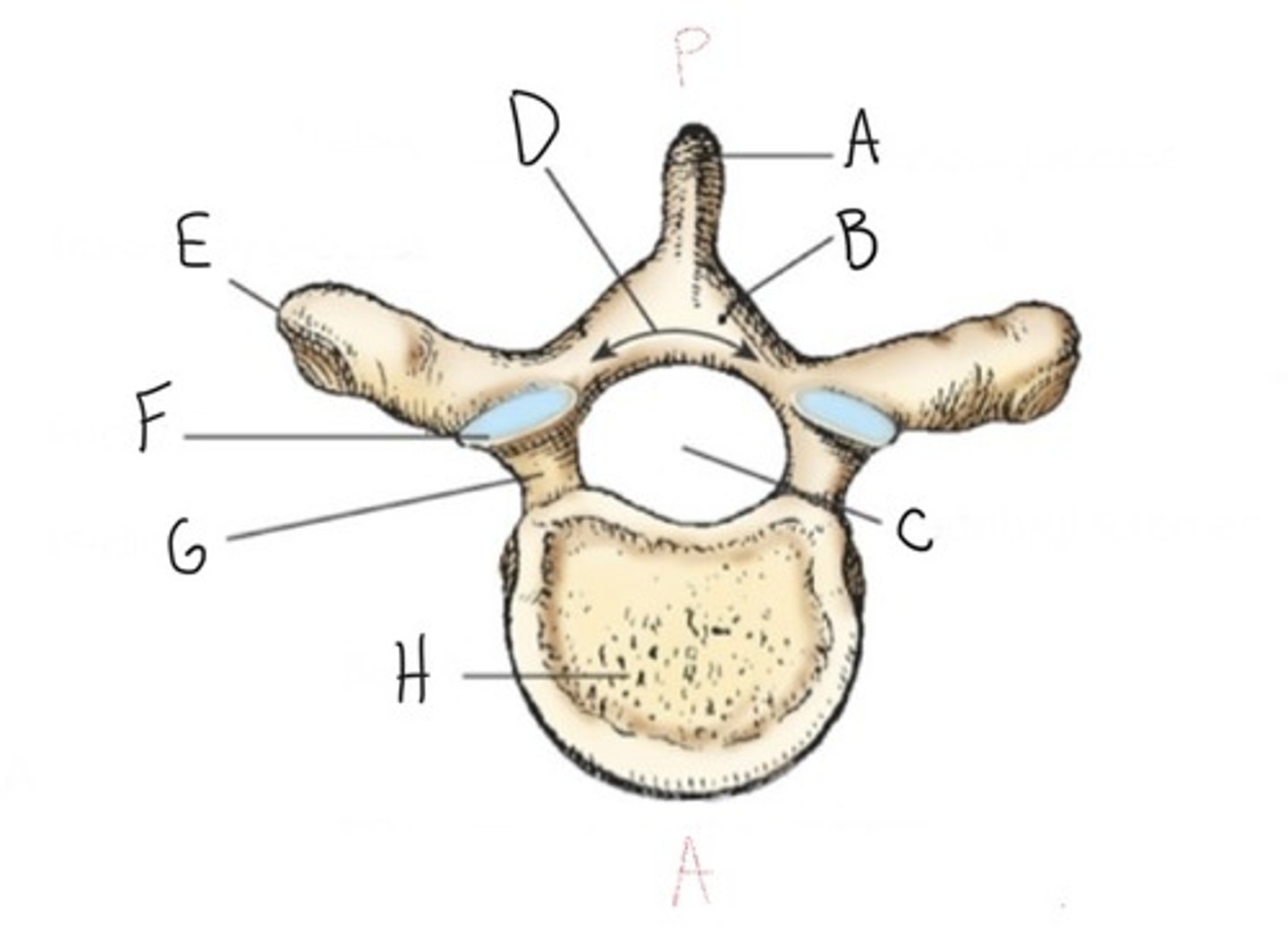
Vertebral foramen
What is C?
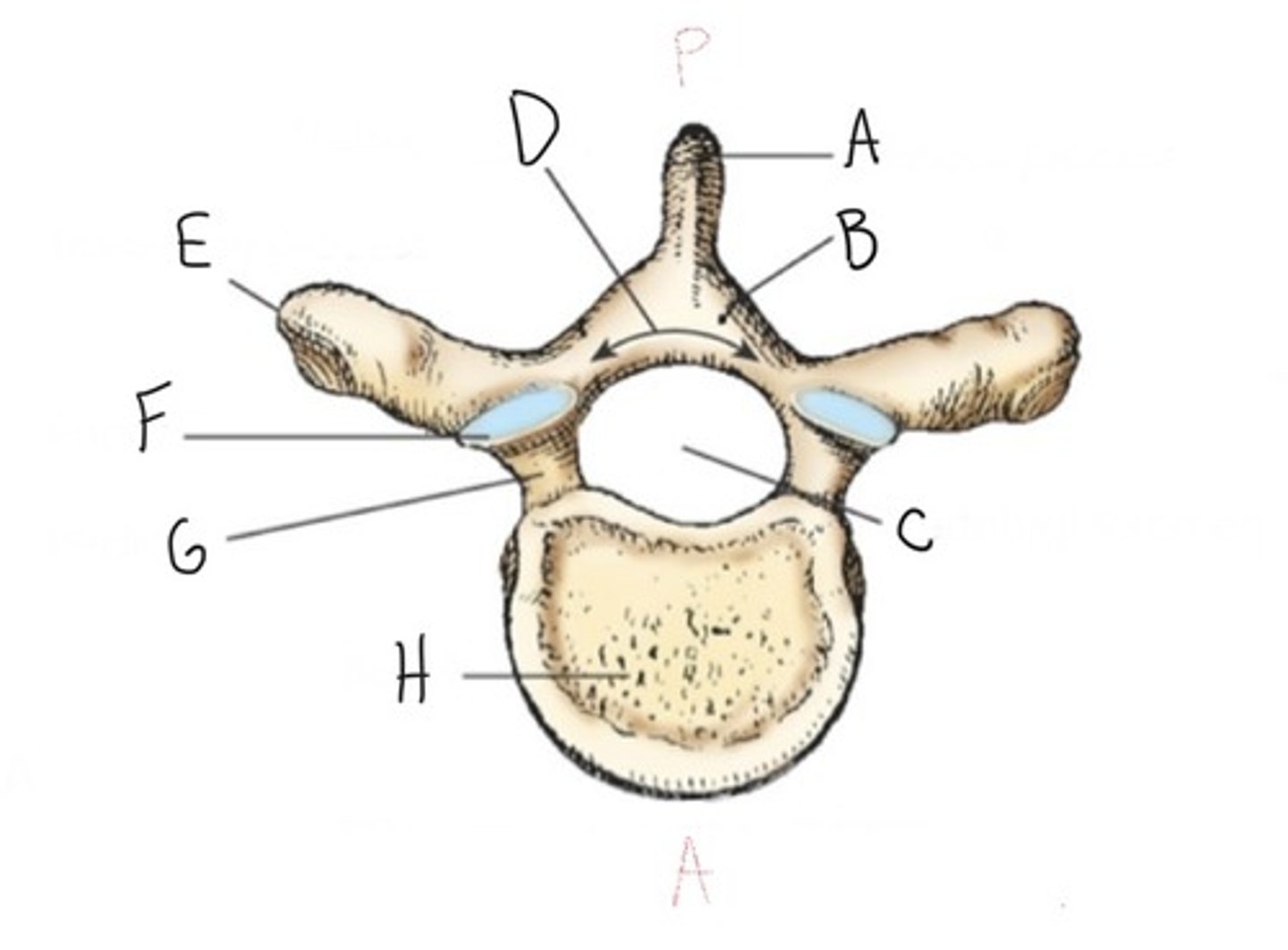
Vertebral arch
What is D?
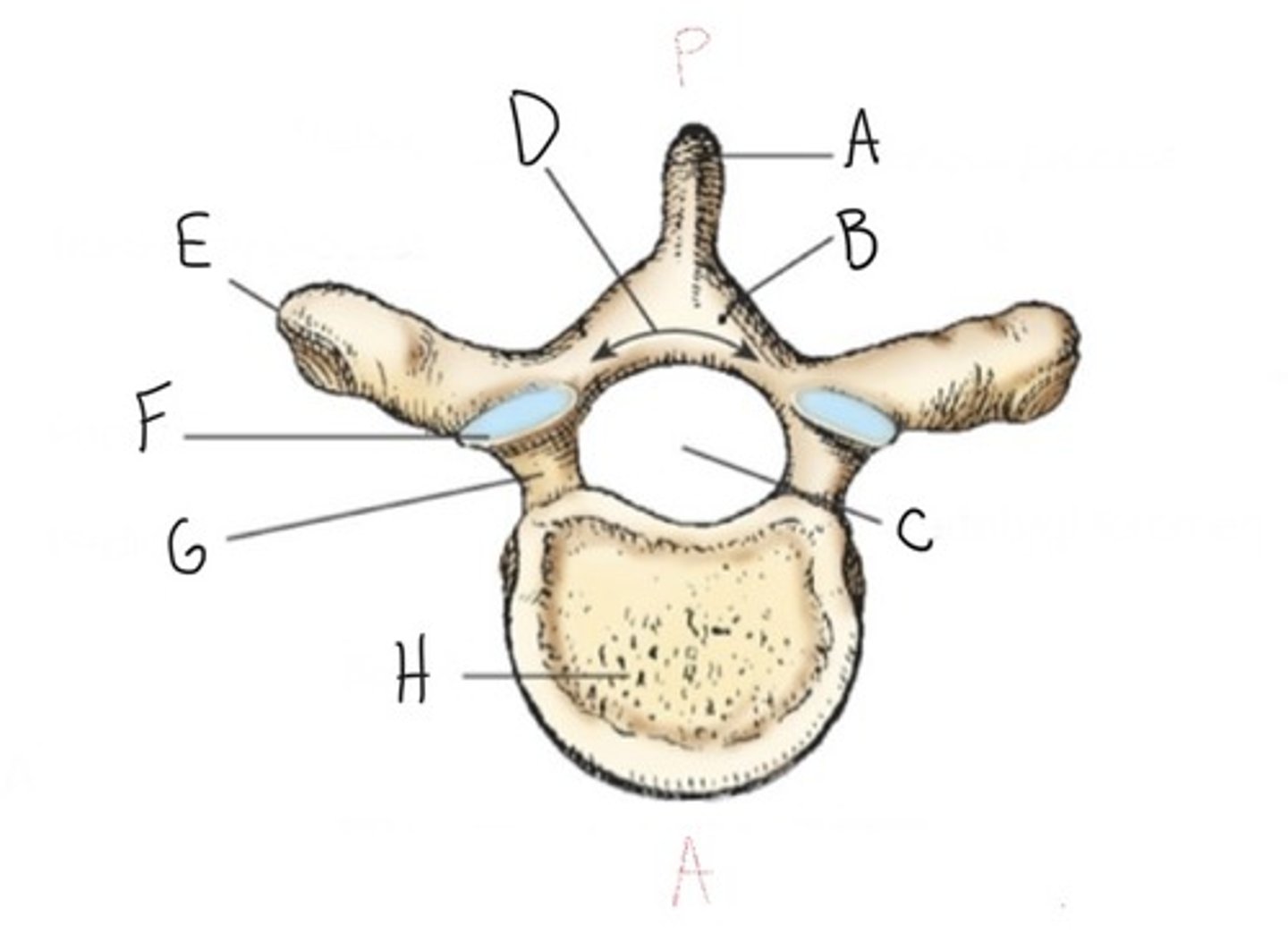
Transverse process
What is E?
Facet
What is F?
Pedicle
What is G?
Body
What is H?
C1 (atlas)
What vertebrae is this?
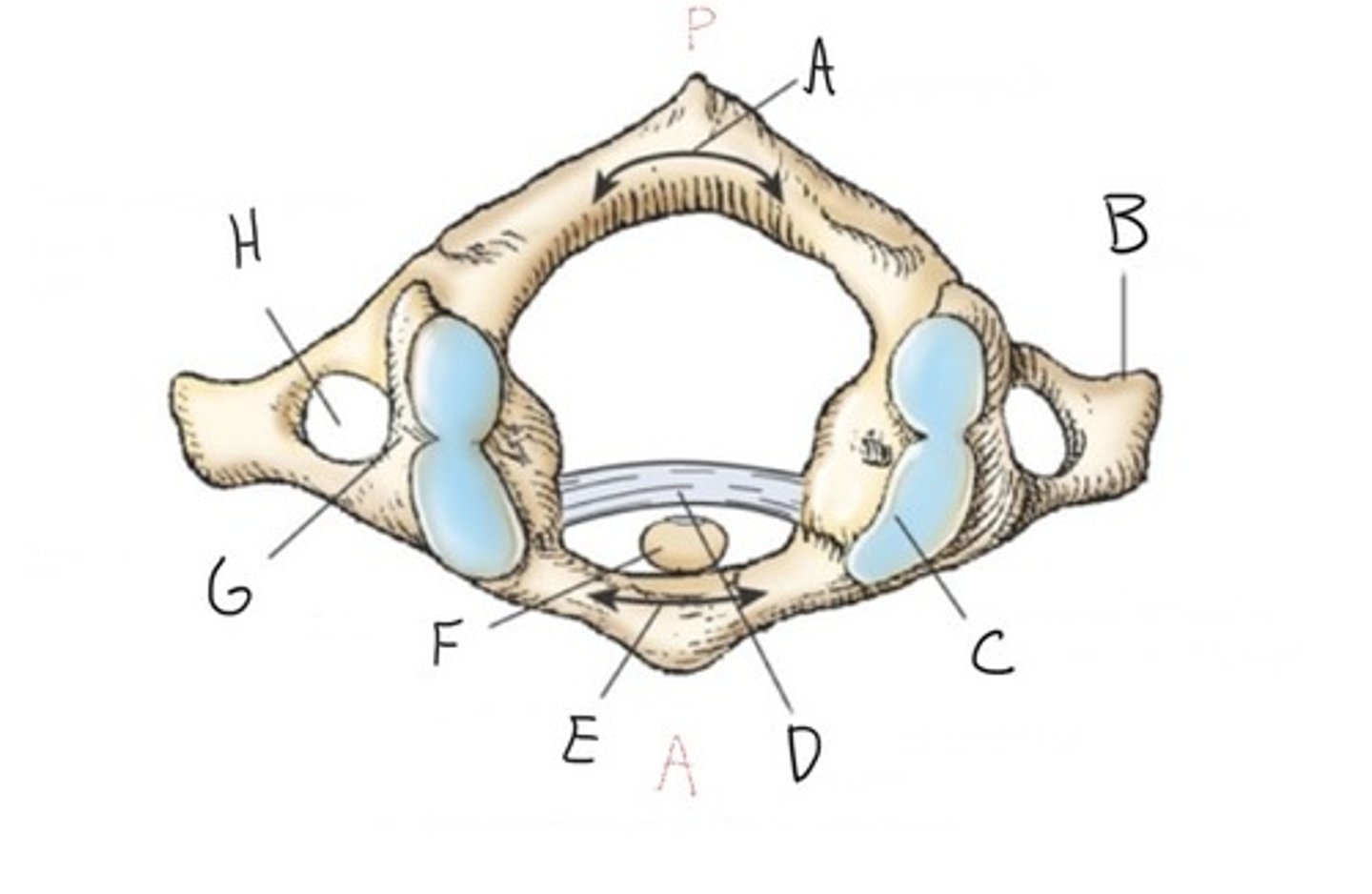
Posterior arch
What is A?
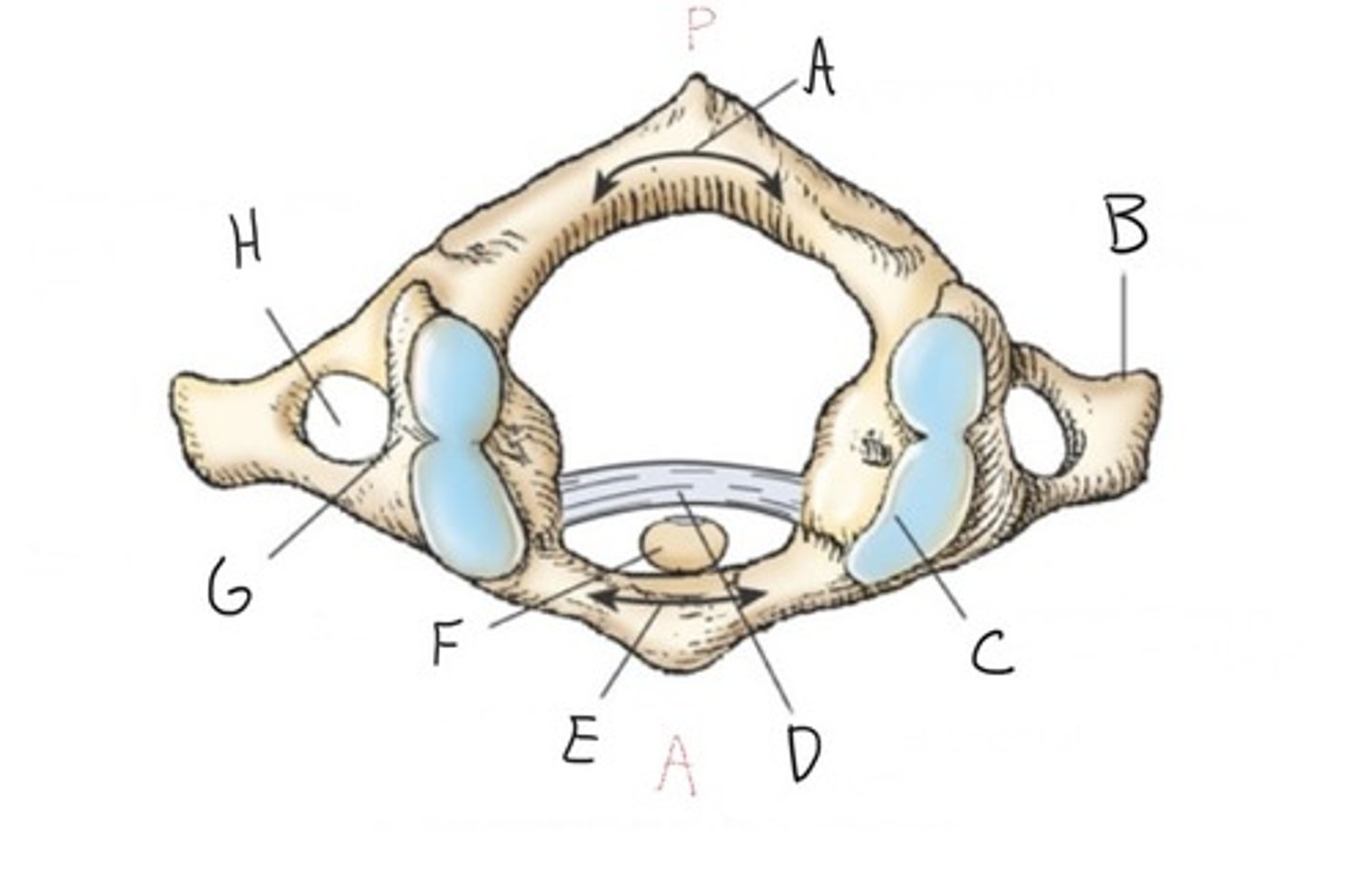
Transverse process
What is B?
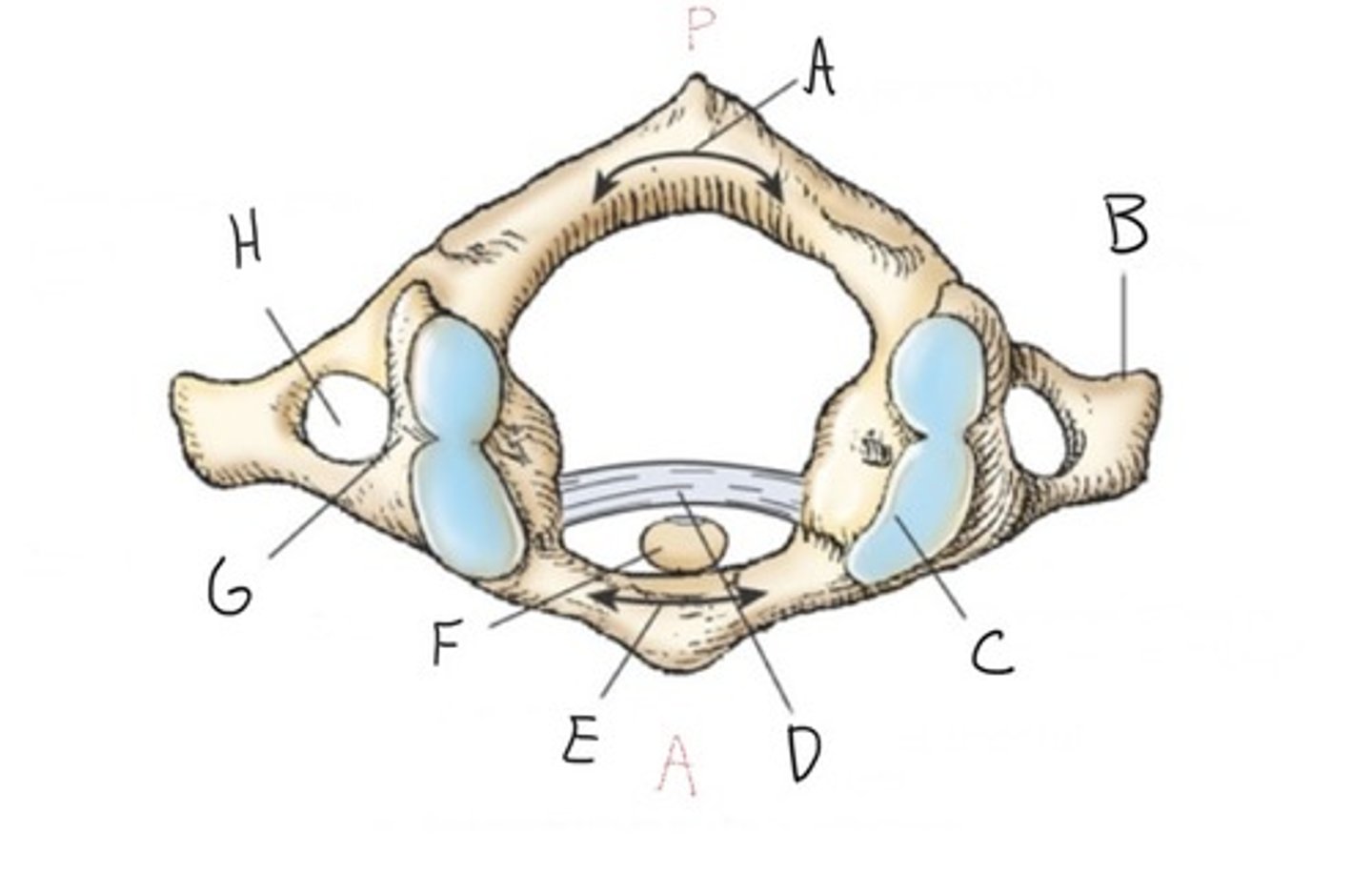
Superior articulation process & facet
What is C?
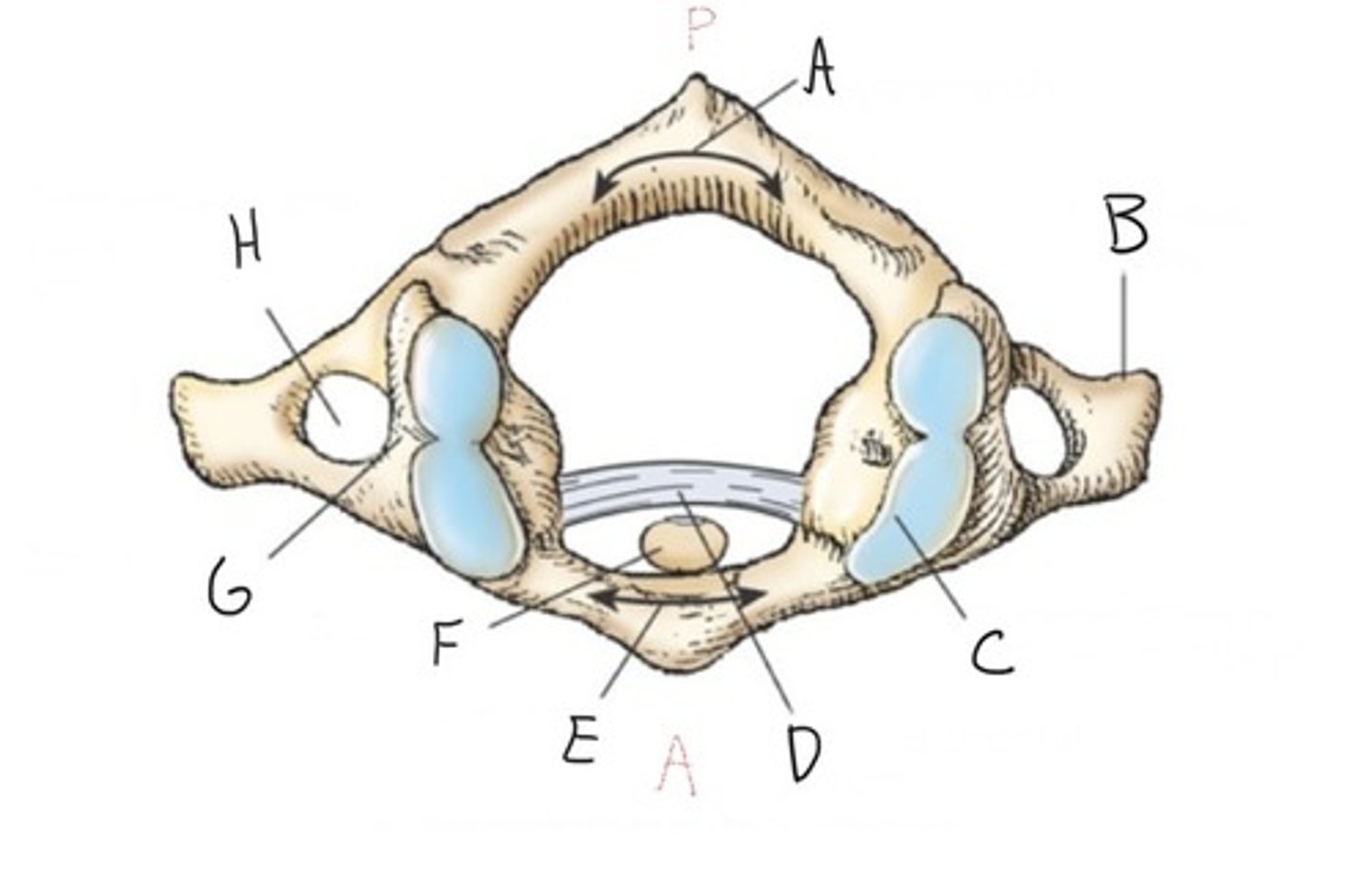
Transverse Atlantal ligament
What is D?
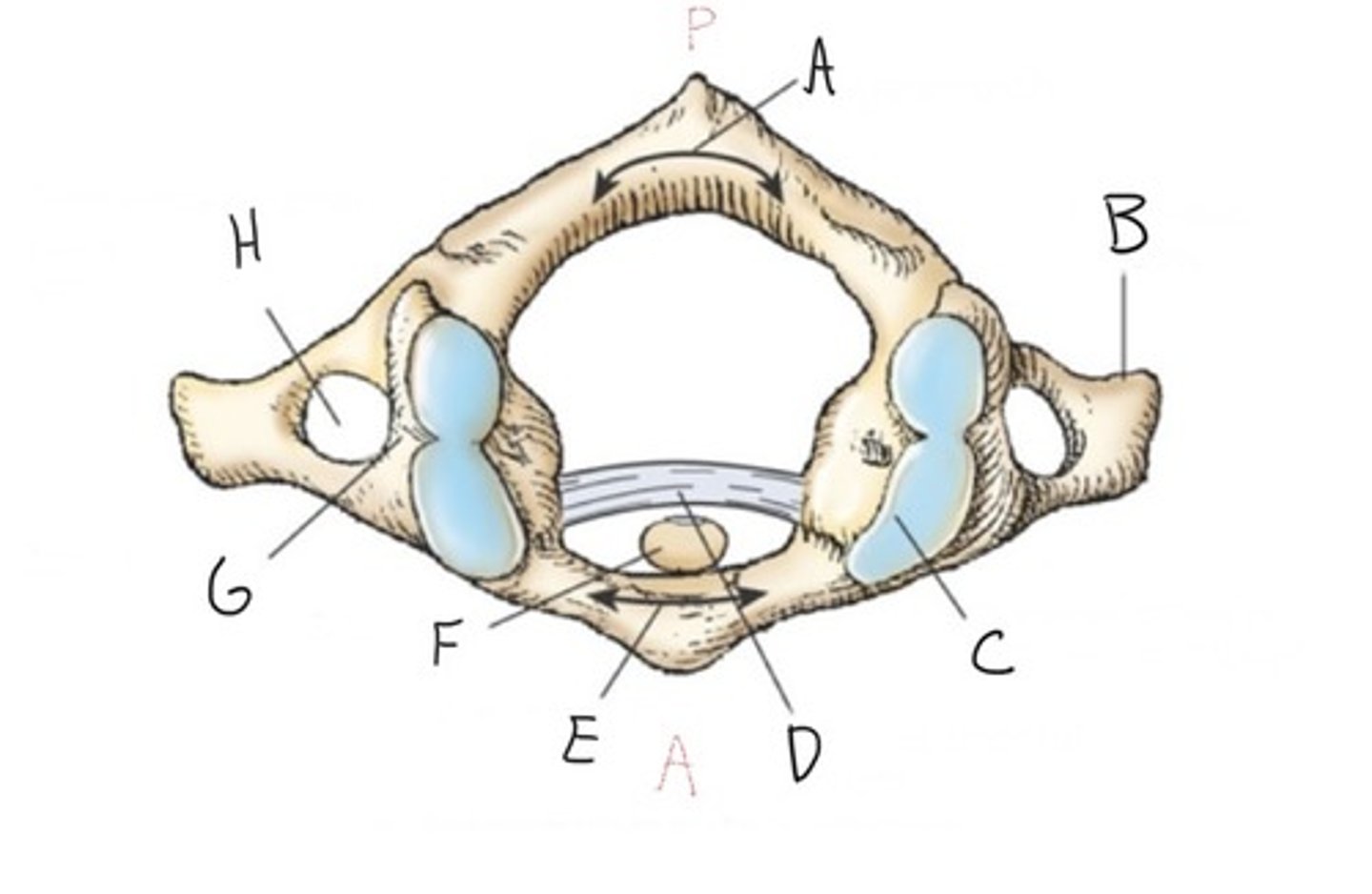
Anterior arch
What is E?
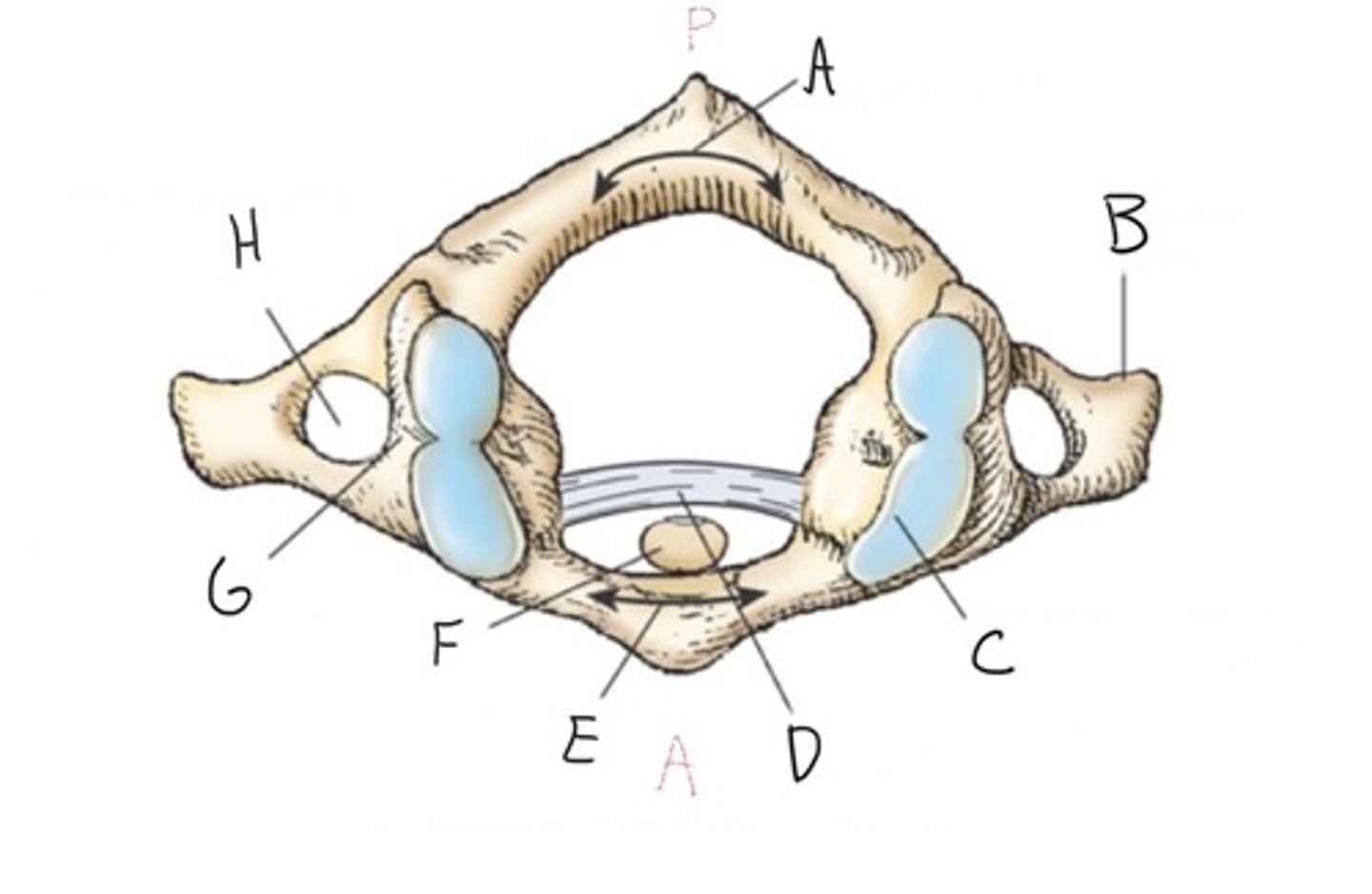
Dens (odontoid process)
What is F?
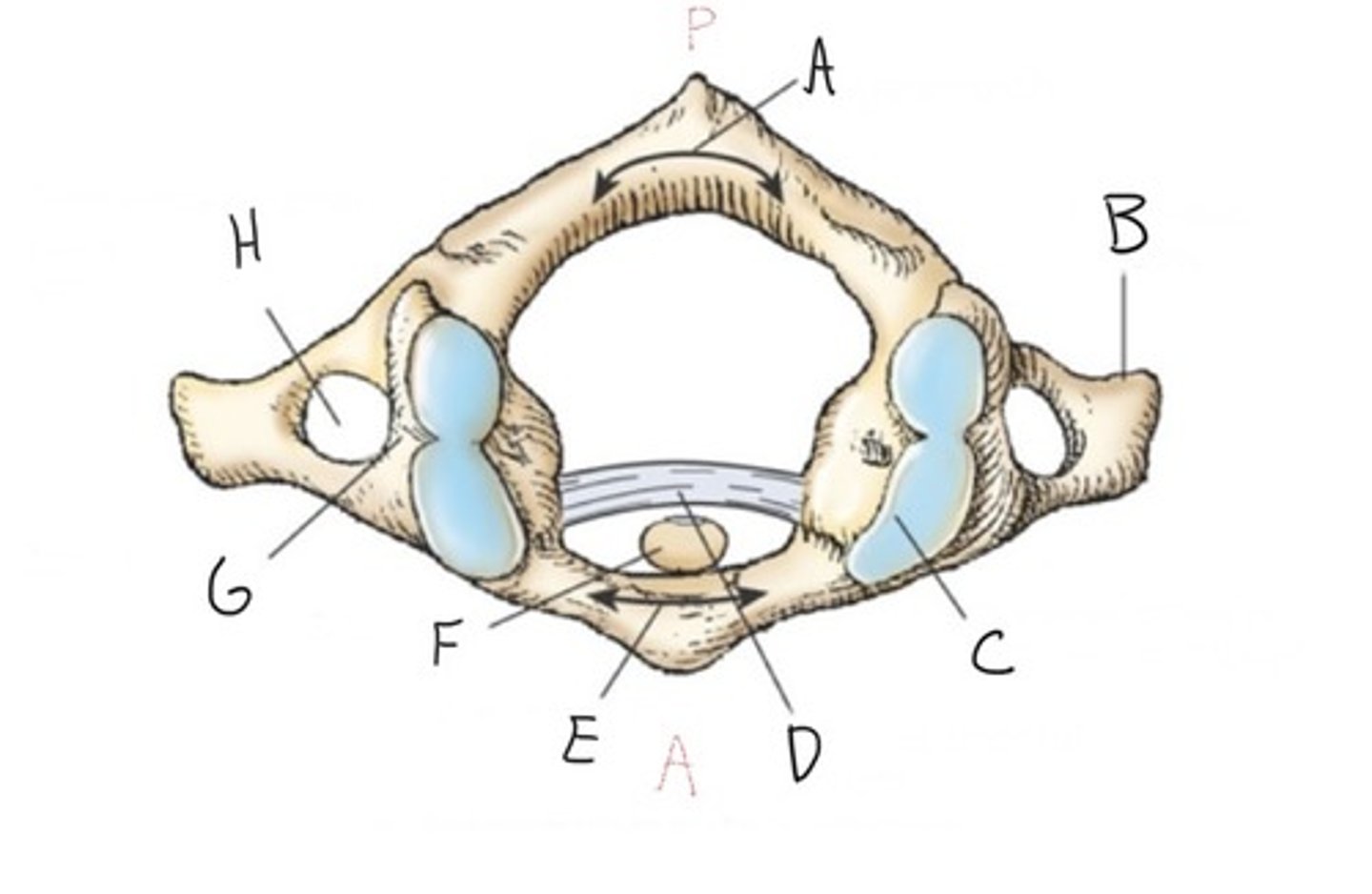
No spinous process or body
What is different about the C1 vertebrae compared to a typical vertebrae ?
Lateral mass
What is G?
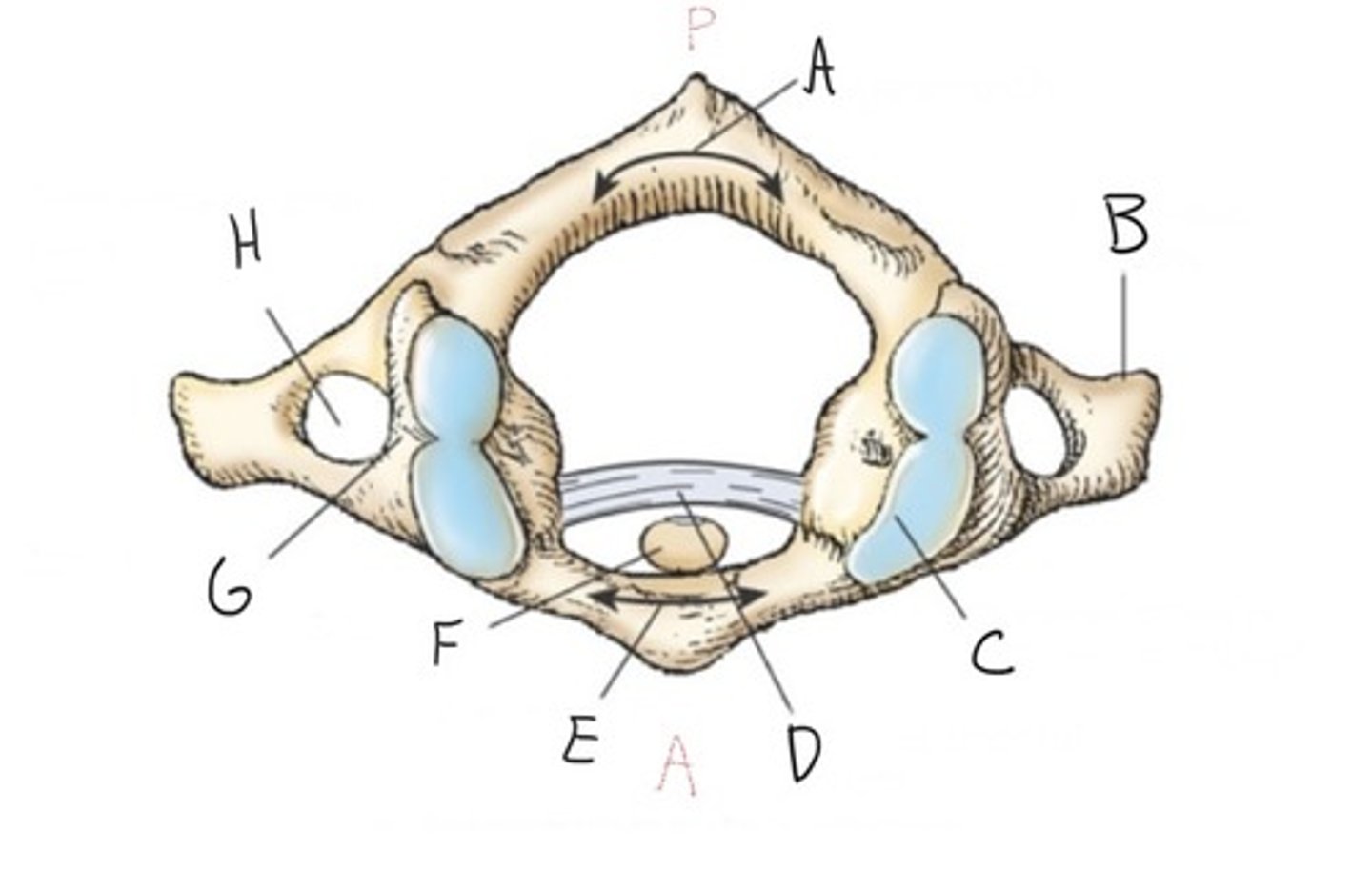
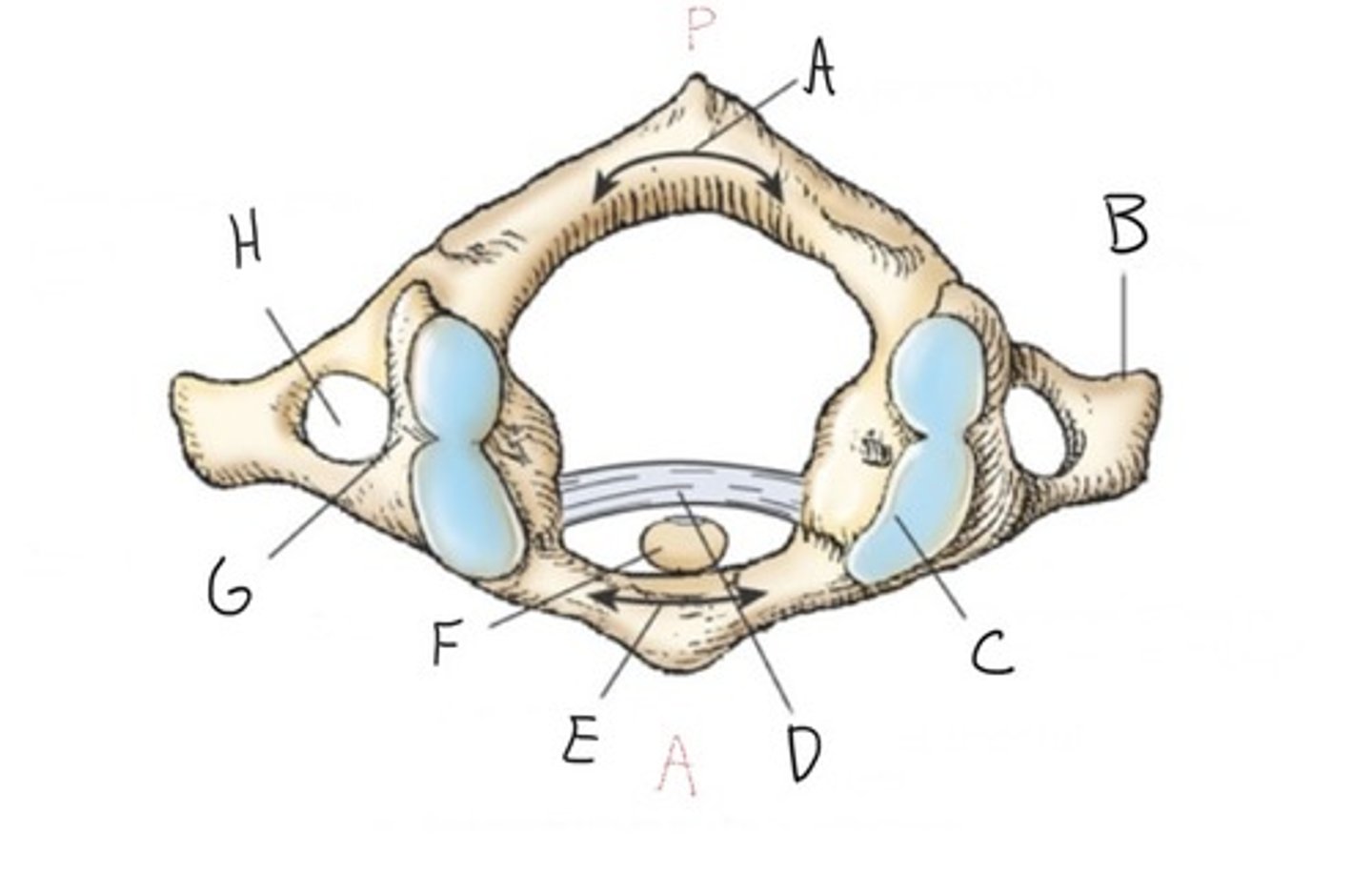
Transverse foramen
What is H?
Body and spinous process
What does C2 have that C1 doesn't ?
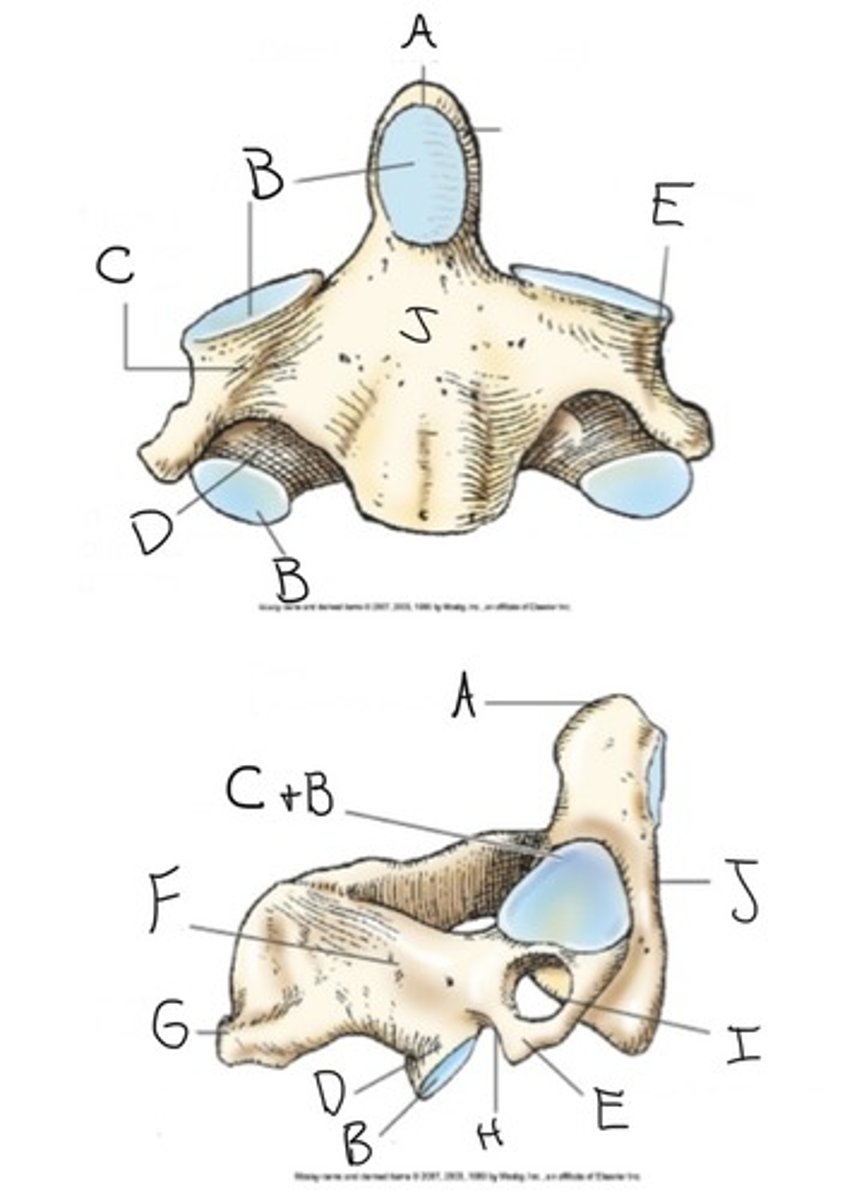
C2 (axis)
What vertebra is this?
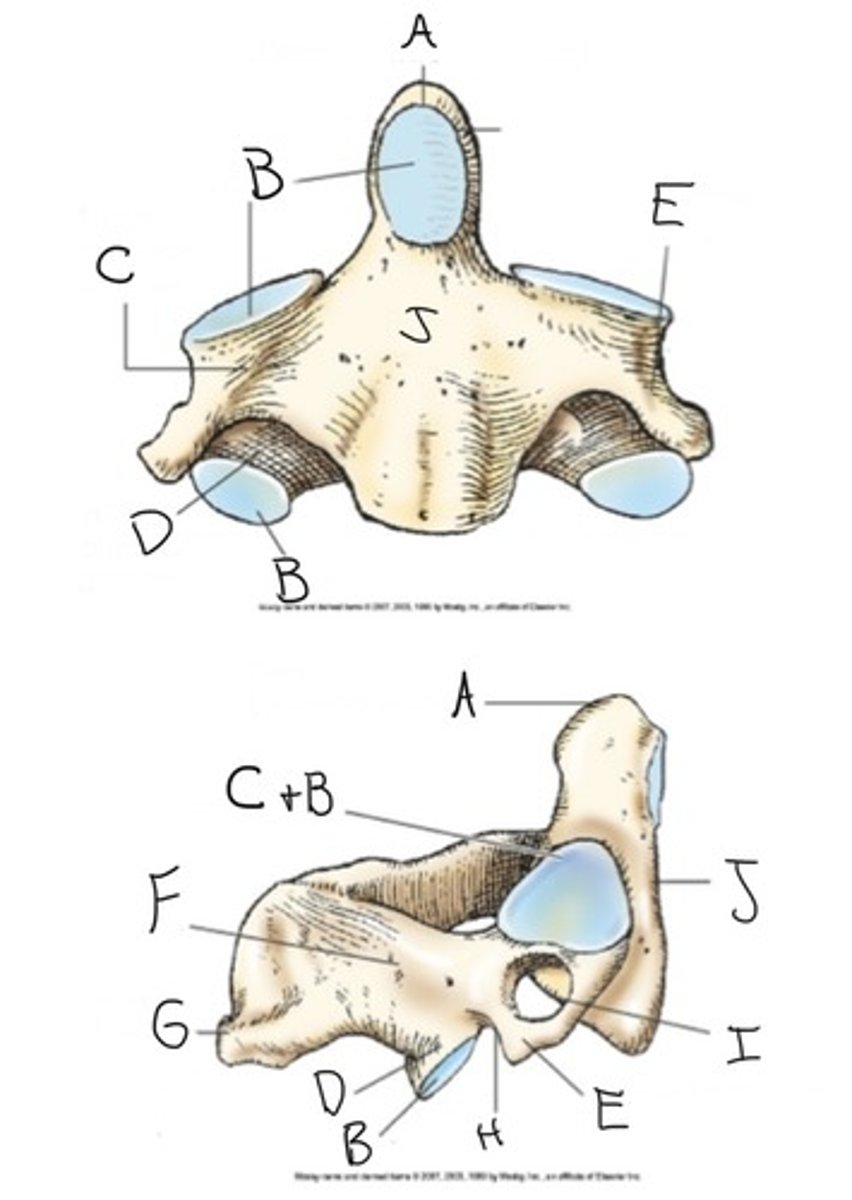
Dens (odontoid process)
What is A?
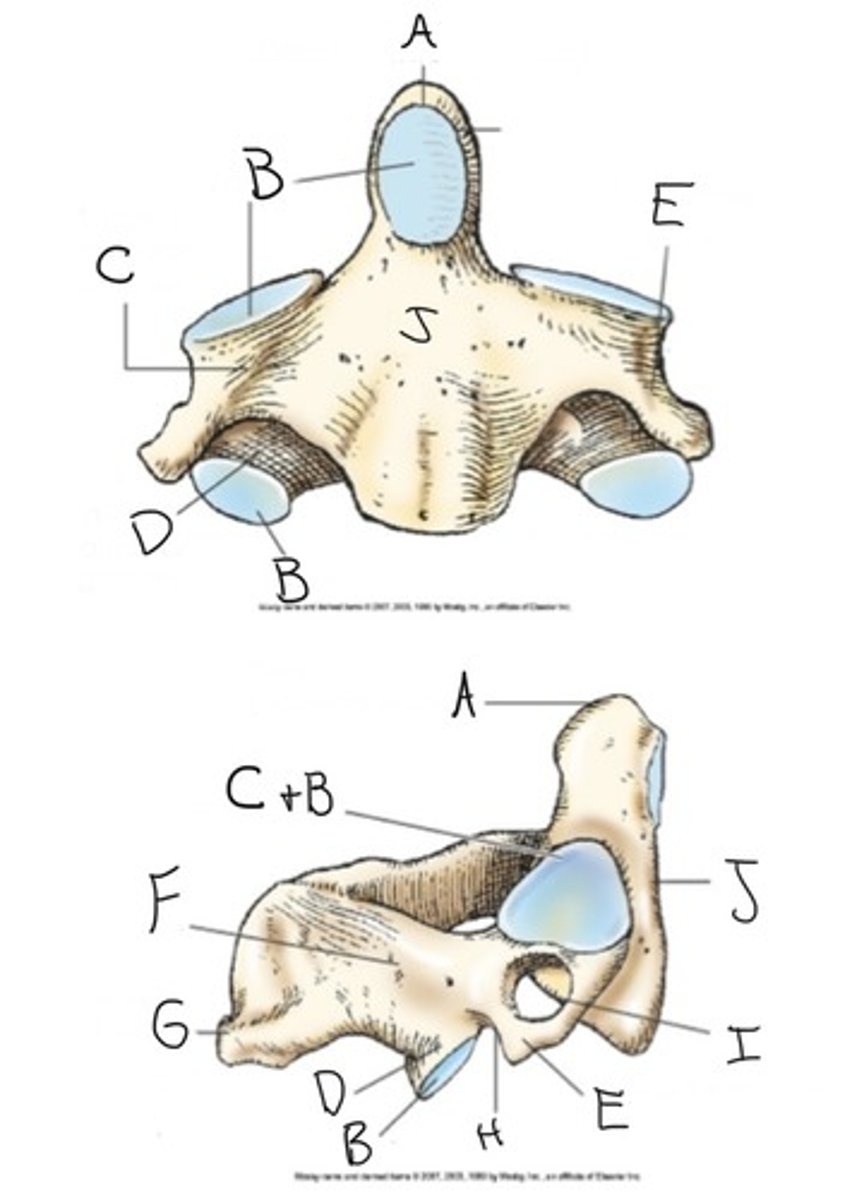
Facet
What is B?
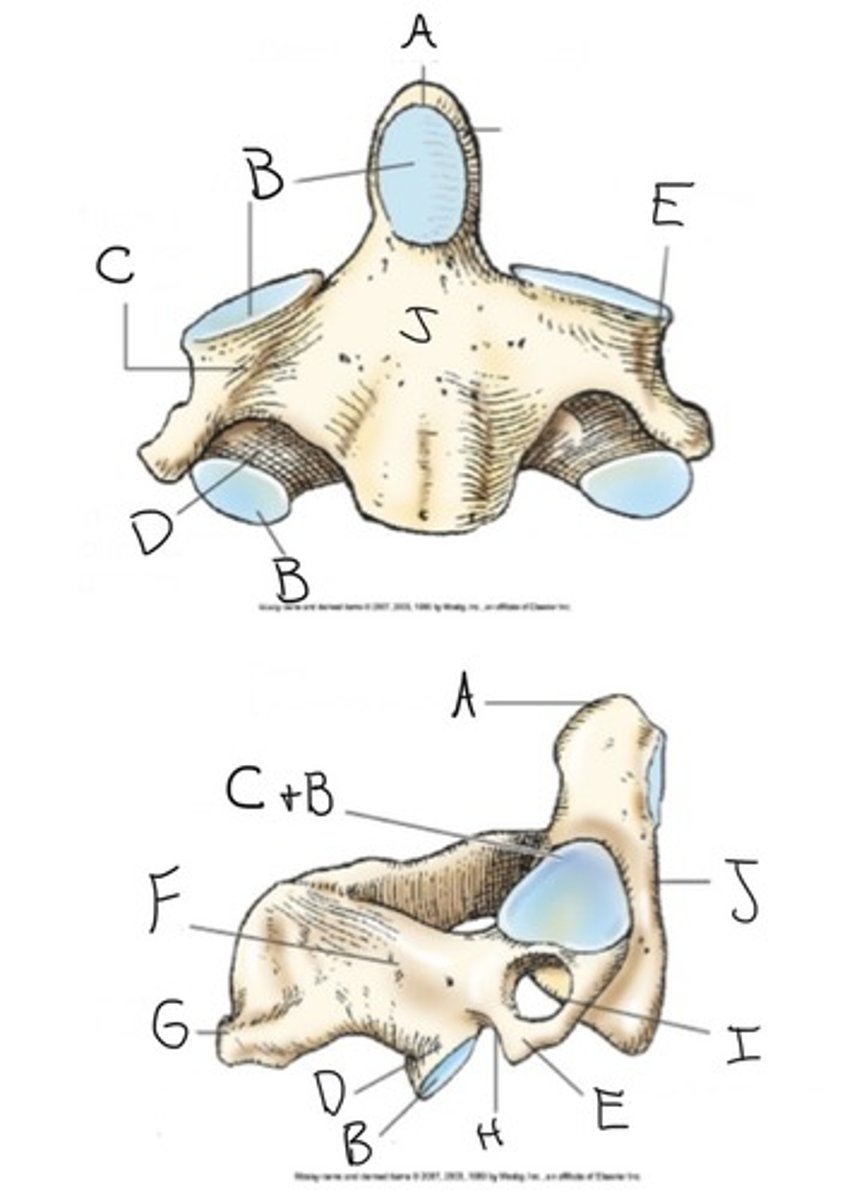
Superior articular process
What is C?
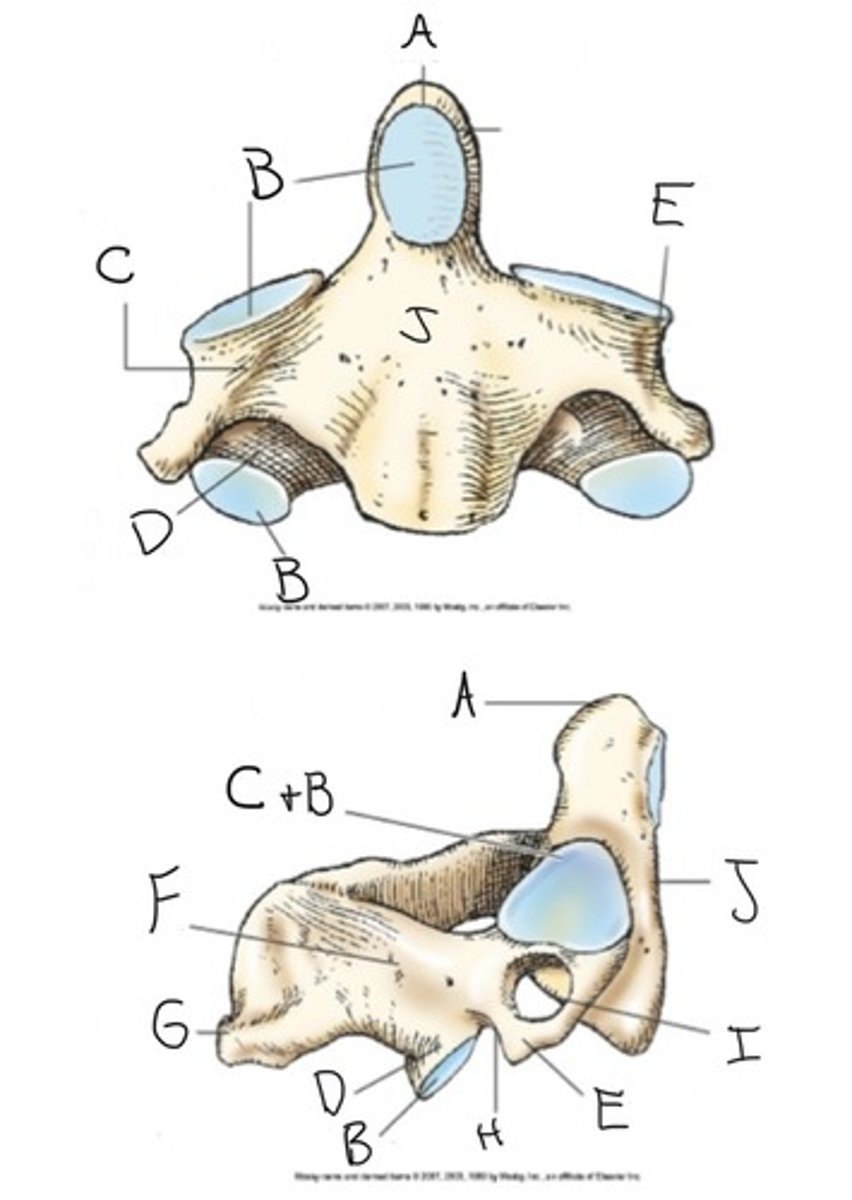
Inferior articular process
What is D?
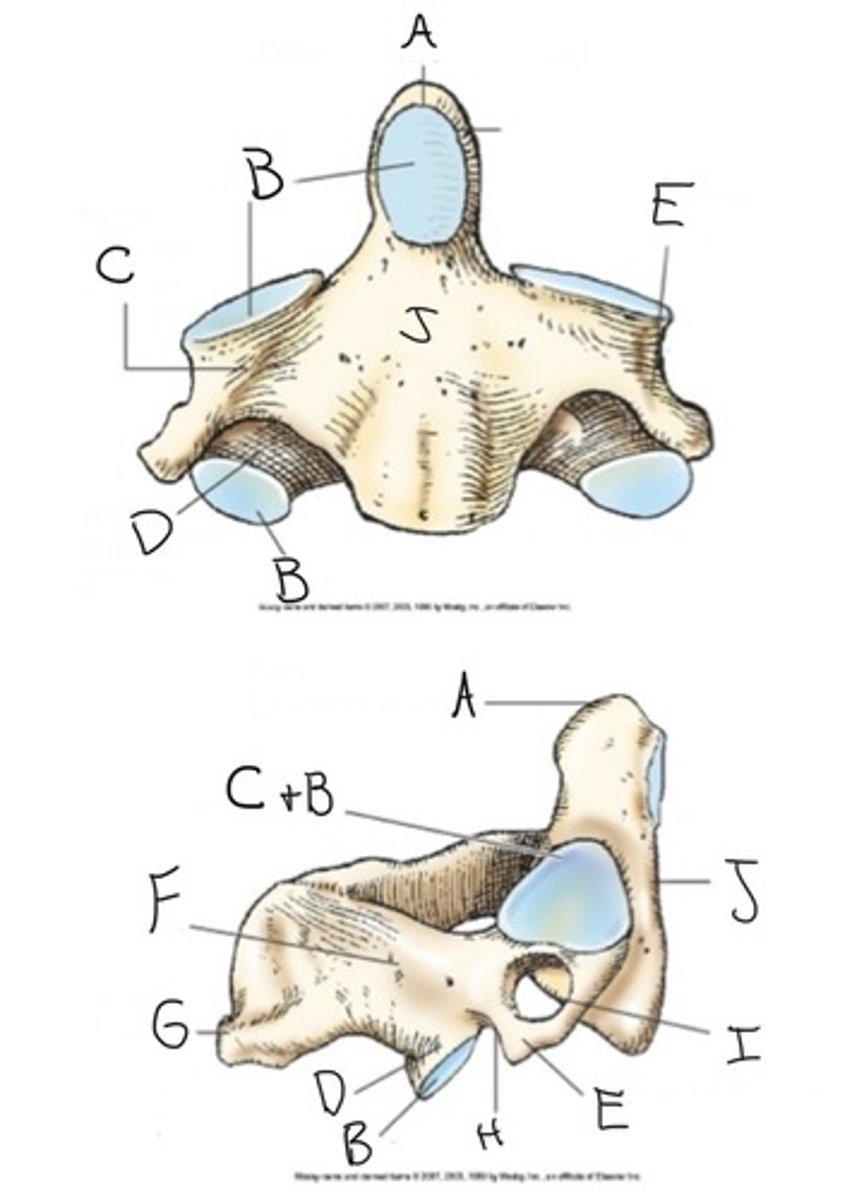
Transverse process
What is E?
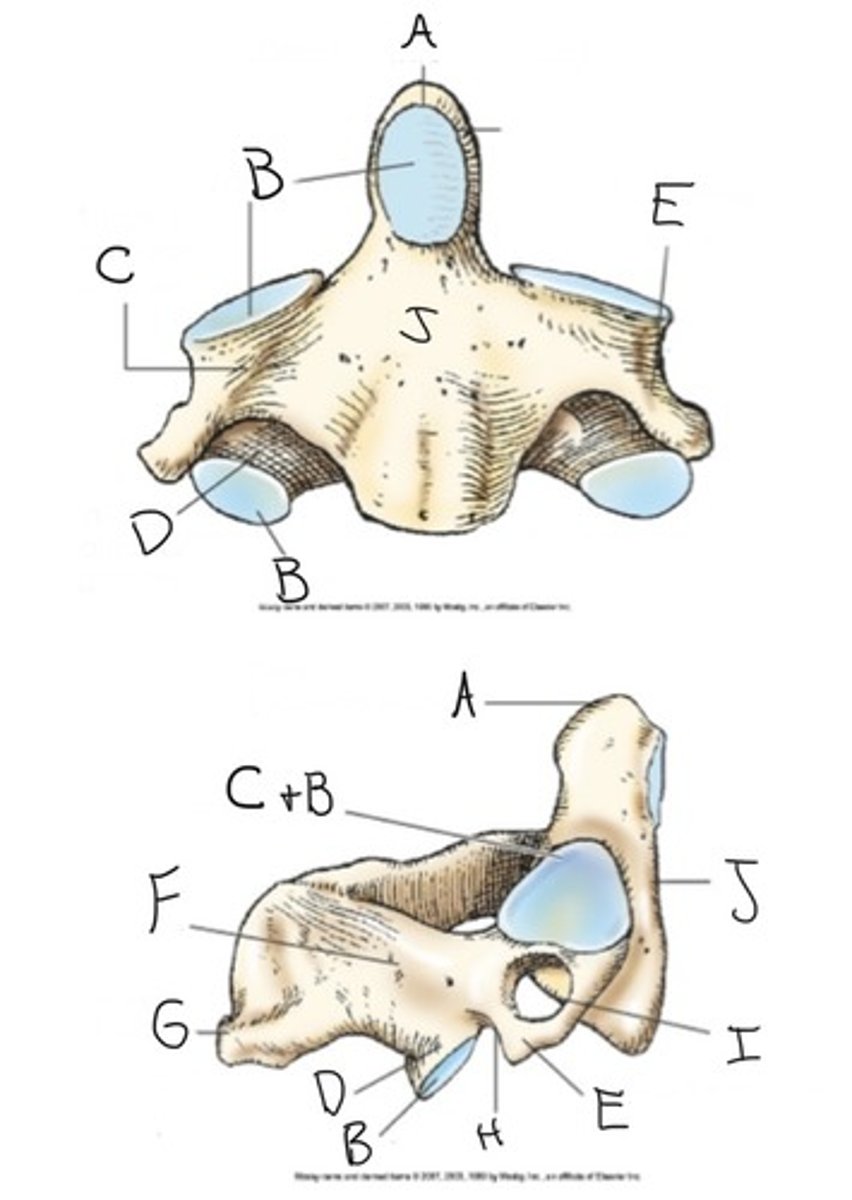
Lamina
What is F?
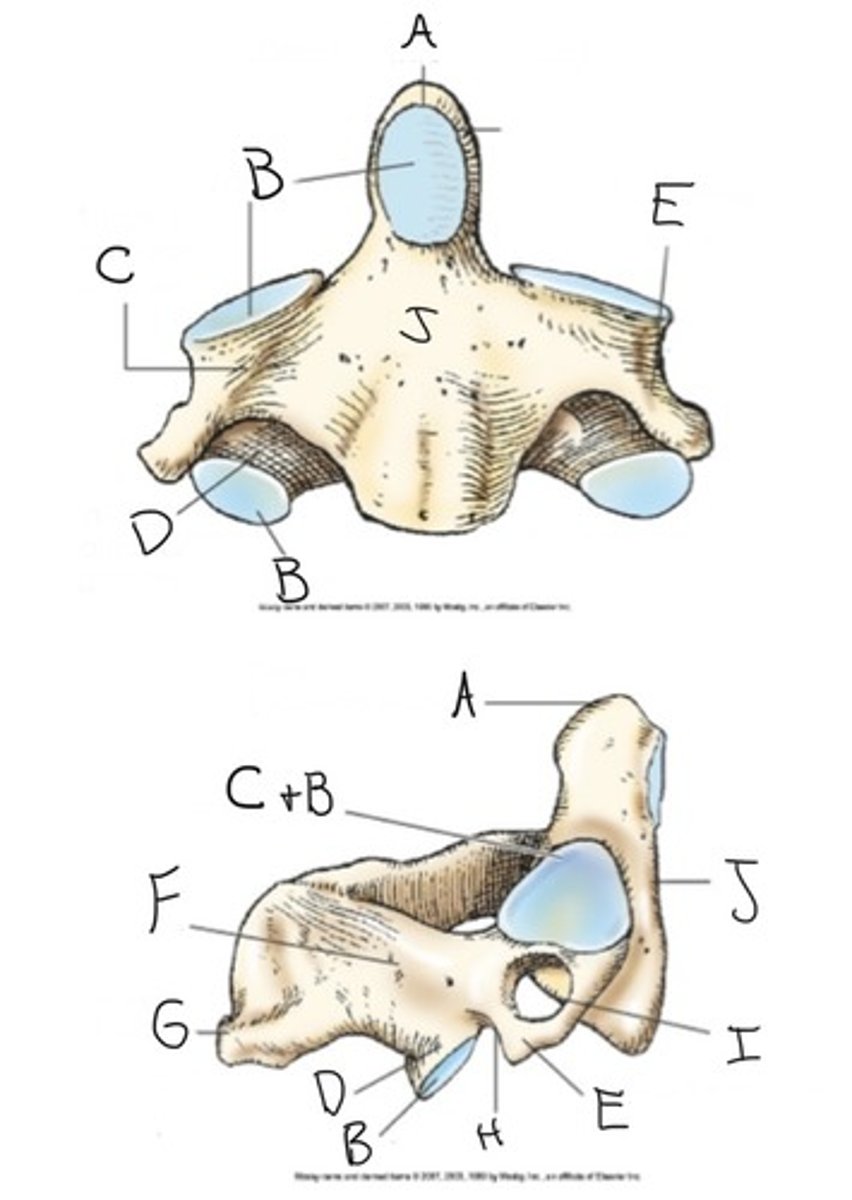
Spinous process
What is G?
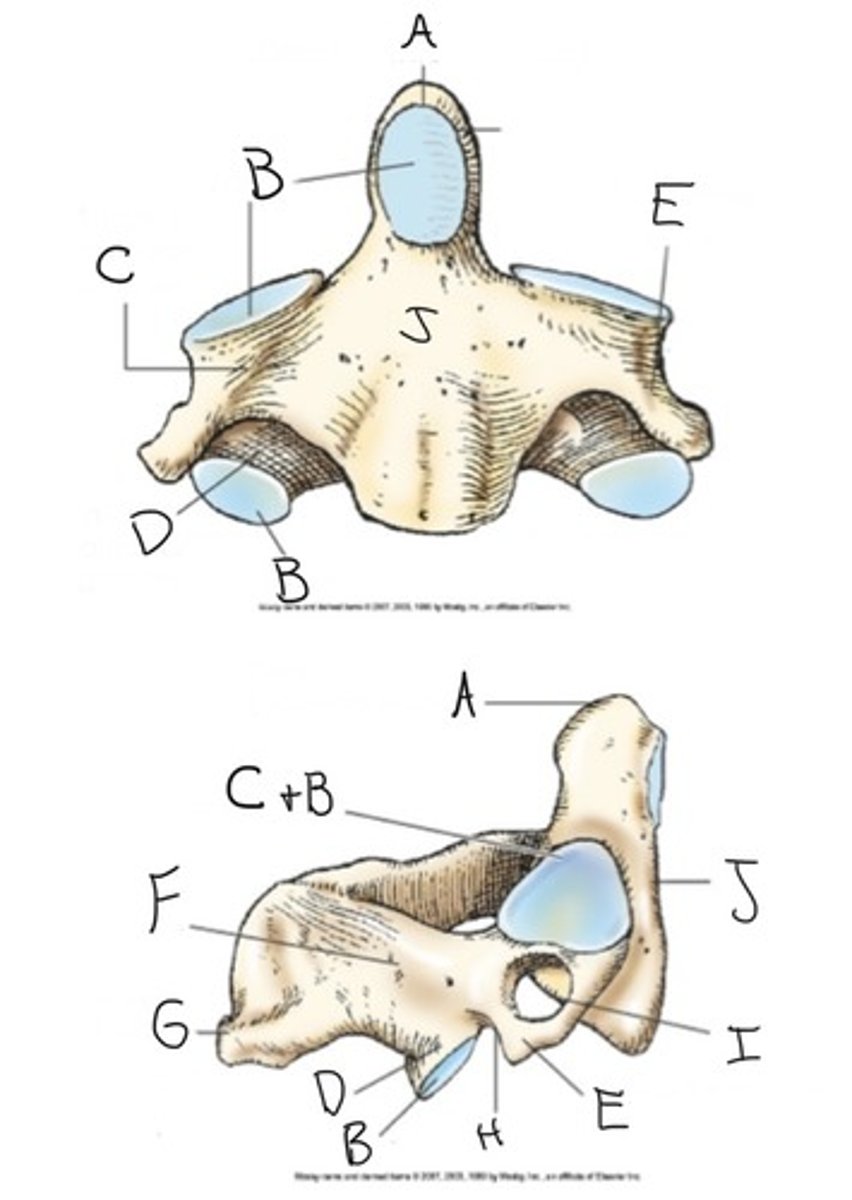
Vertebral notch
What is H?
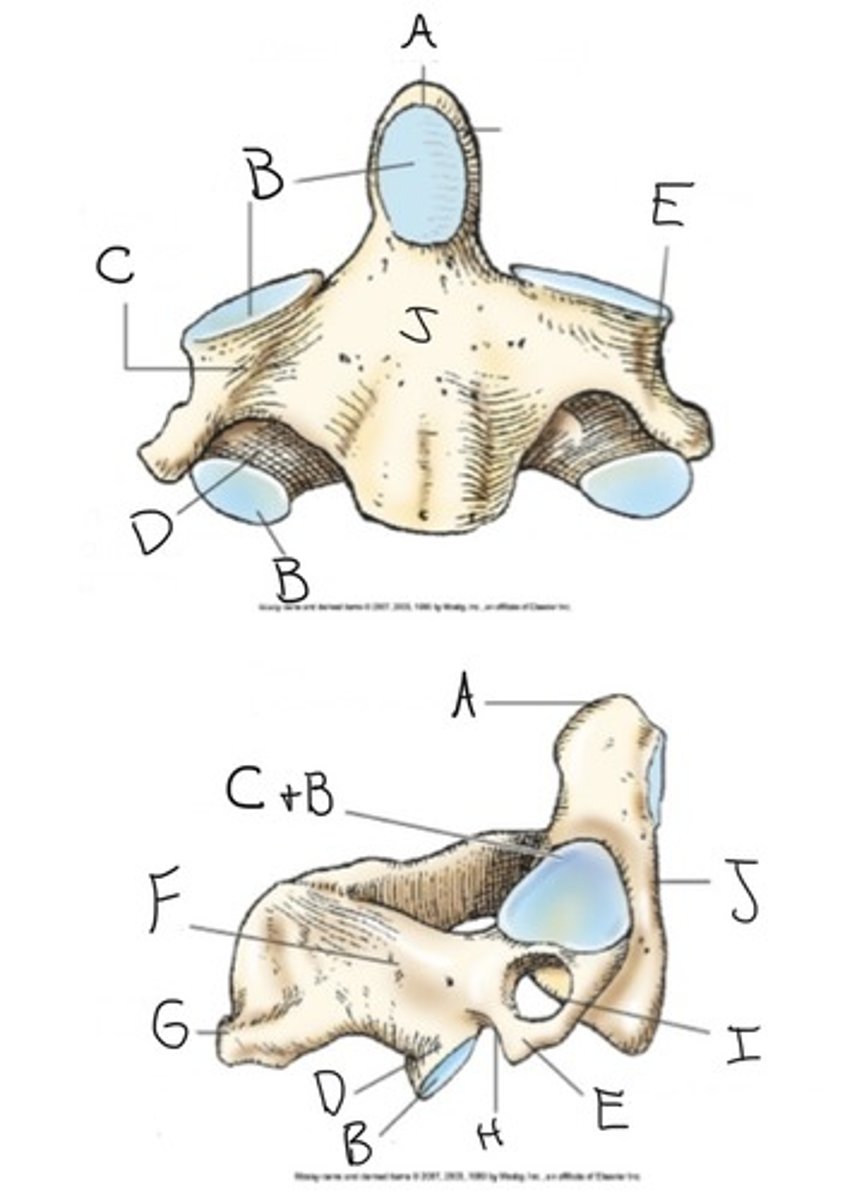
Transverse foramen
What is I?
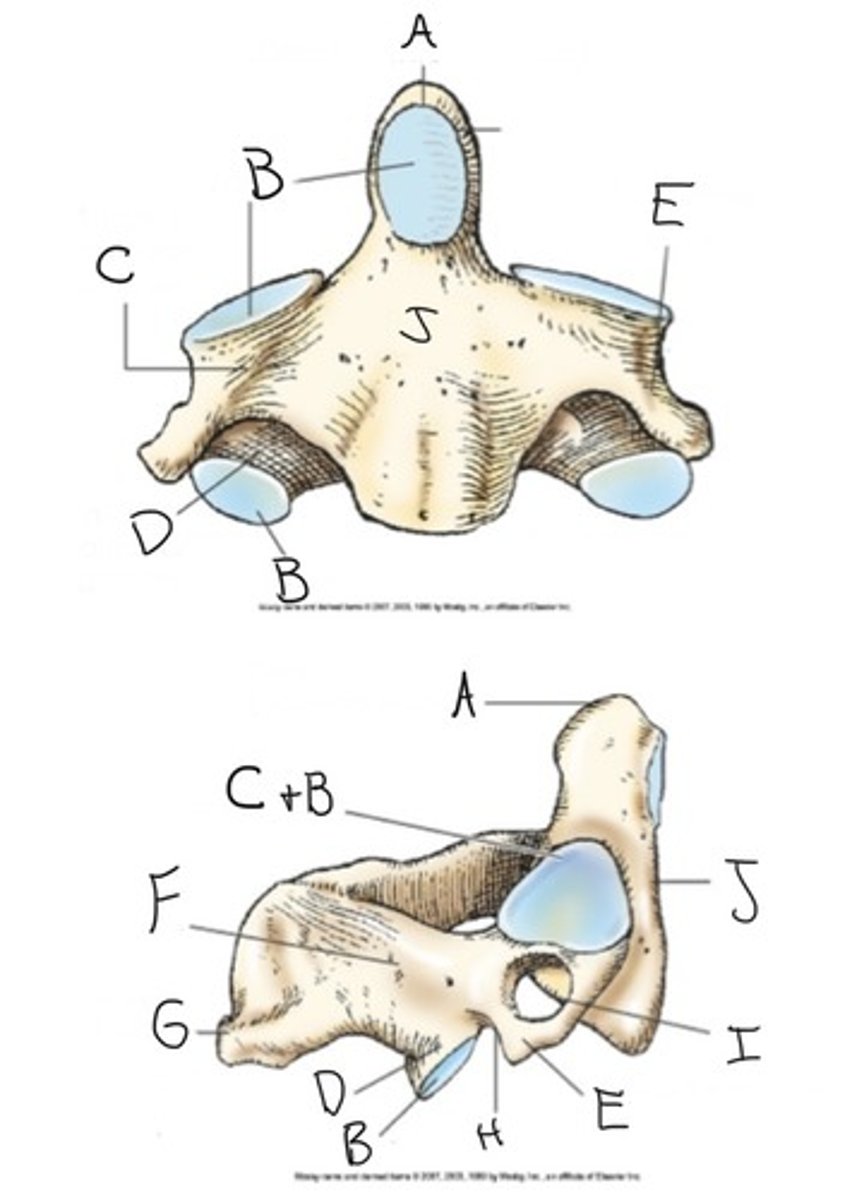
Body
What is J?
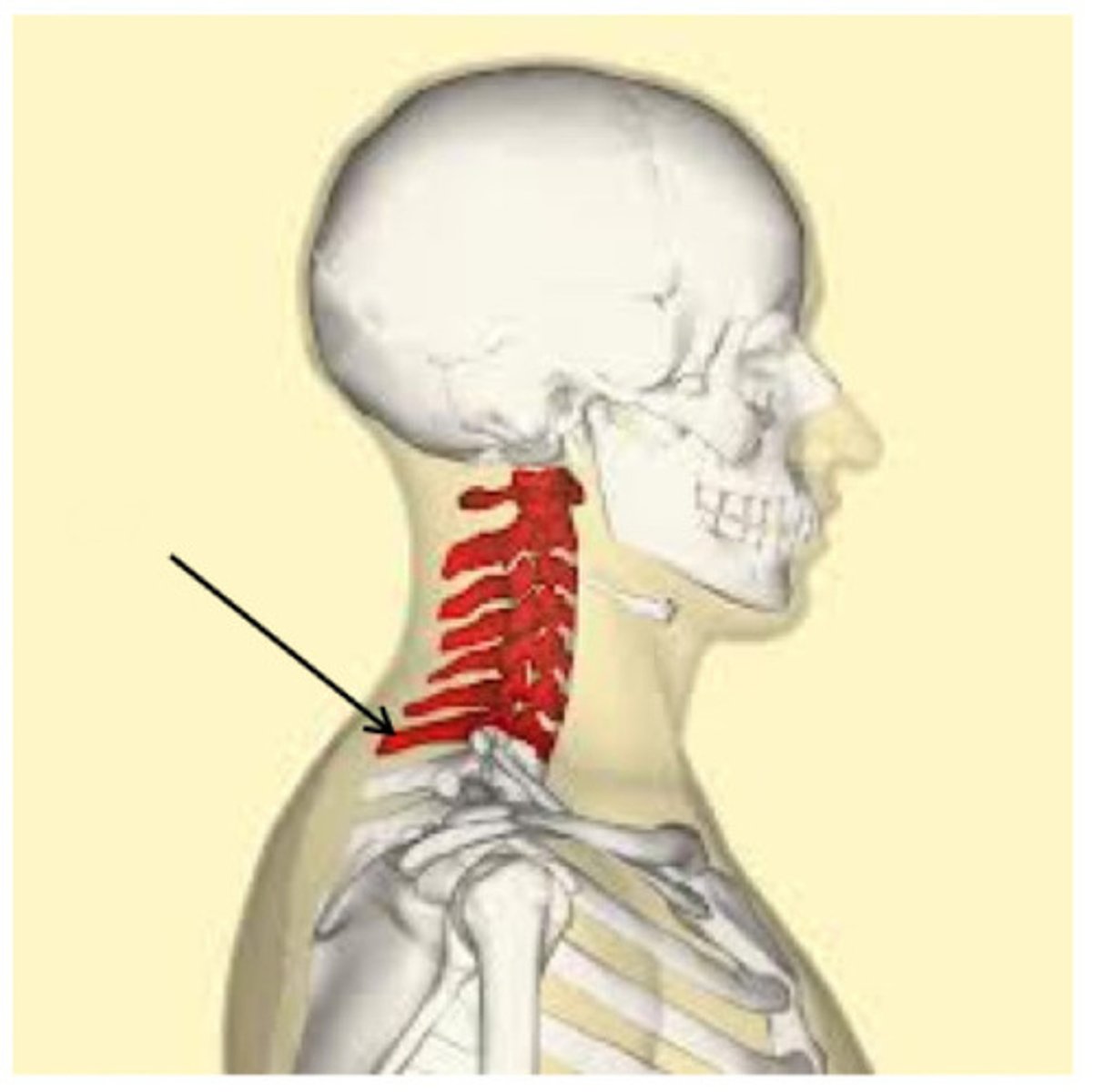
C7 (vertebra prominens)
What is the arrow pointing to?
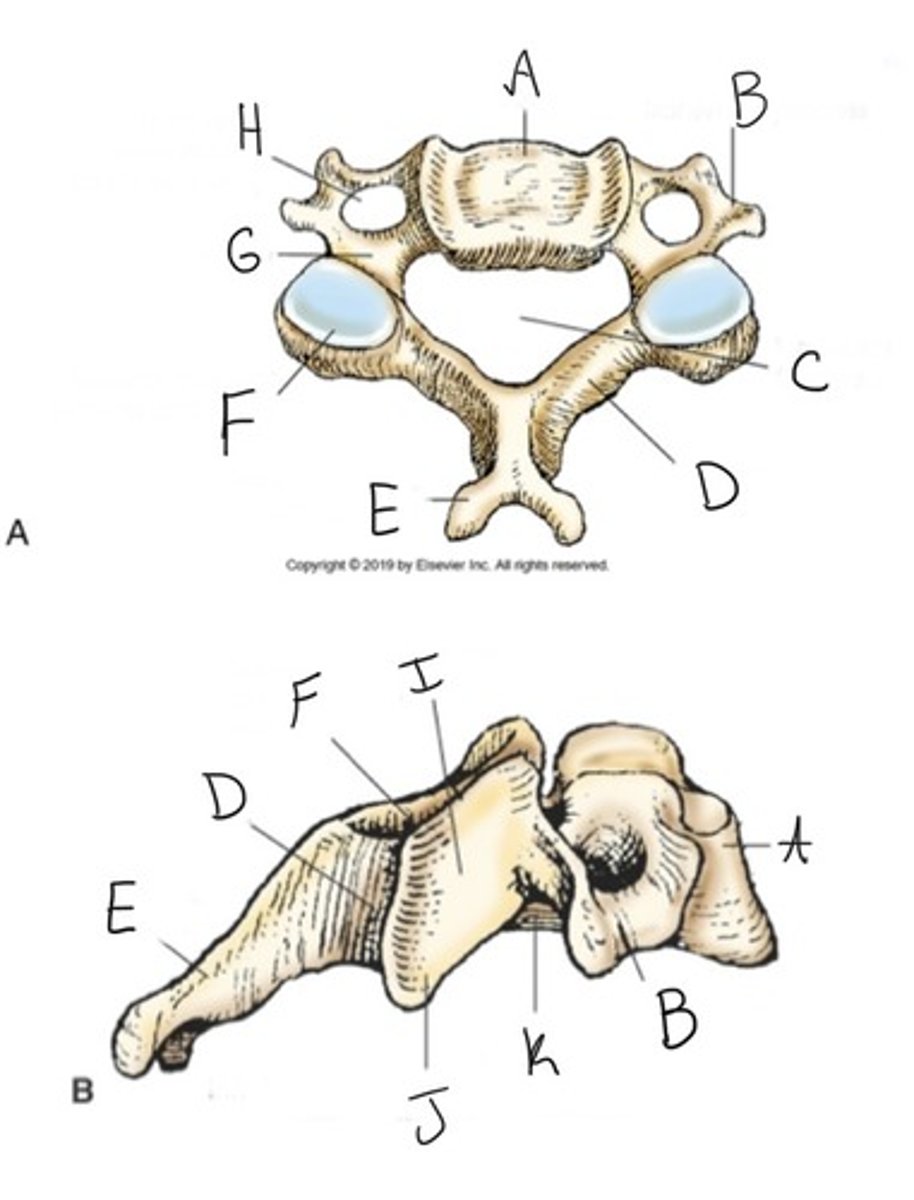
Typical Cervical Vertebrae (C3-C7)
What vertebrae is this?
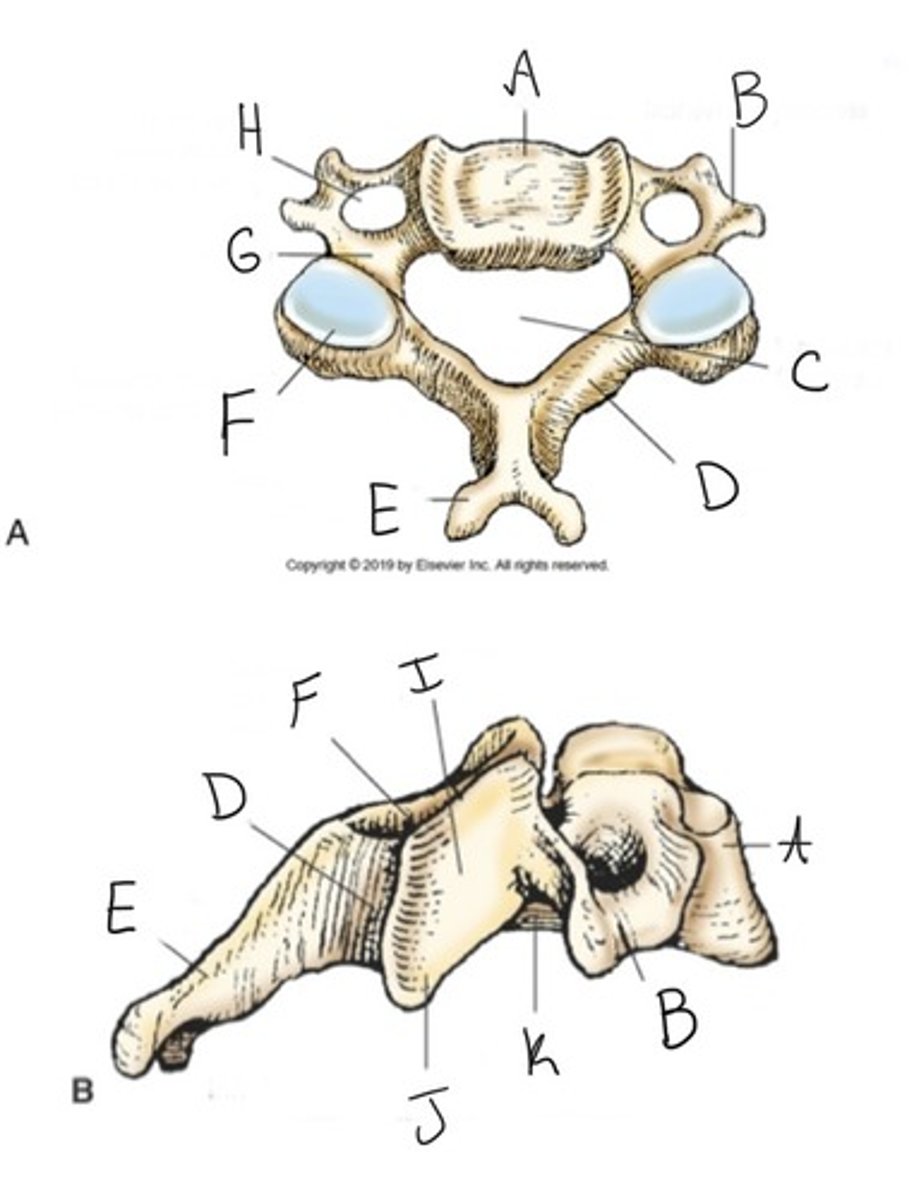
Body
What is A?
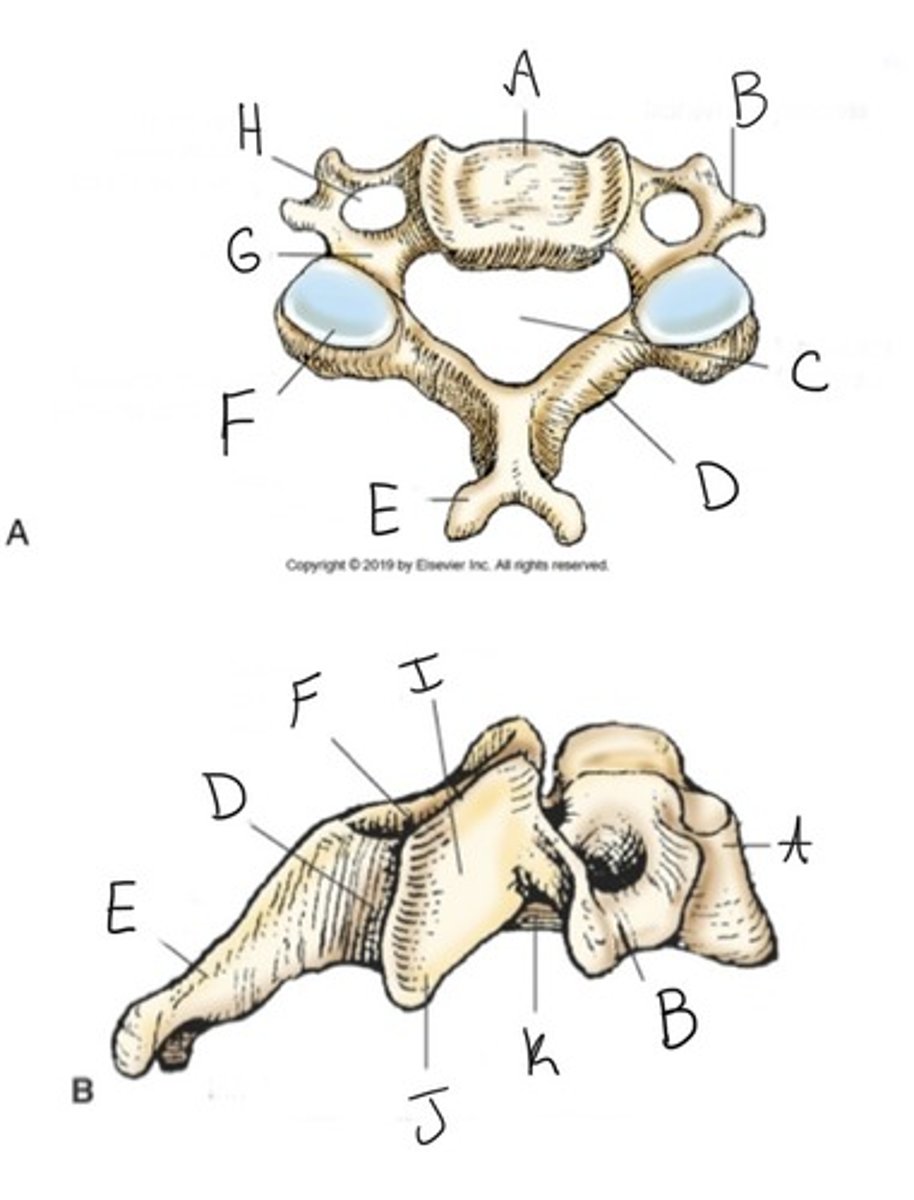
Transverse process
What is B?
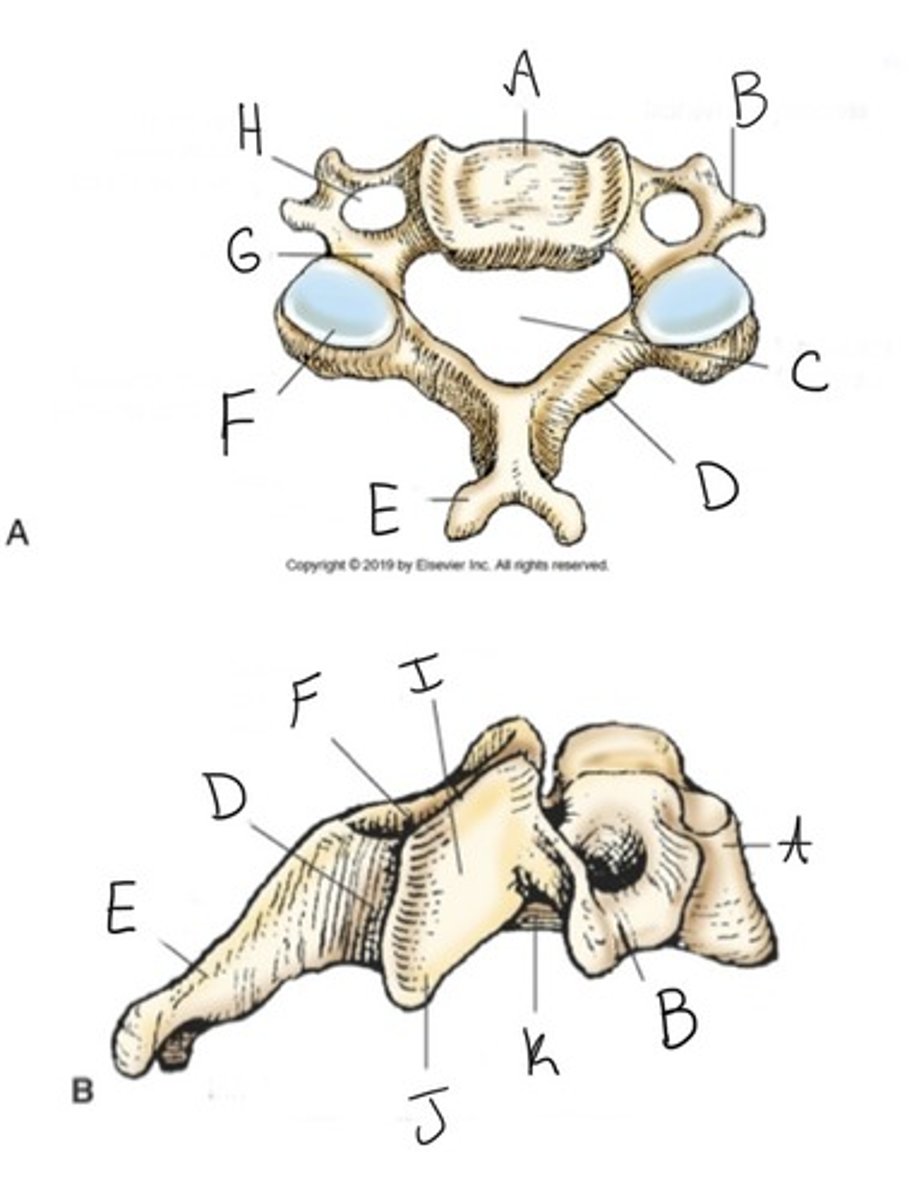
Vertebral foramen
What is C?
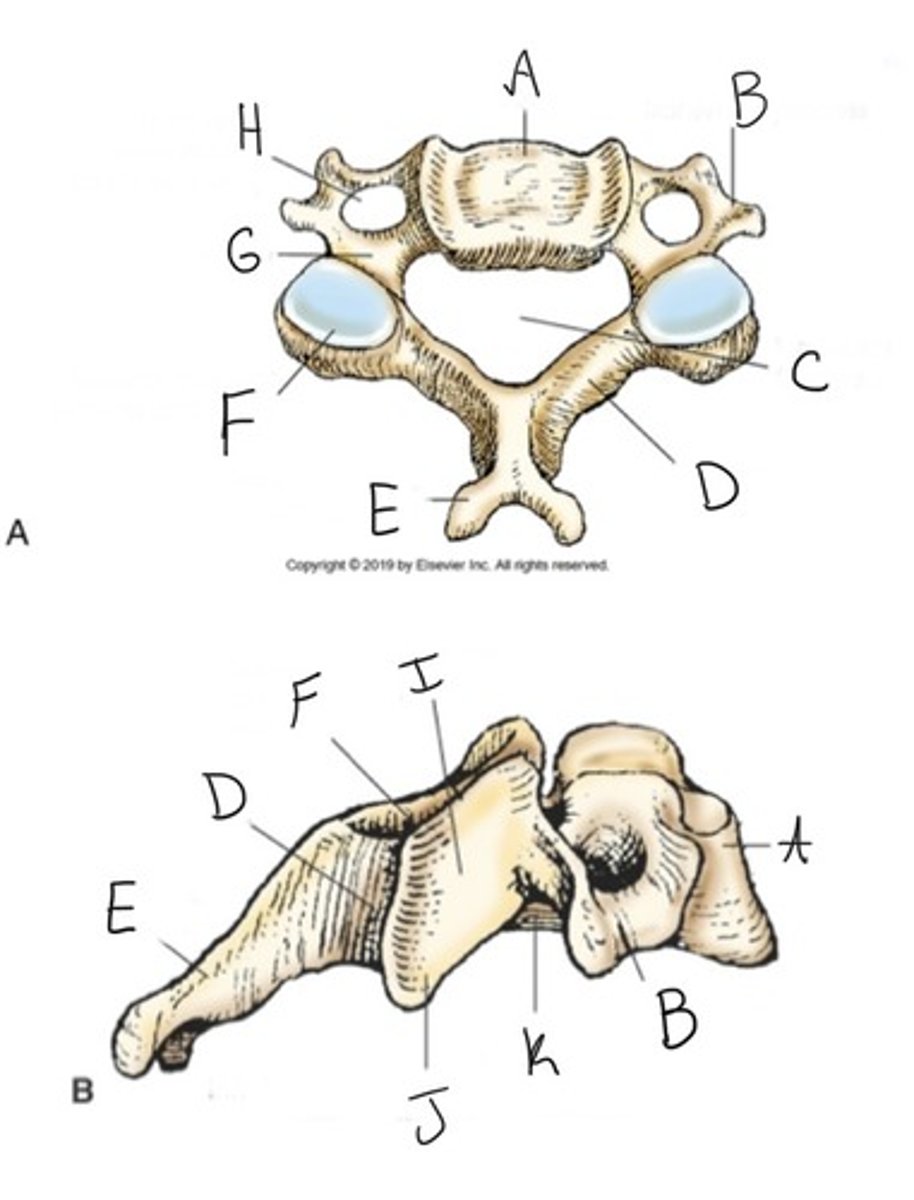
Lamina
What is D?
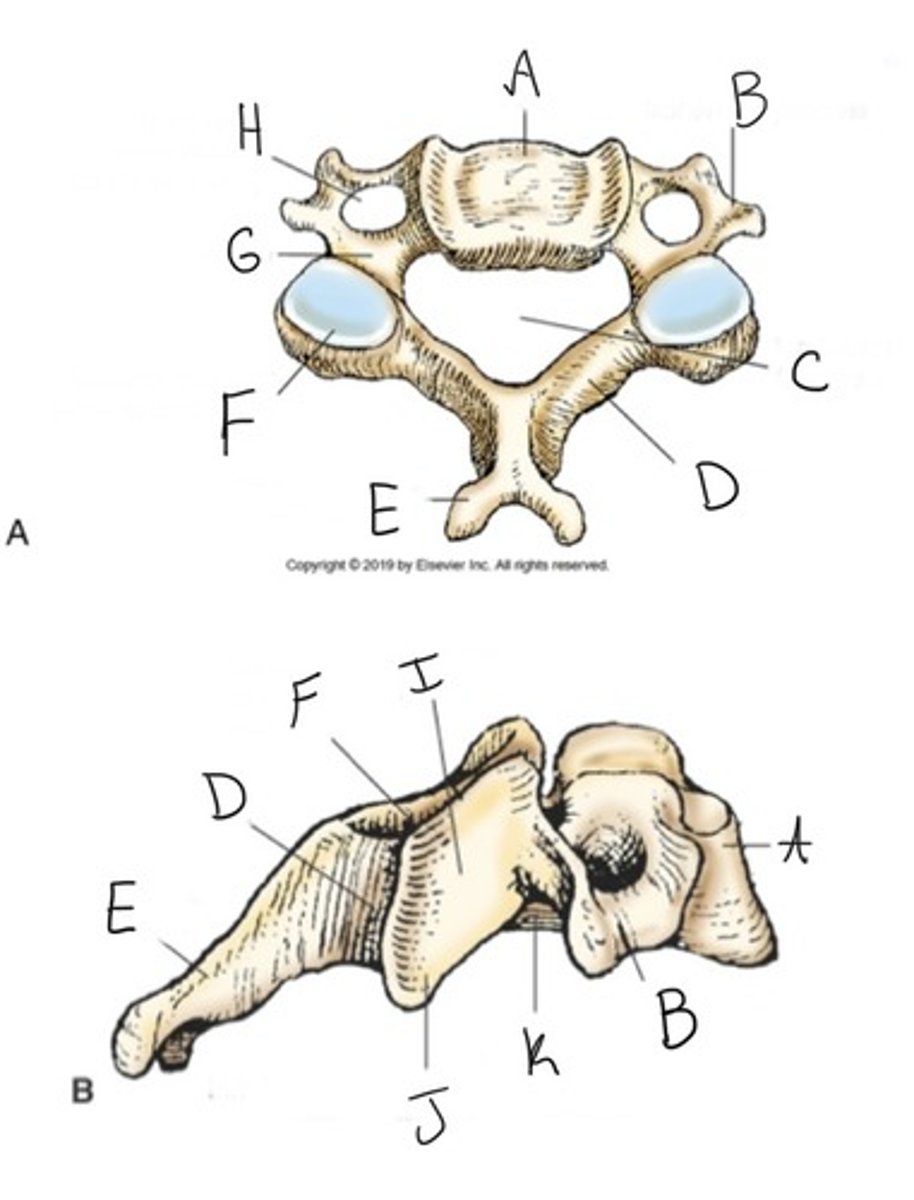
Spinous process with bifid tip
What is E?
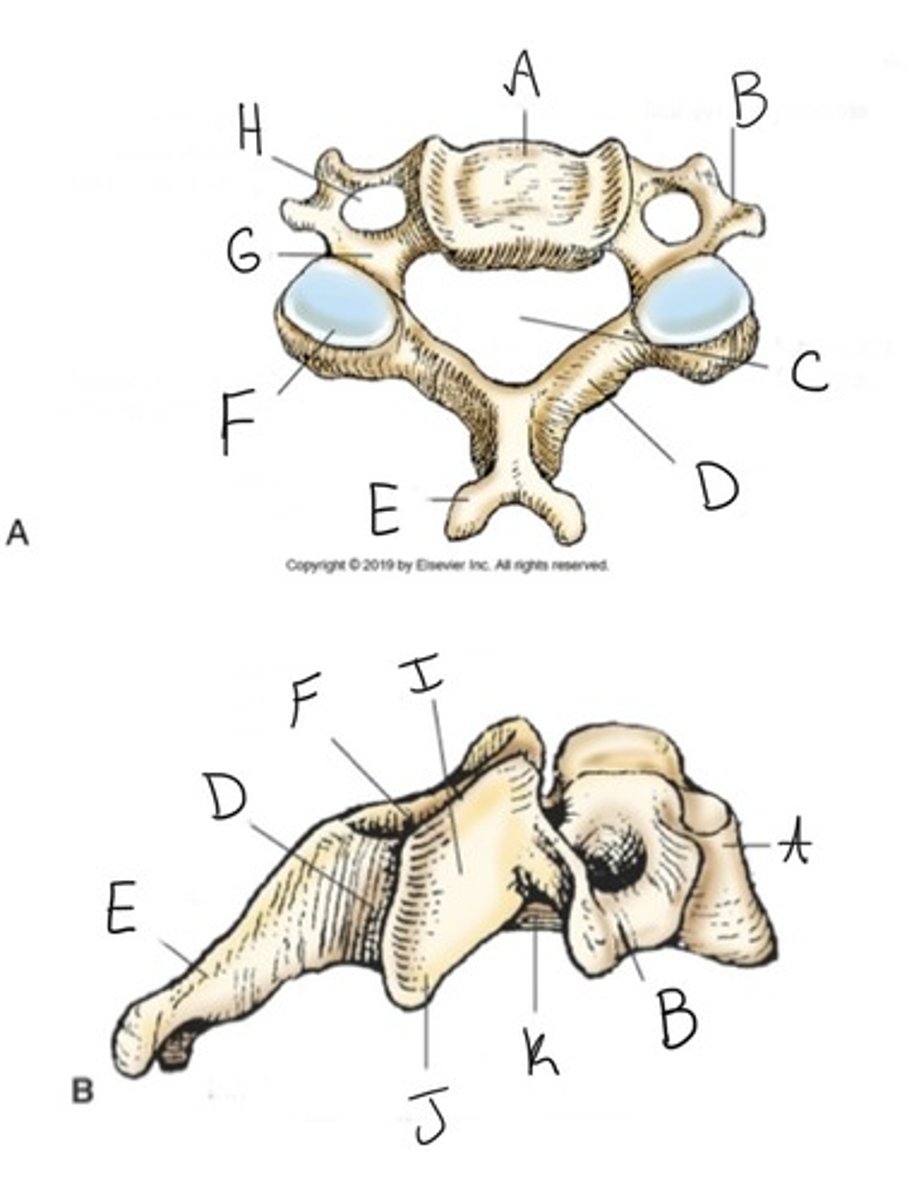
Superior articular process & facet
What is F?
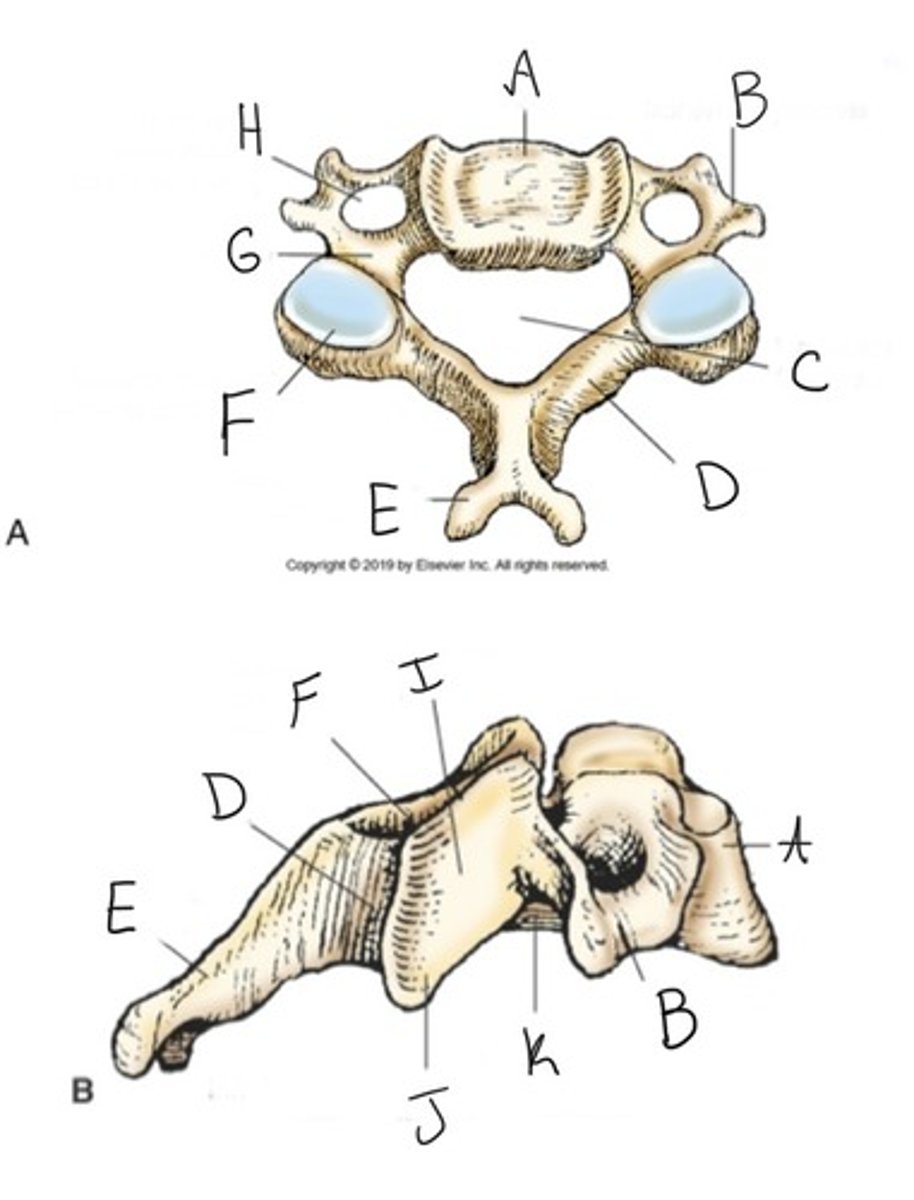
Pedicle
What is G?
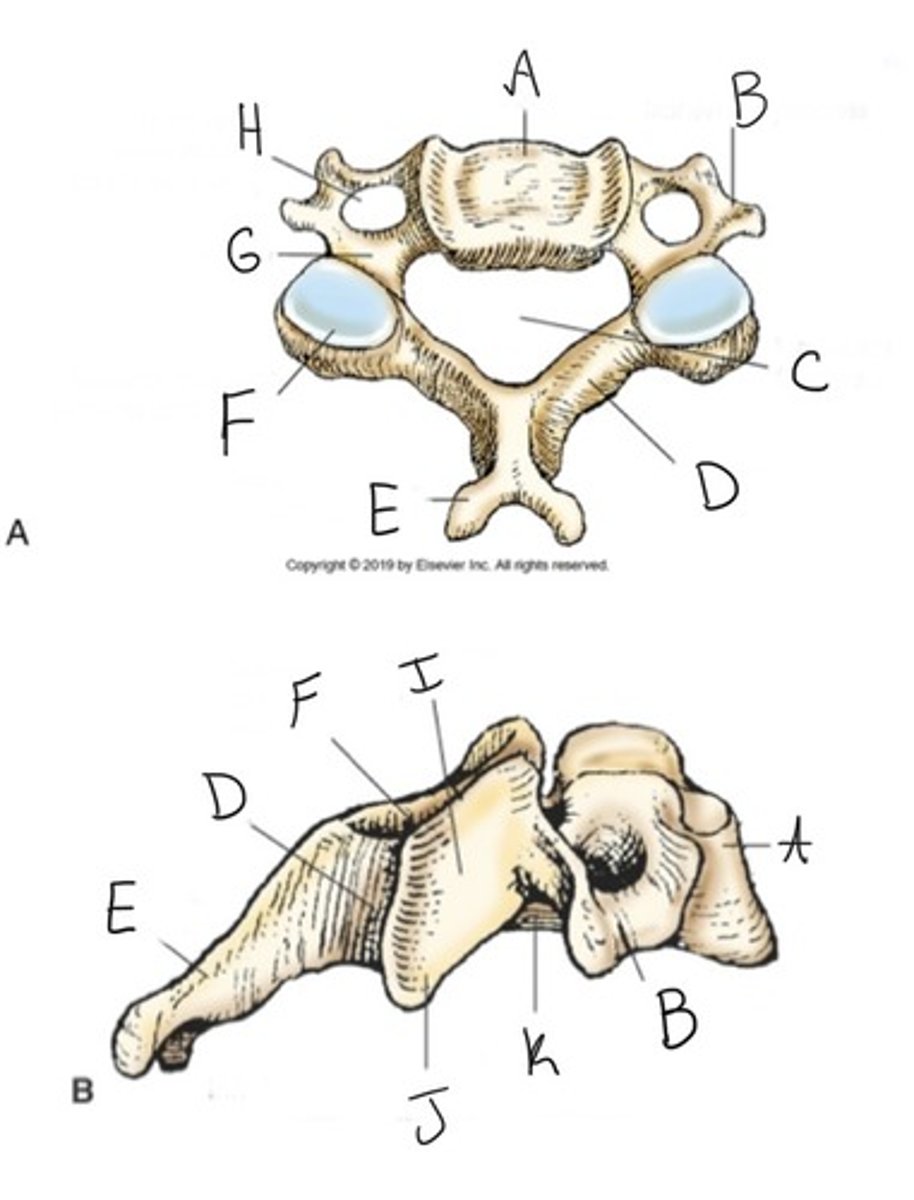
Transverse foramen
What is H?
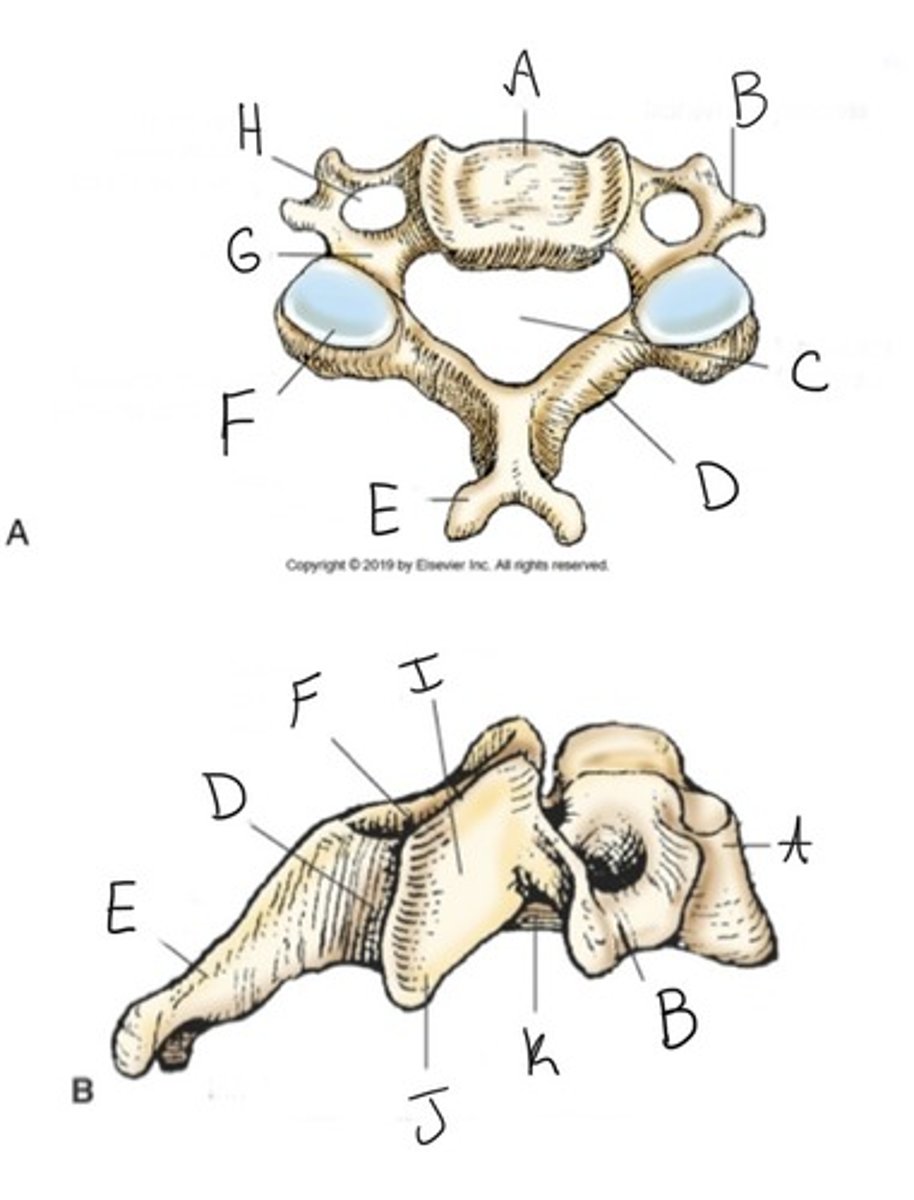
Articular pillar
What is I?
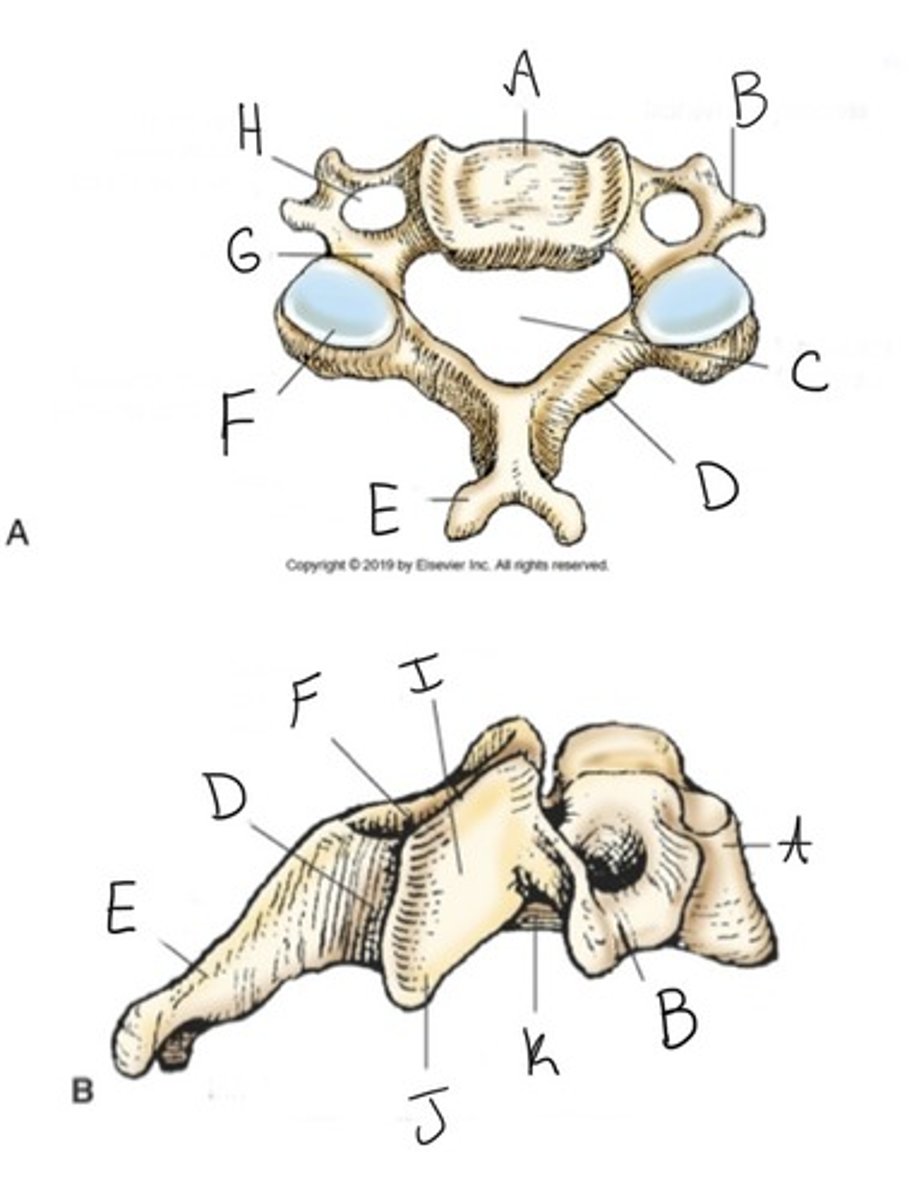
Inferior articular process
What is J?
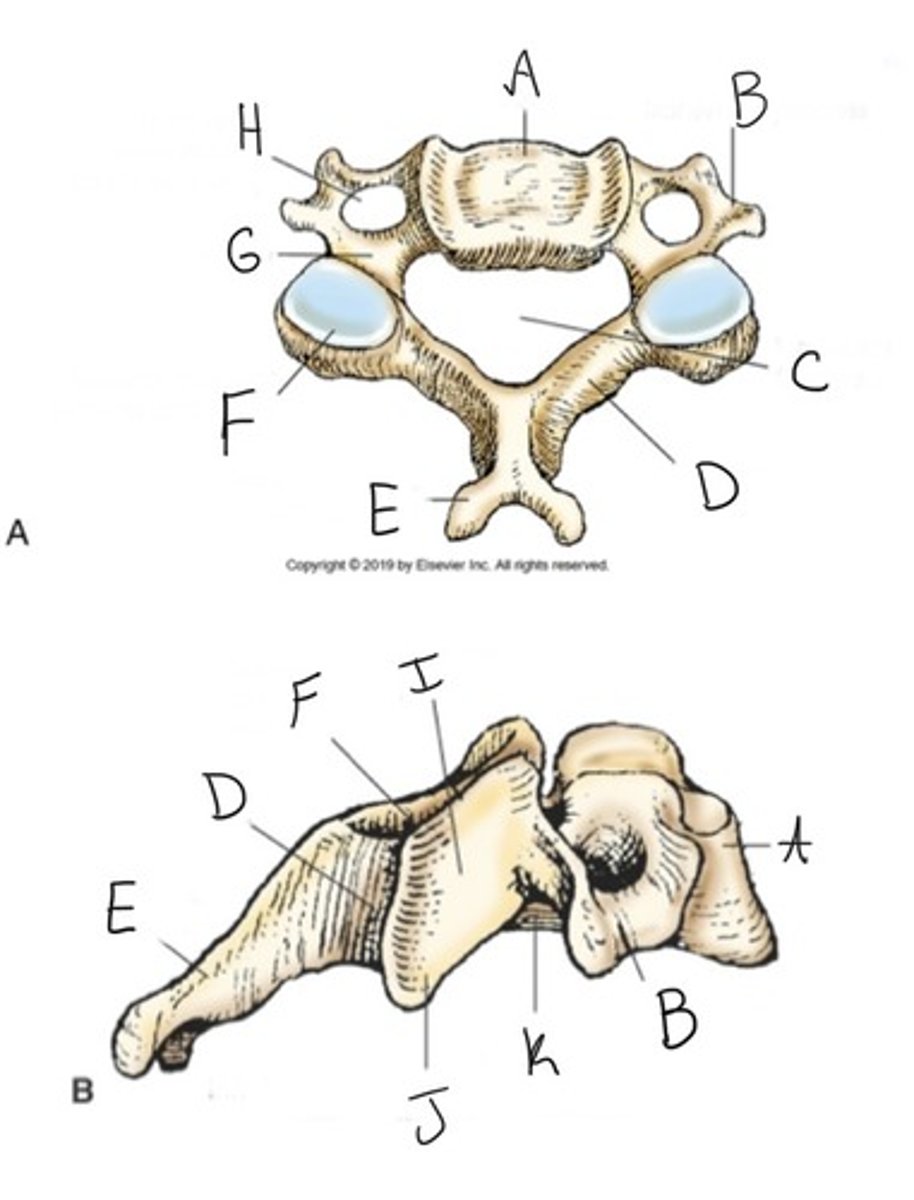
Vertebral notch
What is K?
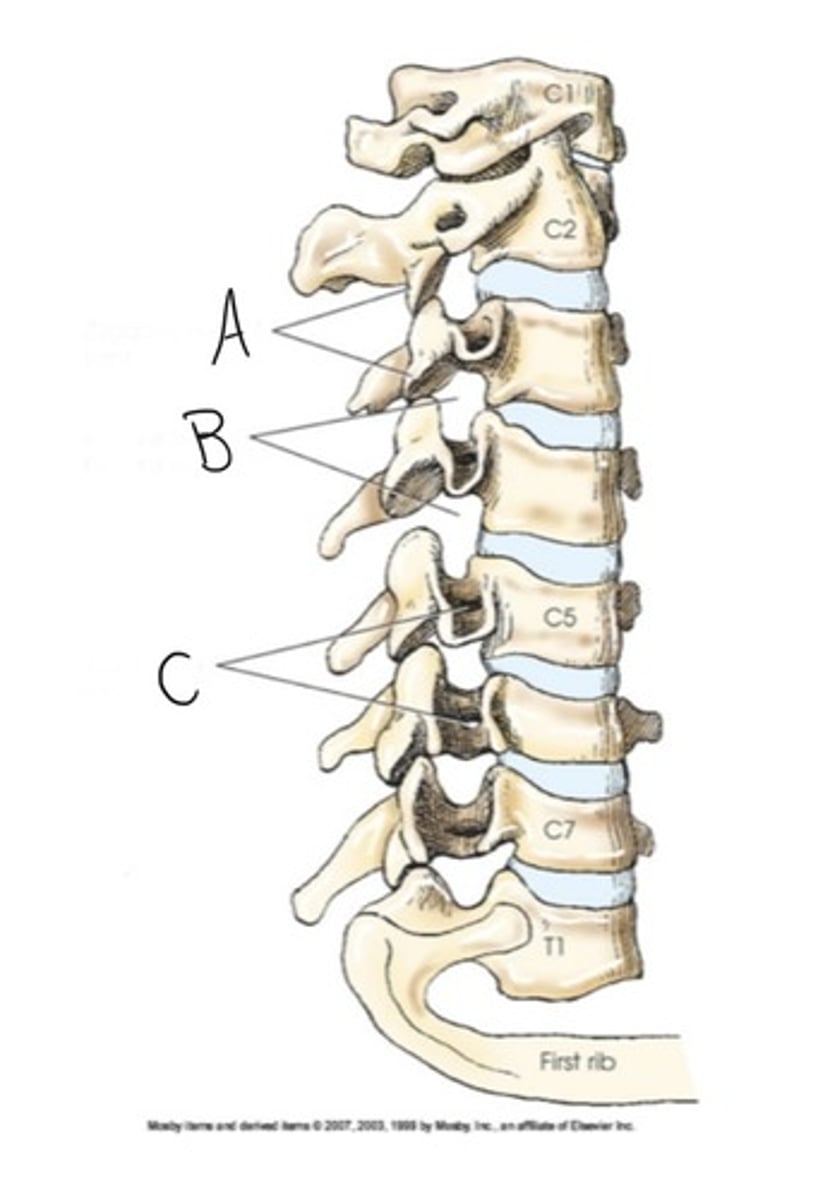
Zygapophyseal joint
What is A?
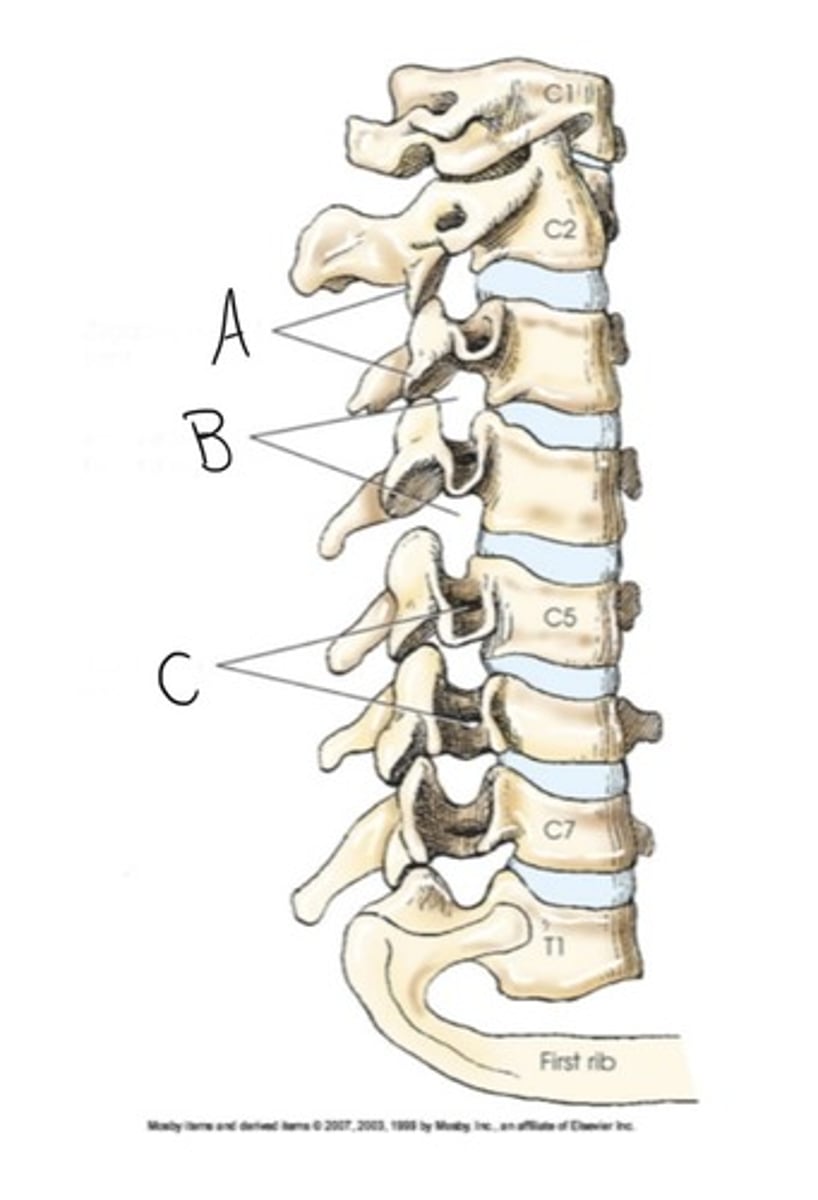
Intervertebral foramina
What are B?
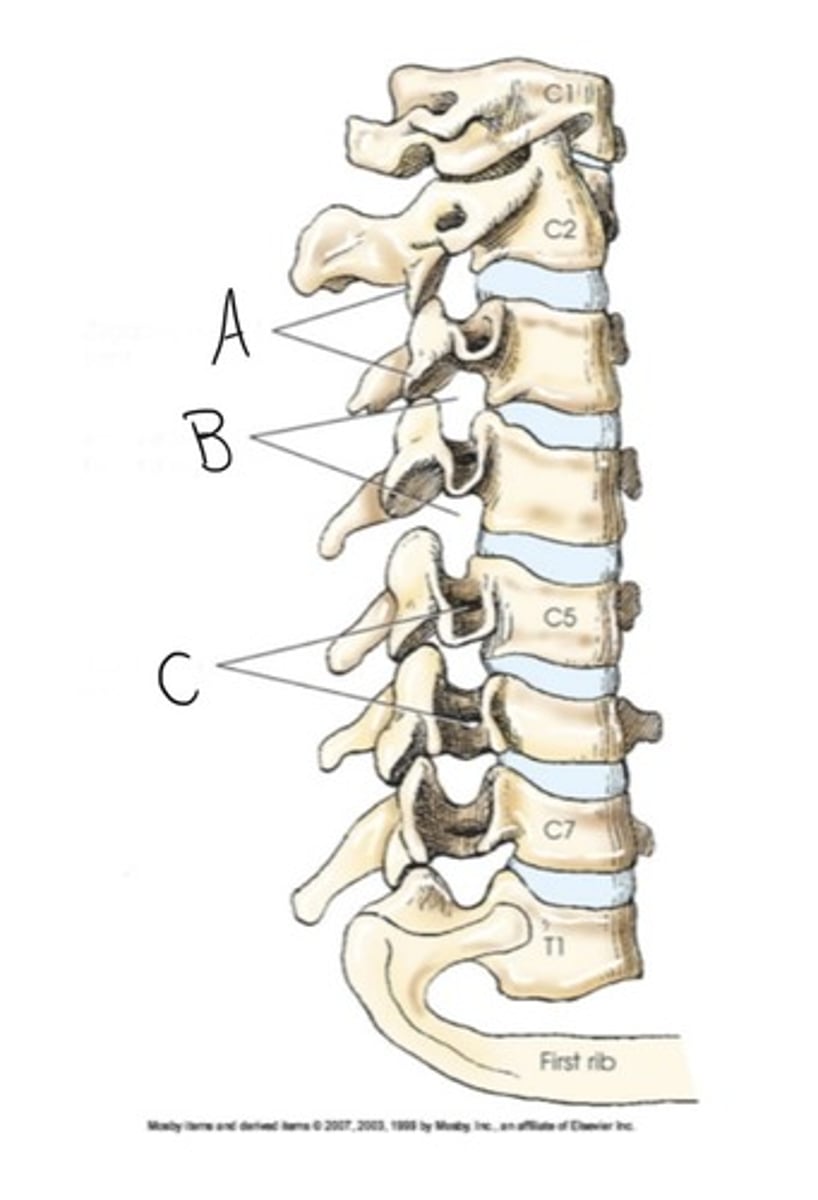
Transverse foramina
What are C?
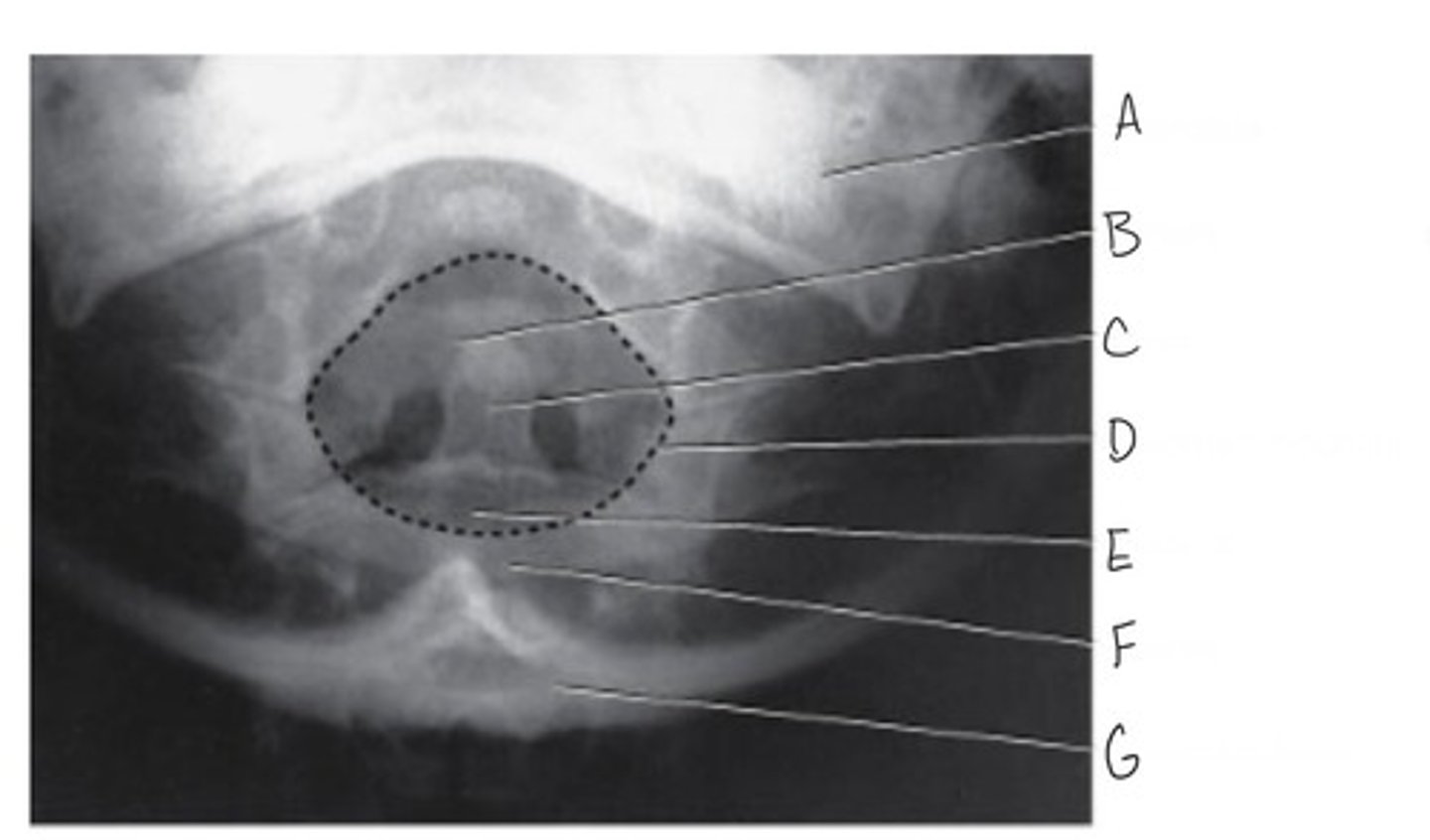
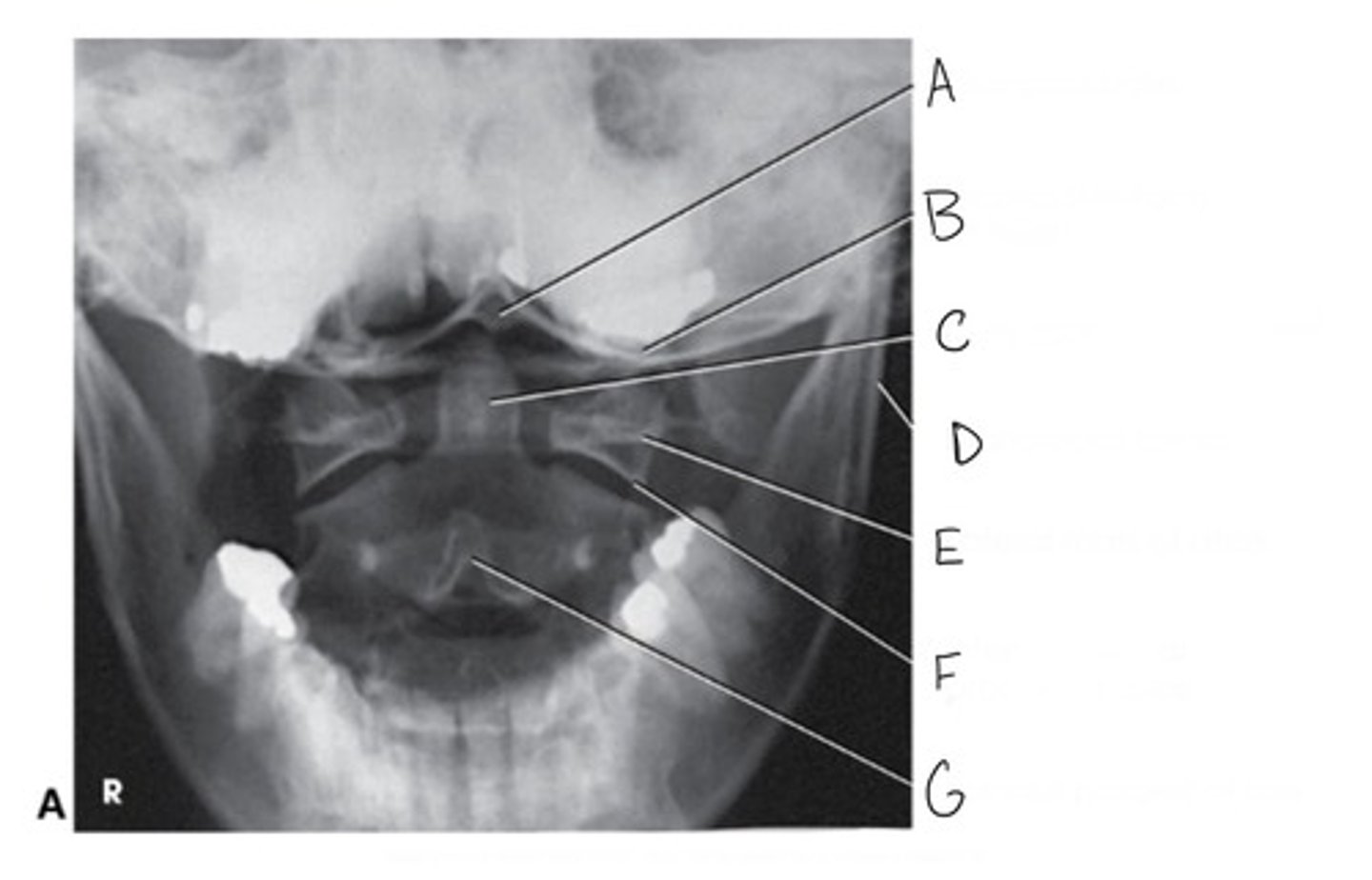
AP (Fuchs method) projection of the cervical spine: Atlas & Axis
What is this radiograph projection?
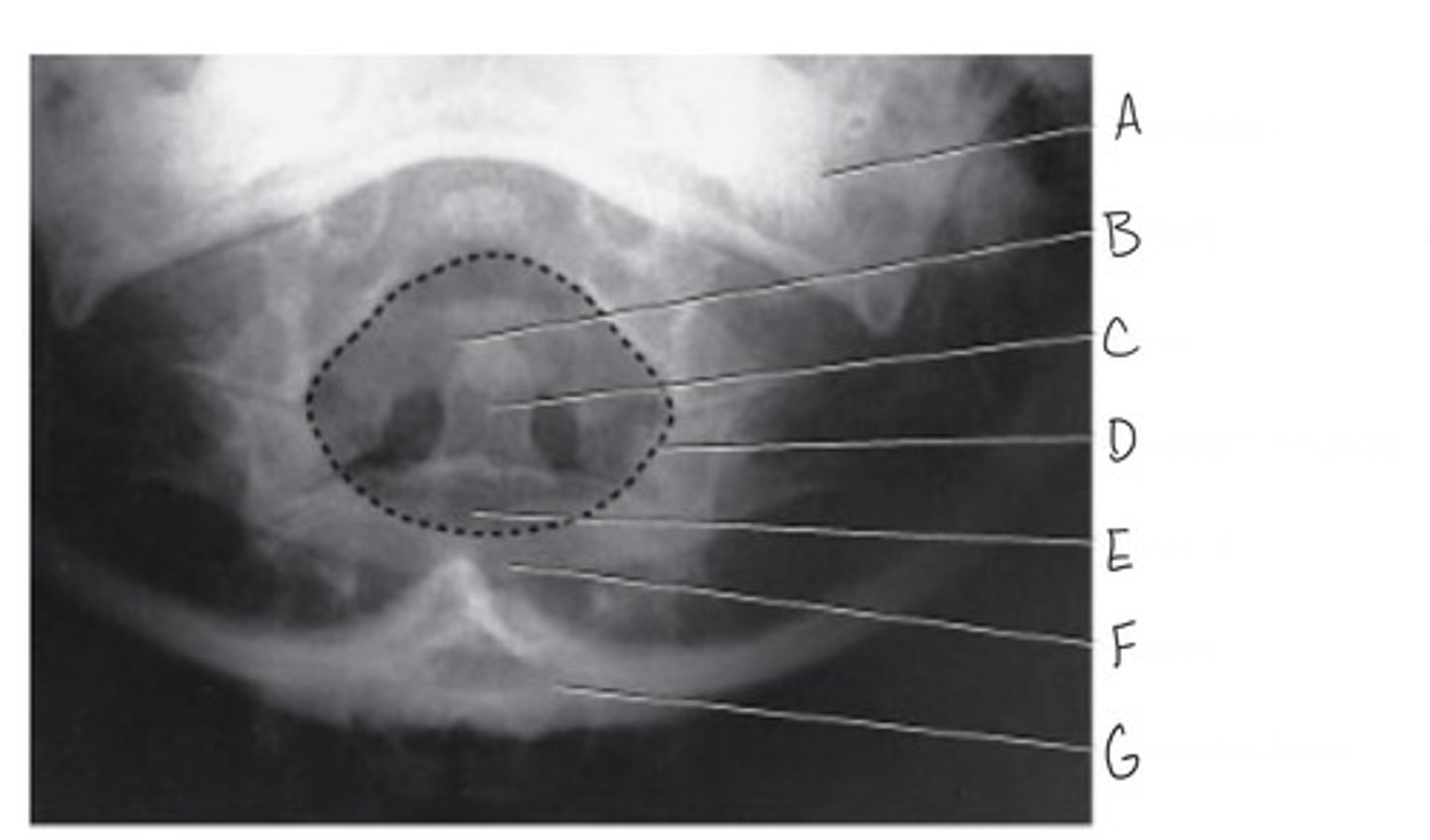
Mandible
What is A?
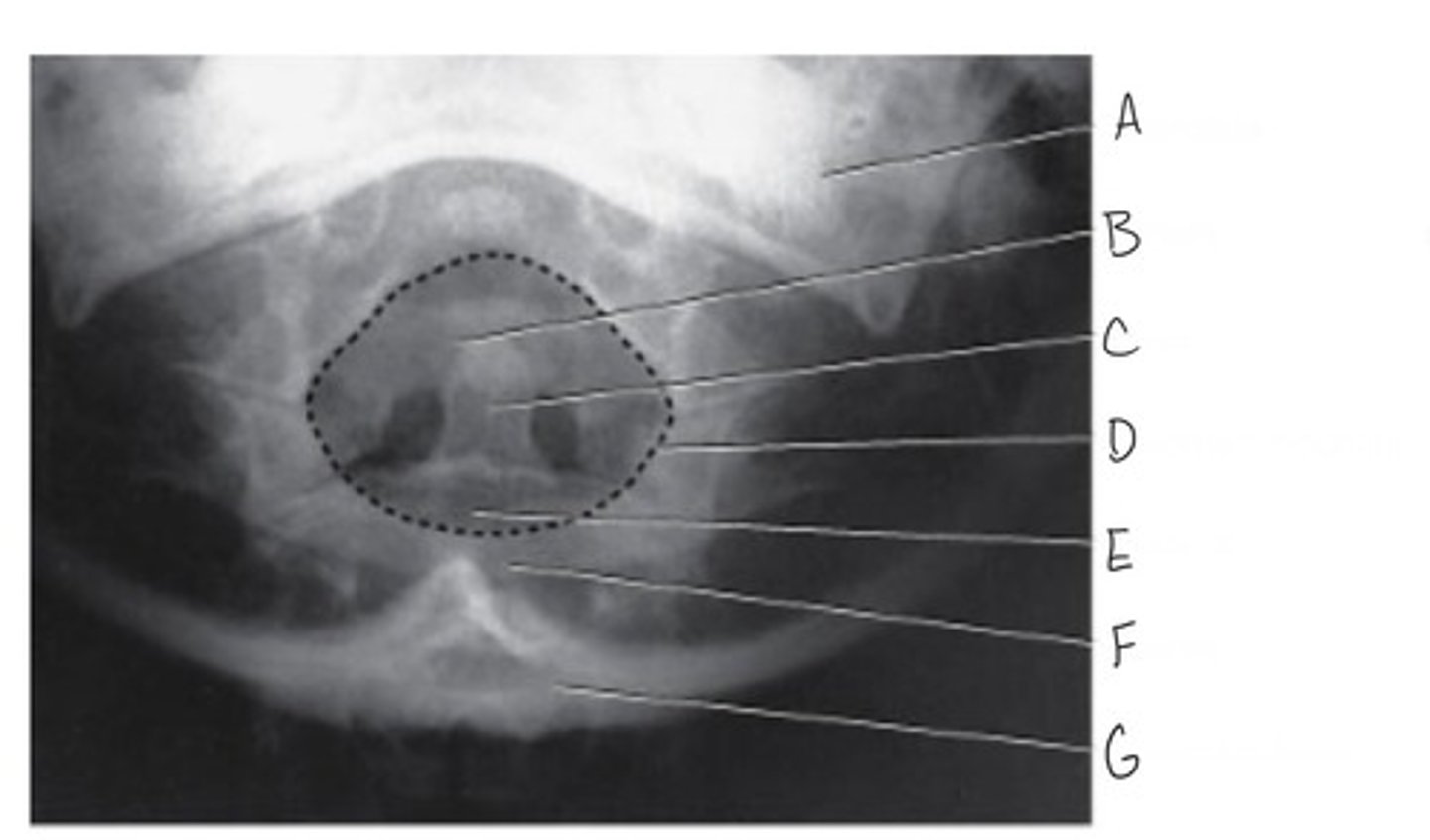
Anterior arch of atlas
What is B?
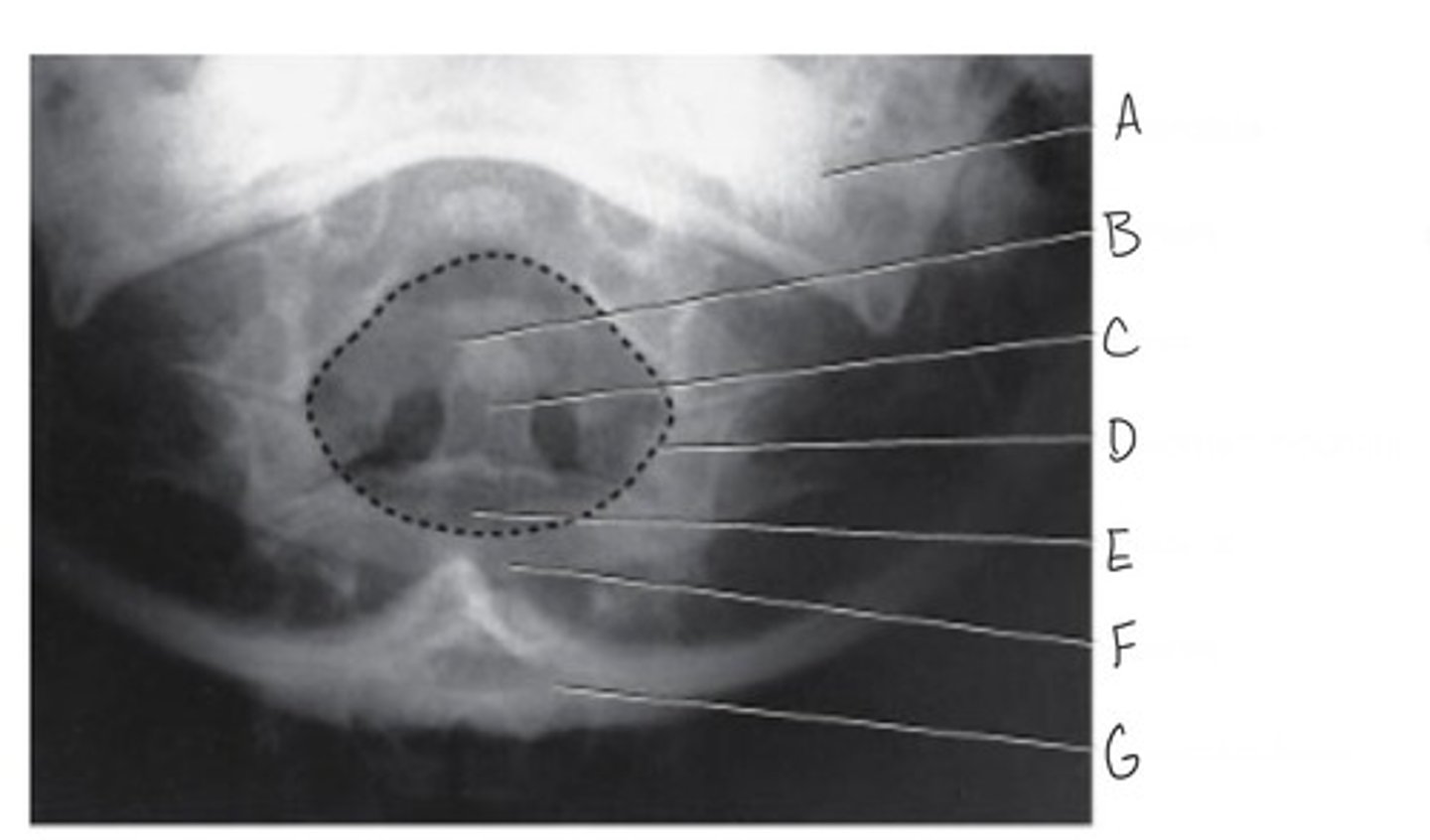
Dens (odontoid process)
What is C?
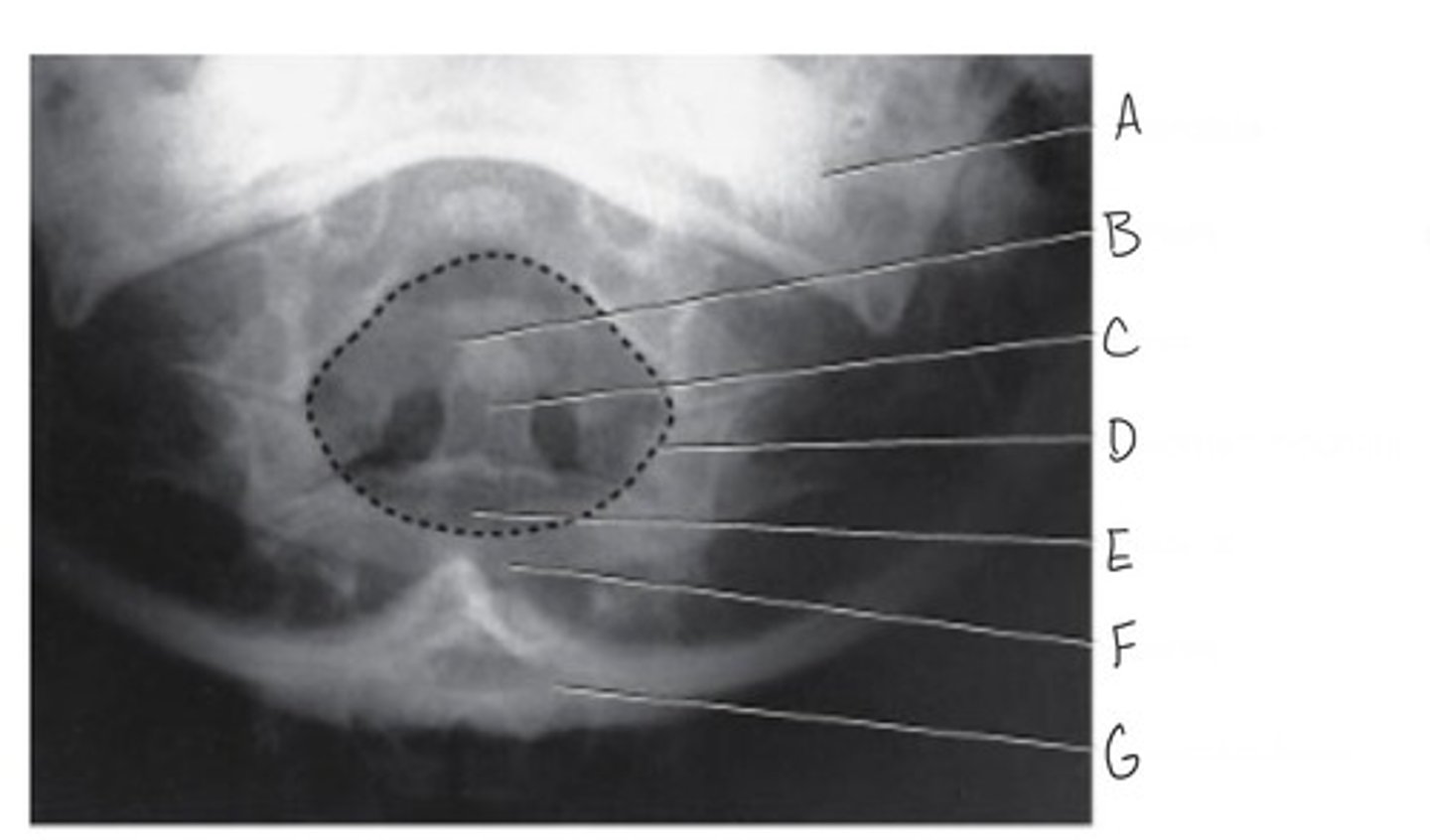
Foramen magnum
What is D?
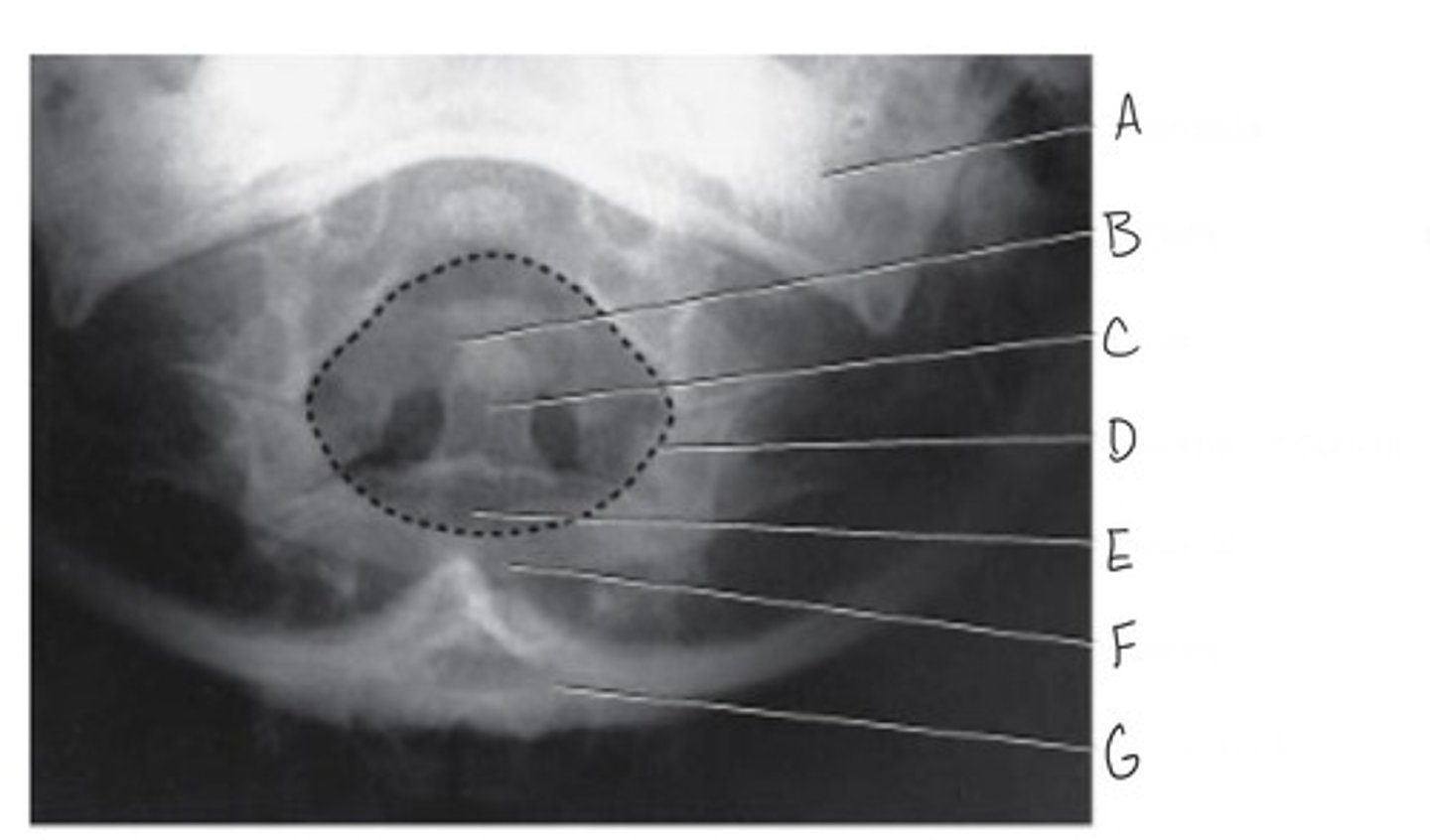
Body of axis
What is E?
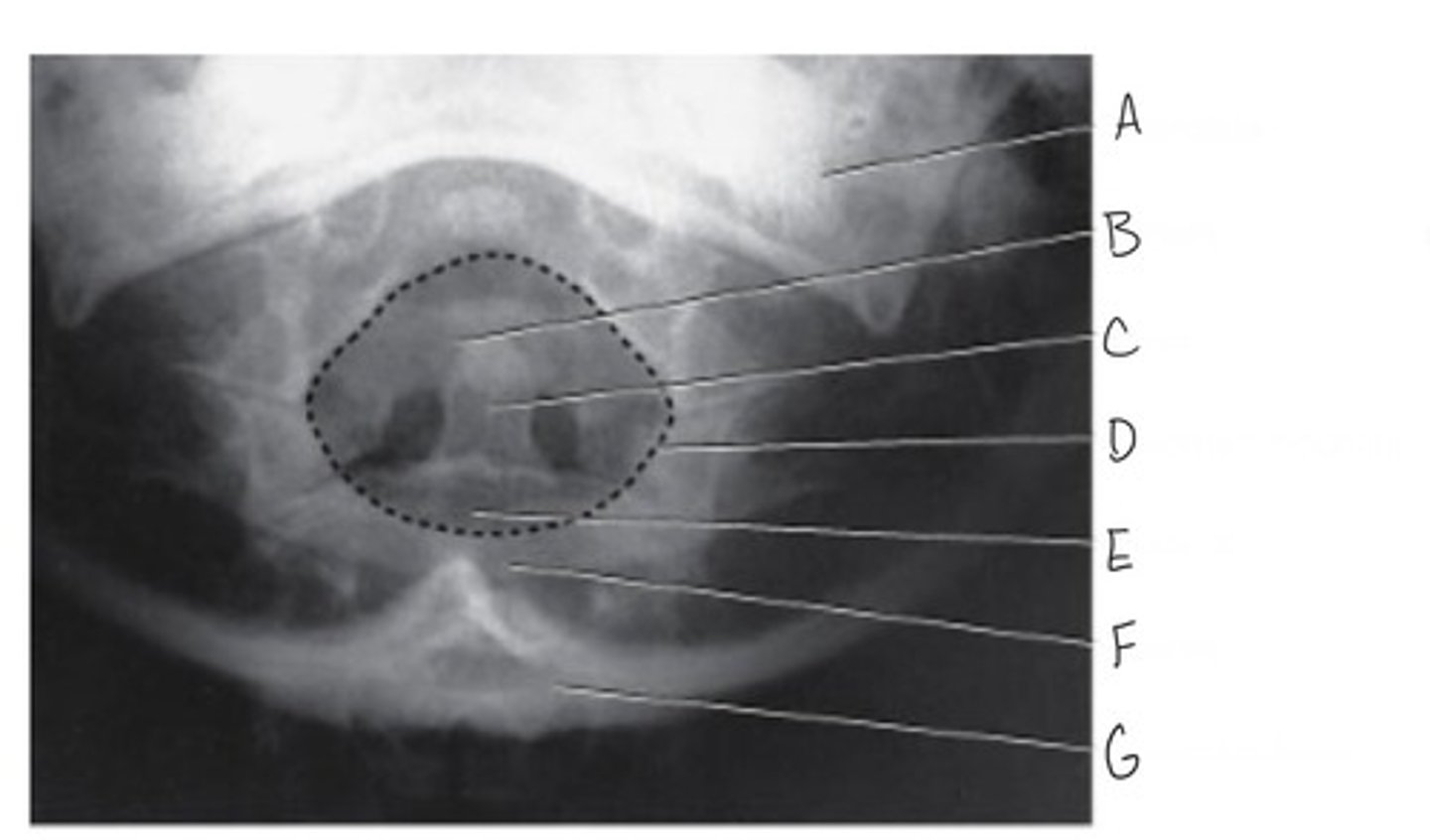
Posterior arch of C1
What is F?
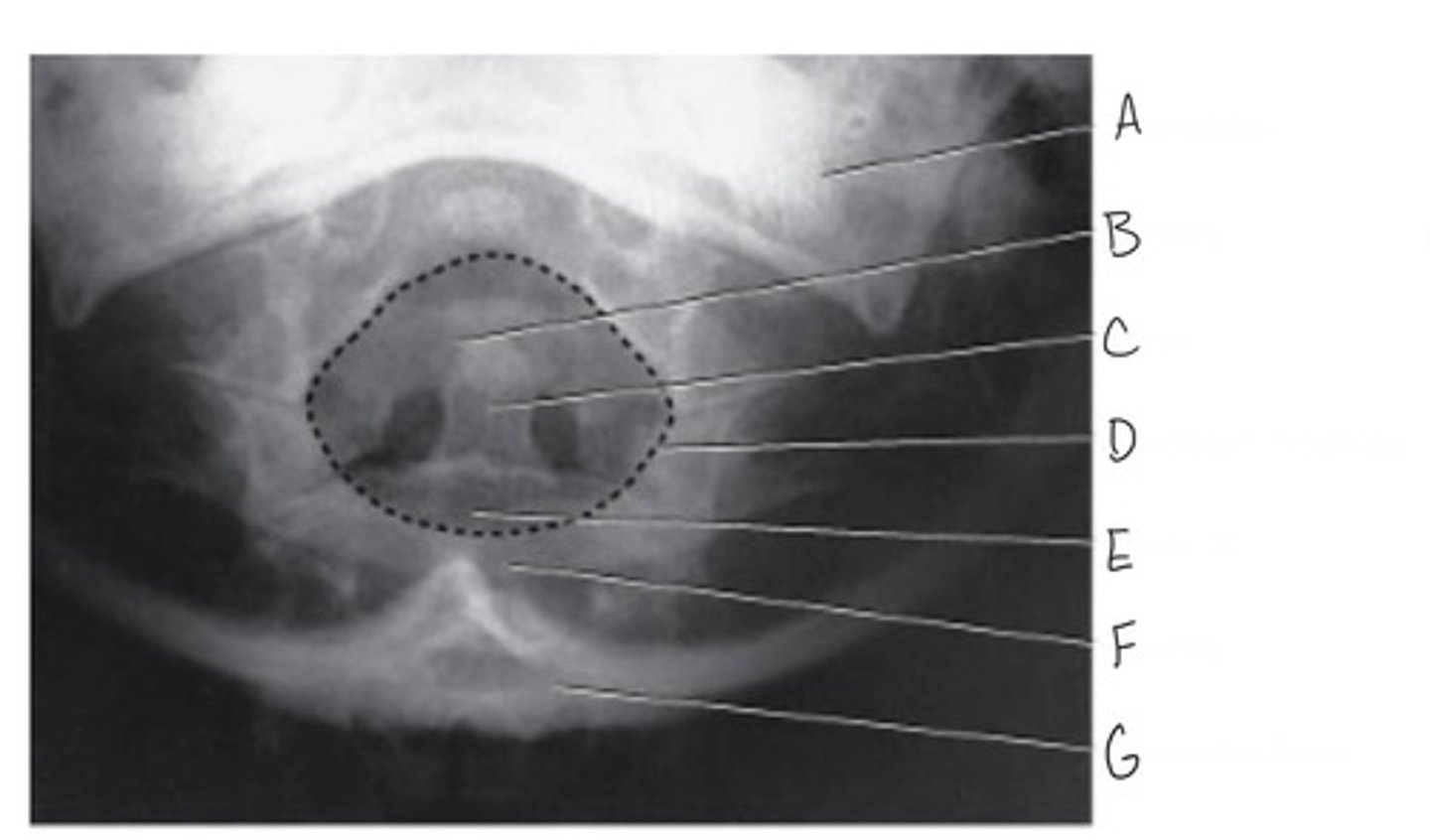
Occipital bone
What is G?
AP (open mouth) of the cervical spine: Atlas & Axis
What projection is this?
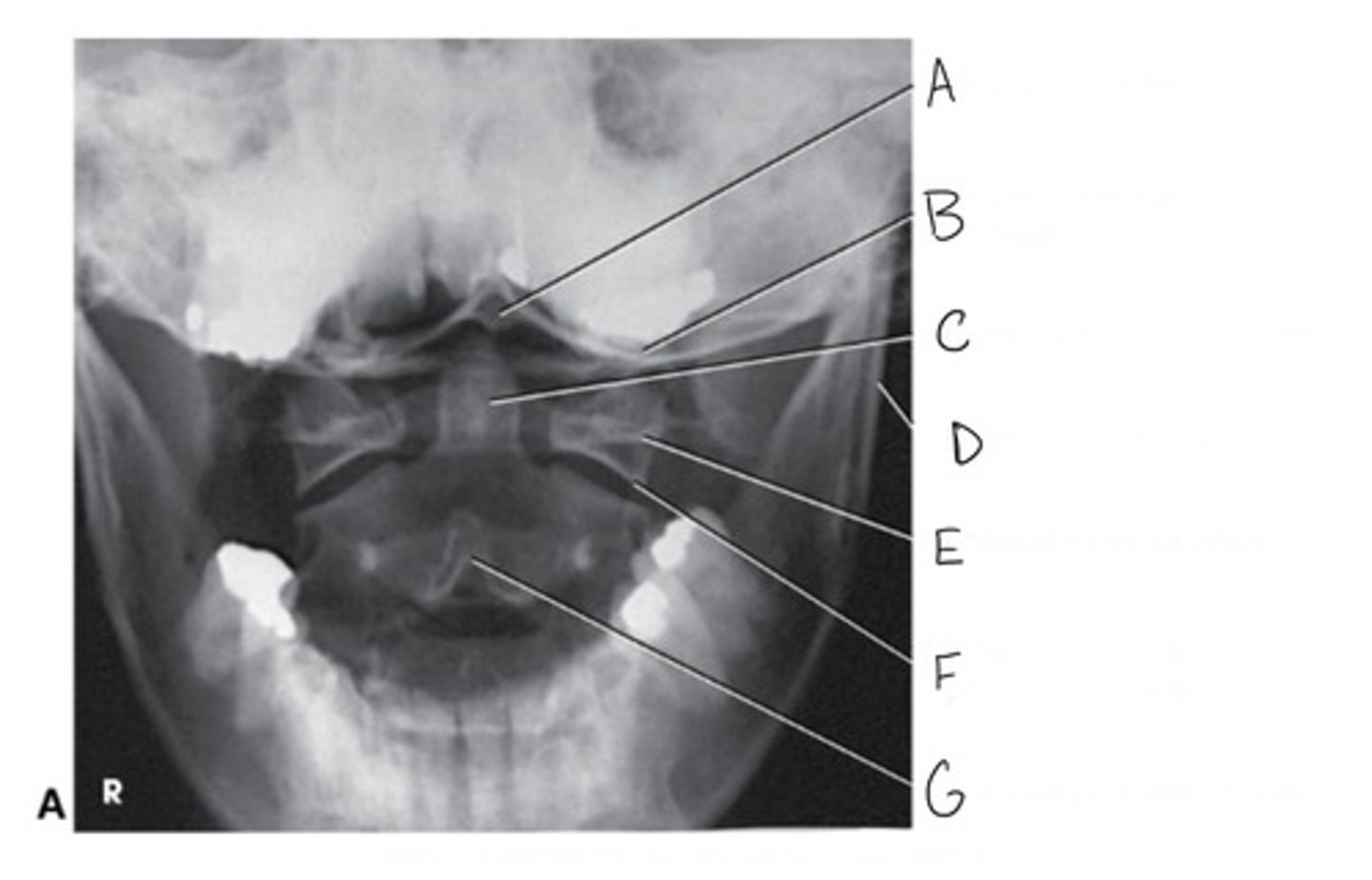
Occipital base
What is A?
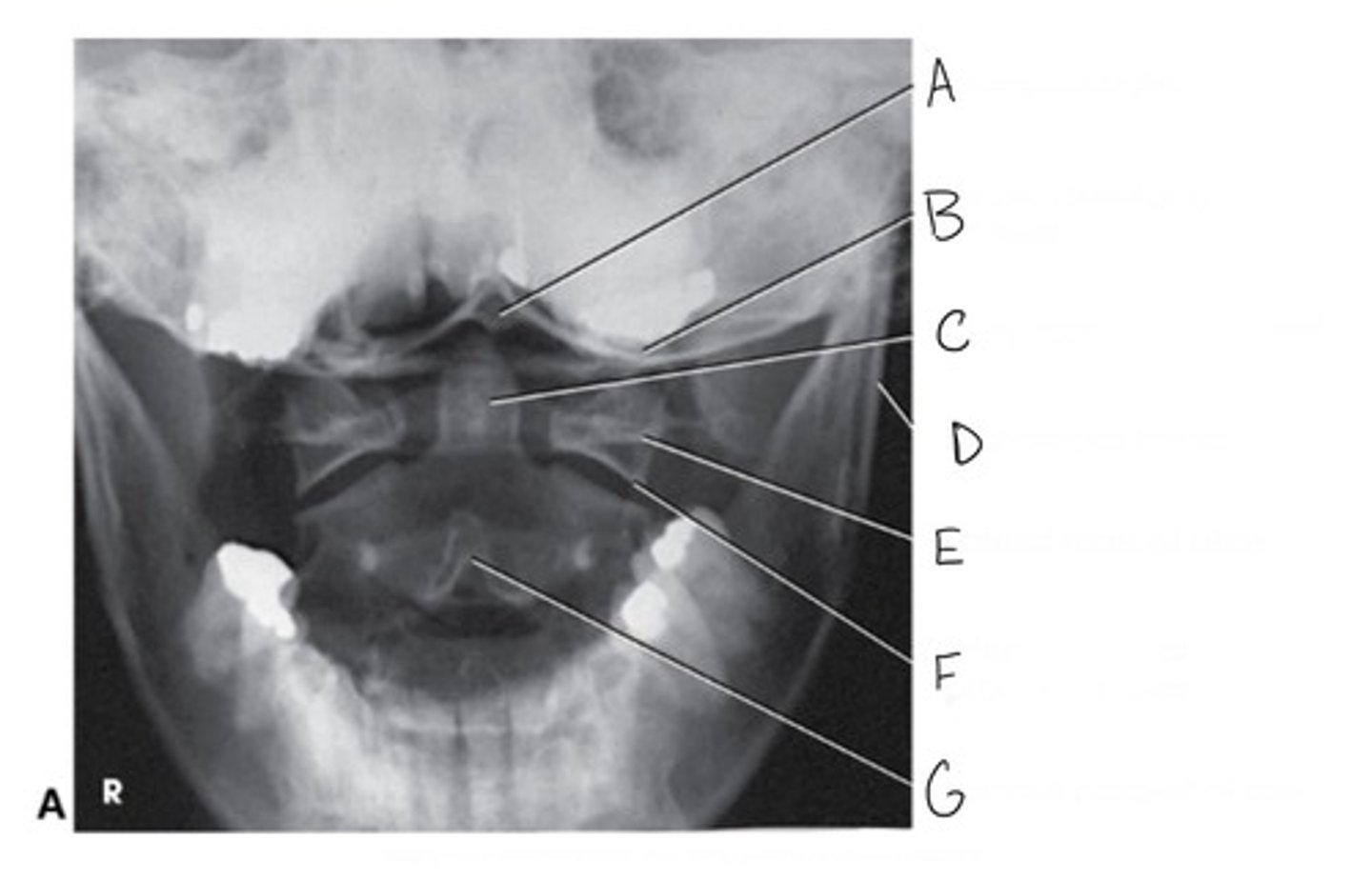
Occlusal surface of teeth
What is B?
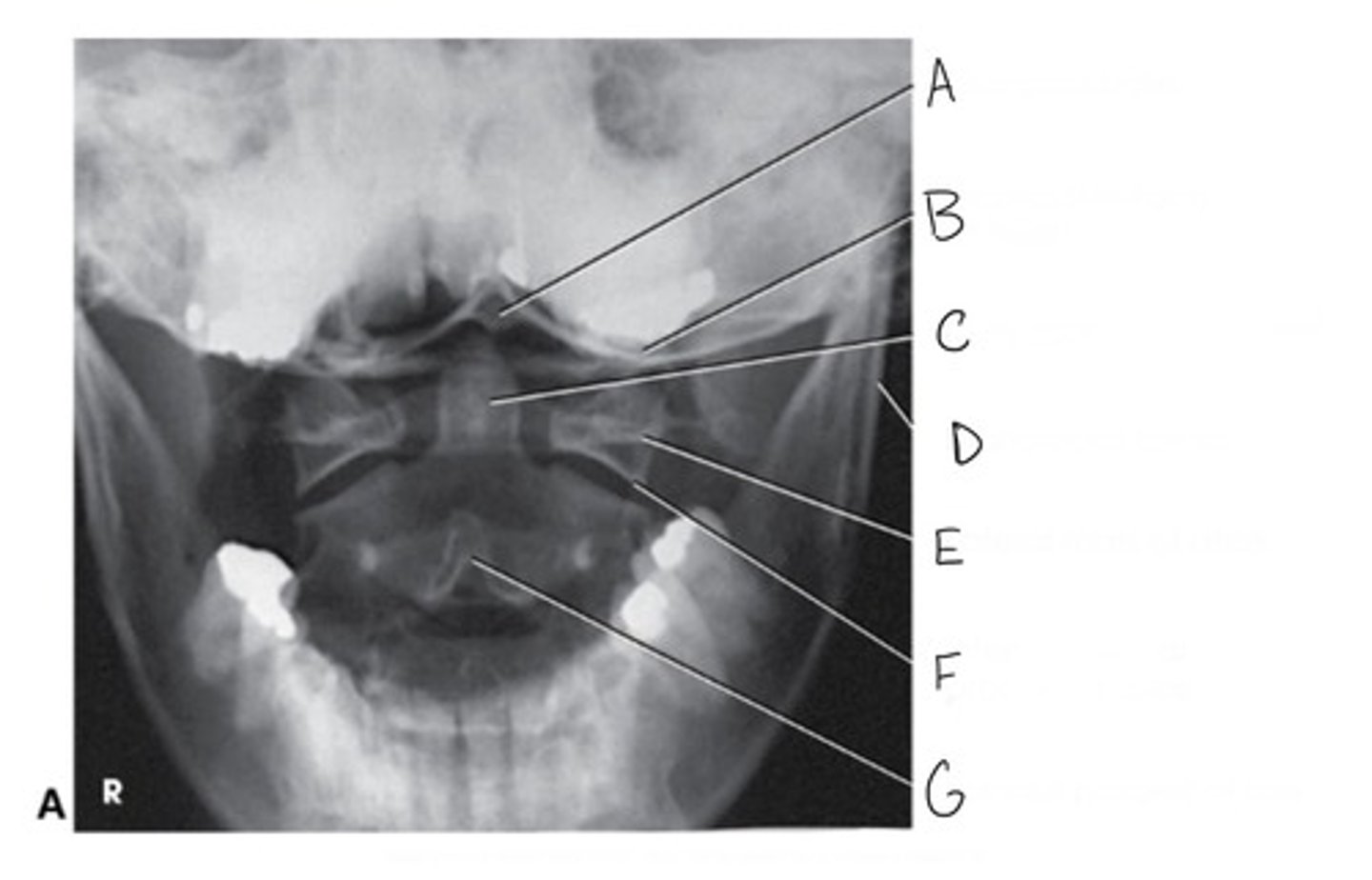
Den (odontoid process)
What is C?
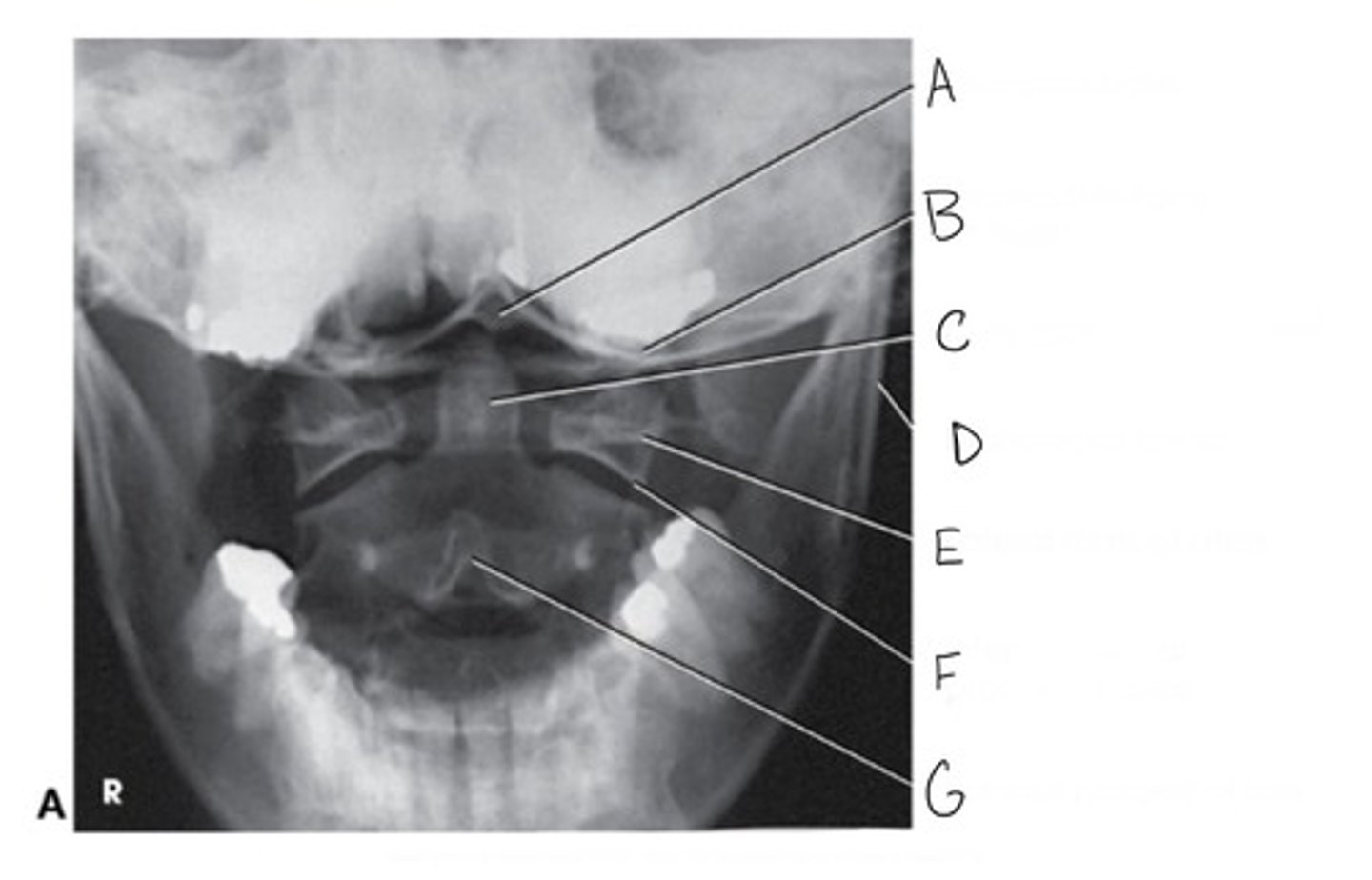
Mandibular ramus
What is D?
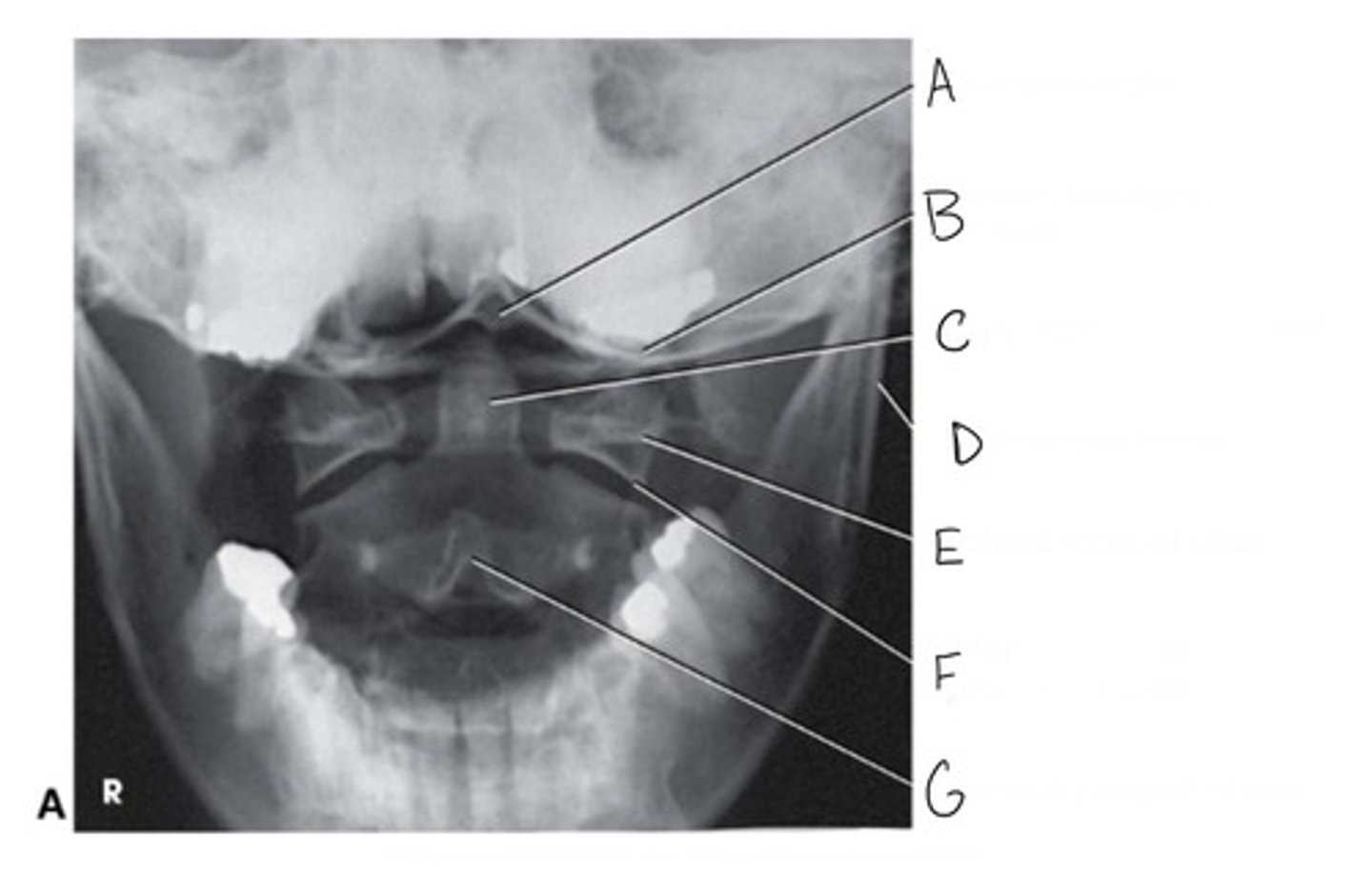
Lateral mass of atlas
What is E?
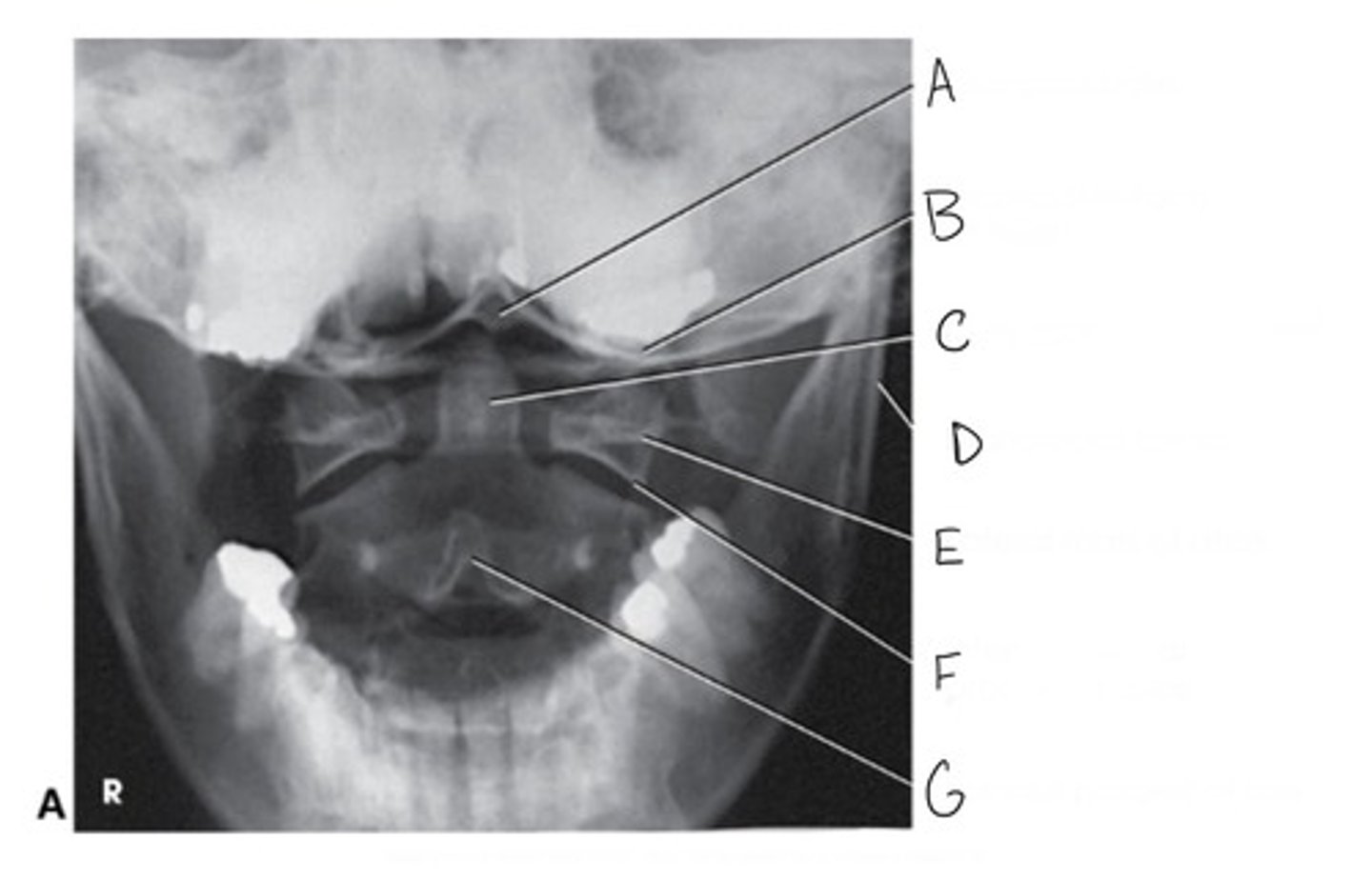
Inferior articular process of atlas
What is F?
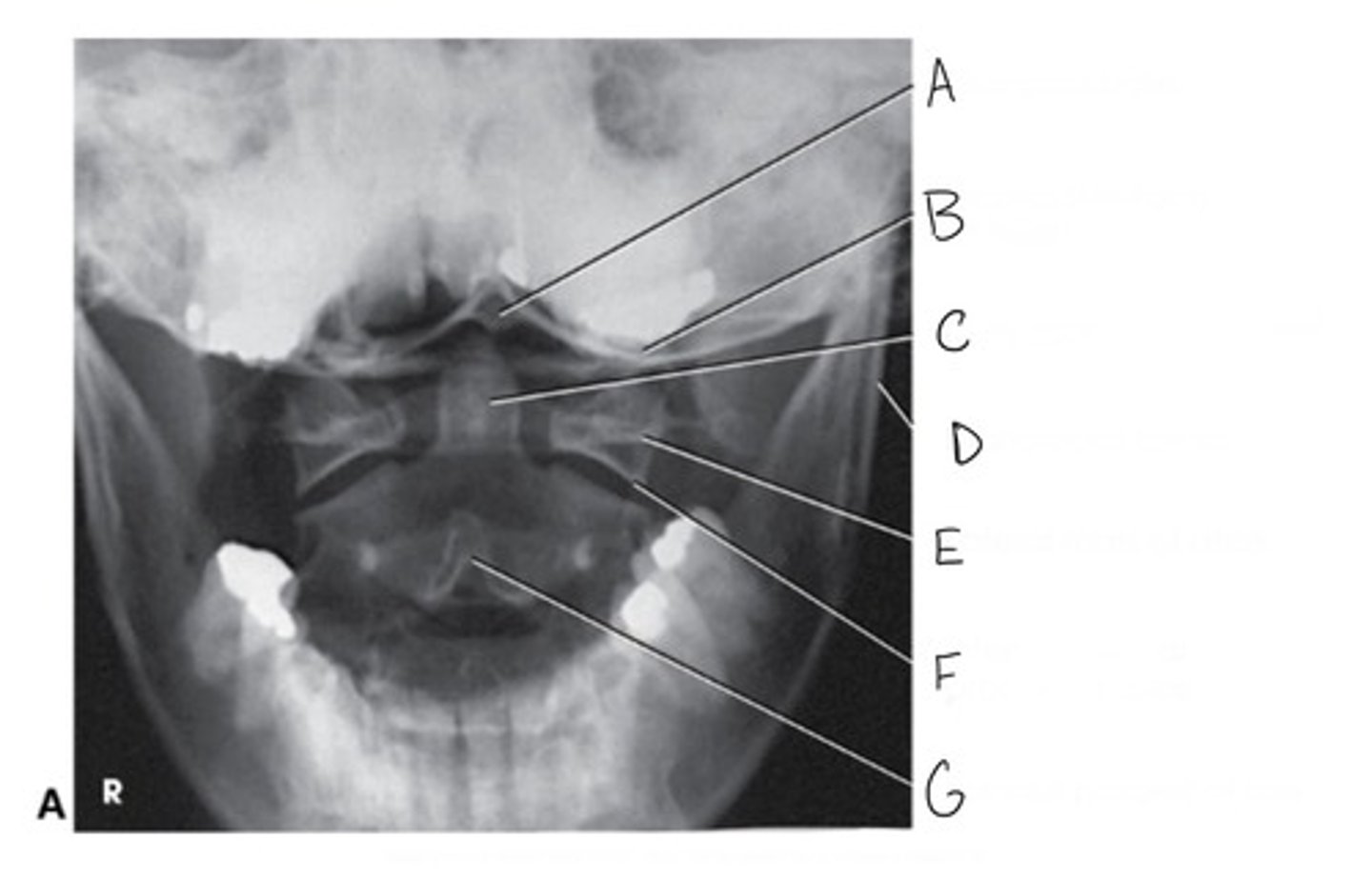
Spinous process of axis
What is G?
Mandibular rami
What is A?
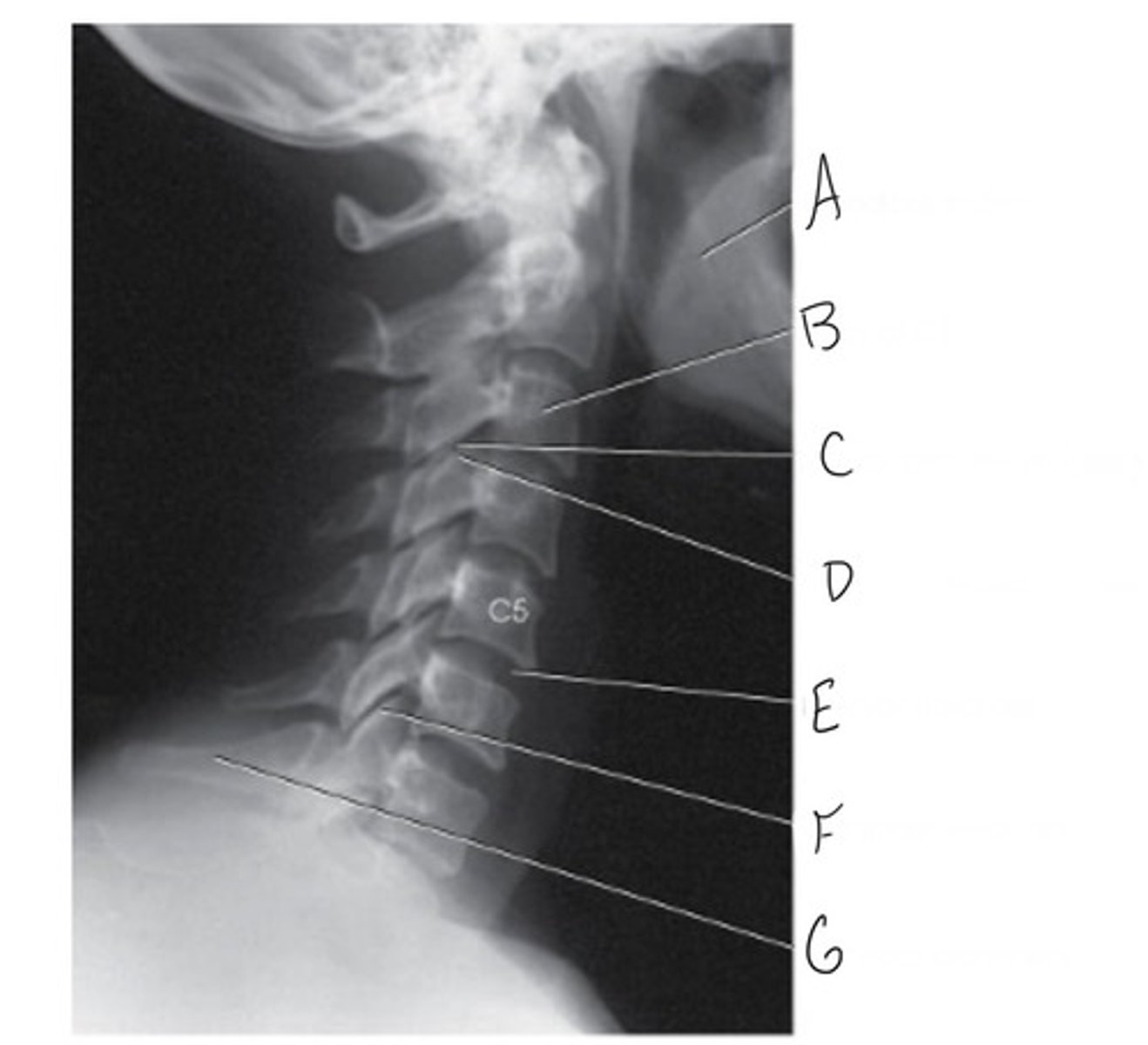
Body of C3
What is B?
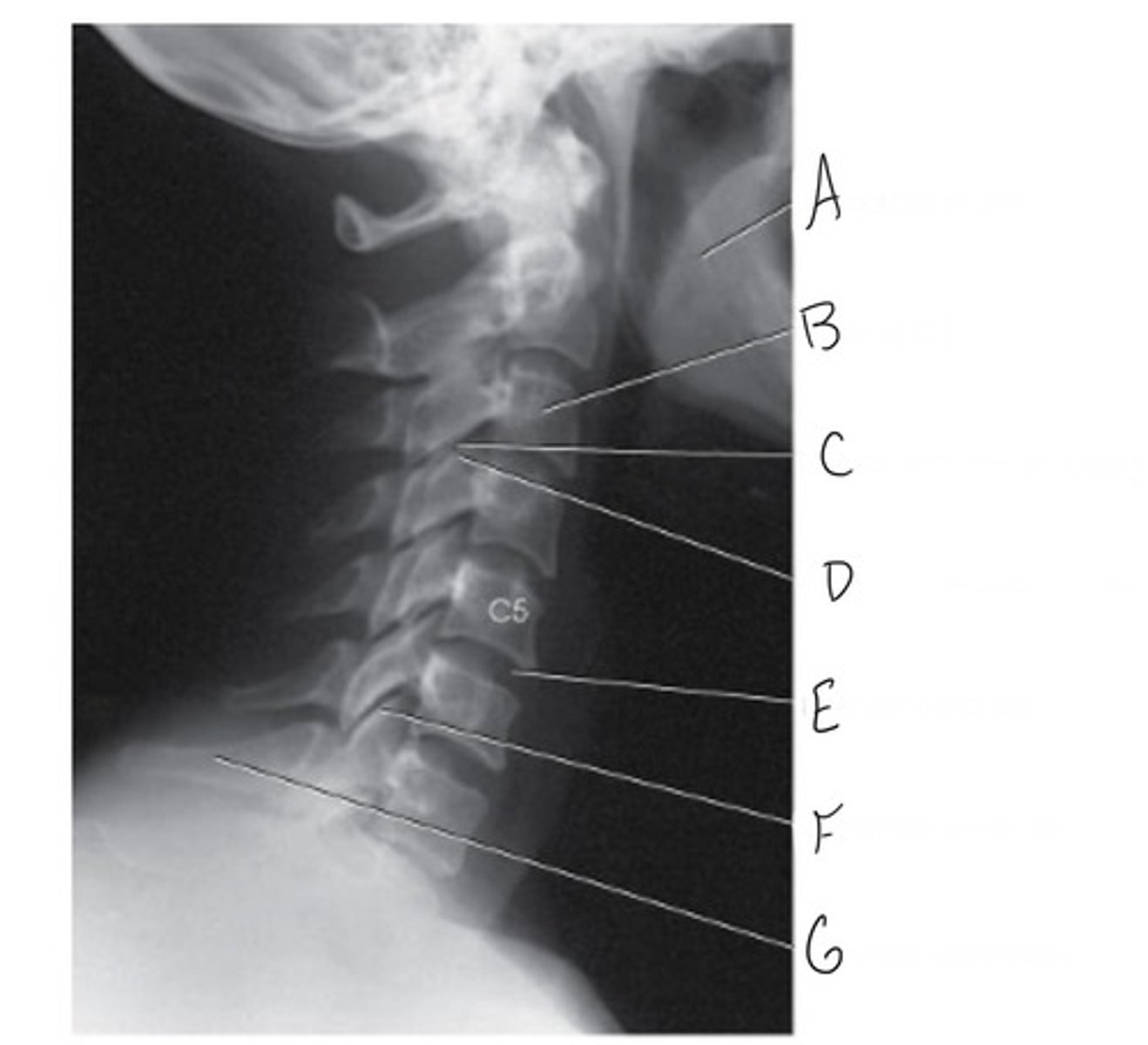
Inferior articular process
What is C?
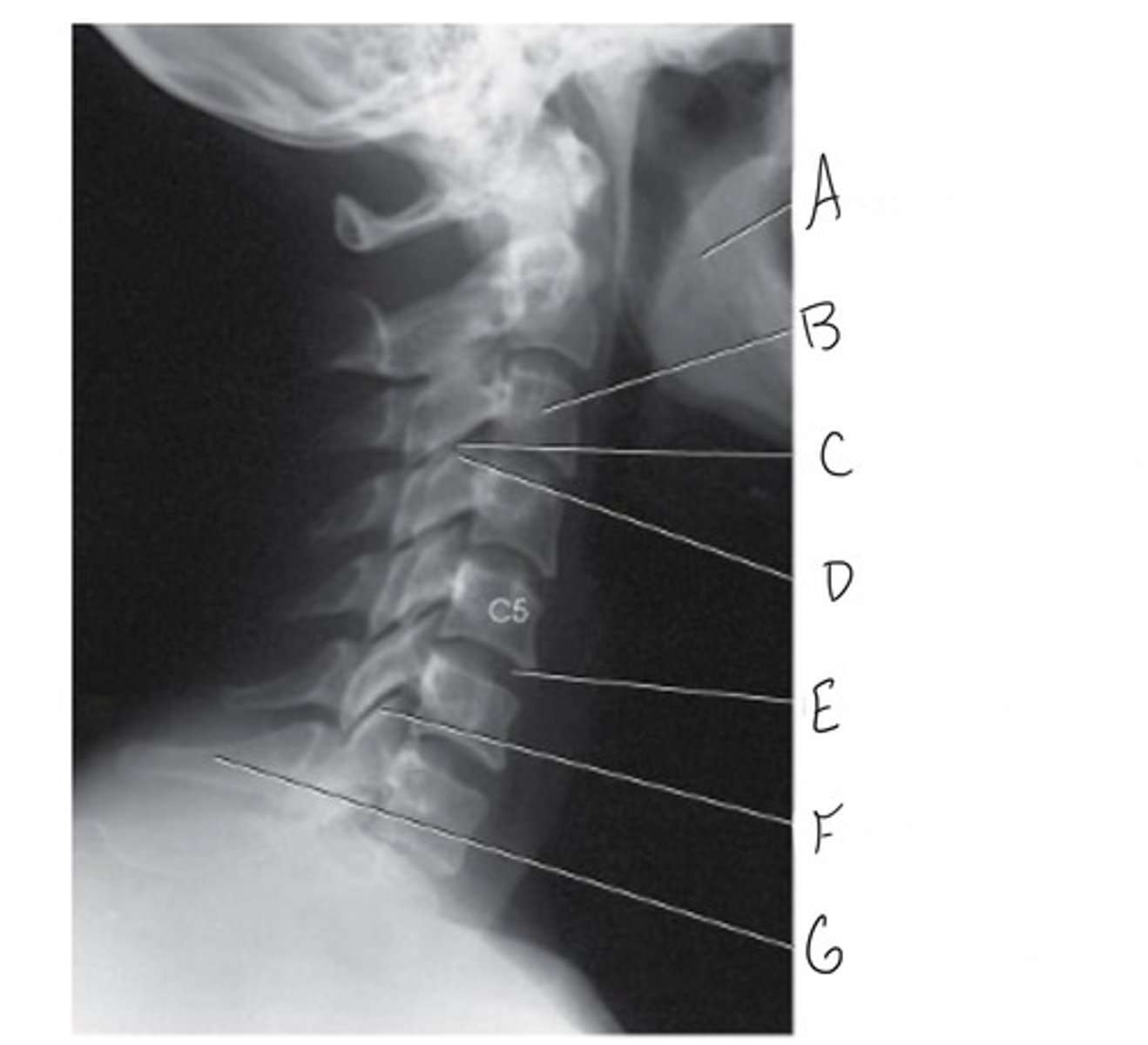
Superior articular process
What is D?
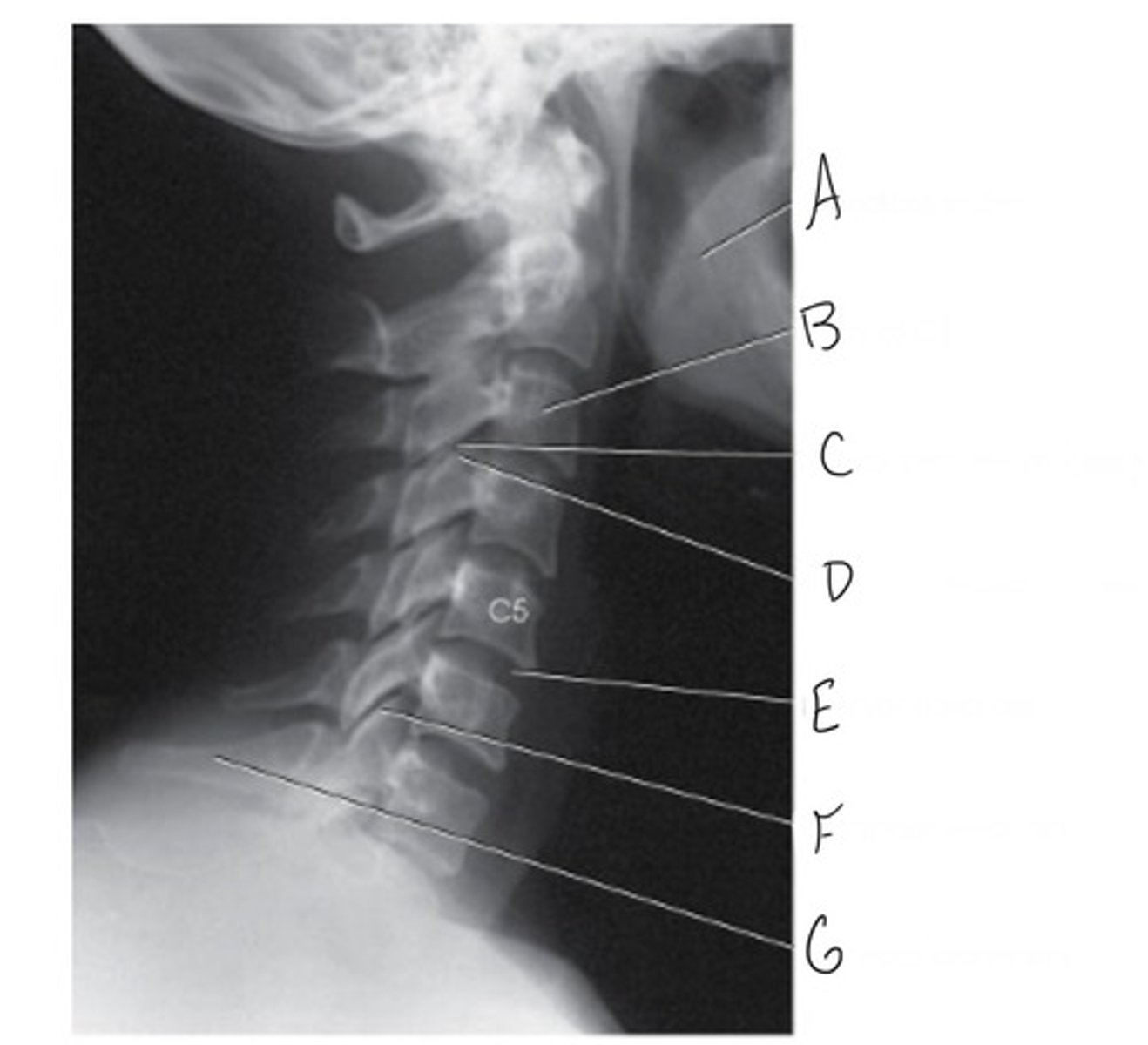
Intervertebral disk
What is E?
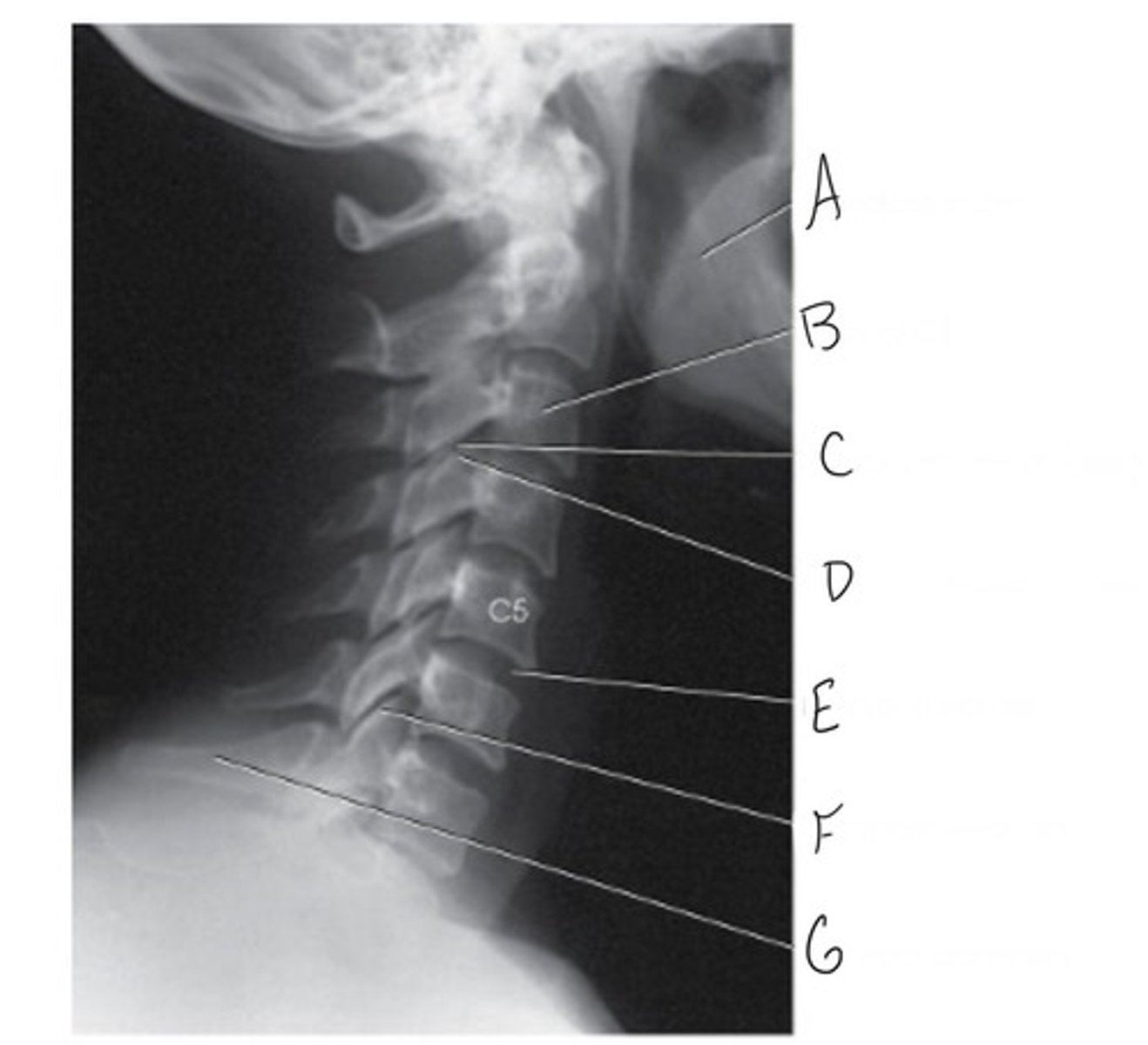
Zygapophyseal joint
What is F?
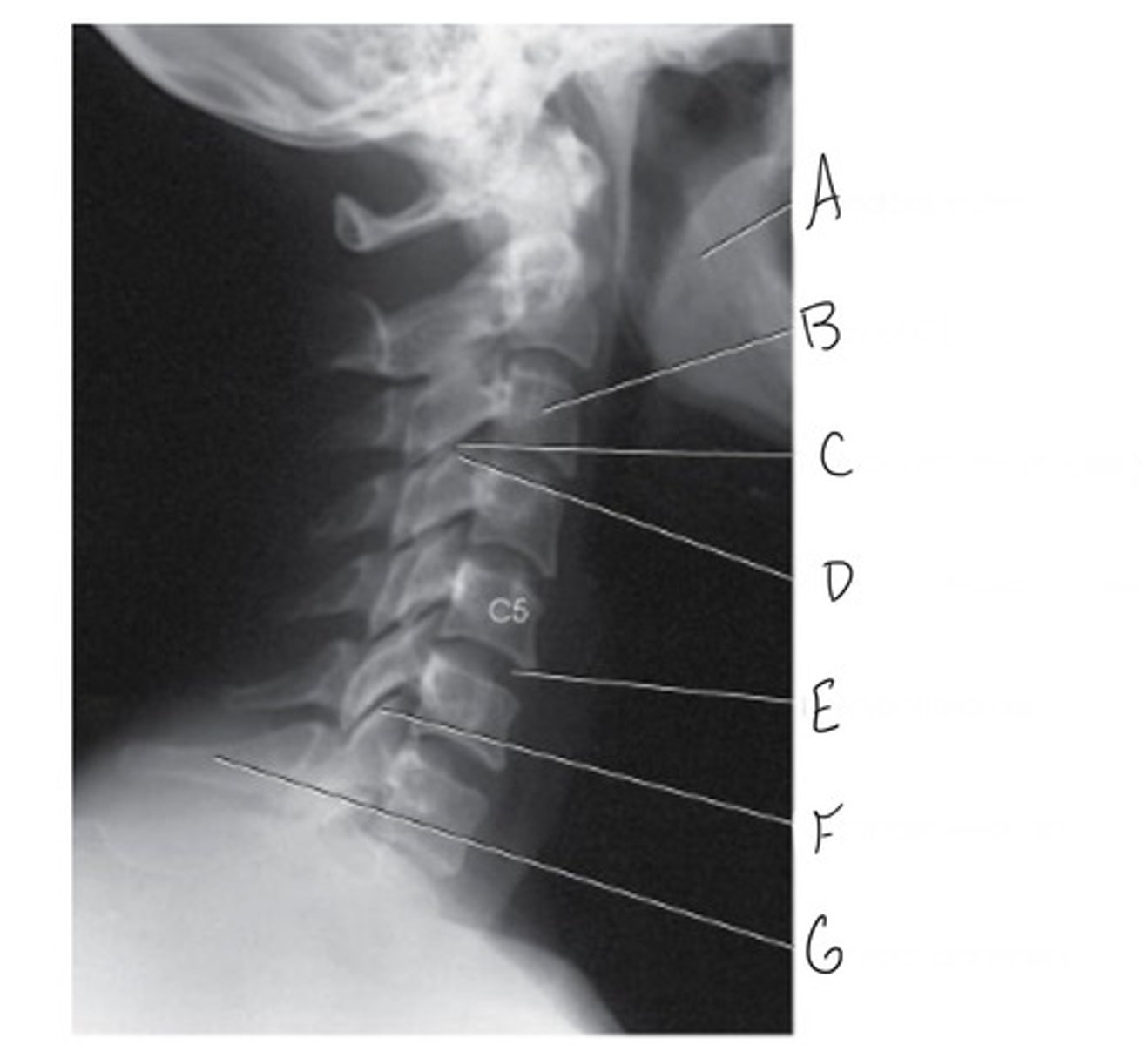
Vertebra prominens (C7)
Why is G?
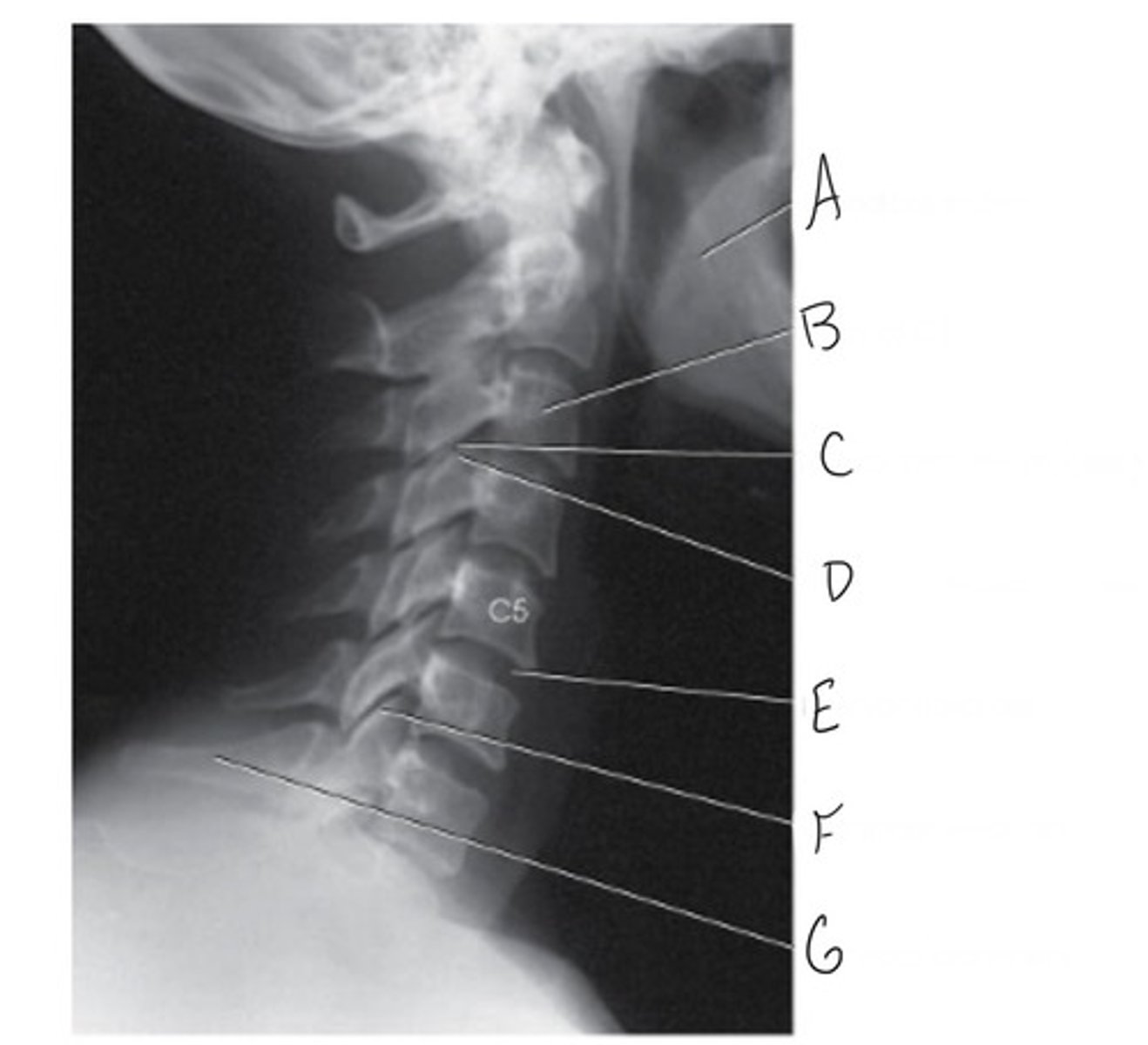
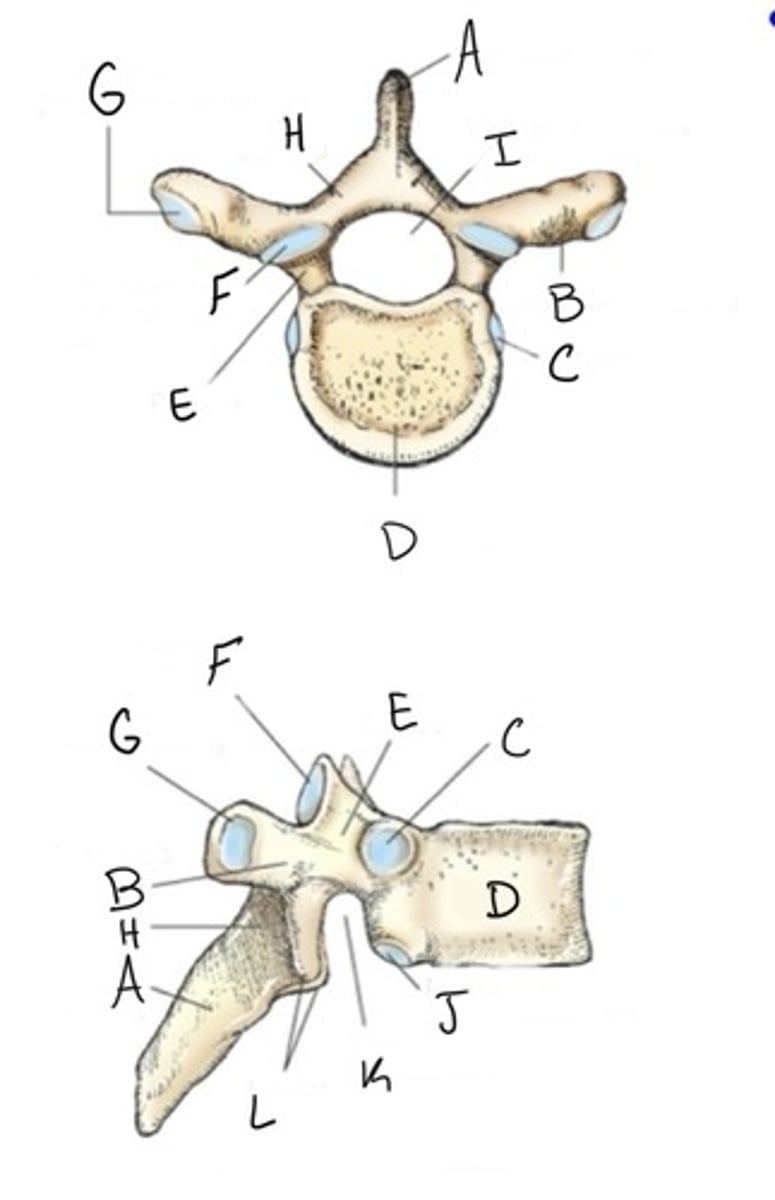
Typical thoracic vertebrae
What kind of vertebrae is this?
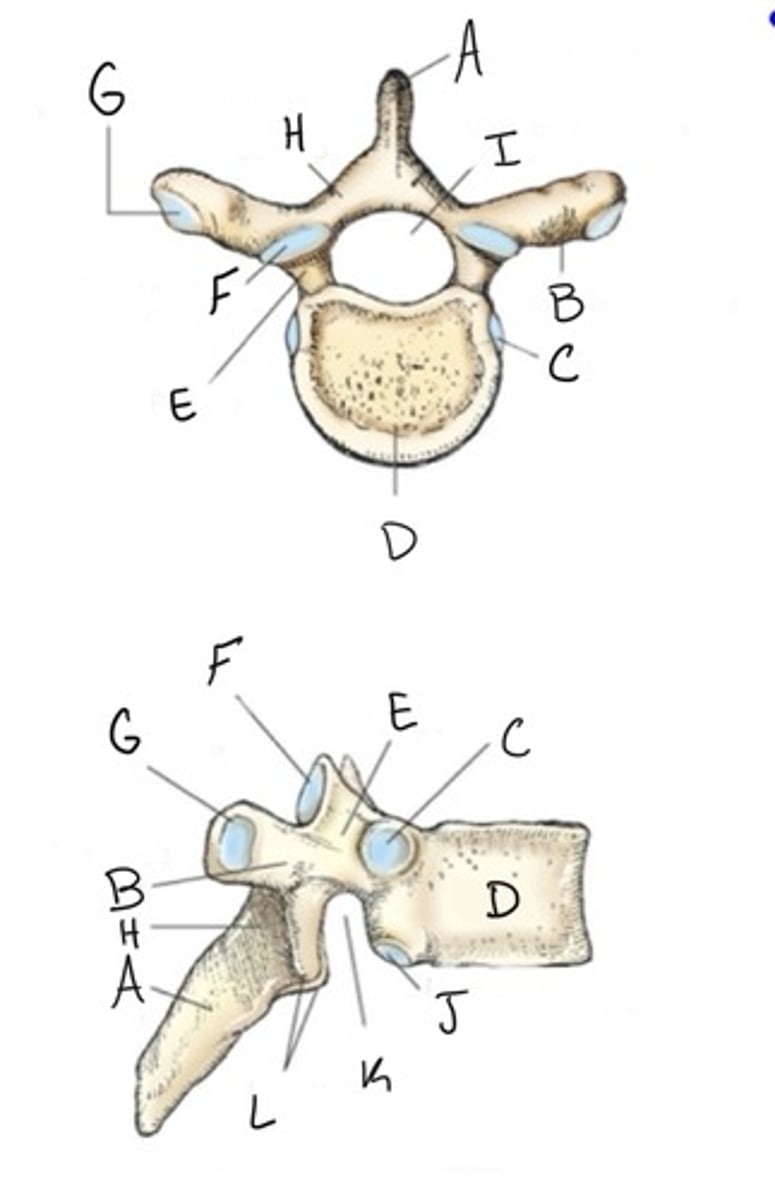
Spinous process
What is A?
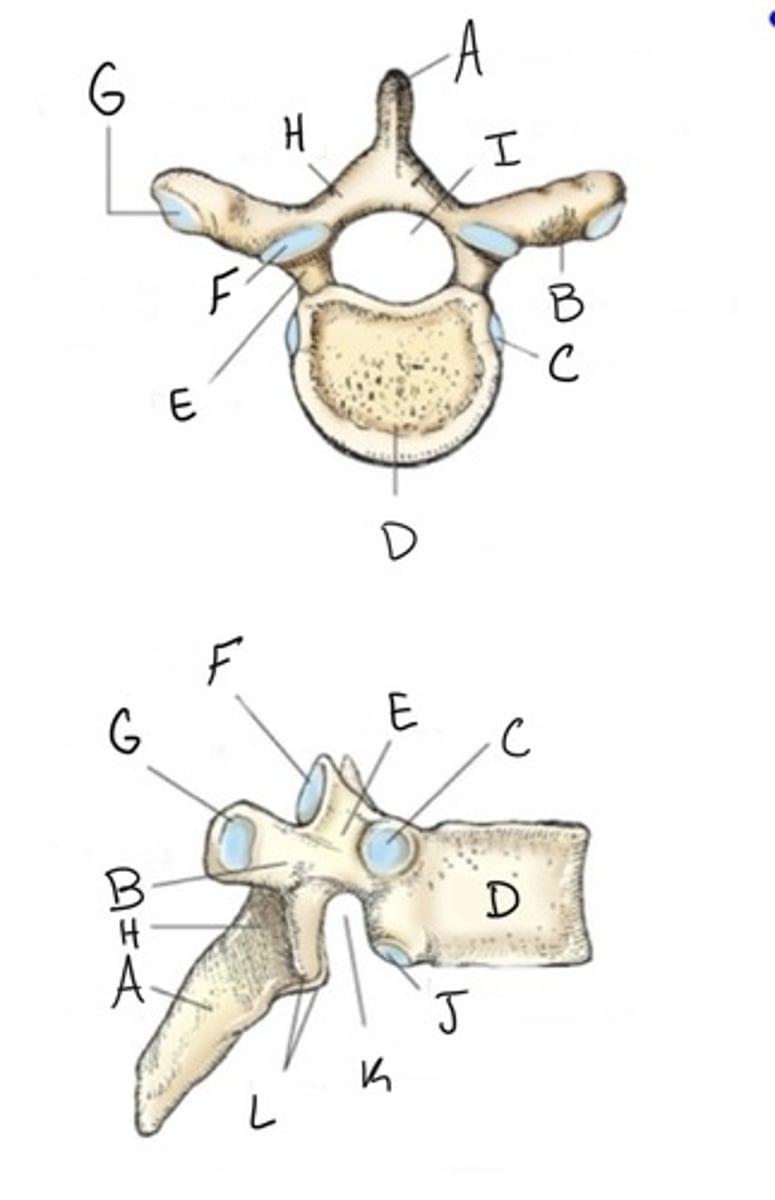
Transverse process
What is B?
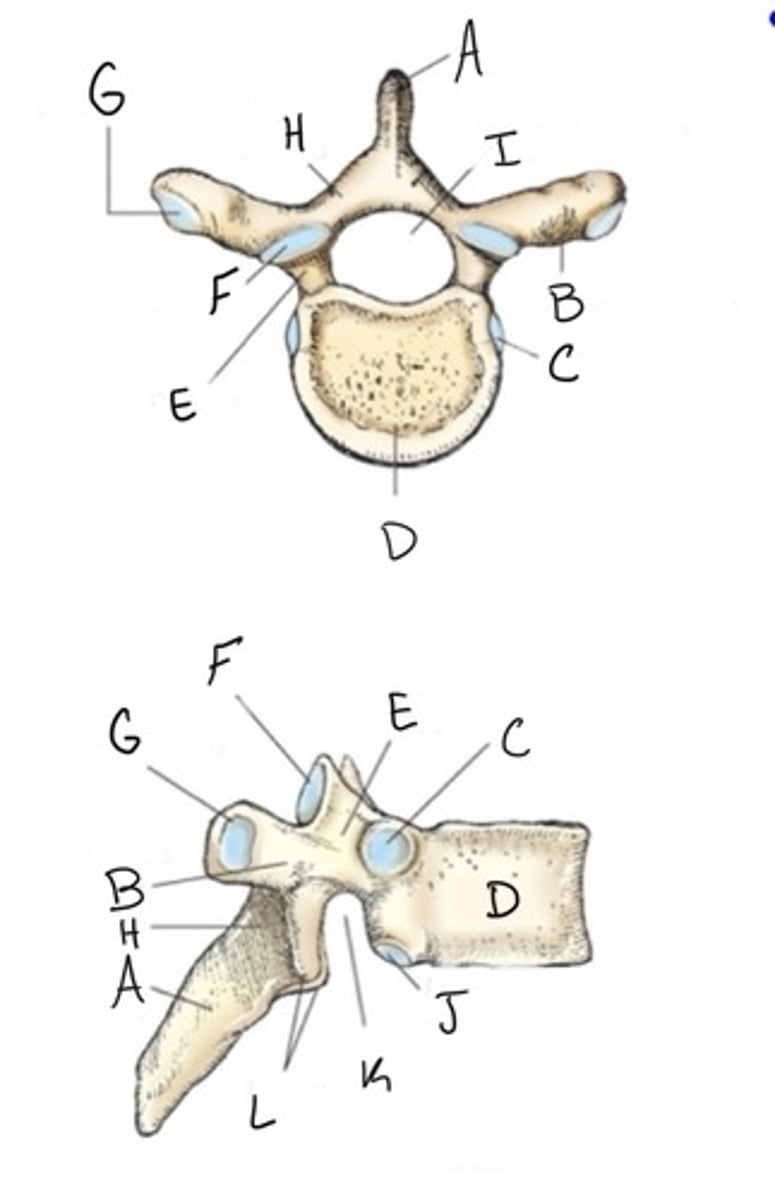
Superior costal facet
What is C?
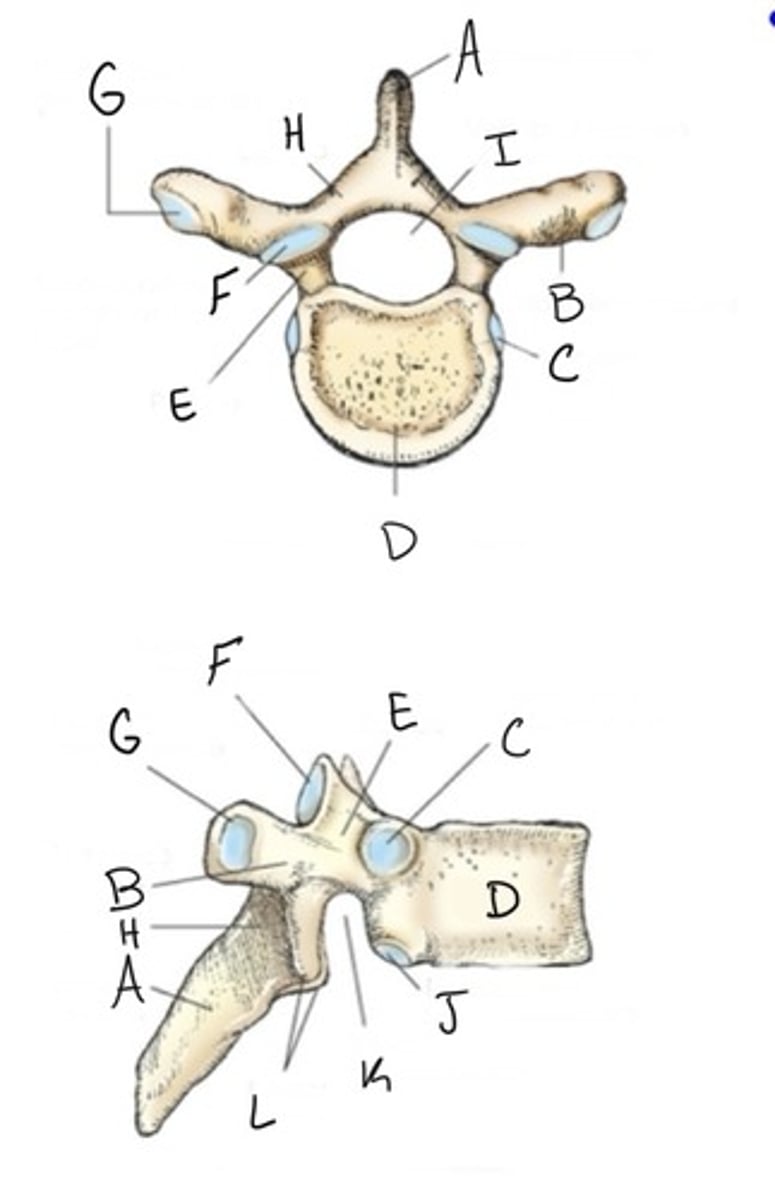
Body
What is D?
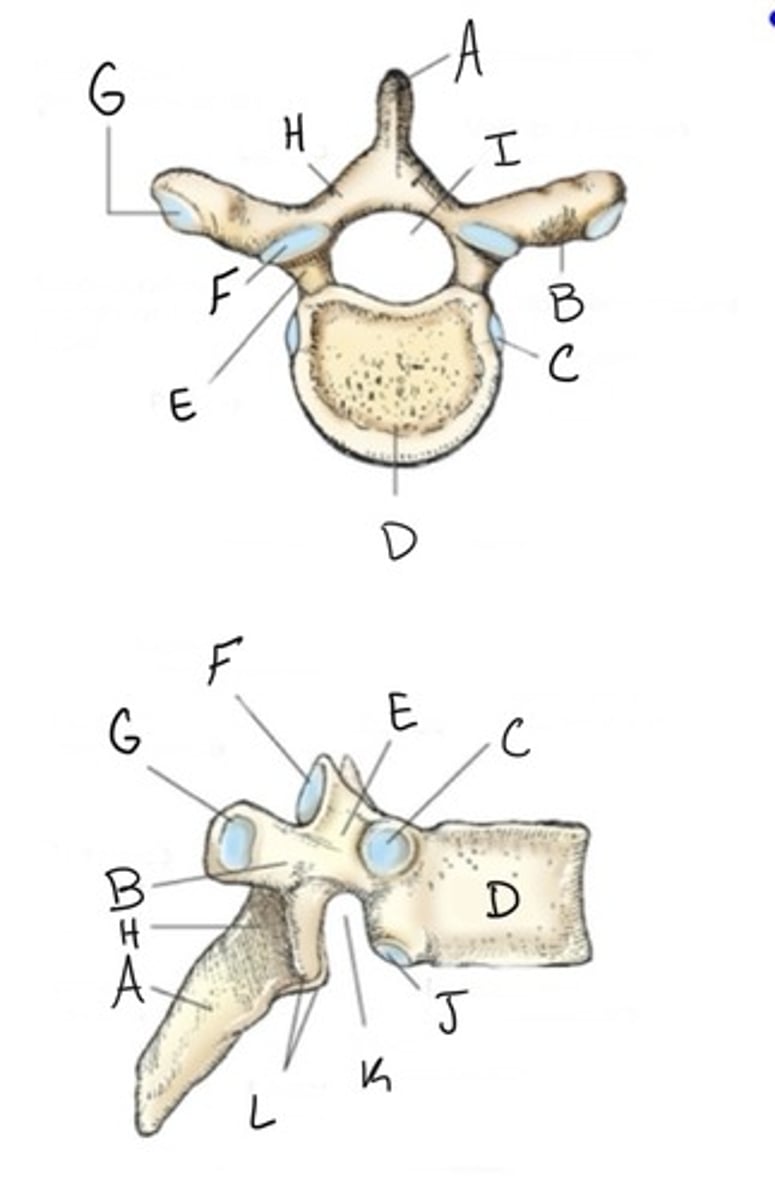
Pedicle
What is E?
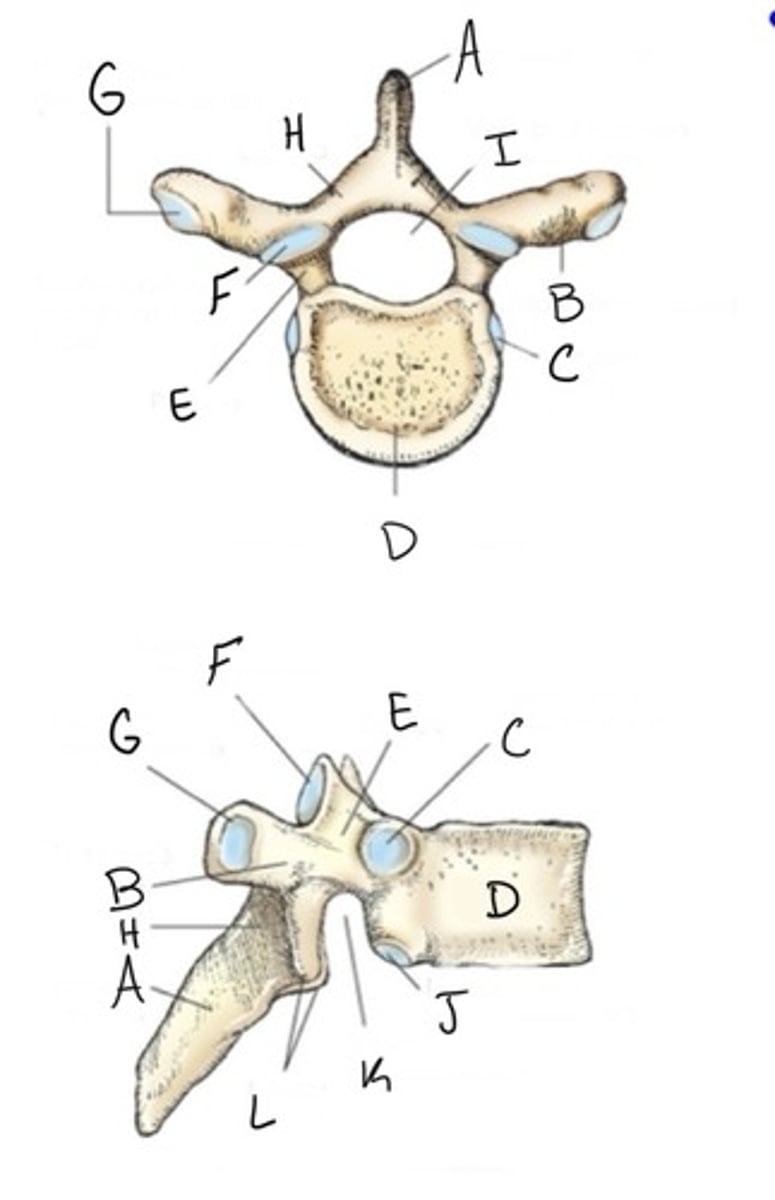
Superior articular process & facet
What is F?
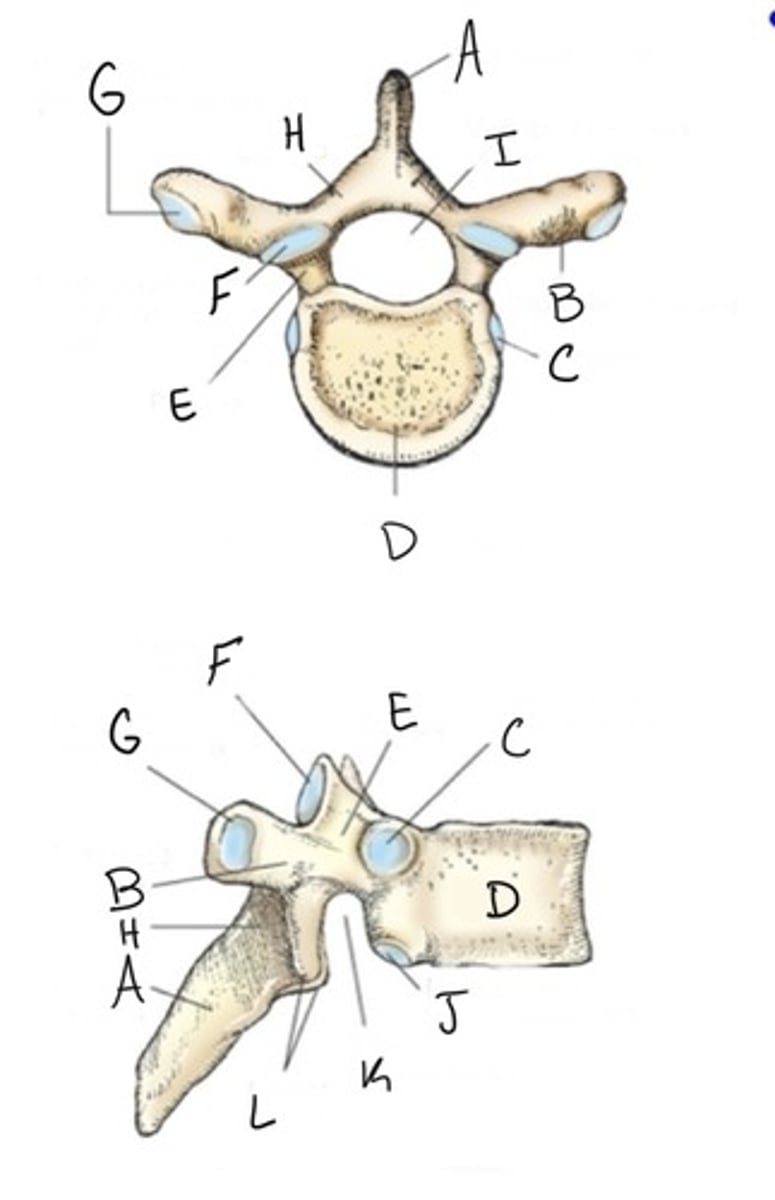
Costal facet
What is G?
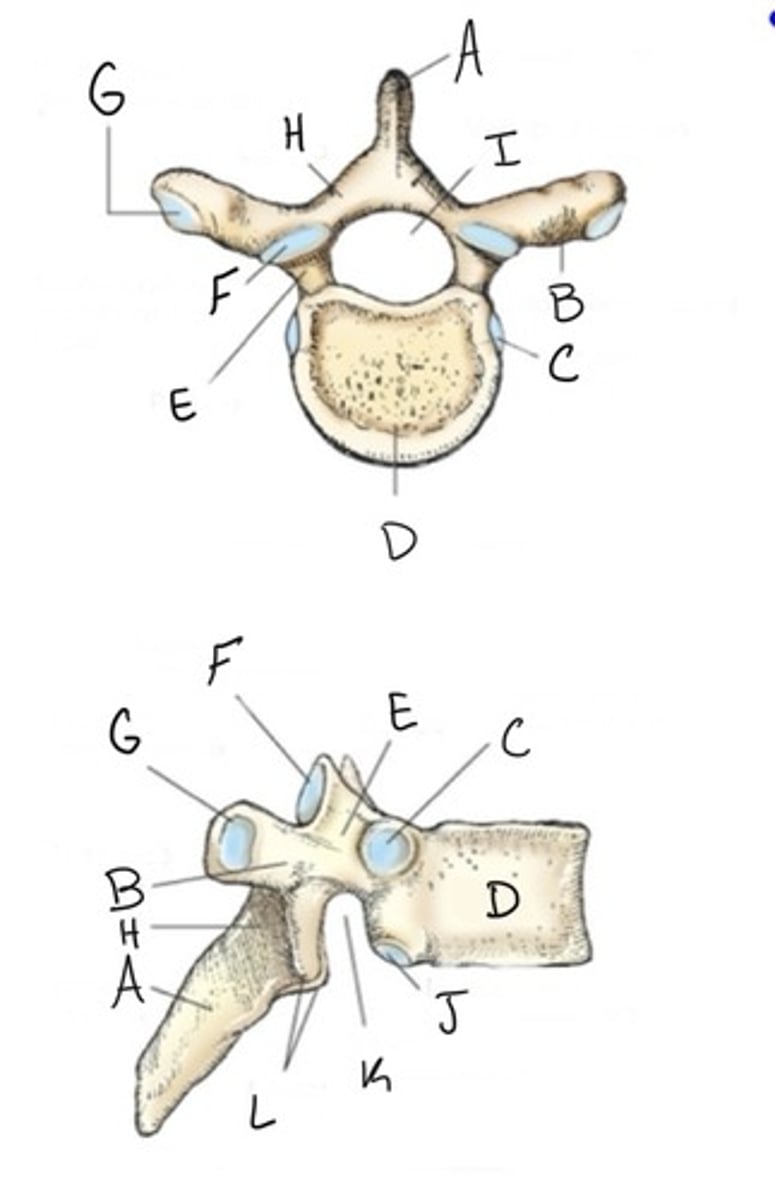
Lamina
What is H?
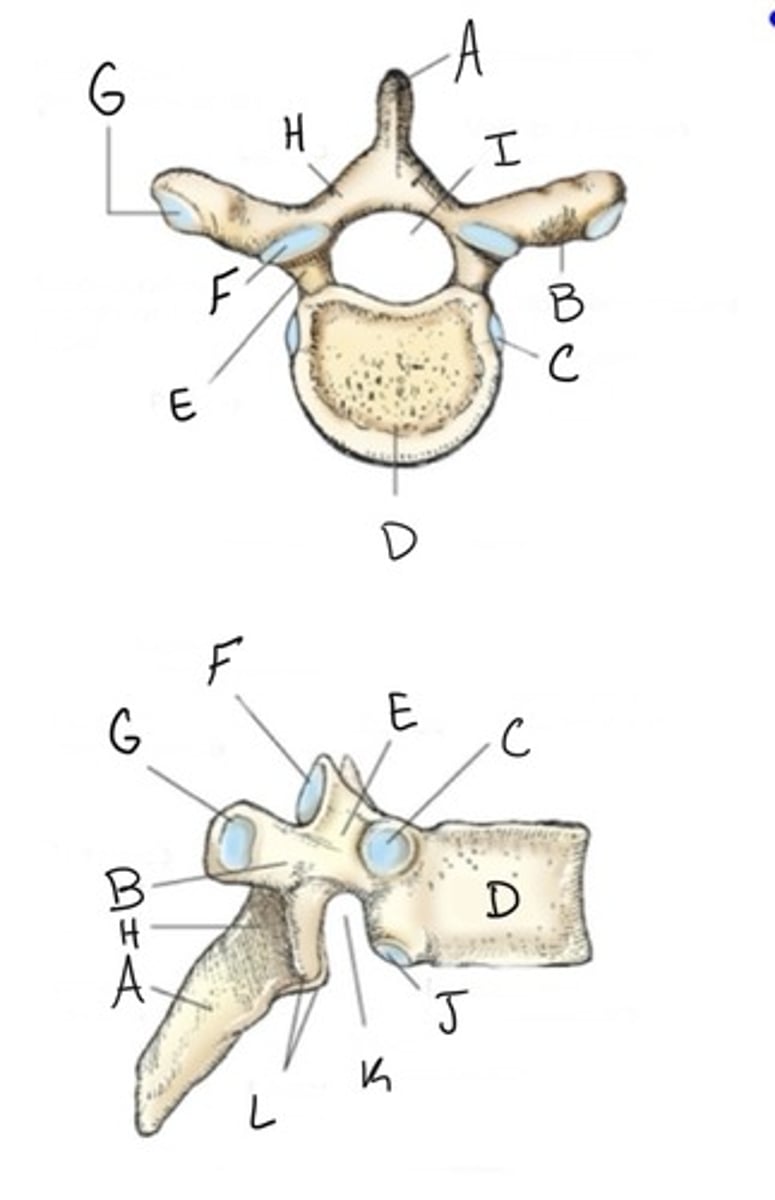
Vertebral foramen
What is I?
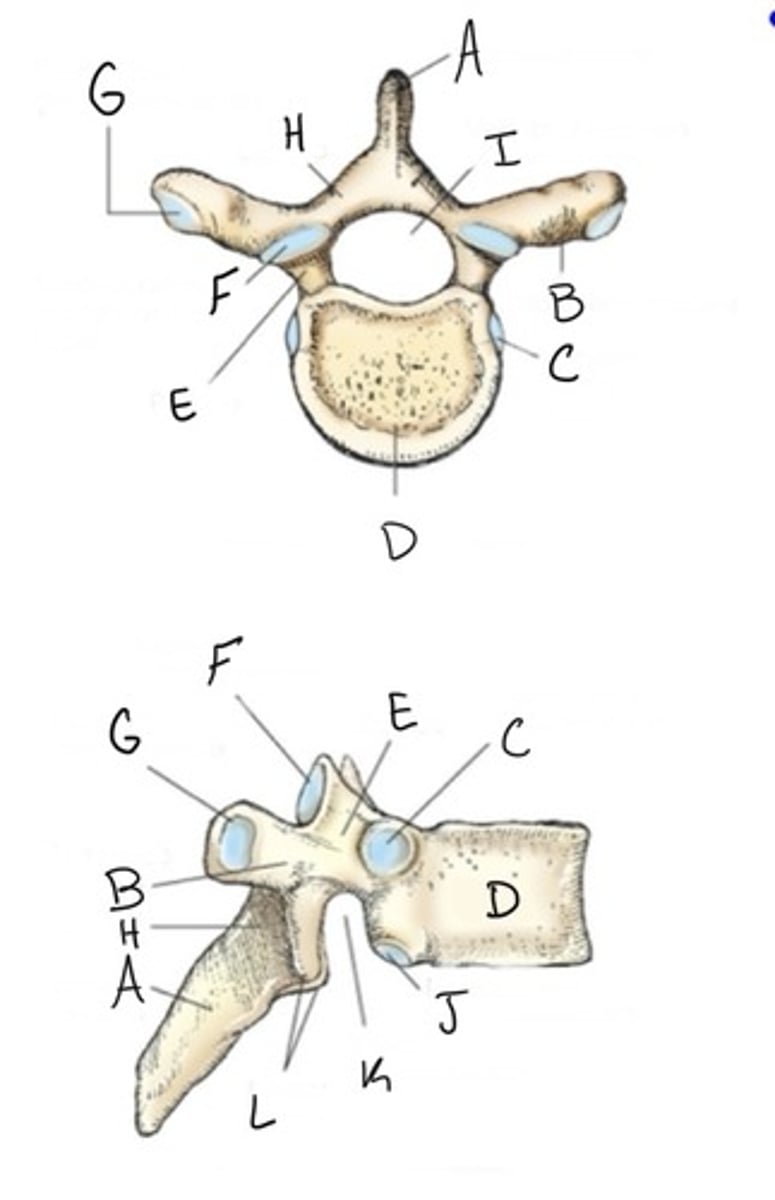
Inferior costal facet
What is J?
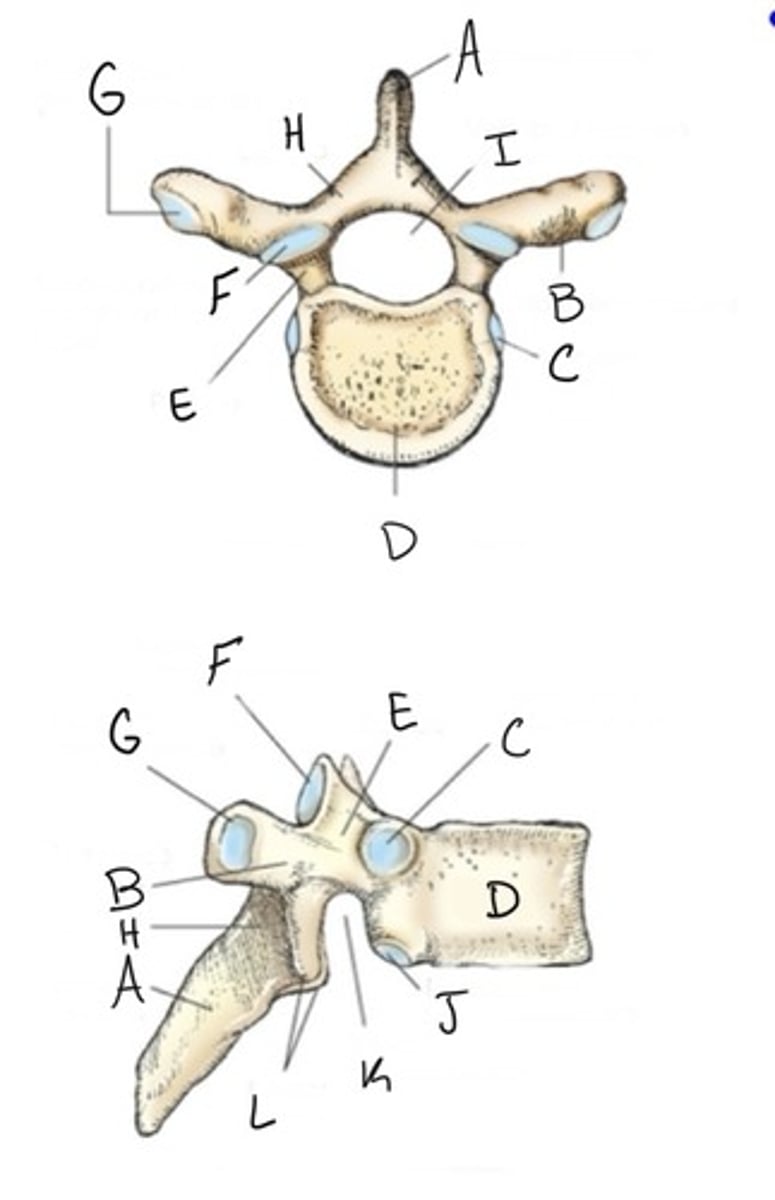
Inferior vertebral notch
What is K?
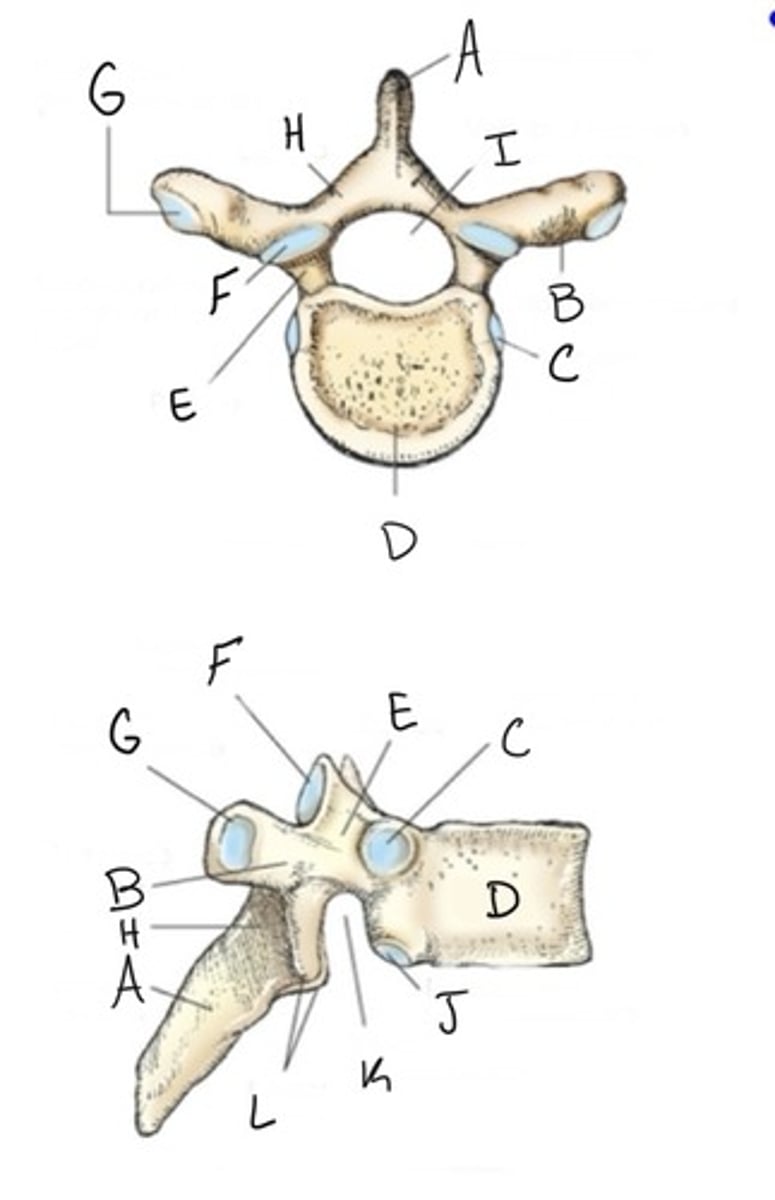
Inferior articular process
What is L?
Typical lumbar vertebrae
What kind of vertebrae is this?
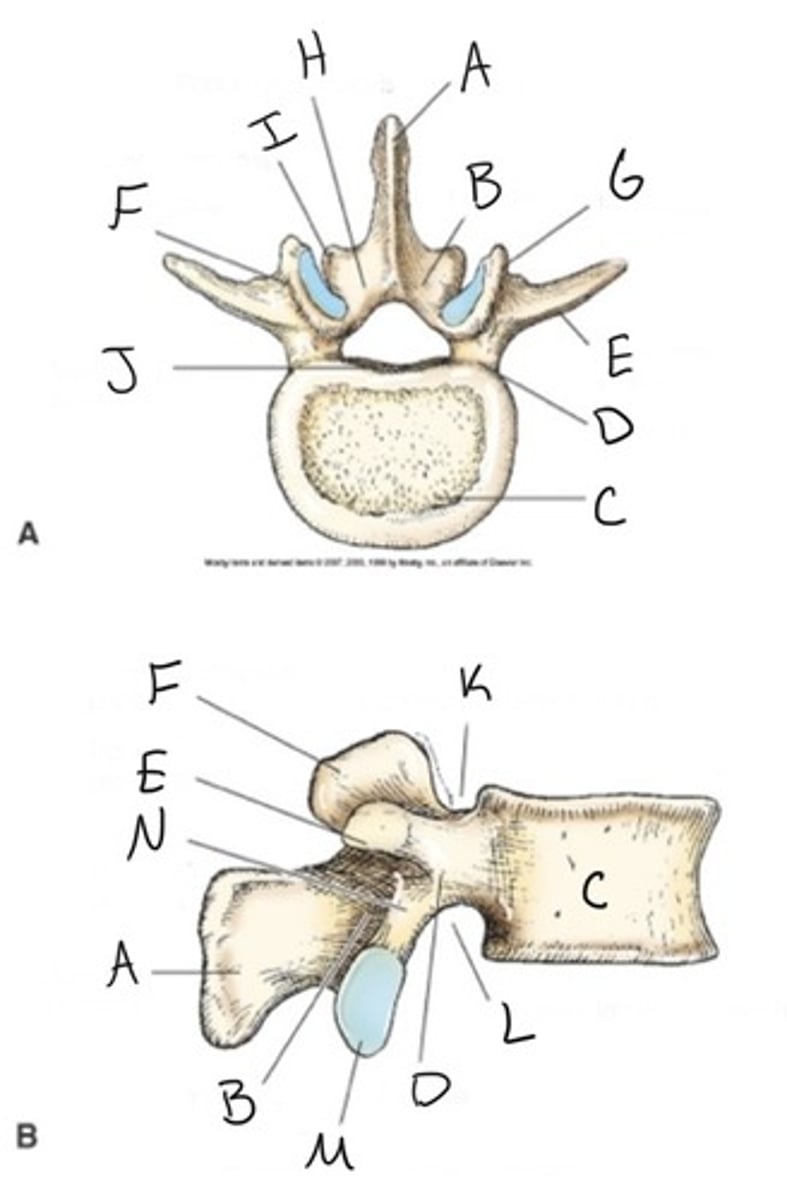
Spinous process
What is A?
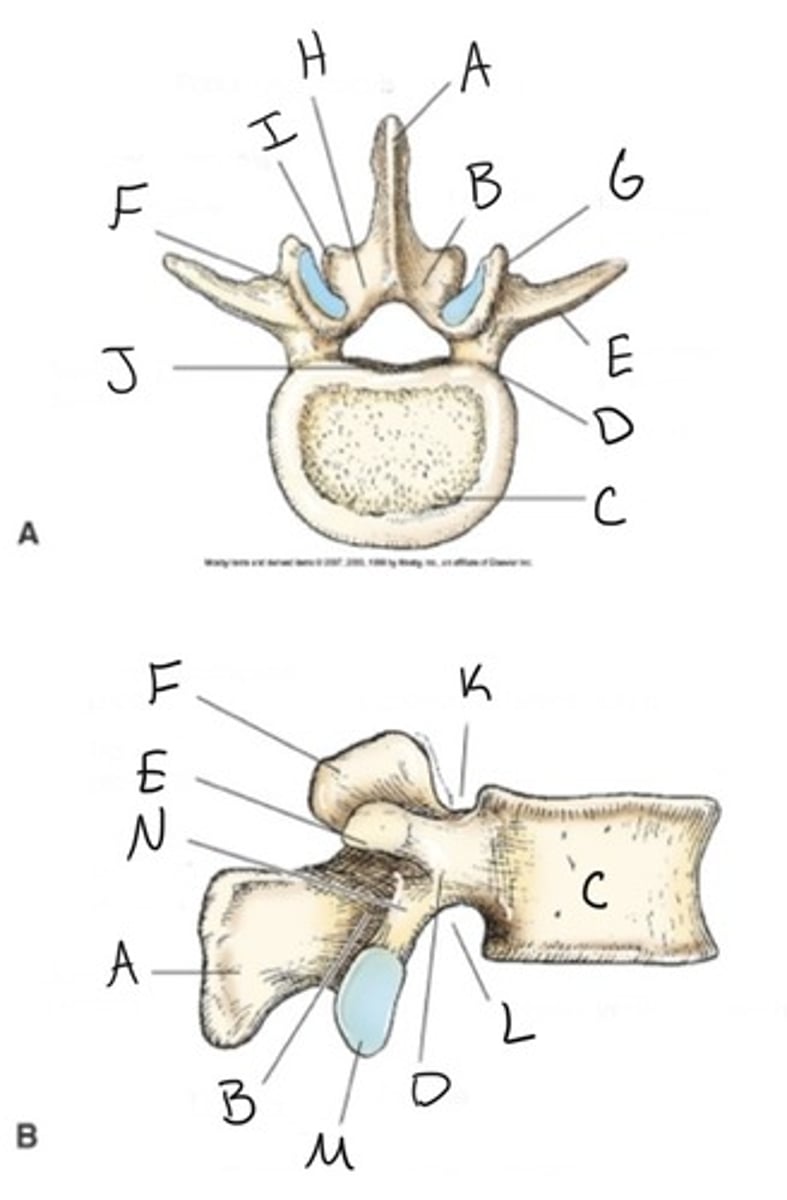
Lamina
What is B?
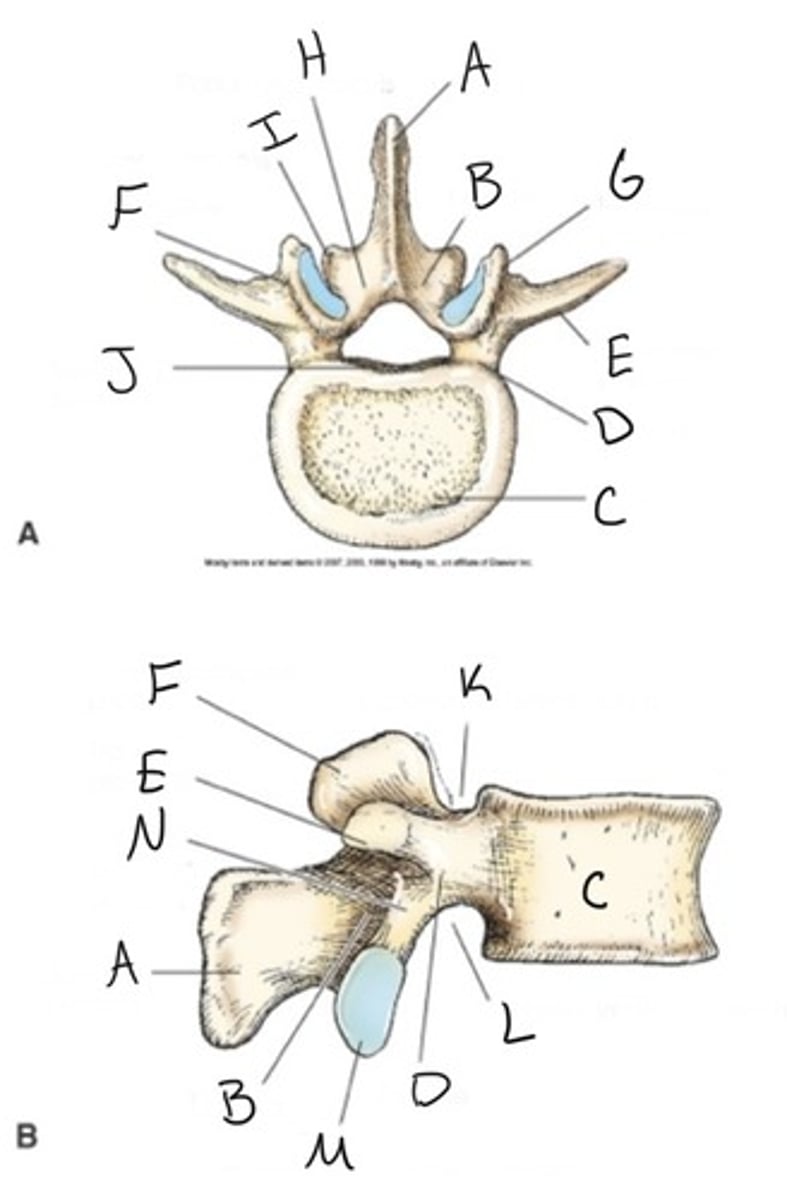
Body
What is C?
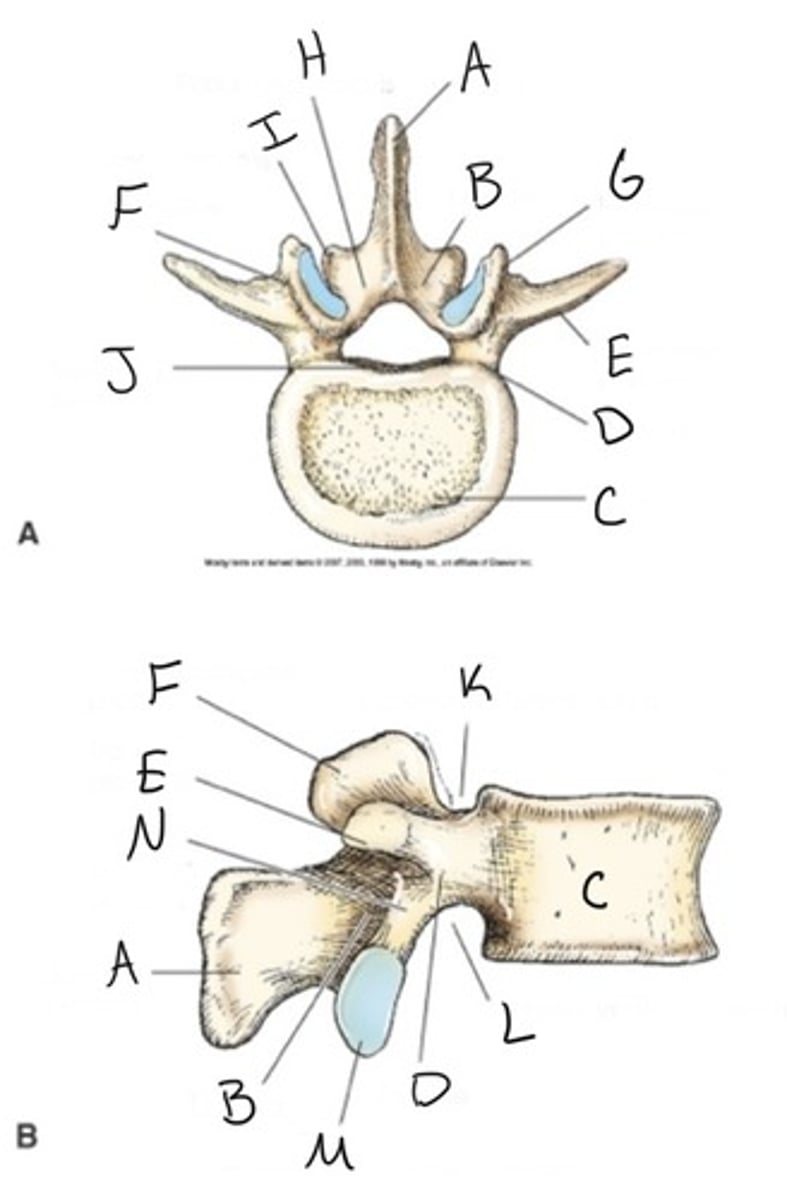
Pedicle
What is D?
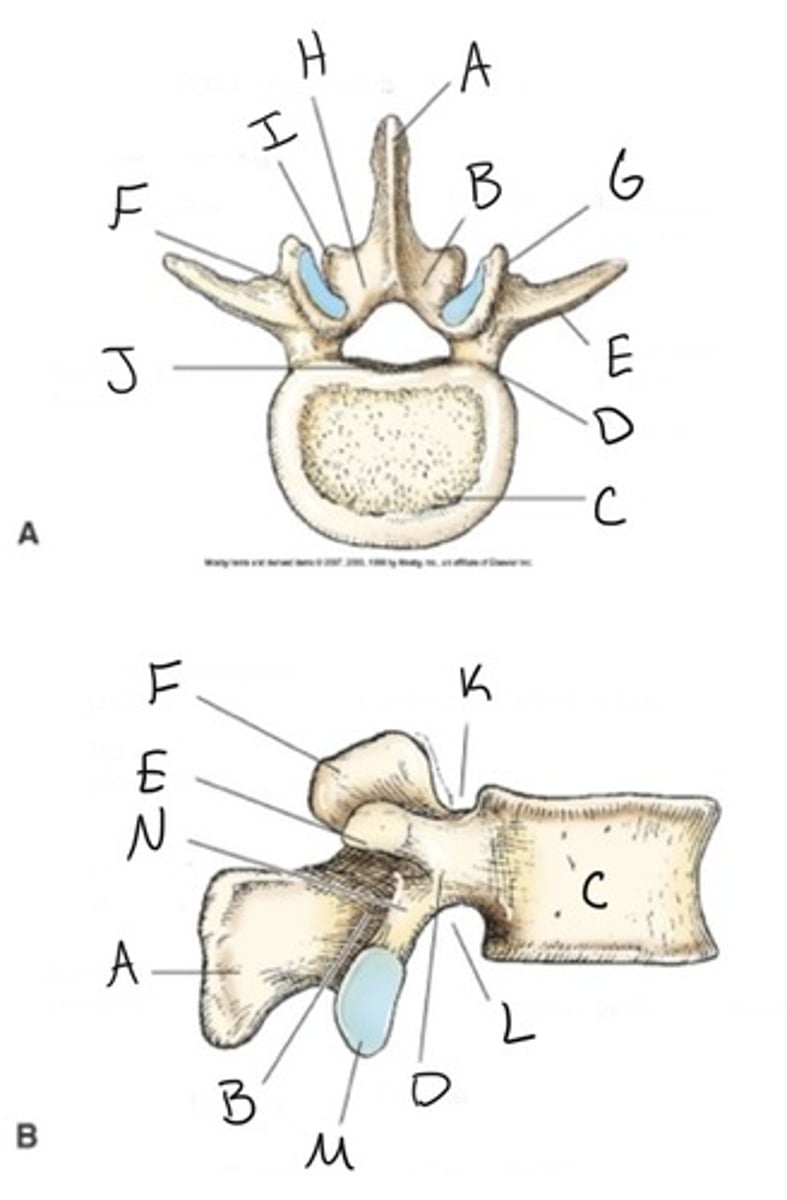
Transverse process
What is E?
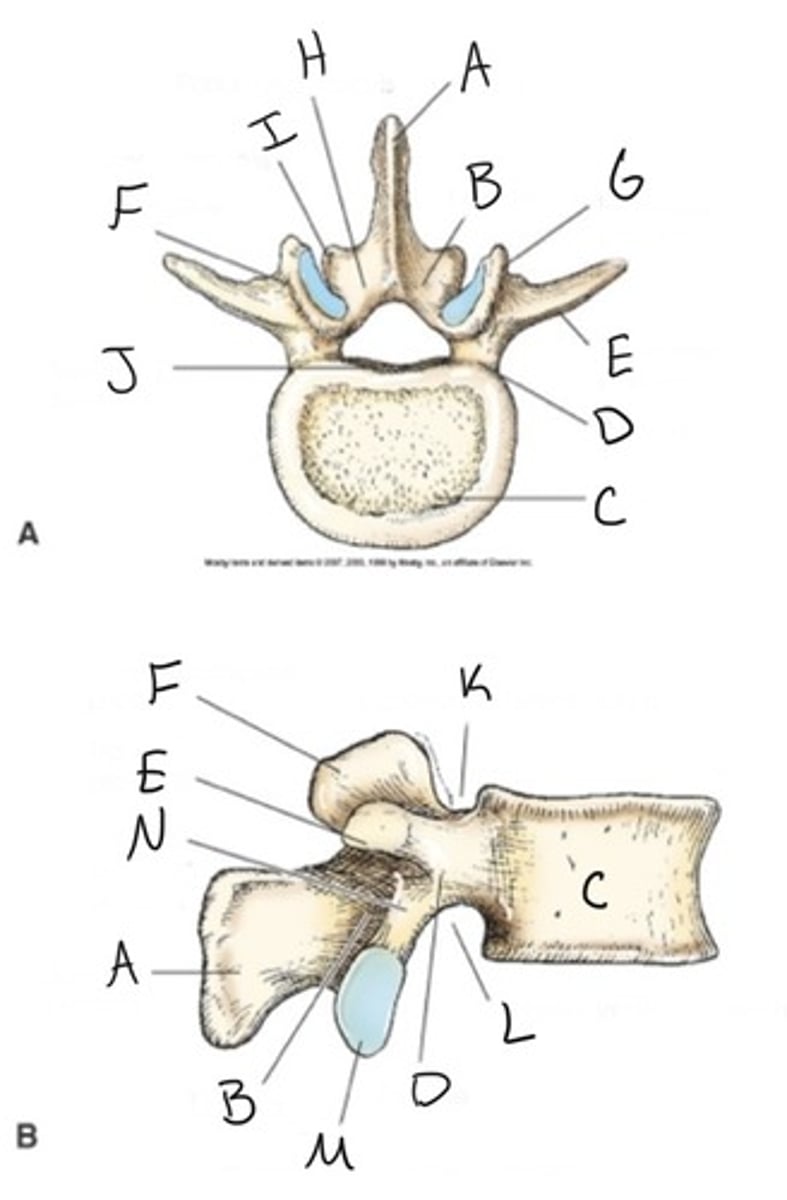
Superior articular process
What is F?
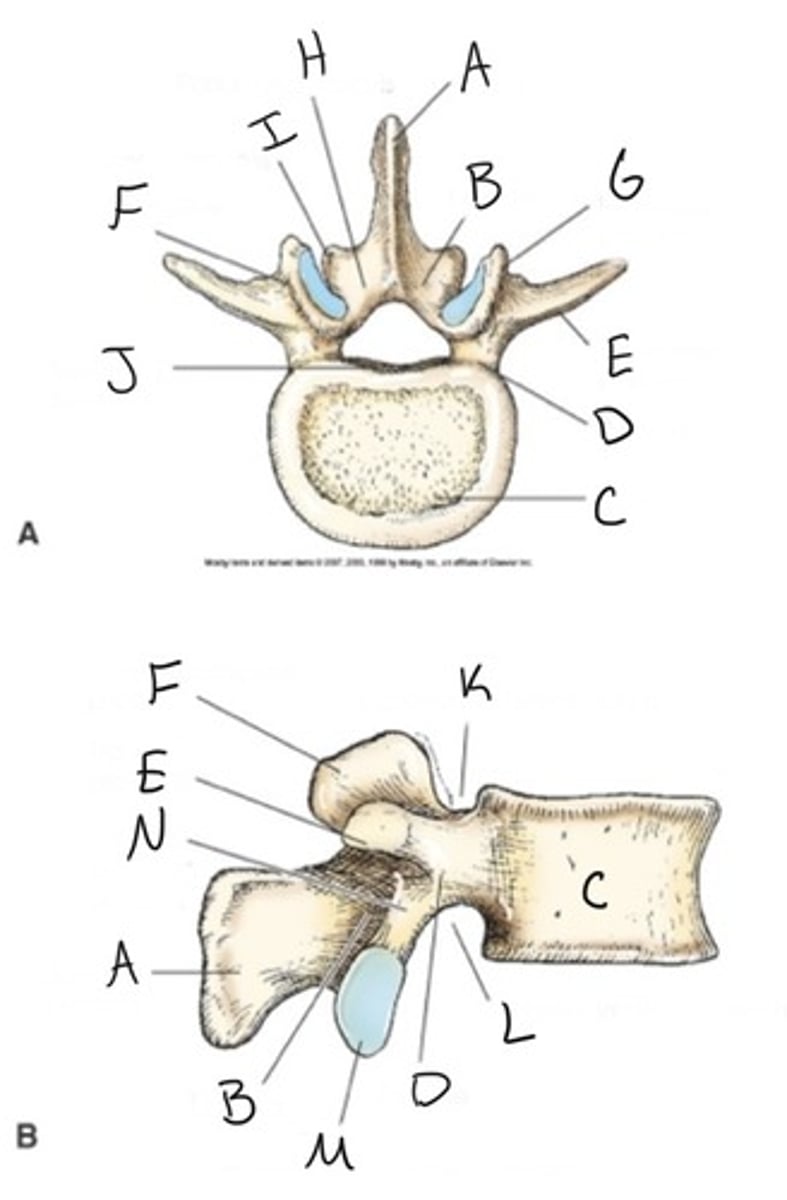
Mammillary process
What is G?
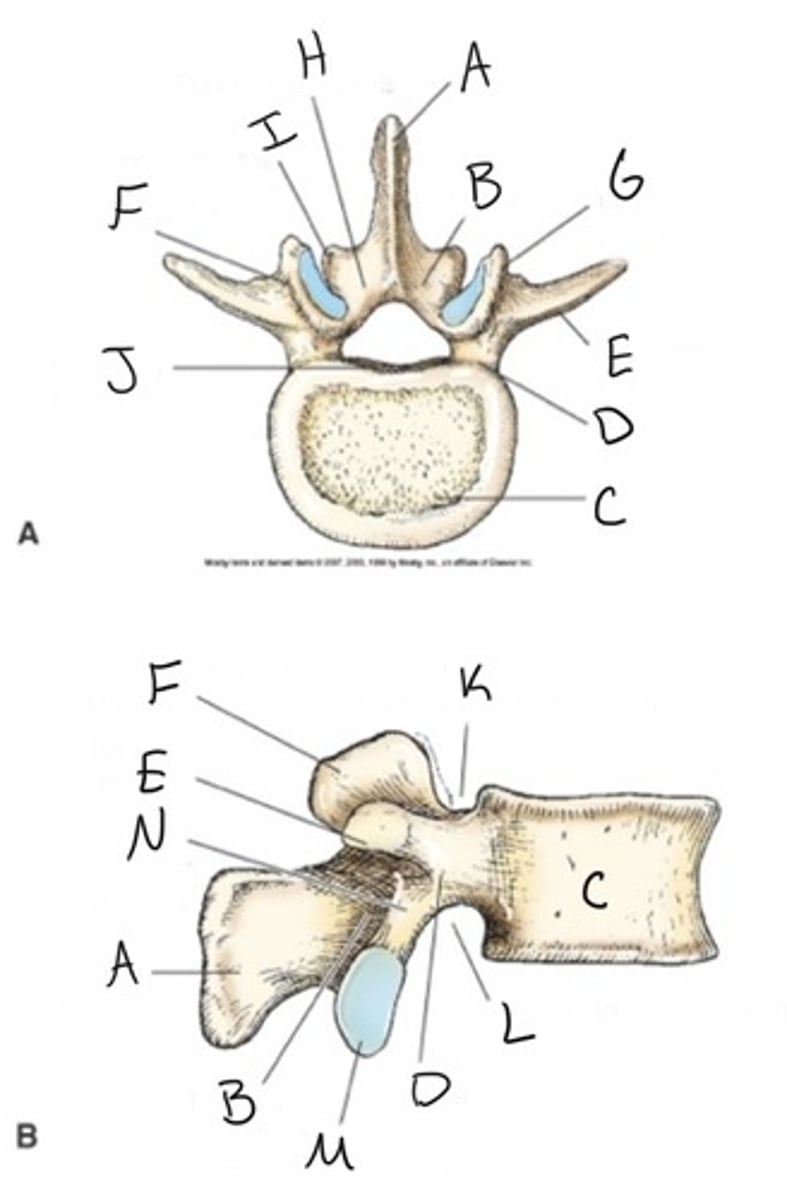
Pars interarticularis
What is H?
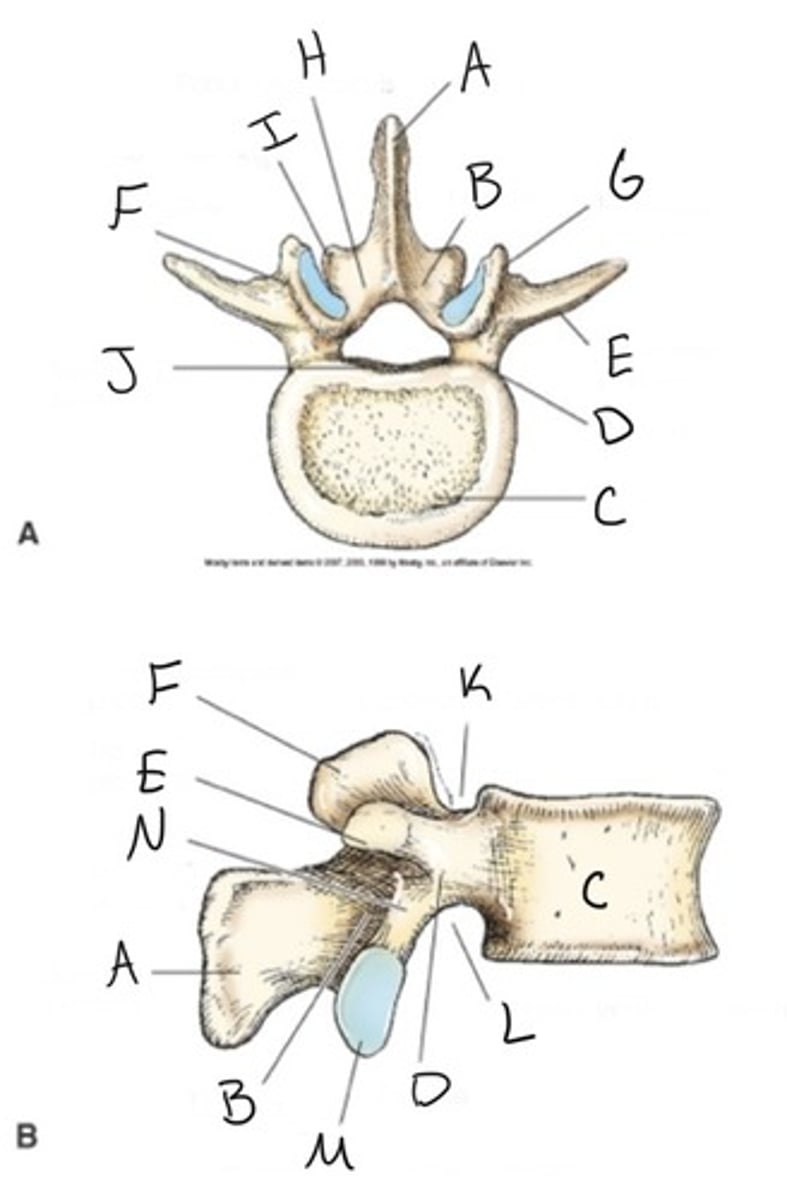
Accessory process
What is I?