BIOL 121: Plant Lab Terms
 Call Kai
 Learn
Learn Practice Test
 Spaced Repetition
 Match
Match Flashcards
 Knowt Play
1/20

There's no tags or description
Looks like no tags are added yet.
Name | Mastery | Learn | Test | Matching | Spaced | Call with Kai |
|---|
No analytics yet
Send a link to your students to track their progress
21 Terms
How do H+ pumps and K+ pumps impact stomatal opening?
- H+ pumps activated: H+ pumped out --> big membrane potential
- Causes K+ to be pumped into the guard cells
- Causes water to be pumped into the guard cells
- Guard cells open
How does light impact stomatal opening?
Photoreceptors (especially for blue light/phototropins) activate the H+ pumps, and therefore induce stomatal opening
How does potassium and abscisic acid (ABA) influence stomatal opening?
K+: the H+ pumps that pump H+ out of the cell induces the influx of K+ ions into the guard cell; water follows K+ and stomatal opening occurs
ABA: coordinates plant response to drought; drought —> increase ABA levels —> ABA blocks H+ activity and makes K+ move out of the cell; stomata CLOSES to conserve water
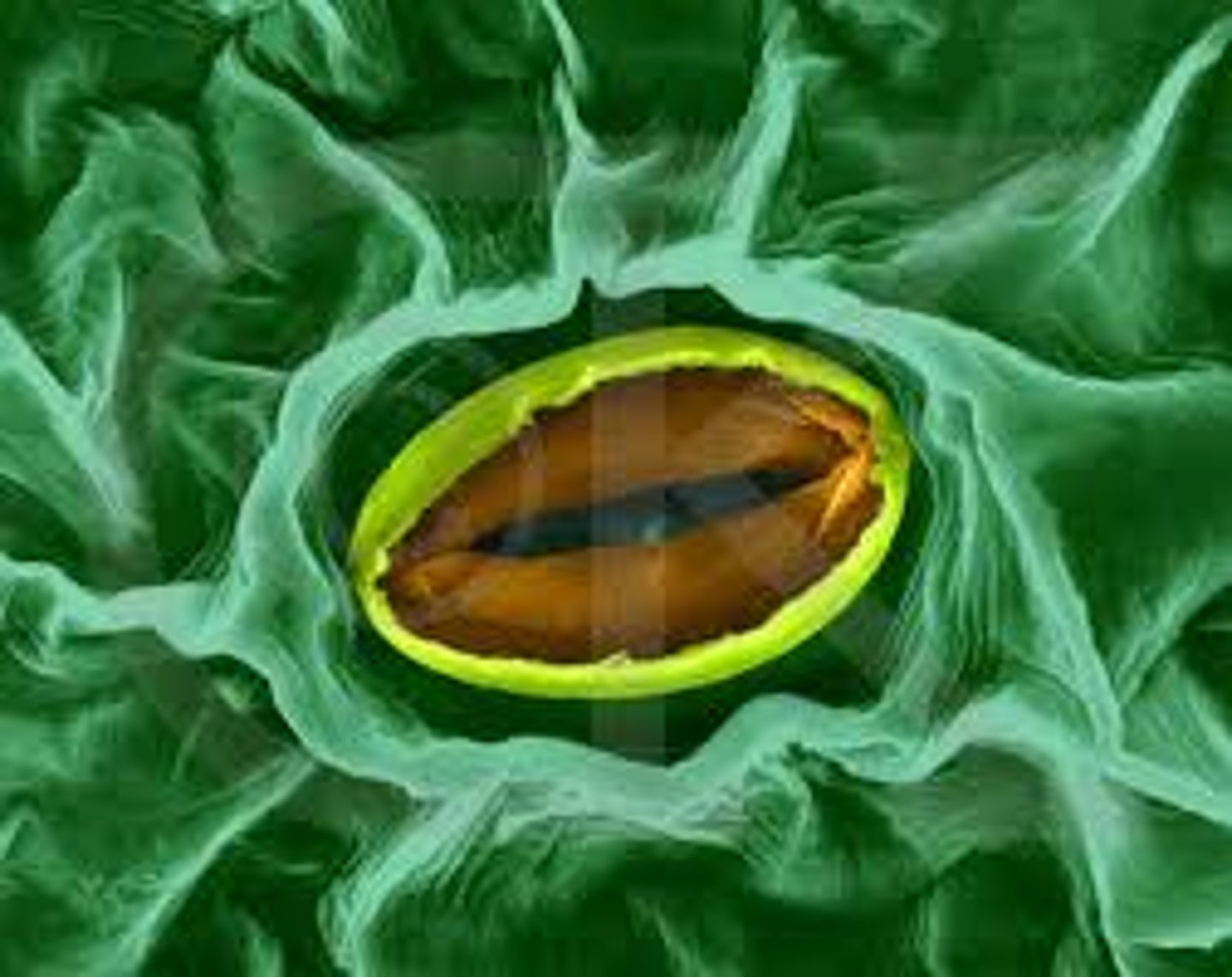
Stomata
Pores that allow gas (CO2 for photosynthesis) and water (exits leaf + goes through xylem) exchange
Gametophyte
Haploid, gamete producing phase of a plant; multicellular
Sporophyte
Diploid, spore (n) producing (meiosis) phase of a plant; spores germinate into new gametophyte
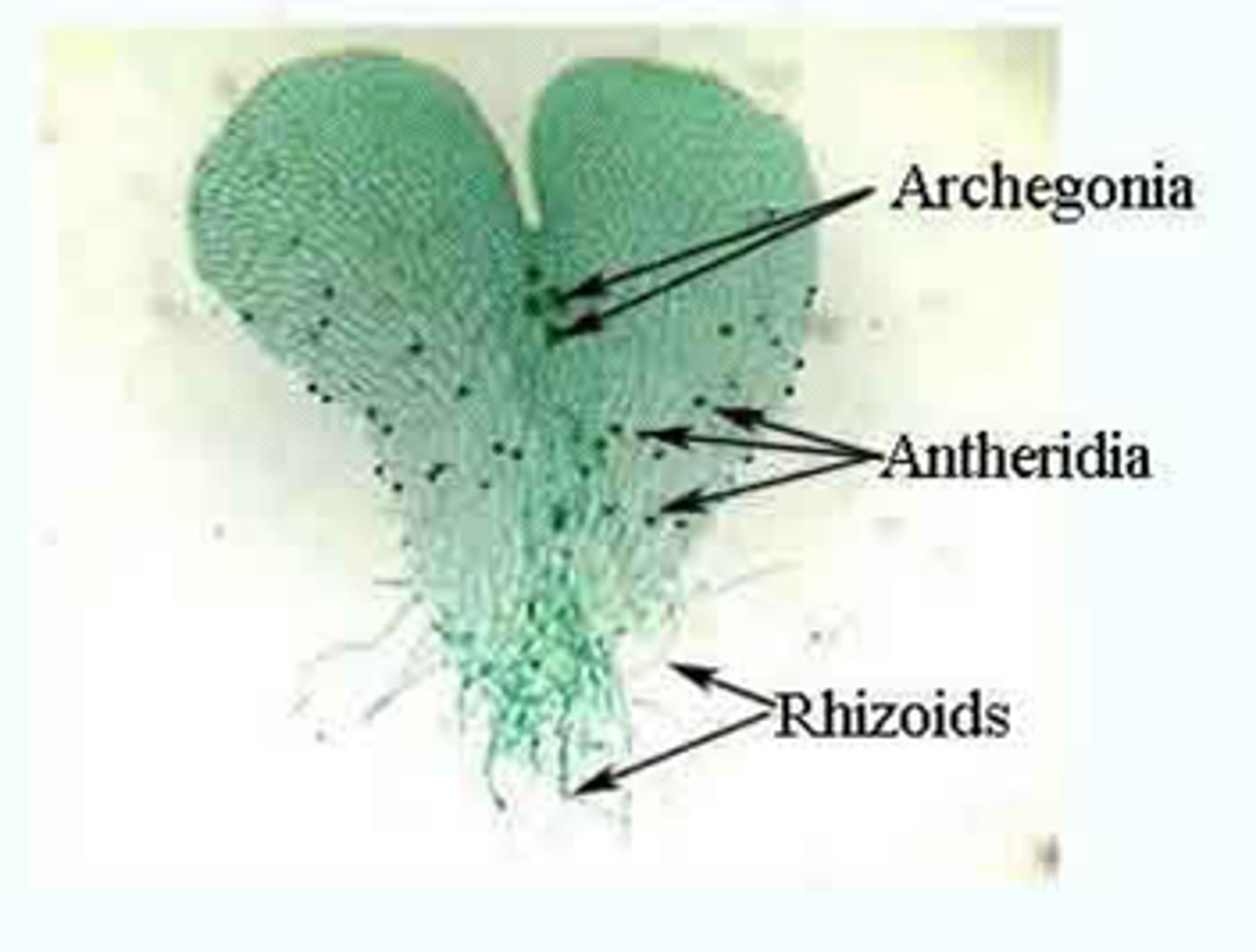
Antheridium vs Archegonium
antheridium = male gametes that produce sperm
archegonium = female gametes that produce eggs
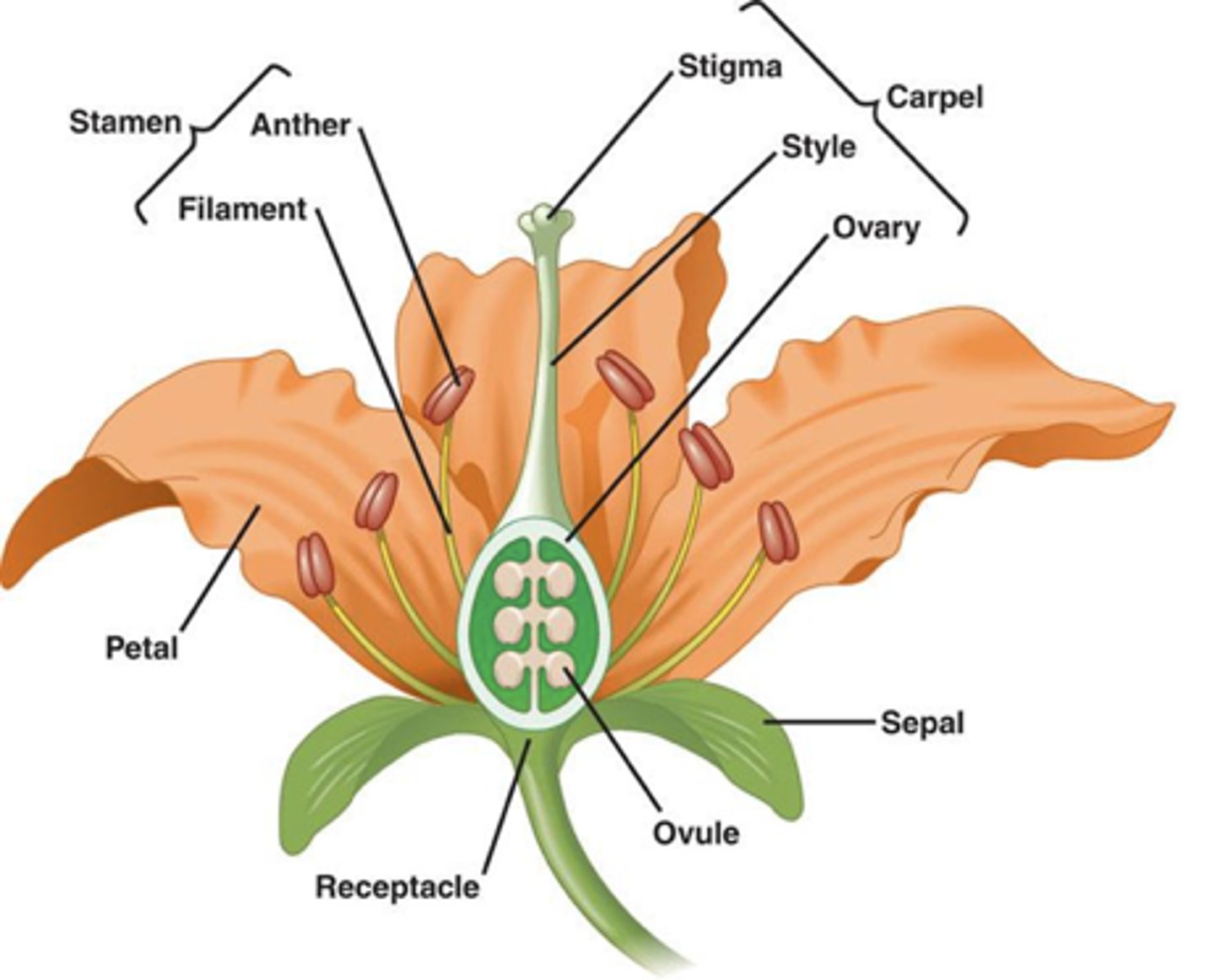
Flower Morphology (9 things)
stamen, filament, anther, carpel, stigma, style, ovary, petal, sepal
Heterospory
When a plant produces 2 different kinds of spores that make the separate unisexual female (megaspores) and male (microspores) gametophytes
only angiosperms
Where are the male and female gametophytes located in angiosperms?
Male: in pollen grain
Female: in seed
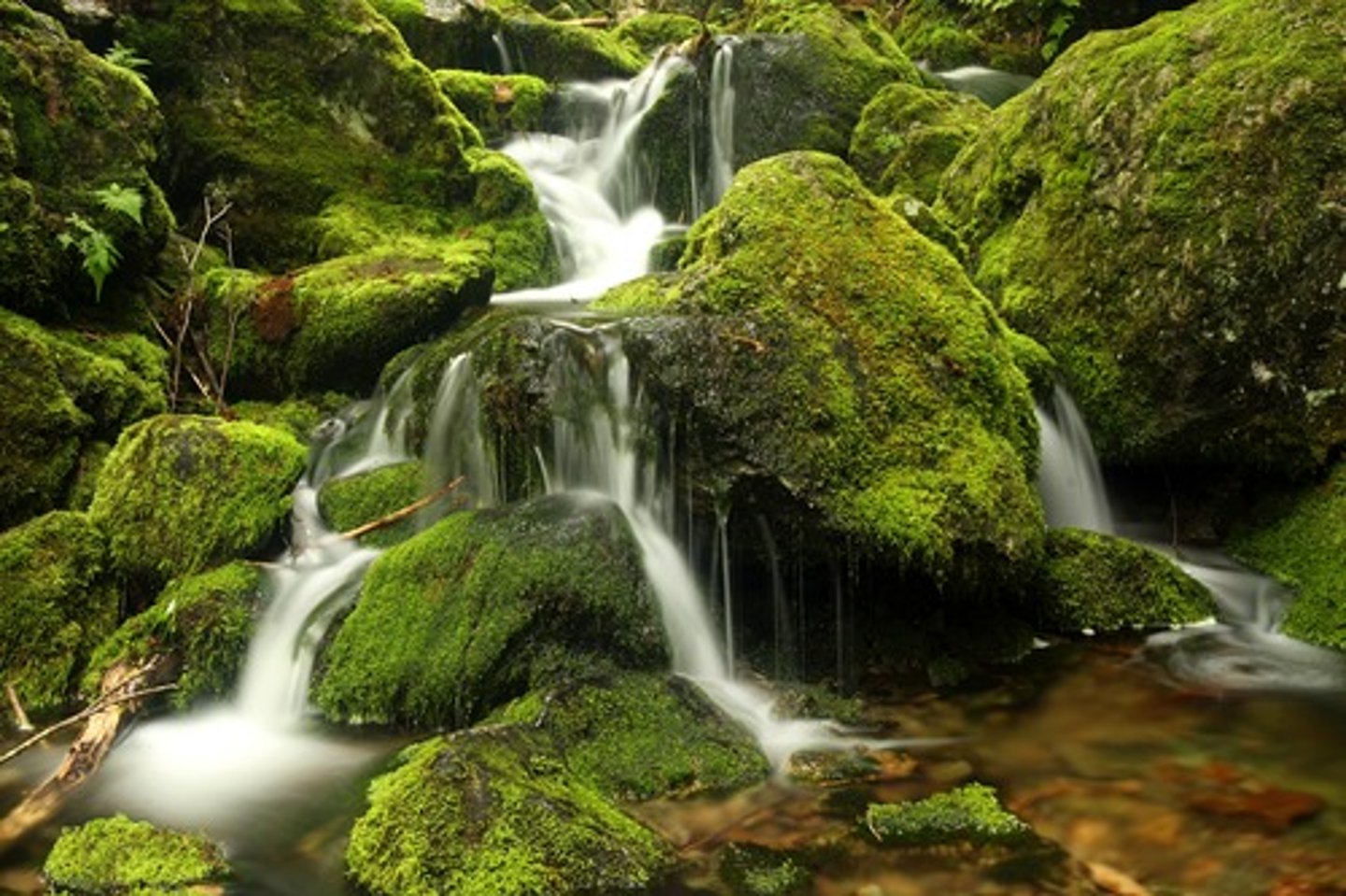
Bryophytes Traits + example
Nonvascular + seedless ("outgroup"); mosses
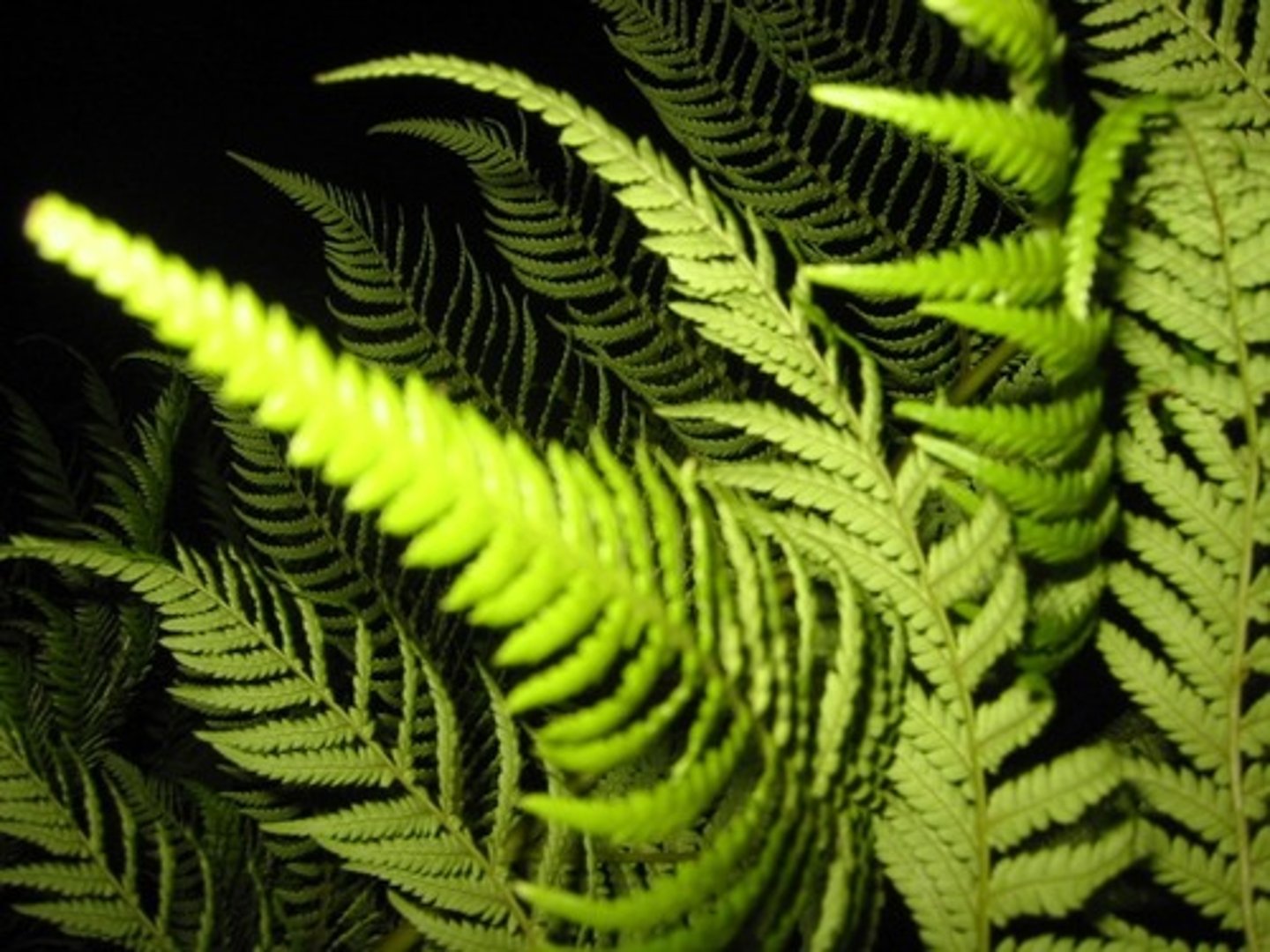
Monilophyte Traits + example
Vascular + seedless; ferns
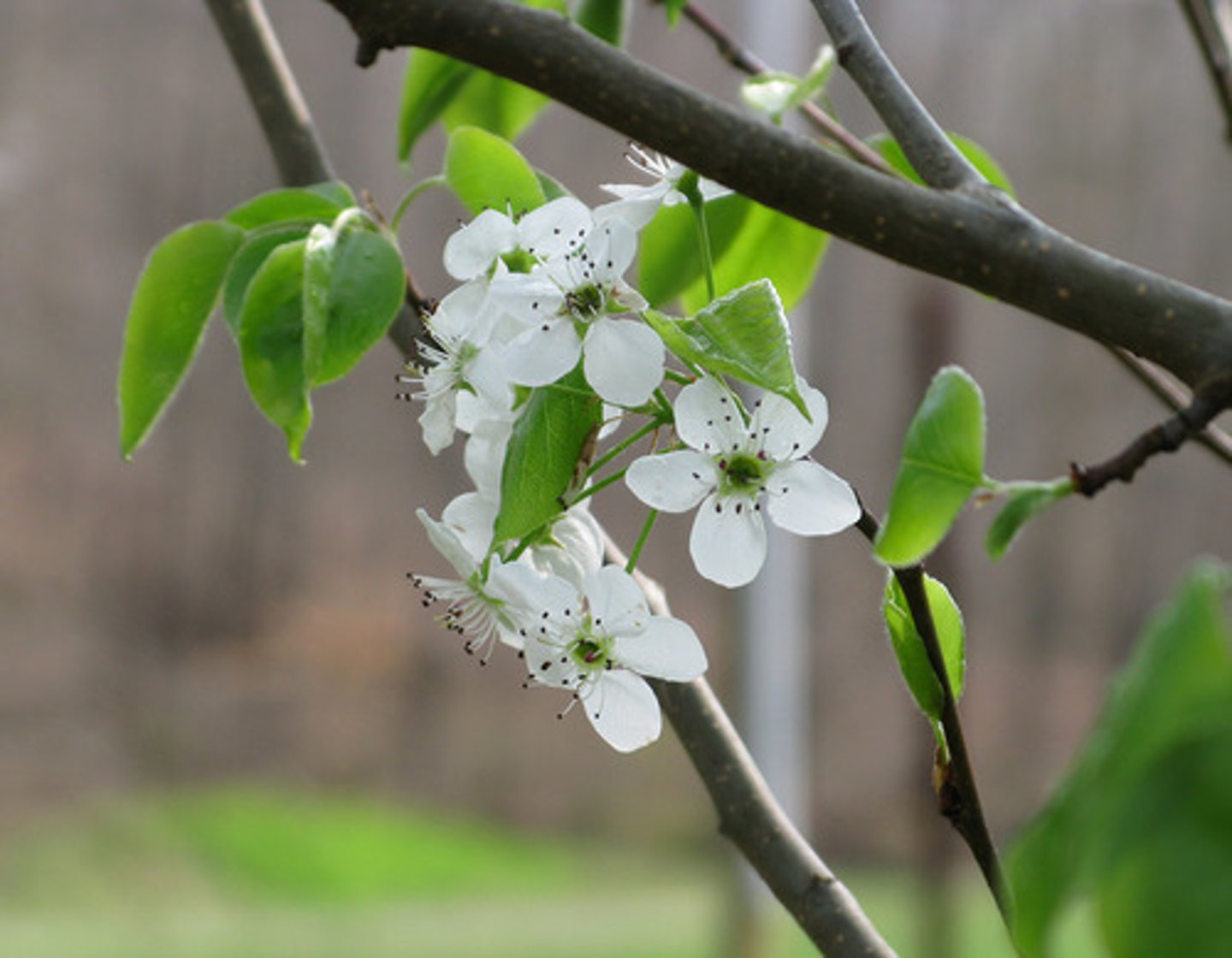
Angiosperm Traits + example
Vascular + SEEDS; flowers
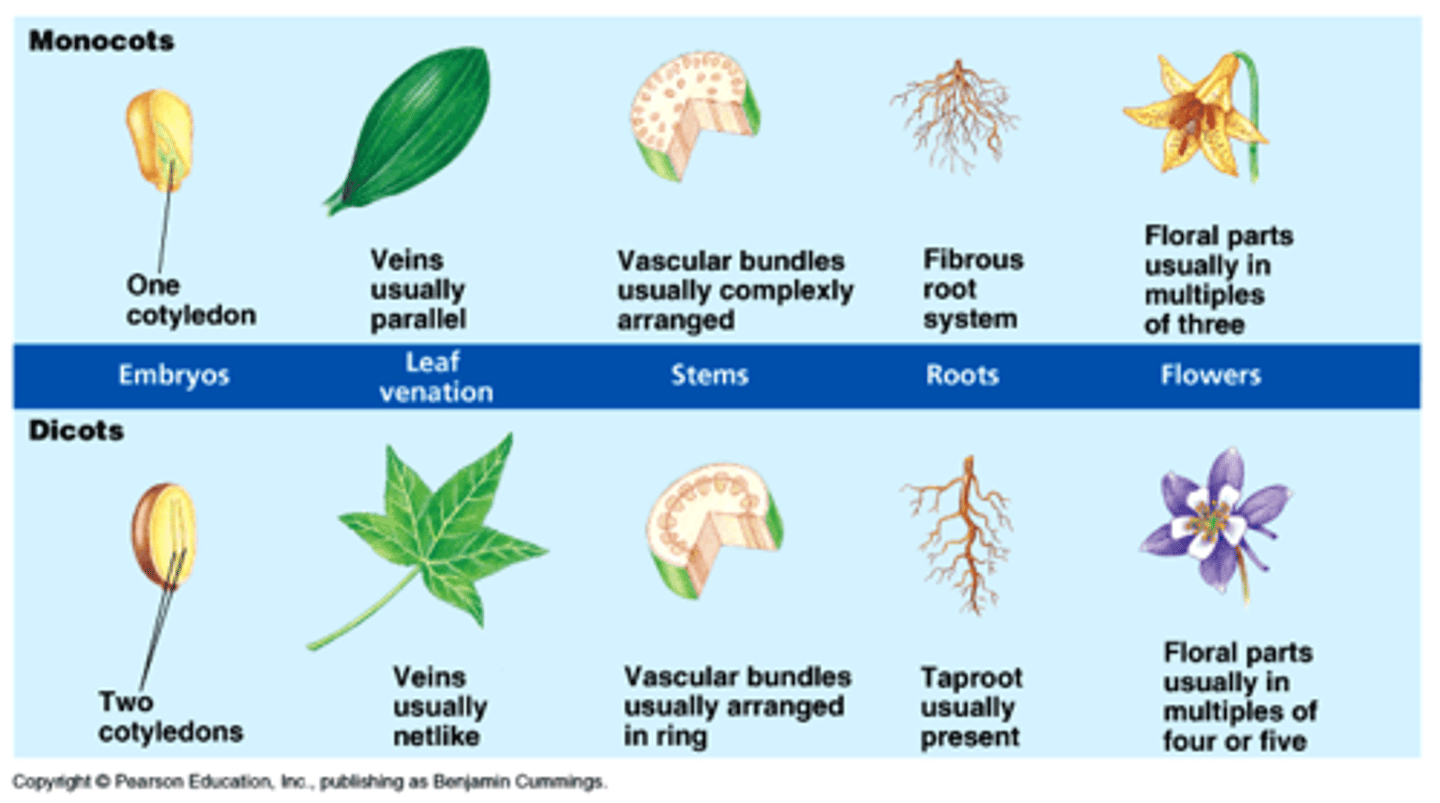
Monocot vs Eudicot in Angiosperms
mono: one cotyledon, parallel veins on leaf, no main root, petals in multiples of 3, scattered vascular tissue
euni: 2 cotyledons, netlike veins, main root, petals in multiples of 4 or 5, vascular tissue in ring
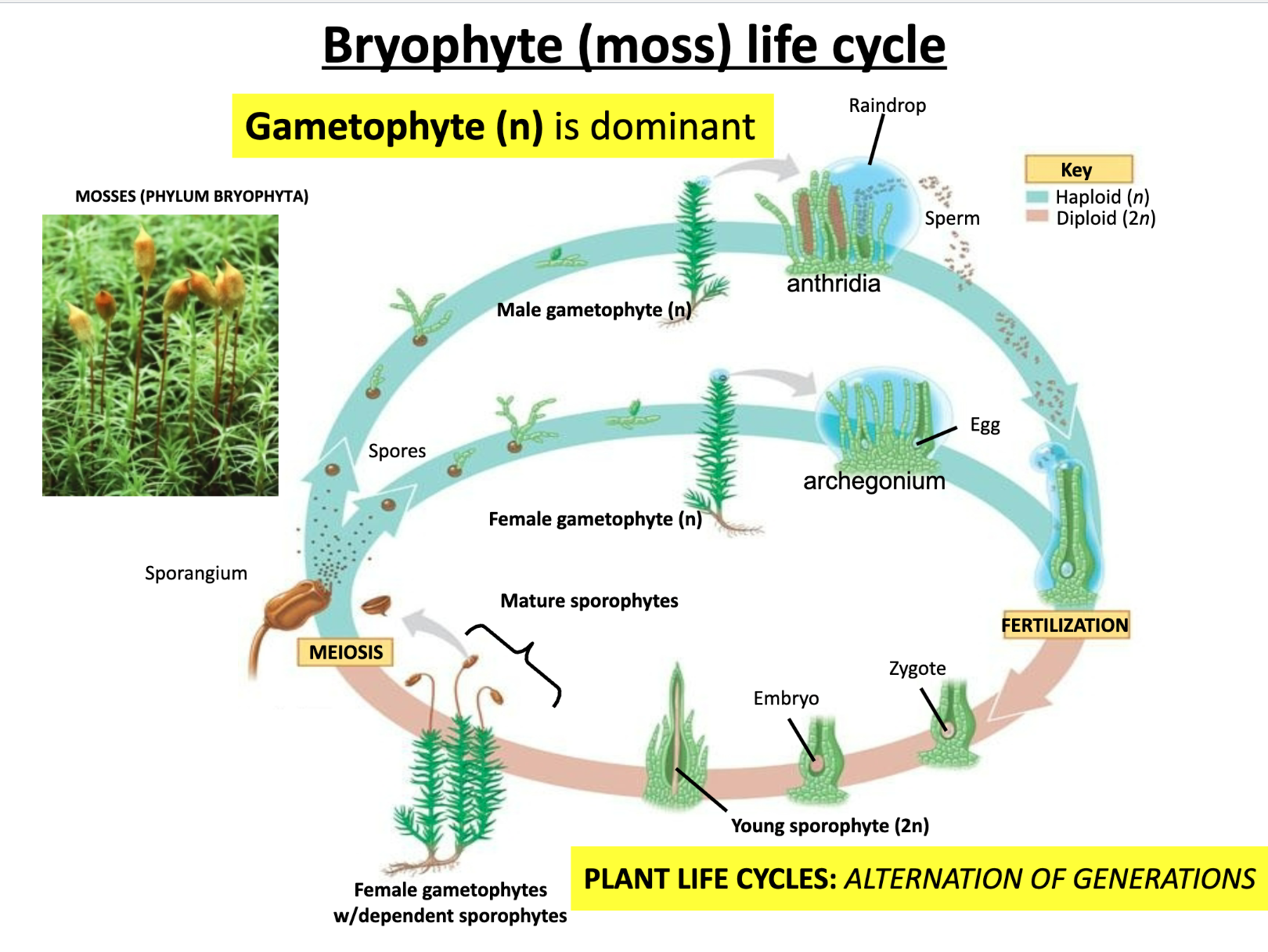
Alternation of Generations
Life cycle of plants; alternate between a MULTICELLULAR haploid and diploid stage
Bryophytes
General Life Cycle
Which generation is dominant?
1. Mature sporophytes undergo MEIOSIS --> spores
2. Spores released + germinate --> male and female gametophytes
3. Male --> antheridia; Female --> archegonium (MITOSIS)
4. Sperm + egg fertilization --> zygote --> embryo --> young sporophyte
Gametophyte dominant
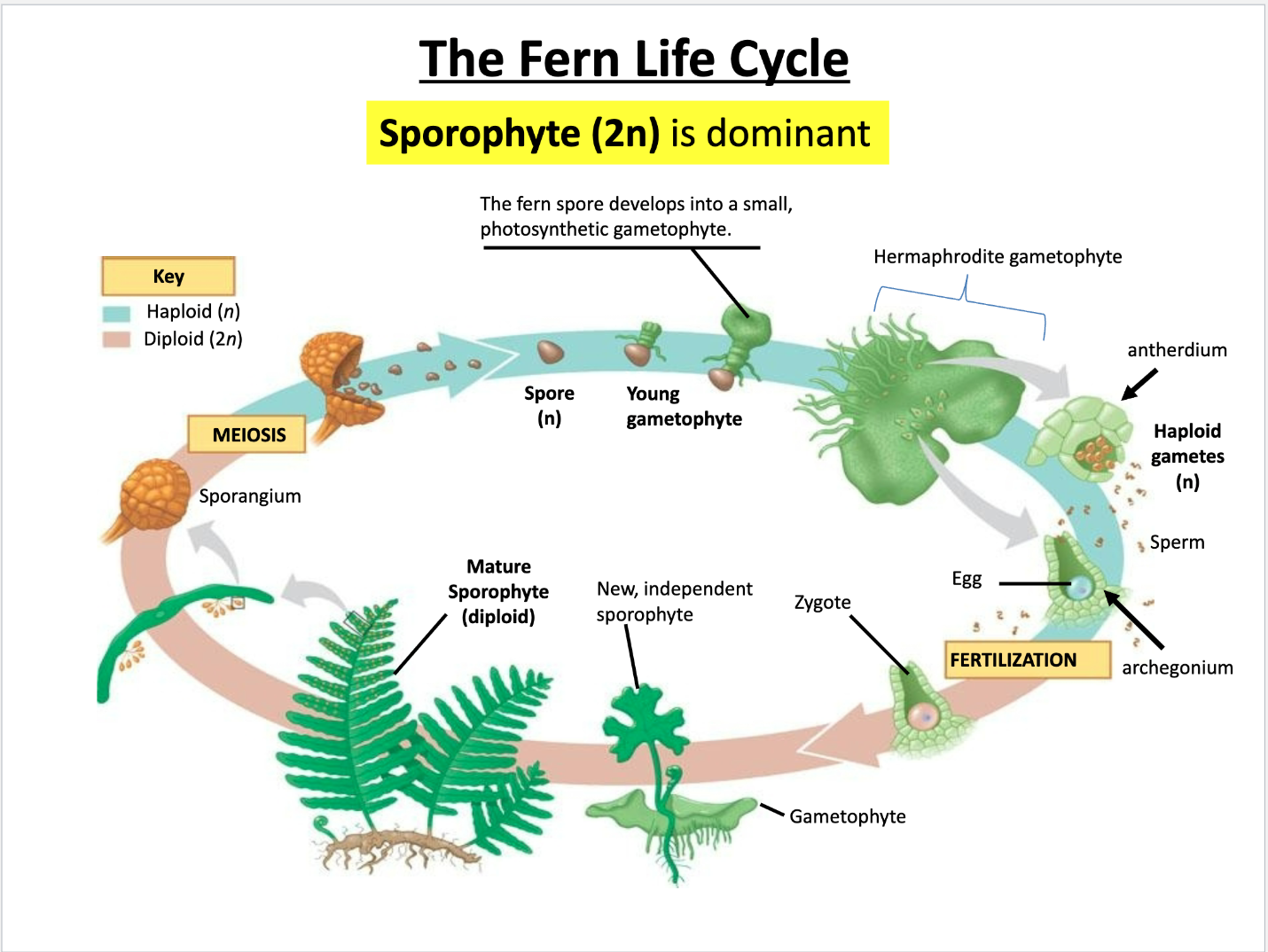
Monilophytes
General Life Cycle
Which generation is dominant?
1. Mature sporophytes undergo MEIOSIS --> spores
2. Spores germinate --> hermaphrodite (or male) gametophyte (MITOSIS)
3. antheridium structure --> sperm; archegonium structure --> egg
4. Fertilization --> zygote --> sporophyte
5. Mature sporophyte grows out of gametophyte
Sporophyte dominant
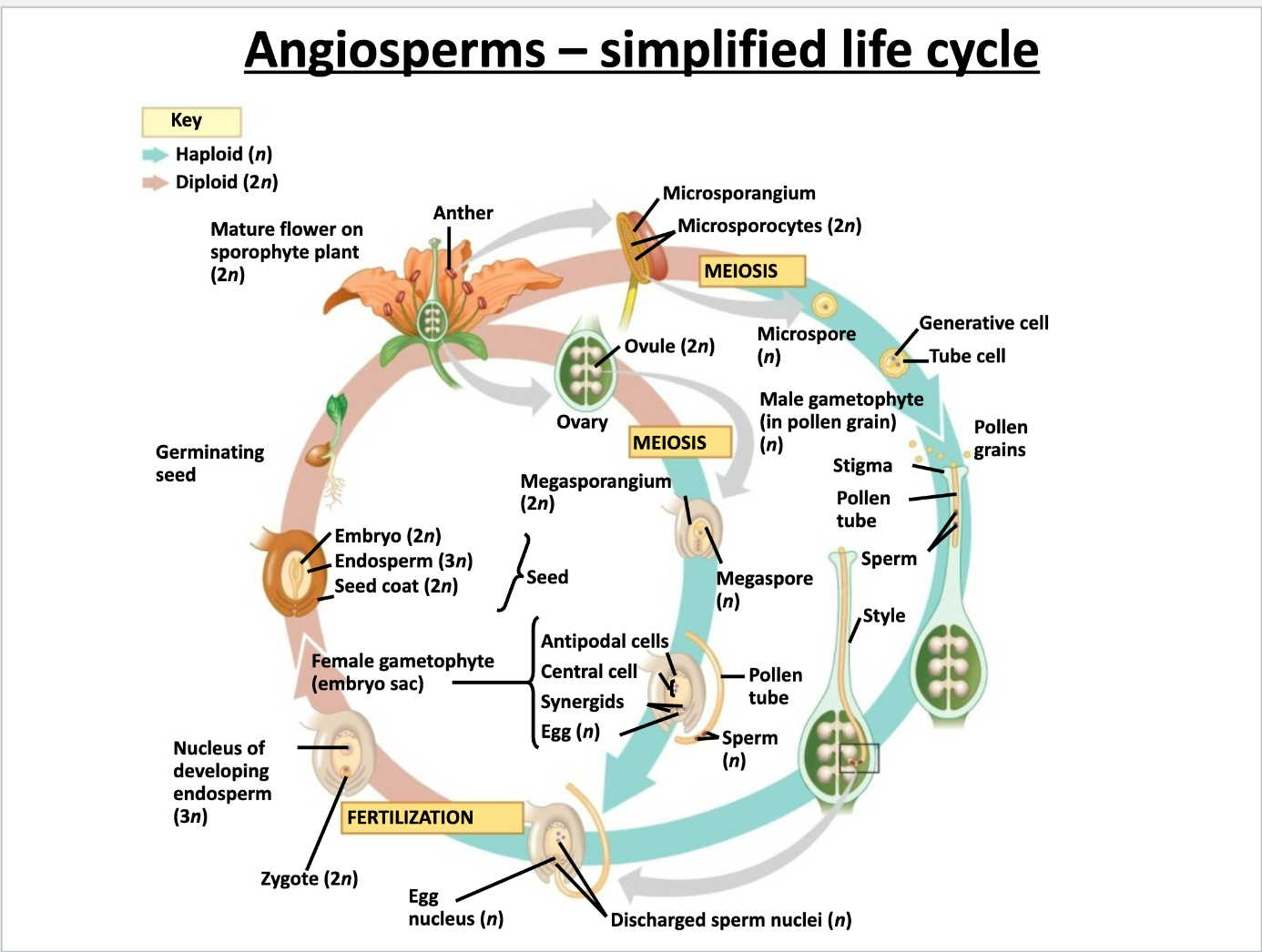
Angiosperms
General Life Cycle
Which generation is dominant?
How are pollen and seeds produced?
1. Mature microsporangia and megasprangie undergo MEIOSIS --> 2 types of spores
2. In anther, microspores --> male gametophyte/pollen grain; in ovary, megaspores --> female gametophyte (makes egg)
3. Pollination
4. Fertilization --> zygote --> fruit surrounded SEED
5. Seed dispersal
Sporophyte dominant

What are the structures? Do they belong to parent sporophyte, gametophyte, or offspring sporophyte generation?
A - Seed coat, parent sporophyte
B - Endosperm, gametophyte
C - Embryo, offspring sporophyte
Where are sporophyte and gametophyte locations in each plant type?
Bryophytes, Monilophytes, Angiosperms
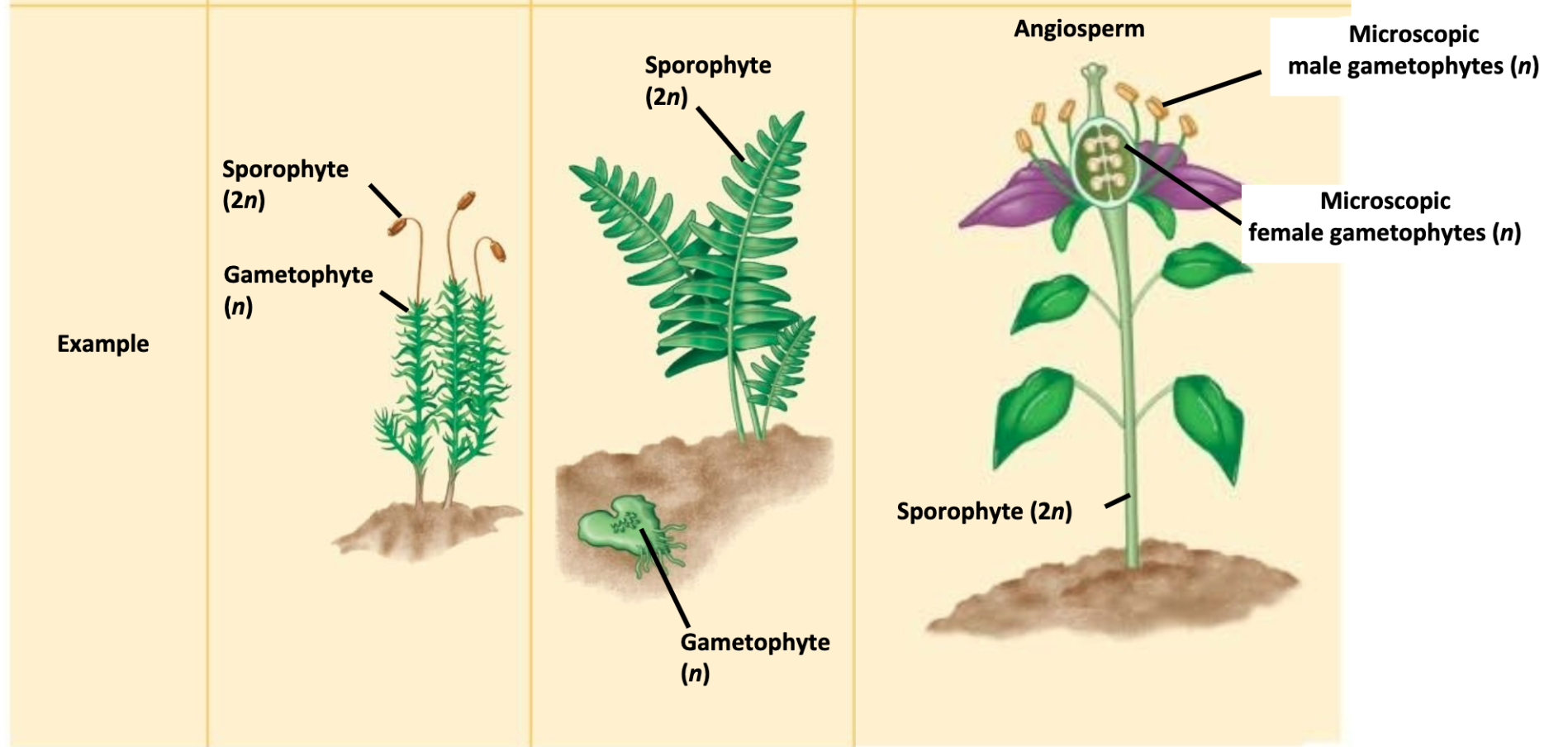
What are the adaptations for living on land/arid environments of the monilophytes and angiosperms?
Bryophytes: non-vascular, gametophyte dominant, no seeds, flagellated sperm
Monilophytes: VASCULAR, SPOROPHYTE, no seeds, flagellated sperm
Angiosperms: vascular, sporophyte, SEEDS, NON FLAGELLATED