SS20 All terms updated
 Call Kai
 Learn
Learn Practice Test
 Spaced Repetition
 Match
Match Flashcards
1/164

There's no tags or description
Looks like no tags are added yet.
Name | Mastery | Learn | Test | Matching | Spaced | Call with Kai |
|---|
No analytics yet
Send a link to your students to track their progress
165 Terms
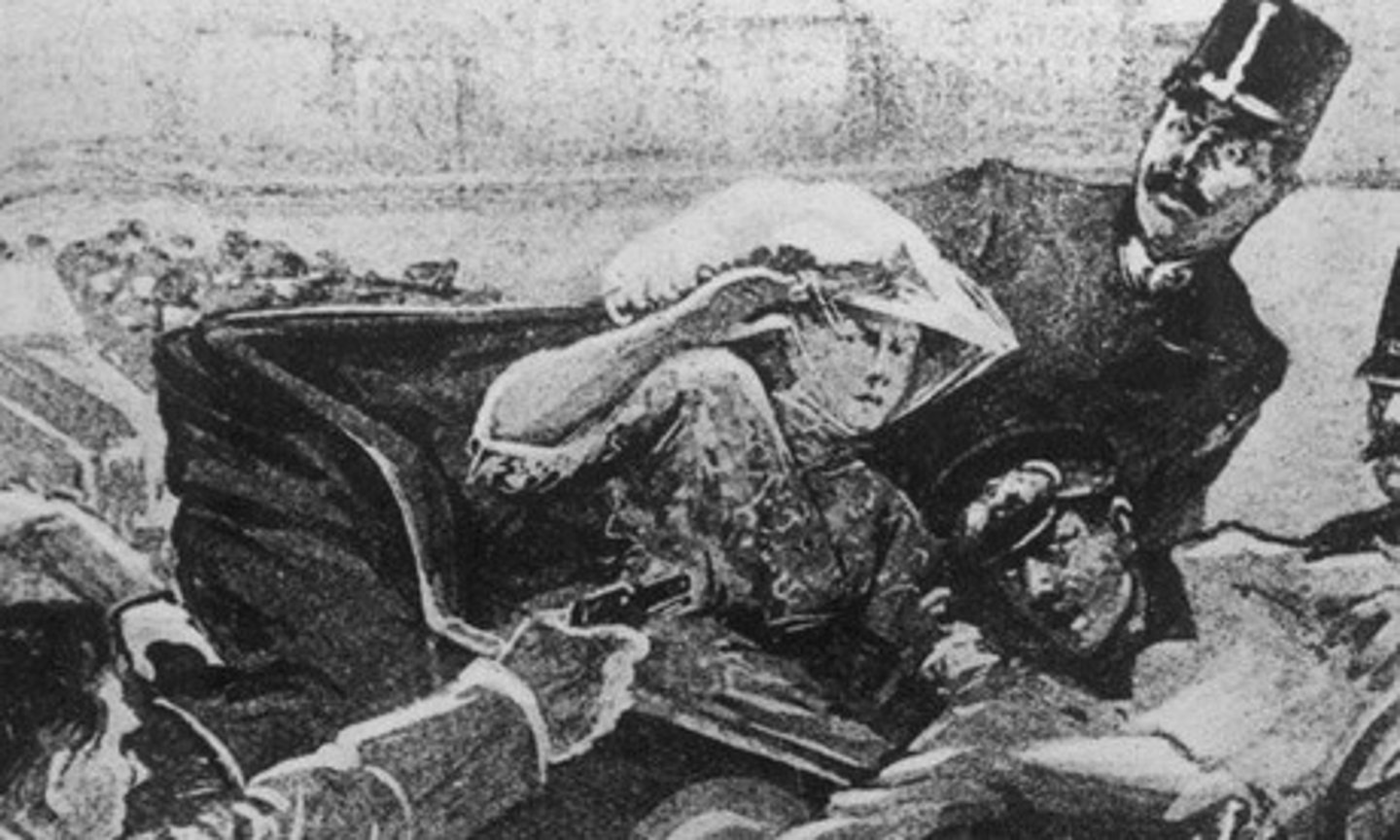
The assassination of Archduke Franz Ferdinand
This was the spark that started World War I. A Serbian nationalist did this in Sarajevo, Bosnia.
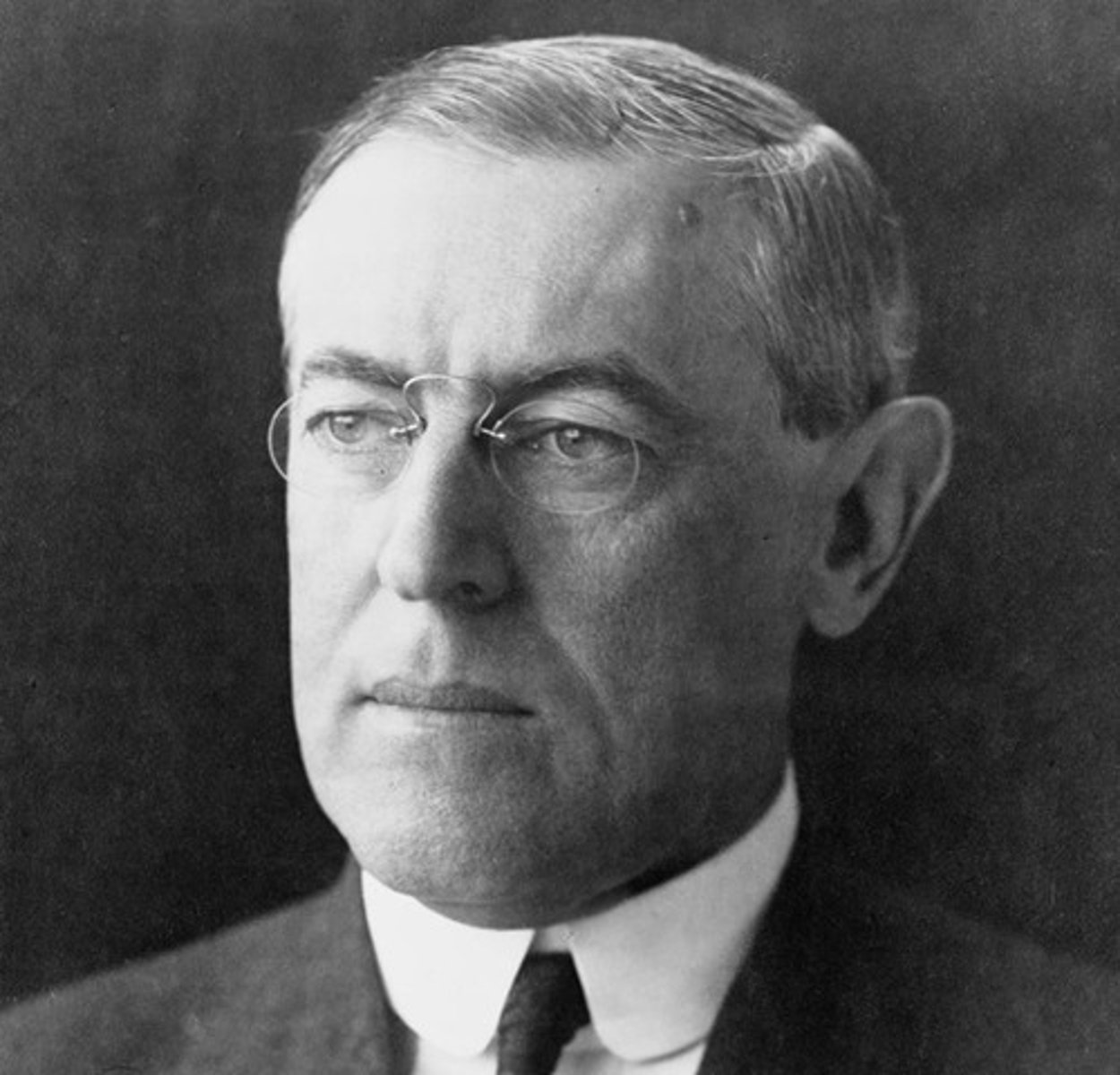
Woodrow Wilson
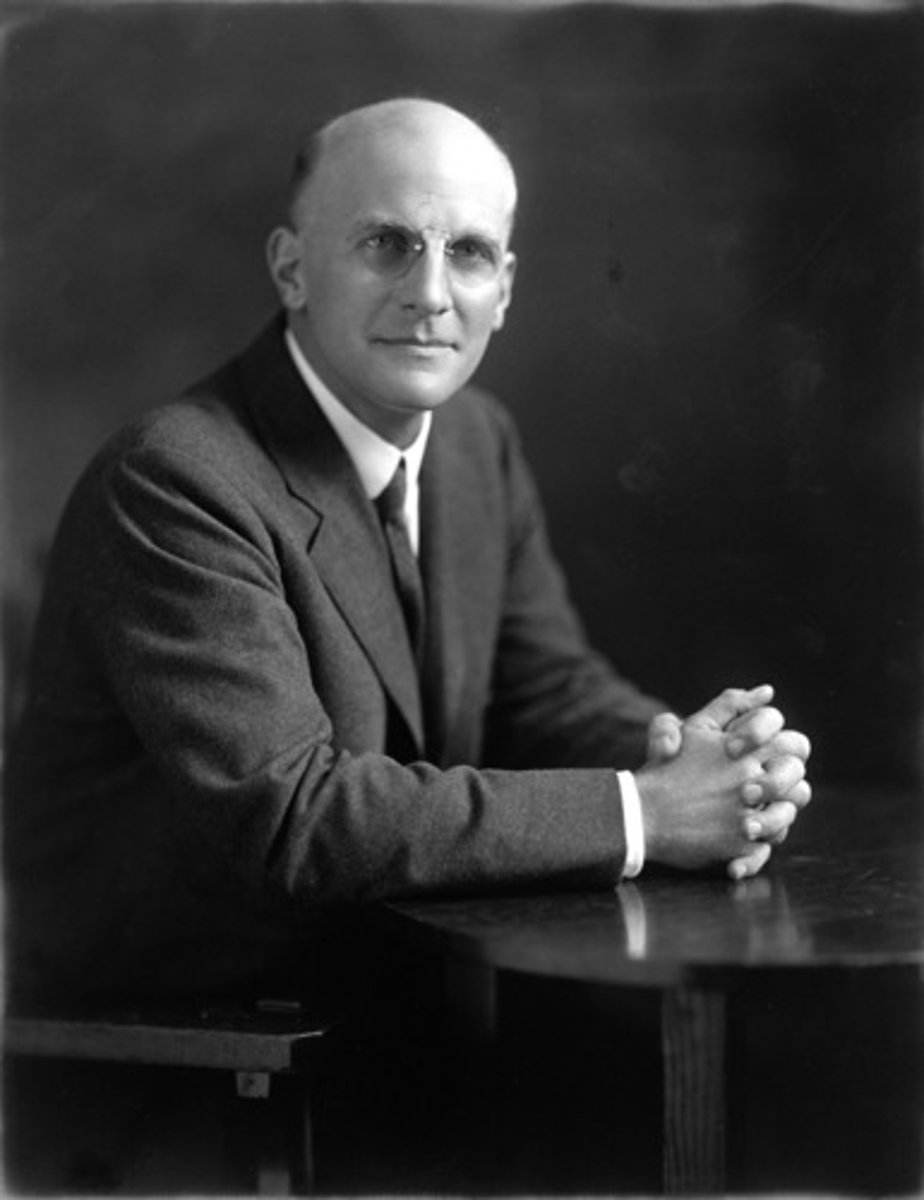
This was the president who was elected in 1912, and led the US into WWI. Later wrote a plan for post-WWI peace known as the Fourteen Points.
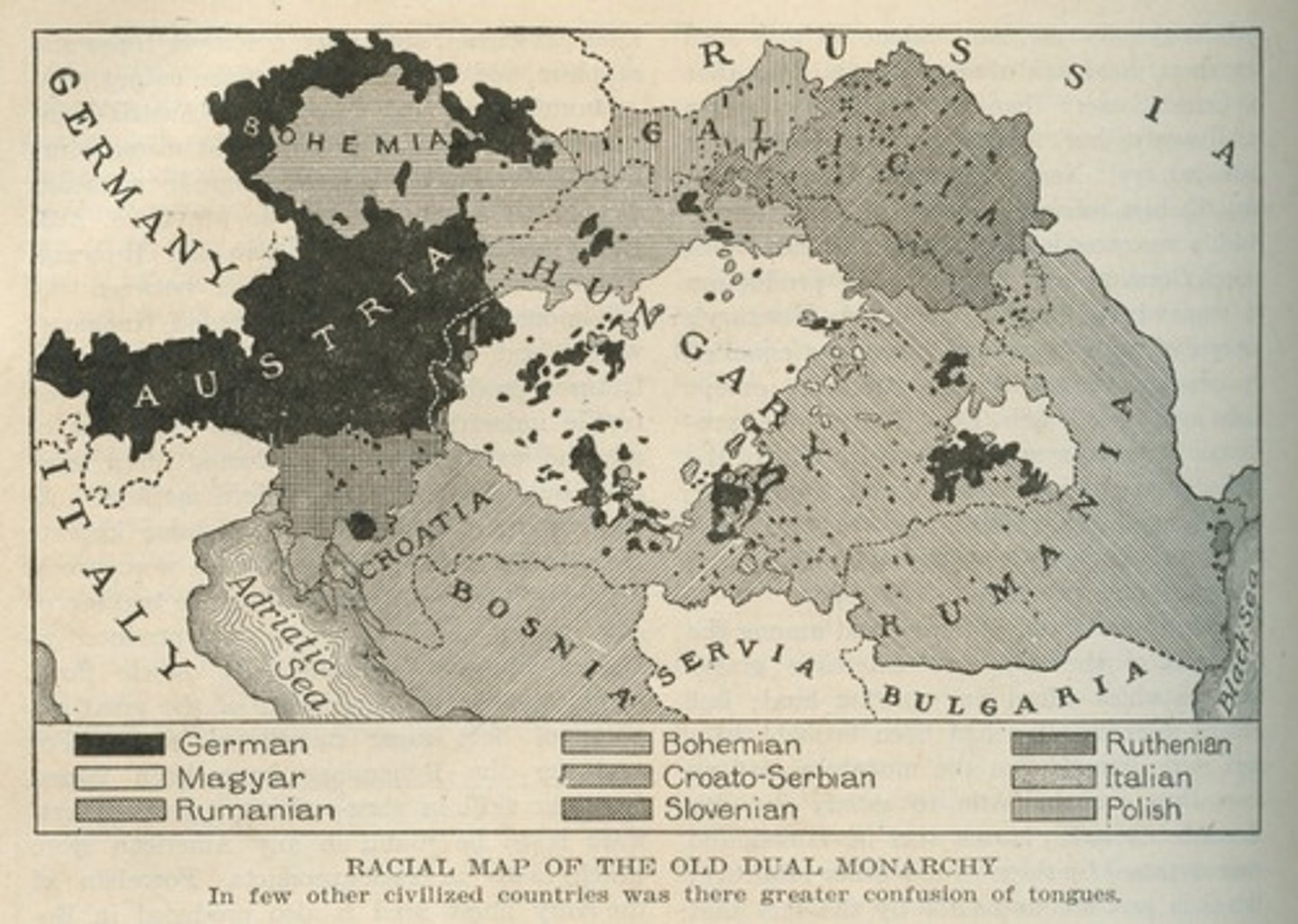
Austria-Hungary
This Central Power empire during WWI. It was made up of Austria, Hungary and several other nations and territories. After World War I it split up into several nations.
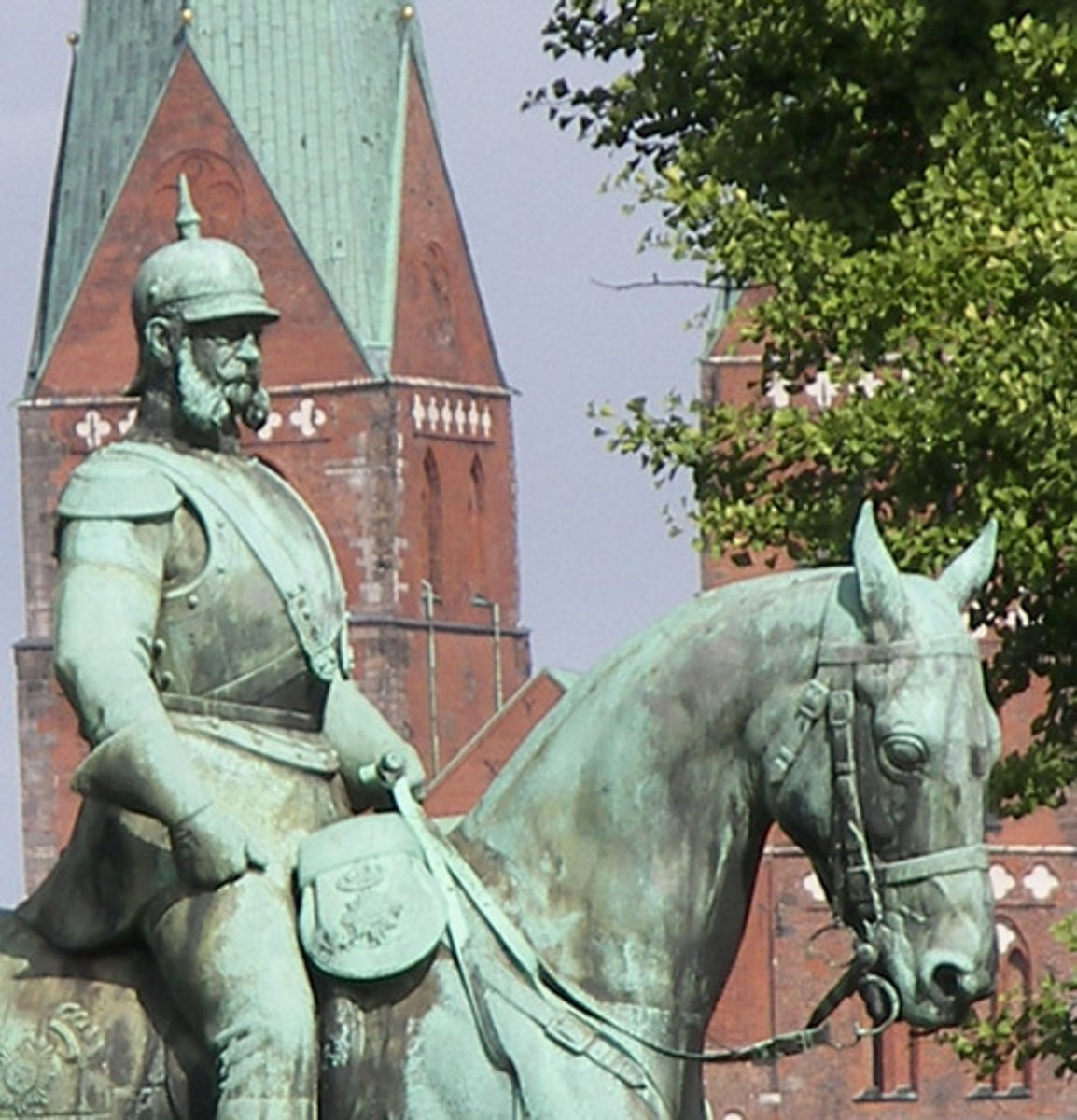
Kaiser Wilhelm II of Germany
This German Emperor led the Germans during WWI. In 1918 he was forced to step down by German Generals.
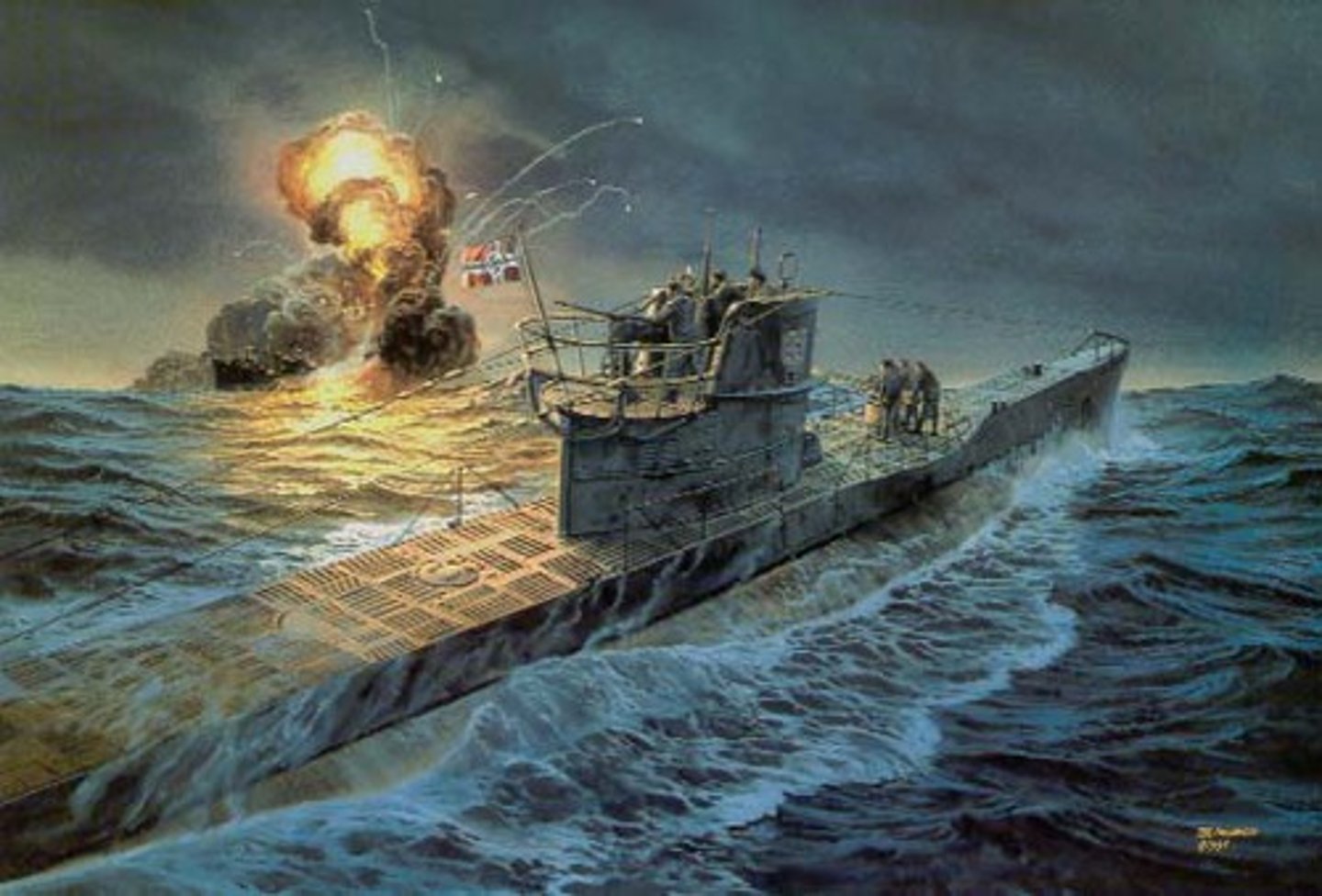
U-boats
This new machinery used by the Germans in sea warfare, to attack British and American supply ships in the North Sea and the Atlantic Ocean.
Nationalism
This cause of World War I was based on an intense pride in one's nation.
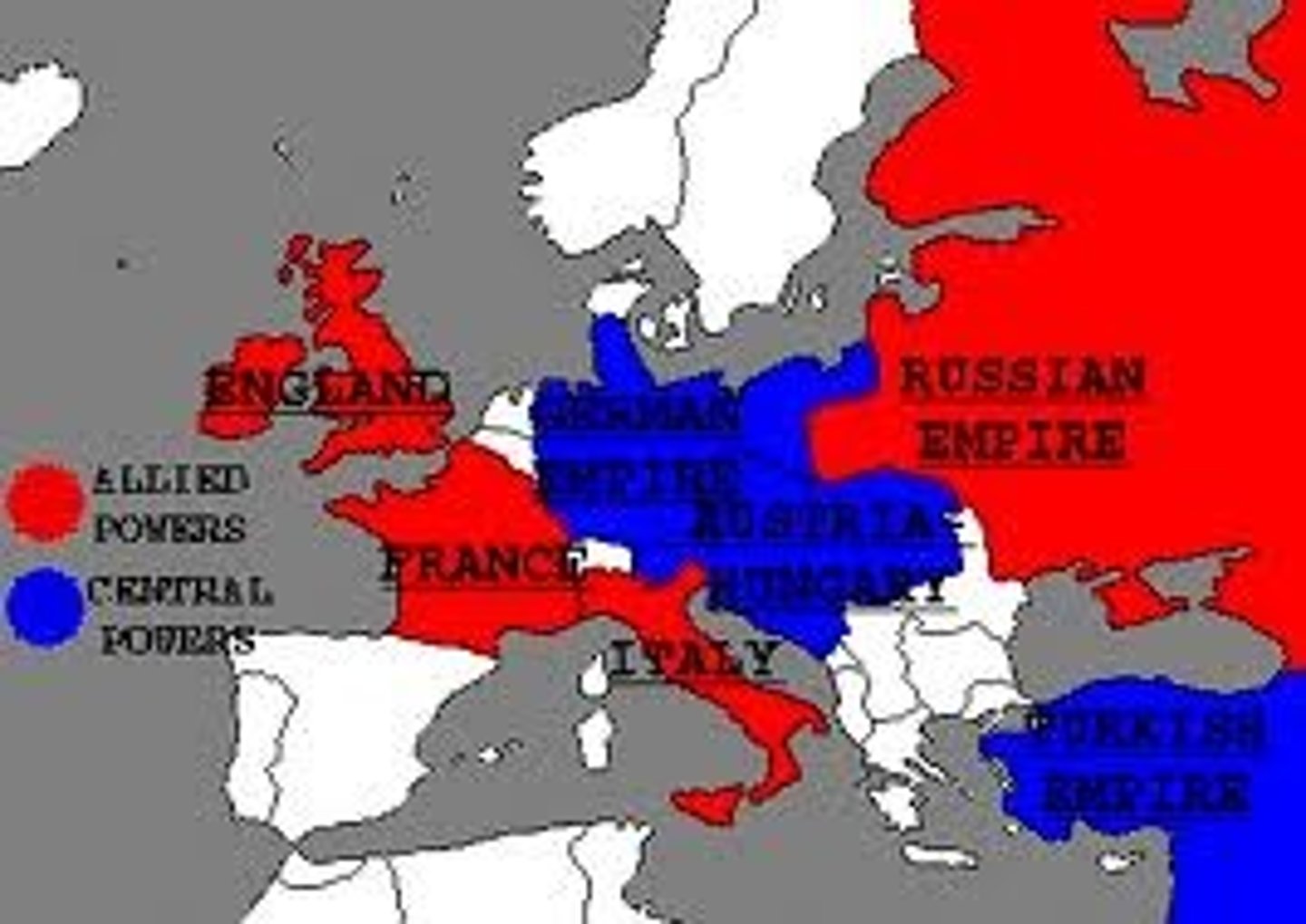
Allied Powers
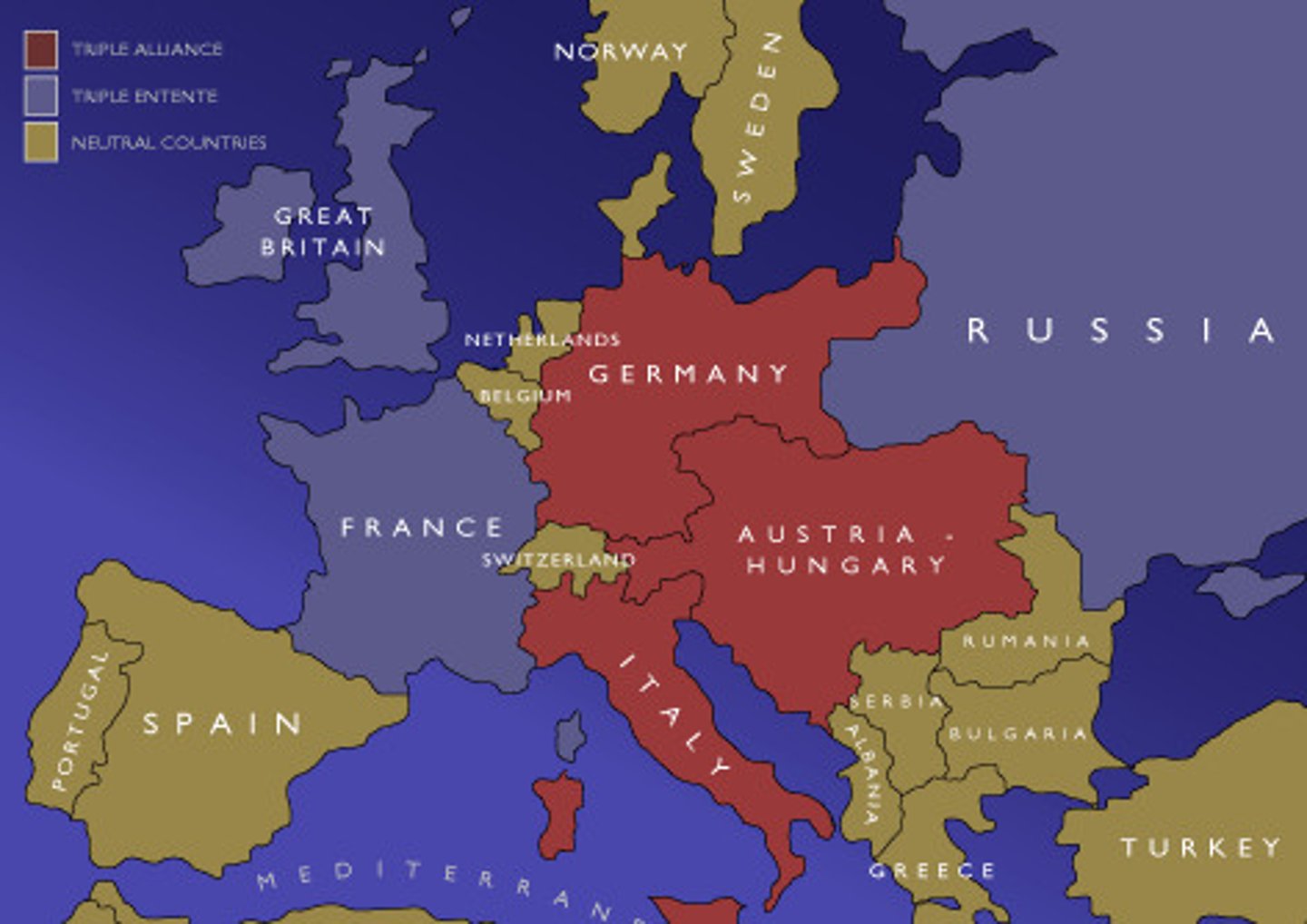
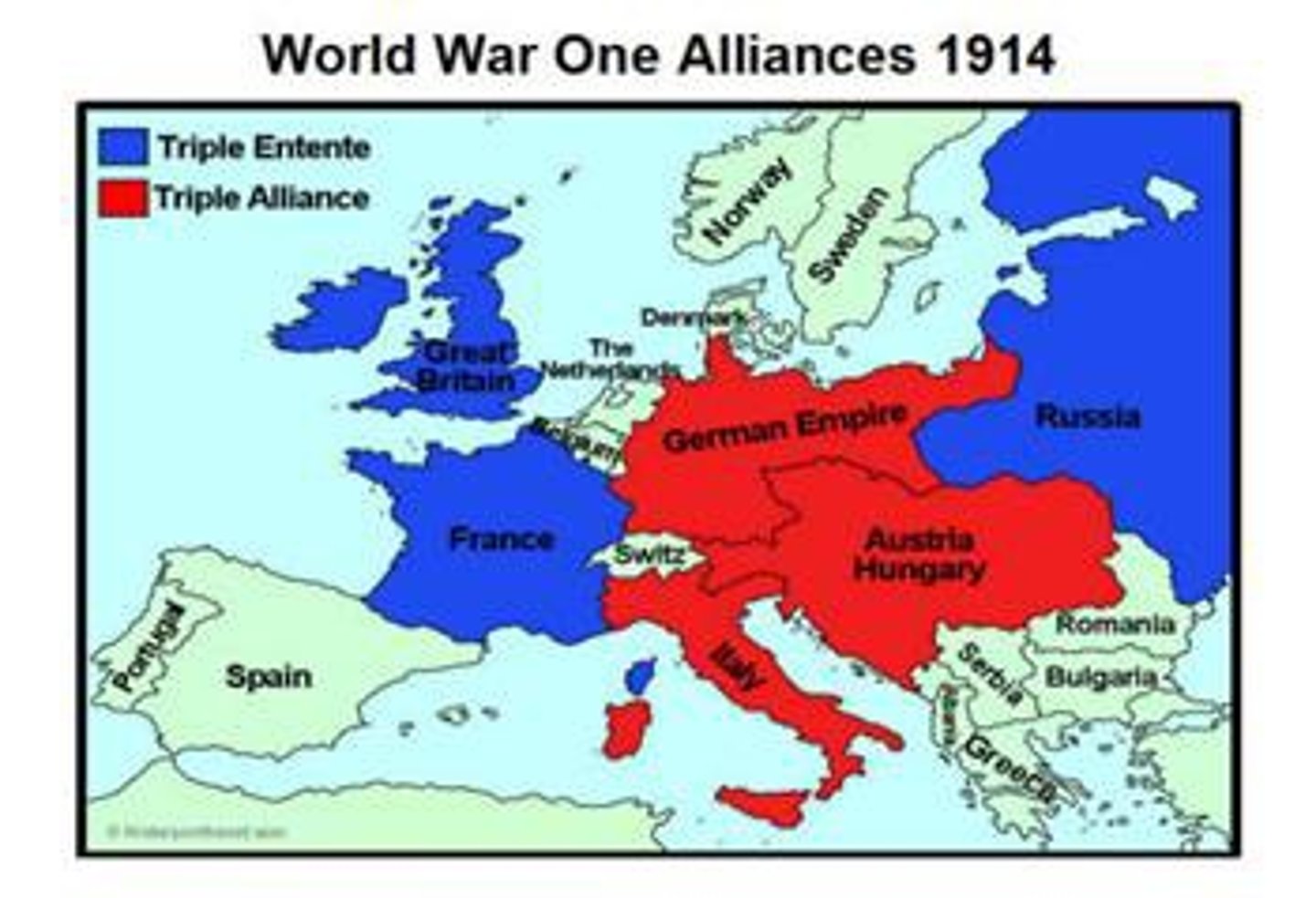
This alliance during WWI included Great Britain, France, Russia and Italy (switched to the Allied Powers in 1915) and eventually the United States. (The blue countries of the East and West on map above)
Wilson's Fourteen Points
This is the plan for post-World War I outlined by President Wilson in 1918. This plan called for self-determination (countries in Africa and Asia govern themselves), freedom of the seas, free trade, end to secret agreements, reduction of arms and a league of nations.
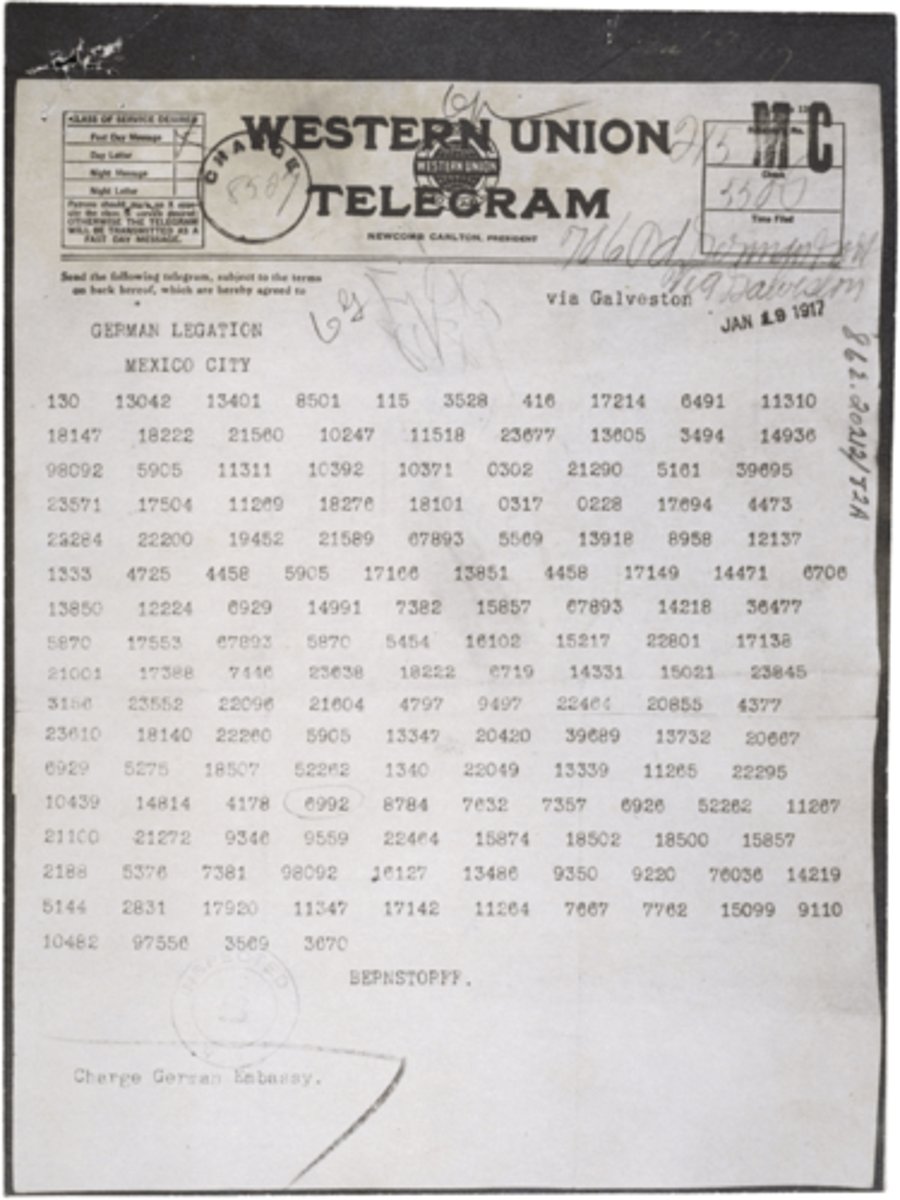
Zimmerman Telegram
This intercepted note from the German foreign minister to the Mexican government offered, territories in Texas, Arizona and New Mexico for Mexico.
Lusitania
This British passenger ship was sunk by German U-boats in 1915, carrying civilians and ammunition to Britain from the U.S. The event turned American opinion against Germany.

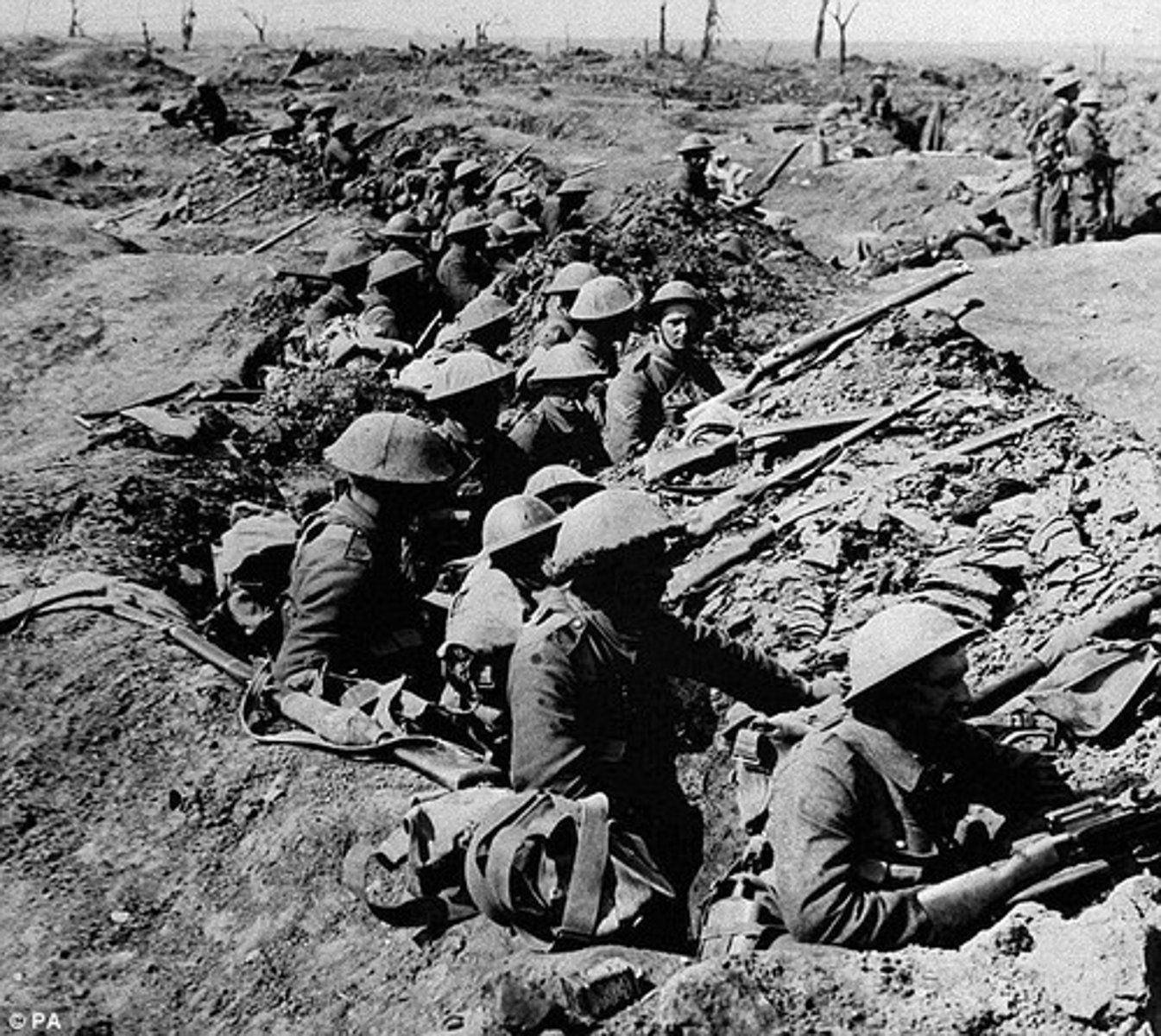
Trench Warfare
This style of warfare was common in WWI, due to the invention of the machine gun and heavy artillery. Led to long stalemates.
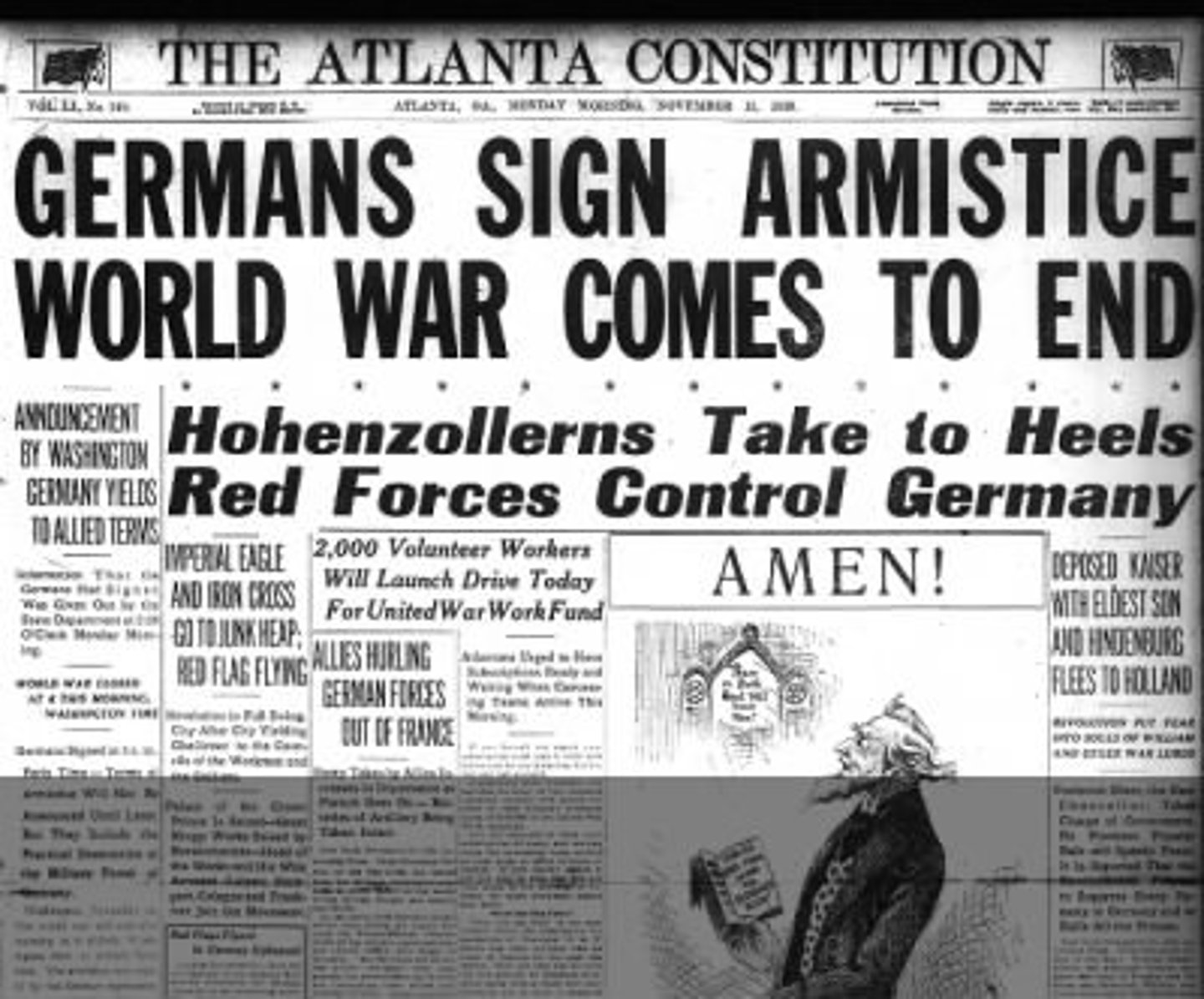
Armistice, 1918
This was the agreement between the Allies and Central Powers that ended the fighting after WWI. It began at 11/11/1918 at 11:11 am.
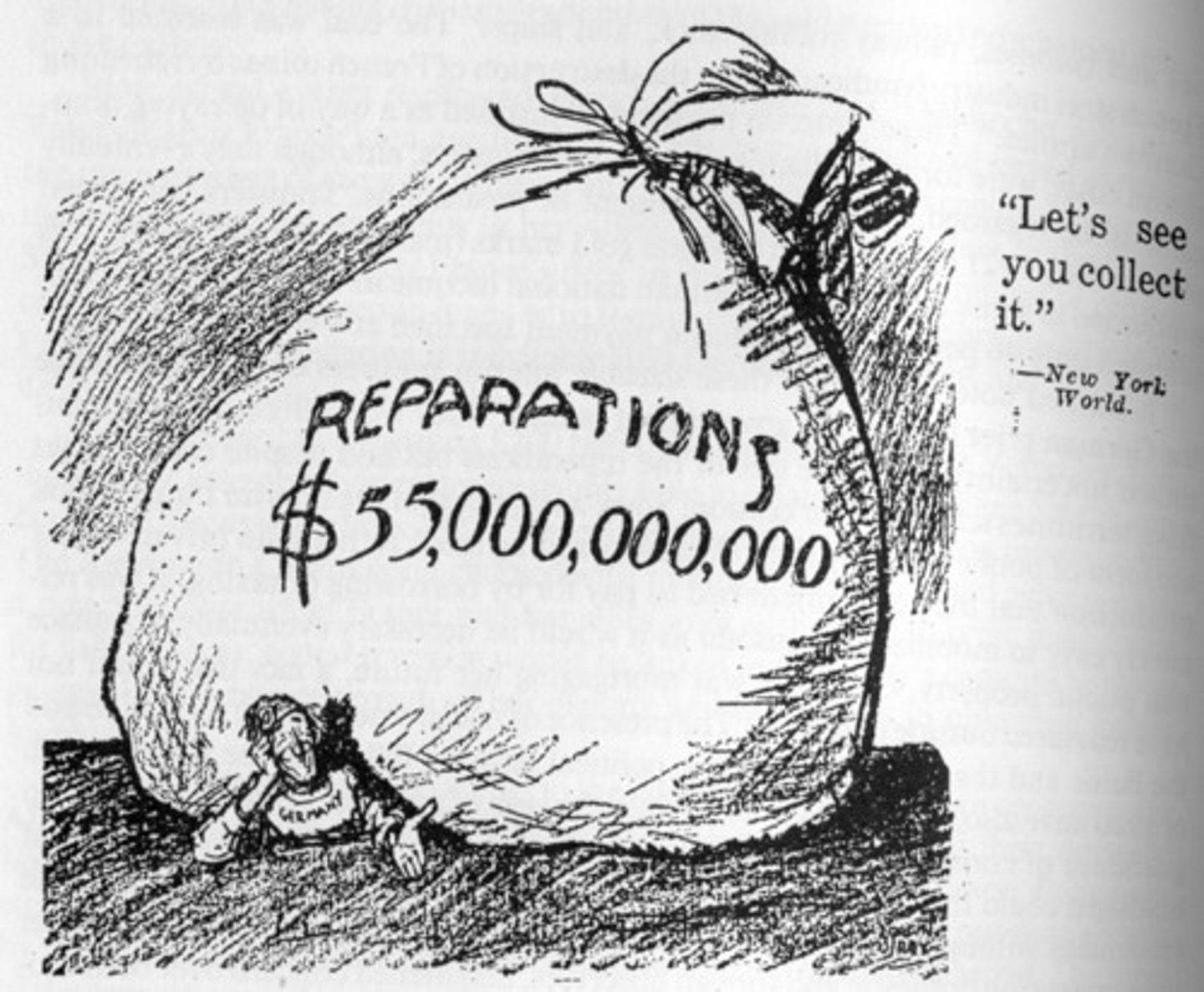
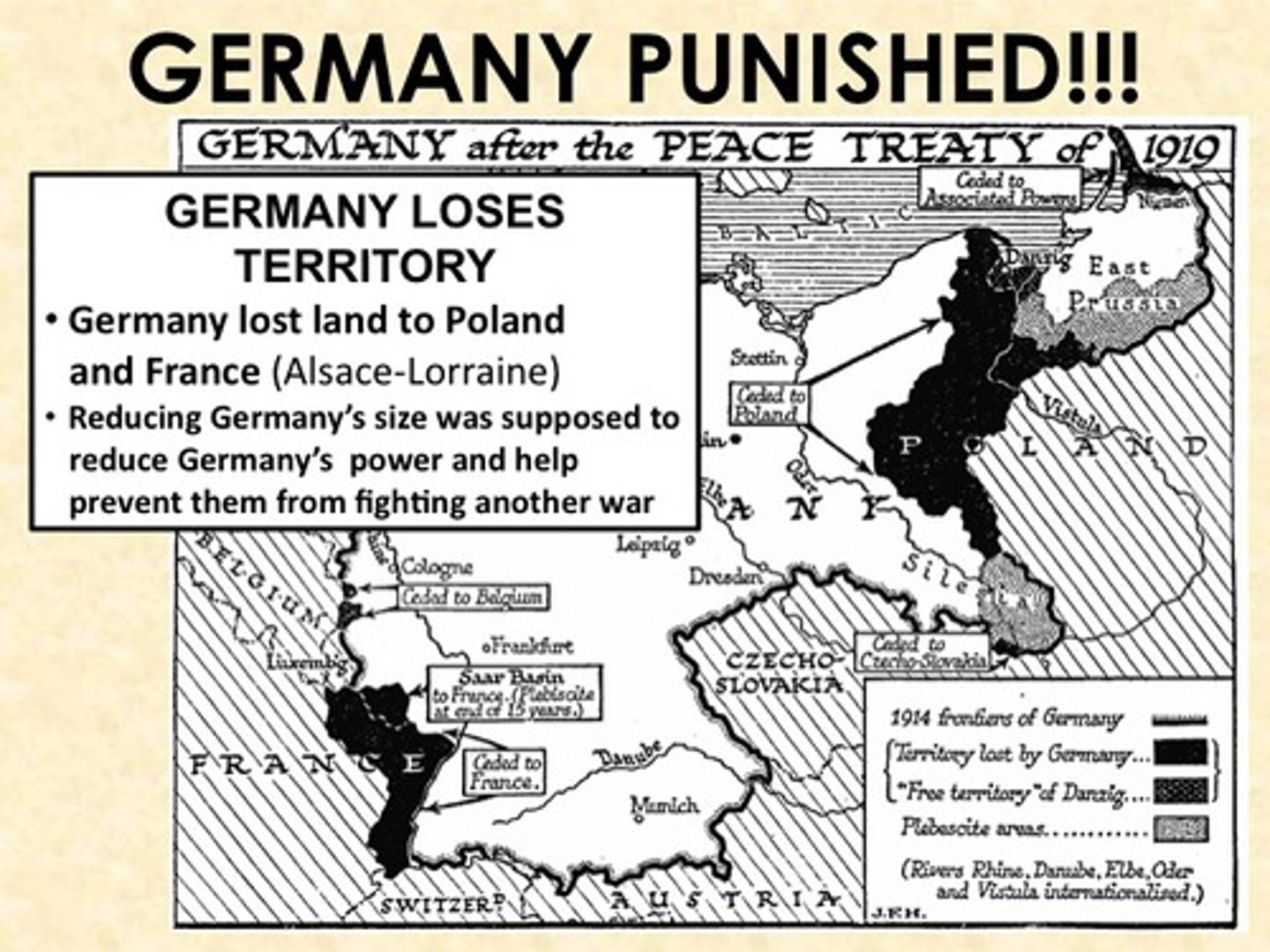
Reparations
This term refers to the payments and transfers of property that Germany was required to make under the treaty of Versailles.
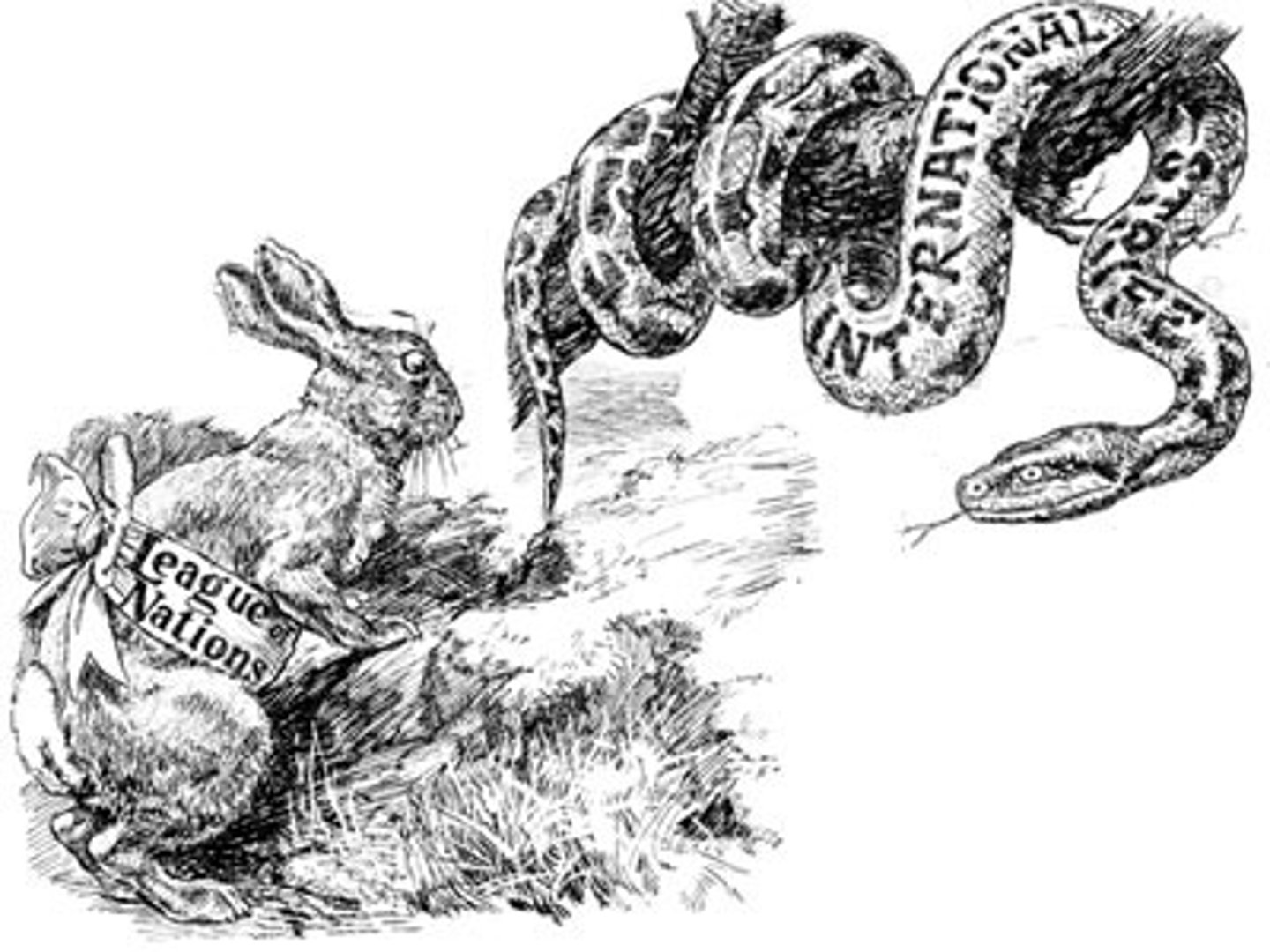
League of Nations
This intergovernmental organization lasted from 1919-1946, was founded after the Paris Peace Conference. It did not work effectively to prevent WWII.
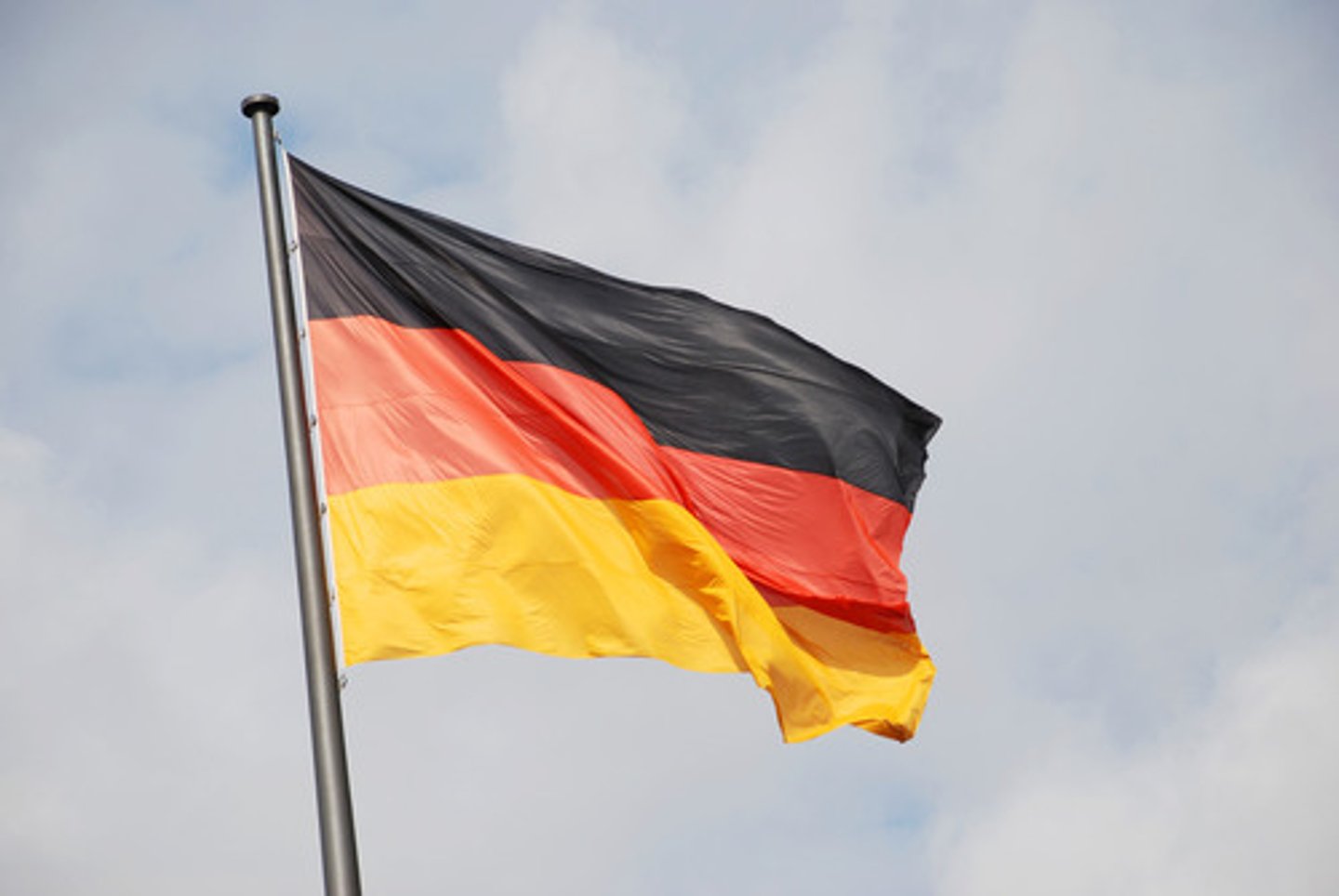
War Guilt Clause
This clause of the Treaty of Versailles placed all blame for WWI with Germany and its allies. This forced Germany to pay reparations for World War I.
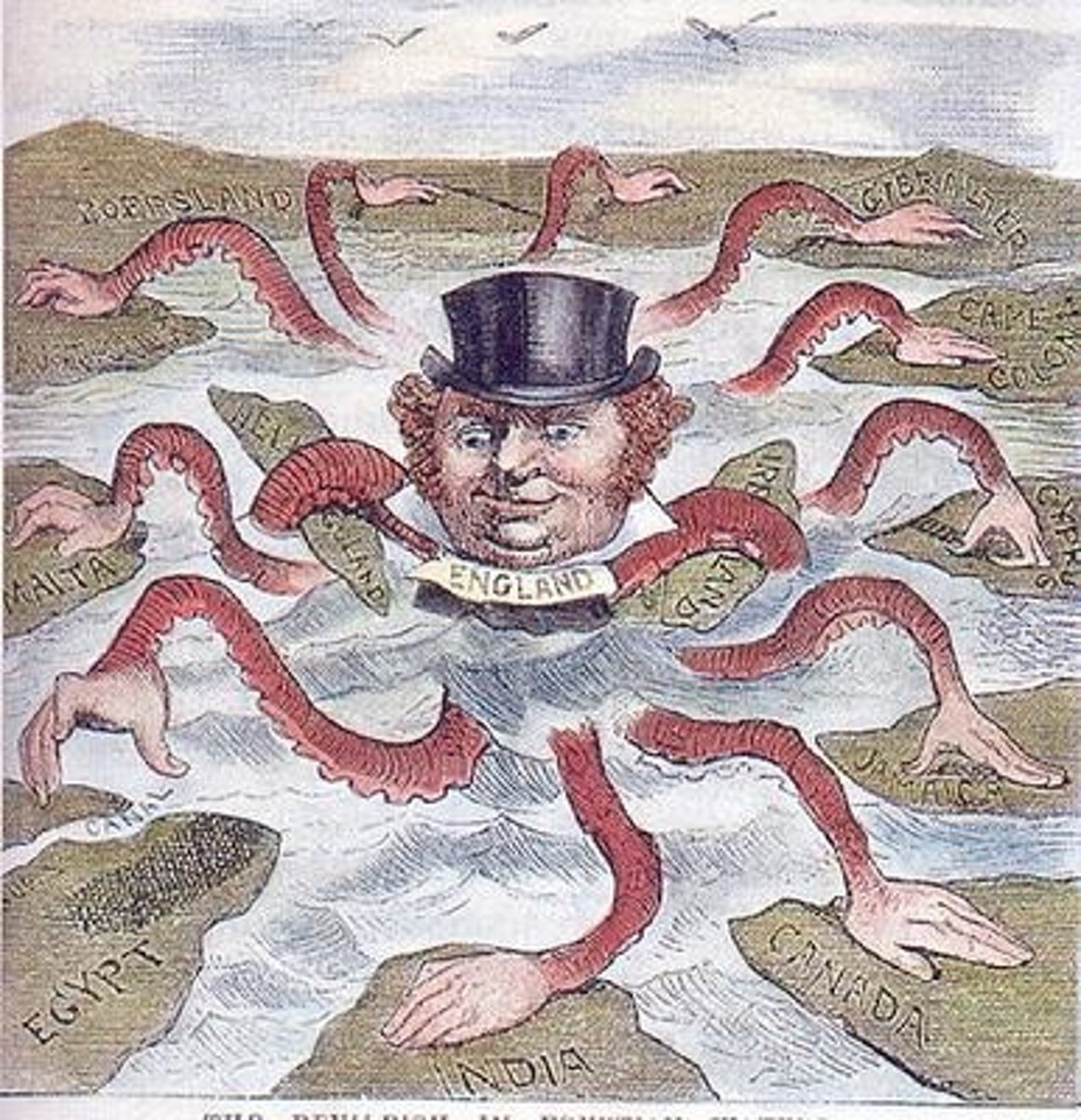
Causes of World War I Imperialism
This cause of World War I resulted from the competition among European nations for colonies in Africa and Asia from 1880-1914. This created tension, especially between Germany and Great Britain.
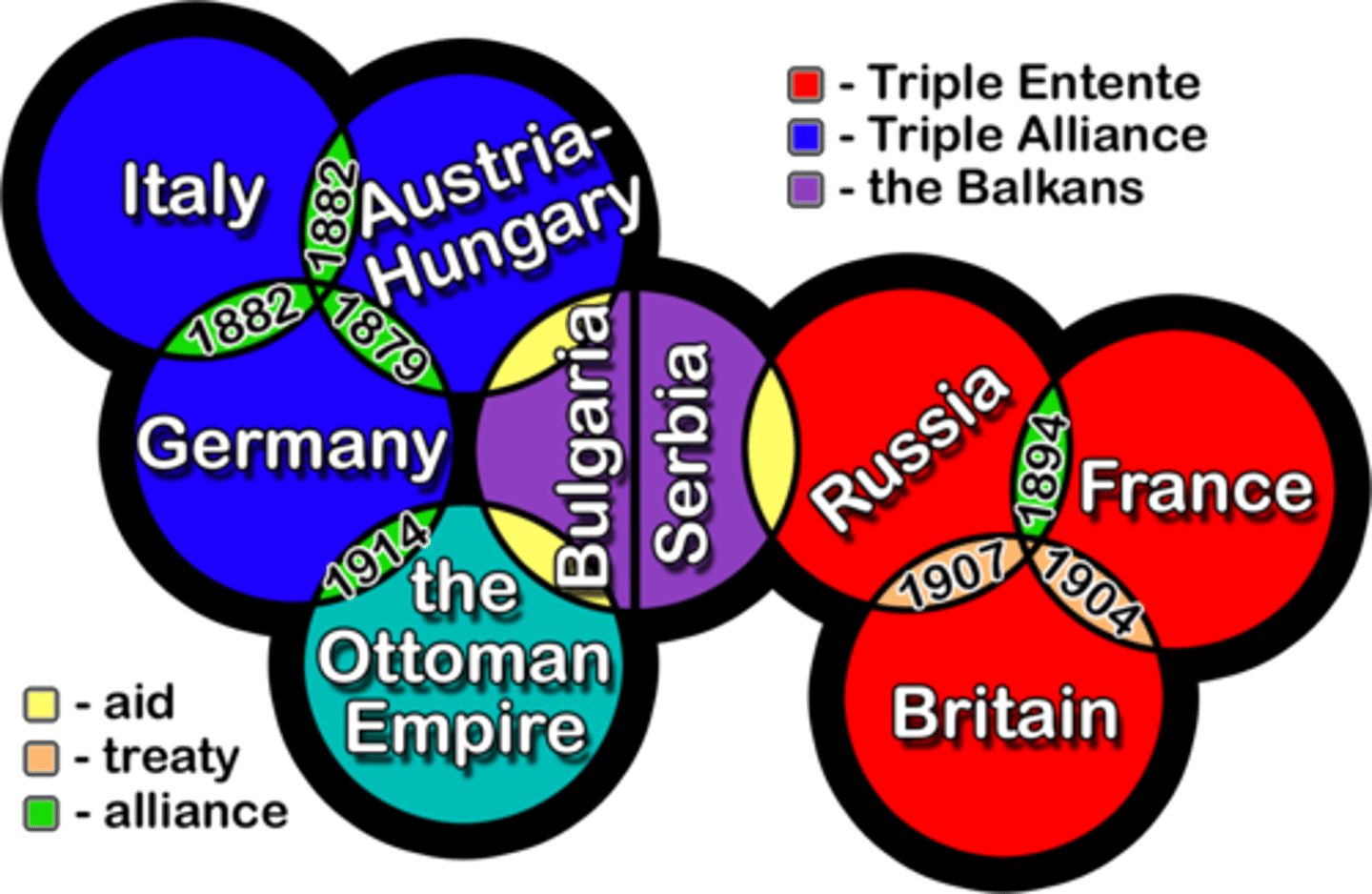
Causes of World War I Alliances
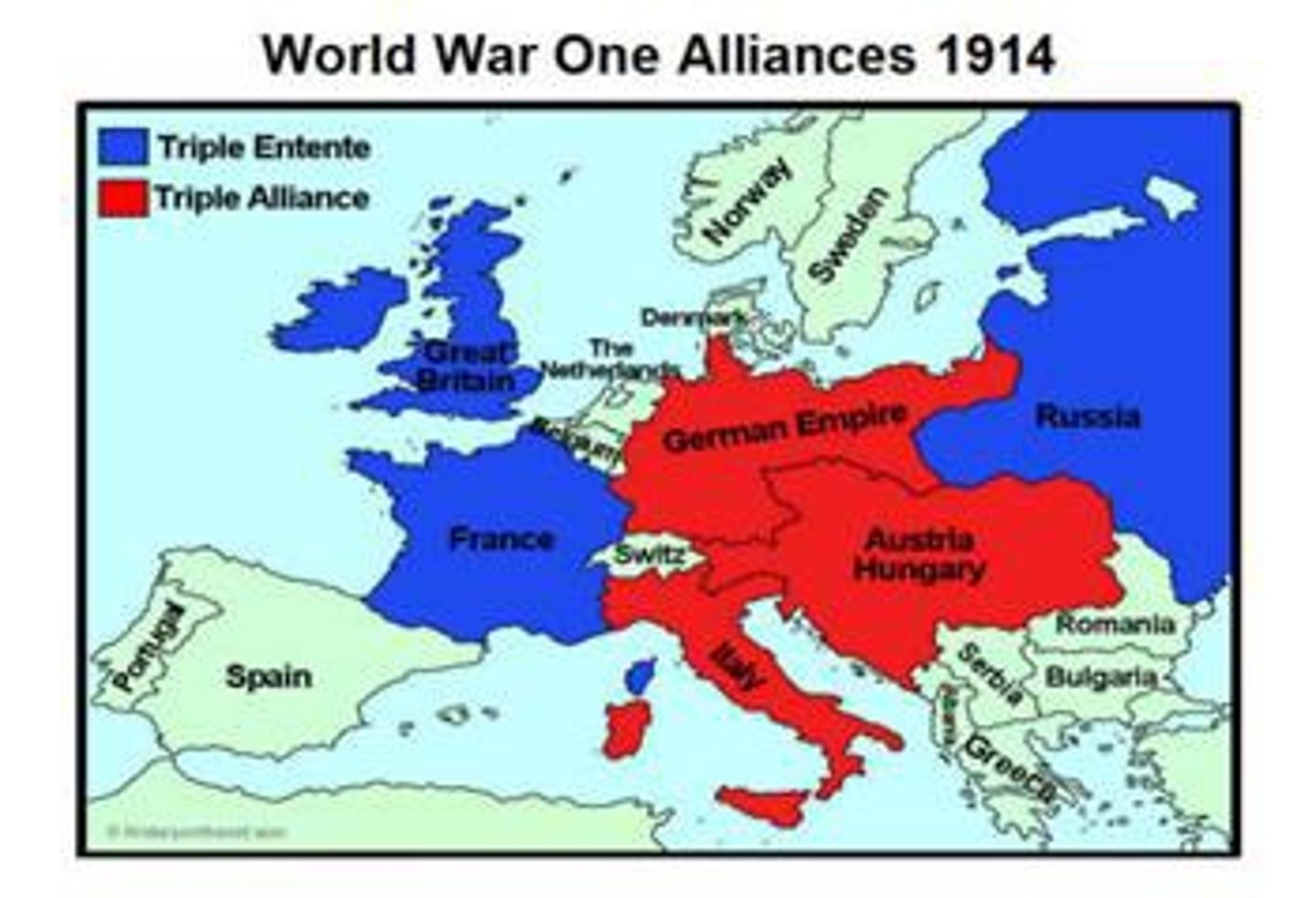
This was a major cause of WWI. Two major alliances formed the Triple Alliance (Germany, Austria, Italy) and the Triple Entente (France, England, Russia). This alliance system made world war likely, by drawing all countries into a small war.
MAIN
These are the four causes of World War I. Militarism, Alliances, Imperialism, Nationalism.
Triple Alliance
This alliance was made Germany, Austria-Hungary and Italy in the years before WWI. IN RED ABOVE
Triple Entente
This alliance between Great Britain, France and Russia in the years before WWI. IN BLUE ABOVE
Balkan Region
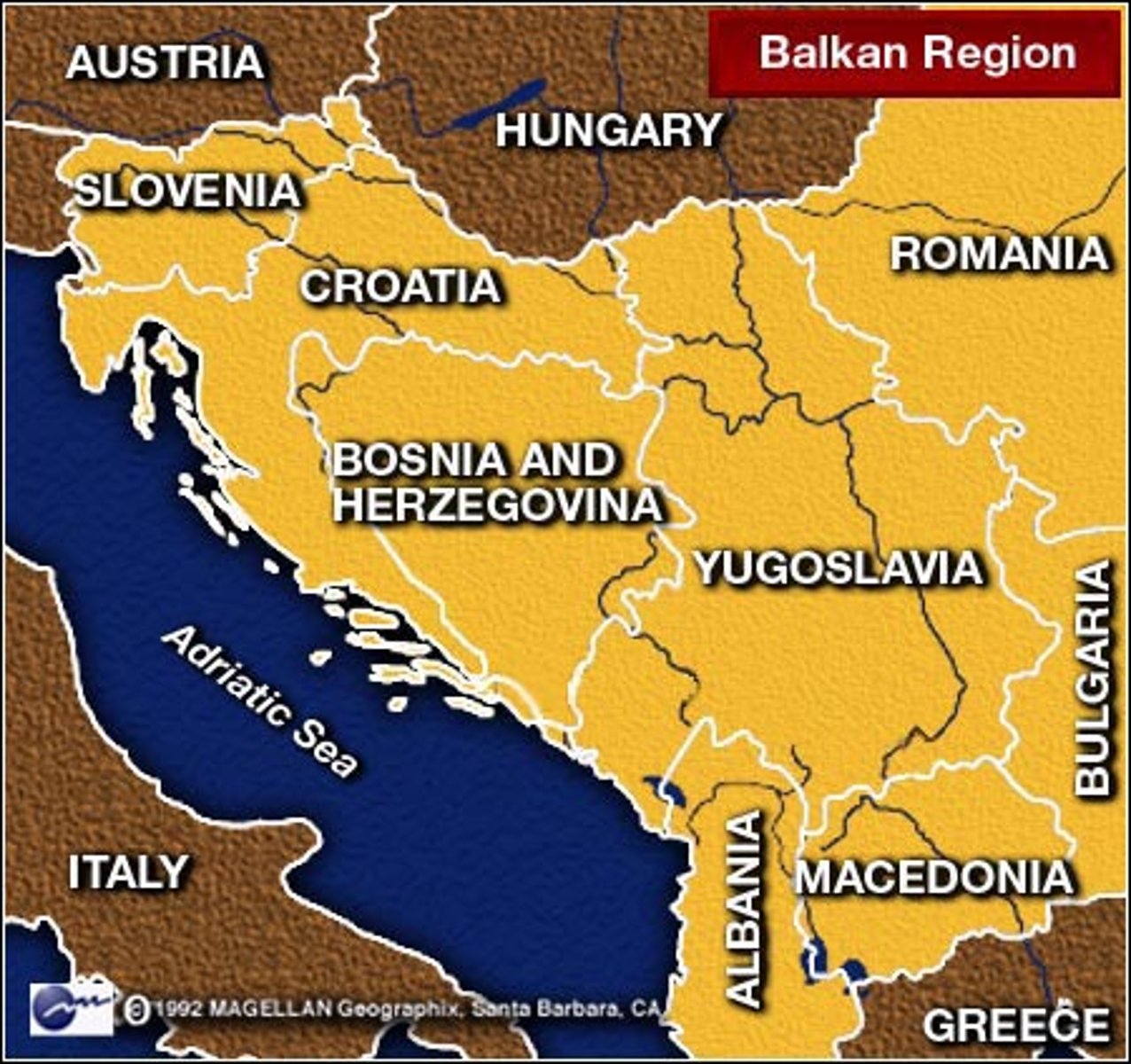
Slavic Region of intense nationalism and imperial domination in mountains of south/eastern Europe - spark to set off powder keg of Europe.
Central Powers
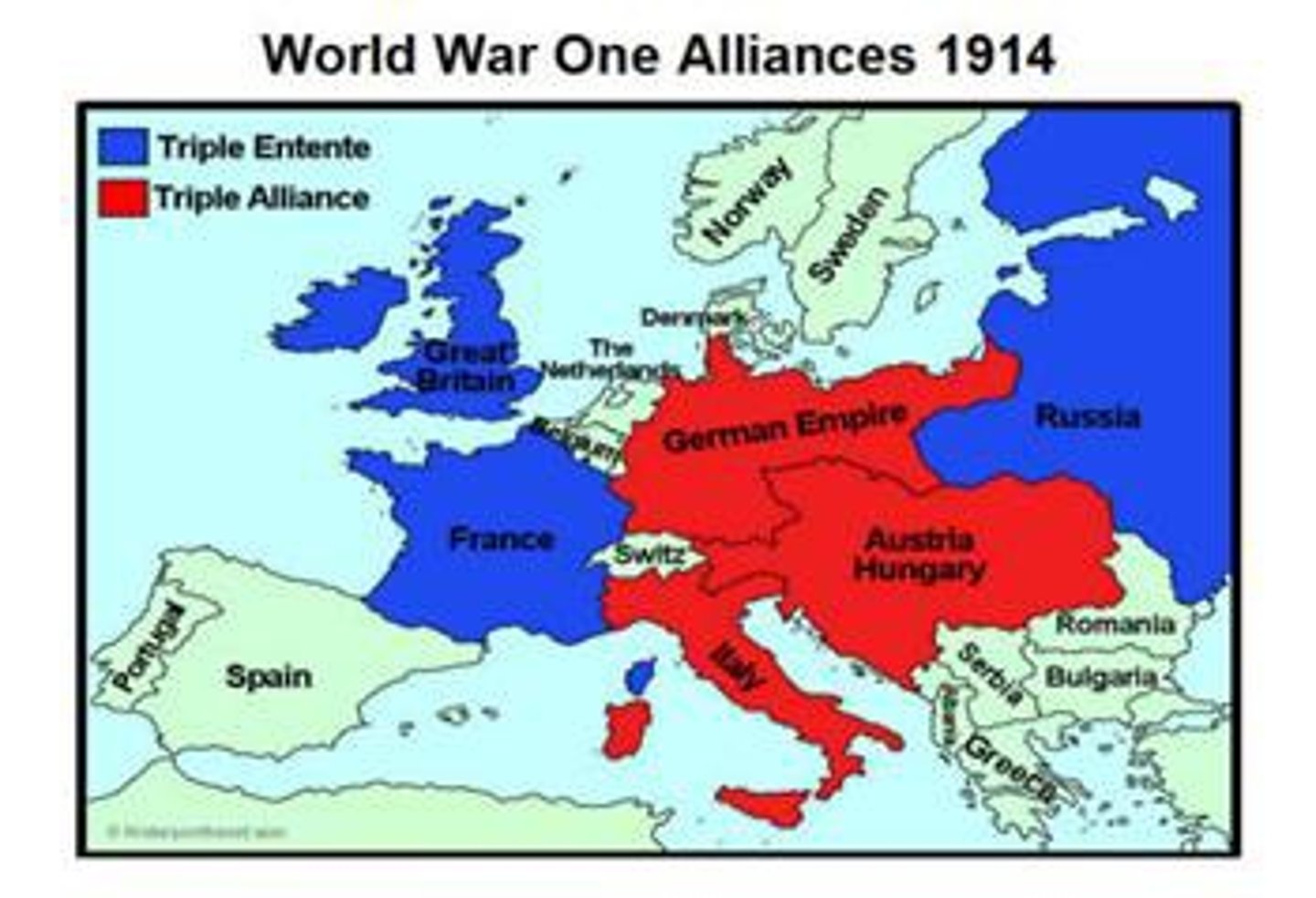
This was a major alliance at the 'center' of Europe during World War I, made up of Germany, Austria-Hungary, Bulgaria, and Ottoman Empire. It was formerly known as the Triple Alliance before the war. SHOWN ABOVE IN RED.
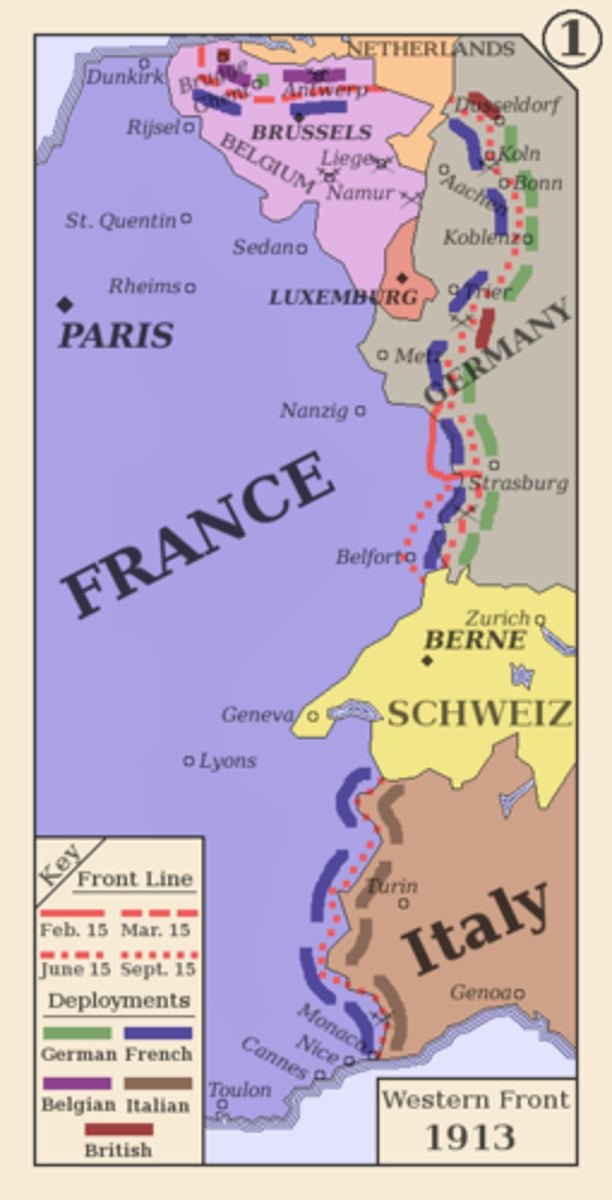
Western Front
This was a major front in World War I. A line of trenches and fortifications in World War I that stretched without a break from Switzerland to the North Sea. This is where most of the fighting happened in World War II.
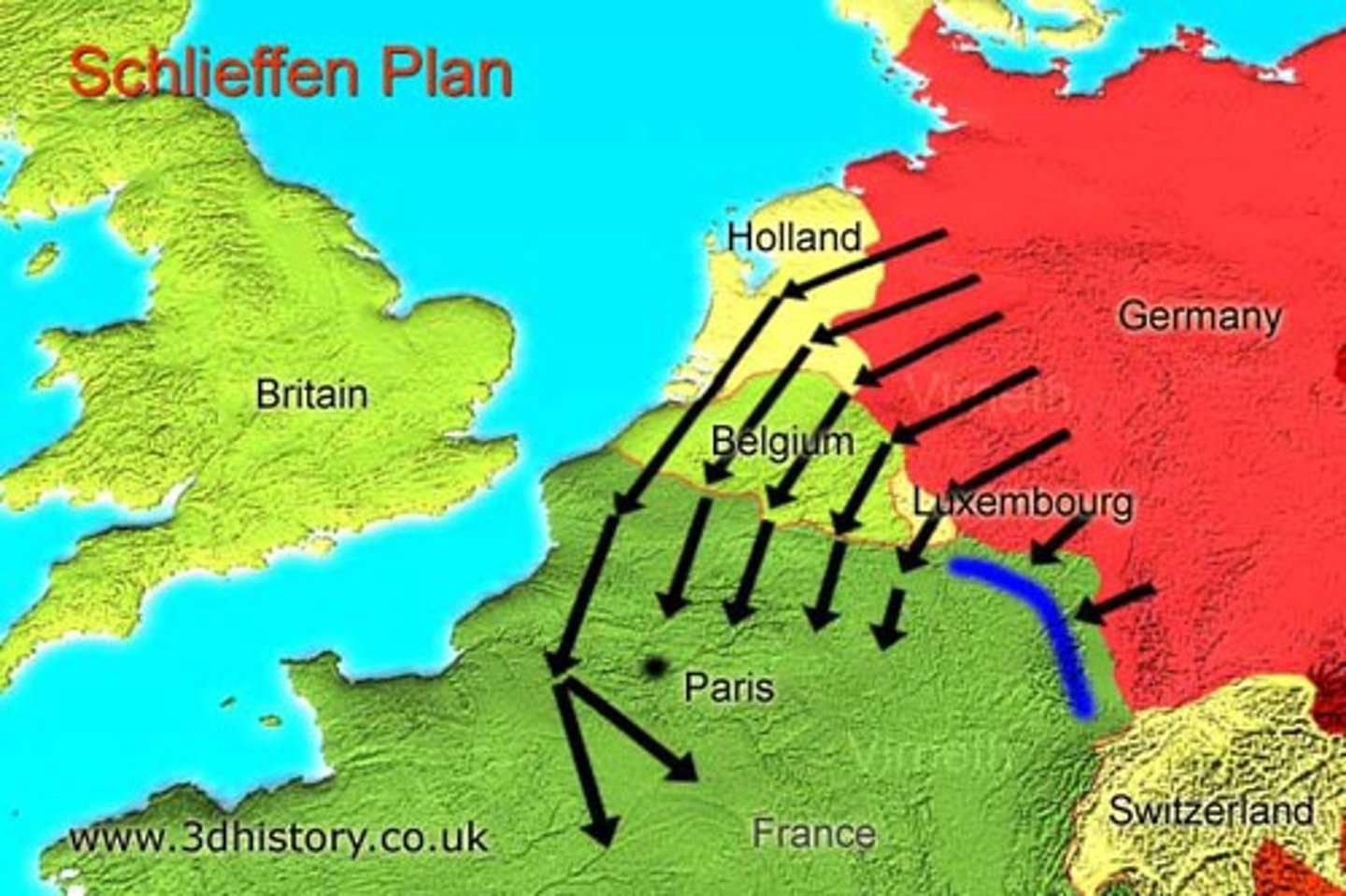
Shlieffen Plan
This was Germany's military plan at the outbreak of WWl. The plan was for troops to rapidly defeat France and move east to defeat Russia.
Eastern Front
This was a front in WWI. The region of fighting happened along the German-Russian Border where Russians and Serbs battled Germans, Austrians, and Turks.
Unrestricted Submarine Warfare
This was the policy that the Germans announced on January 1917 which stated that their submarines would sink any ship in the British waters.
Total War
A conflict in which the participating countries devote all their resources to the war effort
Militarism
This cause of World War I was a policy of building up strong armed forces to prepare for war.
Treaty of Versailles
Treaty which ended World War I that included large reparations from Germany, the formation of the League of Nations, and the mandate system.
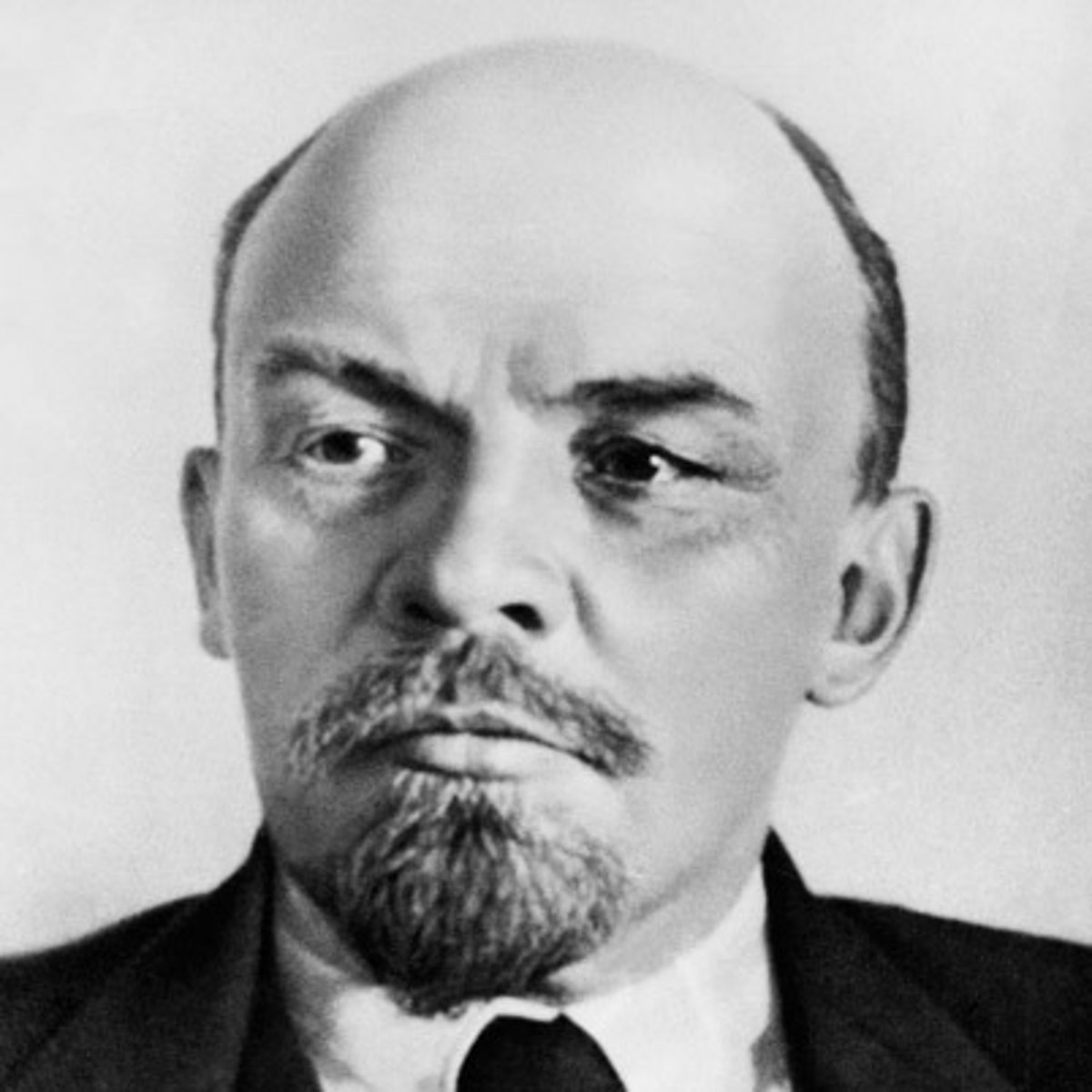
Vladimir Lenin
Founder of the Bolshevik party and eventual leader of the U.S.S.R. - led the Russian Revolution
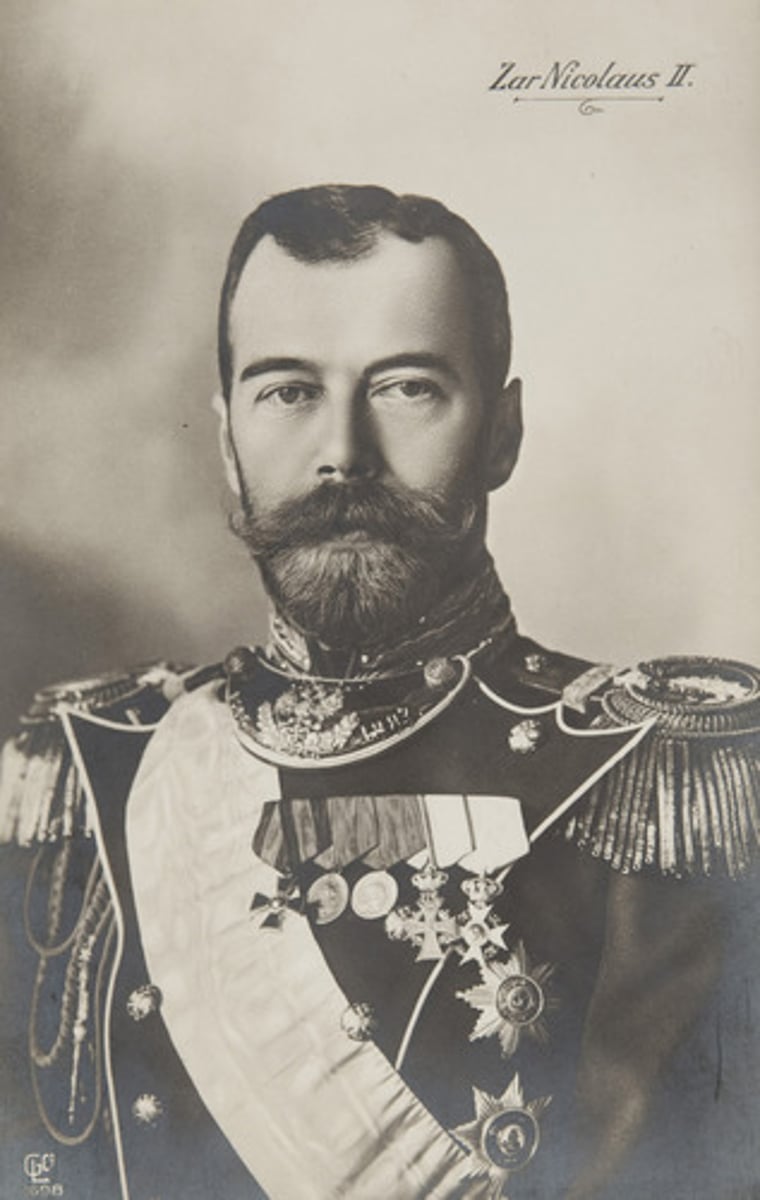
Tsar Nicholas II
The last Romanov emperor of Russia who will be overthrown during the Russian Revolution.
Conscription
The compulsory call of civilians to military service; the draft.
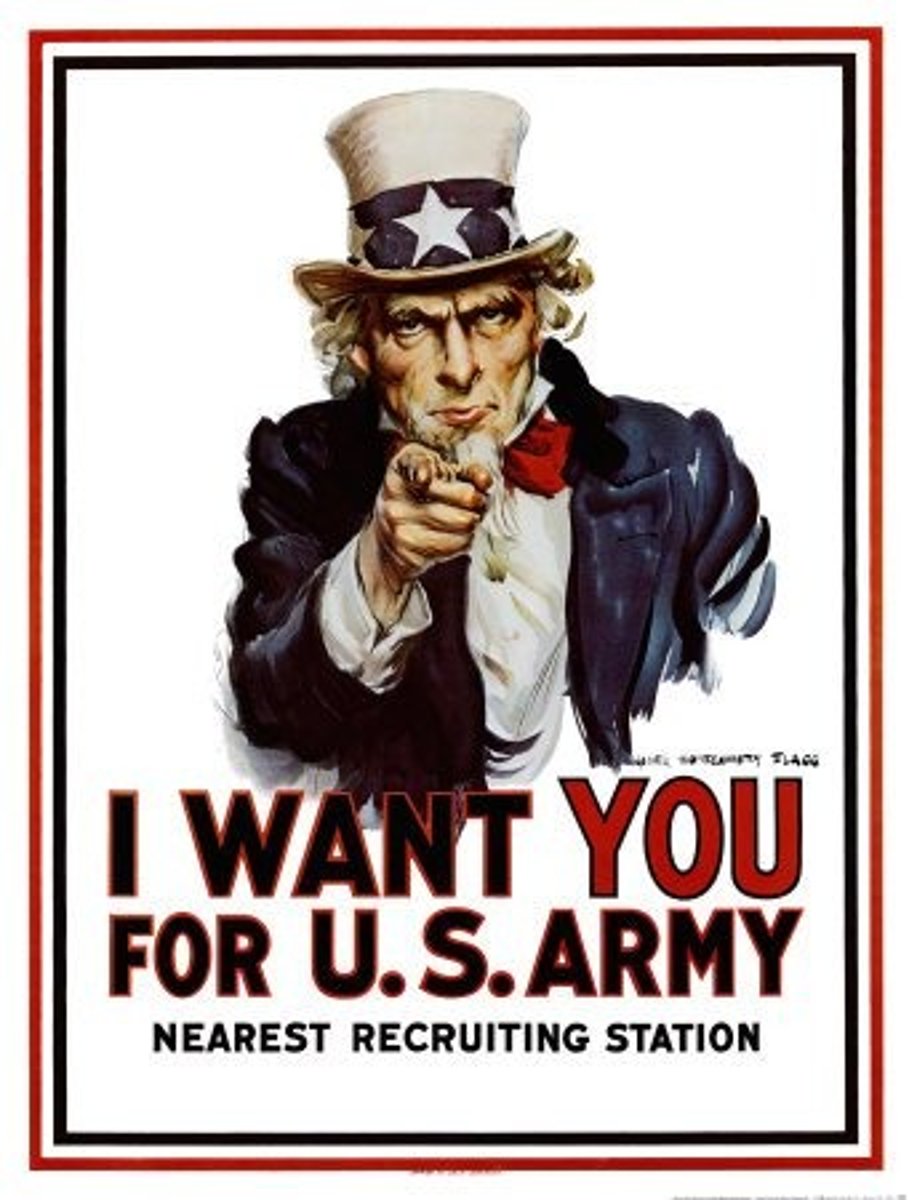
Mobilization
The act of assembling and preparing troops and equipment for war.
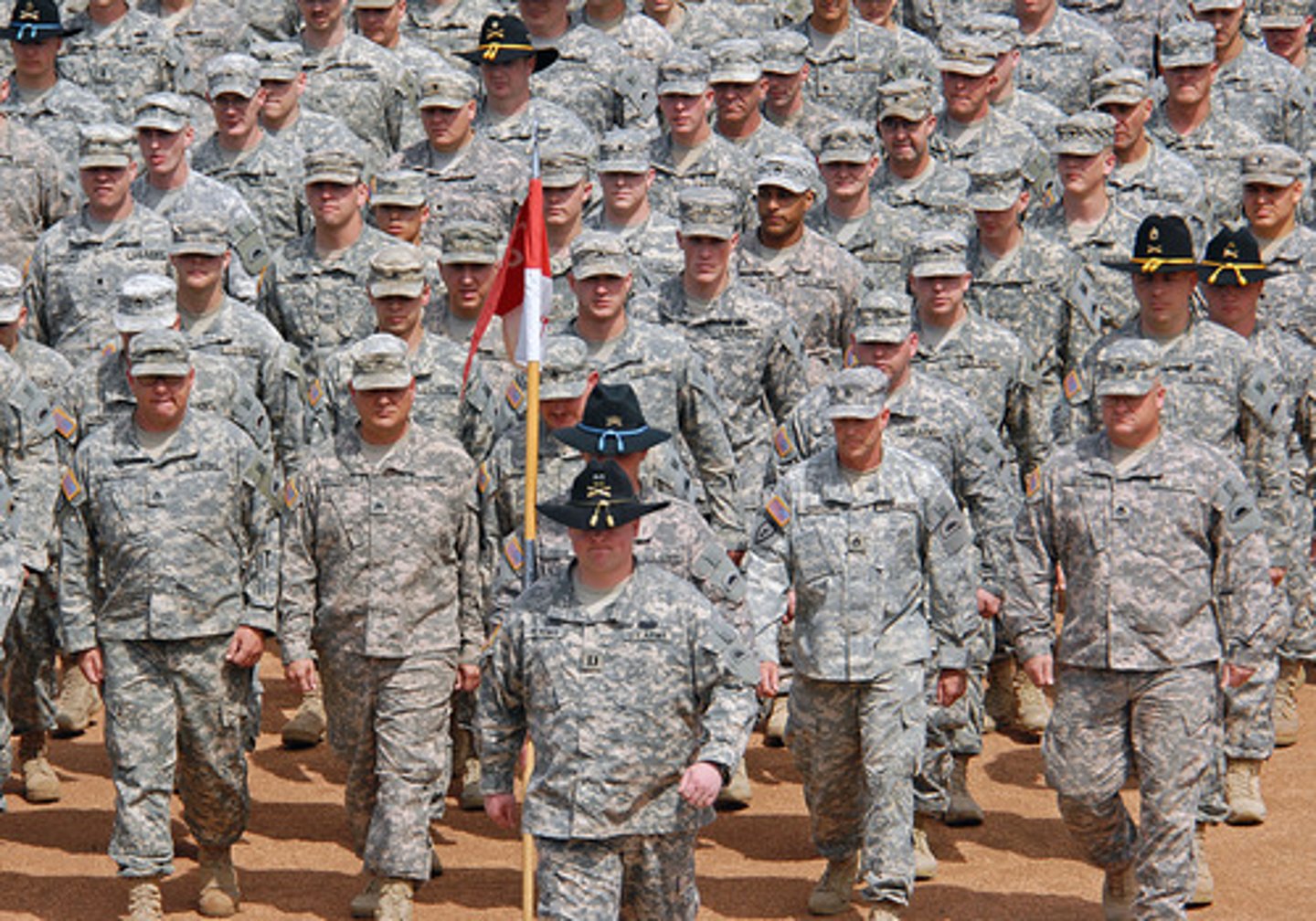
The Nation of Canada was born at this battle
Vimy Ridge
Famous Canadian general who led the victory at Vimy Ridge and was asked to win Passchendaele
Currie
Stalemate
A situation in which no progress can be made or no advancement is possible
Attrition
constant attacks with the goal of wearing down your enemy
Over the top
expression for leaving the trench and marching through no man's land
No man's land
A strip of land between the trenches of opposing armies along the Western Front during WW1
Lethal gas was first used here
2nd Ypres
The Somme
Horrific daylightbattle - 60,000 Brits dead in one day.
Propaganda
Ideas spread to influence public opinion for or against a cause.
Censorship
Control of what people read or write or see or hear; efforts to prohibit free expression of ideas.
Passchendaele
Muddy bog of a battlefield made this fight exceptionally difficult
Fascism
A political movement that promotes an extreme form of nationalism, a denial of individual rights, and a dictatorial one-party rule.
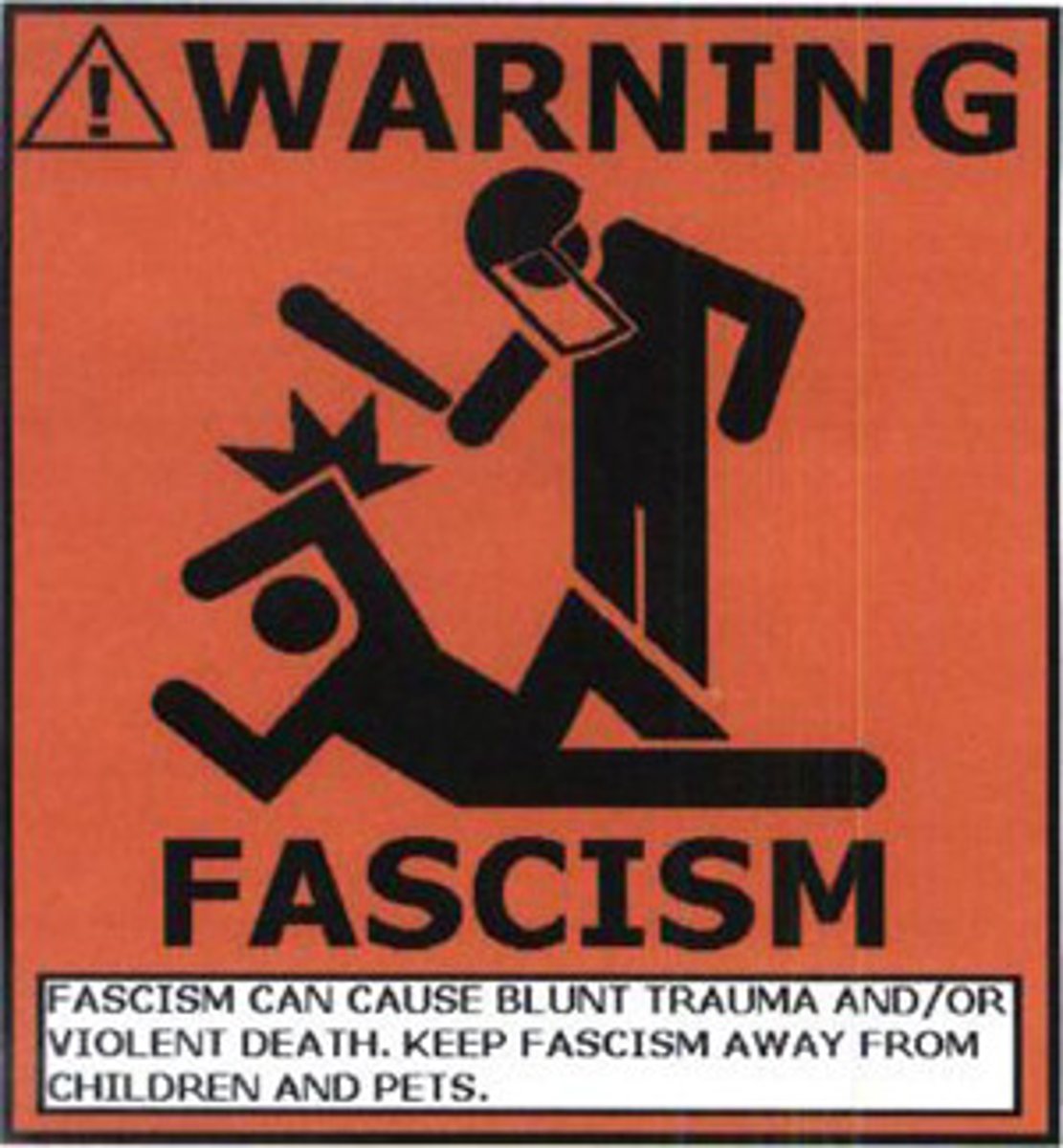
Totalitarianism
A political system in which the government has total control over the lives of individual citizens.
Dictator
A ruler who has complete power over a country
Nazism
Adolf Hitler used fascism to create this type of government based on totalitarian ideas and was used to unite Germany during the 1930s.
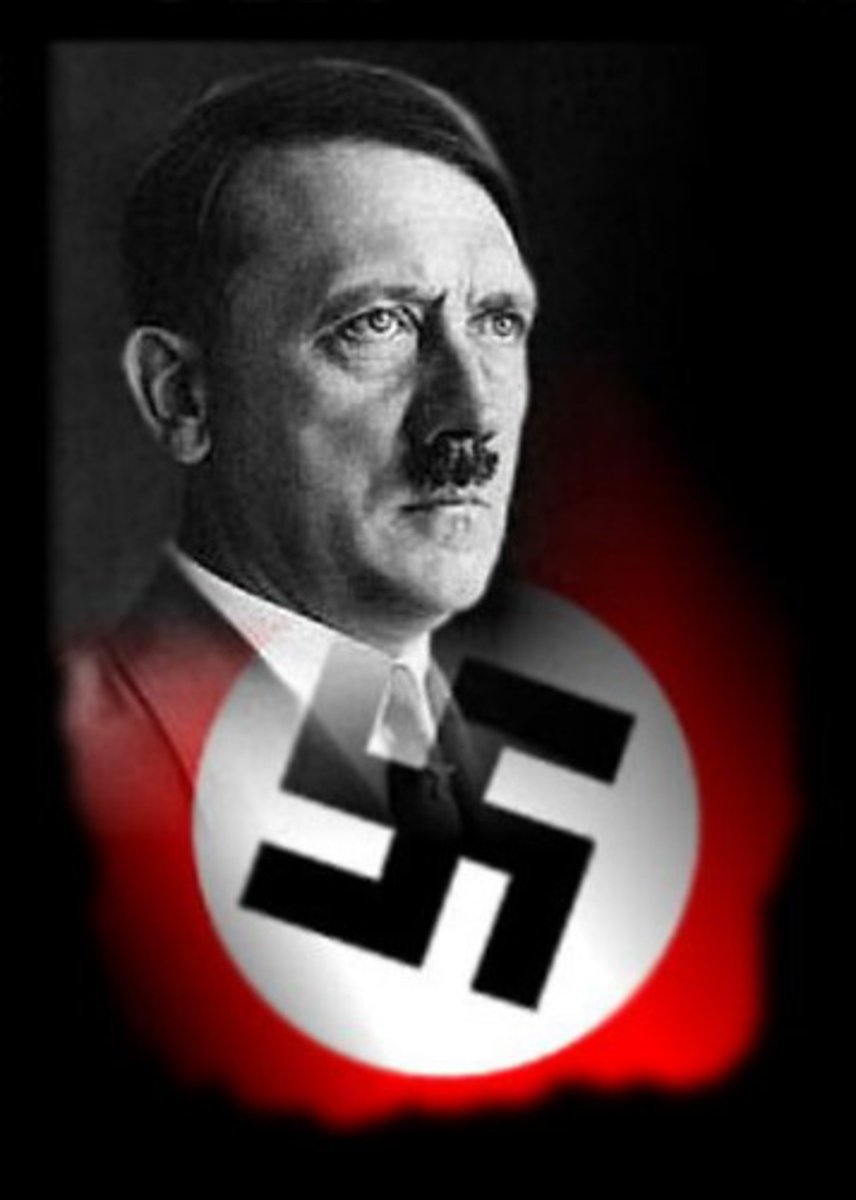
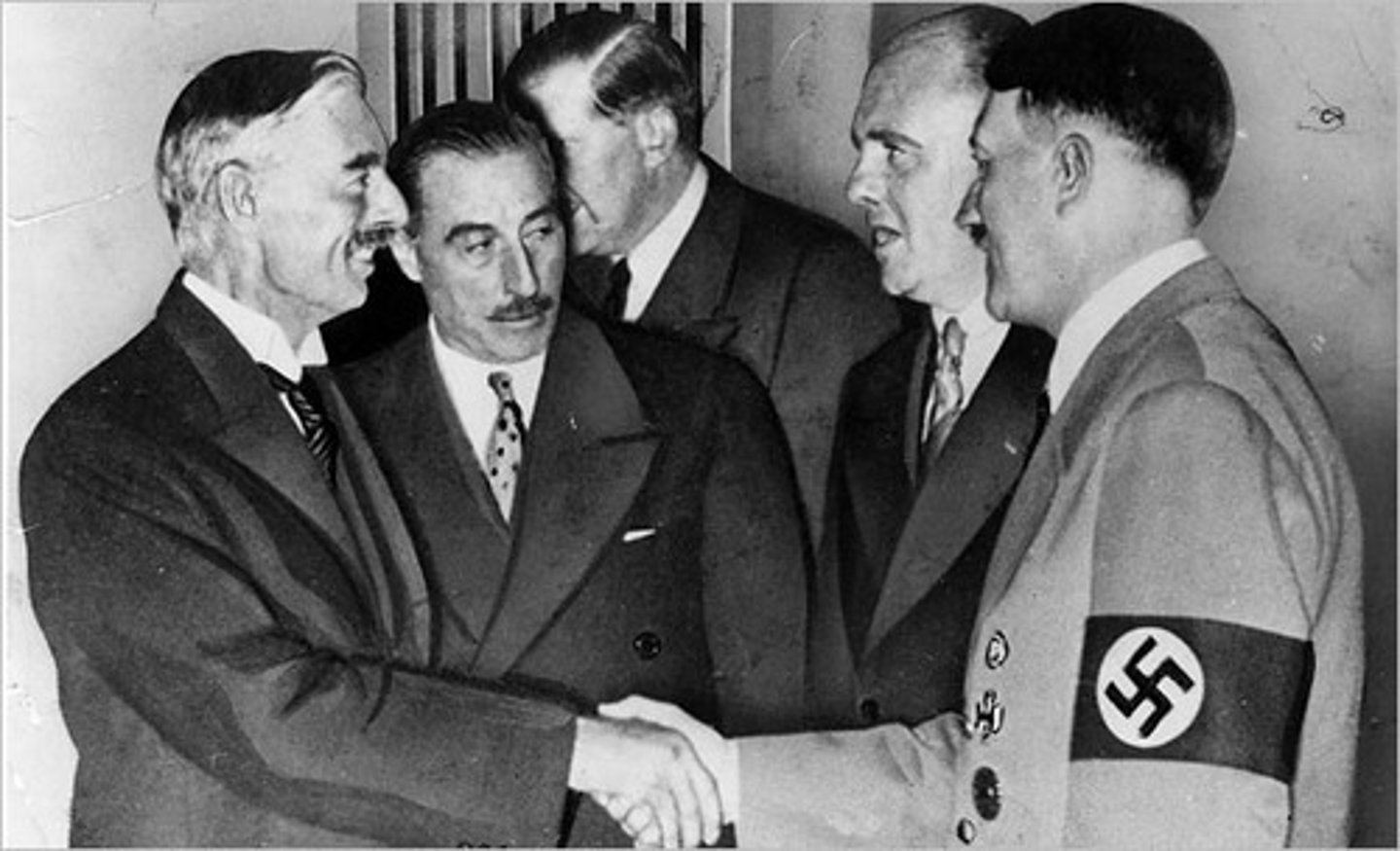
Appeasement
Accepting demands in order to avoid conflict
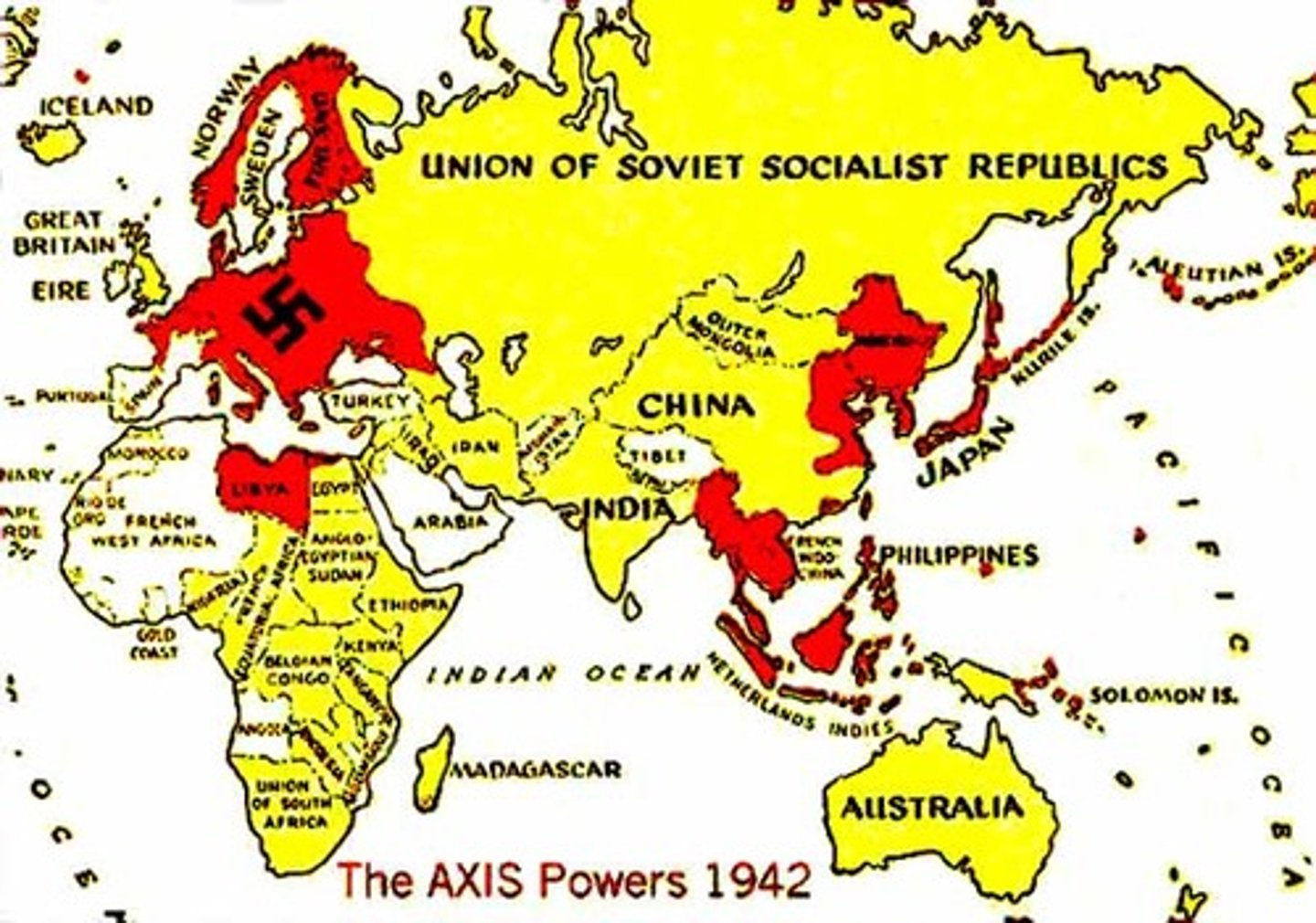
Axis Powers
Germany, Italy, Japan
Allied Powers
Alliance of Great Britain, Soviet Union, United States, and France during World War II.
Blitzkrieg
"Lighting war", type of fast-moving warfare used by German forces against Poland n 1939
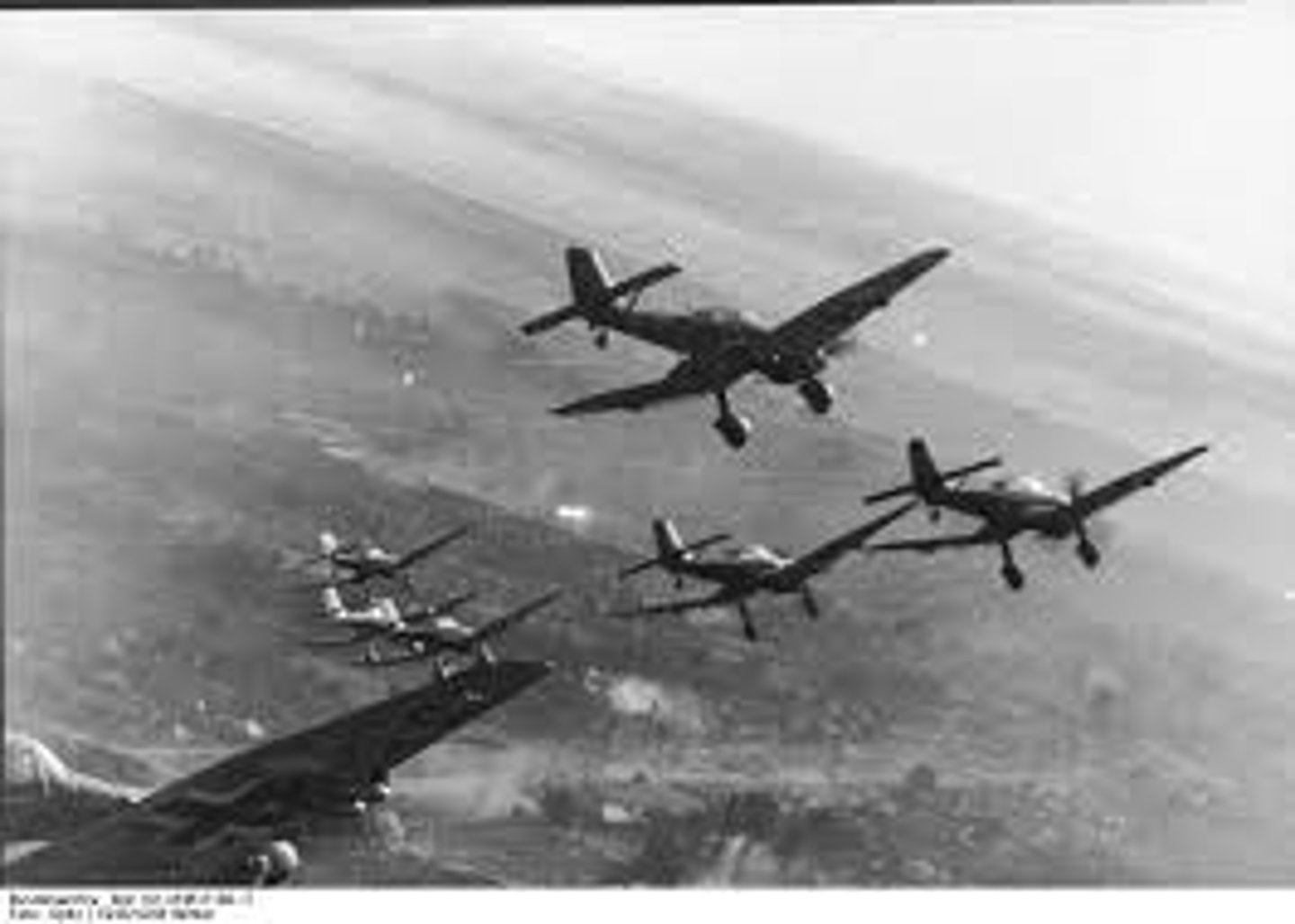
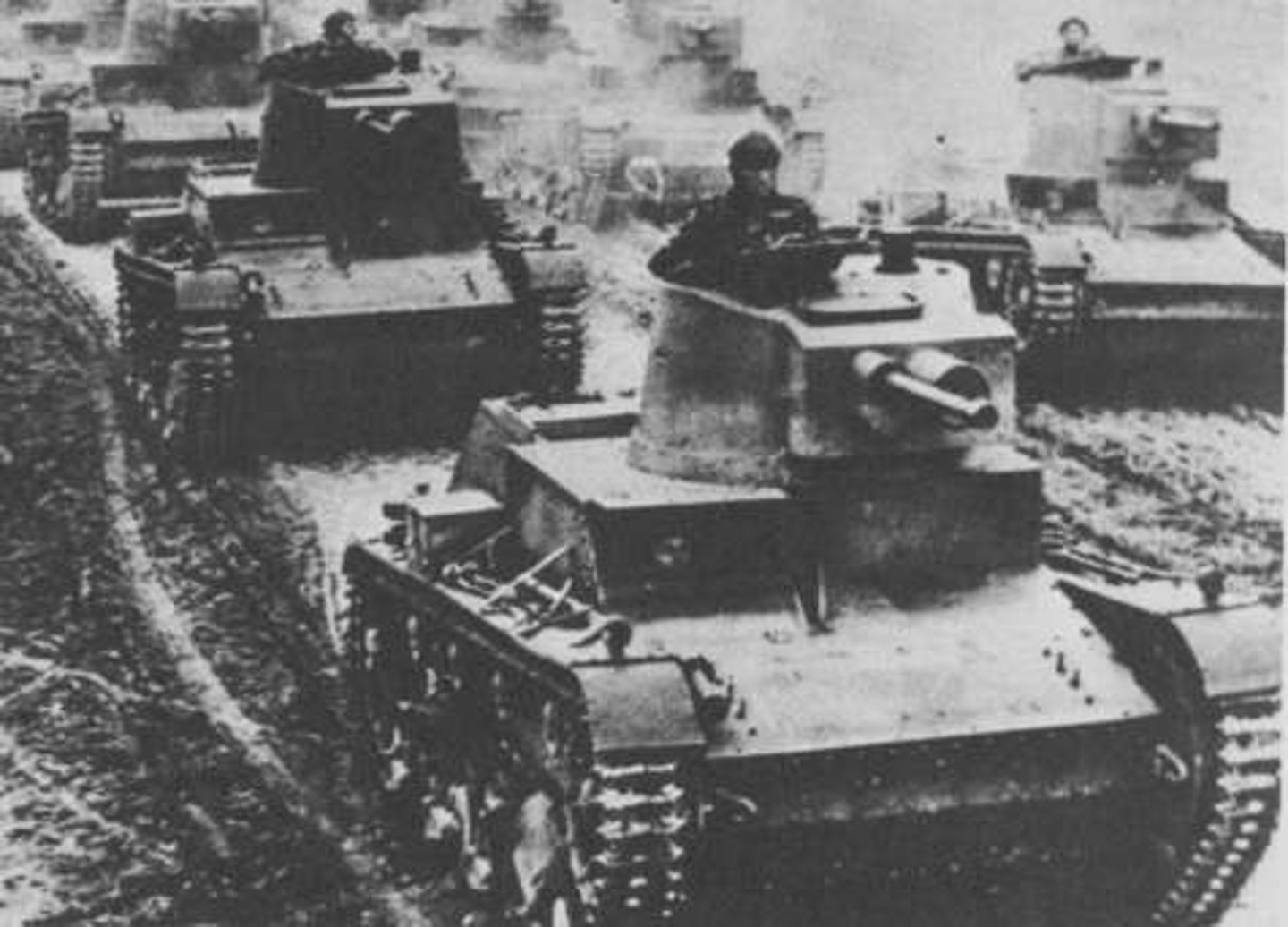
Invasion of Poland
Germany invaded, breaking their agreement, so Britain and France declared war, starting World War II
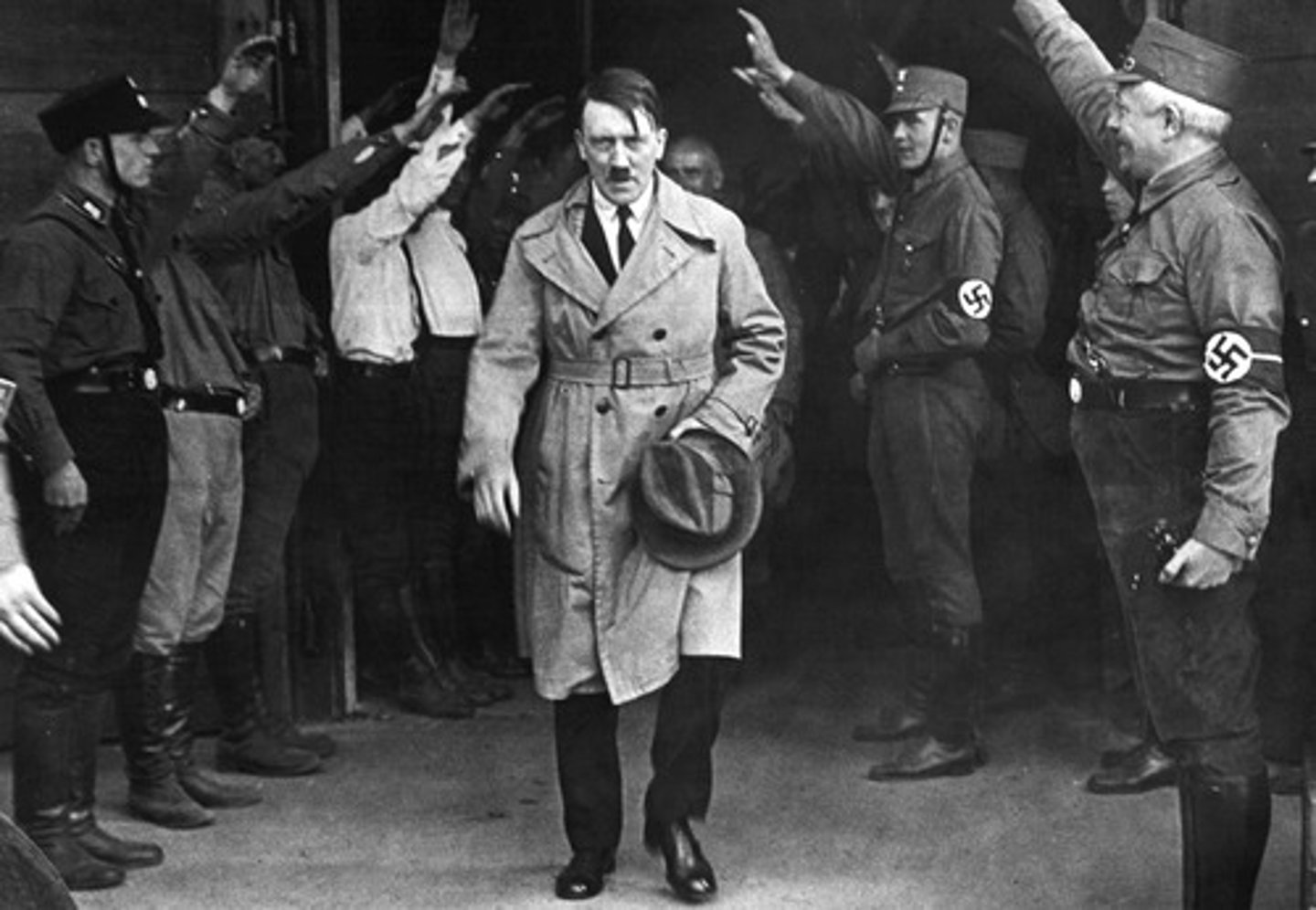
Hitler
German Nazi dictator during World War II (1889-1945), Nazi leader and founder; had over 6 million Jews assassinated during the Holocaust
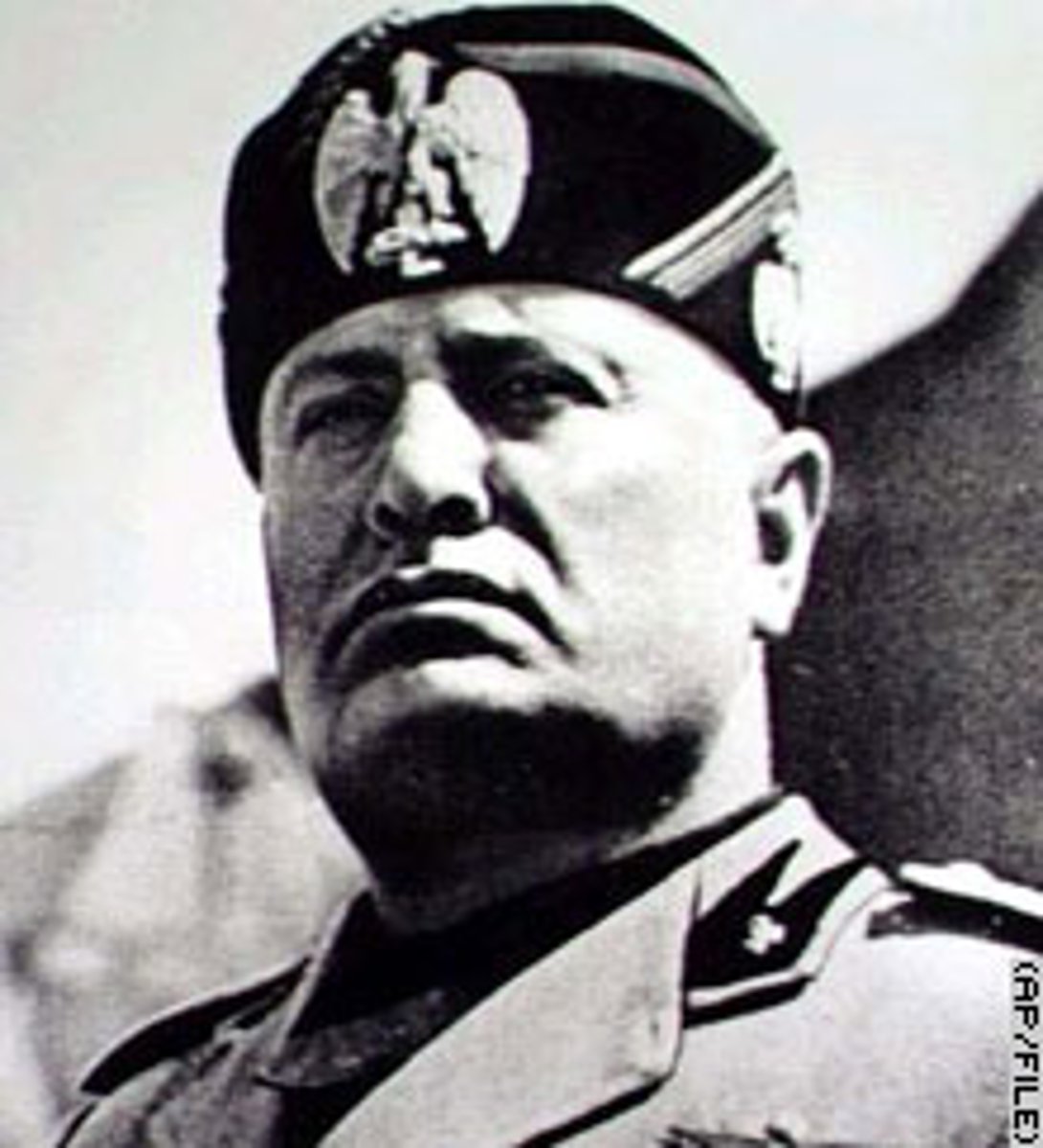
Mussolini
Italian fascist dictator (1883-1945)
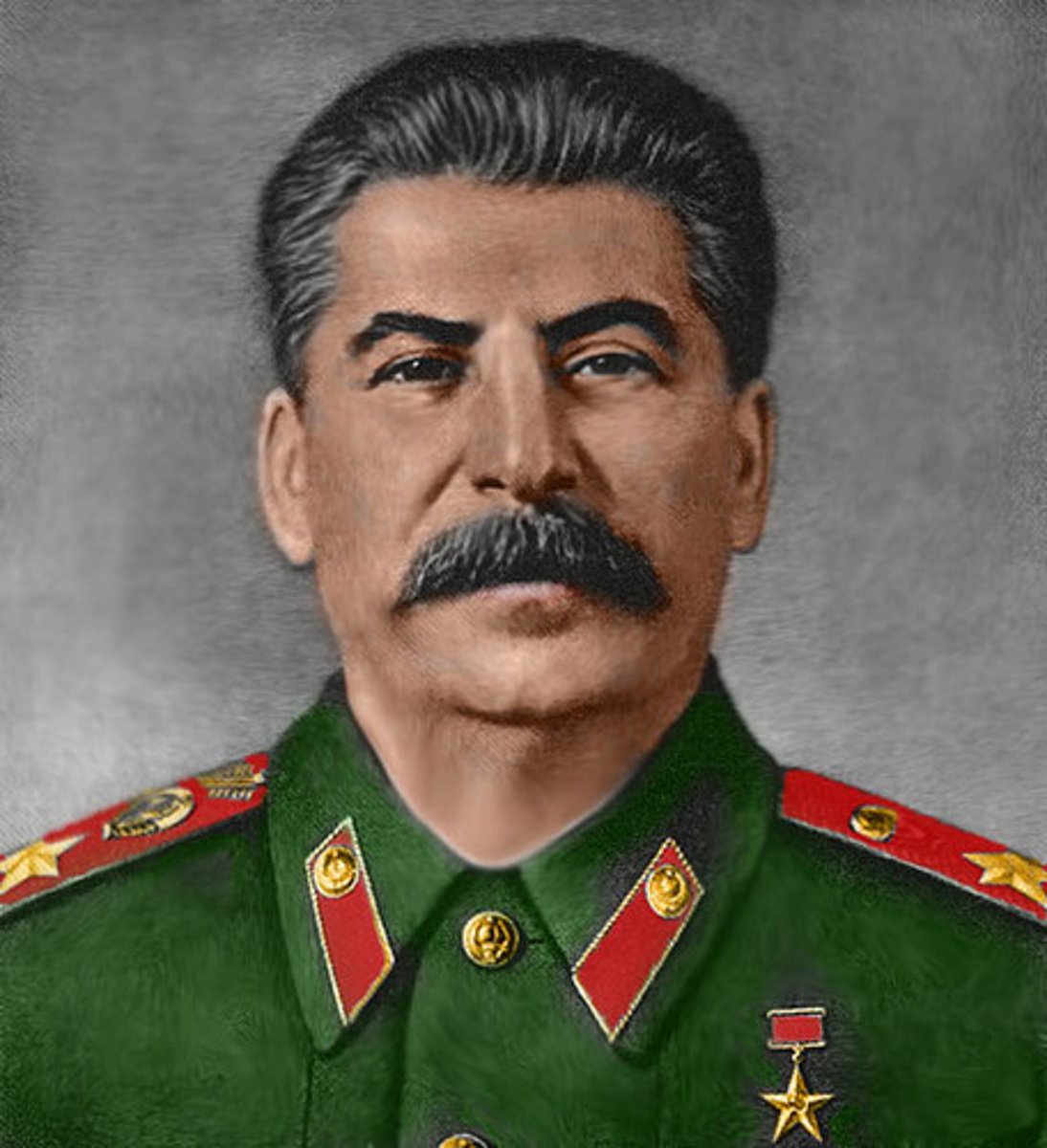
Joseph Stalin
Bolshevik revolutionary, head of the Soviet Communists after 1924, and dictator of the Soviet Union from 1928 to 1953. He led the Soviet Union with an iron fist
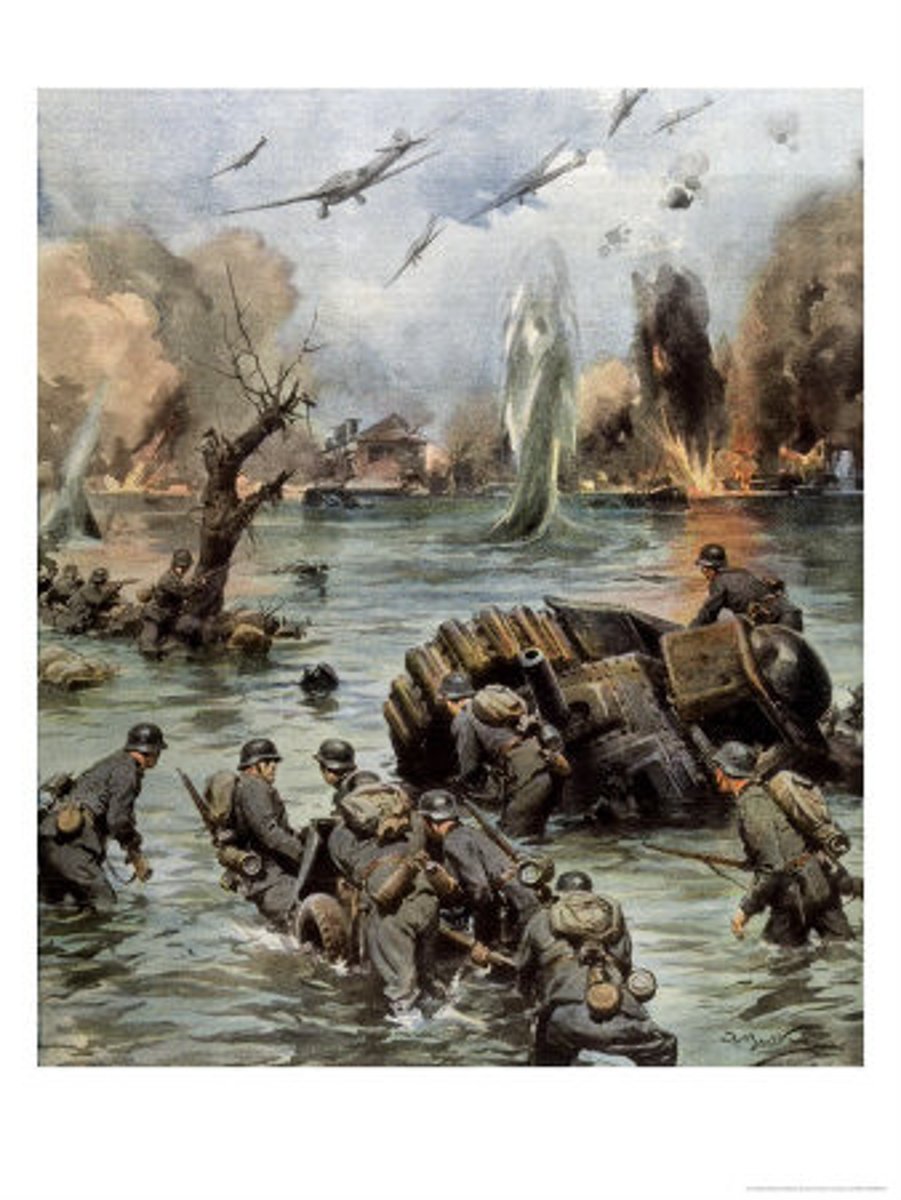
Dunkirk
A city in northern France on the North Sea where in World War II (1940) 330,000 Allied troops had to be evacuated from the beaches at Dunkirk in a desperate retreat under enemy fire.
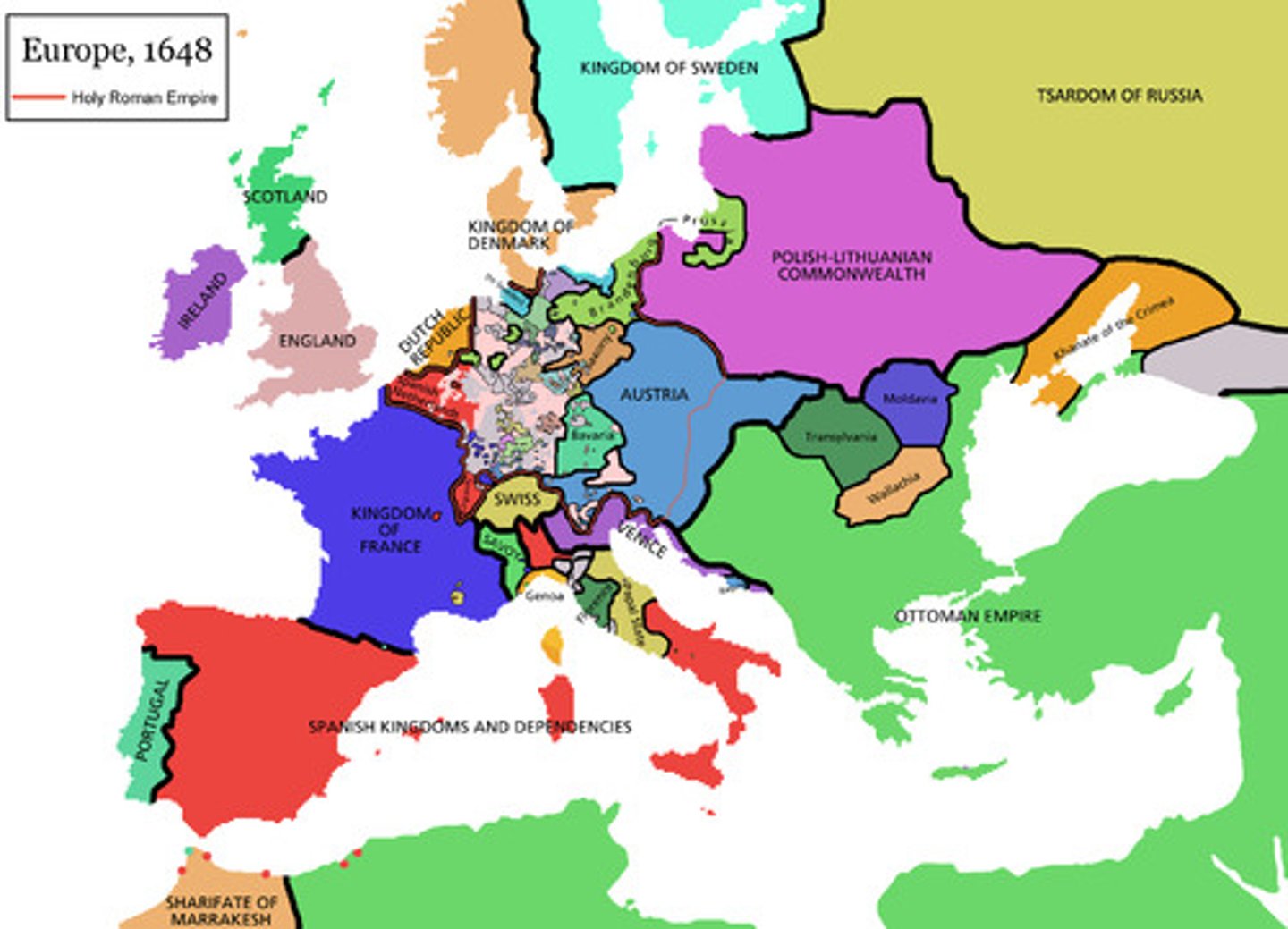
The Fall of France
France and Britain created a Maginot Line, which is a system of fortifications along France's eastern border. The Germans rode through an area of wooded ravines in northest France, completely avoiding the blockade. Then Germans marched to Paris and trapped the soldiers; soon Hitler gave them terms of peace.
The Battle of Britain
Is the name given to the air campaign waged by the German Air Force (Luftwaffe) against the United Kingdom during the summer and autumn of 1940. The objective of the campaign was to gain air superiority over the Royal Air Force (RAF).
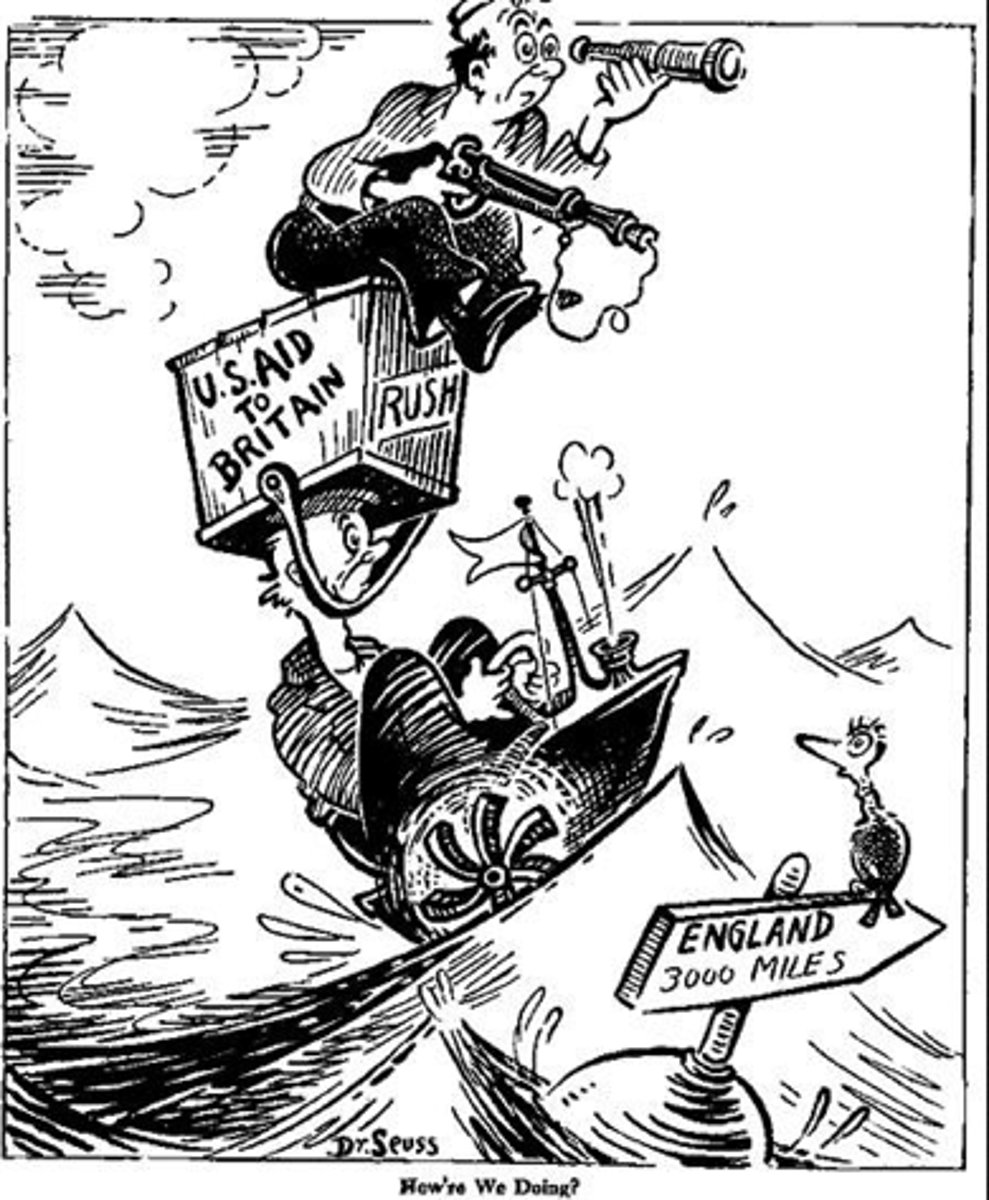
Lend Lease Policy
a law passed in 1941 that allowed the United States to ship arms and other supplies, without immediate payment, to nations fighting the Axis powers
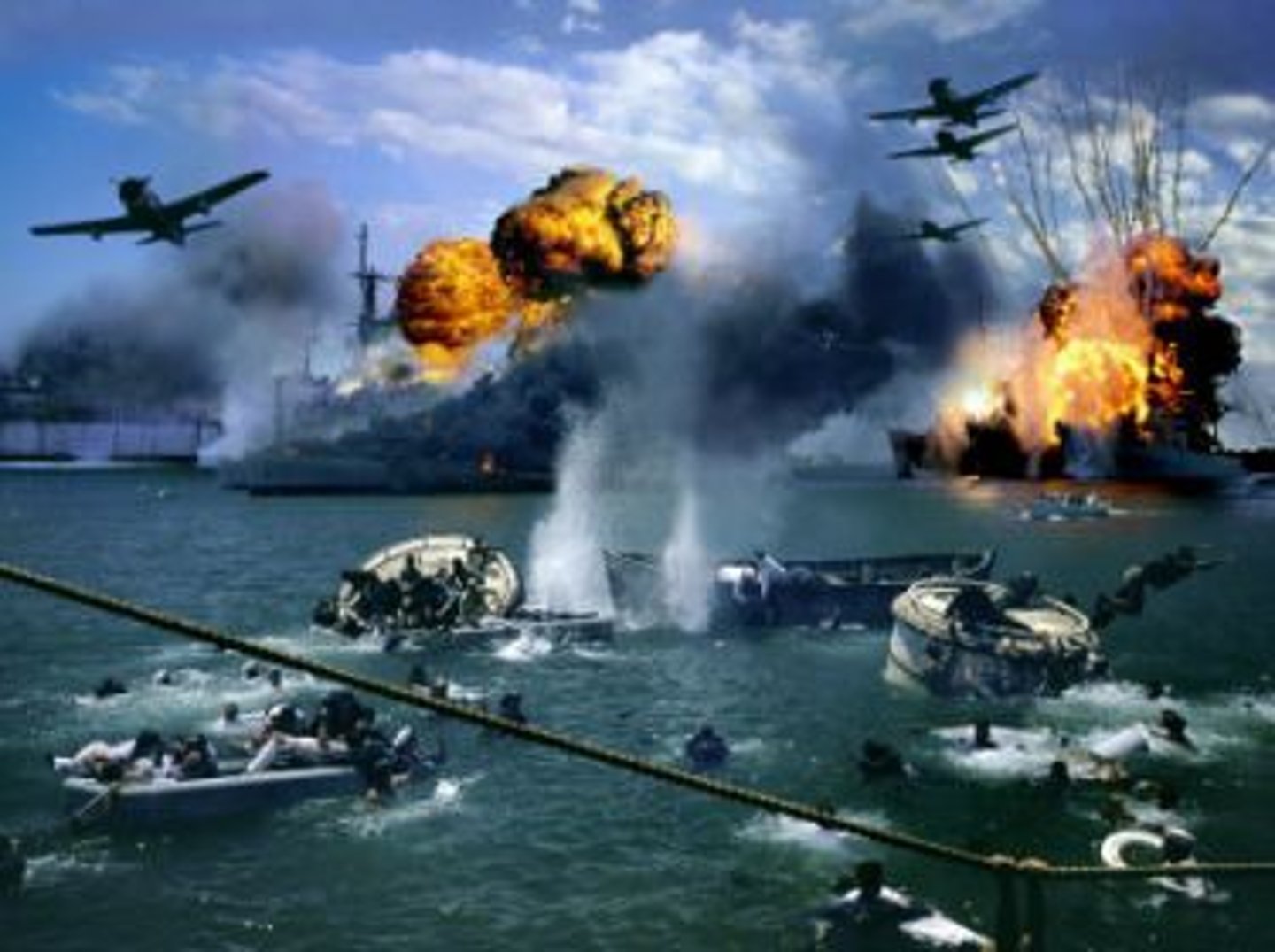
Pearl Harbor
7:50-10:00 AM, December 7, 1941 - Surprise attack by the Japanese on the main U.S. Pacific Fleet harbored in Pearl Harbor, Hawaii destroyed 18 U.S. ships and 200 aircraft. American losses were 3000, Japanese losses less than 100. In response, the U.S. declared war on Japan and Germany, entering World War II.
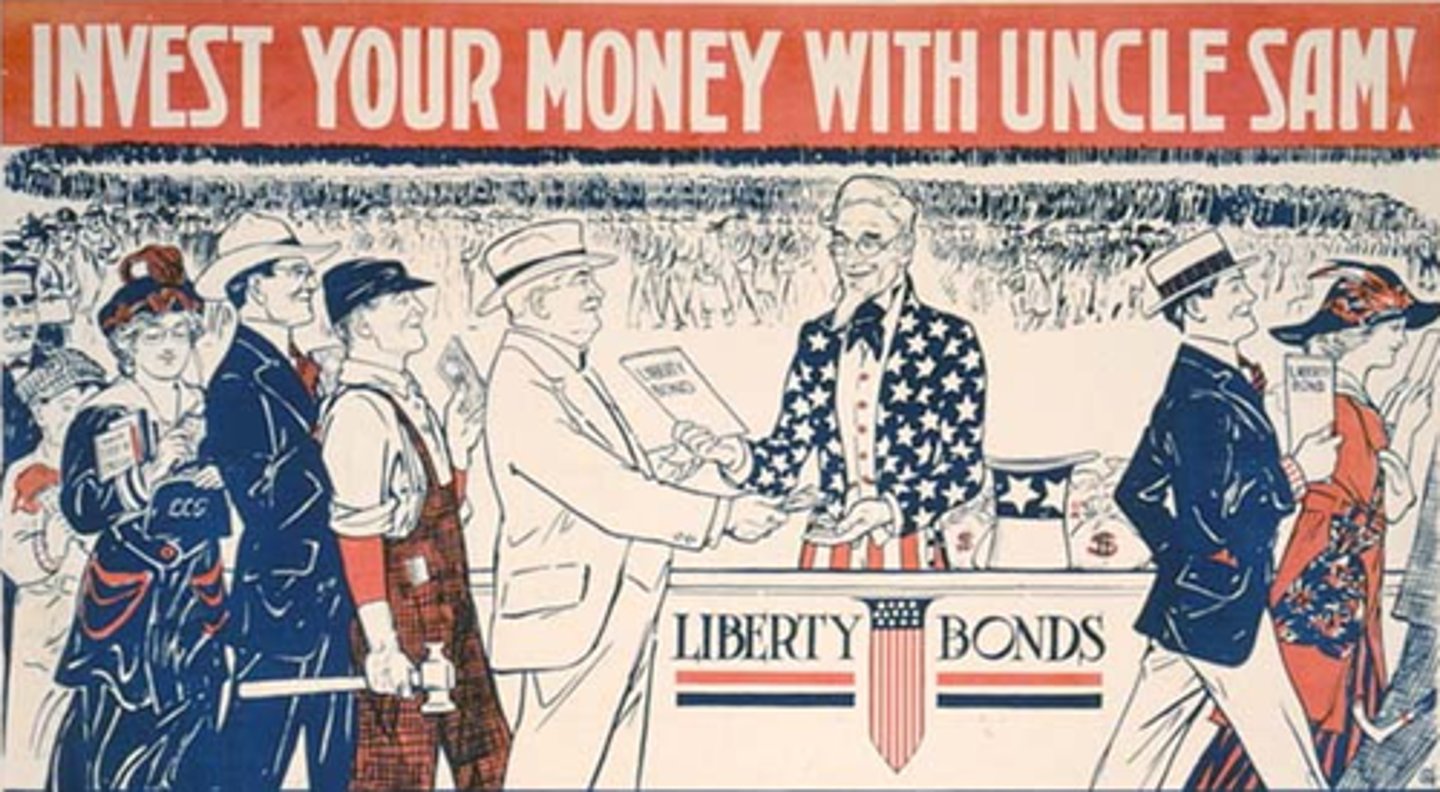
War Bonds
Short-term loans that individual citizens made to the government that financed two-thirds of the war's cost.
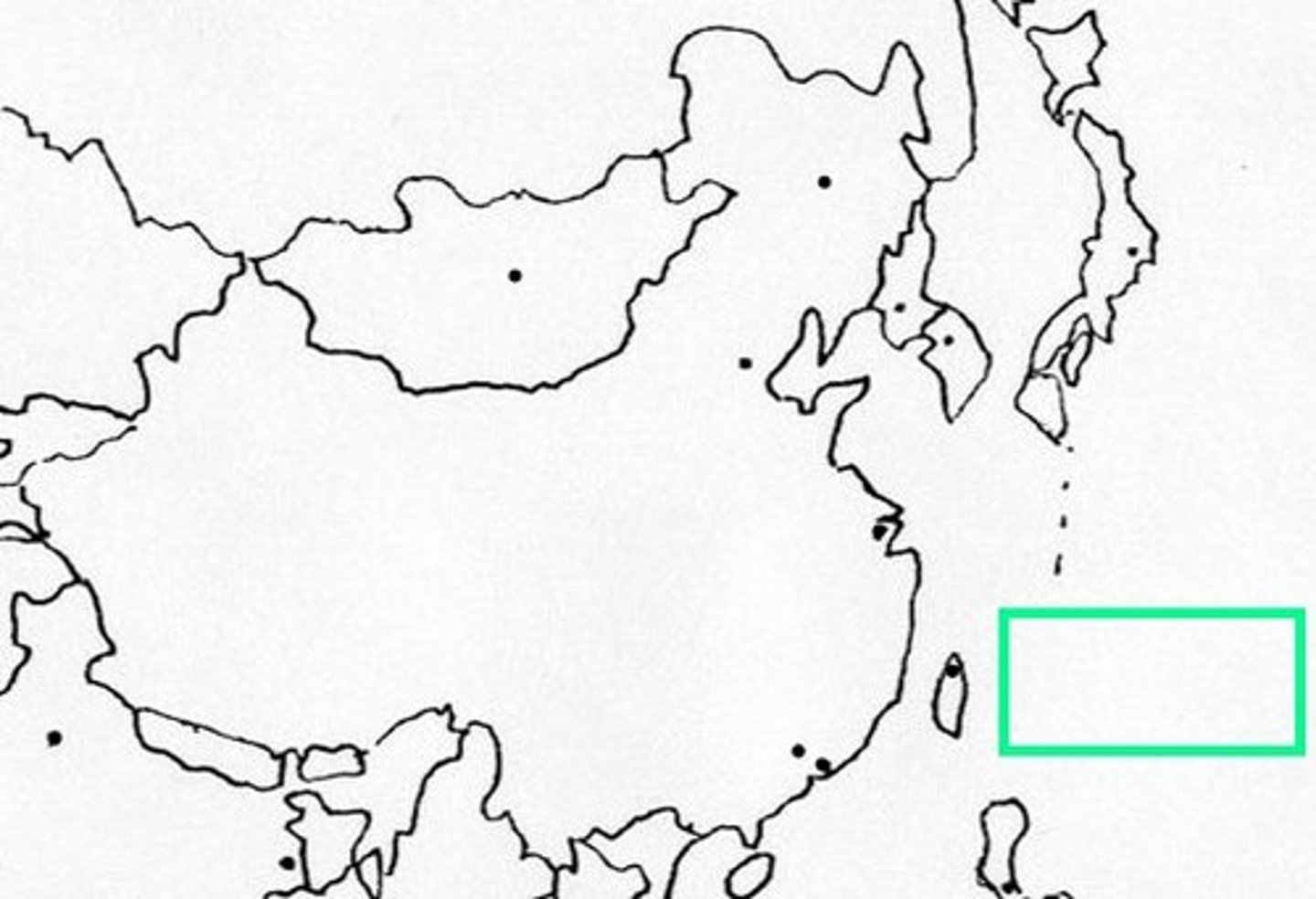
The Pacific Theater
The war in the Pacific, most islands were involved, Japan tried to take these islands and sent 65 bombing raids all the way to Australia.
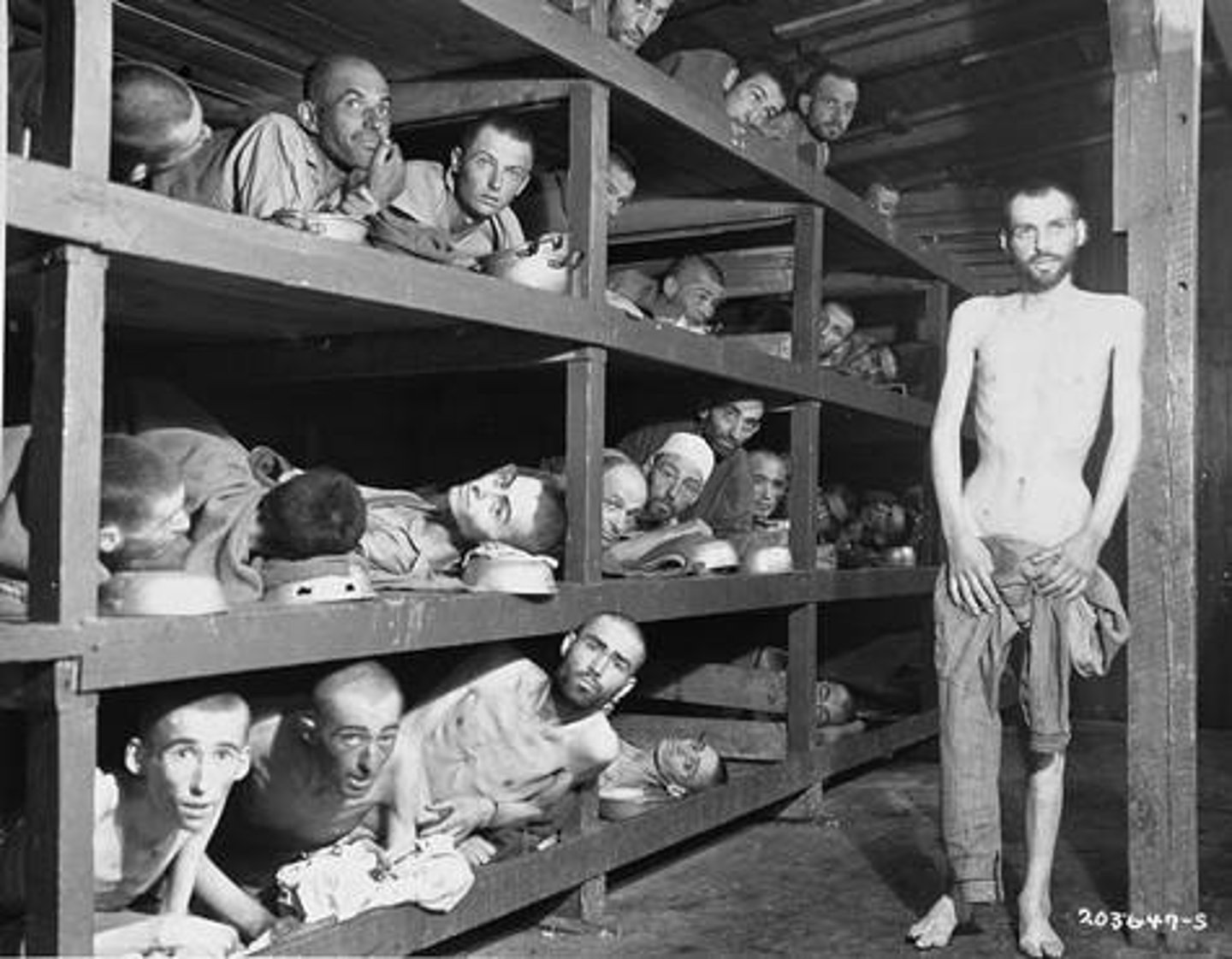
The Holocaust
Six million Jews were systematically and brutally murdered by the Nazis and their collaborators. Millions of non-Jews, including Roma and Sinti(Gypsies), Serbs, political dissidents, people with disabilities, homosexuals and Jehova's Witnesses, were also persecuted by the Nazis.
Battle of Midway
1942 World War II battle between the United States and Japan, a turning point in the war in the Pacific
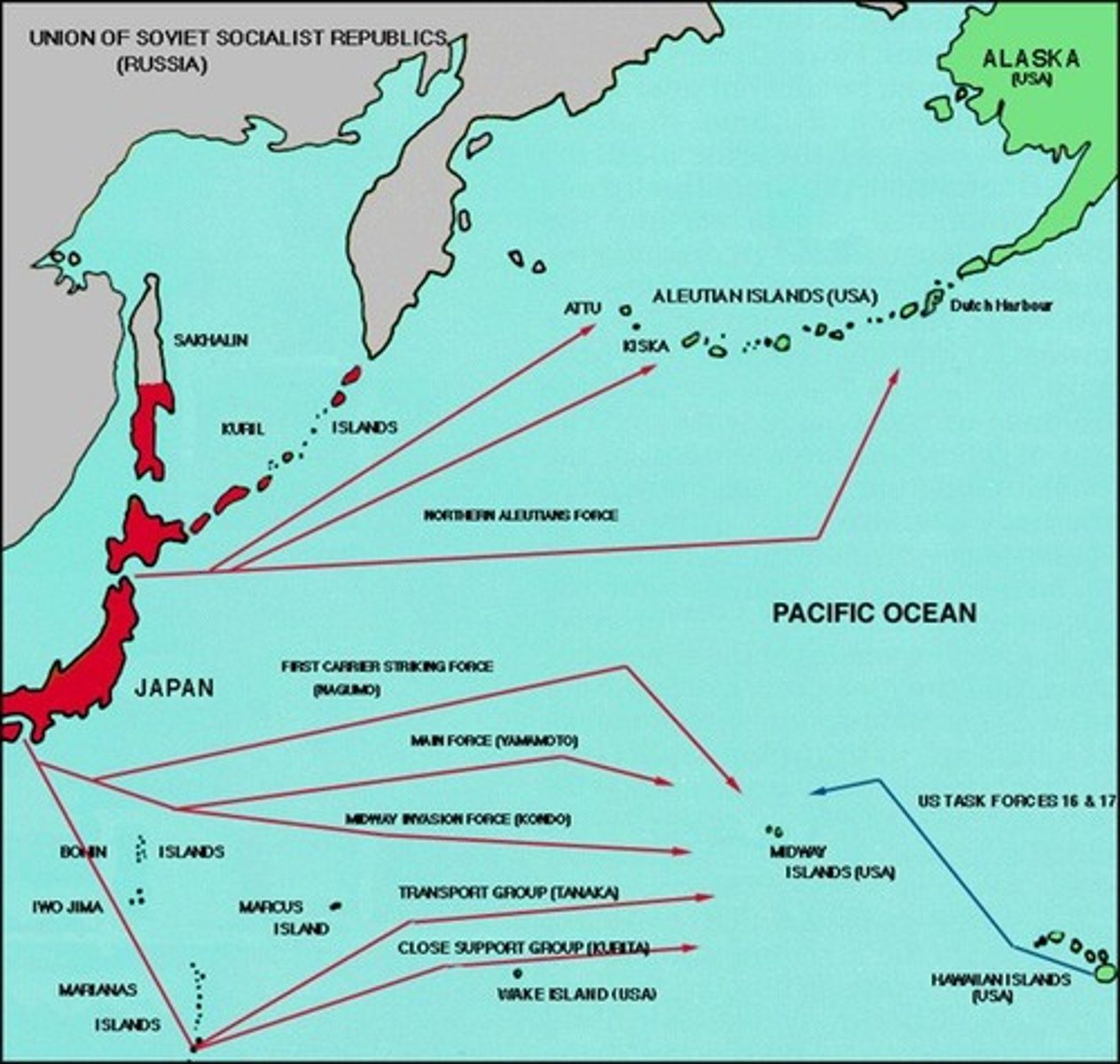
Kamikazes
in World War II, Japanese pilots who loaded their aircraft with bombs and crashed them into enemy ships
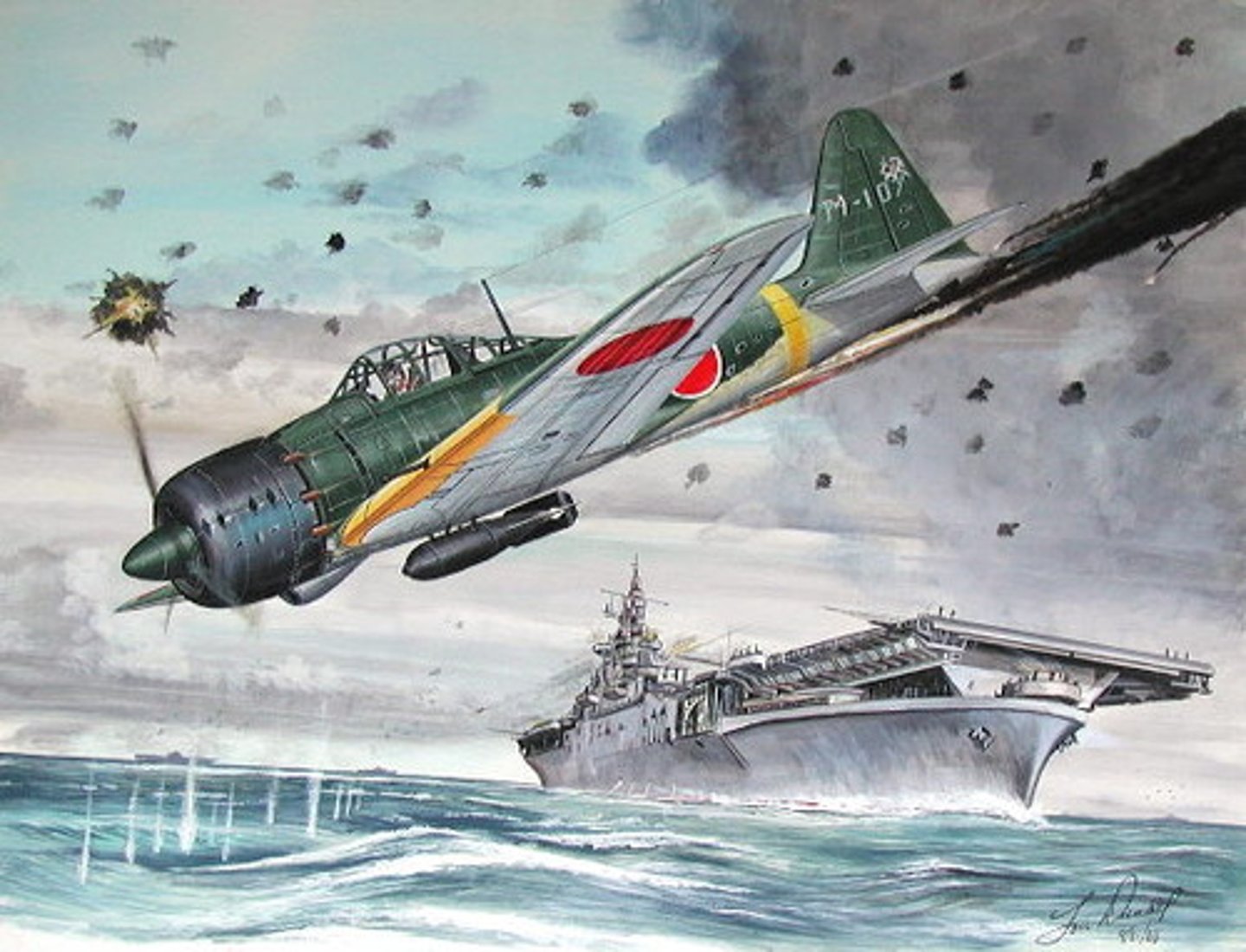
Island Hopping
A military strategy used during World War II that involved selectively attacking specific enemy-held islands and bypassing others
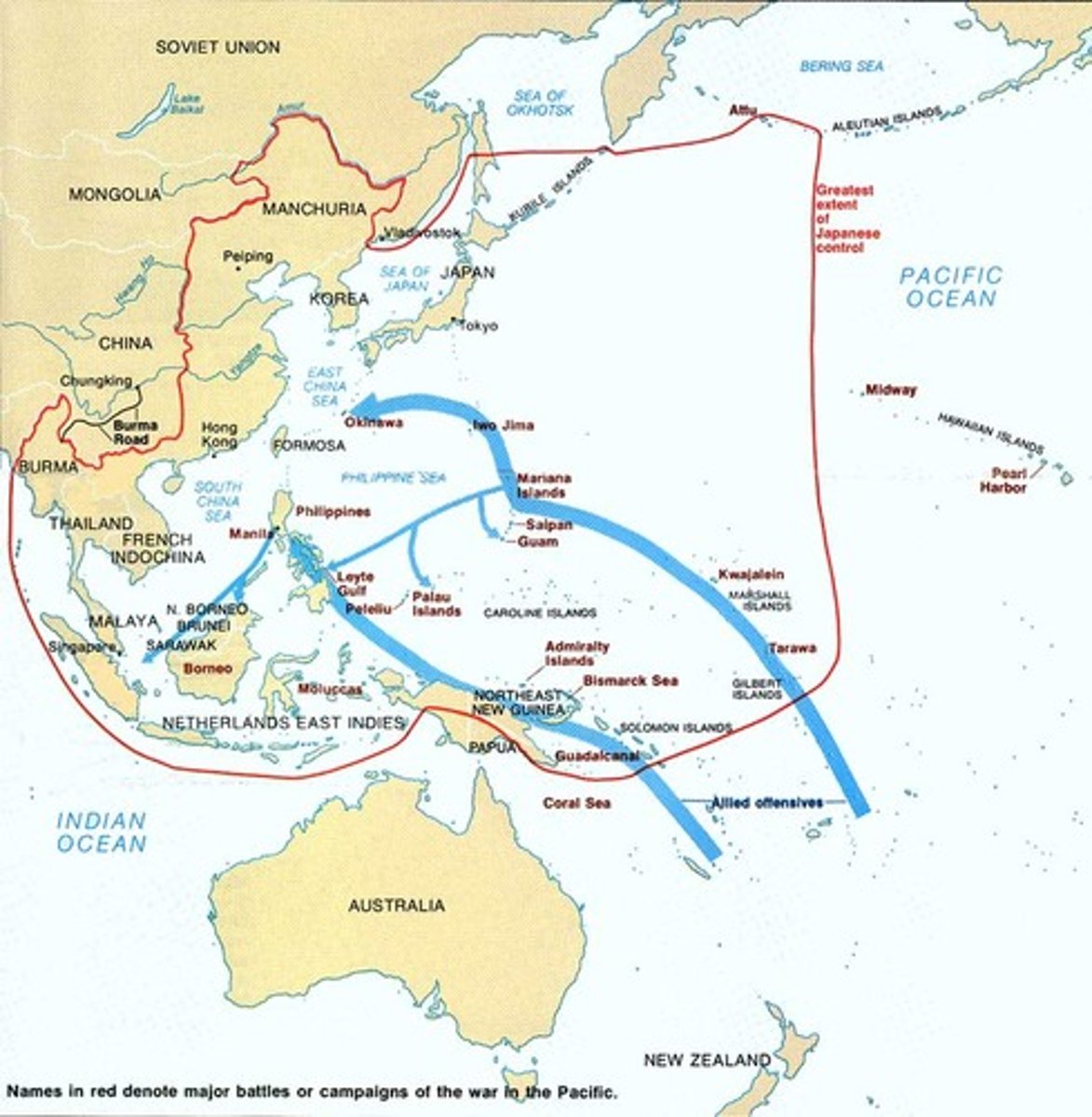
General Eisenhower
A US Army general who held the position of supreme Allied commander in Europe, among many others. He was best known for his work in planning Operation Overlord, the Allied invasion of Europe.
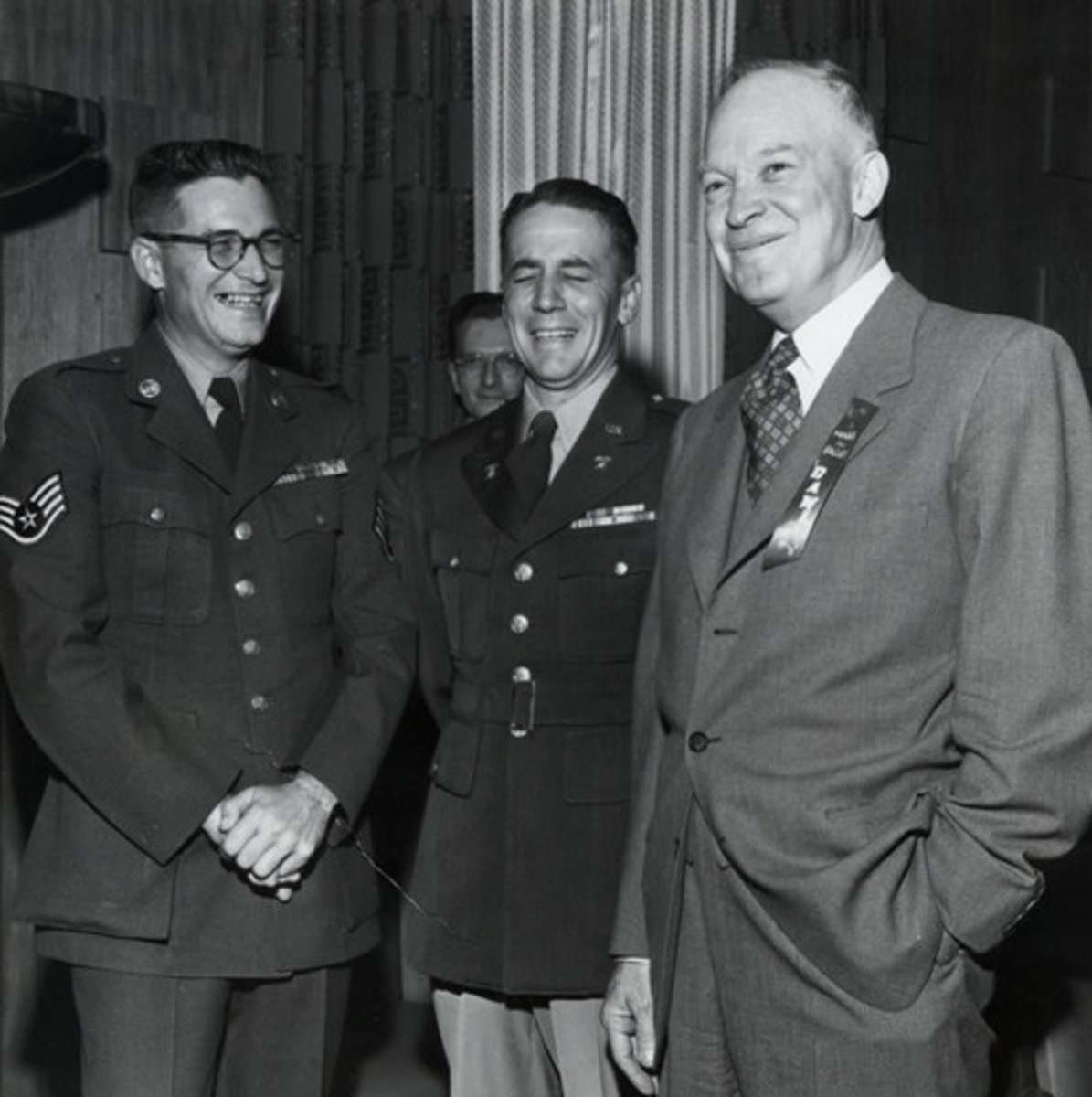
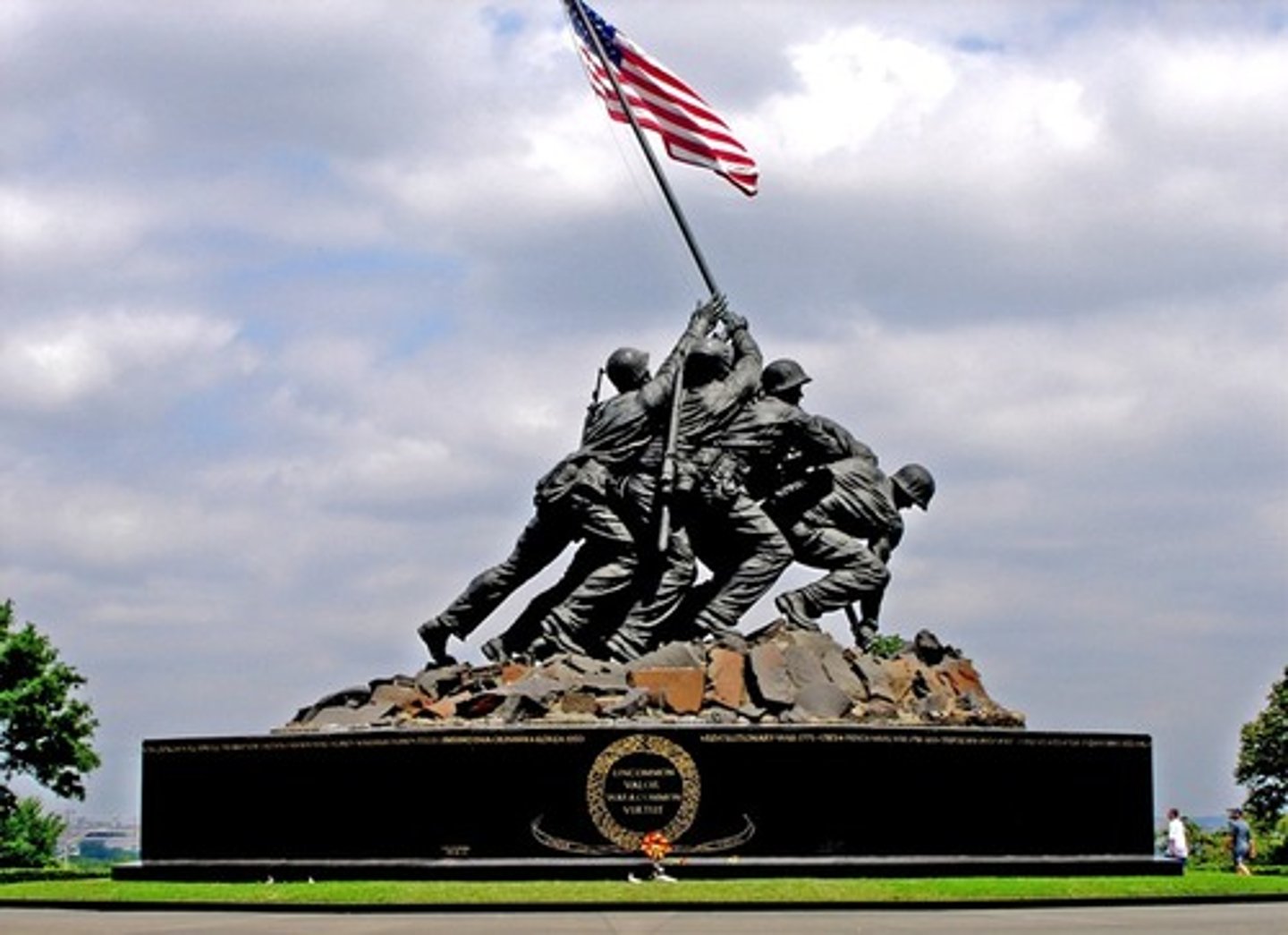
Iwo Jima
bloodiest island battle in the Pacific where only 216 Japanese surrendered out of about 25,000. More American casualties here than allied casualties on D-day.
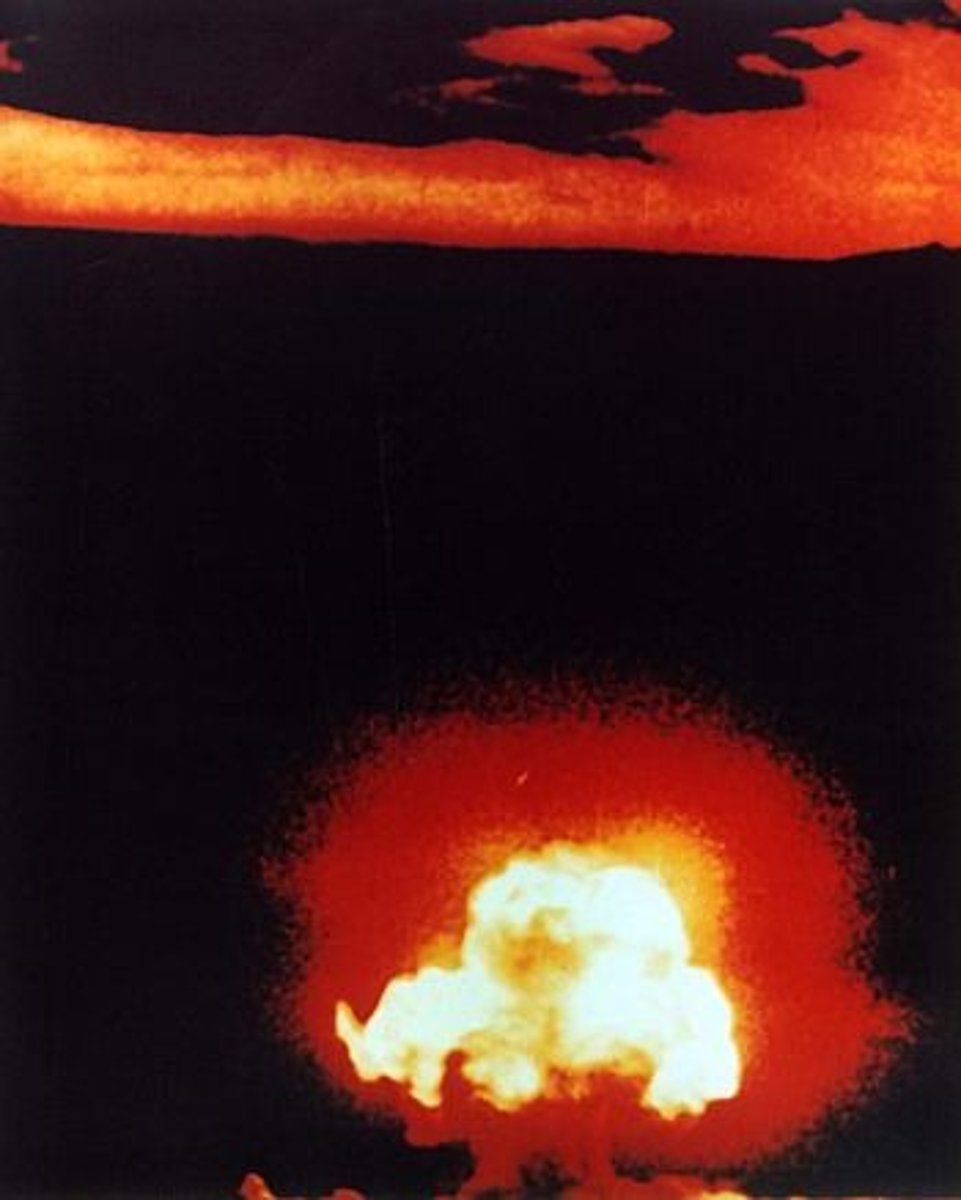
The Manhattan Project
A secret research and development project of the US to develop the atomic bomb. Its success granted the US the bombs that ended the war with Japan as well as ushering the country into the atomic era
Nagasaki
Japanese city devastated during World War II when the United States dropped the second atomic bomb on Aug 8th, 1945.
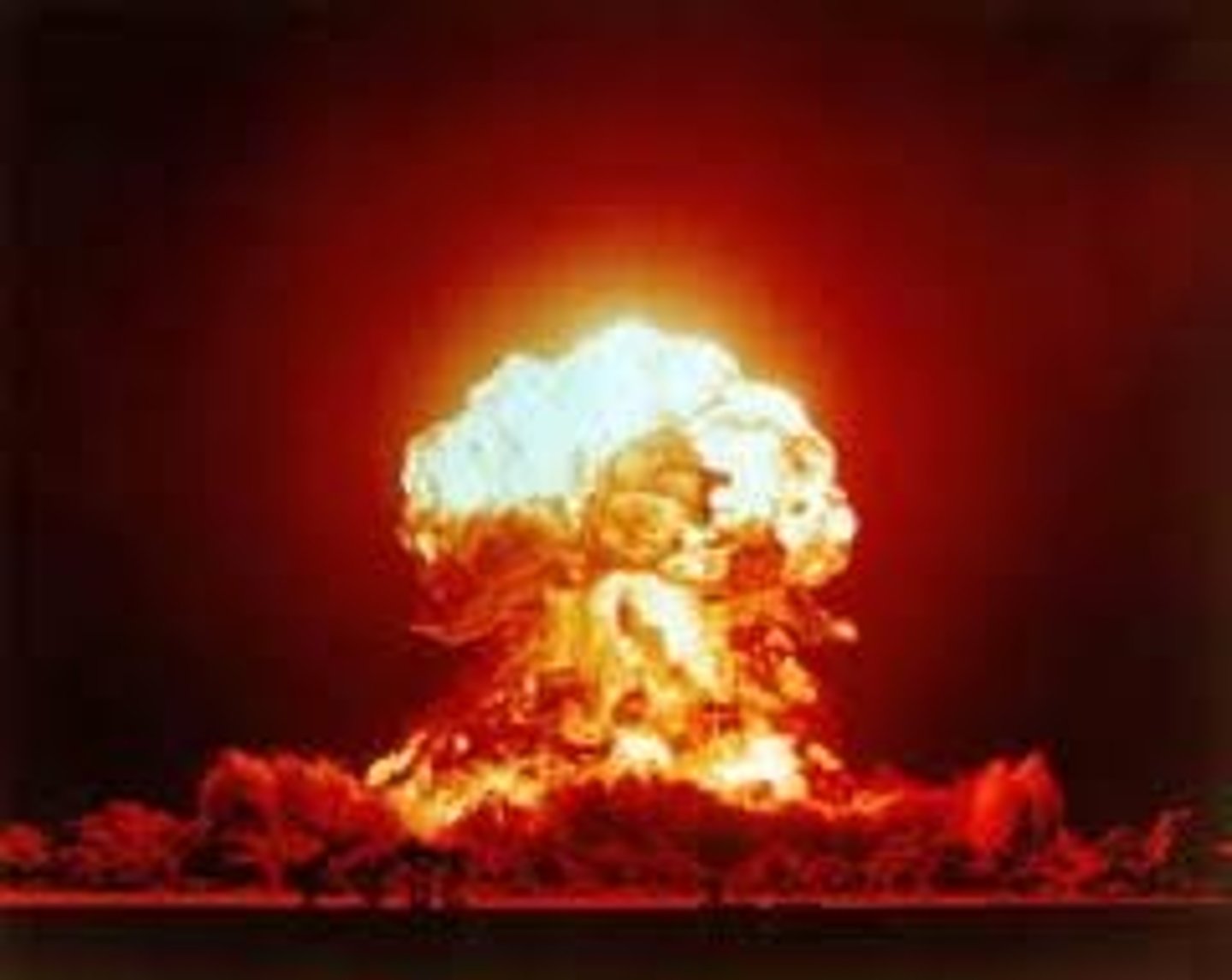
Hiroshima
City in Japan, the first to be destroyed by an atomic bomb, on August 6, 1945. The bombing hastened the end of World War II.
Neutrality Acts 1939
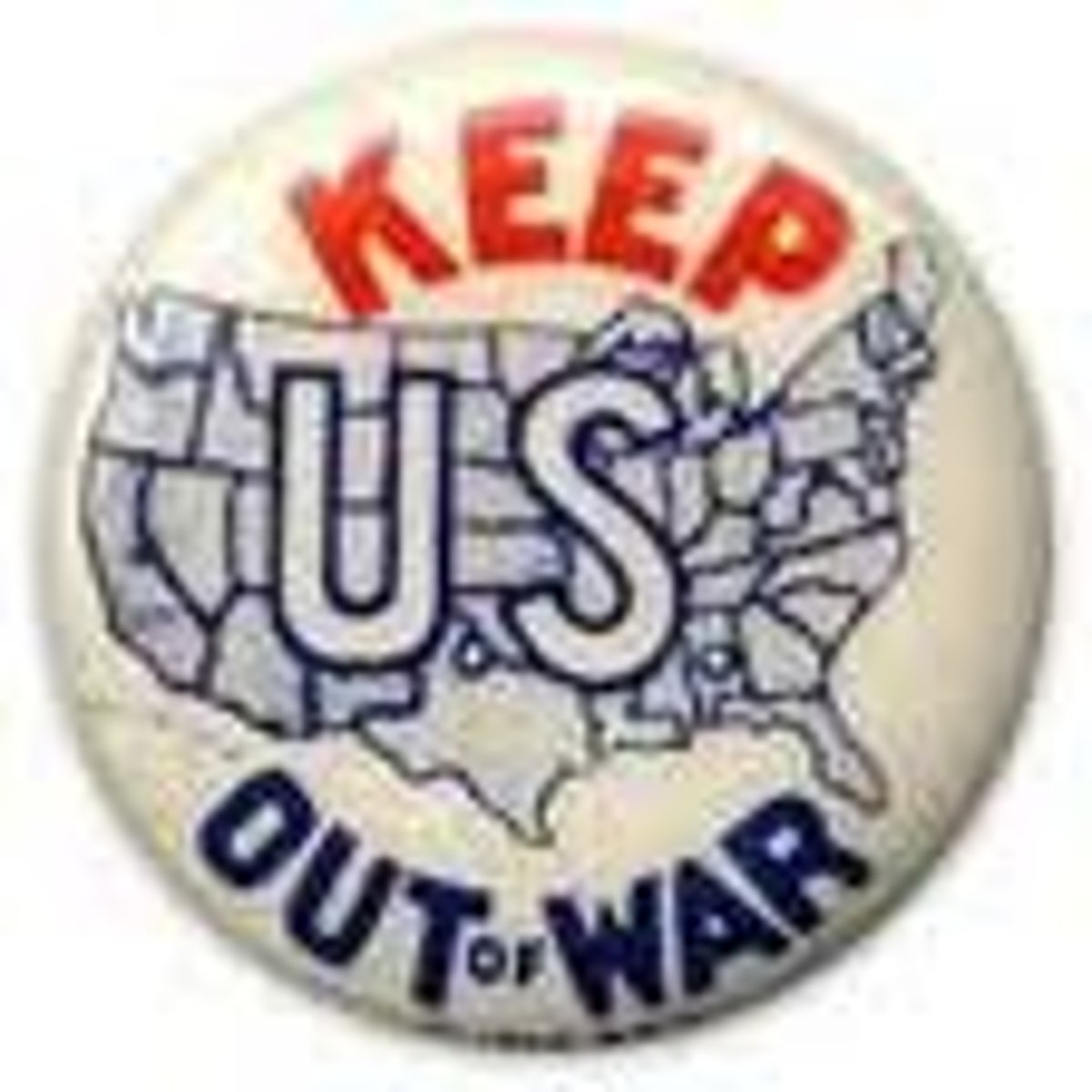
Laws designed to keep the U.S. out of future wars
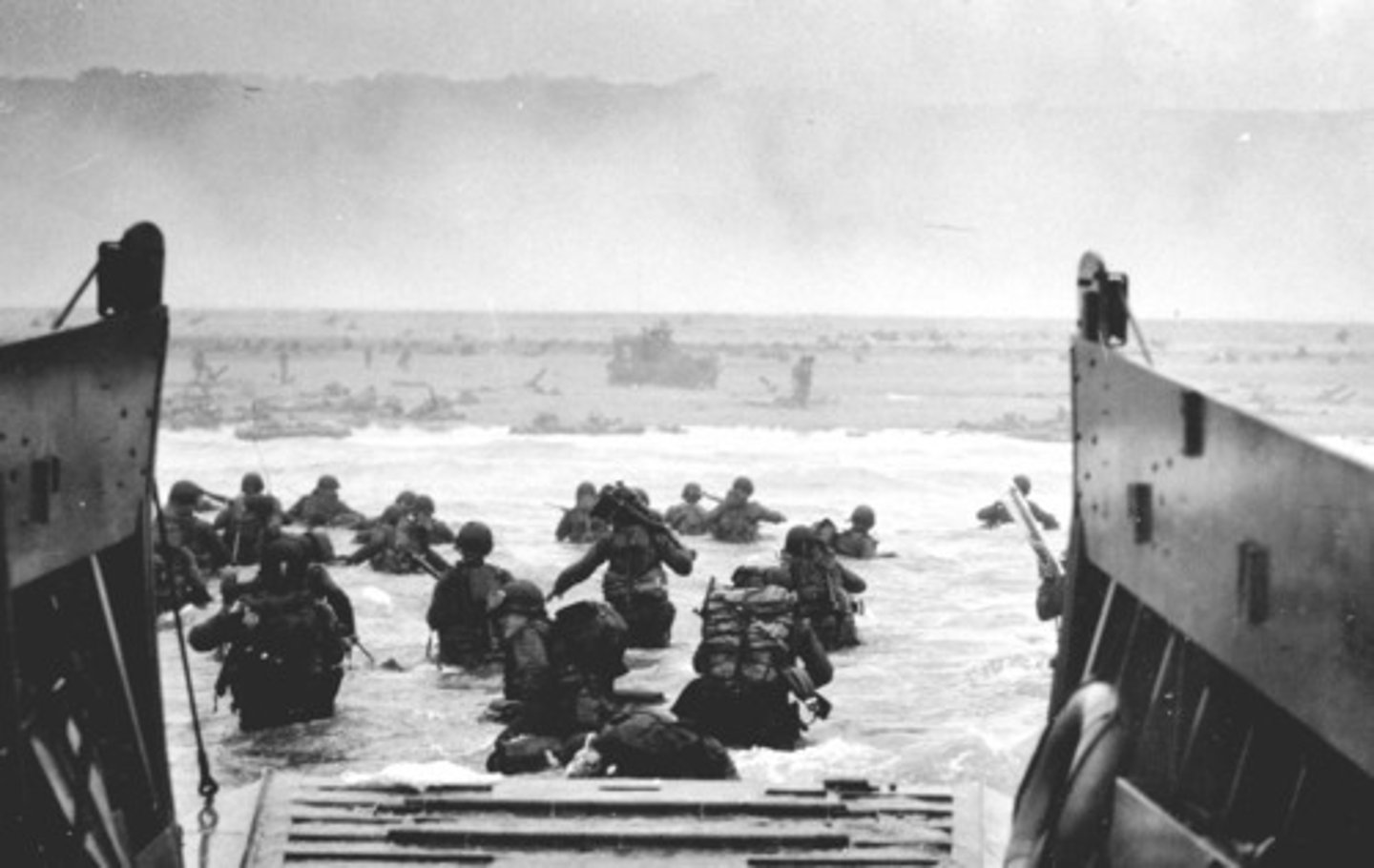
D-Day
common name for June 6, 1944, the day that Allied forces invaded France during WWII
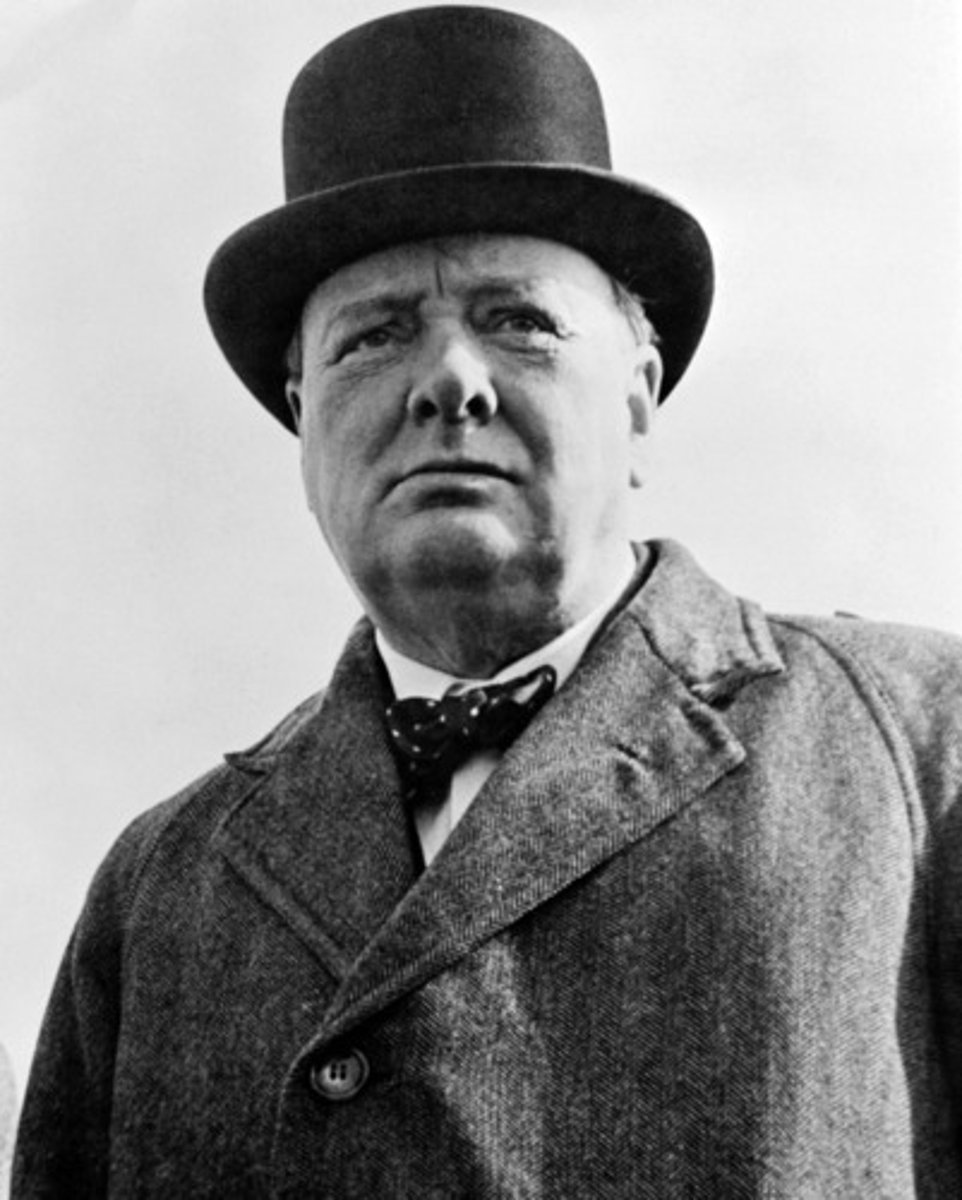
Winston Churchill
He led Britain throughout most of World War II, he told his citizens to expect "Blood, sweat, toil, and tears" and to "Keep calm and carry on"
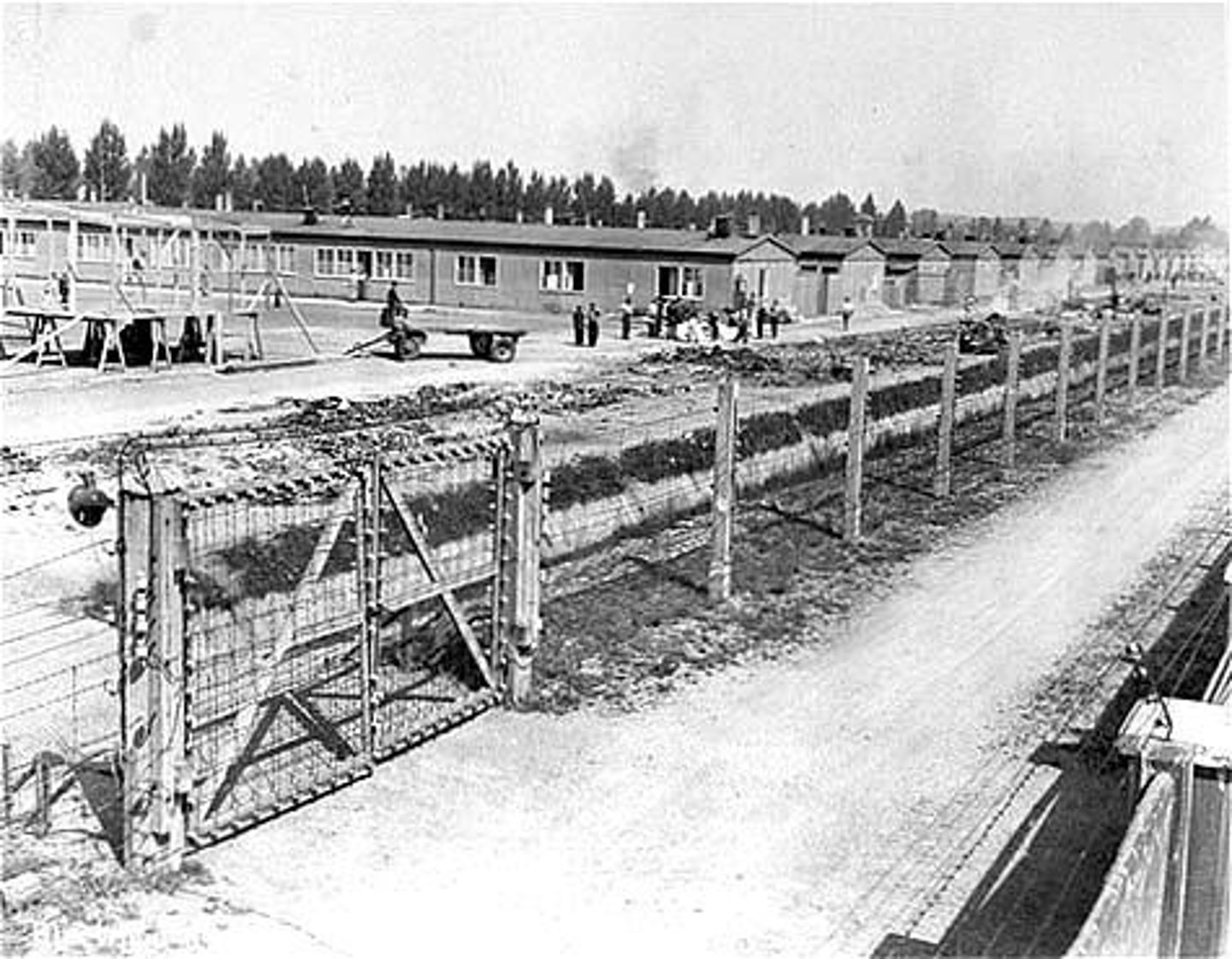
Concentration Camps
prison camps used under the rule of Hitler in Nazi Germany. Conditions were inhuman, and prisoners, mostly Jewish people, were generally starved or worked to death, or killed immediately.
Internment Camps
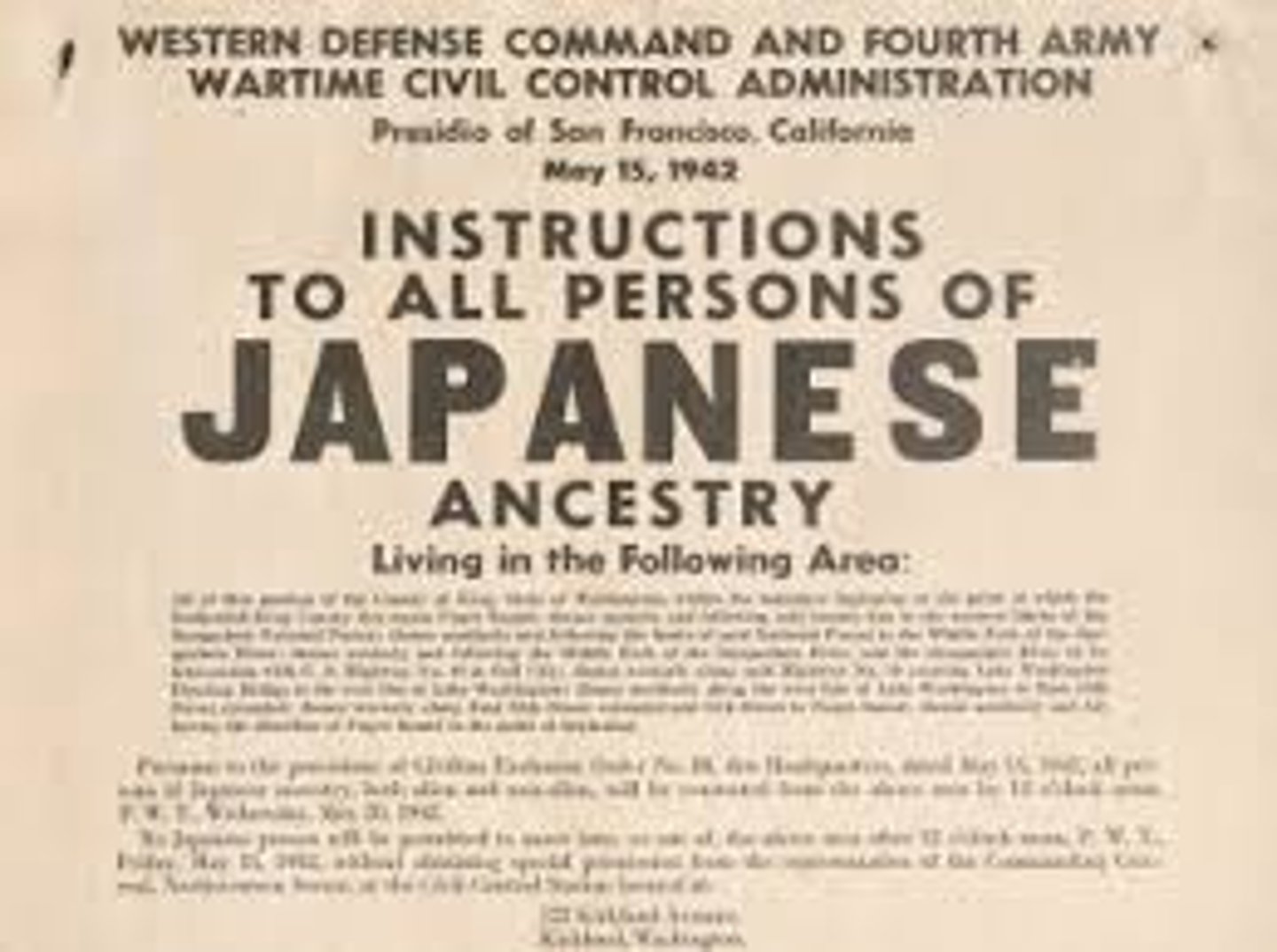
Detention centers where more than 100,000 Japanese Americans were relocated during World War II by order of the President.
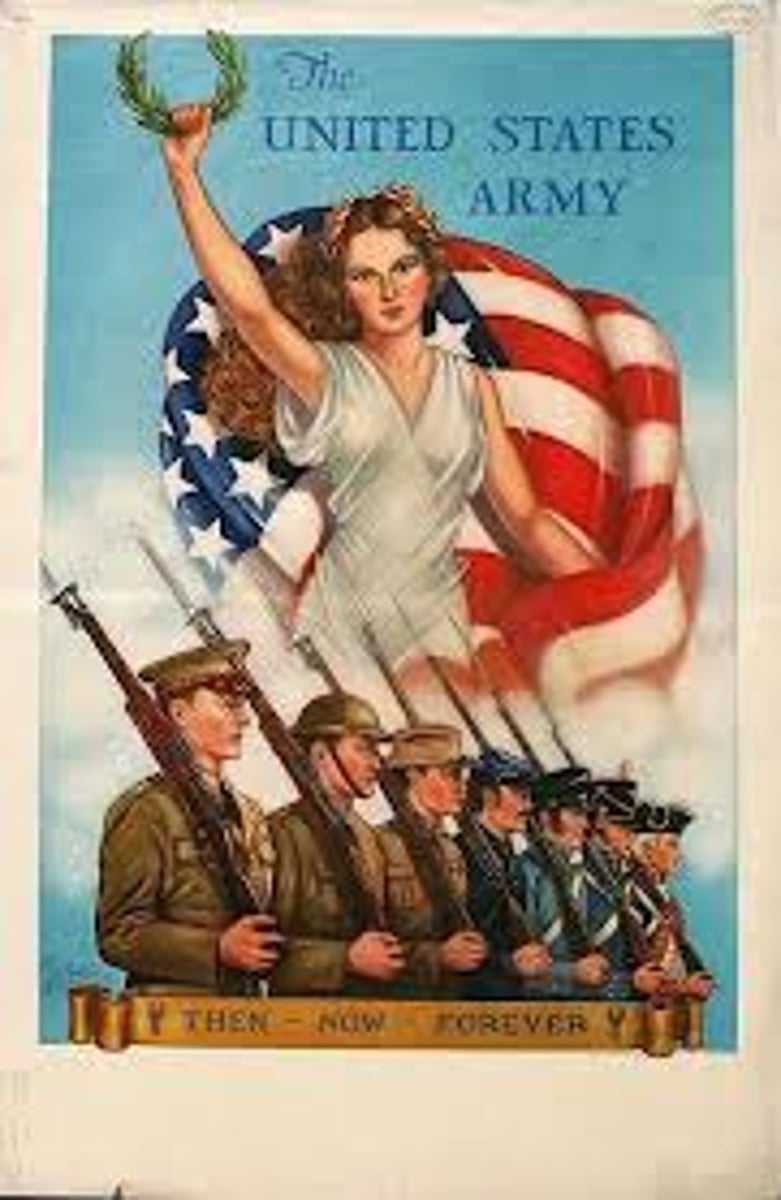
Propaganda
Ideas spread to influence public opinion for or against a cause.
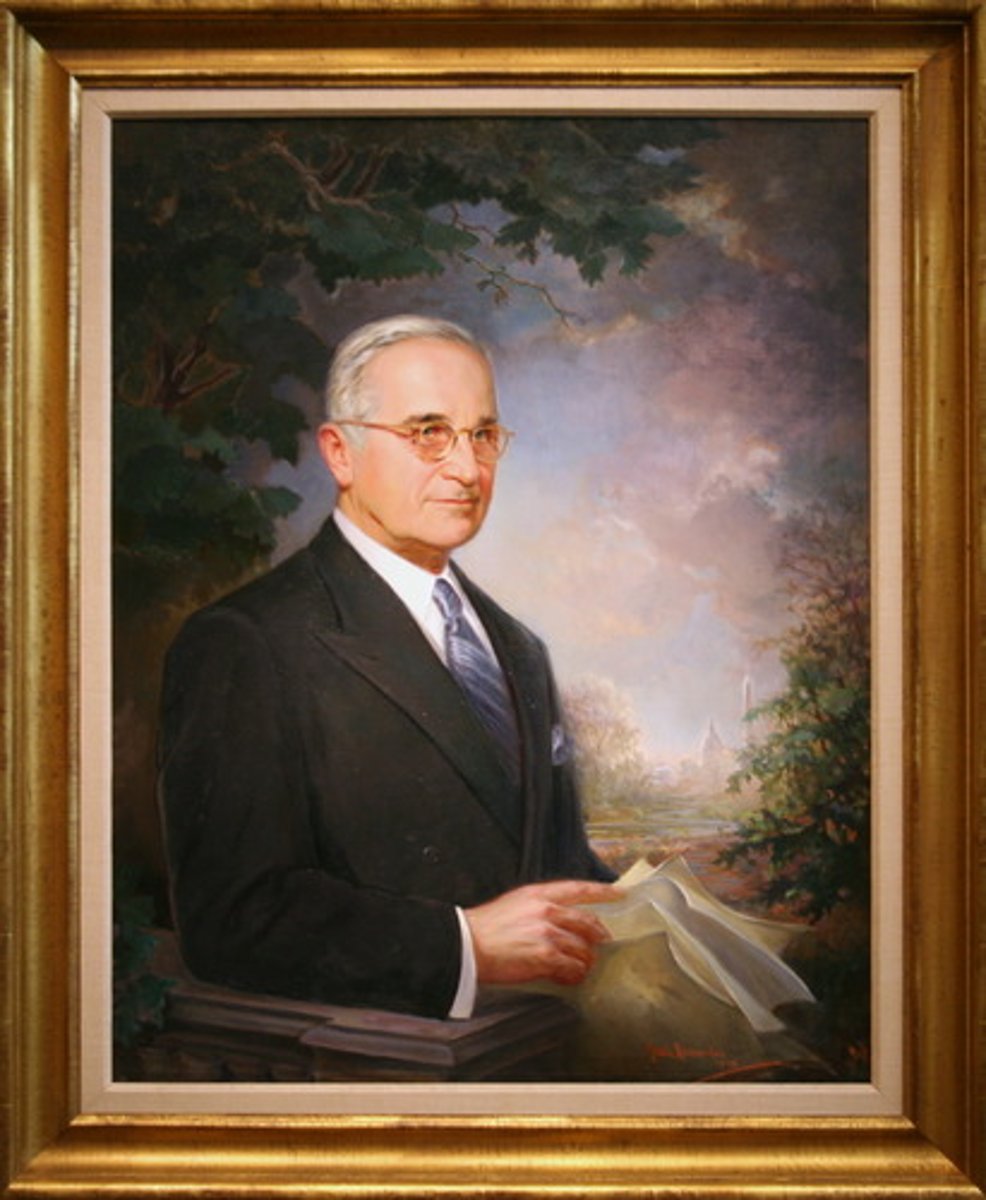
Harry Truman
Became president when FDR died; gave the order to drop the atomic bomb
Enola Gay
the name of the American B-29 bomber, piloted by Col. Paul Tibbets, Jr., that dropped the atomic bomb on Hiroshima, Japan, on Aug. 6, 1945.
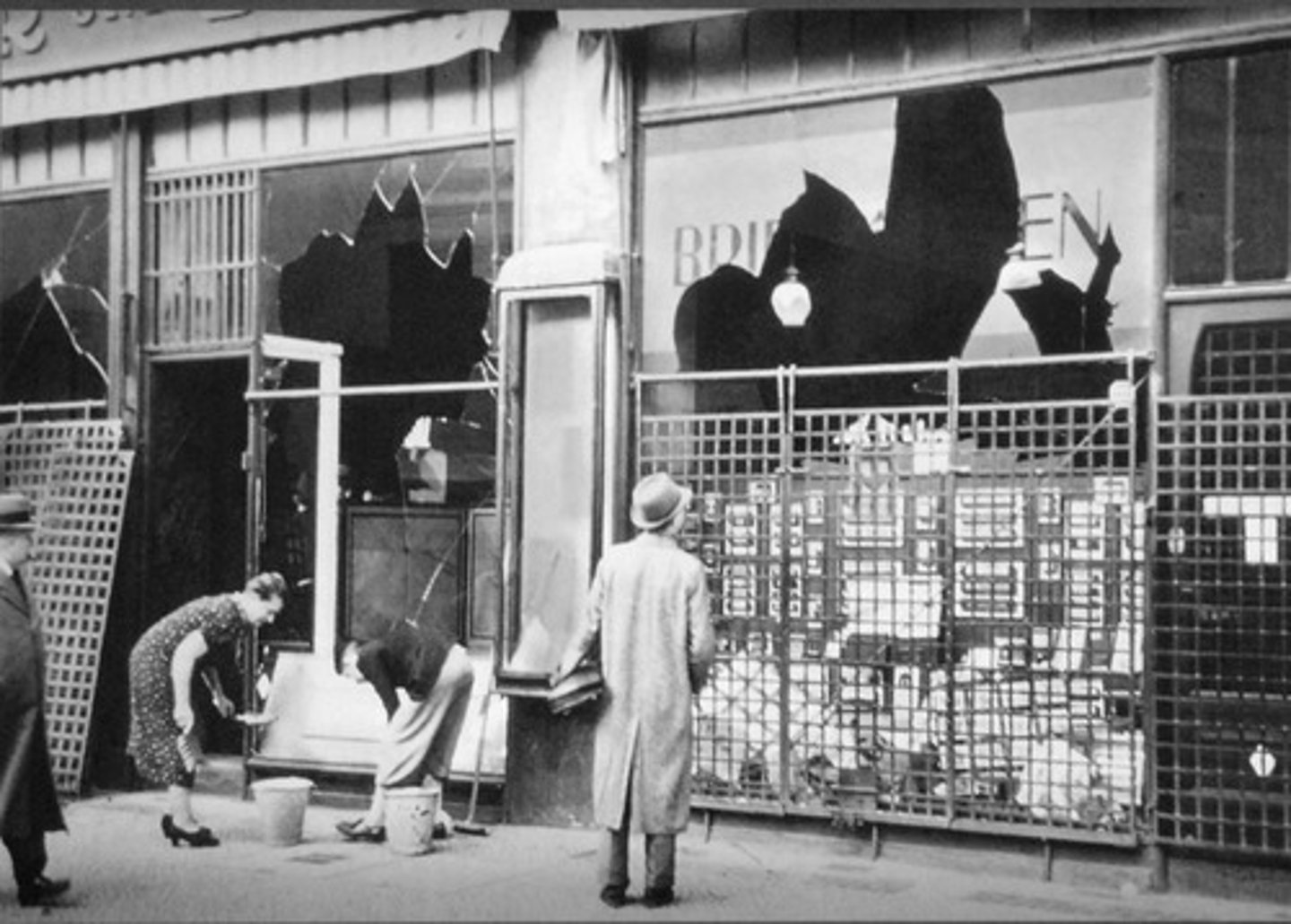
Kristallnacht
(Night of the Broken Glass) November 9, 1938, when mobs throughout Germany destroyed Jewish property and terrorized Jews.
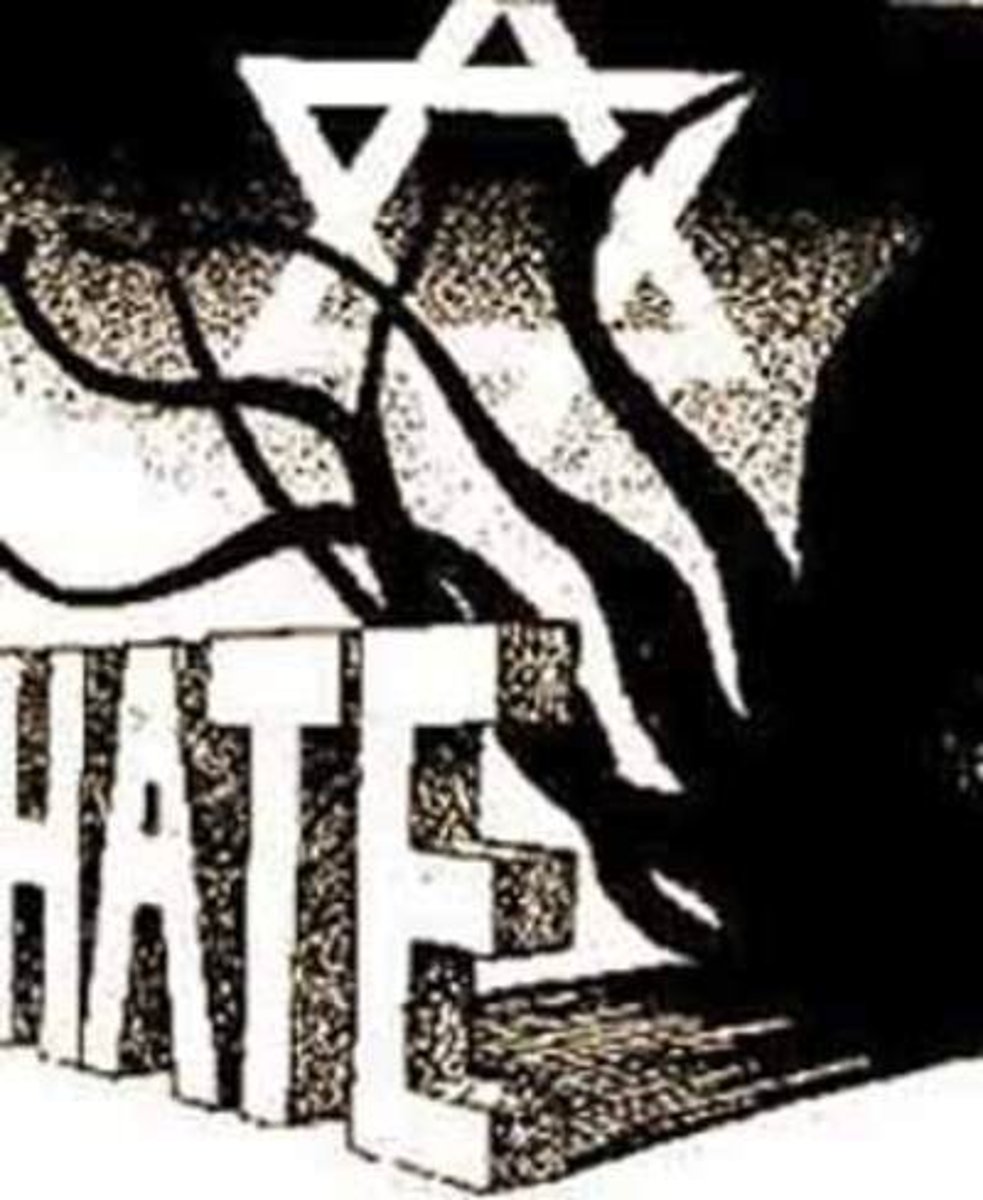
Anti Semitism
hatred towards Jews
Nuremberg laws
established legal basis in Nazi Germany for discrimination against Jews.
Anschluss
Union between Germany and Austria - forbidden by the Treaty of Versailles
Sudetenland
The border region of Czechoslovakia - surrendered to Hitler before WWII.
Non-Agression Pact
Signed between Hitler and Stalin before the invasion of Poland
Phoney War
the name given to the period of time in World War Two from September 1939 to April 1940 when, after the blitzkrieg attack on Poland in September 1939, seemingly nothing happened
Saipan
the site of mass suicides by its military and civilian population.
Barbarossa
German invasion of the Soviet Union
Stalingrad
Fierce urban combat where the Soviets surrounded the Germans who were occupying their city. The turning point of the war in Europe
Dieppe
A Canadian raid on a French port that resulted in most being captured or killed. Claimed it was a practice for D-day.
Chamberlain
His government adopted appeasement as its foreign policy before WWII.
Third Reich
The Third German Empire, established by Adolf Hitler in the 1930s.
Final Solution
the plan to exterminate the Jewish people by the Nazis during World War II
Einsatzgruppen
Nazi strike forces that killed innocent Jews with their infamous "death squads"
United Nations
an organization of independent states formed in 1945 to promote international peace and security
Security council
It has the primary responsibility for the maintenance of international peace and security. It has 15 Members, and each Member has one vote. 5 members are permanent and have veto power.
USA, France, Great Britain, China, Russia
Five permanent members of the Security council
UN General Assembly
body within the united Nations that discusses, debates, and recommends solutions to problems.
El Alamein
Major conflict in the North African campaign - Britain vs Germany in Africa to protect Oil and access to the Suez Canal