Anatomy & Physiology 1: Chapter 7 bones
 Call Kai
 Learn
Learn Practice Test
 Spaced Repetition
 Match
Match Flashcards
 Knowt Play
1/48

There's no tags or description
Looks like no tags are added yet.
Name | Mastery | Learn | Test | Matching | Spaced | Call with Kai |
|---|
No analytics yet
Send a link to your students to track their progress
49 Terms
4 Curvatures of Vertebral Column:
•Cervical curvature (secondary)
•Thoracic curvature (primary)
•Lumbar curvature (secondary)
•Sacral curvature (primary)
vertical skeleton forms ________________
vertical axis of skeleton
what does the vertebrae do?
•Supports head and trunk, permits several types of movements
•Protects spinal cord in vertebral canal
how many bones in vertebral column in infant compared to adult?
•33 separate bones in infant, 26 in adult
cervical 1 is called what? function?
Atlas
supports head, articulates with occipital condyles
cervical 2 is called what? does what?
Axis
Atlas pivots around the dens of Axis
What is the difference between a cervical vertebrae and the others?
•Smallest vertebrae
•Transverse foramina: openings for arteries leading to brain; only found on cervical vertebrae
what is found on C2 and C6?
Bifid spinous processes
what makes C7 different from the other cervical vertebrae?
•Vertebral prominens: C7, spinous process is longer than those of other cervical vertebrae
Thoracic vertebrae -how many? where? what do they do?
12
Found in chest region
•Larger than cervical vertebrae
•Articulate with ribs
•Long, pointed spinous process, slopes downward
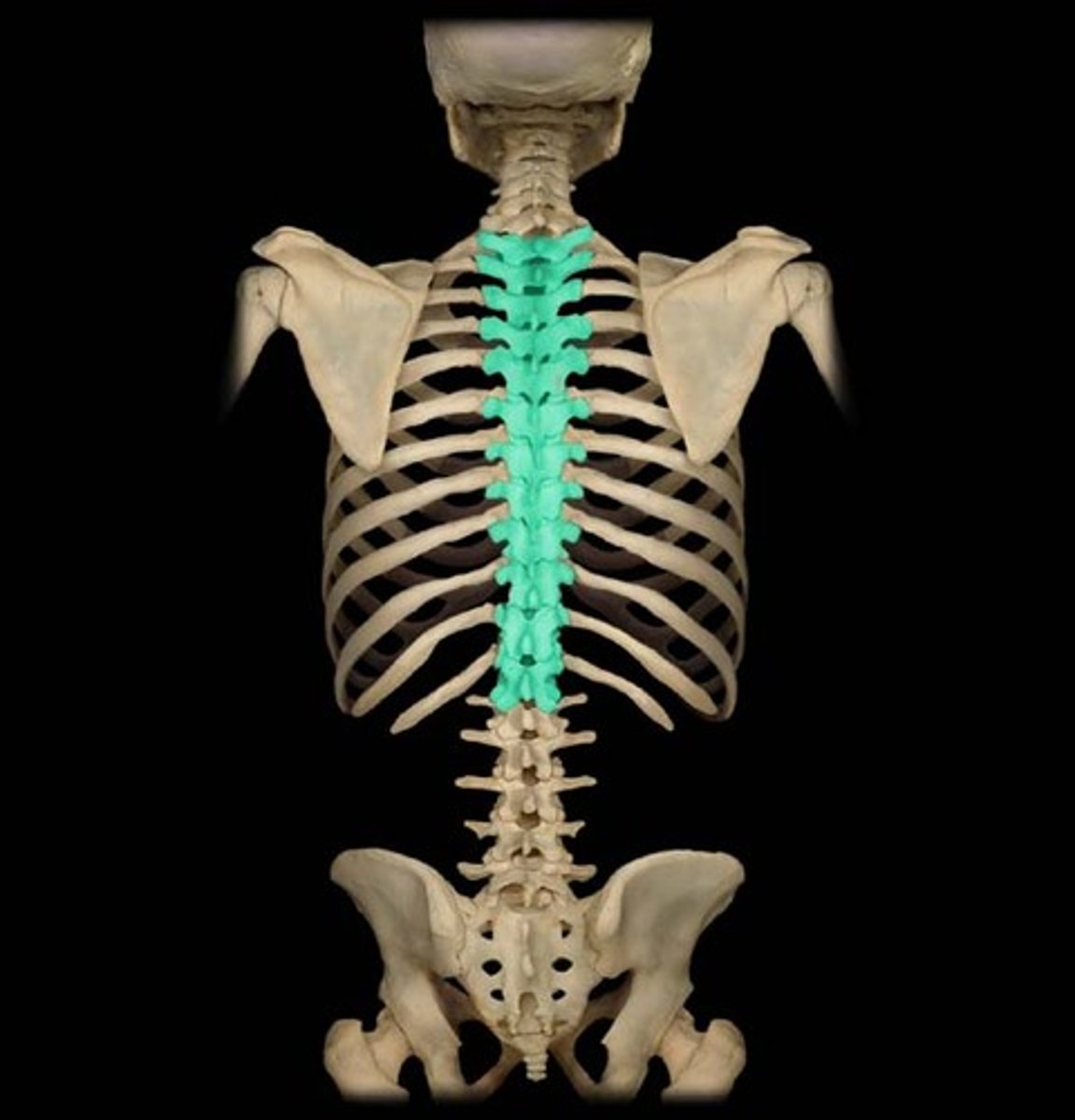
Lumbar vertebrae -how many? where? what do they do?
5
•Found in small of back
•Large bodies
•Weight-bearing
•Thick, short spinous processes, almost horizontal
Sacrum-where? whats it made up of? forms what?
•Triangular structure at base of vertebral column
•Forms sacroiliac joints, which transmit body weight to legs
•Forms posterior wall of pelvic cavity
•Typically 5 fused vertebrae:
•Median sacral crest: Fused spinous processes of vertebrae
•Posterior sacral foramina: Openings for blood vessels and nerves
•Sacral promontory: Projection at upper margin
•Sacral canal: Formed by vertebral foramina
•Sacral hiatus: Opening at inferior tip of sacrum
Coccyx-where? whats it made up of?
•Tailbone
•Usually 4 fused vertebrae
•Fuse between ages of 25 and 30
Vertebral Column consists of:
•7 cervical vertebrae
•12 thoracic vertebrae
•5 lumbar vertebrae
•5 fused sacral vertebrae form sacrum
•4 fused coccygeal vertebrae form coccyx
What is Herniated or Ruptured (protruding) disc?
break in the outer portion of an intervertebral disc; compresses spinal nerves, causing numbness, pain, loss of muscle function
What is Spondylolisthesis?
results from vertebra sliding out of place over the vertebra beneath it; very painful
What is Kyphosis?
exaggerated thoracic curvature of the spine; rounded shoulders and hunchback; caused by poor posture, injury, disease
What is Scoliosis?
abnormal lateral curvature of the spine; one shoulder or hip may be lower than the other, leading to compression of visceral organs
What is Lordosis?
exaggerated lumbar curvature of the spine; swayback
What are Compression fractures?
fractures of vertebral bodies become more common with age, as intervertebral discs become rigid and shrink; back may bow due to accentuated curvature
Paranasal sinus- what are they? what do they do?
•Air-filled cavities found in some cranial and facial bones
•Reduce weight of skull and increase intensity of voice
Frontal bone is roof of what?
roof of nasal cavity, roofs of eye orbits
Occipttal condyles articulate with what?
Atlas - Cervical 1
Temporal bones form what?
Form sides and base of cranium, floors, and sides of orbits
Mandibular fossa articulates with what?
with mandibular condyles
Two muscle attachment sites in skull?
•Mastoid process: Muscle attachment site
•Styloid process: Muscle attachment site
What does the Zygomatic bone do?
Helps form cheek prominence and zygomatic arch
Sphenoid bones- what does it form, and what does it include?
•Forms base of cranium, sides of skull, floors and sides of eye orbits
•Sella turcica holds pituitary gland
•Contains sphenoid sinuses
Ethmoid Bone-where is it? what does it form?
•Lies in front of sphenoid
•Forms roof and walls of nasal cavity, floor of cranium, wall of eye orbits
-•Ethmoidal air cells together form ethmoidal sinuses
Crista galli does what?
•Crista galli holds membranes that enclose brain
Maxilla forms what? what does it include?
•Form upper jaw, anterior roof of mouth (hard palate), floors of eye orbits, sides and floors of nasal cavity
•Alveolar processes hold upper teeth
•Maxillary sinuses are the largest sinuses
what does the palatine process do?
•Fuse along midline to form most of hard palate
what is cleft palate?
•Cleft palate is result of incomplete fusion of palatine processes during fetal development
which are scrolled shaped bones?
Inferior Nasal Conchae (2):
Largest of the conchae
Inferior Nasal Conchae
Ramus projects which way
projects upward on each side
coronoid is attached to what?
attaches to chewing muscles
What does the aveolar process do?
Alveolar process holds lower teeth
what does the mandibular foramen do?
•Mandibular foramen admits blood vessels and nerves for lower teeth
-allows blood vessels and nerves to emerge in chin area
Characteristics of Infantile Skull? What makes it different from adult?
•Incompletely developed at birth
•Small face, large orbits, prominent forehead
•Small nasal cavity and jaw Sinuses are not completely formed
•Bones are thin and flexible
what are fontanels? what do they do?
•Fibrous membranes that connect cranial bones, where intramembranous ossification is incomplete
•Allow skull to change shape slightly during birth
•Four major fontanels close between 2 months and 2 years of age
Male vs Female Pevlis (7)
Female pelvis:
•Functions as birth canal
•Iliac bones more flared
•Pelvic cavity wider than male
•Pubic arch angle greater
•More distance between ischial spines and ischial tuberosities
•Sacral curvature shorter and flatter
•Lighter in weight
Male pelvis:
•Less flared
•Heavier in weight
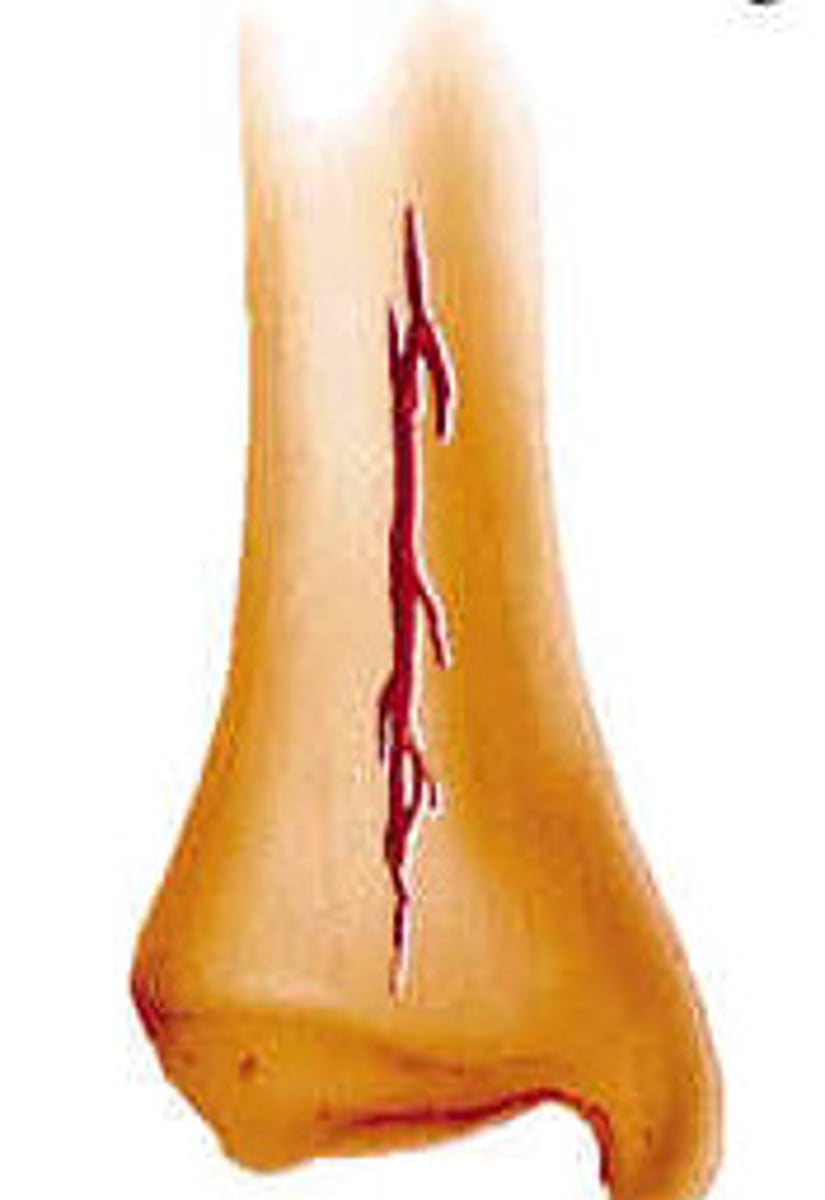
Fissured Fracture
Fissured - incomplete longitudinal break
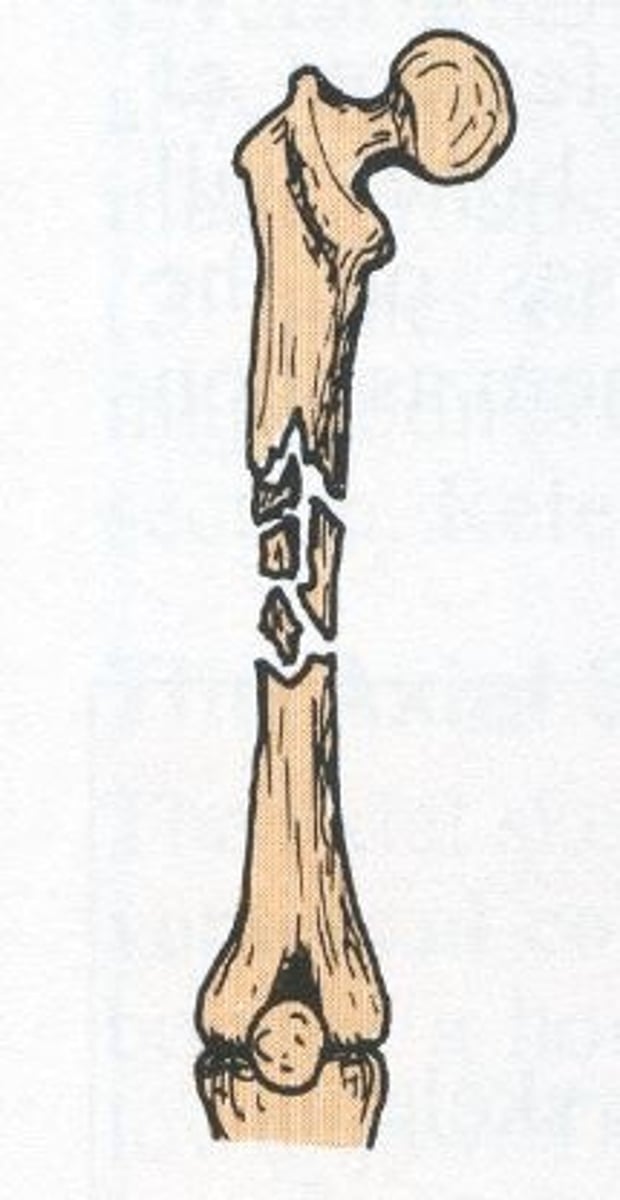
Comminuted Fracture
a complete shatter of bones, making fragments
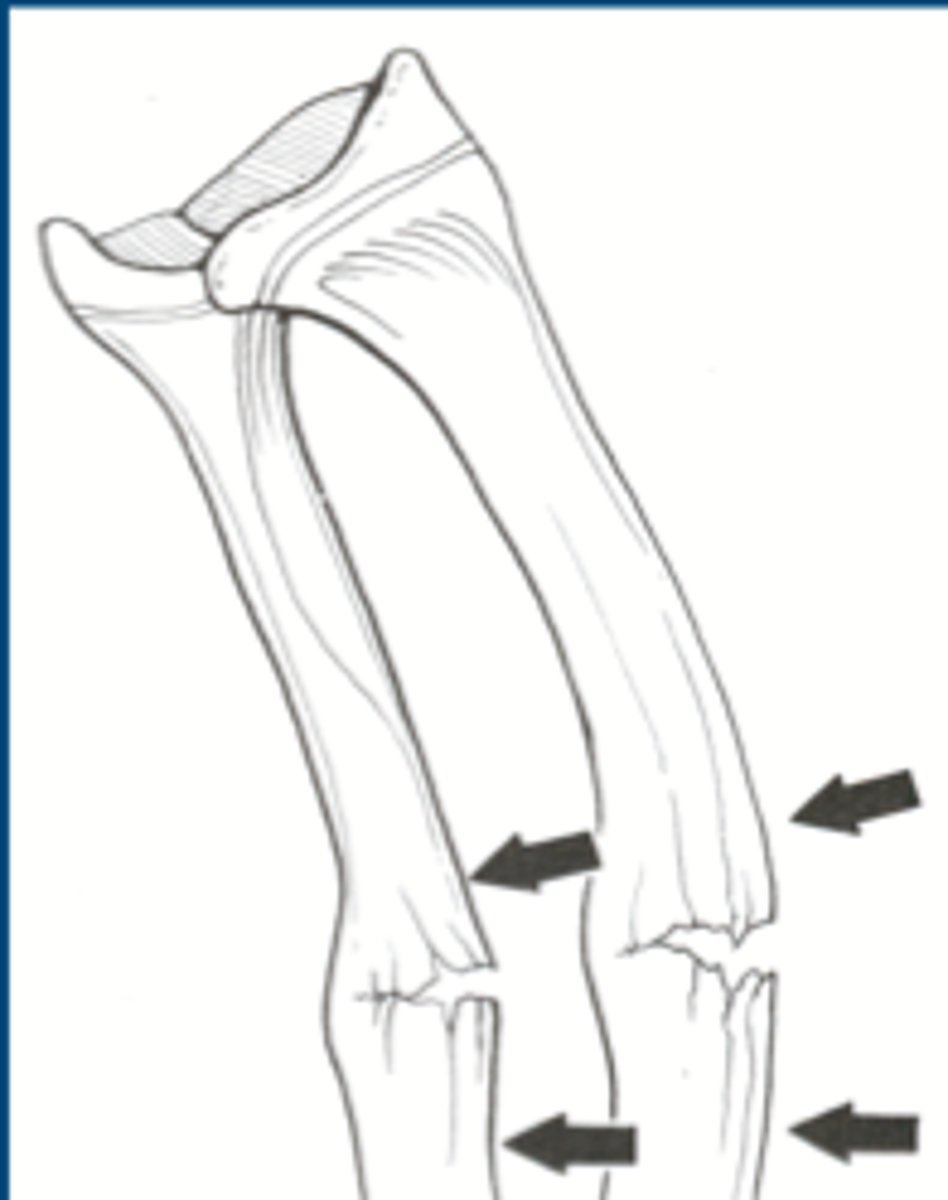
Green stick
incomplete, and the break occurs on the convex surface of the bend in the bones
Oblique Fracture
Occurs at an angle other than a right angle to the axis of the bone
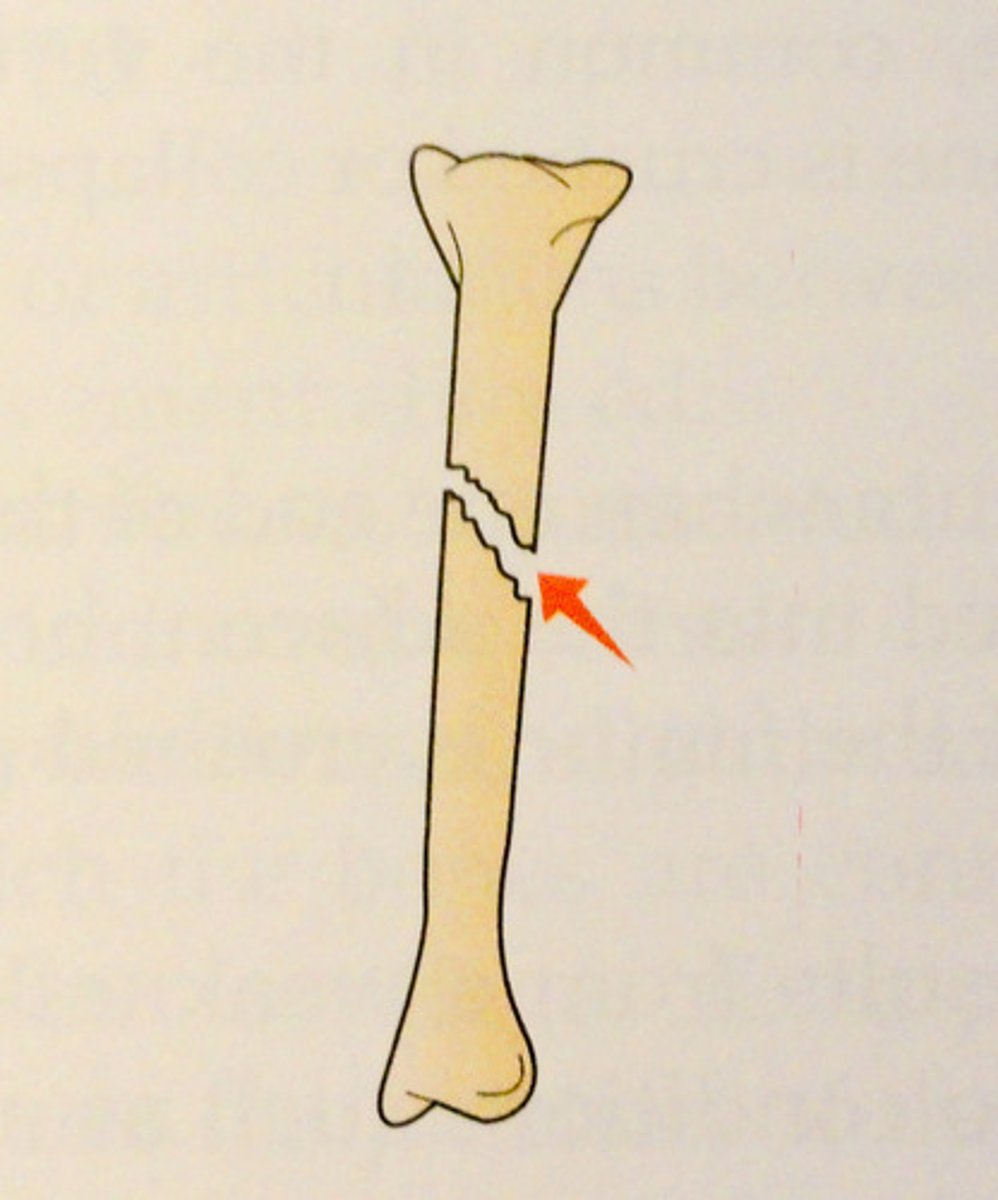
Transverse Fracture
Occurs at a right angle to the axis of the bone
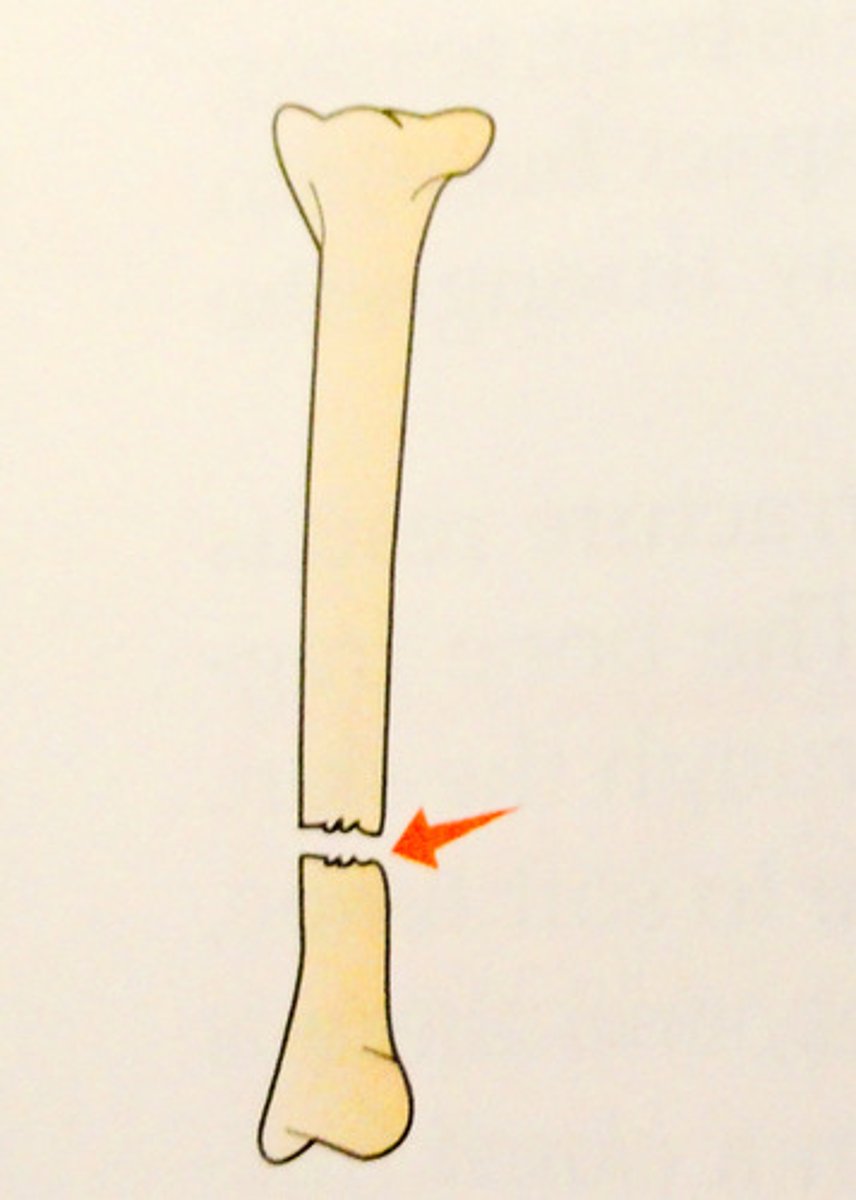
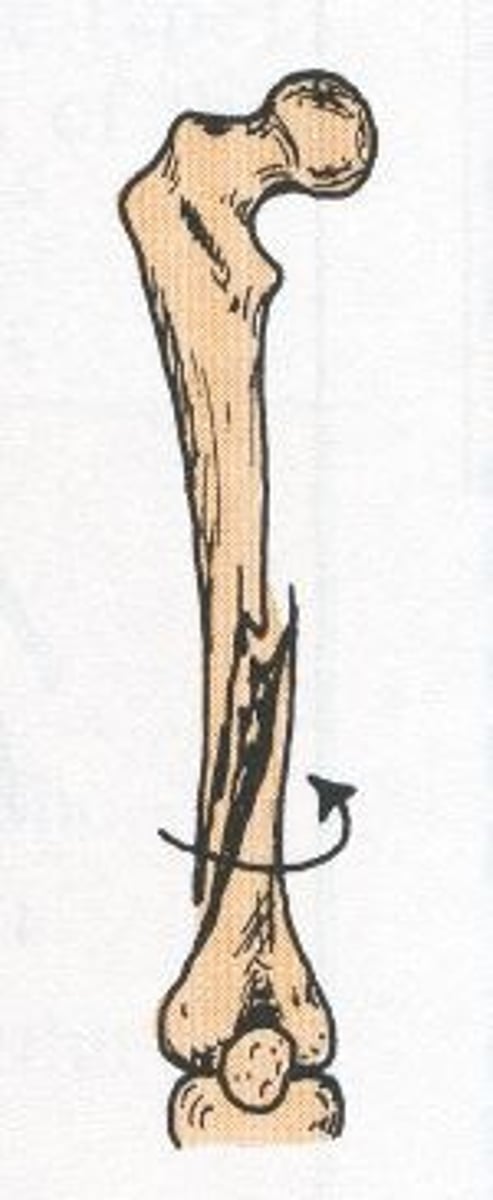
spiral fracture
caused by excessive twisting of a bone
Still learning (13)
You've started learning these terms. Keep it up!