4.1.3 Price determination in a competitive market
 Call Kai
 Learn
Learn Practice Test
 Spaced Repetition
 Match
Match Flashcards
 Knowt Play
1/82

Earn XP
Description and Tags
Name | Mastery | Learn | Test | Matching | Spaced | Call with Kai | Chat |
|---|
No analytics yet
Send a link to your students to track their progress
83 Terms
what is a market?
where buyers and sellers can exchange goods or services
what is a competitive market?
occurs where there is a large number of potential buyers and sellers w/ abundant information about the market
what is demand?
the quantity of a good or service that consumers are willing and able to buy at given prices in a particular time period
what is effective demand?
consumers’ desire to buy a good, backed up by the ability to pay
what does the demand curve show?
the relationship between price and quantity demanded
what’s the law of demand
there is an inverse relationship between price and quantity demanded (QD), ceteris paribus, when price rises, QD falls (vice versa)
what causes a movement along the demand curve?
a change in the price of the good or service
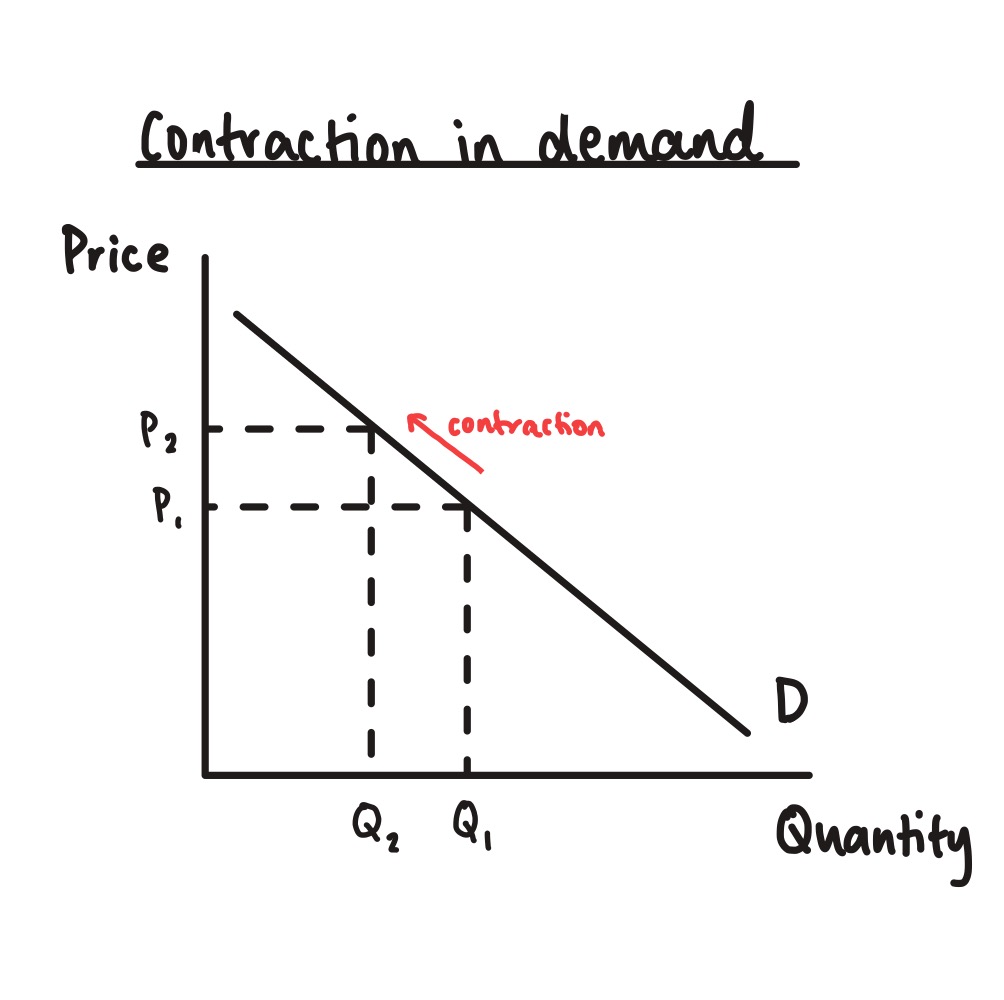
what causes a contraction along the demand curve? (draw it)
an increase in price
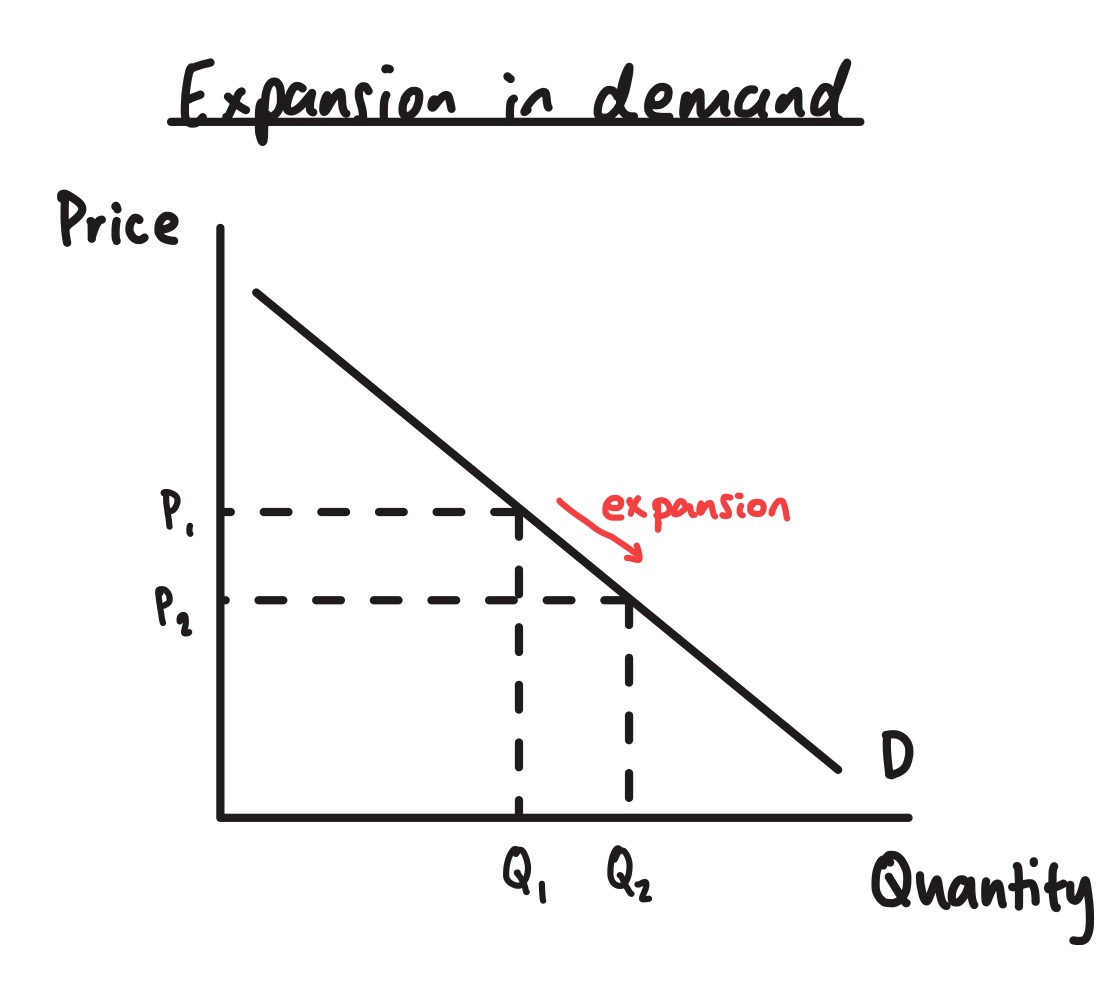
what causes an expansion of demand? (draw it)
a decrease in price
what causes a shift in the demand curve?
real disposable income
tastes and preferences
population
price of substitute products
price of complementary goods
what is a substitute?
a good that may be consumed as an alternative to another good
what’s a complement good?
a good that tends to be consumed together w/ another good (e.g. toothbrush and toothpaste)
how do disposable incomes affect demand?
rising incomes
increase D for normal goods (goods where D increases as income increases)
decrease D for inferior goods (D decreases as income increases)
how do substitute goods influence demand?
an increase in the price of one substitute raises demand for its alternative
how do complementary goods affect demand?
a fall in the price of a complement (e.g. printers) increases D for the related good (e.g. ink cartridges)
draw
a right shift in demand
a left shift in demand
a greater quantity of a good or service is demanded at any given price
a lower quantity of a good or service is demanded at any given price
what is the price elasticity of demand (PED)?
a measure of how the quantity demanded of a good responds to a change in its price
how do you calculate the PED?
% change in QD / % change in price
how do you calculate the percentage change?
(change / original) x 100
why is the PED usually negative?
demand falls as price increases for most goods`
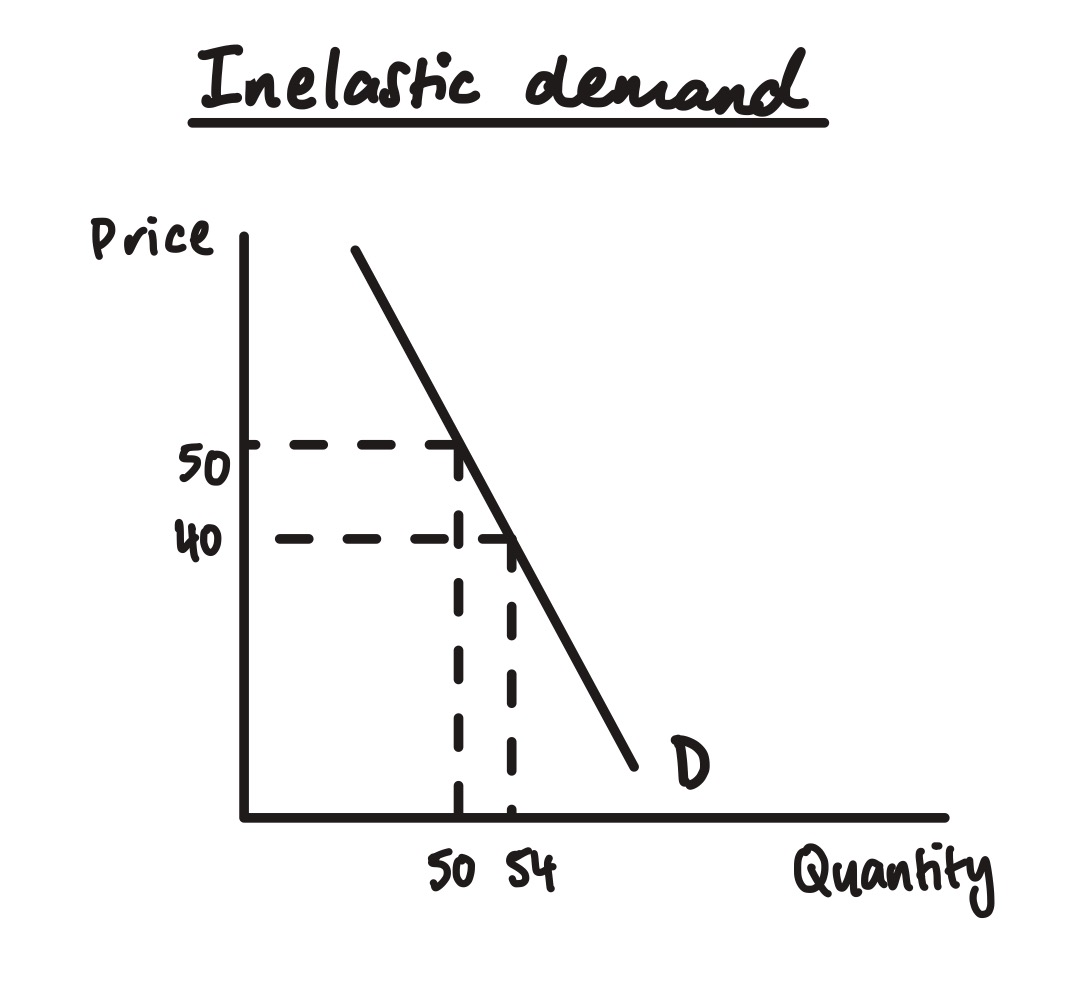
what is price inelastic demand?
the value of PED is between 0 and 1 (ignore minus)
a % change in price will cause a smaller % change in QD
(smaller PED = more inelastic D for the good)
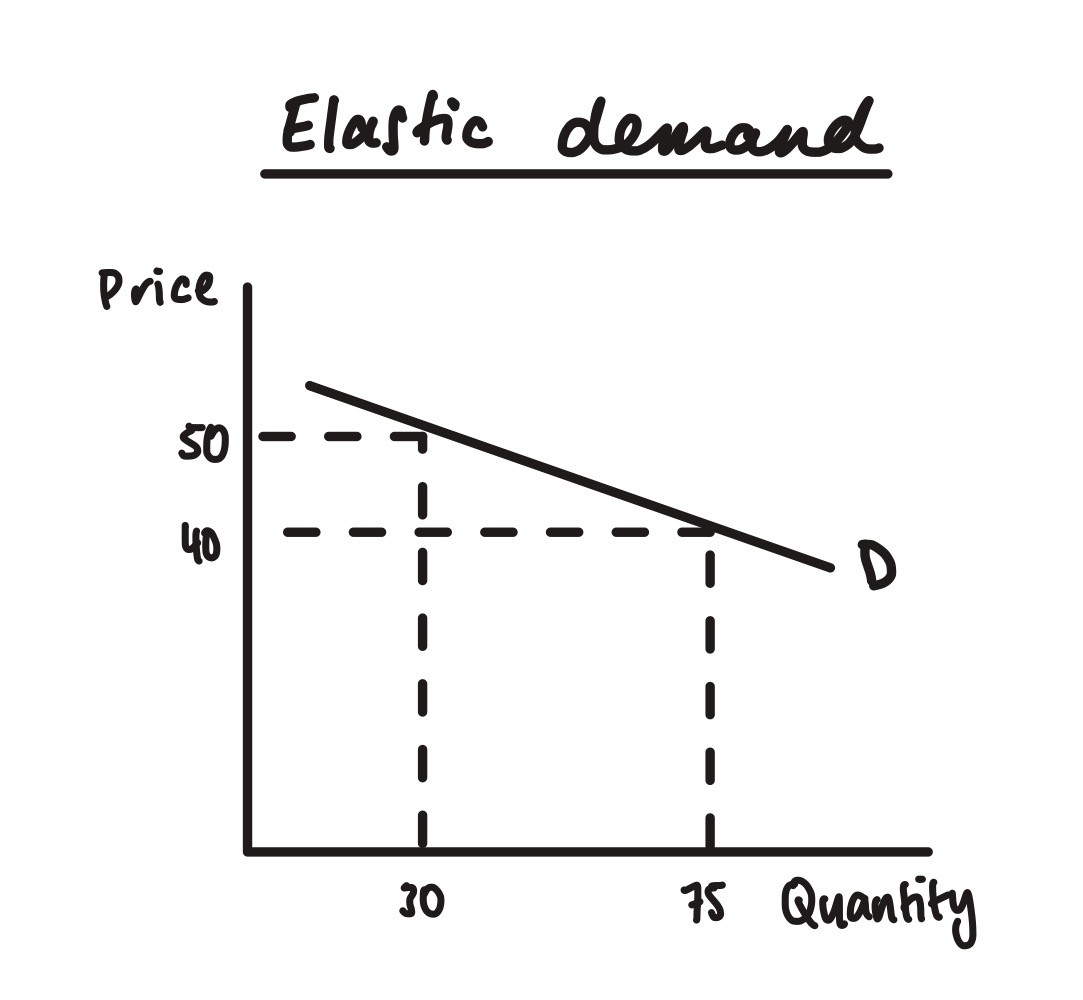
what is price elastic demand?
PED > 1 (ignore minus)
% change in price will cause a larger % change in QD
(higher PED = D more elastic)
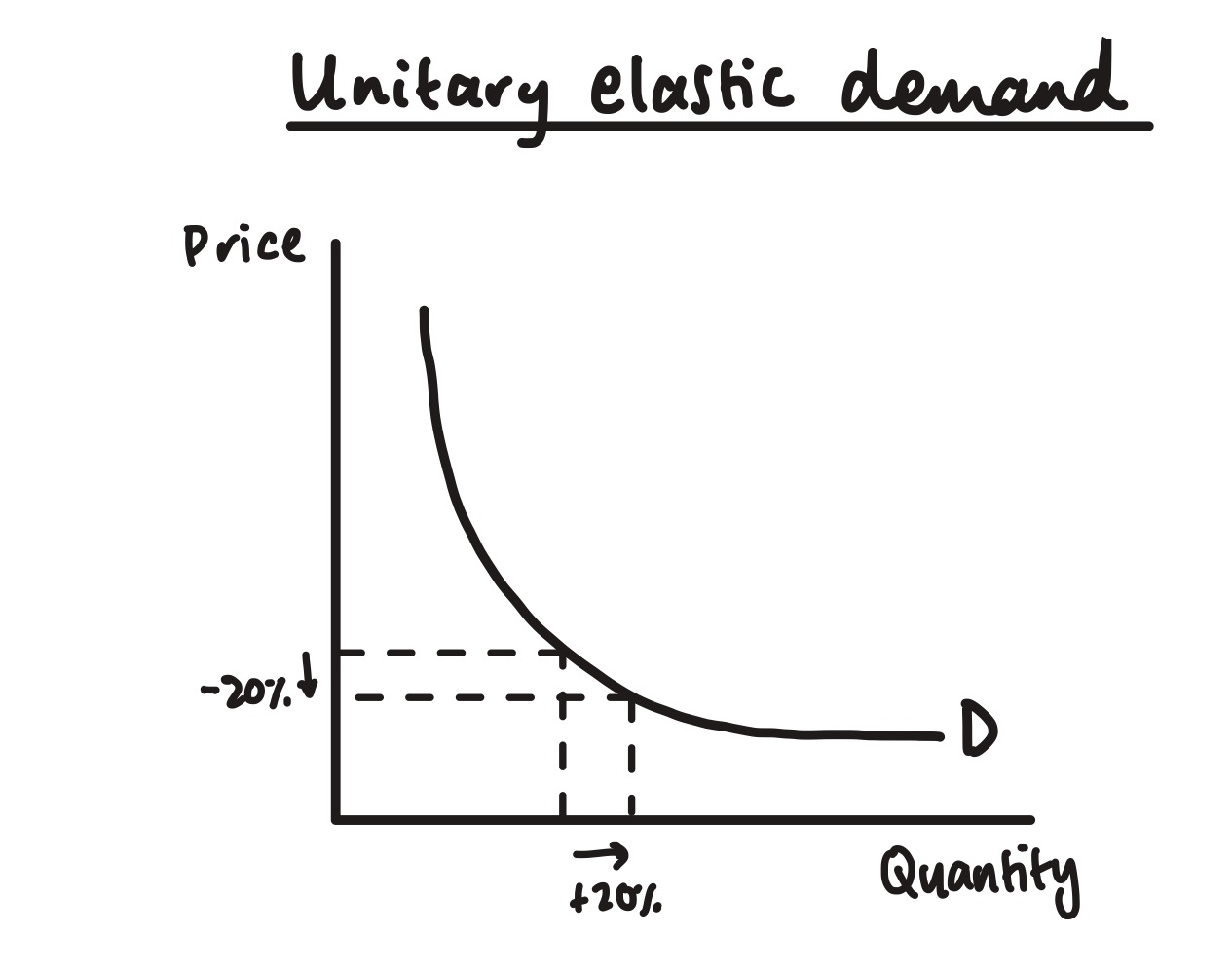
what is unitary elastic demand?
PED = ±1 (% change in price == % change in QD)
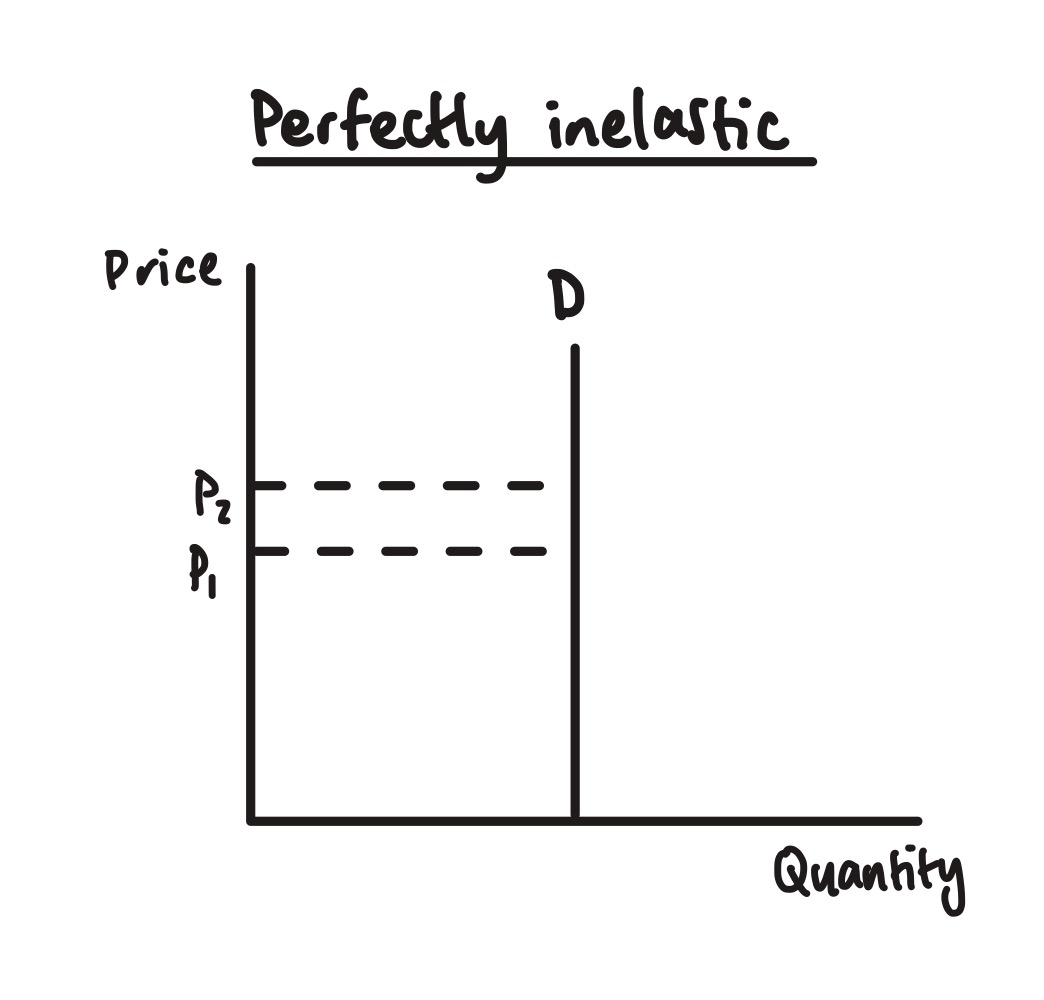
what is perfectly inelastic demand?
PED is 0 (change in price has no change in QD)
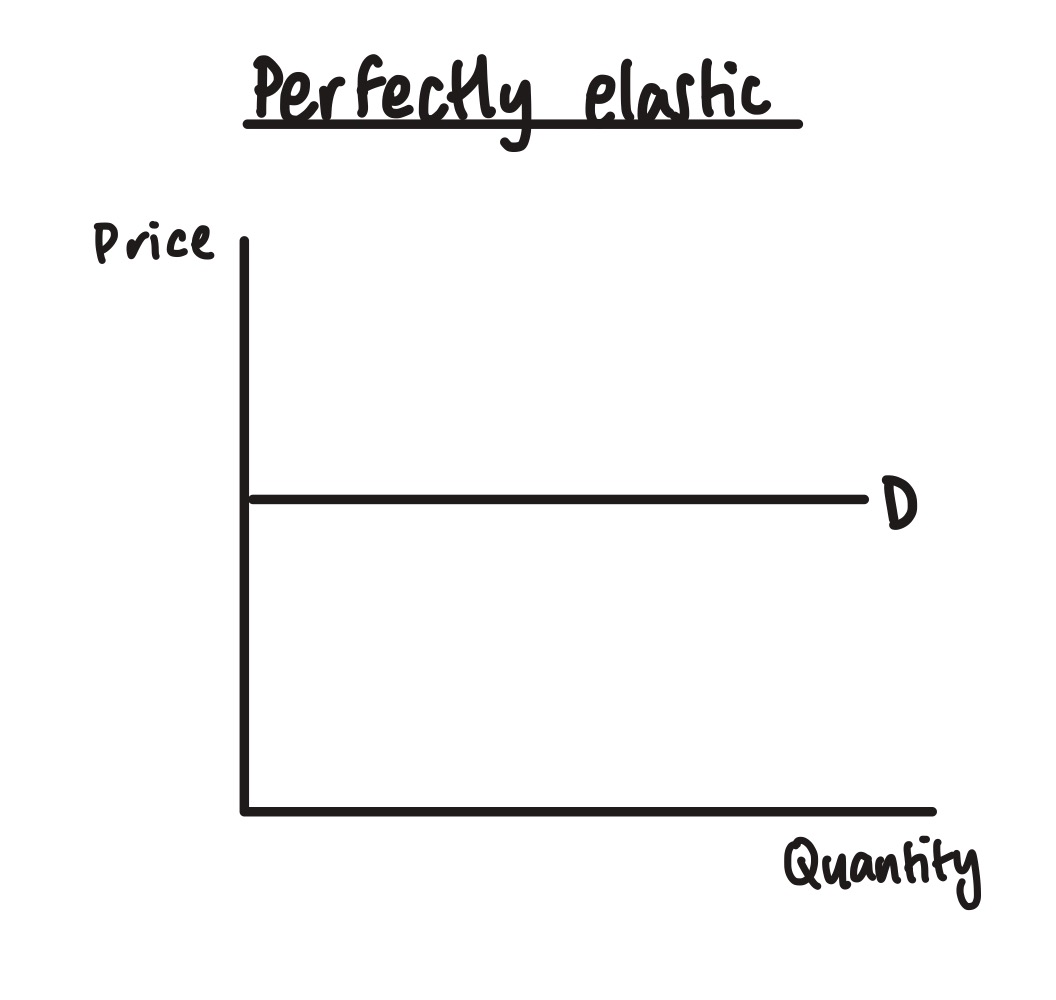
what is perfectly elastic demand?
PED is ± infinity (increase in price → D falls to 0)
what happens to total revenue (TR) if the price reduces? (elastic and inelastic)
elastic - TR increases
inelastic - TR decreases
what happens to total revenue (TR) if the price increases? (elastic and inelastic)
elastic - TR decreases
inelastic - TR increases
what are the determinants of PED?
availability of substitutes
% of income spent on good
nature of product
time period
market definition
how does the availability of substitutes affect PED?
the more close substitutes available, the more elastic D becomes
a rise in price encourages consumers to switch to alternatives
how does the proportion of income spent on the good affect PED?
goods taking up a large share of income (e.g. housing, cars) are more elastic
goods taking a small share (e.g. bread, matches) are more inelastic
how does the nature of the product affect PED?
necessities (e.g. electricity) are typically inelastic
luxuries (e.g. holidays) are more elastic
how does the time period affect PED?
in the short run, demand is often inelastic as consumers need time to adjust
in the long run, demand may become more elastic as substitutes are found or habits change
how does the market definition affect PED?
narrowly defined markets (e.g. heinz beans) usually have more elastic demand than broadly defined markets (e.g. food)
what is the income elasticity of demand (YED)?
measures how much the demand for a good changes with a change in real income
how do you calculate YED?
% change in QD / % change in real income
what is income elastic demand?
YED > +1
increase in real income → greater % increase in D
(these products often referred to as luxury goods)
what is income inelastic demand?
0 < YED < 1
increase in real income → smaller % increase in D
(normal / basic goods)
what is negative income elasticity?
YED < 0
as incomes rise, demand falls
(inferior goods)
what is the cross elasticity of demand (XED)?
measures how the QD of one goods responds to a change in the price of another good
how do you calculate XED?
% change in QD of good A / % change in price of good B
what is the XED if two goods are substitutes?
positive
what is the XED if two goods are complements?
negative
what’s the XED of independent / unrelated goods?
0
what is supply?
the quantity of a good or service that firms plan to sell at given prices in a particular time period
what does the supply curve show?
the relationship between price and quantity supplied
what is the law of supply?
as price increases, the quantity supplied (QS) increases
why does the supply curve slope upwards?
firms are assumed to maximise their profits, so a higher price gives an incentive for firms to increase production
what is the supply curve under perfect competition?
marginal cost (MC) curve
what causes a movement in supply?
a change in price
what causes a contraction of supply?
a decrease in price
what causes an expansion of supply?
an increase in price
what factors cause the supply curve to shift?
production costs
productivity of labour
taxes on businesses
production subsidies
improvements in technology
what does a rightward shift of supply mean?
a greater quantity of a good or service is supplied at any given price
what does a leftward shift of supply mean?
a lower quantity of a good or service is supplied at any given price
what is the price of elasticity of supply (PES)?
a measure of how the quantity of supplied of a good responds to a change in its price
how do you calculate the PES?
% change is QS / % change in price
why is the PES usually positive?
the higher the price the greater the supply
what is price inelastic supply?
0 < PES < 1
change in price → smaller % change is QS
what is price elastic supply?
PES > 1
change in price → greater % change in QS
what is unitary elastic supply?
PES = 1
change in price → same change in QS
what is perfectly inelastic supply?
PES = 0
change in price → zero change in QS
what is perfectly elastic supply?
PES = infinity
any fall in price → QS will fall to 0
what are the factors that influence the PES?
time taken to expand S
time consuming → inelastic
size of spare capacity
more → elastic in short run
available stocks
more finished goods → elastic
ease of switching production
easier → elastic
how is supply inelastic in the short run?
firm’s capacity is fixed
one factor of production is fixed
difficult to increase production (takes time)
how is supply elastic in the long run?
FOPs are variable
firm can increase in capacity
firms have longer to react to changes in price and demand
when is a market in equilibrium?
QD = QS, the demand curve crosses the supply curve
what is market disequilibrium?
when QD does not equal the QS
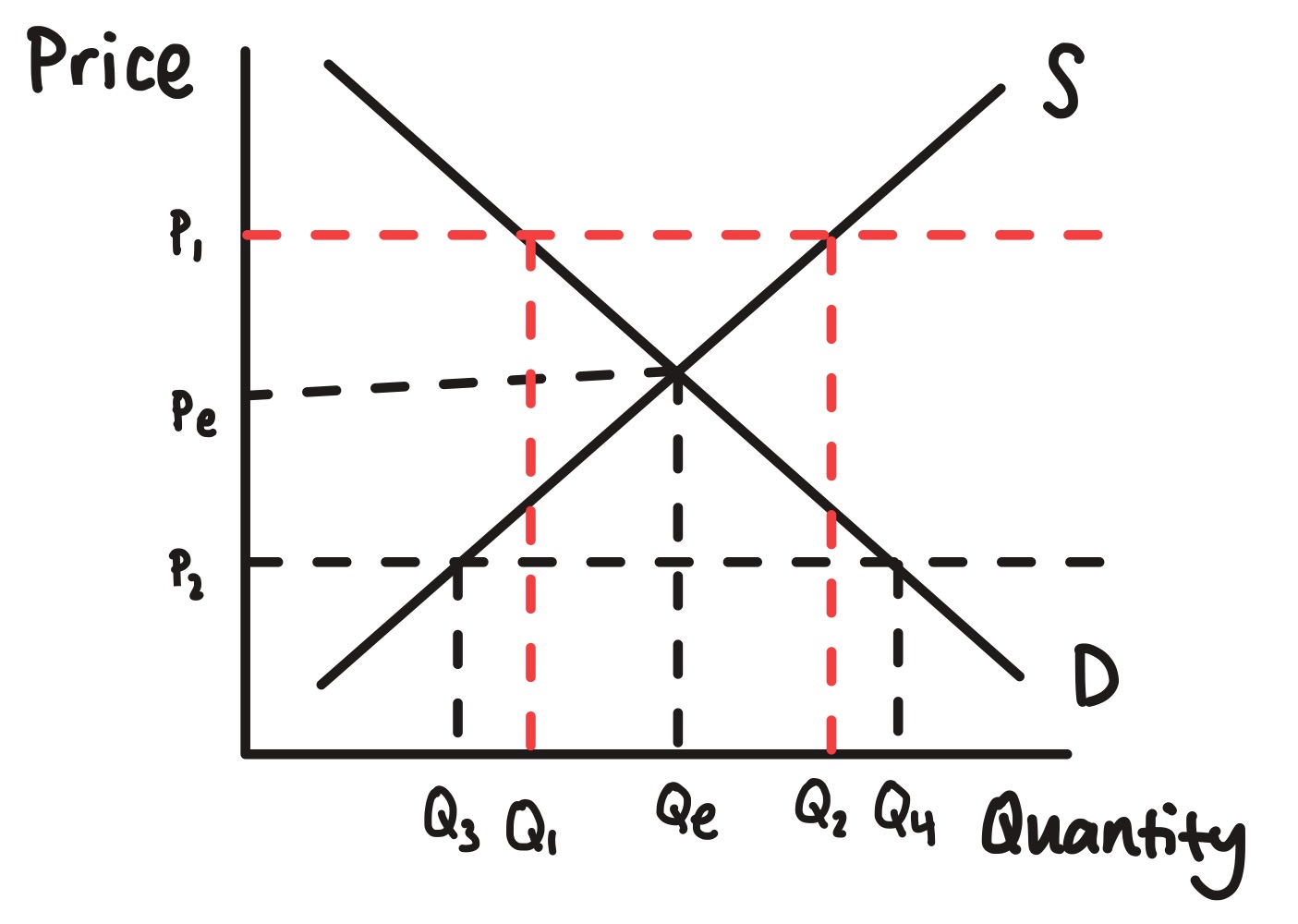
what is excess supply (use diagram)?
when the price (P1) is more than the equilibrium price (Pe)
QD is at Q1
high price encourages a greater QS at Q2 (QS exceeds QD)
excess supply is Q2 - Q1
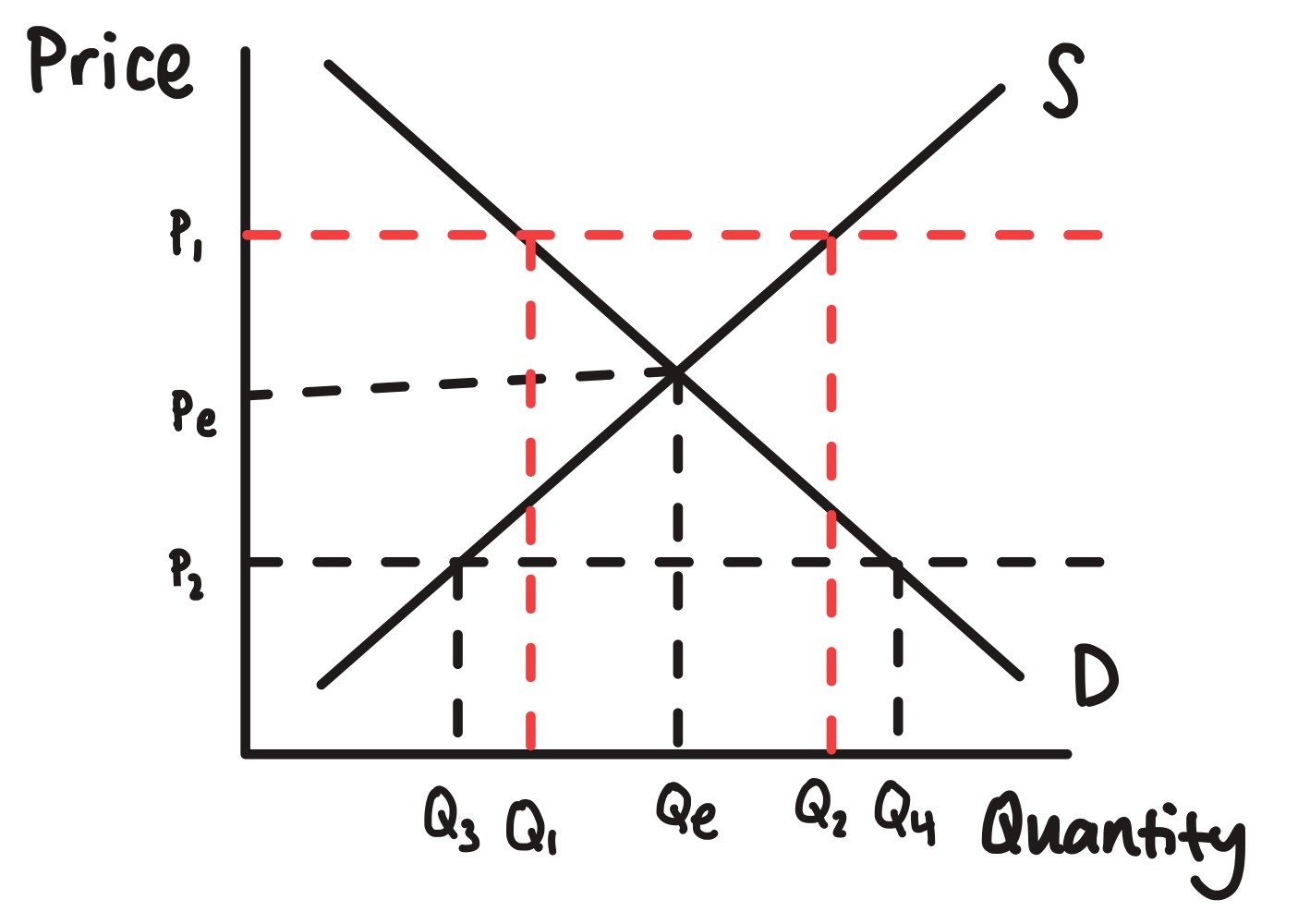
what is excess demand?
when the price (P2) is lower than the equilibrium price (Pe)
QD is at Q4
low price → less incentive for firms to supply → lower QS at Q3 (QD exceeds QS)
excess supply is Q4 - Q3
what are market forces (or market mechanism)?
the interaction of supply and demand
how do market forces correct excess supply?
firms forced to reduce their prices
→ contraction in S
→ expansion in D
excess supply eliminated, equilibrium restored at Pe, Qe
how do market forces correct excess demand?
firms increase prices
→ expansion in S
→ expansion in D
excess demand eliminated, equilibrium restored at Pe, Qe
what is a change in the market equilibrium price caused by?
a shift in demand or supply
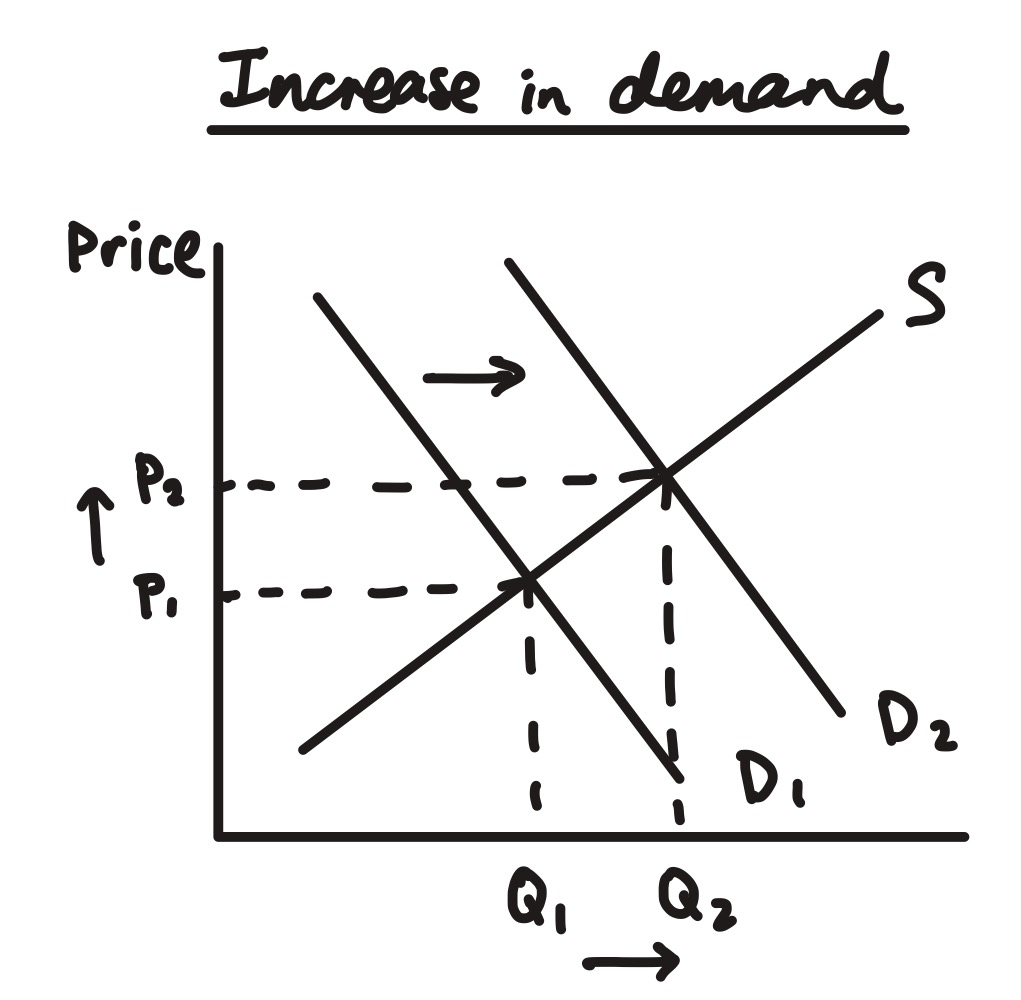
describe an increase in demand
D increases from D1 to D2
P increases from P1 to P2
supply extends from Q1 to Q2, creating a new equilibrium
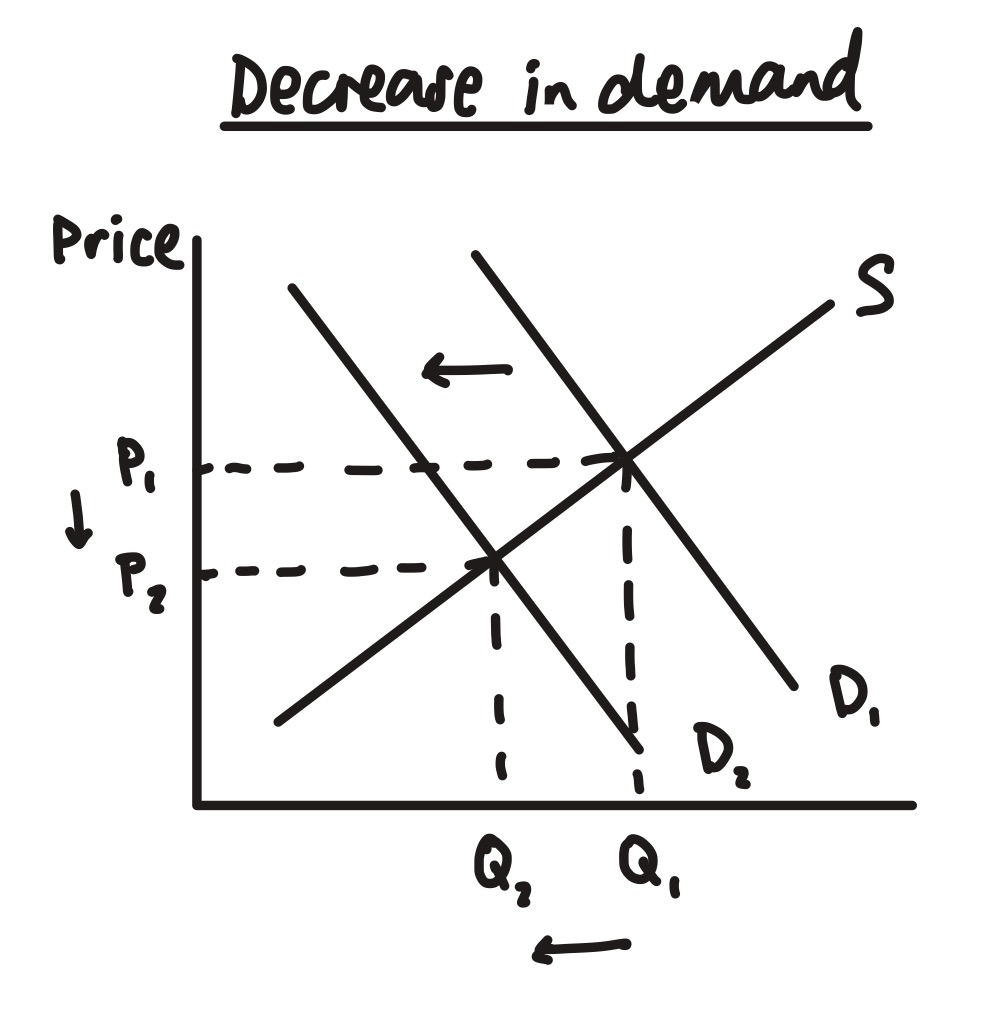
describe a decrease in demand
D decreases from D1 to D2
P decreases from P1 to P2
supply contracts from Q1 to Q2, creating a new equilibrium
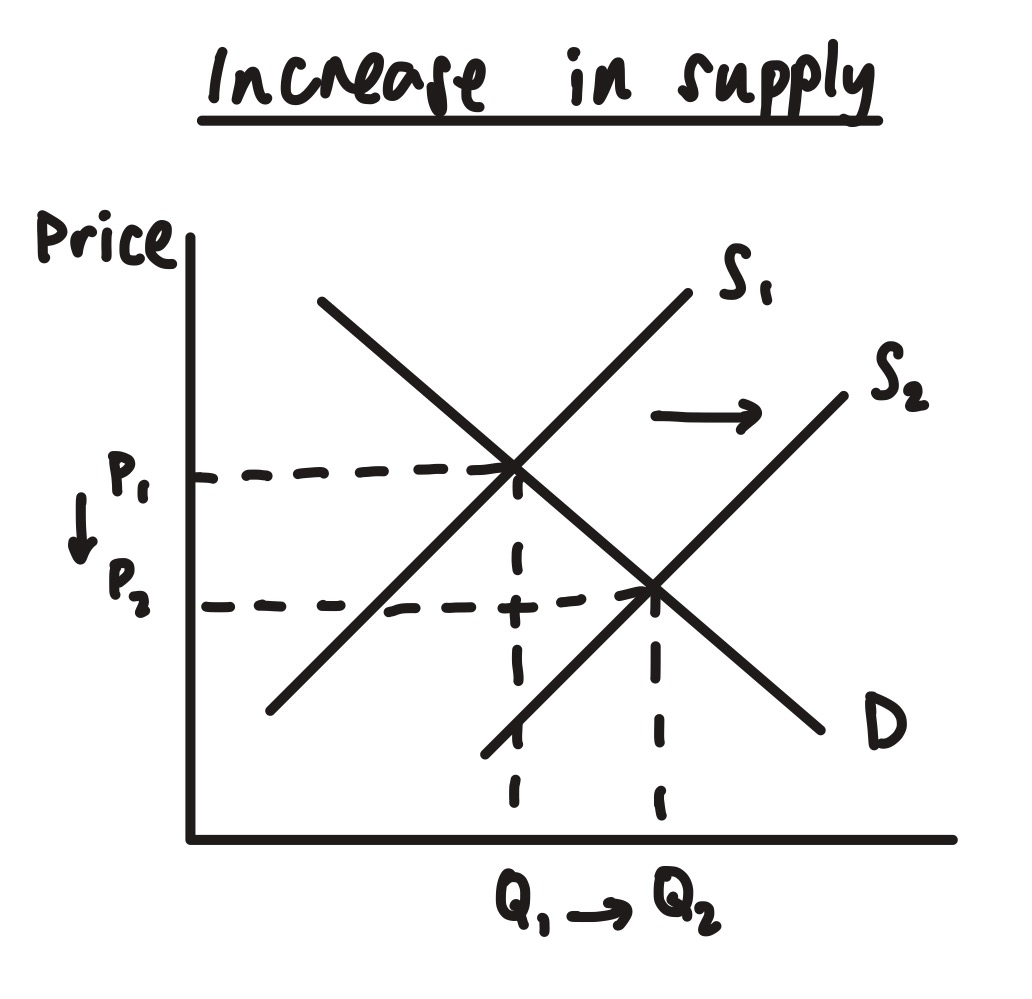
describe an increase in supply
S increases from S1 to S2
P increases from P1 to P2
demand extends from Q1 to Q2, creating a new equilibrium
describe a decrease in supply
S decreases from S1 to S2
P decreases from P1 to P2
demand contracts from Q1 to Q2, creating a new equilibrium
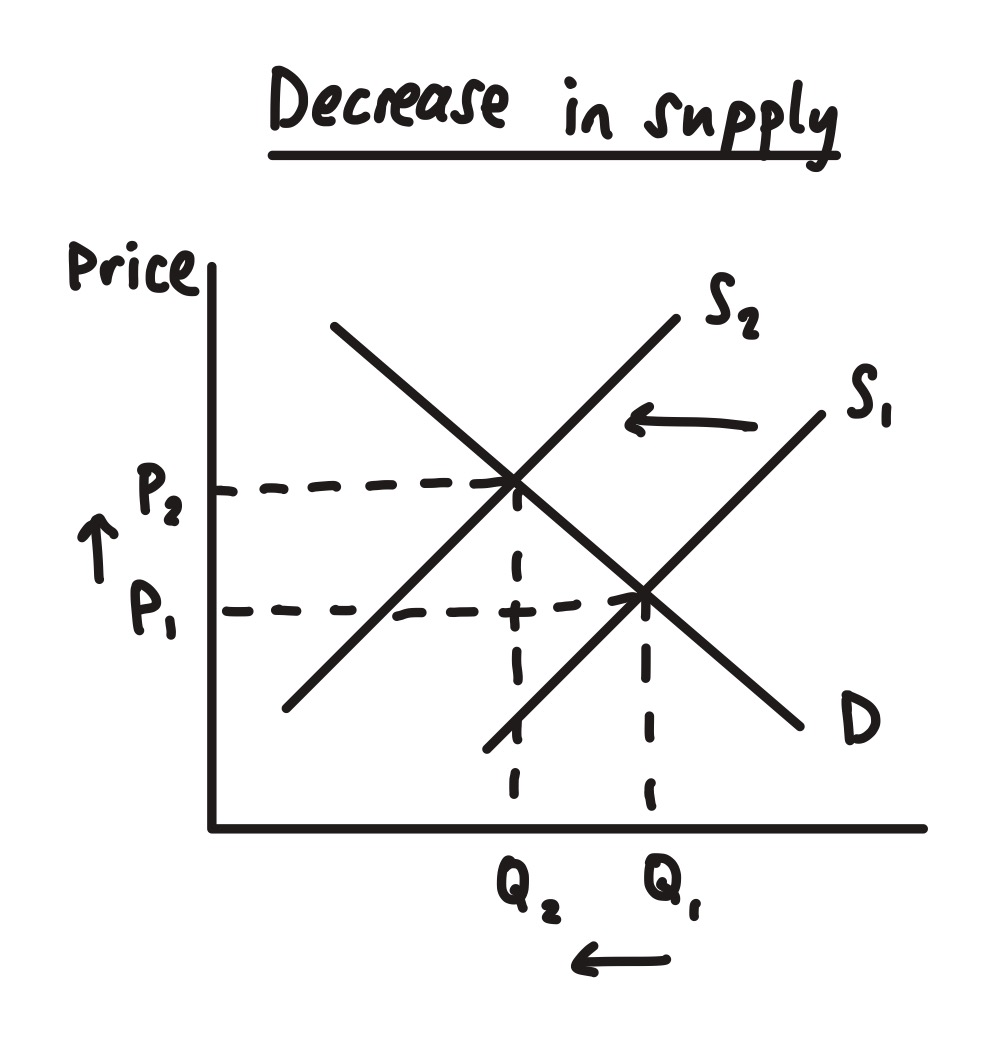
what are the assumptions of the demand and supply model?
supply and demand are independent of each other
all markets are perfectly competitive
ceteris paribus applies
what are changes in a particular market likely to affect?
other markets
what is joint demand?
goods that tend to be demand together (i.e. complementary goods)
what is joint supply?
when the production of one good leads to the production of another good (e.g. beef and leather)
what is composite demand?
when a good is demanded for more than one distinct use
(increase in D for one use reduces S for other uses)
what is derived demand?
when a good or factor of production is necessary for the provision of another good or service