4 titrations
 Call Kai
 Learn
Learn Practice Test
 Spaced Repetition
 Match
Match Flashcards
 Knowt Play
1/47

There's no tags or description
Looks like no tags are added yet.
Name | Mastery | Learn | Test | Matching | Spaced | Call with Kai |
|---|
No analytics yet
Send a link to your students to track their progress
48 Terms
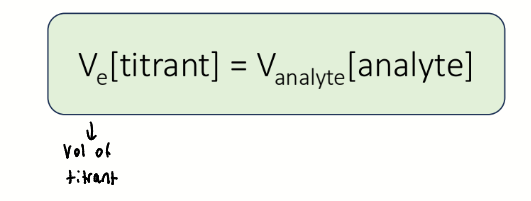
equation to find the volume of titrant needed to reach the equivalence point
what is the equivalence point
where a stoichiometric amount of titrant has been added so that the acid or base has been neutralised
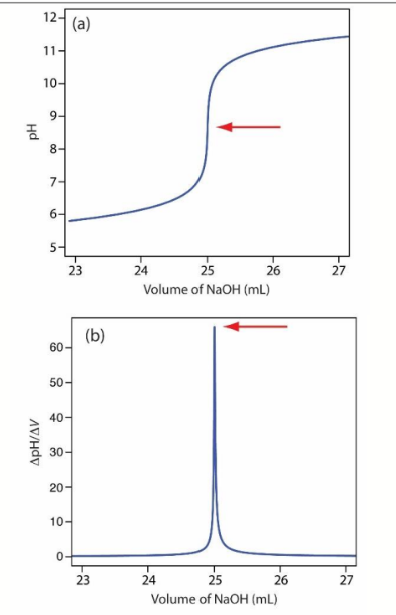
how can the titration curve be used to find the equivalence point of the titration
the derivative of the curve - ΔpH/ΔV
what are indicators
organic substances that change colour when they are protonated or deprotonated
why do indicators have an equilibrium constant
they exist as an equilibrium between their protonated and deprotonated forms
equilibrium equation for an indicator HInd


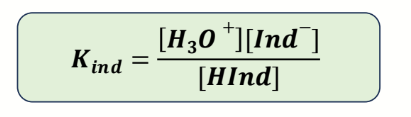
equation to find the equilibrium constant for this indicator (+ how is this constant denoted?)
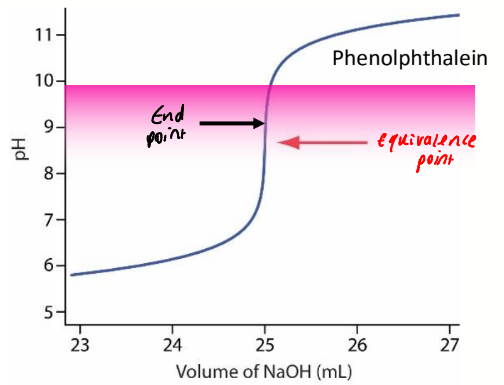
what is the end point of a titration using an indicator
the point where the colour change is detected
what is one problem with using indicators for titrations? indicate this on a titration graph of pH vs volume of NaOH
it can be difficult to identify exactly where the colour change starts - hence the end point and equivalence point are not identical
how is an indicator chosen for a titration
the pKind of the indicator should be close to the pH of the equivalence point of the titration
how do the shapes of strong acid vs strong base titrations and strong base vs strong acid titrations differ
strong base vs strong acid will be the inverse titration curve of strong acid vs strong base
show the shape of a titration curve for strong acid vs strong base e.g. HCl vs NaOH
what is the analyte and what is the titrant
HCl is the analyte
NaOH is the titrant
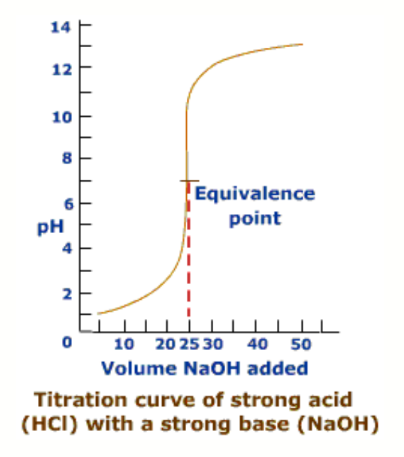
show the equation for the neutralisation reaction between HCl and NaOH in aqueous solution
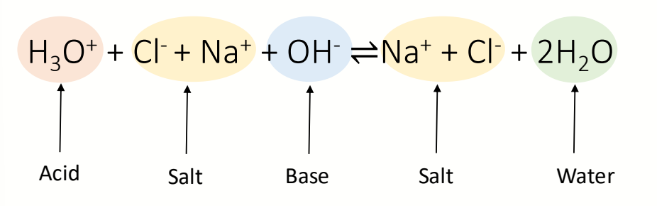
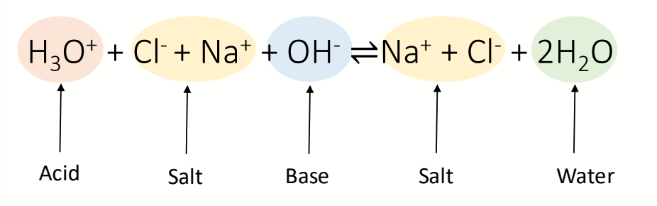
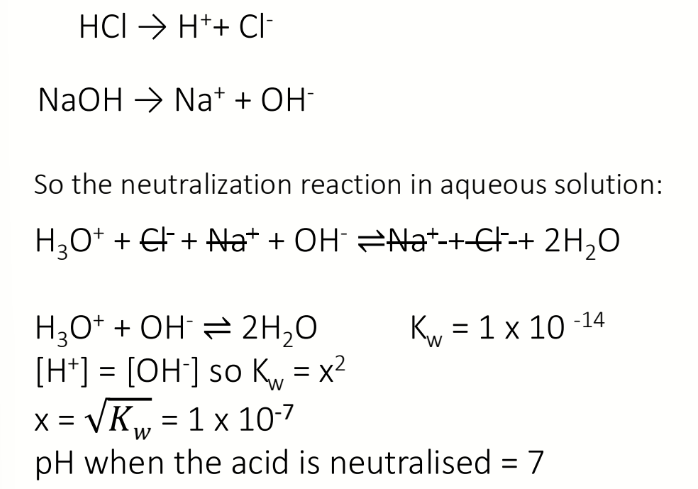
how can the pH of the equivalence point be calculated
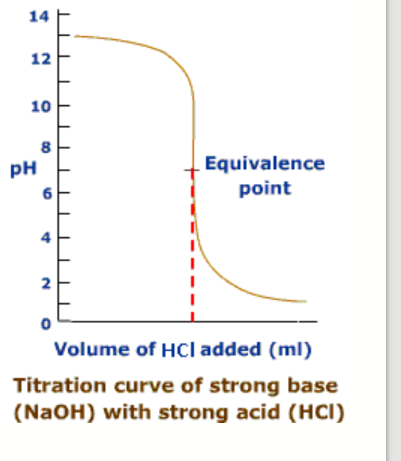
show titration curve for strong base vs strong acid
how is it different + similar to strong acid vs strong base
the neutralisation reaction is the same but the curve is inverted
near to the equivalence point the equation still cancels out to the dissociation of water so the pH at the equivalence point is the same
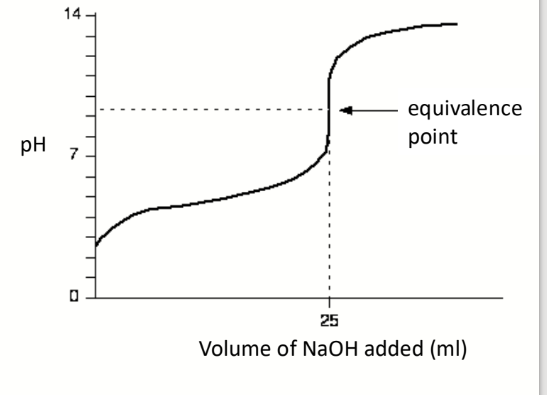
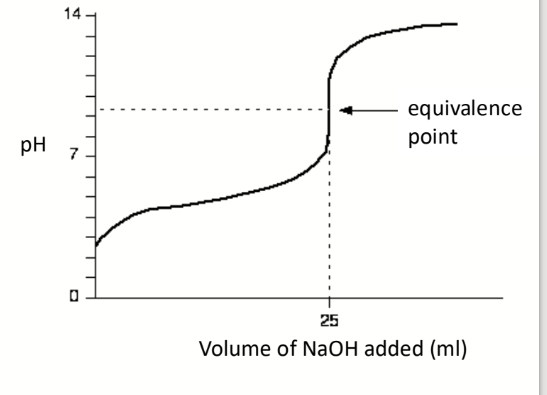
show titration curve for weak acid vs strong base
describe shape, starting point + equivalence point`
starting pH higher than for strong acid
curve is squashed, equivalence point is no longer at pH 7
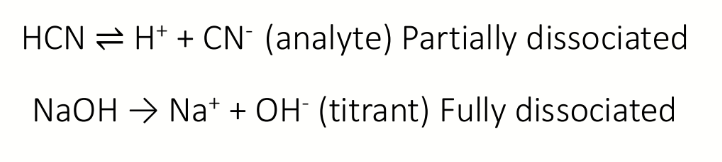
write chemical equations for weak acid vs strong base with HCN and NaOH, describe dissociation
analyte? titrant?
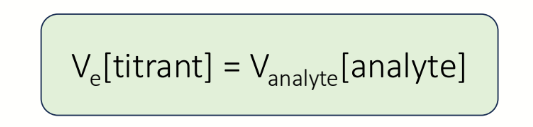
how is this equation rewritten for weak acid vs strong base
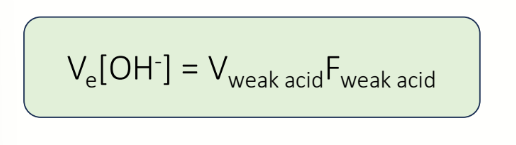
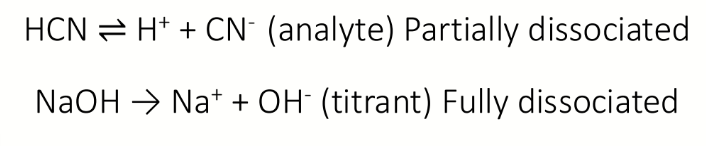
FHCN = ?
FHCN = [HCN] + [CN-]
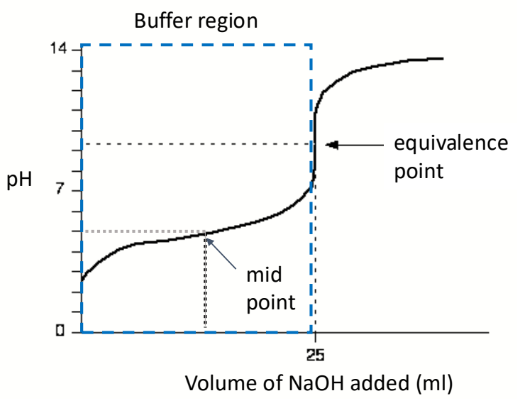
label buffer region and mid point
significance of mid point?
how are calculations performed in the buffer region
henderson-hasselbach equation applies in buffer region
midpoint is point at which pH = pKa
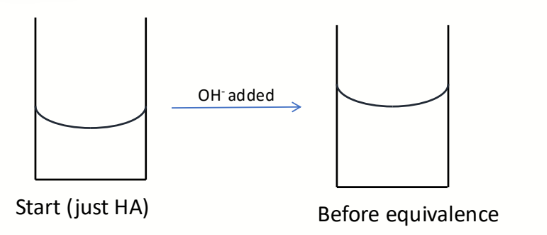
during this section of weak acid vs strong base titration, how is pH calculated?
what equation is used and how are the terms determined
calculate pH from pKa of HA dissociation
use H-H equation with
fraction converted to A- = (VOH/Ve)
fraction of HA remaining = (Ve - VOH/Ve)
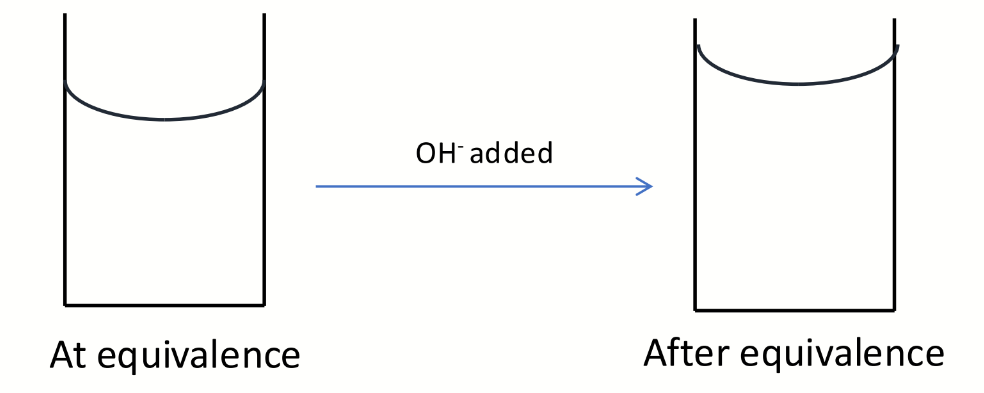
what is present in solution and why? rewrite the dissociation equation accordingly
acid has fully dissociated during neutralisation - all protons have reacted with OH- to form water - salt remains (A-)
A- + H2O EQM ARROW HA + OH-
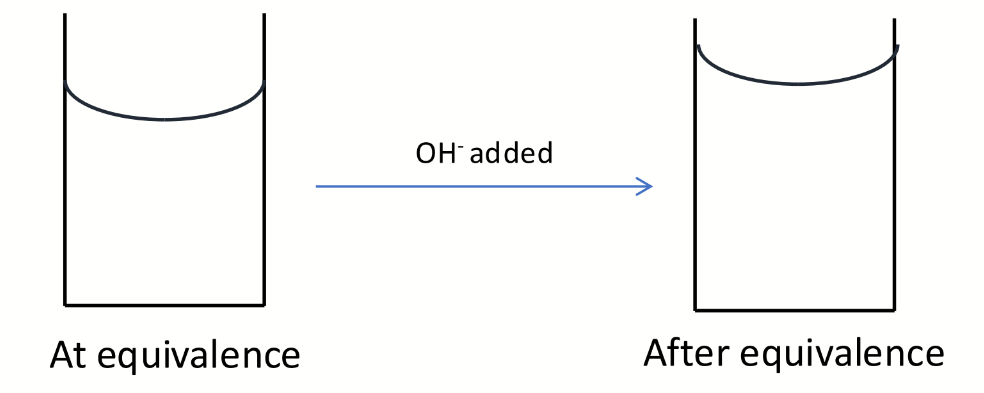
Kb = ? (at equiv)
Kw/Ka
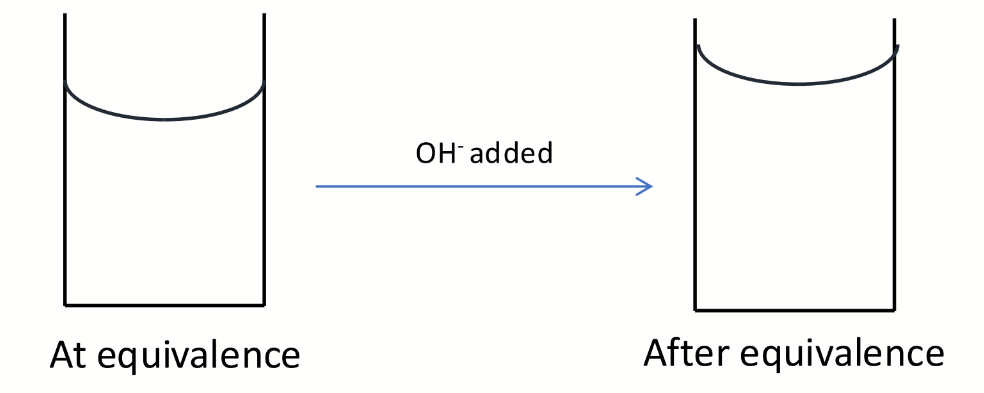
F = ? (at equiv)
(initial conc)(dilution factor)
after equiv, describe mixture
how to find OH conc here?
OH- dominates
[OH-] = initial [OH-] (dilution factor)
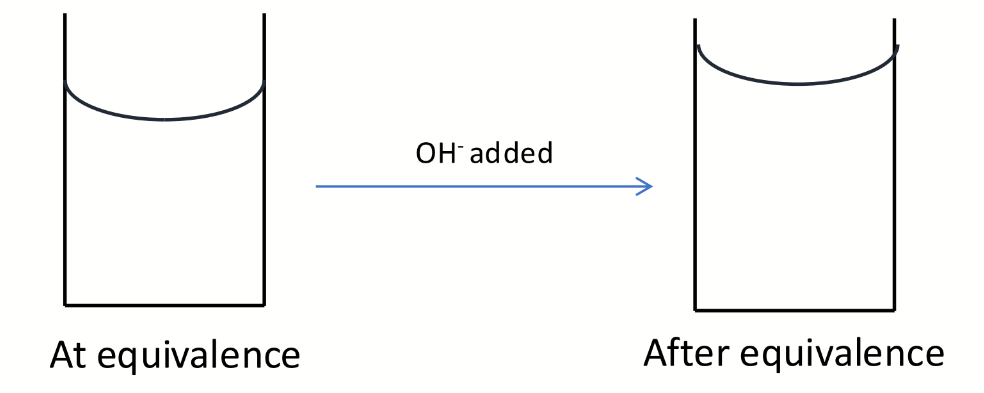
how is pH determined after equivalence?
[H+] = Kw/[OH-]
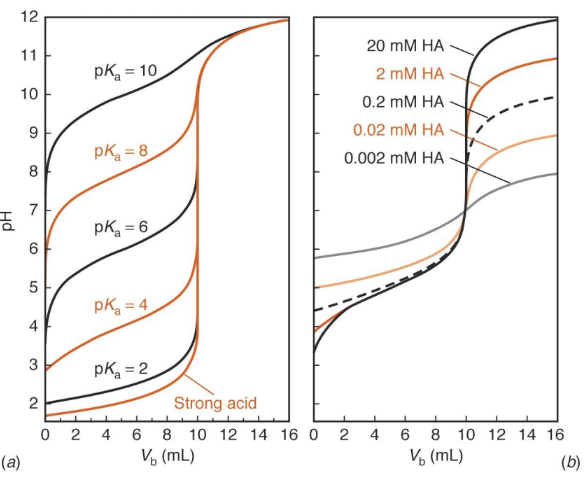
show how the shape of the titration curve changes with
strength of analyte/titrant
concentration of analyte/titrant
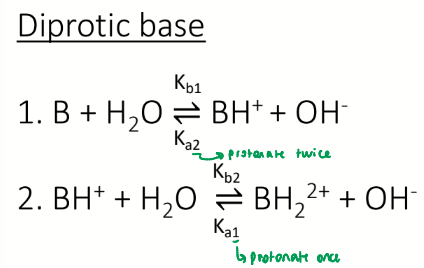
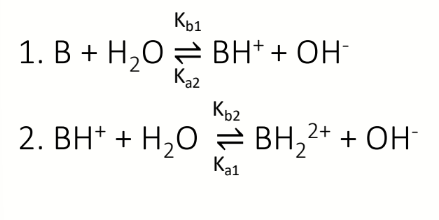
show the association of a diprotic base
label the equilibrium constants in both directions
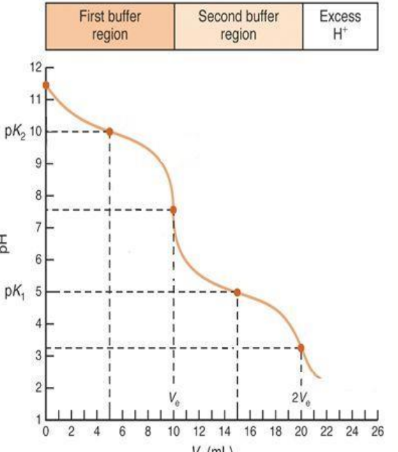
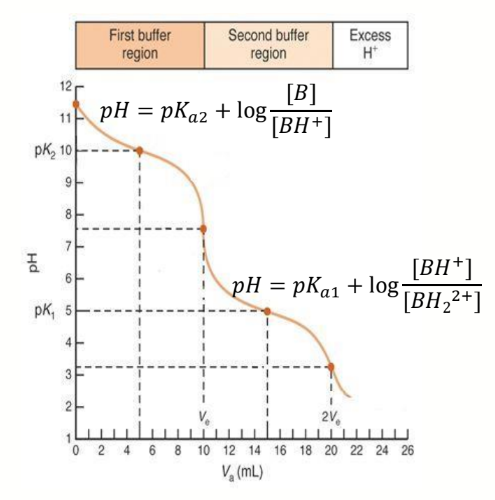
show titration curve for diprotic base
show buffer regions and what happens after these
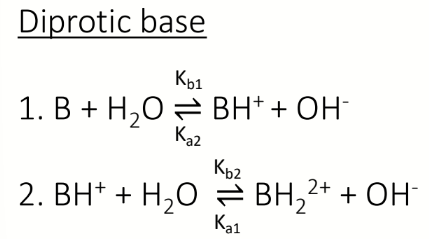
how can pH be calculated before acid is added
use Kb1 to find [OH-]
![<p>use K<sub>b1</sub> to find [OH<sup>-</sup>]</p>](https://assets.knowt.com/user-attachments/0c901aff-9004-405a-990e-3872a87e5f21.png)
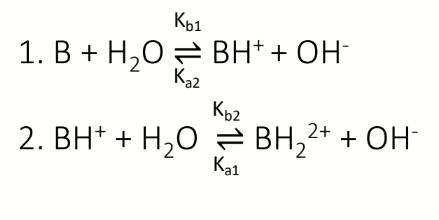
how to determine pH at equivalence point 1
all B converted to BH+
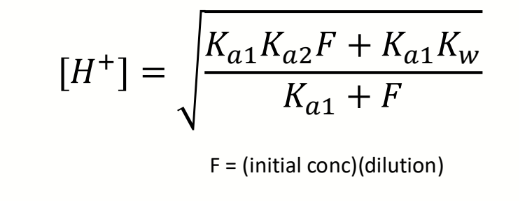
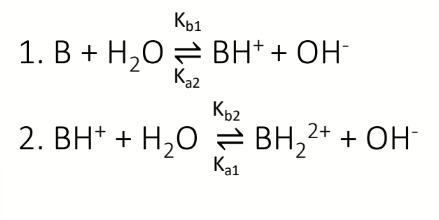
how can pH be determined at equivalence point 2
use Ka1 to calculate [H+]
![<p>use K<sub>a1</sub> to calculate [H<sup>+</sup>]</p>](https://assets.knowt.com/user-attachments/13f10b22-779a-4f01-8c56-d6934efabe63.png)
how to determine pH in the buffering regions
use H-H equation for the dominant reaction occurring, more protonated species goes at bottom
what is a complexometric titration based on
based on complex formation rather than neutralisation
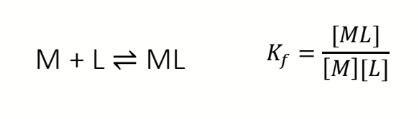
eqm equation + equation for eqm constant (with correct symbol) for metal (M) coordinating to ligand (L)
what is the most common ligand used in complexometric titrations? what is its polyprotism?
EDTA, hexaprotic
initial formula + charge for EDTA
H6Y2+
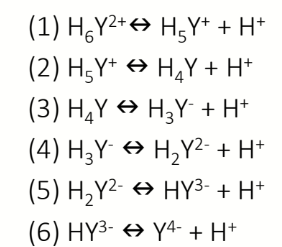
show steps of EDTA’s dissociation
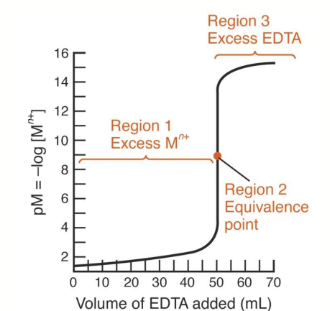
show EDTA titration curve + label axes with units
describe each region
pM is metal ion concentration
why does EDTA donate all 6 protons
Y4- forms the most stable complex with metal ions
how is the fraction of Y4- present in an EDTA titration calculated
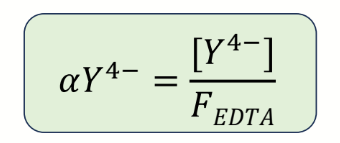
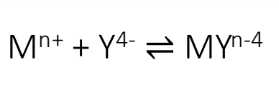
Kf = ?
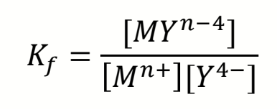
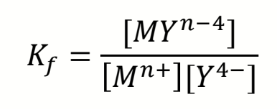
how is this used to consider pH + fractional conc of Y4-
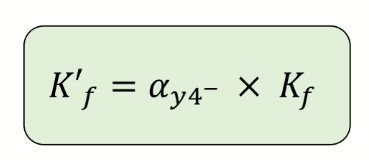
overall titration reaction for EDTA titration


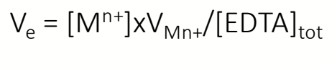
how to find equivalence volume for EDTA titration
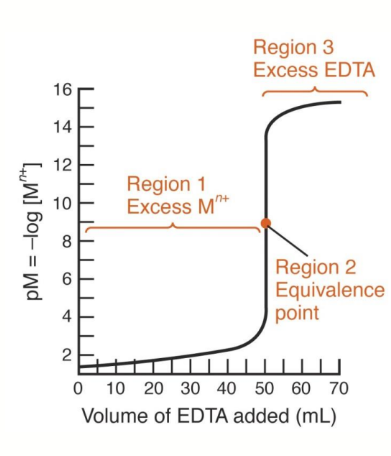
how to calculate pM in region 1?
calculated from excess Mn+ concentration
[Mn+] = fraction remaining x initial conc x dilution factor
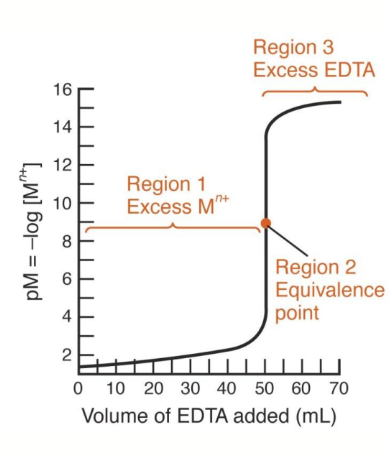
how is pM calculated at Ve
calculated from complex formation equilibrium

how is pM calculated in region 3?
from complex eqm
