Pt Care 6: Exam 3 Material (Atopic Dermatitis, Psoriasis, Fungal Infection, Cancer, Diabetic Foot Infection, Necrotizing Soft Tissue Infection)
 Call Kai
 Learn
 Practice Test
 Spaced Repetition
 Match
 Flashcards
 Knowt Play
1/278

There's no tags or description
Looks like no tags are added yet.
279 Terms
Unit 4.1: Overview of Dermatology for Pharmacists
Unit 4.1: Overview of Dermatology for Pharmacists
Epidermis Layers
Stratum Corneum, Lucidum, Granulosum, Spinosum, Basale
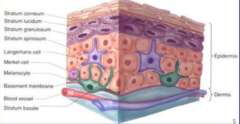
Stratum Corneum
• The most important barrier component of the skin
• 15 to 25 layers of flattened, enlarged, overlapping, dead cells (corneocytes) - dead keratinocytes
• Connected corneocytes interspersed with a continuous sheets of intercellular lipids
• Turnover via desquamation is about 2-4 weeks
- Important for preventing colonization with pathogens
• The cytoplasm is filled with an insoluble protein complex composed of keratin, filaggrin, and their degradation products
• Encapsulated within a cell envelope made of non-keratin proteins
• Held together by corneodesmosomes, which are degraded by proteases to facilitate orderly desquamation
- The proteases are co-extruded along with lipids, by the SG
- Abnormal corneodesmosome proteolysis can lead to dry flaky skin
- Protease function is affected by water amount and pH
Turnover via desquamation is about _____ weeks.
2 to 4
Corneodesmosomes
Structures that bind dead cells together in the SC.
What is extruded by the stratum granulosum?
Proteases (which degrade corneodesmosomes), lipids, ceramides, free fatty acids, cholesterol, processing enzymes that form ceramdies and free fatty acids
What is the cytoplasm of the stratum corneum made of?
Keratin, filaggrin, and their degradation products
Intercellular Lipid Matrix (Lamellae)
• Help hold the corneocytes together and are critical to limit permeation of substances and limit transepidermal water loss
• A roughly equimolar combination of three lipid components that originate from stratum granulosum cell secretions:
1. Ceramides - 13 different ceramides from enzymatically processed *glucosylceramides and sphingomyelin
2. Free fatty acids - several, long chain FFAs from enzymatically processed* phospholipids
3. Cholesterol - incorporated without enzymatic processing
• Exists as lamellae between the corneocytes
Stratum Corneum - Water Content
• Normal water content is about 15-30%
• Most water is within corneocytes aided by the presence of natural moisturizing factor (NMF)
- A complex "soup" of small hygrosopic, water-soluble compounds
- Include amino acids, lactic acid, urea, glucose, and glycerol
➢ Filaggrin is proteolyzed to produce a significant portion of NMF
- Tightly bind a portion of SC water
• Water is also between the intercellular lamellae and allows formation of the bilyaer spontaneously
• SC can take up significant water during bathing, under occlusion, and at high RH (relative humidity)
What is filaggrin proteolyzed into?
Amino acids, which make up natural moisturizing factor (NMF)
Natural moisturizing factor (NMF)
- A complex "soup" of small hygrosopic, water-soluble compounds
- Include amino acids, lactic acid, urea, glucose, and glycerol
➢ Filaggrin is proteolyzed to produce a significant portion of NMF
- Tightly bind a po
Some Factors Affecting SC Water Content
• UVB radiation can impair filaggrin proteolysis
• Age-related decline in NMF (↓filaggrin and glycerol content)
• Hot baths and showers• Detergents, harsh soaps, solvents
• Repeated water contact
What happens to proteases as a consequence of low water content?
They become inactive as the skins dries, therefore corneocytes remain connected and pile up at the surface instead of detaching and invisibly shedding
Permeation of xenobiotics and potential allergens decrease/increased with low water content in the skin.
INCREASE
(potential allergens permeate, which explains part of the pathophysiology of atopic dermatitis)
Sebum
• Composition includes triglycerides, free fatty acids, wax esters, squalene, and cholesterol
• Combines with water to form a hydrolipid film on skin that lubricates and waterproofs skin and hair
• Helps to produce the acid mantle that contributes to the naturally low skin surface pH
What is sebum made of?
1. Triglycerides
2. Free fatty acids
3. Wax esters
4. Squalene
5. Cholesterol
What is natural moisturizing factor (NMF) made of?
Amino acids, lactic acid, urea, glucose and glycerol
What is the pH of skin?
4.5 - 6.2 (due to sebaceous fatty acids and lactic acid in sweat)
The Importance of Acidic Skin pH
• Lipid processing enzymes - function best at an acidic pH
➢ Important for permeability barrier integrity, ↓TEWL
• Corneodesmosome-degrading enzymes (members of kallikrein family) - activity reduced at acidic pH
➢ Prevents desquamation from occurring too rapidly
• Antimicrobial properties of an acidic pH
- Example: Antibacterial for certain pathogenic bacteria (e.g., S. aureus)
➢ Important for the normal skin microbiome
Antimicrobial Peptides
• More than 100 AMPs in and on the skin
• Produced by numerous cells in the skin
- are also produced by commensal microbiota
• Among the best-known AMPs are cathelicidins, defensins, and psoriasin
• Functions:
- Antimicrobial action
- Immunomodulation
- Wound healing
• Important factors in many skin conditions (psoriasis, atopic dermatitis, and roscea)
Melanocytes and melanin
• Melanocytes are located at the level of the SB
• Produce melanin, two types:
- Eumelanin - a less soluble black-brown form
• Very important for protection from UV(B) damage
- Pheomelanin - a cysteine-rich red-yellow form
• The phenotype of fair skin, freckling, and carrot-red hair is associated with large amounts of pheomelanin and small amounts of eumelanin
- The major producer of our skin color
• Other contributors: carotenoids, hemoglobin, connective tissue
Light and dark-skinned individuals have similar numbers of melanocytes. (True/False)
True, they do! The difference is that in dark-skinned individuals, the melanosomes their melanocytes produces and transfer are larger, more numerous and more pigmented compare to lighter skinned
How do melanin (eumelanin) protect against UV damage?
It accumulates within keratinocytes and melanocytes in the perinuclear area and forms a supranuclear caps that are thought to shield DNA from UVR
Melanosomes
Pigment carrying granules that produce melanin, a complex protein; made by melanocytes
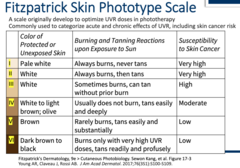
Fitzpatrick Skin Phototype Scale
A scale originally develop to optimize UVR doses in phototherapy; Commonly used to categorize acute and chronic effects of UVR, including skin cancer risk
UVB vs UVA
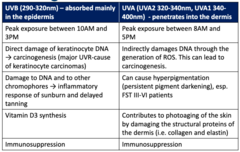
UVB (290 - 320 nm) - absorbed mainly in the epidermis
• Peak exposure between 10AM and 3PM (causes sunburn)
• Direct damage of keratinocyte DNA→ carcinogenesis (major UVR-cause of keratinocyte carcinomas)
• Damage to DNA and to other chromophores → inflammatory response of sunburn and delayed tanning (can be protect as it increases melanin)
• Vitamin D3 synthesis
• Immunosuppression
UVA (UVA2 320-340nm, UVA1 340-400nm) - penetrates into the dermis (Deeper)
• Peak exposure between 8AM and 5PM
• Indirectly damages DNA through the generation of ROS. This can lead to carcinogenesis.
• Can cause hyperpigmentation (persistent pigment darkeningl; not protective since it's from the oxidation of melanin), esp. FST III-VI patients
• Contributes to photoaging of the skin by damaging the structural proteins ofthe dermis (i.e. collagen and elastin)
• Immunosuppression
What is the minimum SPF that the American Academy of Dermatology recommend?
30
What Fitzpatrick skin types are most susceptibile to UV radiation effects?
I to III
Sunscreens Protection - SPF
• Calculated by dividing the Minimum Erythema Dose (MED) on protected skin by the MED on unprotected skin
- Focused on UVB
- Based on an application of 2 milligrams of sunscreen per square centimeter (Note: Patients commonly underapply.) q 2 hours at least
• All sunscreens with SPF values of 15 and above must satisfy broad spectrum requirements
- i.e. Must protect against both UVB and UVA penetration
- Tests for UVA protection are in vitro based on penetration through glass or a lengthy in vivo test based on UVA-induced persistent pigment darkening
SPF indicates the amount of time skin isprotected from sunburn
- Example: SPF 30: If sunburn on unprotected skin normally appears with 10 min exposure, then 300 minutes with SPF 30 protection
- * As long as it is applied with the proper amount and reapplied with proper frequency (q2h) - more frequent with sweating/water exposure
Organic (chemical) sunscreens
• Aromatic compounds that absorb UV radiation and convert it to a negligible amount of heat
- Oil-soluble - formulated as emulsions or with solvents/cosolvents (e.g., ethanol)
• Must apply 15-30 min before UVR exposure
Common examples:
• Avobenzone- The only chemical sunscreen approved for UVA protection
- It is an unstable compound (photolabile)
• stabilizers such as vitamin E and C, and octocrylene (a weak UVB absorber) to limit its degradation•
• Common UVB-protective organic sunscreens
- Octinoxate - concerns about being toxic to coral reefs
- Oxybenzone - UVB and UVA absorber; the most common cause of photoallergic reaction among UV filters, some systemic absorption
- Salicylates (Homosalate, Octisalate) - weak UVB absorbers, can reducede gradation of other organic sunscreens (primarily used in combination with other organic absorbers)
Inorganic (physical, mineral) sunscreens
• Zinc oxide (ZnO) and titanium dioxide (TiO2)
• Reflect, scatter, and absorb UVR
• Effective immediately upon application
• Degree of UVB/UVA protection depends on particle size
- Formulations with large ZnO particle size that form an opaque film offers UVB/UVA/visible protection
- Micronized zinc oxide (ZnO)
• Good UVA protection, less UVB protection than titanium dioxide
- Micronized titanium dioxide (TiO2)
• Good UVB protection, not effective against long-wave UVA radiation
• They tend to leave a whitish coat on the skin
- Can be aesthetically unacceptable
- Formulations with smaller particles are generally more aesthetically acceptable
Water-resistant products (Sunscreen)
Tested for either 40 minutes or 80 minutes resistance
What is the warning for sunscreens SPF 2 to
"Skin Cancer/Skin Aging Alert Spending time in the sun increases your risk of skin cancer and early skin aging. This product has been shown only to help prevent sunburn, not skin cancer or early skin aging."
For children under __ months of age; ask a doctor about sunscreen.
6; Avoid sunscreen use in infants younger than six months (AAD)
- If adequate clothing and shade are not available, a minimal amount of sunscreen with at least 15 SPF can be applied to small areas, such as the infant's face and the back of the hands
Sun Protection
• Clothing
- UV protective clothing (with UVP ratings) is preferred to regular clothing
• Though determined very differently than SPF, numbers correlate for clothing selection for photoprotection
- Regular clothing - choose clothing with tighter weaves, increased fabricthickness, darker colors
• Moisture, fabric stretching, and fabric degradation can decrease UVprotection
• Sunglasses - Should provide UV absorption up to 400 nm
• Hats - Should be wide-brimmed (at least 7.5 cm)
• Do not use past the expiration date
Dosage Form: Ointments
• Anhydrous Oleaginous (e.g., petrolatum/vaseline)
• Anhydrous Water-in-Oil Absorption Base (e.g., Aquaphor)
• Upon application to the skin, an ointment will form an adherent, continuous, greasy, water-repellant film.
• Good occlusiveness
• This can have an emollient effect and can enhance drug permeation
• Prolonged contact with the skin
• Good protection
Dosage Form: Creams
• Water-in-oil (e.g.,Eucerin)
• Oil-in-water (e.g.,Vanicream)
Water-in-Oil Less occlusive and less greasy than anhydrous ointments
• More occlusive and greasier than o/w creams
Oil-in-water Opaque, soft solids or thick liquids
• Upon application, the external phase evaporates and the application shrinks to a thin film containing the drug
• Less occlusive than ointments and w/o creams
• They blend with water (including our own secretions)
Dosage Form: Lotions
• Suspensions
• Oil-in-water emulsions
• These are fluid emulsions or suspensions for external application
• Upon application, the continuous phase (which is aqueous) evaporates, leaving a thin uniform film of powder or liquid
• The fluidity allows fast application to broad areas and facilitates application to difficult areas
Dosage Form: Gels
• Upon application, the solvent evaporates, often leaving a porous matrix film for drug to diffuse through
- Tend to be very good at releasing the drug
• Most are water-washable and greaseless
• Solvents:
- Can have a drying effect (ex. alcohol)
- Can enhance drug penetration
Considerations for vehicle (dosage form) selection
The type of dermatosis
• Wet or oozy lesions - creams or lotions
• Dry and scaly skin - ointments or oils
• Inflamed - wet compress or soaks, followed by creams or ointments
• Cracks and sores - bland preparations, noalcohol or acids
Skin site
• Palms and soles - ointment or cream
• Skin folds - cream or lotion (ointments are too occlusive)
• Hairy areas - lotion, solution, gel, or foam
Corticosteroids Pharmacology
• Bind to active glucocorticoid receptors (GCR)
• Reduce cells involved with inflammation and cytokines
• Anti-proliferative effects
- Reduced mitotic activity in the epidermis, causing flattening of the basal layer and thinning of the SC and SG
- Reduced levels of enkephalins that modulate epidermal differentiation and inflammation
• Reduced fibroblast activity
- e.g., causing reduced collagen synthesis
How is the potency of a TC measured?
Stoughton Vasoconstriction Assay
Stoughton Vasoconstriction Assay
- The test corticosteroid is applied to the volar (inside) surface of the forearm, followed by the application of an occlusive dressing for16 hr.
- The area is washed off, then vasoconstriction is measured as blanching 2 hr later
What two things can increase the potency of a TCS through its effect on vehicle properties?
1. Occlusiveness increases potency
Ex. Ointments are generally more potent than creams or lotions
2. Excipients affect drug solubility and penetration through the skin
Ex. Propylene glycol and ethanol can help keep the drug in solution and enhance penetration
3. Gels - because of the presence of cosolvents and because of their ability to release the drug, they tend to yield greater potency than creams or lotions
TCS - Adverse Effects
• Skin atrophy
- Most common
- Involves thinning of the epidermis, dermis and potentially the hypodermis
- Considered reversible
• Striae
- Dermal scarring that appears on the skin as linear striations ("stretch marks")
- Caused by cross-linking of immature collagen in the dermis, resulting in intradermal tears
- Being as red striations (striae rubra) and can progress over time to hypopigmented (white) striations (striae alba)
- Considered irreversible if not caught early enough
• Telangiectasia
- Small dilated blood vessels near the surface of the skin or mucous membranes
- Caused by stimulation of dermal microvascular endothelial cells
• Tachyphylaxis
- A reduction in efficacy over time has been reported for topical corticosteroids
- Evidence for this in clinical trials is lacking
• Hypopigmentation
• Acne or rosacea-like eruption
• Allergic contact dermatitis
• Exacerbation of skin infections (e.g., fungal/yeast and bacterial)
Under what conditions are the greatest risk of systemic adverse effects when using topical CSs?
• Greatest risk: When ultrahigh potency (e.g., clobetasol propionate 0.05%) or high-potency (e.g., triamcinolone acetonide 0.5%) corticosteroids are used for > 4 weeks over a >20% BSA or under occlusionTCS
• Adverse Effects: Hypothalamic-pituitary-adrenal (HPA) suppression, glaucoma, hyperglycemia, hypertension, and others have been reported
TCS - Selection Factors
• Use least to low potency TCS for limited duration
- Areas of thin skin such as the face and axilla (eyelids and genitals)
- Intertriginous areas such as groin, under breasts and diaper areas
• Use low to medium potency TCS
- Large body areas
• Use medium to high potency TCS
- Mild to moderate nonfacial/nonintertriginous dermatoses
• Use ultra-high high potency TCS
- SEVERE nonfacial/nonintertriginous dermatoses

TCS - Duration of Treatment
• Super high potency: treat for no longer than 4 weeks
• High and Medium potency: < 6-8 weeks
- Avoid greater than 12 weeks at a time. If needed longer, use intermittently or transition to a milder corticosteroid
• Low potency: side effects are rare. Treat facial, intertriginous, and genital dermatoses for 1-2 week intervals to avoid skin atrophy, telangiectasia, and steroid-induced acne
• Longer-term management: use least-potent corticosteroid that is effective
- May consider reduced application frequency (e.g., alternate-day therapy; weekend use)
TCS - Usage
• Use one to twice daily
• Apply within first 3 minutes after a bath or shower
• Apply a thin layer
• Use the finger-tip unit method can be used to approximate the amount needed (1 FTU = 0.5 g; covers both sides of one-hand (2% BSA)
- Adjusted down for children (e.g., infants- 1/5, children- 2/5, adolescents- 2/3)
4.2.1: Psoriasis
4.2.1: Psoriasis
Psoriasis
• "A complex, chronic, multifactorial, inflammatory, immune-mediated disease that involves hyperproliferation of the keratinocytes in the epidermis, with an increase in the epidermal cell turnover rate (10x)"
• Higher incidence in Caucasian
• Onset
- About 75% before 40 yo (average age of onset between 25-33); another peak between 50-60 y
• Has a genetic component
Psoriasis Types
1. Pustular
- Neutrophils collect in enough quantity to form pustules (small raised bump filled with pus)
- May be localized or generalized
2. Guttate
- Small papules (small, raised bump, < 1 cm)
- Associated with beta-hemolytic streptococci URI
3. Inverse
- Smooth, shiny plaques in skin folds
- Usually scaling is minimal
- Often misdiagnosed as fungal or bacterial infection
4. Erythrodermic
- Severe, relatively rare
- Widespread erythema over at least 90% of the body
- Possible desquamation in sheets
- Potentially life-threatening
5. Plaque (MOST COMMON; so considered psoriasis vulgaris)
- Characterized by well-defined, irregular, sharply demarcated, erythematous plaques covered by dry, thin, silvery-white scales
- Often located in scalp, trunk, buttocks, limbs (especially elbows and knees)
- Vary in size from one to several cm
Plaque
A circumscribed, palpable lesion more than 1 c min diameter; most are elevated.
Plaque Psoriasis - Pathogenesis
• Primarily a T-lymphocyte mediated systemic inflammatory disease that results in a rapid turnover (3 - 5 days)

Koebner phenomenon
• Lesion formation at site of trauma
- Skin injury (e.g., from scratching, piercings, tattoos, etc.
• Trigger for plaque psoriasis
Dermatology Life Quality Index (DLQI)
- A general dermatology assessment that can be used to evaluate how psoriasis is affecting a patient's quality of life
- Issues addressed: symptoms, embarrassment, shopping and home care, clothes, social and leisure, sport, work or study, close relationships, sex, treatment
Psoriasis Area and Severity Index (PASI)
- Evaluates lesion erythema, thickness, and scaling in different body areas
- Commonly used for assessment in clinical trials
Plaque Psoriasis - Severity Levels
• Mild : ≤5% BSA involvement (
BSA-Based Treatment Targets for Plaque Psoriasis
Acceptable response after treatment initiation: Either BSA 3% or less; or BSA improvement of 75% or more from baseline at 3 mo after treatment initiation
Ideal Target response after treatment initiation: BSA 1% or less at 3 mo after treatment initiation
Target response during maintenance therapy: BSA 1% or less at every 6 mo assessment intervals
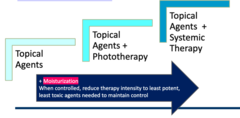
PP - Steps for Mild-to-Moderate Disease
(BSA < 10%; PASI < 10)
Start with:
• Topical agents
then escalate to
• Topical Agents + Phototherapy
then escalate to
• Topical Agents + Systemic Therapy
• + MOISTURIZATION
• When controlled, reduce therapy intensity to least potent, least toxic agents needed to maintain control
PP - Steps for Severe Disease
(PASI ≥10 or DLQI ≥10 or BSA >10%)
Start with:
• Systemic Agent +/- Topical Agent or Photo therapy. Consider BRM.
then escalate to
• More potent systemic agent or 2 or more systemic agents in rotation +/- topical agent. Consider BRM (biological response modifier).
then escalate to
• Biological Response Modifier +/- other agents
• + MOISTURIZATION
• When controlled, reduce therapy intensity to least potent, least toxic agents needed to maintain control

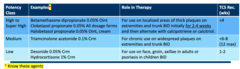
PP Topical Pharmacotherapy- Glucocorticoids
• High to Super High:
- Betamethasone dipropionate 0.05% Ointment
- Clobetasol propionate 0.05% all dosage forms
- Halobetasol propionate 0.05% Oint, cream
- Use for < 4 weeks
- Role in Therapy: For use on localized areas of thick plaques on extremities and trunk BID initially for 2-4 weeks and then alternate with calcipotriene or calcitriol.
• Medium
- Triamcinolone acetonide 0.1% cream
- Use for < 6-8 weeks (12 max)
- Role in Therapy: For chronic use on widespread plaques on extremities and trunk BID
• Low
- Desonide 0.05% Cream
- Hydrocortisone 1% Cream
- Use for 1 - 2 weeks
- Role in Therapy: For use on face, groin, axillae in adults or psoriasis in children BID
PP Topical Pharmacotherapy- Vitamin D3 Analogs
• MOA: Bind to vitamin D receptor and form a drug-receptor complex associates with the RXR-α (retinoid x receptor) and binds to vitamin D response elements on DNA→ Genes that modulate epidermal differentiation and inflammation are subsequently expressed to ultimately reduce hyper-proliferation
• Calcipotriol (calcipotriene)
→ Brand Name: Dovonex, Sorilux
→ Strength: Cream, solution 0.005%, Foam 0.005%
• Calcitriol
→ Brand Name: Vertical
→ Strength: Ointment 0.0003%
• Counseling Points:
→ Apply twice daily to affected areas
→ Typically used in combination therapy with TCS in adults
- Can be steroid-sparing
• Adverse Effects:
→ Irritant contact dermatitis
→ Rarely hypercalcemia: should not exceed 100 g
→ Irritation if used in face or genital area
PP Topical Pharmacotherapy- Vitamin D3 Analogs/Corticosteroid Combination
• Calcipotriene 0.005% and betamethasone dipropionate 0.064%
• Brand Name: Taclonex
→ Strength: Suspension, Ointment
→ 12 YO+
→ Use up to 4 weeks
• Brand Name: Enstilar
→ Strength: Foam
→ 12 YO+
→ Use up to 4 weeks
• Brand Name: Wynzora
→ Strength: Cream
→ 18 YO+
→ Use up to 8 weeks
• Counseling Points:
→ Apply ONCE daily to affected areas
→ Should not be used on face axillae, groin, or armpits
• Adverse Effects:
→ Rarely hypercalcemia: should not exceed 100 g
PP Topical Pharmacotherapy - Retinoid
• MOA: Bind to cytoplasmic retinoic acid receptors (RARs) and retinoid X receptors (RXRs). The drug-receptor complex regulates gene transcription→ Normalizes keratinocyte differentiation and reduces hyperproliferation and inflammation
• Tazarotene
→ Brand Name: Tazorac
→ Strength: Cream, gel, 0.05%, 0.1%
• Counseling Points:
→ Apply ONCE daily to affected areas
→ Avoid application on the face, groin, or in the axillae
• Adverse Effects:
→ Irritation in lesional and perilesional skin (use of the cream, lower concentration, application on alternate days, use with moisturizers, use with topical corticosteroid)
→ Photosensitizing (use sun screen)
→ Pregnancy category X (CONTRAINDICATED)
PP Topical Pharmacotherapy - Combination Retinoid/Corticosteroid
• Halobetasol propionate-tazarotene lotion, 0.01 percent/0.045 percent
→ Brand Name: Duobrii
→ Strength: 0.01 percent/0.045 percent lotion
• Counseling Points:
→ Apply ONCE daily to affected areas and rub in gently
→ If a bath or shower is taken prior to application, the skin should be dry before applying the lotion
• Adverse Effects:
→ Avoid application on the face, groin, or in the axillae
→ Total weekly dose: 50g max (potential HPA-axis suppression)
→ Possible AEs: atrophy, striae, telangiectasia, folliculitis and contact dermatitis
→ Pregnancy category X (CONTRAINDICATED)
AD/PP Topical Pharmacotherapy - Calcineurin Inhibitors
• MOA: Calcineurin upregulates the expression of multiple cytokines and costimulatory molecules necessary for full activation of T cells (calcineurin inhibitors inhibit this) → Normalize keratinocyte differentiation and reduce hyperproliferation and inflammation (like retinoids)
• Used 2nd line in atopic dermatitis due to warnings
• Tacrolimus
→ Brand Name: Protopic
→ Strength: Ointment 0.1%
→ Use for psoriasis on face and inverse psoriasis for up to 8 weeks
→ Atopic Dermatitis: Tacrolimus 0.03% for 2- 15YO or 0.1% for ≥ 16 YO
• Pimecrolimus
→ Brand Name: Elidel
→ Strength: Cream 1%
→ Pimecrolimus for inverse psoriasis for 4-8 weeks
→ Pimecrolimus 1% for > 2 YO
• Counseling Points:
→ Can be used for psoriasis on face, axillae, groin and genitals BID
→ Can be less irritating than calcipotriol and also avoids corticosteroid adverse effects
• Adverse Effects:
→ Burning and itching (reduces with repeated usage and can be mitigated by NOT apply immediately after bathing)
→ ATOPIC Dermatitis Lecture: Warnings: increased risk of lymphoma, skin cancer; patients with compromised immune system (recommend sunscreen)
Which plaque psoriasis topical product works by reducing T-cell activation?
Calcineurin inhibitors (tacrolimus and pimecrolimus)
Which product is used off-label and can be used twice daily in sensitive areas afflicted with plaque psoriasis?
Calcineurin inhibitors (tacrolimus and pimecrolimus)
Roflumilast (Zorvye), a topical PDE-4 inhbitor, can also be used in intertriginous areas (areas where skin rub against each other), in patients 6 YO+
PP/AD Topical Pharmacotherapy - Aryl hydrocarbon receptor agonist
• Tapinarof (Vtama)
• MOA: Down regulates IL-17: promotes skin barrier normalization, antioxidant activity
- By agonizing the aryl hydrocarbon receptor, there is decrease in pro-inflammatory cytokines and an increase in expression of proteins like filaggrin
• For patients with mild, moderate, or severe plaque psoriasis (ALL TYPES)
• For patient with mild to severe AD
• A ONCE-DAILY topical cream (1%)
• Adverse effects: folliculitis, pruritis, contact dermatitis, rash, application site reaction
• More tolerable than TCS, but expensive ($$$)
PP/AD Topical Pharmacotherapy -Phosphodiesterase-4 inhibitor
• Roflumilast (Zoryve)
• MOA: Phosphodiesterase-4 inhibitor → reduces production of multiple cytokines
• A once daily 0.3% cream indicated for topical treatment of plaque psoriasis, including intertriginous areas, in patients 6 years of age and older
• Treatment of mild to moderate AD in patients ≥6 YO by apply 0.15% cream once daily
• An alternative to TCS, but expensive
PP Pharmacotherapy - Topical Salicylic Acid
• MOA: May reduce keratinocyte cohesion and stratum corneum pH, with the net effect of increasing desquamation, reducing scaling, and softening of the plaques → Keratolytic
• Salicylic Acid
→ Keralyt 6% Gel, Dermarest 3% gel (OTC), MG217 3% cream (OTC), T-Sal 3% shampoo (OTC)
• Counseling Points:
→ For use in thick plaques in combination with topical steroids
→ Decreases efficacy of UVB therapy due to filtering effect, thus apply afterwards
• Adverse Effects:
→ Systemic toxicity- Rare, but risk increases when applied to greater than 20% BSA or to patients with hepatic or renal impairment. Should avoid this
Which agent decreases efficacy of UVB therapy due to a filter effect, so should be applied afterwards?
Salicylic acid
PP Pharmacotherapy - Coal tar
• MOA: Mechanism unknown - anti-proliferative and composed of thousands of chemicals
• Coal tar products and preps
→ Shampoos, creams, lotions, ointments, and oils
→ Adjunct to topical steroids
→ Use has diminished
→ AEs: Contact dermatitis, folliculitis, photosensitivity to UVA
→ Stains and odiferous
• Goeckerman regimen
→ Combines 2-4% crude coal tar in a petrolatum base with UVB phototherapy
→ An effective, synergistic combination
PP - Phototherapy
• MOA:
→ Suppression of DNA synthesis (may explain effect on diseases with epidermal hyperproliferation)
→ Selective immunosuppression (may explain effect for immune-mediated skin diseases)'
• An effective option for patients who:
- require more than topical medications
- wish to avoid systemic medications
- seek an adjunct to a failing regimen
• Targeted (typically if
• Either UVA or UVB
- UVB is more effective, safer, and used more often than UVA
- Home units are available: used under dermatologist's care
What is the preferred photo therapy?
Narrow-band UVB (311 - 313 nm)
• More effective wavelength - possible fewer treatments, faster improvement, with longer remissions
• Reduces sunburn risk
• Most common type of home unit
• Treatment typically 2 - 3 times per week, improvement seen after 4 weeks
- Improvement seen quickly
• Remission up to 6 months
PP - PUVA Phototherapy
Psoralen associated UVA light (315-400 nm)
• UVA is relatively ineffective unless utilized with a UVA-sensitizing psoralen compound
- Primary drug used - Methoxsalen (8-MOP) - a synthetic psoralen
• How used
- 8-MOP capsules taken 1-2 hr before UVA exposure
- Expose to UVA radiation, usually in a standup phototherapy unit, 2-3 times weekly until 95% lesion clearance, then a tapered maintenance schedule
• Major AE's:
- Phototoxicity (→ sunburn and blistering), nausea, pruritus
- Long term (with chronic use): photoaging, increase risk of skin cancer because or ROS
PP Pharmacotherapy - Methotrexate
• MOA:
→ Reduces hyper-proliferation and inflammation
• Dose
→ Administered as a weekly single oral dose 7.5 to 25 mg (can also be administered SC or IM)
• Adverse Effects:
→ Nausea, vomiting, stomatitis, macrocytic anemia, and hepatic and pulmonary toxicity
• Contraindications:
→ In pregnant or nursing women, and patients with severe liver or kidney disease, severe and/or active infectious disease (e.g. tuberculosis, pyelonephritis), severe anemia, leucopenia or thrombocytopenia, excessive alcohol consumption, immunodeficiency, active peptic ulcer and significantly reduced lung function
• Monitoring:
→ Liver, lung, and kidney function, as well as blood count, is necessary
→ Blood test q 3 months
→ Should have a biopsy after taking a cumulative dose of 3.5-4 g
→ Folic acid supplementation 1-5 mg daily by mouth
- Some recommend to skip dose on day of methotrexate dosing
PP Pharmacotherapy - Cyclosporine
• MOA:
→ Systemic calcineurin inhibitor (decreases T-cell activation)
• Counseling Points
→ Highly and rapidly effective at inducing remission-usually for severe (rule of 10s), recalcitrant disease and acute flares while on systemic therapy)
→ Short-term ''interventional'' therapy (because of its renal and hypertensive side effects)
• Adverse Effects:
→ Nephrotoxicity (reversible with short-term treatment), hypertension (typically reversal), hypomagnesemia, hyperkalemia, hypertriglyceridemia, hypertrichosis (excessive hair growth), and gingival hyperplasia
PP Pharmacotherapy - Apremilast (Otezla)
• MOA:
→ Phosphodiesterase-4 inhibitor → reduces production of multiple cytokines
• Indicated for the treatment of moderate to severe plaque psoriasis
• TWICE daily regimen
• Adverse Effects:
→ Associated with a short-term risk of diarrhea- ramp up dosing
PP Pharmacotherapy - Deucravacitinib (Sotyktu)
• MOA:
→ Inhibitor of tyrosine kinase 2 (TYK2), a kinase that mediates signaling of cytokines (e.g., decreases IL-23) involved in psoriasis pathogenesis
• Indicated for the treatment of moderate to severe plaque psoriasis psoriasis in adults who are candidates for systemic therapy or phototherapy
• Demonstrated superiority to apremilast
• ONCE daily regimen
• Adverse Effects:
→Associated with increased risk of viral infections and acne (and re-emergence of herpes simplex & herpes zoster)
PP Pharmacotherapy - Acitretin
• MOA:
→ Retinoid
→ Normalizes keratinocyte differentiation and reduces hyperproliferation and inflammation
• Relatively slow onset of efficacy and lower efficacy as monotherapy (More commonly used in combination with topical calcipotriene or phototherapy)
• Adverse Effects:
→ Hypertriglyceridemia, dryness of the eyes, nasal and oral mucosa, cheilitis (chapped lips), xerosis (dry skin), brittle nail (DRYING)
• Teratogenic - major human fetal abnormalities
→ Women - effective contraception for the duration of therapy and for at least 3 years after drug discontinuation
→ Women and men - Blood donation not permitted during use and for at least 3 years afterwards
PP Pharmacotherapy - Biologics
• Used for moderate-to-severe psoriasis
• All are proteins produced by recombinant DNA technology
• Mechanism of action results from their blocking of specific cytokines important in psoriasis
• Example - TNFα stimulates:
→ Keratinocyte proliferation
→ Neutrophils
→ Release of certain pro-inflammatory cytokines
• Anti-IL-17 drugs and anti-IL-23 drugs have shown greater efficacy than anti-IL-12/23 drugs (ustekinumab) and anti-TNFα drugs
• In some studies, anti-IL-17 drugs work faster than anti-IL-23 drugs
• Administration:
→ Etanercept (Enbrel) - Injections twice per week for 12 weeks, then once per week
→ Certolizumab pegol (Cimzia) - A loading dose first, then a regular dose every 2 weeks
→ Secukinumab (Cosentyx) - Once a week for 5 weeks, then every 4 weeks
→ Ustekinumab (Stelara) - Injections at weeks 0 and 4, then every 12 weeks
• For most agents
- May see some improvement within 4-8 weeks
- Definitive response (positive or negative) best ascertained after 12 weeks of continuous therapy
- For partially responding patients - consider dose escalation, increase in frequency (drug dependent), or the addition of other modalities (e.g., topical corticosteroids, methotrexate) in partially responding patients
• Adverse Effects
- Injection-site or infusion reactions
- Increased risk of infections
- Development of anti-drug antibodies
- Increased malignancy risk

PP Pharmacotherapy - Biologics -Administration
→ Etanercept (Enbrel) - Injections twice per week for 12 weeks, then once per week
→ Certolizumab pegol (Cimzia) - A loading dose first, then a regular dose every 2 weeks
→ Secukinumab (Cosentyx) - Once a week for 5 weeks, then every 4 weeks
→ Ustekinumab (Stelara) - Injections at weeks 0 and 4, then every 12 weeks
PP - Non pharmacological approaches
• Managing lifestyle factors that may trigger exacerbations (e.g.,stress, smoking, obesity)
- Limit alcohol consumption (esp if on MTX)
• Minimize triggers (scratching, piercings, tattoos, sunburn, chemical irritants)
• Cleansing with tepid water, non-harsh soaps (e.g., sensitive skin soaps)
• Oatmeal baths (good for pruritus)
• Moisturizers - non-medicated moisturizers applied ad lib (as desired)
• Sun protection - e.g., SPF ≥ 30 and other sun protective measures
• Diet control and physical activity
Seborrheic Dermatitis
• A common, chronic or relapsing form of dermatitis that mainly affects the sebaceous gland-rich regions of the scalp, retro-auricular area, face (nasolabial folds, upper lip, eyelids and eyebrows), and the upper chest
• Involves pruritus, and inflammation, well-delimited erythematous plaques with greasy-looking, yellowish, fine scales
•Three main peaks: first three months of life (due to elevated levels of hormones in mother), during puberty, and in adulthood
• Pathogenesis
→ Multiple predisposing factors (Malassezia colonization, sebaceous gland hyperactivity, individual susceptibility due to genetics)
→ Malassezia is a lipid-dependent, commensal yeast that can transform to a pathogenic form
→ Proliferate in sebum through their lipase activity by metabolizing TGs to free fatty acids and cause increased ROS that are antibacterial and pro-inflammatory
→ This causes an alteration of normal skin flora and FFA's cause SC abnormalities including incomplete differentiation of keratinocytes = scales, flaking
• Precipitating and exacerbating factors
→ Seasonal fluctuations
→ Trauma
→ Conditions such as such as Parkinson's, HIV/AIDS, depression, Down's syndrome, rosacea, psoriasis
→ Emotional distress
→ Sleep deprivation
→ Some drugs, such as griseofulvin, lithium, cimetidine, buspirone, haloperidol, psoralen, and others
Cradle Cap
• Seborrheic dermatitis in infants
- Caused by hyperactivity of sebaceous glands in response to elevated circulating hormones from the mother
- Usually appears around birth or within the first few months
- Erythema and greasy scales on the scalp
- Usually benign and self-limited
• Can also appear on the face, ears, neck, and in the diaper area
• Referral for OTC therapy for diaper dermatitis
• Treatment:
- Shampoo frequently with baby shampoo and gently remove scaly skin with a soft brush or fine-tooth comb after shampooing
- Apply an emollient to the scalp (overnight, if necessary) to loosen the scales, followed by gentle scalp massage with a soft brush, then shampoo with baby shampoo
• Prolonged inflammation on the scalp or intertriginous areas, or if the problem persists despite the above measures
Under physician care:
- Low potency topical corticosteroids (e.g., hydrocortisone 1% cream or lotion) once daily x 1 wk OR ketoconazole shampoo* twice weekly x 2 weeks OR ketoconazole 2% cream once or twice daily
- Topical antifungal (e.g., 2% ketoconazole cream) - preferred if treating intertriginous areas
- Until improvement, up to 2 weeks
* Ketoconazole shampoo can irritate eyes
Adults: Seborrheic Dermatitis Therapy Products
Scalp Products:
• Shampoos - various options with antifungal properties
- Ketoconazole* 1% (Nizoral) - OTC
- Ciclopirox* 1% (Loprox)
- Selenium sulfide: 2.5% (1% OTC)
- Zinc pyrithione: 1% and 2%
- Coal tar: 0.5 to 5%
• Foams - a good dosage form for the scalp
- Ketoconazole 2% foam (Extina)
- Roflumilast 0.3% foam (Zoryve)
• TCS lotion, spray, foam, or shampoo
* Also have anti-inflammatory properties
Non-Scalp Products• Semisolids
- Ketoconazole 2% cream (Nizoral)
- Ciclopirox 1% cream (Loprox)
- Pimecrolimus 1% cream (Elidel), Tacrolimus 0.03% and 0.1% ointment (Protopic)
- Roflumilast 0.3% foam (Zoryve)
- TCS
Adults Seborrheic Dermatitis: Dandruff Treatment (Mild SD)
1, Antifungal shampoo*
2. Assess at 4 weeks
a. If improvement, then maintenance
b.. If no improvement: Add high potency TCS lotion, spray, foam, or shampoo* once daily up to 4 weeks
*Shampoo Recommendations
• Medicated shampoos in general
- Leave on for 3 to 5 minutes before rinsing
• Antifungal shampoos
- 2 to 3 times weekly
- Maintenance: once or twice weekly to prevent relapse
Adults Seborrheic Dermatitis: Scalp Seborrheic Dermatitis Treatment
1. Antifungal shampoo* PLUS high potency TCS lotion, spray or shampoo*
- TCS once daily until symptoms subside or up to 4 weeks
2. Assess at 4 weeks
a. If improvement: Maintenance (2-3x weekly) antifungal shampoo, d/c TCS
b. If no improvement: Consider systemic antifungal (e.g., itraconazole 200mg once daily x 7 days) - Assess at 4 weeks
*Shampoo Recommendations
• Medicated shampoos in general
- Leave on for 3 to 5 minutes before rinsing
• Antifungal shampoos
- 2 to 3 times weekly
- Maintenance: once or twice weekly to prevent relapse
Adults Seborrheic Dermatitis: NON-Scalp (face*, trunk, intertriginous) MILD Seborrheic Dermatitis Treatment
• Mild = fine scaling, minimal erythema
1. Use topical antifungal (ketoconazole 2% cream** once or twice daily)
2. Assess at 4 weeks
a. If improvement, prevent relapse: maintenance at once or twice weekly
b. If no improvement: Add low potency TCS once or twice daily until symptoms subside (up to 2 weeks)
i. If improvement, apply maintenance (once or twice weekly)
ii. If no improvement, switch TCS to topical calcineurin inhibitor (e.g., tacrolimus ointment or pimecrolimus cream ) once or twice daily
*For SD on the face:
- Creams or lotions are best tolerated
- Tacrolimus ointment and pimecrolimus cream are commonly used (off-label) as an alternative to TCS
- Roflumilast 0.3% foam is safer than TCS, but expensive
**Can use shampoo for facial hair
Adults Seborrheic Dermatitis: NON-Scalp (face*, trunk, intertriginous) MODERATE TO SEVERE Seborrheic Dermatitis Treatment
• MODERATE TO SEVERE = intense erythema, greasy scales, pruritus
1. Use topical antifungal PLUS low potency TCS until symptoms subside (up to 2 weeks)
2. Assess at 2 weeks
a. If improvement, prevent relapse: D/C TCS, continue maintenance of antifungal at once or twice weekly
b. If no improvement: Topical antifungal once daily and switch to topical calcineurin inhibitor (e.g., tacrolimus ointment or pimecrolimus cream) once or twice daily
**Assess at 4 weeks**
i. If improvement, apply maintenance (once or twice weekly) of either antifungal or calcineurin inhibitor
ii. If no improvement, consider systemic antifungal (e.g., itraconazole 200mg once daily x 7 days) - Assess at 4 week
Atopic Dermatitis
• Most common form of eczema
• Symptoms: Pruritis (intense), erythematous, scaly skin lesions of ten localized in flexor surfaces (inside of the elbow, neck, face, behind the knees, wrist, feet and hands)
- Chronic or repeatedly symptoms
• Family or personal history of atopy (a genetic predisposition to develop allergic conditions such as asthma, hay fever (allergic rhinitis), and eczema (atopic dermatitis) is an essential indicator
• Onset normally in childhood and often develop food allergy, allergic rhinitis and asthma
• Pathophysiology:
- Inflammation likely due to disruption in skin barrier function and exaggerated immune response
- Mutations in filaggrin protein gene
- Imbalance between T-helper cells type 1 and 2
- Cytokine production (which is regulated by phosphodiesterase-4) leads to:
• Further disruption in skin barrier function
• Activation of janus kinase (JK) pathwayPathophysiology of AD4
If a rash is NOT itchy, it is not _____ _________.
atopic dermatitis
What is the most common trigger of the intense pruritis seen in AD?
Sweating
(other triggers include wool clothing, stress, alcohol, dust mites, soaps/detergents, etc.)
NON-Pharmacologic Treatment: Atopic Dermatitis
STRONG Recommendation
• Moisturizers
CONDITIONAL Recommendations
• Bathing (remove crust, allergens, irritants and hydrate skin)
• Wet wrap therapy
• Bleach baths (may prevent infection)
Atopic Dermatitis: Antihistamines
• PO antihistamines (1st generation - diphenhydramine) are used 1st generation to reduce nighttime scratching (makes patient fall asleep due to drowsiness)
• Topical antihistamines: Conditional recommendation against use in guidelines
MILD to MODERATE Atopic Dermatitis Treatment
• Use moisturizers and emollients
• First Line:
→ Low potency TCS
▪ Acute Treatment: Use 1 - 2 times daily
▪ Maintenance: Use moisturizers
→ Crisaborole (Eucrisa)
▪ PDE4 inhibitor
▪ Applied twice daily
▪ In patients ≥ 3 months old
• Second Line:
→ Topical Calcineurin inhibitors (Pimecrolimus 1% > 2 YO, Tacrolimus 0.03% for 2 - 15 YO or 0.1% for ≥ 16 YO)
▪ Second line due to warnings of cancer
→ Ruxolitinib (Opzelura 1.5%)
▪ Topical Jax inhibitor
▪ Applied twice daily
▪ For refractory/ineligible for 1st line
▪ In patients ≥ 12 YO non-immunocompromised
• Not in guidelines (since new):
→ Roflumilast (Zoryve)
▪ PDE4 inhibitor
▪ Applied once daily
▪ In patients ≥ 6 YO
→ Tapinarof (Vtama 1% cream)
▪ Aryl hydrocarbon receptor agonist
▪ Applied once daily
▪ In patients ≥ 2 YO
MODERATE to SEVERE Atopic Dermatitis Treatment
• Use moisturizers and emollients
• First Line:
→ Medium and high potency TCS
▪ Acute Treatment: Use 1 - 2 times daily
▪ Maintenance: Use 1 - 2 times weekly
• Second Line:
→ Topical Calcineurin inhibitors (Pimecrolimus 1% > 2 YO, Tacrolimus 0.03% for 2- 15 YO or 0.1% for ≥ 16 YO)
▪ Second line due to warnings of cancer
→ Dupilumab (Duxipent)
▪ IL-4R antagonist
▪ Dose based on age and weight
▪ For refractory/ineligible for 1st line
▪ In patients ≥ 6 months old
→ Tralokinumab-Idrm (Adbry)
▪ IL-13 antagonist
▪ Dose based on age and weight
▪ For refractory/ineligible for 1st line
▪ In patients ≥ 12 YO
→ Abrocitinib
▪ Oral JAK
▪ CI with antiplatelet therapies
▪ In patients ≥ 12 YO
→ Upadacitinib
▪ Oral JAK
▪ In patients ≥ 12 YO
→ Phototherapy
▪ Moderate to severe AD refractory to moisturizers, TCS, TCI, or other systemic therapies
• Not in guidelines (since new):
→ Delgocitinib (Anzupgo 2% cream)
▪ Topical Jax inhibitor
▪ Applied twice daily for HAND Eczema
▪ For refractory/ineligible for 1st line who are 17 + YO
→ Tapinarof (Vtama 1% cream)
▪ Aryl hydrocarbon receptor agonist
▪ Applied once daily
▪ In patients ≥ 2 YO
→ Lebrikizumab-ibkz (Ebglyss)
▪ IL-13 antagonist
▪ For refractory/ineligible for 1st line
▪ In patients ≥ 12 YO
→ Nemolizumab (Nemluvio®)
▪ IL-31 antagonist
▪ For refractory/ineligible for 1st line
▪ In patients ≥ 12 YO