anatomy exam 2
 Call Kai
 Learn
Learn Practice Test
 Spaced Repetition
 Match
Match Flashcards
 Knowt Play
1/212

There's no tags or description
Looks like no tags are added yet.
Name | Mastery | Learn | Test | Matching | Spaced | Call with Kai | Chat |
|---|
No analytics yet
Send a link to your students to track their progress
213 Terms
elevation
upward movement of body part
depression
downward movement of body part
flexion
decreases angle between body parts, bringing them closer
extension
increasing the angle between body parts, moving them farther apart
abduction
movement of body part away from the midline
adduction
movement of body part towards the midline
circumduction
movement of a limb where the end traces a circle and the proximal end stays in place, forming a cone shaped motion
pronation
inward rolling of the foot or downward rotation of the forearm
supination
outward rolling of the foot or upward rotation of the forearm
dorsiflexion
lifts the foot towards the shin
plantar flexion
points the foot away from the shin

occipitofrontalis muscle
raises the eyebrows

orbicularis oris muscle
shapes the lips

temporalis muscle
elevates the mandible

masseter muscle
elevates the mandible

trapezius muscle
extends the head and elevates the shoulder
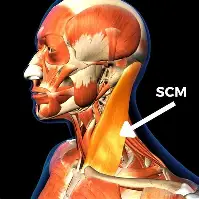
sternocleidomastoid
both flex the head, one alone rotates the face to the opposite side
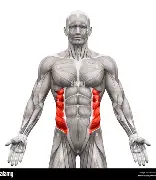
external oblique muscle
compresses the abdomen

transversus abdominis muscle
compresses abdomen

internal oblique muscle
compresses abdomen
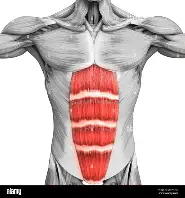
rectus abdominis muscle
compresses and flexes the vertebral column, aids urination and defecation

external intercostal muscles
aid inhalation and exhalation
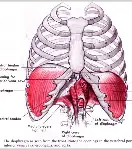
diaphragm muscle
aids inhalation and exhalation

pectoralis minor muscle
depresses the shoulder
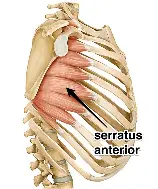
serratus anterior muscle
abducts the scapula

rhomboid muscles
adduct the scapula
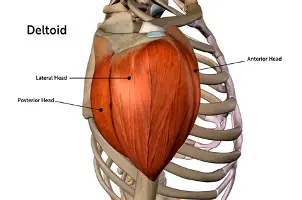
deltoid muscle
abducts the humerus

pectoralis major muscle
flexes the humerus

supraspinatus muscle
abducts humerus

teres minor
adducts and laterally rotates the humerus

teres major muscle
extends and medially rotates the humerus
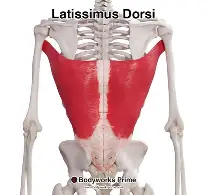
latissimus dorsi muscle
extends, adducts, rotates the humerus medially
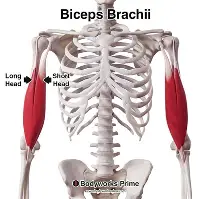
biceps brachii muscles
flexes and supinates the forearm

brachioradialis muscle
flexes the forearm

pronator teres muscle
pronates the forearm

triceps brachii muscles
extends the forearm
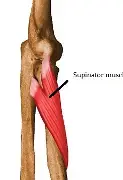
supinator muscle
supinates the forearm

erector spinae muscle
extends the vertebral column

gluteus medius muscles
abduct the thigh
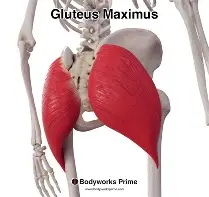
gluteus maximus muscles
abduct and extend the thigh
hamstring muscles
semitendinosus, semimembranosus, biceps femoris
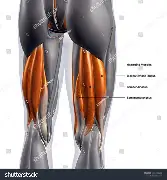

hamstring muscles action
extend the thigh

rectus femoris muscles
flexes the thigh

sartorius muscles
lateral rotation of hip

adductor muscles
adduct the thigh

gracilis muscle
adduct the thigh

gastrocnemius muscle
flexes lower leg, allows for plantar flexion of foot

quadriceps muscles
vastus lateralis, rectus femoris, vastus medialis, vastus intermedius

quadriceps muscles actions
extend the lower leg

tibialis anterior muscle
dorsiflexion of foot

soleus muscle
plantar flexion of foot
striated muscle
skeletal, cardiac muscle
multinucleated muscle
skeletal, smooth muscle
skeletal muscle shape
long, cylindrical
cardiac muscle shape
branched
smooth muscle shape
tapered ends
intercalated discs
cardiac muscles ONLY
skeletal muscle location
everywhere throughout the body
cardiac muscle location
only in the heart
smooth muscle location
digestive tract, urinary tract, blood vessels
skeletal muscle functions
movement, thermoregulation, controlling defecation/urination, protecting internal organs, posture/body position
cardiac muscle functions
pumping blood
smooth muscle function
moving food, moving urine, controlling blood vessel diameter
muscle fibers are made of
myofibril
myofibril is made of
myofilaments
muscle fascicles are made of
multiple muscle fibers
muscles are made of
multiple muscle fascicles
3 types of joints
fibrous, cartilaginous, synovial
function of fibrous joints
form skull suture lines, connection of bone to teeth, and antebrachial interosseous membrane
cartilaginous joints function
form public symphysis, form discs of vertebral column
function of synovial joints
provide mobility
ligaments
dense regular CT, connect bone to bone
tendons
dense regular CT, connect muscle to bone

plane joint
type of synovial joint, made of two flat bones sliding against each other
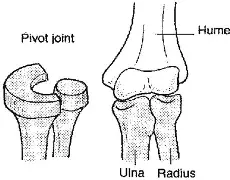
pivot joint
type of synovial joint, allows for rotation

hinge joint
type of synovial joint, opens and closes like a door hinge

condyloid joint
type of synovial joint, allows for flexing and extending but not rotation

saddle joint
type of synovial joint, allows for abduction/adduction, circumduction, flexing/extending, but no rotation

ball and socket joint
ball that fits into a socket, can perform any type of movement including rotation

clavicle
collarbone, superior to the ribcage

scapula
shoulderblade, articulates with the humerus and the clavicle

humerus
bone of the upper arm, head connects to glenoid cavity of scapula

radius
rotates around the ulna, articulating with wrist bones. Always lateral to ulna

ulna
always medial to the radius
hand bones
carpals (8), metacarpals (5), phalanges (2 in thumb, 3 in other fingers)

pelvis
2 coxal bones + the sacrum

femur
upper thigh bone. articulates with the acetabulum of the pelvis

patella
kneecap bone

tibia
medial to the fibula

fibula
lateral to the tibia. ankle bone is a process of the fibula
foot bones
tarsals (7), metatarsals (5), 5 phalanges

calcaneus
heel bone
6 functions of bone tissue
fat storage, blood cell formation, mineral storage, allows for movement, support, protection
what bone marrow contains fat for fat storage?
yellow bone marrow, only found in adults
where are blood cells made in bones?
made in the spongy bone of the epiphysis
where are minerals stored in the bones?
2/3 of the extracellular matrix of the osteocytes is calcium phosphate
how do bones support the body?
1/3 of an osteocyte’s extracellular matrix is collagen, making the bones less brittle
how do bones allow for movement?
muscles connect to the periosteum of the bone
how do bones allow for protection?
ex. the ribs protect the heart and lungs, and the cranium protects the brain