Scale Construction Part 1; Rational/Deductive Approach
 Call Kai
 Learn
 Practice Test
 Spaced Repetition
 Match
 Flashcards
 Knowt Play
1/34

There's no tags or description
Looks like no tags are added yet.
35 Terms
Reliability
refers to the consistency of test scores - if a scale is reliable, this means that scores are “repeatable”
Validity
refers to the meaning of test scores - if a scale is valid, this means that test scores assess the construct we intended
High reliability
tells us that the scale measures something
we can say that the scale is prescise in assessing something
High validity
tells us what the scale is assessing
Good scale construction
Carefully developing a scale increases the likelihood that it will be reliable and valid
Develop the scale using proper construction practices
Conduct research to test whether the scale is reliable and valid
A completed scale (measure)
definition of the construct (conceptual definition)
items tapping the construct
response categories to answer the items
instruction set
if applicable, interpretation aids, scording criteria, norms, standards for interpreting test scores
General steps in the process of scale construction
examine literature and previous tests
identify the primary purpose for which the test be used
define the construct of interest
define the domain (can prepare a table of test specifications to aid this step)
Construct-driven (rational/deductive) approach
start with a theory, use it to define the construct, and then develop items that measure that construct
order: theory → construct definition → items
step 1: examine literature and past scales
review what is already known about the construct
understand how it relates to and differs from other constructs
examine how it has been measured previously
explain how your measure improves on past approaches and why you chose to measure it this way
helps develop the theory explaining what the construct is and why it matters
Step 2: identify primary purpose
determine what the scale will be used for and be specific
purpose - research or placement/diagnostic decisions
specific decisions - what decisions will the measure help make?
research - what type of research will it support (experiemental or correlational)
target population
step 3: construct defintion
extremely important
articulate what is meant by your construct and what sort of things are not part of the construct
indicate what high and low levels of the construct mean
specify how your construct is similar to, and different from, other related constructs
nomological network
which helps to define your construct
tests whether a construct relates to other constructs as theory predicts
helps establish construct validity
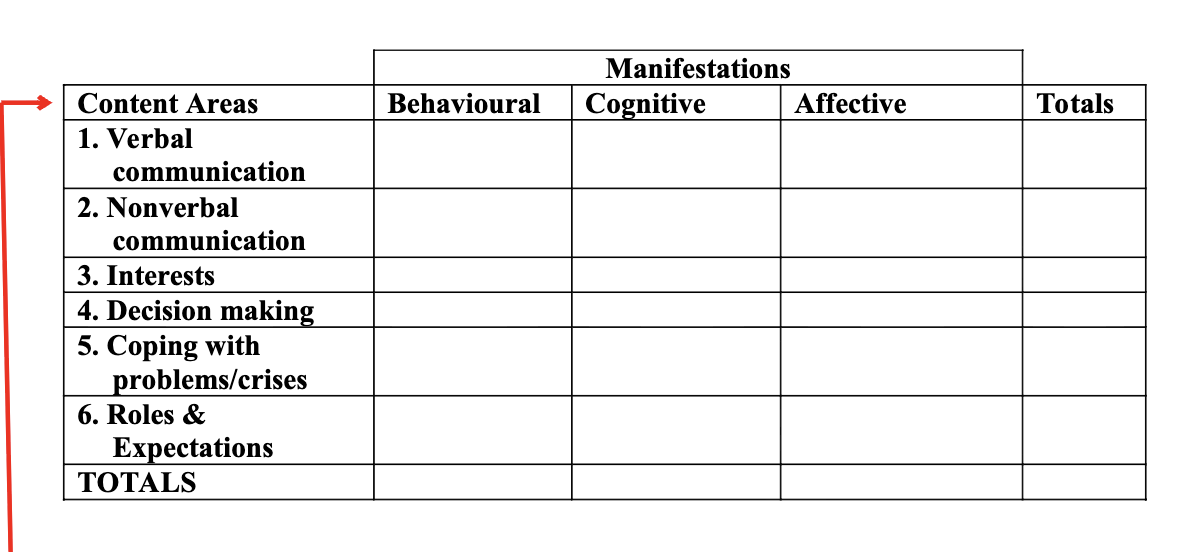
step 4: define the “domain” of the construct
how it manifests - how the construct appears in behaviours, thoughts, or feelings
content - what aspects of the construct should be measured
test specification table
test specification table
organizes the different manifestations (behaviours thoughts feelings) and content to ensure the scale measures all important aspects of it
helps ensure content validity by checking that the scale covers the construct
content-specific (domain specific)
measures a construct in a specific situation (feeling useless as a student)
General (non domain specific)
measures a construct overall, without a specific situations (e.g., generally feeling useless)
Scale breadth
the question of how narrow or broad your test should be
broad = items are heterogeneous (items are different from each other)
narrow = items are homogeneous (items are more similar to each other)
also non domain specific
why is broad heterogenous items are useful
example “want to capture stressful life experiences in different ways
Homogenous items (narrow measure)
responses will be more highly positively correlated
higher inter-item correlations
heterogeneous items (broad measure)
responses will be less highly positively correlated
lower inter-item correlations
inter-item correlations
how strongly the questions on a scale are related to each other
high correlations suggest the items may be measuring the same thing
Correlation
the most used statistic
measure of the association (relation) between two variables (direction, magnitude)
ranges from 0 to 1
can be + or -
Positive Correlation
As variable X increases, so does Variable Y
Negative correlation
As variable y increases, variable x decreases
Inter-item correlations (rij)
measure how strongly the items/questions on a scale relate to each other
Narrow scale (inter-item correlations)
items measure a very similar concept, so their correlations are higher (e.g., .40-.70)
Broad scale (inter-item correlations)
items measure different aspects of a larger construct, so their correlations are lower (.01-.15)
Pro of Narrow
narrow scales have higher internal consistency (Cronbach’s alpha) because the items measure similar things
similar items have higher inter-item correlations, relate more strongly to each other
Cronbach’s alpha
Depends on the average correlation between items and the number of items in the scale
estimates reliability
Pros of Broad
Measure more aspects of a construct, predict a wider range of attitudes and behaviours
cover more aspects → may correlate with more variables in future research
but lower cronbach alpha
Bandwidth-Fidelity Trade-Off
narrow scale: measure a specific aspect of a construct → predict outcomes related to that aspect well but may not relate to other variables greater fidelity
broad scale: measures more aspects of a construct → may correlate with and predict a wider range of variables greater bandwidth
Bandwidth-Fidelity Trade-Off Example
academic self esteem may relate to academic performance but not necessarily leadership work (measure a specific aspect of self esteem)
global self esteem measures self esteem more broadly, it may relate to leadership in uni and at work (measure g.s.e. across more areas
Multidimensional
measures multiple aspects of a construct
separate subscales, each measuring a specific aspect with its own defintion
homogeneous items - items within each subscale measure the same specific aspect
Unidimensional
measures only one underlying construct or dimension
clusters of correlated items
some items correlate highly with each other because they measure the same dimension, but correlate less with items measuring other dimensions