Implicit Bias
 Call Kai
 Learn
 Practice Test
 Spaced Repetition
 Match
 Flashcards
 Knowt Play
1/19

There's no tags or description
Looks like no tags are added yet.
20 Terms
affinity bias
-tendency to gravitate towards people who share similarites w/ you
-benefits: easy to releate, shared expereinces
-drawbacks: miss out on experiences and prespectives
what did IAT revele?
-Race IAT: 75% reveal automatic white preference
-Age IAT: 80% of Americans have a stronger young = good than old = good association; Only 6% have the reverse association
Bias definition
Positive or negative evaluation of someone or something
Implicit bias definition
We are unaware that an evaluation is taking place
explicit bias definition
We are aware that an evaluation is taking place
Type I vs Type II decision-making process + how switch between them
Type I
-automatic thoughts; don’t think a lot about it; what brain does most the time
-influenced by emotions, attitudes, bias
Type II
-requires higher level of thinking; takes more time
-less mistakes
-if pattern NOT recognized
How switch between them
-pattern reconition 2 → 1
-exectuive override 1 → 2
-dhysrationalia ovveride 2 → 1: prone to more mistakes

Bias definitions
-confirmation bias
-availability bias
-anchoring bias
-affective bias
-Confirmation bias: Seeking information that only confirms what you believe rather than information to refute it
-Availability bias: Recent experience makes issue/thought more salient. Alternatively, less recent encounters are less salient (*ex: think of cancer bc what learned in class)
-Anchoring bias: Focus on the initial information received results in early conclusion despite additional pertinent information being available. (*ex=torn rotator cuff on MRI must be source of pain)
-Affective bias: Countertransference or a professional’s feeling toward the patient results in misdiagnosis (*ex=feelings if pt late, insurance)
bias makes you more prone to make ___
mistakes
another way to think of bias…
Smog
-on everything, so figure out what is the source of it
what level of the SEM does bias work on?
every level
-bc we are inherently bias
-ex: Medicaid reimbursement → not lot clinics in area with medicaids → clinic only have 10% caseload medicaid → PT document more freuqenlty → PT individual thought

MODE model
-Motivation and Opportunity as DEterminants of whether attitude is spontaneous or deliberate
-Spontaneous = Type I
Perceptions
-Deliberate Process = Type II
Cost-benefit anlaysis
motivation
opporunity to deliberate must be present

Relationship Between Implicit and Explicit Measures
-Depends on motivation and opportunity
● Low motivation - Behavior is likely to follow implicit measures
● High motivation - Behavior is likely to follow explicit measures
-Immediate response required: Behavior is likely to follow implicit measures
-Opportunity to deliberate: Behavior is likely to follow explicit measures
key takeaway type 1 vs 2 decision making process…
take a moment to pause and reflect!
-less likely to make mistakes and be bias
Stereotypes definition
-Evaluative overgeneralized personal traits assigned to a group (IDI)
*not always negative
negative vs position sterotypes
-Negative: A stereotype that purports to describe the undesirable, objectionable, or unacceptable qualities and characteristics of the members of a particular group or social category.
-Positive: A stereotype that purports to describe the admirable, desirable, or beneficial qualities and characteristics of the members of a particular group or social category. Although stereotypes about other groups are often negative, generalizations about one’s own groups tend to be positive.
prejudice definition
-a negative attitude toward another person or group formed in advance of any experience with that person or group
-Affective + Cognition component
*affective component makes it dif than sterotypes; usually negative but can also be position
-distort our perception of information
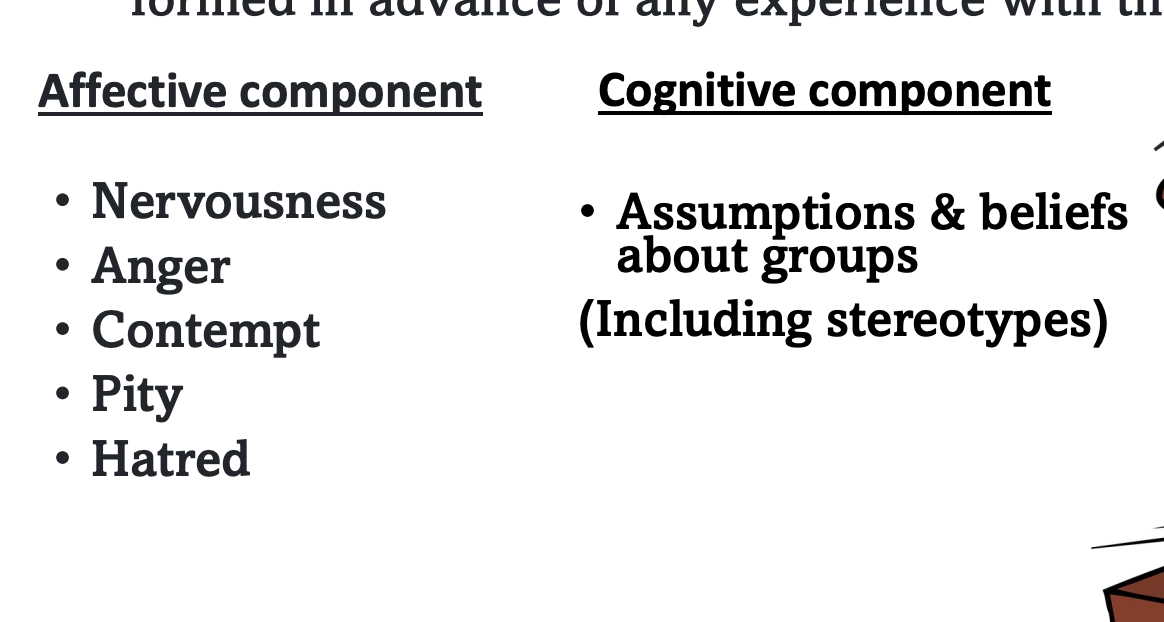
sterotype vs prejudice
-Stereotype = What you think
It’s a belief or assumption about a group. It can be positive, negative, or neutral — but it’s still an overgeneralization.
-Prejudice = What you feel
It’s a negative attitude or emotional reaction toward someone based on their group membership. It’s often rooted in stereotypes but goes further by adding judgment or bias.
-Discrimination = What you do or how you act
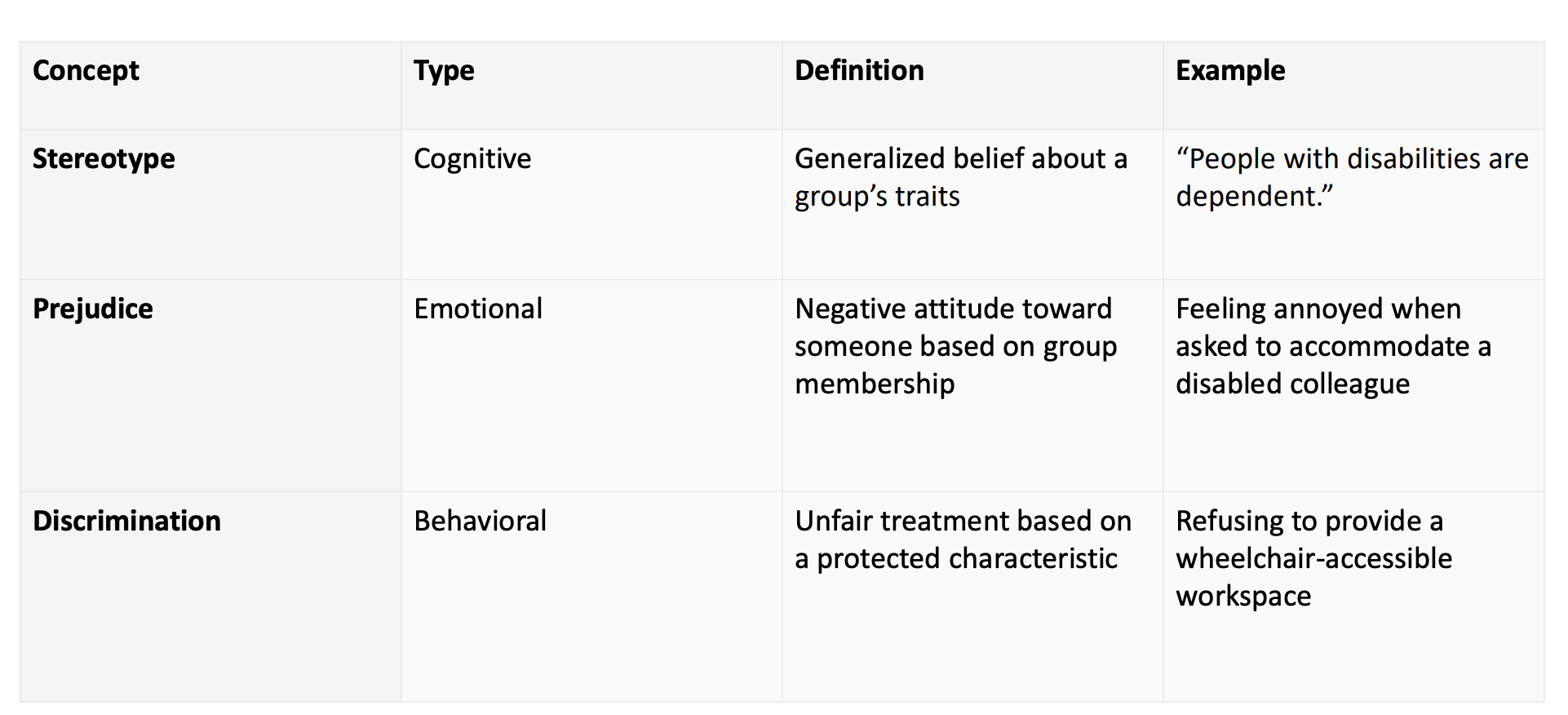
discrimintion
-action part
-differential treatment
Construal Level Theory
construal=psychological distance
-higher construal level=abstract thinking
-lower construal level=concrete thinking

social distance power wheel
-more prone with people who have higher psychological distance
-ex: new grad PT
-to overcome: ask them “what was your past expereince”; don’t ignore it!
