kin270 axial and appendicular skeleton bones
 Call Kai
 Learn
Learn Practice Test
 Spaced Repetition
 Match
Match Flashcards
 Knowt Play
1/79

There's no tags or description
Looks like no tags are added yet.
Name | Mastery | Learn | Test | Matching | Spaced | Call with Kai | Chat |
|---|
No analytics yet
Send a link to your students to track their progress
80 Terms
parietal bone

frontal bone

occipital bone

occipital condyle
part of occipital bone

foramen magnum

external occipital protuberance
part of occipital bone

temporal bone

external acoustic meatus
part of temporal bone

mandibular fossa
part of temporal bone

mastoid process
part of temporal bone

zygomatic process
part of temporal bone

sphenoid bone

stella turcica
part of sphenoid bone

sagittal suture

coronal suture

lambdoid suture
outlines occipital bone

squamous suture
between temporal and parietal bones

maxilla

palatine

nasal bone

lacrimal bone

zygomatic bone

temporal process
part of zygomatic bone

mandible

body of mandible
part of mandible

ramus of mandible
part of mandible

condylar process of mandible
part of mandible
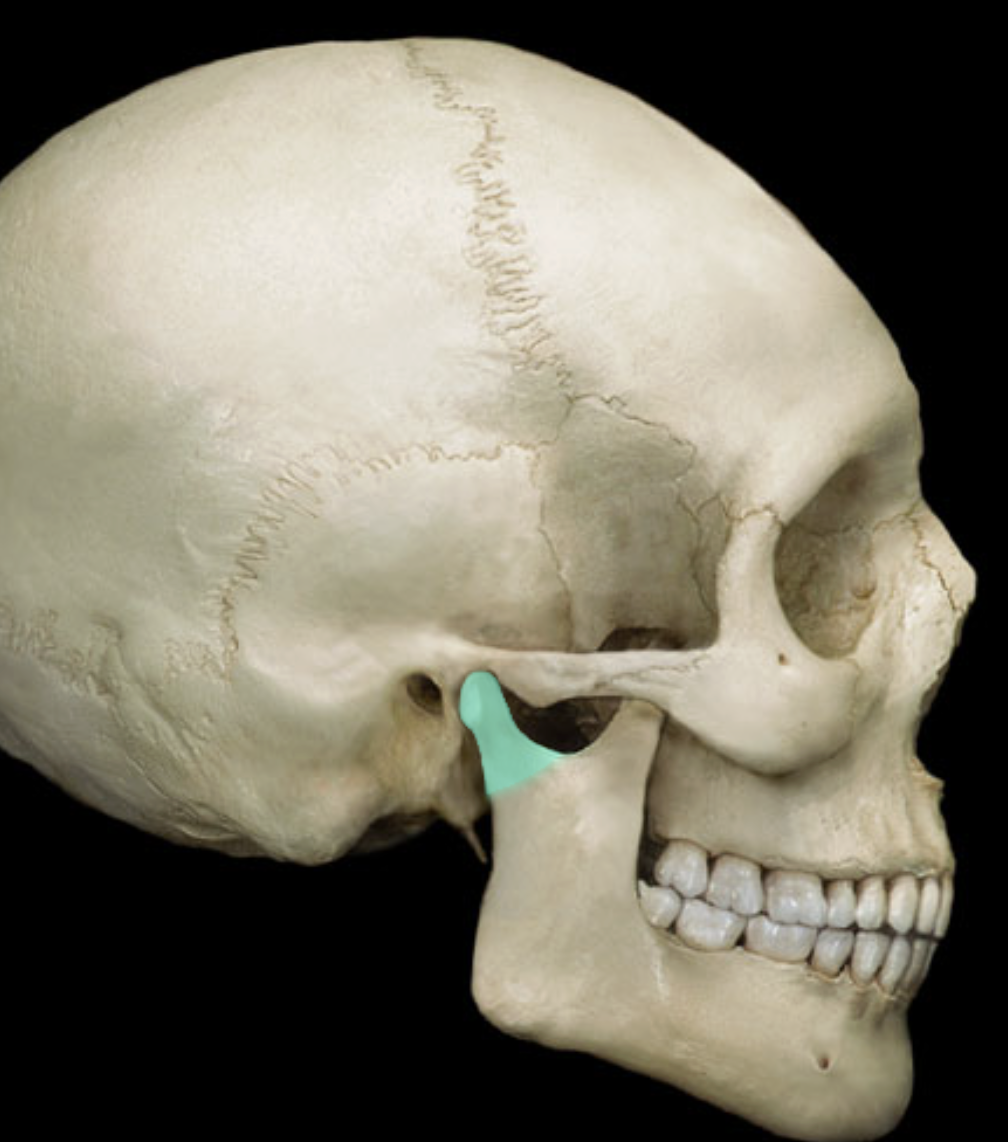
coronoid process of mandible

hyoid bone
special bc it is the only bone that does not connect to any other bone

how many cervical vertebrae are there?
7
how many thoracic vertebrae are there?
12
how many lumbar vertebrae are there?
5
body of cervical vertebrae

cervical vertebrae
uppermost vertebrae
widest with 3 foramen (one set and one alone) and wishbone-shaped top
only one with transverse foramen
7 total
includes atlas (c1) and axis (c2)

vertebral foramen of cervical vertebrae

spinous process of cervical vertebrae

transverse foramen of cervical vertebrae

thoracic vertebrae
w shape on top of vertebral foramen
mid section of vertebrae
12 total

body of transverse vertebrae

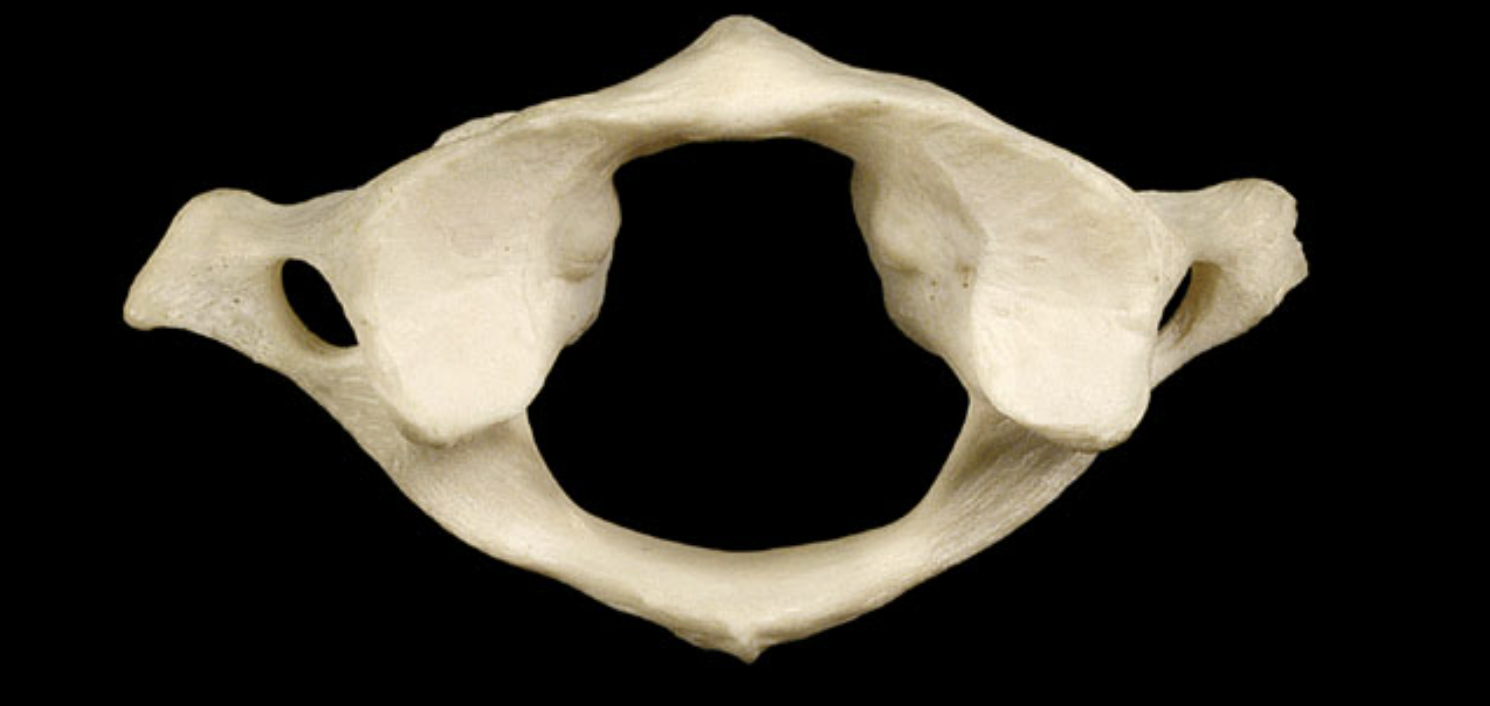
atlas
also known as c1
first vertebrae
part of cervical vertebrae
contains transverse foramen, transverse process, and vertebral foramen
axis
also known as c2
second vertebrae
part of cervical vertebrae
contains transverse process, spinous process, transverse foramen, vertebral foramen, and dens
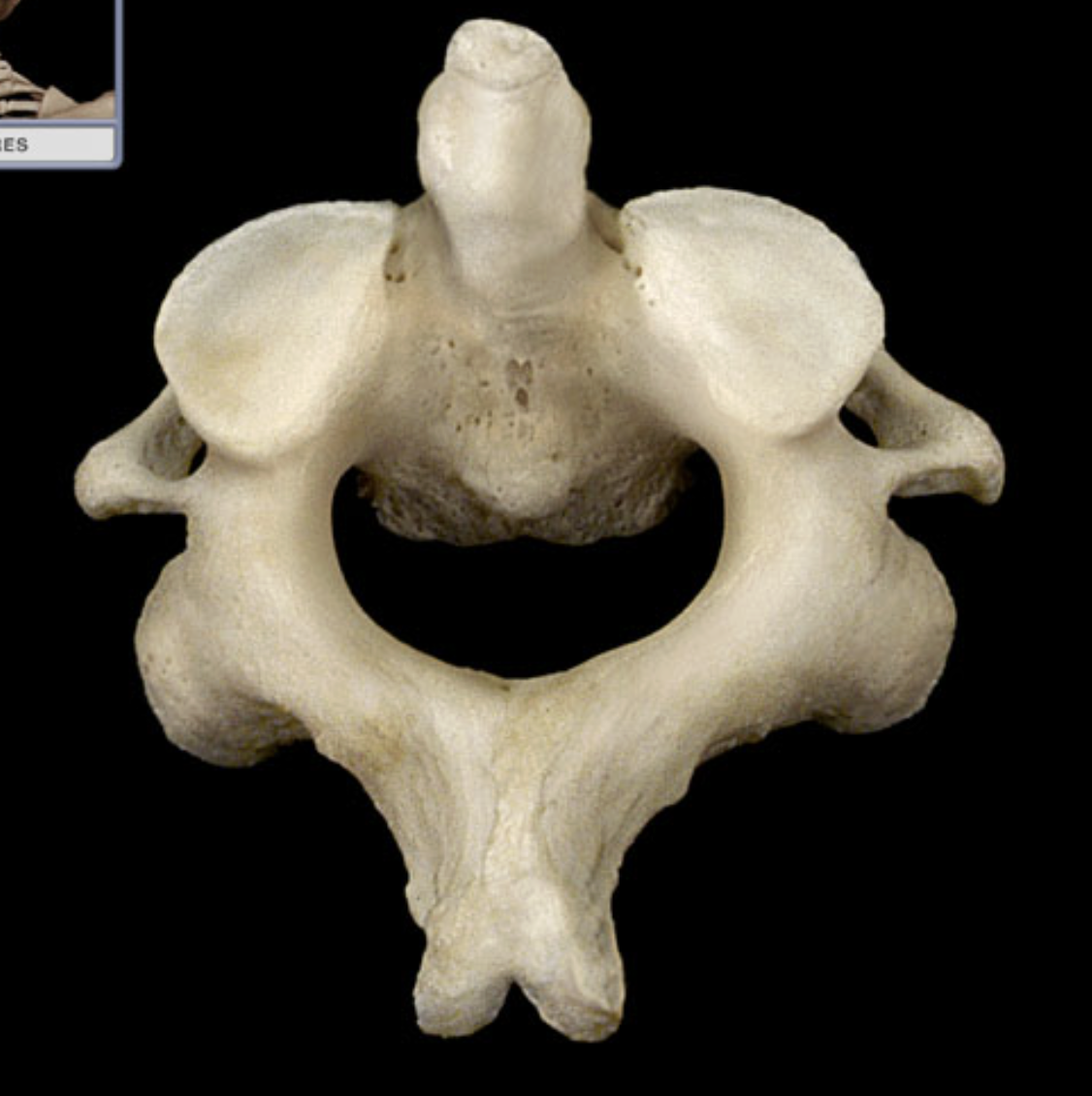
dens
only part of axis/c2
finger-like projection
represents body of atlas

spinous process of thoracic vertebrae
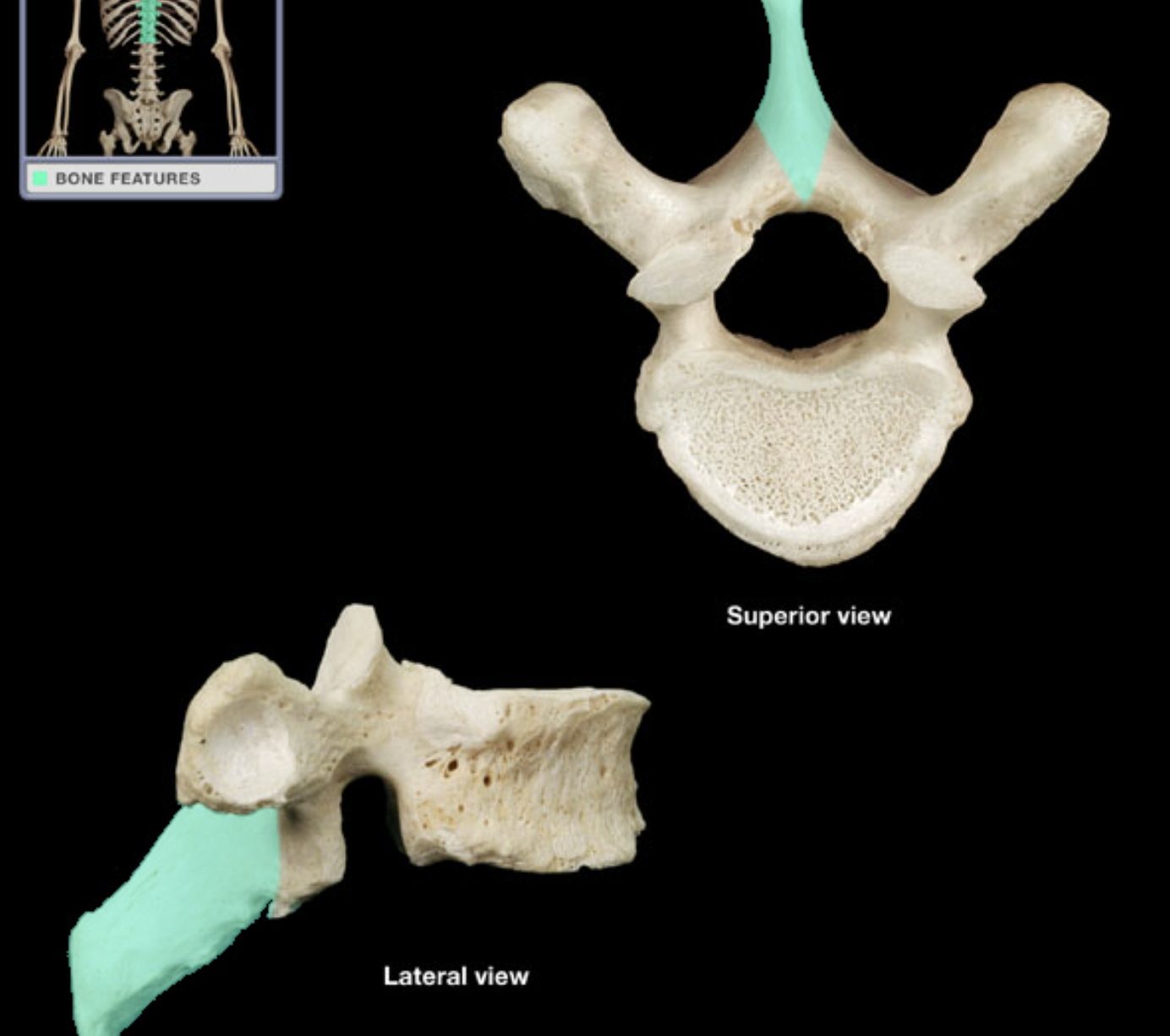
transverse process of thoracic vertebrae

vertebral foramen of thoracic vertebrae

lumbar vertebrae
smallest vertebrae
trident shaped above body
5 total
lowest region of spine

body of lumbar vertebrae

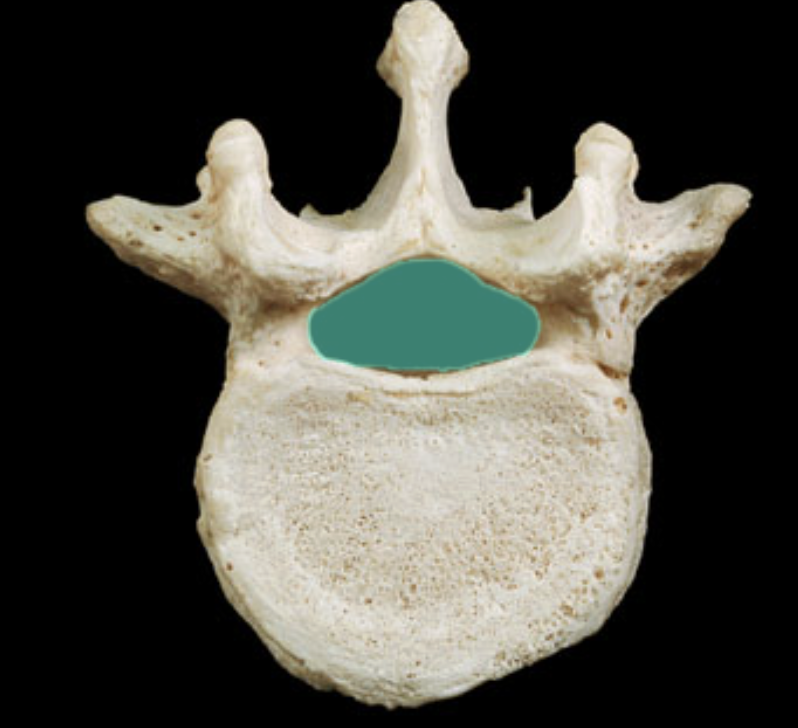
spinous process of lumbar vertebrae

transverse process of lumbar vertebrae

vertebral foramen of lumbar vertebrae
sacrum
5 fused bones

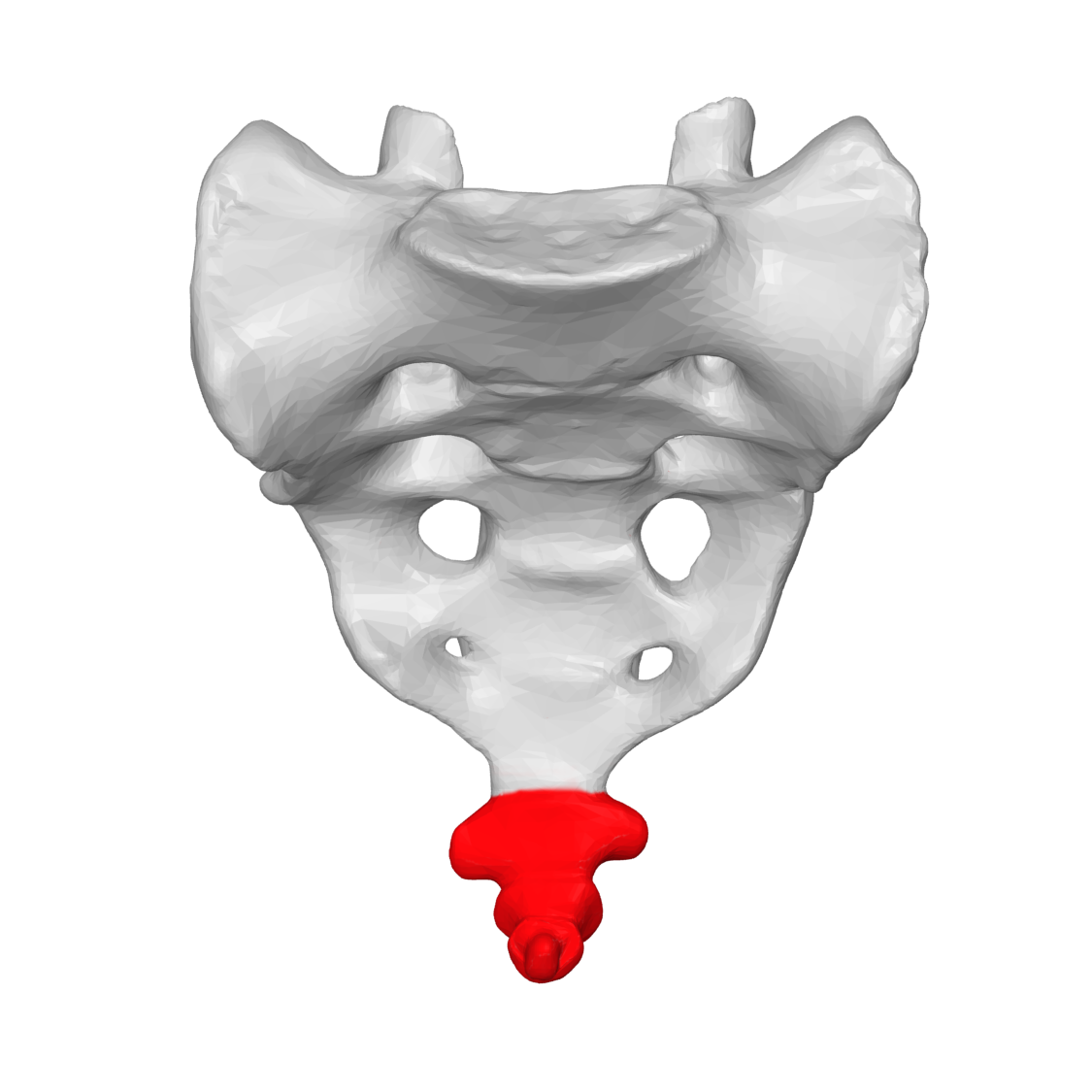
coccyx
4-5 fused bones
also known as tailbone
true ribs
ribs 1-7
tend to be flatter/smaller and have little notch on back
directly attached to costal cartilage

false ribs
ribs 8-10
a little rounded and longer
indirectly attached to costal cartilage

floating ribs
ribs 11-12
not attached to costal cartilage
smaller

costal cartilage
attaches true and false ribs to sternum
medial to ribs, lateral to sternum

sternum

body of sternum

manubrium
most superior part of sternum

xiphoid process
most inferior part of sternum

clavicle

scapula

acromion/acromial process
landmark of scapula

coracoid process
landmark of scapula

spine
landmark of scapula

glenoid cavity
landmark of scapula

subscapular fossa
landmark of scapula

supraspinous fossa
landmark of scapula

infraspinous fossa
landmark of scapula

lateral border of scapula
landmark of scapula

medial border of scapula
landmark of scapula

superior border of scapula
landmark of scapula

inferior angle of scapula
landmark of scapula

humerus

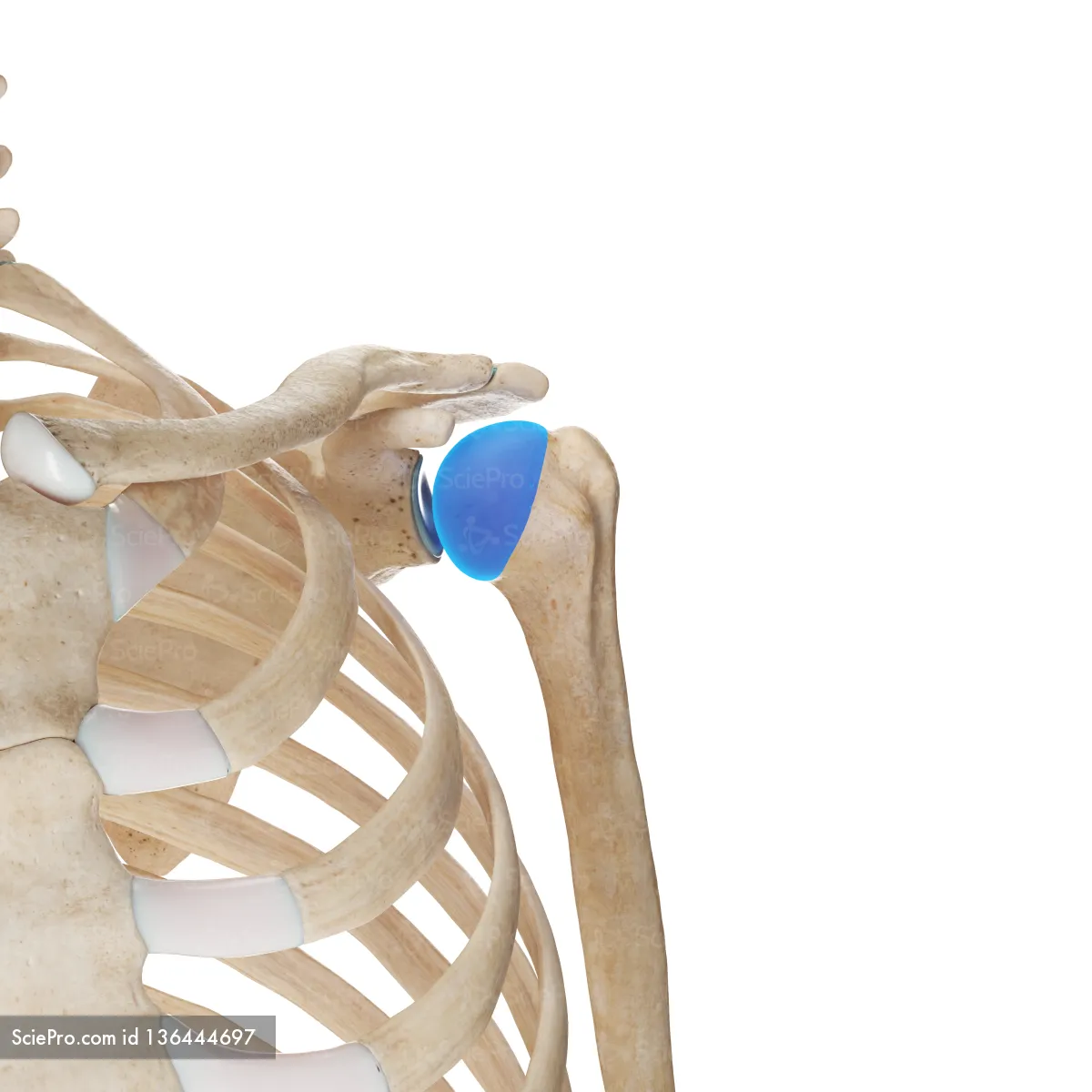
head of humerus
landmark of humerus
greater tubercle
landmark of humerus

lesser tubercle
landmark of humerus
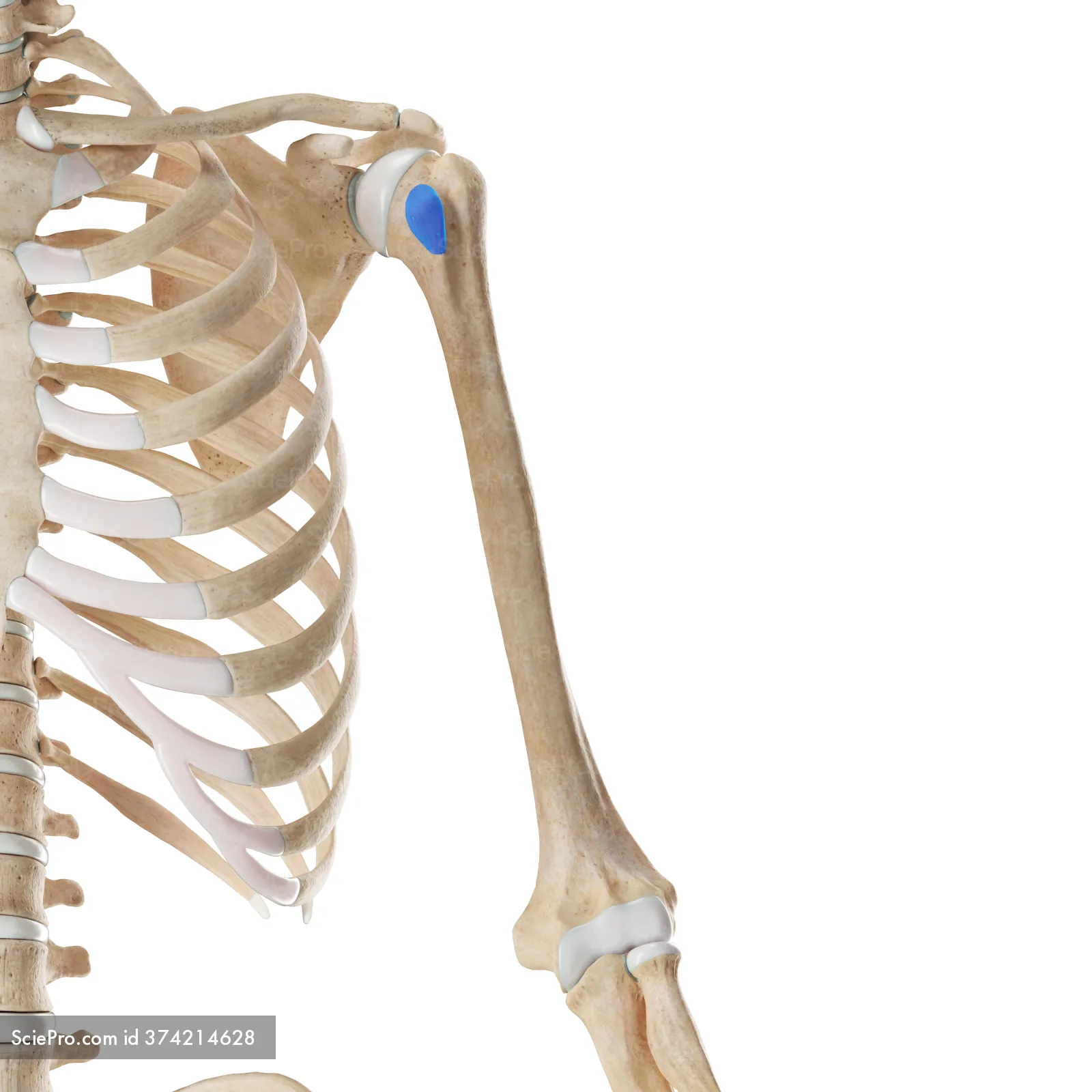
intertubercular groove/sulcus
landmark of humerus

deltoid tuberosity
landmark of humerus

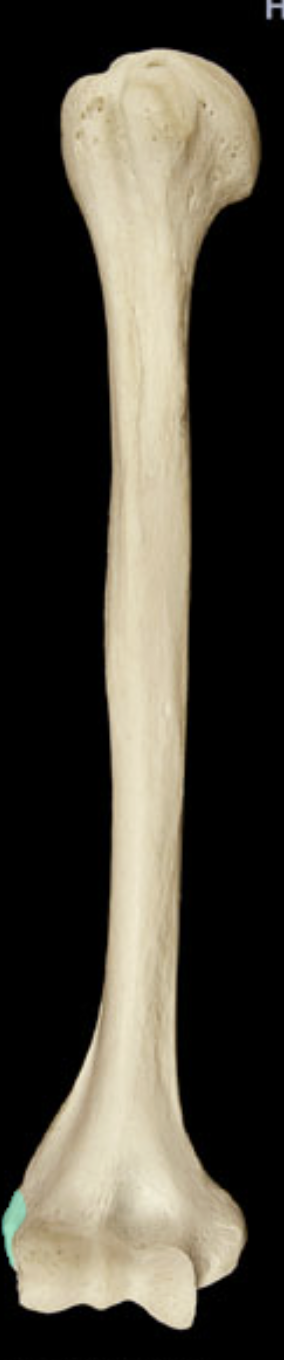
lateral epicondyle
landmark of humerus