Structure of Nucleic Acids (Reading Assignment)
 Call Kai
 Learn
 Practice Test
 Spaced Repetition
 Match
 Flashcards
 Knowt Play
1/34

There's no tags or description
Looks like no tags are added yet.
35 Terms
Nucleic Acids
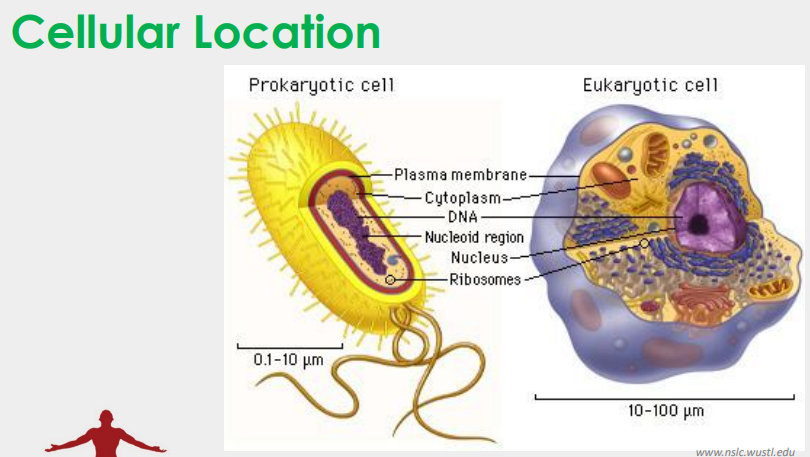
chemical repositories of genetic information
located inside the nucleus (for eukaryotes) or in the nucleoid region (for prokaryotes)
phosphodiester
DNA (2’-deoxyribonucleic acid)
RNA (ribonucleic acid)
Nucleic Acids
biopolymers of nucleotides linked together by __________________ bonds
two forms:
_______________________
_______________________


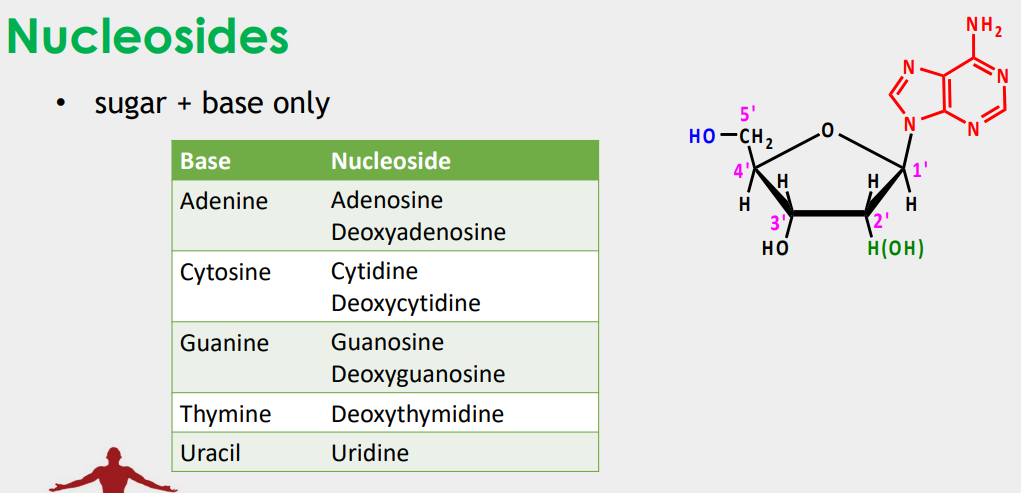

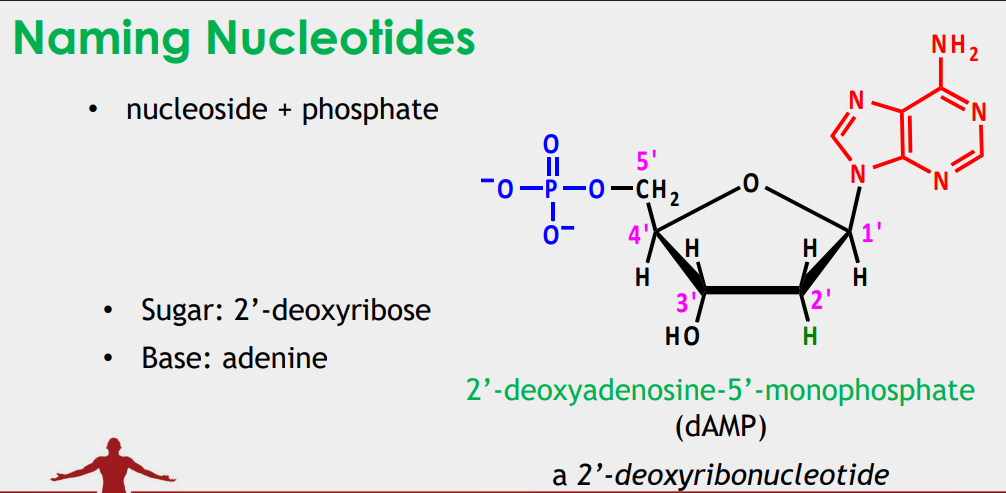


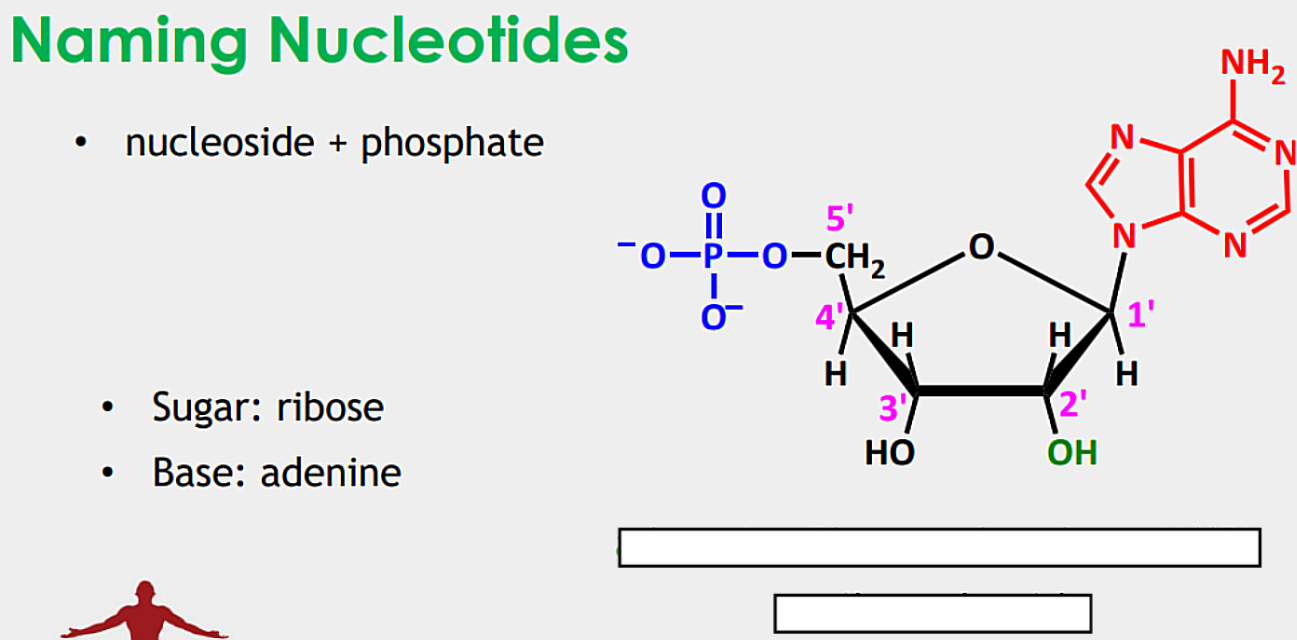
nucleic acids
ATP and GTP
FAD, NADH, NADPH
UDP-glucose, UDP-galactose
Functions of Nucleotides
As repeating units/precursors of ______________
Energy currencies in metabolism
____ and ____
Components of co-enzymes and reductants
_____, ______, and ______
Carriers of activated molecules
____________, ______________
four
ATP (Adenosine Triphosphate)
dTDP (Deoxythymidine Diphosphate)
dCDP (Deoxycytidine Diphosphate)
dGDP (Deoxyguanosine Diphosphate)
2’-deoxyribonucleotides
sugar; phosphate; phosphodiester

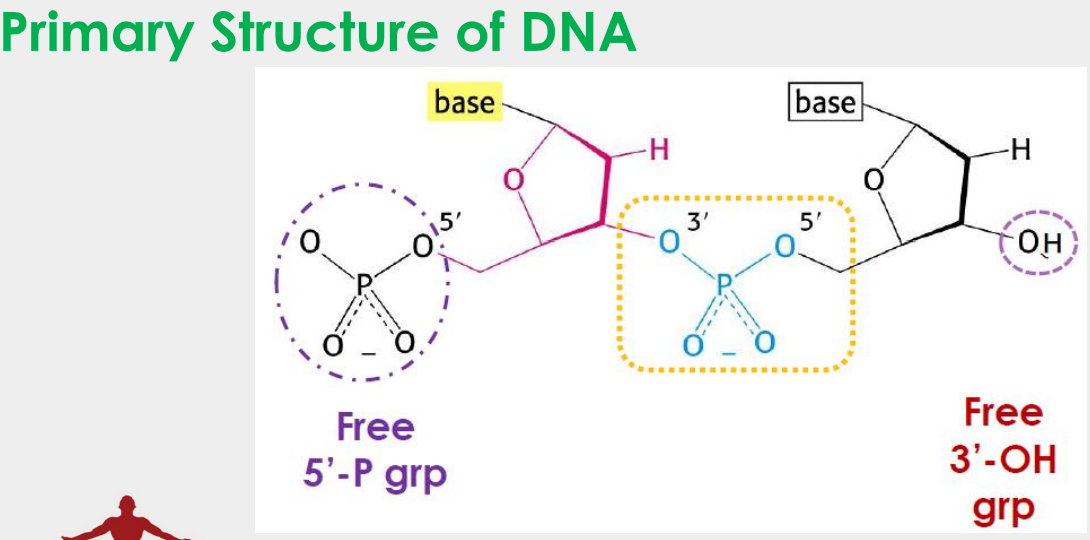
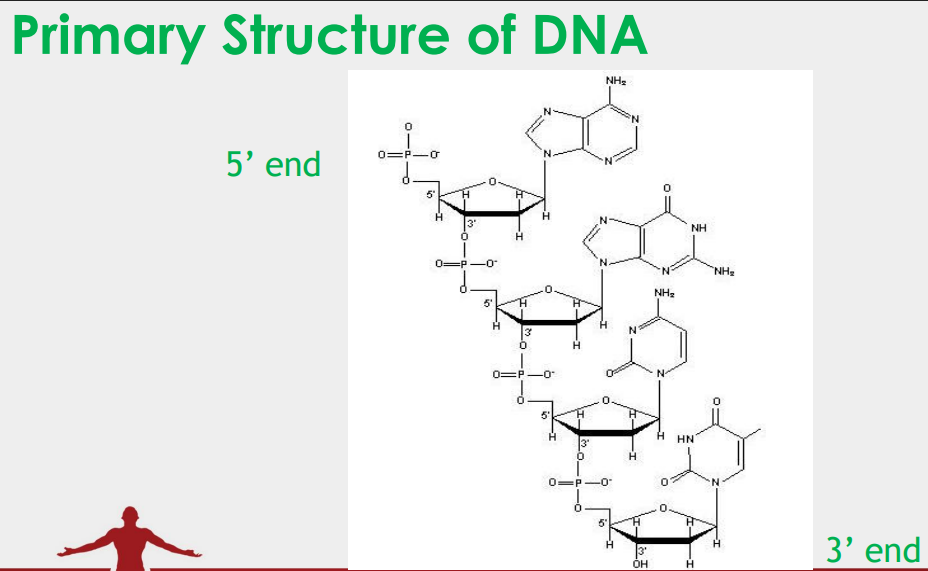
Primary Structure of DNA
polymer of ______ nucleotides
Core nucleoide molecules:
_____________________
_____________________
_____________________
_____________________
main structural features:
monomer: _____________________
backbone: alternating _______ and _________ groups linked together by _________________ bonds
5’-phosphate group of one nucleotide to 3’ ―OH group of another nucleotide
5’; 3’
It is the 5’ end if there is a free phosphate group and it is the 3’ end if thhere is a free hydroxyl group.
Primary Structure of DNA
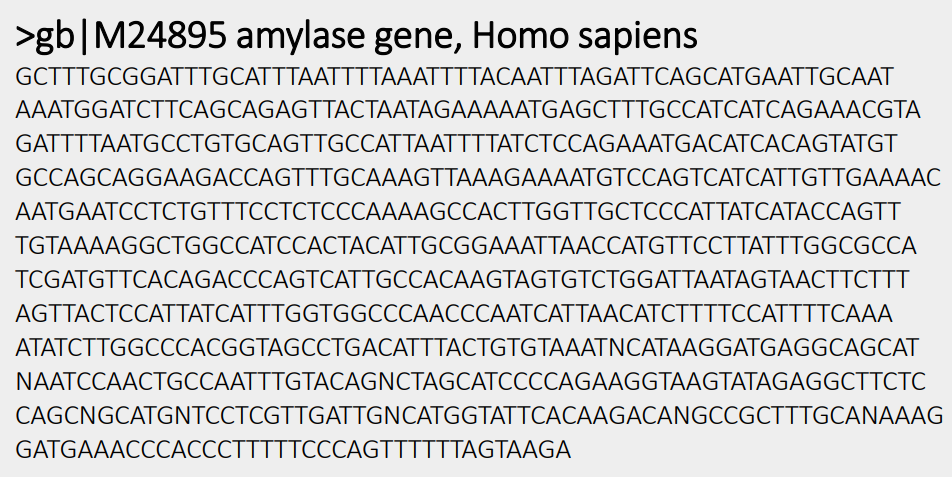
by convention, the base sequence is read from the __ to __ direction
base sequence along a chain carries the genetic information
What determined which end is which?
double helix

Secondary Structure of DNA
The DNA molecule has the form of a _____________:
a helical structure consisting of two complementary nucleic acid strands
Rosalind Franklin; Maurice Wilkins
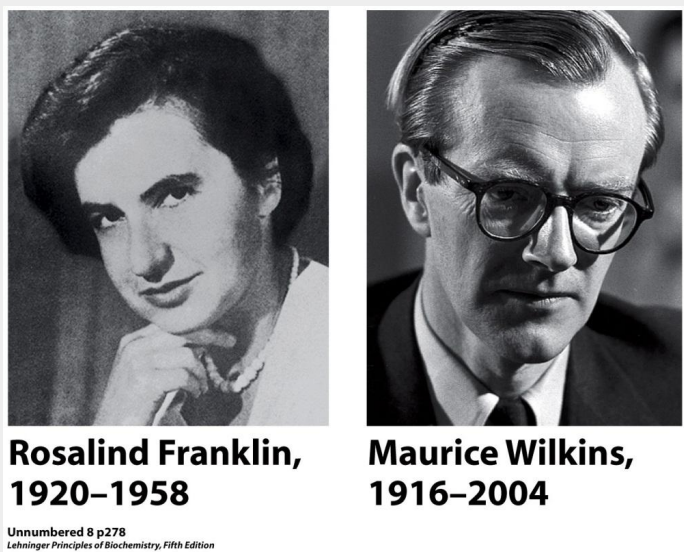
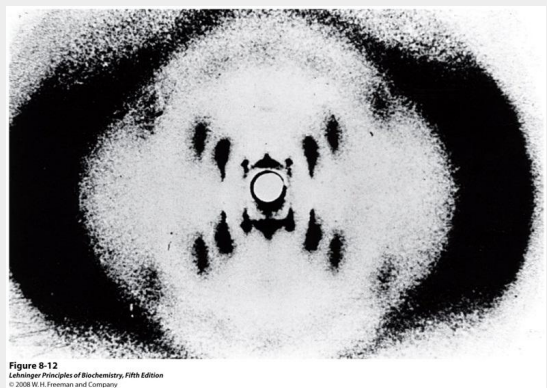
Elucidation of DNA 3D structure
_________________ and __________________ obtained the X-ray diffraction photographs of DNA fibers
James Watson; Francis Crick

Elucidation of DNA 3D structure
_____________ and ______________ deduced DNA structure in 1953
helical; polynucleotide
opposite

Watson-Crick DNA Model
two ________ ________________ chains are coiled around a common axis
the two chains run in ________ directions
sugar-phosphate
purine; pyrimidine
Watson-Crick DNA Model
the ________________ backbones are on the outside
__________ and ___________ bases lie on the inside of the helix
perpendicular
3.4 Å
hydrophobic interactions

Watson-Crick DNA Model
the bases are nearly _________ to the helix axis
bases are stacked on top of the other with distance of _____
base stacking maximizes ______________ _____________ to stabilize the DNA structure
10; 34
36
360; 10
20
Watson-Crick DNA Model
each turn of the helix consists of __ stacked base pairs (__ Å /turn)
rotation per base is __°
__° per full turn/__ bases per turn
helix diameter is __ Å
adenine; thymine
cytosine; guanine
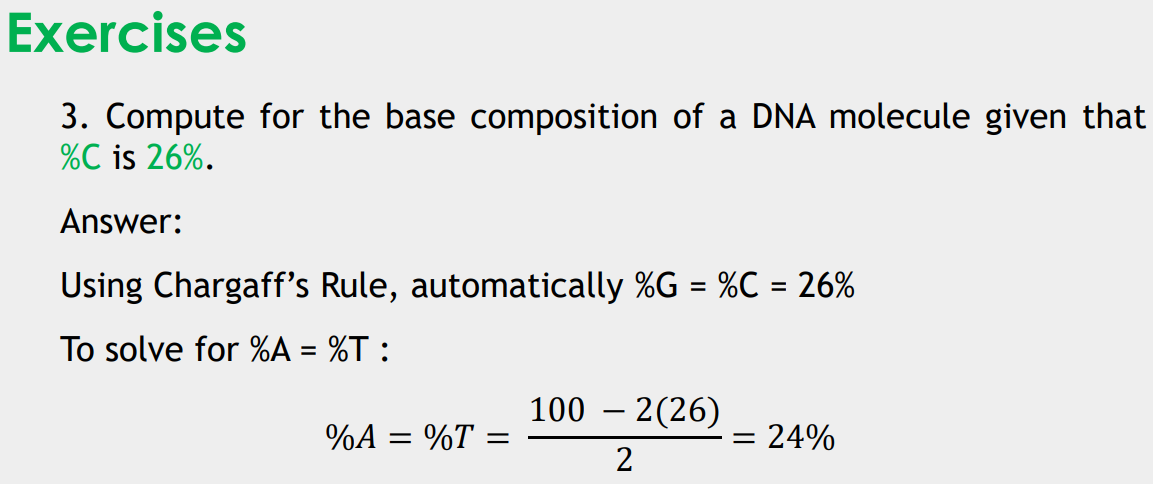
Chargaff’s Rule
Erwin Chargaff


Watson-Crick DNA Model
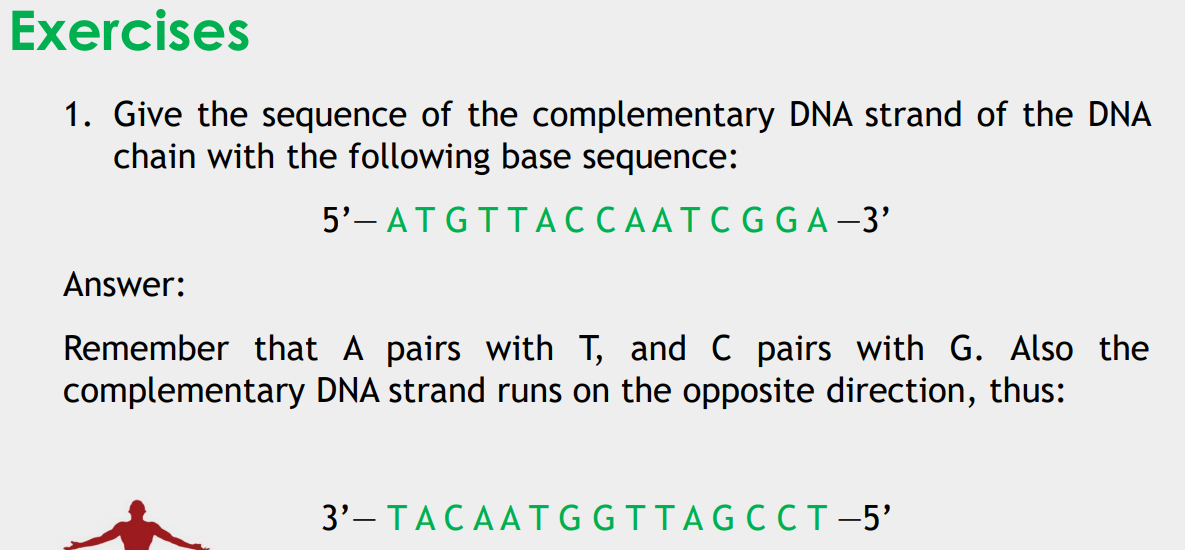
two strands are complementary due to specific base pairing
__________ pairs with ____________
__________ pairs with ____________
______________ Rule
____________ (1950)
A:T and G:C percentages Sare nearly the same in all species




Plasmid DNA
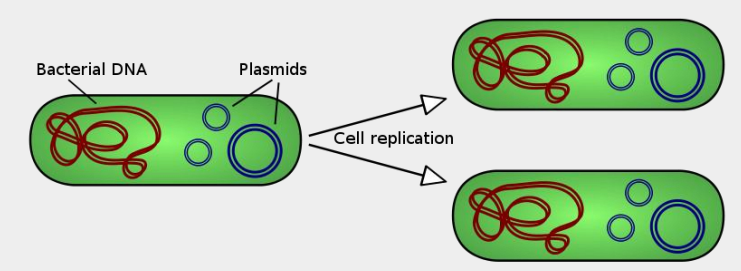
______________
small DNA molecule which is physically separate from chromosomal DNA and capable of self-replication
Plasmid DNA
_________________
usually used as vector in genetic engineering
ribose
Thymine; uracil
single
Ribonucleic Acid (RNA)
primary structure is similar to DNA except for the ff:
Sugar component which is _________
Nucleotide base _________ is replaced with _________
most cellular RNAs are _______-stranded and exhibit a variety of conformations
different types of RNA perform different cellular functions
ATP (Adenosine triphosphate)
GTP (Guanosine triphosphate)
CTP (Cytidine triphosphate)
UTP (Uridine triphosphate)
What are the (four mentioned) important ribonucleotides in RNA?
base pairing; secondary
hairpin; stem-loop
tertiary

2° and 3° Structures of RNA
in a single-stranded RNA, intramolecular _____ _________ determines the ____________ structure
__________ and _____________ are the most common elements of the secondary structure
__________ structure is formed by joining together the different secondary structures of RNA
messenger RNA (mRNA)
transfer RNA (tRNA)
ribosomal RNA (rRNA)
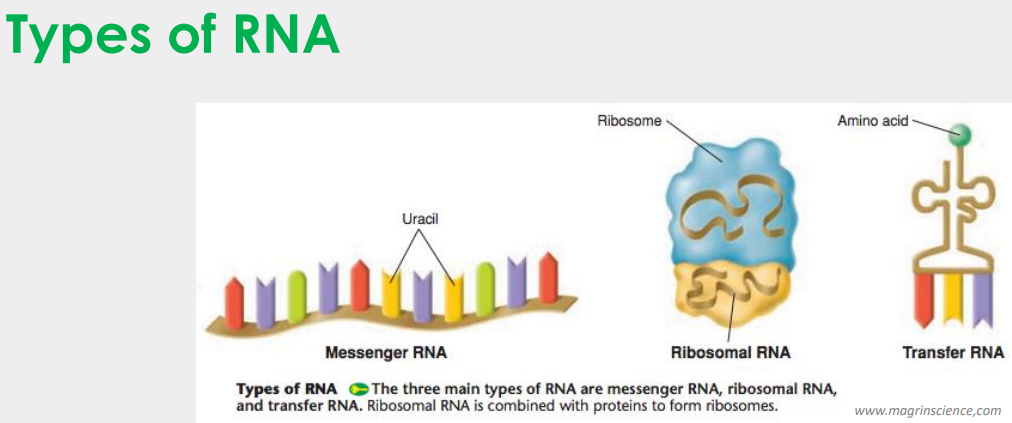
Types of RNA
____________________
serves as template for the synthesis of polypeptide (translation)
____________________
carries amino acids in an activated form to the ribosomes for peptide bond formation during polypeptide synthesis
____________________
major component of ribosomes