L3 Evolution of Reaction Theory & PES Analysis
 Call Kai
 Learn
 Practice Test
 Spaced Repetition
 Match
 Flashcards
 Knowt Play
1/21

There's no tags or description
Looks like no tags are added yet.
22 Terms
Unimolecular reactions and the Lindemann-Hinshelwood Mechanism
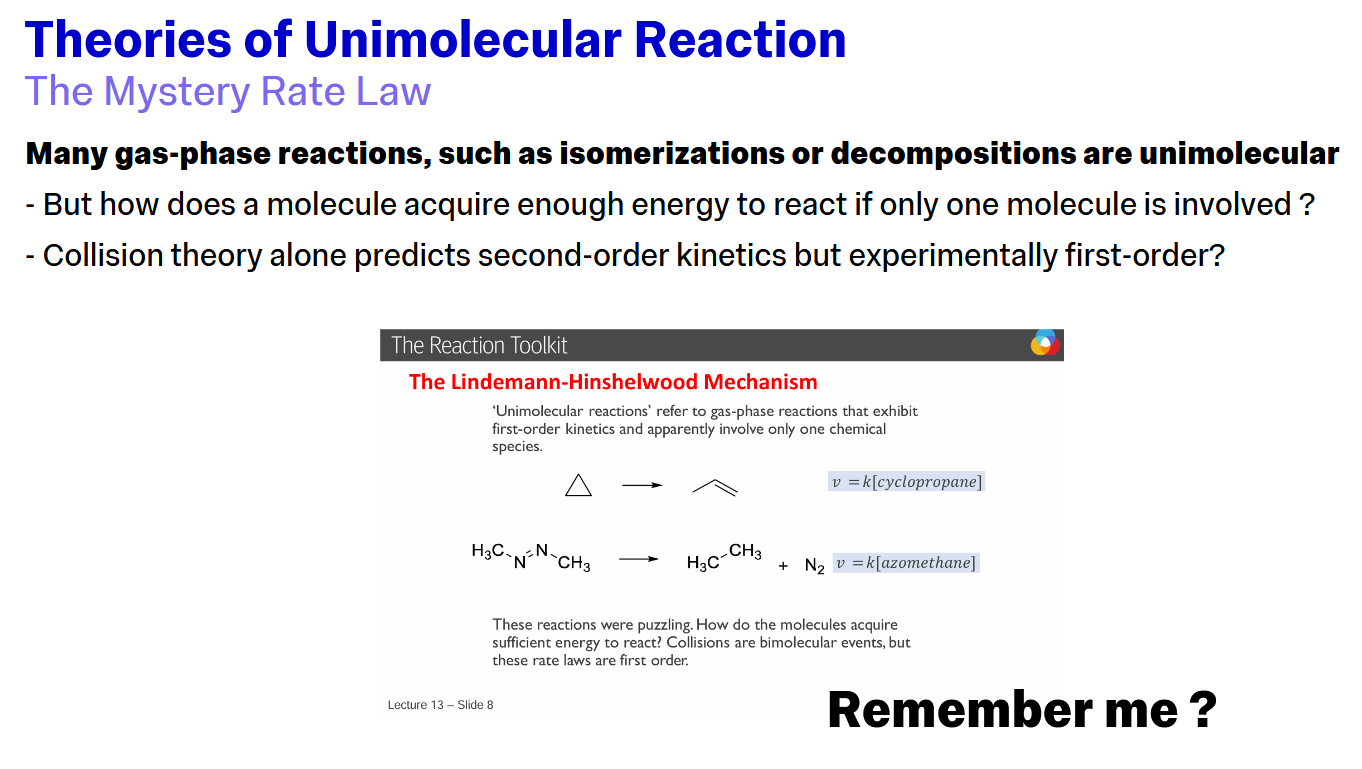
Lindemann-Hinschelwood using steady state
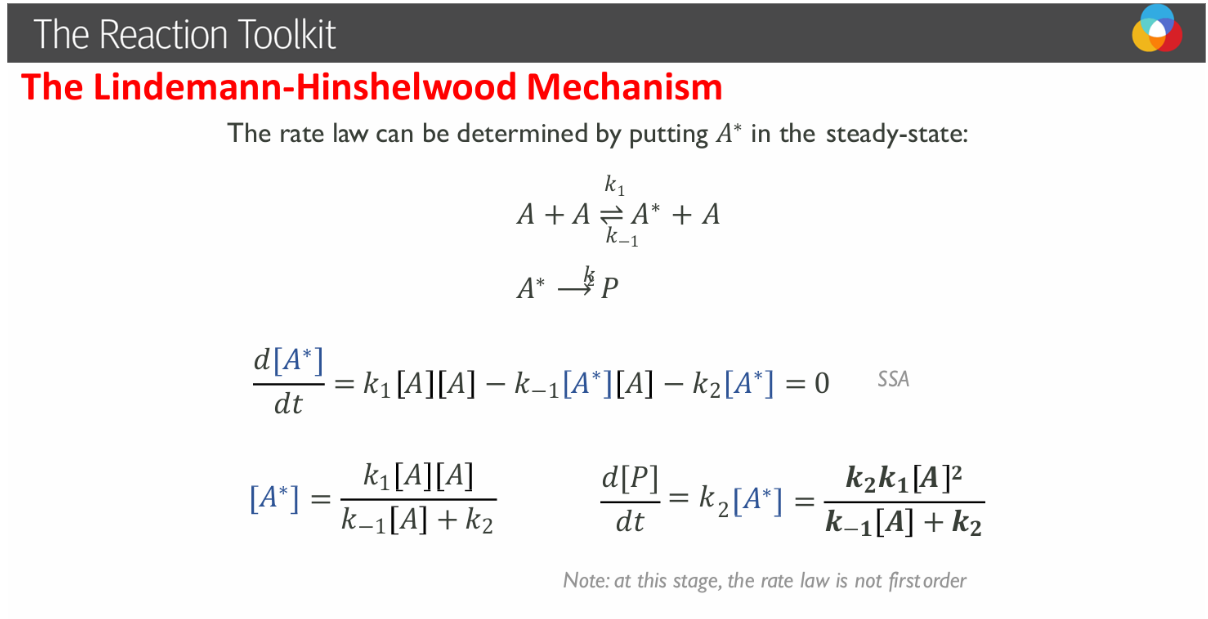
Limitations of Lindemann-Hinschelwood

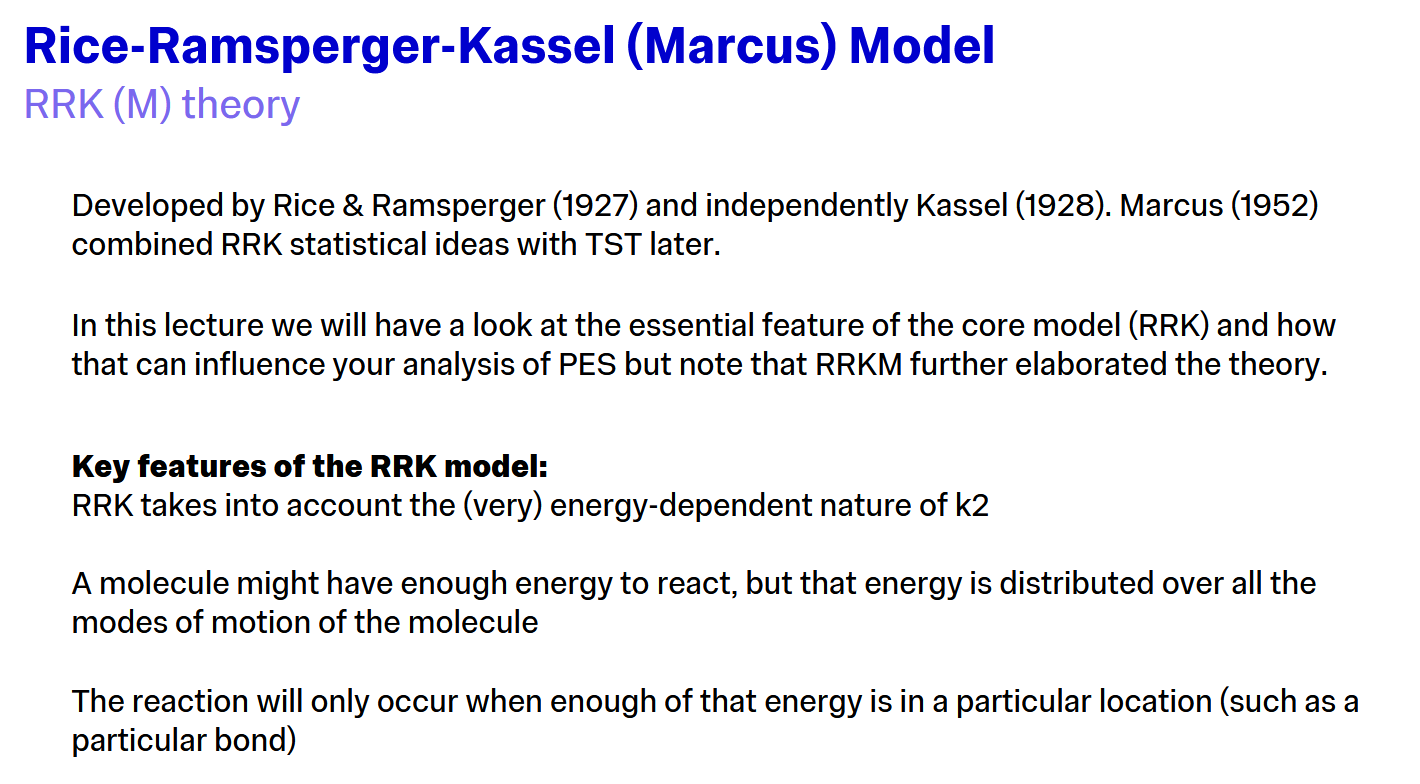
The Rice-Ramsperger-Kassel (Marcus) Model
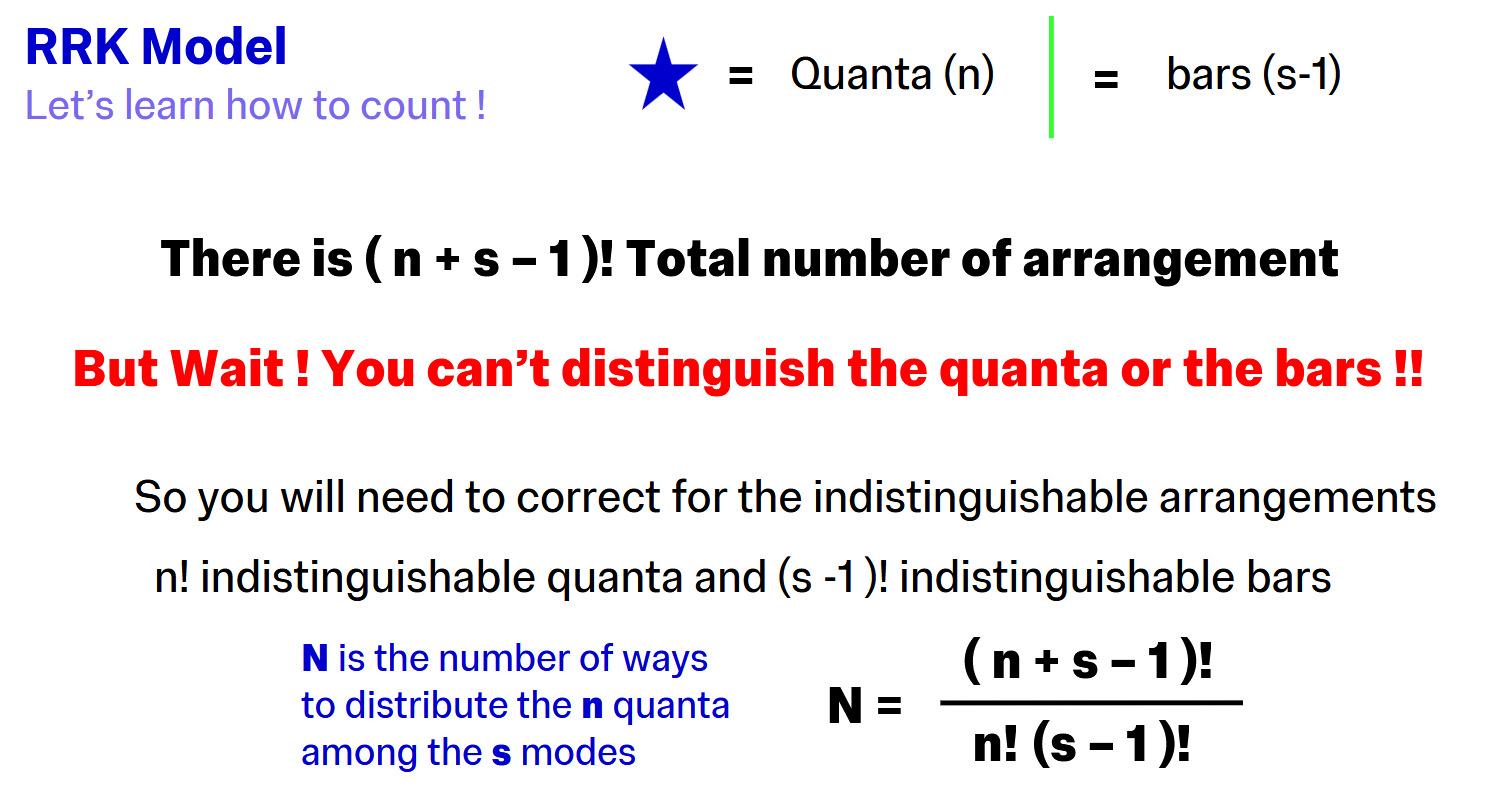
Constructing the quanta

Stars and bars counting method for energy arrangements

How to calculate the number of distinguishable arrangements
What is the critical mode
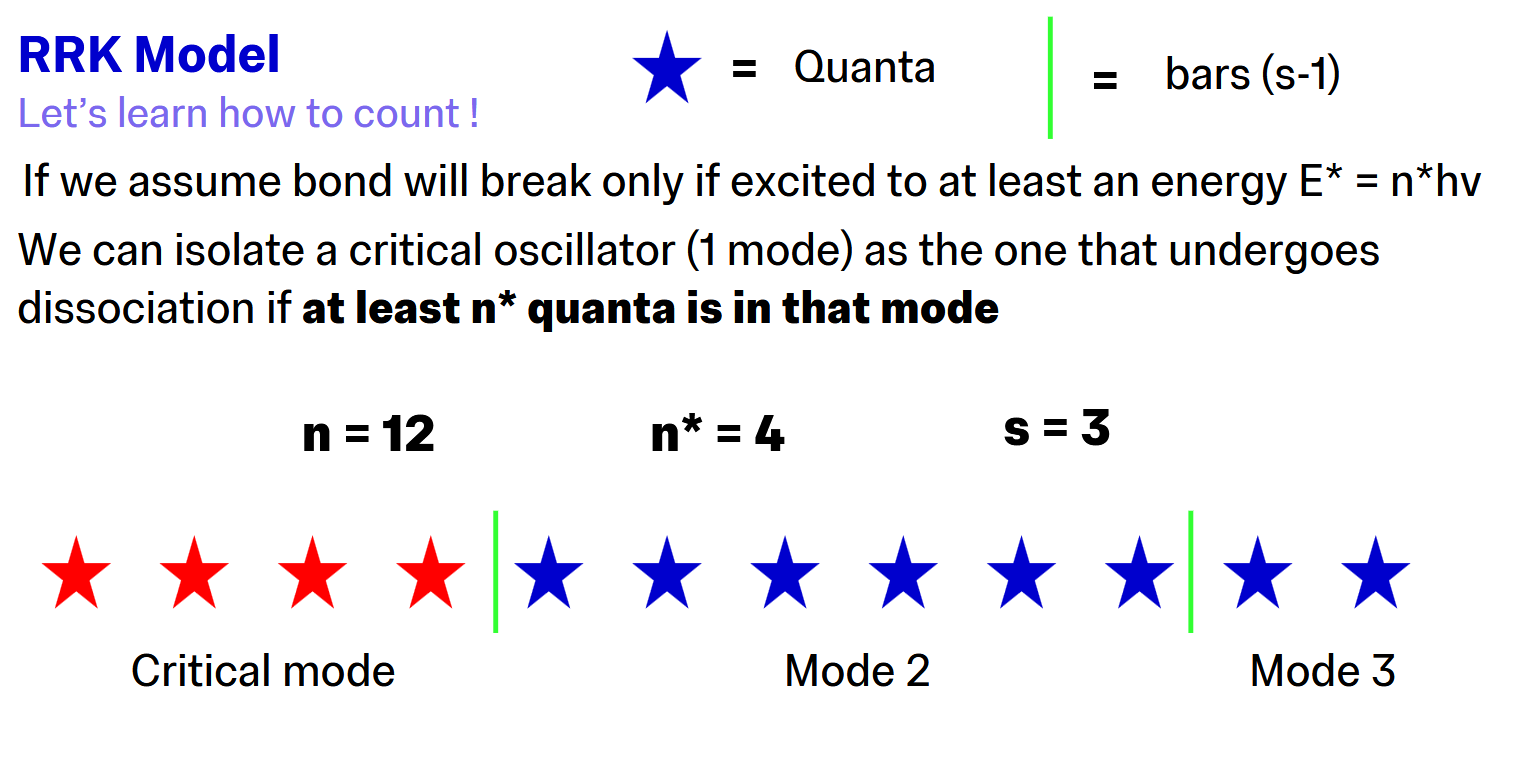
Simplifying the critical mode by removing the highest energy quanta
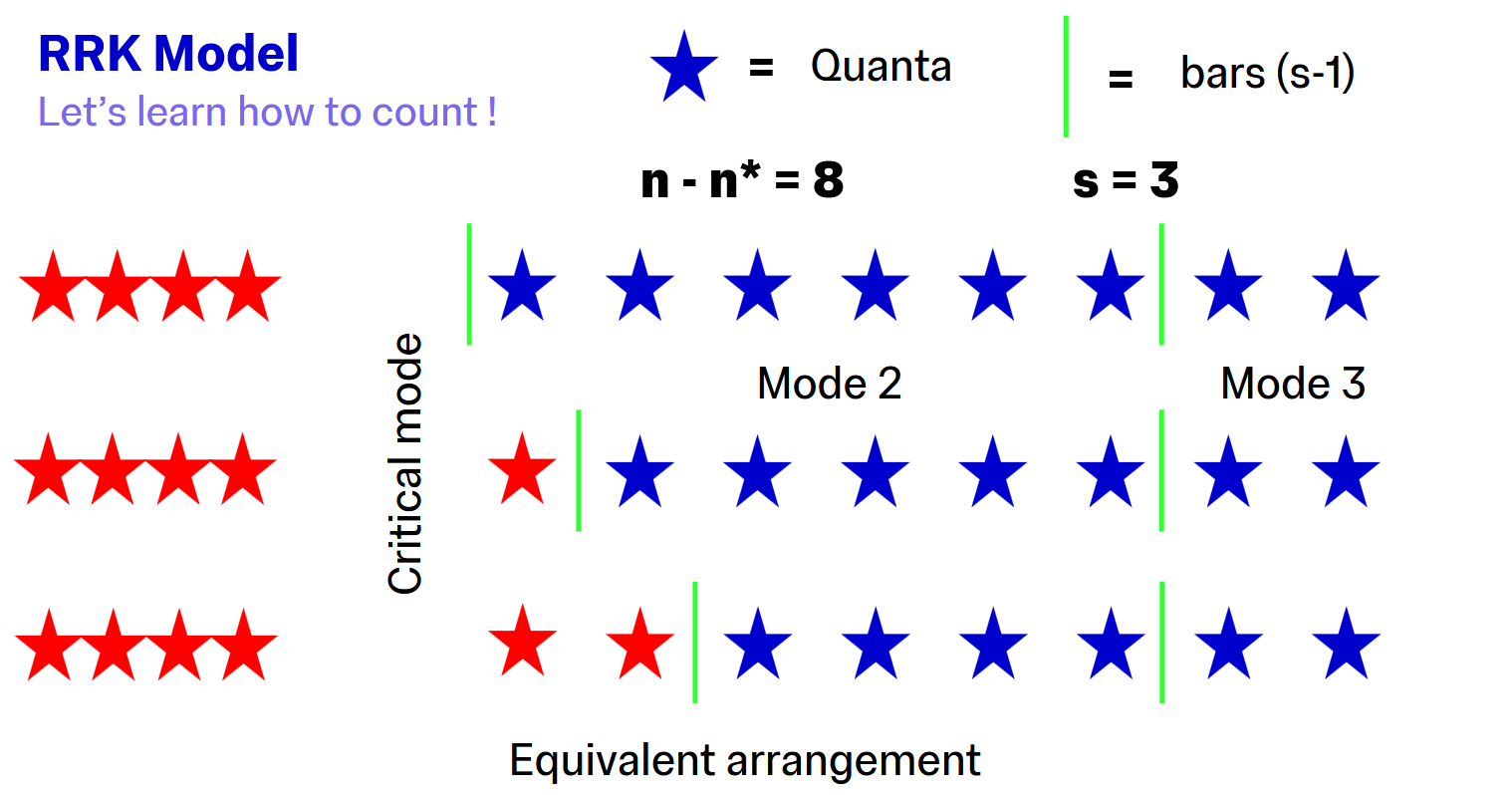
Calculating the number of arrangements in the with sufficient quanta in the critical mode

Probability that one specific oscillator will have sufficient energy to dissociate equation
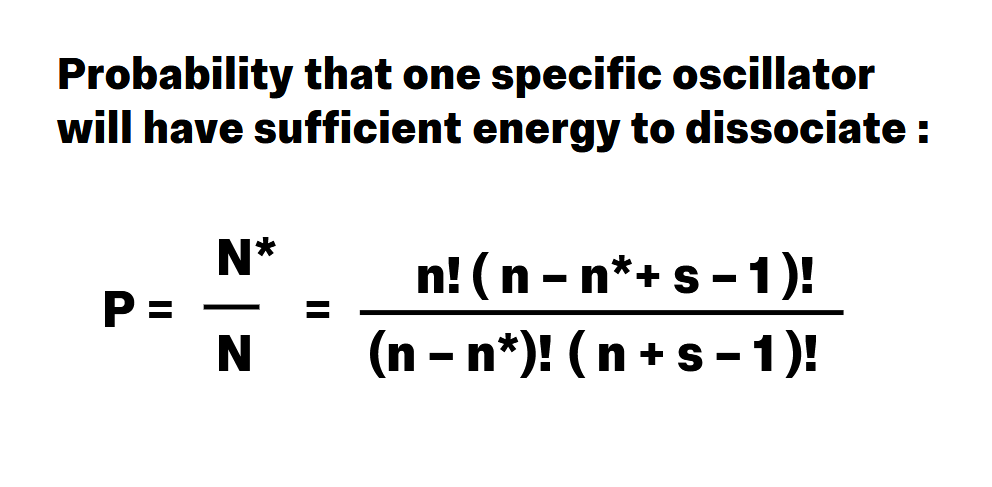
Approximation for P

Bringing in E*/E and k2

Ab initio method of constructing PES
For complex systems, the computing power is far too intense so approximations need to be used
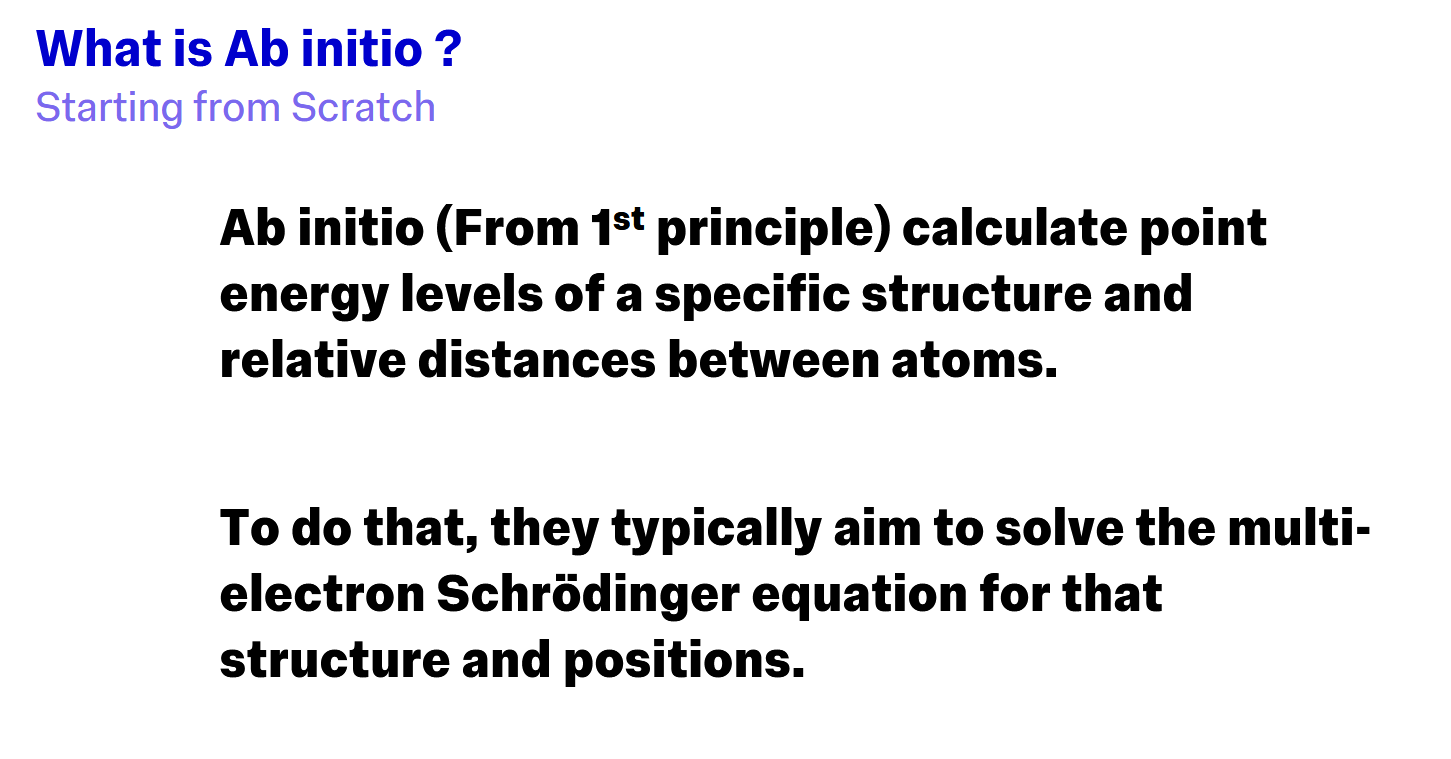
Ab initio example using wavefunctions

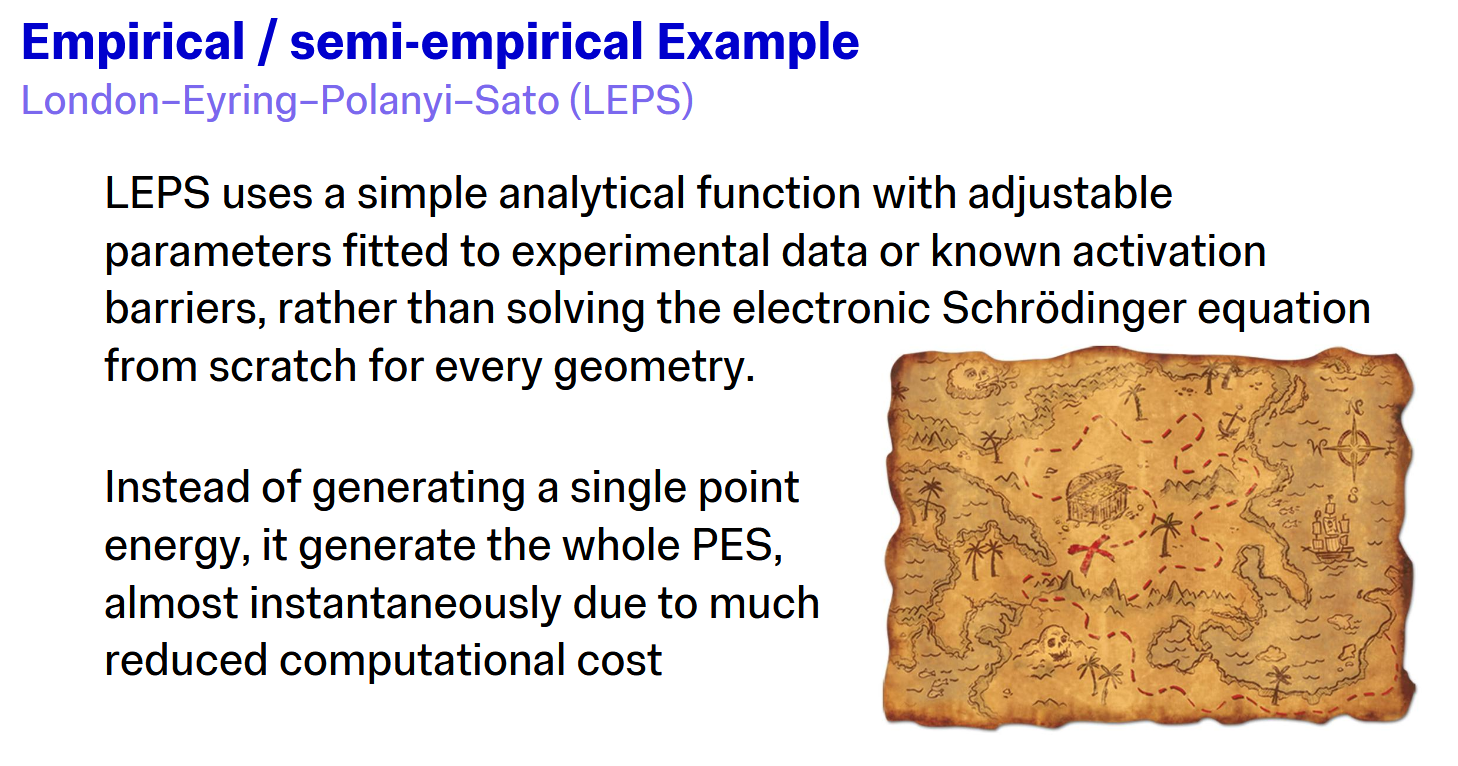
More empirical-based methods: LEPS
Typical PES visualisation methods


What do the momentum values mean
negative values mean the particles in question are getting closer together. The rate at which they do determines whether they have the energy to overcome the potential energy barrier.
Minimal energy path (MEP)

MEP vs Intrinsic reaction coordinate
Eigenvector walking

Polanyi’s rules
