3: Nervous System
 Call Kai
 Learn
 Practice Test
 Spaced Repetition
 Match
 Flashcards
 Knowt Play
1/89

There's no tags or description
Looks like no tags are added yet.
90 Terms
What does the nervous system consist of?
Brain
Spinal Cord
Nerves
What is the central nervous system?
The brain and the spinal cord

What is the peripheral nervous system?
The nerves of the body
What are the 2 functions of the nervous system?
Controls and integrates bodily activity
Reacts to constant changes in external and internal environments
What are neurons?
The basic unit of the nervous system
Transmit electrical impulses to one another to communicate information

What are the 2 kinds of cells in the nervous system? Provide an example.
Neurons (motor and sensory)
Neuroglia (Oligodendrocytes and Schwann cells)
What are the 2 kinds of neurons?
Multipolar motor neuron
Pseudounipolar sensory neuron

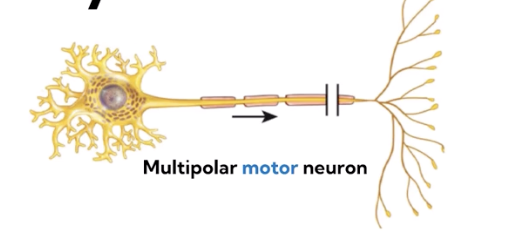
What is a multipolar motor neuron?
A motor neuron with 2 poles: the cell body to the periphery
Send information from the CNS to the PNS
What is a pseudounipolar sensory neuron?
Has the cell body in the middle, with one end recieving information in the periphery, pushed into the cell body, and sent to the central nervous system.
What are neuroglia?
Non-neuronal, non-ecitable cells
Provide support for neurons (structural, nourishment, insulation, pathogen clearance)

What are 2 examples of neuroglia?
Oligodendrocytes
Schwann cells
What is the role of oligodendrocytes?
Produce myelin sheath for the central nervous system

What is the role of Schwann cells?
Produces myelin sheath for the peripheral nervous system

What are the components of a multipolar motor neuron?
Cell body
Dendrites
Axon hillock
Axon
Axon terminals
Myelin sheath and Nodes of Ranvier
Flows from proximal to distal

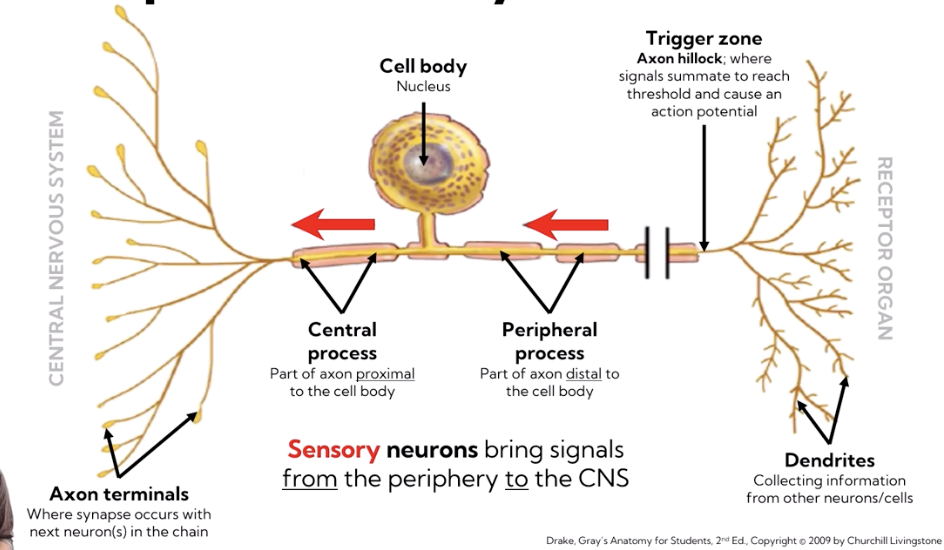
What are the components of a pseudounipolar sensory neuron?
Cell body
Central process of the axon (towards the CNS)
Peripheral process of the axon (back from the PNS)
Dendrites
Axon hillock
Axon terminals
What is a ganglia?
A collection of cell bodies from multiple neurons within a nerve

How do oligodendrocytes work?
Forms several myelin sheaths around multiple axons in the CNS

How do Schwann cells work?
Forms one myelin sheath around one section of an axon in the PNS

What is multiple sclerosis?
A condition caused by the degradation of oligodendrocytes
What is Guillain-Barre syndrome?
A condition caused by the degradation of Schwann cells which may lead to weakness and paralysis
What is white and grey matter?
White matter is the myelinated axons of neurons
Grey matter is the dendrites and cell body

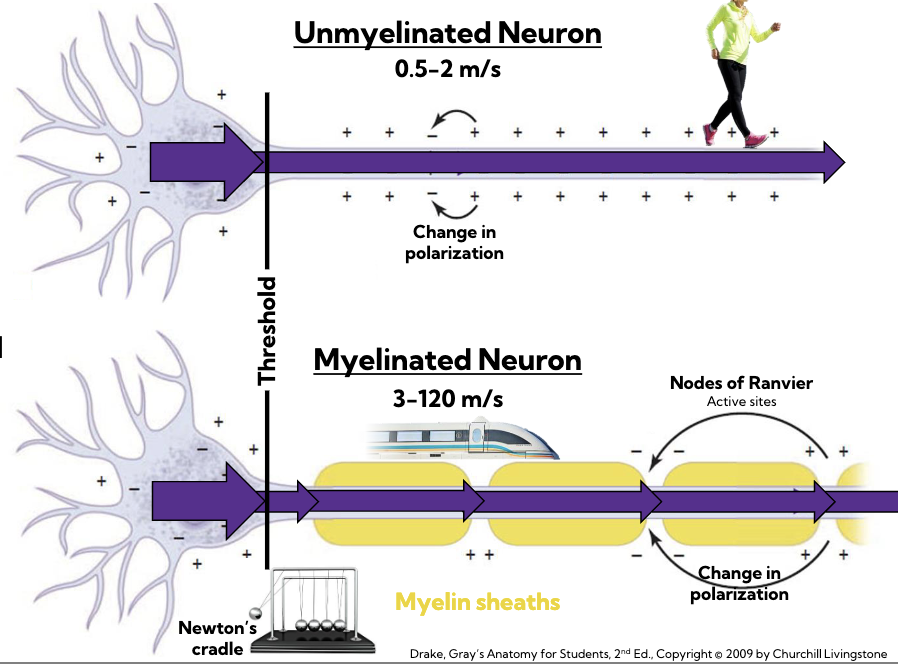
What is the difference between a myelinated and unmyelinated neuron?
In an unmyelinated neuron, conduction is slower (0.5-2 m/s)
In a myelinated neuron, conduction is faster (3-120 m/s)
Why is conduction faster in a myelinated neuron?
Because depolarization does not need to constantly occur along the axon, only at the Nodes of Ranvier
What happens at a neuronal synapse?
Where the axon terminals of a pre-synaptic neuron send a message to the dendrite of a post-synaptic neuron.
What are the 5 steps of a chemical synapse?
Nerve impulse arrives at axon terminal
Impulse opens calcium channels and calcium ions rush into presynaptic neuron
Calcium entering releases neurotransmitters into the synaptic cleft
Sodium channels on postsynaptic neuron open and sodium flows into postsynaptic neuron
New nerve impulse
What is a structural division?
Structures divided based on where they are and their role
What is a functional division?
Describes the pathways involved in a function
What are the 2 functional divisions of the nervous system?
Autonomic nervous system (ANS)
Somatic nervous system (SNS)
What are the 2 structural divisons of the nervous system?
Peripheral nervous system
Central nervous system
What is the autonomic nervous system?
Peripheral innervation to visceral organs and glands (involuntary)
What are the 2 divisions of the autonomic nervous system?
Sympathetic
Parasympathetic

What is the somatic nervous system?
Peripheral innervation to all other tissues (muscles, skin, etc.) —> voluntary
What is the parasympathetic nervous system?
“Feed and breed” or “rest and digest” system from the brain and sacral spine
What is the sympathetic nervous system?
'“Fight or flight or fright” system from the sympathetic trunk/chain
What are 3 components of the somatic nervous system?
Spinal nerve (messenger)
Muscle/myotome (motor)
Skin/dermatome (sensory)

What are the 4 lobes of the brain?
Frontal lobe
Parietal lobe
Occipital lobe
Temporal lobe

What is the function of the frontal lobe?
Motor and higher-order function
What is the function of the parietal lobe?
Sensory and sensory integration
What is the function of the occipital lobe?
Vision and visual processing
What is the function of the temporal lobe?
Auditory, smell, and memory processing
What are the 3 broad divisions of the brain?
Cerebrum
Cerebellum
Brainstem (midbrain, ponds, medulla)
What is the function of the cerebellum?
Motor coordination and some cognitive and emotional functions
What is the function of the midbrain?
Basal functions and pathways
What are the 5 divisions of the spinal cord?
Cervical
Thoracic
Lumbar
Sacral
Coccygeal

What are the different enlargements of the spinal cord?
Cervical enlargement (for brachial plexus)
Lumbar enlargement (for lumbosacral plexus)
What level does the spinal cord end at?
LI-LII
What are the components of spinal cord below the terminating point?
Conus medularis
Cauda equina
Filum terminale

What are the 7 components of the spinal cord seen in a cross-section?
Grey matter
White matter
Central canal (for cerebrospinal fluid)
Posterior horn (sensory input)
Anterior horn (motor input)
Lateral horn (autonomic input)
Spinal nerves

What are the 3 layers of spinal cord meninges?
Dura mater
Arachnoid mater
Pia mater
Describe the dura mater.
The very outer layer
Thick outer layer
Protects spinal cord

Describe the arachnoid mater.
Spider-line middle layer
Gives cerebrospinal fluid stability
Describe the pia mater.
Tender inner layer
Wrapped directly around the spinal cord
Describe the 2 components of the pia mater?
Denticulate ligaments —> anchors spinal cord
Cerebrospinal fluid (CSF) —> within subarachnoid space, provides support

What are the 3 spaces in the spinal cord meninges?
Subarachnoid space
Subdural space
Epidural space

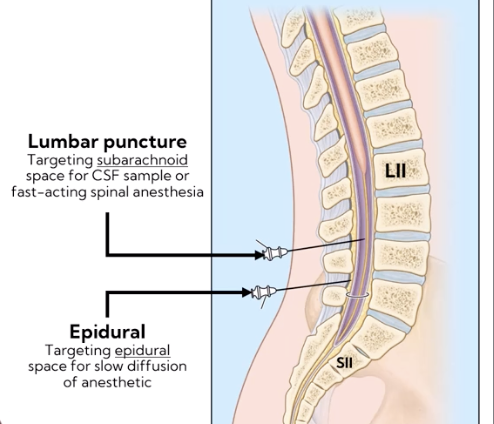
What are the applications of the spinal cord meninge spaces?
Freezing the lower limb with aneasthetic or drawing cerebrospinal fluid.
Epidural (slower)
Lumbar punture (faster)
What are the components of the spinal nerves?
Posterior roots and rootlets (sensory)
Anterior roots and rootlets (motor)
Spinal nerve enters intervertebral foramen
Splits to posterior and anterior ramus

What is the posterior ramus?
The sub-division of the spinal cord that sends motor AND sensory signals in the muscles and skin of the back.

What is the anterior ramus?
The sub-division of the spinal cord that sends motor AND sensory signals to all other muscles and the skin.

What are spinal plexuses?
Spinal nerves from different levels combine and seperate within plexuses to create peripheral nerves that carry fibers from multiple spinal levels
What is the sympathetic trunk?
Sympathetic neurons from the lateral horn at levels T1-L2 join together to carry sympathetic signals throughout the periphery

Where are the parasympathetic innervations located?
They are craniosacral (S2-S4)
What are the 4 cranial nerves of the parasympathetic system?
CN III (oculomotor n.)
CN VII (facial n.)
CN IX (glossopharyngeal n.)
CN X (vagus n.)
What are the 4 divisions of controls of the cranial nerves?
General somatic (skeletal muscle, skin)
General visceral (blood vessels, glands)
Special somatic (vision, hearing)
Special visceral (taste, smell)
What does the oculomotor nerve control?
Pupillary constriction through the sphincter pupillae muscle and dilator pupillae muscle

What 3 things does the facial nerve control?
Production of tears (lacrimal gland)
Production of saliva (submandibular glands)
Production of mucus (nasal cavity and palate)

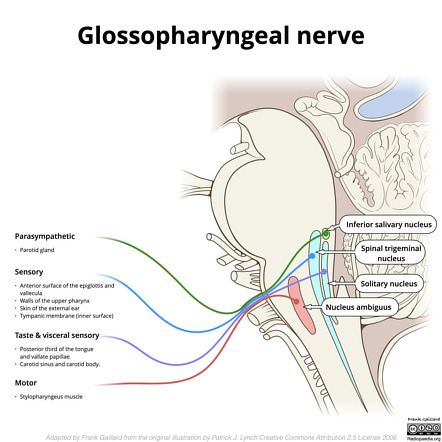
What does the glossopharyngeal nerve control?
Production of saliva (parotid gland) and sensory from the carotid sinus
What 3 things does the vagus nerve control?
Bronchi and lungs
Heart
Esophagus, foregut, and midgut

What is homeostasis?
Automatic and unconscious processes that maintain a stable state in the body
What is the diencephalon?
Thalamus
Hypothalamus
Where is the main area that is responsible for maintaing homeostasis and how?
The hypothalamus —> recieves and integrates sensory information and generating a motor response
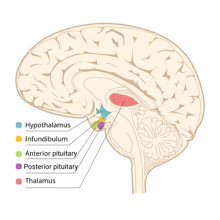
What is the pituitary gland?
An endocrine structure closely related to the hypothalamus that plays a large role in mood regulation

What kind of neurons does the somatic motor system use?
Multipolar motor neuron
What kind of neuron does the visceral motor system use?
Pseudounipolar neurons

What are the components of a parasympathetic neuron?
Long presynaptic neuron (myelinated)
Leads to parasympathetic ganglion
Short post synaptic neuron (unmyelinated)
What are the components of a sympathetic neuron?
Short presynaptic neuron (myelinated)
Leads to sympathetic ganglion
Long postsynaptic neuron (unmyelinated)
What are the impacts of the SNS and PSNS in your heart?
SNS: increased heart rate and contraction force
PSNS: lowered heart rate and contraction force
What are the impacts of the SNS and PSNS in your lungs?
SNS: bronchodilation, faster breath rate
PSNS: bronchoconstriction, slower breath rate
What are the impacts of the SNS and PSNS in your digestic system?
SNS: decreased digestive activity
PSNS: increased digestive activity
What are the impacts of the SNS and PSNS in your salivatory glands?
SNS: decreased saliva and tear production and excretion
PSNS: increased saliva and tear production and excretion
What are the impacts of the SNS and PSNS in your pupils?
SNS: pupillary dilation
PSNS: pupillary constriction
What are the impacts of the SNS and PSNS in your genitalia?
SNS: orgasm/ejactulation; decreased urinary function
PSNS: arousal/erection; increased urinary function
What are the impacts of the SNS only on your sweat glands and hair?
Sweat gland excretion and hair erection
What are the 4 components of the sympathetic trunk?
Right sympathetic trunk/chain
Left symapthetic trunk/chain
White rami communicantes
Grey rami communicantes

What is a white ramus communicans?
Where a neuron joins the sympathetic trunk

What is a grey ramus communicans?
Where a neuron is leaving the trunk

What spinal levels only have grey ramus communicans?
The spinal levels below and above the sympathetic trunk in which things are only exiting the trunk.
C1-C8
L3-Co
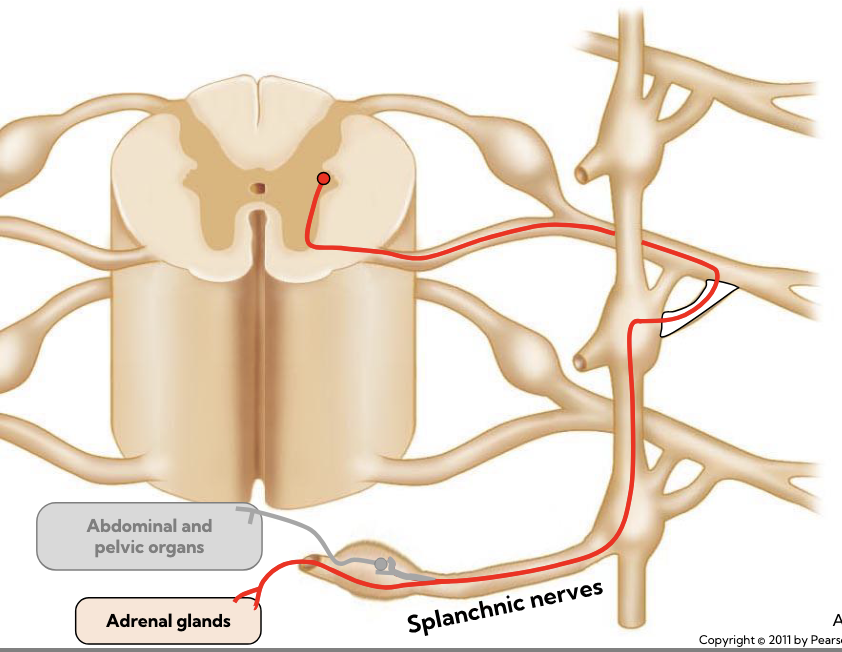
What is a sphlanchnic nerve?
A presynaptic nerve that leaves the sympathetic trunk without synapsing, and synapses at a different area with a more distal neuron
What is referred pain?
When pain is referred from a different area than the real origin due to periphery pain interpretation
What does craniosacral refer to?
How the parasympathetic nervous system has nerves coming from the brain as well as S2-S4 (sacral) spinal levels
How can we leverage the vagus nerve?
By controlling our breathing through the diaphragm and phrenic nerves.