Communication Styles
 Call Kai
 Learn
 Practice Test
 Spaced Repetition
 Match
 Flashcards
 Knowt Play
1/25

There's no tags or description
Looks like no tags are added yet.
26 Terms
Controller/Director
task-oriented personality
a commander who gets the job done
takes charge
is fearless and competitive
is strong in conversations but private about personal matters
Goal-oriented and motivated to act
little interest in details
may be perceived as bossy or insensitive
Communicating with a Controller/Director
be direct, concise, and focused on the task; get to the point and clearly state what you need
Controller/Director Clinical Scenario
An ultrasound technologist is concerned about what she sees while imaging a pregnant patient and needs guidance from the charge technologist. She should directly ask for guidance, such as: “Please review these images and advise whether I need to take any additional images. I am unsure how to proceed.”
Promoter/Socializer
People-oriented personality
entertainer who enjoys helping others, brainstorming, and sharing ideas
Flexible, creative, optimistic, enthusiastic, expressive, sociable, and talkative
often the life of the party
Communicating with a Promoter/Socializer
Encourage conversation, creativity, brainstorming, and sharing personal experiences or feelings
allow discussion to generate new ideas and approaches
Promoter/Socializer Clinical Scenario
When chairing a healthcare meeting to develop a new treatment approach with Joel, a socializer, allow him to share experiences and feelings. Learning from others with different skills and perspectives can help generate new approaches.
Supporter/Relater
People-oriented personality
harmonizer who values relationships and others' feelings
is patient, calm, steady, competent, and a good listener
Dislikes conflict and change and may take time with major decisions
Communicating with a Supporter/Relater
Provide background information
allow time to review information and make decisions
remain patient and flexible
They may ask questions or request additional information
Supporter/Relater Clinical Scenario
An X-ray technologist has performed a CT scan of a patient with an abdominal mass and is unsure whether more scans are necessary. When communicating with a supporter-style radiologist, provide context and background, allow time to review the images, and answer any questions.
Analyzer/Thinker
Task-oriented personality
values accuracy, facts, figures, and details
Often works independently
thinks quickly but speaks slowly
is cautious about decisions
May appear pessimistic, economical, or hesitant
Communicating with an Analyzer/Thinker
Provide detailed information, facts, figures, and data so they can evaluate whether a decision is worthwhile
Do not assume they disagree simply because they ask questions or focus on data
Analyzer/Thinker Clinical Scenario
During a committee meeting, provide Joel, an analyzer, with the relevant details and data before expecting him to contribute or make a decision.
Controller/Director Communication Style
Direct, concise, action-oriented, and focused on results.
Promoter/Socializer Communication Style
Enthusiastic, expressive, flexible, and focused on interaction and ideas.
Supporter/Relater Communication Style
Patient, reassuring, cooperative, and relationship-focused.
Analyzer/Thinker Communication Style
Detailed, factual, cautious, and accuracy-focused.
Advocating for Patients
sometimes healthcare professionals need to adopt a more controller/director style to speak up and advocate for patients
How Controller/Directors and Analyzers/Thinkers Get Along
Both are task-focused, which can help them work together toward goals.
How Promoters/Socializers and Supporters/Relaters Get Along
Both are people-focused, which can help them connect through relationships and communication.
Potential Conflict Between Controllers/Directors and Supporters/Relaters
Controllers prioritize direct action and results, while supporters value relationships, patience, and harmony; these differences can cause conflict.
Communication Within a Healthcare Team
Healthcare teams include nurses, doctors, radiologists, and other professionals with different personality styles.
Personality Styles in Healthcare Teams
Healthcare teams contain a mix of all four DISC styles: Controller, Promoter, Supporter, and Analyzer.
Adapting Communication Within Healthcare Teams
Recognize others' personality characteristics and adjust your communication style to meet their needs and improve teamwork.
Adapting Communication with Patients vs. Healthcare Professionals
The same principle applies to both: remain flexible and adapt to different communication styles to become a more effective communicator.
what communication styles don’t work well together?
controller + supporter
promoter + analyzer
controller + analyzer
promoter + supporter
(whichever 2 are opposite from them)
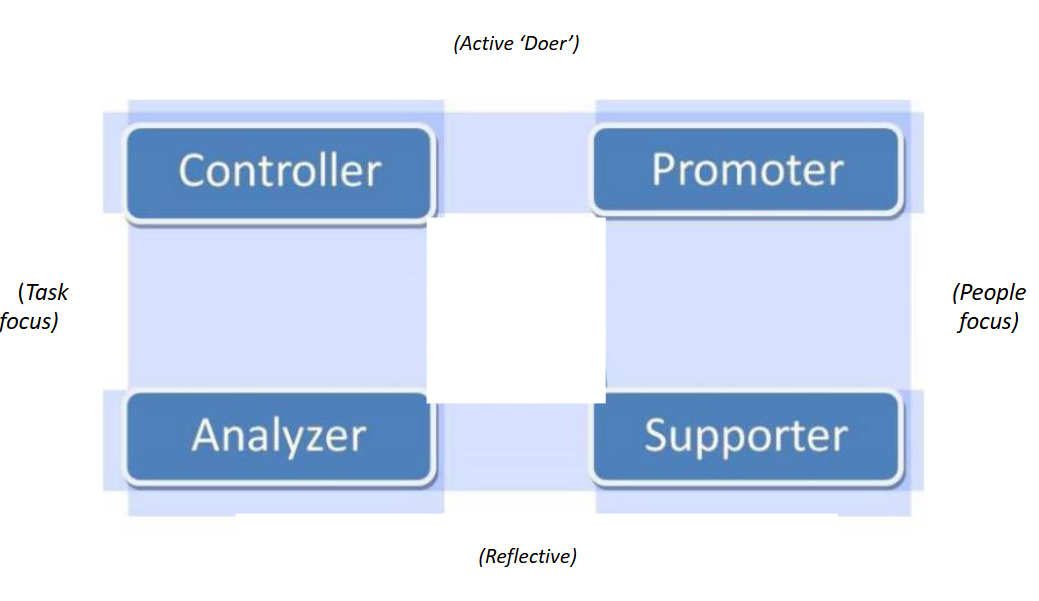
4 communication styles
controller
analyzer
promoter
supporter