Biological Transitions
 Call Kai
 Learn
 Practice Test
 Spaced Repetition
 Match
 Flashcards
 Knowt Play
1/30

Earn XP
Description and Tags
31 Terms
Adolescence
Stage of development, transition to adult roles
Puberty
Period of time where an individual becomes capable of sexual reproduction (hormones regulated by endocrine system)
Manifestations of Puberty
Increased growth
Changes to primary sex characteristics
Secondary sex changes (ex. Breasts pubic hair)
Pre-Peri-Post Pubescent
Variable series of transitions( spermarchy (sexual reproduction), age, emotional, interpersonal, no new hormones
Triggers
Genetics, Nutrition, Physical health, presence of mature sexual partners
Endocrine System
Produces circulate regulate hormones in the body
Gonadotropin-releasing Hormone Neurons
Neurons in the brain that play important roles at puberty
Glands
Organs that stimulate particular parts of the body to respond in specific ways (ex. Thyroid or pancreas)
Hormones
Specialized substances secreted by endocrine glands
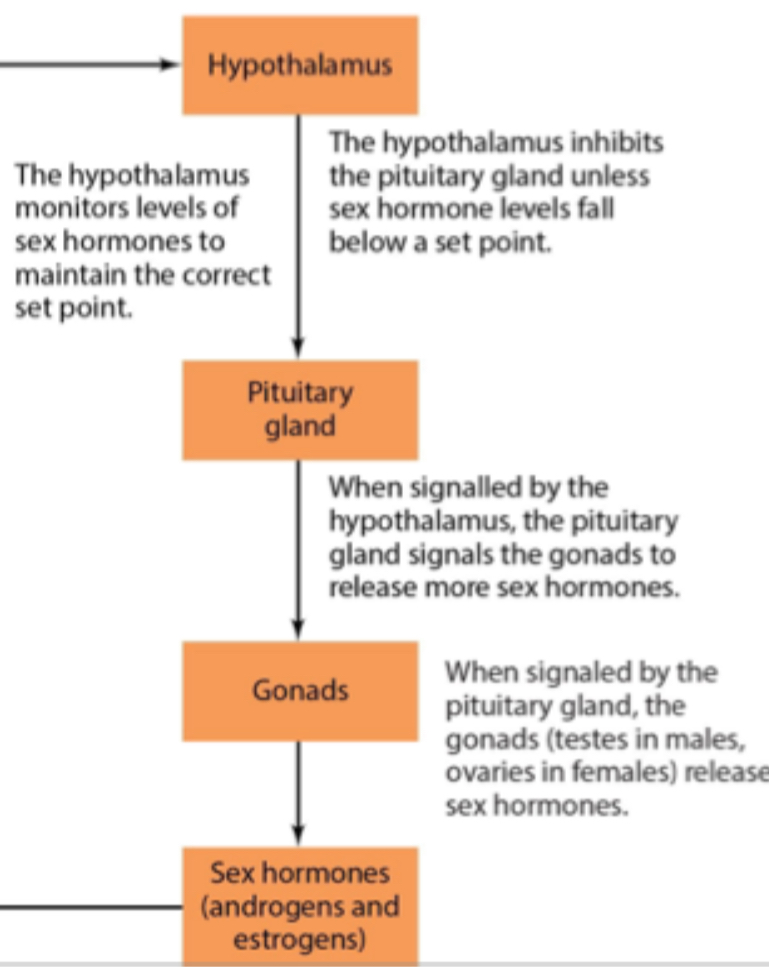
HPG (Hypothalamus-Pituitary Gonads) Axis
Hormonal regulation feedback loop
Adrenarchy
Maturation of the adrenal gland that takes place during adolescence
before puberty the pituitary gland begins to secret hormones → act in thyroid→ and in adrenal gland
Somatic Development
Physical body change
Types of Physcial Body changes
Adolescent growth spurt
Peak Height Velocity: Timing of fastest growth
Epiphysis: Closing the ends of the bones terminates growth after adolescent growth spurt has been completed
Cortisol
Hormone produced by stress
Daily Cortisol Cycle and hunger
Peaks in morning decreases though out day, increases for food
Park of circadian rhythm (levels of melatonin and temperature)
Delayed Phase Prefernce
Pattern of sleep characterized by later sleep and wake times, which usually emerges during puberty insufficient sleep can contribute to; Depression alcohol tobacco drug use, obesity cognitive impairment delinquency
Pheromones
Class of chemicals secreted by animals that stimulate behaviors in other members of species (much unknown here)
Twin Adoption Studies
Identical genetic load → share the same nature
Same risk for disease onset duration
Secondary Sexual Characteristics
Manifestations of sexual maturity at puberty, including the development of breasts, the growth of facial and boy hair and changes in the voice
Tanner Stages
A widely used system that describes the five stages of pubertal development
Secular Trend
Tendency, over the past two centuries, for individuals to be larger in stature and to reach puberty earlier, primary because of improvements in health and nutrition
Timing and tempo of puberty
Largely inherited, nothing specific about it, no relation between the age at onset and rate
Ethic difference in the timing and rate
Black females (1st) Mexican females (2nd), White females (3rd)
Difference is probably not due to ethnic differences in income either or area of residence
Non white girls may be exposed more often to chemicals that stimulate earlier puberty
Kisspeptin
A brain chemical believed to trigger the onset of puberty
Leptin
A brain chemical produced by the fat cells that may play a role in the onset of puberty through stimulating kisspeptin
Melatonin
A hormone secreted by the brain that contributes to sleepiness and that triggers the onset of puberty through its impact of kisspeptin
Familial Influences
Social. factors for early puberty in girls e.g. father absent families, presence of step father → girls are exposed to pheromones
Precocious Puberty
Development of sexual characteristics
Boys - 9 ( maybe fam history tumors of pituitary or brain tumors in ovaries or testes
Girls 8 (unknown)
Children of this age may not be ready and have psychosocial difficulties
Group Differences in Pubertal Maturation
Median age range of menarche in Africa is 14 - 17; US U.S. 12 - 13 ½
Adolescent Growth Spurt
Increase in height is accomplished by increase in weight
Rapid gain in fat frequently prompts grills to become overly concerned about their weight
Girls most susceptible to feelings of body dissatisfaction with their bodies are those who mature early and begin dating early
Boys feeling about their looks revolve around how muscular they are
Immediate Impact of Puberty
Physical Changes: self-image, mood, and relationship ms with partner whether early or late
Moodiness: Midd fluctuations, not solely from hormones, environmental factors